
Gordon R. Dickson (1923–2001)
Author of The Dragon and the George
About the Author
A naturalized American who was born in Canada on November 1, 1923, Gordon Rupert Dickson is a popular science fiction writer. Dickson graduated from the University of Minnesota in 1948 and made his home in Minneapolis. Among his many novels, especially notable is Soldier, Ask Not, which won the show more Hugo Award in 1965. For many years, Dickson's most engrossing project was his Childe Cycle, a series of novels about humanity's evolutionary potential, which included a group of futuristic books that are popularly known as the Dorsai Cycle. Dickson also wrote hundreds of short stories and novelettes including Call Him Lord, for which he received a Nebula Award in 1966. (Bowker Author Biography) show less
Series
Works by Gordon R. Dickson
Dolphin's Way 10 copies
Soldado da Terra - 2 7 copies
Soldier Ask Not [short story] 6 copies
Hilifter 5 copies
Brother Charlie 5 copies
Jean Dupres [short story] 5 copies
Of The People 4 copies
Tácticas de engano - 2 4 copies
MX Knows Best 3 copies
Brothers {short story} 3 copies
Tempestade no tempo II 3 copies
Soldado da Terra - 1 3 copies
The Haunted Village 2 copies
Trespass! 2 copies
Sleight Of Wit 2 copies
The Christmas Present 2 copies
The Game Of Five 2 copies
Paddestoelen in Europa 2 copies
Act of Creation 2 copies
The Catch 2 copies
3-part Puzzle 2 copies
Twig [novelette] 2 copies
Tempestade No Tempo 1 2 copies
Interlude VI — Author — 1 copy
Interlude V — Author — 1 copy
Interlude IV — Author — 1 copy
Interlude III — Author — 1 copy
Listen! [short fiction] 1 copy
O Mundo Adormecido 1 copy
Gordon Dickson's SF Best 1 copy
On the Run 1 copy
L'ora dell'Orda. 1 copy
Dorsai 1: Dorsai 1 copy
Dorsai 2: Soldier, Ask Not 1 copy
Dorsai 3: Tactics Of Mistake 1 copy
Bd. 249. Planet der Phantome 1 copy
Timestar 1 copy
Survival! 1 copy
Fleegl Of Fleegl 1 copy
The Three 1 copy
The Last Dream [short story] 1 copy
An Ounce Of Emotion 1 copy
Jackal's Meal 1 copy
The Hard Way 1 copy
The Star-fool 1 copy
The Stranger [short story] 1 copy
And Then There Was Peace 1 copy
Cloak And Stagger 1 copy
Tempus Non Fugit 1 copy
The Green Building 1 copy
The Quarry 1 copy
E Gubling Dow 1 copy
Walker Between The Planes 1 copy
The Amulet 1 copy
The R Of A 1 copy
With Butter And Mustard 1 copy
Salmanazar 1 copy
The Girl Who Played Wolf 1 copy
A Case History 1 copy
The Man in the Mailbag 1 copy
Across the River 1 copy
The Outposter 3 1 copy
The Outposter 2 1 copy
The Outposter 1 1 copy
Maverick 1 copy
Time Storm [short story] 1 copy
Moon June Spoon Croon 1 copy
Święty smok i Jerzy 1 copy
Soupstone (Novelette) 1 copy
Zaginiony dorsaj! 1 copy
A Knight of Ghost & Shadows 1 copy
Miss Prinks 1 copy
Associated Works
The Science Fiction Hall of Fame, Volume Three: Nebula Winners 1965-1969 (1982) — Contributor — 267 copies, 1 review
Isaac Asimov's Wonderful Worlds of Science Fiction, Volume 3: Supermen (1984) — Contributor — 128 copies, 1 review
Analog Anthology #1: Fifty Years of the Best Science Fiction From Analog (1980) — Contributor — 118 copies, 1 review
Science Fiction Today and Tomorrow: A Discursive Symposium (1974) — Contributor — 99 copies, 2 reviews
Isaac Asimov's Magical Worlds of Fantasy, Volume 7: Magical Wishes (1891) — Contributor — 95 copies, 1 review
Isaac Asimov's Magical Worlds of Fantasy, Volume 5: Giants (1985) — Contributor — 93 copies, 2 reviews
Best Science Fiction Stories of the Year Fourth Annual Collection (1975) — Contributor — 84 copies, 3 reviews
The Best from Fantasy and Science Fiction: A Special 25th Anniversary Anthology (1974) — Contributor — 84 copies, 2 reviews
The Infinite Arena: Seven Science Fiction Stories About Sports (1977) — Contributor — 75 copies, 1 review
Moonrise: The Golden Age of Lunar Adventures (British Library Science Fiction Classics) (2018) — Contributor — 67 copies, 3 reviews
The Mammoth Book of New World Science Fiction: Short Novels of the 1960's (The Mammoth Book Series) (1991) — Author — 67 copies
Nebula Awards 24: SFWA's Choices for the Best Science Fiction and Fantasy 1988 (1990) — Contributor — 61 copies
Isaac Asimov's Science Fiction Magazine: Vol. 1, No. 1 [Spring 1977] (1977) — Contributor, some editions — 38 copies, 1 review
Transformations II: Understanding American History Through Science Fiction (1974) — Contributor — 32 copies
Analog Science Fiction/Science Fact: Vol. XCIII, No. 6 (August 1974) (1974) — Contributor — 29 copies
Analog Science Fiction/Science Fact: Vol. XCV, No. 3 (March 1975) (1975) — Contributor — 28 copies, 1 review
Analog Science Fiction/Science Fact: Vol. XCIV, No. 5 (January 1975) (1975) — Contributor — 27 copies
Analog Science Fiction/Science Fact: Vol. LXXXVII, No. 4 (June 1971) (1971) — Contributor — 27 copies
Analog Science Fiction/Science Fact: Vol. XC, No. 1 (September 1972) (1972) — Contributor — 27 copies
Analog Science Fiction/Science Fact: Vol. LXXXII, No. 5 (January 1969) (1969) — Contributor — 25 copies
Analog Science Fiction/Science Fact: Vol. XCV, No. 9 (September 1975) (1975) — Contributor — 24 copies, 1 review
Analog Science Fiction/Science Fact: Vol. XCV, No. 2 (February 1975) (1975) — Contributor — 24 copies, 1 review
Analog Science Fiction/Science Fact: Vol. LXXXIX, No. 6 (August 1972) (1972) — Contributor — 24 copies
Analog Science Fiction/Science Fact: Vol. XCII, No. 2 (October 1973) (1973) — Contributor — 24 copies
Analog Science Fiction/Science Fact: Vol. LXXXVI, No. 5 (January 1971) (1971) — Contributor — 23 copies
Analog Science Fiction/Science Fact: Vol. XCII, No. 1 (September 1973) (1973) — Contributor — 22 copies
Analog Science Fiction/Science Fact: Vol. LXXXVIII, No. 4 (December 1971) (1971) — Contributor — 22 copies
The Magazine of Fantasy and Science Fiction October 1961, Vol. 21, No. 4 (1961) — Contributor — 21 copies, 1 review
Isaac Asimov's Science Fiction Magazine: Vol. 1, No. 2 [Summer 1977] (1977) — Contributor — 21 copies
Analog Science Fiction/Science Fact: Vol. LXXXVI, No. 2 (October 1970) (1970) — Contributor — 20 copies
Special Wonder: The Anthony Boucher Memorial Anthology of Fantasy and Science Fiction (1970) — Contributor — 12 copies
Analog Science Fact/Science Fiction: Vol. LXVIII, No. 5 (January 1962) (1962) — Contributor — 11 copies
The Magazine of Fantasy and Science Fiction January 1957, Vol. 12, No. 1 (1957) — Contributor — 9 copies, 1 review
The Magazine of Fantasy and Science Fiction August 1961, Vol. 21, No. 2 (1961) — Contributor — 7 copies
I Premi Hugo 1976-1983 — Contributor — 4 copies
Fantastrenna — Contributor — 3 copies
Astronavi maledette: [tre romanzi di J. White, G. R. Dickson, M. Leinster] — Contributor — 3 copies
Strange Fantasy #10 Fall '69 — Contributor — 3 copies
The Most Thrilling Science Fiction Ever Told, No. 5 — Contributor — 1 copy
Tagged
Common Knowledge
- Legal name
- Dickson, Gordon Rupert
- Birthdate
- 1923-11-01
- Date of death
- 2001-01-31
- Gender
- male
- Education
- University of Minnesota
- Occupations
- science fiction writer
- Organizations
- Science Fiction Writers of America
- Awards and honors
- E. E. Smith Memorial Award
- Relationships
- Dickson, Maude Ford (mother)
- Cause of death
- asthma
- Nationality
- Canada (birth)
USA - Birthplace
- Edmonton, Alberta, Canada
- Places of residence
- Minneapolis, Minnesota, USA
- Place of death
- Richfield, Minnesota, USA
- Map Location
- USA
Members
Discussions
Tango to the Stars in Good Show Sir! — bad science fiction and fantasy covers (January 26)
Smokey the Bear's cousin, Carry in Good Show Sir! — bad science fiction and fantasy covers (January 14)
Laser brains in Good Show Sir! — bad science fiction and fantasy covers (January 7)
The Second Amendment in Good Show Sir! — bad science fiction and fantasy covers (December 2025)
Lacks Critical Equipment in Good Show Sir! — bad science fiction and fantasy covers (November 2025)
Not Naked in Good Show Sir! — bad science fiction and fantasy covers (October 2025)
Book of Mormons? in Good Show Sir! — bad science fiction and fantasy covers (September 2025)
Naked to the Stars in Good Show Sir! — bad science fiction and fantasy covers (August 2024)
The Alien Why? in Good Show Sir! — bad science fiction and fantasy covers (August 2024)
Science Fiction, parallel universes in Name that Book (February 2017)
SF-Short Story-Crashed Astronaut memory wiped by Alien Pre-1980 in Name that Book (March 2015)
*Lost Dorsai* disambiguation in Bug Collectors (June 2012)
Reviews
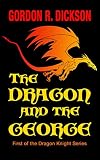
Dickson, Gordon R. The Dragon and the George. 1976. Preface by David Drake. Dragon Knight No. 1. Start, 2013.
I can scarcely believe that it has been two decades since Gordon R. Dickson died. I somehow keep expecting another Dorsai or Hoka story to appear any day now. Dickson had a dry wit that one does not usually find in writers of adventure fantasy and military science fiction. But The Dragon and the George, the first novel in the Dragon Knight series, has it aplenty. Consider its premise: show more Jim, a struggling teaching assistant in the English department of a small Minnesota college, has to try to rescue his fiancé Angela when an astral projection experiment in the psychology lab where she works runs amok and teleports her who knows where. He straps himself into the machine and soon finds his consciousness inhabiting the body of a large dragon in a cave where Angela is being held by other dragons. So, Jim is a dragon and Angela is a George because to dragons all human beings are Georges. Let the adventure begin. Not only is there more wit than one expects but stronger character development. In his heroic quest to free Angela, Jim finds that he and the dragon have similar character flaws, including anger management issues. I enjoyed reading this one again. show less
I can scarcely believe that it has been two decades since Gordon R. Dickson died. I somehow keep expecting another Dorsai or Hoka story to appear any day now. Dickson had a dry wit that one does not usually find in writers of adventure fantasy and military science fiction. But The Dragon and the George, the first novel in the Dragon Knight series, has it aplenty. Consider its premise: show more Jim, a struggling teaching assistant in the English department of a small Minnesota college, has to try to rescue his fiancé Angela when an astral projection experiment in the psychology lab where she works runs amok and teleports her who knows where. He straps himself into the machine and soon finds his consciousness inhabiting the body of a large dragon in a cave where Angela is being held by other dragons. So, Jim is a dragon and Angela is a George because to dragons all human beings are Georges. Let the adventure begin. Not only is there more wit than one expects but stronger character development. In his heroic quest to free Angela, Jim finds that he and the dragon have similar character flaws, including anger management issues. I enjoyed reading this one again. show less

Cal Truent is a dedicated soldier in an interstellar human army, conquering new worlds. During a battle on the third planet from Arcturus, he takes a hit and wakes up with a sixteen-hour hole in his memory.
Haunted by this missing time and facing exclusion from active combat duty due to his superiors' fears of what he might have forgotten, Cal becomes obsessed with recalling those sixteen hours. He joins the Contact Services, a diplomatic unit that handles the aftermath of conquests, a job he show more previously despised.
Through this experience, he confronts the brutality of Earth's expansionist methods, leading to a profound shift in his worldview and a rejection of the only good alien is a dead one mentality.
Cal journeys toward empathy, culminating in a decision to prevent the further destruction of an alien species, the Paumons on Bellatrix, effectively turning against his former military masters. show less
Haunted by this missing time and facing exclusion from active combat duty due to his superiors' fears of what he might have forgotten, Cal becomes obsessed with recalling those sixteen hours. He joins the Contact Services, a diplomatic unit that handles the aftermath of conquests, a job he show more previously despised.
Through this experience, he confronts the brutality of Earth's expansionist methods, leading to a profound shift in his worldview and a rejection of the only good alien is a dead one mentality.
Cal journeys toward empathy, culminating in a decision to prevent the further destruction of an alien species, the Paumons on Bellatrix, effectively turning against his former military masters. show less
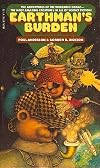
The clue is in the name - Hoka. This is in fact hokum - a humorous stringing together of a series of formulaic stories about a planet of 'teddy bear'-like creatures who are highly intelligent but lose themselves completely in what amount to earth-inspired role-playing games.
Yes, behind it is a satire of the Star Trek type (pre-Trekkie since the collection was published in 1957) of benign Federation-type Earthling imperialism and so, ultimately, of the actually existing United Nations and US show more of the day, but it is mostly just a rather amusing romp.
What is more interesting than the satire perhaps is that Anderson, the highly intelligent 'teddy bear' of post-war science fiction who was never averse to straddling the scifi/fantasy or any other divide for that matter, has anticipated RPG culture and the complete seriousness of its 'play'.
The binding framework is a young ensign whose success with handling the Hoka is the source of the satire as he gets into a series of colonial pickles that could be career-ending but actually keep moving him up the bureaucratic ladder because the Hoka flummox everyone else.
But the fun lies in the stories which do have some laugh-out loud moments as the Hoka pick up some bit of Earthling popular culture (as seen from the 1950s) and then create a complete world out of it which they then insist on acting out as if it was real.
Since earthling popular culture is itself wish-fulfilment fantasy (cowboys and injuns, the plots of the opera, 'space patrol', sherlock holmes, pirates and 'beau geste') something close to disaster nearly ensues rescued only at the last minute by the hero's ability to manipulate the game.
It is a fun and enjoyable book. It only fails to get a higher rating because it is not a coherent novel but just a series of similar adventures. My recommendation is that you read it but separate the stories out and enjoy them individually in sequence over a longer period of time.
If you only have time to read one story, read the one dedicated to the Hoka's discovery of 'Space Patrol', the 1950 kids' version discovered by the Hoka because they were only allowed to watch children's TV by the Earthling administration lest they start to make serious RPG mischief.
The unintended consequences of Earthling paternalism as Earth tries to build its 'colonies' into something like a Commonwealth (led by Earth, of course. The final official communique (no spoiler) at the end of the book suggests just how doomed the project is.
Needless to say, the Hoka do manage to make serious mischief regardless (in space as in every story). The hapless attempts of the hero Jones to manage the chaos only make things worse until some stroke of manipulative genius that requires in every story he enter into Hoka expectations.
In the 'space patrol' case, the Hoka almost cause and then end an intergalactic war without having any notion that their fantasy world has had any real universe consequences which rather strikes me as a good analogy for the conduct of international relations in any case.
It could be argued that, especially with the involvement of largely unaccountable psychological operations unit, the current Ukraine crisis is the result of our political elites being terribly serious RPG players not much different from the Hoka.
There is much amusement and satire to be had in these stories, not excluding the inevitable moment when Jones is forced to become Watson to a Hoka Sherlock Holmes or the quite hilarious application of the plot of 'Don Juan' to poor Ensign Jones' misunderstood love life.
Personally, I found the book fitted my own and many other's 'wish-fulfilment fantasy' (never to be achieved) - the prospect of being able to live like a 'teddy bear' Hoka (their appearance is part of the humour) in a viable RPG in which reality could be shunted entirely to one side.
From that point of view Anderson creative realisation is close to genius - taking the impulse towards fantasy away from specific narratives 'out there' in texts or films and bringing it into the world. Again, he is prescient since is the internet not bringing this closer to possibility?
It is the implementation that stops it from being one of the greats of fantasy (frankly, it is only pretending to be science fiction) because there is no development although Anderson writes exceptionally well and engagingly.
One amusing coincidence showing that God is perhaps a jester, Anderson's daughter is married to another science fiction ... Greg Bear!
As someone who really does not like his science fiction mucked up with comedy and is wary of too much of it in fantasy, this is one of the few works that have won me over to its possibilities. It has certainly encouraged me to read more Anderson, although not, I am afraid, more Hoka. show less
Yes, behind it is a satire of the Star Trek type (pre-Trekkie since the collection was published in 1957) of benign Federation-type Earthling imperialism and so, ultimately, of the actually existing United Nations and US show more of the day, but it is mostly just a rather amusing romp.
What is more interesting than the satire perhaps is that Anderson, the highly intelligent 'teddy bear' of post-war science fiction who was never averse to straddling the scifi/fantasy or any other divide for that matter, has anticipated RPG culture and the complete seriousness of its 'play'.
The binding framework is a young ensign whose success with handling the Hoka is the source of the satire as he gets into a series of colonial pickles that could be career-ending but actually keep moving him up the bureaucratic ladder because the Hoka flummox everyone else.
But the fun lies in the stories which do have some laugh-out loud moments as the Hoka pick up some bit of Earthling popular culture (as seen from the 1950s) and then create a complete world out of it which they then insist on acting out as if it was real.
Since earthling popular culture is itself wish-fulfilment fantasy (cowboys and injuns, the plots of the opera, 'space patrol', sherlock holmes, pirates and 'beau geste') something close to disaster nearly ensues rescued only at the last minute by the hero's ability to manipulate the game.
It is a fun and enjoyable book. It only fails to get a higher rating because it is not a coherent novel but just a series of similar adventures. My recommendation is that you read it but separate the stories out and enjoy them individually in sequence over a longer period of time.
If you only have time to read one story, read the one dedicated to the Hoka's discovery of 'Space Patrol', the 1950 kids' version discovered by the Hoka because they were only allowed to watch children's TV by the Earthling administration lest they start to make serious RPG mischief.
The unintended consequences of Earthling paternalism as Earth tries to build its 'colonies' into something like a Commonwealth (led by Earth, of course. The final official communique (no spoiler) at the end of the book suggests just how doomed the project is.
Needless to say, the Hoka do manage to make serious mischief regardless (in space as in every story). The hapless attempts of the hero Jones to manage the chaos only make things worse until some stroke of manipulative genius that requires in every story he enter into Hoka expectations.
In the 'space patrol' case, the Hoka almost cause and then end an intergalactic war without having any notion that their fantasy world has had any real universe consequences which rather strikes me as a good analogy for the conduct of international relations in any case.
It could be argued that, especially with the involvement of largely unaccountable psychological operations unit, the current Ukraine crisis is the result of our political elites being terribly serious RPG players not much different from the Hoka.
There is much amusement and satire to be had in these stories, not excluding the inevitable moment when Jones is forced to become Watson to a Hoka Sherlock Holmes or the quite hilarious application of the plot of 'Don Juan' to poor Ensign Jones' misunderstood love life.
Personally, I found the book fitted my own and many other's 'wish-fulfilment fantasy' (never to be achieved) - the prospect of being able to live like a 'teddy bear' Hoka (their appearance is part of the humour) in a viable RPG in which reality could be shunted entirely to one side.
From that point of view Anderson creative realisation is close to genius - taking the impulse towards fantasy away from specific narratives 'out there' in texts or films and bringing it into the world. Again, he is prescient since is the internet not bringing this closer to possibility?
It is the implementation that stops it from being one of the greats of fantasy (frankly, it is only pretending to be science fiction) because there is no development although Anderson writes exceptionally well and engagingly.
One amusing coincidence showing that God is perhaps a jester, Anderson's daughter is married to another science fiction ... Greg Bear!
As someone who really does not like his science fiction mucked up with comedy and is wary of too much of it in fantasy, this is one of the few works that have won me over to its possibilities. It has certainly encouraged me to read more Anderson, although not, I am afraid, more Hoka. show less

Well this was unexpected find. I knew it was situated at the very beginning of the Dickson's Childe Cycle but I was not expecting it to be origin story of the Malcador the Sigilite :)
Humanity is at the cross-roads, expansion to outer space is starting up and several factions start to appear, technocrats that are using AI (or is it other way around?) to provide people with all they need but it seems that ultimate result is to make a docile, compliant mass out of people; Chantry Guild that show more speaks in very strange terms of magic and new-age like topics, and see only future of humanity through utter destruction of existing society, and finally religious zealots that are against all the others.
In this messy situation, at the critical point in time, steps in our hero, man with what you might call sixth sense [that maybe something more in the end]. As such he attracts the attention of all parties because he is anomaly and as such he either needs to be controlled or removed from the board. But they are all in for a quite a surprise.
I truly enjoyed this book. Author's view of humanity's future is very contemporary, especially AI that is so beautifully portrayed as completely in-human-like in its reasoning but devastating and unrelentless when it comes to achieving its goals. As a matter of fact portrayal of the society in the book is very very contemporary (AI algorithms, "anomalies", marching people, oh my.....).
Same as Dune, book sees future of humanity not as homogeneous species but as a set of various "branches" that need to be given breathing room to develop and not stifle each other. Actions of our hero are very similar to actions of Emperor Leto II - after the existing civilization is brought to violent end (what you might call end of its natural life), humanity is released and allowed to spread uninhibitedly among the stars thus creating basis for Dorsai universe society.
If you enjoy W40K this book might be read like birth of Malcador, The Sigillite :) it is uncanny how story resonates even with that fictional world.
Highly recommended. show less
Humanity is at the cross-roads, expansion to outer space is starting up and several factions start to appear, technocrats that are using AI (or is it other way around?) to provide people with all they need but it seems that ultimate result is to make a docile, compliant mass out of people; Chantry Guild that show more speaks in very strange terms of magic and new-age like topics, and see only future of humanity through utter destruction of existing society, and finally religious zealots that are against all the others.
In this messy situation, at the critical point in time, steps in our hero, man with what you might call sixth sense [that maybe something more in the end]. As such he attracts the attention of all parties because he is anomaly and as such he either needs to be controlled or removed from the board. But they are all in for a quite a surprise.
I truly enjoyed this book. Author's view of humanity's future is very contemporary, especially AI that is so beautifully portrayed as completely in-human-like in its reasoning but devastating and unrelentless when it comes to achieving its goals. As a matter of fact portrayal of the society in the book is very very contemporary (AI algorithms, "anomalies", marching people, oh my.....).
Same as Dune, book sees future of humanity not as homogeneous species but as a set of various "branches" that need to be given breathing room to develop and not stifle each other. Actions of our hero are very similar to actions of Emperor Leto II - after the existing civilization is brought to violent end (what you might call end of its natural life), humanity is released and allowed to spread uninhibitedly among the stars thus creating basis for Dorsai universe society.
If you enjoy W40K this book might be read like birth of Malcador, The Sigillite :) it is uncanny how story resonates even with that fictional world.
Highly recommended. show less
Lists
Awards


You May Also Like


Associated Authors
Statistics
- Works
- 293
- Also by
- 154
- Members
- 33,149
- Popularity
- #580
- Rating
- 3.7
- Reviews
- 295
- ISBNs
- 575
- Languages
- 13
- Favorited
- 35
