
Ralph Ellison (1913–1994)
Author of Invisible Man
About the Author
Ralph Ellison (March 1, 1914 - April 16, 1994) has the distinction of being one of the few writers who has established a firm literary reputation on the strength of a single work of long fiction. Writer and teacher, Ralph Ellison was born in Oklahoma City, studied at Tuskegee Institute, and has show more lectured at New York, Columbia, and Fisk universities and at Bard College. He received the Prix de Rome from the Academy of Arts and Letters in 1955, and in 1964 he was elected a member of the National Institute of Arts and Letters. He has contributed short stories and essays to various publications. Invisible Man (1952), his first novel, won the National Book Award for 1953 and is considered an impressive work. It is a vision of the underground man who is also the invisible African American, and its possessor has employed this subterranean view and viewer to so extraordinary an advantage that the impression of the novel is that of a pioneer work. A book of essays, Shadow and Act, which discusses the African American in America and Ellison's Oklahoma boyhood, among other topics, appeared in 1964. Ralph Ellison died on April 16, 1994 of pancreatic cancer and was interred in a crypt at Trinity Church Cemetery in the Washington Heights neighborhood of Upper Manhattan. (Bowker Author Biography) show less
Image credit: From Wikipedia
Works by Ralph Ellison
“Cadillac Flambé “ 1 copy
Associated Works
The Sound and the Fury, A Norton Critical Edition (1929) — Contributor, some editions — 2,056 copies, 22 reviews
Perrine's Literature: Structure, Sound, and Sense (1970) — Contributor, some editions — 895 copies, 4 reviews
Points of View: An Anthology of Short Stories, Revised & Updated Edition (1995) — Contributor — 443 copies, 7 reviews
Black Voices: An Anthology of Afro-American Literature (Mentor) (1968) — Contributor — 358 copies, 1 review
Adventures of Huckleberry Finn [Norton Critical Edition, 2nd ed.] (1977) — Contributor — 332 copies, 4 reviews
The Norton Anthology of African American Literature {2nd edition} (2003) — Contributor, some editions — 282 copies, 2 reviews
The Best Short Stories by Black Writers, 1899-1967: The Classic Anthology (1967) — Contributor — 200 copies, 1 review
The Mark Twain Anthology: Great Writers on His Life and Work (2010) — Contributor — 160 copies, 1 review
The Norton Anthology of American Literature, Volume 2: 1865 to Present (1979) — Contributor, some editions — 136 copies
Black on White: Black Writers on What It Means to Be White (1998) — Contributor — 129 copies, 2 reviews
Children of the Night: The Best Short Stories by Black Writers, 1967 to the Present (1995) — Contributor — 126 copies
The Glorious American Essay: One Hundred Essays from Colonial Times to the Present (2020) — Contributor — 119 copies
Calling the Wind: Twentieth Century African-American Short Stories (1992) — Contributor — 116 copies
Writing New York: A Literary Anthology (Expanded 10th-Anniversary Edition) (2008) — Contributor — 101 copies, 1 review
The Heath Anthology of American Literature, Concise Edition (2003) — Contributor — 73 copies, 1 review
Lapham's Quarterly - Lines of Work: Volume IV, Number 2, Spring 2011 (2011) — Contributor — 32 copies, 2 reviews
New World Writing: Fifth Mentor Selection - Fiction, Drama, Poetry, Criticism (1954) — Contributor — 9 copies
The Human Commitment - An Anthology of Contemporary Short Fiction — Contributor — 1 copy
The Ethnic Image in Modern American Literature, 1900-1950, Volumes 1-2 (1984) — Contributor — 1 copy
Tagged
Common Knowledge
- Canonical name
- Ellison, Ralph
- Legal name
- Ellison, Ralph Waldo
- Birthdate
- 1913-03-01
- Date of death
- 1994-04-16
- Gender
- male
- Education
- Tuskegee Institute
- Occupations
- novelist
short story writer
essayist
literary critic
photographer
sculptor (show all 7)
professor - Organizations
- United States Merchant Marine
Fellowship of Southern Writers (charter member)
Century Association
New York University - Awards and honors
- Presidential Medal of Freedom (1969)
Chevalier de l'Ordre des Arts et Lettres (1970)
Langston Hughes Medallion (1984)
National Medal of Arts (1985)
American Academy of Arts and Letters (Literature ∙ 1964)
National Book Award (1953) (show all 7)
Ansfield-Wolf Book Award (1992) - Short biography
- Born in Deep Deuce neighborhood of Oklahoma City.
- Cause of death
- pancreatic cancer
- Nationality
- USA
- Birthplace
- Oklahoma City, Oklahoma, USA
- Places of residence
- New York, New York, USA
Plainfield, Massachusetts, USA - Place of death
- New York, New York, USA
- Burial location
- Trinity Church Cemetery and Mausoleum, Washington Heights, Manhattan, New York, New York, USA
- Associated Place (for map)
- New York, USA
Members
Discussions
Anisha's Book Bits & Pieces, started April 2026 in Journey In Books (Yesterday 10:24am)
26Shorts2026: prompt --- set in North America in 26 Short Stories for 2026 (May 19)
***Group Read: Invisible Man Prologue & Chapters 1-12 in 1001 Books to read before you die (September 2010)
Reviews
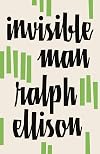
Okay! I've just finished this towering novel, listening throughout to Joe Morton's narration. It's easy to see why reading it in my old edition, from my college years and probably in 7 point type, might have bogged me down, because the jazz rhythms are so important and often carry the listener by their sheer momentum through what might seem repetitive on the page . Morton gives each character its own voice and cadence, which makes the dialog clear and the characters vivid and diverse.
The show more story is a classic Bildungsroman, detailing the growth of a naive character through episodes that both damage and enlighten him. It is also an existential novel of a man struggling to gain self-knowledge too often through the definitions of others, until he has no choice but to look deeply into himself. The episodes are brilliantly delivered, from the first abysmal racist entertainment to the last riot in Harlem. Some of them made me wriggle with discomfort or anger or impatience at this innocent man's blindness; that might speak to my own naivety as much as anything.
Some details that are relevant: it is set in the thirties, principally in Harlem; the times are infused with the aftermath of the depression; the Great Migration north; the growing ideology of socialism; the racism we still cannot escape. References that might be somewhat obscure to a current reader: Marcus Garvey and Booker T. Washington as two models of behavior promulgated from within the black community.
Some details that are delightful: trolley cars on 125th Street! Double-decker buses. Wide-shouldered suits. And a time when $300 was a fortune with which to pay back rent and board and still have money left over for a new suit of clothes. Hot sweet yams from a corner cart - but maybe they still sell those in Harlem.
I was afraid the book would not hold up after so many years; I was mesmerized. show less
The show more story is a classic Bildungsroman, detailing the growth of a naive character through episodes that both damage and enlighten him. It is also an existential novel of a man struggling to gain self-knowledge too often through the definitions of others, until he has no choice but to look deeply into himself. The episodes are brilliantly delivered, from the first abysmal racist entertainment to the last riot in Harlem. Some of them made me wriggle with discomfort or anger or impatience at this innocent man's blindness; that might speak to my own naivety as much as anything.
Some details that are relevant: it is set in the thirties, principally in Harlem; the times are infused with the aftermath of the depression; the Great Migration north; the growing ideology of socialism; the racism we still cannot escape. References that might be somewhat obscure to a current reader: Marcus Garvey and Booker T. Washington as two models of behavior promulgated from within the black community.
Some details that are delightful: trolley cars on 125th Street! Double-decker buses. Wide-shouldered suits. And a time when $300 was a fortune with which to pay back rent and board and still have money left over for a new suit of clothes. Hot sweet yams from a corner cart - but maybe they still sell those in Harlem.
I was afraid the book would not hold up after so many years; I was mesmerized. show less
This book is a feat of virtuosity. It follows the protagonist of the story, who is also its narrator, through his journey to absolute disillusionment. When the story begins, we meet the narrator as a cynical man, filled with rage, and even acting on it, in the streets of New York, and then he begins to narrate his life starting, naturally, from childhood. As a Black child in the American South and later as a young Black man, the narrator believes that following the rules the system has set show more out and acting in the way he is expected to by authorities will guarantee him happiness and prosperity. Disenchantment begins soon after he has to leave college following a series of comical events that lead to his expulsion from the school, and as he makes his way in life, each step becomes one disillusion then another, so that the unknowing and hopeful young boy we meet in the beginning no longer remains in the man he becomes.
This is a "great" book by all the metrics usually bestowed on books like this: wide scope, an adventure of sorts as one discovery leads to another, imaginatively vivid passages, unforgettable characters, speaks to the present (unfortunately so too) and reads very fresh despite the eight decades that have passed since its publication. There's an ironic and comical tone to this book that holds the extraordinary events and images in place, and I'm still reeling at how good this was. It was a tough one and I've taken some days upon completion before I even thought of reviewing it. I was tempted to give it the five stars with no review. Partly because most of what I had to say has already been said by others; partly because I've been so blown away by this that nothing would have been clear and coherent enough to express how Ellison sustains sharp vision through the madness.
Oppression, the monstrosity that it is, begets further monstrosity. On the people that enact it, as well as on those who are subjected to it. I've only read a few fictional works that paint it all as succinctly as this one did, and even fewer with such flourish. show less
This is a "great" book by all the metrics usually bestowed on books like this: wide scope, an adventure of sorts as one discovery leads to another, imaginatively vivid passages, unforgettable characters, speaks to the present (unfortunately so too) and reads very fresh despite the eight decades that have passed since its publication. There's an ironic and comical tone to this book that holds the extraordinary events and images in place, and I'm still reeling at how good this was. It was a tough one and I've taken some days upon completion before I even thought of reviewing it. I was tempted to give it the five stars with no review. Partly because most of what I had to say has already been said by others; partly because I've been so blown away by this that nothing would have been clear and coherent enough to express how Ellison sustains sharp vision through the madness.
Oppression, the monstrosity that it is, begets further monstrosity. On the people that enact it, as well as on those who are subjected to it. I've only read a few fictional works that paint it all as succinctly as this one did, and even fewer with such flourish. show less

Invisible Man, Ralph Ellison’s ground-breaking fictional exploration of racial and social issues in mid-twentieth century America, begins with one of the most celebrated openings in all of modern literature: “I am an invisible man…I am invisible, understand, simply because people refuse to see me.” Indeed, that pretty much sums up the theme of the entire novel, although the journey will take the reader almost another 600 pages before it ends. The story follows a young, unnamed show more African-American man—whose lack of identity and terse physical description make him almost as invisible to us as to the other characters—from his school days in a small Southern town to his migration to New York City, where he spends time working in a paint factory followed by an unlikely ascent to being a leading social activist in Harlem before being forced into hiding after a race riot that goes horribly wrong. Along the way, Ellison weaves into the tale a wide-ranging and diverse set of topics, including the fraught nature of black-white relationships, the relative effectiveness of reform policies, and Marxist-Communist philosophy, as well as some of the most remarkable story-telling I have come across in quite a while.
There is little question that this is an important book, but it is also one that would be difficult to classify as an enjoyable reading experience, if for no other reason than the consistently grim picture it portrays. What was the most striking thing about the novel, though, was just how relevant is still seems today, some seven decades after it first appeared. For instance, in a pivotal scene near the end, an unarmed black man resisting a questionable arrest is gunned down on the street by a white police officer, an event that eventually galvanizes the community to violent protest. Of course, that sounds all too familiar still, despite the apparent progress made on race relations during the past century. On the other hand, Invisible Man could have benefitted from a good editor; some of the vignettes border on being over-the-top hysterical (e.g., the infamous Battle Royal scene, the roadhouse incident, the Brotherhood meetings) and simply go on too long. Also, the author’s use of symbolism throughout the story (e.g., paint that cannot become truly white until mixed with a dark-colored compound) is quite heavy-handed. Nevertheless, those that regard this book as a classic are not wrong and it is one that continues to demand attention so many years after its publication. show less
There is little question that this is an important book, but it is also one that would be difficult to classify as an enjoyable reading experience, if for no other reason than the consistently grim picture it portrays. What was the most striking thing about the novel, though, was just how relevant is still seems today, some seven decades after it first appeared. For instance, in a pivotal scene near the end, an unarmed black man resisting a questionable arrest is gunned down on the street by a white police officer, an event that eventually galvanizes the community to violent protest. Of course, that sounds all too familiar still, despite the apparent progress made on race relations during the past century. On the other hand, Invisible Man could have benefitted from a good editor; some of the vignettes border on being over-the-top hysterical (e.g., the infamous Battle Royal scene, the roadhouse incident, the Brotherhood meetings) and simply go on too long. Also, the author’s use of symbolism throughout the story (e.g., paint that cannot become truly white until mixed with a dark-colored compound) is quite heavy-handed. Nevertheless, those that regard this book as a classic are not wrong and it is one that continues to demand attention so many years after its publication. show less
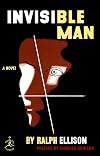
The story is narrated by a young and idealistic Black man endeavoring to find his place and purpose. Although he tries to do everything "right" — go to college, find a decent job, advocate in and for his community — misfortune not of his own making seems to hound him at every turn. Especially depressing was the illusion that the Invisible Man (he is never formally named) so earnestly believed in, assured by his mentors that he was part of something important and momentous, only for it show more ultimately to become apparent that nearly everyone he encountered, from the beginning of the book to the end, was using him for their own gains. I was almost expecting a tone of dark humor à la The Good Lord Bird, but there was scant occasion for laughter. show less
Lists
1950s (1)
AP Lit (1)
Favourite Books (1)
Obama Reads (1)
Nifty Fifties (1)
. (1)
Black Authors (1)
Urban Fiction (1)
Fiction: BLM (1)
Southern Fiction (1)
Overdue Podcast (1)
Florida (1)
Modernism (1)
Read These Too (1)
100 knjiga (1)
ethnic history (1)
Best First Lines (1)
1940s (1)
Existentialism (1)
Unread books (1)
My TBR (1)
BitLife (1)
Fiction For Men (1)
Five star books (1)
bound (1)
A Novel Cure (1)
Awards


You May Also Like


Associated Authors
Statistics
- Works
- 22
- Also by
- 43
- Members
- 21,353
- Popularity
- #1,015
- Rating
- 4.0
- Reviews
- 272
- ISBNs
- 155
- Languages
- 15
- Favorited
- 58


