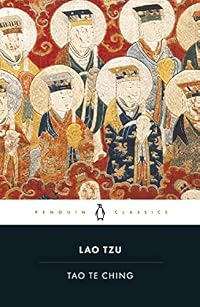
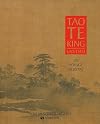
Tao Te Ching
by Lao Tzu
There are 2 current discussions about this work.
On This Page
Description
In 81 brief chapters, Lao-Tzu's Tao Te Ching, or Book of the Way, provides advice that imparts balance and perspective, a serene and generous spirit, and teaches us how to work for the good with the effortless skill that comes from being in accord with the Tao-the basic principle of the universe. Stephen Mitchell's bestselling version has been widely acclaimed as a gift to contemporary culture.Tags
Recommendations
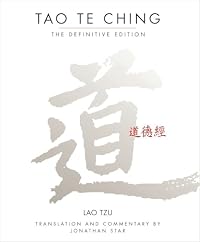
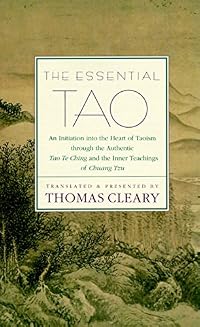
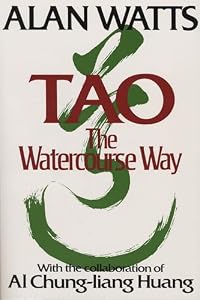

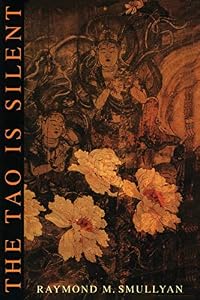
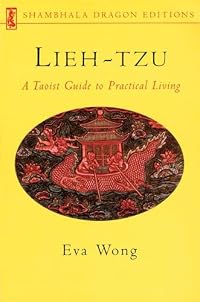
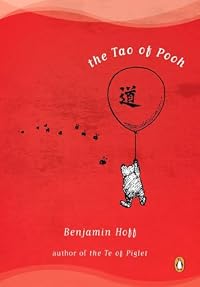







Member Recommendations

Member Reviews
As D.C. Lau points out in his highly readable introduction to this Penguin Classics edition, it is highly unlikely that Lao Tzu was an acutal person, despite stories of Confucius once going to see him. Instead, the contents of the Tao Te Ching seem to be a distillation and compilation of early Daoist thought. Like the Analects of Confucius, there are passages that are corrupted and whose meaning is either unfathomable or in dispute. There are also certain ideas that are repeated in nearly identical phrases in different parts of this very short work. Compared to the Analects of Confucius, this is a shorter, easier read, but like that work, I’m sure it benefits from reading in multiple translations and from reading more about it—not show more just of it. Since the Teaching Company doesn’t have a course on this book as they do for the Analects, I’ll just have to rely more on my own first impressions. Daoist philosophy (or Taoist, if you want to use the old spelling—but Daoist is how you pronounce it) is intriguing because it seems to rely on not taking action rather than on actually doing anything. It is full of things such as, “He who speaks doesn’t know.” And “He who knows doesn’t speak.” You’ll be nodding your head at things like that, comparing them to your own life experience. Putting such ideas into practice, however, seems problematic. No wonder some famous Daoists were monks. I’m not sure how following the precepts in this book would work in most people’s lives, unlike, for example, applying a few Buddhist tenets. I’m sure they wouldn’t fly at my house when it’s time to wash the dishes. But I’m trivializing things here. Just trying to wrap your mind around these concepts and spending a while contemplating them is beneficial. We do, for instance, act far more often than we should. How many times can we think of when not doing something would have served us better? But we just felt compelled to act, since that seems to be part of our human nature. Not to mention being easier to explain to your friends if your act goes wrong. I’m still trivializing, I guess. I highly recommend reading this well-done translation and its commentary. There are, for instance, a lot of ebooks available that give you an old translation of this work—which may be a fine translation for all I know—but without some context, you will lose much of the pleasure of reading. People who write books with titles that include “before you die” in them should immediately die themselves before they can write more such books. But if you’re an intelligent person, and if you have a little time to spare and an interest in philosophy, give this a try and I don’t think you’ll be disappointed. show less
Like it should, the Tao Te Ching arrived exactly when I needed it. The Tao helped me get through a really rough patch of my life: a dissolving marriage, unbelievable animosity and accusations, and stressful negotiation of parental rights through a nasty family court process. Reading it over and over helped me get through that process with my dignity and without saying or doing anything I now regret or asking for anything that was above and beyond what was reasonable and best for my kids.
"Do you have the patience to wait
till your mud settles and the water is clear?
Can you remain unmoving
till the right action arises by itself?"
That’s Verse 15. I went back to it again and again. I didn’t get a fair parenting plan but the Tao helped show more me accept that too.
The edition I read back then was the Tao Te Ching: An Illustrated Journey, translated by Stephen Mitchell. Not only did it make me a Taoist but it sent me on a mission to see who Stephen Mitchell was and what else he had to say. Meaning I’ve since read his versions of the Bhagavad Gita, Rilke’s Letters to a Young Poet and The Lay of the Love and Death of Cornet Christoph Rilke (reviewed here), the Second Book of the Tao, and The Gospel According to Jesus. I enjoyed and admire all of this books.
One of the things I especially love about Mitchell’s translation is that it refuses to gender everything male. Mitchell states his position on gender in the foreword to the trade edition of this translation (not included in the Providence Press edition) as:
"The reader will note that in the many passages where Lao Tzu describes the Master, I have used the pronoun “she” at least as often as “he.” The Chinese language doesn’t make this kind of distinction; in English we have to choose. But since we are all, potentially, the Master (since the Master is, essentially, us), I felt it would be untrue to present a male archetype, as other versions have, ironically, done. Ironically, because of all the great world religions the teaching of Lao Tzu is by far the most female. Of course, you should feel free, throughout the book, to substitute “he for “she” or vice versa."
Since my first contacts with the Tao I’ve delved deeply into the Yoga Sutra of Patañjali and see a lot of parallels with my yoga and the Tao.
"Weapons are the tools of violence:
all decent men detest them.
Weapons are the tools of fear;
a decent man will avoid them
except in the direst necessity
and, if compelled, will use them
only with the utmost restraint.
Peace is his highest value.
If the peace has been shattered,
how can he be content?
His enemies are not demons,
but human beings like himself.
He doesn’t wish them personal harm.
Nor does he rejoice in victory.
How could he rejoice in victory
and delight in the slaughter of men?
He enters a battle gravely,
with sorrow and with great compassion,
as if he were attending a funeral."
That’s verse 31 and very reminiscent of the Bhagavad Gita and possibly a realistic way to look at the world and the perceived “necessity” of force. Krishna might say this same thing to Arjuna. But it’s even a bit too much for someone who has taken the great vow of yoga and ahimsa, or non-harm.
The Tao has great lessons to teach our politicians and citizens in an increasingly nationalistic world as well:
"A great nation is like a great man:
When he makes a mistake, he realizes it.
Having realized it, he admits it.
Having admitted it, he corrects it.
He considers those who point out his faults
as his most benevolent teachers.
He thinks of his enemy
as the shadow that he himself casts.
If a nation is centered in the Tao,
if it nourishes its own people
and doesn’t meddle in the affairs of others,
it will be a light to all nations in the world."
I could go on and on with the passages I’ve highlighted in the six different editions I own. But I think I’ll leave it at that for now and talk about this edition specifically.
You can imagine how excited I was to see a private press edition of the Tao. Any edition would be on my wish list but a version of Stephen Mitchell’s text made it that much more exciting for me. I was a bit blindsided by it, to tell the truth, with Norman Clayton reaching out to me to let me know that his Providence Press had just published it. Not only that but I had somehow missed it at CODEX, which just goes to show you I need to give myself more time to walk the tables there. Norman had remembered me mentioning my admiration for Stephen Mitchell’s Tao in one of the posts here (probably the Arion Press Rilke?) and that I would love to see a private press edition. And viola, he reached out!
Providence Press is the book imprint of Norman’s Classic Letterpress, which designs and prints for individuals and organizations, including a recent book for the Book Club of California. The stated mission of Providence Press is to “produce books as beautiful as the writing is wise.” While Clayton had already been considering the Tao Te Ching as his first book under the imprint, when Norman moved to Ojai California he learned that Stephen Mitchell lived there, having moved there years previously also from the Bay Area. After contacting Mitchell, and with his generous encouragement, this edition was born. A nice little bit of bookish serendipity,
The Providence Press edition as designed and printed by Norman is simple, understated, and elegant. Like the Tao. The sole illustration, a photograph by Norman’s mother Burneta Clayton, is on the front cover. The Tao is presented here just as verse; no commentary or notes or other distractions. Each verse is beautifully placed on the page with crisp typography using the Davanti typeface. I really applaud the choice of a Coptic binding done by Molly Dedmond as this type of binding was used in early (Christian) spiritual texts, and thus has spiritual roots. It is also nice that this type of binding allows the book to lie flat when studying or meditating on the Tao.
Ursula K. Le Guin, another student of the Tao and favorite author of mine, has this to say about the Tao:
“It is the most lovable of all the great religious texts, funny, keen, kind, modest, indestructibly outrageous, and inexhaustibly refreshing. Of all the deep springs, this is the purest water. To me, it is also the deepest spring.”
AVAILABILITY: Printed in an edition of 125, copies of the edition are still available from Classic Letterpress
FORTHCOMING: Next up for Providence Press is an edition of the Heart Sutra, again in Stephen Mitchell’s translation. Check the presses website in upcoming months for information and I’ll try to keep you posted.
WISHLIST: Given the Providence Press’ mission to “produce books as beautiful as the writing is wise,” I’d love to see some texts that have never (to my knowledge) received the fine press treatment. Two that come to mind are the Yoga Sutra of Patañjali and the anonymous Cloud of Unknowing. show less
"Do you have the patience to wait
till your mud settles and the water is clear?
Can you remain unmoving
till the right action arises by itself?"
That’s Verse 15. I went back to it again and again. I didn’t get a fair parenting plan but the Tao helped show more me accept that too.
The edition I read back then was the Tao Te Ching: An Illustrated Journey, translated by Stephen Mitchell. Not only did it make me a Taoist but it sent me on a mission to see who Stephen Mitchell was and what else he had to say. Meaning I’ve since read his versions of the Bhagavad Gita, Rilke’s Letters to a Young Poet and The Lay of the Love and Death of Cornet Christoph Rilke (reviewed here), the Second Book of the Tao, and The Gospel According to Jesus. I enjoyed and admire all of this books.
One of the things I especially love about Mitchell’s translation is that it refuses to gender everything male. Mitchell states his position on gender in the foreword to the trade edition of this translation (not included in the Providence Press edition) as:
"The reader will note that in the many passages where Lao Tzu describes the Master, I have used the pronoun “she” at least as often as “he.” The Chinese language doesn’t make this kind of distinction; in English we have to choose. But since we are all, potentially, the Master (since the Master is, essentially, us), I felt it would be untrue to present a male archetype, as other versions have, ironically, done. Ironically, because of all the great world religions the teaching of Lao Tzu is by far the most female. Of course, you should feel free, throughout the book, to substitute “he for “she” or vice versa."
Since my first contacts with the Tao I’ve delved deeply into the Yoga Sutra of Patañjali and see a lot of parallels with my yoga and the Tao.
"Weapons are the tools of violence:
all decent men detest them.
Weapons are the tools of fear;
a decent man will avoid them
except in the direst necessity
and, if compelled, will use them
only with the utmost restraint.
Peace is his highest value.
If the peace has been shattered,
how can he be content?
His enemies are not demons,
but human beings like himself.
He doesn’t wish them personal harm.
Nor does he rejoice in victory.
How could he rejoice in victory
and delight in the slaughter of men?
He enters a battle gravely,
with sorrow and with great compassion,
as if he were attending a funeral."
That’s verse 31 and very reminiscent of the Bhagavad Gita and possibly a realistic way to look at the world and the perceived “necessity” of force. Krishna might say this same thing to Arjuna. But it’s even a bit too much for someone who has taken the great vow of yoga and ahimsa, or non-harm.
The Tao has great lessons to teach our politicians and citizens in an increasingly nationalistic world as well:
"A great nation is like a great man:
When he makes a mistake, he realizes it.
Having realized it, he admits it.
Having admitted it, he corrects it.
He considers those who point out his faults
as his most benevolent teachers.
He thinks of his enemy
as the shadow that he himself casts.
If a nation is centered in the Tao,
if it nourishes its own people
and doesn’t meddle in the affairs of others,
it will be a light to all nations in the world."
I could go on and on with the passages I’ve highlighted in the six different editions I own. But I think I’ll leave it at that for now and talk about this edition specifically.
You can imagine how excited I was to see a private press edition of the Tao. Any edition would be on my wish list but a version of Stephen Mitchell’s text made it that much more exciting for me. I was a bit blindsided by it, to tell the truth, with Norman Clayton reaching out to me to let me know that his Providence Press had just published it. Not only that but I had somehow missed it at CODEX, which just goes to show you I need to give myself more time to walk the tables there. Norman had remembered me mentioning my admiration for Stephen Mitchell’s Tao in one of the posts here (probably the Arion Press Rilke?) and that I would love to see a private press edition. And viola, he reached out!
Providence Press is the book imprint of Norman’s Classic Letterpress, which designs and prints for individuals and organizations, including a recent book for the Book Club of California. The stated mission of Providence Press is to “produce books as beautiful as the writing is wise.” While Clayton had already been considering the Tao Te Ching as his first book under the imprint, when Norman moved to Ojai California he learned that Stephen Mitchell lived there, having moved there years previously also from the Bay Area. After contacting Mitchell, and with his generous encouragement, this edition was born. A nice little bit of bookish serendipity,
The Providence Press edition as designed and printed by Norman is simple, understated, and elegant. Like the Tao. The sole illustration, a photograph by Norman’s mother Burneta Clayton, is on the front cover. The Tao is presented here just as verse; no commentary or notes or other distractions. Each verse is beautifully placed on the page with crisp typography using the Davanti typeface. I really applaud the choice of a Coptic binding done by Molly Dedmond as this type of binding was used in early (Christian) spiritual texts, and thus has spiritual roots. It is also nice that this type of binding allows the book to lie flat when studying or meditating on the Tao.
Ursula K. Le Guin, another student of the Tao and favorite author of mine, has this to say about the Tao:
“It is the most lovable of all the great religious texts, funny, keen, kind, modest, indestructibly outrageous, and inexhaustibly refreshing. Of all the deep springs, this is the purest water. To me, it is also the deepest spring.”
AVAILABILITY: Printed in an edition of 125, copies of the edition are still available from Classic Letterpress
FORTHCOMING: Next up for Providence Press is an edition of the Heart Sutra, again in Stephen Mitchell’s translation. Check the presses website in upcoming months for information and I’ll try to keep you posted.
WISHLIST: Given the Providence Press’ mission to “produce books as beautiful as the writing is wise,” I’d love to see some texts that have never (to my knowledge) received the fine press treatment. Two that come to mind are the Yoga Sutra of Patañjali and the anonymous Cloud of Unknowing. show less
I was sceptical of reading the Tao Te Ching before I opened it. Often these short, simple ancient books of philosophy don't resonate well for a modern audience. Such has been their influence that their once-revolutionary thoughts can be taken by a modern mind almost as a given.
However, the Tao Te Ching wasn't like this. It speaks its philosophy gently and with immaculate simplicity, and the ideas are deeply profound ones about harmonising oneself with the world and learning to see the movement of the Tao in everything, thereby making your peace with it. There's no stating the obvious; despite their simplicity, these are difficult tenets to live by.
The writing of Lao Tzu is itself serene, putting you in the perfect state of mind for show more absorbing the book's ideas. It is an impressive piece, one of the rare few pieces of philosophy that remains pure no matter how many hands and minds it flows through. show less
However, the Tao Te Ching wasn't like this. It speaks its philosophy gently and with immaculate simplicity, and the ideas are deeply profound ones about harmonising oneself with the world and learning to see the movement of the Tao in everything, thereby making your peace with it. There's no stating the obvious; despite their simplicity, these are difficult tenets to live by.
The writing of Lao Tzu is itself serene, putting you in the perfect state of mind for show more absorbing the book's ideas. It is an impressive piece, one of the rare few pieces of philosophy that remains pure no matter how many hands and minds it flows through. show less
This is a nice edition with a good introduction and the work is supported by explanatory footnotes, a glossary and a detailed essay into speculative areas of the provenance of the work and Lao Tzu himself. I also really appreciated the textual analysis elements of this commentary. The transmogrification of written works over the millenia and the archaeology on the extant versions is something I always find interesting.
Revisiting this work at various times in my life, like Aurelius' Meditations, I am always struck with the poetic and sage pronouncents that can make me muse and ponder over the antique wisdom for hours.
A theme that particularly struck me this time is the fundamental axiom that nothing yields something, as in:
...Something show more and Nothing produce each other;
the difficult and easy complement each other...
One thing it made me wonder is in Chinese or some Taoist-influenced culture is there less of a cultural need for an Intelligent Design movement, rabidly insecure Creationism, or similar Western movements that seem to spring up from Western civilization with the importance it sets on cause and effect, inventors and invention, founders and design.
So, do Taoist-tinged adults have an easier acceptance of The Big Bang than adults spilled out of Judae-Christian thought? I don't know, and it's not something I am going to find on a Wikipedia page or in some Google results and for that, I think Lao Tzu whether he existed, or not.
...the man of large mind abides in the thick, not in the thing... show less
Revisiting this work at various times in my life, like Aurelius' Meditations, I am always struck with the poetic and sage pronouncents that can make me muse and ponder over the antique wisdom for hours.
A theme that particularly struck me this time is the fundamental axiom that nothing yields something, as in:
...Something show more and Nothing produce each other;
the difficult and easy complement each other...
One thing it made me wonder is in Chinese or some Taoist-influenced culture is there less of a cultural need for an Intelligent Design movement, rabidly insecure Creationism, or similar Western movements that seem to spring up from Western civilization with the importance it sets on cause and effect, inventors and invention, founders and design.
So, do Taoist-tinged adults have an easier acceptance of The Big Bang than adults spilled out of Judae-Christian thought? I don't know, and it's not something I am going to find on a Wikipedia page or in some Google results and for that, I think Lao Tzu whether he existed, or not.
...the man of large mind abides in the thick, not in the thing... show less
The Tao that can be spoken of is not the true Tao.
Which makes a book about the Tao rather tricky. I'm not a scholar of Eastern religions, but a friend gave this to me as the best translation, and I can say that it is rather gorgeous, a series of elegant and self-contradictory parables into the nature of mastery, into an acceptance of the universe as it should be. I found some parts rather stunning in their clarity. Voids are more useful than existence. The walls and roof of a house, but we live inside the void. The nature of "doing" vs "done" is more challenging, as I face creative projects I am procrastinating on, as well as the more prosaic dishes that will not put themselves away.
Still, a great book.
Which makes a book about the Tao rather tricky. I'm not a scholar of Eastern religions, but a friend gave this to me as the best translation, and I can say that it is rather gorgeous, a series of elegant and self-contradictory parables into the nature of mastery, into an acceptance of the universe as it should be. I found some parts rather stunning in their clarity. Voids are more useful than existence. The walls and roof of a house, but we live inside the void. The nature of "doing" vs "done" is more challenging, as I face creative projects I am procrastinating on, as well as the more prosaic dishes that will not put themselves away.
Still, a great book.
This is certainly not the kind of book that one reads once or all at once. Of course you can, but readers are likely to take different things from the book at different times. At different points in one’s life, different times of the year, different moments in one’s career, different times of the day, some chapters are going to appear more profound than others. In that way, it may be a little like reading a horoscope in that readers will find the answers they are looking for in some chapters while others appear more peripheral and go out of focus. I like to think that this is an effective way to read this book. But unlike a horoscope there is a consistent message across chapters, in the focus on patience, compassion, and humility. show more We should stop trying so hard to control our lives and our relations to others. We should stop trying so hard change what is not within our ability to change. Insisting on doing so inserts a kind of intentionality that gets in the way of experience and closes us off to possibilities.
Honestly, I picked up the book because I really like translations by Stephen Mitchell, and this one did not disappoint. When comparing different translations of the book, I could see Mitchell’s consistent, artful way of recasting unusual phrasing and imagery (resulting, I imagine from a more literal or direct translations into contemporary speech, but more importantly by repositioning the object of focus to be “intention” whether that of travelers, rulers, artists, or just the reader. This move nicely positions the reader to see the relationship between the underlying wisdom and its bearing on how one envisions and acts on intention. show less
Honestly, I picked up the book because I really like translations by Stephen Mitchell, and this one did not disappoint. When comparing different translations of the book, I could see Mitchell’s consistent, artful way of recasting unusual phrasing and imagery (resulting, I imagine from a more literal or direct translations into contemporary speech, but more importantly by repositioning the object of focus to be “intention” whether that of travelers, rulers, artists, or just the reader. This move nicely positions the reader to see the relationship between the underlying wisdom and its bearing on how one envisions and acts on intention. show less
This is a small book in a series of Sacred Texts published by Watkins and I regret that I could not give it more than two stars.
Let us deal with the original. Personally, I am highly sympathetic to Taoist (or Daoist) thinking, considering it generally true to the question of how we can find balance in our relations with the world and with an ethic that 'works'. The technique of these verses is to present the argument in poetic form as paradoxes for contemplation.
Unfortunately, there comes a point when the paradoxical becomes the obscure and the repetitive - and it is at times like this that you need a deeper commentary that distinguishes carefully between what the text may have meant in its original context and what it should or could show more mean to us today.
This suggests reading it in its social context of the Sixth Century BCE or uncovering a personal meaning relevant to the Twenty-First Century AD - but it is one hell of a task to give it a viable social or political meaning today without a lot of intellectual effort being applied. Unfortunately, the Commentary to this book does not reach the necessary standard.
Dale's commentary, which starts well enough with a clarification of what he translates as the Great Integrity, descends into some necessary repetition (of course, because the original is repetitive), but also into an agenda that sustains a mythic narrative that just does not stand up to scrutiny.
It offers one of those vague 'new age' political philosophies where what ought to be is construed as really under the surface of things now. Lovely and comforting but scarcely what Lao Tzu actually meant over two thousand years ago.
Discomfort starts with occasional references to Dale translating to fit the message for today. Well, that starts getting me nervous because I have to trust a translator. If his commentary has an agenda and he admits to one or two minor changes for relevance, then I start to get very distrustful, fairly or unfairly.
In other words, this is a text for the fluffy new age market and it is neither a scholarly book nor an attempt to investigate the text more carefully for any meaning that might be drawn out in the context of our own cultural development or in the light of the explorations of our most advanced thinkers - even in opposition to them.
This is a shame because Lao Tzu has a great deal to teach us about the nature of Existence (Being) and our responses to it. A dialogue between it and Western existentialism (and post-existentialist) thinking remains fruitful. In a way, while not wishing to discourage Watkins' general mission to bring the esoteric and spiritual to the Western mainstream, the popularisation of such schools as Tao and Tantra for lightly worn 'personal development' has its downside.
It is not really fair to ask most people to have the rigour of the professional thinker or to challenge everything as a matter of course. The spiritual is a way of constructing oneself as meaningful and the arrival of Buddhist, Kabbalistic, Taoist, Tantric and Sufi modes (let alone, say, Wiccan) amongst the anxious is of vital importance - similar to the role of Mystery Religions in the late Roman Empire. It is a means of dealing with overwhelming social forces at a time of maximum personal insecurity. The spiritual is 'real' and to be respected. Those militant atheists and rationalists are arrogant and cruel in trying to undermine it. It can have an important social and personal purpose.
However, there are levels of engagement. All these forces range from the popular (the equivalent to the worship of saints) to the highly scholastic (equivalent to Thomism) through to the ecstatic and spiritual (as in the experience of St. Theresa of Avila). They exist alongside each other, regardless of the functional role of a church or mission.
It is reasonable to hope that texts will be offered to the public that are accurate in every detail and have their contents explained properly and in context, without pandering to a vaguely fashionable green and progressive ideology. This is a fairly common ideological trope in neo-pagan and esoteric popular literature - a sort of save the whales and stop climate change through a free love and drumming mentality. I jest!
This particular book is fine as an attractive equivalent to an icon but it is not one painted by a Master. If you do buy this for contemplation, the meat lies in the first verses. There is real value to be had in the way Lao Tzu faces existence head-on without flinching and draws from this experience an ethic of calm, balance and distanced compassion for oneself as for society. This should be as much part of any civilised Western person's education as the Four Gospels even if you end up believing in neither God nor the Way. I shall certainly be looking for another copy of the original text to hold in my Library for this reason. show less
Let us deal with the original. Personally, I am highly sympathetic to Taoist (or Daoist) thinking, considering it generally true to the question of how we can find balance in our relations with the world and with an ethic that 'works'. The technique of these verses is to present the argument in poetic form as paradoxes for contemplation.
Unfortunately, there comes a point when the paradoxical becomes the obscure and the repetitive - and it is at times like this that you need a deeper commentary that distinguishes carefully between what the text may have meant in its original context and what it should or could show more mean to us today.
This suggests reading it in its social context of the Sixth Century BCE or uncovering a personal meaning relevant to the Twenty-First Century AD - but it is one hell of a task to give it a viable social or political meaning today without a lot of intellectual effort being applied. Unfortunately, the Commentary to this book does not reach the necessary standard.
Dale's commentary, which starts well enough with a clarification of what he translates as the Great Integrity, descends into some necessary repetition (of course, because the original is repetitive), but also into an agenda that sustains a mythic narrative that just does not stand up to scrutiny.
It offers one of those vague 'new age' political philosophies where what ought to be is construed as really under the surface of things now. Lovely and comforting but scarcely what Lao Tzu actually meant over two thousand years ago.
Discomfort starts with occasional references to Dale translating to fit the message for today. Well, that starts getting me nervous because I have to trust a translator. If his commentary has an agenda and he admits to one or two minor changes for relevance, then I start to get very distrustful, fairly or unfairly.
In other words, this is a text for the fluffy new age market and it is neither a scholarly book nor an attempt to investigate the text more carefully for any meaning that might be drawn out in the context of our own cultural development or in the light of the explorations of our most advanced thinkers - even in opposition to them.
This is a shame because Lao Tzu has a great deal to teach us about the nature of Existence (Being) and our responses to it. A dialogue between it and Western existentialism (and post-existentialist) thinking remains fruitful. In a way, while not wishing to discourage Watkins' general mission to bring the esoteric and spiritual to the Western mainstream, the popularisation of such schools as Tao and Tantra for lightly worn 'personal development' has its downside.
It is not really fair to ask most people to have the rigour of the professional thinker or to challenge everything as a matter of course. The spiritual is a way of constructing oneself as meaningful and the arrival of Buddhist, Kabbalistic, Taoist, Tantric and Sufi modes (let alone, say, Wiccan) amongst the anxious is of vital importance - similar to the role of Mystery Religions in the late Roman Empire. It is a means of dealing with overwhelming social forces at a time of maximum personal insecurity. The spiritual is 'real' and to be respected. Those militant atheists and rationalists are arrogant and cruel in trying to undermine it. It can have an important social and personal purpose.
However, there are levels of engagement. All these forces range from the popular (the equivalent to the worship of saints) to the highly scholastic (equivalent to Thomism) through to the ecstatic and spiritual (as in the experience of St. Theresa of Avila). They exist alongside each other, regardless of the functional role of a church or mission.
It is reasonable to hope that texts will be offered to the public that are accurate in every detail and have their contents explained properly and in context, without pandering to a vaguely fashionable green and progressive ideology. This is a fairly common ideological trope in neo-pagan and esoteric popular literature - a sort of save the whales and stop climate change through a free love and drumming mentality. I jest!
This particular book is fine as an attractive equivalent to an icon but it is not one painted by a Master. If you do buy this for contemplation, the meat lies in the first verses. There is real value to be had in the way Lao Tzu faces existence head-on without flinching and draws from this experience an ethic of calm, balance and distanced compassion for oneself as for society. This should be as much part of any civilised Western person's education as the Four Gospels even if you end up believing in neither God nor the Way. I shall certainly be looking for another copy of the original text to hold in my Library for this reason. show less
Members
- Recently Added By
Lists

100 Books to Read in a Lifetime (That Are Older Than 200 Years)
415 works; 175 members

Favourite Books
1,817 works; 308 members

Mustich's 1000 Books to Read Before You Die: A Life Changing List
1,001 works; 18 members

el
1,139 works; 1 member

Books Read in 2021
5,361 works; 113 members

Reading LIst
648 works; 1 member

8-21-25
2 works; 1 member

Books That Changed Our Perspective
423 works; 168 members

Recommended Reading : 600 Classics Reviewed, Editors of Salem Press, 2015
634 works; 6 members

Books About Non-Abrahamic Religions
98 works; 2 members

Book Titles Mentioned In Newberry Medal And Honor Books
884 works; 3 members

Books Read in 2023
5,547 works; 145 members

Philip Ward's Lifetime Reading Plan
592 works; 22 members
My List
302 works; 1 member

Greatest Books, allegedly
484 works; 9 members

Recommended Non-Fiction Books
26 works; 2 members

Books Read in 2018
4,360 works; 110 members

Alan Kay's Reading List
103 works; 3 members

Blue Pyramid 1,276 Best Books of All Time
1,248 works; 32 members

Read
293 works; 4 members
Non-Fiction Worth Reading
1,015 works; 255 members

GreatBooks Worldview Academy Lists
133 works; 4 members
1001 Books You Must Read Before You Die
1,448 works; 1,132 members

Chinese Literature
12 works; 4 members

Best of World Literature
431 works; 51 members

Recommend the 20 best books you've read in the last five years
2,168 works; 606 members

Unread books
1,063 works; 83 members

Philosophy
23 works; 1 member

Worst religious books
19 works; 8 members
Talk Discussions
Current Discussions
Best translation of the Tao Te Ching in Taoism (March 24)
Three Chinese classics in Philosophy and Theory (January 18)
Author Information

300+ Works 23,359 Members
Lao Tzu, a Chinese philosopher, is considered to be the founder of Taoism. His birth and death dates are uncertain. According to legend, Lao Tzu was keeper of the archives at the imperial court. When he was eighty years old he set out for the western border of China, saddened and disillusioned that men were unwilling to follow the path to natural show more goodness. At the border, he was asked by a border guard to record his teachings before he left. These teachings were compiled into the Tao Te Ching (The Way and Its Power). (Bowker Author Biography) show less
Some Editions
Awards and Honors
Awards
Notable Lists
Series
Belongs to Publisher Series
Insel Clip (7)
Mentor Religious Classic (MD129)
Newton Compton Live (19)
Mentor Books (M129)
Warbler Classics (pygmalion shaw)
detebe-Klassiker (21875)
Penguin Great Ideas (61)
Centopaginemillelire (232)
Insel-Bücherei (Nr. 991)
Penguin Classics (L131)
Work Relationships
Is contained in
Has the adaptation
Inspired
Has as a study
Has as a commentary on the text
Common Knowledge
- Canonical title
- Tao Te Ching
- Original title
- 道德經; Lao Tzu: Tao Te Ching: A Book About the Way and the Power of the Way; Daodejing; Tao Te Ching
- Alternate titles
- Daodejing
- Original publication date
- 400 BC
- People/Characters
- Lao Tzu
- Important places
- Ancient China; Ma-Wang-Tui, China; Mawangdui, China; China; Asia
- Important events
- 4th century BCE; Zhou Dynasty
- Epigraph
- "Venture not beyond your doors to know the world..."
- Dedication
- TO MY MOTHER AND FATHER (Mitchell translation)
For A. L. K. and J. P. S.
To Vicks. Who can find a good woman? / She is precious beyond all things. / Her husband's heart trusts her completely. / She is his best reward. Proverbs 31:10-11
TO VICKI (Mitchell translation) - First words
- The tao that can be told is not the eternal Tao. (Mitchell translation)
The way you can go
isn't the real way.
No one actually knows where the Tao Te Ching came from, but this slim book of about five thousand words forms the foundation of classical Chinese philosophy.
I. OPTIMIZING EXPERIENCE: THIS FOCUS AND ITS FIELD - We will argue that the defining purpose of the Daodejing is bringing into focus and sustaining a productive disposition that allows for the fullest appreciation of th... (show all)ose specific things and events that constitute one's field of experience.
The tao that can be told is not the eternal Tao. [Gia-fu Feng/Jane English translation]
Way-making (dao) that can be put into words is not really way-making, And naming (ming) that can assign fixed reference to things is not really naming. (Ames/Hall translation)
I will begin with a comparison.
The person of superior integrity does not insist upon his integrity. (Mair translation)
The way that can be told
Is not the constant way;
The name that can be named
Is not the constant name. (Lau translation)
Existence is beyond the power of words
To define.
Terms may be used
But are none of them absolute. (Bynner translation)
The Tao that can be talked about is not the true Tao. [Kwok/Palmer/Ramsay translation]
The Way that can be articulately described is not the Unchanging Way. (Willam S. Wilson translation) - Last words
- (Click to show. Warning: May contain spoilers.)By not dominating, the Master leads. (Mitchell translation)
(Click to show. Warning: May contain spoilers.)Doing without outdoing
is the Way of the wise.
(Click to show. Warning: May contain spoilers.)81 - The Evolved Way:
The Tao of Evolved Individuals
Is to act without contending.
(Click to show. Warning: May contain spoilers.)All effective transactions are affective transactions, and require recourse to these invested relations.
(Click to show. Warning: May contain spoilers.)The Tao nourishes by not forcing. By not dominating the Master leads.
(Click to show. Warning: May contain spoilers.)By restraining them with the nameless unhewn log, They will not feel disgraced; Not feeling disgraced, They will be still, Whereupon heaven and earth will be made right by themselves. (Mair translation)
(Click to show. Warning: May contain spoilers.)Thus, the way of tian is to benefit without harming; The way of the sages is to do without contending. (Ames/Hall translation)
(Click to show. Warning: May contain spoilers.)The way of heaven benefits and does not harm; the way of the sage is bountiful and does not contend. (Lau translation)
(Click to show. Warning: May contain spoilers.)The way of life cleaves without cutting:
Which, without need to say,
Should be man's way. (Bynner translation)
(Click to show. Warning: May contain spoilers.)The Tao of the sage is work without effort. [Gia-fu Feng/Jane English translation]
(Click to show. Warning: May contain spoilers.)And the Tao of Heaven
feeds everything, and harms nothing
And the sage's Tao
completes it, without doing anything. [Kwok/Palmer/Ramsay translation]
(Click to show. Warning: May contain spoilers.)The Way of the sage
Is to act but not contend.
(William S. Wilson translation. - Publisher's editor
- Hendricks, Robert G.; Rosset, Hannelore
- Blurbers
- Schelling, Andrew; Durrant, Stephen; Major, John; Watts, Alan; Holmes, John Haynes (Putnam edition) (Putnam edition)
- Original language
- Chinese
- Canonical DDC/MDS
- 299.51482
- Canonical LCC
- BL1900.LZ6E5
- Disambiguation notice
- Laozi Tao Te Ching on The Art of Harmony: The New Illustrated Edition of the Chinese Philosophical Masterpiece translated by Chad Hansen is set apart from other translations of the Tao by it's extensive color pl... (show all)ates on 50%+ of the pages and then an addition 100 pages of introduction and commentary. Please don't combine with other translations. "Tao The Ching de kunst van harmonie" is a Dutch translation.
Classifications
- Genres
- Philosophy, Religion & Spirituality, Nonfiction
- DDC/MDS
- 299.51482 — Religion Other religions Shintoism/Taoism/Other Mythologies Of Asian Origin Religions of Chinese Origin Taoism Scriptures
- LCC
- BL1900 — Philosophy, Psychology and Religion Religions. Mythology. Rationalism Religions. Mythology. Rationalism History and principles of religions Asian. Oriental By region or country China Taoism
- BISAC
Statistics
- Members
- 16,409
- Popularity
- 412
- Reviews
- 189
- Rating
- (4.21)
- Languages
- 26 — Catalan, Chinese, Czech, Danish, Dutch, English, Estonian, Finnish, French, German, Hungarian, Icelandic, Indonesian, Italian, Japanese, Korean, Lithuanian, Multiple languages, Norwegian (Bokmål), Polish, Portuguese, Romanian, Russian, Spanish, Swedish, Turkish
- Media
- Paper, Audiobook, Ebook
- ISBNs
- 833
- UPCs
- 7
- ASINs
- 202