On This Page
Description
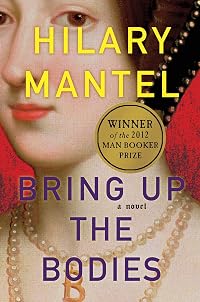
Though he battled for seven years to marry her, Henry is disenchanted with Anne Boleyn. She has failed to give him a son and her sharp intelligence and audacious will alienate his old friends and the noble families of England. When the discarded Katherine dies in exile from the court, Anne stands starkly exposed, the focus of gossip and malice. At a word from Henry, Thomas Cromwell is ready to bring her down. Over three terrifying weeks, Anne is ensnared in a web of conspiracy, while the show more demure Jane Seymour stands waiting her turn for the poisoned wedding ring. But Anne and her powerful family will not yield without a ferocious struggle. Hilary Mantel's Bring Up the Bodies follows the dramatic trial of the queen and her suitors for adultery and treason. To defeat the Boleyns, Cromwell must ally with his natural enemies, the papist aristocracy. What price will he pay for Anne's head? show lessTags
Recommendations

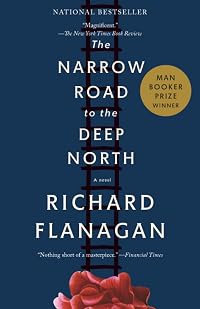
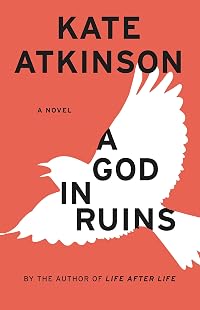
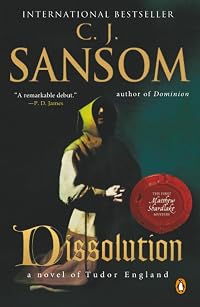
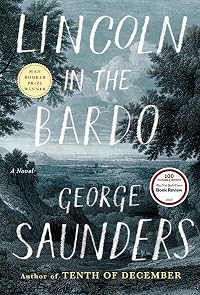

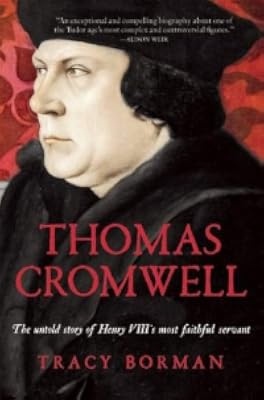
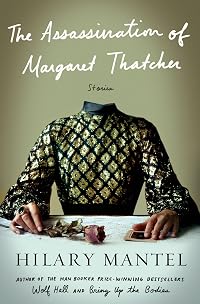














Member Recommendations


by anonymous user
by anonymous user
by anonymous user
by anonymous user

by anonymous user
by anonymous user


by anonymous user
Member Reviews
“…it is no small enterprise, to bring down a queen of England.” So says Thomas Cromwell, who in Bring up the Bodies finds himself charged with doing just that…again. It’s unlikely that anyone reading this novel is being introduced to its major players for the first time. Henry VIII and his many wives have been fiction fodder for centuries. But Mantel’s version of the downfall of Anne Boleyn, her family and her courtiers feels brand-spanking new even to those who have read all the novels and watched all the dramas. It’s a matter of perspective. To see this history, much of which is unreliably recorded at best, from the point of view of the man most responsible for carrying out the King’s wishes, casts it all in a clearer show more and much less romantic light than many others have done. In Henry’s Court, queens, no less than advisors, are replaceable. MUST be replaceable if they do not fulfill the duties and meet the needs of the King, whatever the laws of man and God seem to dictate to the contrary. Cromwell himself knows quite well that he is not exempt from this rule. “Sometimes he wakes in the night and thinks of it. There are courtiers who have honourably retired. He can think of instances. Of course, it is the other kind that loom larger, if you are wakeful around midnight.” Logic suggests that one day, possibly without warning, Henry will turn on him, and his efforts to satisfy the King’s desires will be viewed as treason when those desires change once more. So far, that day has not come. His heart is not faint, and his scruples do not trouble him. He methodically removes the stumbling blocks –most of them human—from the path King Henry has chosen to follow. And then it is inevitable that someone will ask “…if this is what Cromwell does to …lesser enemies, what will he do by and by to the king himself?” Mantel’s style can be challenging, but I have not found it so since becoming absorbed in the first 50 pages or so of Wolf Hall, to which Bring up the Bodies is a sequel. Her research, imagination and storytelling skills have made her one of my favorite contemporary authors. May she live and prosper to recount the rest of Cromwell’s fascinating contributions to English history. We all know, or can easily find out, whether it is Henry or Crumb who will bring the other down. But how we long to hear it from the inimitable vantage point Mantel has established. show less
I do not know why Mantel was doing this. I can only try to guess. It almost feels like she fell in love with a character of her own creation and would not stop at anything in order to portray him as a singular genius of his time.
Indeed, so singular Thomas Cromwell appears in the book that no other character can even come close to having an equal footed conversation with him. He is so above and beyond people surrounding him that he has a statue of a giant. So how does Mantel accomplish her dubious task of fabricating a modern day mythological hero?
First, as I already mentioned, she needs to put everybody else down. Historical figures around Cromwell are all diminished in their thoughts, words, and actions. They are selfish, haughty, show more unscrupulous, immoral, inconsistent, disloyal, gullible and naïve - all at the same time. Cromwell drives through them like a knife through butter. He glitters and shines, he captivates and disarms. Here is where the second tool employed by Mantel in glorification of her protagonist really hits home. The descriptions, the dialogues, the phases, the punchlines are extraordinary good! First and penultimate chapters deserve the highest literary praise. Imagine if she could put these unique weapons at her disposal to some good use?
As it goes, she fails in the one goal she has set out to achieve. At least in the eyes of this reader, the magnificent baron of Wimbledon comes out as a power-hungry, cruel, vengeful, cunning, manipulative liar. A worthy Machiavellian disciple. How could Hilary fall for such a man? show less
Indeed, so singular Thomas Cromwell appears in the book that no other character can even come close to having an equal footed conversation with him. He is so above and beyond people surrounding him that he has a statue of a giant. So how does Mantel accomplish her dubious task of fabricating a modern day mythological hero?
First, as I already mentioned, she needs to put everybody else down. Historical figures around Cromwell are all diminished in their thoughts, words, and actions. They are selfish, haughty, show more unscrupulous, immoral, inconsistent, disloyal, gullible and naïve - all at the same time. Cromwell drives through them like a knife through butter. He glitters and shines, he captivates and disarms. Here is where the second tool employed by Mantel in glorification of her protagonist really hits home. The descriptions, the dialogues, the phases, the punchlines are extraordinary good! First and penultimate chapters deserve the highest literary praise. Imagine if she could put these unique weapons at her disposal to some good use?
As it goes, she fails in the one goal she has set out to achieve. At least in the eyes of this reader, the magnificent baron of Wimbledon comes out as a power-hungry, cruel, vengeful, cunning, manipulative liar. A worthy Machiavellian disciple. How could Hilary fall for such a man? show less
Killer ending. Just... killer.
I found Wolf Hall to be meandering, dreamlike, and more welcoming to mental digressions. Nowhere in that first book was I presented with any cause for questioning my sympathy and identification with Thomas Cromwell--he was written as a 20th or 21st century man out of time, and his steady progress to the top of the heap presented as the inexorable, inevitable march of history. Wheel(s) of time grinding slowly, exceedingly small, etc.
Bring Up the Bodies is a different matter--the pace is faster, the language and plot tighter. There's a lot of looking backward, as there was in Wolf Hall, but the past to which Cromwell looks is increasingly closer. My overall impression was of acceleration, speed and power show more poised on the edge of control. Oh, and extreme cold. I guess I found the reading somewhat akin to skiing.
It's fitting, in a way, that a book about massive and rapid sociopolitical change should evoke the kind of speed inconceivable in Tudor England. The very reading can feel like having a rug pulled out from under you. Or, think of a car, or a locomotive, or an over-50mph city bus ("Speed" came up a few times over the weekend!). Is Cromwell behind the wheel, and (to what extent) is he in charge? show less
I found Wolf Hall to be meandering, dreamlike, and more welcoming to mental digressions. Nowhere in that first book was I presented with any cause for questioning my sympathy and identification with Thomas Cromwell--he was written as a 20th or 21st century man out of time, and his steady progress to the top of the heap presented as the inexorable, inevitable march of history. Wheel(s) of time grinding slowly, exceedingly small, etc.
Bring Up the Bodies is a different matter--the pace is faster, the language and plot tighter. There's a lot of looking backward, as there was in Wolf Hall, but the past to which Cromwell looks is increasingly closer. My overall impression was of acceleration, speed and power show more poised on the edge of control. Oh, and extreme cold. I guess I found the reading somewhat akin to skiing.
It's fitting, in a way, that a book about massive and rapid sociopolitical change should evoke the kind of speed inconceivable in Tudor England. The very reading can feel like having a rug pulled out from under you. Or, think of a car, or a locomotive, or an over-50mph city bus ("Speed" came up a few times over the weekend!). Is Cromwell behind the wheel, and (to what extent) is he in charge? show less
Mantel writes beautiful prose and has a deeply held perspective on history. After a zillion books about Anne Boleyn and her fair, but lost head, Mantel's telling of this story is rich and compelling. Seen through the eyes of Thomas Cromwell, the Tudor court is both glittering and rotting. As Henry's top advisor it is up to Cromwell to re-write the past, to punish transgressors to Henry's vision, and to remove any obstacle to Henry's desire for a son.
Henry is an after-thought here. He's the Wizard of Ozian character, back behind the curtain, pulling the levers and setting the task. The stars here are Anne and Cromwell as they pursue a fever-pitched battle for survival. If you know only the bare bones of this history, you know who won show more (and no, it was neither Anne nor Cromwell).
Mantel's writing is impeccable, her plot and timing spot-on, her imagery vivid. This is not your average historical fiction, but rather a deep dive into the history of the Tudor court in all its tarnished beauty. A must read. show less
Henry is an after-thought here. He's the Wizard of Ozian character, back behind the curtain, pulling the levers and setting the task. The stars here are Anne and Cromwell as they pursue a fever-pitched battle for survival. If you know only the bare bones of this history, you know who won show more (and no, it was neither Anne nor Cromwell).
Mantel's writing is impeccable, her plot and timing spot-on, her imagery vivid. This is not your average historical fiction, but rather a deep dive into the history of the Tudor court in all its tarnished beauty. A must read. show less
Where I got the book: my local library.
Now this is where the ratings system gets all screwy. Compared to the run of histfic, Bring Up The Bodies is a 5-star read in terms of quality (I never nitpick about historical accuracy). But compared to my 5-star experience of Wolf Hall, Bring Up The Bodies didn't quite come up to scratch and, although my opinion hovers somewhere around the 4.5 range, being constrained to whole numbers I'm giving it 4 stars to make the distinction.
Get it? Oh, never mind. On with the review.
I thought Bring Up The Bodies started beautifully. The first chapter was masterful, and pulled me right back into Cromwell's head and Henry VIII's court. And then things got a little dry. There wasn't enough of this:
"When show more Stephen comes into a room, the furnishings shrink from him. Chairs scuttle backwards. Joint-stools flatten themselves like pissing bitches. The woolen Bible figures in the king's tapestries lift their hands to cover their ears."
or this:
"Anne's lovers are phantom gentlemen, flitting by night with adulterous intent. They come and go by night, unchallenged. They skim over the river like midges, flicker against the dark, their doublets sewn with diamonds. The moon sees them, peering from her hood of bone, and Thames water reflects them, glimmering like fish, like pearls."
All of those moments where we're in both Cromwell's head and the author's are what I enjoy most. I don't believe for a moment that Cromwell is actually thinking in terms of these literary images, but the glory of literature is that you can take a character's supposed thoughts and pass them through a sort of kaleidoscope of words, so that the author's opinion (history's opinion? I don't know) and Cromwell's form more than the sum of their parts; Stephen Gardiner's scariness, the whole question of whether Anne's lovers were figments of the imagination. It's these flights of imagery that made Wolf Hall transcend the ordinary reading experience for me, and there was a big desert in the middle of Bodies where all we got was dialogue and short, efficient bursts of narrative; well written, indeed, but not exciting.
Perhaps it was the subject-matter at this point, because for quite a while Cromwell is caught up in the political maneuvering that leads up to Anne's demise. (view spoiler) I felt that Mantel got her groove back once that episode was over, the outcome was pretty clear and Cromwell became once more the observer. Could it be that the political stuff in the middle was more fully documented and Mantel felt that she had to cover it, whereas the last third was more open to her imagination? That's just a guess on my part.
Anyway, the book has only diminished my Mantel fangirlishness by about 6%, so I'd still recommend this novel. But read Wolf Hall first. show less
Now this is where the ratings system gets all screwy. Compared to the run of histfic, Bring Up The Bodies is a 5-star read in terms of quality (I never nitpick about historical accuracy). But compared to my 5-star experience of Wolf Hall, Bring Up The Bodies didn't quite come up to scratch and, although my opinion hovers somewhere around the 4.5 range, being constrained to whole numbers I'm giving it 4 stars to make the distinction.
Get it? Oh, never mind. On with the review.
I thought Bring Up The Bodies started beautifully. The first chapter was masterful, and pulled me right back into Cromwell's head and Henry VIII's court. And then things got a little dry. There wasn't enough of this:
"When show more Stephen comes into a room, the furnishings shrink from him. Chairs scuttle backwards. Joint-stools flatten themselves like pissing bitches. The woolen Bible figures in the king's tapestries lift their hands to cover their ears."
or this:
"Anne's lovers are phantom gentlemen, flitting by night with adulterous intent. They come and go by night, unchallenged. They skim over the river like midges, flicker against the dark, their doublets sewn with diamonds. The moon sees them, peering from her hood of bone, and Thames water reflects them, glimmering like fish, like pearls."
All of those moments where we're in both Cromwell's head and the author's are what I enjoy most. I don't believe for a moment that Cromwell is actually thinking in terms of these literary images, but the glory of literature is that you can take a character's supposed thoughts and pass them through a sort of kaleidoscope of words, so that the author's opinion (history's opinion? I don't know) and Cromwell's form more than the sum of their parts; Stephen Gardiner's scariness, the whole question of whether Anne's lovers were figments of the imagination. It's these flights of imagery that made Wolf Hall transcend the ordinary reading experience for me, and there was a big desert in the middle of Bodies where all we got was dialogue and short, efficient bursts of narrative; well written, indeed, but not exciting.
Perhaps it was the subject-matter at this point, because for quite a while Cromwell is caught up in the political maneuvering that leads up to Anne's demise. (view spoiler) I felt that Mantel got her groove back once that episode was over, the outcome was pretty clear and Cromwell became once more the observer. Could it be that the political stuff in the middle was more fully documented and Mantel felt that she had to cover it, whereas the last third was more open to her imagination? That's just a guess on my part.
Anyway, the book has only diminished my Mantel fangirlishness by about 6%, so I'd still recommend this novel. But read Wolf Hall first. show less
I'm so delighted that this even surpassed Wolf Hall in terms of my utter reading enjoyment. Yes, a big part of that is that our court story is getting to the really gripping part with Anne Boleyn getting her alleged comeuppance, but also as the characters were now familiar it was easier to immediately sink into the story and get back to feeling like a fly on the wall again.
Tension is ripe throughout this second novel. Henry isn't happy, and that pervades the air in every nook and cranny of court, but this feels different to the crisis with Katherine of Aragon. Henry feels different. Cromwell is up to his neck now in terms of responsibility for making things happen for the king, but even after everything has been achieved in terms of show more doing away with Anne Boleyn there is a sense that nothing is over; it is all just beginning. A line has been crossed (although most of Europe seem to think this is child's play compared to Katherine being ousted), and the game feels acutely more dangerous now.
Utterly superb visualisation of this classic time in history.
5 stars - I'm clutching at straws to find any fault with this wonderful book. show less
Tension is ripe throughout this second novel. Henry isn't happy, and that pervades the air in every nook and cranny of court, but this feels different to the crisis with Katherine of Aragon. Henry feels different. Cromwell is up to his neck now in terms of responsibility for making things happen for the king, but even after everything has been achieved in terms of show more doing away with Anne Boleyn there is a sense that nothing is over; it is all just beginning. A line has been crossed (although most of Europe seem to think this is child's play compared to Katherine being ousted), and the game feels acutely more dangerous now.
Utterly superb visualisation of this classic time in history.
5 stars - I'm clutching at straws to find any fault with this wonderful book. show less
So these may be two stone-cold literary and popular classics of the 21st century, fully and deservedly so. In Wolf Hall, Thomas Cromwell rose from nothing to one of the most powerful men in Tudor England. Now he holds and consolidates his power having learned his lessons well. And the lesson was this: give Henry what he wants. Start giving it before Henry even knows he wants it. And what Henry wants is this: a new wife. Anne Boleyn must go, and Thomas Cromwell, intelligent, adaptable, genial and even liberal must ensure justice is done the way justice must be done. That he will avenge himself on old enemies is part of his elegant design. Cromwell becomes truly terrifying here, even more so than the petulant child of a king or the show more arrogant and presumptuous queen. We like Cromwell. We see he does good. We see he tries to minimise the damage. he is realistic and compassionate without being sentimental. It is best to be ruthless and, having chosen a course, pursue it without question or apology. And so the queen falls, and others fall with her. And what are we to make of this?
A masterpiece of historical fiction, a humane portrait of a man written off as a monster, but which does not flinch from his bloody deeds. An amazing piece of work, and presumably, one that, like the life and work of Thomas Cromwell, has yet to be concluded. show less
A masterpiece of historical fiction, a humane portrait of a man written off as a monster, but which does not flinch from his bloody deeds. An amazing piece of work, and presumably, one that, like the life and work of Thomas Cromwell, has yet to be concluded. show less
Members
- Recently Added By
Published Reviews
ThingScore 88
Here, as elsewhere, Mantel’s real triumph is her narrative language. It’s not the musty Olde English of so much historical fiction, but neither is it quite contemporary. The Latinate “exsanguinates” is a perfect 16th-century touch, and so is that final, Anglo-Saxon “gore.” In some of her books, Mantel is pretty scabrous in her descriptions of present-day England, its tawdriness and show more cheesiness and weakness for cliché and prettifying euphemism. “Bring Up the Bodies” (the title refers to the four men executed for supposedly sleeping with Anne) isn’t nostalgic, exactly, but it’s astringent and purifying, stripping away the cobwebs and varnish of history, the antique formulations and brocaded sentimentality of costume-drama novels, so that the English past comes to seem like something vivid, strange and brand new. show less
added by LiteraryFiction
Geen gehijg tussen de lakens in Bring up the bodies (Het boek Henry), geen hete kussen bij maanlicht. Toch is Hilary Mantels versie van de perikelen van de Tudors de meest opwindende ooit.
added by private library
Is Bring Up the Bodies better than, worse than or equal to Wolf Hall? While lacking, necessarily, the shocking freshness of the first book, it is narrower, tighter, at times a more brilliant and terrifying novel. Of her historical interpretations, Mantel says in her afterword that she is "making the reader a proposal, an offer", but what is striking is how little concerned she is with the show more reader. Her prose makes no concessions to the disorientated: a moment's distraction and you have to start the page again. Mantel, like Cromwell, seems not to mind if we are there or not: she is writing, as he was living, for herself alone. show less
added by souloftherose
Lists

Top Five Books of 2013
1,562 works; 721 members

Best Historical Fiction
620 works; 257 members

Favourite books from the 2013 Women's Prize for Fiction (Orange Prize) long
20 works; 17 members

Recommend the 20 best books you've read in the last five years
2,168 works; 606 members

Best Contemporary Literary Fiction (Around the Last 30 Years)
388 works; 124 members

Best 21st Century Books (So Far)
670 works; 86 members

1001 Books You Must Read Before You Die
1,448 works; 1,134 members
Booker Prize
491 works; 62 members
Favourite Booker Prize contenders
73 works; 21 members

Historical Fiction
889 works; 91 members

ALA The Reading List
490 works; 28 members

Female Author
1,235 works; 64 members
Top-Rated Books on LibraryThing
272 works; 117 members

Top Five Books of 2014
1,064 works; 398 members

Baileys Women's Prize for Fiction Winners and Shortlisted Books
61 works; 11 members
Female Protagonist
1,056 works; 57 members
Booker Prize Shortlist: Titles Read
103 works; 10 members

Books Set in Great Britain
191 works; 13 members

Books about King Henry VIII
17 works; 13 members

Top Five Books of 2021
604 works; 181 members

Top Five Books of 2018
802 works; 264 members

BBC Radio 4 Bookclub
340 works; 13 members

Top Five Books of 2015
811 works; 241 members

Fiction Featuring Real People
81 works; 17 members
Man Booker Prize Longlist 2012
12 works; 2 members

Best books read in the first half of 2012
38 works; 6 members

Five star books
1,757 works; 107 members

Retrospective of Historical Fiction
48 works; 7 members

United Kingdom
82 works; 5 members
Top Five Books of 2012
55 works; 11 members

Books Read in 2020
4,379 works; 124 members

Books Read in 2018
4,360 works; 110 members

Books Read in 2026
1,923 works; 66 members

.
184 works; 1 member

Retrospective of 20th- and 21st-century literature
154 works; 1 member

BBC World Book Club
265 works; 5 members
NYT 100 best books of 21st C
100 works; 31 members

Top Five Books of 2023
767 works; 317 members

Most-anticipated future releases
40 works; 25 members

Books Read in 2021
5,361 works; 113 members

Books Read in 2019
4,052 works; 108 members
The Hive Recommends
62 works; 2 members

Books With Complete Sentence Titles
374 works; 15 members
Walter Scott Prize Winners and Shortlist
66 works; 6 members

Set in the 15th and 16th Centuries
28 works; 4 members

Books You Couldn't Finish
202 works; 32 members
IMPAC Dublin Literary Award 2014 longlist
150 works; 3 members
Favorite Books Published in 2012
57 works; 17 members
Shannon's Read-Alikes List
71 works; 8 members
Talk Discussions
Past Discussions
Group Read: Bring Up the Bodies by Hilary Mantel (spoiler thread) in 75 Books Challenge for 2012 (November 2014)
Bring Up the Bodies by Hilary Mantel in Booker Prize (July 2012)
Group Read: Bring Up the Bodies by Hilary Mantel (main thread) in 75 Books Challenge for 2012 (June 2012)
Author Information

66+ Works 38,805 Members
Hilary Mantel was born in Glossop, Derbyshire, England on July 6, 1952. She studied law at the London School of Economics and Sheffield University. She worked as a social worker in Botswana for five years, followed by four years in Saudi Arabia. She returned to Britain in the mid-1980s. In 1987 she was awarded the Shiva Naipaul Memorial Prize for show more an article about Jeddah. She worked as a film critic for The Spectator from 1987 to 1991. She has written numerous books including Eight Months on Ghazzah Street, A Place of Greater Safety, A Change of Climate, The Giant, O'Brien, Giving up the Ghost: A Memoir, and Beyond Black. She has won several awards for her work including the Winifred Holtby Memorial Prize, the Cheltenham Prize and the Southern Arts Literature Prize for Fludd; the 1996 Hawthornden Prize for An Experiment in Love, the 2009 Man Booker Prize for Wolf Hall, and the 2012 Man Booker Prize for Bring up the Bodies. She made The New York Times Best Seller List with her title The Assassination of Margaret Thatcher. (Bowker Author Biography) show less
Some Editions
Awards and Honors
Awards
Distinctions
Series

Belongs to Publisher Series
Work Relationships
Is contained in
Has the adaptation
Has as a student's study guide
Common Knowledge
- Canonical title
- Bring Up the Bodies
- Original title
- Bring Up the Bodies
- Alternate titles
- Una reina en el estrado
- Original publication date
- 2012
- People/Characters
- Thomas Cromwell, 1st Earl of Essex; Henry VIII, King of England; Anne Boleyn; Jane Seymour; Thomas Cranmer, Archbishop of Canterbury; Richard Cromwell (show all 20); Thomas Howard, 3rd Duke of Norfolk; Gregory Cromwell; Eustace Chapuys; Rafe Sadler; Thomas Wyatt (Sir, Poet, 1503-1542); Jane Boleyn (Lady Rochford); George Boleyn (Lord Rochford); Catherine of Aragon; Thomas Wolsey; Henry FitzRoy, 1st Duke of Richmond and Somerset; Thomas Boleyn, 1st Earl of Wiltshire and 1st Earl of Ormond, 1st Viscount Rochford; Thomas Wriothesley; Sir William Kingston; Mary Scrope (Lady Kingston)
- Important places
- Hampton Court Palace, Richmond, London, England, UK; Greenwich Palace, London, England, UK; Tower of London, London, England, UK; London, England, UK; Wolf Hall, Wiltshire, England, UK; Kimbolton, Cambridgeshire, England, UK
- Important events
- Tudor Era (1485 | 1603); Death of Katherine of Aragon (1536-01-07); Execution of Anne Boleyn (1536-05-19)
- Epigraph
- "Am I not a man like other men? Am I not? Am I not?"
Henry VIII to Eustache Chapuys, Imperial Ambassador from Spain - Dedication
- Once again to Mary Robertson; after my right harty commendacions, and with spede.
Para Mary Robertson una vez más: con mis justos y cordiales elogios y con salud. - First words
- His children are falling from the sky.
Sus hijas caen del cielo. - Quotations
- What is the nature of the border between truth and lies?...Truth can break the gates down, truth can howl in the street; unless truth is pleasing, personable and easy to like, she is condemned to stay whimpering at the back d... (show all)oor.
[The Italians] say the road between England and Hell is worn bare from treading feet, and runs downhill all the way.
You can be merry with the king, you can share a joke with him. But as Thomas More used to say, it's like sporting with a tamed lion. You tousle its mane and pull its ears, but all the time you're thinking, those claws, those ... (show all)claws, those claws.
You have always regarded women as disposable, my lord, and you cannot complain if in the end they think the same of you.
These light nights find him at his desk. Paper is precious. Its offcuts and remnants are not discarded, but turned over, reused. Often he takes up an old letter-book and finds the jottings of chancellors long dust, of bishop-... (show all)ministers now cold under inscriptions of their merits.
He needs guilty men. So he has found men who are guilty. Though perhaps not guilty as charged. - Last words
- (Click to show. Warning: May contain spoilers.)There are no endings. If you think so then you are deceived as to their nature. They are all beginnings. Here is one.
(Click to show. Warning: May contain spoilers.)No hay finales. Si piensas eso te engañas sobre su naturaleza. Son todos principios. Este es uno. - Original language
- English
Classifications
Statistics
- Members
- 8,118
- Popularity
- 1,366
- Reviews
- 378
- Rating
- (4.33)
- Languages
- 14 — Czech, Dutch, English, Finnish, French, German, Italian, Norwegian (Bokmål), Polish, Russian, Spanish, Swedish, Turkish, Portuguese (Portugal)
- Media
- Paper, Audiobook, Ebook
- ISBNs
- 93
- ASINs
- 30
