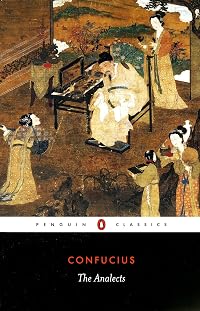
The Analects
by Confucius
There is 1 current discussion about this work.
On This Page
Description
The Analects of Confucius gathers the teachings or aphorisms of the Chinese philosopher Confucius (551-479 BC). He discusses the morality of government and the individual, social relationships, justice and sincerity. The philosophical movement of Confucianism sprang from the study of these writings.Tags
Recommendations













Member Reviews
Along with Taoism and Buddhism, Confucianism is called one of the "three great teachings" or "three great religions" of China, and has had an enormous influence not just on China but the entire Far East. This was on Good Reading's list of "100 Significant Books" and there's no question this is one of those books anyone who wishes to consider themselves educated should be familiar with. Reading it you can certainly see a lot of the hallmarks of traditional Chinese culture with its emphasis on family and education. Confucius (551 BC – 479 BC) is thus one of those thinkers it's truly important to know.
Yet three stars is actually being generous, and reflects more that I think this is a must read for historical reasons than any affinity show more with the material--I found reading this a slog. Admittedly as a Westerner I'm at a disadvantage. I may not count myself a believing Christian, but as an American I was steeped in a Christian-dominated culture, where even the cartoons on Saturday morning often had Biblical stories or motifs. So, of course, something like the Bible is going to be much more accessible, and I thought a lot of the time with The Analects, I was missing the context, never mind the issue of various translations. Even with the Bible though, which is more a library than a single book, some parts were more enjoyable, more moving or thought-provoking than others, as with actual stories or the poetry. The closest Biblical analogue to The Analects are Proverbs, a collection of wisdom sayings. The content of The Analects are aphorisms, not arguments. This isn't a philosophy in the way of Aristotle or Plato, with questions, dialogue, arguments. This a compilation by disciples of Confucius of his sayings that, without commentary or footnotes, run to no more than about 100 pages. Are there some gems here, some surprises? Sure. I was particularly taken with this formulation of the Golden Rule:
Zigong asked: "Is there any single word that could guide one's entire life?" The Master said: "Should it not be reciprocity? What you do not wish for yourself, do not do to others." (Simon Leys trans., p 77)
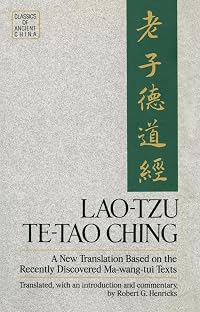
Nevertheless, I read this right after reading Lao Tzu's Tao Te Ching, also on that list of significant books, and despite my Westerner perspective meaning I probably missed a lot, and it had a lot that was cryptic, I both enjoyed it more and found it more congenial. The Tao is made up of 81 brief verses, each of which is self-contained if related in outlook, while The Analects felt more scattered to me. I also preferred the philosophy in the Tao to that of The Analects. A lot of commentators connect the two, and there is even a tradition that Lao Tzu was a teacher of Confucius, but some scholars actually think Taoism was a reaction to and critique of Confucianism, and they seem opposites--at least from my casual read of the two texts back to back--I admit I'm not a scholar of Chinese philosophy. Both share a lack of recourse to the supernatural I find appealing. These are secular ethics recommended for a good life, not for a reward in an afterlife, which is why they're more philosophies than religions, even if these books don't really present logical, reasoned arguments. But while the Tao puts an emphasis on the natural, Confucius puts it on ritual. Where the Tao calls for non-interference by government, Confucius seems to call for submission to tradition and authority. Filial piety seems the highest value. In at least one introduction--to an edition of the Tao actually, it did point out that along with the Tao principle of non-force, the Confucian regard for the family over the state has been at least one form of resistance to it. But it's hard for me to admire as a sage a man who values "filial piety" so highly, and who defines it as "not being disobedient." Note this passage:
The Master said, "In serving his parents, a son may remonstrate with them, but gently; when he sees that they do not incline to follow his advice, he shows an increased degree of reverence, but does not abandon his purpose; and should they punish him, he does not allow himself to murmur."
So I admit I don't feel I got a lot out of reading this book, nor do I feel inspired at this point to dig further. On the other hand, I did find even getting the flavor, the gist, of such an influential way of thinking made it worth reading. show less
Yet three stars is actually being generous, and reflects more that I think this is a must read for historical reasons than any affinity show more with the material--I found reading this a slog. Admittedly as a Westerner I'm at a disadvantage. I may not count myself a believing Christian, but as an American I was steeped in a Christian-dominated culture, where even the cartoons on Saturday morning often had Biblical stories or motifs. So, of course, something like the Bible is going to be much more accessible, and I thought a lot of the time with The Analects, I was missing the context, never mind the issue of various translations. Even with the Bible though, which is more a library than a single book, some parts were more enjoyable, more moving or thought-provoking than others, as with actual stories or the poetry. The closest Biblical analogue to The Analects are Proverbs, a collection of wisdom sayings. The content of The Analects are aphorisms, not arguments. This isn't a philosophy in the way of Aristotle or Plato, with questions, dialogue, arguments. This a compilation by disciples of Confucius of his sayings that, without commentary or footnotes, run to no more than about 100 pages. Are there some gems here, some surprises? Sure. I was particularly taken with this formulation of the Golden Rule:
Zigong asked: "Is there any single word that could guide one's entire life?" The Master said: "Should it not be reciprocity? What you do not wish for yourself, do not do to others." (Simon Leys trans., p 77)
Nevertheless, I read this right after reading Lao Tzu's Tao Te Ching, also on that list of significant books, and despite my Westerner perspective meaning I probably missed a lot, and it had a lot that was cryptic, I both enjoyed it more and found it more congenial. The Tao is made up of 81 brief verses, each of which is self-contained if related in outlook, while The Analects felt more scattered to me. I also preferred the philosophy in the Tao to that of The Analects. A lot of commentators connect the two, and there is even a tradition that Lao Tzu was a teacher of Confucius, but some scholars actually think Taoism was a reaction to and critique of Confucianism, and they seem opposites--at least from my casual read of the two texts back to back--I admit I'm not a scholar of Chinese philosophy. Both share a lack of recourse to the supernatural I find appealing. These are secular ethics recommended for a good life, not for a reward in an afterlife, which is why they're more philosophies than religions, even if these books don't really present logical, reasoned arguments. But while the Tao puts an emphasis on the natural, Confucius puts it on ritual. Where the Tao calls for non-interference by government, Confucius seems to call for submission to tradition and authority. Filial piety seems the highest value. In at least one introduction--to an edition of the Tao actually, it did point out that along with the Tao principle of non-force, the Confucian regard for the family over the state has been at least one form of resistance to it. But it's hard for me to admire as a sage a man who values "filial piety" so highly, and who defines it as "not being disobedient." Note this passage:
The Master said, "In serving his parents, a son may remonstrate with them, but gently; when he sees that they do not incline to follow his advice, he shows an increased degree of reverence, but does not abandon his purpose; and should they punish him, he does not allow himself to murmur."
So I admit I don't feel I got a lot out of reading this book, nor do I feel inspired at this point to dig further. On the other hand, I did find even getting the flavor, the gist, of such an influential way of thinking made it worth reading. show less
This is not a cohesive set of philosophical arguments or principles. Rather, it is a collection of philosophical fragments, across which it is possible to knit together some key ideas and to see how they are elaborated and developed. There are also some fragments that make little sense, probably because they are either taken out of context or are corrupted from the source material.
There are plenty of reviews that attempt to piece together the teachings in this collection into a more-or-less complete and coherent set of ideas. I’ll direct readers to those excellent reviews if that is what you want to read. Here, I want to reflect on some things that stood out for me, personally.
First, a passage that I think encapsulates what seem to show more be the main ideas and their interconnections:
“The Master said, ‘What is within the reach of a man’s understanding but beyond the power of his benevolence to keep is something he will lose even if he acquires it. A man may be wise enough to attain it and benevolent enough to keep it, but if he does not rule over them with dignity, then the common people will not be reverent. A man may be wise enough to attain it, benevolent enough to keep it and may govern the people with dignity, but if he does not set them to work in accordance with the rites, he is still short of perfection’” (XV.33).
I think there are a couple of points worth highlighting here. One is the importance of understanding as an outgrowth of learning. Understanding is a path to wisdom and wisdom is a path to benevolence, a personal quality encompassing a variety of related virtues, including filial piety (IV.1), tolerance, trustworthiness, quickness, generosity (XVII.6) and courage (XIV.4). In short, benevolence entails good will to others and when we either acquire the wisdom to cultivate and exercise benevolence or our actions are corrected toward benevolence via wise rulers, the result is moral, ethical, and social harmony. Acting benevolently bestows dignity upon a person that others will respect and revere and allow the benevolent “gentleman” to lead others to harmony by example, persuasion, or correction, if needed. Harmony results in the cultivation of peace and music and the arts and in the establishment of rites and rituals that people learn and that may, through adherence to and reverence, ensure the continuation of right thought and action that is preserving of harmony.
A core is benevolence or a good will to others and there are numerous passages in the analects developing this virtue. For example, “[d]o not impose on others what you yourself do not desire” (XII.2) and “The Master said, ‘Make it your guiding principle to do your best for others and to be trustworthy in what you say, and move yourself to where rightness is, then you will be exalting virtue” (XII.10). Developing and practicing benevolence is clearly a virtue that sets one on the Way. Interestingly, though, it is also noted that “’[t]he wise man is attracted to benevolence because he finds it to his advantage’” (IV.2). More on this in a moment.
Cultivating wisdom appears to be the path to benevolence that sets one on the Way as a path of moral rectitude. “The Master said, ‘Use your ears widely but leave out what is doubtful; repeat the rest with caution and you will make few mistakes. Use your eyes widely and leave out what is hazardous; put the rest into practice with caution and you will have few regrets. When in your speech your make few mistakes and in your action you have few regrets, an official career will follow as a matter of course’” (II.18). In other words, learn broadly but don’t accept everything at face value. And in applying that knowledge, exercise caution. A wise person is one who learns not just what is taught but who turns one lesson into two.
So if we take the point that cultivating benevolence is to a person’s “advantage” and that wisdom in thought and action leads to “an official career […] as a matter of course” I am led to think of the guidance here as advice for rulers and governors. And the advice doesn’t seem wholly beneficent. “To work for the things the common people have a right to and to keep one’s distance from the gods and spirits while showing them reverence can be called wisdom” (VI.22). A passage like this reads like sound advice to officials: don’t regard yourself as equivalent to or near the gods because you are not at their level. And pay attention to what common people think of as their rights, whether that is a correct perception or not, because in working toward those rights it is easier to create harmony, which protects one’s base of power. Interesting parallels here with both The Republic and The Prince.
Another stand out point for me is about the importance of rites and rituals and recitation of The Odes a collection of poetry. “The Master said, ‘The gentleman widely versed in culture but brought back to essentials by the rites can, I suppose, be relied upon not to turn against what he stood for’” (VI.27). The rites appear to have some kind of leveling effect. They are the things that all are responsible to know and to practice and in adherence to the rites is what creates a kind of equality. Practicing the rites brings us back to what is “essential,” which is seemingly another gesture to a commonality among all who practice them. So what are the rites? Rites seem to stand in for habitual practices, distillations of the Way that we practice automatically and by rote so as to make them automatic, perhaps part of a pathway to virtue that does not require conscious intervention (not unlike the perfection of Aristotelian virtue). The rites become the embodiment of what is right and good which doesn’t place such virtue in a person or in an office but makes them available to all who devote themselves to the practice. Rites are, perhaps, meditative and focal practices.
An interesting read overall. Not always enjoyable and frequently confusing, but I think I got something from it. show less
There are plenty of reviews that attempt to piece together the teachings in this collection into a more-or-less complete and coherent set of ideas. I’ll direct readers to those excellent reviews if that is what you want to read. Here, I want to reflect on some things that stood out for me, personally.
First, a passage that I think encapsulates what seem to show more be the main ideas and their interconnections:
“The Master said, ‘What is within the reach of a man’s understanding but beyond the power of his benevolence to keep is something he will lose even if he acquires it. A man may be wise enough to attain it and benevolent enough to keep it, but if he does not rule over them with dignity, then the common people will not be reverent. A man may be wise enough to attain it, benevolent enough to keep it and may govern the people with dignity, but if he does not set them to work in accordance with the rites, he is still short of perfection’” (XV.33).
I think there are a couple of points worth highlighting here. One is the importance of understanding as an outgrowth of learning. Understanding is a path to wisdom and wisdom is a path to benevolence, a personal quality encompassing a variety of related virtues, including filial piety (IV.1), tolerance, trustworthiness, quickness, generosity (XVII.6) and courage (XIV.4). In short, benevolence entails good will to others and when we either acquire the wisdom to cultivate and exercise benevolence or our actions are corrected toward benevolence via wise rulers, the result is moral, ethical, and social harmony. Acting benevolently bestows dignity upon a person that others will respect and revere and allow the benevolent “gentleman” to lead others to harmony by example, persuasion, or correction, if needed. Harmony results in the cultivation of peace and music and the arts and in the establishment of rites and rituals that people learn and that may, through adherence to and reverence, ensure the continuation of right thought and action that is preserving of harmony.
A core is benevolence or a good will to others and there are numerous passages in the analects developing this virtue. For example, “[d]o not impose on others what you yourself do not desire” (XII.2) and “The Master said, ‘Make it your guiding principle to do your best for others and to be trustworthy in what you say, and move yourself to where rightness is, then you will be exalting virtue” (XII.10). Developing and practicing benevolence is clearly a virtue that sets one on the Way. Interestingly, though, it is also noted that “’[t]he wise man is attracted to benevolence because he finds it to his advantage’” (IV.2). More on this in a moment.
Cultivating wisdom appears to be the path to benevolence that sets one on the Way as a path of moral rectitude. “The Master said, ‘Use your ears widely but leave out what is doubtful; repeat the rest with caution and you will make few mistakes. Use your eyes widely and leave out what is hazardous; put the rest into practice with caution and you will have few regrets. When in your speech your make few mistakes and in your action you have few regrets, an official career will follow as a matter of course’” (II.18). In other words, learn broadly but don’t accept everything at face value. And in applying that knowledge, exercise caution. A wise person is one who learns not just what is taught but who turns one lesson into two.
So if we take the point that cultivating benevolence is to a person’s “advantage” and that wisdom in thought and action leads to “an official career […] as a matter of course” I am led to think of the guidance here as advice for rulers and governors. And the advice doesn’t seem wholly beneficent. “To work for the things the common people have a right to and to keep one’s distance from the gods and spirits while showing them reverence can be called wisdom” (VI.22). A passage like this reads like sound advice to officials: don’t regard yourself as equivalent to or near the gods because you are not at their level. And pay attention to what common people think of as their rights, whether that is a correct perception or not, because in working toward those rights it is easier to create harmony, which protects one’s base of power. Interesting parallels here with both The Republic and The Prince.
Another stand out point for me is about the importance of rites and rituals and recitation of The Odes a collection of poetry. “The Master said, ‘The gentleman widely versed in culture but brought back to essentials by the rites can, I suppose, be relied upon not to turn against what he stood for’” (VI.27). The rites appear to have some kind of leveling effect. They are the things that all are responsible to know and to practice and in adherence to the rites is what creates a kind of equality. Practicing the rites brings us back to what is “essential,” which is seemingly another gesture to a commonality among all who practice them. So what are the rites? Rites seem to stand in for habitual practices, distillations of the Way that we practice automatically and by rote so as to make them automatic, perhaps part of a pathway to virtue that does not require conscious intervention (not unlike the perfection of Aristotelian virtue). The rites become the embodiment of what is right and good which doesn’t place such virtue in a person or in an office but makes them available to all who devote themselves to the practice. Rites are, perhaps, meditative and focal practices.
An interesting read overall. Not always enjoyable and frequently confusing, but I think I got something from it. show less
NB: This review is not for The Analects (which one couldn't review, any more than one could review the Bible). This review is for the DC Lau translation/Penguin Classics edition.
The introduction to this edition is atrocious. Fussy, stilted, and thoroughly uninspiring. Half the introduction is spent pouring over specific etymologies, which should have been saved for a "Translator's Note" aimed at scholars or for those that have an ambition to read classical Chinese. The rest is a "anorak's guide" to Confucius, which only hints at more interesting, human or historical interpretations.
He dismisses the notion that Confucius's worldview could be seen as authoritarian - without ever explaining who thought that or why it might be. No show more reference is made to the use of Confucianism as a tool by past Chinese governments, or any prior Western readings. He's like a trainspotter who's forgotten what trains are for.
The worst part is his total credulity of Confucius' saintliness, forgetting he was first-and-foremost a man. He cites Confucius dismissing contemporary Chinese music as an example of his commitment to things that are morally pure. It doesn't seem to occur to Lau that contemporary Chinese music has an "impure" reputation *because* of Confucius, or indeed - much more likely - that Confucius simply had an old-fashioned taste in music and made it a moral issue, as those in the 1950s did with Rock n Roll.
As far as the accuracy of the translation goes, I'll have to take DC Lau's account. It's perfectly readable, although the typeface is dense. The Analects themselves are of course timeless. show less
The introduction to this edition is atrocious. Fussy, stilted, and thoroughly uninspiring. Half the introduction is spent pouring over specific etymologies, which should have been saved for a "Translator's Note" aimed at scholars or for those that have an ambition to read classical Chinese. The rest is a "anorak's guide" to Confucius, which only hints at more interesting, human or historical interpretations.
He dismisses the notion that Confucius's worldview could be seen as authoritarian - without ever explaining who thought that or why it might be. No show more reference is made to the use of Confucianism as a tool by past Chinese governments, or any prior Western readings. He's like a trainspotter who's forgotten what trains are for.
The worst part is his total credulity of Confucius' saintliness, forgetting he was first-and-foremost a man. He cites Confucius dismissing contemporary Chinese music as an example of his commitment to things that are morally pure. It doesn't seem to occur to Lau that contemporary Chinese music has an "impure" reputation *because* of Confucius, or indeed - much more likely - that Confucius simply had an old-fashioned taste in music and made it a moral issue, as those in the 1950s did with Rock n Roll.
As far as the accuracy of the translation goes, I'll have to take DC Lau's account. It's perfectly readable, although the typeface is dense. The Analects themselves are of course timeless. show less
You can't review the Analects. But you can review editions of the Analects, and this one, translated and commented upon by Annping Chin, is one of the great editions of any philosophy book I've ever come across. The translation clear without being condescending, and Chin includes the Chinese text at the back of the book. Her comments are fascinating; best of all, she includes references to and quotes from the many traditional commentaries on the book, so you know not only what e.g. one random American translator thinks about a given passage, but what one random American professor thinks about it... and one to four of the best known Confucians and scholars of Confucius' thought. It's almost a history of Confucian thought and scholarship show more in itself:
E.g., in 6.22 Fan Chi asks about wisdom and humaneness. We get information about who Fan Chi was, and learn that "the Song statesman and general Fan Zhongyan, many centuries later, rephrased what Confucius says... 'To be first in worrying about the world's worries and last to enjoy its pleasures'" is to be truly committed to public service.
It's hard to express my enthusiasm for this edition, really.
One small thought about the Analects themselves: Chin's translation, more than others I've read, helped me understand the importance Confucius places on education and tradition: tradition (i.e., the rites) holds us back, while education (i.e., literature) lets us broaden ourselves. To have either without the other produces a vicious person; to have them both in perfect balance produces the best person. Were I still a scholar, I'd love to write a paper about Confucius as negative dialectician. Thankfully, I'm not. show less
E.g., in 6.22 Fan Chi asks about wisdom and humaneness. We get information about who Fan Chi was, and learn that "the Song statesman and general Fan Zhongyan, many centuries later, rephrased what Confucius says... 'To be first in worrying about the world's worries and last to enjoy its pleasures'" is to be truly committed to public service.
It's hard to express my enthusiasm for this edition, really.
One small thought about the Analects themselves: Chin's translation, more than others I've read, helped me understand the importance Confucius places on education and tradition: tradition (i.e., the rites) holds us back, while education (i.e., literature) lets us broaden ourselves. To have either without the other produces a vicious person; to have them both in perfect balance produces the best person. Were I still a scholar, I'd love to write a paper about Confucius as negative dialectician. Thankfully, I'm not. show less
In his Teaching Company course on the Analects of Confucius, Dr. Robert Andre LaFleur says he recommends that his students read six different translations. I just complete my second—this book. I can definitely say that reading more than one translation (and listening to Dr. LaFleur’s excellent course) will give you a better understanding of Confucius; however, I must make a couple of immediate observations:
- While some passages become clearer, the varying translations of the same passage differ so much in some cases that it is hard to tell up from down!
- Reading multiple translations reinforces just how pasted together much of the Analects are. Oddball passages that clearly don’t belong creep in, but even after hundreds of years, show more we must still deal with them.
I first read one of the long-time standard translations, by D.C. Lau. It had an excellent introduction and was easy to get through. In contrast to this Simon Leys version, however, it clearly lacked literary style. I’m sure it’s partly because the material is more familiar, but there is also no doubt that Leys’ translation reads better. Whether it is more accurate is another question. Leys provides detailed notes about how he arrived at his translations, and he clearly identifies where he differs from other translations. In a review by Jonathan Spence when this book was first published, however, Spence (whom I have great respect for) does take issue with some of Leys’ interpretations. Given the ambiguity of classical Chinese to begin with, the corruption of the text over 2500 years, and the changing meaning of Chinese characters from generation to generation, I’m not sure anyone can ever say which translation is correct. Leys clearly has a bit of an agenda here, however. He is (was, actually, since he passed away in 2016) a conservative Roman Catholic, and his religious prejudices creep into some of his translations and are quite prominent in a few of his notes. For instance, he clearly equates homosexual families with a degeneration in society. His religious bias also shows through when he quotes another writer as saying how reading the four gospels clearly shows a single intelligence behind the writing, and he asserts the same is true of reading Confucius. In the case of the Bible, this is pure nonsense. The gospels contradict each other even more than the Analects, and like the Analects, they were written long after the death of their subject.
Leys also takes an inexplicable potshot at Pinyin romanization compared to Wade-Giles. By understanding a few simple rules, anyone can read Pinyin and come up with reasonable Mandarin Chinese pronunciation, whereas Wade-Giles doesn’t even come close! This just seems to be the author’s prejudice, since his Chinese studies started a long, long time ago.
Nevertheless, as I read through this book, I have to give the author credit for his learning and his use of quotations from a host of authors to support or elucidate the points he wants to make about Confucius. A quotation from C.S. Lewis about the difference between readers and non-readers, for instance, is brilliant. Leys also makes the Analects easier to understand by using a single name for each of Confucius’ disciples rather than the multiple formal or personal names that appear in the original text. For a Chinese scholar reading this, it may be a problem, but for the normal intelligent English-language reader, it is a boon.
Leys presents the translations unadorned by any notes, which appear in a separate section. The main text doesn’t even indicate which of the sayings have further notes. Many of them don’t if they are self-explanatory. You can certainly read through the Analects without even referring to the notes, since Leys’ translation is so clear. However, part of me does wish the notes were provided on the same page so I didn’t have to keep two bookmarks in place and flip back and forth. Given that this is a small, lightweight paperback, however, that wasn’t too much trouble.
So, overall I can truly recommend this book as an easy-to-follow, rewarding translation for someone trying to develop a deeper understanding of the Confucian worldview. I can also second the recommendation to read more than one translation. show less
- While some passages become clearer, the varying translations of the same passage differ so much in some cases that it is hard to tell up from down!
- Reading multiple translations reinforces just how pasted together much of the Analects are. Oddball passages that clearly don’t belong creep in, but even after hundreds of years, show more we must still deal with them.
I first read one of the long-time standard translations, by D.C. Lau. It had an excellent introduction and was easy to get through. In contrast to this Simon Leys version, however, it clearly lacked literary style. I’m sure it’s partly because the material is more familiar, but there is also no doubt that Leys’ translation reads better. Whether it is more accurate is another question. Leys provides detailed notes about how he arrived at his translations, and he clearly identifies where he differs from other translations. In a review by Jonathan Spence when this book was first published, however, Spence (whom I have great respect for) does take issue with some of Leys’ interpretations. Given the ambiguity of classical Chinese to begin with, the corruption of the text over 2500 years, and the changing meaning of Chinese characters from generation to generation, I’m not sure anyone can ever say which translation is correct. Leys clearly has a bit of an agenda here, however. He is (was, actually, since he passed away in 2016) a conservative Roman Catholic, and his religious prejudices creep into some of his translations and are quite prominent in a few of his notes. For instance, he clearly equates homosexual families with a degeneration in society. His religious bias also shows through when he quotes another writer as saying how reading the four gospels clearly shows a single intelligence behind the writing, and he asserts the same is true of reading Confucius. In the case of the Bible, this is pure nonsense. The gospels contradict each other even more than the Analects, and like the Analects, they were written long after the death of their subject.
Leys also takes an inexplicable potshot at Pinyin romanization compared to Wade-Giles. By understanding a few simple rules, anyone can read Pinyin and come up with reasonable Mandarin Chinese pronunciation, whereas Wade-Giles doesn’t even come close! This just seems to be the author’s prejudice, since his Chinese studies started a long, long time ago.
Nevertheless, as I read through this book, I have to give the author credit for his learning and his use of quotations from a host of authors to support or elucidate the points he wants to make about Confucius. A quotation from C.S. Lewis about the difference between readers and non-readers, for instance, is brilliant. Leys also makes the Analects easier to understand by using a single name for each of Confucius’ disciples rather than the multiple formal or personal names that appear in the original text. For a Chinese scholar reading this, it may be a problem, but for the normal intelligent English-language reader, it is a boon.
Leys presents the translations unadorned by any notes, which appear in a separate section. The main text doesn’t even indicate which of the sayings have further notes. Many of them don’t if they are self-explanatory. You can certainly read through the Analects without even referring to the notes, since Leys’ translation is so clear. However, part of me does wish the notes were provided on the same page so I didn’t have to keep two bookmarks in place and flip back and forth. Given that this is a small, lightweight paperback, however, that wasn’t too much trouble.
So, overall I can truly recommend this book as an easy-to-follow, rewarding translation for someone trying to develop a deeper understanding of the Confucian worldview. I can also second the recommendation to read more than one translation. show less
I am not a fan of the Ware translation and would not suggest it. It orientalises the text to a distracting degree. Roger Ames was my philosophy professor, so I have some bias, but his translation was much more legible, although I have read commentary that it takes some liberties with the original text (what translation doesn't).
As for the Analects themselves, the entries are a mixture of profound and irrelevant. I think the most important thing I pulled from the text was a method of framing experience, thinking about behavior, and imagining ideals.
As for the Analects themselves, the entries are a mixture of profound and irrelevant. I think the most important thing I pulled from the text was a method of framing experience, thinking about behavior, and imagining ideals.
Chi-lu asked how the spirits of the dead and the gods should be served. The Master said, "You are not able even to serve man. How can you serve the spirits?"
"May I ask about death?"
"You do not understand even life. How can you understand death?"
The Analects are full of interesting and thought-provoking bits like this one. I highlighted any statements I found to be interesting or those that would be beneficial to read again later in life. There are many. I enjoyed reading an ancient text, written in a time when the world was very different (around 2000 years ago in China during the Warring States period, 475-221 BC). To read something like this is to get a glimpse of a culture that is completely alien to me. And that can only be show more beneficial.
I didn't rate this because I came to a realization -- how can one rate a book written so long ago? A work considered extremely important in China, for followers of Confucianism? An influential piece of literature? show less
"May I ask about death?"
"You do not understand even life. How can you understand death?"
The Analects are full of interesting and thought-provoking bits like this one. I highlighted any statements I found to be interesting or those that would be beneficial to read again later in life. There are many. I enjoyed reading an ancient text, written in a time when the world was very different (around 2000 years ago in China during the Warring States period, 475-221 BC). To read something like this is to get a glimpse of a culture that is completely alien to me. And that can only be show more beneficial.
I didn't rate this because I came to a realization -- how can one rate a book written so long ago? A work considered extremely important in China, for followers of Confucianism? An influential piece of literature? show less
Members
- Recently Added By
Lists

100 Books to Read in a Lifetime (That Are Older Than 200 Years)
415 works; 175 members

Books that changed the world
67 works; 63 members

Non-Fiction Worth Reading
1,015 works; 261 members

Philip Ward's Lifetime Reading Plan
592 works; 22 members

Filosofía - Clásicos
217 works; 1 member
My List
302 works; 1 member
Books That Changed Our Perspective
423 works; 168 members

Books Read in 2020
4,379 works; 124 members

Books About Non-Abrahamic Religions
98 works; 2 members

New Lifetime Reading Plan by Fadiman and Major
225 works; 5 members
College Reads (Lit Edition)
75 works; 5 members

Philosophy, Politics and Economics
61 works; 1 member

Greatest Books, allegedly
484 works; 9 members

Shaykh Hamza's Book Recommendations
439 works; 3 members

Folio Society
831 works; 53 members

Works cited in Palimpsest: A History of the Written Word by Matthew Battles
79 works; 2 members

Philosophy
23 works; 1 member
Talk Discussions
Current Discussions
Three Chinese classics in Philosophy and Theory (January 18)
Past Discussions
Analects of Confucius - LIMITED EDITIONS CLUB 1933 in George Macy devotees (February 2024)
Author Information

290+ Works 10,752 Members
Some Editions
Awards and Honors
Notable Lists
The 20 Most Popular Books Throughout History (03: 5th–3rd c. BCE)
Series
Belongs to Publisher Series
The World's Classics (422)
Reclams Universal-Bibliothek (9656)
Work Relationships
Is contained in
Common Knowledge
- Canonical title
- The Analects
- Original title
- 論語
- Alternate titles
- Analects; Lun yu; The Sayings of Confucius; The Analects (Penguin Classics) (Penguin Classics)
- Original publication date
- 5th-3rd century BCE (compilation) (compilation); ca. 2nd century BCE (codification) (codification); ca. 70 BCE (earliest known manuscript) (earliest known manuscript)
- People/Characters
- Confucius
- Important places
- Ancient China; Dingzhou, Hebei, China; Hebei, China; China; Asia
- Important events
- Zhou Dynasty
- First words
- 1. The Master said, 'Is it not a pleasure, having learned something, to try it out at due intervals? Is it not a joy to have friends come from afar? Is it not gentlemanly not to take offense when others fail to appreciate y... (show all)our abilities?'
The Master said: "To learn, and then, in its due season, put what you have learned into practice—isn't that still a great pleasure?" (Hinton translation) - Last words
- (Click to show. Warning: May contain spoilers.)That a book of such a collection was probably due to the desire on the part of disciples of Yu Tzu, Tseng Tzu and Tzu-hsia to enhance the status of their own teachers in the Confucian school not only by including their sayings but by interspersing them amongst the sayings of the Master.
(Click to show. Warning: May contain spoilers.)And if you don't understand words, you'll never understand people. (Hinton translation) - Publisher's editor
- Wilkes, Deborah (Hackett)
- Blurbers
- Schaberg, David (Slingerland translation) (Slingerland translation); Berthrong, John (Slingerland translation) (Slingerland translation)
Classifications
- Genres
- Philosophy, Religion & Spirituality, Nonfiction, General Nonfiction, History
- DDC/MDS
- 181.112 — Philosophy & psychology Ancient, medieval & eastern philosophy Eastern philosophy Far East and South Asia China & Korea Confucianism and Neo-Confucianism
- LCC
- PL2478 .L5 — Language and Literature Languages and literatures of Eastern Asia, Africa, Oceania Languages of Eastern Asia, Africa, Oceania Chinese language and literature Chinese literature Collections
- BISAC
Statistics
- Members
- 6,978
- Popularity
- 1,698
- Reviews
- 66
- Rating
- (3.72)
- Languages
- 19 — Catalan, Czech, English, Estonian, Finnish, French, German, Greek, Hebrew, Italian, Lithuanian, Polish, Romanian, Russian, Slovak, Spanish, Swedish, Portuguese (Portugal), Chinese, traditional
- Media
- Paper, Audiobook, Ebook
- ISBNs
- 305
- UPCs
- 2
- ASINs
- 117