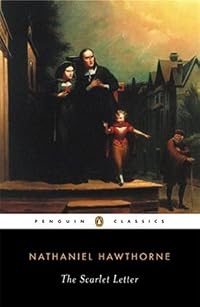
The Scarlet Letter
by Nathaniel Hawthorne
On This Page
Description
In Puritan, 17th century Boston, Hester Prynne is an independent-minded woman who stands alone against society. Having given birth to a child after an illicit affair, she refuses to name the father and is forced to the wear the letter "A" (representing "adulteress) embroidered on her dress.Tags
Recommendations

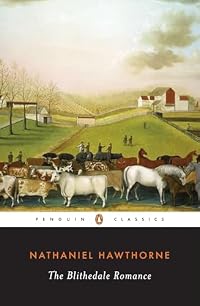
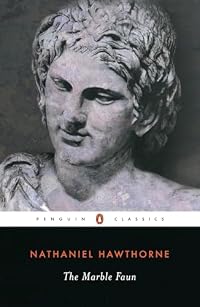
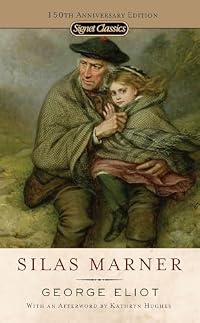
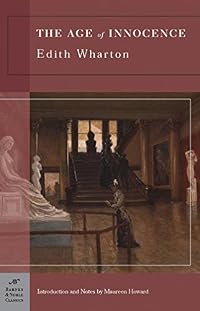
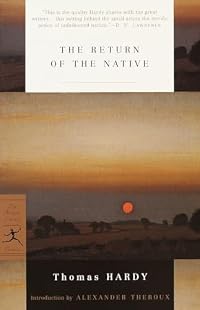
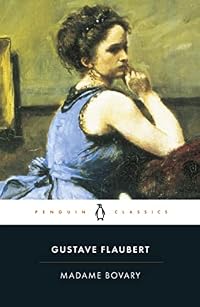
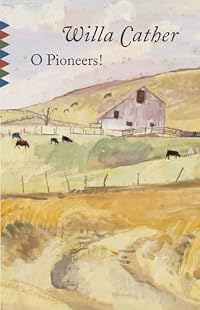
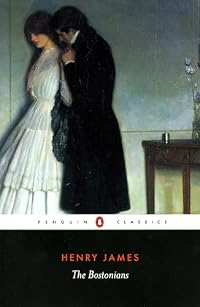
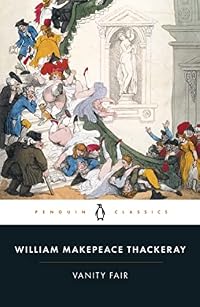
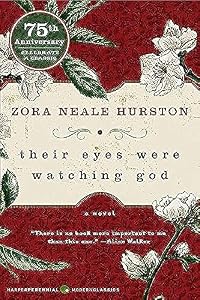
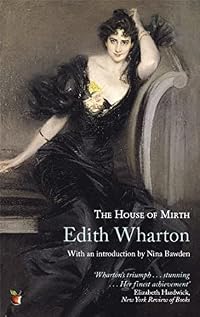
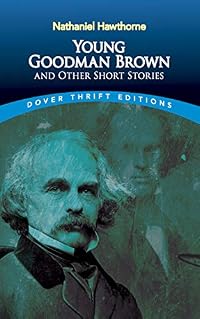
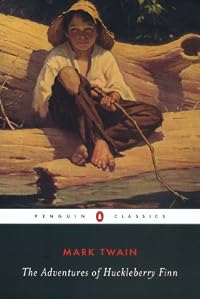
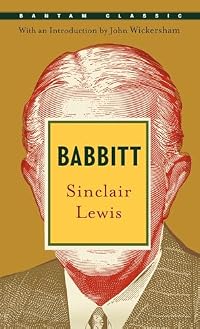
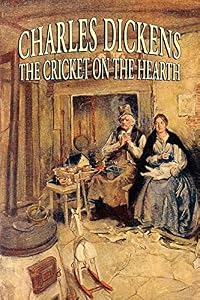
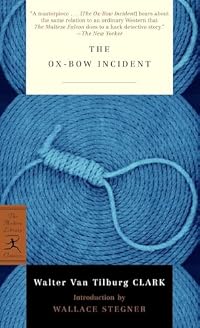

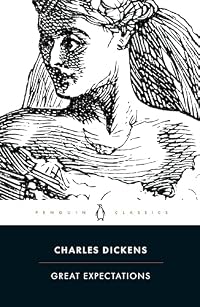
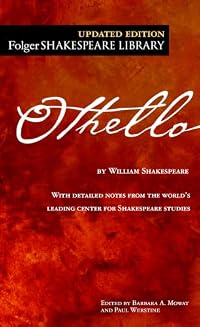
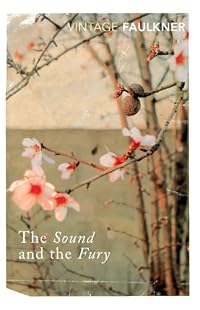
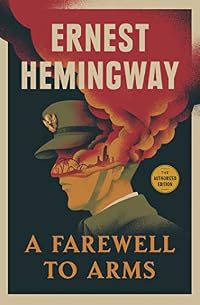

Member Recommendations

anonymous user Fascinating interpretation. Very free and very different. Really an independent work of art. If not superior to the novel, certainly not inferior to it either. Good script, excellent cast, beautiful music.
20
LCBrooks Allows for interesting comparisons on the subject of double marriage.
21
tootstorm Contains a lot of parallels between the two heroines. Acker's '77 novel also contains a scathing deconstruction of Hawthorne's the Scarlet Letter somewhere down the line. If you haven't heard of her, take note. She's worth the attention.
11

Midnightdreary Similar exploration of the question of sin, inherited or otherwise.
01
Member Reviews
I admired this novel increasingly more as it went along. It is structurally fantastic, conservatively written, every chapter moving the story forward like perfectly wound clockwork. It is filled with careful analysis of the characters' inner lives and moral quandaries. A couple of standout chapters are especially admirable. It is only Hawthorne's ponderous style that is not my cup of tea. He is in love with words, as am I, but he presents them in immense blocks of exposition that can fill an entire page. He is very fond of telling rather than showing, so I was forced to view practically everything through his narrative voice. The stiffness might be intentional to fit the Puritanical setting, but I suspect it's just him. This alone has show more probably killed enthusiasm for the novel in more than one young scholar who has it pressed upon them.
The plot outline creates a problem by what it withholds in order to provide a hook. Or I have a problem, in being unwilling to take what an author shows me at face value. Hester has admirable traits, but her entire character rests on the true circumstances of her affair, and those are the novel's primary mystery. I had to assume that her backstory would prove sympathetic. Her daughter Pearl is an even greater enigma, born as innocent as any child but portrayed as if oddly otherwise. I judged this was a realism story and I should not read too much into that; assuming, again. Dimmesdale's implied role looked like a red herring. Chillingworth was the one character I did take as given, probably from a reader's sympathy for his want of answers. The second half of the story clears all of these problems away. I wonder whether I would have enjoyed the first hundred pages more had I known the plot in advance, but I would have enjoyed the second half less. There's some good tension as Hawthorne's 19th century mores head towards playing out in a 17th century setting - or not. With the the entire picture before me, I'm giving this a higher rating than I expected. show less
The plot outline creates a problem by what it withholds in order to provide a hook. Or I have a problem, in being unwilling to take what an author shows me at face value. Hester has admirable traits, but her entire character rests on the true circumstances of her affair, and those are the novel's primary mystery. I had to assume that her backstory would prove sympathetic. Her daughter Pearl is an even greater enigma, born as innocent as any child but portrayed as if oddly otherwise. I judged this was a realism story and I should not read too much into that; assuming, again. Dimmesdale's implied role looked like a red herring. Chillingworth was the one character I did take as given, probably from a reader's sympathy for his want of answers. The second half of the story clears all of these problems away. I wonder whether I would have enjoyed the first hundred pages more had I known the plot in advance, but I would have enjoyed the second half less. There's some good tension as Hawthorne's 19th century mores head towards playing out in a 17th century setting - or not. With the the entire picture before me, I'm giving this a higher rating than I expected. show less
A tale of crime and punishment, one of public, another private. A beautiful examination of the human spirit, of love, pain and sin, and of the Puritan ethos.
I like reading classics because they always have an element of timeless truth or beauty - something that stood the test of time and still speaks to us. I found Hawthorne's examination of sin and remorse, love and suffering very beautiful and thorough. He clearly was writing a parable, comparing the suffering of a sin in public and in private. Hester, despite of her public shame, lived a true life and could be herself - while the private shame and public reverence destroyed her partner in crime.
I like reading classics because they always have an element of timeless truth or beauty - something that stood the test of time and still speaks to us. I found Hawthorne's examination of sin and remorse, love and suffering very beautiful and thorough. He clearly was writing a parable, comparing the suffering of a sin in public and in private. Hester, despite of her public shame, lived a true life and could be herself - while the private shame and public reverence destroyed her partner in crime.
The characters in The Scarlet Letter raise as much sympathy in me as do characters in a badly- filmed and overdramatic soap opera. Dimmesdale, the "hero" of the piece, is a spineless worm that deserves to be squashed. It is impossible to imagine this cringing, crawling invertebrate ever playing the part of a passionate lover. Chillingworth, the villain of the piece, has about as much depth and creativity as his name. He could have been an interestingly twisted character, but is instead reduced to a plot device to keep the action going. He has about as much depth as a villain in a silent movie who laughs maniacally and twirls his mustache as he ties the heroine to a railroad track--not that he would need to actually tie down Hester, the show more heroine. If told to stand on the racetrack, she would probably do it. The "humble narrator" (yes, he calls himself this) idolizes Hester for her return to domesticity, self-flagelation, and protection of the man who should at least share her punishment. Yet she then flips implausibly back and forth from meek and apologetic to fiery and passionate. Hawthorne has no excuse for such poor writing. Other authors of the time, such as Jane Austen, write with sparkle and interest, with tangibly lifelike characters. Hawthorne’s book is at the same level of flamboyantly unreal drama as Alcott’s The Inheritance or The Long, Fatal Love Chase. show less
Maybe it’s for the best that I never read this classroom classic in school. You have to have lived some life to understand this book. The Scarlet Letter isn’t only, as adaptations like Easy A suggest, a story of religious hypocrisy and social ostracism. It’s about what you do once society has turned its back on you and how craving for social approval will make you degrade yourself. It’s about the seduction of revenge and the throbbing hopes we carry all our lives, often never to be revealed. Hawthorne is the reader of our dark American hearts. Read him if you dare to know yourself.
I’ve been curious about this book for a while, and finally took the plunge and downloaded the audiobook. This is a fascinating story—not one I necessarily enjoyed, but I wouldn’t be surprised if I reread it sometime in the future.
The introduction to the book was CRAZY long. Honestly, unless you like rambling thoughts about what a custom house was like in the mid-late 1800s, you can skip it, and you won’t miss out on much. The main point of the introduction can be summed up as “This story is loosely based on a true story.” And really, that’s all you need to know.
Once you get into the book, you’re immediately hit by the atmosphere of the story. I didn’t realize before I read the book that this is a piece of classic show more gothic literature, but that’s definitely the case. The story, the setting, and even nature itself, as told in the story—all are on the dark, somewhat doleful side of the spectrum. And while I haven’t enjoyed every gothic novel I’ve read, I did enjoy this one in a twisted sort of way.
Hester Prynne is the kind of character you can easily sympathize with. She’s in a difficult situation, yet chooses what she deems the noblest choice in the situation, and then proceeds to live under her community’s scrutiny and disdain for years. This story is one of immense grief, of guilt, bondage, and hopelessness. But occasionally, there are glimpses of hope—if you can keep your eyes open for them. And that’s what redeemed the story for me in the end.
What impressed me the most about this story is the emotional journey you go on as you follow Hester’s story. At times, you’re forced to contend with yourself as you watch her suffer, and I was intrigued to realize how much I rooted for even the tiniest bit of hope for her, even though she didn’t always make the right decision. And the ending? It was perfect for the story.
Overall, this is a deeply nuanced book with a fascinating (if not a little doleful and gloomy) setting. I enjoyed the story, and I wasn’t sure I would. I’m looking forward to picking up other Hawthorne stories in the future when and if I have the chance! show less
The introduction to the book was CRAZY long. Honestly, unless you like rambling thoughts about what a custom house was like in the mid-late 1800s, you can skip it, and you won’t miss out on much. The main point of the introduction can be summed up as “This story is loosely based on a true story.” And really, that’s all you need to know.
Once you get into the book, you’re immediately hit by the atmosphere of the story. I didn’t realize before I read the book that this is a piece of classic show more gothic literature, but that’s definitely the case. The story, the setting, and even nature itself, as told in the story—all are on the dark, somewhat doleful side of the spectrum. And while I haven’t enjoyed every gothic novel I’ve read, I did enjoy this one in a twisted sort of way.
Hester Prynne is the kind of character you can easily sympathize with. She’s in a difficult situation, yet chooses what she deems the noblest choice in the situation, and then proceeds to live under her community’s scrutiny and disdain for years. This story is one of immense grief, of guilt, bondage, and hopelessness. But occasionally, there are glimpses of hope—if you can keep your eyes open for them. And that’s what redeemed the story for me in the end.
What impressed me the most about this story is the emotional journey you go on as you follow Hester’s story. At times, you’re forced to contend with yourself as you watch her suffer, and I was intrigued to realize how much I rooted for even the tiniest bit of hope for her, even though she didn’t always make the right decision. And the ending? It was perfect for the story.
Overall, this is a deeply nuanced book with a fascinating (if not a little doleful and gloomy) setting. I enjoyed the story, and I wasn’t sure I would. I’m looking forward to picking up other Hawthorne stories in the future when and if I have the chance! show less
I originally read this book in high school. I reread it now, with two more decades of life experience. I've lived among Christians who revere the Puritan era. I've experienced social shunning. I'm a male living in the #MeToo era where one sin of sexual harassment can lead to career demise.
In all of these situations, however, I side with Hawthorne's sympathies towards those who bear the brunt of social shunning. Or at least, I try to side. If social order must be enforced (and social order in the case of a pregnancy is an extreme but common example), then it must be enforced loosely. That's what prohibition, abortion, and the rest of the culture wars have taught us. It is foolishness to fight human nature.
At the same time, those who are show more persecuted are often ennobled by their suffering, as Hester Prynne and Pearl were by theirs. The Scarlet A became not a sign of Adultery but of Ability for Hester. Hawthorne holds her up as a model, and I follow her willingly against those (on whatever side of the left/right/center cultural battles) who hold that purity ought to be externally enforced all the time.
It is a tenuous foundation that we sit upon as Americans. We are often blind to the purity-seekers who more-or-less agree with us. Although we are considered a free country, we often bind up our fellow citizens in our quest for purity. Indeed, in so doing, we act like our forebears. Hawthorne reminds us of this well. Puritan New England is not that far away from us today. show less
In all of these situations, however, I side with Hawthorne's sympathies towards those who bear the brunt of social shunning. Or at least, I try to side. If social order must be enforced (and social order in the case of a pregnancy is an extreme but common example), then it must be enforced loosely. That's what prohibition, abortion, and the rest of the culture wars have taught us. It is foolishness to fight human nature.
At the same time, those who are show more persecuted are often ennobled by their suffering, as Hester Prynne and Pearl were by theirs. The Scarlet A became not a sign of Adultery but of Ability for Hester. Hawthorne holds her up as a model, and I follow her willingly against those (on whatever side of the left/right/center cultural battles) who hold that purity ought to be externally enforced all the time.
It is a tenuous foundation that we sit upon as Americans. We are often blind to the purity-seekers who more-or-less agree with us. Although we are considered a free country, we often bind up our fellow citizens in our quest for purity. Indeed, in so doing, we act like our forebears. Hawthorne reminds us of this well. Puritan New England is not that far away from us today. show less
This was a re-read. The last time I read it, I was in high school. I did a re-read with my daughter (who is in high school).
It's interesting to see how time changes our perception of these things, but also how little changes as well. I had very vivid memories of Dimmesdale flogging himself like, ALL THE TIME in the book but that must have been the product of my overactive imagination because it's hardly mentioned. On the other hand, I had kind of the same reaction to the relationship between him and Hester, which was the following:
Dimmesdale you f-ing dimwit, you bagged this hot, smart, talented woman who is into you and you're not even like, not allowed to get married so wtf. Just marry her. From my modern perspective, it's kind of show more hard to understand where he's coming from.
My favorite scene is when he and Hester are in the forest and he's freaking out like usual and she like, puts him in a headlock basically and smooshes his face into her boobs while their weird little kid is just like, running around eating random berries. *chef's kiss.*
Speaking of their weird kid... Another thing that hasn't changed terribly since I was a teenager is that the character of Pearl is still annoying af, but I get it. She's a symbol, she's not supposed to be realistic blah blah blah. I didn't find her as annoying as I did as a teenager, but she's still pretty ridiculous.
That being said, Nathaniel Hawthorne did a better job than most modern male authors of portraying a female protagonist (IMO) so he has that going for him, which is nice. show less
It's interesting to see how time changes our perception of these things, but also how little changes as well. I had very vivid memories of Dimmesdale flogging himself like, ALL THE TIME in the book but that must have been the product of my overactive imagination because it's hardly mentioned. On the other hand, I had kind of the same reaction to the relationship between him and Hester, which was the following:
Dimmesdale you f-ing dimwit, you bagged this hot, smart, talented woman who is into you and you're not even like, not allowed to get married so wtf. Just marry her. From my modern perspective, it's kind of show more hard to understand where he's coming from.
My favorite scene is when he and Hester are in the forest and he's freaking out like usual and she like, puts him in a headlock basically and smooshes his face into her boobs while their weird little kid is just like, running around eating random berries. *chef's kiss.*
Speaking of their weird kid... Another thing that hasn't changed terribly since I was a teenager is that the character of Pearl is still annoying af, but I get it. She's a symbol, she's not supposed to be realistic blah blah blah. I didn't find her as annoying as I did as a teenager, but she's still pretty ridiculous.
That being said, Nathaniel Hawthorne did a better job than most modern male authors of portraying a female protagonist (IMO) so he has that going for him, which is nice. show less
Members
- Recently Added By
Lists

1001 Books You Must Read Before You Die
1,448 works; 1,131 members

The Guardian's 1000 Novels Everyone Must Read
1,005 works; 549 members

Classics you know you should have read but probably haven't
421 works; 407 members

Best Historical Fiction
620 works; 261 members

1898 C.K. Shorter List of Best 100 Novels
100 works; 34 members
501 Must-Read Books
508 works; 71 members

Great American Novels
158 works; 42 members

Historical Fiction
889 works; 91 members

Favourite 19th century fiction
257 works; 61 members

The Top Ten: Writers Pick Their Favorite Books
240 works; 31 members

Read the book and saw the movie
1,170 works; 192 members

Best Feminist Literature
188 works; 26 members
Female Protagonist
1,056 works; 56 members

Best Psychological Fiction
81 works; 16 members

Best high-school English books reread later in life
30 works; 21 members
Favourite Books
1,817 works; 308 members

Women's Stories
88 works; 13 members

The Guardian's 100 greatest novels of all time
100 works; 16 members
Folio Society
831 works; 49 members
New England Books
101 works; 10 members
Best Political Fiction
92 works; 11 members

Top Five Books of 2013
1,564 works; 722 members
LibraryThingers' 1001 Books You Must Read Before You Die
442 works; 29 members
19th Century
190 works; 16 members

Books Featured on Gilmore Girls
307 works; 21 members
Love and Marriage
93 works; 10 members
Harold Bloom - The Western Canon: C. The Democratic Age
336 works; 15 members
Blue Pyramid 1,276 Best Books of All Time
1,248 works; 32 members
150 Best Novels Selected by Brander Matthews (1883)
150 works; 7 members

The American Experience
173 works; 18 members

Western World's Greatest Books - Project Gutenberg
295 works; 15 members
Out of Copyright
244 works; 14 members

Books You Read During High School (For School)
301 works; 52 members
W. S. Maugham's Reading Suggestions for Spiritual Enrichment: American
13 works; 4 members

Best Revenge Stories
69 works; 9 members
Didactic Fiction
29 works; 3 members

The Immigrant's Stories
74 works; 19 members

1964 College Preparatory Reading List
202 works; 8 members

Short and Sweet
241 works; 23 members
Best of American Literature
146 works; 9 members
The Well-Educated Mind Reading Challenge
75 works; 7 members
How to Read a Book's Recommended Reading List
309 works; 10 members

Religious Fiction
58 works; 12 members
Books Set in Massachusetts
41 works; 8 members

1001 Children's Books You Must Read Before You Grow Up
774 works; 100 members
Daria Morgendorffer's Bookshelf
70 works; 5 members
1,001 BYMRBYD Concensus
723 works; 27 members
Literature About Women and Girls
391 works; 39 members

Newark Public Library's 1904 List of a Thousand of the Best Novels
95 works; 5 members
100 Most Recommended Works
100 works; 11 members
100 World Classics
99 works; 15 members
Books read by Pat in "The Silver Linings Playbook"
7 works; 2 members

Publisher's Weekly Bestsellers Prior to 1895 in Chronological Order
95 works; 6 members
Mensa for Kids Excellence in Reading Award Program (Grades 9-12)
116 works; 4 members

The Guardian's 100 Best Novels Written in English
105 works; 13 members
Lamont's Hundred Best Novels (1947)
100 works; 4 members
Books tagged favorites
390 works; 30 members
The Greatest Books
99 works; 5 members

Allie's Favourite 150 Books
145 works; 3 members

A Boston Reading List
120 works; 10 members

Rory Gilmore Book Club
193 works; 5 members
The College Board: 101 Great Books Recommended for College-Bound Readers
111 works; 7 members
Carole's List
445 works; 13 members

Books with Colourful Titles
171 works; 8 members
Victorian Period
113 works; 10 members

BBC Top Books
78 works; 3 members
Mensa for Kids Excellence in Reading Award Program (Grades 9-12)
116 works; 3 members

Fifty Representative Historical Novels
50 works; 2 members

Christmas haul 2013
15 works; 2 members
Books Featured on Readers' Review of the Diane Rehm Show
161 works; 8 members
F. B. Perkins' List of 100 Best Fiction
100 works; 5 members
Elegant Prose
80 works; 4 members

Well-Educated Mind
150 works; 3 members
Books on my Kindle
162 works; 3 members

Books Received As Gifts in 2013
20 works; 3 members
Overdue Podcast
800 works; 9 members
CCE 1000 Good Books List
1,033 works; 12 members

1850s
17 works; 2 members
Novels featuring Mothers
64 works; 8 members
Trinity College Booklist (1951): Class Ten, English Literature
358 works; 5 members

100
56 works; 1 member
Literature About Adultery
69 works; 10 members

Romans
49 works; 1 member
American Lit for Eng 11 Research Project
368 works; 6 members

Books Read in 2020
4,379 works; 124 members
http://thegreatestbooks.org's Greatest Fiction Books
59 works; 1 member

My favourite books
96 works; 3 members

Books Read in 2003
255 works; 7 members
Books Mentioned in The Wedding Planner's Daughter series
107 works; 2 members
Books to Reread Someday
53 works; 7 members
NPR Books You Love: Books That Shaped You in High School
26 works; 1 member
School Made Us Read It
380 works; 196 members

.
194 works; 2 members
The Complete Rory Gilmore Reading List
506 works; 5 members

Greatest Books, allegedly
484 works; 9 members

Check Library
169 works; 1 member

AP Lit
363 works; 6 members

Mustich's 1000 Books to Read Before You Die: A Life Changing List
1,001 works; 18 members
bound
100 works; 1 member
In Our Time books
4,934 works; 2 members
The Well-Educated Mind, Susan Wise Bauer, 2016
179 works; 3 members

DigitalDreamDoor top 300
300 works; 4 members
New Lifetime Reading Plan by Fadiman and Major
225 works; 5 members

ebooks_TBR_Kindle
600 works; 1 member
Works in the game of Authors
44 works; 2 members

BitLife
212 works; 4 members
el
1,139 works; 1 member

Recommended Reading : 600 Classics Reviewed, Editors of Salem Press, 2015
634 works; 6 members
Reading Glasses Podcast
410 works; 3 members

Personal 2026 reads
28 works; 1 member
.
396 works; 1 member

The 150 Greatest Novels of All Time
150 works; 6 members

Christianity
19 works; 3 members
Read
28 works; 1 member

Found manuscripts
35 works; 2 members

A Reading List
100 works; 3 members
Most Popular Penguins
70 works; 5 members

Classics
7 works; 2 members

Sonlight Books
1,487 works; 25 members

Tonikat reading completed on Librarything journals
329 works; 2 members

Christianity Books You've Read
179 works; 18 members

Retrospective of Historical Fiction
48 works; 7 members
A Rainbow of Books: Colors in the Title
570 works; 24 members

Literary Works Read in College
316 works; 15 members

Set in the 1600s
15 works; 5 members

Read
293 works; 4 members

Books Purchased July-December 2016
81 works; 1 member
Fiction (Mostly) in Selective Bibliography of American Literature 1775-1900
431 works; 3 members
Books tagged unread
41 works; 1 member

Books Read in 2019
4,052 works; 108 members
Hazel & Katniss & Harry & Starr Podcast
195 works; 1 member
Books available on Open Library
171 works; 4 members
Rebel Women Reading List
25 works; 2 members

Books We Resisted Reading
173 works; 102 members

What are your favourite books?
121 works; 11 members
Readable Classics
110 works; 15 members
Five star books
1,755 works; 108 members

Unread books
1,063 works; 82 members
Talk Discussions
Past Discussions
Anybody else did not like "The Scarlet Letter" by Hawthorne? What makes the book great? in Book talk (April 2019)
The Scarlet Letter in Someone explain it to me... (January 2012)
Author Information

Nathaniel Hawthorne was born on July 4, 1804 in Salem, Massachusetts. When he was four years old, his father died. Years later, with financial help from his maternal relatives who recognized his literary talent, Hawthorne was able to enroll in Bowdoin College. Among his classmates were the important literary and political figures Horatio Bridge, show more Henry Wadsworth Longfellow, and Franklin Pierce. These friends supplied Hawthorne with employment during the early years after graduation while Hawthorne was still establishing himself as a legitimate author. Hawthorne's first novel, Fanshawe, which he self-published in 1828, wasn't quite the success that he had hoped it would be. Not willing to give up, he began writing stories for Twice-Told Tales. These stories established Hawthorne as a leading writer. In 1842, Hawthorne moved to Concord, Massachusetts, where he wrote a number of tales, including "Rappaccini's Daughter" and "Young Goodman Brown," that were later published as Mosses from an Old Manse. The overall theme of Hawthorne's novels was a deep concern with ethical problems of sin, punishment, and atonement. No one novel demonstrated that more vividly than The Scarlet Letter. This tale about the adulterous Puritan Hester Prynne is regarded as Hawthorne's best work and is a classic of American literature. Other famous novels written by Hawthorne include The House of Seven Gables and The Blithedale Romance. In 1852, Hawthorne wrote a campaign biography of his college friend Franklin Pierce. After Pierce was elected as President of the United States, he rewarded Hawthorne with the Consulship at Liverpool, England. Hawthorne died in his sleep on May 19, 1864, while on a trip with Franklin Pierce. (Bowker Author Biography) show less
Some Editions
Awards and Honors
Distinctions
Notable Lists
Daniel S. Burt's Novel 100 (042 – 42)
Series
Belongs to Publisher Series
Clube de Literatura Clássica (CLC) (16 [August 2021])
World's Greatest Literature (Volume 6)
Riverside Editions (A45)
Airmont Classics (7)
Doubleday Dolphin (C7)
Biblioteca moderna [Mondadori] (231-232)
Prisma Klassieken (14)
Collins Classics (17)
Penguin Audiobooks (PEN 208)
Sammlung Dieterich (140)
Penguin American Library (PAL19)
The Pocket Library (PL-26)
The World's Classics (26)
Reader's Enrichment Series (RE 113)
Limited Editions Club (S:13.02)
Newton Compton Live (33)
Penguin English Library, 2012 series (2012-06)
Zephyr Books (46)
ET Tascabili [Einaudi] (333)
Oscar Classici [Mondadori] (68; 398)
Gli struzzi [Einaudi] (255)
Everyman's Library (122)
Modern Library (93.3)
Libro amigo [Bruguera] (1102)
dtv (12816)
Reclams Universal-Bibliothek (9454)
Work Relationships
Is contained in
Four Classic American Novels (The Scarlet Letter / The Adventures of Huckleberry Finn / The Red Badge of Courage / Billy Budd) by Willard Thorp
The Scarlet Letter / The House of Seven Gables / The Blithedale Romance / Twenty Short Stories by Nathaniel Hawthorne
Collected Novels: Fanshawe/The Scarlet Letter/The House of the Seven Gables/The Blithedale Romance/The Marble Faun by Nathaniel Hawthorne
The Collected Supernatural and Weird Fiction of Nathaniel Hawthorne, Volume 3 by Nathaniel Hawthorne
The Custom-House; The Scarlet Letter; The House of the Seven Gables; The Blithedale Romance; The Marble Faun by Nathaniel Hawthorne
Contains
Is retold in
Has the (non-series) sequel
Hester by Paula Reed
Has the adaptation
The Scarlet Letter: Graphic Novel (Saddleback Illustrated Classics) by Saddleback Educational Publishing
The Graphic Canon of Crime & Mystery, Vol. 1: From Sherlock Holmes to A Clockwork Orange to Jo Nesbø by Russ Kick
Is abridged in
Is parodied in
Inspired
Has as a study
Has as a commentary on the text
Has as a student's study guide
Has as a teacher's guide
Common Knowledge
- Canonical title
- The Scarlet Letter
- Original title
- The Scarlet Letter
- Alternate titles
- The Scarlet Letter: Complete, Authoritative Text with Biographical Background and Critical History plus Essays from Five Contemporary Critical Perspectives with Introductions and Bibliographies
- Original publication date
- 1850
- People/Characters
- Hester Prynne; Pearl Prynne; Arthur Dimmesdale; Roger Chillingworth; John Winthrop (mentioned); Governor Bellingham (show all 7); Anne Hutchinson (mentioned)
- Important places
- King's Chapel, Boston, Massachusetts, USA; Massachusetts Bay Colony; Boston, Massachusetts, USA; New England, USA; Colonial New England
- Important events
- Puritan era
- Related movies
- The Scarlet Letter (1995 | IMDb); The Scarlet Letter (1979 | IMDb); The Scarlet Letter (1922 | IMDb); Der scharlachrote Buchstabe (1973 | IMDb); The Scarlet Letter (1911 | IMDb); The Scarlet Letter (1913 | IMDb) (show all 9); The Scarlet Letter (1917 | IMDb); The Scarlet Letter (1920 | IMDb); Easy A (2010 | IMDb)
- First words
- A throng of bearded men, in sad-colored garments and gray, steeple-crowned hats, intermixed with women, some wearing hoods, and others bareheaded, was assembled in front of a wooden edifice, the door of which was heavily timb... (show all)ered with oak, and studded with iron spikes.
[Introduction to Barnes & Noble Classics] The surname of the protagonist of Nathaniel Hawthorne's "The Scarlet Letter" suggests pride in sin and the sin of pride.
[Preface to the Second Edition]Much to the author's surprise, and (if he may say so without additional offence) considerably to his amusement, he finds that his sketch of official life, introductory to The Scarlet Letter,<... (show all)/i> has created an unprecedented excitement in the respectable community immediately around him.
[Introductory to "The Scarlet Letter"] It is a little remarkable, that — though disinclined to talk overmuch of myself and my affairs at the fireside, and to my personal friends — an autobiographical impulse should twice ... (show all)in my life have taken possession of me, in addressing the public.
Nathaniel Hawthorne, born Nathaniel Hathorne, Jr., was the son of Elizabeth Manning Hathorne of Salem, Massachusetts, and a man he hardly ever saw: Nathaniel Hathorne, also of Salem.
--Introduction (Bedford Books of St. Ma... (show all)rtin's Press edition) - Last words
- (Click to show. Warning: May contain spoilers.)It bore a device, a herald's wording of which might serve for a motto and brief description o our now concluded legend; so sombre is it, and relieved only by one ever-glowing point of light gloomier than the shadow:—
"ON A FIELD, SABLE, THE LETTER A, Gules."
(Click to show. Warning: May contain spoilers.)[Introduction to Barnes & Noble Classics] To interpret her as exclusively one or the other is to read this open fiction as closed and rob it of half its richness.
(Click to show. Warning: May contain spoilers.)[Preface to the Second Edition] The author is constrained, therefore, to republish his introductory sketch without the change of a word.
SALEM, March 30, 1850.
(Click to show. Warning: May contain spoilers.)[Introductory to "The Scarlet Letter"] It may be, however, — O, transporting and triumphant thought! — that the great-grandchildren of the present race may sometimes think kindly of the scribbler of bygone days, when the antiquary of days to come, among the sites memorable in the town's history, shall point out the locality of The Town-Pump! - Publisher's editor
- Schaaf, Elizabeth M.
- Original language
- American English
- Disambiguation notice
- This is the main work for The Scarlet Letter by Nathaniel Hawthorne.
Classifications
- Genres
- Fiction and Literature, General Fiction, Historical Fiction
- DDC/MDS
- 813.3 — Literature & rhetoric American literature in English American fiction in English Middle 19th Century 1830-1861
- LCC
- PS1868 .A1 — Language and Literature American literature American literature Individual authors 19th century
- BISAC
Statistics
- Members
- 41,616
- Popularity
- 65
- Reviews
- 416
- Rating
- (3.38)
- Languages
- 24 — Arabic, Catalan, Chinese, Czech, Danish, Dutch, English, Estonian, Finnish, French, German, Greek, Hungarian, Italian, Korean, Norwegian (Bokmål), Polish, Romanian, Russian, Slovak, Spanish, Swedish, Turkish, Portuguese (Portugal)
- Media
- Paper, Audiobook, Ebook
- ISBNs
- 1,131
- UPCs
- 25
- ASINs
- 599