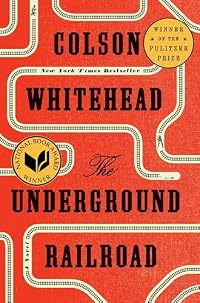
The Underground Railroad
by Colson Whitehead
On This Page
Description
Cora is a slave on a cotton plantation in Georgia. When Caesar, a recent arrival from Virginia, tells her about the Underground Railroad, they decide to take a terrifying risk and escape. Though they manage to find a station and head north, they are being hunted. Their first stop is South Carolina, in a city that initially seems like a haven. But the city's placid surface masks an insidious scheme designed for its black denizens. And even worse: Ridgeway, the relentless slave catcher, is show more close on their heels. show lessTags
Recommendations
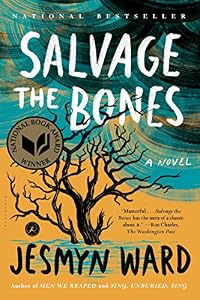
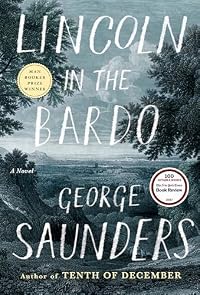
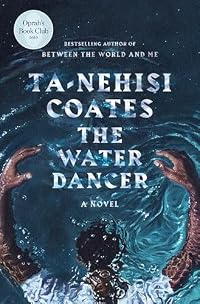
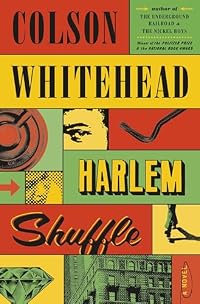
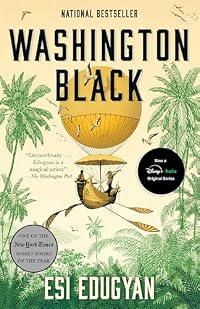
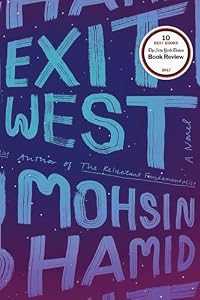
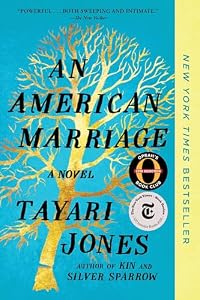
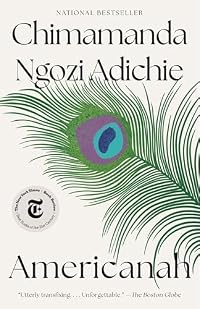
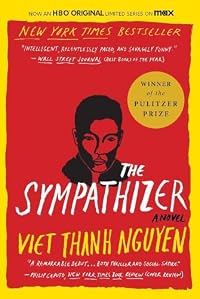
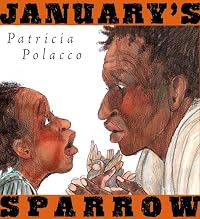
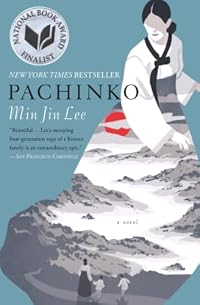
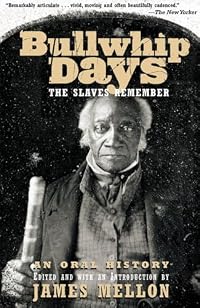
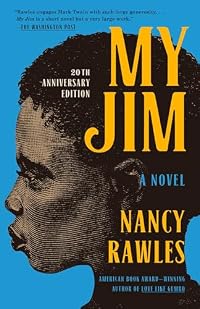
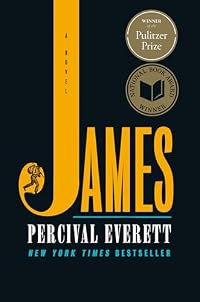

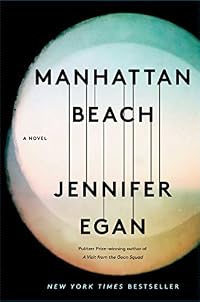
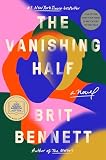
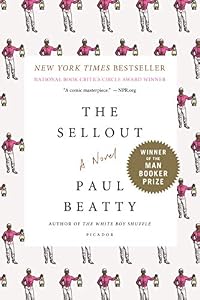

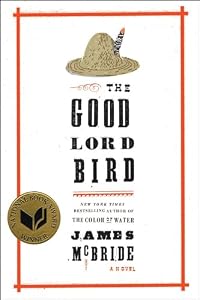
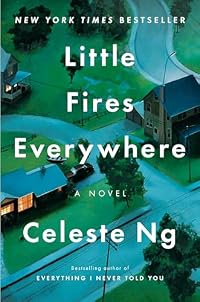
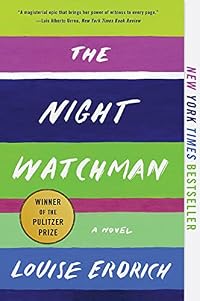
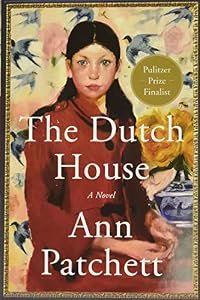
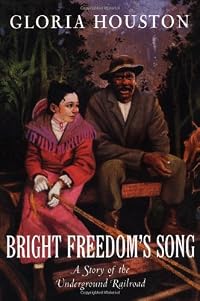
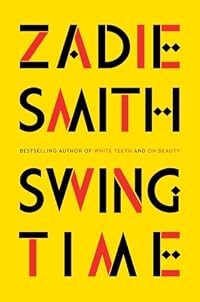
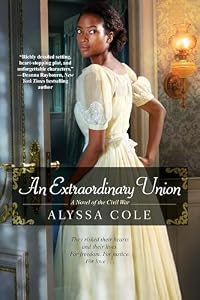
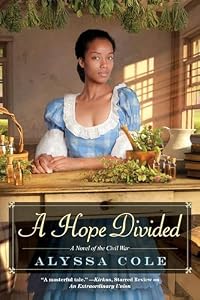
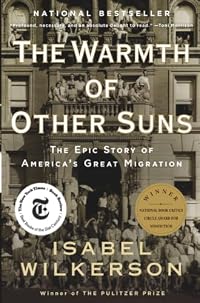
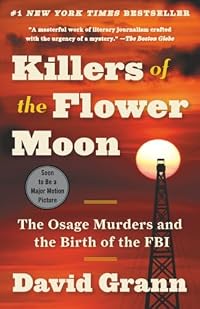
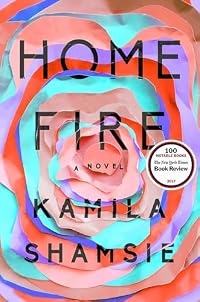
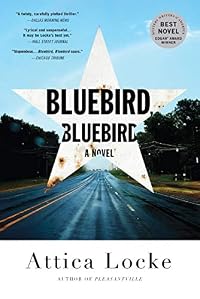



Member Recommendations
shaunie Morrison's masterpiece is a clear influence on Whitehead's book, and his is one of the very few I've read which bears comparison with it. In fact I'd go so far as to say it's also a masterpiece, a stunningly good read!
90
vwinsloe Both books use a magical means of transportation to illuminate the plight of refugees (runaway slaves in one and immigrants in the other.)
60
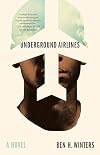
elenchus That popular culture phenomenon of the uncanny twins, two works appearing together yet unrelated in authorship, production, inspiration. Why do they appear together? In this case, each is compelling enough to read based on their own, but for me irresistable now they've shown up onstage at the same time. Ben Winters's Underground Airlines a bizarro underground railroad, updated (for reasons left implicit) for air travel; Colson Whitehead's The Underground Railroad making the escape trail a concrete reality. Each also addresses our world, in between stations.
30
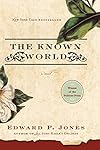
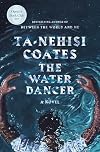
g33kgrrl Two amazing authors, two different literary approaches to the underground railroad, two stories, one terrible time in US history.
30
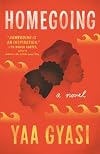

charlie68 A classic not a pc one but from a southern viewpoint.
06
Member Reviews
Read for my Survey in Post-Colonial Literature class at CU Boulder.
An incredible glimpse into a part of history I have heard too little about in my 37 years of life. Whitehead makes readers feel every step of Cora's journey from slavery to freedom - we are spared no hardship, no small detail - and I think that's the point. We've all heard of the Underground Railroad; we've probably read a book or two about the subject in our literature classes - but the romanticized version we carry in our heads and history books doesn't remotely capture the horror that Whitehead re-imagines... This book gives us a glimpse and a lot to think about.
I highly recommend this read!
****
Upon a second read, I feel compelled to add a note about craft - there show more is something incredible about the way Whitehead has taken a "figure of speech" and turned it into a living, breathing, visceral thing in this novel. I wonder what it says about contemporary society that we are so deeply moved by fiction and so little affected by actual history? That Whitehead could tap into such a disparity is the mark of a genius, in my book.
This novel should become a mandatory part of secondary curriculum! show less
An incredible glimpse into a part of history I have heard too little about in my 37 years of life. Whitehead makes readers feel every step of Cora's journey from slavery to freedom - we are spared no hardship, no small detail - and I think that's the point. We've all heard of the Underground Railroad; we've probably read a book or two about the subject in our literature classes - but the romanticized version we carry in our heads and history books doesn't remotely capture the horror that Whitehead re-imagines... This book gives us a glimpse and a lot to think about.
I highly recommend this read!
****
Upon a second read, I feel compelled to add a note about craft - there show more is something incredible about the way Whitehead has taken a "figure of speech" and turned it into a living, breathing, visceral thing in this novel. I wonder what it says about contemporary society that we are so deeply moved by fiction and so little affected by actual history? That Whitehead could tap into such a disparity is the mark of a genius, in my book.
This novel should become a mandatory part of secondary curriculum! show less
Colson Whitehead takes us on an unforgettable ride in The Underground Railroad. He displays the horrific cruelty endemic to the America's Peculiar Institution, and shows how it and violent oppression ruled the relationship between blacks and whites during the first half of the 19th Century. Never ending spirals of hope and defeat put these rails on a roller coaster; it’s a vivid, gritty, honest, and ultimately awe-inspiring travail.
We witness the life-and-death flight of Cora, a Georgia slave girl, who crosses the threshold of womanhood just as the story unfolds. Hers, of course, is a harrowing tale; she escapes her bonds and for a time believes herself free, only to fall into the clutches of the authorities again. This sequence holds show more our attention and dashes our hopes on multiple occasions. Through it all Whitehead keeps America’s violent, sneering racism front and center.
The author surprised me by employing his title—a well-established term in American history—in a literal sense. But this playful(?) use allows him a series of episodes in which our fugitives struggle with hopelessness in utter darkness, unsure at times if they are even traveling in the right direction.
Whitehead draws out his climactic events superbly, while drawing in his readers. This is a fine adventure: we live and die with each twist of the plot. The author presents a textbook example of a suspenseful, harrowing chase while instructing us in the history of escaped slaves and the settlements in which they began their new lives. A rewarding read in more ways than one.
https://bassoprofundo1.blogspot.com/2025/03/the-underground-railroad-by-colson.h... show less
We witness the life-and-death flight of Cora, a Georgia slave girl, who crosses the threshold of womanhood just as the story unfolds. Hers, of course, is a harrowing tale; she escapes her bonds and for a time believes herself free, only to fall into the clutches of the authorities again. This sequence holds show more our attention and dashes our hopes on multiple occasions. Through it all Whitehead keeps America’s violent, sneering racism front and center.
The author surprised me by employing his title—a well-established term in American history—in a literal sense. But this playful(?) use allows him a series of episodes in which our fugitives struggle with hopelessness in utter darkness, unsure at times if they are even traveling in the right direction.
Whitehead draws out his climactic events superbly, while drawing in his readers. This is a fine adventure: we live and die with each twist of the plot. The author presents a textbook example of a suspenseful, harrowing chase while instructing us in the history of escaped slaves and the settlements in which they began their new lives. A rewarding read in more ways than one.
https://bassoprofundo1.blogspot.com/2025/03/the-underground-railroad-by-colson.h... show less
I picked up this book because it won a Pulitzer for Whitehead and because it had the recommendation of Barack Obama, who reads widely. I was not let down. Its picturesque depiction of slavery and of slavery's effects brought this historical event to life to me. Further, Whitehead vividly shows how the human heart - even those from "uncivilized" Africa - longs universally for freedom. I read it cover-to-cover in less than 36 hours' time.
The story trails a slave named Cora from her plantation in the deep American South (Georgia). She escapes to the "Underground Railroad," which in Whitehead's twist of fantasy, is an actual railroad in tunnels under the ground. Like Gulliver in Gulliver's Travels, Cora visits different places on the show more railroad as she travels to the north. Each stop has its own culture, its own wars over slavery, and its own evils. She must think - think! - and solve the fundamental problem with each culture in order to continue her escape to true freedom. In the end, Cora realizes that the challenges will never end, even after escape, and healing must come on its own terms.
I realized how freedom and slavery comes in many forms throughout one's life. What at first seems good can turn into another prison if one is not careful. Nonetheless, the human, the everywoman/everyman, must take steps forward so as not to perish along the way. One might lose dear ones along the way, but the journey must continue. show less
The story trails a slave named Cora from her plantation in the deep American South (Georgia). She escapes to the "Underground Railroad," which in Whitehead's twist of fantasy, is an actual railroad in tunnels under the ground. Like Gulliver in Gulliver's Travels, Cora visits different places on the show more railroad as she travels to the north. Each stop has its own culture, its own wars over slavery, and its own evils. She must think - think! - and solve the fundamental problem with each culture in order to continue her escape to true freedom. In the end, Cora realizes that the challenges will never end, even after escape, and healing must come on its own terms.
I realized how freedom and slavery comes in many forms throughout one's life. What at first seems good can turn into another prison if one is not careful. Nonetheless, the human, the everywoman/everyman, must take steps forward so as not to perish along the way. One might lose dear ones along the way, but the journey must continue. show less
This novel is fiction, but it peels back the wounds of slavery in the United States. In this universe, the Underground Railroad is a literal train carrying escaped trains north to a tenuous freedom. Cora es capes the cruelty of life on a Georgia plantation to the railroad making several stops along the way. South Carolina appears to be a haven where African Americans live in a company town, but as Cora ends up working as a living exhibit in an anthropology museum, she learns that the whole town is a front for eugenics experiments. North Carolina is a place where slavery is ended by attempting genocide, and Cora has to hide in a sympathetic white man's attic where she witnesses the regular pageants accompanying the lynching of blacks and show more white helpers. A slave catcher brings Cora to a wild west version of Tennessee, and she escapes again to a community of freed blacks in Indiana. Even here she can't find any peace.
The magical and mythical elements frame a novel that contains the full brutality of slavery and racism in the United States. It's a brilliant construct that brings home the reality of America's grim secrets. show less
The magical and mythical elements frame a novel that contains the full brutality of slavery and racism in the United States. It's a brilliant construct that brings home the reality of America's grim secrets. show less
This book is a powerful tale of a young slave's flight from the brutal antebellum South. Whitehead employs what I would call literal fablism, or perhaps magical realism, to tell this unsentimental story of a teenage third-generation slave named Cora, whose grandmother, Ajarry, was kidnapped from Africa as a child and sold over and over until she landed on a cotton plantation in Georgia. Some years later, Ajarry's own young daughter, Mabel, gives birth to a daughter, Cora, and when the girl is still a child, Mabel escapes. The plantation owner, Randall, dies and leaves the plantation to his two sons, who are more brutal than their father. After humiliations, rape by other slaves, and a beating by the master, Cora makes her escape with show more Caesar, a literate newcomer who became acquainted with a man connected with the Underground Railroad. Immediately, Cora is hunted by a famous slave catcher, Ridgeway, whose only previous failure was never catching Mabel, so catching Cora is a matter of ego. Not only must Cora evade him, but also lynch mobs, bounty hunters, and other slave catchers. The master, Terrance, offers a large reward that apparently grows over time.
Cora's journey toward the north is filled with people and events that often are not what they seem. The toxic effect of slavery on everyone, black and white, is palpable. There is no redemption at the end of this novel, no happily-ever-after conclusion, no neat moralistic wrap-up -- just the ugly, harrowing reality of what people living under the abomination of slavery suffered. It will stay with me for a long time. show less
Cora's journey toward the north is filled with people and events that often are not what they seem. The toxic effect of slavery on everyone, black and white, is palpable. There is no redemption at the end of this novel, no happily-ever-after conclusion, no neat moralistic wrap-up -- just the ugly, harrowing reality of what people living under the abomination of slavery suffered. It will stay with me for a long time. show less
Whew.
A gripping read, one that makes me wonder why the American government is so het up about Nazis when they perpetrated the same evils and worse on their own people. (I confess to finding the ongoing bigotry about 'other races' (we are, of course, all the same race) in the US baffling and horrific.)
This book highlights some of those evils, the mad hunt for escaped slaves, the denigration and punishment meted out, and not only in the South. "Friendly" states welcomed the escaping slaves and then they proceeded to sterilize them and incarcerate them in hospitals, experimenting with them in much the same manner as the Nazis did their captives. Horrifying, and portrayed so well by Whitehead. Each and every character is so well-drawn you show more feel their pain, their numbness.
It is a mandatory read for all of those who forget how bad times really were and don't understand why 'Black Lives Matter' is a needed campaign.
Graphic in details, though Whitehead slips past rape scenes delicately - "The women sewed her up"...enough to illustrate the horror without dwelling on it. The handing and beating scenes seemed more detailed but perhaps it was the image of the girl on the hook that finally made me recoil. We've become so blind to scenes of torture thanks to media - it's a testament to the writer's skill that several of the scenes are implanted in my mind.
Glad I read it. Couldn't put it down. Visuals still with me. Not sure about the ending. show less
A gripping read, one that makes me wonder why the American government is so het up about Nazis when they perpetrated the same evils and worse on their own people. (I confess to finding the ongoing bigotry about 'other races' (we are, of course, all the same race) in the US baffling and horrific.)
This book highlights some of those evils, the mad hunt for escaped slaves, the denigration and punishment meted out, and not only in the South. "Friendly" states welcomed the escaping slaves and then they proceeded to sterilize them and incarcerate them in hospitals, experimenting with them in much the same manner as the Nazis did their captives. Horrifying, and portrayed so well by Whitehead. Each and every character is so well-drawn you show more feel their pain, their numbness.
It is a mandatory read for all of those who forget how bad times really were and don't understand why 'Black Lives Matter' is a needed campaign.
Graphic in details, though Whitehead slips past rape scenes delicately - "The women sewed her up"...enough to illustrate the horror without dwelling on it. The handing and beating scenes seemed more detailed but perhaps it was the image of the girl on the hook that finally made me recoil. We've become so blind to scenes of torture thanks to media - it's a testament to the writer's skill that several of the scenes are implanted in my mind.
Glad I read it. Couldn't put it down. Visuals still with me. Not sure about the ending. show less
True confession: when I was a little kid, and heard about something called the "underground railroad," taking slaves to freedom, I thought it was a real railroad. Underground. Hardly surprising, when I lived in a city where a (largely) underground railroad connected the far-flung corners of four of the city’s five boroughs. So, in a childlike way, I was a little disappointed when I learned that the "railroad" part was a metaphor. In a move that readers will either love or hate, Colson Whitehead reverses the trajectory of that metaphor, and equips his story of one woman's escape from the horrors of slavery in the deepest South with a genuine underground railroad, complete with stations and stationmasters, platforms, cabooses and show more engineers. The question you have to ask, before you decide whether you love it or hate it, is why he does this, and what (if anything) it adds to a story you may think you are familiar with from many, many re-tellings.[return][return]Personally, I think the new metaphor works brilliantly, on several levels. The railroad conceit keeps the focus on Cora, rather than turning it into the story of the Good People who are rescuing her. This is not a history of the Underground Railroad, and Whitehead’s re-engineering of the metaphor doesn’t change anything, or diminish the courage of those who were involved, or the odds against them. But historically, the role of the runaway slaves in stories of the Underground Railroad could turn into non-speaking parts: they are silent sufferers whose role is to be rescued. Whitehead uses the railroad to ensure that doesn’t happen to Cora, and at the same time makes the white participants both more complicated and more human.[return][return]In addition, like the transporter on "Star Trek," the metaphor of the railroad eliminates the need for a lot of narrative filler ("... and then she hid under a blanket/in a hayloft/in an attic ...”) and allows Whitehead to move Cora along quite briskly, taking her from one fictionalized version of slave-owning America to another.[return][return]Because that’s what the story is really about: as she embarks on her journey, Cora is told, “Look outside as you speed through, and you’ll find the true face of America” (a line Whitehead has her repeat, at least twice, in case you didn’t get it the first time). Whitehead presents us with three fictionalized versions (four, including the nightmare that is the Georgia plantation that Cora escapes from) of the history of race relations in America. “South Carolina,” where the plantation system has been replaced by a form of slavery-by-stealth: a lifetime of debt, low-wage servitude and eugenics, all presented as if someone were doing the runaways a big favor. “North Carolina,” where it has been made it a crime, punishable by death, to be black, and the slave population has been replaced with indentured servants enlisted from desperate hordes of European immigrants. And Indiana, a seeming idyll of abolitionist sentiment and color-blind good will to all, which is (Spoiler? Or perhaps you can see this coming?) too good to last.[return][return]The “America” that Cora sees as she rides the rails is a clever mash-up of real history (the Tuskegee experiment, in which subjects offered free health care were infected with syphilis; programs to “repatriate” freed slaves to Africa; the shameful legacy of Reconstruction, which left ex-slaves so in debt to their former masters that they might as well still be enslaved) and Whitehead uses the “what if” to excellent purpose. His novel becomes much more than just an escape adventure, but a powerful journey through the role of race in American history.[return][return]And beautifully written. (I was not surprised by this, as Whitehead’s “Zone One” is one of the best zombie novels I have read.) The voice of Cora, and the account of what she goes through, who she meets, and what she sees, is one you won’t get out of your head for a long, long time. show less
Members
- Recently Added By
Published Reviews
ThingScore 75
Der Roman des afroamerikanischen Autors Colson Whitehead über die Sklaverei in den USA des 19. Jahrhunderts kommt in deutscher Übersetzung nun gerade recht, um auf den heutigen Rassismus zu verweisen.
added by DeusXMachina
Lists

Pulitzer Prize Winners for Fiction
102 works; 54 members

2017 Tournament of Books
18 works; 18 members

Best Contemporary Literary Fiction (Around the Last 30 Years)
388 works; 124 members

Recommend the 20 best books you've read in the last five years
2,167 works; 606 members

Best 21st Century Books (So Far)
670 works; 86 members

Best Historical Fiction
620 works; 257 members
Historical Fiction
889 works; 89 members
Booker Prize
491 works; 62 members

The Guardian's 100 best books of the 21st century
100 works; 21 members

Books recommended by Barack Obama
295 works; 28 members

Top Five Books of 2016
795 works; 229 members

Oprah's Book Club (original and 2.0)
91 works; 21 members
Southern Fiction
212 works; 51 members

Female Protagonist
1,056 works; 56 members

Top Five Books on LibraryThing
24 works; 7 members

Best African American Literature
53 works; 9 members
Favourite Books
1,817 works; 316 members
Black Authors
381 works; 32 members
National Book Award - Fiction
78 works; 9 members

Top Five Books of 2017
757 works; 230 members

Best Science Fiction Novels
816 works; 430 members
Books Read in 2017
4,248 works; 129 members

2017 Hugo Eligible Novels
145 works; 14 members

50 Books from the Past 50 Years
50 works; 8 members

Must-Read Books by Black Authors
114 works; 91 members

Man Booker Prize Longlist 2017
13 works; 4 members

Top Five Books of 2015
811 works; 240 members

BBC Radio 4 Bookclub
304 works; 13 members

Books Read in 2020
4,379 works; 124 members
2017 Notable Books for Adults
26 works; 5 members

Literature by People of Color
81 works; 9 members
Kirkus Starred Fiction Reviews of Books Published in 2016
63 works; 3 members

Science Fiction Pretending not to be Science Fiction
7 works; 1 member

Books Read in 2022
5,164 works; 113 members
Book Club 2017
8 works; 2 members

Carole's List
445 works; 13 members

Books Read in 2016
4,666 works; 199 members
Overdue Podcast
803 works; 9 members

Recommendations
17 works; 1 member
Reading Group 2018
8 works; 1 member

Recommended Speculative Fiction by Women and People of Color
298 works; 45 members

DELETE
48 works; 2 members

Llibres que he llegit el 2017
49 works; 1 member

Speculative Fiction to Read
706 works; 32 members
Best Books of the 2010s
20 works; 1 member

Totally Biased List of Tookie’s Favorite Books
10 works; 1 member

Reading Glasses Podcast
410 works; 3 members

Retrospective of 20th- and 21st-century literature
154 works; 1 member
Books in Riverdale
123 works; 3 members

LitHub's Best Novels of the Decade 2010-2019
39 works; 1 member

Top Five Books of 2024
795 works; 264 members
Barack Obama's Favorite Books of 2016
5 works; 1 member

.
184 works; 1 member
NYT 100 best books of 21st C
100 works; 31 members
Books We Couldn't Put Down
443 works; 197 members

NYT Readers best of 21st C
100 works; 8 members

Top Book of the Year - 2010s
10 works; 1 member

Novels Set on Trains
11 works; 3 members

Mustich's 1000 Books to Read Before You Die: A Life Changing List
1,001 works; 18 members

Novels/Poems/Short Stories/Anything Storytelling Related
112 works; 2 members

Books Read in 2021
5,361 works; 114 members

Diverse Reading Challenge 2020
31 works; 1 member
National Book Award winners
65 works; 11 members

Dystopia Must-Reads
18 works; 2 members

Books Read in 2019
4,052 works; 108 members
Speculative Fiction
40 works; 2 members
Books Read in 2018
4,360 works; 110 members

The Books I Read in 2017
96 works; 1 member
Elle: The 33 Best Books of 2016
1 work; 1 member

Novels Set Underground
28 works; 7 members
Silent Scream
20 works; 2 members
Arthur C. Clarke Award Winners and Shortlisted Books
219 works; 14 members

KayStJ's to-read list
1,616 works; 11 members
Vlogbrothers Book Recommendations
307 works; 4 members
Talk Discussions
Past Discussions
April 2020: Colson Whitehead in Monthly Author Reads (August 2020)
Author Information

19+ Works 29,656 Members
Colson Whitehead was born on November 6, 1969. He graduated from Harvard College and worked at the Village Voice writing reviews of television, books, and music. His first novel, The Intuitionist, won the Quality Paperback Book Club's New Voices Award. His other books include The Colossus of New York, Sag Harbor, and Zone One. He won the Young show more Lions Fiction Award and the Anisfield-Wolf Book Award for John Henry Days, the PEN/Oakland Award for Apex Hides the Hurt, and the National Book Award for fiction and the Pulitzer Prize for fiction for The Underground Railroad. His reviews, essays, and fiction have appeared in numerous publications including the New York Times, The New Yorker, New York Magazine, Harper's and Granta. He has received a MacArthur Fellowship, a Whiting Writers Award, and a fellowship at the Cullman Center for Scholars and Writers. (Bowker Author Biography) show less
Some Editions
Awards and Honors
Awards
Distinctions
The Guardian Book of the Day (2016-10-09)
Oprah's Book Club 2.0 (2016-08 – 2016)
Notable Lists
Series
Belongs to Publisher Series
Work Relationships
Is contained in
Has the adaptation
Inspired
Has as a supplement
Common Knowledge
- Canonical title
- The Underground Railroad
- Original title
- The Underground Railroad
- Original publication date
- 2016
- People/Characters
- Ajarry; Mabel; Cora Randall; Terrance Randall; Blake; Jockey (show all 26); James Randall; Nate Ketchum; Tom Bird; Arnold Ridgeway; August Carter; Bessie Carpenter; Christian Markson; Aloysius Stevens; Martin Wells; Ethel Markson; Oney Garrison; Gloria Valentine; John Valentine; Rumsey Brooks; Elijah Lander; Eugene Wheeler; Royal; Ollie [in The Underground Railroad]; Sam [in The Underground Railroad]; Caesar [in The Underground Railroad]
- Important places
- Underground Railroad; Georgia, USA; South Carolina, USA; Tennessee, USA; Indiana, USA; North Carolina, USA
- Important events
- Antebellum South; Underground Railroad; 19th century
- Related movies
- The Underground Railroad (2021 | IMDb)
- Dedication
- For Julie
- First words
- The first time Caesar approached Cora about running north, she said no.
- Quotations
- . . . for justice may be slow and invisible, but it always renders its true verdict in the end.
‘I’m what botanists call a hybrid,’ he said the first time Cora heard him speak. ‘A mixture of two different families. In flowers, such a concoction pleases the eye. When that amalgamation takes its shape in flesh and... (show all) blood, some take great offense. In this room we recognize it for what it is -- a new beauty come into the world, and it is in bloom all around us.’
Georgina said the children make of it what they can. What they don't understand today, they might tomorrow. 'The Declaration is like a map. You trust that it's right, but you only know by going out and testing it yourself.'
In another country they would have been criminals, but this was America.
She didn’t understand the words, most of them at any rate, but created equal was not lost on her. The white men who wrote it didn’t understand it either, if all men did not truly mean all men. Not if they snatched away wh... (show all)at belonged to other people, whether it was something you could hold in your hand, like dirt, or something you could not, like freedom.
“And America, too, is a delusion, the grandest one of all. The white race believes—believes with all its heart—that it is their right to take the land. To kill Indians. Make war. Enslave their brothers. This nation shou... (show all)ldn’t exist, if there is any justice in the world, for its foundations are murder, theft, and cruelty. Yet here we are." - Last words
- (Click to show. Warning: May contain spoilers.)She wondered where he escaped from, how bad it was, and how far he traveled before he put it behind him.
- Blurbers
- Obama, Barack; Kakutani, Michiko; Winfrey, Oprah
- Original language
- English US
- Canonical DDC/MDS
- 813.6
- Canonical LCC
- PS3573.H4768
Classifications
Statistics
- Members
- 11,162
- Popularity
- 816
- Reviews
- 496
- Rating
- (4.04)
- Languages
- 19 — Arabic, Catalan, Czech, Danish, Dutch, English, Estonian, Finnish, French, German, Hungarian, Italian, Japanese, Polish, Russian, Spanish, Swedish, Turkish, Portuguese (Portugal)
- Media
- Paper, Audiobook, Ebook
- ISBNs
- 95
- UPCs
- 2
- ASINs
- 23