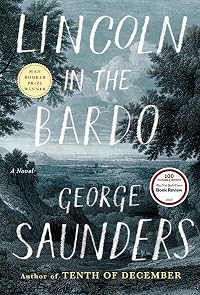
Lincoln in the Bardo
by George Saunders
On This Page
Description
February 1862. The Civil War is less than one year old. The fighting has begun in earnest, and the nation has begun to realize it is in for a long, bloody struggle. Meanwhile, President Lincoln's beloved eleven-year-old son, Willie, lies upstairs in the White House, gravely ill. In a matter of days, despite predictions of a recovery, Willie dies and is laid to rest in a Georgetown cemetery. Newspapers report that a grief-stricken Lincoln returned to the crypt several times alone to hold his show more boy's body. Willie Lincoln finds himself in a strange purgatory, where ghosts mingle, gripe, commiserate, quarrel, and enact bizarre acts of penance. Within this transitional state, called, in the Tibetan tradition, the bardo, a monumental struggle erupts over young Willie's soul. show lessTags
Recommendations




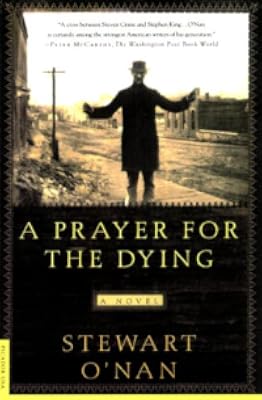
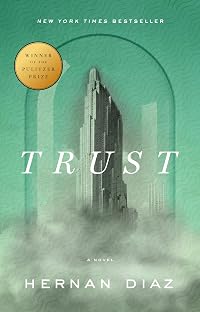
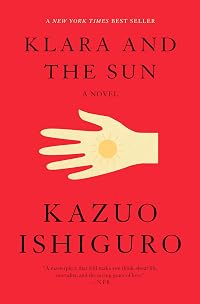
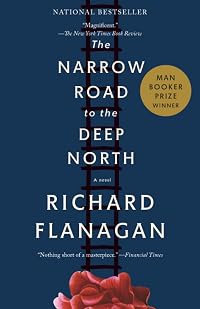

Member Recommendations
CGlanovsky Especially the final graveyard scene.
Also recommended by streamsong
40
by anonymous user
kewing Conversations among the community of the dead in a graveyard.

benjclark A collection of fascinating, well-written tales that weave into a whole. Amazing!
whitsunweddings Similar "very sad magical realism civil war deaths" vibe.
Member Reviews
I listened to the audiobook, largely because, knowing how I dislike history, I thought I’d bog down if I tried to read in print. At the beginning of the audiobook, I began to worry that with 166 narrators and footnotes(!) interspersed, it would be chaos. I’m pleased to report that I was neither bogged down nor was it at all confusing. I can’t imagine a better way to present this novel in audio form. I think even that the multitude of voices brought the bardo to life (so to speak) better than print could have done. The novel itself is a beautiful meditation on grief, regret, vengeance, and, peripherally, the Civil War.
Our {death} caused pain. Those who had loved us sat upon their beds, heads in hand; lowered their faces to tabletops, making animal noises. We had been loved, I say, and remembering us, even many years later, people would smile, briefly gladdened at the memory. ... And yet. ... And yet no one had ever come here to hold one of us, while speaking so tenderly. ... Ever.
No one until Abraham Lincoln, that is, whose real-life grief over the death of his 11-year-old son, Willie, was so consuming that he was reported to have visited the cemetery to hold the child’s body.
And so it is in this novel, narrated in an experimental structure by a group of spirits who, having resisted (some for years, some for centuries) to fully crossover from life show more to afterlife, welcome Willie and witness Abraham Lincoln’s visit. Woven alongside the spirits’ narratives are quotations from historical records and writings about Lincoln (some real, some invented). Altogether, what develops is a rich, evocative broth -- of grief for sure, and of despair over a war-effort that is failing. But also of respect for Lincoln and fascination of these spirits’ lives, lived at different times in early American history.
(Review based on an advance reading copy provided by the publisher.) show less
No one until Abraham Lincoln, that is, whose real-life grief over the death of his 11-year-old son, Willie, was so consuming that he was reported to have visited the cemetery to hold the child’s body.
And so it is in this novel, narrated in an experimental structure by a group of spirits who, having resisted (some for years, some for centuries) to fully crossover from life show more to afterlife, welcome Willie and witness Abraham Lincoln’s visit. Woven alongside the spirits’ narratives are quotations from historical records and writings about Lincoln (some real, some invented). Altogether, what develops is a rich, evocative broth -- of grief for sure, and of despair over a war-effort that is failing. But also of respect for Lincoln and fascination of these spirits’ lives, lived at different times in early American history.
(Review based on an advance reading copy provided by the publisher.) show less
Lincoln in the Bardo is already generating Best of 2017 noise and with good reason; it is that good. The story is a simple one, but what Mr. Saunders does with language, history, religion, and format adds layers to it that creates a complex narrative of love and loss, grief and hope, and fear and peace. It is the type of novel that you want to read without stopping, but immediately upon finishing it you want to start over again to savor every word. Each reading method has value, as it is the type of novel from which you glean a new nugget of insight with every reading. In other words, it is the best type of novel.
What makes Lincoln in the Bardo so special is how Mr. Saunders takes one small fraction of historical lore and plays with it show more to draw out every ounce of emotion in a reader. At the same time, he provides a general context by which one can examine one’s own belief systems. Then, because that is not enough, by listening to what the shades have to say about their past lives and their current state of existence, he forces readers to examine their own lives and judge it for its worthiness. He manages to make readers an active part of the story while also maintaining their passive observing. It does not make sense, but it is exceedingly effective.
This is Mr. Saunders’ first full-length novel, and it quickly becomes apparent that he is by no means a typical novelist. Instead of huge chunks of descriptive text and miles upon miles of dialogue, the story reads – and is formatted – like a collection of quotes and anecdotes. Some of these are spoken by the shades in attendance at the cemetery who spend their time watching over and explaining the nature of their existence to Willie. Others appear to be historical documents or other epistolary entries. Sometimes, we even see directly into President Lincoln’s mind. For as many different characters as there are in the novel (there are 166 different narrators for the audiobook), each voice is unique and, more importantly, memorable.
In addition, there is not much space devoted to description, but readers still manage to know the distinguishing features of the characters. He adds enough descriptors to the dialogue to bring the characters to life physically as well as emotionally and mentally. It is a feat not many authors would be able to achieve, and yet Mr. Saunders does so with aplomb.
The format lends itself perfectly to an audio experience, and the idea of so many different narrators is highly intriguing. However, reading the novel provides its own pleasures. With the print version, you are able to stop and re-read his words for greater understanding or just pause to savor them. Sometimes, with audio, it is a bit more difficult to do that even while the narrator’s performance can provide a different level of insight.
Plenty has been stated about the story itself, which is as beautiful and gut-wrenching as everyone else is saying. For me, all of that is possible because of the way Mr. Saunders plays with language itself and the idea and appearance of the novel. His version is so refreshing and unique. Each new vignette is a treat, even as it manages to spear your heart with its pathos. It all adds up to the following realization: if there is one book this year that is a must-read, Lincoln in the Bardo is that book. show less
What makes Lincoln in the Bardo so special is how Mr. Saunders takes one small fraction of historical lore and plays with it show more to draw out every ounce of emotion in a reader. At the same time, he provides a general context by which one can examine one’s own belief systems. Then, because that is not enough, by listening to what the shades have to say about their past lives and their current state of existence, he forces readers to examine their own lives and judge it for its worthiness. He manages to make readers an active part of the story while also maintaining their passive observing. It does not make sense, but it is exceedingly effective.
This is Mr. Saunders’ first full-length novel, and it quickly becomes apparent that he is by no means a typical novelist. Instead of huge chunks of descriptive text and miles upon miles of dialogue, the story reads – and is formatted – like a collection of quotes and anecdotes. Some of these are spoken by the shades in attendance at the cemetery who spend their time watching over and explaining the nature of their existence to Willie. Others appear to be historical documents or other epistolary entries. Sometimes, we even see directly into President Lincoln’s mind. For as many different characters as there are in the novel (there are 166 different narrators for the audiobook), each voice is unique and, more importantly, memorable.
In addition, there is not much space devoted to description, but readers still manage to know the distinguishing features of the characters. He adds enough descriptors to the dialogue to bring the characters to life physically as well as emotionally and mentally. It is a feat not many authors would be able to achieve, and yet Mr. Saunders does so with aplomb.
The format lends itself perfectly to an audio experience, and the idea of so many different narrators is highly intriguing. However, reading the novel provides its own pleasures. With the print version, you are able to stop and re-read his words for greater understanding or just pause to savor them. Sometimes, with audio, it is a bit more difficult to do that even while the narrator’s performance can provide a different level of insight.
Plenty has been stated about the story itself, which is as beautiful and gut-wrenching as everyone else is saying. For me, all of that is possible because of the way Mr. Saunders plays with language itself and the idea and appearance of the novel. His version is so refreshing and unique. Each new vignette is a treat, even as it manages to spear your heart with its pathos. It all adds up to the following realization: if there is one book this year that is a must-read, Lincoln in the Bardo is that book. show less
I have to say upfront that I’ve been a Saunders fan since CivilWarLand in Bad Decline, so I jumped to order this book as soon as I saw it. It’s his first novel, and it’s very Saunders-like — meaning that it’s not like anything he’s done before.
It’s written in an unusual voice, which I found a little disorienting and difficult to follow at first. But once you get it, it flows. The story is told by numerous characters and narrators, both contemporaneous characters and historical sources and commentators looking back on the events from the near present. It feels like a play, with characters speaking in turn as much to the audience as to each other.
The central event is the death of Abraham Lincoln’s son, Willie. Willie dies show more at the end of his father’s first year in office as the Civil War, and the horrors of the war, ramp up. President Lincoln and his wife, Mary Todd Lincoln, were devastated by their son’s death, and haunted by guilt that they hadn’t done enough to prevent it as Willie’s sickness worsened.
Willie has arrived in a limbo — the bardo — after his death. This limbo is populated by a whole array of characters, many of whom have been there for decades, never able to accept that they have died. For many, some issue, grievance, or unfinished business in general prevents them from letting go of their lives.
In Willie’s case, his life with his father is unfinished. His father cannot let go of Willie, visiting and staying by his resting place, even taking him from the crypt back into his arms. And Willie himself has simply died before he was ready, not letting go of his father, longing to have his father feel his touch.
Hans Vollman and Roger Bevins III are seemingly permanent residents of the bardo. They take a special interest in Willie. Normally children as young as Willie don’t stay in the bardo very long, but Willie is a special case. Lincoln provides the view of Willie from life, the child stolen away too early and maybe avoidably. Vollman and Bevins provide the view from the other side, where Willie is not in heaven but lost in this limbo, from which he can’t touch the living world or be touched by the father he left behind.
Vollman and Bevins try to help Willie, although the help he really needs, letting go of life, is something they can’t even do for themselves. At the same time, they try to help the president, bringing him together with his son so that each can accept Willie’s death, so that Willie can let go of life and Lincoln can let go of death.
All of this happens in parallel with the events of the Civil War, a virtual flood of death itself. Willie’s death and Lincoln’s reaction to it come at the same time that so many are grieving the deaths of so many, under the orders of Lincoln himself. The president feels the shock of a son’s death while the war’s losses are shocking the mothers and fathers of sons fighting the war. The war that Lincoln feels responsible for and that he and his critics are seeing go horribly wrong.
The images of Lincoln that Saunders presents, overcome and paralyzed by grief, are a picture of a depressed man being tested. Tempted to try to end the war and the deaths that are doing to countless parents what Willie’s death is doing to him.
Willie and all the dead in the bardo teach Lincoln about the commonality of suffering and the reality of death. When he does let go of Willie, he lets go of grief’s paralysis, for himself and his presidency. He turns a corner away from grief and sorrow and toward resolve.
The dead learn a similar resolve. Willie breaks the taboo of the bardo when he says, “Everyone, we are dead!”
One measure of a book is its emotional effect. I think this is an oddly inspiring book. “Oddly” because so much of it is about death. But it’s also about an attitude — moving forward and not clinging to things that are over and done with. That goes not only for death but for all the changes we go through within life. show less
It’s written in an unusual voice, which I found a little disorienting and difficult to follow at first. But once you get it, it flows. The story is told by numerous characters and narrators, both contemporaneous characters and historical sources and commentators looking back on the events from the near present. It feels like a play, with characters speaking in turn as much to the audience as to each other.
The central event is the death of Abraham Lincoln’s son, Willie. Willie dies show more at the end of his father’s first year in office as the Civil War, and the horrors of the war, ramp up. President Lincoln and his wife, Mary Todd Lincoln, were devastated by their son’s death, and haunted by guilt that they hadn’t done enough to prevent it as Willie’s sickness worsened.
Willie has arrived in a limbo — the bardo — after his death. This limbo is populated by a whole array of characters, many of whom have been there for decades, never able to accept that they have died. For many, some issue, grievance, or unfinished business in general prevents them from letting go of their lives.
In Willie’s case, his life with his father is unfinished. His father cannot let go of Willie, visiting and staying by his resting place, even taking him from the crypt back into his arms. And Willie himself has simply died before he was ready, not letting go of his father, longing to have his father feel his touch.
Hans Vollman and Roger Bevins III are seemingly permanent residents of the bardo. They take a special interest in Willie. Normally children as young as Willie don’t stay in the bardo very long, but Willie is a special case. Lincoln provides the view of Willie from life, the child stolen away too early and maybe avoidably. Vollman and Bevins provide the view from the other side, where Willie is not in heaven but lost in this limbo, from which he can’t touch the living world or be touched by the father he left behind.
Vollman and Bevins try to help Willie, although the help he really needs, letting go of life, is something they can’t even do for themselves. At the same time, they try to help the president, bringing him together with his son so that each can accept Willie’s death, so that Willie can let go of life and Lincoln can let go of death.
All of this happens in parallel with the events of the Civil War, a virtual flood of death itself. Willie’s death and Lincoln’s reaction to it come at the same time that so many are grieving the deaths of so many, under the orders of Lincoln himself. The president feels the shock of a son’s death while the war’s losses are shocking the mothers and fathers of sons fighting the war. The war that Lincoln feels responsible for and that he and his critics are seeing go horribly wrong.
The images of Lincoln that Saunders presents, overcome and paralyzed by grief, are a picture of a depressed man being tested. Tempted to try to end the war and the deaths that are doing to countless parents what Willie’s death is doing to him.
Willie and all the dead in the bardo teach Lincoln about the commonality of suffering and the reality of death. When he does let go of Willie, he lets go of grief’s paralysis, for himself and his presidency. He turns a corner away from grief and sorrow and toward resolve.
The dead learn a similar resolve. Willie breaks the taboo of the bardo when he says, “Everyone, we are dead!”
One measure of a book is its emotional effect. I think this is an oddly inspiring book. “Oddly” because so much of it is about death. But it’s also about an attitude — moving forward and not clinging to things that are over and done with. That goes not only for death but for all the changes we go through within life. show less
Lincoln in the Bardo is an odd book. Stylistically, the book is a work of art. It reads like a play and a collage of historical articles. George Saunders’s much-awaited first novel is certainly like a weird folk art diorama of a cemetery come to life as the New York Times put it. The dreamlike flow of Lincoln in the Bardo made the reading of it a little like taking some mildly hallucinogenic substance. But the story is a bit of a mess. But, perhaps that's the point? Life is a bit of a mess.
The characters, spirits suspended in the Bardo ( an intermediate, transitional, or liminal state between death and rebirth in Tibetan Buddhism) reside between “that” [this] world and their ultimate fate, spar with one another restlessly. A show more grieving and guilt-ridden Abraham Lincoln cannot bear to see his dear little son Willie, dead from typhoid fever, put away in the “sick box,” as the ghosts term coffins and sepulchers. He visits the cemetery alone, twice after his son’s interment in a temporary mausoleum, to commune with him, even going so far as to remove the lid of his coffin and holding the dead boy in his gangly arms. The boy’s spirit looks on and even enters his father’s body — He is not the only spirit to do so in the book. The community of souls in the Oak Hill Cemetery — and some from “outside the fence” — agitate to be freed from this waiting room between Earthly life and the next phase - the stage of rebirth. And while Lincoln in the Bardo features a wide cast of characters - the community of souls - it is the grief of Abraham Lincoln that anchors this book.
The supernatural chatter of our wide cast of characters can grow tedious at times — the novel could have used some editing — but their voices gain emotional momentum as the book progresses. And they lend the story a choral dimension that turns Lincoln’s personal grief into a meditation on the losses suffered by the nation during the Civil War, and the more universal heartbreak that is part of the human condition. Yet, all too often the vignettes are miniatures of the cruel, satirical stories that have won Saunders fans, and, as mentioned, several are poignant, but they don’t have much connection to Willie’s story. Because of this, the souls of the cemetery and the various stories connected to them often overshadow the crux of what makes this novel work: the pain of Abraham Lincoln's grief and his son trying to connect with him beyond the grave. You see it is Lincoln's very grief that is keeping Willie stuck in the Bardo. And Willie isn't ready to accept death.
Lincoln in the Bardo is an experimental novel that won the Man Booker prize in 2017. Its experimental nature is commendable but doesn't always work. The interplay of the frustrated few main spirits and the larger population resembled a stage script without stage directions (which was often frustrating); the dialogue is inventive, by turns poignant, tragic, eerie, bawdy, and mordantly funny. However, it often overshadows the main story. Excerpts from actual news stories, letters, and Lincoln biographies interweave with the spirits’ “lines,” lending authenticity to the historical context, that of the Civil War. However, some of these are also fabricated. The point is Saunders wants us to consider what is real and not real, what is truth, and what is fictional.
I found this book to be a poignant, sometimes funny, frustrating mess, sadistic (Saunders has a bad habit of describing cruel situations and graphic scenes), and often, too damn sentimental. Saunders isn't necessarily interested in history. He could care less that Lincoln's secret cause of emancipation wasn't really a personal emotion or conviction, but one more of policy and keeping the union intact. He wants you to think the Lincoln mind-melded with African-American spirits.
Great works of art are often controversial, imperfect, challenging specimens of ingenuity. This book is a demanding work of art, one with a unique yet frustrating voice. I'm glad to have read it but I'm not sure I want to revisit it.
*I recommend listening to the audiobook. Saunders friend Nick Offerman (Ron Swanson) agreed early in the production process of the audiobook to take a role, as did Offerman's wife, Megan Mullally. The two then recruited Julianne Moore, Don Cheadle, Rainn Wilson, and Susan Sarandon. Non-celebrities with parts include Saunders's wife, his children, and various of his friends. Other notable narrators include David Sedaris, Carrie Brownstein, Lena Dunham, Keegan-Michael Key, Miranda July, Ben Stiller, Bradley Whitford, Bill Hader, Mary Karr, Jeffrey Tambor, Kat Dennings, Jeff Tweedy, and Patrick Wilson. show less
The characters, spirits suspended in the Bardo ( an intermediate, transitional, or liminal state between death and rebirth in Tibetan Buddhism) reside between “that” [this] world and their ultimate fate, spar with one another restlessly. A show more grieving and guilt-ridden Abraham Lincoln cannot bear to see his dear little son Willie, dead from typhoid fever, put away in the “sick box,” as the ghosts term coffins and sepulchers. He visits the cemetery alone, twice after his son’s interment in a temporary mausoleum, to commune with him, even going so far as to remove the lid of his coffin and holding the dead boy in his gangly arms. The boy’s spirit looks on and even enters his father’s body — He is not the only spirit to do so in the book. The community of souls in the Oak Hill Cemetery — and some from “outside the fence” — agitate to be freed from this waiting room between Earthly life and the next phase - the stage of rebirth. And while Lincoln in the Bardo features a wide cast of characters - the community of souls - it is the grief of Abraham Lincoln that anchors this book.
The supernatural chatter of our wide cast of characters can grow tedious at times — the novel could have used some editing — but their voices gain emotional momentum as the book progresses. And they lend the story a choral dimension that turns Lincoln’s personal grief into a meditation on the losses suffered by the nation during the Civil War, and the more universal heartbreak that is part of the human condition. Yet, all too often the vignettes are miniatures of the cruel, satirical stories that have won Saunders fans, and, as mentioned, several are poignant, but they don’t have much connection to Willie’s story. Because of this, the souls of the cemetery and the various stories connected to them often overshadow the crux of what makes this novel work: the pain of Abraham Lincoln's grief and his son trying to connect with him beyond the grave. You see it is Lincoln's very grief that is keeping Willie stuck in the Bardo. And Willie isn't ready to accept death.
Lincoln in the Bardo is an experimental novel that won the Man Booker prize in 2017. Its experimental nature is commendable but doesn't always work. The interplay of the frustrated few main spirits and the larger population resembled a stage script without stage directions (which was often frustrating); the dialogue is inventive, by turns poignant, tragic, eerie, bawdy, and mordantly funny. However, it often overshadows the main story. Excerpts from actual news stories, letters, and Lincoln biographies interweave with the spirits’ “lines,” lending authenticity to the historical context, that of the Civil War. However, some of these are also fabricated. The point is Saunders wants us to consider what is real and not real, what is truth, and what is fictional.
I found this book to be a poignant, sometimes funny, frustrating mess, sadistic (Saunders has a bad habit of describing cruel situations and graphic scenes), and often, too damn sentimental. Saunders isn't necessarily interested in history. He could care less that Lincoln's secret cause of emancipation wasn't really a personal emotion or conviction, but one more of policy and keeping the union intact. He wants you to think the Lincoln mind-melded with African-American spirits.
Great works of art are often controversial, imperfect, challenging specimens of ingenuity. This book is a demanding work of art, one with a unique yet frustrating voice. I'm glad to have read it but I'm not sure I want to revisit it.
*I recommend listening to the audiobook. Saunders friend Nick Offerman (Ron Swanson) agreed early in the production process of the audiobook to take a role, as did Offerman's wife, Megan Mullally. The two then recruited Julianne Moore, Don Cheadle, Rainn Wilson, and Susan Sarandon. Non-celebrities with parts include Saunders's wife, his children, and various of his friends. Other notable narrators include David Sedaris, Carrie Brownstein, Lena Dunham, Keegan-Michael Key, Miranda July, Ben Stiller, Bradley Whitford, Bill Hader, Mary Karr, Jeffrey Tambor, Kat Dennings, Jeff Tweedy, and Patrick Wilson. show less
"His mind was freshly inclined toward sorrow; toward the fact that the world was full of sorrow; that everyone labored under some burden of sorrow; that all were suffering; that whatever way one took in this world, one must try to remember that all were suffering (none content; all wronged, neglected, overlooked, misunderstood), and therefore one must do what one could to lighten the load of those with whom one came into contact; that his current state of sorrow was not uniquely his, not at all, but, rather, its like had been felt, would yet be felt, by scores of others, in all times, in every time, and must not be prolonged or exaggerated, because, in this state, he could be of no help to anyone and, given that his position in the show more world situated him to be of either great help or great harm, it would not do to stay low, if he could help it."
These are Lincoln's thoughts of solace to himself, struggling under the weight of grief both for his dead son Willy and the scores of battle dead soldiers in the war.
Saunders finds an original way to discuss these old issues of death and mourning, through the spirits that haunt the Oak Hill cemetery in Georgetown we get a merging of theological ideas of death, and follow young Willie Lincoln on his final journey. It is both heart-rending and liberating. There is torture and misery throughout life and the afterlife, and once we acknowledge this and "embrace suffering" we gain our freedom to live. show less
These are Lincoln's thoughts of solace to himself, struggling under the weight of grief both for his dead son Willy and the scores of battle dead soldiers in the war.
Saunders finds an original way to discuss these old issues of death and mourning, through the spirits that haunt the Oak Hill cemetery in Georgetown we get a merging of theological ideas of death, and follow young Willie Lincoln on his final journey. It is both heart-rending and liberating. There is torture and misery throughout life and the afterlife, and once we acknowledge this and "embrace suffering" we gain our freedom to live. show less
Sometimes you finish reading a book, wondering what it was that you just experienced; a book so outside the norms of publishing that it is in its own category. Is this what's it is like to read a masterpiece? Is a masterpiece challenging, frustrating, and ultimately, rewarding beyond words? More than a book, this was an experience that nearly defies description. The reviewers had it right: a group of souls in a graveyard where Lincoln temporarily buried his son who died during his presidency linger inexplicably and narrate this story. They explore themes of life and death and meaning in a way that astonishes and astounds. But none moreso much of Saunders portrait of Lincoln; who, as a grieving father, comes alive in such a way unlike in show more any other book I've read about him. This mourning Lincoln, who sneaks into the graveyard to visit his son's grave, stuns at the completeness of his grief. Lincoln breathes in this story. Yes, there were times where I had no clue what was going on; persevering through those bits provides much reward later on. A masterpiece begs to be reread; that I shall be doing. A masterpiece remains with you forever; that this book shall do. show less
Members
- Recently Added By
Lists

Recommend the 20 best books you've read in the last five years
2,168 works; 602 members

2018 Tournament of Books
18 works; 12 members

Top Five Books of 2017
757 works; 230 members

Best 21st Century Books (So Far)
670 works; 86 members
Top Five Books of 2018
802 works; 265 members

Historical Fiction
889 works; 91 members

Magic Realism
371 works; 52 members

Pleasant Surprises: Books That Exceeded Our Expectations
418 works; 143 members

Booker Prize
491 works; 62 members

Top Five Books on LibraryThing
24 works; 7 members

Man Booker Prize Longlist 2017
13 works; 4 members

Backlisted
109 works; 9 members

2018 Hugo Eligible Novels
170 works; 16 members

Top Five Books of 2021
604 works; 181 members

Powell's Indiespensable
79 works; 6 members

Top Five Books of 2022
736 works; 272 members

Experimental Literature
141 works; 18 members
2018 Notable Books for Adults
26 works; 4 members

Phi Beta Kappa reading list
260 works; 8 members

Kirkus Starred Fiction Reviews of Books Published in 2017
412 works; 7 members
Review 4
37 works; 3 members

Books Read in 2020
4,379 works; 124 members

Recommended Philosophic Novels
26 works; 1 member

I Can't Finish This Book
189 works; 22 members

Books Set in Washington DC
34 works; 7 members

Books Read in 2017
4,249 works; 129 members
First Novels
373 works; 16 members

Fiction: Historical
288 works; 3 members

Ghosts
278 works; 18 members

NYT Readers best of 21st C
100 works; 8 members

Books Read in 2026
1,910 works; 66 members

At the Library
217 works; 1 member

Retrospective of 20th- and 21st-century literature
154 works; 1 member

.
184 works; 1 member

Take Four Books
130 works; 1 member
Best Audiobooks
240 works; 114 members

Ghost Stories That Thrill Us
256 works; 115 members

Favorite Reads of 2025
25 works; 1 member
NYT 100 best books of 21st C
100 works; 31 members

to get
244 works; 2 members

The Atlantic's The Great American Novel
136 works; 12 members

Reading Glasses Podcast
410 works; 3 members
My Favourite Books
86 works; 5 members

Phoebe Bridgers
29 works; 1 member

Top Five Books of 2020
982 works; 348 members

Dead narrators
50 works; 4 members

Books Read in 2019
4,052 works; 108 members
Backlisted Podcast
65 works; 3 members

Books Read in 2018
4,360 works; 110 members

Ten+ Books About the Afterlife
13 works; 2 members

To Read
617 works; 7 members

Library List - Pulitzer Adjacent
40 works; 1 member
Author Information

50+ Works 25,490 Members
George Saunders is the author of CivilWarLand in Bad Decline and Pastoralia. (Publisher Provided) George Saunders was born in Amarillo, Texas on December 2, 1958. He received a bachelor's degree in geophysical engineering and a master's degree in creative writing from Syracuse University. He is a professor at Syracuse University and a writer of show more short stories, essays, novellas, and children's books. He won the National Magazine Award for fiction in 1994, 1996, 2000, and 2004 His books include CivilWarLand in Bad Decline, Pastoralia, The Very Persistent Gappers of Frip, The Brief and Frightening Reign of Phil, In Persuasion Nation, and Tenth of December: Stories, which won the inaugural Folio Prize in 2014. His debut novel, Lincoln in the Bardo, received the Man Booker Prize in 2017. (Bowker Author Biography) show less
Some Editions
Awards and Honors
Awards
Distinctions
Amazon.com Best Books (Top 20 – 2017)
The Guardian Book of the Day (2017-03-05)
Notable Lists
The Great American Novels (2017)
Series
Belongs to Publisher Series
Mirmanda (171)
Work Relationships
Common Knowledge
- Canonical title
- Lincoln in the Bardo
- Original title
- Lincoln in the Bardo
- Original publication date
- 2017
- People/Characters
- Abraham Lincoln; Willie Lincoln; Hans Vollman; Roger Bevins III; Everly Thomas; Elise Traynor (show all 17); Jane Ellis; Cecil Stone; Maxwell Boise; Abigail Blass; Eddie Baron; Betsy Baron; Percival Collier; Benjamin Twood; Jasper Randall; Francis Hodge; Thomas Havens
- Important places
- Oak Hill Cemetery, Georgetown, Washington, D. C., USA
- Important events
- American Civil War; Death of Willie Lincoln (1862)
- Dedication
- For Caitlin and Alena
- First words
- On our wedding day I was forty-six, she was eighteen.
- Quotations
- I will never forget those solemn moments—genius and greatness weeping over the love's lost idol.
Having never loved or been loved in that previous place, they were frozen here in a youthful state of perpetual emotional vacuity; interested only in freedom, profligacy, and high-jinks, railing against any limitation or comm... (show all)itment whatsoever.
In truth, we were bored, so very bored, so continually bored.
Birds being distrustful of our ilk.
Any admiration we might once have felt for their endurance had long since devolved into revulsion.
The crowd, having suspended its perversities, stood gaping at Mr. Bevins, who had acquired, in the telling, such a bounty of extra eyes, ears, noses, hands, etc., that he now resembled some overstuffed fleshly bouquet.
Bev... (show all)ins applied his usual remedy (closing the eyes and stopping as many of the noses and ears as he could with the various extra hands, dulling, thereby, all sensory intake, thus quieting the mind) and multiple sets of the eyes, ears, noses, and hands retracted or vanished (I could never tell which).
Walk-skimming between (or over, when unavoidable) the former home-places of so many fools no longer among us.
These were a chirpy, tepid, desireless sort, generally, and had lingered, if at all, for only the briefest of moments, so completely satisfactory had they found their tenure in that previous place.
The two now comprised one sitting man, Mr. Vollman's greater girth somewhat overflowing the gentleman, his massive member existing wholly outside the gentleman, pointing up at the moon.
The dead at Donelson, sweet Jesus. Heaped and piled like threshed wheat, one on top of two on top of three. I walked through it after with a bad feeling. Lord it was me done that, I thought.
The dead lay as they had fallen, in every conceivable shape, some grasping their guns as though they were in the act of firing, while others, with a cartridge in their icy grasp, were in the act of loading. Some of the counte... (show all)nances wore a peaceful, glad smile, while on others rested a fiendish look of hate. It looked as though each countenance was the exact counterpart of the thoughts that were passing through the mind when the death messenger laid them low. Perhaps that noble-looking youth, with his smiling up-turned face, with his glossy ringlets matted with his own life-blood, felt a mother's prayer stealing over his senses as his young life went out. Near him lay a young husband with a prayer for his wife and little one yet lingering on his lips. Youth and age, virtue and evil, were represented on those ghastly countenances. Before us lay the charred and blackened remains of some who had been burnt alive. They were wounded so badly to move and the fierce elements consumed them.
(So why grieve?
The worst of it, for him, is over.)
Because I loved him so and am in the habit of loving him and that love must take the form of fussing and worry and doing.
Mr. Vollman bearing his tremendous member in his hands, so as not to trip himself on it.
Some blows fall too heavy upon those too fragile.
Regarding a face & carriage so uniquely arranged by Nature, one's opinion of it seemed to depend more than usual on the predisposition of the Observer.
Oh, the pathos of it!—haggard, drawn into fixed lines of unutterable sadness, with a look of loneliness, as of a soul whose depth of sorrow and bitterness no human sympathy could ever reach. The impression I carried away wa... (show all)s that I had seen, not so much the President of the United States, as the saddest man in the world.
Strange, isn't it? To have dedicated one's life to a certain venture, neglecting other aspects of one's life, only to have that venture, in the end, amount to nothing at all, the products of one's labors utterly forgotten?
Well, what of it.
No one who has ever done anything worth doing has gone uncriticized.
He came out of nothingness, took form, was loved, was always bound to return to nothingness.
Only I did not think it would be so soon.
Or that he would precede us.
Two passing temporarinesses developed feelings fo... (show all)r one another.
The thousand dresses, laid out so reverently that afternoon, flecks of dust brushed off carefully in doorways, hems gathered up for the carriage trip: where are they now? Are some yet saved in attics? Most are dust. As are th... (show all)e women who wore them so proudly in that transient moment of radiance. (7%)
Trap. Horrible trap. At one's birth it is sprung. Some last day must arrive. When you will need to get out of this body. Bad enough. Then we bring a baby here. The terms of the trap are compounded. That baby also must depart.... (show all) All pleasure sshuld be tainted with that knowledge. But hopeful, dear us, we forget. (46%)
Strange, isn't it? To have dedicated one's life to a certain venture, neglecting other aspects of one's life, only to have that venture, in the end, amount to nothing at all, the products of one's labors utterly forgotten? (6... (show all)0%)
He came out of nothingness, took form, was loved, was always bound to return to nothingness. (70%)
We were that way at the time, and had been led to that place not by any innate evil in ourselves, but by the state of cognition and our experiences up until that moment. (78%)
At the core of each lay suffering, our eventual end, the many losses we must experince on the way to that end. (87%)
Must end suffering by causing more suffering. (88%)
He was an open book. An opening book. That had just been opened up somewhat wider. By sorrow. And -- by us. By all of us, black and white... (89%) - Last words
- (Click to show. Warning: May contain spoilers.)And we rode forward into the night, past the sleeping houses of our countrymen. thomas havens
- Blurbers
- Kakutani, Michiko; Hosseini, Khaled; Diaz, Junot; Eggers, Dave; Smith, Zadie; Moore, Lorrie (show all 7); Pynchon, Thomas
- Original language
- English
- Canonical DDC/MDS
- 813.54
- Canonical LCC
- PS3569.A7897
Classifications
- Genres
- Historical Fiction, General Fiction, Fiction and Literature, Fantasy
- DDC/MDS
- 813.54 — Literature & rhetoric American literature in English American fiction in English 1900-1999 1945-1999
- LCC
- PS3569 .A7897 — Language and Literature American literature American literature Individual authors 1961-
- BISAC
Statistics
- Members
- 7,363
- Popularity
- 1,567
- Reviews
- 397
- Rating
- (3.92)
- Languages
- 18 — Catalan, Chinese, Danish, Dutch, English, Finnish, French, German, Greek, Hungarian, Italian, Korean, Polish, Spanish, Swedish, Turkish, Portuguese (Portugal), Portuguese (Brazil)
- Media
- Paper, Audiobook, Ebook
- ISBNs
- 68
- ASINs
- 17