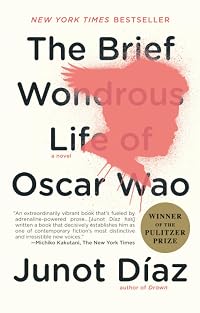
The Brief Wondrous Life of Oscar Wao
by Junot Díaz
On This Page
Description
Things have never been easy for Oscar, a sweet but disastrously overweight, lovesick Dominican ghetto nerd. From his home in New Jersey, where he lives with his old-world mother and rebellious sister, Oscar dreams of becoming the Dominican J.R.R. Tolkien and, most of all, of finding love. But he may never get what he wants, thanks to the Fukœ-the curse that has haunted Oscar's family for generations, dooming them to prison, torture, tragic accidents, and, above all, ill-starred love. Oscar, show more still waiting for his first kiss, is just its most recent victim. show lessTags
Recommendations


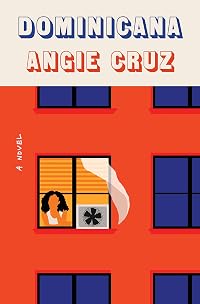
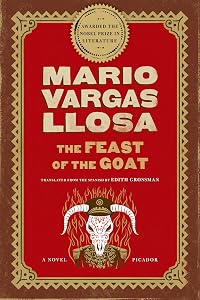
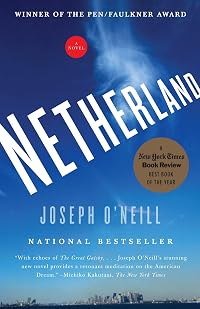

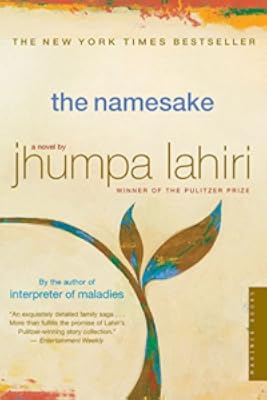
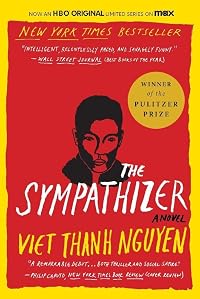
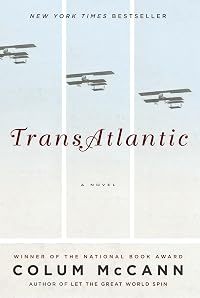
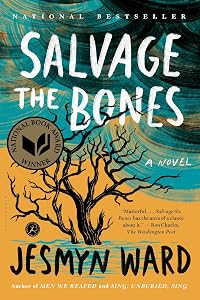
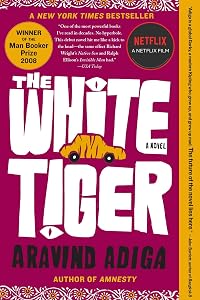

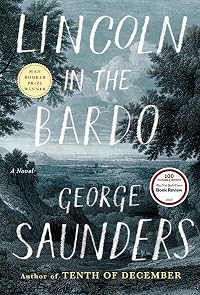
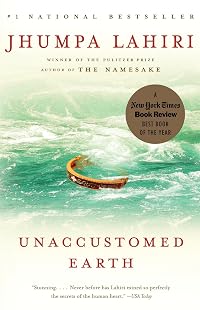
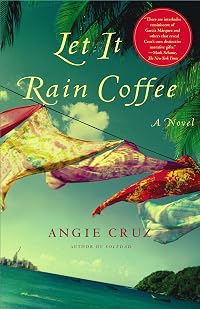
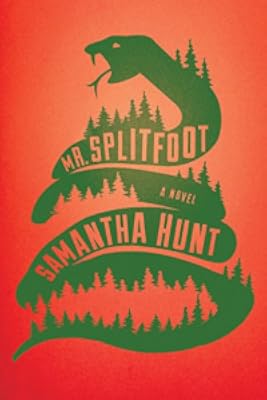
Member Recommendations
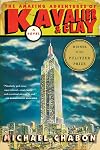
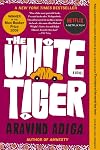
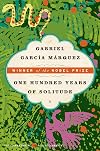
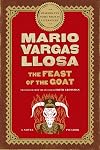
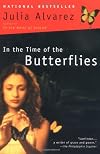
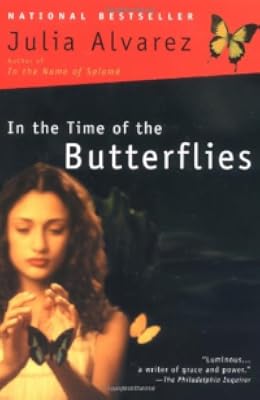
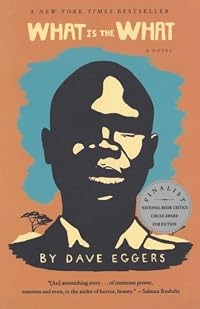
weener Oscar Wao mentions In the Time of the Butterflies in a footnote. Both dealing so gracefully with the Trujillo regime, they seem like complementary books.
50
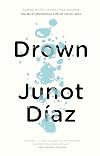
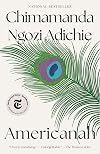


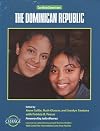
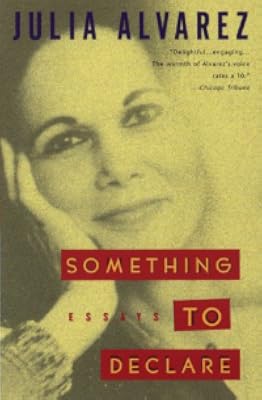
sungene To learn more about the DR, and for an essay by Junot Díaz.


weener One is fiction, one is non-fiction. One is in Latin America, one is in Asia. Both are heartbreaking, deeply affecting tales of life under totalitarianism.
12
Member Reviews
Weaving the history of politics in the Dominican Republic over the 20th century with the story of a family over three generations and writing with such flair and intelligence, Junot Díaz created a masterful book here. He’s so fearless, never worrying about political correctness, bluntly assessing the brutal regimes of Trujillo and Balaguer, and letting it rip from beginning to end, freely dropping in references to works of fantasy, untranslated Spanish, and little snippets of the supernatural. The result is a work containing a history lesson, a drama, and comedy, one that kept this reader on his toes and engaged from beginning to end.
The book tells of the fall from grace of an affluent family, starting in the present with the nerdy, show more obese titular character, his strong, rebellious sister, their sometimes overbearing mother, who we find was once rebellious and in love herself, and finally getting to their grandparents, whose lives were gradually destroyed by Trujillo. The immigrant experience is often written about, but it has such vitality here, and elements like the chapter on Oscar returning to the D.R. (“Oscar Goes Native”) were among my favorite in a book full of great chapters. Because of all its references and ideas this is a book that takes active effort to read, but I found it rewarding, and well worth it. show less
The book tells of the fall from grace of an affluent family, starting in the present with the nerdy, show more obese titular character, his strong, rebellious sister, their sometimes overbearing mother, who we find was once rebellious and in love herself, and finally getting to their grandparents, whose lives were gradually destroyed by Trujillo. The immigrant experience is often written about, but it has such vitality here, and elements like the chapter on Oscar returning to the D.R. (“Oscar Goes Native”) were among my favorite in a book full of great chapters. Because of all its references and ideas this is a book that takes active effort to read, but I found it rewarding, and well worth it. show less
This is one of the best books I've read in a long time. Having said that, have to admit: this is both a fabulous and wrenchingly difficult read. Others have addressed the plot, so thought I'd go straight to what makes this book so complex, and so worthwhile.
What makes the book amazing: Diaz's totally unique first person narration (the story is related by the Dominican "player" boyfriend of Oscar's sister Lola), combining Dominican history, ethnic references, Jersey street slang, vulgarity, scifi/fantasy nerd references, honesty, humility and compassion to create a narrative voice unlike anything I've ever encountered in fiction. In a world full of quality literature, Junot Diaz deserves major props for creating something completely new show more and utterly compelling.
Unfortunately, this is also what makes the story's plot so wrenching to endure. If the characters weren't so unbearably real, so deeply sympathetic, then perhaps it wouldn't hurt so much to watch them line up, one after the other (first Dr. Abelard Luis Cabral, then his daughter Beli, then her son Oscar....), hell-bent on risking everything for love, only to endure heartbreaking loss and increasingly horrific consequences.
The central question of the novel seems to be: how is one's destiny determined? Is it determined by supernatural forces: fate, God, fuku (the Dominican equivalent of a curse)? Or can you shape fate by your own actions? Or - a terrifying but inescapable possibility - is one's destiny a complete crapshoot? I won't give away the ending, except to provide a little reassurance for prospective readers, for what it's worth: surely an author with as much compassion for his characters as Junot Diaz would never posit a world entirely bereft of hope. show less
What makes the book amazing: Diaz's totally unique first person narration (the story is related by the Dominican "player" boyfriend of Oscar's sister Lola), combining Dominican history, ethnic references, Jersey street slang, vulgarity, scifi/fantasy nerd references, honesty, humility and compassion to create a narrative voice unlike anything I've ever encountered in fiction. In a world full of quality literature, Junot Diaz deserves major props for creating something completely new show more and utterly compelling.
Unfortunately, this is also what makes the story's plot so wrenching to endure. If the characters weren't so unbearably real, so deeply sympathetic, then perhaps it wouldn't hurt so much to watch them line up, one after the other (first Dr. Abelard Luis Cabral, then his daughter Beli, then her son Oscar....), hell-bent on risking everything for love, only to endure heartbreaking loss and increasingly horrific consequences.
The central question of the novel seems to be: how is one's destiny determined? Is it determined by supernatural forces: fate, God, fuku (the Dominican equivalent of a curse)? Or can you shape fate by your own actions? Or - a terrifying but inescapable possibility - is one's destiny a complete crapshoot? I won't give away the ending, except to provide a little reassurance for prospective readers, for what it's worth: surely an author with as much compassion for his characters as Junot Diaz would never posit a world entirely bereft of hope. show less
Did I expect this novel to be all tetas and culos (t&a) spiced with intergalactic fanboy delusions? Not once. Did I really think I would break my heart for our ill-fated avenger or his grimy spangloid narrator? Never. But in the end, I was wrong.
The Brief Wondrous Life or Oscar Wao was just what I needed right about now: a dirty, honest, modern work of mystic realism which is never quite mystic and never quite real. This is not the dreamy, semi-tragic novela of the MR genre--this is nasty and sweaty...a book which clings to your skin in a hazy film and is not beautiful because it is beautiful, but beautiful because it never once attempts to be. There are no supernatural occurances in this story, yet the sheer outlandishness of it all show more shocks and awes so much more. Written in an effortless spanglish prose which drips of the tongue in salty heaves, with a gift for gazing beyond the muck of living to see what is truly phenomenal, this book is a present, a gift, un regalo for any who just want to say, "wow". show less
The Brief Wondrous Life or Oscar Wao was just what I needed right about now: a dirty, honest, modern work of mystic realism which is never quite mystic and never quite real. This is not the dreamy, semi-tragic novela of the MR genre--this is nasty and sweaty...a book which clings to your skin in a hazy film and is not beautiful because it is beautiful, but beautiful because it never once attempts to be. There are no supernatural occurances in this story, yet the sheer outlandishness of it all show more shocks and awes so much more. Written in an effortless spanglish prose which drips of the tongue in salty heaves, with a gift for gazing beyond the muck of living to see what is truly phenomenal, this book is a present, a gift, un regalo for any who just want to say, "wow". show less
I think, in terms of style and subject matter, I have found the book that is the most similar to what I want to write. Reading this has changed how I view style and character in a drastic way.
Diaz leans into the culture he knows so much in his style. He doesn't write for the average american, or the average dominican, or the average anyone. He writes for Oscar, he writes what he knows. And he does it boldly. The frankness with which information is presented is astounding, haunting, and brilliant.
And to focus in more on Oscar, I think he is what I've been missing in my writing. A true character that is a true character. Not someone played up to be a certain way, just unapologetically him. Very, very few characters have so much show more characterization. It is impressive, it is something to look up to as a writer, and it was so much fun to read.
One smaller detail about this is that you can tell Junot Diaz is brilliant through references. Very many cultural mentions about the Dominican Republic, New York, and overall latin culture, something I grew up with. The spanish infusion is smooth. I can speak some, but even when I couldn't word for word translate, context was always enough to piece it together. Diaz is also very well read. I caught mentions of about a hundred novels, from Watership Down to The Stand. And specific references too. Something I always appreciate.
Brilliant work, and something that should be much more widely read. In terms of latin american literature, this might be the top of the mountain. show less
Diaz leans into the culture he knows so much in his style. He doesn't write for the average american, or the average dominican, or the average anyone. He writes for Oscar, he writes what he knows. And he does it boldly. The frankness with which information is presented is astounding, haunting, and brilliant.
And to focus in more on Oscar, I think he is what I've been missing in my writing. A true character that is a true character. Not someone played up to be a certain way, just unapologetically him. Very, very few characters have so much show more characterization. It is impressive, it is something to look up to as a writer, and it was so much fun to read.
One smaller detail about this is that you can tell Junot Diaz is brilliant through references. Very many cultural mentions about the Dominican Republic, New York, and overall latin culture, something I grew up with. The spanish infusion is smooth. I can speak some, but even when I couldn't word for word translate, context was always enough to piece it together. Diaz is also very well read. I caught mentions of about a hundred novels, from Watership Down to The Stand. And specific references too. Something I always appreciate.
Brilliant work, and something that should be much more widely read. In terms of latin american literature, this might be the top of the mountain. show less
I once heard Junot Diaz speak, and thought he was fantastic. And of course, I'd heard all the hoopla about his writing, both [This Is How You Lose Her] and [The Brief Wondrous Life of Oscar Wao]. Then accusations came out in 2018 of Diaz harassing women and generally showing misogyny. Disappointing but not necessarily surprising in the years of #metoo. I found a copy of [This Is How You Lose Her] at the local thrift store (along with [Maus]). So I figured I'd pick it up and check out his writing for myself.
[This Is How You Lose Her] is a series of 9 stories, mostly revolving around Yunior, the Dominican American protagonist. This book felt semiautobiographical in the sense that Yunior and Diaz were both born in the Dominican Republic, show more emigrated to New Jersey at a young age, became professors of writing, etc. Write what you know, I guess. The book felt a little experimental. Four stories were written in the first person (The Sun, the Moon, the Stars; The Pura Principle; Invierno; The Cheater's Guide to Love). One was written mostly in third person with occasional first person narrator commentary/reaction (Nilda). Three were written in second person--two directed inward--the narrator addressing himself (Alma, Miss Lora), and one directed outward--the narrator addressing the lover profiled in that particular story (Flaca). One bewilderingly was a first-person female narrator, and the story appeared to have nothing to do with any other story or character in the book (Otra Via, Otra Vez).
The stories move back and forth through time, from the childhood arrival to the United States (Invierno) to presumed present day as a university professor (The Cheater's Guide to Love) and various points in between. The prose is an evocative Spanglish blend that does a great job of expressing Yunior's inner life. The stories mostly center on Yunior's and his older brother Rafa's sexual exploits: the women they fuck, the personal consequences of infidelity, how these women came and went from Yunior's life. To a lesser degree, they explore the family dynamics between the brothers and with each of their parents, and neighborhood dynamics. Racism is present and referenced both directly and indirectly but not the focus of any of these stories, instead just peppering the scenes with some sociocultural context.
Frankly, this book is the most dehumanizing toward women that I can remember reading. The women are evoked in the most sexually objectifying terms and appreciated in the narrative pretty much for whatever sexual gratification they can offer the male characters. This is partly why the completely unrelated story from a woman's perspective is so bizarre. Like, why is that even in there? And that story raises more questions than it answers--the story centers on multiple women, and the one man in the story feels more like a cipher, plus it places the narrator in juxtaposition with her lover's wife left behind in the DR to what effect? I left that story with no sense of resolution at all. And yet for all that, the inner life of the women still feels opaque, though more visible than in any of the stories told by Yunior. The closing story focuses on the personal devastation of losing his fiancee as a result of his serial cheating and the feeble attempts to pick up the pieces. Clearly, the woman at the heart of this story is central, and yet this longest story in the collection never names her. It kinda reminds me of The Bride in Kill Bill. Not a single male character in any of the stories appears as anything other than a womanizer. Well, maybe the white boy neighbor in the story centering on the childhood arrival in New Jersey who makes brief appearances as part of the unobtainable Americanness. Basically, all the Dominican men are assholes, and most of the women are sluts ("sucias").
The misogyny goes beyond the sex, though. Yunior's mother is present in several stories. She is someone to be ignored, belittled, gone around. Diaz even has Yunior reference male privilege at one point. But damn, from his youngest appearance in these stories, he and his brother just completely dismiss or invalidate anything their mother has to say to them. I guess she's portrayed sympathetically, or at least as sympathetically as a deeply misogynist narrator can manage. Yikes.
Is Diaz a talented writer? Yes. Are these stories worth reading? Maybe. Maybe not. I don't regret the time spent, but I think I'll skip [The Brief Wondrous Life of Oscar Wao]. I appreciated the colorful prose and engaging dialogue, but I could do without the exploitation of women as the vehicle for experiencing what Junot Diaz has to offer the reader. show less
[This Is How You Lose Her] is a series of 9 stories, mostly revolving around Yunior, the Dominican American protagonist. This book felt semiautobiographical in the sense that Yunior and Diaz were both born in the Dominican Republic, show more emigrated to New Jersey at a young age, became professors of writing, etc. Write what you know, I guess. The book felt a little experimental. Four stories were written in the first person (The Sun, the Moon, the Stars; The Pura Principle; Invierno; The Cheater's Guide to Love). One was written mostly in third person with occasional first person narrator commentary/reaction (Nilda). Three were written in second person--two directed inward--the narrator addressing himself (Alma, Miss Lora), and one directed outward--the narrator addressing the lover profiled in that particular story (Flaca). One bewilderingly was a first-person female narrator, and the story appeared to have nothing to do with any other story or character in the book (Otra Via, Otra Vez).
The stories move back and forth through time, from the childhood arrival to the United States (Invierno) to presumed present day as a university professor (The Cheater's Guide to Love) and various points in between. The prose is an evocative Spanglish blend that does a great job of expressing Yunior's inner life. The stories mostly center on Yunior's and his older brother Rafa's sexual exploits: the women they fuck, the personal consequences of infidelity, how these women came and went from Yunior's life. To a lesser degree, they explore the family dynamics between the brothers and with each of their parents, and neighborhood dynamics. Racism is present and referenced both directly and indirectly but not the focus of any of these stories, instead just peppering the scenes with some sociocultural context.
Frankly, this book is the most dehumanizing toward women that I can remember reading. The women are evoked in the most sexually objectifying terms and appreciated in the narrative pretty much for whatever sexual gratification they can offer the male characters. This is partly why the completely unrelated story from a woman's perspective is so bizarre. Like, why is that even in there? And that story raises more questions than it answers--the story centers on multiple women, and the one man in the story feels more like a cipher, plus it places the narrator in juxtaposition with her lover's wife left behind in the DR to what effect? I left that story with no sense of resolution at all. And yet for all that, the inner life of the women still feels opaque, though more visible than in any of the stories told by Yunior. The closing story focuses on the personal devastation of losing his fiancee as a result of his serial cheating and the feeble attempts to pick up the pieces. Clearly, the woman at the heart of this story is central, and yet this longest story in the collection never names her. It kinda reminds me of The Bride in Kill Bill. Not a single male character in any of the stories appears as anything other than a womanizer. Well, maybe the white boy neighbor in the story centering on the childhood arrival in New Jersey who makes brief appearances as part of the unobtainable Americanness. Basically, all the Dominican men are assholes, and most of the women are sluts ("sucias").
The misogyny goes beyond the sex, though. Yunior's mother is present in several stories. She is someone to be ignored, belittled, gone around. Diaz even has Yunior reference male privilege at one point. But damn, from his youngest appearance in these stories, he and his brother just completely dismiss or invalidate anything their mother has to say to them. I guess she's portrayed sympathetically, or at least as sympathetically as a deeply misogynist narrator can manage. Yikes.
Is Diaz a talented writer? Yes. Are these stories worth reading? Maybe. Maybe not. I don't regret the time spent, but I think I'll skip [The Brief Wondrous Life of Oscar Wao]. I appreciated the colorful prose and engaging dialogue, but I could do without the exploitation of women as the vehicle for experiencing what Junot Diaz has to offer the reader. show less
It's not too often that a book elicits a primal response from me, but I flat-out sobbed at the end. Oscar is tragic in the way that so many of us are: we want to be flawless, but also often can't even fail correctly. We want to be heroic, but instead brood alone in our pride, stuck in our own social anxieties and hangups. We don't conform to how the rest of society wants us to be, but we also can't figure out why we're not universally loved and accepted.
Diaz' novel excels not just in its parallel construction between Oscar's mother's Trujillo-dominated past and Oscar's ill-fitting present, but in the seamless integration of the two at the story's climax. Just a great read.
Diaz' novel excels not just in its parallel construction between Oscar's mother's Trujillo-dominated past and Oscar's ill-fitting present, but in the seamless integration of the two at the story's climax. Just a great read.
Admittedly, I just finished this book about ten minutes ago...I feel like I'm still digesting it. But after reading some of the reviews, I had to put in a quick two cents. I think Oscar Wao is phenomenal, a sort of dervish through American/Dominican culture, complete with all the historical and cultural baggage that goes along with it. It seems to me that Díaz makes no apologies for the novel itself, its narration or its allusions : if you're unfamiliar with nerd culture, Spanish slang or certain aspects of American history (and *that* I have to say, is a fundamental aspect of this novel : the insistence on "American" in its most fundamental [and often ignored or refuted] sense), then you're left out of the loop. Either do a bit of show more homework or be comfortable in the shadows, because while the book does offer plenty of explanations through the many (often hilarious) footnotes, there's a lot left hanging. Most of the Spanish is left untranslated--and intentionally so, I'd like to think. It isn't just standard textbook Spanish, these are more than just linguistic but *cultural* references he's making. Given that, I fell in love with it, all of it. [More later, maybe, once I've finished digesting...] show less
Members
- Recently Added By
Published Reviews
ThingScore 88
Díaz’s novel also has a wild, capacious spirit, making it feel much larger than it is. Within its relatively compact span, “The Brief Wondrous Life of Oscar Wao” contains an unruly multitude of styles and genres. The tale of Oscar’s coming-of-age is in some ways the book’s thinnest layer, a young-adult melodrama draped over a multigenerational immigrant family chronicle that dabbles show more in tropical magic realism, punk-rock feminism, hip-hop machismo, post-postmodern pyrotechnics and enough polymorphous multiculturalism to fill up an Introduction to Cultural Studies syllabus. show less
added by Shortride
It is Mr. Díaz’s achievement in this galvanic novel that he’s fashioned both a big picture window that opens out on the sorrows of Dominican history, and a small, intimate window that reveals one family’s life and loves. In doing so, he’s written a book that decisively establishes him as one of contemporary fiction’s most distinctive and irresistible new voices.
added by Shortride
Lists

1001 Books You Must Read Before You Die
1,448 works; 1,133 members

Pulitzer Prize Winners for Fiction
102 works; 54 members

David Bowie's Top 100
97 works; 23 members

Recommend the 20 best books you've read in the last five years
2,168 works; 606 members

Best Contemporary Literary Fiction (Around the Last 30 Years)
388 works; 124 members

Best 21st Century Books (So Far)
670 works; 86 members

Best Historical Fiction
620 works; 261 members

Unread books
1,063 works; 87 members
PBS The Great American Read
100 works; 21 members
Best Family Stories
241 works; 22 members

100 books to read in a lifetime
102 works; 37 members
Favorite Coming of Age Novels.
164 works; 51 members

Magic Realism
371 works; 52 members

Best Political Fiction
92 works; 12 members

child hero ~ adult novel
60 works; 12 members

Pulitzer Prize-Winning Books
42 works; 10 members
Favourite Books
1,819 works; 316 members

Favorite Caribbean Books
60 works; 26 members

The Immigrant's Stories
74 works; 19 members
Unreliable Narrators
170 works; 43 members

Vulture's 100 Best Books of the 21st Century (So Far)
98 works; 9 members
International IMPAC Dublin Literary Award
179 works; 6 members

50 Books from the Past 50 Years
50 works; 8 members

100 New Classics
101 works; 13 members

Literature by People of Color
81 works; 9 members

magic realism novels
44 works; 11 members
LibraryThingers' 1001 Books You Must Read Before You Die
442 works; 30 members

Novels featuring siblings
133 works; 8 members

College Reads (Lit Edition)
75 works; 5 members

Best family sagas
244 works; 34 members

2000s (the decade, not the century)
184 works; 11 members
Books Set in the Caribbean
18 works; 5 members

Top Five Books of 2016
795 works; 229 members

2000s decade
85 works; 7 members
The American Experience
173 works; 18 members
Adult Books for YA Readers
194 works; 6 members

Best Antiheroes and Antiheroines
119 works; 5 members
Banned or Challenged Books
400 works; 37 members

Latin America
45 works; 6 members

Five star books
1,757 works; 108 members

Latin American Literature
50 works; 11 members
Latin America
26 works; 9 members

Speculative Fiction: Slipstream Literature
166 works; 16 members
Books tagged favorites
390 works; 30 members
David Bowie's List of Top 100 Books
94 works; 6 members

Books Set on Islands
190 works; 24 members

Books Read in 2009
464 works; 10 members
Books Featured on Readers' Review of the Diane Rehm Show
161 works; 8 members
USA Road Trip
50 works; 3 members
SHOULD Read Books!
354 works; 9 members

Diversity in Fantasy and Science Fiction
219 works; 33 members
Overdue Podcast
806 works; 9 members

Books Read in 2023
5,547 works; 145 members

I Can't Finish This Book
189 works; 22 members

Books Read in 2016
4,666 works; 197 members

Urban Fiction
74 works; 7 members
First Novels
373 works; 17 members
Books you should read before you die
12 works; 1 member
Books Set in New Jersey
22 works; 4 members

recalling favorites...
105 works; 2 members

Books Read in 2008
335 works; 8 members
Reading Group 2008
3 works; 1 member

Reading Globally
136 works; 16 members

Perspectives Book Club Picks
49 works; 3 members
American Lit for Eng 11 Research Project
368 works; 6 members

Fiction with Men's Given Names in the Title
302 works; 11 members

BitLife
212 works; 4 members
NYT 100 best books of 21st C
100 works; 31 members

Books We Love to Reread
688 works; 296 members
BBC World Book Club
265 works; 5 members

Reading Glasses Podcast
410 works; 3 members

NYT Readers best of 21st C
100 works; 8 members

Florida
366 works; 3 members

Recommended Reading : 600 Classics Reviewed, Editors of Salem Press, 2015
634 works; 6 members
Top Book of the Year - 2000s
10 works; 1 member

Retrospective of 20th- and 21st-century literature
154 works; 1 member
David Bowie’s Top 100 Favourite Reads
100 works; 3 members
The Atlantic's The Great American Novel
136 works; 12 members

AP Lit
363 works; 6 members

Novels without quotation marks
25 works; 1 member

Fiction Books Worthy of Reading Again
37 works; 1 member

Best books I read in 2013
152 works; 3 members

Mustich's 1000 Books to Read Before You Die: A Life Changing List
1,001 works; 19 members

Historical Figures in Fiction
51 works; 5 members

Best Psychological Fiction
81 works; 16 members

Books Read in 2013
1,630 works; 51 members

Books Tagged Abuse
152 works; 4 members

My TBR
371 works; 3 members
Tagged 20th Century
33 works; 4 members
Speculative Fiction
40 works; 2 members
Protagonists - Men
32 works; 2 members
Books Featuring Teens
25 works; 4 members
.
396 works; 1 member

1960s
281 works; 16 members
Talk Discussions
Past Discussions
*** February - What are you reading? in Club Read 2013 (April 2013)
Author Information

25+ Works 21,857 Members
Junot Díaz was born in Santo Domingo, Dominican Republic and was raised in New Jersey. His fiction has appeared in numerous publications including The New Yorker, The Paris Review, African Voices, and Best American Short Stories. He wrote the story collection Drown and the novel The Brief Wondrous Life of Oscar Wao, which won the John Sargent Sr. show more First Novel Prize, the National Book Critics Circle Award, the Anisfield-Wolf Book Award, the Dayton Literary Peace Prize and the 2008 Pulitzer Prize. His debut picture book is entitled Islandborn, published June 2018. He is a professor of creative writing at the Massachusetts Institute of Technology. (Bowker Author Biography) show less
Some Editions
Awards and Honors
Series
Belongs to Publisher Series
Work Relationships
Is contained in
Has as a student's study guide
Common Knowledge
- Canonical title*
- La brève et merveilleuse vie d'Oscar Wao
- Original title
- The Brief Wondrous Life of Oscar Wao
- Original publication date
- 2007
- People/Characters
- Oscar "Oscar Wao" de Leon; Dolores "Lola" de Leon; Hypatia Belicia "Beli" Cabral de Leon; Yunior
- Important places
- Bani, Dominican Republic; Dominican Republic; New Brunswick, New Jersey, USA; Paterson, New Jersey, USA; Rutgers University; Santo Domingo, Dominican Republic (show all 7); Caribbean Region
- Important events
- Trujillo dictatorship (1930 | 1961)
- Epigraph
- Of what import are brief, nameless lives . . . to Galactus?? (Fantastic Four, Stan Lee and Jack Kirby, Vol. 1, No. 49, April 1966)
Christ have mercy on all sleeping things!
From that dog rotting down Wrightson Road
to when I was a dog on these streets;
if loving these islands must be my load,
out of corruption my soul takes wings,
But the... (show all)y had started to poison my soul
with their big house, big car, bit-time hbohl,
coolie, nigger, Syrian, and French Creole,
so I leave it for them and their carnival--
I taking a sea-bath, I gone down the road.
I know these islands from Monos to Nassau,
a rusty head sailor with sea-green eyes
that they nickname Shabine, the patois for
any red nigger, and I, Shabine, saw
when these slums of empire was paradise.
I'm just a red nigger who love the sea,
I had a sound colonial education,
I have Dutch, nigger, and English in me,
and either I'm nobody, or I'm a nation.
(Derek Walcott) - Dedication
- Elizabeth de Leon
- First words
- They say it came first from Africa, carried in the screams of the enslaved; that it was the death bane of the Tainos, uttered just as one world perished and another began; that it was a demon drawn into Creation through the n... (show all)ightmare door that was cracked open in the Antilles.
- Quotations
- You wanna smoke?
I might partake. Just a little though. I would not want to cloud my faculties.
“They say it came first from Africa, carried in the screams of the enslaved; that it was the death bane of the Tainos, uttered just as one world perished and another began; that it was a demon drawn into Creation through th... (show all)e nightmare door that was cracked open in the Antilles. Fukú americanus, or more colloquially, fukú–generally a curse or a doom of some kind; specifically the Curse and the Doom of the New World. Also called the fukú of the Admiral because the Admiral was both its midwife and one of its great European victims; despite “discovering” the New World the Admiral died miserable and syphilitic, hearing (dique) divine voices. In Santo Domingo, the Land He Loved Best (what Oscar, at the end, would call the Ground Zero of the New World), the Admiral’s very name has become synonymous with both kinds of fukú, little and large; to say his name aloud or even to hear it is to invite calamity on the heads of you and yours.” - Last words
- (Click to show. Warning: May contain spoilers.)So this is what everybody's always talking about! Diablo! If only I'd known. The beauty! The beauty!
- Blurbers
- Jones, Edward P.; Mosley, Walter; Kakutani, Michiko
- Canonical DDC/MDS
- 813.54
- Canonical LCC
- PS3554.I259
- Disambiguation notice
- Some editions contain the short story "Drown," narrated by Jonathan Davis
*Some information comes from Common Knowledge in other languages. Click "Edit" for more information.
Classifications
Statistics
- Members
- 14,394
- Popularity
- 508
- Reviews
- 519
- Rating
- (3.84)
- Languages
- 18 — Czech, Danish, Dutch, English, Finnish, French, German, Hebrew, Italian, Japanese, Korean, Norwegian (Bokmål), Polish, Portuguese, Croatian, Spanish, Swedish, Turkish
- Media
- Paper, Audiobook, Ebook
- ISBNs
- 86
- UPCs
- 1
- ASINs
- 44