
Ellen Datlow
Author of Snow White, Blood Red
About the Author
Ellen Datlow is the editor of science fiction, fantasy, and horror anthologies. She was the fiction editor of Omni magazine and Omni Online from 1981-1998. Then she was the editor of the webzine Event Horizon: Science Fiction, Fantasy, and Horror from September 1998-December 1999. She has won the show more World Fantasy Award seven times, the Bram Stoker Award twice with her co-editors and the Hugo Award for Best Editor in 2002 and 2005. She currently lives in New York City and edits fiction for Scifi.com. In 2011 she was given the Life Achievement Award by the Horror Writers Association.She is a long time trustee of the Horror Writers Association. She has been the co-host of the Fantastic Fiction reading series at the KGB Bar since 2000, a series which features luminaries and up-and-comers in speculative fiction. (Bowker Author Biography) show less
Series
Works by Ellen Datlow
Alien Sex: 19 Tales by the Masters of Science Fiction and Dark Fantasy (1990) — Editor — 530 copies, 6 reviews
Queen Victoria's Book of Spells: An Anthology of Gaslamp Fantasy (2013) — Editor — 399 copies, 18 reviews
Sirens and Other Daemon Lovers: Magical Tales of Love and Seduction (1998) — Editor — 374 copies, 7 reviews
The Year's Best Fantasy and Horror: Thirteenth Annual Collection (2000) — Editor & Introduction — 358 copies
The Year's Best Fantasy and Horror: Eighth Annual Collection (1995) — Editor — 329 copies, 6 reviews
The Year's Best Fantasy and Horror: Seventh Annual Collection (1994) — Editor — 284 copies, 3 reviews
The Year's Best Fantasy and Horror: Fifteenth Annual Collection (2002) — Editor — 275 copies, 4 reviews
The Year's Best Fantasy and Horror: Fourteenth Annual Collection (2001) — Editor — 257 copies, 2 reviews
The Year's Best Fantasy & Horror 2006: 19th Annual Collection (2006) — Editor — 244 copies, 4 reviews
The Year's Best Fantasy and Horror: Seventeenth Annual Collection (2004) — Editor — 241 copies, 9 reviews
The Year's Best Fantasy and Horror: Sixteenth Annual Collection (2003) — Editor — 240 copies, 2 reviews
The Year's Best Fantasy and Horror: Eighteenth Annual Collection (2005) — Editor — 231 copies, 5 reviews
The Year's Best Fantasy & Horror 2007: 20th Annual Collection (2007) — Editor — 222 copies, 3 reviews
The Year's Best Fantasy and Horror 2008: 21st Annual Collection (2008) — Editor — 176 copies, 5 reviews
Mad Hatters and March Hares: All-New Stories from the World of Lewis Carroll's Alice in Wonderland (2017) — Editor — 145 copies, 11 reviews
The Del Rey Book of Science Fiction and Fantasy: Sixteen Original Works by Speculative Fiction's Finest Voices (2008) — Editor — 140 copies, 5 reviews
The Best of the Best Horror of the Year: 10 Years of Essential Short Horror Fiction (2018) — Editor; Foreword — 112 copies, 2 reviews
Screams from the Dark: 29 Tales of Monsters and the Monstrous (2022) — Editor — 101 copies, 2 reviews
Final Cuts: New Tales of Hollywood Horror and Other Spectacles (2020) — Editor — 68 copies, 2 reviews
Nightmare Magazine, October 2014 (Women Destroy Horror! special issue) (2014) — Editor — 39 copies, 2 reviews
The Big Book of Science Fiction and Fantasy: Sixteen Great Works of Speculative Fiction (2025) — Editor — 21 copies
Omni Magazine October 1989 — Editor — 2 copies
OMNI Magazine February 1985 1 copy
OMNI Magazine July 1984 1 copy
OMNI Magazine December 1984 1 copy
OMNI Magazine March 1985 1 copy
OMNI Magazine April 1985 1 copy
OMNI Magazine November 1985 1 copy
OMNI Magazine June 1985 1 copy
OMNI Magazine September 1985 1 copy
OMNI Magazine July 1985 1 copy
OMNI Magazine May 1985 1 copy
OMNI Magazine September 1984 1 copy
OMNI Magazine October 1984 1 copy
OMNI Magazine June 1984 1 copy
OMNI Magazine August 1984 1 copy
OMNI Magazine May 1984 1 copy
The OMNI Magazine April 1984 1 copy
OMNI Magazine July 1983 1 copy
OMNI Magazine May 1983 1 copy
OMNI Magazine January 1983 1 copy
OMNI Magazine November 1981 1 copy
OMNI Magazine October 1985 1 copy
OMNI Magazine December 1985 1 copy
OMNI Magazine January 1986 1 copy
OMNI Magazine August 1994 1 copy
OMNI Magazine April 1993 1 copy
OMNI Magazine October 1993 1 copy
OMNI Magazine August 1993 1 copy
OMNI Magazine February 1994 1 copy
OMNI Magazine September 1994 1 copy
OMNI Magazine June 1994 1 copy
OMNI Magazine April 1994 1 copy
OMNI Magazine December 1994 1 copy
OMNI Magazine June 1993 1 copy
OMNI Magazine January 1995 1 copy
OMNI Magazine Fall 1995 1 copy
OMNI Magazine Winter 1995 1 copy
SciFiction Originals vol.1 1 copy
SciFiction Originals vol.2 1 copy
OMNI Magazine July 1993 1 copy
OMNI Magazine February 1986 1 copy
OMNI Magazine August 1991 1 copy
OMNI Magazine April 1986 1 copy
OMNI Magazine March 1986 1 copy
Snow White, Blood Red; Black Thorn, White Rose; Ruby Slippers, Golden Tears (1995) — Editor — 1 copy
OMNI Magazine February 1991 1 copy
OMNI Magazine March 1991 1 copy
OMNI Magazine April 1991 1 copy
OMNI Magazine July 1991 1 copy
OMNI Magazine January 1992 1 copy
OMNI Magazine May 1993 1 copy
OMNI Magazine February 1992 1 copy
OMNI Magazine March 1992 1 copy
OMNI Magazine May 1992 1 copy
OMNI Magazine June 1992 1 copy
OMNI Magazine August 1992 1 copy
OMNI Magazine November 1992 1 copy
OMNI Magazine October 1992 1 copy
OMNI Magazine January 1993 1 copy
SciFiction Originals vol 3 1 copy
Associated Works
Guest of Honor: Harlan Ellison — Author — 1 copy
Science Fiction Eye #08, Winter 1991 — Contributor — 1 copy
Tagged
Common Knowledge
- Birthdate
- 1949-12-31
- Gender
- female
- Occupations
- editor
anthologist - Organizations
- Science Fiction and Fantasy Writers of America (SFWA)
Omni
Sci Fiction - Awards and honors
- World Fantasy Award ( [1995])
Hugo ( [2002])
Locus ( [2005])
Locus ( [2006])
Hugo ( [2005])
Science Fiction Chronicle Reader's Award ( [1991]) (show all 10)
Science Fiction Chronicle Reader's Award ( [1992])
British Fantasy Society, Karl Edward Wagner Award (2007)
Locus Award Finalist (Editor, 2017)
Locus Award Finalist (Editor, 2026) - Agent
- Merrilee Heifetz (Writers House)
- Nationality
- USA
- Birthplace
- New York, New York, USA
- Places of residence
- New York, New York, USA
- Associated Place (for map)
- New York, New York, USA
Members
Discussions
THE DEEP ONES: "The Girl With the Hungry Eyes" by Fritz Leiber in The Weird Tradition (April 2016)
Naked City? Ellen Datlow in Early Reviewers (July 2011)
Reviews
The Year's Best Fantasy and Horror 2008: 21st Annual Collection (Year's Best Fantasy & Horror (Paperback)) by Ellen Datlow
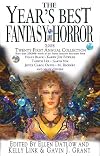
In 2008 I was busy moving out of my parents’ house and going to university in another city to complete a reading-intensive English Literature and History degree, so I was understandably out of touch with the current publishing trends in my favourite genre. And yet, if this collection showcasing the “year’s best” fantasy and horror is anything to go by, I apparently wasn’t missing out on much… Reading this collection was honestly a slog, and I am hard pressed to recall any stories show more that stood out to me from the over 2 months it took to get from cover to cover. What I do recall is a decidedly sharp focus on stories with strong horror elements and a preponderance of tales with overtly obnoxious chauvinist tone. I’m talking stories where all the women are typified by the male gaze, the protagonists mansplain ad nauseum to the reader, and are narrated via storytelling that relies on shock value, violence, and expectedly sordid mystery to get us to the finale. Honestly, very few of the tales made it past the first few pages for me, and I regularly found myself throwing the collection down in disgust to pick up literally anything else on my TBR to remedy my reading mood. It’s really too bad that the collection was so disappointing, because I was looking forward to getting into some short stories, discovering some new authors, and revisiting a time period in publishing that I seemingly missed out on. So much for nostalgia always being a positive recollection, I guess… show less
''But you have mistaken me, O Bird.
Can you not hear? I am the silence
and the piping and I am coming.
And it is I- I who am terrible.''
O Terrible Bird by Sandra Kasturi
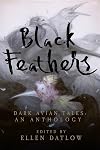
Our feathered friends are amongst Nature's most beautiful creations. They keep us company with their morning chirping, they make us feel nostalgic for the coming of winter when we see them departing for warmer climates, they herald the arrival of spring. Their bright colours and sweet song have inspired paintings and poems. show more Eagles are associated with power, owls with wisdom, ravens, and crows with ill omens and Death. Countless myths and fairytales have been born through our fascination with the avian kingdom. However, this is not such a collection…
Ellen Datlow has chosen stories that are set in our times, combining the human psyche and the avian. These are dark tales that focus on the bond between our supposedly sophisticated personality and the primal instincts that lurk in the dark recesses of our minds. Birds aren't creatures of wisdom and freedom now. They have become instruments of revenge and merciless justice, punishment, and awakening. This extract from the Introduction by Ellen Datlow speaks for itself:
''And who isn't disgusted by birds that eat the dead- vultures awaiting their next meals as the lifeblood flows from the dying. One of our greatest fear is being eaten by vultures before we're quite dead.''
I mean, this is exciting...
These are my favourite stories in the collection:
''Outside, an owl hooted.''
The Obscure Bird by Nickolas Royle: A mysterious story of obsession, transformation, and estranged relationships.
''Sorrow, sorrow, sorrow, said the birds, and sorrow was what I got.''
The Mathematical Inevitability of Corvids by Seanan McGuire: A bright girl has to put up with her weak mother, her horrible stepfather and teachers who are unable to understand. Crows and ravens are her only comfort.
Great Blue Heron by Joyce Carol Oates: A dark, moving story of a blue heron as a metaphor for Death and a widow who tries to fight a society that wants to reduce her to a non- entity and manipulate her. A beautiful tale with successful elements of Magical Realism and an outstanding description of a graveyard.
''There was, in the Knot, a history of murder. Once every few years a body was found, always in the winter months, always after a fresh snow, the face shredded as if by claws.''
The Murmurations of Vienna Von Drome by Jeffrey Ford: A superbly terrifying, haunting winter's story about vicious murders in a small community, birds and secrets.
Blyth's Secret by Mike O'Driscoll: A haunting tale of a painful loss, the fragility of mental health and ravens.
The Secret of Flight by A.C.Wise: A play within a story of a mysterious disappearance, impossible relationships, and starlings.
''Now I know why my heart's loveless. Pip's not the aberration; I am. I'm the daughter of crows, smuggled into the nest.''
The Crow Palace by Priya Sharma: An allegory of the morbidity of crows, disappointment and womanhood.
Why the 4 stars? Because of the following abominations:
Isabel Archer Returns to Stepney In The Spring by M. John Harrison: Utter trash. Vulgar language, horrid plot. It lowered my IQ...
A Little Bird Told Me by Pat Cadigan: Why the need for such language? Do ''writers'' like this one believe that a paragraph choke-full of profanities and sex innuendos is ''raw and powerful'' writing? Because it isn't. It's garbage, that's what it is.
This is a very interesting collection with a number of extraordinary stories and three-four average to horrid pieces of writing. Not unusual for a collection. The concept is original, combining the Paranormal, the Psychological and Urban Folklore, therefore i definitely recommend it to readers of these genres.
''Eleven is for the gates of Heaven; twelve's for the man
who lets you in.
Thirteen is for a broken promise; fourteen's the feathers
underneath your skin.
Fifteen is for the things we carry; sixteen's for when we put
them down.
Seventeen's all the lies and shadows; eighteen's the waters
where we drown.''
My reviews can also be found on https://theopinionatedreaderblog.wordpress.com/ show less
Can you not hear? I am the silence
and the piping and I am coming.
And it is I- I who am terrible.''
O Terrible Bird by Sandra Kasturi
Our feathered friends are amongst Nature's most beautiful creations. They keep us company with their morning chirping, they make us feel nostalgic for the coming of winter when we see them departing for warmer climates, they herald the arrival of spring. Their bright colours and sweet song have inspired paintings and poems. show more Eagles are associated with power, owls with wisdom, ravens, and crows with ill omens and Death. Countless myths and fairytales have been born through our fascination with the avian kingdom. However, this is not such a collection…
Ellen Datlow has chosen stories that are set in our times, combining the human psyche and the avian. These are dark tales that focus on the bond between our supposedly sophisticated personality and the primal instincts that lurk in the dark recesses of our minds. Birds aren't creatures of wisdom and freedom now. They have become instruments of revenge and merciless justice, punishment, and awakening. This extract from the Introduction by Ellen Datlow speaks for itself:
''And who isn't disgusted by birds that eat the dead- vultures awaiting their next meals as the lifeblood flows from the dying. One of our greatest fear is being eaten by vultures before we're quite dead.''
I mean, this is exciting...
These are my favourite stories in the collection:
''Outside, an owl hooted.''
The Obscure Bird by Nickolas Royle: A mysterious story of obsession, transformation, and estranged relationships.
''Sorrow, sorrow, sorrow, said the birds, and sorrow was what I got.''
The Mathematical Inevitability of Corvids by Seanan McGuire: A bright girl has to put up with her weak mother, her horrible stepfather and teachers who are unable to understand. Crows and ravens are her only comfort.
Great Blue Heron by Joyce Carol Oates: A dark, moving story of a blue heron as a metaphor for Death and a widow who tries to fight a society that wants to reduce her to a non- entity and manipulate her. A beautiful tale with successful elements of Magical Realism and an outstanding description of a graveyard.
''There was, in the Knot, a history of murder. Once every few years a body was found, always in the winter months, always after a fresh snow, the face shredded as if by claws.''
The Murmurations of Vienna Von Drome by Jeffrey Ford: A superbly terrifying, haunting winter's story about vicious murders in a small community, birds and secrets.
Blyth's Secret by Mike O'Driscoll: A haunting tale of a painful loss, the fragility of mental health and ravens.
The Secret of Flight by A.C.Wise: A play within a story of a mysterious disappearance, impossible relationships, and starlings.
''Now I know why my heart's loveless. Pip's not the aberration; I am. I'm the daughter of crows, smuggled into the nest.''
The Crow Palace by Priya Sharma: An allegory of the morbidity of crows, disappointment and womanhood.
Why the 4 stars? Because of the following abominations:
Isabel Archer Returns to Stepney In The Spring by M. John Harrison: Utter trash. Vulgar language, horrid plot. It lowered my IQ...
A Little Bird Told Me by Pat Cadigan: Why the need for such language? Do ''writers'' like this one believe that a paragraph choke-full of profanities and sex innuendos is ''raw and powerful'' writing? Because it isn't. It's garbage, that's what it is.
This is a very interesting collection with a number of extraordinary stories and three-four average to horrid pieces of writing. Not unusual for a collection. The concept is original, combining the Paranormal, the Psychological and Urban Folklore, therefore i definitely recommend it to readers of these genres.
''Eleven is for the gates of Heaven; twelve's for the man
who lets you in.
Thirteen is for a broken promise; fourteen's the feathers
underneath your skin.
Fifteen is for the things we carry; sixteen's for when we put
them down.
Seventeen's all the lies and shadows; eighteen's the waters
where we drown.''
My reviews can also be found on https://theopinionatedreaderblog.wordpress.com/ show less
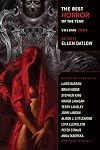
Anything Ellen Datlow edits automatically finds a place on my list of books to read. For many years, this included the excellent anthology series The Year’s Best Fantasy and Horror, which Datlow coedited with Terri Windling. When that series disappeared, much to the dismay of fans of short fiction everywhere, Datlow undertook to publish The Year’s Best Horror, which has been published by the terrific smaller press, Night Shade Books, for the past four years. This year’s volume, the show more fourth, is chock full of memorable stories certain to keep you up at night.
It is unlikely that your favorite part of a book is the introduction, but that’s the case for every year’s best collection Datlow has ever edited. Her range of reading is enormous, covering all forms of horror and many types of mysteries as well. Datlow summarizes a full year’s worth of novels, collections and anthologies. My library increases in size and quality every time I place a book order following my perusal of a Datlow summation. She divides her comments not just between the award winners and her recommendations, but also offers lists of the best books about zombies, vampires, Lovecraftian horror, demons, weird fiction, ghosts and other monsters. Choose your poison and you’ll find the novels that will most suit you. Datlow also covers poetry, children’s books, chapbooks and literary and cultural criticism relating to the fantastic. I would buy these anthologies if only to be able to read these 50 pages — about 12% of the total book. Similarly, the honorable mentions with which Datlow ends the anthology is a collection of titles of excellent short fiction that would amply reward the reader who chose to track the stories down.
And then there are the stories. And what a treasure the book becomes then!
Laird Barron has probably had a story in every year’s best since he started publishing. This year’s is a long novelette called “Blackwood’s Baby,” the story of a fabled hunt in Washington State in the months before the start of World War II. Luke Honey receives an invitation to this hunt as he sits in the heat drinking strong whiskey, somewhere in Africa. It makes him feel cold even as the sweat trickles down his face: “[T]his missive called with an eerie intimacy and struck a chord deep within him, awakened an instinctive dread that fate beckoned across the years, the bloody plains and darkened seas, to claim him.” Vintage Barron, for sure. The hunt is for a fabled stag, one the hunters discuss as they swap stories and drink heavily in the lodge the evening before they are to head into Washington’s forests. The drinking and fighting continue as the hunt proceeds, starting before dawn on a rainy day. The hunt itself proceeds much as one would expect when a number of competitive, entitled, and foolish men head into the unknown. Barron tells his story of ancient evil with elegant language, beautiful formal dialogue, and a strong sense of when just a few words are necessary to convey everything that is needful.
John Langan’s work has also appeared in just about every year’s best anthology since he started publishing. “In Paris, In the Mouth of Kronos,” is a long novelette about the Titans of myth, and how they play their part in our contemporary universe, whatever we may think. The characters’ most careful machinations, no matter how sophisticated and violent, are not sufficient to keep the gods safely tucked away in stories instead of active in our world. The tale is as much about the torture of prisoners by the United States military in Iraq as it is about mythology, and the punishment meted out to the torturers strikes me as entirely appropriate.
Glen Hirshberg regularly turns up in the year’s best anthologies as well, and his entry in this volume, “You Become the Neighborhood,” is first class. A grown child has taken her mother to the neighborhood in which they lived while the child — this story’s narrator — grew up. Memories of an unhappy time flood back to the mother, who insists on telling her daughter what happened during one fall when spiders overran the neighborhood and the upstairs neighbor died.
Peter Straub’s work is getting darker and darker as the years go by. “The Ballad of Ballard and Sandrine” may be the darkest story he’s yet published, where the evil is languid and spoiled, with no seeming malice. Ballard and Sandrine have some mysterious source of wealth that allows them to spend an indeterminate period of time on a yacht cruising down the Amazon River. The yacht, like so many structures in fantasy, appears to be larger on the inside than on the outside. It also seems to be manned by an invisible crew; at least, Ballard and Sandrine are never able to catch anyone in any of the rooms they inhabit, nor even in the rooms that they have been forbidden to visit. The food they enjoy is equally mysterious: unidentifiable as any particular kind of meat or vegetable, but inexplicably delicious. Ballard and Sandrine spend their time engaging in an extreme form of sadism and masochism, taking turns as top and bottom, occasionally taking days or longer to recover from one of their bouts — a relationship that has bloomed ever since Ballard first discovered Sandrine cutting herself when they were both much younger (though Ballard is clearly a good 20 years younger than Sandrine). Their voyage takes a turn from indulging in their sex play, if it can be called that, when Sandrine attempts to do some shopping ashore; and the end, from there, seems inevitable. You’ll need a shower after you finish reading this one, but it is clearly a story written by a master of the genre at the top of his form.
David Nickle’s “Looker” is an unpleasant little story narrated by a man a different generation would have called a cad and a bounder, a man who takes his sexual pleasure wherever he finds it, never mind what emotional destruction he might leave in his wake. Tom meets Lucille at a friend’s ocean house, and seduces her in an impromptu episode of midnight skinny dipping. Tom discovers something odd about Lucy during their tryst, something that he initially can’t quite puzzle out, and ultimately something that robs him of his desire. Lucy, it seems, isn’t quite alone. And ultimately Tom finds this utterly compelling. This secret, and Tom’s plans based on this secret, are likely to induce the sort of lightheadedness one usually experiences with nausea, and for the same reason; it’s stomach-turning, like a rollercoaster that looked safer from the ground than from the top of that first hill.
Leah Bobet’s “Stay” is set in a frigid Canadian town, completely isolated from the rest of the world by a storm, so small that everyone knows everyone. A truck transporting exotic fruits and vegetables has gone off the road into a ditch, breaking an axle, and the injured driver is stuck in town until long after his cargo will go bad. It also seems that the driver will go as bad as his produce, or so his eyes say, as does the raven perched on the motel’s roof in weather that is 30 degrees below zero Farenheit. Public opinion gives strong consideration to killing the driver, but Cora has other ideas. Her method of dealing with the danger is mythically beautiful.
“The Moraine” by Simon Bestwick reminded me strongly of Stephen King’s “The Raft,” one of my favorite horror stories: it has the same nearly poetic reaction to the senselessness of the horror that drives it. In “The Moraine,” though, the evil can be figured out — and Diane and Steve do a fine job of divining its nature in Lakeland’s mountains when they get lost on a long hike. The problem is that figuring it out doesn’t mean you get away from it. It’s a fine story about the wilderness, and all the ways in which, even now, we don’t know exactly what occupies this planet with us.
Martha is a television psychic struggling to maintain her façade of true insight in Priya Sharma’s “The Show.” It’s difficult when her staff, especially the man who researches the background of the sites she visits to feed her tidbits that make her sound as if she’s actually seeing the so-called spirit world, threaten to expose her as the fake she is. Martha has become used to wearing real cashmere, and she has no interest in sharing her newfound wealth with anyone; she knows that if her staff tell the truth about her ability to read hands and faces, rather than to see into The Great Beyond, they’ll be slitting their own throats as well. But when Martha actually does tune in on one site, everyone gets an evil surprise.
Margo Lanagan works her usual dark magic in “Mulberry Boys,” a tale about the hunt for, feeding of and harvesting of creatures called mulberry boys, formerly human and still human-shaped animals that produce a type of silk. The silk is the currency of the group of people that keep the mulberry boys; without it, they would have nothing, not wheat, not cloth, nothing. In this story, one of the mulberry boys has escaped, and worse, he has eaten something other than mulberry leaves. The hunter, Phillips, tracks him down with the help of the narrator, George, not quite fifteen years old, who is more than he originally appears. It is a story of redemption, of a sort, but more than that, it is a story of cruelty.
“Roots and All” is Brian Hodge’s story about what adult grandchildren discover in their recently dead grandmother’s attic. The story is tied up with their continuing grief at the loss of Shae, their cousin (for Gina) and sister (for Dylan, a corrections officer and the narrator of the tale). The nineteen-year-old Shae had gone missing while visiting her grandmother years ago, probably the victim of one of the meth manufacturers that had invaded the area in recent years. The two reminisce about the stories of the Woodwalker their grandmother used to tell and sort through their grandmother’s belongings in separate parts of the house until Gina makes her discovery, along with their grandmother’s letter explaining it. The characters are vividly drawn, the quandaries in which they find themselves nicely delineated; it’s some of the best writing in the book.
There is a movie called “Kaleidoscope” out there, according to the Internet Movie Database, but it sure isn’t the “Kaleidoscope” featured in A.C. Wise’s “Final Girl Theory.” The movie from the story sounds like one of the most horrible, graphic, haunting horror movies ever made, one that seems to have involved that actual torture of its actors. Jackson Mortar, an expert on the film (to the extent that expertise is possible, as no one involved in the making of the film in any capacity has ever before been found), believes he has spotted Carrie Linden, one of the main characters. Jackson has been in love with Carrie ever since he first saw the film, so he tracks her down. She answers his questions before he can even ask them, and not with the answers he wants to hear. “Kaleidoscope” becomes more frightening in the course of this story than any actual horror film could ever be — probably because the reader sees it only in the imagination.
I’ve written about Livia Llewellyn’s “Omphalos” before, as it was nominated for the Shirley Jackson Award. It is about a horrifically dysfunctional family in which every family member seems to be having sex with every other family member of the opposite sex, whether the sex partner is willing or not. June, who is 15 years old, is very much not willing to accede to her father’s incestuous demands, but he doesn’t give her a choice, raping her every chance he gets. He sees their family vacation as a chance for the family to “be alone,” by which he seems to mean even more rape with even fewer chances for June to get away. June hopes to find some degree of relief through her sexual relationship with her brother, Jaime, but she is in competition with her own mother for his attention. This set-up is horrific enough, but when the road disappears from under the camper her father is driving with the help of a strange and changing map, the forests of the State of Washington are revealed as a Lovecraftian hell.
I’ve also written about Simon Bestwick’s story, “Dermot,” which I think is one of the strongest stories in this collection; certainly it’s stuck with me, jumping out of my imagination to scare me at odd moments. “Dermot” starts off calmly enough, with a man who seems mentally disabled boarding a bus. He’s wearing a suit that seems a few sizes too big, but it’s clean and pressed, and he’s carrying an old-fashioned briefcase. He sounds, from the description, like a man playing dress-up, pretending to have a job. He seems harmless, but he makes people uncomfortable; the man next to whom Dermot sits on the bus gets up and changes seats for no apparent reason. Dermot doesn’t care, but it seems like an unkind act by that nameless man. The scene abruptly shifts to an office in a police station, a department labeled “Special Needs,” and the reader wonders whether this is where Dermot works. The officers working there, though, have some sort of dread of their jobs. They’re the butt of jokes by others in the department. When Dermot gets to the door, the jokes are seemingly explained: these officers apparently work with individuals with “special needs.” But the officers seem afraid of Dermot, and why is that? It isn’t until the deal between the police and Dermot is made explicit that the horror of this work is revealed. Your stomach will lurch when you get to the denouement. It’s worth nothing that Bestwick is the only writer to have two stories in this anthology; you can bet that I’ll be looking more closely for his name in the future.
Chet Williamson’s “The Final Verse” is about two men who set out to find the final verses to a folk song called “Mother Come Quickly.” It’s supposed to be one of the best-known songs in popular music, performed by just about everyone, but it has its origins in Appalachia, and those origins are foggy. The structure of the song indicates that something’s missing; the last verse has only four lines, while all the other verses have eight. Pete Waitkus, the grandson of the man who first discovered the song, thinks that he knows how to discover the missing lines, because he’s listened to an old recording of his grandfather discussing the song with an old mountain woman. There’s information there, Pete thinks, that his grandfather overlooked. This story, too, is one that instructs us to be careful what we wish for, even if it’s only the last verse of an old song.
I wasn’t much taken with the Stephen King story that leads off the anthology, “The Little Green God of Agony,” even though I have long believed that King does some of his best work at shorter lengths. King sets up his punch line fairly well, showing us a malingerer of epic proportions — Newsome — through the eyes of his physical therapist, Katherine. Newsome is not a lovable man, and Katherine has heard his story of how he incurred his injuries at least a dozen times too often, so the umpteenth iteration of the tale has her rolling her eyes. This time, though, Newsome has a listener who can treat his problem. Reverend Rideout isn’t the usual snake oil salesman, and what he uncovers is pretty much what every sufferer of chronic pain would like to find: something removable that solves the problem.
A couple of the other stories Datlow includes seem like odd choices to me, not carrying the punch of the others. For instance, “Black Feathers” by Alison Littlewood is about a girl who makes a magic cloak for her little brother from the feathers of a raven, with unexpected results. The story reminds us to be careful what we wish for, even when we are children. “In the Absence of Murdock” is Terry Lamsley’s story of a writing duo that has been inexplicably reduced to one. Murdock has simply disappeared. Jerry has asked his brother-in-law, Franz, to help him figure out where the man went when he vanished from the room in which the two of them were working, leaving behind only his malodorous cigar. Franz investigates and gets the fright of his life — literally. Anna Taborska’s story, “Little Pig,” feels like a fairy tale in its depiction of a family escaping wolves in a winter landscape, but the contemporary frame to it is tacked on without any apparent reason. None of these stories is outstanding enough to fit into a “year’s best” volume, though all are competently written.
Any reader of horror, whether a regular fan or one who occasionally flips through an anthology or magazine, will find something in this collection to his or her taste. Staying current with Datlow’s choices is a fine way to stay in touch with where the field is and where it’s going.
Originally published at http://www.fantasyliterature.com/reviews/best-horror-volume-four-datlow/ show less
It is unlikely that your favorite part of a book is the introduction, but that’s the case for every year’s best collection Datlow has ever edited. Her range of reading is enormous, covering all forms of horror and many types of mysteries as well. Datlow summarizes a full year’s worth of novels, collections and anthologies. My library increases in size and quality every time I place a book order following my perusal of a Datlow summation. She divides her comments not just between the award winners and her recommendations, but also offers lists of the best books about zombies, vampires, Lovecraftian horror, demons, weird fiction, ghosts and other monsters. Choose your poison and you’ll find the novels that will most suit you. Datlow also covers poetry, children’s books, chapbooks and literary and cultural criticism relating to the fantastic. I would buy these anthologies if only to be able to read these 50 pages — about 12% of the total book. Similarly, the honorable mentions with which Datlow ends the anthology is a collection of titles of excellent short fiction that would amply reward the reader who chose to track the stories down.
And then there are the stories. And what a treasure the book becomes then!
Laird Barron has probably had a story in every year’s best since he started publishing. This year’s is a long novelette called “Blackwood’s Baby,” the story of a fabled hunt in Washington State in the months before the start of World War II. Luke Honey receives an invitation to this hunt as he sits in the heat drinking strong whiskey, somewhere in Africa. It makes him feel cold even as the sweat trickles down his face: “[T]his missive called with an eerie intimacy and struck a chord deep within him, awakened an instinctive dread that fate beckoned across the years, the bloody plains and darkened seas, to claim him.” Vintage Barron, for sure. The hunt is for a fabled stag, one the hunters discuss as they swap stories and drink heavily in the lodge the evening before they are to head into Washington’s forests. The drinking and fighting continue as the hunt proceeds, starting before dawn on a rainy day. The hunt itself proceeds much as one would expect when a number of competitive, entitled, and foolish men head into the unknown. Barron tells his story of ancient evil with elegant language, beautiful formal dialogue, and a strong sense of when just a few words are necessary to convey everything that is needful.
John Langan’s work has also appeared in just about every year’s best anthology since he started publishing. “In Paris, In the Mouth of Kronos,” is a long novelette about the Titans of myth, and how they play their part in our contemporary universe, whatever we may think. The characters’ most careful machinations, no matter how sophisticated and violent, are not sufficient to keep the gods safely tucked away in stories instead of active in our world. The tale is as much about the torture of prisoners by the United States military in Iraq as it is about mythology, and the punishment meted out to the torturers strikes me as entirely appropriate.
Glen Hirshberg regularly turns up in the year’s best anthologies as well, and his entry in this volume, “You Become the Neighborhood,” is first class. A grown child has taken her mother to the neighborhood in which they lived while the child — this story’s narrator — grew up. Memories of an unhappy time flood back to the mother, who insists on telling her daughter what happened during one fall when spiders overran the neighborhood and the upstairs neighbor died.
Peter Straub’s work is getting darker and darker as the years go by. “The Ballad of Ballard and Sandrine” may be the darkest story he’s yet published, where the evil is languid and spoiled, with no seeming malice. Ballard and Sandrine have some mysterious source of wealth that allows them to spend an indeterminate period of time on a yacht cruising down the Amazon River. The yacht, like so many structures in fantasy, appears to be larger on the inside than on the outside. It also seems to be manned by an invisible crew; at least, Ballard and Sandrine are never able to catch anyone in any of the rooms they inhabit, nor even in the rooms that they have been forbidden to visit. The food they enjoy is equally mysterious: unidentifiable as any particular kind of meat or vegetable, but inexplicably delicious. Ballard and Sandrine spend their time engaging in an extreme form of sadism and masochism, taking turns as top and bottom, occasionally taking days or longer to recover from one of their bouts — a relationship that has bloomed ever since Ballard first discovered Sandrine cutting herself when they were both much younger (though Ballard is clearly a good 20 years younger than Sandrine). Their voyage takes a turn from indulging in their sex play, if it can be called that, when Sandrine attempts to do some shopping ashore; and the end, from there, seems inevitable. You’ll need a shower after you finish reading this one, but it is clearly a story written by a master of the genre at the top of his form.
David Nickle’s “Looker” is an unpleasant little story narrated by a man a different generation would have called a cad and a bounder, a man who takes his sexual pleasure wherever he finds it, never mind what emotional destruction he might leave in his wake. Tom meets Lucille at a friend’s ocean house, and seduces her in an impromptu episode of midnight skinny dipping. Tom discovers something odd about Lucy during their tryst, something that he initially can’t quite puzzle out, and ultimately something that robs him of his desire. Lucy, it seems, isn’t quite alone. And ultimately Tom finds this utterly compelling. This secret, and Tom’s plans based on this secret, are likely to induce the sort of lightheadedness one usually experiences with nausea, and for the same reason; it’s stomach-turning, like a rollercoaster that looked safer from the ground than from the top of that first hill.
Leah Bobet’s “Stay” is set in a frigid Canadian town, completely isolated from the rest of the world by a storm, so small that everyone knows everyone. A truck transporting exotic fruits and vegetables has gone off the road into a ditch, breaking an axle, and the injured driver is stuck in town until long after his cargo will go bad. It also seems that the driver will go as bad as his produce, or so his eyes say, as does the raven perched on the motel’s roof in weather that is 30 degrees below zero Farenheit. Public opinion gives strong consideration to killing the driver, but Cora has other ideas. Her method of dealing with the danger is mythically beautiful.
“The Moraine” by Simon Bestwick reminded me strongly of Stephen King’s “The Raft,” one of my favorite horror stories: it has the same nearly poetic reaction to the senselessness of the horror that drives it. In “The Moraine,” though, the evil can be figured out — and Diane and Steve do a fine job of divining its nature in Lakeland’s mountains when they get lost on a long hike. The problem is that figuring it out doesn’t mean you get away from it. It’s a fine story about the wilderness, and all the ways in which, even now, we don’t know exactly what occupies this planet with us.
Martha is a television psychic struggling to maintain her façade of true insight in Priya Sharma’s “The Show.” It’s difficult when her staff, especially the man who researches the background of the sites she visits to feed her tidbits that make her sound as if she’s actually seeing the so-called spirit world, threaten to expose her as the fake she is. Martha has become used to wearing real cashmere, and she has no interest in sharing her newfound wealth with anyone; she knows that if her staff tell the truth about her ability to read hands and faces, rather than to see into The Great Beyond, they’ll be slitting their own throats as well. But when Martha actually does tune in on one site, everyone gets an evil surprise.
Margo Lanagan works her usual dark magic in “Mulberry Boys,” a tale about the hunt for, feeding of and harvesting of creatures called mulberry boys, formerly human and still human-shaped animals that produce a type of silk. The silk is the currency of the group of people that keep the mulberry boys; without it, they would have nothing, not wheat, not cloth, nothing. In this story, one of the mulberry boys has escaped, and worse, he has eaten something other than mulberry leaves. The hunter, Phillips, tracks him down with the help of the narrator, George, not quite fifteen years old, who is more than he originally appears. It is a story of redemption, of a sort, but more than that, it is a story of cruelty.
“Roots and All” is Brian Hodge’s story about what adult grandchildren discover in their recently dead grandmother’s attic. The story is tied up with their continuing grief at the loss of Shae, their cousin (for Gina) and sister (for Dylan, a corrections officer and the narrator of the tale). The nineteen-year-old Shae had gone missing while visiting her grandmother years ago, probably the victim of one of the meth manufacturers that had invaded the area in recent years. The two reminisce about the stories of the Woodwalker their grandmother used to tell and sort through their grandmother’s belongings in separate parts of the house until Gina makes her discovery, along with their grandmother’s letter explaining it. The characters are vividly drawn, the quandaries in which they find themselves nicely delineated; it’s some of the best writing in the book.
There is a movie called “Kaleidoscope” out there, according to the Internet Movie Database, but it sure isn’t the “Kaleidoscope” featured in A.C. Wise’s “Final Girl Theory.” The movie from the story sounds like one of the most horrible, graphic, haunting horror movies ever made, one that seems to have involved that actual torture of its actors. Jackson Mortar, an expert on the film (to the extent that expertise is possible, as no one involved in the making of the film in any capacity has ever before been found), believes he has spotted Carrie Linden, one of the main characters. Jackson has been in love with Carrie ever since he first saw the film, so he tracks her down. She answers his questions before he can even ask them, and not with the answers he wants to hear. “Kaleidoscope” becomes more frightening in the course of this story than any actual horror film could ever be — probably because the reader sees it only in the imagination.
I’ve written about Livia Llewellyn’s “Omphalos” before, as it was nominated for the Shirley Jackson Award. It is about a horrifically dysfunctional family in which every family member seems to be having sex with every other family member of the opposite sex, whether the sex partner is willing or not. June, who is 15 years old, is very much not willing to accede to her father’s incestuous demands, but he doesn’t give her a choice, raping her every chance he gets. He sees their family vacation as a chance for the family to “be alone,” by which he seems to mean even more rape with even fewer chances for June to get away. June hopes to find some degree of relief through her sexual relationship with her brother, Jaime, but she is in competition with her own mother for his attention. This set-up is horrific enough, but when the road disappears from under the camper her father is driving with the help of a strange and changing map, the forests of the State of Washington are revealed as a Lovecraftian hell.
I’ve also written about Simon Bestwick’s story, “Dermot,” which I think is one of the strongest stories in this collection; certainly it’s stuck with me, jumping out of my imagination to scare me at odd moments. “Dermot” starts off calmly enough, with a man who seems mentally disabled boarding a bus. He’s wearing a suit that seems a few sizes too big, but it’s clean and pressed, and he’s carrying an old-fashioned briefcase. He sounds, from the description, like a man playing dress-up, pretending to have a job. He seems harmless, but he makes people uncomfortable; the man next to whom Dermot sits on the bus gets up and changes seats for no apparent reason. Dermot doesn’t care, but it seems like an unkind act by that nameless man. The scene abruptly shifts to an office in a police station, a department labeled “Special Needs,” and the reader wonders whether this is where Dermot works. The officers working there, though, have some sort of dread of their jobs. They’re the butt of jokes by others in the department. When Dermot gets to the door, the jokes are seemingly explained: these officers apparently work with individuals with “special needs.” But the officers seem afraid of Dermot, and why is that? It isn’t until the deal between the police and Dermot is made explicit that the horror of this work is revealed. Your stomach will lurch when you get to the denouement. It’s worth nothing that Bestwick is the only writer to have two stories in this anthology; you can bet that I’ll be looking more closely for his name in the future.
Chet Williamson’s “The Final Verse” is about two men who set out to find the final verses to a folk song called “Mother Come Quickly.” It’s supposed to be one of the best-known songs in popular music, performed by just about everyone, but it has its origins in Appalachia, and those origins are foggy. The structure of the song indicates that something’s missing; the last verse has only four lines, while all the other verses have eight. Pete Waitkus, the grandson of the man who first discovered the song, thinks that he knows how to discover the missing lines, because he’s listened to an old recording of his grandfather discussing the song with an old mountain woman. There’s information there, Pete thinks, that his grandfather overlooked. This story, too, is one that instructs us to be careful what we wish for, even if it’s only the last verse of an old song.
I wasn’t much taken with the Stephen King story that leads off the anthology, “The Little Green God of Agony,” even though I have long believed that King does some of his best work at shorter lengths. King sets up his punch line fairly well, showing us a malingerer of epic proportions — Newsome — through the eyes of his physical therapist, Katherine. Newsome is not a lovable man, and Katherine has heard his story of how he incurred his injuries at least a dozen times too often, so the umpteenth iteration of the tale has her rolling her eyes. This time, though, Newsome has a listener who can treat his problem. Reverend Rideout isn’t the usual snake oil salesman, and what he uncovers is pretty much what every sufferer of chronic pain would like to find: something removable that solves the problem.
A couple of the other stories Datlow includes seem like odd choices to me, not carrying the punch of the others. For instance, “Black Feathers” by Alison Littlewood is about a girl who makes a magic cloak for her little brother from the feathers of a raven, with unexpected results. The story reminds us to be careful what we wish for, even when we are children. “In the Absence of Murdock” is Terry Lamsley’s story of a writing duo that has been inexplicably reduced to one. Murdock has simply disappeared. Jerry has asked his brother-in-law, Franz, to help him figure out where the man went when he vanished from the room in which the two of them were working, leaving behind only his malodorous cigar. Franz investigates and gets the fright of his life — literally. Anna Taborska’s story, “Little Pig,” feels like a fairy tale in its depiction of a family escaping wolves in a winter landscape, but the contemporary frame to it is tacked on without any apparent reason. None of these stories is outstanding enough to fit into a “year’s best” volume, though all are competently written.
Any reader of horror, whether a regular fan or one who occasionally flips through an anthology or magazine, will find something in this collection to his or her taste. Staying current with Datlow’s choices is a fine way to stay in touch with where the field is and where it’s going.
Originally published at http://www.fantasyliterature.com/reviews/best-horror-volume-four-datlow/ show less
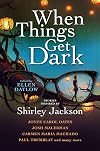
It's hard to imagine a more certain success than an Ellen Datlow horror anthology. That might be a high expectation, but When Things Get Dark fully lives up to it.
There isn't a single filler story in this book. While I think some are more successful than others at conveying a sense of tribute to and inspiration by Shirley Jackson, all of them are killer stories in their own right. Particular highlights for me included Richard Kadrey's gleefully nasty little domestic murder, Cassandra Khaw's show more gruesome remote village revenge, Laird Barron's horrifyingly murky collage of memory and family mystery, and Kelly Link's majestically eerie fable of graduate school, housesitting, and the beyond. That isn't to say that any of the others left me cold, though; this might be the most consistently excellent anthology I've read in years.
I'd recommend this book to anyone and everyone interested in a trying a sampler of many of the finest, most interesting writers in contemporary horror (I mean, on top of the authors whose stories were personal favourites, a book that also contains Carmen Maria Machado, Stephen Graham Jones, Paul Tremblay, Gemma Files, and all the rest is just an amazing snapshot of a phenomenal era for terrifying and truly excellent horror writing), as well as to those who are already fans of any of the authors in the book (or of Datlow herself).
I received a free e-ARC of this title from Titan Books via NetGalley in exchange for my review. show less
There isn't a single filler story in this book. While I think some are more successful than others at conveying a sense of tribute to and inspiration by Shirley Jackson, all of them are killer stories in their own right. Particular highlights for me included Richard Kadrey's gleefully nasty little domestic murder, Cassandra Khaw's show more gruesome remote village revenge, Laird Barron's horrifyingly murky collage of memory and family mystery, and Kelly Link's majestically eerie fable of graduate school, housesitting, and the beyond. That isn't to say that any of the others left me cold, though; this might be the most consistently excellent anthology I've read in years.
I'd recommend this book to anyone and everyone interested in a trying a sampler of many of the finest, most interesting writers in contemporary horror (I mean, on top of the authors whose stories were personal favourites, a book that also contains Carmen Maria Machado, Stephen Graham Jones, Paul Tremblay, Gemma Files, and all the rest is just an amazing snapshot of a phenomenal era for terrifying and truly excellent horror writing), as well as to those who are already fans of any of the authors in the book (or of Datlow herself).
I received a free e-ARC of this title from Titan Books via NetGalley in exchange for my review. show less
Lists
Awards


You May Also Like


Associated Authors
Statistics
- Works
- 194
- Also by
- 9
- Members
- 28,164
- Popularity
- #718
- Rating
- 3.7
- Reviews
- 634
- ISBNs
- 453
- Languages
- 8
- Favorited
- 39


