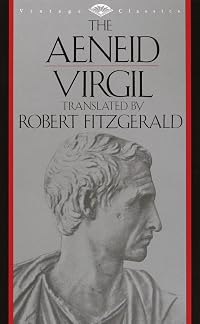
The Aeneid (translations)
by Virgil
On This Page
Description
This enduring masterpiece tells of the epic quest of Aeneas, who flees the ashes of Troy to found a new civilization: Rome. A unique hero, Aeneas struggles and fights not for personal gain but for a civilization that will exist far into the future. Caught between passion and fate, his vision would change the course of the Western world. Virgil, Rome's greatest poet, turned a mythical legend into a national epic that would survive Rome's collapse to become the most influential book Rome show more contributed to Western culture. show lessTags
Recommendations















Member Recommendations
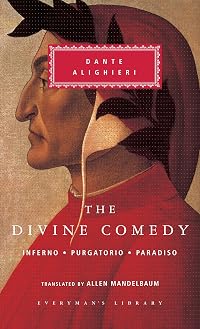
lisanicholas Dante, whose poetical muse was Virgil, makes himself the "hero" of this epic journey through not only Hell, but also Purgatory and Heaven -- a journey modeled to a certain extent on Aeneas's visit to the Underworld in the Aeneid. Dante's poem gives an imaginative depiction of the afterlife, which has both similarities and significant contrasts to Virgil's depiction of the pagan conception of what happens to the soul after death, and how that is related to the life that has been lived.
200
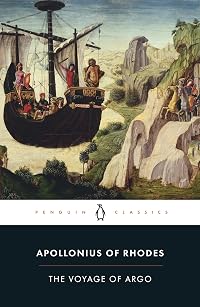
andejons Both epics connects to the Iliad and the Odyssey, even if the Argonautica is a prequel of sorts and the Aeneid is a sequel. Also, both Jason and Aeneas as well as Medea and Dido shows similar traits.
160

themulhern Destruction of the home city (or warren as the case might be), a flight and many struggles, the founding of a new city (or warren).

Member Reviews
"All the gods on whom this empire once depended have left their shrines and their altars. You are rushing to defend a burning city. Let us die. Let us rush into the thick of the fighting. The one safety for the defeated is to have no hope of safety." (pg. 40)
You've got to admire the Classical cojones on a man who, looking at the formidable glory of The Iliad and The Odyssey, the two works of Homer, decides to himself write a third volume continuing the story. The two epics were already ancient when Virgil, writing just a few decades before Christ, decided to pick up the story of the Trojan captain Aeneas, who flees the sack of Ilium and leads his band of martial refugees across the Mediterranean into Italy, where they begin the dynasty show more that will become "the beginning of the Latin race, the Alban fathers and the high walls of Rome" (pg. 3).
What's even more admirable is that Virgil achieves his task. He takes the best flavours from Homer – the voyage of Aeneas and his people across the Mediterranean mirrors Odysseus' wine-dark wanderings in The Odyssey, while the battles in Italy recall those outside the walls of Troy in The Iliad – and makes them his own. He skilfully appropriates the Greek stories into his new Roman culture – perhaps one of the most successful cross-pollinations in history – in a way that not only pays homage to the Homeric originals but adds a very creditable and satisfying third volume to the story.
It was a surprise to me when I first read The Iliad, nearly a decade ago now, that there was no mention of a wooden horse. That particular story ends with the fateful clash between Hector and Achilles, and furthermore the horse is only mentioned briefly as Odysseus' stratagem in The Odyssey. Rather, it is Virgil's Aeneid which delivers to us the full story of the Trojan Horse: the large wooden "gift" presented to Troy by the "fleeing" Greeks; the carnival atmosphere among the Trojans after it is brought within the walls of Ilium; the unheeded warnings of the priestess Cassandra. It is The Aeneid which gives us the famous line to "beware of Greeks bearing gifts" (pg. 30), and it shows us why we pay heed to the line in the chapters that follow: a frankly breath-taking depiction of the fall of Troy.
The sack of the city of Ilium, told in flashback by Aeneas, is one of the most evocative passages of writing I have ever read, and worth the price of admission alone. Laden with epic tragedy and pathos, it gores the reader with a relentless narrative drive. As the Greek soldiers pour out of the horse and storm the city, Virgil vividly depicts the confusion, fear, heartbreak and humiliation the Trojans feel. We see the old king Priam, noble and dignified, butchered like a pig (pg. 47). We see Aeneas part from his own agèd father who, with the walls of his city collapsing around him, stoically tells his son that "if the gods in heaven had wished me to go on living, they would have preserved this place for me" (pg. 50). Later, having led his band to safety, Aeneas discovers his wife is missing: "whether she stopped or lost her way or sat down exhausted, no one can tell. I never saw her again… I stormed and raged and blamed every god and man that ever was" (pg. 53). Fighting his way back into the fallen city, he meets her ghost – "Three times I tried to put my arms around her neck. Three times her phantom melted in my arms" (pg. 54) – who tells him not to weep, for now she will not be a slave to any Greek (pg. 54). She won't be a war-prize or concubine like Andromache, widow of Hector. When Aeneas tells Dido, Queen of Carthage, that "we are the remnants left by the Greeks. We have suffered every calamity that land and sea could inflict upon us" (pg. 22), it is the pen of Virgil, not the swords of the Achaeans, which has made us feel it.
But Virgil does more than just lean on the stories of Homer for his epic. When the fate of Ilium is behind them on the winds, and their ships bring them to Carthage, Virgil proves he can create an epic quality of his own. Aeneas' romance with Dido is unfortunately brief, but fits the Homeric framework Virgil has constructed like a glove. A subsequent chapter in which Aeneas travels into the underworld shows that, while he may have been inspired by Homer, he himself would inspire Dante.
Unfortunately, I found the story lost some of its momentum when Aeneas and his band finally land in Italy. The conflict between Aeneas and the native adversaries who already live on the land is never entirely clear, perhaps because Virgil, sensitive to the political implications of a mis-step on his part in the reign of Augustus, wanted to bring legendary Trojan blood into the founding of Rome – a land "pregnant with empire" (pg. 88) – without maligning the existing tribes of the region, who also contributed to that imperial rise. The final chapters of The Aeneid get stuck in a succession of games tournaments, battles and funeral processions, with much of the early promise forgotten. By this point, Aeneas is a powerful, unreflective champion destined to conquer the land, far removed from the pained, tragic underdog who left the bodies of his wife and father in Ilium and that of Dido across the sea. Considering Virgil was in conscious imitation of Homer, I don't think it's unfair to note that his final duel between Aeneas and the Italian champion Turnus lacks the narrative satisfaction that accompanies the duel between Hector and Achilles, and The Aeneid ends abruptly immediately after this final spear is plunged.
That said, this final battle does allow for one real moment of high tragedy, a late shimmer which recalls all those fantastic moments in the first half of Virgil's epic. The final fated duel threatens to be generic, until Turnus, who has been avoiding the confrontation with the indomitable Aeneas, looks around him at the burning city of his birth and decides to face him. "You will not see me put to shame again," he tells his weeping sister. "This is madness, but before I die, I beg of you, let me be mad" (pg. 324). This is supreme drama, not only in the quality of the line, but in the underlying juxtapositions. Aeneas, who fled a burning city, is now razing one himself. Turnus, the young captain, is facing the indomitable Trojan hero Aeneas to defend his home even though he knows he will die, just as the doomed Trojan captain Hector once faced the indomitable Achilles. The Aeneid ends too soon after this to really allow us to chew on what it means, but it speaks to the quality of Virgil's architecture that the juxtaposition can be made so astutely.
At this point it is also worth mentioning David West, who provided the excellent translation in my Penguin Classics edition of the book. West wisely decides on a prose translation of Virgil's epic poem, and consequently avoids all the pitfalls that come with trying to reconcile the story to modern English metre and rhyme. By sticking to prose, West retains all the narrative drive and lyricism of Virgil's Aeneid without it sounding alien or artificial to English ears. Some of the credit for the power of Virgil's lines and the narrative momentum of his scenes must go to West's delivery and decision-making, which has retained that power in translation when it could so easily have been spoiled.
All told, Virgil created in The Aeneid an epic that can stand alongside the august volumes of Homer without any shame or sense of inferiority. At its best – such as in the sack of Troy – there is scarcely anything better, and the epic is laced throughout with moments and ideas and lines of poetry that fascinate. It is interesting to see Odysseus presented as an outright villain – here, he is called Ulixes – for of course, the story is told from the perspective of the defeated Trojans who curse his name. It is even more interesting that the Greeks are shown to suffer from their victory: Diomedes rebuffs the Italian call for aid against Aeneas as he has fought enough Trojans, and "those of us whose swords violated the fields of Ilium… we are scattered over the round earth, paying unspeakable penalties and suffering all manner of punishment for our crimes. We are a band of men that even Priam might pity" (pg. 280). Odysseus is lost at sea. Agamemnon has been murdered by his wife in his bath. Even among the Greek rank-and-file there is a price to be paid: Aeneas and his crew encounter one of Odysseus' desolate crewmen still hiding on the hellish island of the Cyclopes, in dread fear of those cannibalistic giants (pg. 76). The epics of Homer and Virgil show that the glory of the heroes can often be hollow, their fates cruel; the nuance is a far cry from our common understanding of these 'noble', heroic epics, and it is fascinating to read.
There are sometimes questions raised over whether Homer was one man, a blind, bearded storyteller plucking at a lyre, or simply the name given to encompass all those storytellers who, so the argument goes, refined the stories of The Iliad and The Odyssey over centuries. Perhaps the finest compliment we can pay to Virgil – for we know that he at least was one man – is that his success in The Aeneid lends credence to the argument that Homer was an individual. Virgil showed that one man can indeed create an epic of such scope and quality. show less
You've got to admire the Classical cojones on a man who, looking at the formidable glory of The Iliad and The Odyssey, the two works of Homer, decides to himself write a third volume continuing the story. The two epics were already ancient when Virgil, writing just a few decades before Christ, decided to pick up the story of the Trojan captain Aeneas, who flees the sack of Ilium and leads his band of martial refugees across the Mediterranean into Italy, where they begin the dynasty show more that will become "the beginning of the Latin race, the Alban fathers and the high walls of Rome" (pg. 3).
What's even more admirable is that Virgil achieves his task. He takes the best flavours from Homer – the voyage of Aeneas and his people across the Mediterranean mirrors Odysseus' wine-dark wanderings in The Odyssey, while the battles in Italy recall those outside the walls of Troy in The Iliad – and makes them his own. He skilfully appropriates the Greek stories into his new Roman culture – perhaps one of the most successful cross-pollinations in history – in a way that not only pays homage to the Homeric originals but adds a very creditable and satisfying third volume to the story.
It was a surprise to me when I first read The Iliad, nearly a decade ago now, that there was no mention of a wooden horse. That particular story ends with the fateful clash between Hector and Achilles, and furthermore the horse is only mentioned briefly as Odysseus' stratagem in The Odyssey. Rather, it is Virgil's Aeneid which delivers to us the full story of the Trojan Horse: the large wooden "gift" presented to Troy by the "fleeing" Greeks; the carnival atmosphere among the Trojans after it is brought within the walls of Ilium; the unheeded warnings of the priestess Cassandra. It is The Aeneid which gives us the famous line to "beware of Greeks bearing gifts" (pg. 30), and it shows us why we pay heed to the line in the chapters that follow: a frankly breath-taking depiction of the fall of Troy.
The sack of the city of Ilium, told in flashback by Aeneas, is one of the most evocative passages of writing I have ever read, and worth the price of admission alone. Laden with epic tragedy and pathos, it gores the reader with a relentless narrative drive. As the Greek soldiers pour out of the horse and storm the city, Virgil vividly depicts the confusion, fear, heartbreak and humiliation the Trojans feel. We see the old king Priam, noble and dignified, butchered like a pig (pg. 47). We see Aeneas part from his own agèd father who, with the walls of his city collapsing around him, stoically tells his son that "if the gods in heaven had wished me to go on living, they would have preserved this place for me" (pg. 50). Later, having led his band to safety, Aeneas discovers his wife is missing: "whether she stopped or lost her way or sat down exhausted, no one can tell. I never saw her again… I stormed and raged and blamed every god and man that ever was" (pg. 53). Fighting his way back into the fallen city, he meets her ghost – "Three times I tried to put my arms around her neck. Three times her phantom melted in my arms" (pg. 54) – who tells him not to weep, for now she will not be a slave to any Greek (pg. 54). She won't be a war-prize or concubine like Andromache, widow of Hector. When Aeneas tells Dido, Queen of Carthage, that "we are the remnants left by the Greeks. We have suffered every calamity that land and sea could inflict upon us" (pg. 22), it is the pen of Virgil, not the swords of the Achaeans, which has made us feel it.
But Virgil does more than just lean on the stories of Homer for his epic. When the fate of Ilium is behind them on the winds, and their ships bring them to Carthage, Virgil proves he can create an epic quality of his own. Aeneas' romance with Dido is unfortunately brief, but fits the Homeric framework Virgil has constructed like a glove. A subsequent chapter in which Aeneas travels into the underworld shows that, while he may have been inspired by Homer, he himself would inspire Dante.
Unfortunately, I found the story lost some of its momentum when Aeneas and his band finally land in Italy. The conflict between Aeneas and the native adversaries who already live on the land is never entirely clear, perhaps because Virgil, sensitive to the political implications of a mis-step on his part in the reign of Augustus, wanted to bring legendary Trojan blood into the founding of Rome – a land "pregnant with empire" (pg. 88) – without maligning the existing tribes of the region, who also contributed to that imperial rise. The final chapters of The Aeneid get stuck in a succession of games tournaments, battles and funeral processions, with much of the early promise forgotten. By this point, Aeneas is a powerful, unreflective champion destined to conquer the land, far removed from the pained, tragic underdog who left the bodies of his wife and father in Ilium and that of Dido across the sea. Considering Virgil was in conscious imitation of Homer, I don't think it's unfair to note that his final duel between Aeneas and the Italian champion Turnus lacks the narrative satisfaction that accompanies the duel between Hector and Achilles, and The Aeneid ends abruptly immediately after this final spear is plunged.
That said, this final battle does allow for one real moment of high tragedy, a late shimmer which recalls all those fantastic moments in the first half of Virgil's epic. The final fated duel threatens to be generic, until Turnus, who has been avoiding the confrontation with the indomitable Aeneas, looks around him at the burning city of his birth and decides to face him. "You will not see me put to shame again," he tells his weeping sister. "This is madness, but before I die, I beg of you, let me be mad" (pg. 324). This is supreme drama, not only in the quality of the line, but in the underlying juxtapositions. Aeneas, who fled a burning city, is now razing one himself. Turnus, the young captain, is facing the indomitable Trojan hero Aeneas to defend his home even though he knows he will die, just as the doomed Trojan captain Hector once faced the indomitable Achilles. The Aeneid ends too soon after this to really allow us to chew on what it means, but it speaks to the quality of Virgil's architecture that the juxtaposition can be made so astutely.
At this point it is also worth mentioning David West, who provided the excellent translation in my Penguin Classics edition of the book. West wisely decides on a prose translation of Virgil's epic poem, and consequently avoids all the pitfalls that come with trying to reconcile the story to modern English metre and rhyme. By sticking to prose, West retains all the narrative drive and lyricism of Virgil's Aeneid without it sounding alien or artificial to English ears. Some of the credit for the power of Virgil's lines and the narrative momentum of his scenes must go to West's delivery and decision-making, which has retained that power in translation when it could so easily have been spoiled.
All told, Virgil created in The Aeneid an epic that can stand alongside the august volumes of Homer without any shame or sense of inferiority. At its best – such as in the sack of Troy – there is scarcely anything better, and the epic is laced throughout with moments and ideas and lines of poetry that fascinate. It is interesting to see Odysseus presented as an outright villain – here, he is called Ulixes – for of course, the story is told from the perspective of the defeated Trojans who curse his name. It is even more interesting that the Greeks are shown to suffer from their victory: Diomedes rebuffs the Italian call for aid against Aeneas as he has fought enough Trojans, and "those of us whose swords violated the fields of Ilium… we are scattered over the round earth, paying unspeakable penalties and suffering all manner of punishment for our crimes. We are a band of men that even Priam might pity" (pg. 280). Odysseus is lost at sea. Agamemnon has been murdered by his wife in his bath. Even among the Greek rank-and-file there is a price to be paid: Aeneas and his crew encounter one of Odysseus' desolate crewmen still hiding on the hellish island of the Cyclopes, in dread fear of those cannibalistic giants (pg. 76). The epics of Homer and Virgil show that the glory of the heroes can often be hollow, their fates cruel; the nuance is a far cry from our common understanding of these 'noble', heroic epics, and it is fascinating to read.
There are sometimes questions raised over whether Homer was one man, a blind, bearded storyteller plucking at a lyre, or simply the name given to encompass all those storytellers who, so the argument goes, refined the stories of The Iliad and The Odyssey over centuries. Perhaps the finest compliment we can pay to Virgil – for we know that he at least was one man – is that his success in The Aeneid lends credence to the argument that Homer was an individual. Virgil showed that one man can indeed create an epic of such scope and quality. show less
Arma virumque cano ... to go much further than that would have been beyond my rusty Latin. Thank God for great translators like Robert Fitzgerald, a scholar immersed in the text who was himself a poet. Most of the time, I forgot I was reading a translation, it is simply great literature.
This epic is neatly divided into twelve books, and can be easily handled by reading one book a day. Of course, life sometimes gets in the way, so I had to spread one book over three mornings. Fittingly enough, it was Bk 6, when the hero in true Joseph Campbell fashion descends to the underworld.
The tale itself can be easily visualized by anyone who has seen the Lord of the Rings films.
As I was reading it, though, the theologian in me was also at work in show more the back of my mind. I was glad that no religion today claims this glorification of blood and gore as holy scripture, although it originated as a national epic at the time of Augustus Caesar's eminence in order to fabricate a claim that Rome's greatness was as ancient and as divinely-ordained as that of Greece. Much of what anti-religionists today deplore in the Christian Bible is here as well, in even greater quantities, and without the subversive hints embedded within the Old Testament that paved the way for a new religion to claim that Jesus, not Caesar, was Lord. Perhaps if we revised our assumptions of what scripture is, we could once again admit that the tale of David and Goliath is as thrilling in its own way as the confrontation of Aeneas and Turnus, without feeling somehow divinely authorized to wreak vengeance on anyone different from us. show less
This epic is neatly divided into twelve books, and can be easily handled by reading one book a day. Of course, life sometimes gets in the way, so I had to spread one book over three mornings. Fittingly enough, it was Bk 6, when the hero in true Joseph Campbell fashion descends to the underworld.
The tale itself can be easily visualized by anyone who has seen the Lord of the Rings films.
As I was reading it, though, the theologian in me was also at work in show more the back of my mind. I was glad that no religion today claims this glorification of blood and gore as holy scripture, although it originated as a national epic at the time of Augustus Caesar's eminence in order to fabricate a claim that Rome's greatness was as ancient and as divinely-ordained as that of Greece. Much of what anti-religionists today deplore in the Christian Bible is here as well, in even greater quantities, and without the subversive hints embedded within the Old Testament that paved the way for a new religion to claim that Jesus, not Caesar, was Lord. Perhaps if we revised our assumptions of what scripture is, we could once again admit that the tale of David and Goliath is as thrilling in its own way as the confrontation of Aeneas and Turnus, without feeling somehow divinely authorized to wreak vengeance on anyone different from us. show less
In my opinion, the greatest of the Classical epics. The Aeneid does not merely praise the glory of Rome and Augustus by exhalting Aeneas; it conveys a melancholy for everything that Aeneas, the Trojans, and even their enemies underwent in order to bring about fate. Rome's enemy Carthage, and even Hannibal who lead the invading army, is here depicted as the eventual avengers of a woman abandoned by her lover not for any fault of her own, but merely because the gods required him to be elsewhere. The Italians are shown as glorious warriors, whose necessary deaths in battle may not be worth it. Finally there is the end, not with the joy of triumph, but with the death moan of the Italian leader. The translation by David West perfectly show more captures the tone of the original. show less
I liked The Aeneid. It wasn’t exactly a pleasure read, but I liked it in the way you like arduous things (and by arduous I mean reading all 300+ pages of epic prose in 3 days) once they’re over. If you’ve ever read Grapes of Wrath maybe you know what I’m talking about. There were a lot of slow parts, many of which involved an excess of names, but there were also plenty of gripping parts that had me actually forgetting to watch the page numbers tick by as slowly as the minutes. For example, the last four books are almost entirely devoted to one long, drawn out, dramatic, and incredibly visceral battle scene. I may have cringed at least once a page, but I certainly wasn’t bored!
Two Sentence Summary: After the sack of Troy, show more Aeneas escapes with a group of Trojan warriors and sets out for the shores of Italy, where he will found New Troy (aka Rome). He must first overcome the obstacles of a vindictive meddling goddess, and then conquer the land destined to become a great empire.
I’m guessing most of you have heard of The Aeneid. And maybe you’ve heard whisperings of comparisons to The Odyssey. Maybe some have you have even read it. If you a) haven’t and b) have read The Odyssey and didn’t loathe it, I recommend The Aeneid as a good companion read. It’s an excellent microcosmic example that for all the energy the Romans put into dissing the Greeks, they put at least as much or more into imitating (and in their minds, improving on) them. Naturally it’s chock full of meaty themes as well, like the conflict between duty and desire, the martyrdom of present happiness for future greatness, learning what to let go of and when, the ephemerality of human life and connection, the entanglement of place and identity... the list goes on. And Virgil wasn’t kidding around. He knew his way around a vivid description (see: incredibly visceral battle scene). I’ve never read such inventive – and numerous – descriptions of dawn. They put Homer’s lovely, if repetitive, “rosy-fingered dawn” to shame. And that’s pretty much Virgil’s goal in a nutshell: outdo Homer. Whether he succeeds or not is up to you. show less
Two Sentence Summary: After the sack of Troy, show more Aeneas escapes with a group of Trojan warriors and sets out for the shores of Italy, where he will found New Troy (aka Rome). He must first overcome the obstacles of a vindictive meddling goddess, and then conquer the land destined to become a great empire.
I’m guessing most of you have heard of The Aeneid. And maybe you’ve heard whisperings of comparisons to The Odyssey. Maybe some have you have even read it. If you a) haven’t and b) have read The Odyssey and didn’t loathe it, I recommend The Aeneid as a good companion read. It’s an excellent microcosmic example that for all the energy the Romans put into dissing the Greeks, they put at least as much or more into imitating (and in their minds, improving on) them. Naturally it’s chock full of meaty themes as well, like the conflict between duty and desire, the martyrdom of present happiness for future greatness, learning what to let go of and when, the ephemerality of human life and connection, the entanglement of place and identity... the list goes on. And Virgil wasn’t kidding around. He knew his way around a vivid description (see: incredibly visceral battle scene). I’ve never read such inventive – and numerous – descriptions of dawn. They put Homer’s lovely, if repetitive, “rosy-fingered dawn” to shame. And that’s pretty much Virgil’s goal in a nutshell: outdo Homer. Whether he succeeds or not is up to you. show less
The selling point of this translation by Shadi Bartsch is its fidelity to the Latin, so I can't fault it too much for its awkward line-breaks and tendency to stiltedness. Bartsch's halting iambs come alive in lines like "while Turnus dealt relentless death across the plain", but this kind of fluency is never sustained for long. Having said that, it's nice to read a translation where you feel like you know where you are. "Planted" in the text, as Bartsch might say!
As for the poem, this read confirmed me in my Greek vs. Roman affinities. Virgil tries on the epic mantle of the Odyssey (first six books) and Iliad (second six). But he wears it awkwardly due to his desire to write a national epic and the resultant unyielding Romanness. Homer show more on the other hand is elemental, enjoyably alien. Here, the constant wild animal similes and X-killed-Y-and-was-then-killed-by-Z verses somehow grate in a way they don't in the Iliad. The contradictions between divine intervention and predestination are annoying here, acceptable in the Odyssey.
A matter of taste. But there's no denying that Aeneas is a total dick and impossible to root for. He completely botches the Dido situation resulting in Carthage opposing Rome for all eternity. He's not a complex character, just a blowhard and bully with a taste for human sacrifice, and his bloodthirsty dispatch of Turnus ends the story on an especially distasteful note. It doesn't help that his English epithet "pious" produces a jaunty rhyme that grows ridiculous with repetition. show less
As for the poem, this read confirmed me in my Greek vs. Roman affinities. Virgil tries on the epic mantle of the Odyssey (first six books) and Iliad (second six). But he wears it awkwardly due to his desire to write a national epic and the resultant unyielding Romanness. Homer show more on the other hand is elemental, enjoyably alien. Here, the constant wild animal similes and X-killed-Y-and-was-then-killed-by-Z verses somehow grate in a way they don't in the Iliad. The contradictions between divine intervention and predestination are annoying here, acceptable in the Odyssey.
A matter of taste. But there's no denying that Aeneas is a total dick and impossible to root for. He completely botches the Dido situation resulting in Carthage opposing Rome for all eternity. He's not a complex character, just a blowhard and bully with a taste for human sacrifice, and his bloodthirsty dispatch of Turnus ends the story on an especially distasteful note. It doesn't help that his English epithet "pious" produces a jaunty rhyme that grows ridiculous with repetition. show less
Several reviews characterize The Aeneid as a slog and I agree. Compared to The Iliad and Odyssey it definitely is a more difficult story to get through. Partly for its self-aggrandizement of the Roman people and foundation, partly for its huge chunks of backstory and wild justification, but mostly for the insufferable gods and goddesses. Oh my head that was painful. Everyone it seems has a stake in Aeneas’s fate, but of course they are almost all at odds with each other and none seem to know what the others were doing. Every once in a while Zeus/Jove/Jupiter gets involved and lackadaisically makes a decision, but for the most part Venus and Juno get to butt heads and see who can mess with the participants the most in order to fulfill show more her ends.
To some degree it’s a foregone conclusion since Vergil is writing this epic to give validation and divine permission to Augustus (his patron) and the Claudian and Julian families for crushing the life out of the Roman Republic. That means that Aeneas has to be perfect. Noble. Brave. Clear-sighted. Righteous. Determined. Bor-ring! There wasn’t enough humanity about Aeneas for me to connect with him. He was the correct embodiment of all that Roman Patrician families strive for in their men and he came off robot-like and stilted. Give me the much-maligned Odysseus any day. show less
To some degree it’s a foregone conclusion since Vergil is writing this epic to give validation and divine permission to Augustus (his patron) and the Claudian and Julian families for crushing the life out of the Roman Republic. That means that Aeneas has to be perfect. Noble. Brave. Clear-sighted. Righteous. Determined. Bor-ring! There wasn’t enough humanity about Aeneas for me to connect with him. He was the correct embodiment of all that Roman Patrician families strive for in their men and he came off robot-like and stilted. Give me the much-maligned Odysseus any day. show less
El primer fanfiction de la historia?
Pregunta:
Que libro relata los viajes y hazañas de un guerrero que sale del sitio de troya en busca de su hogar pero tarda años en llegar porque un dios le tiene mania?
La odisea? Si, claro! Y la Eneida
Pregunta:
Que libro relata guerra entre troyanos detras de una muralla y los ejercitos enemigos, centrada en la lucha entre sus dos guerreros mas importantes?
La iliada? Por supuesto, y la Eneida.
Virgilio toma a uno de los participantes de la guerra de troya (Eneas) y le hace vivir su propia guerra de troya y odisea. Copia descaradamente a un poeta griego mientras pone a parir a los griegos y todo lo que representan. A la vez ensalza a Roma, al imperio y a Augusto que es quien paga.
Fanfiction con show more publicidad
No le doy la peor puntuacion porque Virgilio escribe realmente bien. show less
Pregunta:
Que libro relata los viajes y hazañas de un guerrero que sale del sitio de troya en busca de su hogar pero tarda años en llegar porque un dios le tiene mania?
La odisea? Si, claro! Y la Eneida
Pregunta:
Que libro relata guerra entre troyanos detras de una muralla y los ejercitos enemigos, centrada en la lucha entre sus dos guerreros mas importantes?
La iliada? Por supuesto, y la Eneida.
Virgilio toma a uno de los participantes de la guerra de troya (Eneas) y le hace vivir su propia guerra de troya y odisea. Copia descaradamente a un poeta griego mientras pone a parir a los griegos y todo lo que representan. A la vez ensalza a Roma, al imperio y a Augusto que es quien paga.
Fanfiction con show more publicidad
No le doy la peor puntuacion porque Virgilio escribe realmente bien. show less
Members
- Recently Added By
Published Reviews
added by AngelsAngladaLibrary
Lists

Classics you know you should have read but probably haven't
421 works; 408 members

My 100 Favorite Books of All Time
57 works; 2 members

Mustich's 1000 Books to Read Before You Die: A Life Changing List
1,001 works; 19 members

AP Lit
363 works; 6 members

Before Austen Comes Aesop
318 works; 9 members

Greatest Books, allegedly
484 works; 9 members

Western Canon
206 works; 2 members

Will Durant's 100 Books: An Update
46 works; 4 members

r/History Recommended Reading List
603 works; 12 members

New Lifetime Reading Plan by Fadiman and Major
225 works; 5 members

A Reading List
100 works; 3 members

50 Tough Books for Extreme Readers
71 works; 40 members

Books Set in Rome
98 works; 2 members

Edward Gorey Covers
150 works; 8 members

The Road to Freedom (Will Durant's 100 Best Books for an Education)
100 works; 8 members

Readable Classics
110 works; 15 members

Classical Conversations Challenge IV Exposition
8 works; 1 member
Western Canon
24 works; 1 member
Mensa for Kids Excellence in Reading Award Program (Grades 9-12)
116 works; 3 members

.
194 works; 2 members

bound
100 works; 1 member

In Our Time books
4,934 works; 2 members
Books in the Bibliography of The History of Hell by Alice K. Turner
155 works; 1 member

.
396 works; 1 member
Books talked about in Pamela Dean's Tam Lin
74 works; 1 member

School Made Us Read It
380 works; 196 members
Favorite Books in Translation
320 works; 133 members

Book Titles Mentioned In Newberry Medal And Honor Books
884 works; 3 members

Wish List
9 works; 1 member

The Luca Guadagnino Universe
62 works; 1 member

Recommended Reading : 600 Classics Reviewed, Editors of Salem Press, 2015
634 works; 6 members

Ryan Holiday's Books To Base Your Life On
97 works; 2 members

Books Read in 2024
4,623 works; 126 members

readingList
38 works; 1 member

Acclaimed Fanfiction
23 works; 2 members
Mensa for Kids Excellence in Reading Award Program (Grades 9-12)
116 works; 5 members

Best Roman Empire Books
49 works; 18 members
Epic Fiction
42 works; 12 members
Great Books Favorites
71 works; 6 members

The Top Ten: Writers Pick Their Favorite Books
240 works; 31 members

Philip Ward's Lifetime Reading Plan
592 works; 22 members
The 100 Best Books of All Time by Norwegian Book Club (World Library)
104 works; 21 members

Books Set in Italy
167 works; 19 members

Best War Stories
87 works; 16 members

Books You Read During High School (For School)
301 works; 53 members

1001 Books You Must Read Before You Die
1,448 works; 1,133 members
Narrative verse for pleasure
75 works; 8 members

Bibliography for Among Others
159 works; 15 members
Folio Society
831 works; 49 members

Best Adventure Stories
66 works; 15 members

Unread books
1,063 works; 82 members

Best Historical Fiction
620 works; 261 members

100 Books to Read in a Lifetime (That Are Older Than 200 Years)
415 works; 175 members
The Greatest Books
99 works; 5 members

Books Read in 2018
4,360 works; 110 members
Best Books About Journeys and Quests
117 works; 30 members
The Joe Rogan Experience Library
254 works; 3 members

Antigua Roma
39 works; 2 members

Trinity College Booklist (1951): Class Eight, Classic Civilization
39 works; 3 members

100 Most Recommended Works
100 works; 11 members
Five star books
1,755 works; 108 members

Harold Bloom - The Western Canon: A. The Theocratic Age
97 works; 13 members

Western World's Greatest Books - Project Gutenberg
295 works; 15 members

Generation Joshua
115 works; 3 members
Truly old classics
63 works; 6 members
100 World Classics
99 works; 15 members

Top Five Books of 2014
1,064 works; 397 members

Literary Works Read in College
316 works; 15 members

CCE 100 Great Books List
145 works; 8 members
GreatBooks Worldview Academy Lists
133 works; 4 members

Lectuurlijst
63 works; 1 member
Talk Discussions
Past Discussions
Folio Archives 223: Aeneid by Virgil – Limited Edition 2010 in Folio Society Devotees (March 2025)
Aeneid LE Availability in Folio Society Devotees (June 2019)
Aeneid quote at the 9/11 Memorial in Ancient History (April 2014)
Group Read: The Aeneid, begins June 21 in 75 Books Challenge for 2010 (September 2010)
Author Information

Virgil was born on October 15, 70 B.C.E., in Northern Italy in a small village near Mantua. He attended school at Cremona and Mediolanum (Milan), then went to Rome, where he studied mathematics, medicine and rhetoric, and finally completed his studies in Naples. He entered literary circles as an "Alexandrian," the name given to a group of poets show more who sought inspiration in the sophisticated work of third-century Greek poets, also known as Alexandrians. In 49 BC Virgil became a Roman citizen. After his studies in Rome, Vergil is believed to have lived with his father for about 10 years, engaged in farm work, study, and writing poetry. After the battle of Philippi in 42 B.C.E. Virgil¿s property in Cisalpine Gaul, was confiscated for veterans. In the following years Virgil spent most of his time in Campania and Sicily, but he also had a house in Rome. During the reign of emperor Augustus, Virgil became a member of his court circle and was advanced by a minister, Maecenas, patron of the arts and close friend to the poet Horace. He gave Virgil a house near Naples. Between 42 and 37 B.C.E. Virgil composed pastoral poems known as Bucolic or Eclogues and spent years on the Georgics. The rest of his life, from 30 to 19 B.C., Virgil devoted to The Aeneid, the national epic of Rome, and the glory of the Empire. Although ambitious, Virgil was never really happy about the task. Virgil died in 19 B. C. (Bowker Author Biography) show less
Some Editions
Awards and Honors
Awards
Notable Lists
Schecks Bücher (61)
Series
Belongs to Publisher Series
Work Relationships
Is contained in
Contains
Is retold in
Is an adaptation of
Has the adaptation
Is abridged in
Inspired
Has as a reference guide/companion
Has as a study
Has as a commentary on the text
Has as a student's study guide
Common Knowledge
- Canonical title
- The Aeneid; Aeneid (translations) (translations); The Aeneid (translations) (translations)
- Original title
- Aeneis
- Alternate titles*
- Het verhaal van Aeneas
- Original publication date
- ca. 29 - 19 BC
- People/Characters
- Aeneas; Dido; Turnus; Jupiter; Juno; Venus (show all 21); Anchises; Ascanius (Iulus); Latinus; Lavinia; Amata; Aeolus; Ajax the Lesser; Achilles; Agamemnon; Ajax; Camilla; Acca (Camilla's companion); Nisus; Euryalus; Achates
- Important places
- Carthage; Troy; Sicily, Italy; Cumae; Latium; Aeaea
- Important events
- Trojan War
- First words
- Wars and man I sing—an exile driven on by Fate, he was the first to flee the coast of Troy, destined to reach Lavinian shores and Italian soil, yet many blows he took on land and sea from the gods above—thanks to cruel Ju... (show all)no's relentless rage—and many losses he bore in battle too, beofe he could found a city, bring his gods to Latium, source of the Latin race, the Alban lords and the high walls of Rome.
- Last words
- (Click to show. Warning: May contain spoilers.)Then all the body slackened in death's chill,/
And with a groan for the indignity/
His spirit fled into the gloom below. - Blurbers
- Bowerstock, G.W.; Ford, Richard; Carne-Ross, D.S.; Hazzard, Shirley; Knox, Bernard; Coetzee, J.M. (show all 9); Freccero, John; Segal, Erich; Ignatow, David
- Original language
- Latin
- Canonical LCC
- PA6801 .A2
- Disambiguation notice
- 3150002214 Reclam UB
3150201500 Reclam
The Aeneid in translation. The whole thing: 12 books, sometimes in 2 v. Without other works of Virgil.
According to the "dead language" convention, there are separate works... (show all) for Latin and bilingual editions.
*Some information comes from Common Knowledge in other languages. Click "Edit" for more information.
Classifications
- Genres
- Poetry, Fiction and Literature
- DDC/MDS
- 873.01 — Literature & rhetoric Latin & Italic literatures Latin epic poetry and fiction to ca. 499, Roman period
- LCC
- PA6801 .A2 — Language and Literature Greek language and literature. Latin language and literature Roman literature Individual authors Vergilius Maro, Publius (Virgil)
- BISAC
Statistics
- Members
- 26,790
- Popularity
- 157
- Reviews
- 229
- Rating
- (3.90)
- Languages
- 26 — Afrikaans, Catalan, Chinese, Czech, Danish, Dutch, English, Finnish, French, German, Scottish Gaelic, Greek, Hungarian, Italian, Latin, Lithuanian, Multiple languages, Norwegian (Bokmål), Farsi/Persian, Polish, Russian, Scots, Spanish, Swedish, Turkish, Portuguese (Portugal)
- Media
- Paper, Audiobook, Ebook
- ISBNs
- 640
- UPCs
- 6
- ASINs
- 447
