
Guns, Germs, and Steel: The Fates of Human Societies
by Jared Diamond
On This Page
Description
Winner of the Pulitzer PrizeIn this groundbreaking work, evolutionary biologist Jared Diamond stunningly dismantles racially based theories of human history by revealing the environmental factors actually responsible for history's broadest patterns. It is a story that spans 13,000 years of human history, beginning when Stone Age hunter-gatherers constituted the entire human population. Guns, Germs, and Steel is a world history that really is a history of all the world's peoples, a unified show more narrative of human life. show lessTags
Recommendations
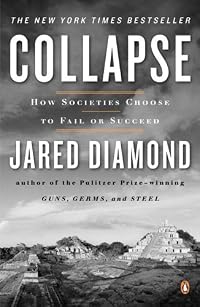
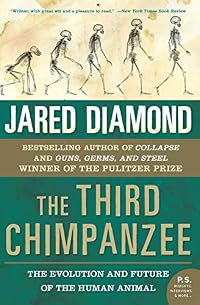























Member Recommendations

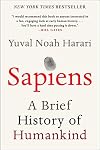
Percevan Both books are eminently throwing light on the big lines in human history
60

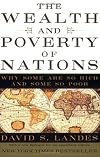
Oct326 La tesi centrale del saggio di Diamond è che la causa dominante dei disuguali gradi di sviluppo tra popolazioni umane sia data dalle condizioni ambientali più o meno favorevoli. Il saggio di Landes ha un argomento un po' differente, e cioè il disuguale grado di sviluppo economico e di ricchezza tra popolazioni. Ma sulle cause di queste differenze è più articolato, e mette in rilievo l'importanza dei fattori culturali. È un punto di vista piuttosto diverso, e questo rende interessante il confronto tra le due opere.
61
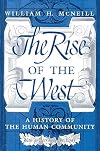
wildbill William McNeill chronicles the struggle between nomad and sedentary peoples in a book that continues the themes of Guns, Germs and Steel
40
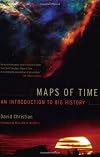
questbird Big History is a multidisciplinary approach (like Diamond's) which integrates the origin of the universe, deep time, human prehistory and history.
40
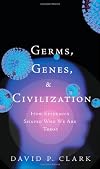


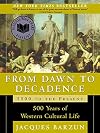
MusicMom41 Guns, Germs and Steel makes a great “prelude’ to Barzun’s book From Dawn to Decadence.
20
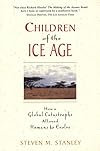
br77rino Children of the Ice Age is an excellent anthropological discussion of the link that became homo sapiens. Guns, Germs, and Steel covers the more recent territory of racial evolution within homo sapiens.

Percevan Both books are eminently throwing light on the big lines in human history
43

hohlwelt Complements very well with what Jared Diamond misses and vice versa.

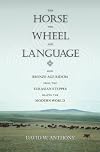
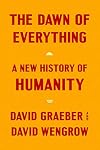
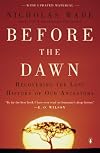
pilastr See Diamond's presumptions and exclusion of rich evidence taken to the mat by the most recent archeologic evidence.
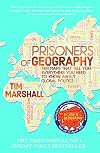
Prisoners of Geography: Ten Maps That Tell You Everything You Need to Know About Global Politics by Tim Marshall
Oct326 Questi due libri sono abbastanza diversi, ma hanno un tema in comune, e cioè il peso della geografia sulle vicende umane.

fyrefly98 Another perspective on the spread of our culture and civilization.
13
rakerman Also see Ronald Wright's Stolen Continents for another angle on the Americas.


Cynfelyn Who We Are and How We Got Here (2018) is a genetic interpretation successor to the cultural interpretation of Guns, Germs and Steel (1997).
Member Reviews
Jared Diamond begins his book with a question: "[W]hy weren't Native Americans, Africans and Aboriginal Australians the ones who decimated, subjugated, or exterminated Europeans and Asians?" The obvious answer in my mind is that they simply had no interest in waging a war of genocide against the rest of the world, that indeed these cultures would have considered such an effort insane. But this answer does not satisfy Jared Diamond, because he cannot fathom that a culture could simply not be interested in conquest and genocide. He cannot fathom that a culture might not want to be an empire, that a culture might not want to be European. He is looking outward from a European culture and asking why other cultures are different from his show more own.
It quickly becomes clear that he is unaware of this bias, as it does not occur to him to even consider whether the answer to his question lies in culture. Rather he frames our potential answers for us as follows: geography, or overt racism. Jared Diamond dismantles the argument of the overtly racist position ("Non-whites failed to wage genocide and conquest against the rest of the world because they are too stupid") in favor of the covertly racist position ("Non-whites failed to wage genocide and conquest against the world because they didn't have the geographic advantages that Europe and Asia did"). By comparing all societies against a European model, the author is inclined to see all other societies as "failed Europes" that "lack" certain attributes. That there is absolutely no evidence that non-Eurasian indigenous people had any interest in conquering, subjugating, or exterminating the rest of the world is apparently a moot point. Again and again he talks about how non-Europeans "failed" to match some European 'achievement', without bothering to provide evidence that they ever even had any interest in it. To get a sense of the absurdity of this, imagine that he had chosen African hunter-gatherer societies as his model instead. Would it then make sense to talk about how Europeans "failed" to achieve a communal society, an autarkic foraging-based economy, and a total absence of war? It would only make sense if Europe had a clear cultural interest in making these achievements. Otherwise, this is a textbook example of ethnocentrism, or the evaluation of another culture by the standards of one's own.
Within another hundred pages or so, it becomes clear that Diamond is fundamentally an amateur in many of the subjects he professes knowledge in. His background is in geography, biophysics, and physiology, and yet has written a book built heavily dependent on the fields of anthropology, archaeology, ecology, and history. He argues, for instance, that Clovis peoples hunted megafauna such as mammoths to extinction, in spite of the clear impossibility of such a feat. (Indeed, a much more plausible theory now suggests that a comet impact was largely responsible.) He also gives a retelling of the old myth that native people reached America by following a land bridge and an "ice free corridor", despite current evidence that areas as far south as Chile were populated before the land bridge supposedly opened up. (The idea of a land bridge crossing and ice free corridor were never strongly supported by anthropological evidence, they were simply conjectured on the racist assumption that native people were incapable of sea travel.)
Another example of incompetency is when he makes the claim that most 'chiefdoms' are "kleptomaniac" societies in which the elites steal from the common members of the society, without actually using examples from the "chiefdom" societies he mentions. Instead he speaks of "chiefdoms" in a mythical sort of way, as if they were all fundamentally the same, and then tells us a story about this generalized, unnamed chiefdom. In this way he can advance his theory of cultural evolution without providing any factual evidence to support it. And in fact the societies he does claim to be chiefdoms are often very different from his idealized portrait of "the chiefdom". For instance one of the "chiefdoms" he describes in the book are the "Kwakiutl" (who are actually the Kwak'waka'wakw; 'Kwakiutl' was the name of a single Kwak'waka'wakw band that was mistaken by early anthropologists for the name of the larger group). But rather than being a "kleptomaniac" society in which the top members steal from the bottom, Kwak'waka'wakw society is based politically on potlatching, a system in which leaders are ranked not for how much they accumulate from the commoners, but how much wealth they can give away to them. Only by continuously giving can a leader show that he is worthy of the community's respect and maintain his status. A situation completely 180 from Jared Diamond's simple system for caricaturing diverse societies, which comes us to us incidentally from antiquated works of anthropology, such as Peter Farb's "Man's Rise to Civilization As Shown by the Indians of North America", first published in 1968).
These are just a few of the more striking examples. He often reveals his lack of a hand in more subtle ways, as for instance when he describes the 9% annual death rate of First Nations people in Saskatchewan from European germs as "incredible". But this rate is hardly so incredible. Where I live, just to give an example, 90% of the local population (the Kalapuya) died over a period of three years when malaria was introduced to the area. If he had researched the subject in any depth he would have found that the death rate in Saskatchewan was actually fairly typical.
It also becomes clear that Diamond did not research his question to find an answer, but rather answered his question and then handpicked evidence to support that answer. Even still, much of his evidence is flaky at best and lends itself better to other explanations. For instance, he tries to explain that the apparent naivete of American Indian leaders in the face of psychopathic conquistadors was due to a lack of history books. Even if we ignore Diamond's ignorance of the complex oral histories in these societies, this argument seems rather impoverished. A much more likely answer is that these cultures had simply never come into contact with behavior so callous, arrogant, and mythomanic as that presented by the conquistadors, and thus were unable to prepare themselves against it. If this reasoning occurred to Diamond, he was careful to ignore it, as it directly contradicts his thesis. Indeed, Diamond took great care not to present any explanations that discouraged his overall conclusion, gambling that exhibiting unwavering confidence in a carefully constructed story would prevent people from noticing his academic shortcomings.
Considering his book was a bestseller and won him both a Pulitzer Prize and a documentary series, it appears that his gamble paid off quite handsomely. show less
It quickly becomes clear that he is unaware of this bias, as it does not occur to him to even consider whether the answer to his question lies in culture. Rather he frames our potential answers for us as follows: geography, or overt racism. Jared Diamond dismantles the argument of the overtly racist position ("Non-whites failed to wage genocide and conquest against the rest of the world because they are too stupid") in favor of the covertly racist position ("Non-whites failed to wage genocide and conquest against the world because they didn't have the geographic advantages that Europe and Asia did"). By comparing all societies against a European model, the author is inclined to see all other societies as "failed Europes" that "lack" certain attributes. That there is absolutely no evidence that non-Eurasian indigenous people had any interest in conquering, subjugating, or exterminating the rest of the world is apparently a moot point. Again and again he talks about how non-Europeans "failed" to match some European 'achievement', without bothering to provide evidence that they ever even had any interest in it. To get a sense of the absurdity of this, imagine that he had chosen African hunter-gatherer societies as his model instead. Would it then make sense to talk about how Europeans "failed" to achieve a communal society, an autarkic foraging-based economy, and a total absence of war? It would only make sense if Europe had a clear cultural interest in making these achievements. Otherwise, this is a textbook example of ethnocentrism, or the evaluation of another culture by the standards of one's own.
Within another hundred pages or so, it becomes clear that Diamond is fundamentally an amateur in many of the subjects he professes knowledge in. His background is in geography, biophysics, and physiology, and yet has written a book built heavily dependent on the fields of anthropology, archaeology, ecology, and history. He argues, for instance, that Clovis peoples hunted megafauna such as mammoths to extinction, in spite of the clear impossibility of such a feat. (Indeed, a much more plausible theory now suggests that a comet impact was largely responsible.) He also gives a retelling of the old myth that native people reached America by following a land bridge and an "ice free corridor", despite current evidence that areas as far south as Chile were populated before the land bridge supposedly opened up. (The idea of a land bridge crossing and ice free corridor were never strongly supported by anthropological evidence, they were simply conjectured on the racist assumption that native people were incapable of sea travel.)
Another example of incompetency is when he makes the claim that most 'chiefdoms' are "kleptomaniac" societies in which the elites steal from the common members of the society, without actually using examples from the "chiefdom" societies he mentions. Instead he speaks of "chiefdoms" in a mythical sort of way, as if they were all fundamentally the same, and then tells us a story about this generalized, unnamed chiefdom. In this way he can advance his theory of cultural evolution without providing any factual evidence to support it. And in fact the societies he does claim to be chiefdoms are often very different from his idealized portrait of "the chiefdom". For instance one of the "chiefdoms" he describes in the book are the "Kwakiutl" (who are actually the Kwak'waka'wakw; 'Kwakiutl' was the name of a single Kwak'waka'wakw band that was mistaken by early anthropologists for the name of the larger group). But rather than being a "kleptomaniac" society in which the top members steal from the bottom, Kwak'waka'wakw society is based politically on potlatching, a system in which leaders are ranked not for how much they accumulate from the commoners, but how much wealth they can give away to them. Only by continuously giving can a leader show that he is worthy of the community's respect and maintain his status. A situation completely 180 from Jared Diamond's simple system for caricaturing diverse societies, which comes us to us incidentally from antiquated works of anthropology, such as Peter Farb's "Man's Rise to Civilization As Shown by the Indians of North America", first published in 1968).
These are just a few of the more striking examples. He often reveals his lack of a hand in more subtle ways, as for instance when he describes the 9% annual death rate of First Nations people in Saskatchewan from European germs as "incredible". But this rate is hardly so incredible. Where I live, just to give an example, 90% of the local population (the Kalapuya) died over a period of three years when malaria was introduced to the area. If he had researched the subject in any depth he would have found that the death rate in Saskatchewan was actually fairly typical.
It also becomes clear that Diamond did not research his question to find an answer, but rather answered his question and then handpicked evidence to support that answer. Even still, much of his evidence is flaky at best and lends itself better to other explanations. For instance, he tries to explain that the apparent naivete of American Indian leaders in the face of psychopathic conquistadors was due to a lack of history books. Even if we ignore Diamond's ignorance of the complex oral histories in these societies, this argument seems rather impoverished. A much more likely answer is that these cultures had simply never come into contact with behavior so callous, arrogant, and mythomanic as that presented by the conquistadors, and thus were unable to prepare themselves against it. If this reasoning occurred to Diamond, he was careful to ignore it, as it directly contradicts his thesis. Indeed, Diamond took great care not to present any explanations that discouraged his overall conclusion, gambling that exhibiting unwavering confidence in a carefully constructed story would prevent people from noticing his academic shortcomings.
Considering his book was a bestseller and won him both a Pulitzer Prize and a documentary series, it appears that his gamble paid off quite handsomely. show less
Why did Europeans people grabbed the world, exterminating others and/or exploiting them under their rules, and not these other people, scattered across continents and cultures (Indians, Black Africans, Australian Aboriginals...) ever reached Europe to conquer it?
We had a few clues already: their more advanced technologies; their better immune systems when faced with diseases that had easily decimated others; and, also, their political systems, based upon powerful, centralised States, as opposed to more scattered -and less organised- tribes of hunter-gatherers in some other areas of the globe. Science, germs, and society -aren't these evidences enough that Europeans (read: White people) were therefore a superior race, that evolution show more could only favour to put them at the top? Well... No and not at all!
Jumping to such a conclusion (and God knows how it's been done and is still being done among some circles!) would be a fallacy, confusing causes and consequences; a fallacy that Jared Diamond, brilliantly, exposes here by calling as witnesses from geography to prehistory, history, linguistic, genetics, and, yes, even evolutionary biology. And guess at what all of them are pointing to? The environment as a culprit! Or, rather, how differences in environments will help trigger massive disparities in societal evolution... with the impacts we all know upon the history of civilisations, and how they ultimately clashed. It started with agriculture and farming. It will end with 'guns, germs, and steel'.
Obviously, there's more to it than that. Jared Diamond, in fact, also points at how certain societal choices will contribute to filter (so to speak) such civilisations, determining those that won't make it (e.g. due to ecological suicides) or, not take it upon themselves to spread across the world (e.g. because of societal choices trapping them within their own borders).
Embracing a wide array of disciplines, dense, rich, enlightening as usual, the author smashes into tiny pieces the imbecilities that have, for so long, underpinned racism. He, above all, changes our outlook upon history, that it shows to be absolutely inseparable from geography. This is an absolute must-read! show less
We had a few clues already: their more advanced technologies; their better immune systems when faced with diseases that had easily decimated others; and, also, their political systems, based upon powerful, centralised States, as opposed to more scattered -and less organised- tribes of hunter-gatherers in some other areas of the globe. Science, germs, and society -aren't these evidences enough that Europeans (read: White people) were therefore a superior race, that evolution show more could only favour to put them at the top? Well... No and not at all!
Jumping to such a conclusion (and God knows how it's been done and is still being done among some circles!) would be a fallacy, confusing causes and consequences; a fallacy that Jared Diamond, brilliantly, exposes here by calling as witnesses from geography to prehistory, history, linguistic, genetics, and, yes, even evolutionary biology. And guess at what all of them are pointing to? The environment as a culprit! Or, rather, how differences in environments will help trigger massive disparities in societal evolution... with the impacts we all know upon the history of civilisations, and how they ultimately clashed. It started with agriculture and farming. It will end with 'guns, germs, and steel'.
Obviously, there's more to it than that. Jared Diamond, in fact, also points at how certain societal choices will contribute to filter (so to speak) such civilisations, determining those that won't make it (e.g. due to ecological suicides) or, not take it upon themselves to spread across the world (e.g. because of societal choices trapping them within their own borders).
Embracing a wide array of disciplines, dense, rich, enlightening as usual, the author smashes into tiny pieces the imbecilities that have, for so long, underpinned racism. He, above all, changes our outlook upon history, that it shows to be absolutely inseparable from geography. This is an absolute must-read! show less
Reading this made me think of the story of the blind men and the elephant; a Jain version of the story reads:
The blind man who feels a leg says the elephant is like a pillar; the one who feels the tail says the elephant is like a rope; the one who feels the trunk says the elephant is like a tree branch; the one who feels the ear says the elephant is like a hand fan; the one who feels the belly says the elephant is like a wall; and the one who feels the tusk says the elephant is like a solid pipe.
At the end of the book, I did find Diamond persuasive enough to be convinced he had part of the truth, but I admit at this point of my life I'm skeptical of simple explanations that purport to explain everything. Granted, sometimes there are show more cases like that--at the root of the Theory of a Heliocentric System or Evolution by Natural Selection is a pretty simple concept. But think of trying to explain an individual human being solely by his environment. Similarly, Jared Diamond here tries to explain the "broad patterns" of human history by one factor--environment. Geography really.
The argument goes something like this. Humans had a "Great Leap Forward" around 50 thousand years ago--probably through a reorganization of the brain--that allowed them to invent things more sophisticated than crude stone tools and fire. They then spread to every continent but Antarctica, and about 11 thousand years ago, after the end of the Ice Age, came the Neolithic and the first herding and agriculture. But this is where human society became complicated and unequal. Because the different continents offered a different "suite" of animals and plants to choose from for domestication--and in that respect the Fertile Crescent (and to a lesser extent China) were insanely gifted and the continents outside Eurasia poor. Also, the axis of the continents meant diffusion of these developments were much more rapid in Eurasia than the other continents. The package of domesticated plants and animals in Eurasia enabled much greater food production--but also the development of "crowd diseases" such as small pox that came with close association with herding animals such as cattle and sheep. The greater food production caused a population explosion that led to more powerful forms of political association devolping and specialization into professions and crafts and with it the invention of writing and other technologies. And all that is at the root as to why when the Old World and New World came into contact, who would win and who would lose was inevitable.
There is something very appealing about Diamond's hypothesis. It's a theory of history without heroes or villains. Or at least without nationalist triumphalism or finger-pointing. It's the antithesis of racism. Diamond quickly dismisses the racist IQ theories such as presented in Herrnstein and Murray's The Bell Curve. I'm using "racist" here, or trying to, in the objective, neutral definition that it consists of the belief that there are innate differences between subgroups of humans that make some superior to others. Of course, it would have helped if Diamond didn't talk about how he thought natives of Papua New Guinea are probably superior in intelligence to Westerners (tribal warfare and knowledge of natural environment selecting for intelligence more than literacy and video games). But as he'd argue, since that would only cut against the results you'd expect, it doesn't affect his analysis of the important factors that gave some parts of the globe a head start on powerful technologies and social organizations.
I'm skeptical of Diamond's claims for his theory as the foundation of a "science of history" that could explain nearly everything. As with explaining the formation of individual character, I suspect history is formed by an array of factors--from material factors such as those Diamond details to the "Great Men" theory of Carlyle to the cultural and political factors such as those detailed in Landes' The Wealth and Poverty of Nations. Much of Guns, Germs and Steel read like a refutation of Landes' book, which was actually published a year after this one. I don't want to go into the parallels between the books and contradictions point by point, except I think both works are worth reading and provide food for thought. Both agree that "fragmentation" of political control (which Diamond again thinks might have geographical roots) might explain why Europe, rather than China, was the center of the scientific and industrial revolutions.
I'd give Diamond's book a slight edge over that of Landes simply because I found it more fun to read. I could have done without Diamond's politically correct sensibilities that made it necessary to always put "discovery," "exploration" and "backwardness" in quotes. At the same time his claim that what happened between Pizarro and Incan Emperor Atahuallpa is "well-known" based only on Spanish accounts was eyebrow raising. My eyes did glaze over a bit at the long, involved detailed discussions of linguistics, and many of his points are repetitive. Nothing is cited and sourced. But I found it fascinating to read about that crux between pre-history and history--when and where and why humans first developed agriculture and systems of writing and the development of human diseases. In my geeky way I loved reading about how writing developed independently in Mesoamerica, China and the Fertile Crescent. How writing spread from the Fertile Crescent to Egypt, which developed a system of writing that included an alphabet side by side its hieroglyphs developed into the first alphabet by the Phoenicians. How Sequoyah developed a syllabary for the Cherokee. As a once upon a time political science major in college with my own idiosyncratic political beliefs, I found Diamond's speculations on the formation of the state thought-provoking. I was surprised to find out leprosy is a pretty "new" disease that first appeared in 200 B.C. Given its mention in the Bible, I thought it a particularly ancient malady. And did you know chickens were first domesticated in China? Why we type on a QWERTY keyboard? Well, you would have had you read this book. show less
The blind man who feels a leg says the elephant is like a pillar; the one who feels the tail says the elephant is like a rope; the one who feels the trunk says the elephant is like a tree branch; the one who feels the ear says the elephant is like a hand fan; the one who feels the belly says the elephant is like a wall; and the one who feels the tusk says the elephant is like a solid pipe.
At the end of the book, I did find Diamond persuasive enough to be convinced he had part of the truth, but I admit at this point of my life I'm skeptical of simple explanations that purport to explain everything. Granted, sometimes there are show more cases like that--at the root of the Theory of a Heliocentric System or Evolution by Natural Selection is a pretty simple concept. But think of trying to explain an individual human being solely by his environment. Similarly, Jared Diamond here tries to explain the "broad patterns" of human history by one factor--environment. Geography really.
The argument goes something like this. Humans had a "Great Leap Forward" around 50 thousand years ago--probably through a reorganization of the brain--that allowed them to invent things more sophisticated than crude stone tools and fire. They then spread to every continent but Antarctica, and about 11 thousand years ago, after the end of the Ice Age, came the Neolithic and the first herding and agriculture. But this is where human society became complicated and unequal. Because the different continents offered a different "suite" of animals and plants to choose from for domestication--and in that respect the Fertile Crescent (and to a lesser extent China) were insanely gifted and the continents outside Eurasia poor. Also, the axis of the continents meant diffusion of these developments were much more rapid in Eurasia than the other continents. The package of domesticated plants and animals in Eurasia enabled much greater food production--but also the development of "crowd diseases" such as small pox that came with close association with herding animals such as cattle and sheep. The greater food production caused a population explosion that led to more powerful forms of political association devolping and specialization into professions and crafts and with it the invention of writing and other technologies. And all that is at the root as to why when the Old World and New World came into contact, who would win and who would lose was inevitable.
There is something very appealing about Diamond's hypothesis. It's a theory of history without heroes or villains. Or at least without nationalist triumphalism or finger-pointing. It's the antithesis of racism. Diamond quickly dismisses the racist IQ theories such as presented in Herrnstein and Murray's The Bell Curve. I'm using "racist" here, or trying to, in the objective, neutral definition that it consists of the belief that there are innate differences between subgroups of humans that make some superior to others. Of course, it would have helped if Diamond didn't talk about how he thought natives of Papua New Guinea are probably superior in intelligence to Westerners (tribal warfare and knowledge of natural environment selecting for intelligence more than literacy and video games). But as he'd argue, since that would only cut against the results you'd expect, it doesn't affect his analysis of the important factors that gave some parts of the globe a head start on powerful technologies and social organizations.
I'm skeptical of Diamond's claims for his theory as the foundation of a "science of history" that could explain nearly everything. As with explaining the formation of individual character, I suspect history is formed by an array of factors--from material factors such as those Diamond details to the "Great Men" theory of Carlyle to the cultural and political factors such as those detailed in Landes' The Wealth and Poverty of Nations. Much of Guns, Germs and Steel read like a refutation of Landes' book, which was actually published a year after this one. I don't want to go into the parallels between the books and contradictions point by point, except I think both works are worth reading and provide food for thought. Both agree that "fragmentation" of political control (which Diamond again thinks might have geographical roots) might explain why Europe, rather than China, was the center of the scientific and industrial revolutions.
I'd give Diamond's book a slight edge over that of Landes simply because I found it more fun to read. I could have done without Diamond's politically correct sensibilities that made it necessary to always put "discovery," "exploration" and "backwardness" in quotes. At the same time his claim that what happened between Pizarro and Incan Emperor Atahuallpa is "well-known" based only on Spanish accounts was eyebrow raising. My eyes did glaze over a bit at the long, involved detailed discussions of linguistics, and many of his points are repetitive. Nothing is cited and sourced. But I found it fascinating to read about that crux between pre-history and history--when and where and why humans first developed agriculture and systems of writing and the development of human diseases. In my geeky way I loved reading about how writing developed independently in Mesoamerica, China and the Fertile Crescent. How writing spread from the Fertile Crescent to Egypt, which developed a system of writing that included an alphabet side by side its hieroglyphs developed into the first alphabet by the Phoenicians. How Sequoyah developed a syllabary for the Cherokee. As a once upon a time political science major in college with my own idiosyncratic political beliefs, I found Diamond's speculations on the formation of the state thought-provoking. I was surprised to find out leprosy is a pretty "new" disease that first appeared in 200 B.C. Given its mention in the Bible, I thought it a particularly ancient malady. And did you know chickens were first domesticated in China? Why we type on a QWERTY keyboard? Well, you would have had you read this book. show less
Narrated by Doug Ordunio. How is it that colonialists from Europe decimated the Native American and Aztec populations with disease and war, but not the other way? This 16-hour audiobook made for dense listening (according to the Libby app, I actually spent 23 hours on it, thanks to a lot of backing up to re-hear passages), but I got the general idea of the why. It's a fascinating account of history that shows how empires/states came to be (or never did, or failed) based on access to domesticable animals and plants, isolation and barriers of geography, density of population, whether a continent was mainly east-west (Europe, China) or north-south (Americas, Africa), ease of diffusion of innovation, and political structures and cultures. show more It's definitely worth delving into if you've got the bandwidth. It's almost as simple as "right time, right place," but of course there's so much more to it. show less
Terrible. This is one of those books which seems at face value as if it has an interesting and persuasive thesis, and indeed there are a couple of reasonable points in here, but by and large Guns, Germs, and Steel is a poorly written book, shoddily argued and riddled with factual errors. Jared Diamond's thesis is that the differences which one can observe in technological and economic development around the world do not result from racial differences but rather from geographical ones: the variety and nutritional value of available crops, the number of animals which could be domesticated, the geographical axes of the various continents. Diamond claims that this is an anti-racist theory because it points out that white people were just show more lucky, not inherently more deserving or more talented or more resourceful than people anywhere else in the world.
However, Diamond's intention to write an anti-racist book doesn't mean that he succeeded in doing so. There are layers of problematic assumptions and unconscious Eurocentrism underlying his writing, layers which make Guns, Germs, and Steel an uneasy read: you (for the reader whom Diamond seems to hypothesise in the book is a white Westerner--there's no sense that a PoC from, say, Malaysia or Egypt might have picked it up) should not feel a sense of accountability or responsibility or guilt for colonialism or imperialism or the ongoing exploitation of most of the world's population by those living in the developed world. It's no one's fault--it's just geography!
When it comes to assessing the reliability of Diamond's arguments, the fact that there are no footnotes and no full bibliography make that a somewhat difficult task--but I know enough about sub-Saharan African history to know that he characterises several key things incorrectly, and just enough about the history of the Americas to be very suspicious about things that Diamond claims. There are numerous minor factual errors, like saying that "oi" means "sheep" in Irish (p. 343). The Irish word for sheep is "caora", and as far as I know, there's no such word as "oi" (or even "oí") in Irish. This is admittedly minor, but if you indulge in repeated bouts of carelessness like that, you're going to make me suspicious about the factual foundations of the rest of your arguments.
And indeed, while I can't assess the validity of some of Diamond's scientific claims--though the continent axis theory falls apart the more you start to think about it, as does his failure to consider the impact of human alteration of the environment--I do know that I'd expect better historical argumentation from an undergraduate history major. For instance, when about to describe the meeting of the conquistador Pizarro with the Incan emperor Atahuallpa, he says:
Which of course is nonsense. What we have is a record of what six individual Spanish men--and no Incans--wanted the Spanish king to think had happened on that day. A moment's thought would tell you that there are multiple problems with using their writings as a straightforward means of assessing anything about Incan culture and society. Rookie errors like that made me roll my eyes extra hard at the epilogue in which Diamond explains to historians what our discipline should look like and how we should think of it. How about no, sir--if you've repeatedly demonstrated a lack of ability to think historically, you don't get to decide what historians should do.
It's also worth pointing out that even if one accepts Diamond's thesis as persuasive, it doesn't actually answer the question he sets out to answer: why it is that European/Western societies set out to establish political and cultural hegemony over the rest of the world and were so successful at it. Just because a society is more technologically or economically complex than its neighbour doesn't mean that it automatically sets out to conquer it--that's a question you can't answer with "geography." You have to theorise power and social structure, and Diamond can't do that. Avoid. show less
However, Diamond's intention to write an anti-racist book doesn't mean that he succeeded in doing so. There are layers of problematic assumptions and unconscious Eurocentrism underlying his writing, layers which make Guns, Germs, and Steel an uneasy read: you (for the reader whom Diamond seems to hypothesise in the book is a white Westerner--there's no sense that a PoC from, say, Malaysia or Egypt might have picked it up) should not feel a sense of accountability or responsibility or guilt for colonialism or imperialism or the ongoing exploitation of most of the world's population by those living in the developed world. It's no one's fault--it's just geography!
When it comes to assessing the reliability of Diamond's arguments, the fact that there are no footnotes and no full bibliography make that a somewhat difficult task--but I know enough about sub-Saharan African history to know that he characterises several key things incorrectly, and just enough about the history of the Americas to be very suspicious about things that Diamond claims. There are numerous minor factual errors, like saying that "oi" means "sheep" in Irish (p. 343). The Irish word for sheep is "caora", and as far as I know, there's no such word as "oi" (or even "oí") in Irish. This is admittedly minor, but if you indulge in repeated bouts of carelessness like that, you're going to make me suspicious about the factual foundations of the rest of your arguments.
And indeed, while I can't assess the validity of some of Diamond's scientific claims--though the continent axis theory falls apart the more you start to think about it, as does his failure to consider the impact of human alteration of the environment--I do know that I'd expect better historical argumentation from an undergraduate history major. For instance, when about to describe the meeting of the conquistador Pizarro with the Incan emperor Atahuallpa, he says:
What unfolded that day at Cajamarca is well known, because it was recorded in writing by many of the Spanish participants [...] by six of Pizarro's companions, including his brothers Hernando and Pedro. (pp. 68-69)
Which of course is nonsense. What we have is a record of what six individual Spanish men--and no Incans--wanted the Spanish king to think had happened on that day. A moment's thought would tell you that there are multiple problems with using their writings as a straightforward means of assessing anything about Incan culture and society. Rookie errors like that made me roll my eyes extra hard at the epilogue in which Diamond explains to historians what our discipline should look like and how we should think of it. How about no, sir--if you've repeatedly demonstrated a lack of ability to think historically, you don't get to decide what historians should do.
It's also worth pointing out that even if one accepts Diamond's thesis as persuasive, it doesn't actually answer the question he sets out to answer: why it is that European/Western societies set out to establish political and cultural hegemony over the rest of the world and were so successful at it. Just because a society is more technologically or economically complex than its neighbour doesn't mean that it automatically sets out to conquer it--that's a question you can't answer with "geography." You have to theorise power and social structure, and Diamond can't do that. Avoid. show less
[guns, germs & steel] Jared Diamond (not counting this one, didn’t get past the preface)
So I read a few pages of this book then decided to throw it in the bin. Not pass it on in any way. Just Dump it.
In the first paragraph - “Why did history unfold differently on different continents? In case this question immediately makes you shudder at the thought you are about to read a racist treatise, you aren’t” As Charlie Brooker pointed out on the 10 O’clock show recently someone introducing themselves as “Not a Racist” is a bit suspicious. Still that wasn’t what made me throw this book at the wall. A few pages later we have this: “New Guineans may have come to be smarter than Westerners. European and American children spend show more much of their time being passively entertained by TV” hmm that old saw of TV rots the brain, for which evidence is ambiguous at best and many studies actually say that moderate TV viewing actually increases intelligence. But no, Mr Diamond has obviously decided the goggle box is the Devil’s device as a few sentences on he says “irreversible mental stunting associated with reduced childhood stimulation” (the TV being an anti-stimulation device of course) and “mental abilities in New Guineans are probably genetically superior to Westerners, and they surely are superior in escaping the devastating developmental disadvantages that most children in industrialised societies now grow up” (my italics) Oh Really? Can you say sweeping generalisation without any evidence Mr Diamond? And the reason he thinks New Guineans “may have come to be smarter than Westerners”? Well apparently it’s because they live a hand to mouth style existence struggling to find food (malnutrition in children is actually a cause of mental retardation isn’t it?) and fighting tribal wars so the stupid is killed off before it can breed and in Western society we’ve apparently conquered Maslow’s hierarchy of needs beyond the find food, find shelter level or as Mr. Diamond puts it “Europeans have for thousands of years been living in densely populated societies with central governments, police, and judiciaries where murders were relatively uncommon and a state of war was the exception rather than the rule.” Oh Really? Thousands of years you say, exactly what history books have you been reading Mr Diamond?
This book gets an average of 4.15 stars on LT?!? Most people say it is a must read (there are few thoughtful reviews (from people who actually read the book) pointing out much larger flaws than the ones I’ve highlighted above, and apparently Diamond, a non-historian, tells historians that they’ve been doing history wrong!
It was such an important book that not only is there an abridged version there is also a reading companion, a documentary series AND it won the Pulitzer? My flabber is well and truly gasted
And that’s probably the longest review I’ve done for 10 pages worth of reading! show less
So I read a few pages of this book then decided to throw it in the bin. Not pass it on in any way. Just Dump it.
In the first paragraph - “Why did history unfold differently on different continents? In case this question immediately makes you shudder at the thought you are about to read a racist treatise, you aren’t” As Charlie Brooker pointed out on the 10 O’clock show recently someone introducing themselves as “Not a Racist” is a bit suspicious. Still that wasn’t what made me throw this book at the wall. A few pages later we have this: “New Guineans may have come to be smarter than Westerners. European and American children spend show more much of their time being passively entertained by TV” hmm that old saw of TV rots the brain, for which evidence is ambiguous at best and many studies actually say that moderate TV viewing actually increases intelligence. But no, Mr Diamond has obviously decided the goggle box is the Devil’s device as a few sentences on he says “irreversible mental stunting associated with reduced childhood stimulation” (the TV being an anti-stimulation device of course) and “mental abilities in New Guineans are probably genetically superior to Westerners, and they surely are superior in escaping the devastating developmental disadvantages that most children in industrialised societies now grow up” (my italics) Oh Really? Can you say sweeping generalisation without any evidence Mr Diamond? And the reason he thinks New Guineans “may have come to be smarter than Westerners”? Well apparently it’s because they live a hand to mouth style existence struggling to find food (malnutrition in children is actually a cause of mental retardation isn’t it?) and fighting tribal wars so the stupid is killed off before it can breed and in Western society we’ve apparently conquered Maslow’s hierarchy of needs beyond the find food, find shelter level or as Mr. Diamond puts it “Europeans have for thousands of years been living in densely populated societies with central governments, police, and judiciaries where murders were relatively uncommon and a state of war was the exception rather than the rule.” Oh Really? Thousands of years you say, exactly what history books have you been reading Mr Diamond?
This book gets an average of 4.15 stars on LT?!? Most people say it is a must read (there are few thoughtful reviews (from people who actually read the book) pointing out much larger flaws than the ones I’ve highlighted above, and apparently Diamond, a non-historian, tells historians that they’ve been doing history wrong!
It was such an important book that not only is there an abridged version there is also a reading companion, a documentary series AND it won the Pulitzer? My flabber is well and truly gasted
And that’s probably the longest review I’ve done for 10 pages worth of reading! show less
This was a very interesting read (for about the first 2/3 of its length). The author does a good job of explaining and making the reader think more deeply about how geography, environment, biology, sociology, politics and language all work together to influence technology and what most of us regard as progress. I gained new insights into the origins of farming, writing, disease and government and how and why they might have been unevenly distributed throughout the world.
I share the same concern as others that the writing does get a bit repetitive. This seems to be a common shortcoming of academics writing for a wider audience. They need to realize that their readers might not be researchers in their field, but we're still pretty smart show more and can pick up on themes and ideas without having them pounded into our skulls with a mallet.
Even so, I do recommend this book. Read the good parts. Skim the boring bits. Think about the complexity of the world. show less
I share the same concern as others that the writing does get a bit repetitive. This seems to be a common shortcoming of academics writing for a wider audience. They need to realize that their readers might not be researchers in their field, but we're still pretty smart show more and can pick up on themes and ideas without having them pounded into our skulls with a mallet.
Even so, I do recommend this book. Read the good parts. Skim the boring bits. Think about the complexity of the world. show less
Members
- Recently Added By
Published Reviews
ThingScore 88
In ''Guns, Germs, and Steel,'' an ambitious, highly important book, Jared Diamond asks: How did Pizarro come to be at Cajamarca capturing Atahualpa, instead of Atahualpa in Madrid capturing King Charles I? Why, indeed, did Europeans (and especially western Europeans) and Asians always triumph in their historical conquests of other populations? Why weren't Native Americans, Africans and show more aboriginal Australians instead the ones who enslaved or exterminated the Europeans? show less
added by jlelliott
Jared Diamond has written a book of remarkable scope: a history of the world in less than 500 pages which succeeds admirably, where so many others have failed, in analysing some of the basic workings of cultural process. . . It is willing to simplify and to generalize; and it does reach conclusions, about ultimate as well as proximate causes, that carry great conviction, and that have rarely, show more perhaps never, been stated so coherently or effectively before. For that reason, and with few reservations, this book may be welcomed as one of the most important and readable works on the human past published in recent years. show less
added by jlelliott
Lists

Best General History Books
50 works; 22 members

Best History Books about Epidemics
27 works; 24 members
Non-Fiction Worth Reading
1,015 works; 259 members

Books That Changed Me
156 works; 47 members

Best Books About Plagues and Epidemics
99 works; 17 members

TED 2013 Summer Reading List
190 works; 13 members

100 books to read in a lifetime
102 works; 37 members

Top Five Books of 2013
1,564 works; 722 members

Unread books
1,063 works; 85 members

Miracle of Europe
8 works; 1 member

25 Greatest Science Books of All Time
33 works; 6 members

Bret Victor's Five-Star List
46 works; 5 members

Top Five Books of 2014
1,064 works; 398 members

Falling for Science
56 works; 3 members
Big tags
15 works; 1 member

History
37 works; 1 member

Big History
72 works; 1 member

Research/Inquiry - mentor texts
43 works; 2 members

Ten Books That Have Stayed With Me
160 works; 29 members

Books recommended in the history category on FiveBooks.com
329 works; 4 members

Books Read in 2025
4,090 works; 97 members
Books in the Bibliography of The Dawn of Everything by Graeber & Wengrow
478 works; 1 member

My wishlist
85 works; 1 member
Books That Changed Our Perspective
423 works; 166 members
Tim's Analytical History List
11 works; 1 member

Books Read in 2024
4,623 works; 126 members

My List
302 works; 1 member

In Our Time books
4,934 works; 2 members

Pleasant Surprises: Books That Exceeded Our Expectations
418 works; 143 members

Shaykh Hamza's Book Recommendations
439 works; 3 members

Mind Expanding Books by hackerkid
581 works; 8 members

Reading list
170 works; 1 member
The Great Courses: Earth at the Crossroads
48 works; 1 member

KIB Non-Fiction Book Cloud
41 works; 1 member

Books Read in 2018
4,360 works; 110 members

Five star books
1,755 works; 108 members

Environmental History
46 works; 8 members
Favourite Books
1,817 works; 308 members

My E-Book Collection - Opinions Welcome
92 works; 10 members

Allie's Wishlist
217 works; 2 members

Ten books that most shaped your view of history
91 works; 12 members

Books Read in 2013
1,629 works; 51 members
Books tagged favorites
390 works; 30 members

Favorite Audiobooks Listened to in 2011
33 works; 11 members

Books discovered on LibraryThing
256 works; 35 members

Books in the Bibliography of The Cold War by John Lewis Gaddis
192 works; 1 member
Author Information

82+ Works 50,532 Members
Jared Mason Diamond is a physiologist, ecologist, and the author of several popular science books. Born in Boston in 1937, Diamond earned his B.A. at Harvard and his Ph.D. from Cambridge. A distinguished teacher and researcher, Diamond is well-known for the columns he contributes to the widely read magazines Natural History and Discover. Diamond's show more book The Third Chimpanzee: The Evolution and Future of the Human Animal was heralded for its accessibility and for its blending of science and social science. The interdisciplinary Guns, Germs and Steel--Diamond's examination of the relationship between scientific technology and economic disparity--won the 1997 Pulitzer Prize. Diamond has won a McArthur Foundation Fellowship in addition to several smaller awards for his science and writing. (Bowker Author Biography) show less
Some Editions
Awards and Honors
Work Relationships
Contains
Has the adaptation
Has as a reference guide/companion
Has as a commentary on the text
Common Knowledge
- Canonical title
- Guns, Germs, and Steel: The Fates of Human Societies
- Original title
- Guns, Germs, and Steel: The Fates of Human Societies
- Alternate titles
- Guns, Germs, and Steel: A Short History of Everybody for the Last 13,000 Years
- Original publication date
- 1997
- People/Characters
- Atahualpa; Carlos I, King of Spain
- Important places
- Africa; Asia; Australia; China; Egypt; Europe (show all 8); New Guinea; Polynesia
- Related movies
- Guns, Germs and Steel (2005 | IMDb)
- Dedication
- To Esa, Kariniga, Omwai, Paran, Sauakari, Wiwor,
and all my other New Guinea friends and
teachers - masters of a difficult environment. - First words
- This book attempts to provide a short history of everybody for the last 13,000 years. (Preface to the Paperback Edition)
We all know that history has proceeded very differently for peoples from different parts of the globe. (Prologue)
A suitable starting point from which to compare historical developments on the different continents is around 11,000 B.C. - Last words
- (Click to show. Warning: May contain spoilers.)I am thus optimistic that historical studies of human societies can be pursued as scientifically as studies of dinosaurs—and with profit to our own society today, by teaching us what shaped the modern world, and what might shape our future.(Epilogue)
(Click to show. Warning: May contain spoilers.)That is, the different historical trajectories of Africa and Europe stem ultimately from difference in real estate. - Blurbers
- Ehrlich, Paul R.; Smith, Bruce D.; Cavalli-Sforza, Luca; Heiser, Charles; Ehret, Christopher; Flannery, Kent V. (show all 10); Sieff, Martin; Crosby, Alfred W.; Cavalli-Sforza, Luigi Luca; Disch, Thomas M.
- Original language
- English
- Canonical DDC/MDS
- 303.4
- Canonical LCC
- HM206.D48
Classifications
Statistics
- Members
- 27,784
- Popularity
- 139
- Reviews
- 408
- Rating
- (4.09)
- Languages
- 26 — Czech, Danish, Dutch, English, Estonian, Finnish, French, German, Greek, Hebrew, Hungarian, Italian, Japanese, Korean, Norwegian (Bokmål), Farsi/Persian, Polish, Portuguese, Romanian, Russian, Serbian, Slovenian, Spanish, Swedish, Turkish, Chinese, traditional
- Media
- Paper, Audiobook, Ebook
- ISBNs
- 118
- UPCs
- 1
- ASINs
- 63