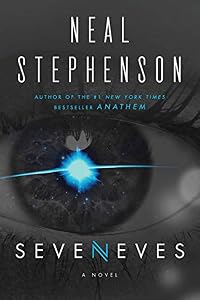
Seveneves
by Neal Stephenson
On This Page
Description
Five thousand years later after a catastrophic event rendered the Earth a ticking time bomb, the progeny of a handful of outer space explorers--seven distinct races now three billion strong--embark on yet another audacious journey: to return to Earth.Tags
Recommendations


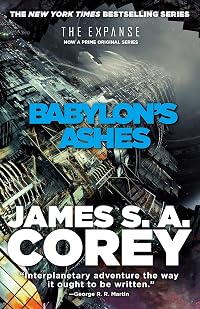
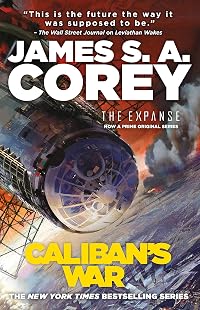
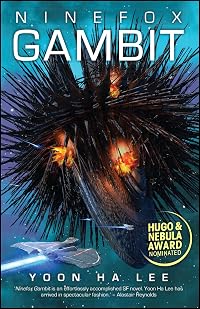
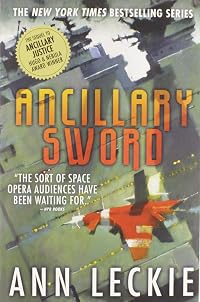
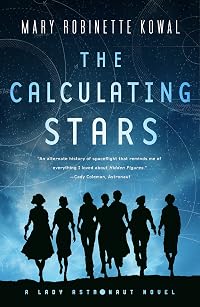

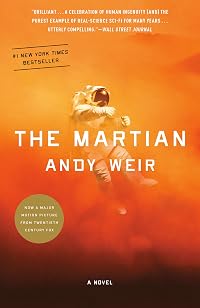
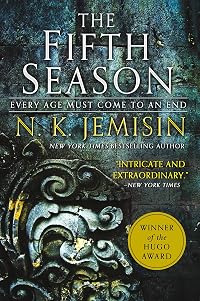
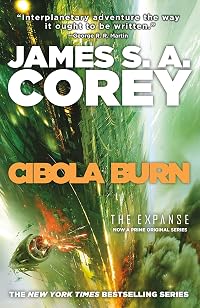
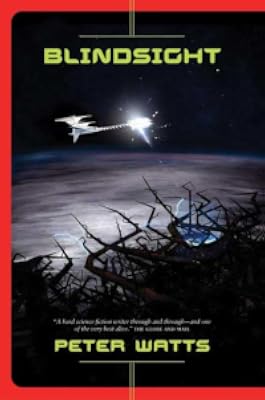
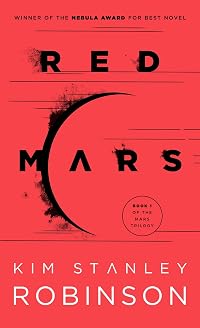
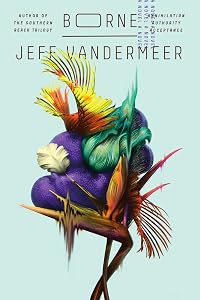
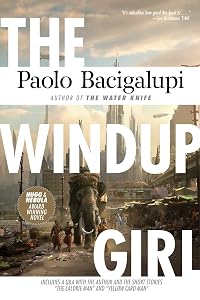
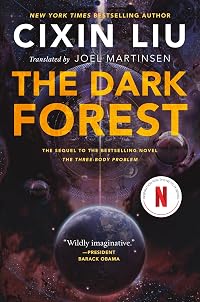
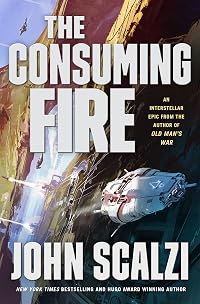
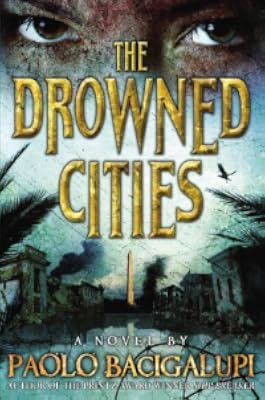
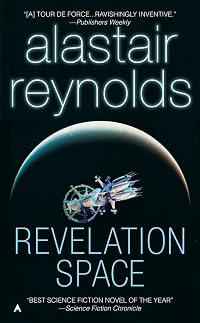

Member Recommendations
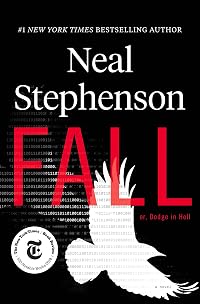
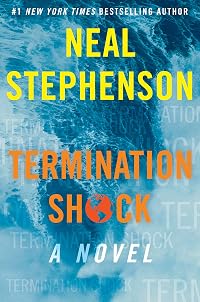
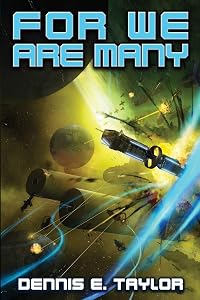
psybre Each book contains detailed methods and thinking that goes into solving space-colonization and space disaster issues. They also infuse the issues with politics.
50
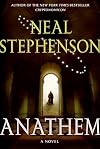
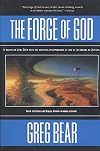
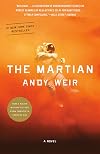
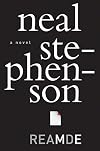
szarka Seveneves and Sterling's Shapers-Mechanists stories are both concerned with what happens to humanity over long spans of time.
11
JGolomb Earth looks to space to save humankind. Seveneves is much better.
12
Mind_Booster_Noori The engineering effort to put something beyond our atmosphere is something that made me think of one book while reading the other.

BeckyJG Both are narratives with a big, optimistic vision of the future of humanity.
03
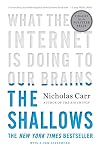
themulhern Both books are about social media and connectedness turning people into bad decision makers.
03
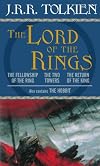
JGolomb While not fantasy, Stephenson's work does an amazing job of building Middle-Earth-like mythology.
013

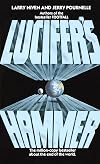
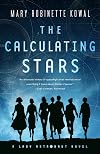
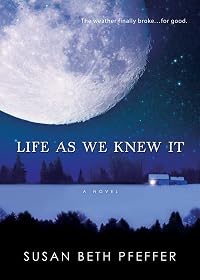
g33kgrrl When disaster hits and earth becomes uninhabitable, what happens next? Kowal's book is set in the 1950s, but should still satisfy the same itch that Seveneves does.
themulhern Thinly disguised contemporary figures appear in both books (with modifications, of course).
Member Reviews
This is a magnificent example of serious hard science fiction based around one simple idea - the world is to be destroyed and humanity has two years to prepare its response. I enjoyed it as welcome relief from what I call the Brin-Mieville syndrome - the idea that SF and future fantasy has to pile idea on idea like Pelion upon Ossa in order to stimulate the geek CNS without any coherent order underpinning it.
Not that this book is unflawed. Its first two sections are far superior to the third, based on Earth 2.0 five thousand years after the apocalypse. This too falls into fashionable Brinnery as a standard show case for extrapolations of technologies being currently invented or developed by no doubt breathlessly enthusiastic pals of the show more author.
On the other hand, Stephenson does not mention the Singularity once - oh praise! oh glory! - and puts artificial intelligence precisely in its place as servant of men and not man's master. The cultural concession, of course, is to the current hysteria about existential risk but we can forgive that because otherwise there would be no cause for the narrative at all.
Unfortunately, because of the 'spoiler issue' which we respect as a matter of honour to later readers, we cannot really spend a lot of time being very specific either about why this book is so good or why aspects of it are flawed.
If hints will do, we can say that the flaws are intellectual related to the actualities of global society and politics and arise out of the heavily US-centric vision of humanity and the fairly obvious commentaries within the text on current American cultural torments (which are becoming increasingly less interesting to non-American readers).
To Stephenson's credit, he pays tribute to the Russian contribution to the future survival of humanity but the Chinese are virtually non-existent yet would have as equal a weight as any other major spacefaring nation in such a crisis. Stephenson has not quite worked out that the US no longer quite matters as much as he assumes nor that the sort of political deal involved in the Casting of Lots would not last more than five minutes under really existing democratic political conditions.
The politics and sociology are thus much weaker than the technology and hard science in the book but (though I am not qualified to comment on the latter as true or false) the imaginative extrapolations of contemporary thinking in space exploration, aerodynamics, genetics and epigenetics, asteroid and comet 'mining' and geo-engineering and terraforming are impressive.
If the last third is a showy entertaining romp through the seven archetypes (the progeny of the 'seven eves'), the first two thirds represent a serious, well written, heroic (rare these days) and thoughtful story of human relationships under extreme existential threat.
Later, Stephenson refers to this story (under conditions five thousand years later) as the Epic. This is a clue to his method of creating a human story out of the archetypes who are nevertheless presented as real persons in real tension in a real situation (albeit that we know that it is unreal). His prejudice is in the direction of engineers and scientists and against bureaucrats and politicians (the President of the US, a triangulating monster of narcissism and paranoia, is deeply unpleasant yet critical to the narrative) but he recognises that humanity by its very nature has to include the genes of such people. Or is he just plain wrong on that assumption? It is a moot question.
In the symbolic archetypal universe he creates, four eves represent 'good' and three eves represent 'dodgy'. He, intentionally or not, creates a flawed pantheon like that of the Greeks but as not-gods who can represent human drives in an accentuated way. If Eros represented a certain inner impulse, Dinah represents a certain way of dealing with the world - all the archetypes and many of the characters who surround them are symbolic representations of ways to deal with the world, whether of matter (the tendency of the 'good') or other persons (the tendency of the 'dodgy').
Within the model, it is noticeable that the tension is not only between humanity and material reality but between a vision of the world as a material reality and one which is symbolically created. The novel is thus a paradox - a symbolic created world which tends to assert the primacy of a humanity that looks on the world materially first and symbolically second.
It is a reaction, in this respect, to the SF that goes inward into virtual worlds and contests with AI or which is interested in constructing alien environments that re-envision humanity. Stephenson is not really re-envisioning humanity at core but envisioning humanity under materially extreme conditions.
The 'good', in rough summary, is 'get it done' pragmatism, selfless disciplined heroism (made 'archetypically' into a Russian virtue but as easily a Republican military one), engineering nous and scientific knowledge. The necessary 'dodgy' aspects of humanity are passive-aggressive caring (wheedling or manipulation as a critic may see it), political machination and devious survival instincts capable of anything to survive - basically, sociopathy.
Many readers may wonder why no one takes responsibility for simply 'taking out' at least two of those 'eves' early on. The 'good' characters are remarkable for the insane trust they put in their rivals but now we are getting too close to spoilers. Let us just say that the propensity to naivete of our society of nerds is certainly true to life.
Many people have commented on the dominance of female voices in the book. My first reaction was to feel great pleasure that a male had started writing about women as a strong capable individuals who could cry without shame, without introducing fashionable feminist cant or matriarchalism as the guilty over-compensation for being tragically born a healthy white male.
However, these strong characters are still archetypes and not to be trusted. The shadow over all of them are male heroes (I can say this) who undertake the most physically dangerous and ultimately productive (for future survival) missions - after all, the 'real' leader is Markus (a European who seems to embody a balance of the good virtues spread amongst the four 'good' Eves and displaces one from a leadership role). Similarly, it is a male 'Doob' who has the scientific insight that creates the conditions for ultimate survival.
Throughout the book, a careful gender balance is maintained with equal sexual relations and a very free and healthy attitude to sex but the dominant values are culturally (historically) masculine - straight forward, pragmatic and disciplined. It is as if Stephenson wants humanity to weed out or contain the deviousness and manipulation that Nietzsche identified as the culture of the weak but then accepts that humanity is not humanity without it ... the resulting society is thus only partly the dream of all nerds: it is Arthur C. Clarke mated with Asimov but the rational is having tiresomely and constantly to deal with the irrational at enormous cost in lives and resources.
In this sense, the novel is a sign of our times - a frustrated educated middle class attempting to hang on to rational discourse in worlds where irrationality is inbuilt into the human condition and maximised by modern communications technology, both prior to the Apocalypse and after it.
It is noticeable that Stephenson makes social media out to be highly problematic in the management of the apocalypse on earth and then of the survival of the spacers before making it clear that, in the Earth 2.0 section, the spacers had achieved enormous engineering feats but had not recovered the technology to reproduce the world of Apple and Samsung. I suspect we are supposed to draw the conclusion that humanity does not need the chatter of the social internet to progress.
In some respects the book is not about space at all but about modern America. The 'simpatico' for Russo-Chinese heroism is perhaps the most unexpected element in the book but, looked at from a certain vantage point, Russians and Chinese can look peculiarly rational and disciplined compared to the America of the Tea Party, flag banning and political correctness. The President is horribly like one possible imagining from outside of a certain H. Clinton. The Russians (though oddly not the Chinese) have their cultural influence but are rather quickly disposed of once brute survival is no longer in question. In fact, one wonders if the Russians are not mere stand-ins for a more American remembrance of Apollo space heroes.
All in all, an excellent and stimulating novel that deserved to be a US bestseller, filled with ideas and stimulation about not only possible futures (which hard SF does well) but the present condition of America, even if that part of the story is becoming to seem somewhat parochial in the rest of the English-speaking world. It is good to see SF returning to the simple viable premise and (mostly) resisting the temptation to deliver idea after idea without narrative (a frequent word used by Stephenson as if critiquing his contemporaries) in order to create an 'epic' that reflects our own time.
The only warning to the general reader is that this is very hard SF in places. Stephenson is good at keeping the story moving to the extent that it is a page-turner even at its most dense but non-nerds will have several pages of seriously detailed technology to skip through to get to the narrative meat.
The best strategy is to skim read these sections and leave them to the nerds. Let them flow over you and pick up the meaning in the sub-conscious and just move on to the story. After a while the technicalities become no more important than the technicalities of how a fridge works but you can still understand what the technology basically does - as one understands that a fridge chills food and drink.
My own suspicion is that this will become a classic and that it contains sufficient cohesion and complexity to be the sort of book that could profitably be studied in schools and colleges to educate literary types about scientific thinking and nerds about narrative.
It might also return some confidence to the diminishing numbers of rational men and women in America and perhaps give them some back bone. At a certain point, it might have saved a lot of misery for humanity if a certain person had been pushed out of the air lock on arrival ... but nice liberal people do not do that sort of thing. This may be why their empires always turn to dust in the end and the book ends on an implicit threat to come - it does not come from space. show less
Not that this book is unflawed. Its first two sections are far superior to the third, based on Earth 2.0 five thousand years after the apocalypse. This too falls into fashionable Brinnery as a standard show case for extrapolations of technologies being currently invented or developed by no doubt breathlessly enthusiastic pals of the show more author.
On the other hand, Stephenson does not mention the Singularity once - oh praise! oh glory! - and puts artificial intelligence precisely in its place as servant of men and not man's master. The cultural concession, of course, is to the current hysteria about existential risk but we can forgive that because otherwise there would be no cause for the narrative at all.
Unfortunately, because of the 'spoiler issue' which we respect as a matter of honour to later readers, we cannot really spend a lot of time being very specific either about why this book is so good or why aspects of it are flawed.
If hints will do, we can say that the flaws are intellectual related to the actualities of global society and politics and arise out of the heavily US-centric vision of humanity and the fairly obvious commentaries within the text on current American cultural torments (which are becoming increasingly less interesting to non-American readers).
To Stephenson's credit, he pays tribute to the Russian contribution to the future survival of humanity but the Chinese are virtually non-existent yet would have as equal a weight as any other major spacefaring nation in such a crisis. Stephenson has not quite worked out that the US no longer quite matters as much as he assumes nor that the sort of political deal involved in the Casting of Lots would not last more than five minutes under really existing democratic political conditions.
The politics and sociology are thus much weaker than the technology and hard science in the book but (though I am not qualified to comment on the latter as true or false) the imaginative extrapolations of contemporary thinking in space exploration, aerodynamics, genetics and epigenetics, asteroid and comet 'mining' and geo-engineering and terraforming are impressive.
If the last third is a showy entertaining romp through the seven archetypes (the progeny of the 'seven eves'), the first two thirds represent a serious, well written, heroic (rare these days) and thoughtful story of human relationships under extreme existential threat.
Later, Stephenson refers to this story (under conditions five thousand years later) as the Epic. This is a clue to his method of creating a human story out of the archetypes who are nevertheless presented as real persons in real tension in a real situation (albeit that we know that it is unreal). His prejudice is in the direction of engineers and scientists and against bureaucrats and politicians (the President of the US, a triangulating monster of narcissism and paranoia, is deeply unpleasant yet critical to the narrative) but he recognises that humanity by its very nature has to include the genes of such people. Or is he just plain wrong on that assumption? It is a moot question.
In the symbolic archetypal universe he creates, four eves represent 'good' and three eves represent 'dodgy'. He, intentionally or not, creates a flawed pantheon like that of the Greeks but as not-gods who can represent human drives in an accentuated way. If Eros represented a certain inner impulse, Dinah represents a certain way of dealing with the world - all the archetypes and many of the characters who surround them are symbolic representations of ways to deal with the world, whether of matter (the tendency of the 'good') or other persons (the tendency of the 'dodgy').
Within the model, it is noticeable that the tension is not only between humanity and material reality but between a vision of the world as a material reality and one which is symbolically created. The novel is thus a paradox - a symbolic created world which tends to assert the primacy of a humanity that looks on the world materially first and symbolically second.
It is a reaction, in this respect, to the SF that goes inward into virtual worlds and contests with AI or which is interested in constructing alien environments that re-envision humanity. Stephenson is not really re-envisioning humanity at core but envisioning humanity under materially extreme conditions.
The 'good', in rough summary, is 'get it done' pragmatism, selfless disciplined heroism (made 'archetypically' into a Russian virtue but as easily a Republican military one), engineering nous and scientific knowledge. The necessary 'dodgy' aspects of humanity are passive-aggressive caring (wheedling or manipulation as a critic may see it), political machination and devious survival instincts capable of anything to survive - basically, sociopathy.
Many readers may wonder why no one takes responsibility for simply 'taking out' at least two of those 'eves' early on. The 'good' characters are remarkable for the insane trust they put in their rivals but now we are getting too close to spoilers. Let us just say that the propensity to naivete of our society of nerds is certainly true to life.
Many people have commented on the dominance of female voices in the book. My first reaction was to feel great pleasure that a male had started writing about women as a strong capable individuals who could cry without shame, without introducing fashionable feminist cant or matriarchalism as the guilty over-compensation for being tragically born a healthy white male.
However, these strong characters are still archetypes and not to be trusted. The shadow over all of them are male heroes (I can say this) who undertake the most physically dangerous and ultimately productive (for future survival) missions - after all, the 'real' leader is Markus (a European who seems to embody a balance of the good virtues spread amongst the four 'good' Eves and displaces one from a leadership role). Similarly, it is a male 'Doob' who has the scientific insight that creates the conditions for ultimate survival.
Throughout the book, a careful gender balance is maintained with equal sexual relations and a very free and healthy attitude to sex but the dominant values are culturally (historically) masculine - straight forward, pragmatic and disciplined. It is as if Stephenson wants humanity to weed out or contain the deviousness and manipulation that Nietzsche identified as the culture of the weak but then accepts that humanity is not humanity without it ... the resulting society is thus only partly the dream of all nerds: it is Arthur C. Clarke mated with Asimov but the rational is having tiresomely and constantly to deal with the irrational at enormous cost in lives and resources.
In this sense, the novel is a sign of our times - a frustrated educated middle class attempting to hang on to rational discourse in worlds where irrationality is inbuilt into the human condition and maximised by modern communications technology, both prior to the Apocalypse and after it.
It is noticeable that Stephenson makes social media out to be highly problematic in the management of the apocalypse on earth and then of the survival of the spacers before making it clear that, in the Earth 2.0 section, the spacers had achieved enormous engineering feats but had not recovered the technology to reproduce the world of Apple and Samsung. I suspect we are supposed to draw the conclusion that humanity does not need the chatter of the social internet to progress.
In some respects the book is not about space at all but about modern America. The 'simpatico' for Russo-Chinese heroism is perhaps the most unexpected element in the book but, looked at from a certain vantage point, Russians and Chinese can look peculiarly rational and disciplined compared to the America of the Tea Party, flag banning and political correctness. The President is horribly like one possible imagining from outside of a certain H. Clinton. The Russians (though oddly not the Chinese) have their cultural influence but are rather quickly disposed of once brute survival is no longer in question. In fact, one wonders if the Russians are not mere stand-ins for a more American remembrance of Apollo space heroes.
All in all, an excellent and stimulating novel that deserved to be a US bestseller, filled with ideas and stimulation about not only possible futures (which hard SF does well) but the present condition of America, even if that part of the story is becoming to seem somewhat parochial in the rest of the English-speaking world. It is good to see SF returning to the simple viable premise and (mostly) resisting the temptation to deliver idea after idea without narrative (a frequent word used by Stephenson as if critiquing his contemporaries) in order to create an 'epic' that reflects our own time.
The only warning to the general reader is that this is very hard SF in places. Stephenson is good at keeping the story moving to the extent that it is a page-turner even at its most dense but non-nerds will have several pages of seriously detailed technology to skip through to get to the narrative meat.
The best strategy is to skim read these sections and leave them to the nerds. Let them flow over you and pick up the meaning in the sub-conscious and just move on to the story. After a while the technicalities become no more important than the technicalities of how a fridge works but you can still understand what the technology basically does - as one understands that a fridge chills food and drink.
My own suspicion is that this will become a classic and that it contains sufficient cohesion and complexity to be the sort of book that could profitably be studied in schools and colleges to educate literary types about scientific thinking and nerds about narrative.
It might also return some confidence to the diminishing numbers of rational men and women in America and perhaps give them some back bone. At a certain point, it might have saved a lot of misery for humanity if a certain person had been pushed out of the air lock on arrival ... but nice liberal people do not do that sort of thing. This may be why their empires always turn to dust in the end and the book ends on an implicit threat to come - it does not come from space. show less
The latest Neal Stephenson novel is a technological tour de force with all the emotional engagement of a dead fish (I might be doing dead fish a disservice since even they register activity on an fMRI machine).
The end of the world is nigh, something has shattered the moon and all the pieces are going to drop to Earth in two years time and sterilize the surface. But not to worry we have lots of time to build stuff. Enter a cast of characters who will save a small select portion of the human race and do so in glorious two-dimensional color which is rather surprising given that they are based on real-life people - Neil Degrasse Tyson, Malala Ypusafzai, Hillary Clinton etc.
We are supposed to believe that building a international space show more station that will house a few thousand people will be enough to keep the billions of people on Earth from descending into anarchy and take their government issued euthanasia pill when the time comes like the good little background actors they are. Whatever - it's Technology people! And when the time comes our intrepid heroes are given 720 seconds to mourn it's passing because we have to build more stuff and allow space for massive info-dumps and not waste time on that messy emotion stuff.
The final third of the novel jumps 5,000 years into the future so we can have even more massive info-dumps and an entirely predictable and slow moving plot. The seven cardboard cutout women who are the only survivors on the space station (seven eves, get it ?) have become seven races because stereotypes are genetically transferable as any bad writer will tell you.
I can't help but compare this novel, unfavorably, to Ben H. Winters Hank Palace series. Go read those and don't waste time on this. show less
The end of the world is nigh, something has shattered the moon and all the pieces are going to drop to Earth in two years time and sterilize the surface. But not to worry we have lots of time to build stuff. Enter a cast of characters who will save a small select portion of the human race and do so in glorious two-dimensional color which is rather surprising given that they are based on real-life people - Neil Degrasse Tyson, Malala Ypusafzai, Hillary Clinton etc.
We are supposed to believe that building a international space show more station that will house a few thousand people will be enough to keep the billions of people on Earth from descending into anarchy and take their government issued euthanasia pill when the time comes like the good little background actors they are. Whatever - it's Technology people! And when the time comes our intrepid heroes are given 720 seconds to mourn it's passing because we have to build more stuff and allow space for massive info-dumps and not waste time on that messy emotion stuff.
The final third of the novel jumps 5,000 years into the future so we can have even more massive info-dumps and an entirely predictable and slow moving plot. The seven cardboard cutout women who are the only survivors on the space station (seven eves, get it ?) have become seven races because stereotypes are genetically transferable as any bad writer will tell you.
I can't help but compare this novel, unfavorably, to Ben H. Winters Hank Palace series. Go read those and don't waste time on this. show less
 This review was written for LibraryThing Early Reviewers.
Recently, I was lucky enough to get my hands on an Advance Reader's Edition of Neal Stephenson's upcoming novel, Seveneves.
There are certain people—artists, writers, performers, musicians—who are so breathtakingly good, such absolute masters of their craft, that I can only stand in awe of their work and think:
It's not fair. No one has the right to be this talented.
This is especially true every time I read a novel from Mr. Stephenson. Seveneves proves once again that he possesses an imagination of staggering inventiveness and scope. For him, an event that most of us would find unthinkable is where he starts the story.
Seveneves is somewhat unexpected. Unlike much of Mr. Stephenson's oeuvre, this book is classic hard science fiction. show more Set in the future, where large-scale engineering and physics play a central role in the action.
The novel is divided into three parts. Parts One and Two take place contiguously in the near future, with the same group of characters traversing a unified narrative arc. Part Three skips ahead 5,000 years and introduces new characters in a radically different milieu.
Parts One and Two rank among the very best of Mr. Stephenson's writing. He renders the world of these sections so vividly, in such fine-grained detail, that I honestly believe I can see the dust bunnies under the furniture, the scuff marks on the floors. The devil is in the details and it's all utterly believable and immersive.
As impressive as his imagination is, it's easy to overlook how good Mr. Stephenson is at creating characters. Every character feels complete and fully rendered from the moment they first appear, like Athena springing fully formed from the head of Zeus. The individuals who people these pages carry a sense of reality that's more than you typically expect from characters in a novel. They're real in a way that's rare and very self-assured.
The stories told in Parts One and Two are grounded in the characters. This isn't a just a tale of humanity and disaster, this is the story of individuals and how they cope—snapshots of moments and complications, conflicts and repercussions. I found these parts to be some of the most affecting work Mr. Stephenson has produced to date.
Simply put, Parts One and Two of Seveneves make up my new favorite Neal Stephenson novel.
Part Three is a disappointment. It's still staggeringly imaginative—indeed, set 5,000 years in the future, it's more unrestrainedly speculative than Parts One and Two—but it feels less immersive.
The world of Part Three is rendered in less detail. It's multifaceted and fascinating, but it's as if Mr. Stephenson imagined it at a lower resolution than the world of the first two parts. As if he hadn't spent quite enough time envisioning it at as completely as he could have. For all that it presents some amazing concepts, it's fundamentally less engaging.
That may be unavoidable—the world of Parts One and Two is based very much on the real world we live in today. The details are easy to see. The messy, complex reality of it is apparent.
A far-future world, by contrast, can only be imagined. It's probably inevitable that Part Three feels less realistic.
But the characters in Part Three are also less believable. They feel more like characters than real people, ideas that haven't quite fully taken flesh. Again, the ideas are wonderful but they're not alive in the same way that the characters in Parts One and Two are.
As a result, the exposition in Part Three becomes more burdensome. Because this section is more about concepts than about people, it necessarily means that there's more telling and less showing. This makes it more difficult to invest in the story.
Inexplicably, there are several descriptive sections in Part Three where Mr. Stephenson summarizes important events that took place in Part Two, recapping things I had read just a day or two before, as though he thinks that I won't remember them. These sections actively put me off.
Part Three comes across as incompletely developed. The narrative is inelegant, choppy and disengaged. The characters are less authentic.
It's frustrating—the ideas for the world and the characters in Part Three are so good, so intrinsically interesting, packed with so much potential, that they deserve to be as well developed as what we get in Parts One and Two. But they're not. Part Three reads as though Mr. Stephenson said, "Meh, good enough," and just left it at that.
It feels like Part Three belongs to a different book than Parts One and Two. It feels like the outline of a sequel, stuck on the end for lack of a better conclusion.
And that's what I wish had happened here:
Seveneves should have ended with Part Two. Mr. Stephenson should then have spent more time developing Part Three more thoroughly, expanding it, discerning a more elegant narrative for it, and breathing more life into the characters. Part Three should have become a full sequel novel.
Taken all together, even with a disappointing third act, Seveneves is still one of the very best books you're going to read this year. It's worth it just to experience Parts One and Two. show less
There are certain people—artists, writers, performers, musicians—who are so breathtakingly good, such absolute masters of their craft, that I can only stand in awe of their work and think:
It's not fair. No one has the right to be this talented.
This is especially true every time I read a novel from Mr. Stephenson. Seveneves proves once again that he possesses an imagination of staggering inventiveness and scope. For him, an event that most of us would find unthinkable is where he starts the story.
Seveneves is somewhat unexpected. Unlike much of Mr. Stephenson's oeuvre, this book is classic hard science fiction. show more Set in the future, where large-scale engineering and physics play a central role in the action.
The novel is divided into three parts. Parts One and Two take place contiguously in the near future, with the same group of characters traversing a unified narrative arc. Part Three skips ahead 5,000 years and introduces new characters in a radically different milieu.
Parts One and Two rank among the very best of Mr. Stephenson's writing. He renders the world of these sections so vividly, in such fine-grained detail, that I honestly believe I can see the dust bunnies under the furniture, the scuff marks on the floors. The devil is in the details and it's all utterly believable and immersive.
As impressive as his imagination is, it's easy to overlook how good Mr. Stephenson is at creating characters. Every character feels complete and fully rendered from the moment they first appear, like Athena springing fully formed from the head of Zeus. The individuals who people these pages carry a sense of reality that's more than you typically expect from characters in a novel. They're real in a way that's rare and very self-assured.
The stories told in Parts One and Two are grounded in the characters. This isn't a just a tale of humanity and disaster, this is the story of individuals and how they cope—snapshots of moments and complications, conflicts and repercussions. I found these parts to be some of the most affecting work Mr. Stephenson has produced to date.
Simply put, Parts One and Two of Seveneves make up my new favorite Neal Stephenson novel.
Part Three is a disappointment. It's still staggeringly imaginative—indeed, set 5,000 years in the future, it's more unrestrainedly speculative than Parts One and Two—but it feels less immersive.
The world of Part Three is rendered in less detail. It's multifaceted and fascinating, but it's as if Mr. Stephenson imagined it at a lower resolution than the world of the first two parts. As if he hadn't spent quite enough time envisioning it at as completely as he could have. For all that it presents some amazing concepts, it's fundamentally less engaging.
That may be unavoidable—the world of Parts One and Two is based very much on the real world we live in today. The details are easy to see. The messy, complex reality of it is apparent.
A far-future world, by contrast, can only be imagined. It's probably inevitable that Part Three feels less realistic.
But the characters in Part Three are also less believable. They feel more like characters than real people, ideas that haven't quite fully taken flesh. Again, the ideas are wonderful but they're not alive in the same way that the characters in Parts One and Two are.
As a result, the exposition in Part Three becomes more burdensome. Because this section is more about concepts than about people, it necessarily means that there's more telling and less showing. This makes it more difficult to invest in the story.
Inexplicably, there are several descriptive sections in Part Three where Mr. Stephenson summarizes important events that took place in Part Two, recapping things I had read just a day or two before, as though he thinks that I won't remember them. These sections actively put me off.
Part Three comes across as incompletely developed. The narrative is inelegant, choppy and disengaged. The characters are less authentic.
It's frustrating—the ideas for the world and the characters in Part Three are so good, so intrinsically interesting, packed with so much potential, that they deserve to be as well developed as what we get in Parts One and Two. But they're not. Part Three reads as though Mr. Stephenson said, "Meh, good enough," and just left it at that.
It feels like Part Three belongs to a different book than Parts One and Two. It feels like the outline of a sequel, stuck on the end for lack of a better conclusion.
And that's what I wish had happened here:
Seveneves should have ended with Part Two. Mr. Stephenson should then have spent more time developing Part Three more thoroughly, expanding it, discerning a more elegant narrative for it, and breathing more life into the characters. Part Three should have become a full sequel novel.
Taken all together, even with a disappointing third act, Seveneves is still one of the very best books you're going to read this year. It's worth it just to experience Parts One and Two. show less
Seveneves by Neal Stephenson is a thought provoking science fiction disaster scenario and space saga covering 5000 years that is very highly recommended. This complex, epic tale is the kind of end-of-the-known-world science fiction that many of us crave. As someone who has grown weary of reading various novels that are only part of a series, let me go on record right away saying that I appreciate and applaud the fact that Stephenson gave us the complete story all in one massive book containing three parts rather than spreading it out over three books.
Seveneves opens with "The moon blew up without warning and for no apparent reason. It was waxing, only one day short of full. The time was 05:03:12 UTC. Later it would be designated A show more 0.0.0, or simply Zero." The moon fragments into seven large pieces that Scientist Doc “Doob” Dubois gives the school-children friendly names of Potatohead, Mr. Spinny, Acorn, Peach Pit, Scoop, Big Boy, and Kidney Bean. There are already smaller fragments of the moon falling to earth as meteorites, but, as these larger pieces begin breaking up into smaller pieces, Doob has figured out that eventually this fragmentation will lead to an event he calls the White Sky. "The system of discrete planetoids that we can see up there now is going to grind itself up into a vast number of much smaller fragments. They are going to turn into a white cloud in the sky, and that cloud is going to spread out."
A day or two after the White Sky event, the Hard Rain is going to occur. The Hard Rain is actually a meteorite bombardment that will set the earth on fire and sterilized the surface. The only way for humanity to survive is to go underground, or go into space. Humanity has approximately twenty-five months to prepare. They propose using swarming behavior observed on earth to create an ark in space called the Cloud Ark. They need to send up genetic samples of everything on earth, including humans, as well as chosen representatives from each country in a habitat to connect to the International Space Station, or Izzy, the place where the Cloud Ark will form. Roboticist Dinah MacQuarie (and many robots) and commander Ivy Xiao, along with others are on Izzy and now must anticipate new arrivals before the Hard Rain destroys life on the surface of the earth.
The quality of the writing is above reproach. Stephenson does an admirable job incorporating lots and lots of hard science, ballistics, sociology, genetics, politics, robotics, and more into the novel and he makes all of the myriad of intricate details interesting. Along with the hard science there are also little snippets that provide a measure of comic relief at the beginning of the disaster, like the names of the seven fragments of the moon mentioned above or the website: astronomicalbodiesformerlyknownasthemoon.com or the roach motel for boys (which you will understand if you read it.) As I said, the novel is divided up into three books, with book three taking place 5000 years in the future. I really didn't have a clear clue what the title meant until over half way through the book, at which point it became clear just before the start of book three. At almost 900 pages, it takes a time commitment, but it is worth it.
Disclosure: My Kindle edition was courtesy of HarperCollins for review purposes. show less
Seveneves opens with "The moon blew up without warning and for no apparent reason. It was waxing, only one day short of full. The time was 05:03:12 UTC. Later it would be designated A show more 0.0.0, or simply Zero." The moon fragments into seven large pieces that Scientist Doc “Doob” Dubois gives the school-children friendly names of Potatohead, Mr. Spinny, Acorn, Peach Pit, Scoop, Big Boy, and Kidney Bean. There are already smaller fragments of the moon falling to earth as meteorites, but, as these larger pieces begin breaking up into smaller pieces, Doob has figured out that eventually this fragmentation will lead to an event he calls the White Sky. "The system of discrete planetoids that we can see up there now is going to grind itself up into a vast number of much smaller fragments. They are going to turn into a white cloud in the sky, and that cloud is going to spread out."
A day or two after the White Sky event, the Hard Rain is going to occur. The Hard Rain is actually a meteorite bombardment that will set the earth on fire and sterilized the surface. The only way for humanity to survive is to go underground, or go into space. Humanity has approximately twenty-five months to prepare. They propose using swarming behavior observed on earth to create an ark in space called the Cloud Ark. They need to send up genetic samples of everything on earth, including humans, as well as chosen representatives from each country in a habitat to connect to the International Space Station, or Izzy, the place where the Cloud Ark will form. Roboticist Dinah MacQuarie (and many robots) and commander Ivy Xiao, along with others are on Izzy and now must anticipate new arrivals before the Hard Rain destroys life on the surface of the earth.
The quality of the writing is above reproach. Stephenson does an admirable job incorporating lots and lots of hard science, ballistics, sociology, genetics, politics, robotics, and more into the novel and he makes all of the myriad of intricate details interesting. Along with the hard science there are also little snippets that provide a measure of comic relief at the beginning of the disaster, like the names of the seven fragments of the moon mentioned above or the website: astronomicalbodiesformerlyknownasthemoon.com or the roach motel for boys (which you will understand if you read it.) As I said, the novel is divided up into three books, with book three taking place 5000 years in the future. I really didn't have a clear clue what the title meant until over half way through the book, at which point it became clear just before the start of book three. At almost 900 pages, it takes a time commitment, but it is worth it.
Disclosure: My Kindle edition was courtesy of HarperCollins for review purposes. show less
Note: There are no spoilers in this review.
A short review of this 861-page book might go: Life isn’t always fair, and sometimes people are really awful, but scientific knowledge and technology are very cool, and supremely useful.
But one could also go into a bit more detail without spoiling the plot.
The book begins with this astounding paragraph:
"The moon blew up without warning and for no apparent reason. It was waxing, only one day short of full. The time was 05:03:12 UTC. Later it would be designated A+0.0.0., or simply Zero.”
What would happen under such circumstances? Stephenson explores the answer in the rest of this often brilliant book which includes a lot of discussion of earthbound physics, orbital mechanics, and robotics, show more inter alia, in writing sometimes dubbed “techsposition” - i.e., technological exposition. Most of the action, at least for the first two thirds of the book, is centered on the space station which was orbiting the Earth at the time of the Event.
It seems that even Stephenson may have been happier with the technological aspects of this saga than the characters he drew. He spends a lot more verbiage on the technological whiz-bang aspects of this story, which are truly amazing, and about which he wants you to understand everything. As for the characters, we get to know most of them more by sporadically-spotlighted actions and decisions than by their internal thought processes. They are more aptly described as one-and-a-half rather than two-dimensional. And while some are brave and smart and wonderful, there are others I dearly wanted him to kill off in some way or another. Alas, the author is more realistic than I about the inevitable mix of good and bad in the human race.
There is a division between the first two-thirds of the book and the last third. The first section seemed entirely plausible to me, but I’m not so sure I found the last third convincing. Nor did I find some of the “surprises” of the latter section unanticipated. Nevertheless, there’s a lot to think about, and a lot to discuss if you are lucky enough to find someone else willing to read this very long book with you!
Evaluation: This is a masterwork of science fiction imagination. You won’t find the detailed character development and interactions one would get with, say, Isaac Asimov, Frank Herbert, or Robert Heinlein, but you’ll get much more analysis of the scientific background for whatever takes place in the story. show less
A short review of this 861-page book might go: Life isn’t always fair, and sometimes people are really awful, but scientific knowledge and technology are very cool, and supremely useful.
But one could also go into a bit more detail without spoiling the plot.
The book begins with this astounding paragraph:
"The moon blew up without warning and for no apparent reason. It was waxing, only one day short of full. The time was 05:03:12 UTC. Later it would be designated A+0.0.0., or simply Zero.”
What would happen under such circumstances? Stephenson explores the answer in the rest of this often brilliant book which includes a lot of discussion of earthbound physics, orbital mechanics, and robotics, show more inter alia, in writing sometimes dubbed “techsposition” - i.e., technological exposition. Most of the action, at least for the first two thirds of the book, is centered on the space station which was orbiting the Earth at the time of the Event.
It seems that even Stephenson may have been happier with the technological aspects of this saga than the characters he drew. He spends a lot more verbiage on the technological whiz-bang aspects of this story, which are truly amazing, and about which he wants you to understand everything. As for the characters, we get to know most of them more by sporadically-spotlighted actions and decisions than by their internal thought processes. They are more aptly described as one-and-a-half rather than two-dimensional. And while some are brave and smart and wonderful, there are others I dearly wanted him to kill off in some way or another. Alas, the author is more realistic than I about the inevitable mix of good and bad in the human race.
There is a division between the first two-thirds of the book and the last third. The first section seemed entirely plausible to me, but I’m not so sure I found the last third convincing. Nor did I find some of the “surprises” of the latter section unanticipated. Nevertheless, there’s a lot to think about, and a lot to discuss if you are lucky enough to find someone else willing to read this very long book with you!
Evaluation: This is a masterwork of science fiction imagination. You won’t find the detailed character development and interactions one would get with, say, Isaac Asimov, Frank Herbert, or Robert Heinlein, but you’ll get much more analysis of the scientific background for whatever takes place in the story. show less
What do you think would happen if the moon blew up? How would people react? What would governments do? Could scientists around the globe work together to save humankind?
Neal Stephenson provides answers to these questions and many more in his science fiction opus,Seveneves. It’s like a manual for surviving global disaster with the best opening sentence since A Tale of Two Cities’ “It was the best of times; it was the worst of times”.
"The moon blew up without warning and for no apparent reason."
Dr. Dubois Harris, known to millions as “Dr. Doob”, presents the President of the United States with the facts of the approaching doomsday. As a result of the moon exploding into seven large chunks caused by an unknown “Agent”, show more space rocks will continue to collide and break up, eventually causing “Hard Rain”, an unrelenting global meteor storm the likes of which has not been seen on Earth since its formation after the Big Bang. Doob and his post-doc students estimate that humankind has about two years to evacuate the planet before it becomes a huge fireball. Scientists of other nations have come to similar conclusions.
Two imperatives emerge: to send people and materials into space as soon as possible and to inform the rest of the population of the impending apocalypse without causing worldwide panic. International space agencies aided by private companies tackle the first item on the agenda by building upon the existing framework of the International Space Station, ISS, nicknamed Izzy. A Cloud Ark is envisioned with discrete ships linked to Izzy via docking ports but able to detach to evade destruction via space rocks and debris. That’s the good news. The obvious bad news is that there is not enough time to build enough ships to provide refuge for seven billion people. The second item on the agenda. A Casting of Lots is announced by leaders around the world in which a male and a female from each country will be chosen to represent their nation on the Cloud Ark. In addition, digitized DNA samples of every race and organism will be carried aboard Izzy to be incarnated when circumstances and place allow. You don’t have to be a mathematician to realize the inherent unfairness of two people from each country (China, population 1+ billion, sending the same number of heritage carriers as, say, Mauritius, population 1+ million) nor a scientist to come to the conclusion that only personnel with the best scientific knowledge and technological skills should become members of the Cloud Ark community. “Doob” and others manage to sell the deception with false hopes and ceremonies. For those whose panic cannot be sublimated into fervour for the preservation of the human race, suicide pills will be distributed gratis to be taken ad libitum.
Part Two chronicles the day-to-day ups and downs of life in the Cloud Ark whose population is just under 1,300 souls. Thousands of years must pass before Earth will once more be capable of supporting life. This is where Stephenson really weighs in with the “science” of “science fiction. In a style similar to described video, he walks the reader through all the major -ologies, -ics and -onomies as they relate to living and working in space, including orbital mechanics, the physics of moving chains (think bullwhip), nanorobotics, chemistry and astrophysical fluid dynamics. Ways must be improvised to renew the Cloud Ark’s supplies of water, oxygen, fuel and food. A parade of experts, many female, work to solve the puzzle piece by piece. Pilot extraordinaire, Ivy Xiao commands Izzy. Dinah McQuarrie, her unofficial second in command, specializes in asteroid mining for which she has designed an army of wifi robots. Dr. Moira Crewe is a geneticist with experience in de-extinction. Everyone on Izzy and in the surrounding “arklets” will contribute their expertise to preserve humanity.
Part Three begins with a heading you don’t often see in fiction, “Five Thousand Years Later”. Seven races engineered from the DNA of seven women (the Seven Eves of the title) from Part Two now number three billion, living within the Habitat Ring suspended above “New Earth”. The next step is to colonize the planet. But surveys have spotted bipedal creatures. Who could they be?
Neal Stephenson has done his homework, and then some. Years of scholarly research have yielded a highly credible pre- and post-apocalyptic scenario that is hard to resist. 861 pages of “hard” science fiction, Seveneves might not be an easy read but it is a completely fascinating one. There is so much information to digest that it deserves a second reading. And maybe a third. show less
Neal Stephenson provides answers to these questions and many more in his science fiction opus,Seveneves. It’s like a manual for surviving global disaster with the best opening sentence since A Tale of Two Cities’ “It was the best of times; it was the worst of times”.
"The moon blew up without warning and for no apparent reason."
Dr. Dubois Harris, known to millions as “Dr. Doob”, presents the President of the United States with the facts of the approaching doomsday. As a result of the moon exploding into seven large chunks caused by an unknown “Agent”, show more space rocks will continue to collide and break up, eventually causing “Hard Rain”, an unrelenting global meteor storm the likes of which has not been seen on Earth since its formation after the Big Bang. Doob and his post-doc students estimate that humankind has about two years to evacuate the planet before it becomes a huge fireball. Scientists of other nations have come to similar conclusions.
Two imperatives emerge: to send people and materials into space as soon as possible and to inform the rest of the population of the impending apocalypse without causing worldwide panic. International space agencies aided by private companies tackle the first item on the agenda by building upon the existing framework of the International Space Station, ISS, nicknamed Izzy. A Cloud Ark is envisioned with discrete ships linked to Izzy via docking ports but able to detach to evade destruction via space rocks and debris. That’s the good news. The obvious bad news is that there is not enough time to build enough ships to provide refuge for seven billion people. The second item on the agenda. A Casting of Lots is announced by leaders around the world in which a male and a female from each country will be chosen to represent their nation on the Cloud Ark. In addition, digitized DNA samples of every race and organism will be carried aboard Izzy to be incarnated when circumstances and place allow. You don’t have to be a mathematician to realize the inherent unfairness of two people from each country (China, population 1+ billion, sending the same number of heritage carriers as, say, Mauritius, population 1+ million) nor a scientist to come to the conclusion that only personnel with the best scientific knowledge and technological skills should become members of the Cloud Ark community. “Doob” and others manage to sell the deception with false hopes and ceremonies. For those whose panic cannot be sublimated into fervour for the preservation of the human race, suicide pills will be distributed gratis to be taken ad libitum.
Part Two chronicles the day-to-day ups and downs of life in the Cloud Ark whose population is just under 1,300 souls. Thousands of years must pass before Earth will once more be capable of supporting life. This is where Stephenson really weighs in with the “science” of “science fiction. In a style similar to described video, he walks the reader through all the major -ologies, -ics and -onomies as they relate to living and working in space, including orbital mechanics, the physics of moving chains (think bullwhip), nanorobotics, chemistry and astrophysical fluid dynamics. Ways must be improvised to renew the Cloud Ark’s supplies of water, oxygen, fuel and food. A parade of experts, many female, work to solve the puzzle piece by piece. Pilot extraordinaire, Ivy Xiao commands Izzy. Dinah McQuarrie, her unofficial second in command, specializes in asteroid mining for which she has designed an army of wifi robots. Dr. Moira Crewe is a geneticist with experience in de-extinction. Everyone on Izzy and in the surrounding “arklets” will contribute their expertise to preserve humanity.
Part Three begins with a heading you don’t often see in fiction, “Five Thousand Years Later”. Seven races engineered from the DNA of seven women (the Seven Eves of the title) from Part Two now number three billion, living within the Habitat Ring suspended above “New Earth”. The next step is to colonize the planet. But surveys have spotted bipedal creatures. Who could they be?
Neal Stephenson has done his homework, and then some. Years of scholarly research have yielded a highly credible pre- and post-apocalyptic scenario that is hard to resist. 861 pages of “hard” science fiction, Seveneves might not be an easy read but it is a completely fascinating one. There is so much information to digest that it deserves a second reading. And maybe a third. show less
If you're looking for some real, in-depth, technical science fiction with lots of scientific detail about everything from orbital physics to heterozygosity, look no further. Neal Stephenson's latest will be right up your alley. And if you're in the mood for a thorough-going exploration of what might happen if a planet-wide catastrophe were about to engulf Earth, this may also be the book for you. It's long, there are a few trudgy points, a couple of the caricatured characters were a little cloying, and at least one plot twist had me rolling my eyes ... but it's a truly absorbing read. The three sections of the book (immediately preceding the disaster, during and slightly after, and then five thousand years in the future) work well, with show more at least some of what happens in the third well foreshadowed earlier.
Not perfect, and certainly unnerving in what it has to say about humanity as a species, but boy did it keep me reading. show less
Not perfect, and certainly unnerving in what it has to say about humanity as a species, but boy did it keep me reading. show less
Members
- Recently Added By
Published Reviews
ThingScore 88
"Seveneves" is as hard as "hard science fiction" gets: cool bits of science and speculation about the future of technology, space and culture, with a plot and dialogue bolted on to make it more enjoyable to follow. That said, Stephenson's speculation is fascinating. He's got a lot to say about the physics of whips, glider transportation, military robotics, and everything else that can be show more crammed into his premise. show less
added by bookfitz
"None of this makes Seveneves the kind of hard SF in which you see a writer dutifully populating his universe with characters who have feelings even though you can tell he just wants to write about giant space gadgets. Stephenson’s people are vivid and terrified: they bicker and cry and perform heroic deeds."
added by bookfitz
"No slim fables or nerdy novellas for Stephenson (Anathem, 2008, etc.): his visions are epic, and he requires whole worlds—and, in this case, solar systems—to accommodate them."
added by bookfitz
Lists

2016 Hugo Eligible Novels
90 works; 32 members

Top Five Books of 2015
811 works; 241 members

Top Five Books of 2020
982 works; 350 members

Schisms in transhumanity - SF
34 works; 1 member

Prometheus Award Winners
16 works; 1 member

Unshelved Book Clubs
579 works; 5 members

Finished in 2025
23 works; 1 member

Obama Reads
181 works; 3 members
DG hard and slightly less hard science fiction
12 works; 1 member

TBR - Older Books
92 works; 1 member

Barack Obama's Favorite Books of 2016
5 works; 1 member

Best Audiobooks
240 works; 114 members

Recommended Science-Fiction Books
40 works; 3 members

Otherland Book Club
36 works; 2 members

Female Protagonist
1,056 works; 57 members

Books Read in 2018
4,360 works; 110 members

To Read
617 works; 7 members

Books recommended by Barack Obama
295 works; 28 members

Recommend the 20 best books you've read in the last five years
2,168 works; 606 members

ALA The Reading List
490 works; 28 members
Books Read in 2015
3,299 works; 129 members

Book Worlds We'd Like To Visit
322 works; 158 members
Author Information

80+ Works 118,743 Members
Neal Stephenson, the science fiction author, was born on October 31, 1959 in Maryland. He graduated from Boston University in 1981 with a B.A. in Geography with a minor in physics. His first novel, The Big U, was published in 1984. It received little attention and stayed out of print until Stephenson allowed it to be reprinted in 2001. His second show more novel was Zodiac: The Eco-Thriller was published in 1988, but it was his novel Snow Crash (1992) that brought him popularity. It fused memetics, computer viruses, and other high-tech themes with Sumerian mythology. Neal Stephenson has won several awards: Hugo for Best Novel for The Diamond Age (1996), the Arthur C. Clarke for Best Novel for Quicksilver (2004), and the Prometheus Award for Best Novel for The System of the World (2005). He recently completed the The Baroque Cycle Trilogy, a series of historical novels. It consists of eight books and was originally published in three volumes and Reamde. His latest novel is entitled The Rise and Fall of D. O. D. O. Stephenson also writes under the pseudonym Stephen Bury. (Bowker Author Biography) show less
All Editions
Some Editions
Awards and Honors
Awards
Distinctions
Series
Belongs to Publisher Series
Чумацький шлях (2018)
Work Relationships
Contains
Has as a reference guide/companion
Common Knowledge
- Canonical title
- Seveneves
- Original title
- Seveneves
- Alternate titles*
- 7夏娃
- Original publication date
- 2015-05-19
- People/Characters
- Dinah MacQuarie; Ivy Xiao; Dubois Jerome Xavier Harris; Julia Bliss Flaherty; Tekla Alekseyevna Ilyushina; Markus Leuker (show all 29); Kath Amalthova Two; Moira Crewe; Sean Probst; Camilla; Dr. Hu Noah; Luisa Soter; Beled Tomov; Aïda Ferrari; Rufus MacQuarie; Tyuratam Lake; Rhys Aitken; Tavistock Prowse; Markus Leuker; Steve Lake; Ariane Casablancova; Tyuratam Lake; Langobard; Einstein; Donno; Sonar Taxlaw; Arjun Esa; Roskos Yur; Cantabrigia Barth Five
- Important places
- International Space Station; Amalthea; Ymir; the Cradle; Cleft
- Important events
- the break up of the Moon; the Hard Rain; the Big Ride
- Dedication
- To Jaime, Maria, Marco, and Jeff
- First words
- The moon blew up without warning and for no apparent reason. The time was 05:03:12 UTC. Later it would be designated A+0.0.0, or simply Zero.
- Quotations
- But Henry wasn't a parent, and he didn't understand that when you were, almost nothing was more satisfying than seeing your kid sleep.
She then called a meeting of the entire human race: Dinah, Ivy, Moira, Tekla, Julia, Aïda, Camila, and Luisa.
Smiling, Aïda thrust her hand out, thumb down.
“I pronounce a curse,” she said. Luisa let out an exasperated sigh. “This is not a curse that I create. It is not a curse on your children. No. I have never been as bad... (show all) as you all think that I am. This is a curse that you have created, by doing this thing that you are about to do. And it is a curse upon my children. Because I know. I see how it is to be. I am the evil one. The cannibal. The one who would not go along. My children, no matter what decision I make, will forever be different from your children. Because make no mistake. What you have decided to do is to create new races. Seven new races. They will be separate and distinct forever, as much as you, Moira, are from Ivy. They will never merge into a single human race again, because that is not the way of humanity. Thousands of years from now, the descendants of you six will look at my descendants and say, ‘Ah, look, there is a child of Aïda, the cannibal, the evil one, the cursed one.’ They will cross the street to avoid my children; they will spit on the ground. This is the thing that you have done by making this decision. I will shape my child—my children, for I shall have many—to bear up under this curse. To survive it. And to prevail.” Aïda swept her gaze around the room, staring with her deep black eyes into the face of each of the other women in turn, then looked into the window and locked eyes with Dinah.
“I pronounce it,” she said, then slowly rotated her hand until her thumb was pointed up. - Last words
- (Click to show. Warning: May contain spoilers.)"Just go easy on the cold baths, man. The plumbing in that place has seen better days, and I'm the only one who knows how to fix it."
- Blurbers
- Gibson, William
- Original language
- English
- Canonical DDC/MDS
- 813.54
- Canonical LCC
- PS3569.T3868
*Some information comes from Common Knowledge in other languages. Click "Edit" for more information.
Classifications
Statistics
- Members
- 5,822
- Popularity
- 2,238
- Reviews
- 294
- Rating
- (3.83)
- Languages
- 11 — Czech, English, German, Hungarian, Korean, Polish, Romanian, Russian, Spanish, Ukrainian, Chinese, simplified
- Media
- Paper, Audiobook, Ebook
- ISBNs
- 34
- UPCs
- 1
- ASINs
- 15
