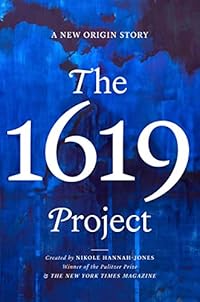
The 1619 Project: A New Origin Story
by Nikole Hannah-Jones, Caitlin Roper (Editor), Ilena Silverman (Editor), Jake Silverstein (Editor)
On This Page
Description
"The animating idea of The 1619 Project is that our national narrative is more accurately told if we begin not on July 4, 1776, but in late August of 1619, when a ship arrived in Jamestown bearing a cargo of twenty to thirty enslaved people from Africa. Their arrival inaugurated a barbaric and unprecedented system of chattel slavery that would last for the next 250 years. This is sometimes referred to as the country's original sin, but it is more than that: It is the country's very origin. show more The 1619 Project tells this new origin story, placing the consequences of slavery and the contributions of Black Americans at the center of the story we tell ourselves about who we are as a country. Orchestrated by the editors of The New York Times Magazine, led by MacArthur "genius" and Pulitzer Prize-winning journalist Nikole Hannah-Jones, this collection of essays and historical vignettes includes some of the most outstanding journalists, thinkers, and scholars of American history and culture--including Linda Villarosa, Jamelle Bouie, Jeneen Interlandi, Matthew Desmond, Wesley Morris, and Bryan Stevenson. Together, their work shows how the tendrils of 1619--of slavery and resistance to slavery--reach into every part of our contemporary culture, from voting, housing and healthcare, to the way we sing and dance, the way we tell stories, and the way we worship. Interstitial works of flash fiction and poetry bring the history to life through the imaginative interpretations of some of our greatest writers. The 1619 Project ultimately sends a very strong message: We must have a clear vision of this history if we are to understand our present dilemmas. Only by reckoning with this difficult history and trying as hard as we can to understand its powerful influence on our present, can we prepare ourselves for a more just future"-- show lessTags
Recommendations


Member Reviews
A book-length expansion of the New York Times Magazineissue that explores the history of slavery in America and its countless toxic consequences.
Famously denied tenure at the University of North Carolina for her critical journalism, Hannah-Jones sounds controversial notes at the start: There are no slaves but instead enslaved people, a term that “accurately conveys the condition without stripping the individual of his or her humanity,” while the romantic plantationgives way to the more accurate terms labor campand forced labor camp. The 1619 Project was intended to introduce Black people into the mainstream narrative of American history as active agents. It may have been White people who enslaved them, but apart from the legal and show more constitutional paperwork, it was Black people who resisted and liberated themselves and others, from their very first arrival at Jamestown, Virginia, in 1619 to the very present. Hannah-Jones and colleagues consider a nation still wrestling with the outcomes of slavery, an incomplete Reconstruction, and a subsequent history of Jim Crow laws and current legal efforts to disenfranchise Black voters. As she notes, the accompanying backlash has been vigorous, including attempted laws by the likes of Sen. Tom Cotton to strip federal funds from schools that teach the 1619 Project or critical race theory. Among numerous other topics, the narrative examines: the thought that the American independence movement was fueled at least in part by the insistence on maintaining slavery as the Crown moved to abolition; the use of slavery to tamp down resistance among poor Whites whose functions were essentially the same as the enslaved but who, unlike Black people, were not considered property; the ongoing appropriation of Black music, which has “midwifed the only true integration this country has known,” as Wesley Morris writes, by a machine that perpetuates minstrelsy. Those readers open to fresh and startling interpretations of history will find this book a comprehensive education.
A much-needed book that stakes a solid place in a battlefield of ideas over America’s past and present. show less
Famously denied tenure at the University of North Carolina for her critical journalism, Hannah-Jones sounds controversial notes at the start: There are no slaves but instead enslaved people, a term that “accurately conveys the condition without stripping the individual of his or her humanity,” while the romantic plantationgives way to the more accurate terms labor campand forced labor camp. The 1619 Project was intended to introduce Black people into the mainstream narrative of American history as active agents. It may have been White people who enslaved them, but apart from the legal and show more constitutional paperwork, it was Black people who resisted and liberated themselves and others, from their very first arrival at Jamestown, Virginia, in 1619 to the very present. Hannah-Jones and colleagues consider a nation still wrestling with the outcomes of slavery, an incomplete Reconstruction, and a subsequent history of Jim Crow laws and current legal efforts to disenfranchise Black voters. As she notes, the accompanying backlash has been vigorous, including attempted laws by the likes of Sen. Tom Cotton to strip federal funds from schools that teach the 1619 Project or critical race theory. Among numerous other topics, the narrative examines: the thought that the American independence movement was fueled at least in part by the insistence on maintaining slavery as the Crown moved to abolition; the use of slavery to tamp down resistance among poor Whites whose functions were essentially the same as the enslaved but who, unlike Black people, were not considered property; the ongoing appropriation of Black music, which has “midwifed the only true integration this country has known,” as Wesley Morris writes, by a machine that perpetuates minstrelsy. Those readers open to fresh and startling interpretations of history will find this book a comprehensive education.
A much-needed book that stakes a solid place in a battlefield of ideas over America’s past and present. show less
“Origin stories, function, to a degree, as myths designed to create a shared sense of history and purpose. Nations simplify these narratives in order to unify and glorify, and these origin stories serve to illuminate how a society wants to see itself- and how it doesn’t. The origin story of the United States that we tell ourselves through textbooks and films, monuments and museums, public speeches and public histories, the one that most defines our national identity portrays an intrepid, freedom-loving people who rebelled against an oppressive monarchy, won their independence, tamed the West, advanced an exceptional nation based on the radical ideals of self-governance and equality, and heroically fought a civil war to end slavery show more and preserve the nation. This mythology has positioned almost exclusively white Americans as the architects and champions of democracy. And because of this, some have believed that white people should disproportionately reap the benefits of this democracy.” P452
This is an anthology of history, challenges, and experiences that black people have lived here in the United States. Each section ends with a bit of poetry.
The history is very disturbing. When I was in school in the 60’s and 70’s these incidents were not discussed. I remember a sentence or two about lynching and the rise of the KKK – and that’s it.
It’s a combination of impossible to put down and very hard to read. I could only read a chapter a day – and then I would have to let it soak it and steel myself to go on to the next
This book has changed forever the way I see American history and blackness in America.
For me, it was a paradigm shift not only for how I see American black history, but realizing that other minorities have not had their stories told either.
I don’t know what to say beyond that. Read it. show less
This is an anthology of history, challenges, and experiences that black people have lived here in the United States. Each section ends with a bit of poetry.
The history is very disturbing. When I was in school in the 60’s and 70’s these incidents were not discussed. I remember a sentence or two about lynching and the rise of the KKK – and that’s it.
It’s a combination of impossible to put down and very hard to read. I could only read a chapter a day – and then I would have to let it soak it and steel myself to go on to the next
This book has changed forever the way I see American history and blackness in America.
For me, it was a paradigm shift not only for how I see American black history, but realizing that other minorities have not had their stories told either.
I don’t know what to say beyond that. Read it. show less
A comprehensive history of race relations in America starting with the arrival of the first enslaved African. This collection of history and art recontextualized our current reality providing essential context for so many entrenched societal inequities.
Reading this book was like having words put to a ubiquitous truth that has shaped one's whole life and yet has gone unacknowledged. I've known much of this in part but to see it laid out in order so clearly was so extremely helpful.
Although frustrating and overwhelming at times, this essential book provides an avenue for reckoning with a nation's public secrets that much of polite white society would prefer to continue ignoring. However only through understanding our shared history are show more we able to unlock empathy and conceive a way forward. show less
Reading this book was like having words put to a ubiquitous truth that has shaped one's whole life and yet has gone unacknowledged. I've known much of this in part but to see it laid out in order so clearly was so extremely helpful.
Although frustrating and overwhelming at times, this essential book provides an avenue for reckoning with a nation's public secrets that much of polite white society would prefer to continue ignoring. However only through understanding our shared history are show more we able to unlock empathy and conceive a way forward. show less
No book or project could ever be comprehensive when it comes to exploring and capturing the history and legacy that began in 1619, when enslaved Africans set foot on the shores of North America, a year prior to the arrival of the Mayflower. The book is an enlargement of Hannah-Jones's foundational *The 1619 Project*, published in the *New York Times Magazine*. However, as a reclamation of American History, this book is a chronicle, a celebration of poetry, art, and writing, and a call for understanding and moving forward. "A truly great country does not ignore or excuse its sins, it confronts them and then works to make them right," Hannah-Jones says in closing.
The contributors to the book are many and varied, with some of the most show more profoundly powerful and influential voices of our time: Claudia Rankine, Khalil Gibran Muhammad, Michelle Alexander, Ibram X. Kendi, Henry Louis Gates, Terry McMillan, and so many more.
In the audiobook, some readers are more compelling than others, but the words are potent, well-researched, and a true call for understanding how conventional narratives of American history have been whitewashed. Turning points, such as Abraham Lincoln's assassination, are reframed so that we understand that when Andrew Johnson took over the presidency for a brief two-month period, he tried to rescind wartime Order No. 15 (known as "Forty Acres and a Mule") and that these original reparations never truly materialized in a way that provided widespread and sustained land ownership to Black Americans. The connection of this (and preceding events) to the current wealth gap between Black and white Americans is made clear.
Ibram X. Kendi's truth-telling is particularly powerful, especially as it targets and demolishes narratives of "post-racial" America. The criticisms may be hard to hear for some, but the cycle of attempts to declare any and all "wins" as progress has largely clouded the narrative in its failure to recognize the persistence of neglect and abuse toward Black Americans, and the systemic infrastructure that perpetuates it.
It is not an easy book to read/listen to -- nor should it be. There is deep and painful beauty expressed in the poems. Few facets of modern life are left un-addressed, whether it is healthcare or mass-incarceration. The book can be (and has been) excerpted to great effect, but sitting with it from start to finish has its own benefits. As a white American, it was invaluable to be reminded of the things I have learned, to be invited to de-center white historical narratives, and to critically consider how much we truly owe to the legacy of Black Americans and how we have failed (and continue to fail) to honor it and fight for it. There has been a lot of backlash and vitriol aimed at the project. I recommend engaging with the book instead of allowing the controversies to subsume the content. show less
The contributors to the book are many and varied, with some of the most show more profoundly powerful and influential voices of our time: Claudia Rankine, Khalil Gibran Muhammad, Michelle Alexander, Ibram X. Kendi, Henry Louis Gates, Terry McMillan, and so many more.
In the audiobook, some readers are more compelling than others, but the words are potent, well-researched, and a true call for understanding how conventional narratives of American history have been whitewashed. Turning points, such as Abraham Lincoln's assassination, are reframed so that we understand that when Andrew Johnson took over the presidency for a brief two-month period, he tried to rescind wartime Order No. 15 (known as "Forty Acres and a Mule") and that these original reparations never truly materialized in a way that provided widespread and sustained land ownership to Black Americans. The connection of this (and preceding events) to the current wealth gap between Black and white Americans is made clear.
Ibram X. Kendi's truth-telling is particularly powerful, especially as it targets and demolishes narratives of "post-racial" America. The criticisms may be hard to hear for some, but the cycle of attempts to declare any and all "wins" as progress has largely clouded the narrative in its failure to recognize the persistence of neglect and abuse toward Black Americans, and the systemic infrastructure that perpetuates it.
It is not an easy book to read/listen to -- nor should it be. There is deep and painful beauty expressed in the poems. Few facets of modern life are left un-addressed, whether it is healthcare or mass-incarceration. The book can be (and has been) excerpted to great effect, but sitting with it from start to finish has its own benefits. As a white American, it was invaluable to be reminded of the things I have learned, to be invited to de-center white historical narratives, and to critically consider how much we truly owe to the legacy of Black Americans and how we have failed (and continue to fail) to honor it and fight for it. There has been a lot of backlash and vitriol aimed at the project. I recommend engaging with the book instead of allowing the controversies to subsume the content. show less
I finished The 1619 Project and am stunned, for lack of a better word. Nikole Hannah-Jones and her colleagues wove together the stories of Black people past and present through essays, timeline entries, poetry and photographs, showing how racism is part of the fabric that makes America. The language is deliberately provocative; they call plantations forced-labor camps and, indeed, that's what they were. They tie slavery and its accompanying racist narratives to the wealth and health gaps between Whites and Blacks in our country, and they make a good case. I know they came under some criticism but I don't think anyone could quibble with that fundamental truths. They do not apologize for approaching history from a lens of the enslaved and show more former enslaved. In the end, they call for reparations and make a solid case there as well.
I'm not going to lie: this was not an easy book to read. It's all here from massacres to bombings in more recent memory to the torture, murder and institutionalized rape during the centuries of slavery. I read slowly, partially to absorb it all and partially because it was often overwhelming. show less
I'm not going to lie: this was not an easy book to read. It's all here from massacres to bombings in more recent memory to the torture, murder and institutionalized rape during the centuries of slavery. I read slowly, partially to absorb it all and partially because it was often overwhelming. show less
Growing up in the 1970s my Mom put Roots on the family bookshelf right with her collection of James Michener books like The Covenant and Herman Wouk's The Winds of War. My mom decided it was essential to display Alex Haley's book in our home and have it accessible to the entire family.
Now that I've finished my slow read of The 1619 Project, I'll place it downstairs in the family room next to my collection of books that I think are precious and should be accessible to the entire family, including The Great War by Studs Terkel and my collection of 19th-century hardcover classics.
You should read this book and own a copy. Every time I picked up and read a chapter, I learned something I did not know about our Country and the history of Black show more Americans (and therefore all Americans). I don't understand this sudden shying away from our past, or banning books, or not talking about diversity, equity, and inclusion. Let's talk about it. Let's learn. Let's grow. Let's look back so we can learn and understand to move forward.
A sidenote: I loved the inclusion of poetry between the chapters. What a gift to have the chance to find new poets and have them take part along with all of the experts who wrote each chapter. This blend of words, art, and history... so good! show less
Now that I've finished my slow read of The 1619 Project, I'll place it downstairs in the family room next to my collection of books that I think are precious and should be accessible to the entire family, including The Great War by Studs Terkel and my collection of 19th-century hardcover classics.
You should read this book and own a copy. Every time I picked up and read a chapter, I learned something I did not know about our Country and the history of Black show more Americans (and therefore all Americans). I don't understand this sudden shying away from our past, or banning books, or not talking about diversity, equity, and inclusion. Let's talk about it. Let's learn. Let's grow. Let's look back so we can learn and understand to move forward.
A sidenote: I loved the inclusion of poetry between the chapters. What a gift to have the chance to find new poets and have them take part along with all of the experts who wrote each chapter. This blend of words, art, and history... so good! show less
Outstanding and wide-ranging look at some of the darkest aspects of American history and how they continue to affect the present. For those who have complained that the essays in this book draw questionable conclusions from the research -- please take a look at the historiography of the United States of American. Having grown up 'educated' from Lost Cause textbooks designed to create a certain image of the past that omits the voices of many who live here, I didn't start learning until I could deconstruct much of what had been indoctrinated. What's also helpful about the 1619 Project are the receipts provided by the authors, anticipating that many will question some of the conclusions drawn. The missed opportunities to build a country show more that extended the phrase, 'all (people) are created equal,' to everyone -- abandoned at the end of Reconstruction, the role of backlash in undoing progress, and systems designed to create separation and to support stereotypes of who belongs and who doesn't - all provide reasons to question what we thought we knew and to understand some of our misconceptions were by design.
Outstanding and important project. Those that want to eliminate it from the public discourse have, no doubt, an agenda that is far from honorable. show less
Outstanding and important project. Those that want to eliminate it from the public discourse have, no doubt, an agenda that is far from honorable. show less
Members
- Recently Added By
Lists

Top Five Books of 2022
736 works; 272 members

Black Authors
381 works; 32 members

Youth: BLM
265 works; 1 member

Club Read's Recommended Nonfiction Written by Women
618 works; 30 members

Books That Changed Our Perspective
423 works; 168 members

BLM
210 works; 1 member
Author Information

7+ Works 3,284 Members
All Editions
Some Editions
Awards and Honors
Awards
Distinctions
Notable Lists
Work Relationships
Is an expanded version of
Common Knowledge
- Original publication date
- 2021
- Related movies
- The 1619 Project (2023 | IMDb)
- Dedication
- To the more than thirty million descendants of American slavery
- First words
- I was maybe fifteen or sixteen when I first came across the date 1619. (Preface)
- Quotations
- I am the American hearbreak--
The rock on which Freedom
Stumped its toe--
The great mistake
That Jamestown made
Long ago.
-----------Langston Hughes,
"American Heartbreak: 1619" - Last words
- (Click to show. Warning: May contain spoilers.)But in that class, students now study the work of a girl from Waterloo who took that course all those years ago and would remain forever changed by the date 1619. (Preface)
- Original language
- English
- Canonical DDC/MDS
- 973
- Canonical LCC
- E441
Classifications
Statistics
- Members
- 2,390
- Popularity
- 8,151
- Reviews
- 36
- Rating
- (4.52)
- Languages
- English
- Media
- Paper, Audiobook, Ebook
- ISBNs
- 14
- ASINs
- 6
