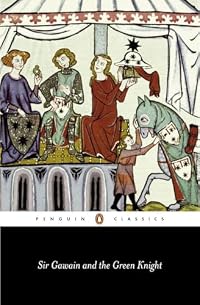
Sir Gawain and the Green Knight
by Gawain Poet
On This Page
Description
This prose rendering of a poem from the late fourteenth century (or earlier) recounts an adventure undertaken by King Arthur's famous nephew, Sir Gawain. Brave and chivalrous, faithful to his word and ever-mindful of his honor, as well as others', Gawain represents the model of knightly grace. When a gigantic stranger clad in green armor bursts in on the Round Table assembly to issue a challenge, the gallant Gawain volunteers to do battle for his king. This parable blends paganistic elements show more and Christian ethics to celebrate the virtue of forgiveness, and it is frequently assigned to classes in literature and history because of its short length and its excellent representation of chivalric tradition. Unabridged republication of Sir Gawain and the Green Knight: A Middle-English Arthurian Romance Retold in Modern Prose, originally published by Charles Scribner's Sons, New York, 1909. show lessTags
Recommendations

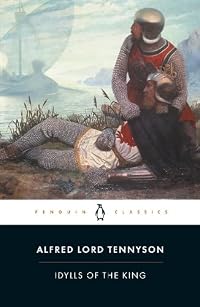


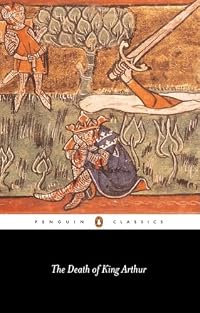
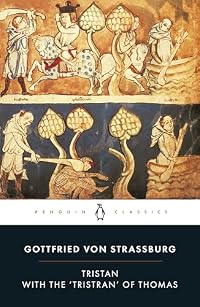
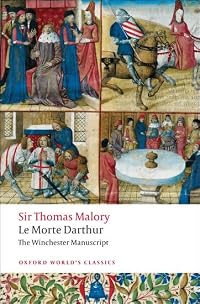





Member Recommendations

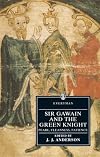
OwenGriffiths If you like Old/Middle English texts translated by great poets...
Also recommended by chrisharpe
171
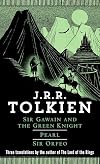
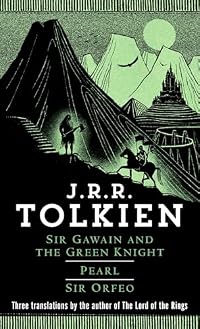
Muscogulus Tolkien's fluent translations of "Sir Gawain" and "Pearl" are an excellent introduction to the genius of the anonymous Pearl-Poet. "Sir Orfeo" with its strange images of Faerie makes a good addition to the volume.
50

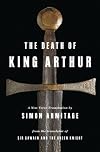
EerierIdyllMeme Two works in older forms of English which play with forms from even older forms of English.
Member Reviews
This is the book to get your poetry-resistant friend this #Booksgiving 2017. I read it on a dare. I don't like poetry very much, it's so snooty and at the same time so pit-sniffingly self-absorbed that I'd far rather stab my hands with a fork repeatedly than be condescended to in rhyming couplets.
This tale is fabulous in every sense of the word, which is no surprise since it's survived for so many centuries. But poet and translator Simon Armitage has made the old world new again. He sucked me right in and never let me come up for air with his gorgeous words and his carefully chosen words and his alliterative rhythmical phrases.
If the idea of a Norton Critical Edition is keeping you far away from this delightful read, rest assured it's show more not stodgy or dry or just plain boring. It's vibrant, alive, shimmering with an inner power, waiting for you to open its covers and fall utterly under its spell. Become happily ensorcelled, gentle reader, relax into the sure and strong embrace of a centuries-old knight and his spectacular tale. show less
This tale is fabulous in every sense of the word, which is no surprise since it's survived for so many centuries. But poet and translator Simon Armitage has made the old world new again. He sucked me right in and never let me come up for air with his gorgeous words and his carefully chosen words and his alliterative rhythmical phrases.
If the idea of a Norton Critical Edition is keeping you far away from this delightful read, rest assured it's show more not stodgy or dry or just plain boring. It's vibrant, alive, shimmering with an inner power, waiting for you to open its covers and fall utterly under its spell. Become happily ensorcelled, gentle reader, relax into the sure and strong embrace of a centuries-old knight and his spectacular tale. show less
During "Christmastide" at King Arthur's court, a "giant" green-skinned man with red eyes in emerald armor, astride a green horse, arrives to challenge any member of the court to strike him a blow with his "Danish" axe if he may return the gesture. Just as King Arthur is about to accept the challenge, Sir Gawain humbly offers himself in his liege's stead. Gawain successfully cuts off the Green Knight's head but is astonished to see him still alive. In a year's time, before the New Year, Gawain must seek out the Green Knight at the Green Chapel to accept the returning blow.
I read this one in high school, and while it is a short 115 pages, and brimming with chivalrous affectations, it is still a delightful read. The introduction to the show more Penguin edition provides an outline of events and explains the contrasts throughout, esp. the warm "life" of Arthur's court vs Gawain's journey through a cold, mysterious land towards "death."
Even though it was written in the late 14th c., you can spot several pagan influences. The Green Man - in this case a knight - appearing since the 12th c., was a symbol of rebirth and he holds a sprig of holly, further implying rebirth and that he "proceeds in peace." On the face of Gawain's shield is a pentacle - an endless knot of protection. The Green Knight's arrival at "Yuletide" is also no coincidence, as it is traditionally a time of "cleverness" or rather, when the supernatural veil between the living and the dead is thinnest.
It follows the traditional lay tropes of the hero's journey, three tests and an equal exchange. However, it flips the script on the "magical object" motif. It upends the readers expectations, especially if they're used to sly deeds of Greek mythology. It's a story that surprisingly stands the test of time and I recommend it! show less
I read this one in high school, and while it is a short 115 pages, and brimming with chivalrous affectations, it is still a delightful read. The introduction to the show more Penguin edition provides an outline of events and explains the contrasts throughout, esp. the warm "life" of Arthur's court vs Gawain's journey through a cold, mysterious land towards "death."
Even though it was written in the late 14th c., you can spot several pagan influences. The Green Man - in this case a knight - appearing since the 12th c., was a symbol of rebirth and he holds a sprig of holly, further implying rebirth and that he "proceeds in peace." On the face of Gawain's shield is a pentacle - an endless knot of protection. The Green Knight's arrival at "Yuletide" is also no coincidence, as it is traditionally a time of "cleverness" or rather, when the supernatural veil between the living and the dead is thinnest.
It follows the traditional lay tropes of the hero's journey, three tests and an equal exchange. However, it flips the script on the "magical object" motif. It upends the readers expectations, especially if they're used to sly deeds of Greek mythology. It's a story that surprisingly stands the test of time and I recommend it! show less
Well, now. That was interesting.
It's kind of hard not to have healthy respect for a 700 year old poem written about a knight of King Arthur's court that survives in only one Middle English manuscript, a story about a literal green giant of a man who picks up his own head after it's been chopped off by an axe and challenges the untried virgin knight to have the same done to him in a year's time, all done as some sort of chivalric "game."
Hoo boy.
Armitage's translation was beautifully clear and easy to follow through all 2,530 lines. I learned a thing or two about a traditional form of old verse where there is no end line rhyme but instead contains plentiful inner line alliteration and that rather grows on a person. I liked it. At the end show more of each stanza there is something called a "bob and wheel." You gotta love that phrase, bob and wheel.
I read this as part of a February-long group read on LibraryThing and had a hoot with fellow readers, including one who kindly shared photos of the Folio edition illustrations, risking life and limb to merely lift that hefty tome from a top shelf.
When done, I tried to watch a film version, one from 1973. Er, I wouldn't recommend it unless you are a fan of that 70s camp and/or are a partaker of "the herb." Matter of fact, I wonder a little about the original audience of the original poem--just how much ale did they drink while listening to it?
Four stars merely because I don't have the audacity to rate such a rare historic work a 3. show less
It's kind of hard not to have healthy respect for a 700 year old poem written about a knight of King Arthur's court that survives in only one Middle English manuscript, a story about a literal green giant of a man who picks up his own head after it's been chopped off by an axe and challenges the untried virgin knight to have the same done to him in a year's time, all done as some sort of chivalric "game."
Hoo boy.
Armitage's translation was beautifully clear and easy to follow through all 2,530 lines. I learned a thing or two about a traditional form of old verse where there is no end line rhyme but instead contains plentiful inner line alliteration and that rather grows on a person. I liked it. At the end show more of each stanza there is something called a "bob and wheel." You gotta love that phrase, bob and wheel.
I read this as part of a February-long group read on LibraryThing and had a hoot with fellow readers, including one who kindly shared photos of the Folio edition illustrations, risking life and limb to merely lift that hefty tome from a top shelf.
When done, I tried to watch a film version, one from 1973. Er, I wouldn't recommend it unless you are a fan of that 70s camp and/or are a partaker of "the herb." Matter of fact, I wonder a little about the original audience of the original poem--just how much ale did they drink while listening to it?
Four stars merely because I don't have the audacity to rate such a rare historic work a 3. show less
I've always liked the story of Sir Gawain and the Green Knight, but I never enjoyed reading it before. I first encountered this tale in a survey course of British Literature early in my college career (first semester--Beowulf to Sheridan; second semester--Blake to the Present Day...I still have the texts), in which we were exhorted to remember that the knight's name was pronounced GOWan. With apologies to the late Mr. Graham (who I believe preferred the 18th century to the 14th), I'm all in favor of Armitage's approach---let the rhythm and the alliterative requirements of the text dictate which consonant or syllable gets the stress. This version is so read-out-loudable that I feel it banishes any objection that might be raised to show more liberties Armitage took with literalness. (I'm not much of a purist that way when it comes to translating poetry anyway. I mean...it needs to remain poetic, above all.) I later had some exposure to the medieval language of the poem in a more advanced course; I may even have been expected to claw some of it into modern English myself, an effort best lost to time. This edition places the ancient version side-by-side with the new translation. It's interesting to compare, and to try to remember the sounds of the good old Anglo-Saxon, a clankier language by far. I counted four different spellings of our valiant knight's name in that text--Gawan, Gawayne, Gawen and Gauan. Surely that isn't just sloppiness or inconsistency, but suggestive of varying pronunciation in the original? In any case, if you're inclined to visit this classic tale, I commend you to Armitage's translation. It's just plain fun. show less
During holiday festivities in King Arthur's court, a mysterious green knight appears with a challenge: any knight of Arthur's court may strike the green knight a blow, and the green knight will return the strike in a year's time. The only knight brave enough to face the challenge is young Gawain, who indeed strikes the green knight, chopping off his head. Unperturbed, the green knight picks up his head and tells Gawain to find him in a year's time in order to receive the return blow.
Sir Gawain and the Green Knight, written by an unknown fourteenth-century poet, is my favorite of the classic Arthurian tales (so far). The story is vivid and full of gorgeous contrasts, love and death and trust and renewal. The story unfolds with good show more pacing and entertaining adventures with true courtly manners, all without being redundant or dull (as some unnamed fourteenth-century Arthurian romances can be).
Armitage's translation from the Middle English focuses on the alliterative and poetic structure of the original, rather than being a literal translation. The Middle English version appears on the left hand page with the Modern version on the right, so the reader can compare and see the differences. For the most part his version is surprisingly readable with beautiful phrases and imagery, though in some cases it strays into being a bit too modern (at one point Arthur is described as "keeping his cool"), which can be jarring. My second reading was just as enjoyable as the first, and I would love to add it to my library.
However, since Arimitage's is only the only translation I've read, I'm very curious about trying a more literal translation. Apparently, even J.R.R. Tolkien did a translation, and I'd love to read that.
For audio book lovers, I highly recommend the audio version of Armitage's translation, which is read by Bill Wallis. He does an amazing job highlighting the alliterative aspects of the text, while making it easy to follow. Once the Modern English translation is finished, Wallis then does an amazing reading of the original Middle English version of the book. It's amazing to hear and I found myself understanding more than I thought I would. Fantastic. show less
Sir Gawain and the Green Knight, written by an unknown fourteenth-century poet, is my favorite of the classic Arthurian tales (so far). The story is vivid and full of gorgeous contrasts, love and death and trust and renewal. The story unfolds with good show more pacing and entertaining adventures with true courtly manners, all without being redundant or dull (as some unnamed fourteenth-century Arthurian romances can be).
Armitage's translation from the Middle English focuses on the alliterative and poetic structure of the original, rather than being a literal translation. The Middle English version appears on the left hand page with the Modern version on the right, so the reader can compare and see the differences. For the most part his version is surprisingly readable with beautiful phrases and imagery, though in some cases it strays into being a bit too modern (at one point Arthur is described as "keeping his cool"), which can be jarring. My second reading was just as enjoyable as the first, and I would love to add it to my library.
However, since Arimitage's is only the only translation I've read, I'm very curious about trying a more literal translation. Apparently, even J.R.R. Tolkien did a translation, and I'd love to read that.
For audio book lovers, I highly recommend the audio version of Armitage's translation, which is read by Bill Wallis. He does an amazing job highlighting the alliterative aspects of the text, while making it easy to follow. Once the Modern English translation is finished, Wallis then does an amazing reading of the original Middle English version of the book. It's amazing to hear and I found myself understanding more than I thought I would. Fantastic. show less
I adore this. I have to admit to cheating slightly, in that it was in translation and not in the original middle English, but I think that's allowed.
Poetry of this vintage is very different to that we're used to - there's nothing even resembling the usual iambic pentameter, and the end of the lines don't even begin to rhyme. Instead the rhythm comes from the alliteration of the stressed sylables within a line. It seems to lend itself to being read aloud - maybe an indication of the transition from an aural to a written tradition.
The poem itself is a tale of king Arthur's court, with a challenge being issued by a stranger at the Christmas court, and the bulk of story being played out at the following year's end. It has everything - show more chivalrous knights, the splendour of court, lovely ladies, but it also has dark overtones - there's sex, blood and gore of the hunt (both beast and man). There's also the threat of nature to the ordered life of the court and to an individual against it. It's not very long, no more than 115 pages, but it has so much packed into it that it goes by in a flash. show less
Poetry of this vintage is very different to that we're used to - there's nothing even resembling the usual iambic pentameter, and the end of the lines don't even begin to rhyme. Instead the rhythm comes from the alliteration of the stressed sylables within a line. It seems to lend itself to being read aloud - maybe an indication of the transition from an aural to a written tradition.
The poem itself is a tale of king Arthur's court, with a challenge being issued by a stranger at the Christmas court, and the bulk of story being played out at the following year's end. It has everything - show more chivalrous knights, the splendour of court, lovely ladies, but it also has dark overtones - there's sex, blood and gore of the hunt (both beast and man). There's also the threat of nature to the ordered life of the court and to an individual against it. It's not very long, no more than 115 pages, but it has so much packed into it that it goes by in a flash. show less
This is an exciting, dramatic and fast moving poem that can be appreciated for it's brilliant alliterative poetry and for its satisfying and intriguing narrative. It has all the elements of an Arthurian romance. Its opens with the young King Arthur holding court with the knights of the round table who are celebrating the new year. Arthur is described by Armitage:
"He brimmed with ebullience, being almost boyish
in his love of life, and what he liked the least
was to sit still while watching the seasons slip by"
They are all deep in revelry when Arthur calls for a story, but they are rudely interrupted by the appearance of the giant Green Knight. He throws down a challenge to Arthur, which is accepted on his behalf by Sir Gawain. The Green show more Knight stands to take a mortal blow from Gawain with the proviso that he will do the same same to him in one years time. Gawain is faced by a seemingly impossible quest and sets off towards the end of the year to confront his nemesis. He travels through wild and distant lands and is on the point of exhaustion when after a fervent prayer he comes upon a grand castle. He is welcomed inside by the Lord and almost at once finds himself involved in yet another game/test. The Lord goes out hunting leaving Gawain to rest, however it soon becomes apparent that Gawain will be sorely tested by the Lords wife who is bent on learning from him the art of love. Gawains stature as a chivalric Knight is tested to breaking point by the beautiful lady who spends three days seducing him while her husband is away hunting. Gawain must still face his final confrontation with the magically invincible Green Knight. He survives but the quest has found him wanting: he has proven to be less than heroic when faced with death. he has suffered a loss of faith and he has been deceitful, all which have undermined the code of chivalry, but curiously have made Gawain seem more human
Although a medieval tale this is not allegorical nor is it a dream vision; it is a straight romance with some excellent story telling There is both high drama and comedy in many of the incidents. The entrance of the Green Knight and his challenge to the round table knights that results in the famous beheading sequence. The tales of the hunt; the rounding up of the deer, the battle with the wild boar and the fox chase are all vividly brought to life. High Comedy when Gawain finds himself naked in bed pretending to be asleep but aware that the Lord's wife has crept into his chamber to talk of love. He must resist her advances and maintain his dignity without breaking his chivalric code
Key themes explored in the tale are Christianity versus paganism, salvation versus temptation, courtly love versus nature and loyalty versus faith. The poem spells out its message to its 14th century readers when the Green Knight says "to put pride on trial"
Armitage's translation is a modern one dated 2007 and there are a few modern idioms eg; "the mother of all axes." Its strengths are the narrative flow which carries you effortlessly through the story. Armitage is excellent with his descriptions of the changing seasons and the countryside - there is real poetry here. He also brings out the humour in the all too human situations that occur in the tale. He is inventive in following the alliterative line and this works pretty well. This translation is well worth reading. show less
"He brimmed with ebullience, being almost boyish
in his love of life, and what he liked the least
was to sit still while watching the seasons slip by"
They are all deep in revelry when Arthur calls for a story, but they are rudely interrupted by the appearance of the giant Green Knight. He throws down a challenge to Arthur, which is accepted on his behalf by Sir Gawain. The Green show more Knight stands to take a mortal blow from Gawain with the proviso that he will do the same same to him in one years time. Gawain is faced by a seemingly impossible quest and sets off towards the end of the year to confront his nemesis. He travels through wild and distant lands and is on the point of exhaustion when after a fervent prayer he comes upon a grand castle. He is welcomed inside by the Lord and almost at once finds himself involved in yet another game/test. The Lord goes out hunting leaving Gawain to rest, however it soon becomes apparent that Gawain will be sorely tested by the Lords wife who is bent on learning from him the art of love. Gawains stature as a chivalric Knight is tested to breaking point by the beautiful lady who spends three days seducing him while her husband is away hunting. Gawain must still face his final confrontation with the magically invincible Green Knight. He survives but the quest has found him wanting: he has proven to be less than heroic when faced with death. he has suffered a loss of faith and he has been deceitful, all which have undermined the code of chivalry, but curiously have made Gawain seem more human
Although a medieval tale this is not allegorical nor is it a dream vision; it is a straight romance with some excellent story telling There is both high drama and comedy in many of the incidents. The entrance of the Green Knight and his challenge to the round table knights that results in the famous beheading sequence. The tales of the hunt; the rounding up of the deer, the battle with the wild boar and the fox chase are all vividly brought to life. High Comedy when Gawain finds himself naked in bed pretending to be asleep but aware that the Lord's wife has crept into his chamber to talk of love. He must resist her advances and maintain his dignity without breaking his chivalric code
Key themes explored in the tale are Christianity versus paganism, salvation versus temptation, courtly love versus nature and loyalty versus faith. The poem spells out its message to its 14th century readers when the Green Knight says "to put pride on trial"
Armitage's translation is a modern one dated 2007 and there are a few modern idioms eg; "the mother of all axes." Its strengths are the narrative flow which carries you effortlessly through the story. Armitage is excellent with his descriptions of the changing seasons and the countryside - there is real poetry here. He also brings out the humour in the all too human situations that occur in the tale. He is inventive in following the alliterative line and this works pretty well. This translation is well worth reading. show less
Members
- Recently Added By
Lists

Best Arthurian Fiction
104 works; 33 members

Classics you know you should have read but probably haven't
421 works; 407 members

100 Books to Read in a Lifetime (That Are Older Than 200 Years)
415 works; 175 members

Forests and Mythology
8 works; 7 members

Mythical Monsters of the World
199 works; 79 members

Best of British Literature
226 works; 41 members

Favourite Medieval Books
49 works; 17 members

Winter Books
127 works; 17 members
Narrative verse for pleasure
75 works; 8 members

Recommend the 20 best books you've read in the last five years
2,168 works; 602 members

Books with Colourful Titles
171 works; 8 members

Books with Noble Titles
179 works; 11 members

Books Read in 2023
5,547 works; 144 members

College Reads (Lit Edition)
75 works; 5 members

Greatest Books, allegedly
484 works; 9 members

storage
51 works; 1 member

Out of Copyright
244 works; 14 members

Well-Educated Mind
150 works; 3 members

Before Austen Comes Aesop
318 works; 9 members

Books Read in 2022
5,164 works; 111 members

Books Read in 2006
418 works; 7 members

Recommended Literary Books
111 works; 1 member

Books You Read For University
184 works; 3 members

Classical Conversations Challenge II Exposition
18 works; 1 member

Books Read in 2021
5,361 works; 114 members

SomethingAwful TBB BOTM
66 works; 2 members

Book club books
22 works; 1 member

The Well-Educated Mind, Susan Wise Bauer, 2016
179 works; 3 members

Recommended Reading : 600 Classics Reviewed, Editors of Salem Press, 2015
634 works; 6 members

Books Read in 2024
4,623 works; 126 members

Favorite Books in Translation
320 works; 133 members

Books Read in 2025
4,090 works; 97 members
Books talked about in Pamela Dean's Tam Lin
74 works; 1 member

el
1,139 works; 1 member

bound
100 works; 1 member
The Five Books That Represent Us
390 works; 147 members

Books Read in 2020
4,379 works; 123 members

100 Most Recommended Works
100 works; 11 members

United Kingdom
82 works; 5 members

Edad Media
33 works; 1 member

Unread books
1,063 works; 83 members

Folio Society
831 works; 53 members

Books Read in 2012
815 works; 34 members
Christmas Books
370 works; 40 members
Most Popular Penguins
70 works; 4 members

Books You Read During High School (For School)
301 works; 53 members
Literature Before the 17th Century
20 works; 5 members

Sonlight Books
1,487 works; 25 members

Carole's List
445 works; 13 members

Ambleside Books
459 works; 18 members
Literature of Honor for Boys
91 works; 3 members

University literature
145 works; 5 members

GreatBooks Worldview Academy Lists
133 works; 4 members
CCE 1000 Good Books List
1,033 works; 12 members
Poetry Corner
187 works; 15 members

A Rainbow of Books: Colors in the Title
570 works; 24 members

Literary Works Read in College
316 works; 15 members

BBC Radio 4 Bookclub
340 works; 13 members

Five star books
1,755 works; 107 members

Blue Pyramid 1,276 Best Books of All Time
1,248 works; 32 members

Western World's Greatest Books - Project Gutenberg
295 works; 15 members

Books read in 2015
213 works; 5 members
Historical Fiction
889 works; 90 members

Fiction with Men's Given Names in the Title
302 works; 10 members

Lectuurlijst
63 works; 1 member

Best of World Literature
431 works; 51 members
Talk Discussions
Past Discussions
Folio Archives 386: Sir Gawain and the Green Knight 2008 in Folio Society Devotees (September 2024)
Gawain and the Green Knight, from Taller Martin Pescador in Fine Press Forum (August 2022)
Author Information

15+ Works 15,229 Members
Some Editions
Awards and Honors
Distinctions
Series
Belongs to Publisher Series
Biblioteca Medieval (16)
Edition Perceval (13)
Prisma Klassieken (27)
Penguin Classics (L092)
Reclams Universal-Bibliothek (9667)
Work Relationships
Is contained in
Piers Plowman; with Sir Gawain and the Green Knight, Pearl and Sir Orfeo (anon.) by William Langland (indirect)
Has the adaptation
Has as a reference guide/companion
Has as a student's study guide
Common Knowledge
- Canonical title
- Sir Gawain and the Green Knight
- Original title
- Sir Gawayn and þe Grene Knyȝt
- Alternate titles*
- Gauwain und der Grüne Ritter
- Original publication date
- c. 1380; 1912; 1925 (Tolkien & Gordon) (Tolkien & Gordon); 2007 (Simon Armitage) (Simon Armitage)
- People/Characters
- Sir Gawain; King Arthur; Guinevere; Green Knight; Bertilak de Hautdesert (Bernlak de Hautdesert); Lady Bertilak (show all 21); Morgan le Fay; Agravayn; Bishop Bawdwyn; Ywain; Aywan; Errik; Sir Doddinaual de Sauage; Duke of Clarence; Launcelot; Lyonel; Lucan the Good; Sir Bors; Sir Bedivere; Madoc de la Port; Gringolet (Gawain's horse)
- Important places
- Camelot; Logres; Wales, UK; Anglesey, Wales, UK; Holyhead Hill; Wirral, Merseyside, England, UK (show all 7); Green Chapel
- Important events
- New Year; Christmas; Yule; Beheading game; Middle Ages
- Related movies
- Gawain and the Green Knight (1973 | IMDb); Sword of the Valiant: The Legend of Sir Gawain and the Green Knight (1984 | IMDb); Gawain and the Green Knight (1991 | IMDb); The Green Knight (2021 | IMDb)
- Dedication
- To
My Lady of Dreams
My Wife
(Ernest Kirtlan edition) - First words
- Siþen þe sege and þe assaut watz sesed at Troye,
Þe borȝ brittened and brent to brondeȝ and askez,
Þe tulk þat þe trammes of tresoun þer wroȝt
Watz tried for his tricherie, þe trewest on erþe:
Once the siege and assault of Troy had ceased,
with the city a smoke-heap of cinders and ash,
the turncoat whose tongue had tricked his own men
was tried for his treason - the truest crime on earth.
(transl... (show all)ated by Simon Armitage, 2007)
When the war and the siege of Troy were all over
and the city flattened to smoking rubble,
the man who'd betrayed it was brought to trial,
most certainly guilty of terrible crimes.
(translated by Bernard O'... (show all)Donoghue, 2006)
After the battle and the attack were over at Troy,
The town beaten down to smoking brands and ashes,
That man enmeshed in the nets of treachery—the truest
Of men—was tried for treason; I mean
(trans... (show all)lated by Keith Harrison, 1983)
Once the siege and assault had done for Troy,
And the city was smashed, burned to ashes,
The traitor whose tricks had taken Troy
For the Greeks, Aeneas the noble, was exiled
(translated by Burton Raffel, 1... (show all)970)
Since the siege and the assault was ceased at Troy,
The walls breached and burnt down to brands and ashes,
The knight that had knotted the nets of deceit
Was impeached for his perfidy, proven most true,
(transl... (show all)ated by Marie Borroff, 1967)
The siege and the assault being ceased at Troy,
The citadel smashed and smouldering in its ashes,
(The treacherous trickster whose treasons there flourished
Was famed afar for malfeasance, falsehood unrivalled)
After the siege and the assault of Troy, when the city was burned to ashes, the knight who therein wrought treason was tried for his treachery and was found to be the truest on earth.
(translated by Ernest J. B. Kir... (show all)tlan, 1912)
When siege and battle-shock had broken Troy,
And burnt that burg to brands and ashes grey,
When he that was for guile without alloy
Unmatchable on earth did forfeit pay,
- Tried and condemned by those he did betra... (show all)y; -
Aeneas then, a captain of the best,
Loosed fluttering sails upon the water-way
With his high kith, and sea-tossed win in quest
New realms and golden Islands scattered by the west.
(translated by Kenneth Hare, 1918) - Last words
- (Click to show. Warning: May contain spoilers.)Now þat here þe croun of þorne
He bryng vus to his blysse AMEN
HONY SOYT QUI MAL PENCE
(Click to show. Warning: May contain spoilers.)He bryng vus to his blysse! Amen.
(Click to show. Warning: May contain spoilers.)Now let our Lord, thorn-crowned,
bring us to perfect peace. AMEN
HONY SOYT QUI MAL PENCE
(trans. Armitage, 2007)
(Click to show. Warning: May contain spoilers.)May He who wore the crown of thorns
bring us to his bliss! Amen.
HONY SOYT QUI MAL PENCE
(trans. O'Donoghue, 2006)
(Click to show. Warning: May contain spoilers.)That He of the thorned crown
Bring us all to His joy.AMEN
HONI SOYT QUI MAL PENSE
(translated by Keith Harrison, 1983) - Publisher's editor
- Oler, Anna; Keegan, Paul; Boyle, Charles
- Blurbers
- Heaney, Seamus; Ashbery, John; Ford, Mark; Ormsby, Eric; Dirda, Michael; Crossley-Holland, Kevin (show all 13); Morton, Brian; Mabe, Chauncey; O'Brien, Murrough; Lanham, Fritz; Sooke, Alistair; O'Brien, Sean; Chesterton, G. K.
- Original language
- Middle English
- Disambiguation notice
- Please do not combine this work with the Sir Gawain and the Green Knight/Pearl/Sir Orfeo or any other omnibus work. Thank you.
*Some information comes from Common Knowledge in other languages. Click "Edit" for more information.
Classifications
- Genres
- Poetry, Fiction and Literature, Fantasy
- DDC/MDS
- 821.1 — Literature & rhetoric English & Old English literatures British Poetry 1066-1400 Early English period, medieval period
- LCC
- PR2065 .G3 — Language and Literature English English Literature Anglo-Norman period. Early English. Middle English
- BISAC
Statistics
- Members
- 9,214
- Popularity
- 1,146
- Reviews
- 107
- Rating
- (3.79)
- Languages
- 10 — Dutch, English, English (Middle), German, Italian, Norwegian (Bokmål), Portuguese, Russian, Spanish, Swedish
- Media
- Paper, Audiobook, Ebook
- ISBNs
- 159
- UPCs
- 3
- ASINs
- 131