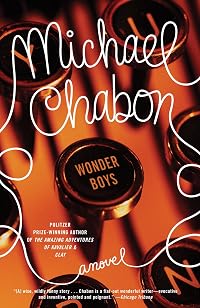
Wonder Boys
by Michael Chabon
On This Page
Description
The "wise, wildly funny story" of a self-destructive writer's lost weekend by a Pulitzer Prize–winning, New York Times–bestselling author (Chicago Tribune).A wildly successful first novel made Grady Tripp a young star, and seven years later he still hasn't grown up. He's now a writing professor in Pittsburgh, plummeting through middle age, stuck with an unfinishable manuscript, an estranged wife, a pregnant girlfriend, and a talented but deeply disturbed student named James Leer. During show more one lost weekend at a writing festival with Leer and debauched editor Terry Crabtree, Tripp must finally confront the wreckage made of his past decisions. Mordant but humane, Wonder Boys features characters as loveably flawed as any in American fiction. This ebook features a biography of the author. show less
Tags
Recommendations
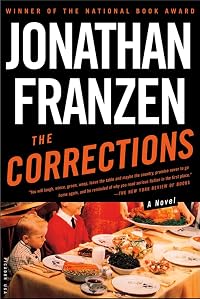
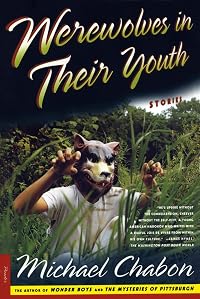
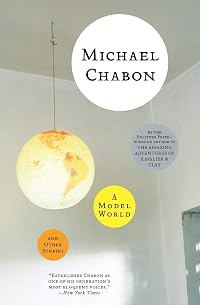
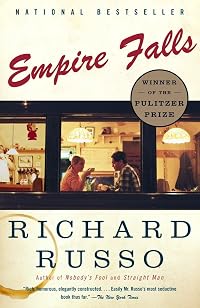


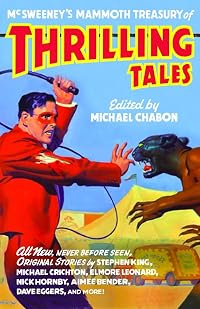
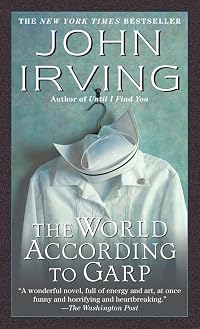
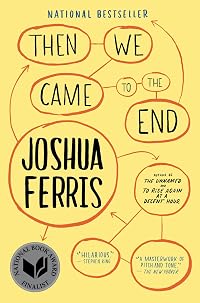
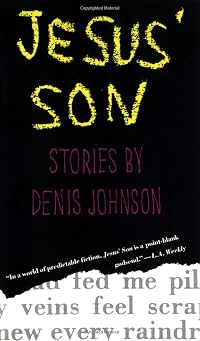
Member Recommendations
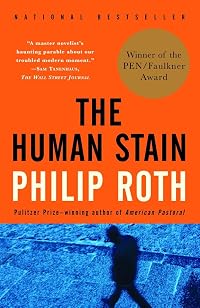
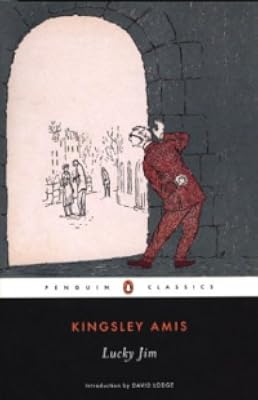
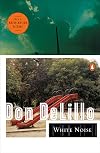
browner56 Both books are often hilarious and great examples of the Campus Novel.
40
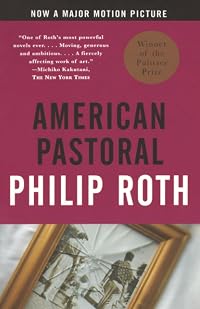
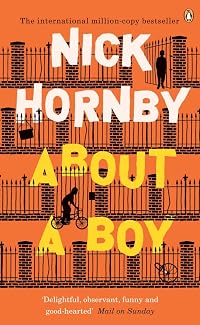
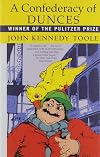
zhejw Both books are set in academia, are nicely plotted, and approach themes of male friendship, literature, and sexuality with humor.
30
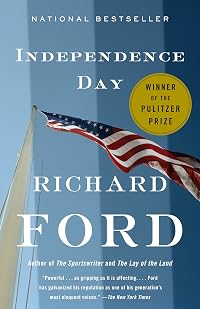
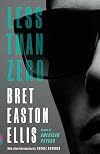
PilgrimJess Both have inept and comical central heroes.
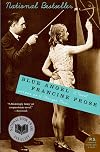
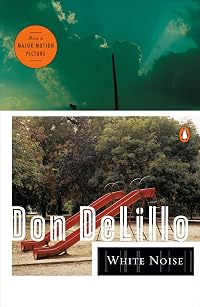
sturlington Both campus novels about writer-professors. Both darkly funny.

Member Reviews
I swore, after reading Herzog, that I would never read another novel about middle-aged academics in crisis. However, by the time that I figured out that the middle-aged academic narrator of Wonder Boys was in crisis, I couldn't put the book down because I had to find out what happened to the tuba.
I'm really glad I couldn't put this down because this turned out to be a great Passover novel. Will the first-borns be saved? Will Tripp (the middle-aged academic) be able to stop wondering around the wastelands of Pittsburgh? Will he be able to give up the flesh-pots of Egypt for the hope of life in the promised land? Those are the questions that keep the novel moving forward. In addition, there is a scene with a Seder that was one of the show more funniest things I've read in a long time (and I've been to some amusing Seders in my time,) show less
I'm really glad I couldn't put this down because this turned out to be a great Passover novel. Will the first-borns be saved? Will Tripp (the middle-aged academic) be able to stop wondering around the wastelands of Pittsburgh? Will he be able to give up the flesh-pots of Egypt for the hope of life in the promised land? Those are the questions that keep the novel moving forward. In addition, there is a scene with a Seder that was one of the show more funniest things I've read in a long time (and I've been to some amusing Seders in my time,) show less
A writer/professor, Grady Tripp, has been in the process of writing his fourth novel for seven years, with no end in sight, though he tells anyone that asks he is “almost finished.” At Tripp’s invitation, his friend and editor, Terry Crabtree, shows up to attend the college’s annual writer’s conference. Crabtree hopes to obtain the long-awaited novel from Tripp, as he needs it to save his job. Tripp’s personal life is in turmoil due to his adultery. He is using so much marijuana that it is affecting his judgment and is not helping him finish his 2600-page (and counting) tome. Tripp is conflict-avoidant and has trouble making choices, but people are drawn to his congenial nature. He keeps procrastinating until decisions are show more made for him by default. Before the weekend is over, he will lose and gain relationships, influences impressionable students (not always in a good way), experience close encounters with an unruly dog and a boa constrictor, search for an expensive piece of a memorabilia collection, attend a Passover Seder with a Jewish family, several native Koreans, and a few lapsed Christians, and store a tuba and an assortment of unlikely items in the trunk of his car.
This book is a wild ride. The writing is outstanding. Chabon employs vivid and detailed imagery and his prose is imbued with a sense of energy. Although the story goes a bit over-the-top, it is filled with sardonic humor and tidbits that keep the reader engaged in trying to figure out what else could happen, and how it will end. I felt immersed in the story. The themes include identity, creativity, sexuality, substance abuse, storytelling, and aging. I had previously read two of the author’s works, The Amazing Adventures of Kavalier and Clay (which I loved) and Moonglow (which I didn’t), so I was interested to see how this book stacked up. It is more similar to the former than the latter but not as far-reaching in scope. Chabon walks the fine line between entertainment and message, absurdity and philosophy, and pulls it off quite impressively. show less
This book is a wild ride. The writing is outstanding. Chabon employs vivid and detailed imagery and his prose is imbued with a sense of energy. Although the story goes a bit over-the-top, it is filled with sardonic humor and tidbits that keep the reader engaged in trying to figure out what else could happen, and how it will end. I felt immersed in the story. The themes include identity, creativity, sexuality, substance abuse, storytelling, and aging. I had previously read two of the author’s works, The Amazing Adventures of Kavalier and Clay (which I loved) and Moonglow (which I didn’t), so I was interested to see how this book stacked up. It is more similar to the former than the latter but not as far-reaching in scope. Chabon walks the fine line between entertainment and message, absurdity and philosophy, and pulls it off quite impressively. show less
I'm pretty sure I'm not the only reader who got to about page thirty in this one and exclaimed "Oh, no! Somebody wrote what they knew!" But maybe we shouldn't be too annoyed at another book about a creative writing professor at some American university. Even chefs have to talk about what they're doing for lunch, and even architects have to sleep somewhere. I might as well get on with it and say that I think that while there a lot of reasons to dislike it -- not the least of which is following the most frequently abused piece of advice given to new writers -- "Wonder Boys" is actually a pretty good read.
There are other issues here, too. The book's got lots of drug use, some fairly inappropriate interactions between literary professionals show more and students, and a sometimes unbearable main character aging ungracefully out of his manly-man "drink, publish and party" phase. Readers who find any of those things obnoxious are encouraged to give up on this one at any time. The book's fairly masculine vibe isn't helped by the fact that said writer is about to be left by his third wife, which doesn't, of course, stop him from sleeping with somebody else. But somewhere in here there's also a very perceptive meditation on the connection between the stories authors write for a living and the lies they sometimes tell others and the compulsion to write in itself, something the author refers to here as "the midnight disease." "Wonder Boys" is also made more bearable by the fact that it's not an example of privileged Ivy League navel-gazing: It takes place at what sounds like a third-tier institution and, if anything, works surprisingly well as a love letter to Pittsburgh, Pennsylvania, a town that's gotten its share of bad press. The affection and concern that our putative hero, Grady Tripp, shows for James Leer, a talented if troubled student of his, seems genuine, and his life seems to have had a life that has taken some genuinely strange turns. We see him attend a Seder with his soon-to-be former family, which is composed of equal parts American Jews and Korean adoptees. To Chabon's credit, this could have been played for fish-out-of-water laughs or for its sheer weirdness value, but Chanon chooses not to do that. These unlikely Asian Jews seem both believable and sympathetic, and are shown to be leading lives that are as chaotic and difficult as Grady's. This extended sequence was perhaps my favorite one in the book: over a Passover in rural Pennsylvania, we watch a family simultaneously hold it together and fall apart. As might be expected of a book that's all about writers, "Wonder Boys" feels a bit overwrittten at times. There were certainly simpler ways to get this story told. But Grady's take on the writing life is both funny -- he describes one of his students writing "teenage drug jazz." And "Wonder Boys" also has a lot to say about relationships between writers: I enjoyed its surprisingly melancholic take on Grady and Terry's relationship, a portrait of a long-term male friendship in continuous, and perhaps permanent decline.
I don't know if I would have picked Michael Douglas to play Grady -- he lacks what I imagined to be Grady's imposing physical stature -- but you'd swear that the pale and slightly mumbly Tobey Maguire was born to play James Leer. As for Robert Downey Jr., we might or might not be able to call his performance as the desperate, substance abusing Terry Crabtree acting. I could have done without at least half of the dead animals we see in "Wonder Boys," but perhaps you've got to let authors write their own books, even if, like Grady, they're stoned more than half the time and can't seem to keep it in their pants. This one can be entertaining in places and trying in others. For better or for worse, it's such a uniquely American story that Brit-centric readers should be forewarned. But it's still mostly recommended. show less
There are other issues here, too. The book's got lots of drug use, some fairly inappropriate interactions between literary professionals show more and students, and a sometimes unbearable main character aging ungracefully out of his manly-man "drink, publish and party" phase. Readers who find any of those things obnoxious are encouraged to give up on this one at any time. The book's fairly masculine vibe isn't helped by the fact that said writer is about to be left by his third wife, which doesn't, of course, stop him from sleeping with somebody else. But somewhere in here there's also a very perceptive meditation on the connection between the stories authors write for a living and the lies they sometimes tell others and the compulsion to write in itself, something the author refers to here as "the midnight disease." "Wonder Boys" is also made more bearable by the fact that it's not an example of privileged Ivy League navel-gazing: It takes place at what sounds like a third-tier institution and, if anything, works surprisingly well as a love letter to Pittsburgh, Pennsylvania, a town that's gotten its share of bad press. The affection and concern that our putative hero, Grady Tripp, shows for James Leer, a talented if troubled student of his, seems genuine, and his life seems to have had a life that has taken some genuinely strange turns. We see him attend a Seder with his soon-to-be former family, which is composed of equal parts American Jews and Korean adoptees. To Chabon's credit, this could have been played for fish-out-of-water laughs or for its sheer weirdness value, but Chanon chooses not to do that. These unlikely Asian Jews seem both believable and sympathetic, and are shown to be leading lives that are as chaotic and difficult as Grady's. This extended sequence was perhaps my favorite one in the book: over a Passover in rural Pennsylvania, we watch a family simultaneously hold it together and fall apart. As might be expected of a book that's all about writers, "Wonder Boys" feels a bit overwrittten at times. There were certainly simpler ways to get this story told. But Grady's take on the writing life is both funny -- he describes one of his students writing "teenage drug jazz." And "Wonder Boys" also has a lot to say about relationships between writers: I enjoyed its surprisingly melancholic take on Grady and Terry's relationship, a portrait of a long-term male friendship in continuous, and perhaps permanent decline.
I don't know if I would have picked Michael Douglas to play Grady -- he lacks what I imagined to be Grady's imposing physical stature -- but you'd swear that the pale and slightly mumbly Tobey Maguire was born to play James Leer. As for Robert Downey Jr., we might or might not be able to call his performance as the desperate, substance abusing Terry Crabtree acting. I could have done without at least half of the dead animals we see in "Wonder Boys," but perhaps you've got to let authors write their own books, even if, like Grady, they're stoned more than half the time and can't seem to keep it in their pants. This one can be entertaining in places and trying in others. For better or for worse, it's such a uniquely American story that Brit-centric readers should be forewarned. But it's still mostly recommended. show less
I've been avoiding writing this review because I don't know that I can do it justice. When I started to read it, the central character so annoyed me that if I hadn't had to read it for book discussion I might have put it down. Glad I didn't.
Grady is a mid-life professor of literature who is simultaneously an avoider of adult behavior. He's awash in drugs, mainly but not exclusively marijuana, about to be left behind by his third wife, deeply involved with the wife of a colleague, and unable to finish a mammoth manuscript he has been promising his college friend/editor for years. Through a series of increasingly hilarious crises, he struggles to be a good lover, a good friend, a good mentor, a good son-in-law, and a good writer, all show more without the requisite growth that would make him less of a has-been wunderkind and more of an adult.
Chabon's language is lovely, inventive, funny, with flights of wonderful description. He tells Grady's story through the stories everyone creates about themselves, either explicitly with foreknowledge, or incidentally, as we all create our life histories. And Chabon is above all else a storyteller, playing with the distance between the public face and the private truth of those who strive toward some wild success of which they inevitably fall short. It's a work about the value of failure, as much as anything, a story that I think will reward many rereads. show less
Grady is a mid-life professor of literature who is simultaneously an avoider of adult behavior. He's awash in drugs, mainly but not exclusively marijuana, about to be left behind by his third wife, deeply involved with the wife of a colleague, and unable to finish a mammoth manuscript he has been promising his college friend/editor for years. Through a series of increasingly hilarious crises, he struggles to be a good lover, a good friend, a good mentor, a good son-in-law, and a good writer, all show more without the requisite growth that would make him less of a has-been wunderkind and more of an adult.
Chabon's language is lovely, inventive, funny, with flights of wonderful description. He tells Grady's story through the stories everyone creates about themselves, either explicitly with foreknowledge, or incidentally, as we all create our life histories. And Chabon is above all else a storyteller, playing with the distance between the public face and the private truth of those who strive toward some wild success of which they inevitably fall short. It's a work about the value of failure, as much as anything, a story that I think will reward many rereads. show less
It's not easy making a dysfunctional, self-sabotaging pot addict with poor impulse control someone you want to like, let alone root for, but Michael Chabon has that skill. Grady Tripp, a novelist and college writing professor working on his third failing marriage and having an affair with the married college chancellor narrates with a self-awareness that could come only with the perspective of time.
The story, one of Chabon's earlier books, takes place over a single weekend, revolving around a literature conference being held at the college. The book's title comes from the novel Grady has been writing for the past seven years and the end is nowhere in sight. Stress is pushing on Grady from all sides: his editor and friend, Terry show more Crabtree, is attending the conference and eager to read Tripp's manuscript; his wife has apparently left him; his lover is pregnant; and one of his students, James Leer, is obsessed with Hollywood and might be suicidal. Throw in a dead dog, an increasingly tense Passover seder, a stolen item of Hollywood memorabilia, and a tuba, burdens that are physical and metaphorical, push Grady to the breaking point.
The book works as exploration of the writerly life as well as a mid-life crisis for someone who managed to read middle-age without fully growing up. The story was hard for me to get into at first, but Chabon's prose pulled me along until Grady was able to win me over. The more absurd things got, the more I cared. I'm going to miss him. show less
The story, one of Chabon's earlier books, takes place over a single weekend, revolving around a literature conference being held at the college. The book's title comes from the novel Grady has been writing for the past seven years and the end is nowhere in sight. Stress is pushing on Grady from all sides: his editor and friend, Terry show more Crabtree, is attending the conference and eager to read Tripp's manuscript; his wife has apparently left him; his lover is pregnant; and one of his students, James Leer, is obsessed with Hollywood and might be suicidal. Throw in a dead dog, an increasingly tense Passover seder, a stolen item of Hollywood memorabilia, and a tuba, burdens that are physical and metaphorical, push Grady to the breaking point.
The book works as exploration of the writerly life as well as a mid-life crisis for someone who managed to read middle-age without fully growing up. The story was hard for me to get into at first, but Chabon's prose pulled me along until Grady was able to win me over. The more absurd things got, the more I cared. I'm going to miss him. show less
Awful. Absolutely, irredeemably, inexcusably awful. I would give it 1 star if A) I didn't LOVE other things Chabon has written and B) the first 50 pages or so hadn't grabbed me. It was interesting for about that long, and then it was a slog. I hated it, but once i realized I hated it, I was too far in to turn around, so I finished the damn thing.
Just some of the things I hated:
-Tripp's friend Crabtree may as well be a sexual predator with the way he "falls in love" with this emotionally unbalanced 20 year old and feeds him prescription drugs & gives him his first homosexual experience with a creepy gross guy twice his age. Yuck.
-Tripp is NOT sympathetic, in my opinion. He's a horrible, lying, philandering POS. And he never really gets show more his comeuppance. His seemingly "knowing" he's horrible doesn't make it any better... It makes it worse! He just keeps on being a cheating scumbag through the entire book, and I have no reason to believe he doesn't just find another woman to cheat on his 4th wife with once the book is over. I did not "root" for him at any moment. I think I felt more sympathy for the necrophiliac Lester Ballard in Cormac McCarthy's "Child of God." Seriously. At least he doesn't really know any better.
-The snake. Come on. Really? That was just contrived and stupid.
I was so disappointed in this book, it made me angry. Amazing Adventures of Kavalier & Clay was wonderful. Gentlemen of the Road was a classic. This book = crap. Sorry. :/ show less
Just some of the things I hated:
-Tripp's friend Crabtree may as well be a sexual predator with the way he "falls in love" with this emotionally unbalanced 20 year old and feeds him prescription drugs & gives him his first homosexual experience with a creepy gross guy twice his age. Yuck.
-Tripp is NOT sympathetic, in my opinion. He's a horrible, lying, philandering POS. And he never really gets show more his comeuppance. His seemingly "knowing" he's horrible doesn't make it any better... It makes it worse! He just keeps on being a cheating scumbag through the entire book, and I have no reason to believe he doesn't just find another woman to cheat on his 4th wife with once the book is over. I did not "root" for him at any moment. I think I felt more sympathy for the necrophiliac Lester Ballard in Cormac McCarthy's "Child of God." Seriously. At least he doesn't really know any better.
-The snake. Come on. Really? That was just contrived and stupid.
I was so disappointed in this book, it made me angry. Amazing Adventures of Kavalier & Clay was wonderful. Gentlemen of the Road was a classic. This book = crap. Sorry. :/ show less
Michael Chabon is a Writer; what's more, he's a Writer that reminds me why I'm a reader. I don't love his books for their stories (although they range from better-than-average to excellent) or for his characters (although he's quite skilled at creating those as well). I love his books because they contain these amazing nuggets of Writing, not hidden but just waiting to catch you out and take your breath away when you realize how perfectly he's captured a moment, or a scene, or a sensation, or an emotion in this wonderful twist of language that you only wish you could have created. So... Wonder Boys took a while to draw me into its plot (which miraculously is honest and credible for all of its absurdity), its characters were full-bodied show more if not particularly sympathetic, and I can't put my finger on exactly what caused me to like it so much other than the sheer enjoyment of reading his writing. show less
Members
- Recently Added By
Lists

Read the book and saw the movie
1,170 works; 195 members

David Bowie's Top 100
97 works; 23 members

Best Contemporary Literary Fiction (Around the Last 30 Years)
388 works; 124 members

Best Campus Novels
99 works; 18 members

Best Family Stories
241 works; 22 members

Best Satire
188 works; 29 members

Best Friendship Stories
205 works; 16 members

Jewish Books
367 works; 24 members

Best School Stories
219 works; 22 members

1990s
309 works; 17 members

Nineties
43 works; 10 members

Best Laugh Out Loud Books
143 works; 48 members
Fiction For Men
142 works; 11 members

Writers as Characters in Fiction
120 works; 19 members
The American Experience
173 works; 18 members

Five star books
1,767 works; 110 members

My E-Book Collection - Opinions Welcome
92 works; 10 members

Quirky Characters
24 works; 7 members

Movie Adaptations
111 works; 4 members

David Bowie's List of Top 100 Books
94 works; 6 members

Books Set in Pennsylvania
17 works; 5 members

Academia in Fiction
158 works; 23 members

What are your favourite books?
121 works; 11 members

Books Read in 2004
212 works; 7 members

Literary Pittsburgh
45 works; 1 member
Read These Too
458 works; 9 members

Tonikat reading completed on Librarything journals
329 works; 2 members

living room bookshelf
150 works; 1 member

Books recommended by Calgary Public Library staff
1,588 works; 4 members

Books We Couldn't Put Down
443 works; 197 members
David Bowie’s Top 100 Favourite Reads
100 works; 3 members

Books Read in 1996
30 works; 1 member

Biggest Disappointments
606 works; 168 members

Authors' Favourites
18 works; 5 members
Author Information

74+ Works 67,840 Members
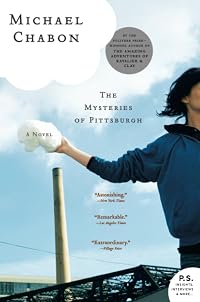
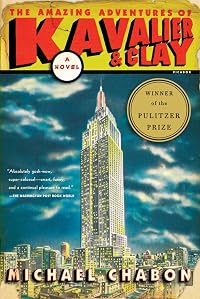
Michael Chabon was born in Washington, D.C. on May 24, 1963. He received a B.A. in English literature from the University of Pittsburgh in 1985 and a Master of Fine Arts degree in English writing at the University of California at Irvine in 1987. Chabon found success at the age of 24, when William Morrow publishing house offered him $155,000, a show more near-record sum, for the rights to his first novel The Mysteries of Pittsburgh, which was his thesis in graduate school. After The Mysteries of Pittsburgh became a national bestseller, he began writing a series of short stories about a little boy dealing with his parents' divorce. The stories, which in part appeared in The New Yorker and G.Q., were bound together in 1991 into a volume titled A Model World and Other Stories. His other works include Wonder Boys, The Astonishing Secret of Awesome Man, Telegraph Avenue, and Pop: Fatherhood in Pieces. In 2001 he won the Pulitzer Prize for fiction for his novel The Amazing Adventures of Kavalier and Clay. He and Ayelet Waldman are co-editors of, Kingdom of Olives and Ash: Writers Confront the Occupation.. (Bowker Author Biography) show less
Some Editions
Awards and Honors
Series
Belongs to Publisher Series
Work Relationships
Is contained in
Has the adaptation
Common Knowledge
- Canonical title
- Wonder Boys
- Original title
- Wonder Boys
- Original publication date
- 1995
- People/Characters
- Grady Tripp; James Leer; Hannah Green; Terry Crabtree; Albert Vetch; Miss Sloviak (show all 10); Q.; Walter Gaskell; Sara Gaskell; Vernon Hardapple
- Important places
- Pittsburgh, Pennsylvania, USA; Pennsylvania, USA; USA
- Related movies
- Wonder Boys (2000 | IMDb)
- Epigraph
- Let them think what they liked, but I didn't mean to drown myself. I meant to swim till I sank-- but that's not the same thing. -- Joseph Conrad
- Dedication
- To Ayelet
- First words
- The first real writer I ever knew was a man who did all of his work under the name of August Van Zorn.
- Last words
- (Click to show. Warning: May contain spoilers.)The young men listen dutifully, for the most part, and from time to time some of them even take the trouble to go over to the college library, and dig up one or another of his novels, and crouch there, among the stacks, flipping impatiently through the pages, looking for the parts that sound true.
Classifications
Statistics
- Members
- 4,590
- Popularity
- 3,172
- Reviews
- 105
- Rating
- (3.94)
- Languages
- 9 — Danish, Dutch, English, French, German, Hebrew, Italian, Spanish, Portuguese (Portugal)
- Media
- Paper, Audiobook, Ebook
- ISBNs
- 47
- ASINs
- 12