On This Page
Description
A book judged so dangerous in the Soviet Union that not only the manuscript but the ribbons on which it had been typed were confiscated by the state, Life and Fate is an epic tale of World War II and a profound reckoning with the dark forces that dominated the twentieth century. Interweaving an account of the battle of Stalingrad with the story of a single middle-class family, the Shaposhnikovs, scattered by fortune from Germany to Siberia, Vasily Grossman fashions an immense, intricately show more detailed tapestry depicting a time of almost unimaginable horror and even stranger hope. Life and Fate juxtaposes bedrooms and snipers' nests, scientific laboratories and the Gulag, taking us deep into the hearts and minds of characters ranging from a boy on his way to the gas chambers to Hitler and Stalin themselves. This novel of unsparing realism and visionary moral intensity is one of the supreme achievements of modern Russian literature. show lessTags
Recommendations

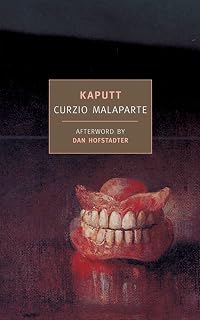







Member Recommendations
pitjrw Grossman reminds me of Malaparte. Less black humor than Malaparte but the same emphasis on the brief scene that illuminates a larger canvas. I don’t think it’s a mere coincidence that both were journalists.
40

chrisharpe Both are books about individuals under repressive regimes, set during WWII, by authors who lived through the circumstances they write about. Although both works are "fiction", the authority of each writer is plainly stamped on each novel. The subject matter may be grim, and the detail uncompromising, but the characters' humanity shines through to make these uplifting reads.
40


by gust
by anonymous user

Member Reviews
It took me eight months or more to read Life and Fate. Not, of course, in an ‘oh my goodness I cannot put this down’ sort of a scamper. More a sort of Himalayan hike with a growing monkey of determination on my back: I’ve bought it (actually I was given it, but why spoil a good story?) I’m bloody well going to finish it. There were moments in which the Himalayan hike seemed too much, and Vasily Grossman’s epic tome was fated to head off and join the three or four other (not necessarily long) volumes that have defeated me. Yet always there was just at the very least a hint that this was not one of those novels in which the folding of a handkerchief would be the pinnacle of excitement.
Fortunately I have consumed one or two show more mammoth tomes before – three (I won’t parade my egotism by naming names) rate as my all-time literary favourites. Alright: I shall name one, because it prepared me and inspired me to keep going with Life and Fate. The Brothers Karamazov is as inspirational a read as I have even encountered. And, while it appears Grossman was deliberately emulating that other great Russian tome War and Peace, on which I cannot comment, I can say that the experience of reading Karamazov and indeed of reading Crime and Punishment a few times prepared me for the sheer enormity of scratching around the Russian nomenclature. Russian patronymics, given names and surnames congeal in a bewildering cobweb of syllables, and I have long learned that it is best simply to allow the identity of the character slowly and imperfectly to dawn on this reader’s consciousness.
So, armed with the memory of conquering a few Russian tomes, I journeyed on. I’m glad I did. The fog was at times intense, and the List of Chief Characters at the back of the book is woefully inadequate (page references would have redeemed it), but as I journeyed I was taken into the depths of human vulnerability. The death of a child in a Nazi gas oven is as chilling, yet haunting beautiful a piece of writing as I have encountered. The dreadful carnage and the equally dreadful ennui of fields of battle, the desperate sexual encounters, the ghastly dehumanizing bastardry of war should all be compulsory reading for every thinking human being, pacifist or militarist, left or right or in between. The brutal yet understated irony that the evil of soviet oppression and the evil of Nazi oppression bend to become just two more superimposable chapters of human inhumanity should not be lost (Grossman never lived to see Life and Fate published, much less to read Alan Bullock’s monumental Hitler and Stalin, but it makes a similar point). The ability of the totalitarian State eventually to bend human wills to uncharacteristic compromise should not be lost on any of us who believe we are advocates of some Herculean cause: there is a Viktor Pavlovich Shtrum lurking in most of us. Coincidentally I have been reading Nineteen Eighty-Four during the same period that I was reading Grossman, and the same point is lurking in those shorter pages, albeit less forcefully. Totalitarianism sucks.
I doubt I will ever read Life and Fate again – I may not have a spare eight months. I will however never regret reading it, and I suspect Grossman’s instinctive and lonely wisdom will permeate my thoughts until I stop thinking. Grossman had of course no editor to tidy up the flaws in his work, but he cannot be blamed for that: this is a magisterial work that I will never forget or regret reading. If only the editor of this edition had improved that List of Chief Characters. show less
Fortunately I have consumed one or two show more mammoth tomes before – three (I won’t parade my egotism by naming names) rate as my all-time literary favourites. Alright: I shall name one, because it prepared me and inspired me to keep going with Life and Fate. The Brothers Karamazov is as inspirational a read as I have even encountered. And, while it appears Grossman was deliberately emulating that other great Russian tome War and Peace, on which I cannot comment, I can say that the experience of reading Karamazov and indeed of reading Crime and Punishment a few times prepared me for the sheer enormity of scratching around the Russian nomenclature. Russian patronymics, given names and surnames congeal in a bewildering cobweb of syllables, and I have long learned that it is best simply to allow the identity of the character slowly and imperfectly to dawn on this reader’s consciousness.
So, armed with the memory of conquering a few Russian tomes, I journeyed on. I’m glad I did. The fog was at times intense, and the List of Chief Characters at the back of the book is woefully inadequate (page references would have redeemed it), but as I journeyed I was taken into the depths of human vulnerability. The death of a child in a Nazi gas oven is as chilling, yet haunting beautiful a piece of writing as I have encountered. The dreadful carnage and the equally dreadful ennui of fields of battle, the desperate sexual encounters, the ghastly dehumanizing bastardry of war should all be compulsory reading for every thinking human being, pacifist or militarist, left or right or in between. The brutal yet understated irony that the evil of soviet oppression and the evil of Nazi oppression bend to become just two more superimposable chapters of human inhumanity should not be lost (Grossman never lived to see Life and Fate published, much less to read Alan Bullock’s monumental Hitler and Stalin, but it makes a similar point). The ability of the totalitarian State eventually to bend human wills to uncharacteristic compromise should not be lost on any of us who believe we are advocates of some Herculean cause: there is a Viktor Pavlovich Shtrum lurking in most of us. Coincidentally I have been reading Nineteen Eighty-Four during the same period that I was reading Grossman, and the same point is lurking in those shorter pages, albeit less forcefully. Totalitarianism sucks.
I doubt I will ever read Life and Fate again – I may not have a spare eight months. I will however never regret reading it, and I suspect Grossman’s instinctive and lonely wisdom will permeate my thoughts until I stop thinking. Grossman had of course no editor to tidy up the flaws in his work, but he cannot be blamed for that: this is a magisterial work that I will never forget or regret reading. If only the editor of this edition had improved that List of Chief Characters. show less
Said to be the greatest work of Vasily Grossman, Jewish Soviet journalist and author, this book was impounded and almost certainly destroyed in 1960 by the KGB, but Grossman had given copies to two friends. Finally published in English in the 1980s and in Russia during the period of glasnost in 1988, this is a great, moving, and terrible account of the siege of Stalingrad, the Holocaust, the Gulag, and the circumstances and philosophy of everyday life in Stalin’s Soviet Union. The author constructed the work as a new War and Peace with similarities including the title itself, the many characters, its episodic nature, Hitler and Paulus substituting for Napoleon, and probably many others that I’ve missed. Some of the episodes are show more reminiscent of Chekov’s stories, with their examination of complex human behavior, the use of humor, the lack of a tied-up ending and the sense that the characters continue on after the story ends. Grossman’s well-known fine powers of observation, his interviewing techniques, and his imagination yield especially striking accounts of the thoughts of a child entering the Auschwitz gas chamber and of a Soviet Commissar undergoing interrogation at the Lubyanka prison in Moscow.
Some of the author’s thoughts that caught my eye:
And what did this doctrine of peace and love bring to humanity?....[It] caused more suffering than all the crimes of the people who did evil for its own sake.....People are wrong to see life as a struggle between good and evil....[human kindness] is what is truly human in a human being....Kindness is powerful only while it is powerless.
By the way, do you know the difference between a good type and a bad type? A good type is someone who behaves swinishly in spite of himself.
Tell me what you accuse the Jews of–I’ll tell you what you’re guilty of.
...however rich and famous a man may be, he will still grow old, die and yield his place to the young; that perhaps nothing matters except to live one’s life honestly.
You say life is freedom. Is that what people in the camps think? show less
Some of the author’s thoughts that caught my eye:
And what did this doctrine of peace and love bring to humanity?....[It] caused more suffering than all the crimes of the people who did evil for its own sake.....People are wrong to see life as a struggle between good and evil....[human kindness] is what is truly human in a human being....Kindness is powerful only while it is powerless.
By the way, do you know the difference between a good type and a bad type? A good type is someone who behaves swinishly in spite of himself.
Tell me what you accuse the Jews of–I’ll tell you what you’re guilty of.
...however rich and famous a man may be, he will still grow old, die and yield his place to the young; that perhaps nothing matters except to live one’s life honestly.
You say life is freedom. Is that what people in the camps think? show less
Magnificent, and a book that should have greater visibility and recognition. There is a natural comparison to ‘War and Peace’, and indeed, Grossman was said to have used Tolstoy’s masterpiece as a model for ‘Life and Fate’. There are similarities in both style and in content. The sheer scope of both books is grand, and take place during a failed invasion of Russia. Both have much more to them than military activities, and have rich casts of characters. Grossman occasionally folds in actual historical figures, generals and heads of state from each side, just as Tolstoy did. Where the novels differ mainly is in tone. There is a buoyancy and optimism to Tolstoy’s work – in the grand balls, in Pierre’s idealism, and in the show more love affairs between its characters. By contrast, Grossman’s novel is much darker, which I attribute to the events of the 20th century forcing a more grim realism. During Napoleon’s invasion, Russians were united under Alexander I – the repression under Nicholas I and the disillusionment and nihilism in its youth had not yet occurred – whereas during Hitler’s invasion, Russians had already gone through the great terror of 1937, and were constantly looking over their shoulders in fear of their own government, in addition to the Germans. There is a terrible sense of claustrophobia to this work – no place is safe when one little slip of the tongue can get you arrested and sent away. In ‘Life and Fate’, there are love affairs, but they are often tawdry one-night stands, frustrated, unrealized love, or tragic because someone has been unjustly imprisoned or killed.
Many say that Grossman put himself into the character of Viktor Shtrum, the theoretical physicist who makes a breakthrough on the inner workings of the atom, but is threatened by anti-Semitism, bureaucratic Soviet doctrine on science, association with family members who have run afoul of the State, or offhand comments he’s made in private. Like Grossman, Shtrum is attracted to the wife of his friend, and he loses his mother to the Holocaust when his own wife rebuffs his attempts to have her come and live with them. Like Grossman, he suffers from social awkwardness and self-doubt, wants most of all to be honest, but finds himself struggling between his conscience and the crushing power of the totalitarian State. One could say that Tolstoy is to Pierre as Grossman is to Viktor, and these characters represent the feel to the overall novel. Pierre is optimistic, philanthropic, philosophical; Viktor intelligent, wracked by guilt and angst, and weighed down by the darkness of the time period.
What I love about Grossman’s writing is his honesty and his humanity. He recognizes the heartbreaking moments in life and the pathos of a situation, and often ends his (relatively short) chapters in ways that arouse feeling. He understands human psychology in private and public moments. He was a Russian patriot and someone who believed in the principles of the Revolution, that workers should have rights and a share of the wealth, but saw that the Soviet State had shed these principles and was using its words in empty ways to perpetuate its right to absolute power. He condemned Fascism and the Holocaust, having lost his own mother and been one of the first writers to see and write about a concentration camp as a war correspondent when the Soviets swept west, but he saw the direct parallel to Stalin’s totalitarian State and the horrific purges of 1937. In the novel, he writes about all of these things with great clarity, and probes how such evil could be inflicted on nations – how people could be led into such things – through intimidation, making them complicit, and their tendency to be obedient.
There are many reviews out there that describe the novel as “sprawling” (I confess, dear reader of this perhaps ‘sprawling’ review, that if I see this over-used adjective used again, I may be ill) and confusing in its scope and the number of characters – but honestly, I found no such difficulty. Just think of it as a novel that’s about three times longer than an average novel, and figure if you read a book a week, this book may take you three weeks. It is helpful that this edition had a list of characters in the novel’s various settings in the back, so you may want to look for one that has that. The action does move around, but it’s not hard to follow the threads, and Grossman spends the right amount of time on each before moving to the next.
There are several excellent chapters that leave indelible images: Victor’s mother’s touching final letter to him, Yevgenia’s maddening (and funny) battles with bureaucracy to get a residence permit, Lyudmila’s visit to her son’s grave, and never truly coming to terms with his death, and the chilling meeting between a Russian prisoner (Mostovskoy) and the Gestapo commander of a concentration camp, who tries to make him see the similarities in their one-party states. There is also a stunning pamphlet on Good and Religion written by the ‘holy fool’ Ikonnikov-Morzh while imprisoned, a brilliant description of both horrifying inhumanity and complicity in the engineering and construction that went into building the gas chambers, and two German officers enjoying a plate of hors-d’oeuvres and wine on a small table placed in the center of one during their inspection. Later as Jews are herded into this chamber, Sofya having “adopted” a little boy, holding them as they’re killed like animals, clinically, as attendants peer through a window into the chamber.
There are also nice moments between Viktor and his beloved Marya, his friend’s wife; their sad meeting in the park, not acting on their love because they’re both married, and lastly, Viktor, after having finally been vindicated and seemingly having “made it”, still being pressured by the Party to sign a condemnation of the supposed killers of Gorky, one he doesn’t believe in, and yet not wanting to jeopardize his position.
Grossman’s audacity was to point out the fundamental errors of the Soviet Union. The error in Marxism of not understanding that Freedom had to be the basis, the foundation for communism, and without it the Revolution was meaningless. The error of Lenin thinking he was an internationalist, when in fact he “was creating the great nationalism of the twentieth century”. The error of putting Stalin in power after Lenin’s death, a man who “had never occupied a central position in the Party, who had never been highly thought of as a theoretician”, and who would then commit countless atrocities. The famine of 1921 having been followed up with the “man-made famine of 1930” (he doesn’t dwell on it, but look up ‘Holodomor’). The error of the party condemning not just aristocrats and the intelligentsia, but their descendants as well, and putting power and positions of importance into the hands of the ignorant and inept. The brutality and torture of investigations into those who were suspected of undermining the State on the merest whiff or phantom of insubordination; a single comment from years ago dooming one to a sentence of “ten years without the right of correspondence”, which invariably meant death. The error of Stalin misjudging Hitler’s intentions in 1941, to the point of shipping him trainloads of raw materials of strategic importance days before the outbreak of war.
Perhaps the biggest criticism, however, was showing the similarity of the Soviet state to the Nazis, which was of course anathema, as the Russians were rightfully proud of having defeated Hitler. Grossman does not flinch, for as he would say in another work, “Absolute truth is the most beautiful thing of all”, and I find it a message that is vitally important in these days of nationalism, xenophobia, and populism. He comments on the danger of not having a free press, and the use of the condemning label “enemy of the people” because someone holds dissenting views. He also points out the anti-Semitism and singling out of minorities as mirroring that in Germany. He also comments that doing “good” in the world sometimes truly means just that, but at other times people commit atrocities while deluded into thinking that they’re doing so in the name of some higher “good”. He shows us that both the Nazis and the Soviets had constructed arguments for themselves that allowed them to do what they did, rationalizing that the “ends justify the means”. All of these themes are highly relevant today.
And yet, despite all this darkness, Grossman believed in kindness and dignity, and he shows us the heroism and valor of the Soviets in defending Stalingrad during critical months of a massive battle in WWII. It may be true that he miscalculated what Stalin’s death in 1953 meant in terms of ability to criticize the Soviet Union, but I see courage, and a writer who had to be honest above all else. It’s a miracle the novel survived despite the legendary break-in to his house which had manuscripts and even typewriter ribbons confiscated, and it was a great joy to read it nearly 60 years later.
Quotes:
On death:
“A soul can live in torment for years and years, even decades, as it slowly, stone by stone, builds a mound over a grave; as it moves towards the apprehension of eternal loss and bows down before reality.”
“Her eyes – which had read Homer, Izvestia, Huckleberry Finn and Mayne Reid, that had looked at good people and bad people, that had seen the geese in the green meadows of Kursk, the stars above the observatory at Pulkovo, the glitter of surgical steel, the Mona Lisa in the Louvre, tomatoes and turnips in the bins at market, the blue water of Issyk-Kul – her eyes were no longer any use to her. If someone had blinded her, she would have felt no sense of loss.”
On freedom, and individuality:
“Human groupings have one main purpose: to assert everyone’s right to be different, to be special, to think, feel and live in his or her own way. People join together in order to win or defend this right. But this is where a terrible, fateful error is born: the belief that these groupings in the name of a rice, a God, a party or a State are the very purpose of life and not simply a means to an end. No! The only true and lasting meaning of the struggle for life lies in the individual, in his modest peculiarities and in his right to these peculiarities.”
And this one:
“…man has more freedom than protozoa. The whole evolution of the living world has been a movement from a lesser to a greater degree of freedom. This is the very essence of evolution – the highest being is the one which has the most freedom.”
On “good” and religion:
“The Christian view, five centuries after Buddhism, restricted the living world to which the concept of good is applicable. Not every living thing – only human beings. The good of the first Christians, which had embraced all mankind, in turn gave way to a purely Christian good; the good of the Muslims was now distinct.
Centuries passed and the good of Christianity split up into the distinct goods of Catholicism, Protestantism and Orthodoxy. And the good of Orthodoxy gave birth to the distinct goods of the old and new beliefs.
At the same time there was the good of the poor and the good of the rich. And the goods of the whites, the blacks, and the yellow races … More and more goods came into being, corresponding to each sect, race and class. Everyone outside a particular magic circle was excluded.
People began to realize how much blood has been spilt in the name of a petty, doubtful good, in the name of the struggle of this petty good against what it believed to be evil. Sometimes the very concept of good became a scourge, a greater evil than evil itself.”
On good and evil in man:
“We think we’re so wise – to us Hercules seems like a child with rickets. And yet on this very day the Germans are slaughtering Jewish children and old women as though they were mad dogs. And we ourselves have endured 1937 and the horrors of collectivization – famine, cannibalism, and the deportation of millions of unfortunate peasants … Once, everything seemed simple and clear. But these terrible losses and tragedies have confused everything. You say man will be able to look down on God – but what if he also becomes able to look down on the Devil? What if he eventually surpasses him? You say life is freedom. Is that what people in the camps think? What if the life expanding through the universe should use its power to create a slavery still more terrible than your slavery of inanimate matter? Do you think this man of the future will surpass Christ in his goodness? … What if he transforms the whole world into a galactic concentration camp? What I want to know is – do you believe in the evolution of kindness, morality, mercy? Is man capable of evolving that way?”
And this one:
“Good men and bad men alike are capable of weakness. The difference is simply that a bad man will be proud all his life of one good deed – while an honest man is hardly aware of his good acts, but remembers a single sin for years on end.”
This little bit of humor:
“’You don’t look well,’ said Viktor. ‘That’s what’s called a Jewish compliment.’”
On infidelity:
“’You know,’ said Yevgenia, ‘an admirer of mine in Kuibyshev, Limonov, once gave me a definition of middle-aged love. He said it was a spiritual vitamin deficiency. A man lives for a long time with his wife and develops a kind of spiritual hunger – he’s like a cow deprived of salt, or an Arctic explorer who’s gone without vegetables for years on end. A man with a forceful, strong-willed wife begins to long for a meek, gentle soul, someone timid and submissive.’
‘This Limonov of yours sounds a fool,’ said Lyudmila.
‘What if a man needs several different vitamins – A, B, C, and D?’ asked Nadya.”
And this one:
“How could he unravel this tangle? How could his love for Marya Ivanovna be the truth of his life and at the same time be its greatest lie? Only last summer he had had an affair with the beautiful Nina. And they had done more than just walk round the square like schoolchildren who had fallen in love. But it was only now that he felt a sense of guilt and betrayal, a sense of having done wrong to his family.
All this consumed an incalculable amount of emotional and intellectual energy, probably as much as Planck had expended in elaborating his quantum theory.”
On kindness:
“Chekhov said let’s put God – and all these grand progressive ideas – to one side. Let’s begin with man; let’s be kind and attentive to the individual man – whether he’s a bishop, a peasant, an industrial magnate, a convict in the Sakhalin Islands or a waiter in a restaurant. Let’s begin with respect, compassion and love for the individual – or we’ll never get anywhere.”
On love that cannot be:
“One thing was plain: he had lost his peace of mind forever. Whatever happened, he would never know peace. Whether he hid his love for the woman beside him or whether it became his destiny, he would not know peace. Whether he was with her, feeling guilty, or whether he was apart from her, aching for her, he would have no peace.”
And this one:
“For a moment he thought he was about to fall down dead. He walked up and down the room. He looked again at the letter on his desk. It was like a white, sloughed-off skin that a viper had just crawled out of. He put his hand to his chest and his sides. The viper wasn’t there. It must have crawled inside him already. It must be burning his heart with poison.”
On religion:
“And what did this doctrine of peace and love bring to humanity? Byzantine iconoclasticism; the tortures of the Inquisition; the struggles against heresy in France, Italy, Flanders and Germany; the conflict between Protestantism and Catholicism; the intrigues of the monastic orders; the conflict between Nikon and Avvakum; the crushing yoke that lay for centuries over science and freedom; the Christians who wiped out the heathen population of Tasmania; the scoundrels who burnt whole Negro villages in Africa. This doctrine caused more suffering than all the crimes of the people who did evil for its own sake…”
On robots, and future machines; how ahead of his time this passage was (though not anticipating Moore’s Law, he believed such a machine would be vast :)
“It is not impossible to imagine the machine of future ages and millennia. It will be able to listen to music and appreciate art; it will even be able to compose melodies, paint pictures, and write poems. Is there a limit to its perfection? Can it be compared to man? Will it surpass him?”
On Russia; I loved this poem one of the characters writes:
“Insane carefreeness
Wherever one looks.
The plains. Infinity.
The cawing of rooks.
Riots. Fires. Secrecy.
Obtuse indifference.
A unique eccentricity.
A terrible magnificence.”
On sorrow, from Pushkin:
“Past sorrow is to me like wine,
Stronger with every passing year.”
On the Soviet State:
“This new age needed only the hide of the Revolution – and this was being flayed off people who were still alive. Those who then slipped into it spoke the language of the Revolution and mimicked its gestures, but their brains, lungs, livers, and eyes were utterly different.”
And:
“There was something medieval about these accusations. Assassin-doctors! The murderers of a great writer, the last Russian classic! What was the purpose of such slanders? The Inquisition and its bonfires, the execution of heretics, witch-trials, boiling pitch, the stench of smoke … What did all this have to do with Lenin, with the construction of Socialism and the great war against Fascism?”
On sunset, and reflection:
“The light of evening can reveal the essence of a moment. It can bring out its emotional and historical significance, transforming a mere impression into a powerful image. The evening sun can endow patches of soot and mud with thousands of voices; with aching hearts we sense past joys, the irrevocability of loss, the bitterness of mistakes and the eternal appeal of hope.”
On totalitarian regimes:
“Experience showed that such campaigns make the majority of the population obey every order of the authorities as though hypnotized. There is a particular minority which actively helps to create the atmosphere of these campaigns: ideological fanatics; people who take a bloodthirsty delight in the misfortunes of others; and people who want to settle personal scores, to steal a man’s belongings or take over his flat or job. Most people, however, are horrified at mass murder, but they hide this not only from their families, but even from themselves. These are the people who filled the meeting-halls during the campaigns of destruction; however vast these halls or frequent these meetings, very few of them ever disturbed the quiet unanimity of the voting.”
“…in totalitarian countries, where society as such no longer exists, there can arise State anti-Semitism. This is a sign that the State is looking for the support of fools, reactionaries and failures, that it is seeking to capitalize on the ignorance of the superstitious and the anger of the hungry.”
On truth (and heroism):
“There is only one truth. There cannot be two truths. It’s hard to live with no truth, with scraps of truth, with a half-truth. A partial truth is no truth at all. Let the wonderful silence of this night be the truth, the whole truth … Let us remember the good in these men; let us remember their great achievements.” show less
Many say that Grossman put himself into the character of Viktor Shtrum, the theoretical physicist who makes a breakthrough on the inner workings of the atom, but is threatened by anti-Semitism, bureaucratic Soviet doctrine on science, association with family members who have run afoul of the State, or offhand comments he’s made in private. Like Grossman, Shtrum is attracted to the wife of his friend, and he loses his mother to the Holocaust when his own wife rebuffs his attempts to have her come and live with them. Like Grossman, he suffers from social awkwardness and self-doubt, wants most of all to be honest, but finds himself struggling between his conscience and the crushing power of the totalitarian State. One could say that Tolstoy is to Pierre as Grossman is to Viktor, and these characters represent the feel to the overall novel. Pierre is optimistic, philanthropic, philosophical; Viktor intelligent, wracked by guilt and angst, and weighed down by the darkness of the time period.
What I love about Grossman’s writing is his honesty and his humanity. He recognizes the heartbreaking moments in life and the pathos of a situation, and often ends his (relatively short) chapters in ways that arouse feeling. He understands human psychology in private and public moments. He was a Russian patriot and someone who believed in the principles of the Revolution, that workers should have rights and a share of the wealth, but saw that the Soviet State had shed these principles and was using its words in empty ways to perpetuate its right to absolute power. He condemned Fascism and the Holocaust, having lost his own mother and been one of the first writers to see and write about a concentration camp as a war correspondent when the Soviets swept west, but he saw the direct parallel to Stalin’s totalitarian State and the horrific purges of 1937. In the novel, he writes about all of these things with great clarity, and probes how such evil could be inflicted on nations – how people could be led into such things – through intimidation, making them complicit, and their tendency to be obedient.
There are many reviews out there that describe the novel as “sprawling” (I confess, dear reader of this perhaps ‘sprawling’ review, that if I see this over-used adjective used again, I may be ill) and confusing in its scope and the number of characters – but honestly, I found no such difficulty. Just think of it as a novel that’s about three times longer than an average novel, and figure if you read a book a week, this book may take you three weeks. It is helpful that this edition had a list of characters in the novel’s various settings in the back, so you may want to look for one that has that. The action does move around, but it’s not hard to follow the threads, and Grossman spends the right amount of time on each before moving to the next.
There are several excellent chapters that leave indelible images: Victor’s mother’s touching final letter to him, Yevgenia’s maddening (and funny) battles with bureaucracy to get a residence permit, Lyudmila’s visit to her son’s grave, and never truly coming to terms with his death, and the chilling meeting between a Russian prisoner (Mostovskoy) and the Gestapo commander of a concentration camp, who tries to make him see the similarities in their one-party states. There is also a stunning pamphlet on Good and Religion written by the ‘holy fool’ Ikonnikov-Morzh while imprisoned, a brilliant description of both horrifying inhumanity and complicity in the engineering and construction that went into building the gas chambers, and two German officers enjoying a plate of hors-d’oeuvres and wine on a small table placed in the center of one during their inspection. Later as Jews are herded into this chamber, Sofya having “adopted” a little boy, holding them as they’re killed like animals, clinically, as attendants peer through a window into the chamber.
There are also nice moments between Viktor and his beloved Marya, his friend’s wife; their sad meeting in the park, not acting on their love because they’re both married, and lastly, Viktor, after having finally been vindicated and seemingly having “made it”, still being pressured by the Party to sign a condemnation of the supposed killers of Gorky, one he doesn’t believe in, and yet not wanting to jeopardize his position.
Grossman’s audacity was to point out the fundamental errors of the Soviet Union. The error in Marxism of not understanding that Freedom had to be the basis, the foundation for communism, and without it the Revolution was meaningless. The error of Lenin thinking he was an internationalist, when in fact he “was creating the great nationalism of the twentieth century”. The error of putting Stalin in power after Lenin’s death, a man who “had never occupied a central position in the Party, who had never been highly thought of as a theoretician”, and who would then commit countless atrocities. The famine of 1921 having been followed up with the “man-made famine of 1930” (he doesn’t dwell on it, but look up ‘Holodomor’). The error of the party condemning not just aristocrats and the intelligentsia, but their descendants as well, and putting power and positions of importance into the hands of the ignorant and inept. The brutality and torture of investigations into those who were suspected of undermining the State on the merest whiff or phantom of insubordination; a single comment from years ago dooming one to a sentence of “ten years without the right of correspondence”, which invariably meant death. The error of Stalin misjudging Hitler’s intentions in 1941, to the point of shipping him trainloads of raw materials of strategic importance days before the outbreak of war.
Perhaps the biggest criticism, however, was showing the similarity of the Soviet state to the Nazis, which was of course anathema, as the Russians were rightfully proud of having defeated Hitler. Grossman does not flinch, for as he would say in another work, “Absolute truth is the most beautiful thing of all”, and I find it a message that is vitally important in these days of nationalism, xenophobia, and populism. He comments on the danger of not having a free press, and the use of the condemning label “enemy of the people” because someone holds dissenting views. He also points out the anti-Semitism and singling out of minorities as mirroring that in Germany. He also comments that doing “good” in the world sometimes truly means just that, but at other times people commit atrocities while deluded into thinking that they’re doing so in the name of some higher “good”. He shows us that both the Nazis and the Soviets had constructed arguments for themselves that allowed them to do what they did, rationalizing that the “ends justify the means”. All of these themes are highly relevant today.
And yet, despite all this darkness, Grossman believed in kindness and dignity, and he shows us the heroism and valor of the Soviets in defending Stalingrad during critical months of a massive battle in WWII. It may be true that he miscalculated what Stalin’s death in 1953 meant in terms of ability to criticize the Soviet Union, but I see courage, and a writer who had to be honest above all else. It’s a miracle the novel survived despite the legendary break-in to his house which had manuscripts and even typewriter ribbons confiscated, and it was a great joy to read it nearly 60 years later.
Quotes:
On death:
“A soul can live in torment for years and years, even decades, as it slowly, stone by stone, builds a mound over a grave; as it moves towards the apprehension of eternal loss and bows down before reality.”
“Her eyes – which had read Homer, Izvestia, Huckleberry Finn and Mayne Reid, that had looked at good people and bad people, that had seen the geese in the green meadows of Kursk, the stars above the observatory at Pulkovo, the glitter of surgical steel, the Mona Lisa in the Louvre, tomatoes and turnips in the bins at market, the blue water of Issyk-Kul – her eyes were no longer any use to her. If someone had blinded her, she would have felt no sense of loss.”
On freedom, and individuality:
“Human groupings have one main purpose: to assert everyone’s right to be different, to be special, to think, feel and live in his or her own way. People join together in order to win or defend this right. But this is where a terrible, fateful error is born: the belief that these groupings in the name of a rice, a God, a party or a State are the very purpose of life and not simply a means to an end. No! The only true and lasting meaning of the struggle for life lies in the individual, in his modest peculiarities and in his right to these peculiarities.”
And this one:
“…man has more freedom than protozoa. The whole evolution of the living world has been a movement from a lesser to a greater degree of freedom. This is the very essence of evolution – the highest being is the one which has the most freedom.”
On “good” and religion:
“The Christian view, five centuries after Buddhism, restricted the living world to which the concept of good is applicable. Not every living thing – only human beings. The good of the first Christians, which had embraced all mankind, in turn gave way to a purely Christian good; the good of the Muslims was now distinct.
Centuries passed and the good of Christianity split up into the distinct goods of Catholicism, Protestantism and Orthodoxy. And the good of Orthodoxy gave birth to the distinct goods of the old and new beliefs.
At the same time there was the good of the poor and the good of the rich. And the goods of the whites, the blacks, and the yellow races … More and more goods came into being, corresponding to each sect, race and class. Everyone outside a particular magic circle was excluded.
People began to realize how much blood has been spilt in the name of a petty, doubtful good, in the name of the struggle of this petty good against what it believed to be evil. Sometimes the very concept of good became a scourge, a greater evil than evil itself.”
On good and evil in man:
“We think we’re so wise – to us Hercules seems like a child with rickets. And yet on this very day the Germans are slaughtering Jewish children and old women as though they were mad dogs. And we ourselves have endured 1937 and the horrors of collectivization – famine, cannibalism, and the deportation of millions of unfortunate peasants … Once, everything seemed simple and clear. But these terrible losses and tragedies have confused everything. You say man will be able to look down on God – but what if he also becomes able to look down on the Devil? What if he eventually surpasses him? You say life is freedom. Is that what people in the camps think? What if the life expanding through the universe should use its power to create a slavery still more terrible than your slavery of inanimate matter? Do you think this man of the future will surpass Christ in his goodness? … What if he transforms the whole world into a galactic concentration camp? What I want to know is – do you believe in the evolution of kindness, morality, mercy? Is man capable of evolving that way?”
And this one:
“Good men and bad men alike are capable of weakness. The difference is simply that a bad man will be proud all his life of one good deed – while an honest man is hardly aware of his good acts, but remembers a single sin for years on end.”
This little bit of humor:
“’You don’t look well,’ said Viktor. ‘That’s what’s called a Jewish compliment.’”
On infidelity:
“’You know,’ said Yevgenia, ‘an admirer of mine in Kuibyshev, Limonov, once gave me a definition of middle-aged love. He said it was a spiritual vitamin deficiency. A man lives for a long time with his wife and develops a kind of spiritual hunger – he’s like a cow deprived of salt, or an Arctic explorer who’s gone without vegetables for years on end. A man with a forceful, strong-willed wife begins to long for a meek, gentle soul, someone timid and submissive.’
‘This Limonov of yours sounds a fool,’ said Lyudmila.
‘What if a man needs several different vitamins – A, B, C, and D?’ asked Nadya.”
And this one:
“How could he unravel this tangle? How could his love for Marya Ivanovna be the truth of his life and at the same time be its greatest lie? Only last summer he had had an affair with the beautiful Nina. And they had done more than just walk round the square like schoolchildren who had fallen in love. But it was only now that he felt a sense of guilt and betrayal, a sense of having done wrong to his family.
All this consumed an incalculable amount of emotional and intellectual energy, probably as much as Planck had expended in elaborating his quantum theory.”
On kindness:
“Chekhov said let’s put God – and all these grand progressive ideas – to one side. Let’s begin with man; let’s be kind and attentive to the individual man – whether he’s a bishop, a peasant, an industrial magnate, a convict in the Sakhalin Islands or a waiter in a restaurant. Let’s begin with respect, compassion and love for the individual – or we’ll never get anywhere.”
On love that cannot be:
“One thing was plain: he had lost his peace of mind forever. Whatever happened, he would never know peace. Whether he hid his love for the woman beside him or whether it became his destiny, he would not know peace. Whether he was with her, feeling guilty, or whether he was apart from her, aching for her, he would have no peace.”
And this one:
“For a moment he thought he was about to fall down dead. He walked up and down the room. He looked again at the letter on his desk. It was like a white, sloughed-off skin that a viper had just crawled out of. He put his hand to his chest and his sides. The viper wasn’t there. It must have crawled inside him already. It must be burning his heart with poison.”
On religion:
“And what did this doctrine of peace and love bring to humanity? Byzantine iconoclasticism; the tortures of the Inquisition; the struggles against heresy in France, Italy, Flanders and Germany; the conflict between Protestantism and Catholicism; the intrigues of the monastic orders; the conflict between Nikon and Avvakum; the crushing yoke that lay for centuries over science and freedom; the Christians who wiped out the heathen population of Tasmania; the scoundrels who burnt whole Negro villages in Africa. This doctrine caused more suffering than all the crimes of the people who did evil for its own sake…”
On robots, and future machines; how ahead of his time this passage was (though not anticipating Moore’s Law, he believed such a machine would be vast :)
“It is not impossible to imagine the machine of future ages and millennia. It will be able to listen to music and appreciate art; it will even be able to compose melodies, paint pictures, and write poems. Is there a limit to its perfection? Can it be compared to man? Will it surpass him?”
On Russia; I loved this poem one of the characters writes:
“Insane carefreeness
Wherever one looks.
The plains. Infinity.
The cawing of rooks.
Riots. Fires. Secrecy.
Obtuse indifference.
A unique eccentricity.
A terrible magnificence.”
On sorrow, from Pushkin:
“Past sorrow is to me like wine,
Stronger with every passing year.”
On the Soviet State:
“This new age needed only the hide of the Revolution – and this was being flayed off people who were still alive. Those who then slipped into it spoke the language of the Revolution and mimicked its gestures, but their brains, lungs, livers, and eyes were utterly different.”
And:
“There was something medieval about these accusations. Assassin-doctors! The murderers of a great writer, the last Russian classic! What was the purpose of such slanders? The Inquisition and its bonfires, the execution of heretics, witch-trials, boiling pitch, the stench of smoke … What did all this have to do with Lenin, with the construction of Socialism and the great war against Fascism?”
On sunset, and reflection:
“The light of evening can reveal the essence of a moment. It can bring out its emotional and historical significance, transforming a mere impression into a powerful image. The evening sun can endow patches of soot and mud with thousands of voices; with aching hearts we sense past joys, the irrevocability of loss, the bitterness of mistakes and the eternal appeal of hope.”
On totalitarian regimes:
“Experience showed that such campaigns make the majority of the population obey every order of the authorities as though hypnotized. There is a particular minority which actively helps to create the atmosphere of these campaigns: ideological fanatics; people who take a bloodthirsty delight in the misfortunes of others; and people who want to settle personal scores, to steal a man’s belongings or take over his flat or job. Most people, however, are horrified at mass murder, but they hide this not only from their families, but even from themselves. These are the people who filled the meeting-halls during the campaigns of destruction; however vast these halls or frequent these meetings, very few of them ever disturbed the quiet unanimity of the voting.”
“…in totalitarian countries, where society as such no longer exists, there can arise State anti-Semitism. This is a sign that the State is looking for the support of fools, reactionaries and failures, that it is seeking to capitalize on the ignorance of the superstitious and the anger of the hungry.”
On truth (and heroism):
“There is only one truth. There cannot be two truths. It’s hard to live with no truth, with scraps of truth, with a half-truth. A partial truth is no truth at all. Let the wonderful silence of this night be the truth, the whole truth … Let us remember the good in these men; let us remember their great achievements.” show less
Re-reading [b:Life and Fate|88432|Life and Fate|Vasily Grossman|https://i.gr-assets.com/images/S/compressed.photo.goodreads.com/books/1320447178l/88432._SY75_.jpg|2435598] straight after [b:Stalingrad|42194293|Stalingrad|Vasily Grossman|https://i.gr-assets.com/images/S/compressed.photo.goodreads.com/books/1538834270l/42194293._SY75_.jpg|16925946] was a very intense experience. I recommend it, although I alternated with other novels to take periodic breaks from the Eastern Front. The two are recognisably halves of a single epic novel, but it is also clear why one was published before the fall of the USSR and the other was not. [b:Stalingrad|42194293|Stalingrad|Vasily show more Grossman|https://i.gr-assets.com/images/S/compressed.photo.goodreads.com/books/1538834270l/42194293._SY75_.jpg|16925946] depicts the Nazi invasion of the USSR, the long retreat of the Red Army, and the start of the Battle of Stalingrad. Although the translated edition includes material that was censored in the USSR, it does not critique the soviet regime and draw close parallels with Nazism to anything like the same extent as [b:Life and Fate|88432|Life and Fate|Vasily Grossman|https://i.gr-assets.com/images/S/compressed.photo.goodreads.com/books/1320447178l/88432._SY75_.jpg|2435598]. To my mind, this doesn't make [b:Stalingrad|42194293|Stalingrad|Vasily Grossman|https://i.gr-assets.com/images/S/compressed.photo.goodreads.com/books/1538834270l/42194293._SY75_.jpg|16925946] a lesser novel - it is magnificent. The two are brilliantly complimentary as they cover different stages of the war on the Eastern Front. [b:Stalingrad|42194293|Stalingrad|Vasily Grossman|https://i.gr-assets.com/images/S/compressed.photo.goodreads.com/books/1538834270l/42194293._SY75_.jpg|16925946] writes of a country and regime on the defensive, trying to survive and halt the Nazi onslaught. [b:Life and Fate|88432|Life and Fate|Vasily Grossman|https://i.gr-assets.com/images/S/compressed.photo.goodreads.com/books/1320447178l/88432._SY75_.jpg|2435598] shows the turning of the tide at Stalingrad in Russia's favour, when the Red Army started to push the Nazis back to Western Europe. Having examined Soviet defeat and despair in the first book, Grossman examines the dangerous undercurrents within Soviet triumphalism in the second: resurgent nationalism and anti-semitism with ideological similarity to the Nazis. [b:Life and Fate|88432|Life and Fate|Vasily Grossman|https://i.gr-assets.com/images/S/compressed.photo.goodreads.com/books/1320447178l/88432._SY75_.jpg|2435598] includes vivid scenes in concentration camps, gulags, and the Lubyanka that show the worst brutalities of Hitler and Stalin's regimes. [b:Stalingrad|42194293|Stalingrad|Vasily Grossman|https://i.gr-assets.com/images/S/compressed.photo.goodreads.com/books/1538834270l/42194293._SY75_.jpg|16925946] considers the psychology of fascism that led to the Nazi invasion of the USSR, while [b:Life and Fate|88432|Life and Fate|Vasily Grossman|https://i.gr-assets.com/images/S/compressed.photo.goodreads.com/books/1320447178l/88432._SY75_.jpg|2435598] analyses the psychology of totalitarianism that can be seen under both:
Grossman shows in detail how this paralysis manifests in a variety of circumstances. [b:Life and Fate|88432|Life and Fate|Vasily Grossman|https://i.gr-assets.com/images/S/compressed.photo.goodreads.com/books/1320447178l/88432._SY75_.jpg|2435598] is extraordinary for its psychological insight. There are fewer battle scenes than in [b:Stalingrad|42194293|Stalingrad|Vasily Grossman|https://i.gr-assets.com/images/S/compressed.photo.goodreads.com/books/1538834270l/42194293._SY75_.jpg|16925946] and more time is spent with Viktor Shtrum, a Jewish nuclear physicist whose experiences prefigure the post-war years. He has a breakthrough in his work, is persecuted for being Jewish, reinstated after intervention from above, then pressured to sign a letter condemning Jewish doctors. His research is implicitly being supported by Stalin as it contributes to the development of Soviet atom bombs, although he is a theorist so appears barely aware of this. He was introduced in [b:Stalingrad|42194293|Stalingrad|Vasily Grossman|https://i.gr-assets.com/images/S/compressed.photo.goodreads.com/books/1538834270l/42194293._SY75_.jpg|16925946] but given much more development here. Interestingly, the introductions to the two novels, both written by the same translator in 2010 and 2020, offer different theories as to who he was based on. What a fascinating character, written with subtlety and sensitivity:
By following Shtrum, Novikov, Krymov, and others, the reader sees the utter paranoia of the Soviet state and how it can turn so suddenly upon those loyal to it. Krymov, a communist true believer since 1917 who has denounced others in the past, is brutally tortured in the Lubyanka without even knowing why he has been arrested:
There are many references to the 1937 purges, when thousands were sentenced to 'ten years without right of correspondence'. Only decades later did their relatives discover that this was a euphemism for being shot immediately. The most haunting chapters concern the Holocaust. The reader views the gas chambers of an unnamed concentration camp via two perspectives. The first, Obersturmbannfuhrer Liss, is given a tour:
The use of 'organic matter' in this paragraph is utterly chilling. Later on, the reader enters this gas chamber a second time with Sofya Osipovna and a young boy called David. Grossman traces their every step from the wagon that brought them to the camp to the chamber where they are murdered:
As in [b:Stalingrad|42194293|Stalingrad|Vasily Grossman|https://i.gr-assets.com/images/S/compressed.photo.goodreads.com/books/1538834270l/42194293._SY75_.jpg|16925946], Grossman seeks to make such horrors comprehensible and examines how and why they happened:
[b:Life and Fate|88432|Life and Fate|Vasily Grossman|https://i.gr-assets.com/images/S/compressed.photo.goodreads.com/books/1320447178l/88432._SY75_.jpg|2435598] even gives the reader Stalin's point of view on the tank offensive that turned the tide in the Battle of Stalingrad. I must say, since watching The Death of Stalin several times (because it's fantastic) I always visualise Stalin, Beria, Malenkov, et al as their film counterparts. This added an edge of macabre humour to certain scenes in [b:Life and Fate|88432|Life and Fate|Vasily Grossman|https://i.gr-assets.com/images/S/compressed.photo.goodreads.com/books/1320447178l/88432._SY75_.jpg|2435598] which, like the rest of Grossman's wonderful writing, is not without levity and an eye for the absurd.
I very rarely re-read books and am very glad I made an exception for [b:Life and Fate|88432|Life and Fate|Vasily Grossman|https://i.gr-assets.com/images/S/compressed.photo.goodreads.com/books/1320447178l/88432._SY75_.jpg|2435598]. [b:Stalingrad|42194293|Stalingrad|Vasily Grossman|https://i.gr-assets.com/images/S/compressed.photo.goodreads.com/books/1538834270l/42194293._SY75_.jpg|16925946] gave me greater insight into the characters and provided prior context for the Battle of Stalingrad. [b:Life and Fate|88432|Life and Fate|Vasily Grossman|https://i.gr-assets.com/images/S/compressed.photo.goodreads.com/books/1320447178l/88432._SY75_.jpg|2435598] is richer with it, while also standing on its own as a peerlessly humane examination of the Holocaust and Stalinism from a multiplicity of perspectives. I can only conclude by reiterating my comments on [b:Stalingrad|42194293|Stalingrad|Vasily Grossman|https://i.gr-assets.com/images/S/compressed.photo.goodreads.com/books/1538834270l/42194293._SY75_.jpg|16925946]: the scale of death and destruction caused by Hitler and Stalin is impossible to comprehend; Grossman comes closer to making it comprehensible than any other writer. Together, [b:Stalingrad|42194293|Stalingrad|Vasily Grossman|https://i.gr-assets.com/images/S/compressed.photo.goodreads.com/books/1538834270l/42194293._SY75_.jpg|16925946] and [b:Life and Fate|88432|Life and Fate|Vasily Grossman|https://i.gr-assets.com/images/S/compressed.photo.goodreads.com/books/1320447178l/88432._SY75_.jpg|2435598] represent a work of genius. Reading them is an overwhelming and extraordinary experience. show less
One of the most astonishing human traits that came to light at this time was obedience. There were cases of huge queues being formed by people awaiting execution - and it was the victims themselves who regulated the movement of these queues. There were hot summer days when people had to wait from early morning to late at night; some mothers prudently provided themselves with bread and bottles of water for their children. Millions of innocent people, knowing that they would soon be arrested, said goodbye to their nearest and dearest in advance and prepared little bundles containing spare underwear and a towel. Millions of people lived in vast camps that had not only been built by prisoners but were even guarded by them.
And it wasn't merely tens of thousands, or hundreds of thousands, but hundreds of millions who were obedient witnesses to this slaughter of the innocent. Nor were they merely obedient witnesses: when ordered to, they gave their support to the slaughter, voting in favour of it amid a hubbub of voices. There was something unexpected in the degree of their obedience.
[...]
What does this tell us? That a new trait has suddenly appeared in human nature? No, this obedience bears witness to a new force acting on human beings. The extreme violence of totalitarian social systems proved able to paralyse the human spirit throughout whole continents.
Grossman shows in detail how this paralysis manifests in a variety of circumstances. [b:Life and Fate|88432|Life and Fate|Vasily Grossman|https://i.gr-assets.com/images/S/compressed.photo.goodreads.com/books/1320447178l/88432._SY75_.jpg|2435598] is extraordinary for its psychological insight. There are fewer battle scenes than in [b:Stalingrad|42194293|Stalingrad|Vasily Grossman|https://i.gr-assets.com/images/S/compressed.photo.goodreads.com/books/1538834270l/42194293._SY75_.jpg|16925946] and more time is spent with Viktor Shtrum, a Jewish nuclear physicist whose experiences prefigure the post-war years. He has a breakthrough in his work, is persecuted for being Jewish, reinstated after intervention from above, then pressured to sign a letter condemning Jewish doctors. His research is implicitly being supported by Stalin as it contributes to the development of Soviet atom bombs, although he is a theorist so appears barely aware of this. He was introduced in [b:Stalingrad|42194293|Stalingrad|Vasily Grossman|https://i.gr-assets.com/images/S/compressed.photo.goodreads.com/books/1538834270l/42194293._SY75_.jpg|16925946] but given much more development here. Interestingly, the introductions to the two novels, both written by the same translator in 2010 and 2020, offer different theories as to who he was based on. What a fascinating character, written with subtlety and sensitivity:
Life went on like an iceberg floating through the sea: the underwater part, gliding through the cold and darkness, supported the upper part, which reflected the wave, breathed, listened to the water splashing...
[...]
The time Viktor was bound to, spiritually and intellectually, was a terrible one, one that spared neither women nor children. It had already killed two women in his own family - and one young man, a mere boy. Often Viktor thought of two lines of Mandelstam, which he had once heard from Madyarov, a historian who was a relative of Sokolov's:
The wolfhound century leaps at my shoulders,
But I am no wolf by blood.
But this was his own time: he lived in it and would be bound to it even after his death.
By following Shtrum, Novikov, Krymov, and others, the reader sees the utter paranoia of the Soviet state and how it can turn so suddenly upon those loyal to it. Krymov, a communist true believer since 1917 who has denounced others in the past, is brutally tortured in the Lubyanka without even knowing why he has been arrested:
No, the man trampling over him was not someone alien. Krymov could see himself in this officer, could recognise in him the same Krymov who had wept with happiness over those astonishing words of the Communist Manifesto: 'Workers of the World Unite!' And this feeling of recognition was appalling.
There are many references to the 1937 purges, when thousands were sentenced to 'ten years without right of correspondence'. Only decades later did their relatives discover that this was a euphemism for being shot immediately. The most haunting chapters concern the Holocaust. The reader views the gas chambers of an unnamed concentration camp via two perspectives. The first, Obersturmbannfuhrer Liss, is given a tour:
Here you could sense the peculiar excitement which always grips builders and fitters when a new installation is about to be tested. Some labourers were washing down the floor with hoses. A middle-aged chemist in a white coat was measuring the pressure. Reineke gave orders for the door to be opened. As they entered the vast chamber with its low concrete ceiling, several of the engineers took off their hats. The floor consisted of heavy, movable slabs in metal frames; the joints between these frames were close and perfect. A mechanism operated from the control-room allowed the slabs to be raised on end and in such a way that the contents of the chamber were evacuated into a hall beneath. Here the organic matter was examined by teams of dentists who extracted any precious metals used in dental work. Next, a conveyor-belt leading to the crematoria themselves was set in motion; there the organic matter, already without thought of feeling, underwent a further process of decomposition under the action of thermal energy and was transformed into phosphate fertiliser, lime, cinders, ammoniac, and sulphurous and carbonic acid gas.
The use of 'organic matter' in this paragraph is utterly chilling. Later on, the reader enters this gas chamber a second time with Sofya Osipovna and a young boy called David. Grossman traces their every step from the wagon that brought them to the camp to the chamber where they are murdered:
High up, behind a rectangular metal grating in the wall, David saw something stir. It looked like a grey rat, but he realised it was a fan beginning to turn. He sensed a faint, rather sweet smell.
The shuffling quietened down; all you could hear were occasional screams, groans, or barely audible words. Speech was no longer of any use to people, nor was action; action is directly towards the future and there was no longer any future. When David moved his head and neck, it didn't make Sofya Levinton want to turn and see what he was looking at.
As in [b:Stalingrad|42194293|Stalingrad|Vasily Grossman|https://i.gr-assets.com/images/S/compressed.photo.goodreads.com/books/1538834270l/42194293._SY75_.jpg|16925946], Grossman seeks to make such horrors comprehensible and examines how and why they happened:
Anti-semitism is always a means rather than an end; it is a measure of the contradictions yet to be resolved. It is a mirror for the failings of individuals, social structures, and State systems. Tell me what you accuse the Jews of - I'll tell you what you are guilty of.
[b:Life and Fate|88432|Life and Fate|Vasily Grossman|https://i.gr-assets.com/images/S/compressed.photo.goodreads.com/books/1320447178l/88432._SY75_.jpg|2435598] even gives the reader Stalin's point of view on the tank offensive that turned the tide in the Battle of Stalingrad. I must say, since watching The Death of Stalin several times (because it's fantastic) I always visualise Stalin, Beria, Malenkov, et al as their film counterparts. This added an edge of macabre humour to certain scenes in [b:Life and Fate|88432|Life and Fate|Vasily Grossman|https://i.gr-assets.com/images/S/compressed.photo.goodreads.com/books/1320447178l/88432._SY75_.jpg|2435598] which, like the rest of Grossman's wonderful writing, is not without levity and an eye for the absurd.
I very rarely re-read books and am very glad I made an exception for [b:Life and Fate|88432|Life and Fate|Vasily Grossman|https://i.gr-assets.com/images/S/compressed.photo.goodreads.com/books/1320447178l/88432._SY75_.jpg|2435598]. [b:Stalingrad|42194293|Stalingrad|Vasily Grossman|https://i.gr-assets.com/images/S/compressed.photo.goodreads.com/books/1538834270l/42194293._SY75_.jpg|16925946] gave me greater insight into the characters and provided prior context for the Battle of Stalingrad. [b:Life and Fate|88432|Life and Fate|Vasily Grossman|https://i.gr-assets.com/images/S/compressed.photo.goodreads.com/books/1320447178l/88432._SY75_.jpg|2435598] is richer with it, while also standing on its own as a peerlessly humane examination of the Holocaust and Stalinism from a multiplicity of perspectives. I can only conclude by reiterating my comments on [b:Stalingrad|42194293|Stalingrad|Vasily Grossman|https://i.gr-assets.com/images/S/compressed.photo.goodreads.com/books/1538834270l/42194293._SY75_.jpg|16925946]: the scale of death and destruction caused by Hitler and Stalin is impossible to comprehend; Grossman comes closer to making it comprehensible than any other writer. Together, [b:Stalingrad|42194293|Stalingrad|Vasily Grossman|https://i.gr-assets.com/images/S/compressed.photo.goodreads.com/books/1538834270l/42194293._SY75_.jpg|16925946] and [b:Life and Fate|88432|Life and Fate|Vasily Grossman|https://i.gr-assets.com/images/S/compressed.photo.goodreads.com/books/1320447178l/88432._SY75_.jpg|2435598] represent a work of genius. Reading them is an overwhelming and extraordinary experience. show less
I think if you actually get to the last page of Life and Fate Vasily Grossman’s masterpiece about Russia during the Great Patriotic War, you should award yourself the Order of Lenin, Second Class.
The book is 871 pages long in my Kindle Edition, and it has the rough edges and occasional repetitions of a book that never got the authors final polish that it deserved.
And the Russian nicknames and pet names and patronymics will drive you crazy.
But I don’t care. I loved it.
Grossman’s story is about the siege of Stalingrad – 1941-1942 – and the Russian soldiers (and German soldiers) who fought it and the Russian civilians who endured it. The hunger, the bombardments, the bureaucracy, the isolation, the madness of combat are all show more detailed with heart stopping depth and intimacy.
Along the way he shows us how the Russian people adjusted to life in a Communist State -- where purity and devotion to the Ideals of Stalin-ism were the most important things – and deviation from the Communist "norm" is the ultimate sin. (Army units go into battle with a commander and a “political commissar”). And Russian paranoia leads to Russian paralysis.
Grossman was a Jew and he was very observant to treatment of Jews – both in the Soviet Union and in Germany. (He was one of the first of any nationality to report on the horrors of the German death camps). He follows one of his characters right up into the death chamber – and makes us as witnesses walk along with her every step by chilling step. .
And on the other hand he can show a Jewish Mathematician with a car and a dacha who works on atomic theory who is hounded for his Jewishness (His brilliant new theorem is criticized for its “Talmudic” bent) But hey they need him, so he is "rehabilitated" and put back to work.
He shows us Stalin and Hitler, generals and privates, rich people and poor people – and in the midst of horror and war and suffering gives us moments of surprising generosity and kindness and humanity.
It’s a grim book with flashes of Russian humor – Stalin wishes aloud he had not had all his best generals shot in 1937 so they could fight for him again at Stalingrad.
Stalin’s grim visage floats over the book like the eyes of Dr. T. J. Eckleberg in “The Great Gatsby” – everything done is done in Comrade Stalin’s name and in the hopes that Comrade Stalin would approve. And occasionally Stalin reaches down from his mountaintop and does something godlike and arbitrary. (or someone does it in his name)
And in the end, the outnumbered, surrounded, starving Russians encircled the German Panzers and forced them to surrender. It was the turning point of the war. When you have two armies BOTH ordered by their commanders not to retreat (“Not one step backwards” from Stalin: "Stand or Die" from Hitler) something is going to go boom. And General Winter always fights on the side of the Russians.
And in the last few pages spring comes to Stalingrad and the flowers push up through the rocks and the stones, and you know, Life Goes On. That's not ironic and it's not meant to be.
An amazing book that I had never heard of before someone suggested it for my Book Group. Writing so clear and beautiful that it breaks your heart. Characters human and real - even the bad guys.
Very highly recommended. show less
The book is 871 pages long in my Kindle Edition, and it has the rough edges and occasional repetitions of a book that never got the authors final polish that it deserved.
And the Russian nicknames and pet names and patronymics will drive you crazy.
But I don’t care. I loved it.
Grossman’s story is about the siege of Stalingrad – 1941-1942 – and the Russian soldiers (and German soldiers) who fought it and the Russian civilians who endured it. The hunger, the bombardments, the bureaucracy, the isolation, the madness of combat are all show more detailed with heart stopping depth and intimacy.
Along the way he shows us how the Russian people adjusted to life in a Communist State -- where purity and devotion to the Ideals of Stalin-ism were the most important things – and deviation from the Communist "norm" is the ultimate sin. (Army units go into battle with a commander and a “political commissar”). And Russian paranoia leads to Russian paralysis.
Grossman was a Jew and he was very observant to treatment of Jews – both in the Soviet Union and in Germany. (He was one of the first of any nationality to report on the horrors of the German death camps). He follows one of his characters right up into the death chamber – and makes us as witnesses walk along with her every step by chilling step. .
And on the other hand he can show a Jewish Mathematician with a car and a dacha who works on atomic theory who is hounded for his Jewishness (His brilliant new theorem is criticized for its “Talmudic” bent) But hey they need him, so he is "rehabilitated" and put back to work.
He shows us Stalin and Hitler, generals and privates, rich people and poor people – and in the midst of horror and war and suffering gives us moments of surprising generosity and kindness and humanity.
It’s a grim book with flashes of Russian humor – Stalin wishes aloud he had not had all his best generals shot in 1937 so they could fight for him again at Stalingrad.
Stalin’s grim visage floats over the book like the eyes of Dr. T. J. Eckleberg in “The Great Gatsby” – everything done is done in Comrade Stalin’s name and in the hopes that Comrade Stalin would approve. And occasionally Stalin reaches down from his mountaintop and does something godlike and arbitrary. (or someone does it in his name)
And in the end, the outnumbered, surrounded, starving Russians encircled the German Panzers and forced them to surrender. It was the turning point of the war. When you have two armies BOTH ordered by their commanders not to retreat (“Not one step backwards” from Stalin: "Stand or Die" from Hitler) something is going to go boom. And General Winter always fights on the side of the Russians.
And in the last few pages spring comes to Stalingrad and the flowers push up through the rocks and the stones, and you know, Life Goes On. That's not ironic and it's not meant to be.
An amazing book that I had never heard of before someone suggested it for my Book Group. Writing so clear and beautiful that it breaks your heart. Characters human and real - even the bad guys.
Very highly recommended. show less
In the back of Life and Fate, there is a vital guide that lists all of the "chief" characters with brief descriptions of who they are. How many characters are considered "chief" by the translator? 154. In case you weren't aware, that's a large number. I'm not even sure I could make up 154 names, let alone put them all in one of the greatest stories ever written.
But what makes Life and Fate so special is not the quantity of characters; it's the quality and depth of all 154 of them. I don't want to claim that this is an easy read. There is a Klimov, a Krymov, and a Krylov, and they're all present in the same area at the same time in the novel. Thankfully, though, every soldier is so distinct that you quickly pick up on their individual show more thoughts and motivations to the point that Klimov, Krymov, and Krylov are as different as Stalin and Hitler.
Vasily Grossman had many gifts as a writer, the greatest of which might have been his clarity of thought. Drawing on his experience writing for the Red Army newspaper as a war correspondent, Grossman creates scenes that are both concise and expressive. In over 850 pages (keep in mind Grossman was never able to do a final edit of the manuscript), there is not a single wasted word.
The best scenes in the book, unfortunately, come from Grossman's own difficult experiences. The gut-wrenching letter that Viktor receives from his mother is similar to the one Grossman received from his own mother, who died in the Holocaust. The horrors of the Battle of Stalingrad are written in such incredible detail because Grossman was there on the front lines, forced to be a witness to it all. And the gas chamber scene, which is up there with the greatest passages I've ever read, comes from what he saw at the Treblinka extermination camp. Grossman's original account of what he encountered at Treblinka was used at the Nuremberg trials, and recognizing how much he knew about the ugly process in the gas chambers adds an extra heavy layer on top of what is already difficult to read.
Comparisons to War and Peace are inevitable, especially with a title like Life and Fate. Each book's length, scope, and cast give the reader plenty to chew on. There are harrowing battle scenes balanced out with deeply personal trials. And, of course, there's the famous moralizing.
When people don't like War and Peace, it usually has something to do with Tolstoy philosophizing all over the place, so I'd bet they would have the same complaint about Grossman. But I for one didn't mind it at all with Tolstoy, and I was a huge fan of what Grossman had to say. Take this:
It's hard not to admire just how much went into getting this book published. When Grossman first submitted it to Soviet censors in 1959, the book was arrested and everything he possessed that was even remotely related to the book was destroyed. Luckily, he had taken the precaution of giving two extra copies to acquaintances for safekeeping, and in 1974, ten years after Grossman's death, a group of Soviet dissidents including my boy Vladimir Voinovich (go read The Ivankiad) was able to smuggle pictures of every page of the book out of the country. Life and Fate was a deeply personal book for Grossman, and it hurts to know that he never saw it published and likely died believing it never would be, but the more people there are that read a novel like this, the less likely our world is to keep the next Life and Fate under wraps, and that, at least, is something to be happy about.
This is the book I wanted Doctor Zhivago to be. It's a thoughtful denunciation of Stalin's USSR with intelligent, sympathetic characters on every side (even a Nazi or two!) that also happens to be a great story. Vasily Grossman might not have fit the image of a great Russian writer (he certainly didn't have the beard or the for penchant for melodrama), but Life and Fate belongs in the pantheon of Russian literature right there with the tomes of the 19th century. There's no better way to learn about life in the Soviet Union than to read this and see just what it meant to "live your life for the Party." I'll give you a hint: it wasn't much fun. show less
But what makes Life and Fate so special is not the quantity of characters; it's the quality and depth of all 154 of them. I don't want to claim that this is an easy read. There is a Klimov, a Krymov, and a Krylov, and they're all present in the same area at the same time in the novel. Thankfully, though, every soldier is so distinct that you quickly pick up on their individual show more thoughts and motivations to the point that Klimov, Krymov, and Krylov are as different as Stalin and Hitler.
Vasily Grossman had many gifts as a writer, the greatest of which might have been his clarity of thought. Drawing on his experience writing for the Red Army newspaper as a war correspondent, Grossman creates scenes that are both concise and expressive. In over 850 pages (keep in mind Grossman was never able to do a final edit of the manuscript), there is not a single wasted word.
The best scenes in the book, unfortunately, come from Grossman's own difficult experiences. The gut-wrenching letter that Viktor receives from his mother is similar to the one Grossman received from his own mother, who died in the Holocaust. The horrors of the Battle of Stalingrad are written in such incredible detail because Grossman was there on the front lines, forced to be a witness to it all. And the gas chamber scene, which is up there with the greatest passages I've ever read, comes from what he saw at the Treblinka extermination camp. Grossman's original account of what he encountered at Treblinka was used at the Nuremberg trials, and recognizing how much he knew about the ugly process in the gas chambers adds an extra heavy layer on top of what is already difficult to read.
Comparisons to War and Peace are inevitable, especially with a title like Life and Fate. Each book's length, scope, and cast give the reader plenty to chew on. There are harrowing battle scenes balanced out with deeply personal trials. And, of course, there's the famous moralizing.
When people don't like War and Peace, it usually has something to do with Tolstoy philosophizing all over the place, so I'd bet they would have the same complaint about Grossman. But I for one didn't mind it at all with Tolstoy, and I was a huge fan of what Grossman had to say. Take this:
Human groupings have one main purpose: to assert everyone’s right to be different, to be special, to think, feel and live in his or her own way. People join together in order to win or defend this right. But this is where a terrible, fateful error is born: the belief that these groupings in the name of a race, a God, a party or a State are the very purpose of life and not simply a means to an end. No! The only true and lasting meaning of the struggle for life lies in the individual, in his modest peculiarities and in his right to these peculiarities.I love the way Grossman takes an idea that would have gotten him executed had he shared it before Stalin's death and makes it feel so self-evident. It's a brave statement that's repeatedly reflected in the journeys of all his characters, whether they realize it or not.
It's hard not to admire just how much went into getting this book published. When Grossman first submitted it to Soviet censors in 1959, the book was arrested and everything he possessed that was even remotely related to the book was destroyed. Luckily, he had taken the precaution of giving two extra copies to acquaintances for safekeeping, and in 1974, ten years after Grossman's death, a group of Soviet dissidents including my boy Vladimir Voinovich (go read The Ivankiad) was able to smuggle pictures of every page of the book out of the country. Life and Fate was a deeply personal book for Grossman, and it hurts to know that he never saw it published and likely died believing it never would be, but the more people there are that read a novel like this, the less likely our world is to keep the next Life and Fate under wraps, and that, at least, is something to be happy about.
This is the book I wanted Doctor Zhivago to be. It's a thoughtful denunciation of Stalin's USSR with intelligent, sympathetic characters on every side (even a Nazi or two!) that also happens to be a great story. Vasily Grossman might not have fit the image of a great Russian writer (he certainly didn't have the beard or the for penchant for melodrama), but Life and Fate belongs in the pantheon of Russian literature right there with the tomes of the 19th century. There's no better way to learn about life in the Soviet Union than to read this and see just what it meant to "live your life for the Party." I'll give you a hint: it wasn't much fun. show less
A wonder. A sprawling vision of the battle of Stalingrad of WWII, mostly from the Russian side, and paralleling that, a view of the Soviet Union under Stalin, with all its arbitrary power, justified paranoia, labor camps, science institutes, hungry families, bureaucracy, loss and love. And parallel with that, the Jews in Germany and in the death camps, the German army at Stalingrad, the captured Russians in German POW camps. Brilliant, painful, War and Peace for the 20th century.
Warning - it's long. Helpful - the chapters are short. Warning - you won't always know where you are at the start of a chapter, but somehow, that is appropriate to the story.
Warning - it's long. Helpful - the chapters are short. Warning - you won't always know where you are at the start of a chapter, but somehow, that is appropriate to the story.
Members
- Recently Added By
Published Reviews
ThingScore 75
"There are no simple morals or happy endings in Life and Fate: Grossman constantly reminds us of the way totalitarianism forces people to betray others and themselves, making fear the mainspring of society. But he concludes that life can never be completely subdued by death. This is the lesson of the Holocaust itself: “When a person dies, they cross over from the realm of freedom to the show more realm of slavery. Life is freedom, and dying is a gradual denial of freedom.” And Life and Fate is one of the very greatest Holocaust novels because it has the courage to move from the most unsparing description of death to the most convincing affirmations of the value of each individual life..." show less
added by NZFOI
Originaltittel: Zjizn i sudba / Liv og skjebne;
Vasilij Grossman; Steinar Gil (Oversetter)
Omtale:
Romanen er en skildring av forholdene på Østfronten under annen verdenskrig, og om kommunistregimet etter nazistenes fall. I sentrum for handlingen står en russisk-jødisk fysiker og hans familie. Boken er skrevet av krigsreporteren Vasilij Grossman som var øyevitne under kampene om show more Stalingrad. © DnBB AS
Fra bokomslaget:
Liv og skjebne er en storslagen skildring om en verden som faller sammen - under slaget om Stalingrad. Krigsreporteren Vasilij Grossman var øyenvitne under kampene om Stalingrad - med førstehånds kunnskap om det som skjedde. I fortellingens sentrum står den russiske familien Sjaposjnikov som blir spredd for alle vinder: En ung gutt på vei til gasskammeret, en fysiker som presses til "de korrekte" vitenskapelige resultater og en mor som leter etter sønnen hun har mistet. Dette er noen av de skjebner som tilsammen skaper det store bildet. Etter at Stalingrad endelig befris fra nazistene, oppdager mange mennesker at de nå lever under et annet redselsregime: Kommunistene. Grossman skildrer de ufattelige forholdene på Østfronten, der menneskenes lengsel etter friheten er sterkere enn alt annet. Manuskriptet til boken ble i sin tid beslaglagt av KGB, men smuglet ut til vesten. Denne boken er et "must" for alle som leste Antony Beevors bestselger Stalingrad. show less
Vasilij Grossman; Steinar Gil (Oversetter)
Omtale:
Romanen er en skildring av forholdene på Østfronten under annen verdenskrig, og om kommunistregimet etter nazistenes fall. I sentrum for handlingen står en russisk-jødisk fysiker og hans familie. Boken er skrevet av krigsreporteren Vasilij Grossman som var øyevitne under kampene om show more Stalingrad. © DnBB AS
Fra bokomslaget:
Liv og skjebne er en storslagen skildring om en verden som faller sammen - under slaget om Stalingrad. Krigsreporteren Vasilij Grossman var øyenvitne under kampene om Stalingrad - med førstehånds kunnskap om det som skjedde. I fortellingens sentrum står den russiske familien Sjaposjnikov som blir spredd for alle vinder: En ung gutt på vei til gasskammeret, en fysiker som presses til "de korrekte" vitenskapelige resultater og en mor som leter etter sønnen hun har mistet. Dette er noen av de skjebner som tilsammen skaper det store bildet. Etter at Stalingrad endelig befris fra nazistene, oppdager mange mennesker at de nå lever under et annet redselsregime: Kommunistene. Grossman skildrer de ufattelige forholdene på Østfronten, der menneskenes lengsel etter friheten er sterkere enn alt annet. Manuskriptet til boken ble i sin tid beslaglagt av KGB, men smuglet ut til vesten. Denne boken er et "must" for alle som leste Antony Beevors bestselger Stalingrad. show less
added by kirstenlund
Lists

The Guardian's 1000 Novels Everyone Must Read
1,005 works; 550 members

501 Must-Read Books
529 works; 72 members

Best Contemporary Literary Fiction (Around the Last 30 Years)
388 works; 122 members

Russian Literature
184 works; 32 members

Best of World Literature
432 works; 51 members

Favorite Long Books
330 works; 42 members

Top Five Books of 2013
1,562 works; 721 members
20th Century Literature
1,161 works; 55 members

Books About World War II
102 works; 29 members

Philosophical Fiction
97 works; 27 members

The Top Ten: Writers Pick Their Favorite Books
240 works; 31 members

Jewish Books
367 works; 24 members

Recommend the 20 best books you've read in the last five years
2,168 works; 601 members

100 books to read in a lifetime
102 works; 37 members

Canon de la narrativa universal del siglo XX
254 works; 6 members

A Ukraine Reading List
121 works; 90 members

Stories of War and Revolution
143 works; 54 members

Top Five Books of 2017
757 works; 231 members
Best War Stories
87 works; 16 members

Books about Russia and the former USSR
67 works; 12 members

Twentieth Century Greatest Hits
27 works; 11 members

Books about World War II
241 works; 22 members

LibraryThingers' 1001 Books You Must Read Before You Die
442 works; 29 members

War Literature
101 works; 19 members

Books Read in 2023
5,547 works; 145 members

Five star books
1,755 works; 108 members

Europe
205 works; 6 members
My list of 100 books to read next
100 works; 4 members

Julie Parson’s Old Books
52 works; 4 members

Books Read in 2017
4,249 works; 129 members

Llibres que he llegit el 2009
35 works; 1 member
Tablet Magazine's List of 101 Great Jewish Books
103 works; 9 members

BEST BOOKS TO UNDERSTAND XX CENTURY'S HISTORY
63 works; 3 members

Mustich's 1000 Books to Read Before You Die: A Life Changing List
1,001 works; 19 members
Books We'd Want on a Desert Island
203 works; 131 members
THE WAR ROOM
813 works; 24 members
Books We Love to Reread
688 works; 296 members

Reading Glasses Podcast
410 works; 3 members
Canon de la narrativa universal del s. XX (cicutadry)
499 works; 3 members

Top Five Books of 2024
795 works; 264 members

Books recommended in the history category on FiveBooks.com
329 works; 4 members
Top Five Books of 2025
954 works; 302 members
.
396 works; 1 member
Totalitarianism and Democratic Erosion: Essential Readings
45 works; 1 member
Talk Discussions
Past Discussions
Life and Fate featured on BBC R4 in Fans of Russian authors (September 2011)
Life and Fate: Part 1 in Group Reads - Literature (November 2009)
Author Information

71+ Works 8,702 Members
Grossman, a graduate in physics and mathematics from Moscow University, worked first as a chemical engineer and became a published writer during the mid-1930s. His early stories and novel deal with such politically orthodox themes as the struggle against the tsarist regime, the civil war, and the building of the new society. Grossman served as a show more war correspondent during World War II, publishing a series of sketches and stories about his experiences. Along with Ehrenburg, he edited the suppressed documentary volume on the fate of Soviet Jews, The Black Book. In 1952 the first part of his new novel, For the Good of the Cause, appeared and was sharply criticized for its depiction of the war. The censor rejected another novel, Forever Flowing (1955), which was circulated in samizdat and published in the West. The secret police confiscated a sequel to For the Good of the Cause, the novel Life and Fate, in 1961, but a copy was smuggled abroad and published in 1970. Grossman's books were issued in the Soviet Union in the late 1980s and have met with both admiration and, on part of the nationalist right wing, considerable hostility. (Bowker Author Biography) show less
Some Editions
Awards and Honors
Awards
Distinctions
Notable Lists
Series

Belongs to Publisher Series
Work Relationships
Has the adaptation
Common Knowledge
- Canonical title
- Life and Fate
- Original title
- Жизнь и судьба
- Original publication date
- 1980 (French translation) (French translation); 1984 (Italian translation) (Italian translation); 1985 (English translation) (English translation); 1988 (Russian original) (Russian original); 2009 (Polish translation) (Polish translation)
- People/Characters
- Viktor Shtrum; Lyudmila Shaposhnikova; Yevgenia Shaposhnikova; Pyotr Sokolov; Marya Sokolova; Sofya Levinton (show all 11); Nikolay Krymov; Pyotr Novikov; Mikhail Mostovskoy; Captain Grekov; Anna Semyonova
- Important places*
- Stalingrado, URSS; URSS; Russia
- Important events
- World War II (1939 | 1945)
- Dedication
- This book is dedicated to my mother, Yekaterina Savelievna Grossman
- First words
- There was a low mist. You could see the glare of headlamps reflected on the high-voltage cables beside the road.
- Quotations
- But Chekhov said: let's put God, and all these grand progressive ideas, to one side. Let's begin with man. Let's be kind and attentive to the individual man – whether he's a bishop, a peasant, an industrial magnate, a convi... (show all)ct in the Sakhalin islands or a waiter in a restaurant ... That's democracy, the still unrealised democracy of the Russian people.
- Last words*
- (Click to show. Warning: May contain spoilers.)Restarono fermi, senza parlare, con i sacchi per il pane in mano.
- Original language
- Russian
- Canonical DDC/MDS
- 891.7342; 891.7344
- Canonical LCC
- PG3476.G7
- Disambiguation notice*
- Жизнь и судьба
*Some information comes from Common Knowledge in other languages. Click "Edit" for more information.
Classifications
- Genres
- General Fiction, Fiction and Literature, Historical Fiction
- DDC/MDS
- 891.7342 — Literature & rhetoric Literatures of other languages East Indo-European and Celtic literatures Russian and East Slavic languages Russian fiction USSR 1917–1991 Early 20th century 1917–1945
- LCC
- PG3476 .G7 — Language and Literature Slavic languages and literatures. Baltic languages. Albanian language Slavic. Baltic. Albanian Russian literature Individual authors and works 1917-1960
- BISAC
Statistics
- Members
- 4,145
- Popularity
- 3,697
- Reviews
- 100
- Rating
- (4.37)
- Languages
- 23 — Catalan, Chinese, Czech, Danish, Dutch, English, Estonian, Finnish, French, German, Greek, Hebrew, Italian, Norwegian (Bokmål), Norwegian, Polish, Romanian, Russian, Slovak, Spanish, Swedish, Ukrainian, Portuguese (Portugal)
- Media
- Paper, Audiobook, Ebook
- ISBNs
- 131
- UPCs
- 1
- ASINs
- 24