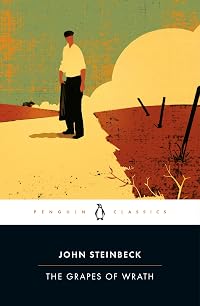
The Grapes of Wrath
by John Steinbeck
On This Page
Description
Depicts the hardships and suffering endured by the Joads as they journey from Oklahoma to California during the Depression.Tags
Recommendations


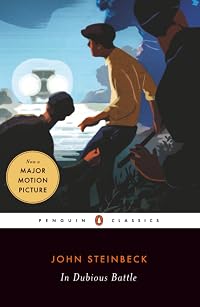

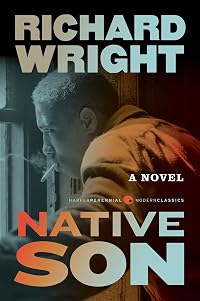
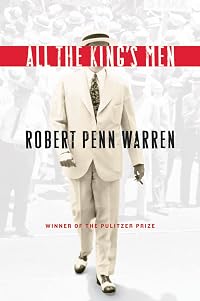

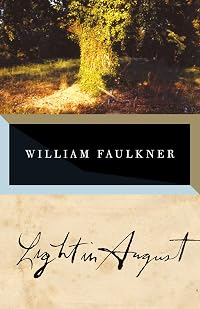
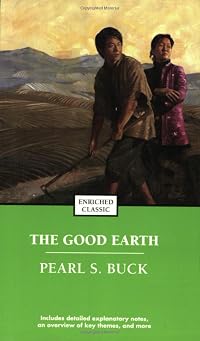
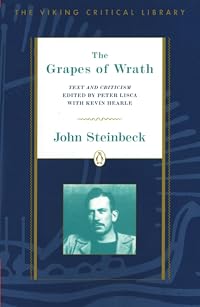
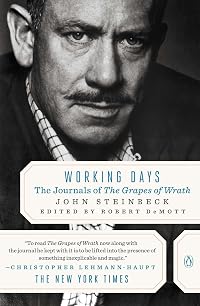
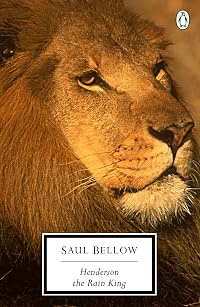

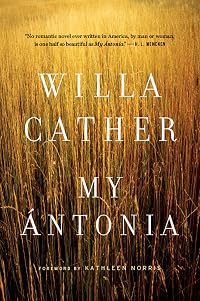
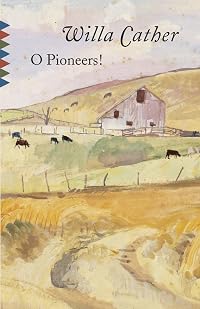
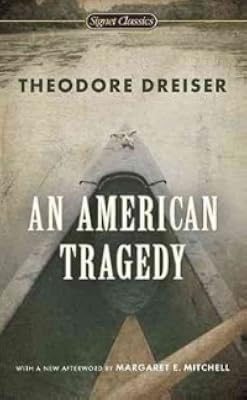
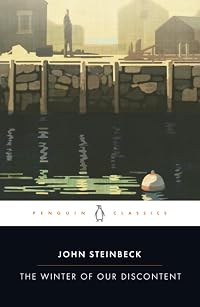
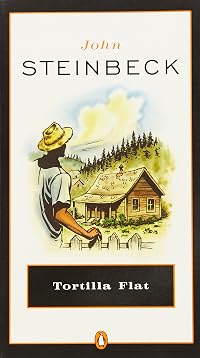

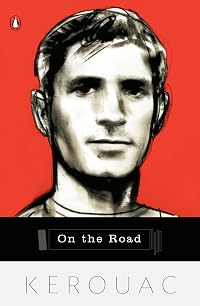
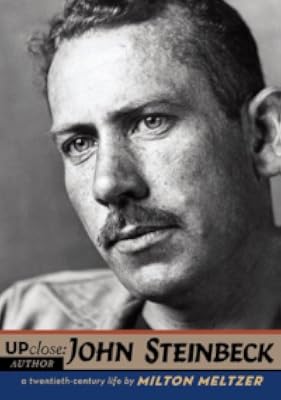
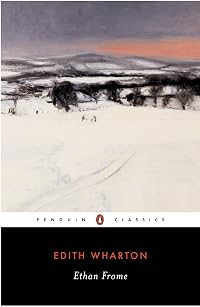
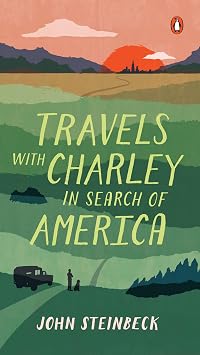

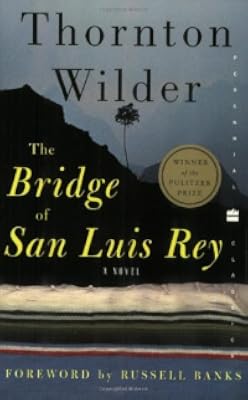
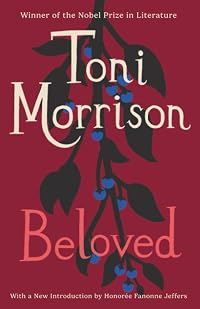
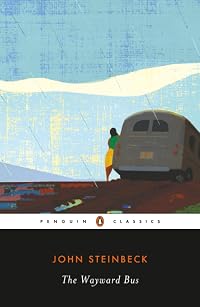
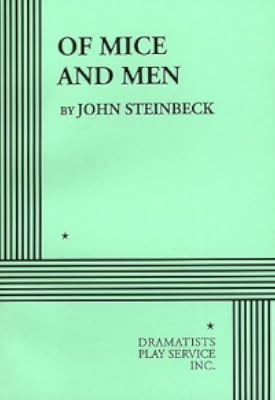
Member Recommendations
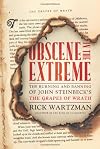
Obscene in the Extreme: The Burning and Banning of John Steinbeck's the Grapes of Wrath by Rick Wartzman
RidgewayGirl Centers around the controversy that exploded in California's central valleys when The Grapes of wrath was published.
80
CGlanovsky As much a story about the trials of individuals as a sweeping portrait and critique of an era.
60
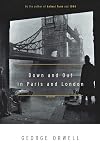
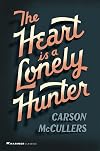
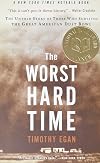
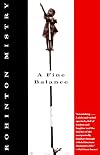
JudeyN Set in a different time and place, but similar themes. Examines the different ways in which people respond to hardship and upheaval.
20
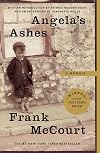
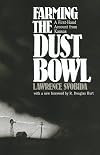
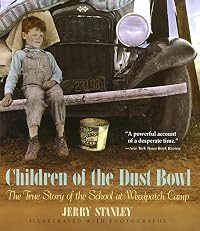
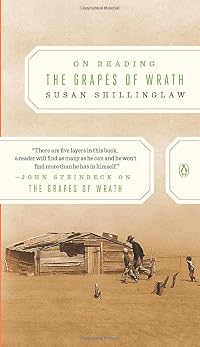
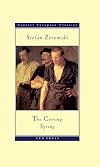
nandadevi Svobida´s book movingly describes the conditions in the Dust Bowl (he clung on for six years of crop failures) that the Joad´s left behind in their trek to California.
20

artturnerjr The only 20th century American writer who rivals Steinbeck in economy and forcefulness of language.
31
aulsmith Two stories of migrations of the working class in the US.
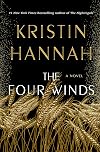

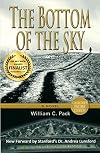
LoriMe Mr. Steinbeck wrote a gritty family saga embedded in the early to mid part of the 20th Century. Mr. Pack wrote a gritty family saga embedded in the end of the 20th Century. The characters and stories moved me equally. Both are written beautifully.


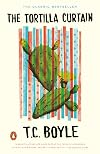
A Working Stiff's Manifesto: A Memoir of Thirty Jobs I Quit, Nine That Fired Me, and Three I Can't Remember by Iain Levison
Babou_wk Description de la vie d'un travailleur itinérant.
01

Stbalbach Called the Iranian Grapes of Wrath.
Member Reviews
It would seem that after all these years this book would be a mark of foregone history. Yet, with everything that is going on in the US and the gradual loss of power of the middle class with businesses replaced by robots, there is a chilling parallel that can be drawn, especially in the suffering of families.
It was a long and tough read, but I'm glad I stuck with it. I particularly liked Ma's toughness and Tom's rebelliousness. The ending is cause for pause, but to my mind shows how unnatural circumstances will call for unnatural actions.
It was a long and tough read, but I'm glad I stuck with it. I particularly liked Ma's toughness and Tom's rebelliousness. The ending is cause for pause, but to my mind shows how unnatural circumstances will call for unnatural actions.
What a fantastic way to begin the year's reading. I know this is a classic, and there would be little debate about its place in American literature. I probably don't have any unique commentary on this work. But I was surprised at how much I was "sucked in" to this book, and how much it stayed with me during the times I was not reading.
The powerful themes in this book, for me, were 1) the desperation of the migrant families, and 2) the intense drive to keep families together. Steinbeck is able to convey the sense of desperation so vividly, both through the Joad's experiences and through the chapters describing the world around them: the car salesmen, the people who buy off farmers' assets, the growers/canners in California, the effect of show more the heavy rain. And then Ma Joad's intensity around keeping the family intact throughout, and her ultimate failure to do so, is just heartbreaking. I can't imagine what it felt like, in an age without email and mobile telephones, to have one of your children go off in search of a better life on their own.
I know the ending is meant to cast a ray of hope, but I was left wondering what would happen next to these poor people, stranded in a barn in a flood with no money, no food, and no hopes.
Another thread running through my mind as I read was about society's apparent need to find a lower class who can be mistreated. In this book, and in that time period, it was the migrant workers. Today, we have found immigrants to do similar labor and their living conditions in many cases are not much better than the Joad's. There are many other groups who are also marginalized. Why is this? And why is it so difficult to eradicate this pattern of hate and discrimination?
Originally posted January 17 2007 on my LiveJournal blog:
http://laura0218.livejournal.com/1326.html show less
The powerful themes in this book, for me, were 1) the desperation of the migrant families, and 2) the intense drive to keep families together. Steinbeck is able to convey the sense of desperation so vividly, both through the Joad's experiences and through the chapters describing the world around them: the car salesmen, the people who buy off farmers' assets, the growers/canners in California, the effect of show more the heavy rain. And then Ma Joad's intensity around keeping the family intact throughout, and her ultimate failure to do so, is just heartbreaking. I can't imagine what it felt like, in an age without email and mobile telephones, to have one of your children go off in search of a better life on their own.
I know the ending is meant to cast a ray of hope, but I was left wondering what would happen next to these poor people, stranded in a barn in a flood with no money, no food, and no hopes.
Another thread running through my mind as I read was about society's apparent need to find a lower class who can be mistreated. In this book, and in that time period, it was the migrant workers. Today, we have found immigrants to do similar labor and their living conditions in many cases are not much better than the Joad's. There are many other groups who are also marginalized. Why is this? And why is it so difficult to eradicate this pattern of hate and discrimination?
Originally posted January 17 2007 on my LiveJournal blog:
http://laura0218.livejournal.com/1326.html show less
By good fortune, I happened to be in the middle of the book during the weekend NPR was running a centennial celebration of Woody Guthrie, who famously immortalized the protagonist Tom Joad in one of his songs and left a proud legacy of music immortalizing these times that Steinbeck was able to capture through words. I had somehow never been assigned this book to read during high school, and having read it so much later in life I feel cheated in a way (even if I did see the fairly good 1940 movie version in college), because it was excellent, easily deserving of all the fame it's gotten over the years. In the background, of course, this is a book about the effects of the Dust Bowl and Great Depression on the people of the lowland South show more and Great Plains, but Steinbeck's skill as a writer is how he's able to smoothly work in the economic transformations convulsing the country - the farm crisis, the rack-rents, deflation, Hoovervilles, company stores, wage-cutting, police corruption, and union-busting - while placing the reader's main focus on the transformations of the Joad family, their own moving emotional arcs from hope to hurt and back again. It's a story about what the Depression did to people, the things they had to do to survive as their land was taken from them and they suffered loss upon loss, and the layering of the themes of sin and redemption were quite well-done, easily on the level of Victor Hugo or Emile Zola. I've read a few books about the Depression era recently, and the human faces here definitely hit me more effectively than any number of charts and graphs. One thing that struck me during my reading was what a great hidden history of the Scotch-Irish this was as well; many of the migrants streaming into California during this time period were re-enacting the flight of their ancestors from Ulster after similar economic troubles afflicted them. David Hackett Fischer's book Albion's Seed went into a good amount of detail about the hardscrabble life these strongly religious people both escaped from and set up again in the hills of Appalachia, and the Okies in this book were seemingly just playing out another ironic act in that story. Having only read the extremely short Of Mice and Men before, I can't really say how typical this level of writing is from Steinbeck, but I'll definitely be keeping my eye out for more of his works. I saw that there were somehow negative reviews of this masterpiece of American literature, and after reading a few of those I can only conclude that those people don't enjoy books with memorable characters, great dialogue, strong narratives, or vivid portrayals of everyday life. I can see where Charles Portis got a lot of his writerly tricks from here, and this would certainly place highly in any list of the best American novels of the 20th century. show less
I’m fifty years old, I’ve read literally thousands of books, and I’m not aware that I’ve ever read a novel written by John Steinbeck. Recognizing this deficiency, I ordered a Steinbeck collection, seven of his most celebrated works including The Grapes of Wrath. I vaguely recall seeing the film starring Henry Fonda, and am well aware of the plot and the historical backdrop, but nothing can take the place of reading the work itself.
As most know, the book details the westward migration of the Joad family, as they are uprooted from their Oklahoma homestead by the evils of the Great Depression, the Oklahoma dust bowl and the advent of mechanized farming. The family harbors visions of milk and honey awaiting their arrival in show more California, or so they are assured by the numerous handbills promising plentiful work and bountiful riches. What await them instead are rapacious labor recruiters, unfriendly natives and slow but sure starvation.
Steinbeck certainly succeeds in painting a vivid and stark picture of the hopelessness faced by the migrants. His chapters alternate between “big picture” overviews and the particular heartbreaks and hazards faced by the Joads in particular. The story is an education in economics, labor relations, politics and human nature. In this day and age, it is difficult to conceive of children literally starving to death in the shadow of the most productive agricultural land in the country, much of it lying fallow and off limits to those that were capable of growing the food to nourish their own families.
This is a very powerful novel, both with regard to the emotions that it taps and the beliefs and conceptions that one holds. It provides a sharp contrast between a period when so many were desperate to work for as little as something to eat, to one in which so many demand so much without having to lift a finger. There must be a happy medium. show less
As most know, the book details the westward migration of the Joad family, as they are uprooted from their Oklahoma homestead by the evils of the Great Depression, the Oklahoma dust bowl and the advent of mechanized farming. The family harbors visions of milk and honey awaiting their arrival in show more California, or so they are assured by the numerous handbills promising plentiful work and bountiful riches. What await them instead are rapacious labor recruiters, unfriendly natives and slow but sure starvation.
Steinbeck certainly succeeds in painting a vivid and stark picture of the hopelessness faced by the migrants. His chapters alternate between “big picture” overviews and the particular heartbreaks and hazards faced by the Joads in particular. The story is an education in economics, labor relations, politics and human nature. In this day and age, it is difficult to conceive of children literally starving to death in the shadow of the most productive agricultural land in the country, much of it lying fallow and off limits to those that were capable of growing the food to nourish their own families.
This is a very powerful novel, both with regard to the emotions that it taps and the beliefs and conceptions that one holds. It provides a sharp contrast between a period when so many were desperate to work for as little as something to eat, to one in which so many demand so much without having to lift a finger. There must be a happy medium. show less
I am perhaps digging my own grave by giving a negative review to the well-respected Steinbeck, but Grapes of Wrath is a sore disappointment. Steinbeck's epic is a thinly disguised forum for political, social, and religious dialogue. Unlike great literature, which can address any number of complexities or issues in the context of a larger narrative, Steinbeck presents a only a set of ideas and bends flat characters and a thin plot around these views. His characters are intended only for metaphorical interpretation and offer little substance.
Steinbeck's "interchapters," which portray misery through broad, sweeping claims (without engaging any of the main characters or advancing the plot), are the book's most interesting portions, despite show more the emotional manipulation that they set forth. To add insult to injury, the novel itself is barely literary. It feels as though Steinbeck is following a checklist of what to include in a novel. (Foreshadowing? Check. Symbolism? Check. Conflict? You betcha.) This would be bad enough by itself, but it isn't even done subtly. Steinbeck might as well have put up neon signs pointing out the literary devices used. He seems to cram as much into the novel as he can, only for the sake of including, rather than for any intrinsic merit. Finally, the messages themselves are somewhat strange. The tone of much of the novel can be described as guilt-mongering - Steinbeck's characters are in a particularly bleak situation, victimized by the Depression, the Dust Bowl, and capitalist land owners - and the readers are made to feel guilty for something that others have done. At the risk of repeating myself, this guilt comes from the narrator's direct condemnations, not through the reader's own understanding of the text or connection with the characters.
Moreover, the book has many religious themes - from the prose style, which imitates the text of the Old Testament, to the very title, which alludes to Revelation - yet the religious "messages" are quite sacrilegious. The main protagonist's epiphany comes from rejecting traditional doctrines (even the idea that all humans have a soul) in exchange for looser, pseudo-Christian ideals. The characters in the text who support traditional ideals are either evil hypocrites or in the case of the heroes (specifically, Granma) laughable, foolish, and senile because of their naive ignorance. This book does not present ideas in an intellectual fashion; it is not worthy to be counted among the greats. I am not criticizing the inclusion of a set of ideas, or even of the Marxist, communist, or religious undertones. I am criticizing Steinbeck's absolute failure write a story with a moral. He opts, instead, for a moral disguised as a story. show less
Steinbeck's "interchapters," which portray misery through broad, sweeping claims (without engaging any of the main characters or advancing the plot), are the book's most interesting portions, despite show more the emotional manipulation that they set forth. To add insult to injury, the novel itself is barely literary. It feels as though Steinbeck is following a checklist of what to include in a novel. (Foreshadowing? Check. Symbolism? Check. Conflict? You betcha.) This would be bad enough by itself, but it isn't even done subtly. Steinbeck might as well have put up neon signs pointing out the literary devices used. He seems to cram as much into the novel as he can, only for the sake of including, rather than for any intrinsic merit. Finally, the messages themselves are somewhat strange. The tone of much of the novel can be described as guilt-mongering - Steinbeck's characters are in a particularly bleak situation, victimized by the Depression, the Dust Bowl, and capitalist land owners - and the readers are made to feel guilty for something that others have done. At the risk of repeating myself, this guilt comes from the narrator's direct condemnations, not through the reader's own understanding of the text or connection with the characters.
Moreover, the book has many religious themes - from the prose style, which imitates the text of the Old Testament, to the very title, which alludes to Revelation - yet the religious "messages" are quite sacrilegious. The main protagonist's epiphany comes from rejecting traditional doctrines (even the idea that all humans have a soul) in exchange for looser, pseudo-Christian ideals. The characters in the text who support traditional ideals are either evil hypocrites or in the case of the heroes (specifically, Granma) laughable, foolish, and senile because of their naive ignorance. This book does not present ideas in an intellectual fashion; it is not worthy to be counted among the greats. I am not criticizing the inclusion of a set of ideas, or even of the Marxist, communist, or religious undertones. I am criticizing Steinbeck's absolute failure write a story with a moral. He opts, instead, for a moral disguised as a story. show less
I am 53 and had never read anything Steinbeck! Not in high school, not in college and certainly not for fun, after all, the classics are boring - right?!
WRONG!! If you haven't read it - RUN, not walk, and get yourself a copy. You won't regret it.
As soon as I started, GoW got me. The writing style blew my mind. Steinbeck is a master. He paints the picture so completely, with such simple, yet powerful prose...I almost felt I was an Okie, too!
The horrible realities faced by the Joad family remind us how life can change in the blink of an eye (esp true now). Family is everything. Strength is instinctive - you do what you have to do to survive. The bottom is never really the bottom.
In the end, GoW confirmed what I have always lived by : show more Everything happens for a reason. There MUST be a higher power guiding events in our lives.... if not, what's the point! show less
WRONG!! If you haven't read it - RUN, not walk, and get yourself a copy. You won't regret it.
As soon as I started, GoW got me. The writing style blew my mind. Steinbeck is a master. He paints the picture so completely, with such simple, yet powerful prose...I almost felt I was an Okie, too!
The horrible realities faced by the Joad family remind us how life can change in the blink of an eye (esp true now). Family is everything. Strength is instinctive - you do what you have to do to survive. The bottom is never really the bottom.
In the end, GoW confirmed what I have always lived by : show more Everything happens for a reason. There MUST be a higher power guiding events in our lives.... if not, what's the point! show less
I read up to chapter 11, then read reviews and summaries of the book before reading the ending and moving this to my “did not finish” shelf.
(Note: I had to create a “did not finish” shelf just for this book. I am not the sort to perpetually start reading books only to toss them aside unfinished.)
I could see what the author was doing and appreciated that he accomplished his goal so well but I just have no interest in spending more hours of my life continuing to read the rest of the book.
The descriptive scenes of the environment are beautifully cinematic in their composition and there is a description of an iron man on an iron monster (a tractor driven by a man who has become little more than a replaceable cog in a wheel) that show more is so stunningly written that I dog-eared the page so I could easily find it again.
Aside from those two things of note, however, the book has no redeeming qualities. Not every story needs to have a happy ending or to be uplifting or positive or hopeful to be a good one (this one has none of those qualities), but when it is also not in the least bit enjoyable to read, I have a hard time justifying spending time I can never regain on continuing to read it.
Not one of the characters introduced thus far is at all likable or endearing. Their dialogue is so excessively riddled with profanity that I counted over 80 occurrances before I stopped numbering them (and remember, I only read chapters 1-10). The ending is not at all satisfying and is actually quite strange; perhaps even a little disturbing.
All in all, this was just not the book for me. There are others that I think far more worthy of the descriptors commonly bestowed upon masterful works, and I could not be happier (or more relieved) to put this book away knowing I shall never finish it so I can move on to another (much better) classic. show less
(Note: I had to create a “did not finish” shelf just for this book. I am not the sort to perpetually start reading books only to toss them aside unfinished.)
I could see what the author was doing and appreciated that he accomplished his goal so well but I just have no interest in spending more hours of my life continuing to read the rest of the book.
The descriptive scenes of the environment are beautifully cinematic in their composition and there is a description of an iron man on an iron monster (a tractor driven by a man who has become little more than a replaceable cog in a wheel) that show more is so stunningly written that I dog-eared the page so I could easily find it again.
Aside from those two things of note, however, the book has no redeeming qualities. Not every story needs to have a happy ending or to be uplifting or positive or hopeful to be a good one (this one has none of those qualities), but when it is also not in the least bit enjoyable to read, I have a hard time justifying spending time I can never regain on continuing to read it.
Not one of the characters introduced thus far is at all likable or endearing. Their dialogue is so excessively riddled with profanity that I counted over 80 occurrances before I stopped numbering them (and remember, I only read chapters 1-10). The ending is not at all satisfying and is actually quite strange; perhaps even a little disturbing.
All in all, this was just not the book for me. There are others that I think far more worthy of the descriptors commonly bestowed upon masterful works, and I could not be happier (or more relieved) to put this book away knowing I shall never finish it so I can move on to another (much better) classic. show less
Members
- Recently Added By
Published Reviews
ThingScore 100
Seventy years after The Grapes of Wrath was published, its themes – corporate greed, joblessness – are back with a vengeance. ... The peaks of one's adolescent reading can prove troughs in late middle age. Life moves on; not all books do. But 50 years later, The Grapes of Wrath seems as savage as ever, and richer for my greater awareness of what Steinbeck did with the Oklahoma dialect and show more with his characters. show less
added by tim.taylor
This is the sort of book that stirs one so deeply that it is almost impossible to attempt to convey the impression it leaves. It is the story of today's Exodus, of America's great trek, as the hordes of dispossessed tenant farmers from the dust bowl turn their hopes to the promised land of California's fertile valleys. The story of one family, with the "hangers-on" that the great heart of show more extreme poverty sometimes collects, but in that story is symbolized the saga of a movement in which society is before the bar. What an indictment of a system — what an indictment of want and poverty in the land of plenty! There is flash after flash of unforgettable pictures, sharply etched with that restraint and power of pen that singles Steinbeck out from all his contemporaries. There is anger here, but it is a deep and disciplined passion, of a man who speaks out of the mind and heart of his knowledge of a people. show less
added by Richardrobert
Lists

The Guardian's 1000 Novels Everyone Must Read
1,005 works; 550 members

1001 Books You Must Read Before You Die
1,448 works; 1,134 members

Classics you know you should have read but probably haven't
421 works; 408 members

Pulitzer Prize Winners for Fiction
102 works; 54 members

Radcliffe's 100 Best Novel of the 20th Century
100 works; 32 members

Read the book and saw the movie
1,170 works; 195 members
501 Must-Read Books
529 works; 72 members
BBC Big Read
191 works; 45 members

Best Historical Fiction
620 works; 261 members
Le Monde - Les 100 livres du siècle
121 works; 25 members
20th Century Literature
1,161 works; 54 members

Great American Novels
158 works; 40 members
Favourite Books
1,819 works; 309 members
Newsweek's Top 100 Books: The Meta-List
100 works; 18 members

Recommend the 20 best books you've read in the last five years
2,168 works; 606 members
Literature About Social Class
134 works; 19 members
New York Public Library's Books of the Century
120 works; 20 members

Favorite Long Books
330 works; 41 members
Novels from The Guardian's Great American Novelist Tournament
148 works; 24 members

The Top Ten: Writers Pick Their Favorite Books
240 works; 31 members
Best Family Stories
241 works; 22 members
PBS The Great American Read
100 works; 21 members
Historical Fiction
889 works; 90 members
Banned Books Week 2014
268 works; 63 members
Larry McCaffery's 20th Century Greatest Hits: 100 English-Language Books
103 works; 12 members
Best Political Fiction
92 works; 12 members

In or About the 1930s
198 works; 27 members

Best Books About Journeys and Quests
117 works; 30 members

New York Public Library's Books of the Century - All
170 works; 14 members
Harold Bloom - The Western Canon: D. The Chaotic Age
833 works; 24 members

Top Five Books of 2013
1,562 works; 715 members
Time Magazine's "All-Time 100"
113 works; 15 members

Best family sagas
244 works; 32 members
Folio Society
831 works; 53 members
Books That Changed Me
158 works; 47 members
The American Experience
173 works; 18 members
Blue Pyramid 1,276 Best Books of All Time
1,248 works; 32 members

Canon de la narrativa universal del siglo XX
254 works; 6 members
LibraryThingers' 1001 Books You Must Read Before You Die
442 works; 30 members

Books Featured on Gilmore Girls
307 works; 21 members

Nobel Price Winners
222 works; 20 members
Banned or Challenged Books
400 works; 41 members

BBC Big Read
100 works; 10 members

Books You Read During High School (For School)
301 works; 52 members

Best Workplace Fiction
47 works; 18 members
Time's All-Time 100 Novels
100 works; 27 members

Books Set in California
112 works; 15 members
Books I've Read More Than Once
602 works; 49 members

100 Most Recommended Works
100 works; 11 members
One Book, Many Authors
441 works; 40 members

Top Five Books of 2015
811 works; 240 members
1,001 BYMRBYD Concensus
723 works; 27 members

Top Five Books of 2021
604 works; 181 members
Top 100 to Read before you Die
109 works; 7 members

1964 College Preparatory Reading List
202 works; 8 members
Daria Morgendorffer's Bookshelf
70 works; 5 members

A Novel Cure
742 works; 23 members
Readable Classics
110 works; 15 members
The Guardian's 100 Best Novels Written in English
105 works; 13 members
Great Books Favorites
71 works; 6 members
Fiction about the Working Class
74 works; 10 members
Best of American Literature
146 works; 9 members
Twentieth Century Greatest Hits
27 works; 11 members
The Greatest Books
99 works; 5 members

Books Read in 2016
4,666 works; 197 members

100 World Classics
99 works; 15 members
The Modern Library's 100 Best Novels: The Board's List
85 works; 6 members
Books Read in 2015
3,299 works; 129 members

Carole's List
445 works; 13 members
Five star books
1,756 works; 108 members
Fake Top 100 Fiction
81 works; 4 members

1930s
262 works; 5 members

Books Read in 2017
4,249 works; 129 members

Publisher's Weekly Bestsellers - Part II - 1940 - 1979
355 works; 5 members

Amanda's Guaranteed Books
110 works; 5 members
The American West
18 works; 2 members
My list of 100 books to read next
100 works; 4 members
Books Featured on Readers' Review of the Diane Rehm Show
161 works; 8 members
The College Board: 101 Great Books Recommended for College-Bound Readers
111 works; 7 members
Jordan B. Peterson's Recommended Books
104 works; 5 members

Most Depressing Books
69 works; 16 members

A's favorite novels
100 works; 3 members
CCE 1000 Good Books List
1,033 works; 12 members

Rory Gilmore Book Club
193 works; 5 members

feasting on fiction
24 works; 5 members
My 100 Favorite Books of All Time
57 works; 2 members
Books Set in Oklahoma
7 works; 2 members

99 Bücher, die man gelesen haben muss
37 works; 1 member
Literary Travelogue of the United States Challenge
133 works; 6 members
Best Books of the 20th Century
193 works; 5 members
Literature which inspired Pop songs
85 works; 9 members

the ultimate desert island list
14 works; 2 members

100
56 works; 1 member

aijowenuwaneaw
10 works; 1 member

Summer Books
82 works; 9 members

Books Read in 2020
4,379 works; 124 members
My Favourite Books
86 works; 5 members

Llibres que he llegit el 2010
35 works; 1 member

Llibres que he llegit el 2016
36 works; 1 member
American Lit for Eng 11 Research Project
368 works; 6 members

Books Read in 2004
200 works; 7 members

Tammen Keltainen kirjasto
81 works; 1 member

Food Fiction
24 works; 7 members
Our Favorite Banned Books
138 works; 122 members
Canon de la narrativa universal del s. XX (cicutadry)
499 works; 3 members
'Books You Can't Live Without: The Top 100', The Guardian, 2007
156 works; 7 members
The 150 Greatest Novels of All Time
150 works; 6 members
Books That Made Us Cry
278 works; 145 members

Recommended Reading : 600 Classics Reviewed, Editors of Salem Press, 2015
634 works; 6 members

top 100
39 works; 1 member
.
396 works; 1 member

The Torchlight List
95 works; 1 member
Widely acclaimed, one book per year
105 works; 3 members
Must Read as Soon As Possible
5 works; 1 member
Very Long Novels
15 works; 1 member
NPR Books You Love: Books That Shaped You in High School
26 works; 1 member
Reading LIst
648 works; 1 member
School Made Us Read It
380 works; 196 members
Books We Want To Read Again For The First Time
384 works; 160 members
Books We Couldn't Put Down
443 works; 197 members
bound
100 works; 1 member

el
1,139 works; 1 member
The Complete Rory Gilmore Reading List
506 works; 5 members
Modern Library's 100 Best Novels
100 works; 2 members
Banned Books
40 works; 2 members

The Five Books That Represent Us
391 works; 148 members
Retrospective of 20th- and 21st-century literature
154 works; 1 member
DigitalDreamDoor top 300
300 works; 4 members

Penguin Random House
458 works; 4 members

The Atlantic's The Great American Novel
136 works; 12 members
KayStJ's to-read list
1,616 works; 11 members

Down on the Farm
17 works; 6 members

Books Read in 2012
816 works; 34 members

LT picks: Blue Books
197 works; 44 members

Sonlight Books
1,487 works; 25 members

Books You Couldn't Finish
202 works; 32 members

Books whose title names an object usually found in the kitchen
171 works; 14 members
Tagged 20th Century
33 works; 4 members
Income Inequality
20 works; 4 members

School Library Journal - 2012 Top 100 Children's Novels
68 works; 8 members
BingoDOG - Books With Natural Disasters: Fiction
39 works; 11 members

Armed Services Editions
150 works; 1 member

Read
293 works; 4 members

Allie's Wishlist
217 works; 2 members
Exodus in literature
12 works; 3 members

Books Read in 2021
5,361 works; 114 members
Novels/Poems/Short Stories/Anything Storytelling Related
112 works; 2 members

The Art of Manliness' 100+ Books Every Man Should Read
108 works; 2 members

Greatest Books, allegedly
484 works; 9 members
AP Lit
363 works; 6 members

Mustich's 1000 Books to Read Before You Die: A Life Changing List
1,001 works; 19 members

Summer Reading 23
6 works; 1 member

Publisher's Weekly Bestsellers Part I - 1895-1939
399 works; 8 members

Fiction Books Worthy of Reading Again
37 works; 1 member

Books Read in 2010
631 works; 10 members

1970s
657 works; 23 members

Unread books
1,063 works; 82 members
Talk Discussions
Past Discussions
Steinbeckathon 2012: The Grapes of Wrath in 75 Books Challenge for 2012 (August 2012)
Author Information

In recent years Steinbeck has been elevated to a more prominent status among American writers of his generation. If not quite at the world-class artistic level of a Hemingway or a Faulkner, he is nonetheless read very widely throughout the world by readers of all ages who consider him one of the most "American" of writers. Born in Salinas County, show more California on February 27, 1902, Steinbeck was of German-Irish parentage. After four years as a special student at Stanford University, he went to New York, where he worked as a reporter and as a hod carrier. Returning to California, he devoted himself to writing, with little success; his first three books sold fewer than 3,000 copies. Tortilla Flat (1935), dealing with the paisanos, California Mexicans whose ancestors settled in the country 200 years ago, established his reputation. In Dubious Battle (1936), a labor novel of a strike and strike-breaking, won the gold medal of the Commonwealth Club of California. Of Mice and Men (1937), a long short story that turns upon a melodramatic incident in the tragic friendship of two farm hands, written almost entirely in dialogue, was an experiment and was dramatized in the year of its publication, winning the New York Drama Critics Circle Award. It brought him fame. Out of a series of articles that he wrote about the transient labor camps in California came the inspiration for his greatest book, The Grapes of Wrath (1939), the odyssey of the Joad family, dispossessed of their farm in the Dust Bowl and seeking a new home, only to be driven on from camp to camp. The fiction is punctuated at intervals by the author's voice explaining this new sociological problem of homelessness, unemployment, and displacement. As the American novel "of the season, probably the year, possibly the decade," it won the Pulitzer Prize in 1940. It roused America and won a broad readership by the unusual simplicity and tenderness with which Steinbeck treated social questions. Even today, The Grapes of Wrath remains alive as a vivid account of believable human characters seen in symbolic and universal terms as well as in geographically and historically specific ones. Ma Joad is one of the most memorable characters in twentieth-century American fiction. It is her courage that sustains the family. Steinbeck's best and most ambitious novel after The Grapes of Wrath is East of Eden (1952), a saga of two American families in California from before the Civil War through World War I. Cannery Row (1945), The Wayward Bus (1947), and Sweet Thursday (1955) are lighter works that find Steinbeck returning to the lighthearted tone of Tortilla Flat as he recounts picaresque adventures of modern-day picaros. The Winter of Our Discontent (1961) struck some reviewers as being appropriately titled because of its despairing treatment of humanity's fall from grace in a wasteland world where money is king. Steinbeck also wrote important nonfiction, including Russian Journal (1948) in collaboration with the photographer Robert Capa; Once There Was a War (1958) and America and Americans (1966), which features pictures by 55 leading photographers and a 70-page essay by Steinbeck. His interest in marine biology led to two books primarily about sea life, Sea of Cortez (1941) (with Edward F. Ricketts) and The Log from the Sea of Cortez (1951). Travels with Charley (1962) is an engaging account of his journey of rediscovery of America, which took him through approximately 40 states. Steinbeck was married three times and died in New York City on December 20, 1968 of heart disease and congestive heart failure. He was 66, and had been a life-long smoker. (Bowker Author Biography) show less
Some Editions
Awards and Honors
Awards
Distinctions
Notable Lists
BBC's Big Read (29)
Torchlight List (32.1)
The Great American Novels (1939)
Daniel S. Burt's Novel 100 (054 – 54)
Series
Belongs to Publisher Series
Keltainen kirjasto (11)
Keltainen pokkari (25)
Zephyr Books (28)
Gallimard, Folio (83-7343)
Nobelpreisträger Coron-Verlag (weiß) (1962 (USA))
Tascabili [Bompiani] (496)
Penguin Modern Classics (833)
Lanterne (L 272)
dtv (10474)
Work Relationships
Is contained in
The Grapes of Wrath / The Moon is Down / Cannery Row / East of Eden / Of Mice and Men by John Steinbeck
Has the adaptation
Is abridged in
Was inspired by
Inspired
Has as a reference guide/companion
Has as a study
Has as a commentary on the text
Has as a student's study guide
Has as a teacher's guide
Common Knowledge
- Canonical title*
- Furore
- Original title
- The Grapes of Wrath
- Original publication date
- 1939
- People/Characters
- Tom Joad, Jr.; Tom "Pa" Joad, Sr.; Jim Casy (the Preacher); Muley Graves; Ma Joad; William James "Granpa" Joad (show all 26); Granma Joad; Noah Joad; Al Joad; Ruthie Joad; Winfield Joad; Rose of Sharon "Rosasharn" Joad; Willy Feeley; Connie Rivers; Ivy Wilson; Sairy Wilson; Timothy Wallace; Wilkie Wallace; Mr. Thomas; Jim Rawley; Annie Littlefield; Ella Summers; Jessie Bullitt; Lisbeth Sandry; Floyd Knowles; Aggie Wainwright
- Important places
- Hooverville, California, USA; Sallisaw, Oklahoma, USA; Route 66, USA; Bakersfield, California, USA; Great Plains, USA; Tulare, California, USA (show all 11); Highway 99, USA; Pixley, California, USA; Kern County, California, USA; Tulare County, California, USA; San Joaquin Valley, California, USA
- Important events
- Great Depression; Dust Bowl Era
- Related movies
- The Grapes of Wrath (1940 | IMDb); American Playhouse: The Grapes of Wrath (1991 | IMDb)
- Epigraph*
- Widziałem przyjście Pana, płaszcz chwały Go odziewał i z takiej szedł winnicy, co rodzi grona gniewu.
(Z pieśni robotników murzyńskich na plantacjach) - Dedication
- To CAROL
who willed this book
To
TOM
who lived it - First words
- To the red country and part of the gray country of Oklahoma, the last rains came gently, and they did not cut the scarred earth.
- Quotations
- Now the going was easy, and all the legs worked, and the shell boosted along, waggling from side to side. A sedan driven by a forty-year-old woman approached. She saw the turtle and swung to the right, off the highway, the wh... (show all)eels screamed and a cloud of dust boiled up. Two wheels lifted for a moment and then settled. The car skidded back onto the road, and went on, but more slowly. The turtle had jerked into its shell, but now it hurried on, for the highway was burning hot.
And now a light truck approached, and as it came near, the driver saw the turtle and swerved to hit it. His front wheel struck the edge of the shell, flipped the turtle like a tiddly-wink, spun it like a coin, and rolled it off the highway. The truck went back to its course along the right side. Lying on its back, the turtle was tight in its shell for a long time. But at last its legs waved in the air, reaching for something to pull it over. Its front foot caught a piece of quartz and little by little the shell pulled over and flopped upright. The wild oat head fell out and three of the spearhead seeds stuck in the ground. And as the turtle crawled on down the embankment, its shell dragged dirt over the seeds. The turtle entered a dust road and jerked itself along, drawing a wavy shallow trench in the dust with its shell. The old humorous eyes looked ahead, and the horny beak opened a little. His yellow toe nails slipped a fraction in the dust.
[Penguin ed., pp. 15-16; Chapter 3]
"The cars of the migrant people crawled out of the side roads onto the great cross-country highway, and they took the migrant way to the West. … And because they were lonely and perplexed, because they had all come from a p... (show all)lace of sadness and worry and defeat, and because they were all going to a mysterious new place … a strange thing happened: the twenty families became one family, the children were the children of all. The loss of home became one loss, and the golden time in the West was one dream."
A large drop of sun lingered on the horizon and then dripped over and was gone, and the sky was brilliant over the spot where it had gone, and a torn cloud, like a bloody rag, hung over the spot of it's going.
"They breathe profits; they eat the interest on money. If they don't get it, they die the way you die without air, without side-meat."
"The bank is something more than men, I tell you. It's the monster. Men made it, but they can't control it."
... and in the eyes of the people there is failure; and in the eyes of the hungry there is a growing wrath. In the souls of the people the grapes of wrath are filling and growing heavy, growing heavy for the vintage.
"It don't take no nerve to do somepin when there ain't nothin' else you can do." - Last words
- (Click to show. Warning: May contain spoilers.)She looked up and across the barn, and her lips came together and smiled mysteriously.
- Blurbers
- Woollcott, Alexander; Cowley, Malcolm; Sinclair, Upton; Parker, Dorothy; Van Doren, Carl; Fadiman, Clifton
- Original language
- American English
- Canonical DDC/MDS
- 813.52
- Canonical LCC
- PS3537.T3234
- Disambiguation notice
- Please do not combine John Steinbeck's original 1939 novel, The Grapes of Wrath, with any film treatment, critical edition, notes (Monarch, Barron's, Sparks, Cliff, etc.), screenplay, or other adaptations of the same t... (show all)itle. Thank you.
*Some information comes from Common Knowledge in other languages. Click "Edit" for more information.
Classifications
Statistics
- Members
- 39,149
- Popularity
- 76
- Reviews
- 518
- Rating
- (4.12)
- Languages
- 24 — Albanian, Arabic, Catalan, Chinese, Czech, Danish, Dutch, English, Estonian, Finnish, French, German, Greek, Hungarian, Italian, Japanese, Norwegian (Bokmål), Polish, Portuguese, Romanian, Russian, Spanish, Swedish, Turkish
- Media
- Paper, Audiobook, Ebook
- ISBNs
- 259
- UPCs
- 1
- ASINs
- 328