On This Page
Description
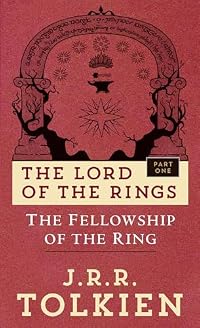
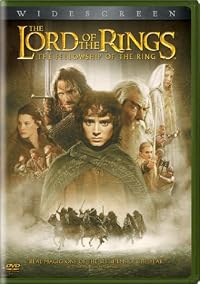
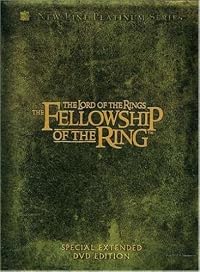
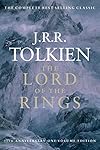
One Ring to rule them all, One Ring to find them, One Ring to bring them all and in the darkness bind them. In ancient times the Rings of Power were crafted by the Elven-smiths, and Sauron, the Dark Lord, forged the One Ring, filling it with his own power so that he could rule all others. But the One Ring was taken from him, and though he sought it throughout Middle-earth, it remained lost to him. After many ages it fell into the hands of Bilbo Baggins, as told in The Hobbit. In a sleepy show more village in the Shire, young Frodo Baggins finds himself faced with an immense task, as his elderly cousin Bilbo entrusts the Ring to his care. Frodo must leave his home and make a perilous journey across Middle-earth to the Cracks of Doom, there to destroy the Ring and foil the Dark Lord in his evil purpose. show lessTags
Recommendations


Member Recommendations
Kittso I LOVE THE LORD OF THE RINGS, my brother absolutely LOVES it like me, actually every family member LOVES it!
53
Death_By_Papercut Long, epic fantasy.
55

SonoranDreamer Epic fantasy world with dragons, magic, and a book that comes with a map of the world.
23
Member Reviews
2021 review:
I've returned to Middle-earth (once again, after a six-year absence, in winter).
This time round I did what I have long desired, and outlined the whole damn book. I can now report that Fellowship has five-act structure (I suspect the individual books also have five-act structure, but don't quote me on that). All this pedantry helped me understand the shape of this novel and the operation of five-act structure itself, which can be opaque to those of us who have learned to write novels as if they were films. (The interminable chapters at Rivendell are themselves the third act. Lothlórien is not an afterthought, but integral to the denouement of the story.)
I admired the construction of each chapter and how Tolkien avoids show more writing an episodic story by continually looking backward or forward. In countless scenes, the characters are looking back at landscapes they've crossed, or listening to Aragorn describe the trek they're about to make in loving geological detail. This attention to setting knits each section of the story to those before and after and grounds the characters in their journey; we have a visceral sense of distance crossed, time passed, vistas we will never see again.
The attention to landscape also supports the guiding themes of the novel - the inevitability of change and loss, and our possible responses to it. I have more thoughts that I hope to get down about reading this novel during a long moment when time has gone melty and fear (of death, change, loss of power) is the presiding mood. Suffice it to say, there's something almost Daoist about the narrative's insistence on the inevitability of conflict and the generative nature of loss, smallness, refusal of power (though of course Tolkien's guiding theology is Christian, of a distinctly non-American bent).
There are so many passages here that sound uncanny echoes of our present world, though Tolkien's reliance on and propagation of racist and classist tropes continuously undercut the themes of his story. A recent podcast episode on Orientalism in fantasy fiction made me frantically scribble MORIA~ZIONISM? on the envelope I was using as a bookmark. It's hard not to read Aragorn's fated restoration, a counterpoint to lost kingdoms and failing magic, as conservative wish-fulfillment. Yet my speculation that the Dunlanders represent a Celtic remnant only led to the discovery that Tolkien favored Irish independence - the politics of Middle-earth are incoherent in the way that most stories about Dark Lords are bound to be.
I got pretty teary when Galadriel gives Sam his box of earth. May 2021 be the year when a beautiful woman promises us that someday we will return home, however unfamiliar that place may be, and plant a garden.
2015 review:
This is a good book to read every five years in the heart of winter.
I've read LotR too many times to count, but this time it felt like a wholly new book. I appreciated the clarity of the prose and Tolkien's deftness at creating suspense, horror, and wonder. Middle-earth and its inhabitants are painted in very few strokes and thus have the vividness of dreams.
(For that reason, the eternal fan dithering about Balrog wings and Legolas' hair color totally misses the point—you, the reader, decide what color Legolas' hair is. As a younger person, I absolutely read these novels with a fannish impatience, wanting to know details that are beyond the scope of Tolkien's prose. Now I have learned to be patient and trust my own imagination.)
(But just to be clear, Balrogs definitely do not have wings.)
Once more, the Shire was awesome and charming. I love how it is simply and unequivocally a pre-industrial England that never was (and which certainly does not belong in this quasi-medieval world). I suspect that Pippin may be an Oxford undergraduate. I have an image of him and Merry boating on the Isis and eating cucumber sandwiches.
December 2009 review:
This was, I think, my first time actually reading LotR directly after The Hobbit. It was a weird experience! The first half of Fellowship really is still in the world of The Hobbit, which reflects the experiences of the hobbits themselves, but also of course is the legacy of Tolkien's writing process. In many ways he used the actual process of creating the novel to structure the novel.
Some thoughts, from the point-of-view of someone who has read this book way too many times:
Everything set in the Shire is just totally awesome and charming. This allows the Shire to be a tangible presence through the rest of the novel. Bilbo is also a great character - Tolkien took the last scene of The Hobbit where Bilbo composes his first poem, and just ran with it.
Everything from Frodo's departure until Bree feels very episodic and Hobbit-y. Which does work, but I'm still not sure about Tom Bombadil. Tom Bombadil stops the novel. He knows this. He laughs in the face of plot. Would it have been better for Tolkien to have put something else there? Not sure. Tom Bombadil is the first one to tell them stories about the past, and it's there that Frodo has his dream of Tol Eressea. So Tolkien thought he was important to the larger whole at least, even once the novel had grown past his initial conception of The Hobbit II.
Aragorn is a lot of fun. I like how he can converse at the level of the hobbits and of the Elves. People who complain about Arwen being a non-character need to go back and reread Aragorn telling the story of Luthien and Beren. There is so much emotion on the page there.
Moria is awesome but in some ways has nothing to do with the larger story, besides a convenient place to kill Gandalf. We learn a bunch about Dwarves that is interesting if you've read The Hobbit but will never come up again. But that's Lord of the Rings for you. Soon after that we hear the Amroth and Nimrodel story which is cool and sad but also unrelated to anything, except to illustrate that Bad Things Happen To Elves.
I believe it was Peter Jackson who said in the film commentary that if you were writing Lord of the Rings as an original screenplay you would never put in Lothlorien and Galadriel. This shows that screenwriting is a silly business, because everything of importance in Fellowship pretty much happens in Lothlorien. Okay, slight exaggeration, but it's there that we really understand what the Ring is and what it will do to Middle-earth, and get our first metaphorical glimpse at the ship that will bear Frodo and Galadriel away at the end. Once Frodo offers Galadriel the Ring and is refused, he is set on his course to Mordor.
I also really liked the fording of the river Nimrodel to signal their entrance into Lothlorien - a symbol of purification that I hadn't noticed before.
This used to be my favorite book of the trilogy, but of course Tolkien never wanted it split up as a trilogy, and rereading it I can't help but look forward to the more substantial, less Tom Bombadil-y bits that come later! show less
I've returned to Middle-earth (once again, after a six-year absence, in winter).
This time round I did what I have long desired, and outlined the whole damn book. I can now report that Fellowship has five-act structure (I suspect the individual books also have five-act structure, but don't quote me on that). All this pedantry helped me understand the shape of this novel and the operation of five-act structure itself, which can be opaque to those of us who have learned to write novels as if they were films. (The interminable chapters at Rivendell are themselves the third act. Lothlórien is not an afterthought, but integral to the denouement of the story.)
I admired the construction of each chapter and how Tolkien avoids show more writing an episodic story by continually looking backward or forward. In countless scenes, the characters are looking back at landscapes they've crossed, or listening to Aragorn describe the trek they're about to make in loving geological detail. This attention to setting knits each section of the story to those before and after and grounds the characters in their journey; we have a visceral sense of distance crossed, time passed, vistas we will never see again.
The attention to landscape also supports the guiding themes of the novel - the inevitability of change and loss, and our possible responses to it. I have more thoughts that I hope to get down about reading this novel during a long moment when time has gone melty and fear (of death, change, loss of power) is the presiding mood. Suffice it to say, there's something almost Daoist about the narrative's insistence on the inevitability of conflict and the generative nature of loss, smallness, refusal of power (though of course Tolkien's guiding theology is Christian, of a distinctly non-American bent).
There are so many passages here that sound uncanny echoes of our present world, though Tolkien's reliance on and propagation of racist and classist tropes continuously undercut the themes of his story. A recent podcast episode on Orientalism in fantasy fiction made me frantically scribble MORIA~ZIONISM? on the envelope I was using as a bookmark. It's hard not to read Aragorn's fated restoration, a counterpoint to lost kingdoms and failing magic, as conservative wish-fulfillment. Yet my speculation that the Dunlanders represent a Celtic remnant only led to the discovery that Tolkien favored Irish independence - the politics of Middle-earth are incoherent in the way that most stories about Dark Lords are bound to be.
I got pretty teary when Galadriel gives Sam his box of earth. May 2021 be the year when a beautiful woman promises us that someday we will return home, however unfamiliar that place may be, and plant a garden.
2015 review:
This is a good book to read every five years in the heart of winter.
I've read LotR too many times to count, but this time it felt like a wholly new book. I appreciated the clarity of the prose and Tolkien's deftness at creating suspense, horror, and wonder. Middle-earth and its inhabitants are painted in very few strokes and thus have the vividness of dreams.
(For that reason, the eternal fan dithering about Balrog wings and Legolas' hair color totally misses the point—you, the reader, decide what color Legolas' hair is. As a younger person, I absolutely read these novels with a fannish impatience, wanting to know details that are beyond the scope of Tolkien's prose. Now I have learned to be patient and trust my own imagination.)
(But just to be clear, Balrogs definitely do not have wings.)
Once more, the Shire was awesome and charming. I love how it is simply and unequivocally a pre-industrial England that never was (and which certainly does not belong in this quasi-medieval world). I suspect that Pippin may be an Oxford undergraduate. I have an image of him and Merry boating on the Isis and eating cucumber sandwiches.
December 2009 review:
This was, I think, my first time actually reading LotR directly after The Hobbit. It was a weird experience! The first half of Fellowship really is still in the world of The Hobbit, which reflects the experiences of the hobbits themselves, but also of course is the legacy of Tolkien's writing process. In many ways he used the actual process of creating the novel to structure the novel.
Some thoughts, from the point-of-view of someone who has read this book way too many times:
Everything set in the Shire is just totally awesome and charming. This allows the Shire to be a tangible presence through the rest of the novel. Bilbo is also a great character - Tolkien took the last scene of The Hobbit where Bilbo composes his first poem, and just ran with it.
Everything from Frodo's departure until Bree feels very episodic and Hobbit-y. Which does work, but I'm still not sure about Tom Bombadil. Tom Bombadil stops the novel. He knows this. He laughs in the face of plot. Would it have been better for Tolkien to have put something else there? Not sure. Tom Bombadil is the first one to tell them stories about the past, and it's there that Frodo has his dream of Tol Eressea. So Tolkien thought he was important to the larger whole at least, even once the novel had grown past his initial conception of The Hobbit II.
Aragorn is a lot of fun. I like how he can converse at the level of the hobbits and of the Elves. People who complain about Arwen being a non-character need to go back and reread Aragorn telling the story of Luthien and Beren. There is so much emotion on the page there.
Moria is awesome but in some ways has nothing to do with the larger story, besides a convenient place to kill Gandalf. We learn a bunch about Dwarves that is interesting if you've read The Hobbit but will never come up again. But that's Lord of the Rings for you. Soon after that we hear the Amroth and Nimrodel story which is cool and sad but also unrelated to anything, except to illustrate that Bad Things Happen To Elves.
I believe it was Peter Jackson who said in the film commentary that if you were writing Lord of the Rings as an original screenplay you would never put in Lothlorien and Galadriel. This shows that screenwriting is a silly business, because everything of importance in Fellowship pretty much happens in Lothlorien. Okay, slight exaggeration, but it's there that we really understand what the Ring is and what it will do to Middle-earth, and get our first metaphorical glimpse at the ship that will bear Frodo and Galadriel away at the end. Once Frodo offers Galadriel the Ring and is refused, he is set on his course to Mordor.
I also really liked the fording of the river Nimrodel to signal their entrance into Lothlorien - a symbol of purification that I hadn't noticed before.
This used to be my favorite book of the trilogy, but of course Tolkien never wanted it split up as a trilogy, and rereading it I can't help but look forward to the more substantial, less Tom Bombadil-y bits that come later! show less
This is the first book I've read in 2020, the year I have the goal of reading longer books and those that intimidate me. I've read the Hobbit twice, once in fifth grade and then again last year, and I think it's a fun story, but I've never read the Lord of the Rings and haven't read much high fantasy.
I read this front to back, including the foreward and prologue - this made me very concerned that this book would be incredibly dry. It is noted that the trilogy is an attempt at "a really long story that would hold the attention of readers." Thankfully the meat of the story is usually not very dry.
I feel it reads well going into it thinking it will read like a DnD campaign rather than a "typical" novel - there are long journeys, battles, show more moments of rest, and I can imagine the successes, twists and turns, and failures as being controlled by a roll of the dice. (I'm not sure how typical this is for fantasy.)
There are slow moments, a lot of songs, and a lot of names of places and people, but I really enjoyed the importance of nature and the merging of human-like beings with the natural world.
Maybe it's just my current priorities in life that have colored my reading, but there were strong themes of stewardship of the land and immersion into nature. Nature is neither good nor evil in this text, rather it's shaped by the people around it. When nurtured and tended to such as Tom Bombadil and Galadriel have done, the land is abundant and nuturing back. In other regions, there is no steward for the land, and it is wild and is neither kind nor harsh.
The corrupt and imperialistc forces destory the natural world. Sam has visions of trees being felled in the Shire and smoke pouring out from a new brick building and he wishes to be home to protect it. Sam is also the character who is gifted soil with which he can garden when his journey is over. (And presumably rebuild.)
I wasn't really expecting the strength of this message of the goodness of working with the land to create bounty rather than its neglect and/or exploitation for one's personal power and gain. This message was a nice surprise because it isn't very well conveyed in the movies.
Overall, a different type of reading experience, but I enjoyed it. show less
I haven't read Lord Of The Rings since, oooh, College at least, long dim days lost in the mist of times, but once upon a time it was a veritable pillar of my life. I certainly wouldn't have survived my teenage years without it. When the films came out, of course, I thought about rereading them but somehow never got around to it. Here I am then, middle aged and pudgy as a hobbit with a family of my own, convinced that such adventures as I have had are all well behind me. My weary feet don't pursue the road very far and when my eyes turn to far-off hills, I wonder if I can get there by the motorway, and whether there's a cafe nearby.
So why would I crack open those old worn and torn and sellotaped paperbacks Mum got for me when I was in show more hospital that year having my appendix out? (I distinctly remember the soldier with the helmet full of water washing Wormtongue's spit from the steps while I sat in the waiting room. Pardon me, but could you put the book down while we perform abdominal surgery on you? Thanks.) Why would you revisit that and remind yourself of all the things you lost and left behind, all the things you did wrong?
Because in the end, that's what The Lord Of The Rings is about. Things lost and gone away and barely remembered. Suffused with the sadness of beautiful things passing; yet there is joy in the remembering, if you can bear it. Well, I can, and that's no bad thing.
Dec 2021 - Listened to the Rob Ingles audio version. Enchanting.
Dec 2023 - listened again show less
So why would I crack open those old worn and torn and sellotaped paperbacks Mum got for me when I was in show more hospital that year having my appendix out? (I distinctly remember the soldier with the helmet full of water washing Wormtongue's spit from the steps while I sat in the waiting room. Pardon me, but could you put the book down while we perform abdominal surgery on you? Thanks.) Why would you revisit that and remind yourself of all the things you lost and left behind, all the things you did wrong?
Because in the end, that's what The Lord Of The Rings is about. Things lost and gone away and barely remembered. Suffused with the sadness of beautiful things passing; yet there is joy in the remembering, if you can bear it. Well, I can, and that's no bad thing.
Dec 2021 - Listened to the Rob Ingles audio version. Enchanting.
Dec 2023 - listened again show less
Considering that the depths of winter is usually considered my peak time for reading Tolkien, it feels almost strange to revisit the beginning of the Lord of the Rings trilogy as we take our first real steps towards spring. But when the Orlando Bloom bookmark comes up in the shuffle, and the winds of wanderlust beckon, there really is no better time to follow the Fellowship as they also take their first steps on their quest out of the Shire and towards Mount Doom. Like the early days of spring (before we get bogged down in mud season), the first book in the trilogy has a distinctly hopeful feel. Tolkien’s luscious imagery paints a rich portrait of Middle Earth, so we get to discover this new land alongside the sheltered hobbits; and show more while they face the first of their foes and lose their first companion, their quest has yet to feel the full burden and desperation that will come to overshadow the later novels. In this specific edition, we are also treated to Alan Lee’s gorgeous watercolour paintings which do so wonderfully bring the tale even further off the pages into our minds. My usual complaint of wanting evermore content still stands (lol), but it was decidedly lovely to rest our eyes from the dense text and focus instead on his intricate illustrations. I am sorely tempted to pick up the journey where we leave off here (Tolkien did mean for the tale to be one long volume rather than three distinct novels), and I may just yet polish off the trilogy over the summer. But for now we must leave Frodo and Samwise on their boat floating away from the Fellowship, and venture to other literary lands in search of different adventures. show less
I doubt if there is much point in me saying too much about such a well known and loved book. Suffice it to say that I enjoyed rereading this for the first time in many years, having forgotten just how wonderful Tolkien’s prose is, and the marvellous cadences he creates. I will admit to skipping the chapters featuring Tom Bombadil – even the first time I read the book, probably about fifty years ago, I found him an intensely irritating character, and one whose creation is so greatly at odds with the tone of the rest of the book.
It is very noticeable now how the first chapter acts as an effective bridge from [The Hobbit], clearly a children’s book, to this much darker work, an effect that Tolkien achieves effortlessly with the party show more designed for Bilbo’s ‘eleventy-first’ birthday/ The second chapter, ’The Shadow of the Past’ immediately moves us into a darker, more threatening world, and completely grips the reader’s attention/
I feel that there have been so many attempts to imitate Tolkien’s style and his world, but none have managed to replicate the grandeur of his language or the manner in which the created history underpinning Middle Earth percolates through the whole work. show less
It is very noticeable now how the first chapter acts as an effective bridge from [The Hobbit], clearly a children’s book, to this much darker work, an effect that Tolkien achieves effortlessly with the party show more designed for Bilbo’s ‘eleventy-first’ birthday/ The second chapter, ’The Shadow of the Past’ immediately moves us into a darker, more threatening world, and completely grips the reader’s attention/
I feel that there have been so many attempts to imitate Tolkien’s style and his world, but none have managed to replicate the grandeur of his language or the manner in which the created history underpinning Middle Earth percolates through the whole work. show less
I feel reluctant to review a classic like LOTR, because others have such strong opinions surrounding it; to say anything other than praiseworthy can bring about the scorn of dedicated fans. Still, there’s no other way for me to remember what I thought about The Fellowship of the Ring than by documenting it.
First, I want to make clear my understanding that the Lord of the Rings has had a profound impact on fiction, and in my opinion, defined the genre of fantasy. It is incredibly intricate and fully realized, even to a point of being tedious. At times its almost like reading an encyclopaedia or a travel guide.
I will also admit that I saw the movies first, and so going in, I already had expectations and biases. Strangely, though, I show more think seeing the movies kept a lot of the momentum going. I wanted to know where Peter Jackson got his muse from. I wanted to see how different Tolkien’s world was.
I’m going to say it. I don’t think that J.R.R. Tolkien is as great a writer as everyone thinks he is.
That isn’t to say that he isn’t creative or a master of plot. The mythology, rings, and monsters are genius. I do have some problems with his writing style, though. Sometimes the suspense is there, but often it is so bogged down with tedious things like poetry, lineage, and the lovely shape of grass blades that the momentum is nearly lost. I do understand, however, that the genre wasn’t really a thing before Tolkien came around, and so I get that he was establishing the beginnings of what fantasy is today. But fiction still needs things like ongoing suspense and a strong sense of the protagonist’s voice.
I’m going to say something else that to many will sound traitorous to fantasy. I hate Frodo.
He’s whiny, snivelling, and annoying. If I hear him say something about how heavy the ring is one more time, I swear, I’ll summon a Balrog. It seems odd to me that the ring bearer is the character whose personality is the least definable. Sam, Gandalf, and Aragorn, for example, seem much more concrete and easy to visualize. And more likeable, for that matter.
Despite my qualms, I did enjoy the first third of this (very) long novel. A lot of this rating is given to the impact that the story has had, and there is an element of respect I have to Tolkien.
4 stars. show less
First, I want to make clear my understanding that the Lord of the Rings has had a profound impact on fiction, and in my opinion, defined the genre of fantasy. It is incredibly intricate and fully realized, even to a point of being tedious. At times its almost like reading an encyclopaedia or a travel guide.
I will also admit that I saw the movies first, and so going in, I already had expectations and biases. Strangely, though, I show more think seeing the movies kept a lot of the momentum going. I wanted to know where Peter Jackson got his muse from. I wanted to see how different Tolkien’s world was.
I’m going to say it. I don’t think that J.R.R. Tolkien is as great a writer as everyone thinks he is.
That isn’t to say that he isn’t creative or a master of plot. The mythology, rings, and monsters are genius. I do have some problems with his writing style, though. Sometimes the suspense is there, but often it is so bogged down with tedious things like poetry, lineage, and the lovely shape of grass blades that the momentum is nearly lost. I do understand, however, that the genre wasn’t really a thing before Tolkien came around, and so I get that he was establishing the beginnings of what fantasy is today. But fiction still needs things like ongoing suspense and a strong sense of the protagonist’s voice.
I’m going to say something else that to many will sound traitorous to fantasy. I hate Frodo.
He’s whiny, snivelling, and annoying. If I hear him say something about how heavy the ring is one more time, I swear, I’ll summon a Balrog. It seems odd to me that the ring bearer is the character whose personality is the least definable. Sam, Gandalf, and Aragorn, for example, seem much more concrete and easy to visualize. And more likeable, for that matter.
Despite my qualms, I did enjoy the first third of this (very) long novel. A lot of this rating is given to the impact that the story has had, and there is an element of respect I have to Tolkien.
4 stars. show less
Wow, five stars to this? Betcha didn't see that one coming ...
You know, it's really great that the LotR movies exist, not because I would not be as big a fan of the books without them or because they're particularly good, but because whenever I'm wondering what I'm gonna listen to while reading the book ... the answer is right there. The soundtrack. Of course.
I used to think that every time I reread them I got a new fave character, and while that isn't really true, I tend to appreciate different characters every time. A couple of years back I started to really love Pippin (mostly because of the line "thinking? At breakfast? Good heavens!"), but this time it's all Sam.
Now, of course, I love Sam as much as anyone (and EVERYONE loves Sam), show more but I've always thought he was a bit of a dork too. Suddenly I find myself really enjoying his dorkiness, almost relating to it. I definitely relate to all his love of plants, and I think he got the best gift from Galadriel tbh, even better than both Frodo's and Gimli's. Galadriel just gets him, I guess.
Oh well, reading this book is like coming home, in the best of ways. show less
You know, it's really great that the LotR movies exist, not because I would not be as big a fan of the books without them or because they're particularly good, but because whenever I'm wondering what I'm gonna listen to while reading the book ... the answer is right there. The soundtrack. Of course.
I used to think that every time I reread them I got a new fave character, and while that isn't really true, I tend to appreciate different characters every time. A couple of years back I started to really love Pippin (mostly because of the line "thinking? At breakfast? Good heavens!"), but this time it's all Sam.
Now, of course, I love Sam as much as anyone (and EVERYONE loves Sam), show more but I've always thought he was a bit of a dork too. Suddenly I find myself really enjoying his dorkiness, almost relating to it. I definitely relate to all his love of plants, and I think he got the best gift from Galadriel tbh, even better than both Frodo's and Gimli's. Galadriel just gets him, I guess.
Oh well, reading this book is like coming home, in the best of ways. show less
Members
- Recently Added By
Published Reviews
ThingScore 88
Lists

1001 Books You Must Read Before You Die
1,448 works; 1,131 members

Read the book and saw the movie
1,170 works; 192 members

Best Fantasy Novels
821 works; 361 members
501 Must-Read Books
508 works; 71 members
NPRs your picks: top 100 Sci-Fi/Fantasy books
297 works; 78 members

Banned Books Week 2014
268 works; 63 members
Favourite Books
1,817 works; 308 members

20th Century Literature
1,161 works; 54 members

100 books to read in a lifetime
102 works; 37 members
Favourite High Fantasy Books
113 works; 22 members

1001 Children's Books You Must Read Before You Grow Up
774 works; 101 members
Books That Changed Me
156 works; 47 members

NPRs your favorites: 100 Best Ever Teen Novels
237 works; 49 members

1950s
340 works; 22 members
Favorite Childhood Books
1,602 works; 512 members

Recommend the 20 best books you've read in the last five years
2,167 works; 599 members
Favorite Long Books
330 works; 42 members
Time Magazine's "All-Time 100"
113 works; 15 members
Folio Society
831 works; 48 members

Best Friendship Stories
205 works; 16 members

Books Featured on Gilmore Girls
307 works; 21 members
Banned or Challenged Books
400 works; 41 members
Ballantine Adult Fantasy Series
85 works; 8 members
Year 9 Reading List
29 works; 3 members

1,001 BYMRBYD Concensus
723 works; 27 members

Books I've Read More Than Once
602 works; 49 members

Books tagged favorites
390 works; 30 members

Childhood Favorites
427 works; 24 members

Top Five Books of 2020
982 works; 350 members
Favorite Literary Love Stories
182 works; 101 members

Here There Be Dragons
143 works; 23 members
The 100 Best Fantasy Books of All Time
100 works; 15 members

The Seven-League Shelf
57 works; 3 members

Top Five Books of 2017
757 works; 230 members
Mind Expanding Books by hackerkid
581 works; 8 members

Allie's Favourite 150 Books
145 works; 3 members

Carole's List
445 works; 13 members

NPRs audience picks: 100 best beach reads
105 works; 12 members

Authors from England
147 works; 4 members

Rory Gilmore Book Club
193 works; 5 members

Books Read in 2023
5,547 works; 145 members
Five star books
1,755 works; 107 members
Fate vs. Free Will
63 works; 8 members
Overdue Podcast
800 works; 9 members

1970s
657 works; 23 members

Books Read in 2016
4,666 works; 197 members

Books Read in 2022
5,164 works; 111 members
Everybody Has A 'Best Books List'. Here is mine.
20 works; 1 member

Books Read in 2020
4,379 works; 123 members
Nifty Fifties
129 works; 13 members

aijowenuwaneaw
10 works; 1 member

Books Read in 2017
4,248 works; 129 members

Top 10 2021
10 works; 1 member

LIBROS DE CIENCIA FICCIÓN Y FANTASIA
60 works; 1 member
Books to Reread Someday
53 works; 7 members

Top Five Books of 2024
795 works; 264 members
'Books You Can't Live Without: The Top 100', The Guardian, 2007
156 works; 7 members

Recommended Reading : 600 Classics Reviewed, Editors of Salem Press, 2015
634 works; 6 members

EGBERTINA'S List of childhood books worthy of merit or unspeakable delight
155 works; 6 members
Books We Love to Reread
688 works; 296 members

el
1,139 works; 1 member

Book club books
22 works; 1 member
Read For Your Life
157 works; 1 member

2025 Reading List
51 works; 2 members

Fantasy TBR
17 works; 1 member

Em's (Adult) List of Read Books in 2024
24 works; 1 member

Gen X Library
245 works; 4 members

Books Finished in 2024
12 works; 1 member
Le Monde - Les 100 livres du siècle
121 works; 23 members

Books Read in 2025
4,043 works; 97 members
Books We Want To Read Again For The First Time
384 works; 160 members

𓐩hought Daughter ♱♰✟✞✝︎☨†˚₊‧꒰ა ♱ ໒꒱ ‧
38 works; 1 member

Books We Loved As Children
603 works; 252 members

Read in 2003
81 works; 1 member
Best Audiobooks
240 works; 114 members
Books We Couldn't Put Down
443 works; 197 members
The Complete Rory Gilmore Reading List
506 works; 5 members

100 knjiga
100 works; 1 member

Books Read in 2018
4,360 works; 110 members
BitLife
212 works; 4 members

Books Read in 2003
255 works; 7 members

Books Read in 2012
815 works; 34 members

Books Read in 2012 (Numbered)
168 works; 6 members
Survey of Fantasy Classics
111 works; 23 members
Best books I read in 2013
152 works; 3 members
Ambleside Books
459 works; 18 members
Honey For a Child's Heart
1,152 works; 25 members
KayStJ's to-read list
1,616 works; 11 members

Books About Boys
175 works; 15 members
Robin
21 works; 2 members

Swinging Seventies
255 works; 18 members

S.F. Masterworks (Complete)
229 works; 15 members

Books Read in 2021
5,361 works; 113 members
Novels/Poems/Short Stories/Anything Storytelling Related
112 works; 2 members

Books Read in 2001
192 works; 4 members

The Art of Manliness' 100+ Books Every Man Should Read
108 works; 2 members

um actually
76 works; 3 members

Mustich's 1000 Books to Read Before You Die: A Life Changing List
1,001 works; 18 members
Books With the Most Memorable Titles
478 works; 158 members
Fantasy Books Ranked
6 works; 1 member

Books Read in 2024
4,623 works; 126 members
Best Children's Books You've Read
197 works; 74 members

Weird and Weirder Fiction
266 works; 34 members

Unread books
1,063 works; 82 members
Talk Discussions
Past Discussions
Lord of the Rings Group Read in 2019 Category Challenge (April 2021)
Fellowship of the Ring discussion, Part II chapters 4-6 in Hogwarts Express (October 2008)
Fellowship of the Ring final discussion, Part II chapters 7-10 in Hogwarts Express (October 2008)
Fellowship of the Ring discussion, Part II chapters 1-3 in Hogwarts Express (October 2008)
Fellowship of the Ring discussion, chapters 7-9 in Hogwarts Express (September 2008)
Fellowship of the Ring discussion, chapters 4-6 in Hogwarts Express (September 2008)
Author Information

A writer of fantasies, Tolkien, a professor of language and literature at Oxford University, was always intrigued by early English and the imaginative use of language. In his greatest story, the trilogy The Lord of the Rings (1954--56), Tolkien invented a language with vocabulary, grammar, syntax, even poetry of its own. Though readers have show more created various possible allegorical interpretations, Tolkien has said: "It is not about anything but itself. (Certainly it has no allegorical intentions, general, particular or topical, moral, religious or political.)" In The Adventures of Tom Bombadil (1962), Tolkien tells the story of the "master of wood, water, and hill," a jolly teller of tales and singer of songs, one of the multitude of characters in his romance, saga, epic, or fairy tales about his country of the Hobbits. Tolkien was also a formidable medieval scholar, as evidenced by his work, Beowulf: The Monster and the Critics (1936) and his edition of Anciene Wisse: English Text of the Anciene Riwle. Among his works published posthumously, are The Legend of Sigurd and Gudrún and The Fall of Arthur, which was edited by his son, Christopher. In 2013, his title, TheHobbit (Movie Tie-In) made The New York Times Best Seller List. (Bowker Author Biography) show less
Some Editions
Awards and Honors
Notable Lists
Series
Common Knowledge
- Canonical title
- The Fellowship of the Ring
- Original title
- The Fellowship of the Ring
- Alternate titles*
- Sagan om ringen; Ringens brödraskap
- Original publication date
- 1954
- People/Characters
- Frodo Baggins; Gandalf; Samwise Gamgee ('Sam'); Aragorn II; Meriadoc "Merry" Brandybuck; Peregrin "Pippin" Took (show all 130); Legolas; Gimli; Boromir; Galadriel; Elrond (Half-elven); Saruman the White; Sauron; Amroth; Anárion; Arvedui; Arwen Undómiel; Angelica Baggins; Bilbo Baggins; Dora Baggins; Drogo Baggins; Bain; Balin; Barahir; Beorn; Beren; Queen Berúthiel; Bifur; Bob; Falco Boffin; Bofur; Fredegar Bolger; Tom Bombadil; Hugo Bracegirdle; Esmeralda Brandybuck; Gorbadoc Brandybuck; Melilot Brandybuck; Primula Baggins; Rorimac Brandybuck; Milo Brockhouse; Barliman Butterbur; Celeborn; Celebrían; Celebrimbor; Círdan; Dáin II Ironfoot; Déagol; Denethor II; Dior; Dori; Durin; Dwalin; Varda Elentári; Elendil; Elladan; Elrohir; Elwing; Erestor; Marcho Fallohide; Blanco Fallohide; Fang; Faramir; Fatty Lumpkin; Fëanor; Bill Ferny; Findegil; Finrod Felagund; Fundin; Frár; Flói; Galdor of the Havens; Andwise "Andy" Roper; Halfast Gamgee; Hamfast Gamgee; Gildor Inglorion; Glóin; Glorfindel; Harry Goatleaf; Goldberry; Gollum; Grimbeorn; Grip; Hador; Haldir of Lórien; Tobold Hornblower; Húrin; Isildur; Lindir; Lóni; Lúthien Tinúviel; Farmer Maggot; Mrs Maggot; Meneldil; Náli; Narvi; Nimrodel; Old Noakes; Nob; Nori; Ohtar; Óin; Gorhendad Brandybuck; Ori; Orophin; Odo Proudfoot; Sancho Proudfoot; Radagast the Brown; Rumil of Lórien; Lobelia Sackville-Baggins; Lotho Sackville-Baggins; Otho Sackville-Baggins; Sandyman the Miller; Ted Sandyman; Smaug; Elu Thingol; Thorin Oakenshield; Thráin II; Thranduil; Thrór; Adelard Took; Bandobras Took; Everard Took; Gerontius Took; Túrin II; Daddy Twofoot; Uglúk; Valandil of Arnor; Will Whitfoot; Eärendil; Gwaihir
- Important places
- Middle-earth; The Shire; Bree; Rivendell; Moria; Lothlórien (show all 16); Parth Galen; Bag End, Hobbiton, The Shire; Caradhras; Anduin; The Old Forest; The Barrow Downs; Weathertop; Caras Galadon; Barad-dûr; Mordor
- Important events
- The Council of Elrond
- Related movies
- The Lord of the Rings: The Fellowship of the Ring (2001 | IMDb | Peter Jackson); The Lord of the Rings (1978 | IMDb | Ralph Bakshi)
- Epigraph
- Three Rings for the Elven-kings under the sky,
Seven for the Dwarf-lords in their halls of stone,
Nine for Mortal Men doomed to die,
One for the Dark Lord on his dark throne
In the Land of Mordor where the Shadows... (show all) lie.
One Ring to rule them all, One Ring to find them,
One Ring to bring them all and in the darkness bind them
In the Land of Mordor where the Shadows lie. - First words
- Prologue - This book is largely concerned with Hobbits, and from its pages a reader may discover much of their character and a little of their history.
Chap One - When Mr. Bilbo Baggins of Bag End announced that he would shortly be celebrating his eleventy-first birthday with a party of special magnificence, there was much talk and excitement in Hobbiton. - Quotations
- Many that live deserve death. And some die that deserve life. Can you give it to them? Then do not be too quick to deal out death in judgement. For even the very wise cannot see all ends.
I regret to announce that—though, as I said, eleventy-one years is far too short a time to spend among you—this is the END. I am going. I am leaving NOW. GOOD-BYE!
The Road goes ever on and on
Down from the door where it began.
Now far away the Road has gone,
And I must follow, if I can,
Pursuing it with eager feet,
Until it joins some larger way
Where many paths an... (show all)d errands meet.
And whither then? I cannot say.
All that is gold does not glitter,
Not all those who wander are lost;
The old that is strong does not wither,
Deep roots are not reached by the frost.
From the ashes a fire shall be woken, a light from the shad... (show all)ows shall spring;
Renewed shall be blade that was broken,
The crownless again shall be king.
Health and hope grew strong in them, and they were content with each good day as it came, taking pleasure in every meal, and in every word and song. - Last words
- (Click to show. Warning: May contain spoilers.)Then shouldering their burdens, they set off, seeking a path that would bring them over the grey hills of the Emyn Muil, and down into the Land of Shadow.
- Blurbers
- C.S. Lewis; W.H. Auden; Eisley, Loren
- Original language
- English
- Canonical DDC/MDS
- 823.912
- Canonical LCC
- PR6039.O32
- Disambiguation notice
- J.R.R. Tolkien's complete work The Lord of the Rings consists of six Books, frequently bound in three Volumes:
- Volume 1: The Fellowship of the Ring, consisting of Book I, "The Ring Sets Out" and Book II, ... (show all)"The Ring Goes South";
- Volume 2: The Two Towers, consisting of Book III, "The Treason of Isengard," and Book IV, "The Ring Goes East"; and
- Volume 3: The Return of the King, consisting of Book V, "The War of the Ring," and Book VI, "The End of the Third Age," with Appendices.
*Some information comes from Common Knowledge in other languages. Click "Edit" for more information.
Classifications
Statistics
- Members
- 63,469
- Popularity
- 19
- Reviews
- 571
- Rating
- (4.38)
- Languages
- 50 — Afrikaans, Albanian, Arabic, Armenian, Basque, Belarusian, Bulgarian, Catalan, Chinese, Czech, Danish, Dutch, English, Esperanto, Estonian, Faroese, Finnish, French, Frisian, Georgian, German, Galician, Greek, Hebrew, Hungarian, Icelandic, Indonesian, Italian, Japanese, Korean, Latvian, Lithuanian, Macedonian, Norwegian (Bokmål), Norwegian, Farsi/Persian, Polish, Romanian, Russian, Serbian, Croatian, Slovak, Slovenian, Spanish, Swedish, Thai, Turkish, Ukrainian, Yiddish, Portuguese (Brazil)
- Media
- Paper, Audiobook, Ebook
- ISBNs
- 426
- UPCs
- 21
- ASINs
- 271