On This Page
Description
The adventures of a boy and a runaway slave as they travel down the Mississippi River on a raft.Tags
Recommendations





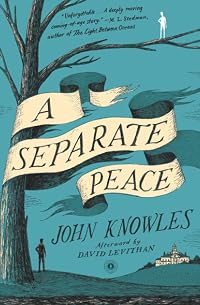
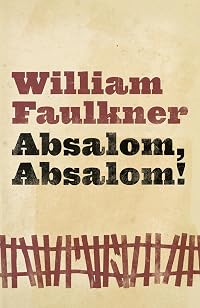
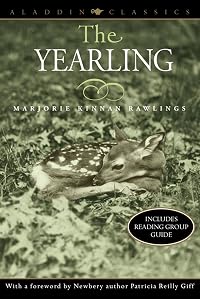


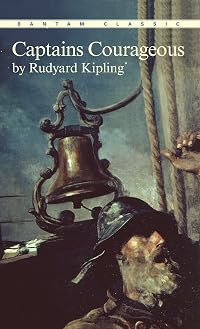

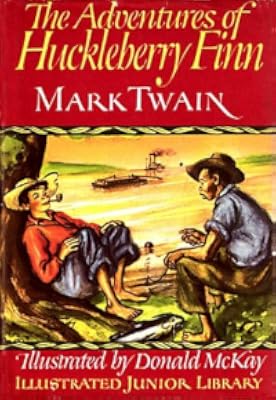



Member Recommendations
pechmerle Tremendously enlightening study of the N.E. Missouri social context from which Twain developed the character of Jim.
20
CGlanovsky Orphaned kid with plenty of street-smarts embarks on a dangerous journey interwoven with high-stakes matters from the adult world (Slavery/Russo-British Espionage).
20
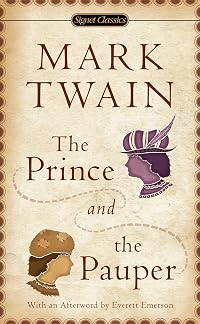
themulhern Twain and Dickens writing historical novels set in their past, but using that history as a fairly direct commentary on their present. Both books continue to be well-known and well-regarded. Of course, Dickens's past is more distant than Twain's, by a factor of about two.
CGlanovsky Disillusioned youth takes off. A liar himself, he despises frauds.
Also recommended by caflores
78
themulhern Two historical novels. "Waverly" was published something like 70 years after the events it recounts, 1815 - 1745, while "The Adventures of Huckleberry Finn" was published a little closer to the events it recounts, 1885 - c.1845. Both were intended, as far as I can tell, to influence thinking about now.
Member Reviews
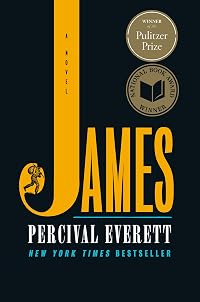
I first read Huckleberry Finn back in 1984, and I would have thought that would be enough. But just in the last five months I've read two retellings -- the graphic novel Big Jim and the White Boy: An American Classic Reimagined by David F. Walker and Marcus Kwame Anderson and the novel James by Percival Everett -- and I found myself wanting to refresh my memory of the original work to see how much the retellings kept and discarded. Indeed, they stray quite a lot, but they also amplify what Twain began.
Twain's version is amusing, ironic, satirical and sardonic. While I never tire of Huck's narration and admire the start of the book, the many digressions do wear on me. The Duke and the King overstay their welcome and Tom Sawyer all but show more ruins the ending. Still, it's easy to see why this has earned its classic status and 140 years of controversy. show less
Twain's version is amusing, ironic, satirical and sardonic. While I never tire of Huck's narration and admire the start of the book, the many digressions do wear on me. The Duke and the King overstay their welcome and Tom Sawyer all but show more ruins the ending. Still, it's easy to see why this has earned its classic status and 140 years of controversy. show less
A Coming-of-Age Story for a Nation
Picking up from the ending of The Adventures of Tom Sawyer (1876), the newly wealthy Huckleberry Finn escapes the chafing rules of civilization imposed by his new adoptive mother, the Widow Douglas, by spending his nights acting out boyish adventures with Tom and their friends. When Huck's abusive, alcoholic Pap kidnaps Huck for his money, Huck fakes his own death and sneaks out on a raft up the Mississippi River, where he encounters Jim, an escaped slave of the Widow's sister, Miss Douglas, and the two have a series of adventures as they try to float up the raft to Illinois and Jim's freedom. Mark Twain constantly juxtaposes the "gentlemanly civilization" of the Antebellum South not only with Huck and show more Jim's innocent state of nature, but also with Tom's seemingly comparatively harmless romantic fantasies of chivalry and heroism. As witness to the dangers and violence of both fantasies, 13-year-old Huck with his often wistful observations is a stand-in for all of America during the Civil War, making this Great American Novel as much the coming-of-age story of a nation as it is for a boy. In the 21st century, it is appropriate - and important - for school-aged children to read the bowdlerized version (the one with the N-word replaced with the word "slave"), but the original version needs to be available to adults who may - and should - reread it with adult awareness.
[For more on this series, see also my review of The Adventures of Tom Sawyer (1876).] show less
Picking up from the ending of The Adventures of Tom Sawyer (1876), the newly wealthy Huckleberry Finn escapes the chafing rules of civilization imposed by his new adoptive mother, the Widow Douglas, by spending his nights acting out boyish adventures with Tom and their friends. When Huck's abusive, alcoholic Pap kidnaps Huck for his money, Huck fakes his own death and sneaks out on a raft up the Mississippi River, where he encounters Jim, an escaped slave of the Widow's sister, Miss Douglas, and the two have a series of adventures as they try to float up the raft to Illinois and Jim's freedom. Mark Twain constantly juxtaposes the "gentlemanly civilization" of the Antebellum South not only with Huck and show more Jim's innocent state of nature, but also with Tom's seemingly comparatively harmless romantic fantasies of chivalry and heroism. As witness to the dangers and violence of both fantasies, 13-year-old Huck with his often wistful observations is a stand-in for all of America during the Civil War, making this Great American Novel as much the coming-of-age story of a nation as it is for a boy. In the 21st century, it is appropriate - and important - for school-aged children to read the bowdlerized version (the one with the N-word replaced with the word "slave"), but the original version needs to be available to adults who may - and should - reread it with adult awareness.
[For more on this series, see also my review of The Adventures of Tom Sawyer (1876).] show less
"I was a-trembling, because I’d got to decide,
forever, betwixt two things, and I knowed it."
Mark Twain was a genius and this his magnum opus. He wrote this story with his ear pressed to the breast of a living America. The American heart that is still alive and still ailing from the same diseases today.
Twain starts his yarn off as do most good ol' yarns, with an innocent, a boy, the "ignorant" Huck Finn. Through Huck's many misadventures, Twain is slowly peeling back curtains. Without flinching, he has slowly put the real world on stage. Like his English counterpart, Charles Dickens, he made it so comical that a whole country would eagerly read it.
And read it they did.
But now some don't think you should read it.
America is rejoicing show more in banning books by our nation's geniuses like Mark Twain, and Toni Morrison, and many others (sheesh, the self-appointed gatekeepers will even ban a book about freckles, Freckleface Strawberry). Books especially about the history and indignity of slavery are their big political targets. Those books, they say, will hurt your feelings, hurt the nation's self-image, and not advance the population's enlightened sensibilities. That's a government out of touch with reality and in touch with totalitarianism.
Banning means one thing: someone "smarter than you" thinks you should not think about something.
I say be like Huck Finn! Don't let a committee of scared grownups deny your intelligence, treat you as if they were kings and dukes, brutal fathers, and spinsters who make right only after they are dead. Take your own trip down the Mississippi River. What do you think of this book, exactly as it was written? Read it here:
https://www.gutenberg.org/ebooks/76
After you are done, feel your own trembling. That's a sign you understood Twain's genius and have intelligence and strength in you. Trust yourself. show less
forever, betwixt two things, and I knowed it."
Mark Twain was a genius and this his magnum opus. He wrote this story with his ear pressed to the breast of a living America. The American heart that is still alive and still ailing from the same diseases today.
Twain starts his yarn off as do most good ol' yarns, with an innocent, a boy, the "ignorant" Huck Finn. Through Huck's many misadventures, Twain is slowly peeling back curtains. Without flinching, he has slowly put the real world on stage. Like his English counterpart, Charles Dickens, he made it so comical that a whole country would eagerly read it.
And read it they did.
But now some don't think you should read it.
America is rejoicing show more in banning books by our nation's geniuses like Mark Twain, and Toni Morrison, and many others (sheesh, the self-appointed gatekeepers will even ban a book about freckles, Freckleface Strawberry). Books especially about the history and indignity of slavery are their big political targets. Those books, they say, will hurt your feelings, hurt the nation's self-image, and not advance the population's enlightened sensibilities. That's a government out of touch with reality and in touch with totalitarianism.
Banning means one thing: someone "smarter than you" thinks you should not think about something.
I say be like Huck Finn! Don't let a committee of scared grownups deny your intelligence, treat you as if they were kings and dukes, brutal fathers, and spinsters who make right only after they are dead. Take your own trip down the Mississippi River. What do you think of this book, exactly as it was written? Read it here:
https://www.gutenberg.org/ebooks/76
After you are done, feel your own trembling. That's a sign you understood Twain's genius and have intelligence and strength in you. Trust yourself. show less
In the Missouri river town where he lives, Huck Finn doesn't really fit in. His abusive drunk of a father is rarely around (arguably a good thing), and had the Widow Douglas not taken him in he'd have nowhere to live at all. The widow naturally aims to civilize him, forcing Huck to attend school, use good manners and learn his catechisms. Through a series of unexpected events he instead finds himself riding a raft down the Mississippi River, accompanied by Jim, an enslaved man making his break for freedom.
I first read this classic tale of adventure as assigned reading in (I think?) tenth grade. On this second read-through several of the scenes felt familiar, but many more did not. If you, as a 21st-century reader, can get past the show more problematic and extremely uncomfortable language throughout, it remains a highly entertaining and humorous story of adventure, danger, subterfuge, cunning and faking one's own death. For me, it also earns extra points for providing a handful of laugh-out-loud moments (e.g., the scene in which eleven dogs suddenly come barreling out from under Jim's bed). I also liked that I really had to scratch my head to parse some of the dialects spoken. show less
I first read this classic tale of adventure as assigned reading in (I think?) tenth grade. On this second read-through several of the scenes felt familiar, but many more did not. If you, as a 21st-century reader, can get past the show more problematic and extremely uncomfortable language throughout, it remains a highly entertaining and humorous story of adventure, danger, subterfuge, cunning and faking one's own death. For me, it also earns extra points for providing a handful of laugh-out-loud moments (e.g., the scene in which eleven dogs suddenly come barreling out from under Jim's bed). I also liked that I really had to scratch my head to parse some of the dialects spoken. show less
Now, how in the nation is a body going to start this review? Well, I'll be ding-busted!
I usually don’t like reading colloquial prose style, accented dialogue and dialects. All too often they require additional effort to decipher and are just plain irritating. However, I have to make an exception for Mark Twain because he does it better than anybody else I can think of. There is never any confusion about the meaning and his colloquial narrative style and dialogue add a great deal of humour, charm and atmosphere to the story.
Adventures of Huckleberry Finn does not need any synopsis I think, as it is one of the most widely read novel of all time. At the most basic level it is an adventure yarn of a rough young lad and an escaped slave on show more a raft down the Mississippi River, both running away from unbearable circumstances, and meeting some very colorful characters along the river. It is a very funny novel without actually being a “comic novel” in the sense that its primary purpose is not to make you laugh but to tell a ripping yarn with some serious issues embedded therein. I find it to be a generally good-natured story in spite of some underlying dark themes like slavery, parental abuse and violence. The biting social satire is delightful and Twain seems to enjoy poking fun at his favorite targets of nice but dim gentility, racists, bigots, roughnecks, con men and the religious.
There is a genuine sense of childhood innocence in Huck Finn’s first person narrative and I felt swept along with his enthusiasm for life and taste for adventures. Huck is a wonderful protagonist who is easy to identify with. Twain subtly charts the development of Huck’s morality through his experiences in this book, particularly from the time he spends with Jim, the escaped slave who he initially views as a little less than human. Jim is in fact the moral compass and the true hero of this book, much more so than Huck’s famous friend Tom Sawyer who does some highly reprehensible things in this book just for a lark*
The word “nigger” appears on just about every page of this book and I have read that Adventures of Huckleberry Finn is banned in some schools because of this***. I have to wonder whether the people who want to ban the book actually bothered to read it. Twain is very compassionate toward the black characters in this book, and – as I mentioned earlier – Jim comes out of it shining brighter than anybody else.
The book is at its funniest when detailing Tom Sawyer’s plan for rescuing Jim from captivity, his absurd adherence to the principles of a proper prison break is hilarious (though he really is an atrocious little fellow). However, the funniest part of the book for me is when Huck is trying to explain the concept of a foreign language to Jim. Twain gives an almost unassailable reason why the French should only speak English**
Adventures of Huckleberry Finn is a book I can read again and again just for the prose. Certainly if you have never read it even once you should make a bee line for it.
___________________________
Notes
I listened to the excellent audiobook edition from Librivox.org. Wonderfully read performed by John Greenman. Thank you sir!
* “What the hell? A brother's freedom ain't no game man!” - Thug Notes review (on Youtube).
Update: Having read [b:The Adventures of Tom Sawyer|24583|The Adventures of Tom Sawyer (Tom Sawyer & Huckleberry Finn, #1)|Mark Twain|https://d.gr-assets.com/books/1404811979s/24583.jpg|41326609] since reading this Huck Finn book I find that Tom in the previous book is just a naughty — kind of hyperactive — boy, not so despicable and borderline insane as he is in this book. That is some character arc! Huck Finn — after his own adventures — has become much more mature.
** "Why, Huck, doan' de French people talk de same way we does?"
"No, Jim; you couldn't understand a word they said—not a single word."
"Well, now, I be ding-busted! How do dat come?"
"I don't know; but it's so. I got some of their jabber out of a book. S'pose a man was to come to you and say Polly-voo-franzy—what would you think?"
"I wouldn' think nuff'n; I'd take en bust him over de head—dat is, if he warn't white. I wouldn't 'low no nigger to call me dat."
"Shucks, it ain't calling you anything. It's only saying, do you know how to talk French?"
"Well, den, why couldn't he say it?"
"Why, he is a-saying it. That's a Frenchman's way of saying it."
"Well, it's a blame ridicklous way, en I doan' want to hear no mo' 'bout it. Dey ain' no sense in it."
*** Apparently NewSouth Books published an edition where "nigger" is replaced by "slave" ಠ_ಠ. On the bright side, this led to publication of The Hipster Huckleberry Finn where "nigger" is replaced with "hipster" to placate the hip and sensitive. show less
I usually don’t like reading colloquial prose style, accented dialogue and dialects. All too often they require additional effort to decipher and are just plain irritating. However, I have to make an exception for Mark Twain because he does it better than anybody else I can think of. There is never any confusion about the meaning and his colloquial narrative style and dialogue add a great deal of humour, charm and atmosphere to the story.
Adventures of Huckleberry Finn does not need any synopsis I think, as it is one of the most widely read novel of all time. At the most basic level it is an adventure yarn of a rough young lad and an escaped slave on show more a raft down the Mississippi River, both running away from unbearable circumstances, and meeting some very colorful characters along the river. It is a very funny novel without actually being a “comic novel” in the sense that its primary purpose is not to make you laugh but to tell a ripping yarn with some serious issues embedded therein. I find it to be a generally good-natured story in spite of some underlying dark themes like slavery, parental abuse and violence. The biting social satire is delightful and Twain seems to enjoy poking fun at his favorite targets of nice but dim gentility, racists, bigots, roughnecks, con men and the religious.
There is a genuine sense of childhood innocence in Huck Finn’s first person narrative and I felt swept along with his enthusiasm for life and taste for adventures. Huck is a wonderful protagonist who is easy to identify with. Twain subtly charts the development of Huck’s morality through his experiences in this book, particularly from the time he spends with Jim, the escaped slave who he initially views as a little less than human. Jim is in fact the moral compass and the true hero of this book, much more so than Huck’s famous friend Tom Sawyer who does some highly reprehensible things in this book just for a lark*
The word “nigger” appears on just about every page of this book and I have read that Adventures of Huckleberry Finn is banned in some schools because of this***. I have to wonder whether the people who want to ban the book actually bothered to read it. Twain is very compassionate toward the black characters in this book, and – as I mentioned earlier – Jim comes out of it shining brighter than anybody else.
The book is at its funniest when detailing Tom Sawyer’s plan for rescuing Jim from captivity, his absurd adherence to the principles of a proper prison break is hilarious (though he really is an atrocious little fellow). However, the funniest part of the book for me is when Huck is trying to explain the concept of a foreign language to Jim. Twain gives an almost unassailable reason why the French should only speak English**
Adventures of Huckleberry Finn is a book I can read again and again just for the prose. Certainly if you have never read it even once you should make a bee line for it.
___________________________
Notes
I listened to the excellent audiobook edition from Librivox.org. Wonderfully read performed by John Greenman. Thank you sir!
* “What the hell? A brother's freedom ain't no game man!” - Thug Notes review (on Youtube).
Update: Having read [b:The Adventures of Tom Sawyer|24583|The Adventures of Tom Sawyer (Tom Sawyer & Huckleberry Finn, #1)|Mark Twain|https://d.gr-assets.com/books/1404811979s/24583.jpg|41326609] since reading this Huck Finn book I find that Tom in the previous book is just a naughty — kind of hyperactive — boy, not so despicable and borderline insane as he is in this book. That is some character arc! Huck Finn — after his own adventures — has become much more mature.
** "Why, Huck, doan' de French people talk de same way we does?"
"No, Jim; you couldn't understand a word they said—not a single word."
"Well, now, I be ding-busted! How do dat come?"
"I don't know; but it's so. I got some of their jabber out of a book. S'pose a man was to come to you and say Polly-voo-franzy—what would you think?"
"I wouldn' think nuff'n; I'd take en bust him over de head—dat is, if he warn't white. I wouldn't 'low no nigger to call me dat."
"Shucks, it ain't calling you anything. It's only saying, do you know how to talk French?"
"Well, den, why couldn't he say it?"
"Why, he is a-saying it. That's a Frenchman's way of saying it."
"Well, it's a blame ridicklous way, en I doan' want to hear no mo' 'bout it. Dey ain' no sense in it."
*** Apparently NewSouth Books published an edition where "nigger" is replaced by "slave" ಠ_ಠ. On the bright side, this led to publication of The Hipster Huckleberry Finn where "nigger" is replaced with "hipster" to placate the hip and sensitive. show less
eBook
What is there to say? It's my favorite novel. Funny and profound and moving; It's almost hard to read because it spins my thoughts and imagination in all different directions on almost every page.
I suppose you could take something different from it every time you pick it up, but for me, it's about recognizing that everyone has the power to shape their beliefs to meet the world they encounter. As Huck travels down the river, he keeps adopting and discarding the belief systems he encounters until he finally realizes that it's up to him to decide what's right and what's wrong. That he's unable to stick to his guns is what makes this both a tragic work and a profoundly real one.
Huck, the boy, is the man I aspire to be. Smart, despite show more not being educated; wise, yet not without flaws. It's a good day when I recognize his cadences in my thoughts. show less
What is there to say? It's my favorite novel. Funny and profound and moving; It's almost hard to read because it spins my thoughts and imagination in all different directions on almost every page.
I suppose you could take something different from it every time you pick it up, but for me, it's about recognizing that everyone has the power to shape their beliefs to meet the world they encounter. As Huck travels down the river, he keeps adopting and discarding the belief systems he encounters until he finally realizes that it's up to him to decide what's right and what's wrong. That he's unable to stick to his guns is what makes this both a tragic work and a profoundly real one.
Huck, the boy, is the man I aspire to be. Smart, despite show more not being educated; wise, yet not without flaws. It's a good day when I recognize his cadences in my thoughts. show less
Yes, yes…this is another instance of not having yet read a book virtually everyone in the English speaking world had read when they were young. Yet it is true…I had never before this past week read The Adventures of Huckleberry Finn.
In this case I am glad I hadn’t read it before. Having grown up with the Disney-ification of The Adventures of Tom Sawyer I am convinced had I read this as a youth, it would not have made any more an impression on me than any other book of adventure. Having now read it as an adult I can appreciate the biting social and political commentary contained within the story. Themes of slavery and freedom, gender roles, the role of religious worship, class and regional distinctions, and competing economic show more systems are all contained in the prose….wrapped within a humorous, and exciting adventure story.
I would absolutely love it if a movie were made of this that was actually true to the book; one that explored all of these themes and didn’t shy away from the ugliness Huck and Jim encounter on their adventure. Coen brothers…are you listening? :) show less
In this case I am glad I hadn’t read it before. Having grown up with the Disney-ification of The Adventures of Tom Sawyer I am convinced had I read this as a youth, it would not have made any more an impression on me than any other book of adventure. Having now read it as an adult I can appreciate the biting social and political commentary contained within the story. Themes of slavery and freedom, gender roles, the role of religious worship, class and regional distinctions, and competing economic show more systems are all contained in the prose….wrapped within a humorous, and exciting adventure story.
I would absolutely love it if a movie were made of this that was actually true to the book; one that explored all of these themes and didn’t shy away from the ugliness Huck and Jim encounter on their adventure. Coen brothers…are you listening? :) show less
Members
- Recently Added By
Published Reviews
ThingScore 100
Mark Twain may be called the Edison of our literature. There is no limit to his inventive genius, and the best proof of its range and originality is found in this book, in which the reader's interest is so strongly enlisted in the fortunes of two boys and a runaway negro that he follows their adventures with keen curiosity, although his common sense tells him that the incidents are as absurd show more and fantastic in many ways as the "Arabian Nights." show less
added by Shortride
Lists

The Guardian's 1000 Novels Everyone Must Read
1,005 works; 551 members

1001 Books You Must Read Before You Die
1,448 works; 1,133 members

Classics you know you should have read but probably haven't
421 works; 409 members

Favorite Childhood Books
1,651 works; 519 members
501 Must-Read Books
529 works; 72 members

Great American Novels
158 works; 42 members

Top-Rated Books on LibraryThing
272 works; 117 members

Read the book and saw the movie
1,170 works; 195 members
Favourite Books
1,820 works; 316 members
Newsweek's Top 100 Books: The Meta-List
100 works; 18 members
Southern Fiction
212 works; 52 members
1001 Children's Books You Must Read Before You Grow Up
774 works; 100 members

The Top Ten: Writers Pick Their Favorite Books
240 works; 31 members
Banned Books Week 2014
268 works; 63 members

Favourite 19th century fiction
257 works; 60 members
Favorite Coming of Age Novels.
164 works; 51 members

Best Books About Journeys and Quests
117 works; 30 members
Literature About Social Class
134 works; 19 members
Historical Fiction
889 works; 91 members
Books I've Read More Than Once
602 works; 49 members
Best Satire
188 works; 29 members
Folio Society
831 works; 53 members
Best Friendship Stories
205 works; 16 members
Picaresque Novels
22 works; 9 members

Favorite Long Books
330 works; 42 members

child hero ~ adult novel
60 works; 12 members

Novels from The Guardian's Great American Novelist Tournament
148 works; 24 members

Best middle grade books
130 works; 24 members

Best Adventure Stories
66 works; 15 members
19th Century
190 works; 16 members
Best Political Fiction
92 works; 12 members
Out of Copyright
244 works; 14 members

Top Five Books of 2013
1,562 works; 721 members
Unreliable Narrators
170 works; 43 members
Blue Pyramid 1,276 Best Books of All Time
1,248 works; 32 members

Best high-school English books reread later in life
30 works; 21 members
Harold Bloom - The Western Canon: C. The Democratic Age
336 works; 15 members
LibraryThingers' 1001 Books You Must Read Before You Die
442 works; 29 members

Books Featured on Gilmore Girls
307 works; 21 members
W. S. Maugham's Reading Suggestions for Spiritual Enrichment: American
13 works; 4 members

Books You Read During High School (For School)
301 works; 53 members
Banned or Challenged Books
400 works; 41 members
Fiction For Men
142 works; 11 members
The Well-Educated Mind Reading Challenge
75 works; 7 members
The American Experience
173 works; 18 members

Elevenses
316 works; 88 members

1964 College Preparatory Reading List
202 works; 8 members

Western World's Greatest Books - Project Gutenberg
295 works; 15 members
One Book, Many Authors
441 works; 40 members

Best Laugh Out Loud Books
143 works; 49 members
Mensa for Kids Excellence in Reading Award Program (Grades 9-12)
116 works; 5 members
100 Most Recommended Works
100 works; 11 members
How to Read a Book's Recommended Reading List
309 works; 10 members
Readable Classics
110 works; 15 members
Daria Morgendorffer's Bookshelf
70 works; 5 members
Honey For a Child's Heart
1,152 works; 25 members
Works That Inspired Disney Movies
119 works; 13 members

Newark Public Library's 1904 List of a Thousand of the Best Novels
95 works; 5 members
Best of American Literature
146 works; 9 members
1,001 BYMRBYD Concensus
723 works; 27 members
Best First Lines
133 works; 8 members

The Guardian's 100 Best Novels Written in English
105 works; 13 members

Sonlight Books
1,487 works; 25 members
Phi Beta Kappa reading list
260 works; 8 members
The Greatest Books
99 works; 5 members

100 World Classics
99 works; 15 members

Mind Expanding Books by hackerkid
581 works; 8 members
Books read by Pat in "The Silver Linings Playbook"
7 works; 2 members
A Novel Cure
742 works; 23 members

Publisher's Weekly Bestsellers Prior to 1895 in Chronological Order
95 works; 6 members
Lamont's Hundred Best Novels (1947)
100 works; 4 members
Books with a Character's Name as the Title
130 works; 10 members
Ambleside Books
459 works; 18 members
Mensa for Kids Excellence in Reading Award Program (Grades 9-12)
116 works; 3 members

Rory Gilmore Book Club
193 works; 5 members
Great Books Favorites
71 works; 6 members
Five star books
1,767 works; 109 members

Books where the characters of color deserved so much better
7 works; 2 members
The College Board: 101 Great Books Recommended for College-Bound Readers
111 works; 7 members
College Reads (Lit Edition)
75 works; 5 members

Books Read in 2015
3,299 works; 126 members

Movie Adaptations
111 works; 4 members
NPRs audience picks: 100 best beach reads
105 works; 12 members

Satori Smiles Children's Book List
262 works; 7 members

A's favorite novels
100 works; 3 members

Books Read in 2023
5,638 works; 147 members
Literary Travelogue of the United States Challenge
133 works; 6 members

BBC Top Books
78 works; 3 members

Well-Educated Mind
150 works; 3 members
Victorian Period
113 works; 10 members
Overdue Podcast
808 works; 9 members
Realism
9 works; 1 member
Racism and Race Relations in Literature
48 works; 9 members

Books on my Kindle
162 works; 3 members

100 books that changed the world
31 works; 2 members
My Favourite Books
86 works; 5 members

Mad Men Reading List
25 works; 5 members
Trinity College Booklist (1951): Class Ten, English Literature
358 works; 5 members

501 Must-Read Books
10 works; 1 member
Children's Book List author unknown
12 works; 1 member

1880s
14 works; 2 members
DELETE
48 works; 2 members

http://thegreatestbooks.org's Greatest Fiction Books
59 works; 1 member

Plan to Read Books
75 works; 1 member

Books Set in Missouri
29 works; 4 members
American Lit for Eng 11 Research Project
368 works; 6 members

Books Read in 2004
210 works; 7 members

Puffin Books 70th anniversary handbook recommendations
537 works; 10 members
Books Mentioned in The Wedding Planner's Daughter series
107 works; 2 members

Literary Works Read in College
316 works; 15 members

The 150 Greatest Novels of All Time
150 works; 6 members

Physical TBR List
68 works; 1 member

Top Five Books of 2024
795 works; 264 members
Books in Riverdale
123 works; 3 members
The Well-Educated Mind, Susan Wise Bauer, 2016
179 works; 3 members
Recommended Reading : 600 Classics Reviewed, Editors of Salem Press, 2015
634 works; 6 members
Books I Read Before The Invention Of The Internet.
144 works; 1 member
Our Favorite Banned Books
138 works; 122 members
Books We Love to Reread
688 works; 297 members
BitLife
212 works; 4 members

Stealth- and Posthumously- Edited Books
15 works; 1 member
Banned Books
40 works; 2 members
Works in the game of Authors
44 works; 2 members

Have read
18 works; 1 member

American Realism
15 works; 1 member

DigitalDreamDoor top 300
300 works; 4 members
The Complete Rory Gilmore Reading List
506 works; 5 members

.
194 works; 2 members
Novels Set on Rivers
14 works; 2 members
School Made Us Read It
380 works; 196 members

Favorite Kids Books (chapter, middle grade)
170 works; 4 members
NPR Books You Love: Books That Shaped You in High School
26 works; 1 member
My Mad Men Reading List
47 works; 1 member
.
396 works; 1 member
el
1,139 works; 1 member

Fiction with Men's Given Names in the Title
302 works; 11 members

Summer 2026
18 works; 1 member

Books in the Bibliography of Freethinkers by Susan Jacoby
155 works; 1 member

bound
100 works; 1 member
Books Read 2026
21 works; 1 member

Book Titles Mentioned In Newberry Medal And Honor Books
884 works; 3 members
Franklit
95 works; 1 member
Rory Gilmore Reading Challenge
34 works; 2 members
Books I Wrote Essays on
34 works; 1 member
Best books I read in 2013
152 works; 3 members

Read
293 works; 4 members
Armed Services Editions
150 works; 1 member
Novels/Poems/Short Stories/Anything Storytelling Related
112 works; 2 members

Books Tagged Abuse
152 works; 4 members
Books I read in high school
52 works; 1 member

The Art of Manliness' 100+ Books Every Man Should Read
108 works; 2 members

Books Read in 2013
1,630 works; 51 members

Tonikat reading completed on Librarything journals
329 works; 2 members

Tagged 19th Century
104 works; 7 members

Books Read in 2019
4,052 works; 110 members
Novels of Great Adventures
34 works; 6 members

Biggest Disappointments
606 works; 168 members

Tagged Runaways
13 works; 2 members

Books About Boys
175 works; 15 members

Books Read in 2024
4,727 works; 128 members
Rory Gilmore Challenge 1-100
27 works; 1 member
New Lifetime Reading Plan by Fadiman and Major
225 works; 5 members
Books available on Open Library
171 works; 4 members
Books With Our Favorite First Lines
168 works; 104 members
Mustich's 1000 Books to Read Before You Die: A Life Changing List
1,001 works; 20 members

AP Lit
363 works; 6 members

Before Austen Comes Aesop
318 works; 9 members

Greatest Books, allegedly
484 works; 9 members
Most Popular Penguins
70 works; 5 members
Fiction (Mostly) in Selective Bibliography of American Literature 1775-1900
431 works; 3 members
Books tagged unread
41 works; 1 member

Read on.... from Kwame Alexander's book \ BOOKED
31 works; 1 member
The Joe Rogan Experience Library
254 works; 3 members
Books tagged favorites
390 works; 29 members
1970s
657 works; 23 members

Unread books
1,063 works; 87 members
Talk Discussions
Past Discussions
New edition of Huckleberry Finn eliminates the "n-word" in Pro and Con (June 2011)
Author Information

2,763+ Works 209,310 Members
Mark Twain was born Samuel L. Clemens in Florida, Missouri on November 30, 1835. He worked as a printer, and then became a steamboat pilot. He traveled throughout the West, writing humorous sketches for newspapers. In 1865, he wrote the short story, The Celebrated Jumping Frog of Calaveras County, which was very well received. He then began a show more career as a humorous travel writer and lecturer, publishing The Innocents Abroad in 1869, Roughing It in 1872, and, Gilded Age in 1873, which was co-authored with Charles Dudley Warner. His best-known works are The Adventures of Tom Sawyer, Mississippi Writing: Life on the Mississippi, and The Adventures of Huckleberry Finn. He died of a heart attack on April 21, 1910. (Bowker Author Biography) show less

Mark Twain has a Legacy Library. Legacy libraries are the personal libraries of famous readers, entered by LibraryThing members from the Legacy Libraries group.
Some Editions
Awards and Honors
Series

Belongs to Publisher Series
Penguin English Library, 2012 series (2012-04)
Toppers In Strip (8)
Grandes Novelas de Aventuras (XLIX)
Riverside Editions (A15)
Airmont Classics (4)
KOD (13)
Tus libros (8)
Gouden Lijsters (200263)
El País Aventuras (19)
Geração Público (21)
detebe-Klassiker (21370)
Penguin Clothbound Classics (2013)
Letras Universales (267)
Zephyr Books (35)
GF Flammarion (700)
The Pocket Library (PL-42)
Reader's Enrichment Series (RE 306)
Corticelli [Mursia] (43)
Prisma Klassieken (45)
Dean's Classics (50)
Les ales esteses (293)
Amstelboeken (182-183)
Puffin Story Books (80)
Doubleday Dolphin (C98)
insel taschenbuch (0126)
Work Relationships
Is contained in
Mississippi Writings: Tom Sawyer / Life on the Mississippi / Huckleberry Finn / Pudd'nhead Wilson by Mark Twain
Four Classic American Novels (The Scarlet Letter / The Adventures of Huckleberry Finn / The Red Badge of Courage / Billy Budd) by Willard Thorp
Adventures of Huckleberry Finn: Complete Text With Introduction, Historical Contexts, Critical Essays (New Riverside Edi by Mark Twain
The Adventures of Huckleberry Finn/The Adventures of Tom Sawyer/The Prince and the Pauper by Mark Twain
90 Masterpieces You Must Read (Vol.1): Novels, Poetry, Plays, Short Stories, Essays, Psychology & Philosophy by Various
Mark Twain : the adventures of Tom Sawyer ; the adventures of Huckleberry Finn ; Mark Twain's sketches ; Mark Twain's (burlesque) autobiography ; the prince and the pauper ; a Connecticut yankee in King Authur's court by Mark Twain
Five Novels: Adventures of Tom Sawyer / Prince and the Pauper / Adventures of Huckleberry Finn / Connecticut Yankee in King Arthur's Court / Pudd'nhead Wilson by Mark Twain
The Adventures of Tom Sawyer / The Adventures of Huckleberry Finn / Tom Sawyer Abroad / Tom Sawyer, Detective by Mark Twain
The Adventures of Tom Sawyer / The Adventures of Huckleberry Finn / Tom Sawyer Detective by Mark Twain
Is retold in
Has the adaptation
Is abridged in
Is expanded in
Inspired
Finn by Jon Clinch
Has as a reference guide/companion
Has as a study
Has as a commentary on the text
Has as a student's study guide
Has as a teacher's guide
Common Knowledge
- Canonical title
- The Adventures of Huckleberry Finn
- Original title
- Adventures of Huckleberry Finn
- Alternate titles
- The Adventures of Huckleberry Finn
- Original publication date
- 1884 (United Kingdom) (United Kingdom); 1884; 1885 (United States) (United States)
- People/Characters
- Huckleberry Finn; Tom Sawyer; Jim [Huckleberry Finn]; Miss Watson; The Duke [Huckleberry Finn] (a/k/a the Duke of Bridgewater); The King [Huckleberry Finn] (a/k/a the Dauphin or Louis XVII) (show all 31); Pap Finn (father of Huckleberry Finn); Judge Thatcher; Joe Harper; Ben Rogers; Widow Douglas; Tommy Barnes; Judith Loftus; Jim Turner; Jake Packard; Saul Grangerford (husband of Rachel Grangerford); Rachel Grangerford (wife of Saul Grangerford); Bob Grangerford (son of Saul and Rachel Grangerford); Tom Grangerford (son of Saul and Rachel Grangerford); Buck Grangerford (son of Saul and Rachel Grangerford); Emmaline Grangerford (daughter of Saul and Rachel Grangerford); Charlotte Grangerford (daughter of Saul and Rachel Grangerford); Sofphia Grangerford (daughter of Saul and Rachel Grangerford); Harney Shepherdson; Mary Jane Wilks (daughter of Peter Wilks); Susan Wilks (daughter of Peter Wilks); Joanna Wilks (daughter of Peter Wilks); Peter Wilks; Sally Phelps (wife of Silas Phelps); Silas Phelps (husband of Sally Phelps); Aunt Sally
- Important places
- Mississippi River, USA; Hannibal, Missouri, USA; St. Petersburg, Missouri, USA
- Related movies
- Huck and the King of Hearts (1994 | IMDb); The Adventures of Huck Finn (1993 | IMDb); The Adventures of Huck Finn (2012 | IMDb)
- Epigraph
- NOTICE Persons attempting to find a motive in this narrative will be prosecuted ; persons attempting to find a moral in it will be banished ; persons attempting to find a plot in it will be shot. By Order of the Author, Per G... (show all).G., Chief of Ordnance
- First words
- You don't know about me without you have read a book by the name of The Adventures of Tom Sawyer; but that ain't no matter.
- Quotations
- To be, or not to be; that is the bare bodkin
That makes calamity of so long life;
For who would fardels bear, till Birnam Wood do come to Dunsinane,
But that the fear of something after death
Murders th... (show all)e innocent sleep,
Great nature's second course,
And makes us rather sling the arrows of outrageous fortune
Than fly to others that we know not of.
There's the respect must give us pause:
Wake Duncan with thy knocking! I would thou couldst;
For who would bear the whips and scorns of time,
The oppressor's wrong, the proud man's contumely,
The law's delay, and the quietus which his pangs might take,
In the dead waste and middle of the night, when churchyards yawn
In customary suits of solemn black,
But that the undiscovered country from whose bourne no traveller returns,
Breathes forth contagion on the world,
And thus the native hue of resolution, like the poor cat i' the adage,
Is sicklied o'er with care,
And all the clouds that lowered o'er our housetops,
With this regard their currents turn awry,
And lose the name of action.
'Tis a consummation devoutly to be wished. But soft you, the fair Ophelia:
Ope not thy ponderous and marble jaw,
But get thee to a nunnery—go!
It was a close place. I took it up, and held it in my hand. I was a trembling, because I'd got to decide, for ever, betwixt two things, and I knowed it. I studied a minute, sort of holding my breath, and then says to myself:<... (show all)br>
"All right, then, I'll go to hell"—and tore it up. - Last words
- (Click to show. Warning: May contain spoilers.)I been there before. The End. Yours truly, Huck Finn.
- Original language
- English
Classifications
- Genres
- Fiction and Literature, Children's Books, General Fiction
- DDC/MDS
- 813.4 — Literature & rhetoric American literature in English American fiction in English Later 19th Century 1861-1900
- LCC
- PS1305 .A1 — Language and Literature American literature American literature Individual authors 19th century
- BISAC
Statistics
- Members
- 49,553
- Popularity
- 40
- Reviews
- 586
- Rating
- (3.88)
- Languages
- 36 — Afrikaans, Arabic, Bosnian, Catalan, Chinese, Czech, Danish, Dutch, English, Esperanto, Estonian, Finnish, French, German, Galician, Greek, Hebrew, Hungarian, Italian, Japanese, Korean, Lithuanian, Norwegian (Bokmål), Norwegian, Panjabi, Farsi/Persian, Polish, Romanian, Russian, Slovenian, Spanish, Swedish, Thai, Turkish, Portuguese (Portugal), Portuguese (Brazil)
- Media
- Paper, Audiobook, Ebook
- ISBNs
- 1,647
- UPCs
- 32
- ASINs
- 876