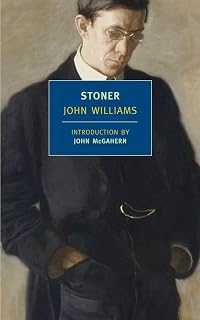
Stoner
by John Williams
On This Page
Description
William Stoner is born at the end of the nineteenth century into a dirt-poor Missouri farming family. Sent to a university to study agronomy, he instead falls in love with English literature and embraces a scholar's life. As the years pass, Stoner encounters a series of disappointments: marriage into a "proper" family estranges him from his parents; his career is stymied; his wife and daughter turn coldly away from him; a transforming experience of new love ends under threat of scandal. show more Driven ever deeper within himself, Stoner rediscovers the stoic silence of his forebears and confronts an essential solitude. John Williams' deeply moving novel is a work of quiet perfection. William Stoner emerges not only as an archetypal American but as an unlikely existential hero, standing in stark relief against an unforgiving world. show lessTags
Recommendations























Member Recommendations



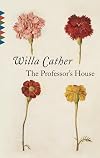
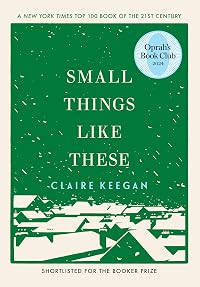
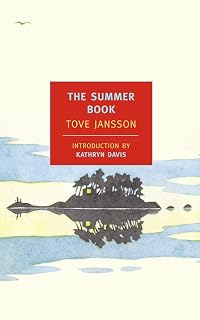
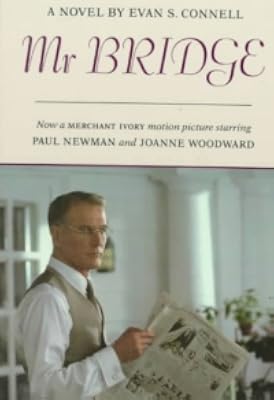
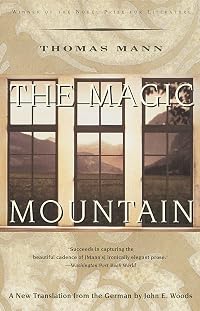
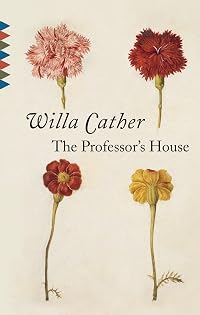
Petroglyph Both "Stoner" and "The professor's house" deal with a small-town university professor vaguely comfortable with his family life, who fits uneasily in a new life that sorta kinda happened to him while he was focusing on his work. Both present compelling immersions in bittersweet nostalgia and the ever-present sense that life could have gone entirely different (and perhaps it should have).
Also recommended by shaunie
30

SCPeterson Melancholy main characters whose devotion to duty is met with disappointment and lack of fulfillment in life and love
20

by shaunie

potenza Comparable tone / period / moral messaging.

quartzite Young gets involved with wrong woman.

quartzite Young man gets involved wit the wrong woman,
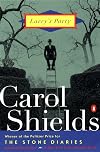

quartzite Young man gets involved with the wrong woman.
Member Reviews
I've often seen Stoner referred to in terms of being a novel of the everyman, but I think relegating it to that archetype does a disservice to the book and the character. Perhaps more accurately, I think the apparent mundanity of Stoner's life give the story power. William Stoner's impassiveness in the face of (most of) life's trials forms a horrifying mirror, in which the reader is forced to contemplate all of the battles left un-fought, and what it has cost. Stoner's choice to act or not to act throughout the novel is perplexing in that he always seems to choose the wrong path, and while he never meets disaster, the unremarkable life and career that ensues is entirely of his own making and choice. All of this is rendered in suitably show more spare prose, that is no less profound for its relative lack of ornamentation; rather, throughout the book I constantly felt that every single word was placed there for a reason. show less
After 63 pages: “Stunned by Stoner. This is agonisingly wonderful.”
At the end: “Finished. Him and me. Exquisite but exhausted.”
Then I immediately started rereading - something I have only previously done with children’s picture books.
It is, without question, my joint favourite book ever. The other, utterly different ones are Titus Groan/Gormenghast (which I reviewed HERE) and the Heaven and Hell trio (which I reviewed HERE). But it’s hard to explain its mesmerising power in a way that does it justice.
What Sort of Story?
It opens with a page of downbeat, but carefully crafted spoilers, rather like an obituary, after which, the story is told straightforwardly and chronologically, from William Stoner’s last days at school show more and on his parents’ farm, to life as a university student, then university faculty member, marriage, parenthood, affair, and finally his death. His main joy is literature, and the university that enables him to share that love with others, reflected in simple but heartfelt words on his retirement, “Thank you all for letting me teach”.
It sounds dull, banal or both, but it's not. It's heartbreakingly beautiful, without being sentimental, and because Stoner is never without hope, I didn't find it a depressing.
Contrasts: Eloquence and Inarticulacy, Strong and Weak, Success and Failure, Gain and Loss
It’s a book about language and literature, and yet inarticulacy is a recurring theme: it is the direct cause of most of the pain, but also the trigger for his main happiness: in a compulsory literature review, it is his inability to understand, or perhaps to explain his understanding of Shakespeare’s Sonnet 73 that triggers a life-long passion and career. This reticence or inability to talk about innermost thoughts is perhaps one reason why the causes of Edith's behaviour are only hinted at: anything more explicit would set the wrong tone (and might not have been appropriate when published).
Almost all Stoner’s dreams come true, but happiness is always elusive and ephemeral. The good things are lost or, worse still, taken away by someone he had hoped would be his love or friend (Edith and Lomax, respectively). Both antagonists are sensitive, damaged people (as is Stoner) and Lomax even shares his love of literature for similar reasons (escape).
One message of the book is “carpe diem” (seize the day, or in youth speak: YOLO), which is also reflected in Sonnet 73’s focus on decay, death, and enjoying what we have while we can.
Stoner can be brave, such as swapping from an agricultural degree course with its predictable future to an English literature degree, inspired by a sonnet he struggled to explain – and yet he doesn’t have the courage to tell his parents until after they’ve attended his graduation.
What Sort of Man?
Some see Stoner as passive and weak. Certainly there are many times when I wanted him to act differently, or just to act at all - in particular, to stand up for his daughter and his lover.
Instead, he is quietly stoical, which is apt, given his areas of interest include classical Greek literature. His quiet stoicism, born of parental fortitude and nurtured by habit and habitat runs too deep for him to act as others would.
He loses everything he values (even the rapport with his students and the ability to enjoy his books) and in many respects, he is a failure as son, husband, father, lover, even scholar – but he keeps going, never bearing a grudge, trying his best. So sad, and yet curiously inspirational.
There are some autobiographical aspects: from a dirt-poor farm to university lecturer, and of personality and (some) demons. See this interview with Nancy Gardner Williams: HERE.
Time and Place
Unlike some readers, I find Stoner entirely believable, especially when you consider the much higher social cost of divorce back then.
Would the story be any happier if it were set today? It would certainly be different, but flawed people raise flawed people. Tolstoy famously wrote “All happy families are alike; each unhappy family is unhappy in its own way” and that would be just as true of one unhappy family transplanted from one period in history to another.
In a contemporary setting, even if he had married Edith (unlikely?), she would surely have got help (bi-polar abuse survivor?), though maybe too late to fend off divorce. Either way, matters would turn out better for Katherine and Grace, and Lomax and Walker would probably not have got away with as much as they did. I'm sure it's no coincidence that Williams set it more than a generation earlier than the time he was writing.
Speaking to Me
Why did this book move me in such a direct and personal way? I'm not a man, not American, wasn't born at the turn of the 19th/20th centuries and have never been a farmer or a professor. But I do love books, I do need escape sometimes, and I did spend much of my childhood on a family farm, though there was never any expectation that I would be a farmer.
The farm is part of it though: in some ways, Stoner reminds me of my beloved grandfather, who died when I was 14. Although he had a happier life than Stoner, he had the same quiet but dogged resilience, and always tried to make the best of what life or wife threw at him.
The other aspect that poured from the pages, especially second time round, was the emotional damage caused by bad parenting (albeit sometimes with good intentions), caused or exacerbated by poor communication. I was repeatedly reminded of Larkin’s famous lines “They fuck you up your mum and dad… But they were fucked up in their turn” (see below). Although I had a largely happy childhood, there were odd, complex and problematic aspects that have left their mark on the sort of adult and parent I am, and although I’m the mother of a wonderful 20 year old, I’m very conscious of things my husband and I could, and perhaps should, have done differently. (I think we’re doing better than the Stoners, though.)
Other Themes
Soil. Stoner is a son of the soil and there are many allusions to its power to spread and bind, whether seeping through the floorboards or being ingrained in the skin or mind. Soil chemistry is the only agricultural course mentioned by name, and Stoner enjoyed it – until he discovered his greater love: literature. He is transplanted from the countryside to the university, where he puts down roots, and stays – no matter what.
The university is the setting for almost all of the novel and arguably a character in its own right. Early on, one of the characters muses whether it is a path to self-fulfillment, an instrument for social good, or just an asylum. The novel quietly demonstrates that it is all three.
“Lust and learning… that’s really all there is” says one character, but both of those need an outlet. The insularity of most of the main characters and their unwillingness or inability to discuss or even show their feelings means they are lonely outsiders who can’t relish life. That aloneness exerts a high price that manifests itself in different ways; the saddest outcome is for Grace, Stoner’s daughter. We need to reach out to each other, communicate, and seize the day.
At times, Stoner is like Don Quixote, with Gordon Finch as a brighter and more influential sidekick than Sancho. This friendship is the one enduring human relationship. Finch repeatedly takes risks to help his friend, and yet it is a very understated friendship, that is not especially close. An area to explore further on a reread?
Problematic Aspects
There are three troubling aspects, but that conflict is part of what makes the book compelling:
• Two characters are self-described “cripples”. Times and vocabulary have changed, so that’s not the issue. What is harder is the fact that both characters are unpleasant and both use their disability to make false and malicious claims of prejudice to their own advantage.
• What are the issues around consent forsleep-sex, given that the other party won’t countenance it when fully conscious, but is, at some level, vaguely aware of it when nearly asleep? Her “enduring violation” while he “performed his love as quickly as he could, hating himself for his haste and regretting his passion” sounds awful for both.
• The emotional abuse and manipulation of children is ghastly – but sadly credible.Edith is a victim who inflicts even worse damage on her daughter, but I was shocked that Stoner felt so helpless to protect Grace, and there were a couple of passages where he seemed to care more about his lover than his daughter.
Edith
Edith lurks in the shadows, pouncing occasionally. She is seen indirectly, in relation to Stoner and their daughter and it's easy to revile her for the slow and calculated cruelty she inflicts. I think Edith is meant to be closed and to some extent unknowable (because of her childhood) and because it puts the reader in Stoner's shoes.
I wondered if she was bi-polar. Such a term is never used, and I’m no expert, but her regular alternation between extreme industriousness and prolonged periods of being helpless and bedridden for no outwardly visible reason suggest something like that to me.
Another factor is surely her cold and repressive childhood, andworse still, the abuse of unspecified kind that is hinted at, culminating in her transformation, after her father’s suicide, and her destruction of everything connected with him . So it comes back to Larkin. Maybe that’s why she marries a virtual stranger (Stoner), saying “If it’s to be done… I want it done quick”, softening it by adding “I’ll try to be a good wife to you”.
Reminiscent Of
Apart from Larkin, aspects of this brought to mind:
• The father-daughter relationship in Williams' Augustus, reviewed HERE.
• Ian McEwan’s honeymoon novella On Chesil Beach, reviewed HERE.
• Any of the Richard Yates novels I’ve read, reviewed HERE.
• Stoicism, solace in literature, and connection to the soil in Cold Mountain, reviewed HERE.
• Another stoical, solitary, bookish, thoughtful man, embedded in his environment, though this one is almost faultless, is Jayber Crow, reviewed HERE.
• And the delightful, but less perfect Ebenezer Le Page, living his whole life on the little island of Guernsey, reviewed HERE.
• The paintings of Edward Hopper such as Room in New York: http://www.artexpress.ws/painting-imgs/Edward%20Hopper/big/Room%20in%20New%20Yor.....
• If Stoner had followed his expected path through life, he would have been almost indistinguishable from the wonderful Harold and Raymond McPheron in Kent Haruf's two books, reviewed here:
Plainsong 5*
Eventide 5*
Williams' Four Novels, Compared
See the end of my review of his first (disowned) novel, Nothing But The Night, HERE.
Quotes
• “It was a lonely household… bound together by the necessity of its toil.”
• “Dust daily seeped up through the uneven floorboards.”
• In the library, “inhaling the must odor… as if it were an exotic incense”.
• “Don’t you understand about yourself yet? You’re going to be a teacher” because “you are in love”.
• “He conceived himself changed in that future, but he saw the future itself as the instrument of change rather than its object.”
• “He felt his love increased by its loss.”
• “He felt the urgency of study. Sometimes, immersed in his books, there would come to him the awareness of all that he did not know, of all that he had not read… he realized how little time he had in life to read so much, to learn what he had to know.”
• “He moved outward from himself into the world which contained him.”
• “He had never got into the habit of introspection.”
• “He thought he felt the gaze of the young woman brush warmly across his face.”
• “From the curtained window, a dim light fell upon the blue-white snow like a yellow smudge.”
• “Each footstep crunched with muffled loudness in the dry snow.”
• “In that [first] half hour… she told him more about herself than she ever told him again.”
• “Her moral training… was negative in nature, prohibitive in intent, and almost entirely sexual. The sexuality, however, was indirect and unacknowledged; therefore it suffused every other aspect of her education… She was ignorant of her own bodily functions, she had never been alone to care for her own self one day of her life.”
• “Like many men who consider their success incomplete, he was extraordinarily vain.” (Not Stoner.)
• “She entered [her wedding] … slowly, reluctantly, with a kind of frightened defiance.”
• “Edith moved into the apartment as if it were an enemy to be conquered.”
• “Within a month he knew that his marriage was a failure; within a year he stopped hoping it would improve.”
• Spring, “caught up in the somnolence of a new season”.
• “He watched with amazement and love… as her face began to show the intelligence that worked within her.”
• “The cost exacted… by the soil… they were in the earth to which they had given their lives… It would consume the last vestiges of their substances. And they would become a meaningless part of that stubborn earth.”
• “The love of literature, of language, of the mystery of mind and heart… the love which he had hidden as if it were illicit and dangerous, he began to display, tentatively at first, and then boldly, and then proudly."
• “They seldom spoke of themselves or each other, lest the delicate balance that made their living together possible be broken.”
• A “strategy that disguised itself as loving concern, and thus against which he was helpless.”
• “a ghost of the old joy… a learning toward no particular end.”
• Friendship “had reached a point that all such relationships, carried on long enough, come to; it was casual, deep and so guardedly intimate that it was almost impersonal.”
• “A kind of lethargy descended upon him… Time dragged slowly around him.”
• “He could see nothing before him that he wished to enjoy and little behind him that he cared to remember.”
• “The person one loves at first is not the person one loves at last, and that love is not an end but a process through which one person attempts to know another.”
• Love is “neither a state of grace nor an illusion… a human act of becoming… by the will and the intellect and the heart.”
• “As the outer world closed upon them they became less aware of its presence… they seemed to themselves to move outside time.”
• Doom revealed “by grammatical usage: they progressed from the perfect – ‘We have been happy, haven’t we?’ – to the past – ‘We were happy – happier than anyone, I think’ – and at last came to the necessity of discourse.”
• “They coupled with the old tender sensuality of knowing each other well and with the new intense passion of loss.”
• “Indifference that became a way of living.”
• “She wandered like a ghost into the privacy of herself.”
• Stoner “did not allow himself the easy luxury of guilt”.
• “They had forgiven themselves for the harm they had done each other” – but what about the harm they did to Grace?
• “Lust and learning… That’s really all there is.”
• “Thank you for letting me teach.”
This Be The Verse, by Philip Larkin
They fuck you up, your mum and dad.
They may not mean to, but they do.
They fill you with the faults they had
And add some extra, just for you.
But they were fucked up in their turn
By fools in old-style hats and coats,
Who half the time were soppy-stern
And half at one another’s throats.
Man hands on misery to man.
It deepens like a coastal shelf.
Get out as early as you can,
And don’t have any kids yourself.
(For the record, I endorse the truth of the first two verses, but the third is a decision only you can make.)
Shakespeare’s Sonnet 73
This is the sonnet used by Stonor’s tutor:
That time of year thou mayst in me behold,
When yellow leaves, or none, or few, do hang
Upon those boughs which shake against the cold,
Bare ruined choirs, where late the sweet birds sang.
In me thou seest the twilight of such day,
As after sunset fadeth in the west,
Which by and by black night doth take away,
Death's second self, that seals up all in rest.
In me thou seest the glowing of such fire,
That on the ashes of his youth doth lie,
As the death-bed whereon it must expire,
Consumed with that which it was nourished by.
This thou perceiv'st, which makes thy love more strong,
To love that well, which thou must leave ere long. show less
At the end: “Finished. Him and me. Exquisite but exhausted.”
Then I immediately started rereading - something I have only previously done with children’s picture books.
It is, without question, my joint favourite book ever. The other, utterly different ones are Titus Groan/Gormenghast (which I reviewed HERE) and the Heaven and Hell trio (which I reviewed HERE). But it’s hard to explain its mesmerising power in a way that does it justice.
What Sort of Story?
It opens with a page of downbeat, but carefully crafted spoilers, rather like an obituary, after which, the story is told straightforwardly and chronologically, from William Stoner’s last days at school show more and on his parents’ farm, to life as a university student, then university faculty member, marriage, parenthood, affair, and finally his death. His main joy is literature, and the university that enables him to share that love with others, reflected in simple but heartfelt words on his retirement, “Thank you all for letting me teach”.
It sounds dull, banal or both, but it's not. It's heartbreakingly beautiful, without being sentimental, and because Stoner is never without hope, I didn't find it a depressing.
Contrasts: Eloquence and Inarticulacy, Strong and Weak, Success and Failure, Gain and Loss
It’s a book about language and literature, and yet inarticulacy is a recurring theme: it is the direct cause of most of the pain, but also the trigger for his main happiness: in a compulsory literature review, it is his inability to understand, or perhaps to explain his understanding of Shakespeare’s Sonnet 73 that triggers a life-long passion and career. This reticence or inability to talk about innermost thoughts is perhaps one reason why the causes of Edith's behaviour are only hinted at: anything more explicit would set the wrong tone (and might not have been appropriate when published).
Almost all Stoner’s dreams come true, but happiness is always elusive and ephemeral. The good things are lost or, worse still, taken away by someone he had hoped would be his love or friend (Edith and Lomax, respectively). Both antagonists are sensitive, damaged people (as is Stoner) and Lomax even shares his love of literature for similar reasons (escape).
One message of the book is “carpe diem” (seize the day, or in youth speak: YOLO), which is also reflected in Sonnet 73’s focus on decay, death, and enjoying what we have while we can.
Stoner can be brave, such as swapping from an agricultural degree course with its predictable future to an English literature degree, inspired by a sonnet he struggled to explain – and yet he doesn’t have the courage to tell his parents until after they’ve attended his graduation.
What Sort of Man?
Some see Stoner as passive and weak. Certainly there are many times when I wanted him to act differently, or just to act at all - in particular, to stand up for his daughter and his lover.
Instead, he is quietly stoical, which is apt, given his areas of interest include classical Greek literature. His quiet stoicism, born of parental fortitude and nurtured by habit and habitat runs too deep for him to act as others would.
He loses everything he values (even the rapport with his students and the ability to enjoy his books) and in many respects, he is a failure as son, husband, father, lover, even scholar – but he keeps going, never bearing a grudge, trying his best. So sad, and yet curiously inspirational.
There are some autobiographical aspects: from a dirt-poor farm to university lecturer, and of personality and (some) demons. See this interview with Nancy Gardner Williams: HERE.
Time and Place
Unlike some readers, I find Stoner entirely believable, especially when you consider the much higher social cost of divorce back then.
Would the story be any happier if it were set today? It would certainly be different, but flawed people raise flawed people. Tolstoy famously wrote “All happy families are alike; each unhappy family is unhappy in its own way” and that would be just as true of one unhappy family transplanted from one period in history to another.
In a contemporary setting, even if he had married Edith (unlikely?), she would surely have got help (bi-polar abuse survivor?), though maybe too late to fend off divorce. Either way, matters would turn out better for Katherine and Grace, and Lomax and Walker would probably not have got away with as much as they did. I'm sure it's no coincidence that Williams set it more than a generation earlier than the time he was writing.
Speaking to Me
Why did this book move me in such a direct and personal way? I'm not a man, not American, wasn't born at the turn of the 19th/20th centuries and have never been a farmer or a professor. But I do love books, I do need escape sometimes, and I did spend much of my childhood on a family farm, though there was never any expectation that I would be a farmer.
The farm is part of it though: in some ways, Stoner reminds me of my beloved grandfather, who died when I was 14. Although he had a happier life than Stoner, he had the same quiet but dogged resilience, and always tried to make the best of what life or wife threw at him.
The other aspect that poured from the pages, especially second time round, was the emotional damage caused by bad parenting (albeit sometimes with good intentions), caused or exacerbated by poor communication. I was repeatedly reminded of Larkin’s famous lines “They fuck you up your mum and dad… But they were fucked up in their turn” (see below). Although I had a largely happy childhood, there were odd, complex and problematic aspects that have left their mark on the sort of adult and parent I am, and although I’m the mother of a wonderful 20 year old, I’m very conscious of things my husband and I could, and perhaps should, have done differently. (I think we’re doing better than the Stoners, though.)
Other Themes
Soil. Stoner is a son of the soil and there are many allusions to its power to spread and bind, whether seeping through the floorboards or being ingrained in the skin or mind. Soil chemistry is the only agricultural course mentioned by name, and Stoner enjoyed it – until he discovered his greater love: literature. He is transplanted from the countryside to the university, where he puts down roots, and stays – no matter what.
The university is the setting for almost all of the novel and arguably a character in its own right. Early on, one of the characters muses whether it is a path to self-fulfillment, an instrument for social good, or just an asylum. The novel quietly demonstrates that it is all three.
“Lust and learning… that’s really all there is” says one character, but both of those need an outlet. The insularity of most of the main characters and their unwillingness or inability to discuss or even show their feelings means they are lonely outsiders who can’t relish life. That aloneness exerts a high price that manifests itself in different ways; the saddest outcome is for Grace, Stoner’s daughter. We need to reach out to each other, communicate, and seize the day.
At times, Stoner is like Don Quixote, with Gordon Finch as a brighter and more influential sidekick than Sancho. This friendship is the one enduring human relationship. Finch repeatedly takes risks to help his friend, and yet it is a very understated friendship, that is not especially close. An area to explore further on a reread?
Problematic Aspects
There are three troubling aspects, but that conflict is part of what makes the book compelling:
• Two characters are self-described “cripples”. Times and vocabulary have changed, so that’s not the issue. What is harder is the fact that both characters are unpleasant and both use their disability to make false and malicious claims of prejudice to their own advantage.
• What are the issues around consent for
• The emotional abuse and manipulation of children is ghastly – but sadly credible.
Edith
Edith lurks in the shadows, pouncing occasionally. She is seen indirectly, in relation to Stoner and their daughter and it's easy to revile her for the slow and calculated cruelty she inflicts. I think Edith is meant to be closed and to some extent unknowable (because of her childhood) and because it puts the reader in Stoner's shoes.
I wondered if she was bi-polar. Such a term is never used, and I’m no expert, but her regular alternation between extreme industriousness and prolonged periods of being helpless and bedridden for no outwardly visible reason suggest something like that to me.
Another factor is surely her cold and repressive childhood, and
Reminiscent Of
Apart from Larkin, aspects of this brought to mind:
• The father-daughter relationship in Williams' Augustus, reviewed HERE.
• Ian McEwan’s honeymoon novella On Chesil Beach, reviewed HERE.
• Any of the Richard Yates novels I’ve read, reviewed HERE.
• Stoicism, solace in literature, and connection to the soil in Cold Mountain, reviewed HERE.
• Another stoical, solitary, bookish, thoughtful man, embedded in his environment, though this one is almost faultless, is Jayber Crow, reviewed HERE.
• And the delightful, but less perfect Ebenezer Le Page, living his whole life on the little island of Guernsey, reviewed HERE.
• The paintings of Edward Hopper such as Room in New York: http://www.artexpress.ws/painting-imgs/Edward%20Hopper/big/Room%20in%20New%20Yor.....
• If Stoner had followed his expected path through life, he would have been almost indistinguishable from the wonderful Harold and Raymond McPheron in Kent Haruf's two books, reviewed here:
Plainsong 5*
Eventide 5*
Williams' Four Novels, Compared
See the end of my review of his first (disowned) novel, Nothing But The Night, HERE.
Quotes
• “It was a lonely household… bound together by the necessity of its toil.”
• “Dust daily seeped up through the uneven floorboards.”
• In the library, “inhaling the must odor… as if it were an exotic incense”.
• “Don’t you understand about yourself yet? You’re going to be a teacher” because “you are in love”.
• “He conceived himself changed in that future, but he saw the future itself as the instrument of change rather than its object.”
• “He felt his love increased by its loss.”
• “He felt the urgency of study. Sometimes, immersed in his books, there would come to him the awareness of all that he did not know, of all that he had not read… he realized how little time he had in life to read so much, to learn what he had to know.”
• “He moved outward from himself into the world which contained him.”
• “He had never got into the habit of introspection.”
• “He thought he felt the gaze of the young woman brush warmly across his face.”
• “From the curtained window, a dim light fell upon the blue-white snow like a yellow smudge.”
• “Each footstep crunched with muffled loudness in the dry snow.”
• “In that [first] half hour… she told him more about herself than she ever told him again.”
• “Her moral training… was negative in nature, prohibitive in intent, and almost entirely sexual. The sexuality, however, was indirect and unacknowledged; therefore it suffused every other aspect of her education… She was ignorant of her own bodily functions, she had never been alone to care for her own self one day of her life.”
• “Like many men who consider their success incomplete, he was extraordinarily vain.” (Not Stoner.)
• “She entered [her wedding] … slowly, reluctantly, with a kind of frightened defiance.”
• “Edith moved into the apartment as if it were an enemy to be conquered.”
• “Within a month he knew that his marriage was a failure; within a year he stopped hoping it would improve.”
• Spring, “caught up in the somnolence of a new season”.
• “He watched with amazement and love… as her face began to show the intelligence that worked within her.”
• “The cost exacted… by the soil… they were in the earth to which they had given their lives… It would consume the last vestiges of their substances. And they would become a meaningless part of that stubborn earth.”
• “The love of literature, of language, of the mystery of mind and heart… the love which he had hidden as if it were illicit and dangerous, he began to display, tentatively at first, and then boldly, and then proudly."
• “They seldom spoke of themselves or each other, lest the delicate balance that made their living together possible be broken.”
• A “strategy that disguised itself as loving concern, and thus against which he was helpless.”
• “a ghost of the old joy… a learning toward no particular end.”
• Friendship “had reached a point that all such relationships, carried on long enough, come to; it was casual, deep and so guardedly intimate that it was almost impersonal.”
• “A kind of lethargy descended upon him… Time dragged slowly around him.”
• “He could see nothing before him that he wished to enjoy and little behind him that he cared to remember.”
• “The person one loves at first is not the person one loves at last, and that love is not an end but a process through which one person attempts to know another.”
• Love is “neither a state of grace nor an illusion… a human act of becoming… by the will and the intellect and the heart.”
• “As the outer world closed upon them they became less aware of its presence… they seemed to themselves to move outside time.”
• Doom revealed “by grammatical usage: they progressed from the perfect – ‘We have been happy, haven’t we?’ – to the past – ‘We were happy – happier than anyone, I think’ – and at last came to the necessity of discourse.”
• “They coupled with the old tender sensuality of knowing each other well and with the new intense passion of loss.”
• “Indifference that became a way of living.”
• “She wandered like a ghost into the privacy of herself.”
• Stoner “did not allow himself the easy luxury of guilt”.
• “They had forgiven themselves for the harm they had done each other” – but what about the harm they did to Grace?
• “Lust and learning… That’s really all there is.”
• “Thank you for letting me teach.”
This Be The Verse, by Philip Larkin
They fuck you up, your mum and dad.
They may not mean to, but they do.
They fill you with the faults they had
And add some extra, just for you.
But they were fucked up in their turn
By fools in old-style hats and coats,
Who half the time were soppy-stern
And half at one another’s throats.
Man hands on misery to man.
It deepens like a coastal shelf.
Get out as early as you can,
And don’t have any kids yourself.
(For the record, I endorse the truth of the first two verses, but the third is a decision only you can make.)
Shakespeare’s Sonnet 73
This is the sonnet used by Stonor’s tutor:
That time of year thou mayst in me behold,
When yellow leaves, or none, or few, do hang
Upon those boughs which shake against the cold,
Bare ruined choirs, where late the sweet birds sang.
In me thou seest the twilight of such day,
As after sunset fadeth in the west,
Which by and by black night doth take away,
Death's second self, that seals up all in rest.
In me thou seest the glowing of such fire,
That on the ashes of his youth doth lie,
As the death-bed whereon it must expire,
Consumed with that which it was nourished by.
This thou perceiv'st, which makes thy love more strong,
To love that well, which thou must leave ere long. show less
Beautifully written tragedy about University of Missouri Professor William Stoner. It starts near the turn of the 20th century and continues for Stoner’s lifetime. Stoner grows up on a farm but is unsuited for a farming life. When his parents send him to college to study agriculture, he finds his calling as a teacher of literature.
“The love of literature, of language, of the mystery of the mind and heart showing themselves in the minute, strange, and unexpected combinations of letters and words, in the blackest and coldest print—the love which he had hidden as if it were illicit and dangerous, he began to display, tentatively at first, and then boldly, and then proudly.”
The book follows Stoner’s life as a professor, husband, show more and father. Stoner is a noble character, sticking to his principles and unwilling to bend to the political pressures of the university’s hierarchy. His wife has emotional issues and his marriage does not go well, but he stoically endures. At one point, he finds a modicum of happiness, but it does not last.
This book is about life, education, and the transience of time. It is a tribute to a lifetime of literature, which is one of the few sources of meaning in Stoner’s life. The tone is sad. The main pleasure in this book is the expressive writing. Recommended to those that enjoy deep character studies on timeless themes. show less
“The love of literature, of language, of the mystery of the mind and heart showing themselves in the minute, strange, and unexpected combinations of letters and words, in the blackest and coldest print—the love which he had hidden as if it were illicit and dangerous, he began to display, tentatively at first, and then boldly, and then proudly.”
The book follows Stoner’s life as a professor, husband, show more and father. Stoner is a noble character, sticking to his principles and unwilling to bend to the political pressures of the university’s hierarchy. His wife has emotional issues and his marriage does not go well, but he stoically endures. At one point, he finds a modicum of happiness, but it does not last.
This book is about life, education, and the transience of time. It is a tribute to a lifetime of literature, which is one of the few sources of meaning in Stoner’s life. The tone is sad. The main pleasure in this book is the expressive writing. Recommended to those that enjoy deep character studies on timeless themes. show less
Rating: 5* of five
The Publisher Says: Discover an American masterpiece. This unassuming story about the life of a quiet English professor has earned the admiration of readers all over the globe.
William Stoner is born at the end of the nineteenth century into a dirt-poor Missouri farming family. Sent to the state university to study agronomy, he instead falls in love with English literature and embraces a scholar’s life, so different from the hardscrabble existence he has known. And yet as the years pass, Stoner encounters a succession of disappointments: marriage into a “proper” family estranges him from his parents; his career is stymied; his wife and daughter turn coldly away from him; a transforming experience of new love ends show more under threat of scandal. Driven ever deeper within himself, Stoner rediscovers the stoic silence of his forebears and confronts an essential solitude.
John Williams’s luminous and deeply moving novel is a work of quiet perfection. William Stoner emerges from it not only as an archetypal American, but as an unlikely existential hero, standing, like a figure in a painting by Edward Hopper, in stark relief against an unforgiving world.
I BOUGHT A PAPERBACK FROM THE PUBLISHER FIFTEEN YEARS AGO. THANK YOU, PAST SELF.
My Review: I went into this read thinking it'd be another wildly overpraised midcentury modern grimfest. I was happily proved wrong, though that is the last time I will ever use the word "happy" in conjunction with this tale.
A story about a small Prufrockian man, doomed from the get-go to a disappointing existence unworthy of the descriptor "life" by any but the most generous definition of the subject. Author Alex Preston (Goodreads profile link), in a 2015 review he blogged, said of Stoner:
Scathing! Angry, upset, and not wrong in any way. Yet, as Author Preston's fury warms my heart, I am required by my own appreciation of the story to admit that I found these very things to be the raison d'etre of the novel, and the beating heart of John Williams' artistry. He told a failure's life in a failure's language; he accepted Stoner as the small, ungreased cog in a small, janky machine full of others like him that Williams himself was.
So, while very aware of this divisive thematic and stylistic choice will not be to everyone's taste, I can honestly and wholeheartedly say it was very much to mine.
Casey Affleck was set to portray Stoner in the film! (Although ten years on, I think we're safe to assume the project has spluttered out.) This was excellent news! I...enjoyed, liked, all those words seem full of misplaced chirpiness applied to Stoner's small, cramped life...resonated with this novel and after seeing Mr. Affleck in Manchester by the Sea I can only be happy and grateful he might yet assume the leading role in it. show less
The Publisher Says: Discover an American masterpiece. This unassuming story about the life of a quiet English professor has earned the admiration of readers all over the globe.
William Stoner is born at the end of the nineteenth century into a dirt-poor Missouri farming family. Sent to the state university to study agronomy, he instead falls in love with English literature and embraces a scholar’s life, so different from the hardscrabble existence he has known. And yet as the years pass, Stoner encounters a succession of disappointments: marriage into a “proper” family estranges him from his parents; his career is stymied; his wife and daughter turn coldly away from him; a transforming experience of new love ends show more under threat of scandal. Driven ever deeper within himself, Stoner rediscovers the stoic silence of his forebears and confronts an essential solitude.
John Williams’s luminous and deeply moving novel is a work of quiet perfection. William Stoner emerges from it not only as an archetypal American, but as an unlikely existential hero, standing, like a figure in a painting by Edward Hopper, in stark relief against an unforgiving world.
I BOUGHT A PAPERBACK FROM THE PUBLISHER FIFTEEN YEARS AGO. THANK YOU, PAST SELF.
My Review: I went into this read thinking it'd be another wildly overpraised midcentury modern grimfest. I was happily proved wrong, though that is the last time I will ever use the word "happy" in conjunction with this tale.
A story about a small Prufrockian man, doomed from the get-go to a disappointing existence unworthy of the descriptor "life" by any but the most generous definition of the subject. Author Alex Preston (Goodreads profile link), in a 2015 review he blogged, said of Stoner:
With each of Stoner’s defeats, he backs further and further away from us, his voice becoming more distant, his character less alive on the page. At the start of the novel, I was yelling at him to grow a pair. By the time he lets his wife sacrifice their daughter on the altar of her motiveless malignancy, I’d given up on him entirely. I read through to the end because I wanted to see if...there would be something elegiac, a note of quiet redemption in the final passages of the book. There wasn’t.
Scathing! Angry, upset, and not wrong in any way. Yet, as Author Preston's fury warms my heart, I am required by my own appreciation of the story to admit that I found these very things to be the raison d'etre of the novel, and the beating heart of John Williams' artistry. He told a failure's life in a failure's language; he accepted Stoner as the small, ungreased cog in a small, janky machine full of others like him that Williams himself was.
So, while very aware of this divisive thematic and stylistic choice will not be to everyone's taste, I can honestly and wholeheartedly say it was very much to mine.
Casey Affleck was set to portray Stoner in the film! (Although ten years on, I think we're safe to assume the project has spluttered out.) This was excellent news! I...enjoyed, liked, all those words seem full of misplaced chirpiness applied to Stoner's small, cramped life...resonated with this novel and after seeing Mr. Affleck in Manchester by the Sea I can only be happy and grateful he might yet assume the leading role in it. show less
I loved this novel. Most fiction tries to create a Platonic ideal, a narrative sense of how life should be lived, and Stoner is no different. There is a nobility in Prof. Stoner, even if objectively he lived a stoical and failed life.
The best sections describe English department politics at a land grant university in the earlier part of the 20th century. Stoner is dedicated to learning, to the academic life, but he has some pernicious blind spots. He cannot anticipate the machinations of others, he barely senses his own weakness. A life of the mind can be lonely. You do not really understand those humans who reside outside the covers of books. You look at them in wonder and fear. And then you return to your reading.
The best sections describe English department politics at a land grant university in the earlier part of the 20th century. Stoner is dedicated to learning, to the academic life, but he has some pernicious blind spots. He cannot anticipate the machinations of others, he barely senses his own weakness. A life of the mind can be lonely. You do not really understand those humans who reside outside the covers of books. You look at them in wonder and fear. And then you return to your reading.
Ez a könyv bizonyság arra, hogy a teljesség az egyszerűség eszközével is ábrázolható. És amellett is elég erős érv, hogy csakis így ábrázolható – bár természetesen ebben azért nem lehetünk annyira biztosak. A története maga a cselekmény-minimum: "1910-ben, amikor a Missouri Egyetemre beiratkozott, William Stoner tizenkilenc éves volt. Nyolc évvel később, az első világháború tetőpontján megszerezte doktori fokozatát, oktatói állást kapott az egyetemen, és ott is tanított egészen 1956-ban bekövetkezett haláláig", ennyi, és semmi több, és ez már az első mondatban felskiccelve. Már a cím is (ízlelgessük: Stoner) a végletekig vitt, már-már provokatív eszköztelenség maga, és show more Williams a későbbiekben is lenyűgöző következetességgel tartja magát a tisztaság és pontosság eszméjéhez. Stoner története a magány története, Stoner maga pedig a világirodalom egyik legvédtelenebb, és (talán ezért) legszerethetőbb figuráinak egyike. Hozzá hasonló naponta száz, sőt (budapestiek esetében) ezer is elsétál mellettünk, úgy, hogy észre sem vesszük, Williams pedig képes úgy bemutatni őt, mint a világ köldökét, egy embert, aki önmagában egy univerzum – pedig hát mi történik vele? Szinte semmi. Az író mindezt teszi úgy, hogy nem pszichologizál, nem mászik bele senki fejébe – csak leírja a puszta eseményeket és a rájuk adott reflexiókat, én pedig egyszerre érzem, hogy mindent tudok Stonerről, és hogy nem tudok róla semmit. Visszafogott, keserű és mégis: gyöngéd szöveg. Elképesztő írói teljesítmény. (És a fordító előtt is le a kalappal: Gy. Horváth László.) Per pillanat az idei év könyvének tartom, de hogy a legszűkebb listán ott a helye, az ziher. show less
Why did I learn about this book from a sports podcast?
As someone who loves what Hemingway and Steinbeck have to say about the Lost Generation, John Williams offers a third way. I've often contrasted Hemingway and Steinbeck as having opposite answers to the same question: how does a man live?
For Hemingway, it is the two-fisted life. Fighting alone and failing, but never compromising.
For Steinbeck, it is through co-dependence. A community of bums bound together by shared good fortune who then pay it forward. A starving man's head raised to the breast of a woman who has just buried her still-born son.
For Williams, there is stoic acceptance and the long slow process of self-improvement. Burnishing our flaws until the edges no longer snag show more us. Stoner's morality is not uncompromising but it is consistently applied. His deepest principles are few but absolute. The rest is negotiable to the convenience of others and his own discomfort. He makes his bed, and he lays in it with very few regrets. He seems to me a kind of American saint. show less
As someone who loves what Hemingway and Steinbeck have to say about the Lost Generation, John Williams offers a third way. I've often contrasted Hemingway and Steinbeck as having opposite answers to the same question: how does a man live?
For Hemingway, it is the two-fisted life. Fighting alone and failing, but never compromising.
For Steinbeck, it is through co-dependence. A community of bums bound together by shared good fortune who then pay it forward. A starving man's head raised to the breast of a woman who has just buried her still-born son.
For Williams, there is stoic acceptance and the long slow process of self-improvement. Burnishing our flaws until the edges no longer snag show more us. Stoner's morality is not uncompromising but it is consistently applied. His deepest principles are few but absolute. The rest is negotiable to the convenience of others and his own discomfort. He makes his bed, and he lays in it with very few regrets. He seems to me a kind of American saint. show less
Members
- Recently Added By
Published Reviews
ThingScore 100
Part of “Stoner” ’s greatness is that it sees life whole and as it is, without delusion yet without despair. Stoner realizes at the last that he found what he sought at the university not in books but in his love and study of them, not in some obscure scholarly Grail but in its pursuit. His life has not been squandered in mediocrity and obscurity; his undistinguished career has not been show more mulish labor but an act of devotion. He has been a priest of literature, and given himself as fully as he could to the thing he loved. The book’s conclusion, such as it is—I don’t know whether to call it a consolation or a warning—is that there is nothing better in this life. The line, “It hardly mattered to him that the book was forgotten and served no use; and the question of its worth at any time seemed almost trivial,” is like the novel’s own epitaph. Its last image is of the book falling from lifeless fingers into silence. show less
added by SnootyBaronet
Lists

Top Five Books of 2013
1,562 works; 721 members

Recommend the 20 best books you've read in the last five years
2,168 works; 606 members

Top Five Books of 2014
1,064 works; 398 members

Top Five Books of 2020
982 works; 350 members

Novels from The Guardian's Great American Novelist Tournament
148 works; 24 members

Favourite Books
1,819 works; 316 members

20th Century Literature
1,161 works; 55 members

Best Campus Novels
99 works; 18 members

Canon de la narrativa universal del siglo XX
254 works; 6 members
1960s, Best books published therein
254 works; 22 members

Books Read in 2023
5,547 works; 145 members

Academia in Fiction
158 works; 23 members

Books Read in 2015
3,299 works; 129 members

Rob's Favorite Books
3 works; 1 member

Five star books
1,767 works; 110 members

Best of 2014
8 works; 1 member

Llibres que he llegit el 2012
28 works; 1 member
Books Read in 2016
4,666 works; 199 members

Books Set in Missouri
29 works; 4 members

Books Read in 2022
5,168 works; 114 members
American Lit for Eng 11 Research Project
368 works; 6 members

Cult Classics
30 works; 1 member

Books to Read
9 works; 1 member

Canon de la narrativa universal del s. XX (cicutadry)
499 works; 3 members

Books Read in 2024
4,623 works; 126 members

Books Read in 2025
4,091 works; 97 members
Franklit
95 works; 1 member

Top Five Books of 2025
954 works; 303 members

Mustich's 1000 Books to Read Before You Die: A Life Changing List
1,001 works; 19 members

Biggest Disappointments
606 works; 163 members

Historical Literary Non-fiction
11 works; 2 members
Literary Travelogue of the United States Challenge
133 works; 6 members

Allie's Wishlist
217 works; 2 members

Books Read in 2013
1,630 works; 51 members

Hidden Classics
73 works; 15 members
Talk Discussions
Past Discussions
November 2012: Stoner in Missouri Readers (November 2012)
Author Information

12 Works 13,599 Members
Some Editions
Awards and Honors
Awards
Distinctions
Notable Lists
Series
Belongs to Publisher Series
Work Relationships
Common Knowledge
- Canonical title
- Stoner
- Original title
- Stoner
- Original publication date
- 1965
- People/Characters
- Katherine Driscoll; William Stoner; Grace Stoner; Edith Stoner; Gordon Finch; David Masters (show all 7); Hollis Lomax
- Important places
- Columbia, Missouri, USA
- Important events
- World War I (1914 | 1918); World War II (1939 | 1945)
- Dedication
- This book is dedicated to my friends and former colleagues in the Department of English at the University of Missouri. They will recognize at once that it is a work of fiction--that no character portrayed in it is based upon ... (show all)any person, living or dead, and that no event has its counterpart in the reality we knew at the University of Missouri. They will also realize that I have taken certain liberties, both physical and historical, with the University of Missouri, so that in effect it, too, is a fictional place.
- First words
- William Stoner entered the University of Missouri as a freshman in the year 1910, at the age of nineteen.
- Quotations
- He had dreamed of a kind of integrity, of a kind of purity that was entire; he had found compromise and the assaulting diversion of triviality. He had conceived wisdom, and at the end of the long years he had found ignorance.
In his forty-third year William Stoner learned what others, much younger, had nearned before him: that the person one loves at first is not the person one loves at last, and that love is not an end but a process through which... (show all) one person attempts to know another. - Last words
- (Click to show. Warning: May contain spoilers.)The fingers loosened, and the book they had held moved slowly and then swiftly across the still body and fell into the silence of the room.
- Blurbers
- Snow, C. P.; Howe, Irving; McEwan, Ian
- Original language
- English
Classifications
Statistics
- Members
- 8,943
- Popularity
- 1,207
- Reviews
- 429
- Rating
- (4.28)
- Languages
- 26 — Catalan, Chinese, Czech, Danish, Dutch, English, Finnish, French, German, Galician, Greek, Hebrew, Hungarian, Italian, Japanese, Lithuanian, Norwegian (Bokmål), Norwegian, Polish, Romanian, Russian, Slovenian, Spanish, Swedish, Turkish, Portuguese (Portugal)
- Media
- Paper, Audiobook, Ebook
- ISBNs
- 129
- ASINs
- 37