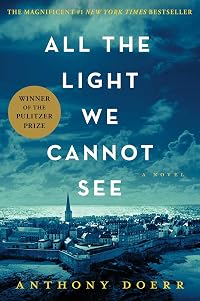
All the Light We Cannot See
by Anthony Doerr
On This Page
Description
"From the highly acclaimed, multiple award-winning Anthony Doerr, a stunningly ambitious and beautiful novel about a blind French girl and a German boy whose paths collide in occupied France as both try to survive the devastation of World War II. Marie Laure lives with her father in Paris within walking distance of the Museum of Natural History where he works as the master of the locks (there are thousands of locks in the museum). When she is six, she goes blind, and her father builds her a show more model of their neighborhood, every house, every manhole, so she can memorize it with her fingers and navigate the real streets with her feet and cane. When the Germans occupy Paris, father and daughter flee to Saint-Malo on the Brittany coast, where Marie-Laure's agoraphobic great uncle lives in a tall, narrow house by the sea wall. In another world in Germany, an orphan boy, Werner, grows up with his younger sister, Jutta, both enchanted by a crude radio Werner finds. He becomes a master at building and fixing radios, a talent that wins him a place at an elite and brutal military academy and, ultimately, makes him a highly specialized tracker of the Resistance. Werner travels through the heart of Hitler Youth to the far-flung outskirts of Russia, and finally into Saint-Malo, where his path converges with Marie-Laure. Doerr's gorgeous combination of soaring imagination with observation is electric. Deftly interweaving the lives of Marie-Laure and Werner, Doerr illuminates the ways, against all odds, people try to be good to one another. Ten years in the writing, All the Light We Cannot See is his most ambitious and dazzling work"-- show lessTags
Recommendations






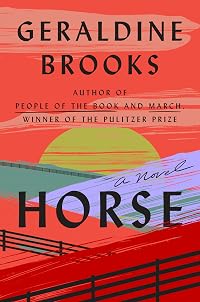

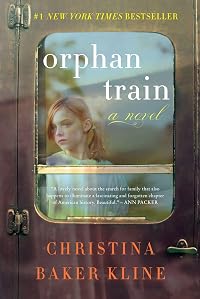

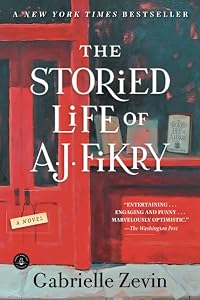
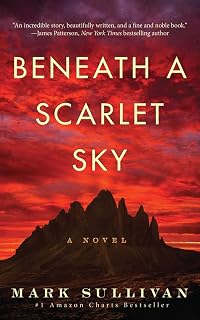


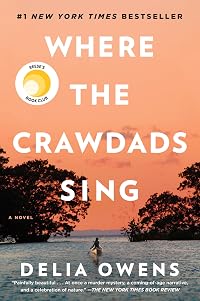

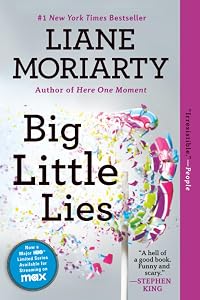



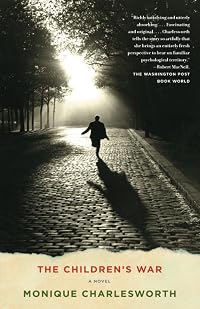
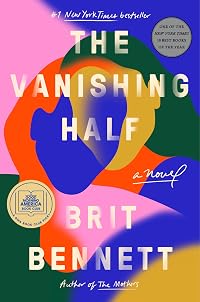







Member Recommendations
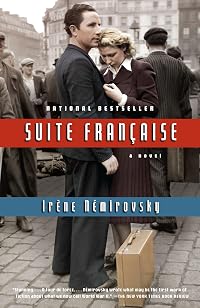
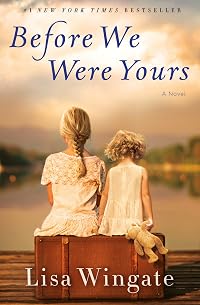
gypsysmom Similar locale in that Guernsey and St. Malo were occupied by the German army during World War II. Resistance is also a main theme in both of them.
202
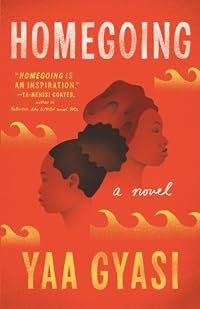
BookshelfMonstrosity Both of these heartbreaking World War II novels cause readers to pine for a happier ending than is possible for the characters. The stylistically complex writing describes the struggles that the characters -- some with physical challenges -- go through to survive.
Also recommended by cataylor
80


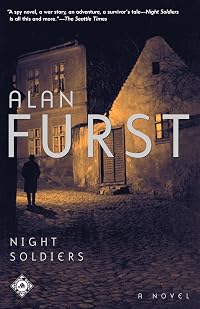
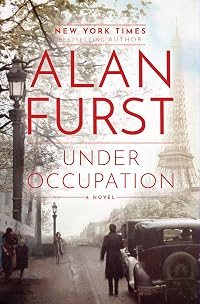
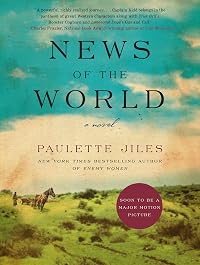
GoST Another novel set in occupied France with a relationship between a German soldier and a French girl.

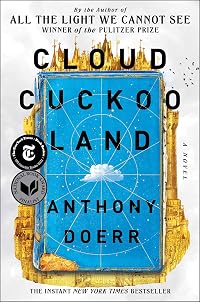
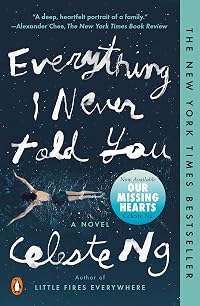
BookshelfMonstrosity These moving, stylistically complex novels reflect on the brutality of World War II and its lingering effects. The characters have diverse backgrounds, some supporting the Germans and others the Allies. Their wartime experiences threaten to ruin their futures.
55
WSB7 Similar overarching theme.
Member Reviews
In the darkest places, at the darkest times, there is light, if we can but believe.
This is a story of contrasts, parallels, and coming together.
It is about light, and so, inevitably, also about the dark.
The descriptions are very visual, but what cannot be seen is key. One of the two main characters is blind, so it’s about touch and smell and sound as well. And it’s radio that drives many lives and events. “Radio: it ties a million ears to a single mouth.” It is also “a war waged through the air, invisibly”.
It’s about the power (radio) and beauty (biology) of science, but it has a magical-realist plot concerning a diamond, The Sea of Flames, that’s thought to bear a blessing and a curse. There’s also mystery as to show more where it, and the three decoy copies, are.
It’s overtly, repeatedly rationalist: “Walk through paths of logic. Every outcome has its cause, and every predicament has its solution. Every lock has its key.” But it is also fervently about faith, not in a higher power, but belief in oneself and others.
From those ingredients, in a background of blindness, war, fear, suffering, loss, Doerr tells a tale of hope, overcoming fear, courage, altruism, and beauty, through children whose lives are simultaneously opened up and narrowed.
In the darkest places, at the darkest times, there is light, if we can but believe.
YA Label
I’m wary of labels, but sometimes they help. I was struggling to appreciate this as much as many of my friends have – until I started thinking of it as a US/French YA film, a little like Hugo. It is mostly set in France, with teenage protagonists, very short chapters, straightforward language, cinematic descriptions (20th Century Fox has the film rights), and the immediacy of the present tense.
It’s a little sentimental, avoids graphic details of war and the Holocaust (passing mention of stealing from gas chamber victims, a vague rape scene, and some messy wounds), and explains the shock of “a Jewess” maid in a Berlin apartment block more than would otherwise be necessary. Most aspects of the magical diamond mystery felt out of place in an adult novel, as did the over-plotted final few chapters. The saving grace was that it avoided the temptation to give everyone a happy or even definite ending.
However, as a YA novel, I can enjoy the beautiful writing, without fretting about other aspects. Hence, this review is mostly quotes.
Like the detailed city models the locksmith makes so his blind daughter can learn her way around, it is more than the sum of its parts. It tackles big and sometimes unexpected themes in a gentle way, and the relationships between Marie-Laure and her father, Uncle Etienne, and the housekeeper are particularly poignant.
A 4* book that was a 3* experience for me.
Plot and Structure
The story is told in short chapters that mostly alternate between Werner and Marie-Laure; later on, there’s a third character. It is set between 1934 and 1944 (plus a postscript), but it jumps back and forward between those years, so you gradually realise how the threads will come together.
Werner is a German orphan with a passion for and incredible understanding of electronics and radio, gleaned in part from listening to children’s science broadcasts – on the radio. His talent is spotted, required, and honed. At an elite school, he encounters brutality (physical and mental) and luxury that astound him. He questions in his own mind, but does as he is told. The true Nazis are portrayed as evil (though even von Rumpel has a soft side when he thinks of his daughters), but those like Werner are fodder for the war machine; victims of a kind.
Marie-Laure, blind since age six, is the otherwise perfect daughter of a locksmith at a Parisian museum. As the Germans approach Paris, she and her father seek safety in her uncle’s house in Saint-Malo which, as a quote in the preface points out, will be almost totally destroyed by allied bombing.
Birds and Shells
Marie-Laure has a passion for shells, snails, sea-creatures, and the sea itself, as does her shell-shocked, reclusive uncle. She treasures a Braille copy of Twenty Thousand Leagues Under the Sea, which becomes a metaphor for many aspects of her story. She and her uncle bond over these things (his leaving a trail of seashells is how she first meets him), which eventually enables him to learn courage from her and to emerge from his own “shell”.
But it’s birds that fill the pages - as incidental creatures, as symbols, and because they are the passion of Frederik, a friend of Werner’s, who has a copy of Audubon’s famous book of birds, and for whom the appearance of an owl is briefly transformative.
• “As the birds rush overhead, she imagines she can feel the light settling over their wings, striking each individual feather.”
• In a fire, “swifts, flushed from chimneys, catch fire and swoop like blown sparks out over the ramparts and extinguishing themselves in the sea.”
• “Marie-Laure is glad to hear the smile enter his voice. But beneath it she can sense his thoughts fluttering like trapped birds.”
• “A flock of blackbirds explode out of a tree.” – and another time, when boys fire shots into trees.
• “That bird can fly to Africa and back. Powered by bugs and worms and desire.”
• Even a Nazi inquisitor “sent forth his queries like birds”.
Quotes - Recurring
• “You have to believe the story.”
• “Open your eyes and see what you can with them before they close forever.”
• “Don’t you want to be alive before you die?”
• “The brain, which lives without a spark of light, builds for us a world full of light.”
• “There is only chance… chance and physics.”
• “Mathematically, all of light is invisible.”
Quotes - Light
• “The daylight unwinds from the trees.”
• “December sucks the light from the castle.”
• “The moon sets and the eastern sky lightens, the hem of night pulling away, taking starts with it.”
• “Faint twilight angles through smoke and shutter slats in hazy red stripes.”
• “The leaden dusk drains away.”
• “Watching shadows disentangle themselves from night, watching miners limp past at dawn.”
• “The very first pale light of predawn leaking through… The slow sandy light of dawn permeates the room. Everything transient and aching; everything tentative.”
• “His handgun is black; it seems to draw all the light in the room toward it.”
Quotes - Senses
• “Her hands move ceaselessly, gathering, probing, testing… To really touch something… is to love it.”
• “She can smell gasoline under the wind. As if a great river of machinery is streaming slowly, irrevocably, towards her.”
• “She can sense a shiver beneath the air, in the pauses between the chirring of the insects, like the spider cracks of ice when too much weight is set upon it.”
• “His voice is low and soft, a piece of silk you might keep in a drawer and pull out only on rare occasions.”
• “She never knew salt to have a smell.”
• After deprivation, “The eggs tasted like clouds, like spun gold” and peaches were “wedges of wet sunlight”.
• “The apartment is sleek and shiny, full of deep carpets that swallow noise.”
• “A thick red carpet sucks at the soles of Werner’s brogues.”
• “To shut your eyes is to guess nothing of blindness. Beneath your world of skies and faces and buildings exists a rawer and older world, a place where surface planes disintegrate and sounds ribbon in shoals through the air. Marie-Laure can sit in an attic high above the street and hear lilies rustling in marshes two miles away. She hears Americans scurry across farm fields, directing their huge cannons at the smoke of Saint-Malo… she hears the bones of dead whales stir five leagues below, their marrow offering a century of food for cities of creatures who will live their whole lives and never once see a photon sent from the sun. She hears her snails in the grotto drag their bodies over the rocks.”
Quotes – The Sea
• “The sea murmuring in a language that traveled through stones, air, sky.”
• “It sucks and booms and splashes and rumbles; it shifts and dilates and falls over itself.”
• “Like cold silk, cold, sumptuous silk onto which the sea has laid her offerings… The sand pulls the heat from her fingertips, from the soles of her feet”
• “On the beaches, her privations and fear are rinsed away by wind and color and light.”
Quotes - General
• “I believe in you. I think you will do something great.”
• Trunks at the orphanage hold “the last possessions of deceased parents… fathers swallowed by the mines”.
• “Rumors circulate through the Paris museum, moving fast, as quick and brightly colored as scarves.” They also “rustle along the paths of the Jardins des Plantes”.
• “Flames scamper up walls… The fires pool and strut… Smoke chases dust; ash chokes smoke.”
• “The trees seethe and the house smoulders.”
• “The house seems the material equivalent of her uncle’s inner being: apprehensive, isolated, but full of cobwebby wonders.”
• “Almost a child, monastic in the modesty of his needs and wholly independent of any sort of temporal obligations.”
• “intoxicated… forever drunk on rigor and exercise and gleaming boot leather.”
• “Emptiness and fullness, in the end, somehow the same.”
• Miners: “To men like that, time was a surfeit, a barrel they watched slowly drain. When really, he thinks, it’s a glowing puddle you carry in your hands… working so hard not to spill one single drop.”
Quibbles
I don’t mind the American spelling or vocabulary: it’s written by a US author, not in the language of the characters, so “color” is fine, as is “pants” where a Brit would say “trousers”. But occasionally anachronistic phrases or assumptions really grated: the locksmith mentions air-conditioned trains to Marie-Laure (in 1940), as if she'd know what they were; another time, she says “But we are the good guys. Aren’t we, Uncle?”; and she imagines her uncle “working out some cost-benefit-analysis”.
Image source: https://cultureuob.files.wordpress.com/2012/11/rc-key.jpg show less
This is a story of contrasts, parallels, and coming together.
It is about light, and so, inevitably, also about the dark.
The descriptions are very visual, but what cannot be seen is key. One of the two main characters is blind, so it’s about touch and smell and sound as well. And it’s radio that drives many lives and events. “Radio: it ties a million ears to a single mouth.” It is also “a war waged through the air, invisibly”.
It’s about the power (radio) and beauty (biology) of science, but it has a magical-realist plot concerning a diamond, The Sea of Flames, that’s thought to bear a blessing and a curse. There’s also mystery as to show more where it, and the three decoy copies, are.
It’s overtly, repeatedly rationalist: “Walk through paths of logic. Every outcome has its cause, and every predicament has its solution. Every lock has its key.” But it is also fervently about faith, not in a higher power, but belief in oneself and others.
From those ingredients, in a background of blindness, war, fear, suffering, loss, Doerr tells a tale of hope, overcoming fear, courage, altruism, and beauty, through children whose lives are simultaneously opened up and narrowed.
In the darkest places, at the darkest times, there is light, if we can but believe.
YA Label
I’m wary of labels, but sometimes they help. I was struggling to appreciate this as much as many of my friends have – until I started thinking of it as a US/French YA film, a little like Hugo. It is mostly set in France, with teenage protagonists, very short chapters, straightforward language, cinematic descriptions (20th Century Fox has the film rights), and the immediacy of the present tense.
It’s a little sentimental, avoids graphic details of war and the Holocaust (passing mention of stealing from gas chamber victims, a vague rape scene, and some messy wounds), and explains the shock of “a Jewess” maid in a Berlin apartment block more than would otherwise be necessary. Most aspects of the magical diamond mystery felt out of place in an adult novel, as did the over-plotted final few chapters. The saving grace was that it avoided the temptation to give everyone a happy or even definite ending.
However, as a YA novel, I can enjoy the beautiful writing, without fretting about other aspects. Hence, this review is mostly quotes.
Like the detailed city models the locksmith makes so his blind daughter can learn her way around, it is more than the sum of its parts. It tackles big and sometimes unexpected themes in a gentle way, and the relationships between Marie-Laure and her father, Uncle Etienne, and the housekeeper are particularly poignant.
A 4* book that was a 3* experience for me.
Plot and Structure
The story is told in short chapters that mostly alternate between Werner and Marie-Laure; later on, there’s a third character. It is set between 1934 and 1944 (plus a postscript), but it jumps back and forward between those years, so you gradually realise how the threads will come together.
Werner is a German orphan with a passion for and incredible understanding of electronics and radio, gleaned in part from listening to children’s science broadcasts – on the radio. His talent is spotted, required, and honed. At an elite school, he encounters brutality (physical and mental) and luxury that astound him. He questions in his own mind, but does as he is told. The true Nazis are portrayed as evil (though even von Rumpel has a soft side when he thinks of his daughters), but those like Werner are fodder for the war machine; victims of a kind.
Marie-Laure, blind since age six, is the otherwise perfect daughter of a locksmith at a Parisian museum. As the Germans approach Paris, she and her father seek safety in her uncle’s house in Saint-Malo which, as a quote in the preface points out, will be almost totally destroyed by allied bombing.
Birds and Shells
Marie-Laure has a passion for shells, snails, sea-creatures, and the sea itself, as does her shell-shocked, reclusive uncle. She treasures a Braille copy of Twenty Thousand Leagues Under the Sea, which becomes a metaphor for many aspects of her story. She and her uncle bond over these things (his leaving a trail of seashells is how she first meets him), which eventually enables him to learn courage from her and to emerge from his own “shell”.
But it’s birds that fill the pages - as incidental creatures, as symbols, and because they are the passion of Frederik, a friend of Werner’s, who has a copy of Audubon’s famous book of birds, and for whom the appearance of an owl is briefly transformative.
• “As the birds rush overhead, she imagines she can feel the light settling over their wings, striking each individual feather.”
• In a fire, “swifts, flushed from chimneys, catch fire and swoop like blown sparks out over the ramparts and extinguishing themselves in the sea.”
• “Marie-Laure is glad to hear the smile enter his voice. But beneath it she can sense his thoughts fluttering like trapped birds.”
• “A flock of blackbirds explode out of a tree.” – and another time, when boys fire shots into trees.
• “That bird can fly to Africa and back. Powered by bugs and worms and desire.”
• Even a Nazi inquisitor “sent forth his queries like birds”.
Quotes - Recurring
• “You have to believe the story.”
• “Open your eyes and see what you can with them before they close forever.”
• “Don’t you want to be alive before you die?”
• “The brain, which lives without a spark of light, builds for us a world full of light.”
• “There is only chance… chance and physics.”
• “Mathematically, all of light is invisible.”
Quotes - Light
• “The daylight unwinds from the trees.”
• “December sucks the light from the castle.”
• “The moon sets and the eastern sky lightens, the hem of night pulling away, taking starts with it.”
• “Faint twilight angles through smoke and shutter slats in hazy red stripes.”
• “The leaden dusk drains away.”
• “Watching shadows disentangle themselves from night, watching miners limp past at dawn.”
• “The very first pale light of predawn leaking through… The slow sandy light of dawn permeates the room. Everything transient and aching; everything tentative.”
• “His handgun is black; it seems to draw all the light in the room toward it.”
Quotes - Senses
• “Her hands move ceaselessly, gathering, probing, testing… To really touch something… is to love it.”
• “She can smell gasoline under the wind. As if a great river of machinery is streaming slowly, irrevocably, towards her.”
• “She can sense a shiver beneath the air, in the pauses between the chirring of the insects, like the spider cracks of ice when too much weight is set upon it.”
• “His voice is low and soft, a piece of silk you might keep in a drawer and pull out only on rare occasions.”
• “She never knew salt to have a smell.”
• After deprivation, “The eggs tasted like clouds, like spun gold” and peaches were “wedges of wet sunlight”.
• “The apartment is sleek and shiny, full of deep carpets that swallow noise.”
• “A thick red carpet sucks at the soles of Werner’s brogues.”
• “To shut your eyes is to guess nothing of blindness. Beneath your world of skies and faces and buildings exists a rawer and older world, a place where surface planes disintegrate and sounds ribbon in shoals through the air. Marie-Laure can sit in an attic high above the street and hear lilies rustling in marshes two miles away. She hears Americans scurry across farm fields, directing their huge cannons at the smoke of Saint-Malo… she hears the bones of dead whales stir five leagues below, their marrow offering a century of food for cities of creatures who will live their whole lives and never once see a photon sent from the sun. She hears her snails in the grotto drag their bodies over the rocks.”
Quotes – The Sea
• “The sea murmuring in a language that traveled through stones, air, sky.”
• “It sucks and booms and splashes and rumbles; it shifts and dilates and falls over itself.”
• “Like cold silk, cold, sumptuous silk onto which the sea has laid her offerings… The sand pulls the heat from her fingertips, from the soles of her feet”
• “On the beaches, her privations and fear are rinsed away by wind and color and light.”
Quotes - General
• “I believe in you. I think you will do something great.”
• Trunks at the orphanage hold “the last possessions of deceased parents… fathers swallowed by the mines”.
• “Rumors circulate through the Paris museum, moving fast, as quick and brightly colored as scarves.” They also “rustle along the paths of the Jardins des Plantes”.
• “Flames scamper up walls… The fires pool and strut… Smoke chases dust; ash chokes smoke.”
• “The trees seethe and the house smoulders.”
• “The house seems the material equivalent of her uncle’s inner being: apprehensive, isolated, but full of cobwebby wonders.”
• “Almost a child, monastic in the modesty of his needs and wholly independent of any sort of temporal obligations.”
• “intoxicated… forever drunk on rigor and exercise and gleaming boot leather.”
• “Emptiness and fullness, in the end, somehow the same.”
• Miners: “To men like that, time was a surfeit, a barrel they watched slowly drain. When really, he thinks, it’s a glowing puddle you carry in your hands… working so hard not to spill one single drop.”
Quibbles
I don’t mind the American spelling or vocabulary: it’s written by a US author, not in the language of the characters, so “color” is fine, as is “pants” where a Brit would say “trousers”. But occasionally anachronistic phrases or assumptions really grated: the locksmith mentions air-conditioned trains to Marie-Laure (in 1940), as if she'd know what they were; another time, she says “But we are the good guys. Aren’t we, Uncle?”; and she imagines her uncle “working out some cost-benefit-analysis”.
Image source: https://cultureuob.files.wordpress.com/2012/11/rc-key.jpg show less
Luminous, intensely personal intersecting stories of a blind French girl who contributes in a small way to the Resistance with a secret radio, and a talented German orphan who has been trained to seek out just such transmissions. So many lovely passages in a book about the horrors and deprivations of WWII... Doerr put me in the moment brilliantly over and over again with descriptions of air, sound and light as well as more solid things like water, rock and metal. This is not about the "big picture", but rather about the thousands of small moments that make up life, even in the midst of earth-shattering events.
Review written in September, 2015
Review written in September, 2015
This is a brilliant book. At 530 pages it is not quite a doorstopper and yet I didn't want to let go. I lingered in the latter part of the novel, not wanting to finish. Finding my eyes almost welling up with tears at times. The writing is 5 star beautiful. It is told in an unconventional manner, moving back and forth in time and filling in pieces along the way to let the reader see how we got to where we are. The beginning is the end, although not quite. It is the story of a young boy in Germany before World War II and a younger girl in Paris, and what the war does to them and how these two people are linked by events vastly out of their control. There are a number of other characters who are very important to the story and well fleshed show more out as partners to the journey of our two primaries.
I doubt I will read a better book this year. I hope a few come close. I feel like reading this brilliant book again right now but I think I will let it rest for a year or two and do it again. I don't want to spoil this story with details in this short review. show less
I doubt I will read a better book this year. I hope a few come close. I feel like reading this brilliant book again right now but I think I will let it rest for a year or two and do it again. I don't want to spoil this story with details in this short review. show less
You know the kind of book: you get to the end of it, and you want to go back to the beginning and start over again? Uh-huh, that’s what I’m talking about. Anthony Doerr may have written the best book I will read this year. And the thing is, I finished it a few days ago and I can’t stop thinking about it and as time passes I can’t get over how wonderful, rich and satisfying this story is.
"So how, children, does the brain, which lives without a spark of light, build for us a world full of light?"
Marie Laure LeBlanc is a blind twelve-year-old girl living in Paris with her father, the master of the locks at the Museum of Natural History, when the Germans seize control and begin their occupation of the country in 1940. They are show more forced to evacuate and make their way to her great uncle’s home in the sea side village of Saint-Malo. Her father carries with him the museum’s most prized and dangerous gem. He tries to make the world smaller for Marie Laure by building her a model, an exact replica of the town and by creating wooden puzzles for her to twist, turn and eventually crack open to reveal the surprise inside. (More about that in a bit.) Her natural curiosity and intelligence are fueled by her love for her father. And little by little she makes her way through Jules Vern’s 20,000 Leagues Under the Sea.
At the same time, in a German mining town three hundred miles northeast of Paris, seven-year-old orphan Werner Pfennig and his younger sister Jutta, are raised at Children’s House by the indomitable Frau Elena. In the land of ‘make-do’ she performs tiny miracles every day to keep her young charges healthy and productive. But Werner is an extremely bright and inquisitive child, and his interest in short wave radios and their transmissions allow him and Jutta to hear a Frenchman, talking about science. They are enthralled. At the same time Werner comes to the attention of authorities and that leads to his acceptance in the exclusive and brutal Hitler Youth Academy and eventually to the tracing of illegal radio transmissions for the Wehrmacht.
Doerr constructs his narrative in such a user friendly way that the pages flip effortlessly, each chapter only a page or two long, so that the 530 page book seems much, much shorter. As I read I was overcome by the beauty of the language and the intricate way Doerr allowed me to twist the puzzle that was the story’s plot, time and again, to reveal the surprise. Back and forth in time he led me until finally Marie Laure’s thread and Werner’s thread meet in August, 1944. Saint-Malo is fully occupied by the Germans but the allies are bombing the town and she can hear a German sergeant-major in the bottom floor of her great uncle’s house, hunting for the precious thing she has kept safe for several years. Gradually the tension that has been building for hundreds of pages comes to a brutal climax. But it’s the denouement that had me holding my breath because this author brilliantly continues the story through 2014.
Clear the boards and make room for a wonderful addition to the WWII literature because this is a keeper and very highly recommended. show less
"So how, children, does the brain, which lives without a spark of light, build for us a world full of light?"
Marie Laure LeBlanc is a blind twelve-year-old girl living in Paris with her father, the master of the locks at the Museum of Natural History, when the Germans seize control and begin their occupation of the country in 1940. They are show more forced to evacuate and make their way to her great uncle’s home in the sea side village of Saint-Malo. Her father carries with him the museum’s most prized and dangerous gem. He tries to make the world smaller for Marie Laure by building her a model, an exact replica of the town and by creating wooden puzzles for her to twist, turn and eventually crack open to reveal the surprise inside. (More about that in a bit.) Her natural curiosity and intelligence are fueled by her love for her father. And little by little she makes her way through Jules Vern’s 20,000 Leagues Under the Sea.
At the same time, in a German mining town three hundred miles northeast of Paris, seven-year-old orphan Werner Pfennig and his younger sister Jutta, are raised at Children’s House by the indomitable Frau Elena. In the land of ‘make-do’ she performs tiny miracles every day to keep her young charges healthy and productive. But Werner is an extremely bright and inquisitive child, and his interest in short wave radios and their transmissions allow him and Jutta to hear a Frenchman, talking about science. They are enthralled. At the same time Werner comes to the attention of authorities and that leads to his acceptance in the exclusive and brutal Hitler Youth Academy and eventually to the tracing of illegal radio transmissions for the Wehrmacht.
Doerr constructs his narrative in such a user friendly way that the pages flip effortlessly, each chapter only a page or two long, so that the 530 page book seems much, much shorter. As I read I was overcome by the beauty of the language and the intricate way Doerr allowed me to twist the puzzle that was the story’s plot, time and again, to reveal the surprise. Back and forth in time he led me until finally Marie Laure’s thread and Werner’s thread meet in August, 1944. Saint-Malo is fully occupied by the Germans but the allies are bombing the town and she can hear a German sergeant-major in the bottom floor of her great uncle’s house, hunting for the precious thing she has kept safe for several years. Gradually the tension that has been building for hundreds of pages comes to a brutal climax. But it’s the denouement that had me holding my breath because this author brilliantly continues the story through 2014.
Clear the boards and make room for a wonderful addition to the WWII literature because this is a keeper and very highly recommended. show less
This is a difficult book to describe. It presents a handful of very "small" lives which together paint a deeply disturbing profile of World War II and its legacy. In this way, it brilliantly uses a few people to artfully tell a very big story.
Central in the book are two characters -- a motherless blind girl living in occupied France and a German teenage boy who is singled out by the Nazis for his exceptional abilities. Though these two characters don't physically meet until three-quarters of the way through the book, we watch their lives unfold in parallel, showing the war from both the occupied and occupier points of view. These two and the other supporting characters live lives full of the drama of this war-- parents who disappear, show more historic towns shelled, quiet resistance work, young girls raped, and Hitler youth taught that brutality is an essential part of serving the Fatherland. It's an incredibly suspenseful read, where you may find yourself needing to take a break from time to time.
So, then why am I not assigning 5 stars? Purely because of the writing style. The stream-of-consciousness way in which Doerr describes what his characters are thinking became tiresome to me. Perhaps he intended by the style to give them all a sameness -- but to me the style interfered in my enjoyment of the book. I still recommend the book and urge you to finish it -- particularly since the final chapters about the survivors, years after the war, are some of the most poignant. show less
Central in the book are two characters -- a motherless blind girl living in occupied France and a German teenage boy who is singled out by the Nazis for his exceptional abilities. Though these two characters don't physically meet until three-quarters of the way through the book, we watch their lives unfold in parallel, showing the war from both the occupied and occupier points of view. These two and the other supporting characters live lives full of the drama of this war-- parents who disappear, show more historic towns shelled, quiet resistance work, young girls raped, and Hitler youth taught that brutality is an essential part of serving the Fatherland. It's an incredibly suspenseful read, where you may find yourself needing to take a break from time to time.
So, then why am I not assigning 5 stars? Purely because of the writing style. The stream-of-consciousness way in which Doerr describes what his characters are thinking became tiresome to me. Perhaps he intended by the style to give them all a sameness -- but to me the style interfered in my enjoyment of the book. I still recommend the book and urge you to finish it -- particularly since the final chapters about the survivors, years after the war, are some of the most poignant. show less
I have wanted to read this book ever since I read Frances Itani's review in the Globe and Mail last year. Since my book purchasing budget is limited I decided to borrow it from my local library. Problem is so did everyone else and I waited months for it to come to me. Fortunately it was worth the wait. I think this book will be one of the best I read in 2015.
Marie-Laure lives in Paris with her father. He is the locksmith at the Natural History and very clever with his hands. Marie-Laure lost her sight at an early age but her other senses allow her to explore her world. Her education is provided by explorations around the Museum and discussions with the scientists. She is especially fascinated by the mollusk laboratory and the specialist show more Dr. Gefford. When Marie-Laure is 12 years old the Germans occupy Paris. Marie-Laure and her father leave Paris for St. Malo where a great-uncle lives. Her father has been entrusted with either a priceless diamond from the Museum's collection or one of three copies. St. Malo is located on an island off the coast of Brittany. It is accessible by a causeway only during low tide. Even St. Malo is eventually occupied by the Germans and Marie-Laure's father worries about keeping her and the diamond out of their hands.
Meanwhile in Germany an orphan boy, Werner, and his sister have been listening to French radio broadcasts of fascinating scientific explanations for children. Werner found a broken crystal radio set in someone's trash and fixed it. He became adept at fixing electrical objects especially radios. Soon he was called to the house of the local army commandant to fix his wireless. The commandant was so impressed with Werner's abilities that he recommended he try out for a spot at a special boys' school. After he was admitted Werner's abilities brought him to the attention of the teacher in charge of technical sciences. Together Werner and the teacher fine-tune radio receivers that can be used to triangulate the location of a hidden transmitter. At the age of 16 Werner joins the German army and helps located resistance radio transmittors. In 1944 his team is sent to St. Malo to find a resistance radio that is being used to broadcast information about German troop movements. Werner finds it but realizes that the person making the broadcasts is the same person who made the children's programs that he and his sister listened to.
The book is constructed so that portions of activity from August 1944 are separated by the back story of each character. This heightens the suspense. But in addition to the thriller-like pacing the writing is exquisitely crafted. As much as I wanted to know how it ended I sometimes had to slow down to appreciate the beautiful writing.
This is one fine book. show less
Marie-Laure lives in Paris with her father. He is the locksmith at the Natural History and very clever with his hands. Marie-Laure lost her sight at an early age but her other senses allow her to explore her world. Her education is provided by explorations around the Museum and discussions with the scientists. She is especially fascinated by the mollusk laboratory and the specialist show more Dr. Gefford. When Marie-Laure is 12 years old the Germans occupy Paris. Marie-Laure and her father leave Paris for St. Malo where a great-uncle lives. Her father has been entrusted with either a priceless diamond from the Museum's collection or one of three copies. St. Malo is located on an island off the coast of Brittany. It is accessible by a causeway only during low tide. Even St. Malo is eventually occupied by the Germans and Marie-Laure's father worries about keeping her and the diamond out of their hands.
Meanwhile in Germany an orphan boy, Werner, and his sister have been listening to French radio broadcasts of fascinating scientific explanations for children. Werner found a broken crystal radio set in someone's trash and fixed it. He became adept at fixing electrical objects especially radios. Soon he was called to the house of the local army commandant to fix his wireless. The commandant was so impressed with Werner's abilities that he recommended he try out for a spot at a special boys' school. After he was admitted Werner's abilities brought him to the attention of the teacher in charge of technical sciences. Together Werner and the teacher fine-tune radio receivers that can be used to triangulate the location of a hidden transmitter. At the age of 16 Werner joins the German army and helps located resistance radio transmittors. In 1944 his team is sent to St. Malo to find a resistance radio that is being used to broadcast information about German troop movements. Werner finds it but realizes that the person making the broadcasts is the same person who made the children's programs that he and his sister listened to.
The book is constructed so that portions of activity from August 1944 are separated by the back story of each character. This heightens the suspense. But in addition to the thriller-like pacing the writing is exquisitely crafted. As much as I wanted to know how it ended I sometimes had to slow down to appreciate the beautiful writing.
This is one fine book. show less
The historical details within All the Light We Cannot See are stunning in their exactness and the care with which Mr. Doerr uses them within his story. One could use the story in place of a map of Paris’ Fifth Arrondissement or the streets of Saint Malo because they are so meticulously described and precise. Similarly, Mr. Doerr develops his characters so carefully and thoroughly that readers internalize their emotions. The growing mental trauma within Werner and Marie-Laure’s increased fears are particularly potent as the story progresses even though these changes occur slowly. However, this care and attention to detail makes the entire cast so realistic. Of greatest importance though is the fact that Mr. Doerr is mindful not to show more make this a story a condemnation of one side or the other. All of the characters, no matter how important or minor, are just victims of the circumstances and times in which they live.
In All the Light We Cannot See, Mr. Doerr takes his time telling Marie-Laure’s and Werner’s stories. They unfold slowly and methodically, carefully building setting, mood, and tone to weave the story around readers and fully ensnare them into its drama and tension, something he achieves with aplomb. Marie-Laure and Werner are two unfortunate souls who are tested and forged in the heat of war. Theirs is a powerful story in which the lines of right and wrong, guilt and innocence blur as readers get to know and understand them. All the Light We Cannot See is a story of perseverance, innocence lost, strengths found, and truths discovered. It leaves readers contemplative as to the intricacies and damage to mind, body, and soul war wreaks on people. More importantly, it leaves readers hopeful that even in the very worst of times, humanity’s innate goodness can and will prevail. show less
In All the Light We Cannot See, Mr. Doerr takes his time telling Marie-Laure’s and Werner’s stories. They unfold slowly and methodically, carefully building setting, mood, and tone to weave the story around readers and fully ensnare them into its drama and tension, something he achieves with aplomb. Marie-Laure and Werner are two unfortunate souls who are tested and forged in the heat of war. Theirs is a powerful story in which the lines of right and wrong, guilt and innocence blur as readers get to know and understand them. All the Light We Cannot See is a story of perseverance, innocence lost, strengths found, and truths discovered. It leaves readers contemplative as to the intricacies and damage to mind, body, and soul war wreaks on people. More importantly, it leaves readers hopeful that even in the very worst of times, humanity’s innate goodness can and will prevail. show less
Members
- Recently Added By
Published Reviews
ThingScore 92
What really makes a book of the summer is when we surprise ourselves. It’s not just about being fascinated by a book. It’s about being fascinated by the fact that we’re fascinated.
The odds: 2-1
All the Light We Cannot See
Anthony Doerr
Pros: Blind daughter of a locksmith meets reluctant Nazi engineering whiz! What more do you want?
Cons: Complex, lyrical historical fiction may not have show more the necessary mass appeal. show less
The odds: 2-1
All the Light We Cannot See
Anthony Doerr
Pros: Blind daughter of a locksmith meets reluctant Nazi engineering whiz! What more do you want?
Cons: Complex, lyrical historical fiction may not have show more the necessary mass appeal. show less
added by feeling.is.first
“All the Light We Cannot See” is more than a thriller and less than great literature. As such, it is what the English would call “a good read.” Maybe Doerr could write great literature if he really tried. I would be happy if he did.
added by zhejw
I’m not sure I will read a better novel this year than Anthony Doerr’s “All the Light We Cannot See.”
added by mysterymax
Lists

Recommend the 20 best books you've read in the last five years
2,168 works; 602 members

Pulitzer Prize Winners for Fiction
102 works; 54 members

Best Historical Fiction
620 works; 261 members

Top Five Books of 2014
1,064 works; 398 members
Historical Fiction
889 works; 91 members

Best 21st Century Books (So Far)
670 works; 86 members

2015 Tournament of Books
16 works; 19 members
National Book Award Finalists 2014
20 works; 16 members

Pleasant Surprises: Books That Exceeded Our Expectations
418 works; 143 members

Top Five Books of 2020
982 works; 350 members
Favourite Books
1,819 works; 316 members

Top Five Books of 2015
811 works; 241 members
Top Five Books of 2016
795 works; 229 members

Top Five Books of 2018
802 works; 265 members

Books recommended by Barack Obama
295 works; 28 members

Pulitzer Prize-Winning Books
42 works; 10 members

Stories of War and Revolution
143 works; 54 members

Top Five Books on LibraryThing
24 works; 7 members
National Book Award Finalists - Fiction
377 works; 12 members

French Books
102 works; 15 members

Books Read in 2015
3,299 works; 129 members

Books About World War II
102 works; 29 members
Books Read in 2016
4,666 works; 199 members

Five star books
1,767 works; 110 members

50 Books from the Past 50 Years
50 works; 8 members

Powell's Indiespensable
79 works; 6 members

Books Read in 2014
2,343 works; 89 members

Folio Prize 2015 Longlist
79 works; 2 members

Phi Beta Kappa reading list
260 works; 8 members
Contemporary Fiction
109 works; 7 members

BBC Radio 4 Bookclub
341 works; 13 members

Books about World War II
241 works; 22 members
2015 Notable Books for Adults
26 works; 4 members
Books Set in France
13 works; 5 members

Indie Next Picks
196 works; 4 members

2016 Book Club Choices
52 works; 7 members

Books Featured on Readers' Review of the Diane Rehm Show
161 works; 8 members

Books Read in 2017
4,249 works; 129 members

SHOULD Read Books!
354 works; 9 members
New Arrivals
3 works; 1 member

Europe
205 works; 6 members

FAB 2021
14 works; 1 member

Dublin Literary Award Longlist 2016
148 works; 4 members
Paris, City of Lights
103 works; 17 members

Maybe This Year? Books to Look Forward To
412 works; 9 members

Books Read in 2022
5,226 works; 115 members

Powell's Indiespensable
15 works; 1 member

SantaThing 2014 Gifts
299 works; 17 members
World War II Novels
28 works; 4 members
NYTimes 10 Best of 2014
10 works; 3 members
World Books
51 works; 4 members

el
1,139 works; 1 member

Books We Discovered On LibraryThing
530 works; 130 members

Coming of Age
33 works; 1 member

Books Read in 2025
4,128 works; 98 members
Books We Want To Read Again For The First Time
384 works; 160 members

.
184 works; 1 member

Books We Couldn't Put Down
443 works; 197 members
THE WAR ROOM
813 works; 24 members

Retrospective of 20th- and 21st-century literature
154 works; 1 member

NYT Readers best of 21st C
100 works; 8 members

Reading Glasses Podcast
410 works; 3 members
Books We Love to Reread
688 works; 296 members

C'ville Page Turners
6 works; 1 member

Books Read in 2024
4,727 works; 128 members
Books With Our Favorite First Lines
168 works; 104 members
Favorite Book Titles
35 works; 1 member

Books With the Most Memorable Titles
478 works; 158 members

Read in 2016
107 works; 7 members

Summer Reading 23
6 works; 1 member

AP Lit
363 works; 6 members

Global Reads: Books Set in Western Europe
186 works; 10 members

Kirkus Reviews Best Fiction of 2014
100 works; 7 members

Mind Expanding Books by hackerkid
581 works; 8 members

Most Frequently Tagged "Read in 2015"
70 works; 1 member
Contemporary Fiction
7 works; 2 members

READ IN 2021
239 works; 4 members

Books Read in 2021
5,361 works; 114 members

Biggest Disappointments
606 works; 168 members
Shirley's Top Reads
9 works; 1 member

Books Read in 2019
4,052 works; 110 members

Library List - Pulitzer
18 works; 1 member
Author Information

17+ Works 34,292 Members
Anthony Doerr was born on October 27, 1973 in Cleveland, Ohio. He is the author of The Shell Collector, About Grace, Four Seasons in Rome, Memory Wall, and All the Light We Cannot See. His fiction has won four O. Henry Prizes and has been anthologized in several anthologies. He has won the Barnes and Noble Discover Prize, the Rome Prize, the New show more York Public Library's Young Lions Award, the National Magazine Award for Fiction, three Pushcart Prizes, two Pacific Northwest Book Award, three Ohioana Book Awards, the 2010 Story Prize, which is considered the most prestigious prize in the U.S. for a collection of short stories, and the Sunday Times EFG Short Story Award, which is the largest prize in the world for a single short story. His novel, All the Light We Cannot See, won the Adult Fiction Award for the Indies Choice Book Awards in 2015, the International Book of the Year at the ABIA Awards and the Pulitzer Prizes for Fiction in 2015. Anthony Doerr also won the 2015 Andrew Carnegie Medal for Excellence in Fiction for this same title. (Bowker Author Biography) show less
Some Editions
Awards and Honors
Awards
Distinctions
Notable Lists
Series
Belongs to Publisher Series
Work Relationships
Is contained in
Is abridged in
Has as a reference guide/companion
Has as a student's study guide
All The Light We Cannot See: A Novel By Anthony Doerr | A BookMarked Summary and Analysis (Chapter By Chapter, All The Light We Cannot See, Anthony Doerr, All The Light We Cannot See review) by All The Light
All The Light We Cannot See: A Novel By Anthony Doerr | Unofficial Summary & Analysis by Razerfin Books
Common Knowledge
- Canonical title*
- Tutta la luce che non vediamo
- Original title
- All the Light We Cannot See
- Alternate titles*
- Subete no mienai hikari
- Original publication date
- 2014
- People/Characters
- Marie-Laure LeBlanc; Werner Pfennig; Madame Manec; Etienne LeBlanc; Frederick; Frau Elena (show all 22); Jutta Pfennig Wette; Walter Bernd; Dr. Giffard; Claudia Förster; Harold Bazin; Martin Sachse; Sergeant Major Reinhold von Rumpel; Dr. Hauptmann; Daniel LeBlanc; Frank Volkheimer; Bastian; Rudolph Siedler; Neumann One; Neumann Two; Hannah Gerlitz; Susanne Gerlitz
- Important places
- Paris, France; Saint-Malo, Ille et Vilaine, Brittany, France; Berlin, Germany; Hotel of Bees; Brittany, France; Number 4 rue Vauborel (show all 13); Children's House; Zollverein (Customs Union); Schulpforta, Bad Kösen, Saxony-Anhalt, Germany; National Political Institute of Education #6, Ilfeld, Thuringia, Germany; Natural History Museum, Paris, France; Jardin des Plantes, Paris, France; France
- Important events
- World War II (1939 | 1945)
- Related movies
- All the Light We Cannot See (2023 | IMDb)
- Epigraph
- In August 1944 the historic walled city of Saint-Malo,
the brightest jewel of the Emerald Coast of Brittany,
France, was almost totally destroyed by fire. . . . Of the
865 buildings within the walls, only 182 remaine... (show all)d
standing and all were damaged to some degree.
—Philip Beck
It would not have been possible for us to take power or
to use it in the ways we have without the radio.
—Joseph Goebbels - Dedication
- For Wendy Weil
1940-2012 - First words
- Leaflets
At dusk they pour from the sky. They blow across the ramparts, turn cartwheels over rooftops, flutter into the ravines between houses. Entire streets swirl with them, flashing white against the cobbles. - Quotations
- If only life were like a Jules Verne novel, thinks Marie-Laure, and you could page ahead when you most needed to, and learn what would happen.
Nothing will be healed in this kitchen. Some griefs can never be put right.
Music spirals out of the radios, and it is splendid to drowse on the davenport, to be warm and fed, to feel the sentences hoist her up and carry her somewhere else.
There is pride, too, though — pride that he has done it alone. That his daughter is so curious, so resilient. There is the humility of being a father to someone so powerful, as if he were only a narrow conduit for another, ... (show all)greater thing. That's how it feels right now, he thinks, kneeling beside her, rinsing her hair: as though his love for his daughter will outstrip the limits of his body. The walls could fall away, even the whole city, and the brightness of that feeling would not wane.
Werner tries to see what Frederick sees: a time before photography, before binoculars. And here was someone willing to tramp out into a wilderness brimming with the unknown and bring back paintings. A book not so much full of... (show all) birds as full of evanescence, of blue-winged trumpeting mysteries.
"Sublimity," Hauptmann says, panting, "you know what that is, Pfenning?" He is tipsy, animated, almost prattling. Never has Werner seen him like this. "It's the instant when one thing is about to become something else. Day to... (show all) night, caterpillar to butterfly. Fawn to doe. Experiment to result. Boy to man."
"It's all right," he told her. "Things hardly ever work on the first try. We'll make another, a better one." Did they? He hopes they did. He seems to remember a little boat—a more seaworthy one—gliding down a river. It sa... (show all)iled around a bend and left them behind. Didn't it?
And is it so hard to believe that souls might also travel those paths? That her father and Etienne and Madame Manec and the German boy named Werner Pfennig might harry the sky in flocks like egrets, like terns, like starlings... (show all)? That great shuttles of souls might fly about, faded but audible if you listen closely enough?
"How about peaches, dear?" murmers Madame Manec, and Marie-Laure can hear a can opening, juice slopping into a bowl. Seconds later, she's eating wedges of wet sunlight.
A sunrise in his mouth. - Last words
- (Click to show. Warning: May contain spoilers.)She listens until his footsteps fade. Until all she can hear are the sighs of cars and the rumble of trains and the sounds of everyone hurrying through the cold.
- Blurbers
- Verghese, Abraham; Moehringer, J. R.; Walter, Jess; Stedman, M.L.
- Original language
- English US
*Some information comes from Common Knowledge in other languages. Click "Edit" for more information.
Classifications
Statistics
- Members
- 24,067
- Popularity
- 203
- Reviews
- 969
- Rating
- (4.27)
- Languages
- 38 — Arabic, Bosnian, Bulgarian, Czech, Danish, Dutch, English, Estonian, Finnish, French, Georgian, German, Greek, Hebrew, Hungarian, Italian, Japanese, Korean, Latvian, Lithuanian, Macedonian, Norwegian (Bokmål), Norwegian, Farsi/Persian, Polish, Romanian, Russian, Serbian, Croatian, Slovak, Slovenian, Spanish, Swedish, Turkish, Portuguese (Portugal), Portuguese (Brazil), Chinese, traditional, Chinese, simplified
- Media
- Paper, Audiobook, Ebook
- ISBNs
- 146
- UPCs
- 2
- ASINs
- 35