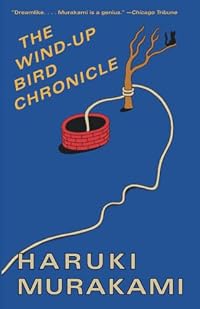
The Wind-Up Bird Chronicle: A Novel
by Haruki Murakami
On This Page
Description
Having quit his job, Toru Okada is enjoying a pleasant stint as a "house husband", listening to music and arranging the dry cleaning and doing the cooking - until his cat goes missing, his wife becomes distant and begins acting strangely, and he starts meeting enigmatic people with fantastic life stories. They involve him in a world of psychics, shared dreams, out-of-body experiences, and shaman-like powers, and tell him stories from Japan's war in Manchuria, about espionage on the border show more with Mongolia, the battle of Nomonhan, the killing of the animals in Hsin-ching's zoo, and the fate of Japanese prisoners-of-war in the Soviet camps in Siberia. show lessTags
Recommendations











Member Recommendations
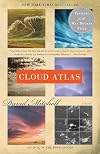
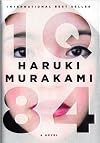
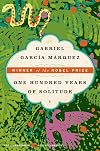
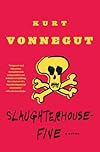
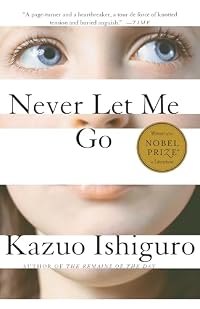
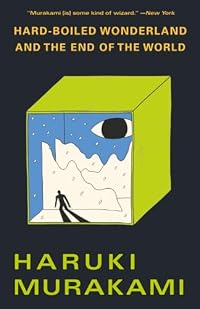
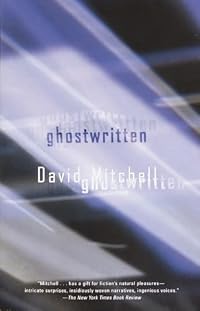
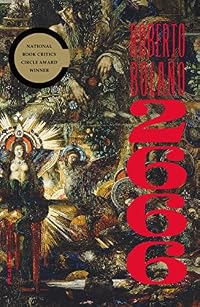
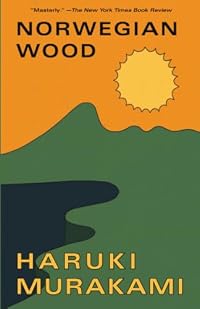
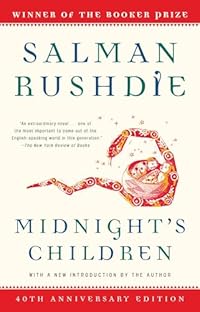
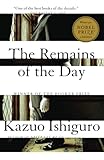
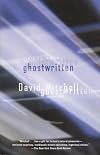
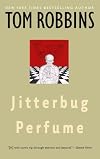
andomck Both books, besides having science fiction/magical realism elements, discuss bloody episodes of WWII from the point of view of everyday people.
61
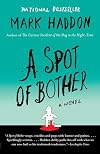
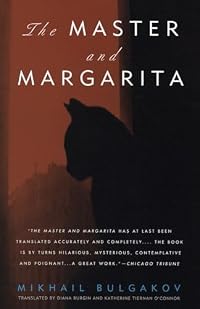
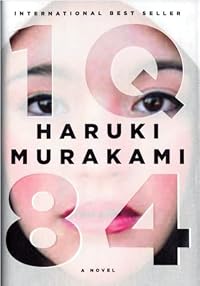
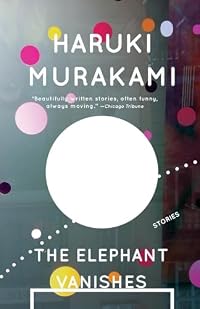
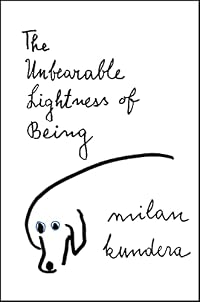
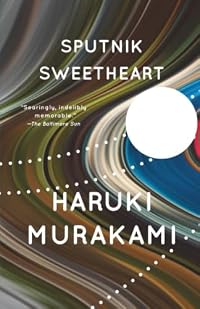
DeDeNoel Both this and Wind-Up Bird are about a man dealing with odd circumstances and going through a change. If you like the way Murakami writes, you probably will enjoy Mark Haddon's writing.
30
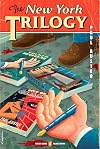


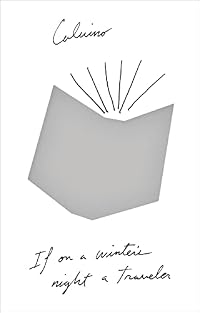
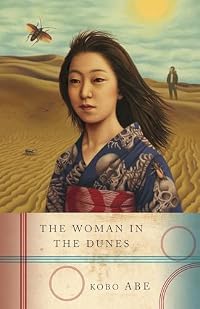
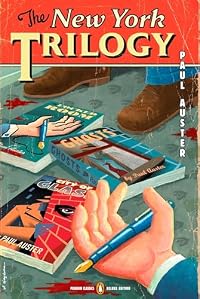
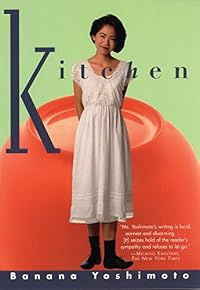
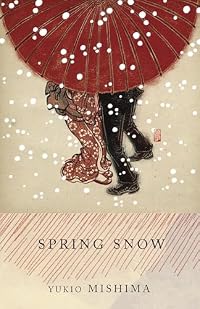
booklove2 Both books involve a displaced from the world character searching for clues to solve mysteries.
Member Reviews
Toru Okada is searching for a lot of things. As the hapless protagonist of The Wind-Up Bird Chronicle, Haruki Murakami’s sprawling and often magnificent mess of a novel, the unemployed Toru must first find his missing cat—which his wife Kumiko regards as a symbol of the their gradually failing marriage—and then Kumiko herself, who disappears one morning without warning. Along the way, Toru’s quest introduces him to a variety of unusual characters—a wise-beyond-her-years teenage neighbor, two sisters with apparent psychic abilities, a retired war veteran with a dark history, the creepy assistant of his evil brother-in-law, a mother and son team with unusual tastes and talents—and bizarre situations, including a considerable show more amount of time spent at the bottom of a deep, dark, dry well where his dreams become indistinguishable from his reality. What Toru must endure and discover about himself in the effort to find Kumiko and reestablish their previous life constitutes the ostensible plot of the book.
I say “ostensible” because I actually find it difficult to summarize this novel in a tidy fashion. It certainly is about Toru’s search for Kumiko, but it is also about so much more. Most notably, the story involves the search for identity and purpose, how personal histories are tied to those of entire countries, and how those individuals (and countries) must cope with pain and reconcile the horrors of the past. The story-telling is frequently brilliant and always engaging, even if it is highly non-linear and a little disjoint at times. Murakami appears to have pulled out all of the literary stops in crafting this novel; it is replete with allusions, symbols (such as the well and the wind-up bird of the title, for instance), magical realism elements, multiple plot lines told in myriad styles, and characters who disappear and reappear at will. He has also provided the reader with an ending that is mildly disappointing in that it does not bring all of threads of the story to a full conclusion. Still, I really enjoyed the several days I spent immersed in The Wind-Up Bird Chronicle. The author’s gift for crafting an imaginative tale with fully developed characters that the reader comes to care deeply about is remarkable and easily overcomes any shortcomings the rest of the book might have. show less
I say “ostensible” because I actually find it difficult to summarize this novel in a tidy fashion. It certainly is about Toru’s search for Kumiko, but it is also about so much more. Most notably, the story involves the search for identity and purpose, how personal histories are tied to those of entire countries, and how those individuals (and countries) must cope with pain and reconcile the horrors of the past. The story-telling is frequently brilliant and always engaging, even if it is highly non-linear and a little disjoint at times. Murakami appears to have pulled out all of the literary stops in crafting this novel; it is replete with allusions, symbols (such as the well and the wind-up bird of the title, for instance), magical realism elements, multiple plot lines told in myriad styles, and characters who disappear and reappear at will. He has also provided the reader with an ending that is mildly disappointing in that it does not bring all of threads of the story to a full conclusion. Still, I really enjoyed the several days I spent immersed in The Wind-Up Bird Chronicle. The author’s gift for crafting an imaginative tale with fully developed characters that the reader comes to care deeply about is remarkable and easily overcomes any shortcomings the rest of the book might have. show less
Un vortice narrativo in cui è progressivamente sempre più difficile distinguere fra realtà e non realtà. Un vortice da cui, se accetterete di lasciarvi andare, verrete travolti. E non vi dimenticherete più di Toru Okada, del pozzo, del suo gatto scomparso, della piccola vicina Kasahara May, del composito affresco di storie che si intrecciano con stile illogicamente sublime.
An astonishing book. Essentially an urban epic about losing your cat and your wife and your grip on reality, the plot moves dreamily through the mundane world of a man living an aimless, blameless life as he experiences erotic phone-calls, the philosophical musings of a teenage neighbour, horrifying stories from Japan's military campaign in China, a fascination with an abandoned well, two sisters named after islands and their strange vocation, and, frankly, a whole lot of other stuff. The writing is plain but addictive, and though the plot is full of ambiguities, complexities and perplexing enigmas, many of which are left for the reader to resolve, it is nonetheless a supremely satisfying read.
A fascinating look at characters and the brutalities of war and violence that seep into our lives. Murakami’s characters aren’t necessarily deep, but they feel like real people. The women are mediums, he claims, allowing the male protagonist to experience new concepts. They take some getting used to.
The whole book is memorable, and seems like the condensation of all of Murakami’s signature ideas: cats, violence, pasta, random sexual encounters, wells… His style is well-polished and Rubin’s translation is of the highest quality. Though once I found out that a lot had been removed from the novel I wanted all the more to read it in the original. Rubin claims he translated all of the best parts of the novel in his book Haruki show more Murakami and the Music of Words – still, I don’t see his reasoning for cutting things out. The novel is composed of disconnected segments with only tenuous relations to one another. Murakami’s masterpiece should be given it’s due. I hope once enough time has passed another translation will come out. As much as I admire Rubin, I think he may be trying to make one of his favorite authors safer for American audiences. I could be wrong, but Murakami’s MO is weirdness. He is Raymond Carver fed through the meat grinder with pop-culture and dream-logic.
I’ve read Wind-up Bird twice and might read it again. It really affords me an opportunity to escape from the mundane world. I even enjoyed reading interviews with Murakami - because this book always comes up. It's the sort of work that invites discussion. He's really on a whole different level with this one. There are already so many reviews out there, but in the end you'll have to decide for yourself if you're completely taken by his bold literary surprises or turned off by his jazz-like improvisations.
You get snatches of humor in this book as well to lighten the tone. The personality really shines through. As a writer with journalistic tendencies, he knows how to cater to the gut-level desires of his seething hoards of frothing-at-the-mouth fans. show less
The whole book is memorable, and seems like the condensation of all of Murakami’s signature ideas: cats, violence, pasta, random sexual encounters, wells… His style is well-polished and Rubin’s translation is of the highest quality. Though once I found out that a lot had been removed from the novel I wanted all the more to read it in the original. Rubin claims he translated all of the best parts of the novel in his book Haruki show more Murakami and the Music of Words – still, I don’t see his reasoning for cutting things out. The novel is composed of disconnected segments with only tenuous relations to one another. Murakami’s masterpiece should be given it’s due. I hope once enough time has passed another translation will come out. As much as I admire Rubin, I think he may be trying to make one of his favorite authors safer for American audiences. I could be wrong, but Murakami’s MO is weirdness. He is Raymond Carver fed through the meat grinder with pop-culture and dream-logic.
I’ve read Wind-up Bird twice and might read it again. It really affords me an opportunity to escape from the mundane world. I even enjoyed reading interviews with Murakami - because this book always comes up. It's the sort of work that invites discussion. He's really on a whole different level with this one. There are already so many reviews out there, but in the end you'll have to decide for yourself if you're completely taken by his bold literary surprises or turned off by his jazz-like improvisations.
You get snatches of humor in this book as well to lighten the tone. The personality really shines through. As a writer with journalistic tendencies, he knows how to cater to the gut-level desires of his seething hoards of frothing-at-the-mouth fans. show less
Though the plot is essentially driven by Toru's desire to uncover Kumiko, I can't help but feel that he is using the logical agenda of finding his wife (like any abandoned&confused men would) as a cover to pursue his underlying wayward tendencies i.e. repressed jealousy towards Noboru Wataya, sexual fantasies (with Creta & May), superstition (the well & water). Despite his outright dismissals of these subjects at the start, his subconscious mind seem to take a very different turn.
Initially clueless about fitting into societal norms (no job/ambition/wife), he becomes courageous, sexually attractive, and equipped with supernatural powers within a 'bubbled universe' with no 'real' witness--the ppl that he becomes involved with either show more dwell in the historical past or are shamans/mysterious individuals who lacked credentials.
Is the entire narrative then merely a transcript of Toru's ceaseless dreams from his veranda? The overwhelming sense of déjà vu I get from reading about events that unfathomably overlap makes the whole thing seem eerily dreamlike... show less
Initially clueless about fitting into societal norms (no job/ambition/wife), he becomes courageous, sexually attractive, and equipped with supernatural powers within a 'bubbled universe' with no 'real' witness--the ppl that he becomes involved with either show more dwell in the historical past or are shamans/mysterious individuals who lacked credentials.
Is the entire narrative then merely a transcript of Toru's ceaseless dreams from his veranda? The overwhelming sense of déjà vu I get from reading about events that unfathomably overlap makes the whole thing seem eerily dreamlike... show less
Toru Okada has quit his job a while ago, hoping to find something better. Until a new opportunity arises (preferably in a law firm), he's content enough to play the house-husband. And why wouldn't he, when even his wife encourages him to do so?
Then one day their cat disappears, and Toru starts getting odd erotic phone calls from a strangely familiar-sounding woman. He starts meeting a clairvoyant of sorts, who's supposed to help him find the cat, but the feline seems to be the last thing she wants to discuss with Toru. Meanwhile, our protagonist is happy enough to spend time sitting in the courtyard of an abandoned house, chatting with a rebellious 16-year-old girl and half-heartedly looking for the cat.
And none of that even scratches show more the surface, of what this book is all about. If I kept going though, I fear I'd end up revealing everything, which'd be a shame.
Interestingly enough, The Wind-Up Bird Chronicle gripped me right from the get-go. Normally, it tends to take me a while to "warm up" to a book, but I was hooked practically from the first word. Despite its rather mundane beginning, the author could just as well have tried to write a thesis about his dish-washing technique, there was something in the atmosphere that instantly drew me in.
Lots of reviewers complain about the lack of ending for most of the side-stories, that Toru encounters along the way. I disagree: the only one lacking a 'proper' ending was Malta Kano, but even there I feel I can make an argument to the contrary.
Or perhaps, it's a problem with Kumiko's story? But then, is there really a need to say something other than what Toru himself suspects by the end?
And thus, The Wind-Up Bird Chronicle gets 5 stars, because I can't bring myself to consider any of its faults a "deal breaker". My only regret is that I kind of rushed through the book. show less
Then one day their cat disappears, and Toru starts getting odd erotic phone calls from a strangely familiar-sounding woman. He starts meeting a clairvoyant of sorts, who's supposed to help him find the cat, but the feline seems to be the last thing she wants to discuss with Toru. Meanwhile, our protagonist is happy enough to spend time sitting in the courtyard of an abandoned house, chatting with a rebellious 16-year-old girl and half-heartedly looking for the cat.
And none of that even scratches show more the surface, of what this book is all about. If I kept going though, I fear I'd end up revealing everything, which'd be a shame.
Interestingly enough, The Wind-Up Bird Chronicle gripped me right from the get-go. Normally, it tends to take me a while to "warm up" to a book, but I was hooked practically from the first word. Despite its rather mundane beginning, the author could just as well have tried to write a thesis about his dish-washing technique, there was something in the atmosphere that instantly drew me in.
Lots of reviewers complain about the lack of ending for most of the side-stories, that Toru encounters along the way. I disagree: the only one lacking a 'proper' ending was Malta Kano, but even there I feel I can make an argument to the contrary.
Or perhaps, it's a problem with Kumiko's story? But then, is there really a need to say something other than what Toru himself suspects by the end?
And thus, The Wind-Up Bird Chronicle gets 5 stars, because I can't bring myself to consider any of its faults a "deal breaker". My only regret is that I kind of rushed through the book. show less
The first pages of The Wind-Up Bird Chronicle are filled with quotes from critics: “Mesmerizing,” “Compelling,” “Bold and generous,” the list goes on and on like posters at the box office of a Broadway play. I'm not sure I would have finished this novel if I hadn't known the level of critical acclaim it has received. Haruki Murakami breaks so many rules, it feels as if halfway through a football game the team owners decided to drop all controls and allow the players to have a street brawl. Yet once I made the effort it takes to read this novel, I found the accolades were justified. It's not a book to get lost in. It's a book to learn from, to appreciate for its unique qualities and for the way these qualities might influence show more other writers.
This is the story of Toru Okada, a young Japanese husband who loses both his cat and his wife. He seems to have a similar response to both those losses, going out in search of the cat while also maintaining a concern for his missing wife. This is the first taste of an aspect of this story that is unusual. People care about each other, but not with a great deal of emotion. Throughout the novel we pull for Okada to find his wife and reconcile with her, but it is more about reestablishing order than it is about love. A Newsday critic said this book presents “A vision no American novelist could have invented...” As a reader, I also have a very American perspective, which may be why I find this a bit strange.
Okada's wife, Kumiko, has a brother, Noburu Wataya, who is a prominent politician and someone involved with Kumiko's disappearance. He is an excellent speaker and very popular, but also quite corrupt. He is Toru's nemesis throughout the story. Noburu Wataya is also the name of the cat, which is an attempt at irony on the part of Kumiko and Toru.
Another interesting character is May Kasahara, a young, school age girl, whom Toru meets while searching for his cat. She calls him “Mr. Wind-Up Bird,” because she has trouble remembering his real name. The name comes from a story he tells her about a bird whose call sounds like the winding of a giant spring. May tells Toru things like, “You might think you made a new world or a new self, but your old self is always gonna be there, just below the surface and if something happens, it'll stick its head out and say. 'Hi.'” May is a foil for Toru's odd thoughts.
Two other important characters are the sisters, Malta and Creta Kano. Malta is the first of the two to contact Okada, who has been told in a phone conversation with Kumiko that he needs to speak with her. They meet and have a very odd conversation where he learns about Creta. Later he has an erotic dream with Creta in it and when he meets her she knows of the dream and says, “I am a prostitute. I used to be a prostitute of the flesh, but now I am a prostitute of the mind. Things pass through me.” The book is filled with strange, seemingly disconnected events and people, who come together in odd ways.
In the latter part of the novel, the story branches off to tell about the Japanese control over Manchuria beginning in 1931 and the joint Mongolian-Soviet resistance. These are some of the most violent, but authentic parts of the book. These sections lack the dreamlike qualities of the rest of the novel, but they include people and incidents that are interconnected with the rest of the story.
Steve Lindahl – author of Motherless Soul, White Horse Regressions, Hopatcong Vision Quest, and Under a Warped Cross. show less
This is the story of Toru Okada, a young Japanese husband who loses both his cat and his wife. He seems to have a similar response to both those losses, going out in search of the cat while also maintaining a concern for his missing wife. This is the first taste of an aspect of this story that is unusual. People care about each other, but not with a great deal of emotion. Throughout the novel we pull for Okada to find his wife and reconcile with her, but it is more about reestablishing order than it is about love. A Newsday critic said this book presents “A vision no American novelist could have invented...” As a reader, I also have a very American perspective, which may be why I find this a bit strange.
Okada's wife, Kumiko, has a brother, Noburu Wataya, who is a prominent politician and someone involved with Kumiko's disappearance. He is an excellent speaker and very popular, but also quite corrupt. He is Toru's nemesis throughout the story. Noburu Wataya is also the name of the cat, which is an attempt at irony on the part of Kumiko and Toru.
Another interesting character is May Kasahara, a young, school age girl, whom Toru meets while searching for his cat. She calls him “Mr. Wind-Up Bird,” because she has trouble remembering his real name. The name comes from a story he tells her about a bird whose call sounds like the winding of a giant spring. May tells Toru things like, “You might think you made a new world or a new self, but your old self is always gonna be there, just below the surface and if something happens, it'll stick its head out and say. 'Hi.'” May is a foil for Toru's odd thoughts.
Two other important characters are the sisters, Malta and Creta Kano. Malta is the first of the two to contact Okada, who has been told in a phone conversation with Kumiko that he needs to speak with her. They meet and have a very odd conversation where he learns about Creta. Later he has an erotic dream with Creta in it and when he meets her she knows of the dream and says, “I am a prostitute. I used to be a prostitute of the flesh, but now I am a prostitute of the mind. Things pass through me.” The book is filled with strange, seemingly disconnected events and people, who come together in odd ways.
In the latter part of the novel, the story branches off to tell about the Japanese control over Manchuria beginning in 1931 and the joint Mongolian-Soviet resistance. These are some of the most violent, but authentic parts of the book. These sections lack the dreamlike qualities of the rest of the novel, but they include people and incidents that are interconnected with the rest of the story.
Steve Lindahl – author of Motherless Soul, White Horse Regressions, Hopatcong Vision Quest, and Under a Warped Cross. show less
Members
- Recently Added By
Published Reviews
ThingScore 50
By the book's midway point, the novelist-juggler has tossed so many balls into the air that he inevitably misses a few on the way down. Visionary artists aren't always neat: who reads Kafka for his tight construction? In ''The Wind-Up Bird Chronicle'' Murakami has written a bold and generous book, and one that would have lost a great deal by being tidied up.
added by Shortride
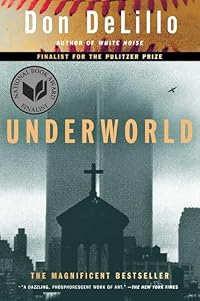
Mr. Murakami seems to have tried to write a book with the esthetic heft and vision of, say, Don DeLillo's ''Underworld'' or Salman Rushdie's ''The Moor's Last Sigh,'' he is only intermittently successful. ''Wind-Up Bird'' has some powerful scenes of antic comedy and some shattering scenes of historical power, but such moments do not add up to a satisfying, fully fashioned novel. In trying to show more depict a fragmented, chaotic and ultimately unknowable world, Mr. Murakami has written a fragmentary and chaotic book. show less
added by Shortride
Lists

The Guardian's 1000 Novels Everyone Must Read
1,005 works; 546 members

1001 Books You Must Read Before You Die
1,448 works; 1,131 members

Best Contemporary Literary Fiction (Around the Last 30 Years)
388 works; 124 members

Japanese Literature
230 works; 37 members

Magic Realism
371 works; 51 members

Best of World Literature
431 works; 51 members

Recommend the 20 best books you've read in the last five years
2,167 works; 606 members
20th Century Literature
1,161 works; 54 members

Favorite Long Books
330 works; 42 members

Favourite Books
1,817 works; 316 members
Top-Rated Books on LibraryThing
272 works; 116 members

Top Five Books of 2013
1,564 works; 722 members

Metafiction
84 works; 21 members

Weird and Weirder Fiction
266 works; 34 members
Best Political Fiction
92 works; 12 members

Best Psychological Fiction
81 works; 16 members

Slipstream or Interstitial Fiction
160 works; 19 members

100 books to read in a lifetime
102 works; 37 members

1990s
309 works; 17 members
Haruki Murakami's Books
16 works; 5 members

magic realism novels
44 works; 10 members

Top Five Books of 2018
802 works; 265 members

Speculative Fiction: Slipstream Literature
166 works; 16 members

100 New Classics
101 works; 13 members

Story Within a Story
65 works; 17 members

Dark Books for Winter Reading
71 works; 11 members

Best Japanese Fiction
41 works; 10 members

Blue Pyramid 1,276 Best Books of All Time
1,248 works; 32 members

Books tagged favorites
390 works; 30 members

1,001 BYMRBYD Concensus
723 works; 27 members

Literature by People of Color
81 works; 9 members

Top Five Books of 2016
795 works; 229 members

Books Read in 2023
5,547 works; 144 members

A Novel Cure
742 works; 23 members

SF & Fantasy in Translation
95 works; 18 members
Love Triangles in Literature
108 works; 15 members

International IMPAC Dublin Literary Award
179 works; 6 members

Reiny
17 works; 2 members
Fake Top 100 Fiction
81 works; 4 members

Asia
178 works; 7 members

Allie's Favourite 150 Books
145 works; 3 members

Unread books
1,063 works; 86 members

Books Read in 2017
4,248 works; 129 members

recalling favorites...
105 works; 2 members

hopes
34 works; 1 member

SHOULD Read Books!
354 works; 9 members
Animals in the Title
498 works; 11 members

Literature in Translation
113 works; 5 members
SantaThing 2014 Gifts
299 works; 17 members

Books Read in 2015
3,298 works; 129 members

Plan to Read Books
75 works; 1 member

Speculative Fiction from around the World
610 works; 17 members
5 Best 5 Years
71 works; 4 members

Books Read in 2022
5,164 works; 113 members

Reading Globally
136 works; 16 members
Literature About Adultery
69 works; 10 members

My favourite books
96 works; 3 members

Retrospective of 20th- and 21st-century literature
154 works; 1 member
Books recommended by Calgary Public Library staff
1,588 works; 4 members

Emo Books
14 works; 1 member
DigitalDreamDoor top 300
300 works; 4 members

.
194 works; 2 members

Favorite Books in Translation
320 works; 133 members
Books We Love to Reread
688 works; 296 members

Biggest Disappointments
606 works; 168 members

Books mentioned in Vandermeer's Wonderbook
34 works; 2 members

Books With the Most Memorable Titles
478 works; 158 members

Mustich's 1000 Books to Read Before You Die: A Life Changing List
1,001 works; 18 members

Recommended Literary Books
111 works; 1 member

Books Read in 2018
4,360 works; 110 members

Books Read in 2011
684 works; 19 members

Books Read in 2012
815 works; 31 members

Global Reads: Books Set in East Asia
139 works; 12 members

The Five Books That Represent Us
390 works; 147 members
Talk Discussions
Past Discussions
Group Read: Wind-Up Bird Chronicle in 75 Books Challenge for 2017 (December 2017)
Asian Author, Unemployed young man, Goes into a Well to relax?escape? in Name that Book (September 2015)
The Wind-Up Bird Chronicle Group Read: Non-Spoiler Thread in 75 Books Challenge for 2011 (August 2011)
The Wind-Up Bird Chronicle: Week 1 (Spoiler) in 75 Books Challenge for 2011 (August 2011)
Group Read: The Wind-Up Bird Chronicle by Haruki Murakami in 1001 Books to read before you die (April 2010)
Author Information

279+ Works 173,885 Members
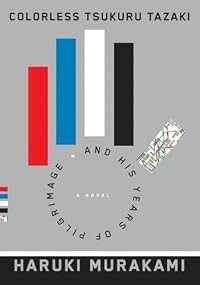
Haruki Murakami was born on January 12, 1949 in Kyoto, Japan and studied at Tokyo's Waseda University. He opened a coffeehouse/jazz bar in the capital called Peter Cat with his wife. He became a full-time author following the publication of his first novel, Hear the Wind Sing, in 1979. He writes both fiction and non-fiction works. His fiction show more works include Norwegian Wood, Colorless Tsukuru Tazaki and His Years of Pilgrimage, The Strange Library, and Men Without Women. Several of his stories have been adapted for the stage and as films. His nonfiction works include What I Talk About When I Talk About Running. He has received numerous literary awards including the Franz Kafka Prize for Kafka on the Shore, the Yomiuri Prize for The Wind-Up Bird Chronicle, and the Jerusalem Prize. He has translated into Japanese literature written by F. Scott Fitzgerald, Raymond Carver, Truman Capote, John Irving, and Paul Theroux. (Bowker Author Biography) show less
Some Editions
Awards and Honors
Awards
Distinctions
Notable Lists
Series
Belongs to Publisher Series
Work Relationships
Is contained in
Contains
Has the adaptation
Has as a reference guide/companion
Common Knowledge
- Canonical title*
- Vieterilintukronikka
- Original title
- Nejimaki-dori kuronikure
- Alternate titles*
- Die Chroniken des Herrn Aufziehvogel
- Original publication date
- 1995
- People/Characters
- Toru Okada; Kumiko Okada; Noboru Wataya; May Kasahara; Lieutenant Mamiya; Malta Kano (show all 9); Creta Kano; Nutmeg Akasaka; Cinnamon Akasaka
- Important places
- Japan; Mongolia; Manchukuo
- Important events
- Japanese invasion of Manchuria, 1931; Japanese Occupation; World War II, Pacific Theater
- First words
- When the phone rang I was in the kitchen, boiling a potful of spaghetti and whistling along with an FM broadcast of the overture to Rossini's The Thieving Magpie, which has to be the perfect music for cooking pasta.
- Quotations*
- «Ah, così lei ama la letteratura! – mi avrebbero detto, – anch'io. Da giovane ho letto parecchio». Per loro la letteratura era qualcosa che si leggeva da giovani. Come in primavera si colgono le fragole, e in autunno s... (show all)i vendemmia.
«Io ho solo sedici anni, e il mondo non lo conosco ancora bene, ma una cosa sola posso affermare con sicurezza: se io sono pessimista, un adulto che non lo sia, in questo mondo, è proprio un cretino». - Last words
- (Click to show. Warning: May contain spoilers.)In a place far away from anyone or anywhere, I drifted off for a moment.
- Original language
- Japanese
*Some information comes from Common Knowledge in other languages. Click "Edit" for more information.
Classifications
- Genres
- General Fiction, Fiction and Literature, Fantasy
- DDC/MDS
- 895.635 — Literature & rhetoric Literatures of other languages Literatures of East and Southeast Asia Japanese Japanese fiction 1945–2000
- LCC
- PL856 .U673 .N4513 — Language and Literature Languages and literatures of Eastern Asia, Africa, Oceania Languages of Eastern Asia, Africa, Oceania Japanese language and literature Japanese literature Individual authors and works
- BISAC
Statistics
- Members
- 19,647
- Popularity
- 295
- Reviews
- 405
- Rating
- (4.17)
- Languages
- 29 — Albanian, Bosnian, Catalan, Chinese, Czech, Danish, Dutch, English, Finnish, French, German, Greek, Hebrew, Hungarian, Italian, Japanese, Lithuanian, Norwegian (Nynorsk), Norwegian (Bokmål), Polish, Portuguese, Romanian, Russian, Slovenian, Spanish, Swedish, Thai, Turkish, Vietnamese
- Media
- Paper, Audiobook, Ebook
- ISBNs
- 121
- UPCs
- 4
- ASINs
- 41