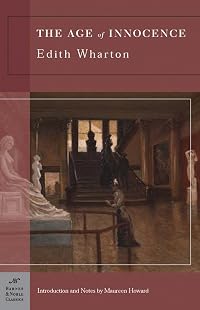
The Age of Innocence
by Edith Wharton
On This Page
Description
An elegant portrait of desire and betrayal in Old New York. In the highest circle of New York social life during the 1870's, Newland Archer, a young lawyer, prepares to marry the docile May Welland. Before their engagement is announced, he meets May's cousin, the mysterious, nonconformist Countess Ellen Olenska, who has returned to New York after a long absence. Archer's world is always changing.Tags
Recommendations
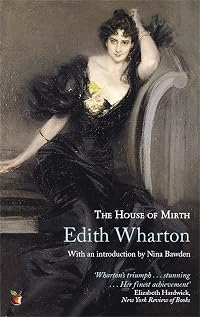
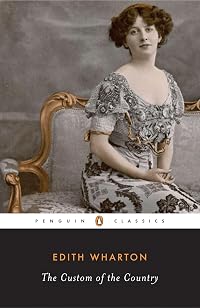
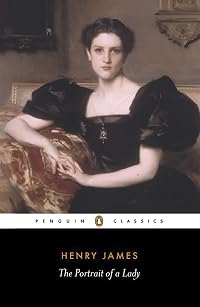



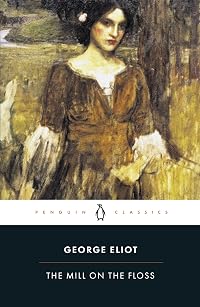

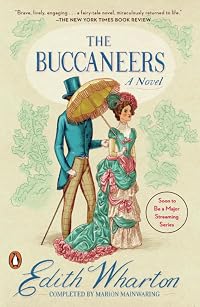
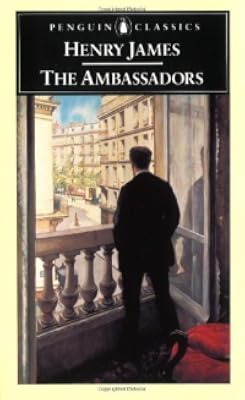
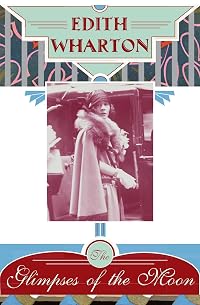
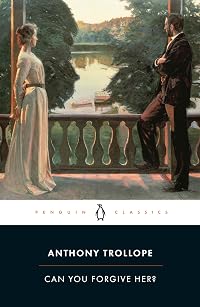
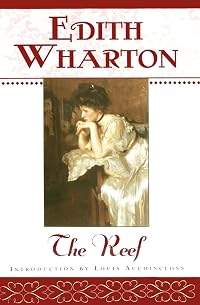
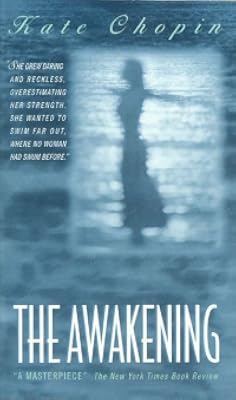
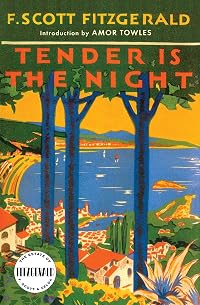


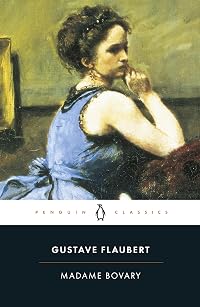
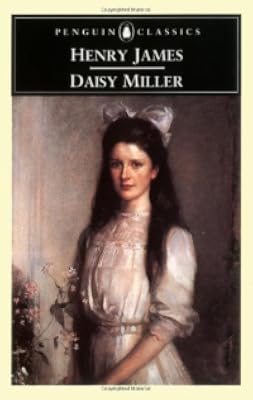
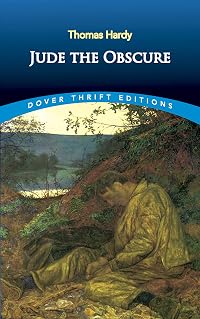
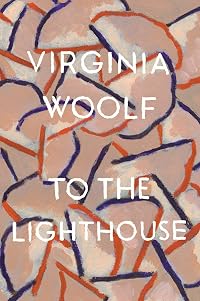
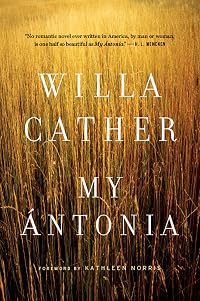
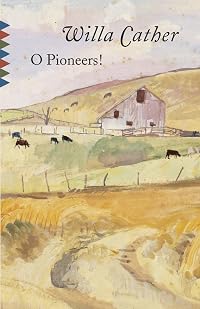


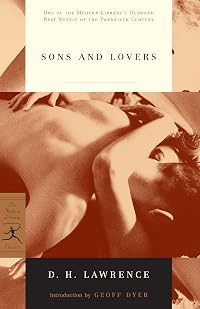

Member Recommendations

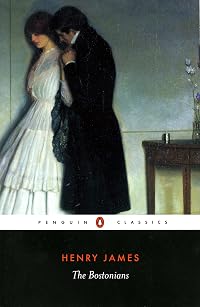
2below Similar plot and themes--both deal with the issue of being an outsider. I find James' prose a bit more vigorous than Wharton's.
40

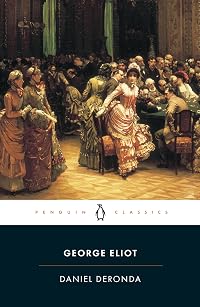
TineOliver Both look at love and marriage in the upper classes of New York society (however, at different time periods)
31

kitzyl Man engaged to conventional society finds himself attracted to an outcast who challenges the rigidity and hypocrisy of the era.
21

kitzyl An embittered lawyer in a loveless coupling attends a social gathering where he is drawn to an enigmatic riches-to-rags woman, whose broken marriage has made her a social outcast. Explores the rigid ideas of morality in the 70s (a century apart) enforced by wealth/class. Woman has a "Olde Shabby Riche"-ly decorated house where the man immediately feels at home.
10

gtross Similar plot: an Anglo-American woman returns home from the continent, a social outcast under a cloud of suspicion after a disastrous marriage to a sadistic count, and falls in love with a hapless young man, already engaged, who lets himself be guided more by his feelings than by his sense of what is prudent and correct. Similar also in intensity.

Member Reviews
A reread for me, I think the third time I've read this. Every time I find myself noticing something new. This time I was thinking the entire time of what the book would have been from May Welland's point of view. I would love to read a retelling of that - is there one??
For those who haven't read this, [Age of Innocence] follows Newland Archer, a young man on the cusp of marriage to May Welland and into the stifling, closed off New York society of the 1870s. When worldly, exotic (well, to their small circle) Ellen Olenska returns home to escape a bad marriage, Archer becomes enthralled. This is a love triangle but also a study of what happens when people are caught in a shifting society and whether they'll stick with the old rules or show more forge a new path.
The book is written from Newland Archer's perspective which wildly annoyed me the first time I've read this. Subsequent readings have made me so impressed with how Wharton manages to make this about the women, particularly about May, without giving them a direct voice.
I love this book and highly recommend it. show less
For those who haven't read this, [Age of Innocence] follows Newland Archer, a young man on the cusp of marriage to May Welland and into the stifling, closed off New York society of the 1870s. When worldly, exotic (well, to their small circle) Ellen Olenska returns home to escape a bad marriage, Archer becomes enthralled. This is a love triangle but also a study of what happens when people are caught in a shifting society and whether they'll stick with the old rules or show more forge a new path.
The book is written from Newland Archer's perspective which wildly annoyed me the first time I've read this. Subsequent readings have made me so impressed with how Wharton manages to make this about the women, particularly about May, without giving them a direct voice.
I love this book and highly recommend it. show less
Wharton's unsparing portrait of late 1800s upper class New York shows a society crumbling under the weight of its own pretense and conservatism. The senseless and hypocritical rituals of the upper classes and their tribal persecution of outsiders and nonconformists is portrayed here humorously but also as making many of the most privileged members bear the misery of its burden.
I find it hard to sympathize with Newland Archer, the novel's protagonist, because he seems so much in denial of his feelings throughout the first part of the novel that when he finally admits that he is in love with the Countess Olenska, he is far too enmeshed in the demands of his role as son and fiance to do anything about it.
I find it hard to sympathize with Newland Archer, the novel's protagonist, because he seems so much in denial of his feelings throughout the first part of the novel that when he finally admits that he is in love with the Countess Olenska, he is far too enmeshed in the demands of his role as son and fiance to do anything about it.
"We can't behave like people in novels, though, can we?"
4.5-stars, really!!
delicious!!! this is my first wharton (I KNOW!) and while i had already held her in high esteem as a writer and a woman, this book kinda made me fall in love with her. a lot. wharton's prose is beautiful. her eye for detail, incredible. i loved her way with description - sometimes so poetic, other times hilarious and often, both!
* "...her abysmal purity..."
* "The immense accretion of flesh, which had descended on her in middle life like a flood of lava on a doomed city had changed her from a plump active little woman with a neatly-turned foot and ankle into something as vast and august as a natural phenomenon."
* "...he plunged out into the winter night bursting show more with the belated eloquence of the inarticulate..."
* "...she gave an adipose chuckle and patted his knee with her puff-ball hand..."
* "She had the heedless generosity and the spasmodic extravagance of persons used to large fortunes,..."
this is great stuff!! :)
the age of innocence centers on an upper-class couple, archer and may's, impending marriage, and ellen, may's cousin - a countess who has recently fled her marriage and life in europe, so is plagued by scandal. ellen's presence, (along with being may's cousin, she is also a friend of archer's from childhood (this circle of society is tight, yo!)) threatens the happiness and stability of archer and may's union. though the novel questions assumptions and morals of 1870s' New York society, it never devolves into an outright condemnation of the institution. apparently, wharton considered this novel an "apology" for her earlier novel, 'the house of mirth', which was more brutal and critical. (and which i need to read RIGHT NOW!! heh!)
i truly enjoyed reading this book and was fully immersed in the time and place wharton created here. i loved coming across ideas in the novel, that for the time it was set (the 1870s), would have been very extreme views, and for the time it was written (1920), would likely still have been rather unpopular. ideas like: divorce, equality for (or more freedom for) women, socializing outside of one's 'class', progressive society - each touched on yet never presented as a lecture or a wagging finger.
according to wikipedia (I KNOW!):
"Not to be overlooked is Wharton's attention to detail regarding the charms and customs of the upper class. The novel has been lauded for its accurate portrayal of how the 19th-century East Coast American upper class lived, and this, combined with the social tragedy, earned Wharton a Pulitzer Prize—the first Pulitzer awarded to a woman. Edith Wharton was 58 years old at the time of publication; she had lived in that world and had seen it change dramatically by the end of World War I. The title is an ironic comment on the polished outward manners of New York society when compared to its inward machinations."
my only, only, 'yeah, but...' is because of:
early on in the novel we are told: "Everyone in polite circles knew that, in America, "a gentleman couldn't go into politics." and yet...by the end of the story, we learn that is, in fact, exactly what archer ended up doing. the last chapter has seen time in the story jump ahead 26 years. we are quickly brought up to speed with births, deaths and marriages. yet this one piece made for an inconsistency for me and left me with questions:
* in making the decision, did archer feel he was no longer a gentleman?
* did beliefs change within his level of society?
* did he, rather, just choose to follow his heart into something he truly wanted to do? if so, was this to offset the manner in which he would have rather followed his heart?
* if he had such a shift in thinking...then why not fight for ellen?
you see -- questions, i have them! :)
i loved the ending so much! i thought it perfect. i wondered often during this read if may and ellen were both held to a fantasized ideal in archer's mind. when archer, finally, says, near the very end of the book:"It's more real to me here than if I went up." i was, like, YEAH IT IS!
i think it was a ballsy choice on wharton's part to end the novel in this way. and i suspect wharton was a ballsy broad! :) show less
4.5-stars, really!!
delicious!!! this is my first wharton (I KNOW!) and while i had already held her in high esteem as a writer and a woman, this book kinda made me fall in love with her. a lot. wharton's prose is beautiful. her eye for detail, incredible. i loved her way with description - sometimes so poetic, other times hilarious and often, both!
* "...her abysmal purity..."
* "The immense accretion of flesh, which had descended on her in middle life like a flood of lava on a doomed city had changed her from a plump active little woman with a neatly-turned foot and ankle into something as vast and august as a natural phenomenon."
* "...he plunged out into the winter night bursting show more with the belated eloquence of the inarticulate..."
* "...she gave an adipose chuckle and patted his knee with her puff-ball hand..."
* "She had the heedless generosity and the spasmodic extravagance of persons used to large fortunes,..."
this is great stuff!! :)
the age of innocence centers on an upper-class couple, archer and may's, impending marriage, and ellen, may's cousin - a countess who has recently fled her marriage and life in europe, so is plagued by scandal. ellen's presence, (along with being may's cousin, she is also a friend of archer's from childhood (this circle of society is tight, yo!)) threatens the happiness and stability of archer and may's union. though the novel questions assumptions and morals of 1870s' New York society, it never devolves into an outright condemnation of the institution. apparently, wharton considered this novel an "apology" for her earlier novel, 'the house of mirth', which was more brutal and critical. (and which i need to read RIGHT NOW!! heh!)
i truly enjoyed reading this book and was fully immersed in the time and place wharton created here. i loved coming across ideas in the novel, that for the time it was set (the 1870s), would have been very extreme views, and for the time it was written (1920), would likely still have been rather unpopular. ideas like: divorce, equality for (or more freedom for) women, socializing outside of one's 'class', progressive society - each touched on yet never presented as a lecture or a wagging finger.
according to wikipedia (I KNOW!):
"Not to be overlooked is Wharton's attention to detail regarding the charms and customs of the upper class. The novel has been lauded for its accurate portrayal of how the 19th-century East Coast American upper class lived, and this, combined with the social tragedy, earned Wharton a Pulitzer Prize—the first Pulitzer awarded to a woman. Edith Wharton was 58 years old at the time of publication; she had lived in that world and had seen it change dramatically by the end of World War I. The title is an ironic comment on the polished outward manners of New York society when compared to its inward machinations."
my only, only, 'yeah, but...' is because of:
* in making the decision, did archer feel he was no longer a gentleman?
* did beliefs change within his level of society?
* did he, rather, just choose to follow his heart into something he truly wanted to do? if so, was this to offset the manner in which he would have rather followed his heart?
* if he had such a shift in thinking...then why not fight for ellen?
you see -- questions, i have them! :)
i loved the ending so much! i thought it perfect. i wondered often during this read if may and ellen were both held to a fantasized ideal in archer's mind. when archer, finally, says, near the very end of the book:
i think it was a ballsy choice on wharton's part to end the novel in this way. and i suspect wharton was a ballsy broad! :) show less
4½****, which would be 5***** were it not for the final chapter.
The conclusion to the penultimate chapter was extremely powerful. (In some ways, its understatement tilting into irony reminds me of the final line of Nella Larsen's Quicksand.) Then comes the final chapter and it's a bit of a letdown.
I can understand why Wharton may have felt a need for that final chapter — to put a contemporary (1920) spin on her story — but I think that conclusion became too didactic. I'd have ended with the ambiguity of May's triumph, but then, I'm someone who likes Jamesian ambiguity.
The conclusion to the penultimate chapter was extremely powerful. (In some ways, its understatement tilting into irony reminds me of the final line of Nella Larsen's Quicksand.) Then comes the final chapter and it's a bit of a letdown.
I can understand why Wharton may have felt a need for that final chapter — to put a contemporary (1920) spin on her story — but I think that conclusion became too didactic. I'd have ended with the ambiguity of May's triumph, but then, I'm someone who likes Jamesian ambiguity.
Loved, loved, loved this book. Wharton's tale of frustrated love and longing, of being claustrophobically penned in and controlled in every way by one's milieu, is a masterpiece. Poor Newland...it's his innocence, his lack of awareness of society's insidious, pervasive web, that is the theme of the novel. The apparent ingenue, May, is no such thing; instead she's a shrewd, aware young woman not above manipulating both her cousin and her fiance/spouse. What is amazing is the distance between the characters surface or public lives and their real lives. Astoundingly well done. A nice extra touch is the use of Faust, the opera, as a recurring image, pairing Helen/Elena Olenska.
In 1870s New York City, rich heir Newland Archer is newly engaged to rich heiress May Welland. It’s a good match since they’re both in the same super-rich close-knit social circle. This circle is disrupted by the arrival of May’s cousin Ellen from Europe, returning to America in scandalous circumstances having escaped an abusive marriage to a Count. She doesn’t follow the strict unwritten social rules of the New York rich - she dines with whomever she wants, speaks her mind, and petitions for *gasp* a divorce. Newland works at the law firm she has hired and feels drawn to her intellect and worldliness. He’s torn between wanting to give her the gift of freedom and safety or listening to their friends and family beg him to show more discourage her because divorce just isn’t done. In an effort to get Ellen out of his head Newland moves up his wedding to May, and Ellen moves to Washington DC. When they see each other again a year after the wedding, they realize nothing has changed between them. Newland wants her to stay close so they can still be in each other’s lives, but Ellen is still unwelcome in his society, so she leaves for Europe (but not back to her husband). Newland plans to follow her, but May tactfully reveals she is pregnant and he stays. Decades later, the widowered Newland is visiting his adult son in Paris when he’s invited to dinner at Ellen’s. He declines.
This is not a super fun read because Newland sucks a lot. Both Ellen and May are pretty sympathetic. Ellen just wants freedom and safety. May is smarter than Newland gives her credit for, even if she mostly chooses not to use it. You could argue she’s a bit manipulative but she’s only trying to manipulate herself out of the position her husband put her in. As a man, Newland is the only one in the triangle with real agency, but he doesn’t know what he wants - essentially he wants to have his cake and eat it too. He wants to keep the luxury and privilege of his life, and his marriage to May, but also wants to be with Ellen, but does not want to commit adultery or have a mistress (because that would be unseemly). And in the end, even when he’s eaten the cake, and then he gets the cake, he throws it away.
Aside from the lackluster main plot there’s a lot of interest here. The side characters are vivid - especially the snappy Granny Mingott and the scandalous Beaufort family. It’s a peek into a world full of bizarre unspoken rules and strict rituals that haunt Americans to this day. In this respect Ellen is especially interesting - the American myth tells us that European nobility is stratified, stuck-up, and overly formal, but it’s the American plutocracy that shuns Ellen for stepping a toe out of line.
Worth reading once for the Gilded Age historical context, but I don’t think I’ll ever return to it. show less
This is not a super fun read because Newland sucks a lot. Both Ellen and May are pretty sympathetic. Ellen just wants freedom and safety. May is smarter than Newland gives her credit for, even if she mostly chooses not to use it. You could argue she’s a bit manipulative but she’s only trying to manipulate herself out of the position her husband put her in. As a man, Newland is the only one in the triangle with real agency, but he doesn’t know what he wants - essentially he wants to have his cake and eat it too. He wants to keep the luxury and privilege of his life, and his marriage to May, but also wants to be with Ellen, but does not want to commit adultery or have a mistress (because that would be unseemly). And in the end, even when he’s eaten the cake, and then he gets the cake, he throws it away.
Aside from the lackluster main plot there’s a lot of interest here. The side characters are vivid - especially the snappy Granny Mingott and the scandalous Beaufort family. It’s a peek into a world full of bizarre unspoken rules and strict rituals that haunt Americans to this day. In this respect Ellen is especially interesting - the American myth tells us that European nobility is stratified, stuck-up, and overly formal, but it’s the American plutocracy that shuns Ellen for stepping a toe out of line.
Worth reading once for the Gilded Age historical context, but I don’t think I’ll ever return to it. show less
It took me awhile to get through this novel. While I read, I think my inner critic was opining on whether or not it was worthy of the Pulitzer Prize (there's a whole side story on this, involving author Sinclair Lewis, and how one feels about it may largely depend on one's definition of "wholesome").
I gave this novel 4 stars because overall, it is a very good novel and Wharton is a very good writer. She takes a cold hard look at late 19th century New York society, its social hypocrisy and unspoken codes of morality. Her characters are very well drawn and believable and, at times, quite maddening as they move through the time and place they are born into.
Wharton can be, by turns, intensely romantic: "Each time, you happen to me all show more over again."
Then, hilarious: "Mr. Jackson had helped himself to a slice of the tepid filet which the mournful butler had handed him with a look as sceptical (sic) as his own, and had rejected the mushroom sauce after a barely perceptible sniff. He looked baffled and hungry..."
Then, tragic: "But after a moment a sense of waste and ruin overcame him. There they were, close together and safe and shut in; yet so chained to their separate destinies that they might as well have been half the world apart."
This is a sad story, but one also full of family ties and loyalties that give certain characters a dignity about them, showing awareness of the restrictive lives they lead under social controls. These restrictions certainly apply to the women of this time, but also extend to the men, who find themselves just as trapped as the women (albeit with more ways available to sidestep them).
My particular copy was poorly edited, to the point it was distracting more than once. I enjoyed this novel enough to want to revisit it in the future, and will treat myself to a quality hardcover. Definitely recommended. show less
I gave this novel 4 stars because overall, it is a very good novel and Wharton is a very good writer. She takes a cold hard look at late 19th century New York society, its social hypocrisy and unspoken codes of morality. Her characters are very well drawn and believable and, at times, quite maddening as they move through the time and place they are born into.
Wharton can be, by turns, intensely romantic: "Each time, you happen to me all show more over again."
Then, hilarious: "Mr. Jackson had helped himself to a slice of the tepid filet which the mournful butler had handed him with a look as sceptical (sic) as his own, and had rejected the mushroom sauce after a barely perceptible sniff. He looked baffled and hungry..."
Then, tragic: "But after a moment a sense of waste and ruin overcame him. There they were, close together and safe and shut in; yet so chained to their separate destinies that they might as well have been half the world apart."
This is a sad story, but one also full of family ties and loyalties that give certain characters a dignity about them, showing awareness of the restrictive lives they lead under social controls. These restrictions certainly apply to the women of this time, but also extend to the men, who find themselves just as trapped as the women (albeit with more ways available to sidestep them).
My particular copy was poorly edited, to the point it was distracting more than once. I enjoyed this novel enough to want to revisit it in the future, and will treat myself to a quality hardcover. Definitely recommended. show less
Members
- Recently Added By
Published Reviews
ThingScore 100
A larger life and more tolerant views: That’s the greatest promise the novel holds out to us, and it’s as necessary now as it was when Edith Wharton put it into words.
added by danielx
Lists

1001 Books You Must Read Before You Die
1,448 works; 1,134 members

The Guardian's 1000 Novels Everyone Must Read
1,005 works; 548 members

Pulitzer Prize Winners for Fiction
102 works; 54 members

Radcliffe's 100 Best Novel of the 20th Century
100 works; 32 members

Classics you know you should have read but probably haven't
421 works; 409 members

Great American Novels
158 works; 42 members

Favourite Virago Modern Classics
183 works; 38 members

Read the book and saw the movie
1,170 works; 195 members
Novels from The Guardian's Great American Novelist Tournament
148 works; 24 members
Newsweek's Top 100 Books: The Meta-List
100 works; 18 members
Literature About Social Class
134 works; 19 members
Favourite Books
1,820 works; 309 members
New York Public Library's Books of the Century
120 works; 20 members

Female Author
1,234 works; 67 members
20th Century Literature
1,161 works; 55 members

Best Psychological Fiction
81 works; 16 members
Historical Fiction
889 works; 89 members
In and About the 1920s
181 works; 31 members

Favorite Literary Love Stories
182 works; 101 members

Unread books
1,063 works; 87 members

New York Public Library's Books of the Century - All
170 works; 14 members
Books Set in New York City
127 works; 21 members
Books I've Read More Than Once
602 works; 49 members
Harold Bloom - The Western Canon: D. The Chaotic Age
833 works; 24 members

Best Feminist Literature
188 works; 26 members

100 books to read in a lifetime
102 works; 37 members

Best Love Stories
107 works; 14 members

Pulitzer Prize-Winning Books
42 works; 10 members

Top Five Books of 2014
1,064 works; 398 members
Canon de la narrativa universal del siglo XX
254 works; 6 members
LibraryThingers' 1001 Books You Must Read Before You Die
442 works; 29 members

Western World's Greatest Books - Project Gutenberg
295 works; 15 members
Folio Society
831 works; 48 members
Love and Marriage
93 works; 10 members
The American Experience
173 works; 18 members

"I'd Group-Read That"
20 works; 6 members
Books Set in New York State
65 works; 11 members

Blue Pyramid 1,276 Best Books of All Time
1,248 works; 32 members

Pleasant Surprises: Books That Exceeded Our Expectations
418 works; 143 members
Readable Classics
110 works; 15 members

A Novel Cure
742 works; 23 members
1,001 BYMRBYD Concensus
723 works; 27 members
Female Protagonist
1,056 works; 57 members

Top Five Books of 2022
736 works; 272 members
Five star books
1,767 works; 110 members

Books Read in 2023
5,638 works; 147 members
Literature About Women and Girls
394 works; 39 members
Love Triangles in Literature
108 works; 15 members

40 Books to Read Before You’re 40
40 works; 4 members
1920s
141 works; 6 members
Best of American Literature
146 works; 9 members

Top Five Books of 2015
811 works; 241 members

The Guardian's 100 Best Novels Written in English
105 works; 13 members

Books Read in 2016
4,666 works; 199 members
The Greatest Books
99 works; 5 members

100 Most Recommended Works
100 works; 11 members

Historical Fiction Set in Gilded Age
13 works; 5 members
Mensa for Kids Excellence in Reading Award Program (Grades 9-12)
116 works; 5 members

Books Read in 2022
5,226 works; 115 members

discontinued
10 works; 4 members
The Modern Library's 100 Best Novels: The Board's List
85 works; 6 members
Elegant Prose
80 works; 4 members
Overdue Podcast
808 works; 9 members

Amanda's Guaranteed Books
110 works; 5 members

Llibres que he llegit el 2012
28 works; 1 member

BingoDOG 2015 Challenge
49 works; 3 members
Books Read in 2015
3,299 works; 129 members

Books on my Kindle
162 works; 3 members
Literature About Adultery
69 works; 10 members

SHOULD Read Books!
354 works; 9 members

Books Read in 2017
4,249 works; 129 members

100
56 works; 1 member
American Lit for Eng 11 Research Project
368 works; 6 members

Eton's list - the books every bright 16 year-old should read
40 works; 6 members
Canon de la narrativa universal del s. XX (cicutadry)
499 works; 3 members

The 150 Greatest Novels of All Time
150 works; 6 members

DigitalDreamDoor top 300
300 works; 4 members
The Complete Rory Gilmore Reading List
506 works; 5 members

.
194 works; 2 members

Recommended Reading : 600 Classics Reviewed, Editors of Salem Press, 2015
634 works; 6 members

Books Read in 2025
4,128 works; 98 members

American Realism
15 works; 1 member
School Made Us Read It
380 works; 196 members

Books We Discovered On LibraryThing
530 works; 130 members

Books We Love to Reread
688 works; 297 members
el
1,139 works; 1 member
.
396 works; 1 member
Modern Library's 100 Best Novels
100 works; 2 members

Take Four Books
130 works; 1 member

In Our Time books
4,934 works; 2 members

Books Read in 2024
4,727 works; 128 members
bound
100 works; 1 member
Rory Gilmore Reading Challenge
34 works; 2 members
Best Books of the 20th Century
193 works; 5 members

Publisher's Weekly Bestsellers Part I - 1895-1939
399 works; 8 members

Mustich's 1000 Books to Read Before You Die: A Life Changing List
1,001 works; 20 members

AP Lit
363 works; 6 members
Rory Gilmore Challenge 1-100
27 works; 1 member

Greatest Books, allegedly
484 works; 9 members
Books referenced in A Very Great Profession: The Woman's Novel 1914-39
199 works; 6 members
New Lifetime Reading Plan by Fadiman and Major
225 works; 5 members

Books With Time Words in the Title
160 works; 4 members
Mensa for Kids Excellence in Reading Award Program (Grades 9-12)
116 works; 3 members
Books available on Open Library
171 works; 4 members

Tagged 19th Century
104 works; 7 members

Books Read in 2019
4,052 works; 110 members

I Can't Finish This Book
189 works; 22 members
Out of Copyright
244 works; 14 members

Watched the Movie, Probably Won't Read the Book
185 works; 34 members

Hidden Classics
73 works; 15 members

You Couldn't Pay Me to Read That (Take 2)
203 works; 86 members
Talk Discussions
Past Discussions
The Age of Innocence: Chapters 25-34 in 75 Books Challenge for 2011 (November 2011)
***Group Read: The Age of Innocence in The Highly-Rated Book Group (October 2011)
The Age of Innocence: Chapters 14-24 in 75 Books Challenge for 2011 (October 2011)
The Age of Innocence: Chapters 1-13 in 75 Books Challenge for 2011 (October 2011)
The AGE OF INNOCENCE Group Read: Main Thread in 75 Books Challenge for 2011 (October 2011)
Author Information

379+ Works 63,788 Members
Edith Wharton was a woman of extreme contrasts; brought up to be a leisured aristocrat, she was also dedicated to her career as a writer. She wrote novels of manners about the old New York society from which she came, but her attitude was consistently critical. Her irony and her satiric touches, as well as her insight into human character, show more continue to appeal to readers today. As a child, Wharton found refuge from the demands of her mother's social world in her father's library and in making up stories. Her marriage at age 23 to Edward ("Teddy") Wharton seemed to confirm her place in the conventional role of wealthy society woman, but she became increasingly dissatisfied with the "mundanities" of her marriage and turned to writing, which drew her into an intellectual community and strengthened her sense of self. After publishing two collections of short stories, The Greater Inclination (1899) and Crucial Instances (1901), she wrote her first novel, The Valley of Decision (1902), a long, historical romance set in eighteenth-century Italy. Her next work, the immensely popular The House of Mirth (1905), was a scathing criticism of her own "frivolous" New York society and its capacity to destroy her heroine, the beautiful Lily Bart. As Wharton became more established as a successful writer, Teddy's mental health declined and their marriage deteriorated. In 1907 she left America altogether and settled in Paris, where she wrote some of her most memorable stories of harsh New England rural life---Ethan Frome (1911) and Summer (1917)---as well as The Reef (1912), which is set in France. All describe characters forced to make moral choices in which the rights of individuals are pitted against their responsibilities to others. She also completed her most biting satire, The Custom of the Country (1913), the story of Undine Spragg's climb, marriage by marriage, from a midwestern town to New York to a French chateau. During World War I, Wharton dedicated herself to the war effort and was honored by the French government for her work with Belgian refugees. After the war, the world Wharton had known was gone. Even her Pulitzer Prize-winning novel, The Age of Innocence (1920), a story set in old New York, could not recapture the former time. Although the new age welcomed her---Wharton was both a critical and popular success, honored by Yale University and elected to The National Institute of Arts and Letters---her later novels show her struggling to come to terms with a new era. In The Writing of Fiction (1925), Wharton acknowledged her debt to her friend Henry James, whose writings share with hers the descriptions of fine distinctions within a social class and the individual's burdens of making proper moral decisions. R.W.B. Lewis's biography of Wharton, published in 1975, along with a wealth of new biographical material, inspired an extensive reevaluation of Wharton. Feminist readings and reactions to them have focused renewed attention on her as a woman and as an artist. Although many of her books have recently been reprinted, there is still no complete collected edition of her work. (Bowker Author Biography) show less
Some Editions
Awards and Honors
Series
Belongs to Publisher Series
Novelas eternas (6)
Andanzas (13)
Colecção Mil Folhas (46)
Arion Press (70)
Virago Modern Classics (298)
Work Relationships
Is contained in
Novels: The House of Mirth / The Reef / The Custom of the Country / The Age of Innocence by Edith Wharton
Pulitzer Prize Winning Works Collection: One of Ours, His Family, Miss Lulu Bett, Cornhuskers, Anna Christie, Alice Adams, and More! (11 Works) by Various
10 Classic Feminist Works You Should Read: Little Women, The Yellow Wallpaper, A Vindication Of The Rights Of Woman, Sultana's Dream... by Golden Deer
Is retold in
Has the adaptation
Is abridged in
Has as a study
Has as a commentary on the text
Common Knowledge
- Canonical title
- The Age of Innocence
- Original title
- The Age of Innocence
- Original publication date
- 1920
- People/Characters
- Newland Archer; May Welland; Ellen Olenska; Mrs. Manson Mingott; Mrs. August Welland; Mrs. Lovell Mingott (show all 18); Sillerton Jackson; Julius Beaufort; Regina Beaufort; Janey Archer; Mrs. Adeline Archer; Mrs. Lemuel Struthers; Louisa van der Luyden; Henry van der Luyden; Medora Manson; M. Riviere; Dallas Archer; Fanny Beaufort
- Important places
- New York, New York, USA; St. Augustine, Florida, USA
- Important events
- Gilded Age; 19th century
- Related movies
- The Age of Innocence (1924 | IMDb); The Age of Innocence (1934 | IMDb); The Age of Innocence (1993 | IMDb)
- First words
- On a January evening of the early seventies, Christine Nilsson was singing in Faust at the Academy of Music in New York.
- Quotations
- And he felt himself oppressed by this creation of factitious purity, so cunningly manufactured by a conspiracy of mothers and aunts and grandmothers and long-dead ancestresses, because it was supposed to be what he wanted, w... (show all)hat he had a right to, in order that he might exercise his lordly pleasure in smashing it like an image made of snow.
It was the old New York way of taking life" without effusion of blood": the way of people who dreaded scandal more than disease, who placed decency above courage, and who considered that nothing was more ill-bred than "scenes... (show all)", except the behavior of those who gave rise to them.
When he thought of Ellen Olenska it was abstractly, serenely, as one might think of some imaginary beloved in a book or a picture: she had become the composite vision of all that he had missed.
That terrifying product of the social system he belonged to and believed in, the young girl who knew nothing and expected everything, looked back at him like a stranger through May Welland's familiar features; and once more i... (show all)t was borne in on him that marriage was not the safe anchorage he had been taught to think, but a voyage on uncharted seas.
"No," she acquiesced; and her tone was so faint and desolate that he felt a sudden remorse for his own hard thoughts. "The individual, in such cases, is nearly always sacrificed to what is supposed to be the collective intere... (show all)st: people cling to any convention that keeps the family together--protects the children, if there are any," he rambled on, pouring out all the stock phrases that rose to his lips in his intense desire to cover over the ugly reality which her silence seemed to have laid bare. - Last words
- (Click to show. Warning: May contain spoilers.)At that, as if it had been the signal he waited for, Newland Archer got up slowly and walked back alone to his hotel.
- Blurbers
- Vidal, Gore
- Original language
- English
Classifications
Statistics
- Members
- 15,860
- Popularity
- 434
- Reviews
- 336
- Rating
- (4.01)
- Languages
- 23 — Catalan, Czech, Danish, Dutch, English, Estonian, Finnish, French, German, Galician, Greek, Hungarian, Italian, Japanese, Lithuanian, Norwegian (Bokmål), Polish, Portuguese, Romanian, Russian, Slovenian, Spanish, Swedish
- Media
- Paper, Audiobook, Ebook
- ISBNs
- 591
- UPCs
- 5
- ASINs
- 253