On This Page
Description
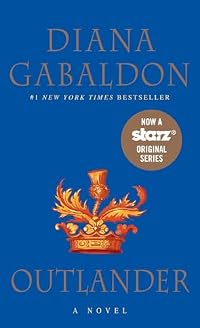
Hurtled back through time more than two hundred years to Scotland in 1743, Claire Randall finds herself caught in the midst of an unfamiliar world torn apart by violence, pestilence, and revolution and haunted by her growing feelings for James Fraser, a young soldier.Tags
Recommendations
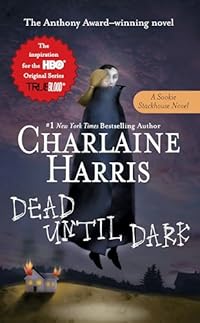
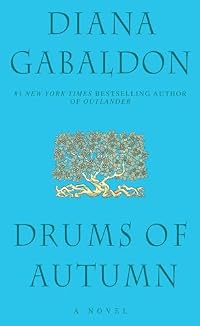
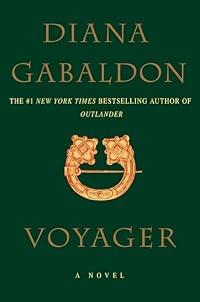
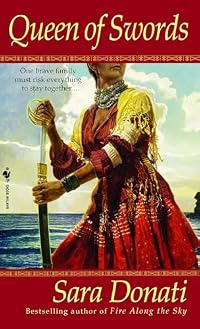
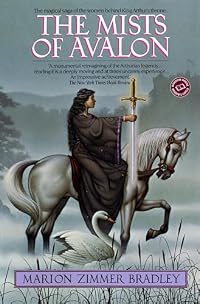
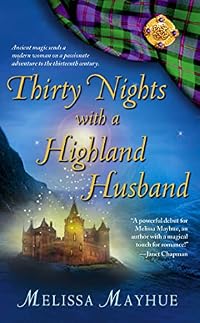
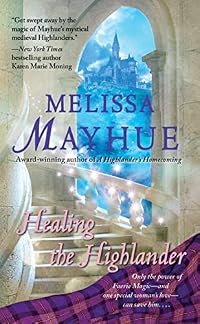
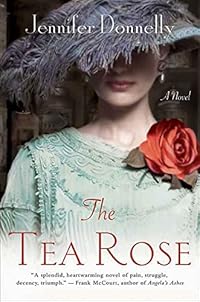
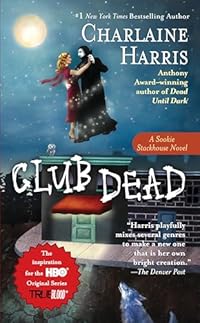
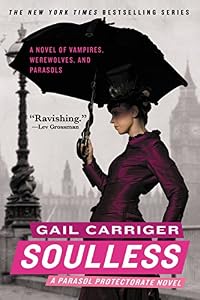
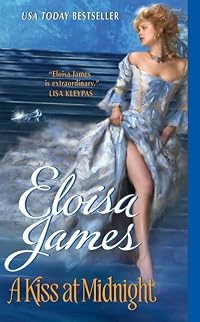
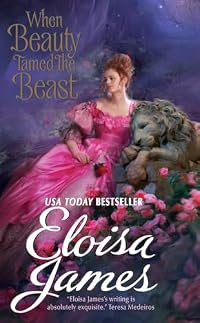

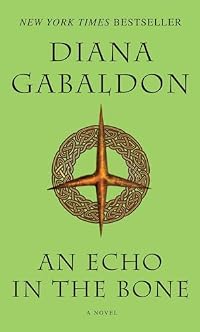
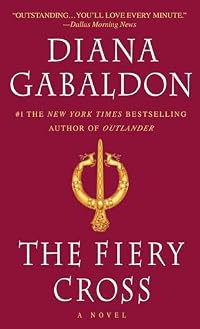
Member Recommendations
pollywannabook The closest thing to Outlander out there. Diana Gabaldon even lent out the character of Claire for a cameo in this book
214
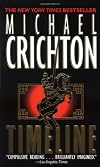
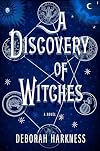
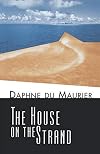
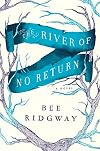
littlebear514 Although the stories are COMPLETELY different; the writing is of the same quality and the stories are both deeply involved.
41
LiddyGally I recommend this book because the writing styles are in a similar vein rather than the stories being the same. Both, however, are set in the wilds of Scotland.
30
elbakerone Though Banks' novel is set in present day (and is considerably shorter), the love story with the gorgeous backdrop of Scotland was reminiscent of Gabaldon's series.
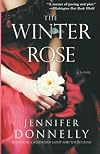
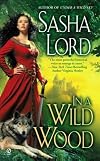
Jenson_AKA_DL If you enjoyed the romance between Clare and Jamie I think you'll also enjoy this Highlander romance.
11
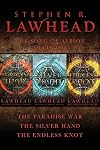
The Song of Albion Collection: The Paradise War, The Silver Hand, and The Endless Knot by Stephen Lawhead
charlie68 A story about a trip farther into Britain's past.
11
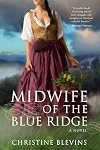
LAKobow Also involves elements of realism mixed with fantasy, Scotland, romance, and historical fiction.
11
mene Both books are about time travel through a kind of portal. In both books, the time traveller finds love on the other side, but the effects of the time travel and the way it works are different. In King's book, the time traveller also actively tries to change history, while in Gabaldon's book, the time traveller uses her knowledge of future events a lot less actively.
12
mene Both stories are about a female protagonist who travels a few hundred years to the past and meets a male whom she falls in love with. In both stories, the female protagonist travels back and forth to the past and her own time. "Inuyasha" is historical fantasy (it includes demons) and "Outlander" is historical fiction (the main characters get involved in historical events).
02
charlie68 Another look at Highlander history and way of life.
03
Kaylinofhr The After Cilmeri Series reminds me a lot of the Outlander series.
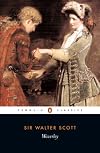
Cecrow Classic novel set at the same time and place.
by Cecrow
Member Reviews
Outlander was a best seller 20 years ago, although I had managed to avoid it and its sequels all this time. However, author Diana Gabaldon (rhymes with “stone”) added me to her “interesting libraries” list on LibraryThing so my curiosity was piqued. To my considerable surprise (I admit to profound geek chauvinism), Gabaldon’s website bio has the following paragraph:
“Dr. Gabaldon holds three degrees in science: Zoology, Marine Biology, and Quantitative Behavioral Ecology, (plus an honorary degree as Doctor of Humane Letters, which entitles her to be “Diana Gabaldon, Ph.D., D.H.L.” She supposes this is better than “Diana Gabaldon, Phd.X,”) and spent a dozen years as a university professor with an expertise in show more scientific computation before beginning to write fiction. She has written scientific articles and textbooks, worked as a contributing editor on the MacMillan ENCYCLOPEDIA OF COMPUTERS, founded the scientific-computation journal SCIENCE SOFTWARE QUARTERLY, and has written numerous comic-book scripts for Walt Disney. None of this has anything whatever to do with her novels, but there it is.”
A romance novelist with multiple science PhDs? There are certainly possibilities here:
Daisy stood before Lord Somerset in the flickering, ruddy light from the great fireplace, crossed her arms over her chest, gently eased her thin chemise off her shoulders, and allowed it to fall in a pool at her feet. Somerset looked her up and down appraisingly. “Mammology was my favorite course at Oxford”, he remarked. “And did you specialize in any particular group?” Somerset was unable to keep his left eyebrow from twitching upward. “The Castoridae”.
Afterwards, as they lay together in the heather, Alastair laid his hand on her milk white thigh and gently traced one warm, pulsing blue vein with his little finger. “I love the way your hemoglobin oxidizes”, he softly whispered.
The yearning induced by their mutually elevated phenylethylamine could no longer be borne. Suddenly they were both pulled into a whirlpool of surging oxytocin levels. She could almost feel the dopamine peaking in his limbic system, and her own heart pounded a chamade of vasocongestion.
(I stress the above in italics are my own interpretations of what a scientist/romance novelist might write, and not anything Dr. Gabaldon actually did. For which her readers are doubtless thankful.)
This is a time travel novel. WWII veteran nurse Claire Randall accidentally touches the wrong rock in a Scottish stone circle and finds herself suddenly catapulted from 1945 to 1743. Ms. Randall (going by her maiden name of Beauchamp, for plot reasons) does what romance novel heroines do in such situations – she finds herself all aflutter over a Handsome UNknown in Kilts, and makes herself useful to the local laird by healing the sick. She gets herself kidnapped with clockwork regularity, only to have Jamie (aforementioned HUNK) rescue her from unpleasantness at the very last minute with equal regularity. She gets her own chance to rescue her HUNK, and he Talks About His Feelings.
Nameless redcoats and rival Scots clansmen are slaughtered left and right. Claire personally accounts for four British soldiers, all with a dagger. (I wonder if Ms. Gabaldon really knows how hard it is to kill someone with a knife? Then again, since she’s got a zoology degree, she’s probably dissected a couple of large mammals; perhaps it might be prudent to avoid letting her get close with an autopsy knife. Especially if she ever reads this review). This all takes around 850 pages (in my mass-market paperback copy) but less than a year of time. There is some lip service to the thought that daily life in 18th century Scotland might not all be claymore battles and romps in the heather; nurse Claire notes that some of her patients have fleas and lice (but never manages to come down with either herself) and allows that the sanitary system, even in a laird’s castle, might be a little off-putting for a 20th century lady.
Perhaps I’m disconcerted since my own taste in romance novels is more in the light and bubbly Georgette Heyer line; maybe this is more what the average romance reader is into. Ah well, there are numerous sequels and with OCD I’ll have to read them all. Maybe Claire can intervene at Culloden and change history. We’ll see. show less
“Dr. Gabaldon holds three degrees in science: Zoology, Marine Biology, and Quantitative Behavioral Ecology, (plus an honorary degree as Doctor of Humane Letters, which entitles her to be “Diana Gabaldon, Ph.D., D.H.L.” She supposes this is better than “Diana Gabaldon, Phd.X,”) and spent a dozen years as a university professor with an expertise in show more scientific computation before beginning to write fiction. She has written scientific articles and textbooks, worked as a contributing editor on the MacMillan ENCYCLOPEDIA OF COMPUTERS, founded the scientific-computation journal SCIENCE SOFTWARE QUARTERLY, and has written numerous comic-book scripts for Walt Disney. None of this has anything whatever to do with her novels, but there it is.”
A romance novelist with multiple science PhDs? There are certainly possibilities here:
Daisy stood before Lord Somerset in the flickering, ruddy light from the great fireplace, crossed her arms over her chest, gently eased her thin chemise off her shoulders, and allowed it to fall in a pool at her feet. Somerset looked her up and down appraisingly. “Mammology was my favorite course at Oxford”, he remarked. “And did you specialize in any particular group?” Somerset was unable to keep his left eyebrow from twitching upward. “The Castoridae”.
Afterwards, as they lay together in the heather, Alastair laid his hand on her milk white thigh and gently traced one warm, pulsing blue vein with his little finger. “I love the way your hemoglobin oxidizes”, he softly whispered.
The yearning induced by their mutually elevated phenylethylamine could no longer be borne. Suddenly they were both pulled into a whirlpool of surging oxytocin levels. She could almost feel the dopamine peaking in his limbic system, and her own heart pounded a chamade of vasocongestion.
(I stress the above in italics are my own interpretations of what a scientist/romance novelist might write, and not anything Dr. Gabaldon actually did. For which her readers are doubtless thankful.)
This is a time travel novel. WWII veteran nurse Claire Randall accidentally touches the wrong rock in a Scottish stone circle and finds herself suddenly catapulted from 1945 to 1743. Ms. Randall (going by her maiden name of Beauchamp, for plot reasons) does what romance novel heroines do in such situations – she finds herself all aflutter over a Handsome UNknown in Kilts, and makes herself useful to the local laird by healing the sick. She gets herself kidnapped with clockwork regularity, only to have Jamie (aforementioned HUNK) rescue her from unpleasantness at the very last minute with equal regularity. She gets her own chance to rescue her HUNK, and he Talks About His Feelings.
Nameless redcoats and rival Scots clansmen are slaughtered left and right. Claire personally accounts for four British soldiers, all with a dagger. (I wonder if Ms. Gabaldon really knows how hard it is to kill someone with a knife? Then again, since she’s got a zoology degree, she’s probably dissected a couple of large mammals; perhaps it might be prudent to avoid letting her get close with an autopsy knife. Especially if she ever reads this review). This all takes around 850 pages (in my mass-market paperback copy) but less than a year of time. There is some lip service to the thought that daily life in 18th century Scotland might not all be claymore battles and romps in the heather; nurse Claire notes that some of her patients have fleas and lice (but never manages to come down with either herself) and allows that the sanitary system, even in a laird’s castle, might be a little off-putting for a 20th century lady.
Perhaps I’m disconcerted since my own taste in romance novels is more in the light and bubbly Georgette Heyer line; maybe this is more what the average romance reader is into. Ah well, there are numerous sequels and with OCD I’ll have to read them all. Maybe Claire can intervene at Culloden and change history. We’ll see. show less
In my bedroom, next to a comfortable chair and a stand lamp, stands a small bookshelf where I keep my favourite books. In amongst Austen, Eliot, Dickens, Rothfuss, Bradbury, Pratchett, Gordimer, Coetzee, and Camus, is Outlander. I first read it some twenty years ago, when I was still married, but not since, and I wondered if it was as good a book as I remembered. So I re-read it, and discovered that my experience of reading it was not wrong, and that it was actually better the second time around. I've not gotten deeply lost in a story quite like I have in the past few days of reading, not for a long time. My powers of concentration have slipped over the years, but I read Outlander like I used to read when I was much, much younger. It's show more been bliss.
Anyone with a television probably knows the basic story of Outlander: Claire, post WWII, goes on a second honeymoon with her husband in the Scottish Highlands. A time-transporting stone circle takes Claire back to 1745, where she is swept up by circumstance by members of the MacKenzie clan, and whisked off to their stronghold: Castle Leoch. A love story ensues.
This time round, I wasn't as moved by the love story or the sex scenes. The last time I read this book, I was a 42-year old woman, with young children. Now I'm in my 60s, and found more pleasure in the historical detail and the happy realization that I don't have to live in a pre-electricity stone building during summer's heat or winter's blast. Nor do I have to use chamber pots or privy, and antibiotics now exist.
It's a beautiful book. Imaginative, well-researched, with vivid characters, beautiful scenery, Outlander has all of the elements needed for a truly great reading experience. I'm excited to start reading Dragonfly in Amber, the first of its many sequels, resting here on the sofa next to me, its contents a secret that I can't wait to discover. show less
Anyone with a television probably knows the basic story of Outlander: Claire, post WWII, goes on a second honeymoon with her husband in the Scottish Highlands. A time-transporting stone circle takes Claire back to 1745, where she is swept up by circumstance by members of the MacKenzie clan, and whisked off to their stronghold: Castle Leoch. A love story ensues.
This time round, I wasn't as moved by the love story or the sex scenes. The last time I read this book, I was a 42-year old woman, with young children. Now I'm in my 60s, and found more pleasure in the historical detail and the happy realization that I don't have to live in a pre-electricity stone building during summer's heat or winter's blast. Nor do I have to use chamber pots or privy, and antibiotics now exist.
It's a beautiful book. Imaginative, well-researched, with vivid characters, beautiful scenery, Outlander has all of the elements needed for a truly great reading experience. I'm excited to start reading Dragonfly in Amber, the first of its many sequels, resting here on the sofa next to me, its contents a secret that I can't wait to discover. show less
This is not a nice book, but it is a very good one.
To summarise, it is basically 850 pages of extremely well-written violence, sex and violent sex. And oh yeah there's some time travel thing going on too. I'm joking, loved the idea of a woman going back in time to 1743 and finding herself amid Scottish clan warfare and all the customs and superstitions of the time.
There's torture, sexual assault, witch trials and a whole lot of bloodshed. Then there's also the disturbing and highly debated domestic violence scene... the question being whether it really was necessary even with Diana Gabaldon's reluctance to withhold any historical nasties. It was unpleasant, definitely, but I was spared some of the horror that I might have had because I show more heard about it beforehand. The thing that made it so horrifying was Jamie - I mean, come on, you just love him really don't you?
^^ Me thinks yes ;)
And the whole thing was made worse for it; if it had been Dougal, Callum or Murtagh it would still have been awful but not quite so shocking. But Jamie? Sweet, caring, brave, virgin and... sadist?
But I recovered. He redeemed himself a million times over. Plus, Jamie and Claire just have a great relationship. They have the steamy sex life plus an unbelievably deep love and trust for each other... Diana Gabaldon has created amid the violence something that a thousand fluffy romance novels never achieve.
Awesome, awesome book. I've rated it 5 stars but I'm going to make a point of calling it 4.5 simply because it could have been just as good with half as many pages. I am going to read the next book, I've already reserved it at the library (yeah, I'm a total nerd :P ) but still not sure Ms Gabaldon needed to write every book with 800 pages, aka "Tolstoy syndrome". Never mind, I'm sure it'll be worth it. show less
I went into this book blindly. I knew it was a romance about Scotland. Beyond that I didn't have a clue what to expect. It's so much more. Be prepared to chuckle, cry, feel a deep queasiness that can't be controlled, scream, fall in love, and so much more. I typically marathon my series, but this book stole over a week from my life. I literally could do nothing except read it. It had a hold on me, a grip so tight I knew I had to finish to be released. So, I'll have to take a pause between the books or else risk losing everything to them. Ha ha. It does start off extremely slow, but stick with it. Get to Part Two and you'll be hooked.
I've read that Outlander was originally marketed as a romance novel because the publisher didn't know what else to do with it, but this book is no ordinary romance novel. It doesn't follow any typical romance formula and is a real genre bender that doesn't fit neatly into any one category. Outlander has a swoon-worthy hero and dozens of truly romantic scenes that should be sufficient to satisfy even the most discriminating romance reader, while it's time travel aspect and a few references to witches and fairies should be of interest to readers of fantasy and paranormal stories. At it's heart though Outlander is a historical novel rife with details of 18th century life in the Scottish Highlands both inside and outside a castle or large show more estate. It also recounts some of the events leading up to the Jacobite Pretender's Uprising of 1745. Diana Gabaldon is an amazing writer who delves deep into her character's lives and the history surrounding them, painting an extraordinary picture that truly transports the reader to another time and place.
Claire is an incredibly strong heroine, who can sometimes be a bit brash and sassy, but deep down she is a kind and caring person at heart. She adapts amazingly well to a new time and place, much better than most people ever would if faced with the dilemma she was. Claire is a very intelligent woman who uses every ounce of knowledge at her disposal to reverse her predicament, while helping others, especially with their medical needs, and bringing a much needed modern perspective to ancient methods. She somehow finds the courage to made difficult choices in an era when choices were sometimes few or non-existent, especially for women, and to do what needs to be done, when it needs to be done. Claire is stubborn and persistent even in the face of nearly impossible odds. Best of all she is a pillar of strength to her beloved Jamie as much as he is to her, and she has a powerful underlying passion that matches his own for her.
Jamie, in my opinion, is the best romantic hero ever to be penned by an author. He exhibits both physical and mental strength, as well as a strength of character, that go above and beyond any ordinary romantic hero. His word is his honor, and his commitment to that honor is moving beyond words. If only there were more men in reality who could be so easily trusted and taken at their word. Jamie shows a deep respect, not just for Claire, but for all the women with whom he comes in contact, a true gentleman in every sense of the word. On the outside, Jamie is tough as nails, enduring more physical pain than any one person should ever be expected to, while on the inside, he is kind, gentle and sensitive, often instinctively knowing things that others don't. He is thoroughly intelligent and well-educated and often beautifully poetic in his speech. He is lighthearted and self-deprecating, never taking himself too seriously. I loved the way he was always teasing Claire. Jamie is simply a wonderful character, a man who loves selflessly and with his whole being.
There is much to enjoy about this book. Together, Jamie and Claire make a formidable couple, and it is obvious from the outset that they are soulmates. Their absolute trust in each other, basically from the moment they meet, is in and of itself, romance at it's finest. There are no contrived misunderstandings between them, only naked honesty, which brings an openness and vulnerability to both characters that is breathtaking. I love the way the author creates a beautiful friendship between these two characters before they end up at the altar and of course then become lovers. What's even better though is how that friendship continues to blossom and grow deeper and deeper even after they are married. The intimacy level of these two characters is something I rarely see in a novel, and most of it has little or nothing to do with sexual interludes. During the times when Jamie and Claire were apart even for short periods of time, I simply couldn't wait for them to be reunited, as the two of them together absolutely electrify the pages. All the secondary characters are extremely well-crafted and surprisingly well fleshed out, even those who play only minor parts. The setting is beautifully rendered as well, almost becoming a character unto itself. The time travel aspect adds an extended element of intrigue, and Ms. Gabaldon has certainly taken the time to think through the ramifications of such a feat if it were indeed possible. Every scene simply adds to the richness of detail in the book, and there is nothing that I felt was excess. The author's care in seamlessly weaving all of the elements together is evident all throughout the book.
While there are many things to love about this story, there were a few events that bothered me just a bit. There was a scene in which Jamie beats Claire with his sword belt for disobedience. The scene in and of itself actually did not bother me much, because I fully understood his reasons for doing so and he later took a vow never to do it again. What did bother me was his admission that he enjoyed it. The admission was made in a fairly lighthearted manner. In light of that, I suppose it might have been meant as humorous, but perhaps it was too subtle for me to fully appreciate. Even so, I might not have thought much of it except for the fact that the villain in this story is a brutal sadist. For that reason, I found myself a bit annoyed at having the hero of the story exhibit even a hint of such a tendency. There were also a couple of scenes of what I would term rather intense and rough lovemaking, one of which began with Jamie behaving in a dominant manner, and neither of which were quite to my taste. They just seemed a bit out of character for Jamie, who up to this point, and following, was always a gentle and considerate though passionate lover. I will allow though for the fact that Jamie apologized for the first incident and admitted equality after the second. Finally, there was a scene in which Jamie related a prior incident with a secondary character in his youth, which by today's standards would have been nothing short of an act of child molestation against him, but which was treated rather casually by all involved. I wanted to reconcile this in a historical perspective, but as hard as I tried, I simply couldn't. I also feel compelled to warn sensitive readers that there is an incidence of brutal sexual violence near the end of the book. It is not played out in real-time, but instead is related a bit at a time through dialog and implication, but still is immensely palpable in the intensity of it's aftereffects on the psyche of the character who was the victim. I'm not usually overly squeamish about such things, but I have to admit to having some difficulty reading these passages. More than once, they brought tears to my eyes.
In spite of the things I have mentioned though, Outlander is still by far one of the best books I have ever read. I have to give Ms. Gabaldon extra points for all of her attention to details. It is a joy to read such an intelligently-written and meticulously-researched novel that is so rich in detail. It went far beyond my expectations for a debut novel for any author. It even sparked my interest in learning more about the time and place that is depicted in it. Outlander is the type of book that is so engrossing and compelling that it makes one want to read straight through without ever putting it down, though it's epic length makes that somewhat unfeasible. This was my second reading of the book, and it certainly won't be my last. It has a earned a permanent place on my keeper shelf along with it's sequels Dragonfly in Amber, Voyager, Drums of Autumn, The Fiery Cross, and A Breath of Snow and Ashes all of which continue Jamie and Claire's story. show less
Claire is an incredibly strong heroine, who can sometimes be a bit brash and sassy, but deep down she is a kind and caring person at heart. She adapts amazingly well to a new time and place, much better than most people ever would if faced with the dilemma she was. Claire is a very intelligent woman who uses every ounce of knowledge at her disposal to reverse her predicament, while helping others, especially with their medical needs, and bringing a much needed modern perspective to ancient methods. She somehow finds the courage to made difficult choices in an era when choices were sometimes few or non-existent, especially for women, and to do what needs to be done, when it needs to be done. Claire is stubborn and persistent even in the face of nearly impossible odds. Best of all she is a pillar of strength to her beloved Jamie as much as he is to her, and she has a powerful underlying passion that matches his own for her.
Jamie, in my opinion, is the best romantic hero ever to be penned by an author. He exhibits both physical and mental strength, as well as a strength of character, that go above and beyond any ordinary romantic hero. His word is his honor, and his commitment to that honor is moving beyond words. If only there were more men in reality who could be so easily trusted and taken at their word. Jamie shows a deep respect, not just for Claire, but for all the women with whom he comes in contact, a true gentleman in every sense of the word. On the outside, Jamie is tough as nails, enduring more physical pain than any one person should ever be expected to, while on the inside, he is kind, gentle and sensitive, often instinctively knowing things that others don't. He is thoroughly intelligent and well-educated and often beautifully poetic in his speech. He is lighthearted and self-deprecating, never taking himself too seriously. I loved the way he was always teasing Claire. Jamie is simply a wonderful character, a man who loves selflessly and with his whole being.
There is much to enjoy about this book. Together, Jamie and Claire make a formidable couple, and it is obvious from the outset that they are soulmates. Their absolute trust in each other, basically from the moment they meet, is in and of itself, romance at it's finest. There are no contrived misunderstandings between them, only naked honesty, which brings an openness and vulnerability to both characters that is breathtaking. I love the way the author creates a beautiful friendship between these two characters before they end up at the altar and of course then become lovers. What's even better though is how that friendship continues to blossom and grow deeper and deeper even after they are married. The intimacy level of these two characters is something I rarely see in a novel, and most of it has little or nothing to do with sexual interludes. During the times when Jamie and Claire were apart even for short periods of time, I simply couldn't wait for them to be reunited, as the two of them together absolutely electrify the pages. All the secondary characters are extremely well-crafted and surprisingly well fleshed out, even those who play only minor parts. The setting is beautifully rendered as well, almost becoming a character unto itself. The time travel aspect adds an extended element of intrigue, and Ms. Gabaldon has certainly taken the time to think through the ramifications of such a feat if it were indeed possible. Every scene simply adds to the richness of detail in the book, and there is nothing that I felt was excess. The author's care in seamlessly weaving all of the elements together is evident all throughout the book.
While there are many things to love about this story, there were a few events that bothered me just a bit. There was a scene in which Jamie beats Claire with his sword belt for disobedience. The scene in and of itself actually did not bother me much, because I fully understood his reasons for doing so and he later took a vow never to do it again. What did bother me was his admission that he enjoyed it. The admission was made in a fairly lighthearted manner. In light of that, I suppose it might have been meant as humorous, but perhaps it was too subtle for me to fully appreciate. Even so, I might not have thought much of it except for the fact that the villain in this story is a brutal sadist. For that reason, I found myself a bit annoyed at having the hero of the story exhibit even a hint of such a tendency. There were also a couple of scenes of what I would term rather intense and rough lovemaking, one of which began with Jamie behaving in a dominant manner, and neither of which were quite to my taste. They just seemed a bit out of character for Jamie, who up to this point, and following, was always a gentle and considerate though passionate lover. I will allow though for the fact that Jamie apologized for the first incident and admitted equality after the second. Finally, there was a scene in which Jamie related a prior incident with a secondary character in his youth, which by today's standards would have been nothing short of an act of child molestation against him, but which was treated rather casually by all involved. I wanted to reconcile this in a historical perspective, but as hard as I tried, I simply couldn't. I also feel compelled to warn sensitive readers that there is an incidence of brutal sexual violence near the end of the book. It is not played out in real-time, but instead is related a bit at a time through dialog and implication, but still is immensely palpable in the intensity of it's aftereffects on the psyche of the character who was the victim. I'm not usually overly squeamish about such things, but I have to admit to having some difficulty reading these passages. More than once, they brought tears to my eyes.
In spite of the things I have mentioned though, Outlander is still by far one of the best books I have ever read. I have to give Ms. Gabaldon extra points for all of her attention to details. It is a joy to read such an intelligently-written and meticulously-researched novel that is so rich in detail. It went far beyond my expectations for a debut novel for any author. It even sparked my interest in learning more about the time and place that is depicted in it. Outlander is the type of book that is so engrossing and compelling that it makes one want to read straight through without ever putting it down, though it's epic length makes that somewhat unfeasible. This was my second reading of the book, and it certainly won't be my last. It has a earned a permanent place on my keeper shelf along with it's sequels Dragonfly in Amber, Voyager, Drums of Autumn, The Fiery Cross, and A Breath of Snow and Ashes all of which continue Jamie and Claire's story. show less
Sometimes I have to re-taste foods that I don't like to see if my opinion has changed. I have done this twice in the past week, with ketchup and celery. I have avoided both for years. Then, well. I guess I needed to remind myself that I hate ketchup, and I hate celery, and that I am correct in avoiding them, and that I should continue to avoid them.
I think you can see where I am going with this. I guess I am in a "opinion re-calibration" mode. And to be honest, I have found in every case that my opinions were fine. I do, in fact, dislike sprawling epics with heroic characters! I do (yes, currently) dislike wordy, detailed descriptions! I do dislike romance! I do dislike boring, Mary Sue-ish characters! I do! I do i do! So I really had show more to force myself through this book, because I stupidly decided it was going to be the book club read for this month. I really, really disliked it. However, I honestly don't think it was a terrible worthless POS. I do honestly think it is a really weird book, like surprisingly weird (why did no one warn me aboutthe magic-healing-erotic-dream-drugged-sex-fight? I mean. Ok, whatever rocks your boat. I just haven't seen the "magic healing sex" trope done like, seriously in years. Here's a quote from that TVtropes article: "In Fan Fic parlance, this is often called the 'magical healing cock' and mocked, as it is often Narm (or deeply offensive) when, as all too often, the magical healing cock is used as instant therapy for a rape victim." I read a TON of slash fan fiction. So I've been aware and wary of this problematic (I know, the word is overused, sorry) romance cliche for years, and seeing it show up here was like, uhhh wut. Even at the book club meeting, another woman brought it up as being the only part of the book that made her truly uncomfortable, before I had mentioned anything. ), with scarily intimidating online fans. But the book seems to be a good example of what it is. Sprawling, romantic historical epic with attractive, sexy heroes and detailed world building. I should continue to avoid them. show less
I think you can see where I am going with this. I guess I am in a "opinion re-calibration" mode. And to be honest, I have found in every case that my opinions were fine. I do, in fact, dislike sprawling epics with heroic characters! I do (yes, currently) dislike wordy, detailed descriptions! I do dislike romance! I do dislike boring, Mary Sue-ish characters! I do! I do i do! So I really had show more to force myself through this book, because I stupidly decided it was going to be the book club read for this month. I really, really disliked it. However, I honestly don't think it was a terrible worthless POS. I do honestly think it is a really weird book, like surprisingly weird (why did no one warn me about
Outlander, by Diana Gabaldon, is (far) more than just A Connecticut Yankee in King Author’s Court plus Scots and sex. But there’s some truth to the comparison.
Both books are genre mashups: they share historical, fantasy, and science fiction elements, while adding satire and comedy (in A Connecticut Yankee) and romance (in Outlander). And like Mark Twain’s protagonist Hank Morgan, Gabaldon’s Claire Randall is suddenly transported back in time to a place she doesn’t belong—in her case, 1743 Scotland. Also like Hank, Claire uses her modern knowledge to make her way in a relatively backwards society.
That’s about as far as the parallels go, though. Because where Hank flaunts his skills and sets himself up as a powerful show more sorcerer, Claire does her best to fit in, using her nursing background to inconspicuously minister to the sick. And while A Connecticut Yankee is, at its core, a political commentary, Outlander is primarily about a relationship: that between Claire and Jamie Fraser, a young Highlander.
Jamie is tall, strong, passionate, and an outlaw—in other words, the perfect male romance lead. But his character goes deeper than this, as does Claire’s; as a reader, I quickly came to care about both of them. And in between the duo’s various adventures, Gabaldon crafts small moments that feel real without being boring, mimicking the best bits of everyday life.
I also liked how she set her historical fantasy within what starts as historical fiction—Claire hails from post-World War II England, and the early portion of the novel provides a glimpse of what those first years of recovery were like. Having served as a nurse during the conflict, Claire is used to a certain amount of independence, and carries her twentieth-century sensibilities with her to the eighteenth-century; it’s fun to watch her clash with Jamie’s older constructs. Claire also goes from a time when the English had just fought on the right side of history to an era when they were essentially imperial occupiers.
One thing I didn’t love was that the two non-hetero characters are both predatory. There are plenty of straight would-be rapists as well, but they’re balanced by nobler counterweights (like Jamie). The brief portrayal of a mentally handicapped character isn’t flattering either. In terms of plot, I thought there were one too many capture/rescue beats, and I occasionally wanted a clearer goal for Claire and Jamie to pursue. I also wish the villain’s downfall had been a little more climactic.
But overall, Outlander was a compelling read. And while it, like A Connecticut Yankee, gets dark near the end, Gabaldon’s novel ends on a happier note. Less thought-provoking perhaps, but more enjoyable. I can see why it makes for such a popular TV show. show less
Both books are genre mashups: they share historical, fantasy, and science fiction elements, while adding satire and comedy (in A Connecticut Yankee) and romance (in Outlander). And like Mark Twain’s protagonist Hank Morgan, Gabaldon’s Claire Randall is suddenly transported back in time to a place she doesn’t belong—in her case, 1743 Scotland. Also like Hank, Claire uses her modern knowledge to make her way in a relatively backwards society.
That’s about as far as the parallels go, though. Because where Hank flaunts his skills and sets himself up as a powerful show more sorcerer, Claire does her best to fit in, using her nursing background to inconspicuously minister to the sick. And while A Connecticut Yankee is, at its core, a political commentary, Outlander is primarily about a relationship: that between Claire and Jamie Fraser, a young Highlander.
Jamie is tall, strong, passionate, and an outlaw—in other words, the perfect male romance lead. But his character goes deeper than this, as does Claire’s; as a reader, I quickly came to care about both of them. And in between the duo’s various adventures, Gabaldon crafts small moments that feel real without being boring, mimicking the best bits of everyday life.
I also liked how she set her historical fantasy within what starts as historical fiction—Claire hails from post-World War II England, and the early portion of the novel provides a glimpse of what those first years of recovery were like. Having served as a nurse during the conflict, Claire is used to a certain amount of independence, and carries her twentieth-century sensibilities with her to the eighteenth-century; it’s fun to watch her clash with Jamie’s older constructs. Claire also goes from a time when the English had just fought on the right side of history to an era when they were essentially imperial occupiers.
One thing I didn’t love was that the two non-hetero characters are both predatory. There are plenty of straight would-be rapists as well, but they’re balanced by nobler counterweights (like Jamie). The brief portrayal of a mentally handicapped character isn’t flattering either. In terms of plot, I thought there were one too many capture/rescue beats, and I occasionally wanted a clearer goal for Claire and Jamie to pursue. I also wish the villain’s downfall had been a little more climactic.
But overall, Outlander was a compelling read. And while it, like A Connecticut Yankee, gets dark near the end, Gabaldon’s novel ends on a happier note. Less thought-provoking perhaps, but more enjoyable. I can see why it makes for such a popular TV show. show less
Members
- Recently Added By
Lists

Best Historical Fiction
620 works; 261 members

Best Fantasy Novels
821 works; 358 members

Best Time Travel Novels
165 works; 122 members

Recommend the 20 best books you've read in the last five years
2,167 works; 600 members

1001 Books You Must Read Before You Die
1,448 works; 1,132 members

Read the book and saw the movie
1,170 works; 195 members

Favorite Series
238 works; 93 members

Top-Rated Books on LibraryThing
272 works; 117 members
NPRs your picks: top 100 Sci-Fi/Fantasy books
297 works; 78 members

Favorite Science Fiction by Women Authors
737 works; 197 members
BBC Big Read
191 works; 46 members
Historical Fiction
889 works; 91 members

Favorite Literary Love Stories
182 works; 100 members
Favourite Books
1,817 works; 308 members

PBS The Great American Read
100 works; 21 members

You Couldn't Pay Me to Read That (Take 2)
203 works; 81 members

Top 10 Historical Fiction
10 works; 4 members
Books I've Read More Than Once
602 works; 49 members

Female Author
1,235 works; 65 members
Female Protagonist
1,056 works; 56 members

Best time travel books
56 works; 22 members

Best Alternate History
111 works; 60 members

Best Love Stories
107 works; 14 members
Favorite Long Books
330 works; 42 members

Books That Made Me Cry
199 works; 104 members

Amazon's 100 Science Fiction & Fantasy Books to Read in a Lifetime
87 works; 23 members

The 100 Best Fantasy Books of All Time
100 works; 15 members

Top Five Books of 2014
1,064 works; 397 members
Historical Fiction Lovers
88 works; 4 members

Great Audiobooks
96 works; 9 members

Best Historical Fiction authors
41 works; 9 members

Top Five Books of 2017
757 works; 231 members
Top Five Books of 2016
795 works; 228 members

Books about World War II
241 works; 22 members

Books Read in 2023
5,547 works; 145 members

1990s
309 works; 17 members
Speculative Fiction to Read
706 works; 32 members

Summer Reads 2014
207 works; 69 members
NPRs audience picks: 100 best beach reads
105 works; 12 members
Favourite Love Stories
53 works; 1 member

SantaThing 2014 Gifts
299 works; 17 members

Favorite Modern Romance Novels
70 works; 1 member

Huxley's Reading Log 2018
37 works; 1 member

Guilty Pleasures
223 works; 86 members

Books referenced in the Astral Library
60 works; 1 member

Best family sagas
244 works; 33 members

Books - Gabaldon, Diana: Outlander
22 works; 1 member

Books You Couldn't Finish
202 works; 29 members

Florida's Book Bans and Challenges
311 works; 4 members

Books Read in 2021
5,361 works; 113 members
Five star books
1,755 works; 107 members
Favorite Romance Fiction
247 works; 115 members

Top Five Books of 2025
950 works; 302 members
Book Worlds We'd Like To Visit
322 works; 158 members
Books in Riverdale
123 works; 3 members
Books With Our Favorite First Lines
168 works; 104 members

In-Yun: Historias de Amores Escritos en las Estrellas
11 works; 1 member

The Re-Reads
12 works; 1 member
Books We'd Want on a Desert Island
203 works; 131 members

Elaina's
183 works; 1 member
Books We Want To Read Again For The First Time
384 works; 160 members
Best Audiobooks
240 works; 114 members
Books We Couldn't Put Down
443 works; 197 members
The Complete Rory Gilmore Reading List
506 works; 5 members
Books We Love to Reread
688 works; 296 members

Books Read in 2025
4,043 works; 97 members

Biggest Disappointments
606 works; 168 members

infjsarah's wishlist
408 works; 2 members
Overdue Podcast
800 works; 9 members
Read These Too
458 works; 9 members

Books I Own But Haven't Read
144 works; 2 members

Most Popular Books Tagged Scotland
35 works; 2 members
Books Bought & Received as Gifts in 2014
81 works; 1 member

Read in 2014
334 works; 11 members

Books Read in 2015
3,298 works; 129 members

Allie's 2015 Reading List
33 works; 1 member

I Can't Finish This Book
189 works; 22 members

Same Title
115 works; 3 members

Books read in 2015
213 works; 5 members
The Worst Bestsellers Podcast
292 works; 5 members

al.vick-series
381 works; 2 members
Books Read in 2016
4,666 works; 199 members

Books Nikki Read in 2017
16 works; 1 member

Authors from the United States
245 works; 3 members

Books Read in 2017
4,248 works; 130 members

Spirit of Place
46 works; 1 member

Carole's List
445 works; 13 members

Books Read in 2019
4,052 works; 109 members
First Novels
373 works; 17 members
Rebel Women Reading List
25 works; 2 members
Books We Resisted Reading
173 works; 102 members
Page Turners
185 works; 11 members
Love and Marriage
93 works; 10 members
Talk Discussions
Past Discussions
OT: Illustrated edition of Diana Gabaldon's Outlander by Suntup Press in Folio Society Devotees (October 2024)
New fan of Outlander with a couple of questions... in Outlander: Gabaldon's series about Jamie and Claire (February 2011)
Outlander Book Discussion in Hogwarts Express (January 2010)
Author Information

Diana Gabaldon was born in Flagstaff, Arizona on January 11, 1952. She has a B.S. in zoology, a M.S. in marine biology, and a Ph.D. in quantitative behavioral ecology. She has worked as a university professor and has written freelance for various magazines and companies such as Walt Disney. She writes the Outlander series, which was adapted into a show more television series. (Bowker Author Biography) show less

Diana Gabaldon is a LibraryThing Author, an author who lists their personal library on LibraryThing.
Some Editions
Awards and Honors
Awards
Notable Lists
Series

Work Relationships
Is contained in
Contains
Has the adaptation
Is abridged in
Inspired
Has as a reference guide/companion
Has as a student's study guide
Has as a teacher's guide
Common Knowledge
- Canonical title
- Outlander
- Original title
- Cross Stitch (UK) (UK); Outlander
- Alternate titles
- Outlander: A Novel (cover title) (cover title)
- Original publication date
- 1991-06-01
- People/Characters
- Claire Beauchamp Randall Fraser; James "Jamie" Alexander Malcolm MacKenzie Fraser; Frank Randall; Jonathan "Jack" Wolverton Randall; Colum MacKenzie; Dougal MacKenzie (show all 39); Geillis Duncan; Laoghaire MacKenzie; Alec McMahon MacKenzie; Alexander William Roderick MacGregor; Annabelle MacRannock; Arthur Duncan; Brother Ambrose; Brother Bartolome; Brother Polydore; Brother William; Charles Edward Stuart, "Bonnie Prince Charlie"; Corporal Hawkins; Reginald Wakefield; Ellen MacKenzie; Father Bain; Fletcher Gordon; Rabbie MacNab; Grannie McNab; Ian Murray; Jenny Murray; Willie Murray; Letitia MacKenzie; Lord Lovat; Marcus MacRannoch; Margaret Ellen Murray; Mrs. FitzGibbons; Mrs. Graham; Ned Gowan; Robert MacDonald; Ronald MacNab; Rupert MacKenzie; Uncle Lamb; Murtagh Fraser
- Important places
- 18th-century Scotland; Castle Leoch, Highland, Scotland (fictional place); Lallybroch, Highland, Scotland (fictional place); Inverness, Highland, Scotland; Craigh na Dun, Highland, Scotland (fictional place); Loch Ness, Highland, Scotland (show all 8); Saint Anne de Beaupre's monastery, France (fictional place); Wentworth Prison, Scotland (fictional place)
- Important events
- World War II; Jacobite Rebellion
- Related movies
- Outlander (2014 | IMDb)
- Epigraph
- People disappear all the time. Ask any policeman. Better yet, ask a journalist. Disappearances are bread-and-butter to journalists.
Young girls run away from home. Young children stray from their parents and are never ... (show all)seen again. Housewives reach the end of their tether and take the grocery money and a taxi to the station. International financiers change their names and vanish into the smoke of imported cigars.
Many of the lost will be found, eventually, dead or alive. Disappearances, after all, have explanations.
Usually. - Dedication
- To the Memory of My Mother,
Who Taught Me to Read—
Jacqueline Sykes Gabaldon - First words
- It wasn't a very likely place for disappearances, at least at first glance.
- Quotations
- Life among academics had taught me that a well-expressed opinion is usually better than a badly expressed fact, so far as professional advancement goes
- Last words
- (Click to show. Warning: May contain spoilers.)And the world was all around us, new with possibility.
- Publisher's editor*
- Kuttny, Silvia
- Original language
- English
- Canonical DDC/MDS
- 813.54
- Disambiguation notice
- Outlander was published in the UK as Cross Stitch.
*Some information comes from Common Knowledge in other languages. Click "Edit" for more information.
Classifications
- Genres
- Romance, Science Fiction, Fiction and Literature, Historical Fiction, Fantasy
- DDC/MDS
- 813.54 — Literature & rhetoric American literature in English American fiction in English 1900-1999 1945-1999
- LCC
- PS3557 .A22 .O98 — Language and Literature American literature American literature Individual authors 1961-
- BISAC
Statistics
- Members
- 27,015
- Popularity
- 155
- Reviews
- 1,053
- Rating
- (4.17)
- Languages
- 20 — Czech, Danish, Dutch, English, Finnish, French, German, Greek, Hungarian, Italian, Lithuanian, Norwegian (Bokmål), Polish, Romanian, Russian, Croatian, Spanish, Swedish, Turkish, Portuguese (Portugal)
- Media
- Paper, Audiobook, Ebook
- ISBNs
- 205
- ASINs
- 77
