On This Page
Tags
Recommendations




















Member Reviews
The first three volumes of this series were very much social histories, giving details about kings and such almost incidentally, and preferring to emphasize social arrangements. Myers somewhat rails against this concept in his foreword: "To limit history to 'dates and kings and battles' was a mistake; but equally mistaken is the recent tendency to exclude politics and war as much as possible from the now fashionable social history" (7). I will say that I have struggled a bit with the social history emphasis of this series, which often leaves me feeling adrift; in volume 1, in particular, I felt like I got told a lot about what Roman houses in Britain looked like but not, say, why the Romans turned up to build houses to begin with. (To show more be fair, I do think volumes 2 and 3 handled this somewhat better.)
While previous volumes had about five or six chapters covering broad topics across the entire time period in question, Myers uses a very different arrangement here for volume 4. The book is divided into three parts covering 1307-99, 1399-1471, and 1471-1536 respectively; each part is then divided into five chapters. In each case, the first chapter of each section covers the politics of the era in question, especially who had the kingship, and the other four chapters always have the same titles: "The Government of the Realm," "Economic and Social Developments," "Religious and Educational Movements" (or "Change" for part III), and "The Arts."
I guess I can see why Myers did this, but I didn't find it very effective in practice. The end result is that there's not a lot of continuity, and it's not easy to follow the story of each topic across the course of the book. You get a bit about, say, growing antipapalism on p. 74, then more on p. 165, and then it comes to a climax on p. 236, but there are big gaps in between where you don't hear about it at all. And despite his claim to not be downplaying the political history as much as some other volumes in the series, I felt like major events like the Hundred Years' War (1337-1453) and the War of the Roses (1455-87) were just kind of mentioned in asides rather than explained. So, other than the Roman volume, I found this one the most frustrating so far.
Myers very much emphasizes the changing fortunes of the kingship throughout: basically the king goes from a position of being politically and financially constrained by the lords to being much more secure in his power even as limits were applied to it. This wasn't quite absolute, though; Myers claims that when Edward IV died, "[i]f he had been succeeded by an able, grown-up son, England might have taken a road towards an absolute monarchy, wealthy enough to dispense with parliamentary rights, strong enough to keep order, and basing its claims on the indefeasible divine right of hereditary kingship" (201). Things didn't go this way, as Edward V (one of the "Princes in the Tower") was only twelve, but by the time of Henry VII, the king was financially independent.
Myers argues that the increasing importance of a council of lords in the latter part of this period actually shows how much power the king had; he could afford to delegate it without threatening his own position. This ends up culminating in Henry VIII's break from Rome, which was kind of about who Henry wanted to marry, but not just about that: "It is an absurdity to assert that the breach was due to Henry's lust for Anne Boleyn" (209). You wouldn't upend an entire country's organized religion over that! The Reformation also pays off a running thread about Lollardy throughout the book, which I found quite interesting.
As Myers points out, if it was just about Henry's own whims, it "would have imperilled his throne if there had been widespread and organized resistance. Henry's almost unopposed success must have been due to something deeper than his own will" (237-8). Myers argues that popular anti-papal sentiment had their roots in growing Church corruption, but also growing English nationalism, the rise of the merchant classes (less dependent on the old order), and increasing education. But the consequences of this were quite drastic: a king not beholden to a pope "br[ings] out the unmedieval idea that the king was supreme in every sphere of life, and that England was a self-sufficient empire, with Henry as its emperor, subject to no other authority on earth" (211). But as that's not a medieval idea, it is an idea that means this book has come to an end! show less
While previous volumes had about five or six chapters covering broad topics across the entire time period in question, Myers uses a very different arrangement here for volume 4. The book is divided into three parts covering 1307-99, 1399-1471, and 1471-1536 respectively; each part is then divided into five chapters. In each case, the first chapter of each section covers the politics of the era in question, especially who had the kingship, and the other four chapters always have the same titles: "The Government of the Realm," "Economic and Social Developments," "Religious and Educational Movements" (or "Change" for part III), and "The Arts."
I guess I can see why Myers did this, but I didn't find it very effective in practice. The end result is that there's not a lot of continuity, and it's not easy to follow the story of each topic across the course of the book. You get a bit about, say, growing antipapalism on p. 74, then more on p. 165, and then it comes to a climax on p. 236, but there are big gaps in between where you don't hear about it at all. And despite his claim to not be downplaying the political history as much as some other volumes in the series, I felt like major events like the Hundred Years' War (1337-1453) and the War of the Roses (1455-87) were just kind of mentioned in asides rather than explained. So, other than the Roman volume, I found this one the most frustrating so far.
Myers very much emphasizes the changing fortunes of the kingship throughout: basically the king goes from a position of being politically and financially constrained by the lords to being much more secure in his power even as limits were applied to it. This wasn't quite absolute, though; Myers claims that when Edward IV died, "[i]f he had been succeeded by an able, grown-up son, England might have taken a road towards an absolute monarchy, wealthy enough to dispense with parliamentary rights, strong enough to keep order, and basing its claims on the indefeasible divine right of hereditary kingship" (201). Things didn't go this way, as Edward V (one of the "Princes in the Tower") was only twelve, but by the time of Henry VII, the king was financially independent.
Myers argues that the increasing importance of a council of lords in the latter part of this period actually shows how much power the king had; he could afford to delegate it without threatening his own position. This ends up culminating in Henry VIII's break from Rome, which was kind of about who Henry wanted to marry, but not just about that: "It is an absurdity to assert that the breach was due to Henry's lust for Anne Boleyn" (209). You wouldn't upend an entire country's organized religion over that! The Reformation also pays off a running thread about Lollardy throughout the book, which I found quite interesting.
As Myers points out, if it was just about Henry's own whims, it "would have imperilled his throne if there had been widespread and organized resistance. Henry's almost unopposed success must have been due to something deeper than his own will" (237-8). Myers argues that popular anti-papal sentiment had their roots in growing Church corruption, but also growing English nationalism, the rise of the merchant classes (less dependent on the old order), and increasing education. But the consequences of this were quite drastic: a king not beholden to a pope "br[ings] out the unmedieval idea that the king was supreme in every sphere of life, and that England was a self-sufficient empire, with Henry as its emperor, subject to no other authority on earth" (211). But as that's not a medieval idea, it is an idea that means this book has come to an end! show less
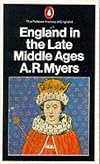
The Pelican History of England: 4
Ratings
Members
- Recently Added By
Author Information

7+ Works 641 Members
Series

Belongs to Publisher Series
Pelican Books (A234)
Common Knowledge
- Canonical title
- England in the Late Middle Ages
- Original publication date
- 1952 (first edition) (first edition); 1976 (reprinted with revisions) (reprinted with revisions)
- People/Characters
- William Alnwick; Anne of Bohemia, Queen Consort of England; Anne Boleyn; Anne Neville, Queen Consort of England; Arthur Tudor, Prince of Wales; Richard Fitzalan, 4th Earl of Arundel (show all 262); William Fitzalan; Thomas Arundel, Archbishop of Canterbury; Hugh Aston; Christopher Bainbridge; William Baker; John Bale; Edward Balliol; Alexander Barclay; Robert Barnes; Edmund Beaufort, Duke of Somerset; Henry Beaufort, Bishop of Winchester, Cardinal Beaufort; Joan Beaufort; John Beaufort, 1st Earl of Somerset; John Beaufort, Duke of Somerset; Margaret Beaufort, Countess of Richmond and Derby; André Beauneveu; Thomas Beckington; John of Lancaster, Duke of Bedford; Gilles Binchois; Edward the Black Prince; Blanche, Duchess of Lancaster; Thomas Bradwardine; Nicholas Brembre; Robert Bruce, King of Scots (Robert I); Henry Stafford, 2nd Duke of Buckingham; Elizabeth de Burgh; Charles the Bold, Duke of Burgundy; John the Fearless, Duke of Burgundy; Philip the Good, Duke of Burgundy; Sir John Butler; John Cabot; Jack Cade; William Canynges; Catherine of Aragon; Catherine de Medici (Queen consort of Henry II, King of France); William Caxton; Charles the Bald; Charles of Blois-Châtillon, Duke of Brittany; Geoffrey Chaucer; Thomas Chaundler; Henry Chichele; George Plantagenet, Duke of Clarence; Lionel of Antwerp, Duke of Clarence; Thomas of Lancaster, Duke of Clarence; Sir Lewis Clifford; John Colet; Miles Coverdale; Thomas Cranmer, Archbishop of Canterbury; Ralph Cromwell; Thomas Cromwell, 1st Earl of Essex; Sir Robert Danby; Thomas Darcy, 1st Baron Darcy de Darcy; David II, King of Scots; Sir Peter De la Mare; Edmund de la Pole, 3rd Duke of Suffolk, 6th Earl of Suffolk; Michael de la Pole, 1st Earl of Suffolk; Richard de la Pole; William de la Pole, 1st Duke of Suffolk; William de la Pole; Eustache Deschamps; Jacquemart De Hesdin; Hugh le Despenser, the Elder; Hugh le Despenser, the Younger; Archibald Douglas, 4th Earl of Douglas; Guillaume Dufay; Betrand Du Guesclin; William Dunbar; John Duns; John Dunstaple; Adam Easton; William Edington, Bishop of Winchester; Edward I, King of England; Edward II, King of England; Edward III, King of England; Edward IV, King of England; Edward V, King of England; Prince Edward of Wales; Elizabeth of York (Queen consort of Henry VII); Elizabeth Wydeville (often mispelled as "Woodville"); Thomas Elyot (Sir Thomas); Desiderius Erasmus (Erasmus of Rotterdam, 1469? to 1536); Sir John Cornewall; Robert Fayrfax; John Fisher, Bishop of Rochester (Saint, 1469 | 1535); Richard Fitzralph; Richard Flemmyng; Bernard Flower; Sir John Fortescue; Jean Foucquet; Richard Foxe, Bishop of Exeter; Charles IV of France; Charles V, King of France; Charles VI, King of France; Charles VII, King of France; Charles VIII, King of France; Francis I, King of France; John II, King of France; Louis XI, King of France; Philip IV, King of France; Philip VI, King of France; Francis of Assisi (Saint, Giovanni di Pietro di Bernardone, 1181? to 1226); Jean Froissart; Stephen Gardiner, Bishop of Winchester; Thomas Gascoigne; John of Gaunt, Duke of Lancaster; Piers Gaveston; Humphrey, Duke of Gloucester; Thomas of Woodstock, Duke of Gloucester; Owen Glyndwr; John Gower; Gregory of Rimini; Reginald de Grey of Ruthin, Lord Reginald; William Grey; William Grocyn; John Gunthorpe; Stephen Hawes; Henry IV, King of England; Henry V, King of England; Henry VI, King of England; Henry VII, King of England; Henry VIII, King of England; Henry, King of Castile; Robert Henryson; Hugh Herland; Ranulf Higden; Nicholas Hilliard; Water Hilton; Thomas Hoccleve; Hans Holbein the Younger; Sir Thomas Hungerford; Richard Hunne; Queen Isabella of France; Isabella of Valois; Jack of Newbury; John Winchcombe; James I, King of Scots; James IV, King of Scots; Joan of Arc; John of Arderne; John of Gaddesen; John of Gaunt, Duke of Lancaster; John of Trevisa; Juliana of Norwich; John Kemp; Margery Kempe; Thomas a Kempis; John Knox; Robert Mannyng; Margaret of Anjou (Queen consort of Henry VI); Margaret Tudor, Queen of Scotland; Margaret of York, Duchess of Burgundy; Sir John Markham; Marsilius of Padua; John Massingham; Hans Memling; John Merbecke; Dan Michel; Laurence Minot; Adam Moleyns, Bishop of Chichester; Robert Hungerford, Lord Moleyns; John de Montagu; Edmund Mortimer, 3rd Earl of March; Roger Mortimer of Wigmore, 1st Earl of March; Roger Mortimer, 4th Earl of March; Thomas More (Sir, Saint, 1478 to 1535); George Neville, Archbishop of York; Ralph Neville, 1st Earl of Westmoreland; Roger Northburgh; William of Ockham; Sir John Oldcastle; Hugh Oldham; Louis, Duke of Orleans; Clement Paston; Margaret Paston; William Paston; Thomas Paycocke; Reginald Pecock; Pedro I, King of Portugal; Eleanor Percy; Harry Percy; Henry Percy, 2nd earl of Northumberland; Alice Perrers; Philip the Handsome; Philippa of Hainault, Queen Consort of England; Philippa, 5th Countess of Ulster; Poggio Bracciolini; Reginald Pole, Archbishop of Canterbury; Boniface IX, Pope (Pietro Tomacelli, c.1350-1404); Callixtus III, Pope (Alfonso de Borgia, 1378 to 1458); Gregory XI, Pope (Pierre Roger de Beaufort | 1329?-1378); Innocent VIII, Pope (Giovanni Battista Cybo or Cibo, 1432-1492); Martin V, Pope (Otto or Oddone Colonna, 1369-1431); Pius II, Pope (Enea Silvio Bartolomeo Piccolomini, 1405-1464); Sir John Pulteney; John Redford; Richard II, King of England; Richard III, King of England; Anthony Woodville, Earl Rivers; Robert II, King of Scots; Richard Rolle; William de Ros; William Roper; Thomas Rotherham, Archbishop of York; Herman Scheere; Richard Scrope, Archbishop of York; William Sevenoaks; John Shirwood; George Talbot, 4th Earl of Shrewsbury, 4th Earl of Waterford; John Siferwas; Lambert Simnel; John Skelton; Agnes Sorel; John Stanbridge; Henry Standish; Robert Stillington, Bishop of Bath and Wells; Sir William Stonor; Robert de Stratford; Richard Sturmy; Charles Brandon, 1st Duke of Suffolk; Henry Howard, Earl of Surrey; Thomas Tallis; Thomas, Duke of Clarence; John Thornton; Thomas Thorp; William Thorpe; John Tiptoft, Earl of Worcester; Sir Robert Tirwhit; Tito Livio Frulovisi; Pietro Torrigiano; Sir Robert Tresilian; William Tyndale; Nicholas Udall; Uhtred of Boldon; Hugo van der Goes; Jan van Eyck; Perkin Warbeck; William Warham, Archbishop of Canterbury; Edward Plantagenet, 17th Earl of Warwick; Guy de Beauchamp, 10th Earl of Warwick; Henry Beauchamp, Duke of Warwick; Richard Neville, 16th Earl of Warwick; Thomas de Beauchamp, 12th Earl of Warwick; Richard Whittington; William de Ramsey; William of Waddington; Thomas Wolsey; Thomas Percy, 1st Earl of Worcester; Wynkyn de Worde; Sir Thomas Wyatt; John Wycliffe; William of Wykeham; Thomas Wynter; Henry Yevele; Thomas Yong; Edmund, Duke of York; Richard, Duke of York
- Important places
- England, UK; Acaster, Yorkshire, England, UK; Antwerp, Antwerp, Belgium; Agincourt, Nord-Pas-de-Calais, France; Aquitaine, France; Arras, Pas-de-Calais, Hauts-de-France, France (show all 201); Avignon, Vaucluse, Provence-Alpes-Côte d'Azur, France; Baltic Sea; Bath, Somerset, England, UK; Bayonne, Pyrénées-Atlantiques, Nouvelle-Aquitaine, France; Beaumaris, Anglesey, Wales, UK; Bedford, Bedfordshire, England, UK; Berkeley Castle, Gloucestershire, England, UK; Berkshire, England, UK; Berwick, Scotland, UK; Beverley, East Riding of Yorkshire, England, UK; Birmingham, England, UK; Bodiam Castle, Robertsbridge, East Sussex, England, UK; Bordeaux, Gironde, Nouvelle-Aquitaine, France; Boston, Massachusetts, USA; Bay of Bourgneuf; Boxgrove Priory; Brabant, Belgique; Bramall Hall; Bramham Moor; Brest, Brittany, France; Bristol, England, UK; Britanny, France; Bruges, West Flanders, Belgium; Buckinghamshire, England, UK; Burgundy, France; Calais, Pas-de-Calais, Hauts-de-France, France; Cambridge, Cambridgeshire, England, UK; Canterbury, Kent, England, UK; Carlisle, Cumbria, England, UK; Castile, Spain; Chalgrove, Oxfordshire, England, UK; Oxfordshire, England, UK; Cherbourg, Manche, Normandy, France; Chancery, London; Cheshire, England, UK; Chester, Cheshire, England, UK; Christchurch, Dorset, England, UK; Hampshire, England, UK; Cinque Ports, England, UK; Clitheroe, Lancashire, England, UK; Colchester, Essex, England, UK; Compton Wynyates, Warwickshire, England, UK; Conway, Wales, UK; Cornwall, England, UK; Cotswolds, England, UK; Coventry, England, UK; Croughton, England, UK; Northants, England, UK; Crowland, Lincolnshire, England, UK; Cumberland, England, UK; Danzig; Denmark; Derbyshire, England, UK; Devon, England, UK; Didbrook, England, UK; Dover, Kent, England, UK; Dublin, Ireland; Durham, County Durham, England, UK; East Anglia, England, UK; Ely, Cambridgeshire, England, UK; Essex, England, UK; Étaples, Pas-de-Calais, France; Eton, England, UK; Ewelme, Oxfordshire, England, UK; Fairford, Gloucestershire, England, UK; Flamborough Head, North Yorkshire, England, UK; Flanders, Belgium; Florence, Tuscany, Italy; Fountains Abbey, Aldfield, North Yorkshire, England, UK; Gascony, France; Genoa, Liguria, Italy; Germany; Straits of Gibraltar; Gloucester, Gloucestershire, England, UK; Gorleston, Norfolk, England, UK; Gravesend, Kent, England, UK; Great Chalfield, Wiltshire, England, UK; Greece; Gresham, Norfolk, England, UK; Hainault; Halifax, West Yorkshire, England, UK; Hamburg, Germany; Hampshire, England, UK; Hampton Court, Herefordshire, England, UK; Harfleur, Seine-Maritime, Normandy, France; Hastings, East Sussex, England, UK; Hengrave Hall; Hereford, Herefordshire, England, UK; Huntingdon, Cambridgeshire, England, UK; Herstmonceux, East Sussex, England, UK; Iceland; India; Ipswich, Suffolk, England, UK; Ireland; Italy; Jerusalem; Kenilworth, Warwickshire, England, UK; Kent, England, UK; Lake District, Cumbria, England, UK; Malvern Priory, Malvern, Worcestershire, England, UK; Manchester, England, UK; Meaux, Seine-et-Marne, Île-de-France, France; Mediterranean Sea; Milford Haven, Pembrokeshire, Wales, UK; Montereau, Loiret, Centre-Val de Loire, France; Netherlands; Newcastle upon Tyne, England, UK; Newfoundland, Canada; Norfolk, England, UK; Normandy, France; Northampton, Northamptonshire, England, UK; Northamptonshire, England, UK; Northleach, Gloucestershire, England, UK; Norway; Norwich, Norfolk, England, UK; Nottingham, Nottinghamshire, England, UK; Nottinghamshire, England, UK; Orleans, Massachusetts, USA; Ormesby, North Yorkshire, England, UK; Penshurst Place; Oxford, Oxfordshire, England, UK; Oxfordshire, England, UK; Palestine; Paris, France; Pennines, England, UK; Peterborough, Cambridgeshire, England, UK; Picardy, Hauts-de-France, France; Pisa, Tuscany, Italy; Poland; Pontefract, West Yorkshire, England, UK; Ponthieu, Picardy, France; Portsmouth, Hampshire, England, UK; Portugal; Ramsey, Isle of Man; Ranworth, Norfolk, England, UK; Rheims, France; Richmond, London, England, UK; Rievaulx Abbey, Helmsley, North Yorkshire, England, UK; Ripon, North Yorkshire, England, UK; Romney Marsh, Kent, England, UK; Rouen, Seine-Maritime, Normandy, France; Russia; Rye, East Sussex, England, UK; St Albans, Hertfordshire, England, UK; Saint-Cloud, Île-de-France, France; St Ives, Cornwall, England, UK; Huntingdonshire, England, UK; St Neot, Cornwall, England, UK; Cornwall, England, UK; Salisbury, Wiltshire, England, UK; Santiago de Compostela, Galicia, Spain; Scandinavia; Scotland, UK; Sherborne Abbey, Sherborne, Dorset, England, UK; Shrewsbury, Shropshire, England, UK; Sion Abbey, Middlesex, England, UK; Sluys, Netherlands; Somerset, England, UK; Southampton, England, UK; Southwell, Nottinghamshire, England, UK; South Wraxall, Wiltshire, England, UK; Spain; Speke Hall, Speaks, Liverpool, Merseyside, England, UK; Stamford, Lincolnshire, England, UK; Stirling, Scotland, UK; Stourbridge, West Midlands, England, UK; Stratford-upon-Avon, Warwickshire, England, UK; Suffolk, England, UK; Sweden; Tattershall Castle, Lincolnshire, England, UK; River Tees, England, UK; Thorney Abbey, Cambridgeshire, England, UK; Tower of London, London, England, UK; Venice, Veneto, Italy; Verneuil-sur-Avre, Normandy, France; Wakefield, Yorkshire, England, UK; Wales, UK; Warkworth, Northumberland, England; Warrington, Cheshire, England, UK; Warwickshire, England, UK; Wells, Somerset, England, UK; West Country, England, UK; Westminster Abbey, London, England, UK; Westminster Palace, London, England, UK; Westmorland, England, UK; West Riding, Yorkshire, England; Isle of Wight, England, UK; Winchester, Hampshire, England, UK; Windsor, Berkshire, England, UK; Wirral, Merseyside, England, UK; Worsted village, Barsetshire; Yarmouth, Isle of Wight, England, UK; York, North Yorkshire, England, UK; Yorkshire, England, UK; Zealand, Denmark
- Important events
- Hundred Years' War (1337 | 1453); Black Death; Wars of the Roses (1455 | 1485); 1466-1483; 1449; 1366-94 (show all 448); 1507-36; 1486-1502; 1346-97; 1376; 1417-87; 1438; 1353-1414; 1396; 1485-1522; Battle of Auray; 1464-1514; 1508; 1511; 1479-83; 1495-1563; 1553; 1363; 1332; Battle of Bannockburn; 1474-1552; 1495-1540; Battle of Barnet; 1455; 1444; 1448; 1447; 1404; 1445; 1424-37; 1373-1410; 1397; 1403-44; 1419; 1443; 1443-1509; 1455; 1485; 1360-1403; 1390-1465; 1443; 1289-1435; 1414; 1400-60; 1330-76; 1343; 1369; 1362; Concordat of Bologna; Battle of Boroughbridge; Battle of Bosworth Field; 1290-1349; 1349; 1388; Treaty of Brétigny; 1306; 1274-1329; 1454-83; 1460; 1362; 1433-77; 1467; 1371-1419; 1404; 1396-1467; 1419; 1450-1499; 1450; 1399-1474; 1485-1536; 1509-33; 1401-37; 1420-2; 1422-91; 1332-87; 1349; 1319-64; 1340-1400; 1418-90; 1362-1443; 1414; 1449-78; 1461; 1404; 1467-1519; 1504; Convocation; 1488-1568; 1551-3; 1489-1556; 1533; Battle of Crécy; 1394-1456; 1422; 1485-1540; 1540; 1471; 1461; 1467-1537; 1505; 1324-71; 1329; 1370; 1472-1513; 1493; 1330-89; 1385; 1525; 1366; 1396-1450; 1415; 1448; 1346-1406; 1400; 1264-1326; 1326; 1472-1424; Battle of Dupplin Moor; 1474; 1320-80; 1460-1530; 1307; 1453; 1397; 1366; 1346; 1239-1307; 1272; 1284-1327; 1307; 1312-77; 1327; 1442-83; 1461; 1470-83; 1483; 1453-71; 1454; 1465-1503; 1486; 1437-92; 1464-83; 1499-1546; 1467-1536; 1443; 1432; 1529; 1459-1535; 1504; 1360; 1347-60; 1483; 1451; 1500-20; 1394-1476; 1442-61; 1416-80; 1448-1528; 1501; 1294-1328; 1322; 1337-80; 1364; 1368-1422; 1380; 1403-61; 1422; 1470-98; 1483; 1494-1547; 1515; 1319-64; 1350; 1421-83; 1461; 1268-1314; 1285; 1293-1350; 1328; 1182-1226; 1337-1404; 1483-1555; 1531; 1403-58; 1312; 1395-1447; 1414; 1355-97; 1385; 1359-1416; 1330-1408; The Great Schism; 1362-1440; 1388; 1478; 1454; 1446-1519; 1498; 1472; Battle of Halidon Hill; 1474-1523; 1367-1413; 1399; 1387-1422; 1413; 1521-71; 1422-61; 1457-1509; 1485; 1491-1547; 1509; 1333-79; 1368; 1429-1508; 1360-1405; 1364; 1537-1619; 1396; 1368-1454; 1497-1543; Battle of Homildon Hill; Hundred Years' War; 1398; 1514; 1292-1358; 1308-27; 1389-1409; 1396-9; 1520; 1394-1437; 1406-37; 1473-1513; 1488-1513; 1412-31; 1306-90; 1280-1361; 1326-1412; 1343-1443; 1380-1454; 1426; 1452; 1373-1440; 1379-1471; 1514-72; Battle of Myton; Battle of Nájera; Battle of Neville's Cross; Battle of Otterburn; Peasants' Revolt; Treaty of Picquigny; Battle of Poitiers; Italian Renaissance; Renaissance; Battle of Tewkesbury; Battle of Towton; Council of Trent; Treaty of Troyes; 1281-1345; 1299-1261; 1351; 1340-99; 1362; 1277-1322; 1330-1400; 1485-1555; 1535; 1329-81; 1500-44; 1539; 1468-1522; 1460-1524; 1338-68; 1362; 1422-81; 1466; 1344-1408; 1361; 1454-87; 1483; 1483-1546; 1370-1450; 1470-1534; 1300-77; 1451; 1412; 1408-71; 1288-1338; 1480-82; 1455-61; 1489-1541; 1503-13; 1446-1503; 1468-77; 1479; 1461-9; 1270-1342; 1409-50; 1430-94; 1585; 1340; 1300-52; 1450; 1446; 1431-64; 1445; 1350-1400; 1397; 1478-1535; 1351-81; 1360; 1287-1330; 1328; 1374-98; 1381; 1433-76; 1465; 1364-1425; 1397; 1359; 1322; 1350; 1417; 1519; 1504; 1372-1407; 1392; 1419; 1484; 1378-1444; 1518; 1395-1460; 1450-8; 1369; 1350; 1328; 1364-1403; 1342-1408; 1377; 1400; 1478-1506; 1405; 1314-1369; 1328; 1382; 1380-1459; 1500-58; 1555; 1556; 1389-1404; 1455-8; 1370-8; 1484-92; 1417-31; 1460-6; 1349; 1486-1540; 1367-1400; 1377-99; 1452-85; 1461; 1483; 1442-83; 1469; 1316-90; 1371; 1349; 1414; 1496-1576; 1423-1500; 1480; 1400-20; 1350-1405; 1398; 1494; 1485; 1468-1538; 1473; 1380-1421; 1487-1525; 1460-1529; 1422-50; 1463-1510; 1535; 1518; 1491; 1466; 1494; 1362; 1337; 1348; 1333; 1457; 1545; 1514; 1517-47; 1510-85; 1388-1421; 1412; 1405; 1427-70; 1449; 1428; 1408; 1410-1463; 1472-1522; 1388; 1381; 1536; 1505-56; 1315-96; 1430-82; 1474-99; 1450-1532; 1504; 1475-99; 1478; 1315; 1425-45; 1439; 1382-1439; 1401; 1428-71; 1449; 1401; 1423; 1326-49; 1475-1530; 1514; 1515; 1344-1403; 1397; 1534; 1503-42; 1384; 1324-1404; 1367; 1543; 1320-1400; 1405-76; 1341-1402; 1385; 1411-60; 1415
- First words
- FOREWORD -- 'Good wine needs no bush'; but every vintage may, perhaps, be allow a few words of explanation.
INTRODUCTION -- There is now less contempt for the middle ages than there was when Milton dismissed it as a dreary tale of battles between kites and crows; but late medieval England is still often looked upon as dull and barb... (show all)arous, a sort of dark age before the morning splendour of Elizabethan England. - Original language
- English
Classifications
Statistics
- Members
- 541
- Popularity
- 55,252
- Reviews
- 3
- Rating
- (3.39)
- Languages
- English
- Media
- Paper
- ISBNs
- 3
- ASINs
- 39