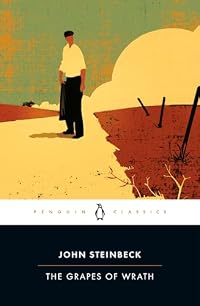
The Grapes of Wrath
by John Steinbeck
On This Page
Description
Depicts the hardships and suffering endured by the Joads as they journey from Oklahoma to California during the Depression.Tags
Recommendations
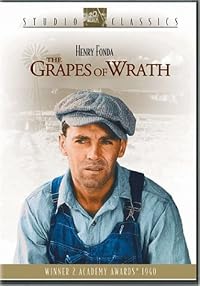
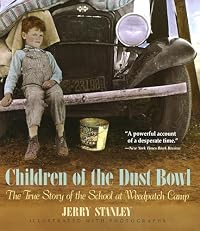
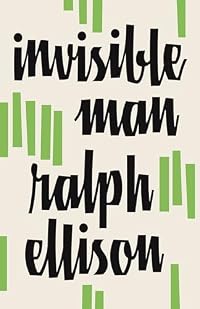
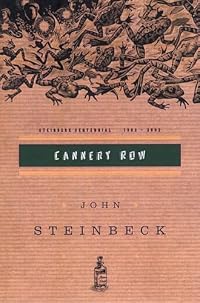
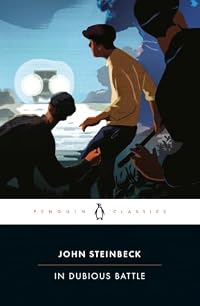

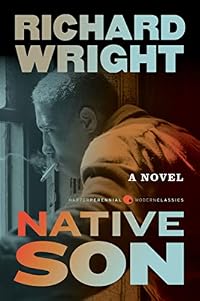

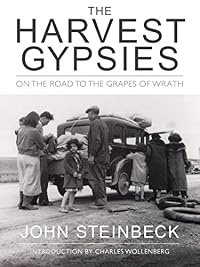
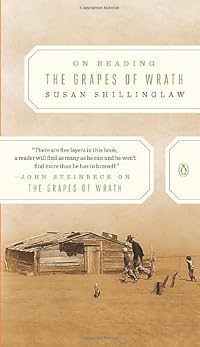
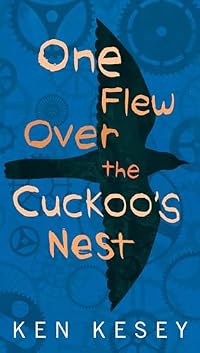
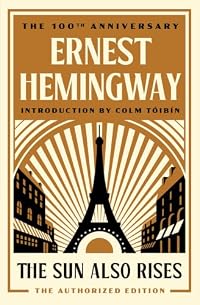

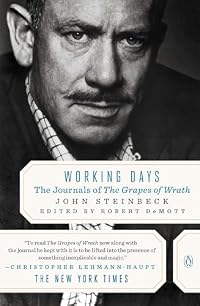
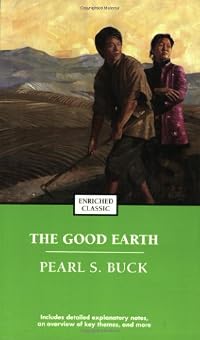
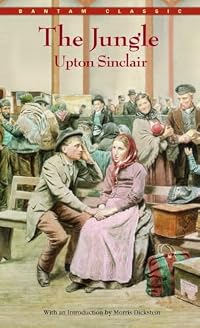
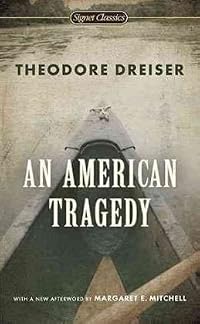

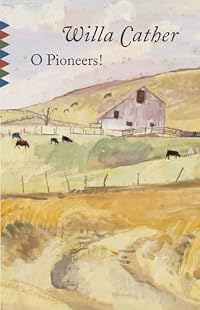
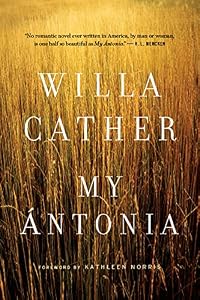
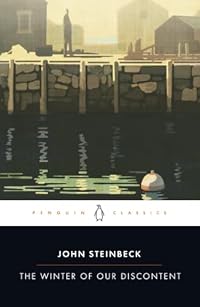
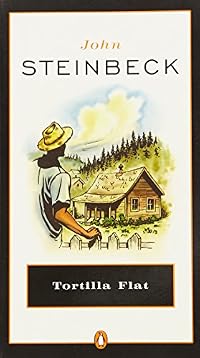
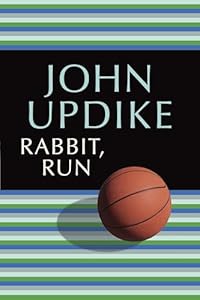
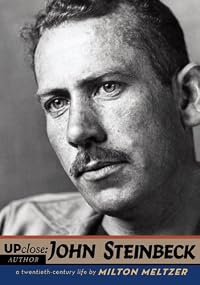


Member Recommendations
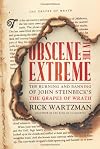
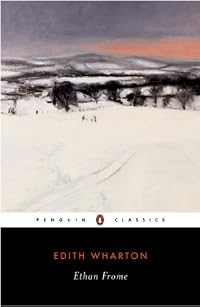
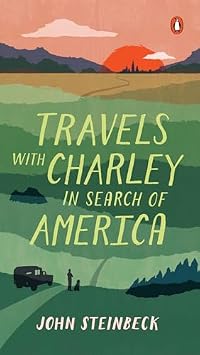
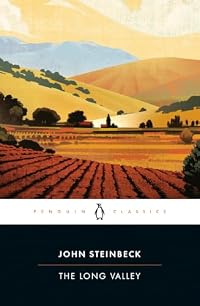
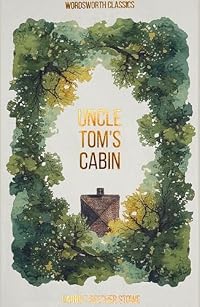
Obscene in the Extreme: The Burning and Banning of John Steinbeck's the Grapes of Wrath by Rick Wartzman
RidgewayGirl Centers around the controversy that exploded in California's central valleys when The Grapes of wrath was published.
80
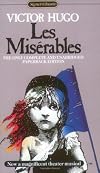
CGlanovsky As much a story about the trials of individuals as a sweeping portrait and critique of an era.
60
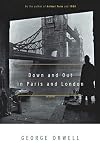
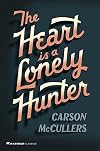
JudeyN Set in a different time and place, but similar themes. Examines the different ways in which people respond to hardship and upheaval.
20
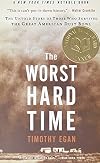
nandadevi Svobida´s book movingly describes the conditions in the Dust Bowl (he clung on for six years of crop failures) that the Joad´s left behind in their trek to California.
20

artturnerjr The only 20th century American writer who rivals Steinbeck in economy and forcefulness of language.
31
aulsmith Two stories of migrations of the working class in the US.
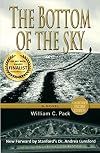
LoriMe Mr. Steinbeck wrote a gritty family saga embedded in the early to mid part of the 20th Century. Mr. Pack wrote a gritty family saga embedded in the end of the 20th Century. The characters and stories moved me equally. Both are written beautifully.
A Working Stiff's Manifesto: A Memoir of Thirty Jobs I Quit, Nine That Fired Me, and Three I Can't Remember by Iain Levison
Babou_wk Description de la vie d'un travailleur itinérant.
01
Stbalbach Called the Iranian Grapes of Wrath.
Member Reviews
I last read this book several decades ago when I was in high school. I had put off re-reading it because I remembered it as a hard book emotionally. After decades of life experience, I didn't find it to be the gut punch it was when I was a teenager, but I still wore the book somewhat. What I either didn't remember or, more likely, didn't comprehend about this book years ago was just how important Ma Joad is to the story. The importance of women not only in a family but in dealing with life as it comes is emphasized by Steinbeck beautifully. The one thing I remembered from my first reading was the final scene with Rose of Sharon. I cried then and I cried again today about how it emphasized the humanity of these characters. I believe it show more was Ma Joad earlier in the book who declared (and I paraphrase), "Only the poor will help the poor." The book is both about man's inhumanity to man and man's humanity to man, and the need to keep forging ahead without knowing which of those you will face next. show less
In The Grapes of Wrath Steinbeck tells the story of one family, the Joads, who have been evicted from their dry Oklahoma land during the Great Depression and have been forced to choose to migrate to California where there are supposedly jobs for the taking in a veritable land of milk and honey. Steinbeck introduces us to the Joads as they hopefully make ready to travel the width of the country in a cobbled together jalopy with what little money they were able to get from selling off most of their belongings. In dialogue rich with realistic dialect, we come to know Tom, recently paroled from prison for killing a man; his Pa, a man nearly beaten down from his circumstances; Ma, a woman with an iron will who will stop at nothing to keep show more her family from falling apart; his sister pregnant Rose of Sharon whose husband is full of dreams for their future; and Uncle John who has spent a lifetime trying to face or escape his imagined sin. Through the pages, readers come to an intimate knowledge of the family as they head west helping who they can though they are struggling to make it themselves. It's perhaps because readers come to know and love the family in all its strengths and its failings that makes The Grapes of Wrath a difficult read to swallow.
There is absolutely no subtlety nor any particular artfulness to be found in the Joads' story. Never for a moment do readers need to wonder where Steinbeck stands on the events that are taking place. Steinbeck is more than eager to hammer his points home as he preachily derides the corporate farmers whose tractors and hired hands eliminate the connection between men and the land that sustains them. He flays California landowners whose vast fields of hardy crops do nothing for the migrants starving for lack of work. He paints heavy handed pictures of people starving in Hoovervilles even while farmers discard crops to maintain prices.
If, indeed, there is art in Steinbeck's American classic, it lives in the alternating chapters where Steinbeck interrupts his telling of the Joads' journey, to generalize the very much shared experience of the thousands of migrants who fled to California during the Depression. In them, he captures the haggling for a junk car, the staggering number of people heading west fed only on dreams, the growing anger of powerless men, the etiquette of camping, and even the dances that give struggling families a break, however brief, from their sufferings. In these chapters, Steinbeck lets the many voices be heard, he paints pictures with dialogue, and his words even carry the very rhythm of the dance.
There are many things to like and to dislike about The Grapes of Wrath. It is preachy, heavy handed, depressing, frustrating, perhaps even exaggerated, but it is also a profound, and perhaps even hopeful story, of a family's strength in the face of unbelievable struggle. Steinbeck's writing gives poetry to populism, and even now, The Grapes of Wrath has the enduring power to cause the righteous anger that can bring about change that so much of society still desperately needs. show less
There is absolutely no subtlety nor any particular artfulness to be found in the Joads' story. Never for a moment do readers need to wonder where Steinbeck stands on the events that are taking place. Steinbeck is more than eager to hammer his points home as he preachily derides the corporate farmers whose tractors and hired hands eliminate the connection between men and the land that sustains them. He flays California landowners whose vast fields of hardy crops do nothing for the migrants starving for lack of work. He paints heavy handed pictures of people starving in Hoovervilles even while farmers discard crops to maintain prices.
If, indeed, there is art in Steinbeck's American classic, it lives in the alternating chapters where Steinbeck interrupts his telling of the Joads' journey, to generalize the very much shared experience of the thousands of migrants who fled to California during the Depression. In them, he captures the haggling for a junk car, the staggering number of people heading west fed only on dreams, the growing anger of powerless men, the etiquette of camping, and even the dances that give struggling families a break, however brief, from their sufferings. In these chapters, Steinbeck lets the many voices be heard, he paints pictures with dialogue, and his words even carry the very rhythm of the dance.
There are many things to like and to dislike about The Grapes of Wrath. It is preachy, heavy handed, depressing, frustrating, perhaps even exaggerated, but it is also a profound, and perhaps even hopeful story, of a family's strength in the face of unbelievable struggle. Steinbeck's writing gives poetry to populism, and even now, The Grapes of Wrath has the enduring power to cause the righteous anger that can bring about change that so much of society still desperately needs. show less
I've just finished reading John Steinbeck's The Grapes of Wrath for the fourth time. Much has been said about the symbolism and political messages in this literary masterpiece, but what I focused on and enjoyed most this time were the inner chapters that on previous readings I had found somewhat annoying. These chapters are rich with insight, imagery and poetry. Here is an excerpt from one about playing the harmonica which I especially enjoyed because I play the harmonica myself:
"A harmonica is easy to carry. Take it out of your hip pocket, knock it against your palm to shake out the dirt and pocket fuzz and bits of tobacco. Now it's ready. You can do anything with a harmonica: thin reedy single tone, or chords or melody with rhythm show more chords. You can mold the music with curved hands, making it wail and cry like bagpipes, making it full and round like an organ, making it as sharp and bitter as the reed pipes of the hills. And you can play and put it back in your pocket. It is always with you, always in your pocket. And as you play, you learn new tricks, new ways to mold the tone with your hands, to pinch the tone with your lips, and no one teaches you."
Another of the many facets that I appreciate about John Steinbeck's writing is his understanding and love of nature. He frequently references nature in his symbolism to convey the hardships of the migrants. A classic example is chapter 3 about the turtle crossing the road which can be said to be symbolic of the entire novel.
Here is a beautiful excerpt from chapter 25 which describes how spring comes to California:
"The prunes lengthen like little green bird's eggs, and the limbs sag down against the crutches under the weight. And the hard little pears take shape, and the beginning of the fuzz comes out on the peaches. Grape blossoms shed their tiny petals and the hard little beads become green buttons, and the buttons grow heavy."
There are so many books I want to read that I find it hard to justify reading any one more than once. This is the only book I have read four times, and it probably won't be the last. show less
"A harmonica is easy to carry. Take it out of your hip pocket, knock it against your palm to shake out the dirt and pocket fuzz and bits of tobacco. Now it's ready. You can do anything with a harmonica: thin reedy single tone, or chords or melody with rhythm show more chords. You can mold the music with curved hands, making it wail and cry like bagpipes, making it full and round like an organ, making it as sharp and bitter as the reed pipes of the hills. And you can play and put it back in your pocket. It is always with you, always in your pocket. And as you play, you learn new tricks, new ways to mold the tone with your hands, to pinch the tone with your lips, and no one teaches you."
Another of the many facets that I appreciate about John Steinbeck's writing is his understanding and love of nature. He frequently references nature in his symbolism to convey the hardships of the migrants. A classic example is chapter 3 about the turtle crossing the road which can be said to be symbolic of the entire novel.
Here is a beautiful excerpt from chapter 25 which describes how spring comes to California:
"The prunes lengthen like little green bird's eggs, and the limbs sag down against the crutches under the weight. And the hard little pears take shape, and the beginning of the fuzz comes out on the peaches. Grape blossoms shed their tiny petals and the hard little beads become green buttons, and the buttons grow heavy."
There are so many books I want to read that I find it hard to justify reading any one more than once. This is the only book I have read four times, and it probably won't be the last. show less
The Grapes of Wrath is one of Americas greatest novels. Set during the middle of the great depression, it follows the history of the Joad family as they are forced to leave their farm in Oklahoma as a result of both the dust bowl catastrophe and the desire of banks to consolidate farms into bigger corporate farms. As climate and economic refugees, the family expects to find California to be a land of milk and honey with plenty of money to be earned picking fruit. Instead, they are confronted with violence and the exploitation of the California farmers who realize that there are so many people desperate for work that they only need to offer starvation wages.
Although written many years ago, the story has interest for people today since it show more deals with climate change and economic exploitation. As such, it would be a useful addition to a course on Critical Economic Theory. It also offers up universal themes of family and fortitude. The book leaves the reader with vivid, long-lasting images and portraits of the main characters. show less
Although written many years ago, the story has interest for people today since it show more deals with climate change and economic exploitation. As such, it would be a useful addition to a course on Critical Economic Theory. It also offers up universal themes of family and fortitude. The book leaves the reader with vivid, long-lasting images and portraits of the main characters. show less
I am perhaps digging my own grave by giving a negative review to the well-respected Steinbeck, but Grapes of Wrath is a sore disappointment. Steinbeck's epic is a thinly disguised forum for political, social, and religious dialogue. Unlike great literature, which can address any number of complexities or issues in the context of a larger narrative, Steinbeck presents a only a set of ideas and bends flat characters and a thin plot around these views. His characters are intended only for metaphorical interpretation and offer little substance.
Steinbeck's "interchapters," which portray misery through broad, sweeping claims (without engaging any of the main characters or advancing the plot), are the book's most interesting portions, despite show more the emotional manipulation that they set forth. To add insult to injury, the novel itself is barely literary. It feels as though Steinbeck is following a checklist of what to include in a novel. (Foreshadowing? Check. Symbolism? Check. Conflict? You betcha.) This would be bad enough by itself, but it isn't even done subtly. Steinbeck might as well have put up neon signs pointing out the literary devices used. He seems to cram as much into the novel as he can, only for the sake of including, rather than for any intrinsic merit. Finally, the messages themselves are somewhat strange. The tone of much of the novel can be described as guilt-mongering - Steinbeck's characters are in a particularly bleak situation, victimized by the Depression, the Dust Bowl, and capitalist land owners - and the readers are made to feel guilty for something that others have done. At the risk of repeating myself, this guilt comes from the narrator's direct condemnations, not through the reader's own understanding of the text or connection with the characters.
Moreover, the book has many religious themes - from the prose style, which imitates the text of the Old Testament, to the very title, which alludes to Revelation - yet the religious "messages" are quite sacrilegious. The main protagonist's epiphany comes from rejecting traditional doctrines (even the idea that all humans have a soul) in exchange for looser, pseudo-Christian ideals. The characters in the text who support traditional ideals are either evil hypocrites or in the case of the heroes (specifically, Granma) laughable, foolish, and senile because of their naive ignorance. This book does not present ideas in an intellectual fashion; it is not worthy to be counted among the greats. I am not criticizing the inclusion of a set of ideas, or even of the Marxist, communist, or religious undertones. I am criticizing Steinbeck's absolute failure write a story with a moral. He opts, instead, for a moral disguised as a story. show less
Steinbeck's "interchapters," which portray misery through broad, sweeping claims (without engaging any of the main characters or advancing the plot), are the book's most interesting portions, despite show more the emotional manipulation that they set forth. To add insult to injury, the novel itself is barely literary. It feels as though Steinbeck is following a checklist of what to include in a novel. (Foreshadowing? Check. Symbolism? Check. Conflict? You betcha.) This would be bad enough by itself, but it isn't even done subtly. Steinbeck might as well have put up neon signs pointing out the literary devices used. He seems to cram as much into the novel as he can, only for the sake of including, rather than for any intrinsic merit. Finally, the messages themselves are somewhat strange. The tone of much of the novel can be described as guilt-mongering - Steinbeck's characters are in a particularly bleak situation, victimized by the Depression, the Dust Bowl, and capitalist land owners - and the readers are made to feel guilty for something that others have done. At the risk of repeating myself, this guilt comes from the narrator's direct condemnations, not through the reader's own understanding of the text or connection with the characters.
Moreover, the book has many religious themes - from the prose style, which imitates the text of the Old Testament, to the very title, which alludes to Revelation - yet the religious "messages" are quite sacrilegious. The main protagonist's epiphany comes from rejecting traditional doctrines (even the idea that all humans have a soul) in exchange for looser, pseudo-Christian ideals. The characters in the text who support traditional ideals are either evil hypocrites or in the case of the heroes (specifically, Granma) laughable, foolish, and senile because of their naive ignorance. This book does not present ideas in an intellectual fashion; it is not worthy to be counted among the greats. I am not criticizing the inclusion of a set of ideas, or even of the Marxist, communist, or religious undertones. I am criticizing Steinbeck's absolute failure write a story with a moral. He opts, instead, for a moral disguised as a story. show less
I never wanted to read this book. Boring, non-sense title, too recent history, dislike of modern authors- need any more excuses? Well, this was another of my mom's favorites that I felt obligated to read and as is the burgeoning pattern, she was right. Again.
I am from Oklahoma, my great grandmother lived through the dust bowl, and this is my history. After reading this, I'm even more proud to call myself an Okie. It was originally a derogative term, but I think they got it wrong. The Okies may have been displaced, dirty, poor and unwanted- but they were fighters who believed in the sacredness of family, pride and work. They were put down, kicked, and starved- but they fought hard for their survival and I don't think there is anything show more dishonorable about that.
This all came out in The Grapes of Wrath, in the earthy characters of the Joad family and the other good but put-out people they met. I thought it was especially poignant considering what is going on economically now. We have made a full circle straight back to the time period being written about. You could easily update the story by changing the professions, but little else need be touched. Disheartening, if you let it be.
As to the book; it is written with long chapters encapsulating story telling about the family's travails, followed by shorter, wispy descriptions the atmosphere in which it all takes place. How others in society are finding things, the weather conditions that are relevant to what is going on, etc. It gives great depth to your understanding of what is happening even if you previously knew nothing about the era. The book is absolutely complete if you want to know about the subject.
What isn't complete is the saga of the family. I got so into the story that I wanted to know if they ever escaped their predicament. As I got near the end of the book, I realized I was not going to find out how people came out the end. I thought maybe there would be a clue as to how we, today, would find the light at the end of the tunnel, but there was no answer- except that we are all still here after this happened to our ancestors, meaning we survive. Even without answers, the ending was a shock for me. I have to admit to being repulsed at the last scene. The action left me sick to my stomach, for what was physically happening, but if you can get over that you realize it was well intentioned and noble, I suppose. Someone giving the very last thing they have to help someone else survive. The story is worth every one of those five stars. If you think you aren't interested, read it anyway. show less
I am from Oklahoma, my great grandmother lived through the dust bowl, and this is my history. After reading this, I'm even more proud to call myself an Okie. It was originally a derogative term, but I think they got it wrong. The Okies may have been displaced, dirty, poor and unwanted- but they were fighters who believed in the sacredness of family, pride and work. They were put down, kicked, and starved- but they fought hard for their survival and I don't think there is anything show more dishonorable about that.
This all came out in The Grapes of Wrath, in the earthy characters of the Joad family and the other good but put-out people they met. I thought it was especially poignant considering what is going on economically now. We have made a full circle straight back to the time period being written about. You could easily update the story by changing the professions, but little else need be touched. Disheartening, if you let it be.
As to the book; it is written with long chapters encapsulating story telling about the family's travails, followed by shorter, wispy descriptions the atmosphere in which it all takes place. How others in society are finding things, the weather conditions that are relevant to what is going on, etc. It gives great depth to your understanding of what is happening even if you previously knew nothing about the era. The book is absolutely complete if you want to know about the subject.
What isn't complete is the saga of the family. I got so into the story that I wanted to know if they ever escaped their predicament. As I got near the end of the book, I realized I was not going to find out how people came out the end. I thought maybe there would be a clue as to how we, today, would find the light at the end of the tunnel, but there was no answer- except that we are all still here after this happened to our ancestors, meaning we survive. Even without answers, the ending was a shock for me. I have to admit to being repulsed at the last scene. The action left me sick to my stomach, for what was physically happening, but if you can get over that you realize it was well intentioned and noble, I suppose. Someone giving the very last thing they have to help someone else survive. The story is worth every one of those five stars. If you think you aren't interested, read it anyway. show less
Deep breath in, deep breath out. WHAT a book. I hadn't read it in years, maybe decades, and it grabbed me hard this time and didn't let go. The social commentary, the resounding themes (the power of community to create action and protection and connection; the new promised land, with its martyrs and messiahs and disciples; the othering of immigrants... complete with insular, ego-inflated cops enforcing scurrilous laws meant to keep "undesirables" out), the heartbreak and the bits of joy, the living history.
Steinbeck, a native of California agricultural country, meticulously researched this book, traveling among farm laborers, going to the camps where they lived, and meeting and interviewing them. It was written not with hindsight but in show more the very thick of the Depression and the migration it describes, and it brings with it an immediacy and strength and *punch* as a result. The themes resonate through the decades, both to illuminate the struggle and injustice faced by Dust Bowl migrants, and to cast an unflinching look at the ways our society has not changed. (For Sam Brown belt and star, substitute black face mask and ICE lettering.) We will other each other; we will attempt to suppress the kind of organization that would threaten the Holy Church of Capitalism; we will find connection in surprising ways and times.
As I read and listened this time through, in middle age with an education and a career that are social-services adjacent, I kept being grateful and protective for the safety nets that we have been able to build (SNAP and Medicaid especially).
There's no need to say *again* what a genius of a writer was John Steinbeck, but my gosh, it's hard not to get wild-eyed about the way his books can elevate you, dig into your soul, punch you in the gut, make you see your world in a new way. It's hard not to walk up to you and shove the book into your hands and tell you how the hamburger stand chapter made me cry as much as the flood chapter did, how the end that you thought was frankly weird in high school is the epitome of everything he had to say in the whole rest of the book.
gaaah. Deep breath in, deep breath out. show less
Steinbeck, a native of California agricultural country, meticulously researched this book, traveling among farm laborers, going to the camps where they lived, and meeting and interviewing them. It was written not with hindsight but in show more the very thick of the Depression and the migration it describes, and it brings with it an immediacy and strength and *punch* as a result. The themes resonate through the decades, both to illuminate the struggle and injustice faced by Dust Bowl migrants, and to cast an unflinching look at the ways our society has not changed. (For Sam Brown belt and star, substitute black face mask and ICE lettering.) We will other each other; we will attempt to suppress the kind of organization that would threaten the Holy Church of Capitalism; we will find connection in surprising ways and times.
As I read and listened this time through, in middle age with an education and a career that are social-services adjacent, I kept being grateful and protective for the safety nets that we have been able to build (SNAP and Medicaid especially).
There's no need to say *again* what a genius of a writer was John Steinbeck, but my gosh, it's hard not to get wild-eyed about the way his books can elevate you, dig into your soul, punch you in the gut, make you see your world in a new way. It's hard not to walk up to you and shove the book into your hands and tell you how the hamburger stand chapter made me cry as much as the flood chapter did, how the end that you thought was frankly weird in high school is the epitome of everything he had to say in the whole rest of the book.
gaaah. Deep breath in, deep breath out. show less
Members
- Recently Added By
Published Reviews
ThingScore 100
Seventy years after The Grapes of Wrath was published, its themes – corporate greed, joblessness – are back with a vengeance. ... The peaks of one's adolescent reading can prove troughs in late middle age. Life moves on; not all books do. But 50 years later, The Grapes of Wrath seems as savage as ever, and richer for my greater awareness of what Steinbeck did with the Oklahoma dialect and show more with his characters. show less
added by tim.taylor
This is the sort of book that stirs one so deeply that it is almost impossible to attempt to convey the impression it leaves. It is the story of today's Exodus, of America's great trek, as the hordes of dispossessed tenant farmers from the dust bowl turn their hopes to the promised land of California's fertile valleys. The story of one family, with the "hangers-on" that the great heart of show more extreme poverty sometimes collects, but in that story is symbolized the saga of a movement in which society is before the bar. What an indictment of a system — what an indictment of want and poverty in the land of plenty! There is flash after flash of unforgettable pictures, sharply etched with that restraint and power of pen that singles Steinbeck out from all his contemporaries. There is anger here, but it is a deep and disciplined passion, of a man who speaks out of the mind and heart of his knowledge of a people. show less
added by Richardrobert
Lists

The Guardian's 1000 Novels Everyone Must Read
1,005 works; 549 members

1001 Books You Must Read Before You Die
1,448 works; 1,131 members

Classics you know you should have read but probably haven't
421 works; 407 members

Pulitzer Prize Winners for Fiction
102 works; 54 members

Radcliffe's 100 Best Novel of the 20th Century
100 works; 32 members

Read the book and saw the movie
1,170 works; 192 members
501 Must-Read Books
508 works; 71 members
BBC Big Read
191 works; 45 members

Best Historical Fiction
620 works; 261 members
Le Monde - Les 100 livres du siècle
121 works; 25 members
20th Century Literature
1,161 works; 55 members

Great American Novels
158 works; 42 members
Favourite Books
1,817 works; 316 members
Newsweek's Top 100 Books: The Meta-List
100 works; 18 members

Recommend the 20 best books you've read in the last five years
2,167 works; 605 members
Literature About Social Class
134 works; 19 members
New York Public Library's Books of the Century
120 works; 20 members

Favorite Long Books
330 works; 42 members
Novels from The Guardian's Great American Novelist Tournament
148 works; 24 members

The Top Ten: Writers Pick Their Favorite Books
240 works; 31 members
Best Family Stories
241 works; 22 members
PBS The Great American Read
100 works; 21 members
Historical Fiction
889 works; 91 members
Banned Books Week 2014
268 works; 62 members
Larry McCaffery's 20th Century Greatest Hits: 100 English-Language Books
103 works; 12 members
Best Political Fiction
92 works; 11 members

In or About the 1930s
198 works; 27 members

Best Books About Journeys and Quests
117 works; 30 members

New York Public Library's Books of the Century - All
170 works; 14 members
Harold Bloom - The Western Canon: D. The Chaotic Age
833 works; 24 members

Top Five Books of 2013
1,564 works; 722 members
Time Magazine's "All-Time 100"
113 works; 15 members

Best family sagas
244 works; 32 members
Folio Society
831 works; 53 members
Books That Changed Me
156 works; 47 members
The American Experience
173 works; 18 members
Blue Pyramid 1,276 Best Books of All Time
1,248 works; 32 members

Canon de la narrativa universal del siglo XX
254 works; 6 members
LibraryThingers' 1001 Books You Must Read Before You Die
442 works; 29 members

Nobel Price Winners
222 works; 20 members
Banned or Challenged Books
400 works; 41 members

Books Featured on Gilmore Girls
307 works; 21 members

BBC Big Read
100 works; 10 members

Books You Read During High School (For School)
301 works; 52 members

Best Workplace Fiction
47 works; 18 members
Time's All-Time 100 Novels
100 works; 27 members

Books Set in California
110 works; 15 members
Books I've Read More Than Once
602 works; 49 members

100 Most Recommended Works
100 works; 11 members
One Book, Many Authors
441 works; 40 members

Top Five Books of 2015
811 works; 241 members
1,001 BYMRBYD Concensus
723 works; 27 members

Top Five Books of 2021
604 works; 181 members
Top 100 to Read before you Die
109 works; 7 members

1964 College Preparatory Reading List
202 works; 8 members
Daria Morgendorffer's Bookshelf
70 works; 5 members

A Novel Cure
742 works; 23 members
Readable Classics
110 works; 15 members
The Guardian's 100 Best Novels Written in English
105 works; 13 members
Great Books Favorites
71 works; 6 members
Fiction about the Working Class
74 works; 10 members
Best of American Literature
146 works; 9 members
Twentieth Century Greatest Hits
27 works; 11 members
The Greatest Books
99 works; 5 members

Books Read in 2016
4,666 works; 199 members

100 World Classics
99 works; 15 members
The Modern Library's 100 Best Novels: The Board's List
85 works; 5 members
Books Read in 2015
3,298 works; 126 members

Carole's List
445 works; 13 members
Fake Top 100 Fiction
81 works; 4 members
Five star books
1,755 works; 107 members

1930s
262 works; 5 members

Books Read in 2017
4,248 works; 129 members

Publisher's Weekly Bestsellers - Part II - 1940 - 1979
355 works; 5 members

Amanda's Guaranteed Books
110 works; 5 members
The American West
18 works; 2 members
My list of 100 books to read next
100 works; 4 members
Books Featured on Readers' Review of the Diane Rehm Show
161 works; 8 members
The College Board: 101 Great Books Recommended for College-Bound Readers
111 works; 7 members
Jordan B. Peterson's Recommended Books
104 works; 5 members

Most Depressing Books
69 works; 16 members

A's favorite novels
100 works; 3 members

Rory Gilmore Book Club
193 works; 5 members
CCE 1000 Good Books List
1,033 works; 12 members

feasting on fiction
24 works; 5 members
My 100 Favorite Books of All Time
57 works; 2 members
Books Set in Oklahoma
7 works; 2 members

99 Bücher, die man gelesen haben muss
37 works; 1 member
Literary Travelogue of the United States Challenge
133 works; 6 members
Best Books of the 20th Century
193 works; 5 members
Literature which inspired Pop songs
85 works; 9 members

the ultimate desert island list
14 works; 2 members

100
56 works; 1 member

aijowenuwaneaw
10 works; 1 member

Summer Books
82 works; 9 members

Books Read in 2020
4,379 works; 124 members
My Favourite Books
86 works; 5 members

Llibres que he llegit el 2010
35 works; 1 member

Llibres que he llegit el 2016
36 works; 1 member
American Lit for Eng 11 Research Project
368 works; 6 members

Books Read in 2004
196 works; 7 members

Tammen Keltainen kirjasto
81 works; 1 member

Food Fiction
24 works; 7 members

top 100
39 works; 1 member
The 150 Greatest Novels of All Time
150 works; 6 members
Books That Made Us Cry
278 works; 145 members
Our Favorite Banned Books
138 works; 122 members
'Books You Can't Live Without: The Top 100', The Guardian, 2007
156 works; 7 members

Recommended Reading : 600 Classics Reviewed, Editors of Salem Press, 2015
634 works; 6 members
Canon de la narrativa universal del s. XX (cicutadry)
499 works; 3 members
.
396 works; 1 member

The Torchlight List
95 works; 1 member
Widely acclaimed, one book per year
105 works; 3 members
Must Read as Soon As Possible
5 works; 1 member
Very Long Novels
15 works; 1 member
NPR Books You Love: Books That Shaped You in High School
26 works; 1 member
Reading LIst
648 works; 1 member
School Made Us Read It
380 works; 196 members
Books We Want To Read Again For The First Time
384 works; 160 members
Books We Couldn't Put Down
443 works; 197 members
bound
100 works; 1 member

el
1,139 works; 1 member
The Complete Rory Gilmore Reading List
506 works; 5 members
Modern Library's 100 Best Novels
100 works; 2 members
Banned Books
40 works; 2 members

The Five Books That Represent Us
389 works; 146 members
Retrospective of 20th- and 21st-century literature
154 works; 1 member
DigitalDreamDoor top 300
300 works; 4 members

Penguin Random House
458 works; 4 members

The Atlantic's The Great American Novel
136 works; 12 members
KayStJ's to-read list
1,616 works; 11 members

Down on the Farm
17 works; 6 members

Books Read in 2012
815 works; 34 members

LT picks: Blue Books
197 works; 44 members

Sonlight Books
1,487 works; 25 members

Books You Couldn't Finish
202 works; 32 members

Books whose title names an object usually found in the kitchen
171 works; 14 members
Tagged 20th Century
33 works; 4 members
Income Inequality
20 works; 4 members

School Library Journal - 2012 Top 100 Children's Novels
68 works; 8 members
BingoDOG - Books With Natural Disasters: Fiction
39 works; 11 members

Armed Services Editions
150 works; 1 member

Read
293 works; 4 members

Allie's Wishlist
217 works; 2 members
Exodus in literature
12 works; 3 members

Books Read in 2021
5,361 works; 114 members
Novels/Poems/Short Stories/Anything Storytelling Related
112 works; 2 members

The Art of Manliness' 100+ Books Every Man Should Read
108 works; 2 members

Greatest Books, allegedly
484 works; 9 members
AP Lit
363 works; 6 members

Mustich's 1000 Books to Read Before You Die: A Life Changing List
1,001 works; 18 members

Summer Reading 23
6 works; 1 member

Publisher's Weekly Bestsellers Part I - 1895-1939
399 works; 8 members

Fiction Books Worthy of Reading Again
37 works; 1 member

Books Read in 2010
631 works; 11 members

1970s
657 works; 23 members

Unread books
1,063 works; 87 members
Talk Discussions
Past Discussions
Steinbeckathon 2012: The Grapes of Wrath in 75 Books Challenge for 2012 (August 2012)
Author Information

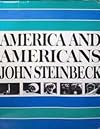
In recent years Steinbeck has been elevated to a more prominent status among American writers of his generation. If not quite at the world-class artistic level of a Hemingway or a Faulkner, he is nonetheless read very widely throughout the world by readers of all ages who consider him one of the most "American" of writers. Born in Salinas County, show more California on February 27, 1902, Steinbeck was of German-Irish parentage. After four years as a special student at Stanford University, he went to New York, where he worked as a reporter and as a hod carrier. Returning to California, he devoted himself to writing, with little success; his first three books sold fewer than 3,000 copies. Tortilla Flat (1935), dealing with the paisanos, California Mexicans whose ancestors settled in the country 200 years ago, established his reputation. In Dubious Battle (1936), a labor novel of a strike and strike-breaking, won the gold medal of the Commonwealth Club of California. Of Mice and Men (1937), a long short story that turns upon a melodramatic incident in the tragic friendship of two farm hands, written almost entirely in dialogue, was an experiment and was dramatized in the year of its publication, winning the New York Drama Critics Circle Award. It brought him fame. Out of a series of articles that he wrote about the transient labor camps in California came the inspiration for his greatest book, The Grapes of Wrath (1939), the odyssey of the Joad family, dispossessed of their farm in the Dust Bowl and seeking a new home, only to be driven on from camp to camp. The fiction is punctuated at intervals by the author's voice explaining this new sociological problem of homelessness, unemployment, and displacement. As the American novel "of the season, probably the year, possibly the decade," it won the Pulitzer Prize in 1940. It roused America and won a broad readership by the unusual simplicity and tenderness with which Steinbeck treated social questions. Even today, The Grapes of Wrath remains alive as a vivid account of believable human characters seen in symbolic and universal terms as well as in geographically and historically specific ones. Ma Joad is one of the most memorable characters in twentieth-century American fiction. It is her courage that sustains the family. Steinbeck's best and most ambitious novel after The Grapes of Wrath is East of Eden (1952), a saga of two American families in California from before the Civil War through World War I. Cannery Row (1945), The Wayward Bus (1947), and Sweet Thursday (1955) are lighter works that find Steinbeck returning to the lighthearted tone of Tortilla Flat as he recounts picaresque adventures of modern-day picaros. The Winter of Our Discontent (1961) struck some reviewers as being appropriately titled because of its despairing treatment of humanity's fall from grace in a wasteland world where money is king. Steinbeck also wrote important nonfiction, including Russian Journal (1948) in collaboration with the photographer Robert Capa; Once There Was a War (1958) and America and Americans (1966), which features pictures by 55 leading photographers and a 70-page essay by Steinbeck. His interest in marine biology led to two books primarily about sea life, Sea of Cortez (1941) (with Edward F. Ricketts) and The Log from the Sea of Cortez (1951). Travels with Charley (1962) is an engaging account of his journey of rediscovery of America, which took him through approximately 40 states. Steinbeck was married three times and died in New York City on December 20, 1968 of heart disease and congestive heart failure. He was 66, and had been a life-long smoker. (Bowker Author Biography) show less
Some Editions
Awards and Honors
Awards
Distinctions
Notable Lists
BBC's Big Read (29)
Torchlight List (32.1)
The Great American Novels (1939)
Daniel S. Burt's Novel 100 (054 – 54)
Series
Belongs to Publisher Series
Keltainen kirjasto (11)
Keltainen pokkari (25)
Zephyr Books (28)
Gallimard, Folio (83-7343)
Nobelpreisträger Coron-Verlag (weiß) (1962 (USA))
Tascabili [Bompiani] (496)
Lanterne (L 272)
dtv (10474)
Penguin Modern Classics (833)
Work Relationships
Is contained in
The Grapes of Wrath / The Moon is Down / Cannery Row / East of Eden / Of Mice and Men by John Steinbeck
Has the adaptation
Is abridged in
Was inspired by
Inspired
Has as a reference guide/companion
Has as a study
Has as a commentary on the text
Has as a student's study guide
Has as a teacher's guide
Common Knowledge
- Canonical title*
- Furore
- Original title
- The Grapes of Wrath
- Original publication date
- 1939
- People/Characters
- Tom Joad, Jr.; Tom "Pa" Joad, Sr.; Jim Casy (the Preacher); Muley Graves; Ma Joad; William James "Granpa" Joad (show all 26); Granma Joad; Noah Joad; Al Joad; Ruthie Joad; Winfield Joad; Rose of Sharon "Rosasharn" Joad; Willy Feeley; Connie Rivers; Ivy Wilson; Sairy Wilson; Timothy Wallace; Wilkie Wallace; Mr. Thomas; Jim Rawley; Annie Littlefield; Ella Summers; Jessie Bullitt; Lisbeth Sandry; Floyd Knowles; Aggie Wainwright
- Important places
- Hooverville, California, USA; Sallisaw, Oklahoma, USA; Route 66, USA; Bakersfield, California, USA; Great Plains, USA; Tulare, California, USA (show all 11); Highway 99, USA; Pixley, California, USA; Kern County, California, USA; Tulare County, California, USA; San Joaquin Valley, California, USA
- Important events
- Great Depression; Dust Bowl Era
- Related movies
- The Grapes of Wrath (1940 | IMDb); American Playhouse: The Grapes of Wrath (1991 | IMDb)
- Epigraph*
- Widziałem przyjście Pana, płaszcz chwały Go odziewał i z takiej szedł winnicy, co rodzi grona gniewu.
(Z pieśni robotników murzyńskich na plantacjach) - Dedication
- To CAROL
who willed this book
To
TOM
who lived it - First words
- To the red country and part of the gray country of Oklahoma, the last rains came gently, and they did not cut the scarred earth.
- Quotations
- Now the going was easy, and all the legs worked, and the shell boosted along, waggling from side to side. A sedan driven by a forty-year-old woman approached. She saw the turtle and swung to the right, off the highway, the wh... (show all)eels screamed and a cloud of dust boiled up. Two wheels lifted for a moment and then settled. The car skidded back onto the road, and went on, but more slowly. The turtle had jerked into its shell, but now it hurried on, for the highway was burning hot.
And now a light truck approached, and as it came near, the driver saw the turtle and swerved to hit it. His front wheel struck the edge of the shell, flipped the turtle like a tiddly-wink, spun it like a coin, and rolled it off the highway. The truck went back to its course along the right side. Lying on its back, the turtle was tight in its shell for a long time. But at last its legs waved in the air, reaching for something to pull it over. Its front foot caught a piece of quartz and little by little the shell pulled over and flopped upright. The wild oat head fell out and three of the spearhead seeds stuck in the ground. And as the turtle crawled on down the embankment, its shell dragged dirt over the seeds. The turtle entered a dust road and jerked itself along, drawing a wavy shallow trench in the dust with its shell. The old humorous eyes looked ahead, and the horny beak opened a little. His yellow toe nails slipped a fraction in the dust.
[Penguin ed., pp. 15-16; Chapter 3]
"The cars of the migrant people crawled out of the side roads onto the great cross-country highway, and they took the migrant way to the West. … And because they were lonely and perplexed, because they had all come from a p... (show all)lace of sadness and worry and defeat, and because they were all going to a mysterious new place … a strange thing happened: the twenty families became one family, the children were the children of all. The loss of home became one loss, and the golden time in the West was one dream."
A large drop of sun lingered on the horizon and then dripped over and was gone, and the sky was brilliant over the spot where it had gone, and a torn cloud, like a bloody rag, hung over the spot of it's going.
"They breathe profits; they eat the interest on money. If they don't get it, they die the way you die without air, without side-meat."
"The bank is something more than men, I tell you. It's the monster. Men made it, but they can't control it."
... and in the eyes of the people there is failure; and in the eyes of the hungry there is a growing wrath. In the souls of the people the grapes of wrath are filling and growing heavy, growing heavy for the vintage.
"It don't take no nerve to do somepin when there ain't nothin' else you can do." - Last words
- (Click to show. Warning: May contain spoilers.)She looked up and across the barn, and her lips came together and smiled mysteriously.
- Blurbers
- Woollcott, Alexander; Cowley, Malcolm; Sinclair, Upton; Parker, Dorothy; Van Doren, Carl; Fadiman, Clifton
- Original language
- American English
- Canonical DDC/MDS
- 813.52
- Canonical LCC
- PS3537.T3234
- Disambiguation notice
- Please do not combine John Steinbeck's original 1939 novel, The Grapes of Wrath, with any film treatment, critical edition, notes (Monarch, Barron's, Sparks, Cliff, etc.), screenplay, or other adaptations of the same t... (show all)itle. Thank you.
*Some information comes from Common Knowledge in other languages. Click "Edit" for more information.
Classifications
Statistics
- Members
- 38,946
- Popularity
- 76
- Reviews
- 516
- Rating
- (4.12)
- Languages
- 24 — Albanian, Arabic, Catalan, Chinese, Czech, Danish, Dutch, English, Estonian, Finnish, French, German, Greek, Hungarian, Italian, Japanese, Norwegian (Bokmål), Polish, Portuguese, Romanian, Russian, Spanish, Swedish, Turkish
- Media
- Paper, Audiobook, Ebook
- ISBNs
- 259
- UPCs
- 1
- ASINs
- 328