On This Page
Description
The author-illustrator traces his father's imprisonment in a Nazi concentration camp through a series of disarming and unusual cartoons arranged to tell the story as a novel.Tags
Recommendations



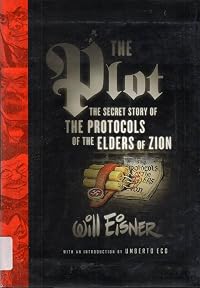
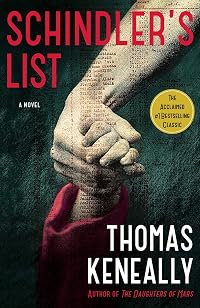
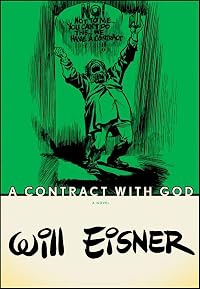
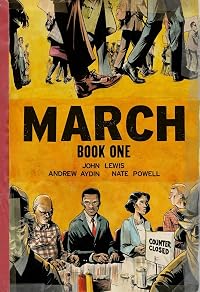




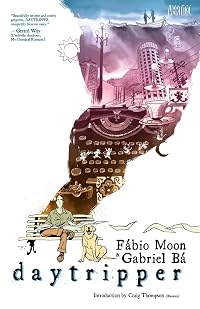
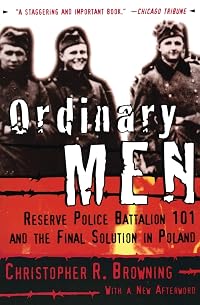
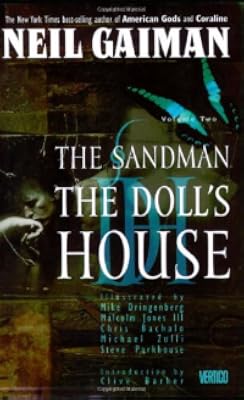
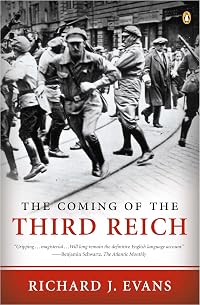

Member Recommendations

lucyknows Maus I: A Survivor's Tale: My Father Bleeds History by Art Spiegelman may be paired with Roberto Benigni film Life is Beautiful. The themes connecting these two are Nazi Germany, father son relationship, concentration camps

JuliaMaria Auseinandersetzung mit dem Vater und Geschichte, jeweils in Comic-Form.
Bibliospiral Explores similar themes
Member Reviews
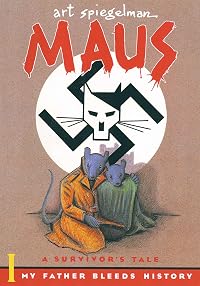
I'm glad to have discovered this story of the Jewish tragedy, based on the artist's recording of his own father's experience. From a distance I didn't know what to make of the swastika cover and cartoon mice; was someone trying to score a quick buck with a macabre comic? Quite the opposite, this is a heralded Pulitzer Prize winning classic among graphic novels. When I sought to borrow it from the library, I discovered it was filed in the non-fiction section. That is indicative of how seriously it takes its subject matter, never mind that it features anthropomorphized mice, cats and pigs.
Why animals? Transforming the human characters into animals tips the emphasis from "this happened to Jewish people" toward "this happened to Jewish show more people." It highlights the very quality the Nazis wished to deny them. Pigs for the Polish seems like an ill-selected choice, but they are unmistakably preferable to the Nazi cats. The distinguishing of one race versus another by animal type is of course meant to be silly, and a commentary itself on the ridiculousness of racism.
The number of times Vladek and his wife escaped death is truly incredible. It's transparent that only the lucky and quick-thinking survived the ordeal of the Holocaust, when so many arbitrary events arose to kill those around them. Painfully few people could be trusted, and virtually all assistance had to be purchased with quickly diminishing funds. This is only the first half of the story, and I'm glad to have the second half ready at hand. show less
Why animals? Transforming the human characters into animals tips the emphasis from "this happened to Jewish people" toward "this happened to Jewish show more people." It highlights the very quality the Nazis wished to deny them. Pigs for the Polish seems like an ill-selected choice, but they are unmistakably preferable to the Nazi cats. The distinguishing of one race versus another by animal type is of course meant to be silly, and a commentary itself on the ridiculousness of racism.
The number of times Vladek and his wife escaped death is truly incredible. It's transparent that only the lucky and quick-thinking survived the ordeal of the Holocaust, when so many arbitrary events arose to kill those around them. Painfully few people could be trusted, and virtually all assistance had to be purchased with quickly diminishing funds. This is only the first half of the story, and I'm glad to have the second half ready at hand. show less
This is a very clever way of presenting not just the horrors of the Holocaust, but the ongoing consequences for the survivors and for the survivors' children. In this graphic novel, Spiegelman recounts the story of his parents' experiences as Polish Jews during the Second World War, using the conceit of representing each character as an animal. Jews are mice, Poles are pigs, Germans are cats, Americans are dogs. For me, at least, the artwork had the curious effect of making what happened seem not more remote, but more immediate. Our awareness that the concentration camps existed is something which occasionally is blunted by distance, by time, by the fact that there are fewer and fewer people still around who survived those places. The show more reader doesn't have that luxury with Maus. Every time the art shows one of the mice being shot, beaten, hanged, gassed, you think, but these were really people. They were really people. show less
Art wrote and drew this two-part graphic novel based on his own father's (Vladek) experiences during World War II. It's also a revealing look at Art himself and his relationship with his difficult dad. Maus feels so honest. It's written not about a perfect man, but about a regular man, who fights with his wife and has a tortured relationship with his grown son. He is a flawed man who survived the holocaust and this is his story.
The book is brilliantly real. The fact that the story is told as a graphic novel allows the reader to detach just enough to get through the gruesome subject matter. The Jews are mice, the Germans are cats and the Polish people are pigs. The first book deals with Vladek's life before with his wife Anya. Their show more relationship resonated with me long after the final pages. The second book, which won the Pulitzer Prize, focuses on Vladek's time in Auschwitz and the war's resolution.
Reading it reminded me of an interview I did with a holocaust survivor when I worked at a daily newspaper. I remember being shocked by how angry he was. In my naïveté I assumed he would feel only gratitude for the fact that he survived, but there are some wounds that you can never truly forgive. show less
The book is brilliantly real. The fact that the story is told as a graphic novel allows the reader to detach just enough to get through the gruesome subject matter. The Jews are mice, the Germans are cats and the Polish people are pigs. The first book deals with Vladek's life before with his wife Anya. Their show more relationship resonated with me long after the final pages. The second book, which won the Pulitzer Prize, focuses on Vladek's time in Auschwitz and the war's resolution.
Reading it reminded me of an interview I did with a holocaust survivor when I worked at a daily newspaper. I remember being shocked by how angry he was. In my naïveté I assumed he would feel only gratitude for the fact that he survived, but there are some wounds that you can never truly forgive. show less
Well, it's a classic for a reason: Maus may be short on access figures, but is big on emotional intensity and historical accuracy. Author Art Spiegelman tells us the story of his Auschwitz survivor father telling his own story to Art. In this way, Maus explores not only the direct horror of the Holocaust, but also the lingering psychological damage to survivors, intergenerational trauma, and the transmission of intergenerational trauma. There's a lot to unpack in Maus, but even middle school students can follow and get something significant out of the story at its most basic level.
This is the first installment of a two book series, and tracks Vladek Spiegelman from a young man leading a normal life in Poland, to his terrified arrival at show more the infamous Auschwitz. This book is very depressing and intense, and I think I regret deciding to re-read it as part of my current exploration of YA nonfiction... but simultaneously am dying to read the next installment. The story is a compelling tale of a survival, and maybe even spiritual triumph (have to re-read Part II to be sure). Maus would serve as an excellent introduction to the topic of the genocide for students, emphasizing its psychological terror. show less
This is the first installment of a two book series, and tracks Vladek Spiegelman from a young man leading a normal life in Poland, to his terrified arrival at show more the infamous Auschwitz. This book is very depressing and intense, and I think I regret deciding to re-read it as part of my current exploration of YA nonfiction... but simultaneously am dying to read the next installment. The story is a compelling tale of a survival, and maybe even spiritual triumph (have to re-read Part II to be sure). Maus would serve as an excellent introduction to the topic of the genocide for students, emphasizing its psychological terror. show less
One of the handful of comics that transcend the medium. The now trite 'graphic novel' used to be the dividing line between the ones that were really trying and the vast majority that weren't, now it doesn't seem to mean much at all.
Despite the cartoony style (or perhaps because of it, like other famous nightmare fuels for kids; Watership Down, Plague Dogs), the story packs a punch and manages to convey horror and desperation without ever getting that graphic or gruesome, all thanks to a good use of the visual medium and a great sense of storytelling.
Despite the cartoony style (or perhaps because of it, like other famous nightmare fuels for kids; Watership Down, Plague Dogs), the story packs a punch and manages to convey horror and desperation without ever getting that graphic or gruesome, all thanks to a good use of the visual medium and a great sense of storytelling.
I finally got around to reading this book. It left a very deep impression on me. I, as did Art Spiegelman, lost close family in Auschwitz, Poland.
This was an amazing read. I think it was positively brilliant of the author/illustrator to use the graphic novel as the genre in which to present his father's story.
Readers of comics are often those who choose to enter a world of fantasy. Bringing the story of the Holocaust to readers of comics greatly enlarges the number of those who are informed of this great tragedy of World War II.
The idea of each race or religion as a different animal was startling. I began to think of why the author may have chosen to do this. I think it was a way of showing how people tend to stereotype one another. show more I was mindful of the fact that the Nazis were the cats, while the Jews were the lowly mice. I'm curious as to why Spiegelman chose to depict the Poles as pigs. Disdain, perhaps?
In addition, portraying people as animals is another way of allowing those who otherwise would not read about the Holocaust to do so. Seeing people's faces and expressions makes it too painfully real. The animals allow a little distance between the reader and the reality that existed in that time and place.
I was intrigued by Artie's relationship with his father. I can see how the war years changed the father and what pain he carried in his old age. I can also see the impatience and lack of understanding by Artie. There is a world of difference between Holocaust survivors and children of Holocaust survivors. This is very well depicted in the book.
I thought it good of Artie's father to share his personal story with his son. Neither my father nor my mother ever would. What I learned of the war years, I learned from my aunt and uncle many years after both of my parents were dead.
Another aspect of this book that made it especially readable was the interjection of Artie's conversations with his father. It left a little breathing space - time for some relief from the oppressive tension of the story itself. That painful story is often too depressing for people to read in large amounts.
The drawing of the Auschwitz concentration camp gateway near the end of the book left me with a very heavy heart. :( show less
This was an amazing read. I think it was positively brilliant of the author/illustrator to use the graphic novel as the genre in which to present his father's story.
Readers of comics are often those who choose to enter a world of fantasy. Bringing the story of the Holocaust to readers of comics greatly enlarges the number of those who are informed of this great tragedy of World War II.
The idea of each race or religion as a different animal was startling. I began to think of why the author may have chosen to do this. I think it was a way of showing how people tend to stereotype one another. show more I was mindful of the fact that the Nazis were the cats, while the Jews were the lowly mice. I'm curious as to why Spiegelman chose to depict the Poles as pigs. Disdain, perhaps?
In addition, portraying people as animals is another way of allowing those who otherwise would not read about the Holocaust to do so. Seeing people's faces and expressions makes it too painfully real. The animals allow a little distance between the reader and the reality that existed in that time and place.
I was intrigued by Artie's relationship with his father. I can see how the war years changed the father and what pain he carried in his old age. I can also see the impatience and lack of understanding by Artie. There is a world of difference between Holocaust survivors and children of Holocaust survivors. This is very well depicted in the book.
I thought it good of Artie's father to share his personal story with his son. Neither my father nor my mother ever would. What I learned of the war years, I learned from my aunt and uncle many years after both of my parents were dead.
Another aspect of this book that made it especially readable was the interjection of Artie's conversations with his father. It left a little breathing space - time for some relief from the oppressive tension of the story itself. That painful story is often too depressing for people to read in large amounts.
The drawing of the Auschwitz concentration camp gateway near the end of the book left me with a very heavy heart. :( show less
A classic in the world of graphic novels and for good reason. Spiegelman utilizes several layers of storytelling, both in his narrative settings and in his illustration style. This story is honest and self effacing. It explores many of the ethical gray areas that many holocaust survivors and scholars have struggled with. Was it wrong to collaborate with the Nazis if it meant saving some people but not all? How much were the civilians to blame in their complicity? How far can one go to survive and still be considered morally just? Are morals even relevant in the face of such atrocity? These issues are approached indirectly through the tale of the author’s father and his survival through occupied Poland.
I believe Spiegelman does a great show more job of keeping the reader engaged as he explores this very personal and historically relevant subject. It’s not only about surviving the holocaust but also about how a family copes with that survival. I am looking forward to starting the second volume today. show less
I believe Spiegelman does a great show more job of keeping the reader engaged as he explores this very personal and historically relevant subject. It’s not only about surviving the holocaust but also about how a family copes with that survival. I am looking forward to starting the second volume today. show less
Members
- Recently Added By
Published Reviews
ThingScore 100
Making a Holocaust comic book with Jews as mice and Germans as cats would probably strike most people as flippant, if not appalling. ''Maus: A Survivor's Tale'' is the opposite of flippant and appalling. To express yourself as an artist, you must find a form that leaves you in control but doesn't leave you by yourself. That's how ''Maus'' looks to me - a way Mr. Spiegelman found of making art.
added by Shortride
Lists

Best family memoirs
28 works; 11 members

Best Science Fiction Comics and Graphic Novels
144 works; 11 members

Books Read in 2022
5,166 works; 114 members

Books We Discovered On LibraryThing
530 works; 130 members

Widely acclaimed, one book per year
105 works; 3 members

Non-Fiction
68 works; 1 member
History: Holocaust
106 works; 1 member

Our Favorite Banned Books
138 works; 122 members

THE WAR ROOM
813 works; 24 members

Great Short Books: A Year of Reading-Briefly
59 works; 4 members
Top-Rated Books on LibraryThing
272 works; 117 members
Pulitzer Prize Winners for Fiction
102 works; 54 members

Books Read in 2021
5,361 works; 114 members

Books Read in 2001
194 works; 4 members

Jewish Books
367 works; 24 members

High School Novels about Immigration
40 works; 1 member

1980s
356 works; 23 members

Books Read in 2020
4,379 works; 124 members

Books Read in 2018
4,360 works; 110 members

Top Five Books of 2016
795 works; 229 members

Drawn Out: The 50 Best Non-Superhero Graphic Novels
175 works; 8 members

Recommend the 20 best books you've read in the last five years
2,168 works; 606 members
Independent Reading Suggestions
69 works; 3 members

Books about World War II
241 works; 22 members

Books With Family Relationships in the Title
44 works; 4 members
Talk Discussions
Past Discussions
Group Read: Maus by Art Spiegelman in Book talk (June 2022)
Author Information

62+ Works 36,012 Members
Art Spiegelman was born in Stockholm, Sweden on February 15, 1948. He is the son of Polish Jews who survived imprisonment in Auschwitz. His family immigrated to the United States. He became a professional cartoonist at the age of 16. He studied art and philosophy at Harpur College. He became a creative consultant, designer, and writer for Topps show more Chewing Gum, Inc., where he created Wacky Packages, Garbage Pail Kids and other novelty items. The Complete Mr. Infinity was published in 1970 and won the Joel M. Cavior Award for Jewish Writing. In 1980, Spiegelman and his wife, Françoise Mouly founded the avant-garde comics magazine RAW. His best known work Maus: A Survivor's Tale, was published in 1986 and won the Pulitzer Prize in 1992. His other works include Maus: A Survivor's Tale II, In the Shadow of No Towers, Breakdowns, Jack and the Box, Be a Nose, and The Ghosts of Ellis Island. MetaMaus won the 2011 National Jewish Book Award in the Biography, Autobiography, and Memoir category. (Bowker Author Biography) show less
Some Editions
Awards and Honors
Awards
Distinctions
Series

Belongs to Publisher Series
Work Relationships
Is contained in
Has as a reference guide/companion
Has as a teacher's guide
Common Knowledge
- Canonical title
- Maus I: My Father Bleeds History
- Original title
- Maus I: A Survivor's Tale. My Father Bleeds History
- Alternate titles
- My Father Bleeds History; Maus: A Survivor's Tale I
- Original publication date
- 1986
- People/Characters
- Vladek Spiegelman; Art Spiegelman; Lucia Greenberg; Anja Spiegelman; Mala Spiegelman
- Important places
- Sosnowiec, Silesia, Poland; Rego Park, Queens, New York, New York, USA; Środula, Silesia, Poland; Auschwitz concentration camp, Oświęcim, Lesser Poland, Poland
- Important events
- World War II (1939 | 1945); Holocaust
- Epigraph
- "The Jews are undoubtedly a race, but they are not human." Adolf Hitler
- Dedication
- For Anja
Purdue Jewish Studies Program - First words
- It was summer, I remember I was ten or eleven...
- Quotations
- No, darling!
To die it’s easy...
but you have to struggle for life!
Until the last moment we must struggle together!
I need you!
And you’ll see that together we’ll survive.
This always I told to her. - Last words
- (Click to show. Warning: May contain spoilers.)...murderer.
- Blurbers*
- Fofi, Goffredo; Eco, Umberto; Feiffer, Jules; Levine, David
- Original language
- English
- Canonical DDC/MDS
- 940.5318
- Disambiguation notice
- This is the single volume edition of "Maus I: A Survivor's Tale: My Father Bleeds History". It does NOT contain the second volume of the story, Maus II.
DO NOT COMBINE with the omnibus edition containing both Maus I: ... (show all)A Survivor's Tale: My Father Bleeds History and Maus II: A Survivor's Tale: And Here My Troubles Began!!!
*Some information comes from Common Knowledge in other languages. Click "Edit" for more information.
Classifications
- Genres
- Graphic Novels & Comics, Teen
- DDC/MDS
- 940.5318 — History & geography History of Europe History of Europe 1918- World War II, 1939-1945 Social, political, economic history; Holocaust Holocaust
- LCC
- D810 .J4 .S643 — History of Europe, Asia, Africa and Oceania History (General) World War II (1939-1945)
- BISAC
Statistics
- Members
- 12,188
- Popularity
- 698
- Reviews
- 281
- Rating
- (4.43)
- Languages
- 16 — Czech, Danish, Dutch, English, Finnish, French, German, Hebrew, Hungarian, Italian, Korean, Norwegian (Nynorsk), Polish, Portuguese, Spanish, Swedish
- Media
- Paper, Ebook
- ISBNs
- 42
- ASINs
- 11