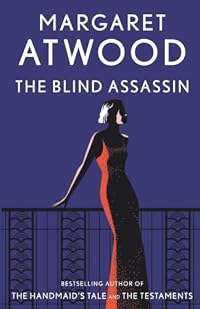
The Blind Assassin
by Margaret Atwood
On This Page
Description
From the #1 New York Times bestselling author of The Handmaid's Tale WINNER OF THE BOOKER PRIZE In The Blind Assassin, Margaret Atwood weaves together strands of gothic suspense, romance, and science fiction into one utterly spellbinding narrative. The novel begins with the mysterious death--a possible suicide--of a young woman named Laura Chase in 1945. Decades later, Laura's sister Iris recounts her memories of their childhood, and of the dramatic deaths that have punctuated their show more wealthy, eccentric family's history. Intertwined with Iris's account are chapters from the scandalous novel that made Laura famous, in which two illicit lovers amuse each other by spinning a tale of a blind killer on a distant planet. These richly layered stories-within-stories gradually illuminate the secrets that have long haunted the Chase family, coming together in a brilliant and astonishing final twist. show lessTags
Recommendations

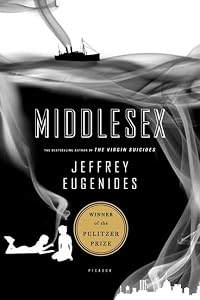
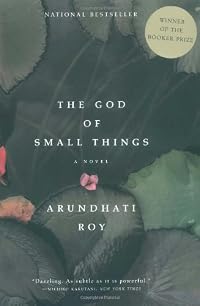
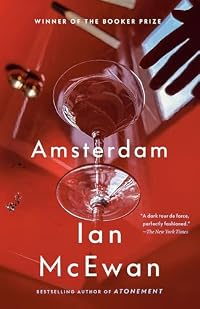
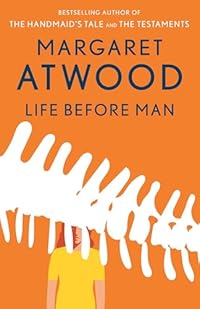
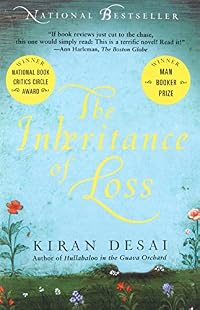
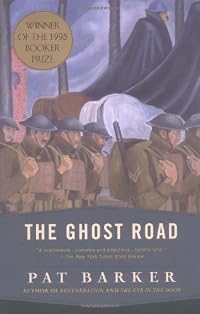
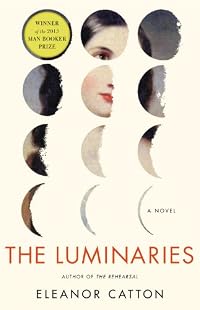
Member Recommendations
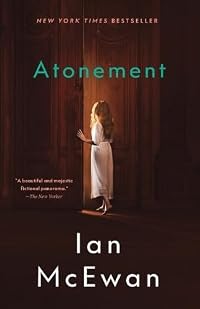
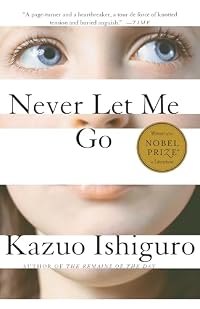
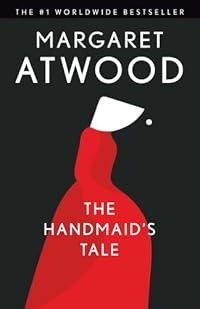
browner56 Two superbly crafted explorations of the cathartic power that comes from the act of writing.
192
djmccord73 family history, secrets
Also recommended by jhedlund
41

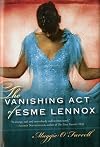

KayCliff Laura Chase in The Blind Assassin falls to her death from a bridge over a ravine, just as Stella falls to hers from a roof. The Blind Assassin is concerned with finding out why Laura fell, with newspaper reports given, excerpts from a novel quoted, and passages of
narration from Laura's sister -- all out of chronological sequence; just as the cause of Stella's fall is sought through Ullmann's novel by a variety of narrators, with excerpts from a video, all simililarly out of chronological order. Both Stella and Laura act as nurses, and fall prey to unprincipled men. Both novels include a pair of sisters whose mother dies when they are young, leaving the elder girl to take care of the younger; children with absent or unknown fathers; and someone very old, near to their own death, who loved
Laura/Stella. Laura's sister fancies, `there was no floor to my room: I was suspended in the air, about to plummet. My fall would be endless -- endlessly down'. Stella's daughter tells her sister, `Mama fell off a roof, Mama's falling still. She falls and falls and never hits the ground'.
10
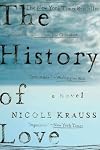
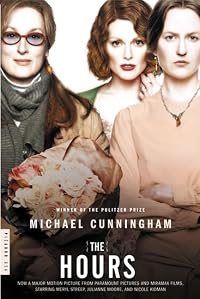
PrincessPaulina Main characters are seniors, reexamining their biographies at the end of their lives.
33

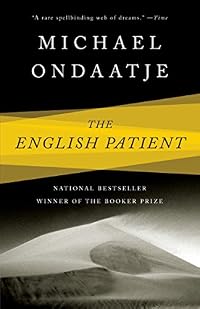
electronicmemory Two books that are slow, close character studies of our protagonists. They both have lovely prose, vivid imagery and nuance.
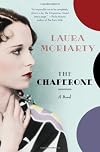
thea-block Pictures of the whole a woman's life, exploring how early decisions effect the rest of their lives.
11
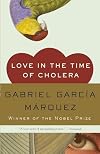
electronicmemory Historical settings come alive in these novels about the complexities of life among close-knit high society social circles.
34

PghDragonMan Deception is layered on deception until even the truth looks false.
02
Member Reviews
Matter-of-factly we’re given the moment that the main character’s life changed forever, but as we follow the narration of her life as well as insertions of the titular fictional novel things don’t seem so clear. The Blind Assassin by Margaret Atwood is a novel within a novel—with another novel within the first—historical fiction whose multilayered unfolding mystery is peeled away until everything falls into place just as you get to the end of the book.
An elderly Iris Chase Griffin pens her autobiography that also is a biography of her famous sister Laura, whose posthumous novel the titular The Blind Assassin has a cult status in literary circles. While Iris’ biographical narration is the bulk of the novel, Atwood includes show more faux news articles and insertions from The Blind Assassin. But its these insertions from this novel within the novel begin revealing a different version of history of Laura’s life as well as Iris’ which would have surprised her deceased daughter who had been estranged from her. Atwood’s layered writing of biography, pulp fiction, and newspaper reports with subtle misdirection in the beginning and subtle revealing throughout the book creates a very engaging read that keeps the reader wanting to find out what really happened. Honestly, it was only in research after finishing that I learned of the Canadian history that Atwood wove into the narrative after thinking that the various real life individuals name dropped were fictional thus making me not understand the importance of some of the political talk—thanks to Iris’ politically ambitious husband—that was occurring within the novel.
The Blind Assassin was my first Margaret Atwood work and after finishing it, I can say that it will not be my last. show less
An elderly Iris Chase Griffin pens her autobiography that also is a biography of her famous sister Laura, whose posthumous novel the titular The Blind Assassin has a cult status in literary circles. While Iris’ biographical narration is the bulk of the novel, Atwood includes show more faux news articles and insertions from The Blind Assassin. But its these insertions from this novel within the novel begin revealing a different version of history of Laura’s life as well as Iris’ which would have surprised her deceased daughter who had been estranged from her. Atwood’s layered writing of biography, pulp fiction, and newspaper reports with subtle misdirection in the beginning and subtle revealing throughout the book creates a very engaging read that keeps the reader wanting to find out what really happened. Honestly, it was only in research after finishing that I learned of the Canadian history that Atwood wove into the narrative after thinking that the various real life individuals name dropped were fictional thus making me not understand the importance of some of the political talk—thanks to Iris’ politically ambitious husband—that was occurring within the novel.
The Blind Assassin was my first Margaret Atwood work and after finishing it, I can say that it will not be my last. show less
This was the first Atwood I ever attempted (a few years back) and I just wasn’t ready for it. I got about 50 pages in and put it down and that’s always bothered me. Now that I have a few other Atwood’s under my belt, I felt compelled to try it again and I’m glad I did. It’s not a book to be rushed through, the story is too rich. You need to be able to settle in and just wander through it.
First we meet Iris Chase, an elderly woman reminiscing about her sister, Laura, who killed herself at the end of WWII. Iris is bitter and harsh and at first we don’t know why. Slowly she tells us the story of her wealthy family, her unhappy marriage, her troubled sister and more. As her tale unfolds we are given bits and pieces of a show more fictional novel written by Laura and published posthumously. That sci-fi book, titled The Blind Assassin, reveals even larger insights into the Chase family and their complicated lives.
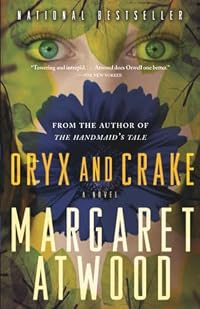
For me, this Atwood falls somewhere in the middle of the books I’ve read of her’s. It’s not as brilliant as The Haidmaid’s Tale, but I liked it more than Oryx and Crake. She has a wonderful way with words and she breathes such beauty into all of her novels. She also gives the reader a lot to process. The “big reveal” of this book was no surprise (to me at least), but instead, Atwood carefully gives you more and more pieces to the puzzle and allows you to form your own conclusions as the picture begins to take shape. It’s a good read and one that has cemented my appreciation for the depth of Atwood’s work.
“The only way you can write the truth is to assume that what you set down will never be read, not by anyone other person and not even by yourself at some later date.”
“Romance is looking in at yourself, through a window clouded with dew. Romance means leaving things out: where life grunts and snuffles, romance only sighs.” show less
First we meet Iris Chase, an elderly woman reminiscing about her sister, Laura, who killed herself at the end of WWII. Iris is bitter and harsh and at first we don’t know why. Slowly she tells us the story of her wealthy family, her unhappy marriage, her troubled sister and more. As her tale unfolds we are given bits and pieces of a show more fictional novel written by Laura and published posthumously. That sci-fi book, titled The Blind Assassin, reveals even larger insights into the Chase family and their complicated lives.
For me, this Atwood falls somewhere in the middle of the books I’ve read of her’s. It’s not as brilliant as The Haidmaid’s Tale, but I liked it more than Oryx and Crake. She has a wonderful way with words and she breathes such beauty into all of her novels. She also gives the reader a lot to process. The “big reveal” of this book was no surprise (to me at least), but instead, Atwood carefully gives you more and more pieces to the puzzle and allows you to form your own conclusions as the picture begins to take shape. It’s a good read and one that has cemented my appreciation for the depth of Atwood’s work.
“The only way you can write the truth is to assume that what you set down will never be read, not by anyone other person and not even by yourself at some later date.”
“Romance is looking in at yourself, through a window clouded with dew. Romance means leaving things out: where life grunts and snuffles, romance only sighs.” show less
The Blind Assassin is, quite simply, one of the best books I have ever read. It is a matryoshka doll of stories. At first, I was wondering what the stories had to do with one another, but it soon becomes obvious that they are multi-layered and interrelated.
Protagonist Iris is writing her memoir in 1999, looking back on events that took place during the 1930’s and 1940’s. News articles are inserted periodically to provide an exterior perspective. It is a story of Iris and her younger sister, Laura, who grow up in a privileged family. The patriarch experiences setbacks due to the Great Depression, and needs an infusion of cash, so he arranges a marriage between Iris and a wealthy industrialist. The sisters meet a working-class labor show more activist, who is blamed for an incendiary incident.
A science fiction story, told by a man to his lover, is interwoven into the memoir, along with a narrative of what is going on in Iris’s life in the present. The narrative requires the reader’s active engagement, constantly thinking and evaluating, fitting the puzzle pieces together, until the full picture emerges at the end.
Though a structural device is employed, there are multiple strong storylines supporting it. Atwood does not just add an artificial structure for its own sake. As the story progresses, various clues are revealed. The reader’s interpretation of these clues changes the meaning of events that came before. It is Margaret Atwood at her finest. Just brilliant! show less
Protagonist Iris is writing her memoir in 1999, looking back on events that took place during the 1930’s and 1940’s. News articles are inserted periodically to provide an exterior perspective. It is a story of Iris and her younger sister, Laura, who grow up in a privileged family. The patriarch experiences setbacks due to the Great Depression, and needs an infusion of cash, so he arranges a marriage between Iris and a wealthy industrialist. The sisters meet a working-class labor show more activist, who is blamed for an incendiary incident.
A science fiction story, told by a man to his lover, is interwoven into the memoir, along with a narrative of what is going on in Iris’s life in the present. The narrative requires the reader’s active engagement, constantly thinking and evaluating, fitting the puzzle pieces together, until the full picture emerges at the end.
Though a structural device is employed, there are multiple strong storylines supporting it. Atwood does not just add an artificial structure for its own sake. As the story progresses, various clues are revealed. The reader’s interpretation of these clues changes the meaning of events that came before. It is Margaret Atwood at her finest. Just brilliant! show less
I know she's one of the Most Important Living Novelists and everything, but historically I've been kind of lukewarm about Margaret Atwood's work. The Handmaid's Tale is obviously important to read, and makes a point with which I agree, but it makes it in a way that feels like being hit over the head with a shovel. The only other Atwood novel I've read - The Edible Woman - left me similarly unsatisfied. So I was especially glad that I decided to give The Blind Assassin a chance, because oh man, I loved it. It was one of those books that I cursed every morning for keeping me up until one in the morning, even when I knew I had to get up at six. And then, even while cursing it, I would try to read a few pages before setting off for work. show more
This novel had all the elements that make reading nourishing for me: lovely, flowing prose, thought-provoking metaphors, a compelling authorial voice. On top of that, the characters were intriguing and the plot was ingeniously constructed in several interrelated parts (a "book within a book," as well as various newspaper articles and pieces of correspondence) that shifted their apparent relation to one another as the narrative progressed. Beginning with an old woman recalling her sister, a series of newspaper obituaries, and the perhaps-fictional story of two anonymous lovers making up stories together, the novel twists and turns its way towards a conclusion that's gut-wrenching, yet satisfying. Atwood's feminist passion is still here, but it's incorporated more smoothly and less didactically than in either of her other novels I've read, and is just one part of a seamless, enthralling story. Reading The Blind Assassin inspires me to pick up some of Atwood's other more recent fiction, and it's always lovely to discover that such a prolific author holds riches for me, after all. show less
This novel had all the elements that make reading nourishing for me: lovely, flowing prose, thought-provoking metaphors, a compelling authorial voice. On top of that, the characters were intriguing and the plot was ingeniously constructed in several interrelated parts (a "book within a book," as well as various newspaper articles and pieces of correspondence) that shifted their apparent relation to one another as the narrative progressed. Beginning with an old woman recalling her sister, a series of newspaper obituaries, and the perhaps-fictional story of two anonymous lovers making up stories together, the novel twists and turns its way towards a conclusion that's gut-wrenching, yet satisfying. Atwood's feminist passion is still here, but it's incorporated more smoothly and less didactically than in either of her other novels I've read, and is just one part of a seamless, enthralling story. Reading The Blind Assassin inspires me to pick up some of Atwood's other more recent fiction, and it's always lovely to discover that such a prolific author holds riches for me, after all. show less
The Blind Assassin is, quite simply, one of the best books I have ever read. It is a matryoshka doll of stories. At first, I was wondering what the stories had to do with one another, but it soon becomes obvious that they are multi-layered and interrelated.
Protagonist Iris is writing her memoir in 1999, looking back on events that took place during the 1930’s and 1940’s. News articles are inserted periodically to provide an exterior perspective. It is a story of Iris and her younger sister, Laura, who grow up in a privileged family. The patriarch experiences setbacks due to the Great Depression, and needs an infusion of cash, so he arranges a marriage between Iris and a wealthy industrialist. The sisters meet a working-class labor show more activist, who is blamed for an incendiary incident.
A science fiction story, told by a man to his lover, is interwoven into the memoir, along with a narrative of what is going on in Iris’s life in the present. The narrative requires the reader’s active engagement, constantly thinking and evaluating, fitting the puzzle pieces together, until the full picture emerges at the end.
Though a structural device is employed, there are multiple strong storylines supporting it. Atwood does not just add an artificial structure for its own sake. As the story progresses, various clues are revealed. The reader’s interpretation of these clues changes the meaning of events that came before. It is Margaret Atwood at her finest. Just brilliant! show less
Protagonist Iris is writing her memoir in 1999, looking back on events that took place during the 1930’s and 1940’s. News articles are inserted periodically to provide an exterior perspective. It is a story of Iris and her younger sister, Laura, who grow up in a privileged family. The patriarch experiences setbacks due to the Great Depression, and needs an infusion of cash, so he arranges a marriage between Iris and a wealthy industrialist. The sisters meet a working-class labor show more activist, who is blamed for an incendiary incident.
A science fiction story, told by a man to his lover, is interwoven into the memoir, along with a narrative of what is going on in Iris’s life in the present. The narrative requires the reader’s active engagement, constantly thinking and evaluating, fitting the puzzle pieces together, until the full picture emerges at the end.
Though a structural device is employed, there are multiple strong storylines supporting it. Atwood does not just add an artificial structure for its own sake. As the story progresses, various clues are revealed. The reader’s interpretation of these clues changes the meaning of events that came before. It is Margaret Atwood at her finest. Just brilliant! show less
“All stories are about wolves… Anything else is sentimental drivel.”
Atwood doesn’t write sentimental drivel (and I don’t read it), and there are several wolves in this stunning book. This is my tenth Atwood, and it’s even better than any of the others I’ve enjoyed. The scope and variety of her work is impressive, but here, she accomplishes that within the covers of a single book: it should be shelved as historical fiction, memoir, espionage/thriller, and sci-fi.
It grabs the reader in the first brief chapter (less than three pages), which would work as a short story: so much is implied, but so little stated, you can’t help but read on, eagerly. This also sets a pattern of foreshadowing: you know many key events long show more before they “happen”, but have to wait and think to find out how and why.
The pacing is perfect, too. I guessed some crucial elements well before they were revealed, but there was enticing uncertainty, and always another conundrum in the pipeline. This creates a pleasing balance between pride and doubt in the reader.
Matryoshka – stories within stories
The analogy with a nest of Russian dolls applies far more to this than David Mitchell’s Cloud Atlas. The different layers constantly switch, but it’s never confusing:
1. Iris, the narrator, is an elderly woman, describing her daily life, with a backdrop of weather, seasons, and fear of losing independence. It's painfully poignant, lightened with waspish and often self-deprecating humour.
2. Iris also tells the story of her life and that of her sister (Laura), from childhood to the “present” day, with a backdrop of two world wars, the Depression, and political/union unrest. Born to wealth and respectability, but lacking parental love, their lives – and relationship with each other - take many turns. This is the main bulk of the story: historical fiction, sweeping most of the 20th century, set in SE Canada.
3. As a young woman, Laura drives off a bridge (not a spoiler; it’s in the first sentence of the book), and a few years later, after going through Laura’s papers, Iris publishes her novel “Blind Assassin”, excerpts of which are in this book of the same name. It’s the story of a pair of covert lovers, each with secrets and something to lose. He is short of money, constantly on the move. Clandestine meetings in a series of seedy bedsits and borrowed rooms are hard to arrange. The vague politics of this overlap with the specific labour unrest in the main story.
4. Within that novel, the nameless man, a writer of pulp sci-fi, tells stories of planet Zyrcon to the nameless woman. The title of both books comes from the fact that slave children are trained to create beautiful carpets – to the point at which they go blind. Some then go into the sex trade, and some become assassins. This then, is a pastiche, of a "lowbrow" genre, rather than the speculative fiction Atwood often writes, and is meant to echo the politics of its fictional author (are you still following this?).
5. The world of Zyrcon has its own myths, some of which are told. There are parallels with ancient cultures on Earth.
In addition, there are occasional newspaper reports, and the odd letter from a school or doctor.
This is a brave format that could alienate readers who like one style/genre and dislike another, but I think it worked very well, in part because most chapters are short, so you never feel trapped in a style that is not your favourite. I paid a little less attention to the details of what happened on Zycron, but that was mainly because I was so anxious to know what happened to Iris and Laura. On a reread, I would study Zycron more closely, to see the parallels with the stories around it. (I made a similar mistake with the historical chapters of people and gods coming to America, in Gaiman's American Gods, which I reviewed HERE.)
Warning to Apatt: Some of the sections use quotation marks and some don’t (it didn’t bother me, though).
The Title
The title clearly refers to the novel within the novel of that name, and which features assassins who are literally blind. However, there are other characters in the "real" stories who could be classed as such, in a more metaphorical sense. Few characters are troubled by guilt, though.
Aging Iris
Iris is a wonderful creation: old, cranky, lonely, feisty, sharp, and something of an outsider all her life, even from her own family. She grudgingly accepts a modicum of help from Myra and Walter: “I am what makes her so good in the eyes of others”; Iris carries her laundry like Little Red Riding Hood “except that I myself am Granny, and I contain my own bad wolf”. Nevertheless, she resists as much as she can, while painfully noting the effects of time on her body.
“I feel like a letter – deposited here, collected there. But a letter addressed to no one.”
“I yearn for sleep… yet it flutters ahead of me like a sooty curtain.”
“After having imposed itself on us like the egomaniac it is… [the body’s] final trick is simply to absent itself.”
For all that Iris cultivates curmudgeonliness, it’s largely a carapace, and sometimes for entertainment (sarcastic letters to fans of The Blind Assassin, wanting to interview her about Laura); the really nasty piece of work is her arriviste sister-in-law, Winifred.
Youthful Laura
Laura doesn’t live to be old. She’s an enigma as a child, and more so after death – to Iris and the reader. “Nothing is more difficult than to understand the dead… Nothing is more dangerous than to ignore them.”
Iris assembles a series of impressions, but you can never quite grasp her – which is entirely appropriate: Laura was “interested in forms” and “wanted essences”, but not in facts and logic – and yet she was a literalist with “a heightened capacity for belief”.
“Being Laura was like being tone deaf: the music played and you heard something, but it wasn’t what everyone else heard.”
She was “too cozy with strangers… It wasn’t that she flouted rules: she simply forgot about them.” Hence, she “had only the haziest notions of ownership”. She “was not selfless… she was skinless”. Unlike Iris, she had the courage of her (decidedly odd) convictions and didn’t care what other people thought.
Sisters sharing
There is an essay to be written on what Laura and Iris share - and what they don't. It's not just the obvious things.
Class: Winifred and Richard
Snobbery, especially looking down on new money, is not just a British ailment. Iris and Laura were the granddaughters of a wealthy industrialist who married above himself, gaining respectability for the family.
Iris’s husband, Richard, is very new money. His ghastly sister runs his life (as well as lots of charity committees) and then moulds and controls young, newlywed Iris. “Her [teaching] method was one of hint, suggestion.” So “I seemed to myself erased, featureless, like an avalanche of used soap, or the moon on the wane”.
As Iris matures, she increasingly sees through this and resists or retaliates, and of course she’s telling it with the wisdom of old age. It’s amusingly, but painfully catty. “You could be charming… with a little effort”.
“Avilion [the family home] had once had an air of stability that amounted to intransigence”, but after Winifred and Richard refurbish it, “it no longer had the courage of its pretensions”. Overdoing it somewhat, Atwood adds between those two phrases, “a large, dumpy boulder plunked [sic] down in the stream of time, refusing to be moved for anybody – but now it was dog-eared, apologetic, as if it were about to collapse in on itself”!
Richard is a shadowy (in every sense) figure – something Iris/Atwood acknowledges. “As the days went by I felt I knew Richard less and less… I myself however was taking shape – the shape intended for me, by him… coloured in.” Later, “I’ve failed to convey Richard, in any rounded sense… He’s blurred, like the face in some wet, discarded newspaper.”
In their marriage, “Placidity and order… with a decorous and sanctioned violence… underneath” because he “preferred conquest to cooperation in every area of life”. Chillingly, “It was remarkable how easily I bruised, said Richard, smiling.”
Classless?
Alex Thomas is classless: his background, even if you believe his own account (child refugee of unknown family) gives no clue. That might enable him to fit in anywhere, but really, he's alien everywhere (not in a literal, lizardy sense).
Green
In The Handmaid’s Tale, red is a recurring colour. Here, it’s green, often for clothing, and occasionally in conjunction with the colour watermelon. However, the symbolism isn’t as clear here as in Handmaid; it’s usually related to coldness, rather than jealousy. A few examples (out of more than twenty!):
• “Her slip is the chill green of shore ice, broken ice.”
• “Sober colours… hospital-corridor green” (Laura’s typical attire).
• Richard chose an emerald engagement ring (though his sister, Winifred, overruled that, so he proffered a diamond).
• Just before a tornado, “the sky had turned a baleful shade of green”.
• A bombe desert at dinner was “bright green” and honeymoon salad “tasted like pale-green water… Like frost”.
Quotes – truth, secrets, memory, writing
After years of negligible education, the girls have a fierce new tutor, “We did learn, in a spirit of vengefulness… What we really learned from him was how to cheat” as well as “silent resistance… and not getting caught”. Useful skills.
• “It’s not the lying that counts, it’s evading the necessity for it.”
• “The best way to keep a secret is to pretend there isn’t one.”
• Secret lovers “proclaiming love, withholding the particulars”.
• “It was an effort for me now to recall the details of my grief – the exact forms it had taken – although at will I could summon up an echo of it.”
• “Is what I remember the same things as what actually happened?”
• “The only way you can write the truth is to assume that what you set down will never be read… not even by yourself.”
• Looking back at her wedding photo, “I don’t recall having been present… I and the girl in the picture have ceased to be the same person. I am her outcome… I can see her… but she can’t see me.”
Quotes – weather, seasons, nature
• “The light like melted butter… trees with exhausted leaves.”
• In a park, “disregarded corners… leggy dandelions stretching towards the light”.
• “Light filtered through the net curtain, hanging suspended in the air, sediment in a pond.”
• When hot and humid, “The words I write feather at the edges like lipstick on an aging mouth”.
• “The sky was a hazy grey, the sun low in the sky, a wan pinkish colour, like fish blood. Icicles… as if suspended in the act of falling.”
• “Wild geese… creaking like anguished hinges.”
• “Grudging intimations of spring.”
Quotes - other
• “Only the blind are free.” A blind assassin “sees through the girl’s clothing with the inner eye that is the bliss of solitude”.
• “There’s nothing like a shovelful of dirt to encourage literacy”. I guess EL James proves that.
• Tourist trinkets: “History… was never this winsome, and especially not this clean”.
• “The other side of selflessness is tyranny.” and “He can’t have found living with her forgiveness all that easy.”
• The mother of a difficult baby “lost altitude… lost resilience”, so the sibling found “silence, helpfulness the only way to fit in”.
• “She has a soft dense mouth like a waterlogged velvet cushion and tapered fingers deft as a fish.”
• “Children believe that everything bad that happens is their fault…but they also believe in happy endings.”
• “Dowdy to the point of pain.”
• “A black dress, simply cut but voraciously elegant.”
• “Beginnings are sudden, but also insidious. They creep up on you sideways, they keep to the shadows, they lurk unrecognized. Then, later, they spring.”
• On a virgin’s bed, “The arctic waste of starched white bedsheet stretched out to infinity.”
• “Touch comes before speech. It is the first language and the last, and it always tells the truth.”
• A flashy lawyer's office has “an abstract painting compose of pricey smudges… they bill by the minute… just like the cheaper whores.”
• Shaving and plucking to create “A topography like wet clay, a surface the hands would glide over.”
• Downtrodden people are “Broken verbs.”
• The kettle “began its lullaby of steam”.
• In a seedy hotel, “wallpaper, no longer any colour”.
• “He killed things by chewing off their roots.”
• “Unshed tears can turn you rancid.” show less
Atwood doesn’t write sentimental drivel (and I don’t read it), and there are several wolves in this stunning book. This is my tenth Atwood, and it’s even better than any of the others I’ve enjoyed. The scope and variety of her work is impressive, but here, she accomplishes that within the covers of a single book: it should be shelved as historical fiction, memoir, espionage/thriller, and sci-fi.
It grabs the reader in the first brief chapter (less than three pages), which would work as a short story: so much is implied, but so little stated, you can’t help but read on, eagerly. This also sets a pattern of foreshadowing: you know many key events long show more before they “happen”, but have to wait and think to find out how and why.
The pacing is perfect, too. I guessed some crucial elements well before they were revealed, but there was enticing uncertainty, and always another conundrum in the pipeline. This creates a pleasing balance between pride and doubt in the reader.
Matryoshka – stories within stories
The analogy with a nest of Russian dolls applies far more to this than David Mitchell’s Cloud Atlas. The different layers constantly switch, but it’s never confusing:
1. Iris, the narrator, is an elderly woman, describing her daily life, with a backdrop of weather, seasons, and fear of losing independence. It's painfully poignant, lightened with waspish and often self-deprecating humour.
2. Iris also tells the story of her life and that of her sister (Laura), from childhood to the “present” day, with a backdrop of two world wars, the Depression, and political/union unrest. Born to wealth and respectability, but lacking parental love, their lives – and relationship with each other - take many turns. This is the main bulk of the story: historical fiction, sweeping most of the 20th century, set in SE Canada.
3. As a young woman, Laura drives off a bridge (not a spoiler; it’s in the first sentence of the book), and a few years later, after going through Laura’s papers, Iris publishes her novel “Blind Assassin”, excerpts of which are in this book of the same name. It’s the story of a pair of covert lovers, each with secrets and something to lose. He is short of money, constantly on the move. Clandestine meetings in a series of seedy bedsits and borrowed rooms are hard to arrange. The vague politics of this overlap with the specific labour unrest in the main story.
4. Within that novel, the nameless man, a writer of pulp sci-fi, tells stories of planet Zyrcon to the nameless woman. The title of both books comes from the fact that slave children are trained to create beautiful carpets – to the point at which they go blind. Some then go into the sex trade, and some become assassins. This then, is a pastiche, of a "lowbrow" genre, rather than the speculative fiction Atwood often writes, and is meant to echo the politics of its fictional author (are you still following this?).
5. The world of Zyrcon has its own myths, some of which are told. There are parallels with ancient cultures on Earth.
In addition, there are occasional newspaper reports, and the odd letter from a school or doctor.
This is a brave format that could alienate readers who like one style/genre and dislike another, but I think it worked very well, in part because most chapters are short, so you never feel trapped in a style that is not your favourite. I paid a little less attention to the details of what happened on Zycron, but that was mainly because I was so anxious to know what happened to Iris and Laura. On a reread, I would study Zycron more closely, to see the parallels with the stories around it. (I made a similar mistake with the historical chapters of people and gods coming to America, in Gaiman's American Gods, which I reviewed HERE.)
Warning to Apatt: Some of the sections use quotation marks and some don’t (it didn’t bother me, though).
The Title
The title clearly refers to the novel within the novel of that name, and which features assassins who are literally blind. However, there are other characters in the "real" stories who could be classed as such, in a more metaphorical sense. Few characters are troubled by guilt, though.
Aging Iris
Iris is a wonderful creation: old, cranky, lonely, feisty, sharp, and something of an outsider all her life, even from her own family. She grudgingly accepts a modicum of help from Myra and Walter: “I am what makes her so good in the eyes of others”; Iris carries her laundry like Little Red Riding Hood “except that I myself am Granny, and I contain my own bad wolf”. Nevertheless, she resists as much as she can, while painfully noting the effects of time on her body.
“I feel like a letter – deposited here, collected there. But a letter addressed to no one.”
“I yearn for sleep… yet it flutters ahead of me like a sooty curtain.”
“After having imposed itself on us like the egomaniac it is… [the body’s] final trick is simply to absent itself.”
For all that Iris cultivates curmudgeonliness, it’s largely a carapace, and sometimes for entertainment (sarcastic letters to fans of The Blind Assassin, wanting to interview her about Laura); the really nasty piece of work is her arriviste sister-in-law, Winifred.
Youthful Laura
Laura doesn’t live to be old. She’s an enigma as a child, and more so after death – to Iris and the reader. “Nothing is more difficult than to understand the dead… Nothing is more dangerous than to ignore them.”
Iris assembles a series of impressions, but you can never quite grasp her – which is entirely appropriate: Laura was “interested in forms” and “wanted essences”, but not in facts and logic – and yet she was a literalist with “a heightened capacity for belief”.
“Being Laura was like being tone deaf: the music played and you heard something, but it wasn’t what everyone else heard.”
She was “too cozy with strangers… It wasn’t that she flouted rules: she simply forgot about them.” Hence, she “had only the haziest notions of ownership”. She “was not selfless… she was skinless”. Unlike Iris, she had the courage of her (decidedly odd) convictions and didn’t care what other people thought.
Sisters sharing
There is an essay to be written on what Laura and Iris share - and what they don't. It's not just the obvious things.
Class: Winifred and Richard
Snobbery, especially looking down on new money, is not just a British ailment. Iris and Laura were the granddaughters of a wealthy industrialist who married above himself, gaining respectability for the family.
Iris’s husband, Richard, is very new money. His ghastly sister runs his life (as well as lots of charity committees) and then moulds and controls young, newlywed Iris. “Her [teaching] method was one of hint, suggestion.” So “I seemed to myself erased, featureless, like an avalanche of used soap, or the moon on the wane”.
As Iris matures, she increasingly sees through this and resists or retaliates, and of course she’s telling it with the wisdom of old age. It’s amusingly, but painfully catty. “You could be charming… with a little effort”.
“Avilion [the family home] had once had an air of stability that amounted to intransigence”, but after Winifred and Richard refurbish it, “it no longer had the courage of its pretensions”. Overdoing it somewhat, Atwood adds between those two phrases, “a large, dumpy boulder plunked [sic] down in the stream of time, refusing to be moved for anybody – but now it was dog-eared, apologetic, as if it were about to collapse in on itself”!
Richard is a shadowy (in every sense) figure – something Iris/Atwood acknowledges. “As the days went by I felt I knew Richard less and less… I myself however was taking shape – the shape intended for me, by him… coloured in.” Later, “I’ve failed to convey Richard, in any rounded sense… He’s blurred, like the face in some wet, discarded newspaper.”
In their marriage, “Placidity and order… with a decorous and sanctioned violence… underneath” because he “preferred conquest to cooperation in every area of life”. Chillingly, “It was remarkable how easily I bruised, said Richard, smiling.”
Classless?
Alex Thomas is classless: his background, even if you believe his own account (child refugee of unknown family) gives no clue. That might enable him to fit in anywhere, but really, he's alien everywhere (not in a literal, lizardy sense).
Green
In The Handmaid’s Tale, red is a recurring colour. Here, it’s green, often for clothing, and occasionally in conjunction with the colour watermelon. However, the symbolism isn’t as clear here as in Handmaid; it’s usually related to coldness, rather than jealousy. A few examples (out of more than twenty!):
• “Her slip is the chill green of shore ice, broken ice.”
• “Sober colours… hospital-corridor green” (Laura’s typical attire).
• Richard chose an emerald engagement ring (though his sister, Winifred, overruled that, so he proffered a diamond).
• Just before a tornado, “the sky had turned a baleful shade of green”.
• A bombe desert at dinner was “bright green” and honeymoon salad “tasted like pale-green water… Like frost”.
Quotes – truth, secrets, memory, writing
After years of negligible education, the girls have a fierce new tutor, “We did learn, in a spirit of vengefulness… What we really learned from him was how to cheat” as well as “silent resistance… and not getting caught”. Useful skills.
• “It’s not the lying that counts, it’s evading the necessity for it.”
• “The best way to keep a secret is to pretend there isn’t one.”
• Secret lovers “proclaiming love, withholding the particulars”.
• “It was an effort for me now to recall the details of my grief – the exact forms it had taken – although at will I could summon up an echo of it.”
• “Is what I remember the same things as what actually happened?”
• “The only way you can write the truth is to assume that what you set down will never be read… not even by yourself.”
• Looking back at her wedding photo, “I don’t recall having been present… I and the girl in the picture have ceased to be the same person. I am her outcome… I can see her… but she can’t see me.”
Quotes – weather, seasons, nature
• “The light like melted butter… trees with exhausted leaves.”
• In a park, “disregarded corners… leggy dandelions stretching towards the light”.
• “Light filtered through the net curtain, hanging suspended in the air, sediment in a pond.”
• When hot and humid, “The words I write feather at the edges like lipstick on an aging mouth”.
• “The sky was a hazy grey, the sun low in the sky, a wan pinkish colour, like fish blood. Icicles… as if suspended in the act of falling.”
• “Wild geese… creaking like anguished hinges.”
• “Grudging intimations of spring.”
Quotes - other
• “Only the blind are free.” A blind assassin “sees through the girl’s clothing with the inner eye that is the bliss of solitude”.
• “There’s nothing like a shovelful of dirt to encourage literacy”. I guess EL James proves that.
• Tourist trinkets: “History… was never this winsome, and especially not this clean”.
• “The other side of selflessness is tyranny.” and “He can’t have found living with her forgiveness all that easy.”
• The mother of a difficult baby “lost altitude… lost resilience”, so the sibling found “silence, helpfulness the only way to fit in”.
• “She has a soft dense mouth like a waterlogged velvet cushion and tapered fingers deft as a fish.”
• “Children believe that everything bad that happens is their fault…but they also believe in happy endings.”
• “Dowdy to the point of pain.”
• “A black dress, simply cut but voraciously elegant.”
• “Beginnings are sudden, but also insidious. They creep up on you sideways, they keep to the shadows, they lurk unrecognized. Then, later, they spring.”
• On a virgin’s bed, “The arctic waste of starched white bedsheet stretched out to infinity.”
• “Touch comes before speech. It is the first language and the last, and it always tells the truth.”
• A flashy lawyer's office has “an abstract painting compose of pricey smudges… they bill by the minute… just like the cheaper whores.”
• Shaving and plucking to create “A topography like wet clay, a surface the hands would glide over.”
• Downtrodden people are “Broken verbs.”
• The kettle “began its lullaby of steam”.
• In a seedy hotel, “wallpaper, no longer any colour”.
• “He killed things by chewing off their roots.”
• “Unshed tears can turn you rancid.” show less
I consciously chose this as my second Atwood novel in a year based on advice from Atwood fans after reading "Oryx and Crake" and asking which of her novels I should read next. Good call from those who recommended it, as I can now say I am an Atwood fan too.
From that arresting first line, this is a real slow burner of a novel that rewards patient reading. The structure seems convoluted but get to the end and one understands why Atwood chose to construct the novel in this manner. As I listened to it on audiobook, I thought I'd struggle with it, but actually it was no problem at all.
For me, it is Iris's narrative voice that made the novel, as did Snowman's in "Oryx and Crake". Cantankerous old Iris seemed very rounded and real to me as she show more unsentimentally unfolds the depressing details of her life.
As a vintage sci-fi reader myself, I didn't find the novel within a novel intimidating, it's actually a very good pastiche of mid-20th century sci-fi writing. show less
From that arresting first line, this is a real slow burner of a novel that rewards patient reading. The structure seems convoluted but get to the end and one understands why Atwood chose to construct the novel in this manner. As I listened to it on audiobook, I thought I'd struggle with it, but actually it was no problem at all.
For me, it is Iris's narrative voice that made the novel, as did Snowman's in "Oryx and Crake". Cantankerous old Iris seemed very rounded and real to me as she show more unsentimentally unfolds the depressing details of her life.
As a vintage sci-fi reader myself, I didn't find the novel within a novel intimidating, it's actually a very good pastiche of mid-20th century sci-fi writing. show less
Members
- Recently Added By
Published Reviews
ThingScore 82
Die Lebensgeschichte der Iris hebt sich wohltuend von jenen Romanen ab, die junge Frauen der 'besseren' Gesellschaft nach einer privilegierten Kindheit in ein Erwachsenendasein ohne Brüche und Krisen führen. Dennoch ist es schade, dass Margaret Atwood ihrer Heldin letztlich so wenig 'Mumm' mitgibt - es müssen dreißig Jahre von Iris' Leben vergehen, bis sie zum ersten Mal show more aufbegehrt.
Margaret Atwood erzählt Iris' und Lauras Geschichte auf drei Ebenen: anhand von Iris' Rückblick, Lauras Manuskript und diversen Zeitungsausschnitten. Atwood hat mit "Der blinde Mörder" nicht nur die Geschichte eines Frauenlebens geschrieben, sondern auch einen historischen Roman, eine Liebesgeschichte, eine Sciencefiction-Story und die Geschichte zweier Schwestern. Sie belohnt das Interesse des Lesers mit einer Geschichte von außergewöhnlicher Dichte, der es gelingt, die sozialen, industriellen und politischen Ereignisse in einer kanadischen Kleinstadt nachzuzeichnen und eine Chronik des 20. Jahrhunderts darzustellen. show less
Margaret Atwood erzählt Iris' und Lauras Geschichte auf drei Ebenen: anhand von Iris' Rückblick, Lauras Manuskript und diversen Zeitungsausschnitten. Atwood hat mit "Der blinde Mörder" nicht nur die Geschichte eines Frauenlebens geschrieben, sondern auch einen historischen Roman, eine Liebesgeschichte, eine Sciencefiction-Story und die Geschichte zweier Schwestern. Sie belohnt das Interesse des Lesers mit einer Geschichte von außergewöhnlicher Dichte, der es gelingt, die sozialen, industriellen und politischen Ereignisse in einer kanadischen Kleinstadt nachzuzeichnen und eine Chronik des 20. Jahrhunderts darzustellen. show less
added by Indy133
Margaret Atwood poses a provocative question in her new novel, "The Blind Assassin." How much are the bad turns of one's life determined by things beyond our control, like sex and class, and how much by personal responsibility? Unlike most folks who raise this question so that they can wag their finger -- she's made her bed, and so on -- Atwood's foray into this moral terrain is complex and show more surprising. Far from preaching to the converted, Atwood's cunning tale assumes a like-minded reader only so that she can argue, quite persuasively, from the other side. show less
added by stephmo
In her tenth novel, Margaret Atwood again demonstrates that she has mastered the art of creating dense, complex fictions from carefully layered narratives, making use of an array of literary devices - flashbacks, multiple time schemes, ambiguous, indeterminate plots - and that she can hook her readers by virtue of her exceptional story-telling skills. The Blind Assassin is not a book that can show more easily be put to one side, in spite of its length and the fact that its twists and turns occasionally try the patience; yet it falls short of making the emotional impact that its suggestive and slippery plot at times promises. show less
added by stephmo
Lists

The Guardian's 1000 Novels Everyone Must Read
1,005 works; 549 members

1001 Books You Must Read Before You Die
1,448 works; 1,131 members

Best Historical Fiction
620 works; 258 members

Best Contemporary Literary Fiction (Around the Last 30 Years)
388 works; 123 members

Favourite Women's Prize for Fiction, Orange & Bailey's Prize contenders
132 works; 52 members

Best 21st Century Books (So Far)
670 works; 86 members
The Best of Canadian Literature
235 works; 32 members
Booker Prize
491 works; 62 members
20th Century Literature
1,161 works; 54 members
Favourite Booker Prize contenders
73 works; 21 members

Unread books
1,063 works; 87 members

Historical Fiction
889 works; 90 members

Female Author
1,235 works; 65 members

Top Five Books of 2013
1,564 works; 722 members

Recommend the 20 best books you've read in the last five years
2,167 works; 601 members

Books Set in Canada
80 works; 16 members

Slipstream or Interstitial Fiction
160 works; 19 members

Best Feminist Literature
188 works; 26 members

Best Psychological Fiction
81 works; 16 members
Female Protagonist
1,056 works; 56 members

Best Books With Sisters
130 works; 30 members

Metafiction
84 works; 21 members

Fiction Featuring Cranky, Eccentric Old Folks
80 works; 35 members
Favourite Books
1,817 works; 311 members

Unreliable Narrators
170 works; 43 members

Women's Stories
88 works; 13 members
501 Must-Read Books
508 works; 71 members

Favorite Science Fiction by Women Authors
737 works; 197 members
Time Magazine's "All-Time 100"
113 works; 15 members
Favorite Literary Love Stories
182 works; 100 members

Best books about books
209 works; 106 members
Best Family Stories
241 works; 22 members

Speculative Fiction: Slipstream Literature
166 works; 16 members

Best family sagas
244 works; 33 members

2000s (the decade, not the century)
184 works; 11 members
Books I've Read More Than Once
602 works; 49 members
Booker Prize Shortlist: Titles Read
103 works; 10 members
Love and Marriage
93 works; 10 members

Crime and Mysteries to Read
746 works; 31 members

Significant works of postmodern fiction
86 works; 24 members

Blue Pyramid 1,276 Best Books of All Time
1,248 works; 32 members
LibraryThingers' 1001 Books You Must Read Before You Die
442 works; 30 members

Story Within a Story
65 works; 17 members
International IMPAC Dublin Literary Award
179 works; 6 members

Top Five Books of 2015
811 works; 240 members

Experimental Literature
141 works; 18 members

Novels featuring siblings
133 works; 8 members

Survey of Science Fiction and Fantasy
101 works; 13 members
Literature About Women and Girls
391 works; 39 members

Top Five Books of 2022
736 works; 272 members

Top Five Books of 2014
1,064 works; 397 members
Love Triangles in Literature
108 works; 15 members
Writers as Characters in Fiction
120 works; 19 members
Time's All-Time 100 Novels
100 works; 27 members

Elena Ferrante's 40 favourite books by female authors
40 works; 10 members

Books Read in 2023
5,547 works; 145 members
Five star books
1,755 works; 108 members

Man Booker Prize Longlist 2000
6 works; 2 members
Recommended Speculative Fiction by Women and People of Color
298 works; 45 members

2000s decade
85 works; 7 members
Best Domestic Fiction
77 works; 6 members
Books tagged favorites
390 works; 30 members
Shannon's Read-Alikes List
71 works; 8 members

My E-Book Collection - Opinions Welcome
92 works; 10 members

Canada
42 works; 3 members
Retrospective of Historical Fiction
48 works; 7 members

Most Popular Books Tagged Ontario
35 works; 2 members

SHOULD Read Books!
354 works; 9 members

Speculative Fiction to Read
706 works; 32 members

Books Read in 2015
3,298 works; 129 members


Book-Themed Mysteries
21 works; 5 members

Secrets Books
94 works; 3 members

Books Read in 2008
335 works; 8 members

Books About Older People
50 works; 11 members

Most Popular Books Tagged Canada
34 works; 1 member

My Favourite Books
86 works; 5 members

Speculative Fiction: The Award Winners
27 works; 5 members

Women Writers
16 works; 2 members
BingoDOG - Genre Benders
74 works; 13 members
Books We Couldn't Put Down
443 works; 197 members

living room bookshelf
150 works; 1 member

Florida
366 works; 3 members

Books With the Most Memorable Titles
478 works; 158 members

AP Lit
363 works; 6 members
Canadian Historical Fiction 🇨🇦
157 works; 8 members

Books Read in 2013
1,629 works; 51 members

Books Read in 2021
5,361 works; 114 members
Literature About Suicide
24 works; 4 members

Around the World in 80 Books
79 works; 4 members

To Read
617 works; 7 members

Books Tagged Abuse
152 works; 4 members
Protagonists - Women
29 works; 2 members
Speculative Fiction
40 works; 2 members

Allie's Wishlist
217 works; 2 members

You Couldn't Pay Me to Read That (Take 2)
203 works; 86 members
Talk Discussions
Past Discussions
Group Read: The Blind Assassin in 1001 Books to read before you die (February 2011)
Author Information

Margaret Atwood was born on November 18, 1939 in Ottawa, Canada. She received a B.A. from Victoria College, University of Toronto in 1961 and an M.A. from Radcliff College in 1962. Her first book of verse, Double Persephone, was published in 1961 and was awarded the E. J. Pratt Medal. She has published numerous books of poetry, novels, story show more collections, critical work, juvenile work, and radio and teleplays. Her works include The Journals of Susanna Moodie, Power Politics, Cat's Eye, The Robber Bride, Morning in the Buried House, the MaddAdam trilogy, and The Heart Goes Last. She has won numerous awards including the Prince of Asturias Award for Literature, the Booker Prize in 2000 for The Blind Assassin, the Giller Prize and the Premio Mondello for Alias Grace, and the Governor General's Award in 1966 for The Circle Game and in 1986 for The Handmaid's Tale, which also won the very first Arthur C. Clarke Award in 1987. She won the PEN Pinter prize in 2016 for her political activism. She was awarded the 2016 PEN Pinter Prize for the outstanding literary merit of her body of work. (Bowker Author Biography) show less
Some Editions
Awards and Honors
Awards
Distinctions
Notable Lists
Series
Belongs to Publisher Series
TEAdue [TEA] (1113)
Otavan kirjasto (142)
A tot vent (499)
Work Relationships
Common Knowledge
- Canonical title
- The Blind Assassin
- Original title
- The Blind Assassin
- Alternate titles
- The Blind Assassin: A Novel (cover/spine titles) (cover/spine titles)
- Original publication date
- 2000
- People/Characters
- Iris Chase; Laura Chase; Richard Griffen; Alex Thomas; Winifred Prior; Aimee Griffen (show all 9); Sabrina Griffen; Reenie; Myra Hincks
- Important places
- Toronto, Ontario, Canada; Port Ticonderoga, Ontario, Canada (fictional place); Ontario, Canada; Canada; Maple Leaf Gardens, Toronto, Ontario, Canada; The Planet Zycron (fictional place)
- Important events
- World War II; Spanish Civil War; Great Depression; World War I; On-to-Ottawa Trek
- Related movies
- The Blind Assassin (2022 | IMDb)
- Epigraph
- Imagine the monarch Agha Mohammad Khan, who orders the entire population of the city of Kerman murdered or blinded — no exceptions. His praetorians set energetically to work. They line up the inhabitants, slice off the head... (show all)s of the adults, gouge out the eyes of the children. . . . Later, processions of blinded children leave the city. Some, wandering around in the countryside, lose their way in the desert and die of thirst. Other groups reach inhabited settlements . . . singing songs about the extermination of the citizens of Kerman. . . .
— Ryszard Kapuściński
I swam, the sea was boundless, I saw no shore.
Tanit was merciless, my prayers were answered.
O you who drown in love, remember me.
— Inscription on a Carthaginian Funerary Urn
The word is a flame burning in a dark glass.
— Sheila Watson - First words
- Ten days after the war ended, my sister Laura drove a car off a bridge.
- Quotations
- Farewells can be shattering, but returns are surely worse. Solid flesh can never live up the bright shadow cast by its absence.
What virtue was once attached to this notion—of going beyond your strength, of not sparing yourself, of ruining your health! Nobody is born with that kind of selflessness: it can be acquired only by the most relentless disc... (show all)ipline, a crushing-out of natural inclination, and by my time the knack or secret of it must have been lost.
I'm sorry, I'm just not interested.
Or perhaps she's just softening me up: she's a Baptist, she'd like me to find Jesus, or vice versa, before it's too late. That kind of thing doesn't run in her family: her mother Reenie never went in much for God. There was m... (show all)utual respect, and if you were in trouble, naturally you'd call on him, as with lawyers, but as with lawyers, it would have to be bad trouble. Otherwise it didn't pay to get too mixed up with him.
She knew the family histories, or at least something about them. What she would tell me varied in relation to my age, and also in relation to how distracted she was at the time. Nevertheless, in this way I collected enough fr... (show all)agments of the past to make a reconstruction of it, which must have borne as much relation to the real thing as a mosaic portrait would to the original. I didn't want realism anyway: I wanted things to be highly coloured, simple in outline, without ambiguity, which is what most children want when it comes to the stories of their parents. They want a postcard. - Last words
- (Click to show. Warning: May contain spoilers.)By the time you read this last page, that—if anywhere—is the only place I will be.
- Blurbers
- Updike, John; Gussow, Mel; Passaro, Vince
- Original language
- British English
- Canonical DDC/MDS
- 813.54
- Canonical LCC
- PR9199.A8 B55
Classifications
- Genres
- General Fiction, Fiction and Literature, Science Fiction, Historical Fiction, Mystery
- DDC/MDS
- 813.54 — Literature & rhetoric American literature in English American fiction in English 1900-1999 1945-1999
- LCC
- PR9199 .A8 .B55 — Language and Literature English English Literature English literature: Provincial, local, etc.
- BISAC
Statistics
- Members
- 17,745
- Popularity
- 365
- Reviews
- 392
- Rating
- (3.93)
- Languages
- 22 — Catalan, Czech, Danish, Dutch, English, Estonian, Finnish, French, German, Greek, Hebrew, Hungarian, Italian, Norwegian (Bokmål), Polish, Portuguese, Romanian, Russian, Slovenian, Spanish, Swedish, Turkish
- Media
- Paper, Audiobook, Ebook
- ISBNs
- 112
- UPCs
- 1
- ASINs
- 42