On This Page
Description
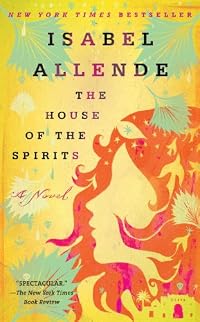
"The unforgettable first novel that established Isabel Allende as one of the world's most gifted and imaginative storytellers. The House of the Spirits brings to life the triumphs and tragedies of three generations of the Trueba family. The patriarch Esteban is a volatile, proud man whose voracious pursuit of political power is tempered only by his love for his delicate wife, Clara, a woman with a mystical connection to the spirit world. When their daughter Blanca embarks on a forbidden love show more affair in defiance of her implacable father, the result is an unexpected gift to Esteban: his adored granddaughter Alba, a beautiful and strong-willed child who will lead her family and her country into a revolutionary future. One of the most important novels of the twentieth century, The House of the Spirits is an enthralling epic that spans decades and lives, weaving the personal and the political into a universal story of love, magic, and fate"-- show lessTags
Recommendations

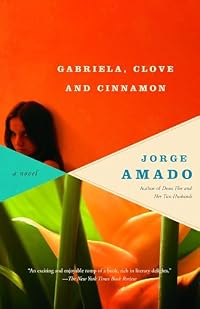
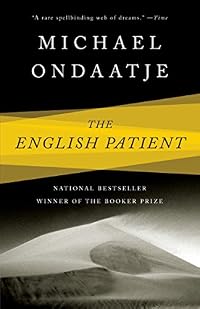
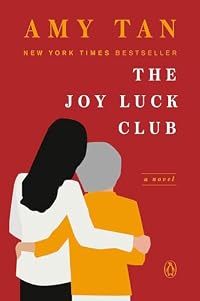

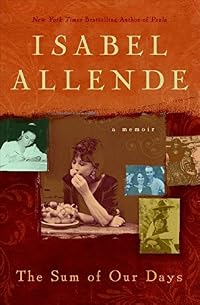
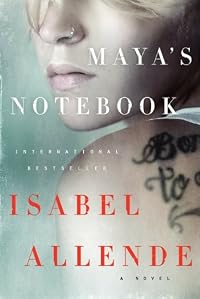
Member Recommendations
browner56 Superb multi-generational sagas of two South American families, told in the magic realism style
Also recommended by chrisharpe, roby72
260
britchey Both books follow one family for several generations, chronicling the incredible events that comprise their destinies.
22

CGlanovsky Real-world political events thinly veiled in a magic realist style.
Member Reviews
"She did not believe that the world was a vale of tears but rather a joke that God played and that it was idiotic to take it seriously."
Set in an unnamed country (but almost certainly Chile)'The House of the Spirits' follows three generations of the Trueba family. The book opens with the story of the del Valles and their young daughters, Rosa and Clara. Rosa is extremely beautiful whereas Clara is unusual in that she has a talent for clairvoyance and the ability to play the piano without lifting its lid. One day Clara predicts the death of Rosa who at the time is the fiancée of Esteban Trueba, the central male character.
At the time Esteban was away mining for gold in a remote part of the country in the hope of making a quick fortune so show more that he can marry Rosa. But after Rosa's sudden demise he decides to give up this get rich quick scheme and return to his long neglected ancestral estate, Tres Marias. There Estaban establishes himself as patron and his capacity for brutality and cruelty are brought into sharp focus but through sheer determination and hard work he turns Tres Marias's fortunes around making himself wealthy in the process.
After a number of years away Estaban asks her family for Clara's hand in marriage (as she had foreseen). It is here that the story really begins to kick into gear as a number of parallel story lines are introduced, most notably after the birth of Esteban and Clara’s three children, a daughter Blanca, twin sons Jaime and Nicolas and our third Trueba generation – Blanca’s daughter, Alba.
In what is essentially the second part of the novel, the family relocate back to the city where Esteban decides to become involved in politics becoming a Senator and an outspoken enemy of Socialist and Communist ideals whilst Alba embarks simultaneously on a love affair with a revolutionary.
The climax of the novel sees the country undergoing a military coup compelling Esteban to question the principles of class superiority and self-interest that have motivated his actions thus far in the process realising that it is impossible to escape the demons that we create.
This is an epic family saga that details not only the lives of the three generations of one family, but also the history of a nation providing a social narrative from a personal perspective exploring the themes of class-conflict and the cycle of violence.
I am a real fan of historical based novels but the fact that Allende leaves key places and figures anonymous means that anyone can appreciate the book without having to know its historical background. But to give it some context, Isabel Allende is the granddaughter of Salvador Allende, the socialist president of Chile deposed by a military coup. Therefore ‘The House of the Spirits’ is fundamentally a political novel. But it is not political in the sense that it supports one particular side over another but instead looks at what social conflict can do to a country – where a break-down of understanding between people can lead a state where common humanity is forgotten.
I must admit to approaching this book with some trepidation beforehand but thankfully,despite its title, this novel keeps its magical realism element of it down to a manageable level. Instead we get to invest in the Trueba family, to feel their despair and grief but also get to laugh along with them. This is a complex story that the reader has to invest in to but it is also a beautiful piece of writing and one that I will certainly remember. show less
Set in an unnamed country (but almost certainly Chile)'The House of the Spirits' follows three generations of the Trueba family. The book opens with the story of the del Valles and their young daughters, Rosa and Clara. Rosa is extremely beautiful whereas Clara is unusual in that she has a talent for clairvoyance and the ability to play the piano without lifting its lid. One day Clara predicts the death of Rosa who at the time is the fiancée of Esteban Trueba, the central male character.
At the time Esteban was away mining for gold in a remote part of the country in the hope of making a quick fortune so show more that he can marry Rosa. But after Rosa's sudden demise he decides to give up this get rich quick scheme and return to his long neglected ancestral estate, Tres Marias. There Estaban establishes himself as patron and his capacity for brutality and cruelty are brought into sharp focus but through sheer determination and hard work he turns Tres Marias's fortunes around making himself wealthy in the process.
After a number of years away Estaban asks her family for Clara's hand in marriage (as she had foreseen). It is here that the story really begins to kick into gear as a number of parallel story lines are introduced, most notably after the birth of Esteban and Clara’s three children, a daughter Blanca, twin sons Jaime and Nicolas and our third Trueba generation – Blanca’s daughter, Alba.
In what is essentially the second part of the novel, the family relocate back to the city where Esteban decides to become involved in politics becoming a Senator and an outspoken enemy of Socialist and Communist ideals whilst Alba embarks simultaneously on a love affair with a revolutionary.
The climax of the novel sees the country undergoing a military coup compelling Esteban to question the principles of class superiority and self-interest that have motivated his actions thus far in the process realising that it is impossible to escape the demons that we create.
This is an epic family saga that details not only the lives of the three generations of one family, but also the history of a nation providing a social narrative from a personal perspective exploring the themes of class-conflict and the cycle of violence.
I am a real fan of historical based novels but the fact that Allende leaves key places and figures anonymous means that anyone can appreciate the book without having to know its historical background. But to give it some context, Isabel Allende is the granddaughter of Salvador Allende, the socialist president of Chile deposed by a military coup. Therefore ‘The House of the Spirits’ is fundamentally a political novel. But it is not political in the sense that it supports one particular side over another but instead looks at what social conflict can do to a country – where a break-down of understanding between people can lead a state where common humanity is forgotten.
I must admit to approaching this book with some trepidation beforehand but thankfully,despite its title, this novel keeps its magical realism element of it down to a manageable level. Instead we get to invest in the Trueba family, to feel their despair and grief but also get to laugh along with them. This is a complex story that the reader has to invest in to but it is also a beautiful piece of writing and one that I will certainly remember. show less
I have a thing for family sagas - even when they end up being incredibly depressing and go on a wee bit too long. I vastly preferred the first half or so (much less depressing) to the final third (devastating and stop-okay-we-get-the idea). I loved the women characters, the men not so much (Esteban not at all after the first hundred pages or so). And the writing sang (though the translator has to get credit for some of that!)
This is a 2016 review that refers to the fact that I took Spanish in high school and traveled abroad for two weeks. I forgot all my Spanish after graduating in 2005.
I read the English one over a period of a few months in high school. I would wake up earlier than my close friend when I stayed over at her house, and, not wanting to disturb her, pluck this book off her shelf. She laughed when I told her, and said she'd hated having to analyze the book. Even now, I barely remember any of the English version. I remember it talked a lot about friendship and relationships. I love Allende's writing style.
I read the Spanish version later in one sitting. Re: the well-written, engaging plot that had me turning pages nonstop: At moments, I was show more disconcerted. At others, I was sickened. At the -torture scenes which were censored from the English version I read-, I was horrified. Re: the settings, the descriptions of characters, the everything else: I wish I could write like that. I still remember character descriptions so clearly, and I wanted to be in the mere presence of these women.
The stark difference between the two versions I read was likely due to the fact that wow, America censors a whooole lot. If it's not outright censorship, writing is frequently watered-down, especially with a book so political as this one. Both carried very different messages and connotations that were fit for both countries at the time (I read the Spanish version in Peru, the English version in America). It was really a lot for me to think about once I had set both versions aside and had time to reflect on what the differences were, and why. The English version is okay for high schoolers to read and analyze; that's fine. It's also a watered-down, heavily censored version and they're not getting what the real message was. If they were? This book would be aimed at adults only. I think because of the -kinds- of sex and violence described, as well as certain relationships and themes, that teenagers might not fully grasp what was going on, and it might not be the right time for them to read the book. Early twenties, yeah. It's about life experience, I guess. An adult is going to have a radically different understanding of this book and will probably have fewer nightmares.
This is a book that does need to be widely read. The themes do need to be discussed, especially every part of the plot ever. This is an important book! show less
I read the English one over a period of a few months in high school. I would wake up earlier than my close friend when I stayed over at her house, and, not wanting to disturb her, pluck this book off her shelf. She laughed when I told her, and said she'd hated having to analyze the book. Even now, I barely remember any of the English version. I remember it talked a lot about friendship and relationships. I love Allende's writing style.
I read the Spanish version later in one sitting. Re: the well-written, engaging plot that had me turning pages nonstop: At moments, I was show more disconcerted. At others, I was sickened. At the -torture scenes which were censored from the English version I read-, I was horrified. Re: the settings, the descriptions of characters, the everything else: I wish I could write like that. I still remember character descriptions so clearly, and I wanted to be in the mere presence of these women.
The stark difference between the two versions I read was likely due to the fact that wow, America censors a whooole lot. If it's not outright censorship, writing is frequently watered-down, especially with a book so political as this one. Both carried very different messages and connotations that were fit for both countries at the time (I read the Spanish version in Peru, the English version in America). It was really a lot for me to think about once I had set both versions aside and had time to reflect on what the differences were, and why. The English version is okay for high schoolers to read and analyze; that's fine. It's also a watered-down, heavily censored version and they're not getting what the real message was. If they were? This book would be aimed at adults only. I think because of the -kinds- of sex and violence described, as well as certain relationships and themes, that teenagers might not fully grasp what was going on, and it might not be the right time for them to read the book. Early twenties, yeah. It's about life experience, I guess. An adult is going to have a radically different understanding of this book and will probably have fewer nightmares.
This is a book that does need to be widely read. The themes do need to be discussed, especially every part of the plot ever. This is an important book! show less
‘The House of Spirits’ was lent to me by houseguests (flatguests?). I do appreciate it when visitors bring book recommendations. I’d heard of Isabel Allende but never read any of her work. I enjoyed this sprawling, dramatic saga of four generations. Although the magical realism of the first half was charming, I found the more political second half more moving. The account of the military coup via family involvement is extremely compelling and intense. The density and feeling of family relationships are beautifully conveyed, although I found the frequent foreshadowing somewhat disconcerting. Allende’s writing is eloquent and unflinching. The development of Esteban Trueba from impatient youth to a monstrously violent manhood to a show more frail and regretful old age is really well done, although the consistent focus on his horrible ways was also distinctly depressing. The novel as a whole had a lovely rhythm, which also meant that no single moment or phrase stood out. I simply noticed the slow shift from supernatural to brutally prosaic. show less
She was the only person in the house who had the key to her uncle's tunnel of books, along with his permission to take them out and read them. Blanca argued that her reading should be monitored because there were certain things that were inappropriate for her age, but her Uncle Jaime felt that people never read what did not interest them and if it interested them that meant they were sufficiently mature to read it.
This is a glorious, heart-breaking, confounding novel about three generations of a Chilean family. It focuses on Clara, a clairvoyant, dreamy woman who can move salt cellars with her mind and who becomes the great love of both Férula and her brother Esteban, a violent, reactionary man; her daughter Blanca, whose great love show more for the son of a peasant farmer on her father's estate will both tear her family apart and save them; and Alba, Blanca's daughter, who will be the family member who sees them all through the military takeover with her courage and love.
I approached this book as one that would be an effort to read, and found instead a drama-filled and well paced novel in which three very different women live in an odd world, where magical things happen as a matter of course, where women are expected to behave in certain ways but where they are often, but not always, able to circumvent the expectations placed on them. It's an extraordinary novel and I enjoyed reading it. I ended up carrying around with me to grab a few sentences or pages throughout the day. show less
This is a glorious, heart-breaking, confounding novel about three generations of a Chilean family. It focuses on Clara, a clairvoyant, dreamy woman who can move salt cellars with her mind and who becomes the great love of both Férula and her brother Esteban, a violent, reactionary man; her daughter Blanca, whose great love show more for the son of a peasant farmer on her father's estate will both tear her family apart and save them; and Alba, Blanca's daughter, who will be the family member who sees them all through the military takeover with her courage and love.
I approached this book as one that would be an effort to read, and found instead a drama-filled and well paced novel in which three very different women live in an odd world, where magical things happen as a matter of course, where women are expected to behave in certain ways but where they are often, but not always, able to circumvent the expectations placed on them. It's an extraordinary novel and I enjoyed reading it. I ended up carrying around with me to grab a few sentences or pages throughout the day. show less
Me emocionei enormemente com A Casa dos Espíritos porque não é apenas um livro antifascista, mas sobretudo por ser profundamente feminista.
Parcialmente sob o ponto de vista de um personagem que é o arquétipo do reacionário patriarcal adentramos a família Trueba, cuja força das mulheres são descomunais tal como os homens criados por elas. A força motriz do livro é Clara, cujos filhos se rebelaram contra o reacionarismo patriarcal do pai como deve ser nas melhores famílias (nunca vou entender filhos que não se rebelam contra os pais), mas toda a violência praticada pelo pai já nos prepara para as últimas 100 páginas que se destinam ao processo de patriarcalização reacionária no governo militar pós Allende, vejo muito show more do que aconteceu com o senador Trueba algo como aconteceu ao PSDB no Brasil, Trueba era um escroto golpista de marca maior, mas não estava preparado para que a extrema direita destruísse o país da forma que fez e no final da jornada ficou profundamente arrependido da sua contribuição pra isso e acabou inclusive fazendo as pazes consigo mesmo de toda vilania que exercera no passado.
Acho que a prima em segundo grau do Salvador Allende não poderia ter feito um livro mais bonito sobre o Chile do século XX, com toques herdados do realismo mágico, cada pedaço de história do país se confunde com as venturas e desventuras da família Trueba, um toque especial de que gostei é que os personagens históricos presentes nunca são nomeados, mas sempre fica evidente de quem se trata. Acho que essa mistura de realismo mágico com ficção histórica foi extraordinária e não vejo forma melhor da autora honrar o Allende de seu nome. show less
Parcialmente sob o ponto de vista de um personagem que é o arquétipo do reacionário patriarcal adentramos a família Trueba, cuja força das mulheres são descomunais tal como os homens criados por elas. A força motriz do livro é Clara, cujos filhos se rebelaram contra o reacionarismo patriarcal do pai como deve ser nas melhores famílias (nunca vou entender filhos que não se rebelam contra os pais), mas toda a violência praticada pelo pai já nos prepara para as últimas 100 páginas que se destinam ao processo de patriarcalização reacionária no governo militar pós Allende, vejo muito show more do que aconteceu com o senador Trueba algo como aconteceu ao PSDB no Brasil, Trueba era um escroto golpista de marca maior, mas não estava preparado para que a extrema direita destruísse o país da forma que fez e no final da jornada ficou profundamente arrependido da sua contribuição pra isso e acabou inclusive fazendo as pazes consigo mesmo de toda vilania que exercera no passado.
Acho que a prima em segundo grau do Salvador Allende não poderia ter feito um livro mais bonito sobre o Chile do século XX, com toques herdados do realismo mágico, cada pedaço de história do país se confunde com as venturas e desventuras da família Trueba, um toque especial de que gostei é que os personagens históricos presentes nunca são nomeados, mas sempre fica evidente de quem se trata. Acho que essa mistura de realismo mágico com ficção histórica foi extraordinária e não vejo forma melhor da autora honrar o Allende de seu nome. show less
Destinies that cross each other, chase up after each other, fight each other, at times, mercilessly... Here's a house 'of spirits' (in fact, a hacienda lost in the Chilean countryside) that acts like an octopus, and those tentacles deploy the story of a family over four generations.
It's a story which sometimes sink into the surreal, that of a supernatural imagination, from strange creatures to spiritism, and of a dreamy fantasy inviting itself, blowing a soft magical breeze giving to this family saga the touch of a fairy tale.
Characters are deep, striking, tragic, funny, despicable at times, 'a collection of lunatics and eccentrics even ghosts are mocking', but who tell, also, the history of a country, from the 'peones' exploited in show more the haciendas until the brutal dictatorship of Pinochet.
Here's a book, ending crucified in a weird Trinity (the Poet, the President, the Dictator that is, even if their names are never explicitly mentioned, none other than Pablo Neruda, Salvador Allende -the author is the daughter of one of his cousins- and Pinochet) and which, clearly, is the kind of novel one close knowing full-well that, one day, it will be read again.
A masterpiece. show less
It's a story which sometimes sink into the surreal, that of a supernatural imagination, from strange creatures to spiritism, and of a dreamy fantasy inviting itself, blowing a soft magical breeze giving to this family saga the touch of a fairy tale.
Characters are deep, striking, tragic, funny, despicable at times, 'a collection of lunatics and eccentrics even ghosts are mocking', but who tell, also, the history of a country, from the 'peones' exploited in show more the haciendas until the brutal dictatorship of Pinochet.
Here's a book, ending crucified in a weird Trinity (the Poet, the President, the Dictator that is, even if their names are never explicitly mentioned, none other than Pablo Neruda, Salvador Allende -the author is the daughter of one of his cousins- and Pinochet) and which, clearly, is the kind of novel one close knowing full-well that, one day, it will be read again.
A masterpiece. show less
Members
- Recently Added By
Published Reviews
Primera novela de Isabel Allende, La casa de los espíritus narra la saga de una poderosa familia de terratenientes latinoamericanos. El despótico patriarca Esteban Trueba ha construido, con mano de hierro, un imperio privado que empieza a tambalearse a raíz del paso del tiempo y de un entorno social explosivo. Finalmente, la decadencia personal del patriarca arrastrará a los Trueba a una show more dolorosa desintegración. Atrapados en unas dramáticas relaciones familiares, los personajes de esta portentosa novela encarnan las tensiones sociales y espirituales de una época que abarca gran parte de este siglo. show less
added by Pakoniet
Lists

1001 Books You Must Read Before You Die
1,448 works; 1,131 members

Magic Realism
371 works; 52 members

Best of World Literature
431 works; 51 members

Best Contemporary Literary Fiction (Around the Last 30 Years)
388 works; 124 members

Female Author
1,235 works; 67 members

20th Century Literature
1,161 works; 54 members

Read the book and saw the movie
1,170 works; 195 members

Best Family Stories
241 works; 22 members
Best Political Fiction
92 works; 12 members

Top Five Books of 2020
982 works; 348 members
Historical Fiction
889 works; 91 members

Top Five Books of 2013
1,562 works; 715 members

Unread books
1,063 works; 82 members

Best Feminist Literature
188 works; 26 members

Best family sagas
244 works; 34 members
Banned Books Week 2014
268 works; 62 members
Favourite Books
1,817 works; 308 members
1980s
356 works; 23 members

magic realism novels
44 works; 11 members
500 Great Books by Women
507 works; 60 members
LibraryThingers' 1001 Books You Must Read Before You Die
442 works; 30 members

Books Featured on Gilmore Girls
307 works; 21 members

1,001 BYMRBYD Concensus
723 works; 27 members
Banned or Challenged Books
400 works; 41 members

BBC Radio 4 Bookclub
340 works; 13 members

Latin American Literature
50 works; 11 members

Love and Marriage
93 works; 10 members
Las 100 Mejores Novelas en Castellano del Siglo XX
105 works; 13 members

Bookriot's 100 Must-Read Sci-Fi Fantasy Novels By Female Authors
100 works; 9 members

A Novel Cure
742 works; 23 members

Expand Your Reading Demographics!
47 works; 14 members
Literature About Women and Girls
394 works; 39 members

My E-Book Collection - Opinions Welcome
92 works; 10 members

Best Novels For Learning Spanish
7 works; 5 members

Literature by People of Color
81 works; 9 members

Phi Beta Kappa reading list
260 works; 8 members
Las 100 mejores novelas de la literatura hispanoamericana
96 works; 1 member
Books tagged favorites
390 works; 30 members

Books Read in 2023
5,547 works; 145 members

Latin America
45 works; 6 members
Five star books
1,755 works; 107 members
Favorite World Literature in English Translation
22 works; 5 members
Authors from Chile
5 works; 1 member
Speculative Fiction from around the World
610 works; 17 members
First Novels
373 works; 16 members
Elegant Prose
80 works; 4 members
Ghosts
278 works; 18 members
Overdue Podcast
803 works; 9 members
SantaThing 2014 Gifts
299 works; 17 members

Reading Globally
136 works; 16 members

Spanish Language in English Translation
19 works; 2 members

aborted books in 2020
36 works; 1 member

Recommended Reading : 600 Classics Reviewed, Editors of Salem Press, 2015
634 works; 6 members
Our Favorite Banned Books
138 works; 122 members

Favorite Books in Translation
320 works; 133 members

Retrospective of 20th- and 21st-century literature
154 works; 1 member
DigitalDreamDoor top 300
300 works; 4 members
The Complete Rory Gilmore Reading List
506 works; 5 members
Las 100 mejores novelas de la literatura hispanoamericana (cicutadry)
100 works; 1 member

Books Read in 2025
4,090 works; 97 members

Allie's Wishlist
217 works; 2 members
Widely acclaimed, one book per year
105 works; 3 members

.
194 works; 2 members
Junky Paperbacks
15 works; 1 member
Vlogbrothers Book Recommendations
307 works; 4 members
School Made Us Read It
380 works; 196 members

Magia en los Adoquines: Fantasía Urbana y Realismo Mágico
7 works; 1 member

In-Yun: Historias de Amores Escritos en las Estrellas
11 works; 1 member

Magical Realism
23 works; 2 members

B-B to Get
131 works; 1 member

Books recommended by Calgary Public Library staff
1,588 works; 4 members

Florida's Book Bans and Challenges
311 works; 4 members

BBC World Book Club
261 works; 5 members

Books Read in 2021
5,361 works; 113 members

I Could Live There
185 works; 12 members
Shannon's Read-Alikes List
71 works; 8 members

Myth (Reuse and Retelling)
188 works; 23 members
Read These Too
458 works; 9 members

My TBR
371 works; 3 members

Books for 2020 Book Club
53 works; 3 members
Favorite Romance Fiction
247 works; 115 members

2024 Reads
31 works; 1 member

AP Lit
363 works; 6 members

Mustich's 1000 Books to Read Before You Die: A Life Changing List
1,001 works; 18 members
Which house?
423 works; 16 members
Books With Our Favorite First Lines
168 works; 104 members
2023 Update: The Best Twenty Books You've Read in the Past Five Years
40 works; 3 members

Top Five Books of 2023
767 works; 317 members
Florida
366 works; 3 members

.
396 works; 1 member

Literature in Translation
113 works; 5 members
Author Information

86+ Works 84,701 Members
Isabel Allende was born in 1942 in Lima, Peru, the daughter of a Chilean diplomat. When her parents separated, young Isabel moved with her mother to Chile, where she spent the rest of her childhood. She married at the age of 19 and had two children, Paula and Nicolas. Her uncle was Salvador Allende, the president of Chile. When he was overthrown show more in the coup of 1973, she fled Chile, moving to Caracas, Venezuela. While living in Venezuela, Allende began writing her novels, many of them exploring the close family bonds between women. Her first novel, The House of the Spirits, has been translated into 27 languages, and was later made into a film. She then wrote Of Love and Shadows, Eva Luna, and The Stories of Eva Luna, all set in Latin America. The Infinite Plan was her first novel to take place in the United States. She explores the issues of human rights and the plight of immigrants and refugees in her novel, In The Midst of Winter. In Paula, Allende wrote her memoirs in connection with her daughter's illness and death. She delved into the erotic connections between food and love in Aphrodite: A Memoir of the Senses. In addition to writing books, Allende has worked as a TV interviewer, magazine writer, school administrator, and a secretary at a U.N. office in Chile. She received the 1996 Harold Washington Literacy Award. She lives in California. Her title Maya's Notebook made The New York Times Best Seller List in 2013. (Bowker Author Biography) show less
Some Editions
Awards and Honors
Series

Belongs to Publisher Series
Work Relationships
Is contained in
Contains
Has the adaptation
Common Knowledge
- Canonical title*
- La casa degli spiriti
- Original title
- La casa de los espíritus
- Original publication date
- 1982
- People/Characters
- Nívea del Valle; Clara del Valle Trueba; Esteban Trueba; Alba Trueba; Pedro Tercero García; Blanca Trueba (show all 12); Rosa del Valle; Pedro Segundo García; Esteban García; Ferula Trueba; Jaime Trueba; Nicolas Trueba
- Important places
- Chile; Tres Marias, Chile; Santiago, Chile
- Important events
- Chilean Coup (1973); Pinochet regime; Valdivia earthquake (1960-05-22)
- Related movies
- The House of the Spirits (1993 | IMDb)
- Epigraph
- How much does a man live, after all?
Does he live a thousand days, or one only?
For a week, or for several centuries?
How long does a man spend dying?
What does it mean to say "for ever"?
Pablo Neruda - Dedication
- To my mother, my grandmother,
and all the other extraordinary women
of this story - First words
- Dear Readers,
How fast life goes by! This year, 2025, the English translation of my first novel, The House of Spirits, turns forty years old and I turn eighty-three. Where have the hours gone? Much has happen... (show all)ed in the world and in my life since my first book was born, but I feel that time has flown by and now I am in the last stage of my existence without knowing how I reached this point. -A New Preface for the 40th Anniversary of The House of the Spirits
Barrabás came to us by sea, the child Clara wrote in her delicate calligraphy. She was already in the habit of writing down important matters, and afterward, when she was mute, she also recorded trivialities, never su... (show all)specting that fifty years later I would use her notebooks to reclaim the past and overcome terrors of my own. -One, Rosa the Beautiful - Quotations*
- Esteban hatte Chinchillas auf seinem Gut herumhuschen sehen. Gelegentlich schoß er sie ab, weil sie die junge Saat fraßen, war aber nie auf den Gedanken gekommen, daß sich diese unscheinbaren Nagetiere in Damenpelzmäntel ... (show all)umwandeln ließen. Jean de Satigny suchte einen Kompagnon, der das Kapital, die Arbeit und die Gehege stellte, alle Risiken übernahm und den Gewinn fünfzig zu fünfzig mit ihm teilte.
(Kapitel 6, Hardcover Seite 187)
"Fast in allen Familien ist irgendein Blöder oder Verrückter, Alba", versicherte Clara, die Augen starr auf ihr Strickzeug geheftet, weil sie in all den Jahren nicht gelernt hatte, zu stricken, ohne hinzuschauen. "Manchmal ... (show all)bekommt man sie nicht zu sehen, weil die Angehörigen sie verstecken, als ob es eine Schande wäre. Sie sperren sie in die hintersten Zimmer, damit Besucher sie nicht zu Gesicht bekommen. Aber in Wirklichkeit braucht man sich ihrer nicht zu schämen, auch sie sind Werke Gottes."
"Aber wir haben keinen in unserer Familie", gab Alba zu bedenken.
"Nein, bei uns ist die Verrücktheit auf alle verteilt, und es ist nicht genug übriggeblieben, daß auch wir unseren Verrückten haben."
(Kapitel 9, Hardcover S. 288 f.)
Das Land füllte sich mit Uniformen, Kriegsmaschinen, Fahnen, Hymnen und Paraden, denn die Militärs kannten das Bedürfnis des Volkes nach eigenen Symbolen und Rhythmen. Senator Trueba, der diese Dinge grundsätzlich haßte,... (show all) begriff, was seine Freunde im Club meinten, wenn sie sagten, der Marxismus habe in Lateinamerika nicht die geringste Chance, weil er die magische Seite der Dinge außer acht ließe. "Brot, Zirkus und irgendwas zum Verehren, das ist alles, was sie brauchen", schloß der Senator und bedauerte im stillen, daß das Brot fehlte.
Kapitel 13, Hardcover S. 392) - Last words
- (Click to show. Warning: May contain spoilers.)It begins like this: Barrabás came to us by sea...
- Publisher's editor*
- DeBolsillo
- Blurbers
- Rinzler, Carol E.; Coleman, Alexander; Novak, Ralph; Rosett, Claudia; Futcher, Jane; Larson, Charles (show all 12); Berkley, Miriam; Prescott, Peter S.; Cryer, Dan; Agosin, Marjorie; Yardley, Jonathan; Locke, Maggie
- Original language
- Spanish
- Canonical DDC/MDS
- 863.64
- Canonical LCC
- PQ8098.L54 C313
*Some information comes from Common Knowledge in other languages. Click "Edit" for more information.
Classifications
- Genres
- Fiction and Literature, General Fiction, Historical Fiction
- DDC/MDS
- 863.64 — Literature & rhetoric Spanish Literature Spanish fiction 20th Century 1945-2000
- LCC
- PQ8098 .L54 .C313 — Language and Literature French, Italian, Spanish and Portuguese literatures Spanish literature Provincial, local, colonial, etc. Spanish America
- BISAC
Statistics
- Members
- 15,566
- Popularity
- 443
- Reviews
- 282
- Rating
- (4.09)
- Languages
- 29 — Arabic, Bulgarian, Catalan, Czech, Danish, Dutch, English, Estonian, Finnish, French, German, Greek, Hebrew, Hungarian, Icelandic, Italian, Lithuanian, Norwegian (Bokmål), Norwegian, Polish, Romanian, Russian, Serbian, Croatian, Slovenian, Spanish, Swedish, Turkish, Portuguese (Portugal)
- Media
- Paper, Audiobook, Ebook
- ISBNs
- 267
- ASINs
- 88