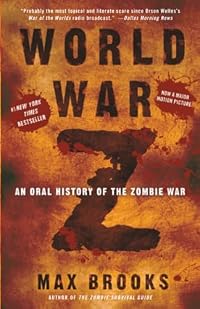
World War Z: An Oral History of the Zombie War
by Max Brooks
On This Page
Description
An account of the decade-long conflict between humankind and hordes of the predatory undead is told from the perspective of dozens of survivors who describe in their own words the epic human battle for survival.Tags
Recommendations
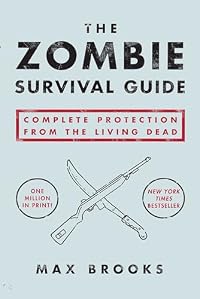
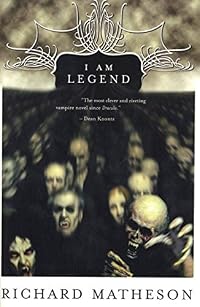
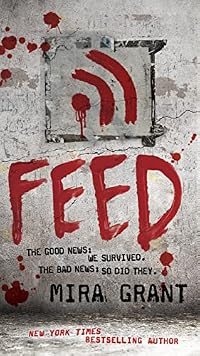
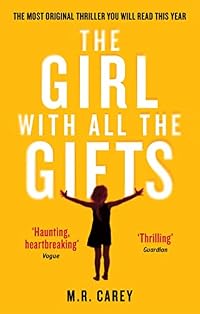
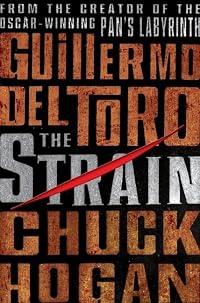
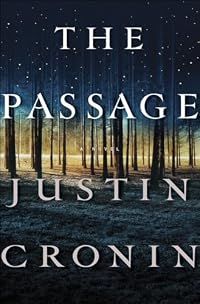
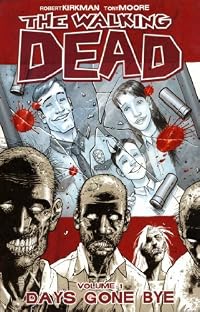
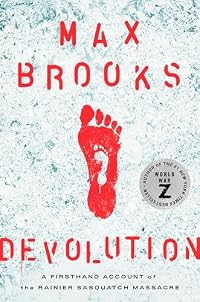
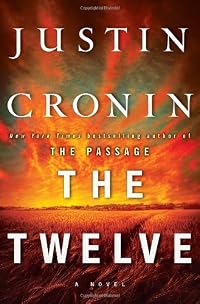
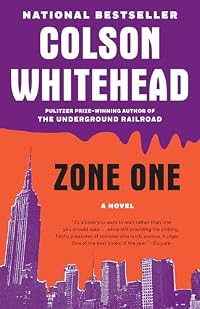
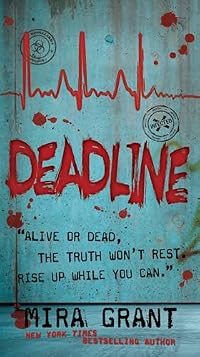
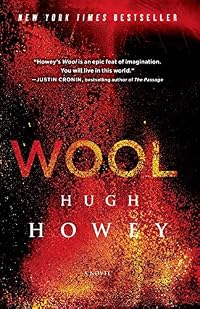
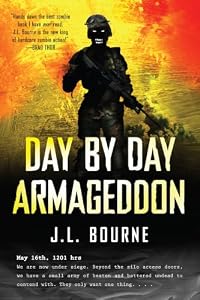
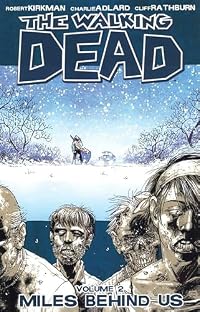
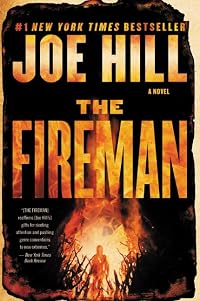
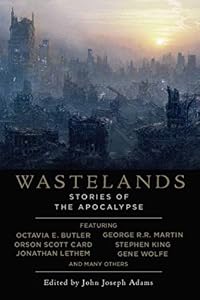
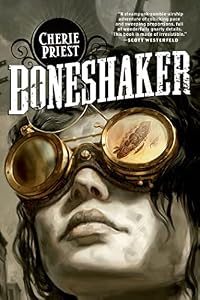
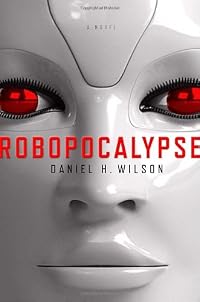


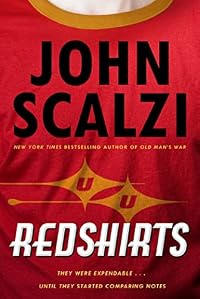
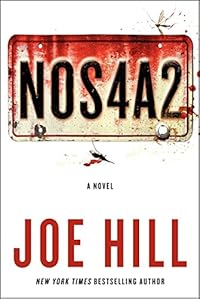
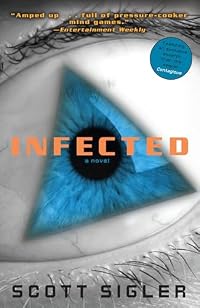
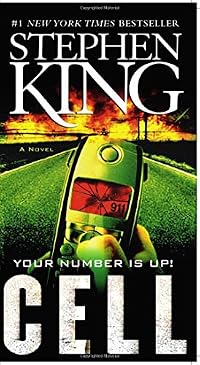
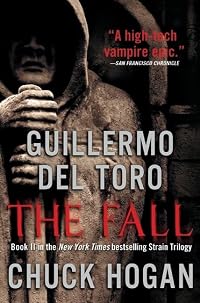
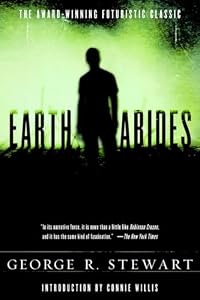
Member Recommendations
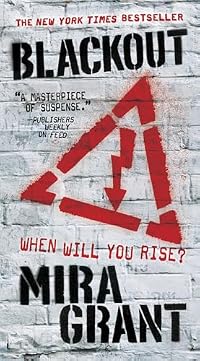
Feed by Mira Grant
Aerrin99 An awesome look at the world post-zombie-apocalypse with history, politics, and fantastic world building.
Also recommended by andreablythe, HenriMoreaux
192
Aerrin99 An awesome look at the aftermath of a zombie apocalypse in the longer term.
131

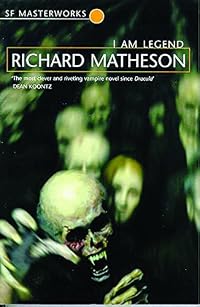
infjsarah Older sci-fi but still very effective. Survival against mindless, ever increasing enemy.
60
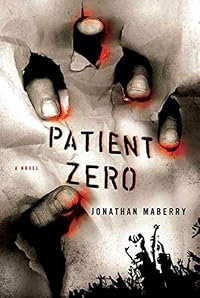
stmartins Also a killer Zombie thriller and an awesome first book in the "Joe Ledger" series.
Teaser and free prequal story avaiable at stmartins.com/JonathanMaberry
72
storyjunkie Both are tales of how to survive a world gone mad, though there are no zombies in Butler's. Both works' treatment of the human questions are equally nuanced, variable, and detailed.
52
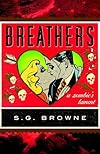
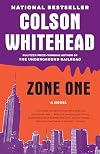
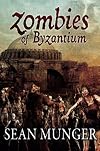
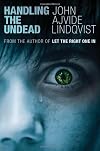
ijustgetbored A completely different take on zombies: here, they're not "out to get you," just beings who may or may not have souls, and Lindqvist treats all those related questions.
21
sparemethecensor Speculative fiction, same piecey storytelling style.
timspalding Some may take offense at the suggestion, but I think don't think World War Z could have been written without And the Band Played On, an oral history of the all-too-real AIDS epidemic. Shilts' is by far the better book, even if it weren't true and important.
54
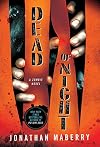
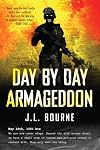
rcollett Great Books!

by anonymous user
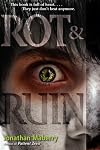
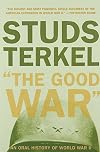
acenturyofsleep Max Brooks was directly influenced by Terkel's spoken history of World War II, from those who lived it. World War Z's interview script format is directly lifted from The Good War
56
MyriadBooks Yes, it's a history nonfiction being recommended for association with World War Z, but readers who enjoyed Darnell Hackworth's interview will love the true stories in this book.
12

jseger9000 Both books use the device of survivor's stories to describe an apocalyptic event and the aftermath.
03
DeDeNoel This is a lot like World War Z because of the interview format. Some of the stories are alike as well. This is about the Japanese gas attacks.
15
by meggyweg
jorvaor Similar zombie apocalypse from a single protagonist point of view.
by anonymous user
Member Reviews
This is one of my all-time favorite books. I'd already read it 2 or 3 times years ago, but listening to the Audiobook version was a real treat. It almost felt like I'd never heard this story before simply because the structure lends itself perfectly to an Audiobook format. It was as if we were listening to a radio play and it is absolutely phenomenal.
This has to be the most stacked audio cast ever - René Auberjonois, Alan Alda, Martin Scorsese, Carl and Rob Reiner, Common, F. Murray Abraham, Jeri Ryan and Mark Hamill and that's just the tip of the iceberg. Some voices don't quite nail the landing, but the overall experience is insanely good.
Also listening to it post pandemic makes the story even stronger and more chilling now that show more we've lived through something akin to it: the differences in how certain countries and cultures deal with it, the initial confusion, the misinformation spread, how some make a ton of money off placebos, the general hopelessness...it almost hits too close to home.
I don't know how a book I loved could become even more prescient or more interesting over time, but there you go. Incredible. show less
This has to be the most stacked audio cast ever - René Auberjonois, Alan Alda, Martin Scorsese, Carl and Rob Reiner, Common, F. Murray Abraham, Jeri Ryan and Mark Hamill and that's just the tip of the iceberg. Some voices don't quite nail the landing, but the overall experience is insanely good.
Also listening to it post pandemic makes the story even stronger and more chilling now that show more we've lived through something akin to it: the differences in how certain countries and cultures deal with it, the initial confusion, the misinformation spread, how some make a ton of money off placebos, the general hopelessness...it almost hits too close to home.
I don't know how a book I loved could become even more prescient or more interesting over time, but there you go. Incredible. show less
I'm not a big horror fan. I do remember watching all the zombie movies when I was a teen (in the 80's), but as an adult, "dark fantasy' was way more my thing that modern horror. I read this because it was on the NPR best 100 sci-fi/fantasy books list. I figured it would be okay and maybe pull off 3 stars, but HOLY CRAP, this book is a masterpiece.
Obviously, the format is pretty unique, with no main characters, more like a bunch of connected short stories, but much more closely related than when I've seen it done by other authors. Having viewpoints from all over the world was amazing. Mr. Brooks either really did his homework or maybe he's just a history/politics fan, because this wasn't just little action scenes all over the world, this show more was some deep thinking about how countries would actually react, both at the government level and the public level.
So happy I didn't miss out on this one, and also happy that I did it on audio since it had an entire cast of famous people from Rob Riener to Henry Rollins narrating it. show less
Obviously, the format is pretty unique, with no main characters, more like a bunch of connected short stories, but much more closely related than when I've seen it done by other authors. Having viewpoints from all over the world was amazing. Mr. Brooks either really did his homework or maybe he's just a history/politics fan, because this wasn't just little action scenes all over the world, this show more was some deep thinking about how countries would actually react, both at the government level and the public level.
So happy I didn't miss out on this one, and also happy that I did it on audio since it had an entire cast of famous people from Rob Riener to Henry Rollins narrating it. show less
First read: June 2013
Re-read: September 2015
This book is sheer genuis. I don't know how else to describe it. I've never read anything even remotely similar to this anywhere else. World War Z is written as a factual book, with the author inserting himself into the story as an interviewer to the survivors of the zombie apocalypse.
However fantastical this plot sounds, it is actually so well written and researched it feels almost real. Brooks takes the reader all around the world to see how everyone coped with the outbreak, the initial panic (or the 'Great Panic'), how the survivors fought back and how we eventually re-gained some modicum of civilisation. We hear from veteran soldiers who fought now famous battles against the zombies or show more Zacks/Zekes, ordinary citizens in the middle of urban populations; mothers who fought zombies bare handed to save their children, politicians trying to fight a popularity battle in the midst of the crisis, corrupt pharmaceutical companies selling 'Phalanx' - a vaccine they knew didn't work, how rival countries used outbreaks as an excuse to re-ignite old tensions, how stranded astronauts on space-stations watched via satellite as zombies took over the world, and celebrities who enclosed themselves in 'Big Brother' style houses surrounded by webcams to capture their petty dramas and fake-tears over what was happening in the outside world.
Brooks has thought of everything - every possible outcome from a world under threat from zombie attack. How humanity would change - from way in which we fought wars and trained our soldiers, all the way down the psychological issues individuals would face when forced to deal with the living dead, and he has done it so masterfully. It feels so real all the way through. My favourite segment of World War Z is definitely the story that mentions North Korea. It has left me wanting to know more - do the North Koreans survive or are all 23 million citizens of that country now zombies?
In other reviews I have read on Goodreads, I can see there a few complaints about the lack of a cohesive plot - there is no one character who we follow from beginning to end (the interviewer we follow in theory is never really present apart from a few questions in the narrative). Each individual story about the zombie outbreak can be read on its own but there is a progression through the stories - we start at the outbreak of the disease in a remote corner of China and though each story we see how it progresses throughout the world and how various countries tried to fight or deal with the outbreaks, right though to the gradual restoration of a new humanity.
I have serious love for this book :)
Rating: 5/5 stars - one of the best re-reads of 2015
On a side note I also love the film World War Z but anyone who reads the book and hopes the film is going to be a faithful adaptation is going to be seriously disappointed. There are a few recognisable elements - particularly the segment of the film set in Israel and the fact the soldiers call the zombies Zekes but other than that they are two separate pieces of zombie fiction that share the same title and that is all. show less
Re-read: September 2015
This book is sheer genuis. I don't know how else to describe it. I've never read anything even remotely similar to this anywhere else. World War Z is written as a factual book, with the author inserting himself into the story as an interviewer to the survivors of the zombie apocalypse.
However fantastical this plot sounds, it is actually so well written and researched it feels almost real. Brooks takes the reader all around the world to see how everyone coped with the outbreak, the initial panic (or the 'Great Panic'), how the survivors fought back and how we eventually re-gained some modicum of civilisation. We hear from veteran soldiers who fought now famous battles against the zombies or show more Zacks/Zekes, ordinary citizens in the middle of urban populations; mothers who fought zombies bare handed to save their children, politicians trying to fight a popularity battle in the midst of the crisis, corrupt pharmaceutical companies selling 'Phalanx' - a vaccine they knew didn't work, how rival countries used outbreaks as an excuse to re-ignite old tensions, how stranded astronauts on space-stations watched via satellite as zombies took over the world, and celebrities who enclosed themselves in 'Big Brother' style houses surrounded by webcams to capture their petty dramas and fake-tears over what was happening in the outside world.
Brooks has thought of everything - every possible outcome from a world under threat from zombie attack. How humanity would change - from way in which we fought wars and trained our soldiers, all the way down the psychological issues individuals would face when forced to deal with the living dead, and he has done it so masterfully. It feels so real all the way through. My favourite segment of World War Z is definitely the story that mentions North Korea. It has left me wanting to know more - do the North Koreans survive or are all 23 million citizens of that country now zombies?
In other reviews I have read on Goodreads, I can see there a few complaints about the lack of a cohesive plot - there is no one character who we follow from beginning to end (the interviewer we follow in theory is never really present apart from a few questions in the narrative). Each individual story about the zombie outbreak can be read on its own but there is a progression through the stories - we start at the outbreak of the disease in a remote corner of China and though each story we see how it progresses throughout the world and how various countries tried to fight or deal with the outbreaks, right though to the gradual restoration of a new humanity.
I have serious love for this book :)
Rating: 5/5 stars - one of the best re-reads of 2015
On a side note I also love the film World War Z but anyone who reads the book and hopes the film is going to be a faithful adaptation is going to be seriously disappointed. There are a few recognisable elements - particularly the segment of the film set in Israel and the fact the soldiers call the zombies Zekes but other than that they are two separate pieces of zombie fiction that share the same title and that is all. show less
I am a zombie movie fan. Dawn of the Dead makes it into my top 5 movies of all time, and because I'm a qualified, certified film buff (BA in Film Studies), I imagine that says a lot. And where I appreciate the recent third wave of zombie films, I frown upon "fast" zombies. This is why:
Zombies aren't supposed to be scary. What is scary is how capitalism, white supremacy, patriarchy, and the state have cut us all off from one another to the extent that, when freaky weird shit starts happening, we have no ability whatever to deal with that freaky weird shit. We stand teetering on the brink of complete disaster at all times, because our first instinct is to fuck over everyone else (specifically poor people, non-white people, non-male show more people, people without power) in order to survive. The fear in zombie movies (good ones), is that we are so inherently broken by our bullshit systematic oppressions, that we cannot survive even the slowest, stupidest monster. When everything begins to fall apart, we are too weak to resist.
World War Z is like a series of great zombie movie ideas: What would a zombie threat do to the Israeli-Palestinian conflict? What are the affects of war-weariness from frivolous capitalist wars on the army's ability to battle a zombie menace? For that matter, how ineffective would the tech-heavy, Rumsfeldian "fast war" US military be against zombies? How would present-day China react to an outbreak of zombies? What if the U.S. was forced into Cuba to flee a zombie horde on their mainland?
I'm not going to say this was a great book. I am going to say, however, that I enjoyed it thoroughly, and I'd recommend it to any Romero-styled zombie fan. show less
Zombies aren't supposed to be scary. What is scary is how capitalism, white supremacy, patriarchy, and the state have cut us all off from one another to the extent that, when freaky weird shit starts happening, we have no ability whatever to deal with that freaky weird shit. We stand teetering on the brink of complete disaster at all times, because our first instinct is to fuck over everyone else (specifically poor people, non-white people, non-male show more people, people without power) in order to survive. The fear in zombie movies (good ones), is that we are so inherently broken by our bullshit systematic oppressions, that we cannot survive even the slowest, stupidest monster. When everything begins to fall apart, we are too weak to resist.
World War Z is like a series of great zombie movie ideas: What would a zombie threat do to the Israeli-Palestinian conflict? What are the affects of war-weariness from frivolous capitalist wars on the army's ability to battle a zombie menace? For that matter, how ineffective would the tech-heavy, Rumsfeldian "fast war" US military be against zombies? How would present-day China react to an outbreak of zombies? What if the U.S. was forced into Cuba to flee a zombie horde on their mainland?
I'm not going to say this was a great book. I am going to say, however, that I enjoyed it thoroughly, and I'd recommend it to any Romero-styled zombie fan. show less
World War Z is a fictional history written in the form of a series of interviews with numerous and diverse survivors of what was known as The Zombie War. The anonymous interviewer invites each subject to tell his or her story, with occasional further prompting via open-ended questions, giving the reader an impressive, relatively complete picture of how the catastrophe unfolded, evolved and eventually culminated in a precarious victory for the remaining living human population.
Although I was initially doubtful based on the number of words in gratuitous quotes contained within the introduction, that phenomenon was thankfully short-lived, and I was actually quite captivated by this book. It felt like a real, historical account, an show more impression aided by the interview format. The breadth and variety of interviewees was fascinating, and I wished many of their tales could have been lengthened. In addition, I was perpetually curious about who the interviewer was. Overall, a captivating, disturbing read containing some potentially good ideas to consider should we ever find ourselves in the midst of a real zombie plague. show less
Although I was initially doubtful based on the number of words in gratuitous quotes contained within the introduction, that phenomenon was thankfully short-lived, and I was actually quite captivated by this book. It felt like a real, historical account, an show more impression aided by the interview format. The breadth and variety of interviewees was fascinating, and I wished many of their tales could have been lengthened. In addition, I was perpetually curious about who the interviewer was. Overall, a captivating, disturbing read containing some potentially good ideas to consider should we ever find ourselves in the midst of a real zombie plague. show less
I enjoy oral histories to a ridiculous degree. I'm pretty ok with zombies, although I am also sick of them. I enjoy when humans triumph over them. I like grand human plans and clever ideas and strategy.
This oral history in general is very well done. I like how we see the turn of the tides in how it's arranged; I like how plans are mentioned in different histories and we can put the pieces together. When Nelson Mandela died I actually thought about this book and how now he won't be around to save South Africa in the zombie apocalypse. That part of the book was just an absolutely compelling moment for me. I think my second-favorite was the movie-making, oh and the lady pushing herself through zombie-infested land by talking to herself on show more the radio.
I have absolutely no idea why they would make a movie with the title of this book that wasn't in the same format. Way to take away the entire point! Definitely not on my to-watch list. show less
This oral history in general is very well done. I like how we see the turn of the tides in how it's arranged; I like how plans are mentioned in different histories and we can put the pieces together. When Nelson Mandela died I actually thought about this book and how now he won't be around to save South Africa in the zombie apocalypse. That part of the book was just an absolutely compelling moment for me. I think my second-favorite was the movie-making, oh and the lady pushing herself through zombie-infested land by talking to herself on show more the radio.
I have absolutely no idea why they would make a movie with the title of this book that wasn't in the same format. Way to take away the entire point! Definitely not on my to-watch list. show less
The epistolary format really doesn't work for some people, but for me, it totally did.
I like the story, and I like that it's not focussed on the slasher gore aspect - there's only so many ways you can describe someone holed up in a house, fighting their way out with a machete, and after the first few it's tired, so I really enjoyed putting a different spin on it.
I like the sentiment, there's some astute observation about the nature of modern society and it's similarities and differences around the world. I particularly like the fact that the entire "World" war wasn't played out in Southern California, and that most of the survivors "interviewed" are clearly suffering from various kinds of PTSD and other fallout. Winning the war didn't show more save the day entirely, it damaged people.
I can see why a lot of people see this book as needlessly gimicky, and lacking characterization, but I found neither of those things to be true.
To each their own I guess... or you know, go tell it to the whales. show less
I like the story, and I like that it's not focussed on the slasher gore aspect - there's only so many ways you can describe someone holed up in a house, fighting their way out with a machete, and after the first few it's tired, so I really enjoyed putting a different spin on it.
I like the sentiment, there's some astute observation about the nature of modern society and it's similarities and differences around the world. I particularly like the fact that the entire "World" war wasn't played out in Southern California, and that most of the survivors "interviewed" are clearly suffering from various kinds of PTSD and other fallout. Winning the war didn't show more save the day entirely, it damaged people.
I can see why a lot of people see this book as needlessly gimicky, and lacking characterization, but I found neither of those things to be true.
To each their own I guess... or you know, go tell it to the whales. show less
Members
- Recently Added By
Lists

Best Dystopias
280 works; 276 members

Best Post-Apocalyptic Stories
143 works; 88 members

Best Horror Books
281 works; 85 members

Recommended Apocalyptic Novels
53 works; 24 members

Mythical Monsters of the World
199 works; 75 members

Read the book and saw the movie
1,170 works; 192 members
NPRs your picks: top 100 Sci-Fi/Fantasy books
297 works; 79 members

Best Zombie Books
77 works; 9 members
NPR Reader Poll: 100 Best Horror Novels and Stories
100 works; 20 members

Dystopian and Apocalyptic Literature
350 works; 74 members

Top Five Books of 2013
1,562 works; 721 members
Amazon's 100 Science Fiction & Fantasy Books to Read in a Lifetime
87 works; 23 members

It's the end of the world as we know it!
90 works; 23 members

Best Satire
188 works; 29 members
Paste's 50 Best Horror Novels of All time
50 works; 6 members

Recommend the 20 best books you've read in the last five years
2,168 works; 606 members
Unbound Worlds 100 Best SF Books
100 works; 8 members

Apocalypse Horror: Top 5
5 works; 1 member

Best Survival Stories
97 works; 15 members

Best Horror Mega-List
342 works; 6 members

Speculative Fiction to Read
706 works; 31 members

Top Five Books of 2016
795 works; 228 members

Prose Fiction Recommendations Based On WATCHMEN
10 works; 1 member

Top Five Books of 2020
982 works; 348 members

Experimental Literature
141 works; 17 members

Kate & Cheyanne's Horror Extravaganza
144 works; 6 members

um actually
76 works; 3 members

Favorite Epistolary Fiction
143 works; 144 members

Five star books
1,755 works; 108 members

Physical TBR List
68 works; 1 member

Top Five Books of 2025
950 works; 302 members

Wishlist
71 works; 1 member
Books We Love to Reread
688 works; 296 members

Eerie eTales
192 works; 3 members

Favorite Books
6 works; 1 member

Books Read in 2023
5,547 works; 144 members

Best Audiobooks
240 works; 114 members

Horror: Creature Features
70 works; 9 members
First Novels
373 works; 16 members

Books Read in 2022
5,164 works; 111 members
Zombie books with BRAINS!
18 works; 2 members

2000s (the decade, not the century)
184 works; 11 members

Best War Stories
87 works; 16 members

Books Read in 2013
1,629 works; 51 members

Unshelved Book Clubs
579 works; 5 members
Read These Too
458 works; 9 members

KayStJ's to-read list
1,616 works; 11 members

Evan's Reading List 2019
15 works; 1 member
Overdue Podcast
803 works; 9 members

Post-Apocalyptic Fiction
57 works; 3 members

Books Read in 2008
335 works; 7 members

Books Read in 2021
5,361 works; 113 members

Books Read in 2009
464 works; 11 members

Stories of War and Revolution
143 works; 54 members
naturallogg's 2025 in Books
50 works; 1 member

Best 21st Century Books (So Far)
670 works; 86 members
Talk Discussions
Past Discussions
World War Z in Thing(amabrarian)s That Go Bump in the Night (January 2015)
Book Discussion: World War Z ~CAUTION~ Contains Spoilers in The Green Dragon (March 2013)
Book Discussion: World War Z *Spoiler Free* in The Green Dragon (April 2010)
World War Z and the End of Civilization in Thing(amabrarian)s That Go Bump in the Night (January 2008)
Author Information

60+ Works 29,816 Members
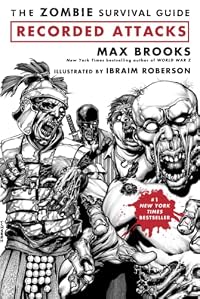
Max Brooks was born in New York City on May 22, 1972. He received a bachelor's degree in history from Pitzer College. From 2001 to 2003, he was a member of the writing team at Saturday Night Live and won an Emmy for his work. He is the author of The Zombie Survival Guide, World War Z: An Oral History of the Zombie War, and The Zombie Survival show more Guide: Recorded Attacks. World War Z was made into a movie starring Brad Pitt. He is also a television and voice-over actor. He has appeared on Roseanne, To Be or Not to Be, Pacific Blue, and 7th Heaven. His voice-over work includes Batman Beyond, Buzz Lightyear of Star Command, and Justice League. (Bowker Author Biography) show less
Some Editions
Awards and Honors
Awards
Distinctions
Notable Lists
Series
Belongs to Publisher Series
Goldmann (47424)
Work Relationships
Has the adaptation
Has as a student's study guide
Common Knowledge
- Canonical title
- World War Z: An Oral History of the Zombie War
- Original title
- World War Z
- Original publication date
- 2006-09-12
- People/Characters
- Paul Redeker; The President of the United States; The Vice President of the United States; Max Brooks; Arthur Sinclair; Jurgen Warbrunn (show all 24); Philip Adler; Saladin Kader; Joe Muhammad; Jesika Hendricks; Ahmed Farahnakian; Todd Wainio; T. Sean Collins; David Allen Forbes; Ajay Shah; Serosha Garcia Alvarez; The Whacko; Bob Archer; General Travis D'Ambrosia; Christina Eliopolis; Kwang Jingshu; Nury Televadi; Tomonaga Jiro; Ernesto Olguin
- Important places
- New Dachang, United Federation of China; United States of Southern Africa; Yonkers, New York, USA; Cape Town, Western Cape, South Africa; Israel; India (show all 21); Iran; Pakistan; Japan; South Korea; Kamchatka, Russia; Northern Canada; South Africa; Hawai'i, USA; Rocky Mountains, USA; Honolulu, O'ahu, Hawai'i, USA; Cuba; Lhasa, Tibet; International Space Station; North Korea; Iceland
- Important events
- Zombie Apocalypse
- Related movies
- World War Z (2013 | IMDb)
- Dedication
- For Henry Michael Brooks,
who makes me want to change the world.
Bana dünyayı değiştirme isteği veren
Henry Michael Brooks için... - First words
- Introduction - It goes by many names: "The Crisis," "The Dark Years," "The Walking Plague," as well as newer and more "hip" titles such as "World War Z" or "Z War One."
Setting - Greater Chongqing, the United Federation of China
Chapter One - The first outbreak I saw was in a remote village that officially had no name. - Quotations
- 'Fear is the most valuable commodity in the universe' Turn on the TV what are you seeing? People selling you products? No. People selling you the fear of you having to live without their products' Fear of aging, fear of lonel... (show all)iness, fear of poverty, fear of failure. Fear is the most basic emotion we have. Fear is primal. Fear sells. pg 55 (edit)
- Last words
- (Click to show. Warning: May contain spoilers.)I thought it was a dream, sometimes it still feels like one, remembering that day, that sunrise over the Hero City.
- Blurbers
- Weisman, Jeb
- Original language
- English
- Canonical DDC/MDS
- 813.6
- Canonical LCC
- PS3602.R6445
Classifications
Statistics
- Members
- 17,491
- Popularity
- 374
- Reviews
- 763
- Rating
- (3.97)
- Languages
- 20 — Chinese, Czech, Danish, Dutch, English, Finnish, French, German, Greek, Hungarian, Italian, Japanese, Norwegian (Bokmål), Polish, Portuguese, Romanian, Russian, Spanish, Swedish, Turkish
- Media
- Paper, Audiobook, Ebook
- ISBNs
- 90
- ASINs
- 48