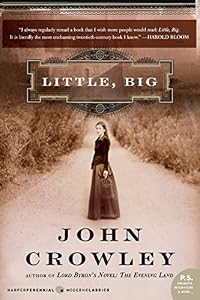
Little, Big
by John Crowley
There is 1 current discussion about this work.
On This Page
Description
Edgewood-which is not found on any map-is many houses, all put inside each other or across each other. It's filled with and surrounded by mystery and enchantment; the further in you go, the bigger it gets. Smoky Barnable, who has fallen in love with Daily Alice Drinkwater, travels from the City on foot to Edgewood, her family home. There he finds himself on the magical border of an otherworld. Crowley's work has a special alchemy-mixing the world we know with an imagined world that seems show more more true and real. Winner of the World Fantasy Award, Little, Big is elegant, sensual, funny, and unforgettable. It is a story of fantastic love and heartrending loss, of impossible things and unshakable destinies, and of the great Tale that envelops us all. It is a wonder. show lessTags
Recommendations

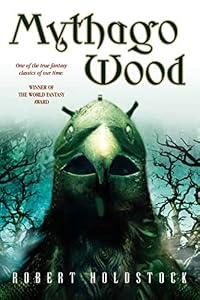
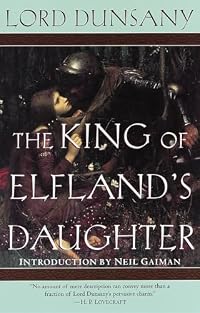
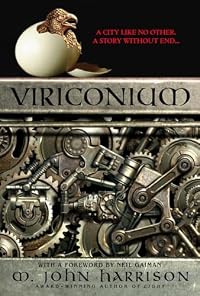
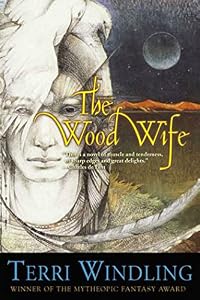


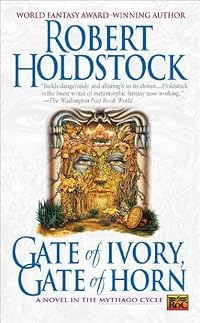

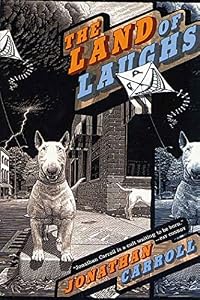
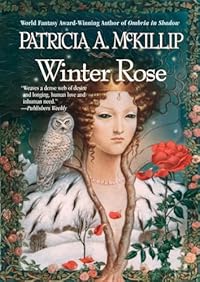
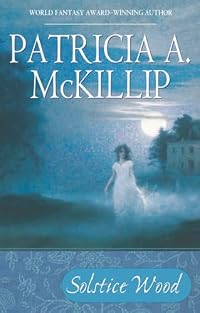
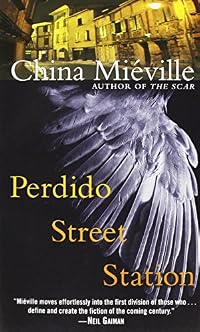

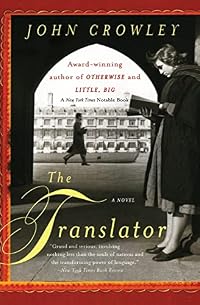
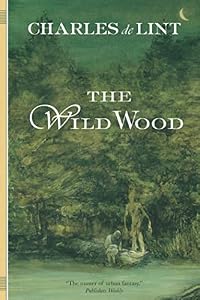
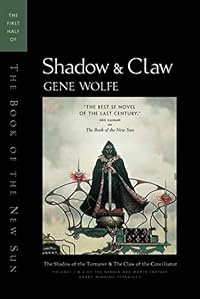



Member Recommendations
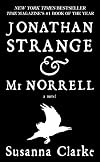
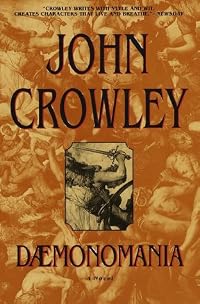
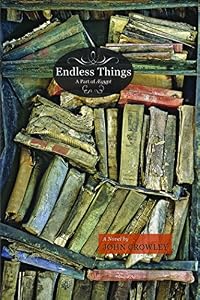
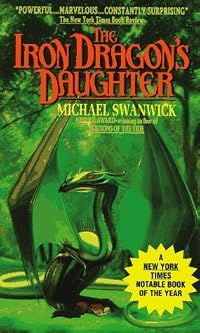
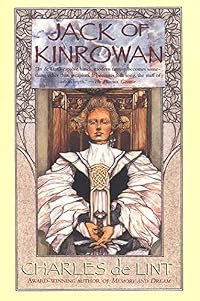
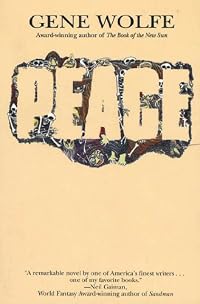
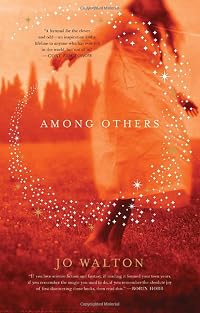
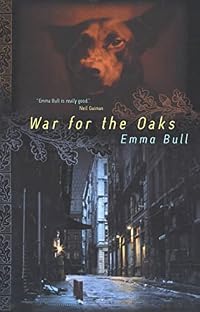
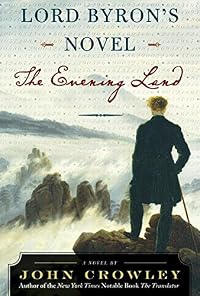
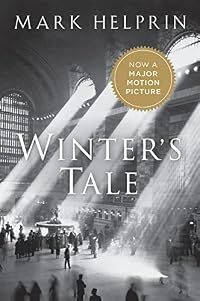
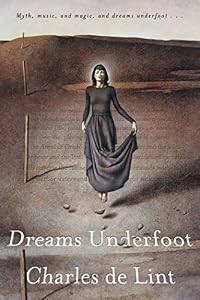
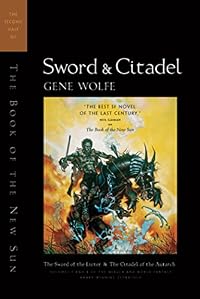
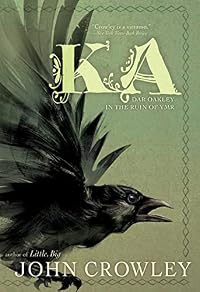
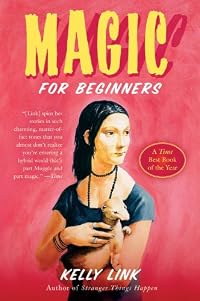
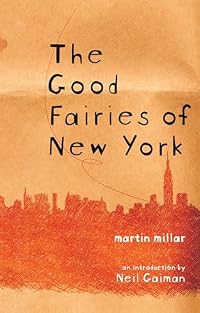
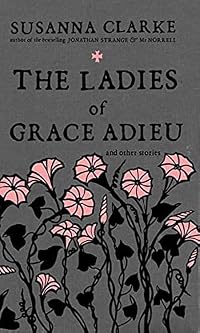
kethorn23 The fairies in both these books operate behind the scenes, which preserves the sense of magic. The fairies in Little, Big are elusive even while they play a major role in the story. Likewise, in Jonathan Strange and Mr. Norrell, the fairies are responsible for major parts of the story that affect the humans who are unaware of their existence.
81
britchey Multi-generational epics about family, history, and destiny. Both books beautiful blend the ordinary with the fantastic.
52
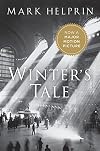
Marissa_Doyle Winter's Tale is perhaps a little more muscular, but they both share a certain dreamy whimsicality that never descends into cuteness.
30
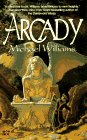
Sakerfalcon Literate, sometimes obscure, fantasies that centre around an extended family and their home. Atmospheric and mysterious.
20

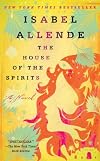
britchey Both books follow one family for several generations, chronicling the incredible events that comprise their destinies.
20
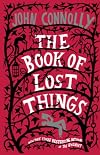
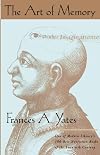
paradoxosalpha A lively history exposing the tradition of theory behind the magic of Ariel Hawksquill.
21


fduwald Hier ist der Ursprung von Edgewood.

Member Reviews
A man of New York City marries into a family from the country who have a remarkable relationship to the world of fairy. That other world is always present in the story's background, sometimes more explicitly, and yet John Crowley can do the literary equivalent of making things visible in the corner of your eye that disappear as soon as you look directly at them. I relate entirely to the male family members who try to catch those glimpses by every means, surrounded by the female members who seemingly always understand more than they're letting on or else are just wiser about not questioning. The language and style of this novel are fantastic. They force a slower read if you don't want to miss any hint of what's happening, or all of the show more fun allusions to Thorton W. Burgess, The Wind in the Willows, the House that Jack Built, Alice in Wonderland, etc., or those glimpses of fairies that might be more than just your imagination.
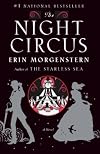
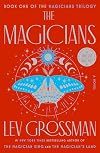
There's a strong resemblance here to Morgenstern's "The Night Circus" (mystery abounds, conflict is muted), Helprin's "Winter's Tale" (the city and the country, those who do and do not marvel at magic) and Clarke's "Jonathan Strange and Mr. Norrell" (opening doors between worlds, while deeper workings are afoot), in almost that sequential order. And yet it predates all of them, and wins in comparison with each. This felt like discovering some ancient predecessor dinosaur that is more impressive than all the dinosaurs I know, a clear antecedent that the others only imitate. Crowley here presents more plot than Morgenstern, more logic than Helprin, more mystery than Clarke.
I don't love everything about it - the pace is often slower than I preferred, conflicts too easily brushed aside - but I loved and appreciated a lot. It achieves what surely no author can purposely aim for but only succeed at by happy accident, that feeling so evasive since childhood and difficult for any adult reader to experience: the sensation that stepping through the looking glass is not so very impossible or far a journey after all. show less
There's a strong resemblance here to Morgenstern's "The Night Circus" (mystery abounds, conflict is muted), Helprin's "Winter's Tale" (the city and the country, those who do and do not marvel at magic) and Clarke's "Jonathan Strange and Mr. Norrell" (opening doors between worlds, while deeper workings are afoot), in almost that sequential order. And yet it predates all of them, and wins in comparison with each. This felt like discovering some ancient predecessor dinosaur that is more impressive than all the dinosaurs I know, a clear antecedent that the others only imitate. Crowley here presents more plot than Morgenstern, more logic than Helprin, more mystery than Clarke.
I don't love everything about it - the pace is often slower than I preferred, conflicts too easily brushed aside - but I loved and appreciated a lot. It achieves what surely no author can purposely aim for but only succeed at by happy accident, that feeling so evasive since childhood and difficult for any adult reader to experience: the sensation that stepping through the looking glass is not so very impossible or far a journey after all. show less
I've put off reviewing this book because I don't think I can well articulate my thoughts on it. I vacillate between rating it as mediocre and as excellent. Ultimately, for its poignant final paragraphs, for its untiring imaginativeness, for the quantity of cleverness—of which, no doubt, a great deal was lost on me—and for its evocation of the wonder and mysteries of make-believe, I have to give it close to my highest rating.
Little, Big is a multigenerational family saga, of a family with a close but complicated relationship to Faery, though the glimpses of that magical land are only out of the corner of the eye, perhaps dreamed. Though the action spans (I guess) from some time around the turn of the 19th to 20th centuries until (I show more guess) some time later in the 20th, there is an odd, anachronistic feel to the more modern parts, as though they were suspended in time, in some imaginary steampunk era. "The City" from which some of the characters hail and to which some of the characters migrate, though presumably New York, is unrecognizable as such, and almost unrecognizable as a modern city at all.
The story ultimately assumes mythic proportions, but it is told simply through the everyday events and actions of members of the Drinkwater clan. Some of those descriptions are so apt and familiar that I could immediately relate with them, some so well-put that I immediately recognized experiences or emotions that I could never have put into words, so that by the time some of the more outlandish events took place, I was transported right along with the characters. For example, there are some of the most accurate descriptions I have ever read about being in love: what it actually feels like, how it is experienced and unfolds in one's day-to-day life. And I am firmly convinced that should I ever be transported to a make-believe land, I will experience it exactly in the way George experiences his trip to the Woods.
After writing this, I think that whatever misgivings I have about this book that made me want to rate it less highly are probably not worth mentioning. Their source is, I think, the same dreamy (and distancing) quality that makes the book succeed at what it does so well. The un-pin-down-able quality that kept me Somehow confused, that kept my feelings about the characters Somehow vague, that made the narrative seem Somehow out of focus, also made the magic possible and is rather the point of the whole book. show less
Little, Big is a multigenerational family saga, of a family with a close but complicated relationship to Faery, though the glimpses of that magical land are only out of the corner of the eye, perhaps dreamed. Though the action spans (I guess) from some time around the turn of the 19th to 20th centuries until (I show more guess) some time later in the 20th, there is an odd, anachronistic feel to the more modern parts, as though they were suspended in time, in some imaginary steampunk era. "The City" from which some of the characters hail and to which some of the characters migrate, though presumably New York, is unrecognizable as such, and almost unrecognizable as a modern city at all.
The story ultimately assumes mythic proportions, but it is told simply through the everyday events and actions of members of the Drinkwater clan. Some of those descriptions are so apt and familiar that I could immediately relate with them, some so well-put that I immediately recognized experiences or emotions that I could never have put into words, so that by the time some of the more outlandish events took place, I was transported right along with the characters. For example, there are some of the most accurate descriptions I have ever read about being in love: what it actually feels like, how it is experienced and unfolds in one's day-to-day life. And I am firmly convinced that should I ever be transported to a make-believe land, I will experience it exactly in the way George experiences his trip to the Woods.
After writing this, I think that whatever misgivings I have about this book that made me want to rate it less highly are probably not worth mentioning. Their source is, I think, the same dreamy (and distancing) quality that makes the book succeed at what it does so well. The un-pin-down-able quality that kept me Somehow confused, that kept my feelings about the characters Somehow vague, that made the narrative seem Somehow out of focus, also made the magic possible and is rather the point of the whole book. show less
Little, Big mirrors a soap opera: two American families, linking back to a third family in Britain, are followed over 2-3 generations. Locus of action is a country manse and a city tenement. Key to the myriad social relations is an underlying relationship with the Faery, elusively described but quite definitive in its broad integration with the families. Not only the reader but also family members are confused about the influence and indeed the very existence of the Faery, and this ambiguity suffuses the entirety of plot and setting.
This premise, anchored both in ambiguity and (seemingly at random moments) in crystalline but fleeting scenes, provides a diorama in which Crowley builds up a richly detailed world. Turning the last page, show more the strongest impression is of these layers of detail. It's not that the story is empty, in fact there's a satisfying resolution to the mystery of his labyrinthine plot. And yet, events all seem secondary to the cross-references, literary allusions, and echoes which events leave scattered throughout the text.
//
If there is an underlying oneness of all things, it does not matter where we begin, whether with stars, or laws of supply and demand, or frogs, or Napoleon Bonaparte. One measures a circle, beginning anywhere.
-- attributed to Charles Fort, Lo! (1931)
The plot is not driven along in the way of a crime story, nor does any sharp conflict define the action. The novel instead reveals interwoven threads, leitmotifs and recurrent images, layers and connections like frost spreading on a pane.
Crowley uses two leitmotifs: Somehow (capitalised) is a recurrent marker, sometimes in narrative description but also in a character's inner dialogue, hinting at something beyond random events. Characters also repeatedly refer to the Tale (again capitalised), hinting at a destiny governing family events, linking family with Faery. They don't fully understand this Tale themselves, it is a secret from one another as much as from the reader.
Throughout the story, Crowley references Shakespeare and Carroll, specifically in how the human world encounters the Faery world. It is not merely the novel's ending which evokes A Midsummer Night's Dream but the borrowing of Wood & the City and the namesake for Ariel (The Tempest). And though there are a few droll references to Alice in Wonderland, the stronger allusion is to Carroll's Sylvie & Bruno, with its dual plots in Real World and in Faery. (The Faery Parliament perhaps a reference to Robert Kirk's The Secret Commonwealth of Elves, Fauns, and Faeries.)
In the novel, characters frequently access the Faery world through non-rational techniques. They are methodically described and followed, but not fully understood -- reminiscent of absurdism. The Tarot is a familiar device; a more inventive role is given to architecture. Both the country manse and its grounds are clearly linked to the Faery, though rationally designed and built, and also through the Memory Palace. (Crowley's concept that practitioners of memory arts can learn new things from the juxtaposition of memories forced through their architectural touchpoints is new to me and quite possibly an innovation of his own.)
So how is it this is so? What makes possible these myriad connections and layers? Crowley relies on careful repetition and a circular story structure, then patiently juxtaposes seemingly unconnected characters and events through suggestive prose and coincidence. I think Crowley in part is being mimetic. After all, the world works this way, too. Meaning and significance come from finding connections, and they are there to be found. With his choice to foreground the Faery, and yet retain their elusive nature, Crowley appears to suggest people typically do not notice a great many of the connections surrounding them, perhaps even that some of these are more significant than others. That we should attend to these, open ourselves to their possibilities. show less
This premise, anchored both in ambiguity and (seemingly at random moments) in crystalline but fleeting scenes, provides a diorama in which Crowley builds up a richly detailed world. Turning the last page, show more the strongest impression is of these layers of detail. It's not that the story is empty, in fact there's a satisfying resolution to the mystery of his labyrinthine plot. And yet, events all seem secondary to the cross-references, literary allusions, and echoes which events leave scattered throughout the text.
//
If there is an underlying oneness of all things, it does not matter where we begin, whether with stars, or laws of supply and demand, or frogs, or Napoleon Bonaparte. One measures a circle, beginning anywhere.
-- attributed to Charles Fort, Lo! (1931)
The plot is not driven along in the way of a crime story, nor does any sharp conflict define the action. The novel instead reveals interwoven threads, leitmotifs and recurrent images, layers and connections like frost spreading on a pane.
Crowley uses two leitmotifs: Somehow (capitalised) is a recurrent marker, sometimes in narrative description but also in a character's inner dialogue, hinting at something beyond random events. Characters also repeatedly refer to the Tale (again capitalised), hinting at a destiny governing family events, linking family with Faery. They don't fully understand this Tale themselves, it is a secret from one another as much as from the reader.
Throughout the story, Crowley references Shakespeare and Carroll, specifically in how the human world encounters the Faery world. It is not merely the novel's ending which evokes A Midsummer Night's Dream but the borrowing of Wood & the City and the namesake for Ariel (The Tempest). And though there are a few droll references to Alice in Wonderland, the stronger allusion is to Carroll's Sylvie & Bruno, with its dual plots in Real World and in Faery. (The Faery Parliament perhaps a reference to Robert Kirk's The Secret Commonwealth of Elves, Fauns, and Faeries.)
In the novel, characters frequently access the Faery world through non-rational techniques. They are methodically described and followed, but not fully understood -- reminiscent of absurdism. The Tarot is a familiar device; a more inventive role is given to architecture. Both the country manse and its grounds are clearly linked to the Faery, though rationally designed and built, and also through the Memory Palace. (Crowley's concept that practitioners of memory arts can learn new things from the juxtaposition of memories forced through their architectural touchpoints is new to me and quite possibly an innovation of his own.)
So how is it this is so? What makes possible these myriad connections and layers? Crowley relies on careful repetition and a circular story structure, then patiently juxtaposes seemingly unconnected characters and events through suggestive prose and coincidence. I think Crowley in part is being mimetic. After all, the world works this way, too. Meaning and significance come from finding connections, and they are there to be found. With his choice to foreground the Faery, and yet retain their elusive nature, Crowley appears to suggest people typically do not notice a great many of the connections surrounding them, perhaps even that some of these are more significant than others. That we should attend to these, open ourselves to their possibilities. show less
Oh this is one of those books that are so difficult to review. All books don't suit everyone, like music, or food, and this is one that I think you must either love or hate. It's like reading a Grimm's fairy tale, as narrated by the little prince, it's the reading equivalent of Elsa Beskow's paintings or those wonderful (fake, I know, but still wonderful) Cottingley fairy photos. I think the only book that I've ever read that had the same sensibility was Winter's Tale by Mark Helprin. Or perhaps some of Neil Gaiman's short pieces (I am a fan of Gaiman's novels, but it's in his short stories he reaches this sense of both gravity and whimsy at the same time. I wonder what he thinks of this book?)
It's big and sprawling, covering decades show more and generations, and yet it's always intimate. The language is gorgeous. The story is at once mystical and completely easy to follow, there is foreshadowing aplenty if you care to see it, and the whole thing is simply delightful.
To anyone who ever imagined their were fairies at the bottom of their garden, I cannot recommend this book highly enough. show less
It's big and sprawling, covering decades show more and generations, and yet it's always intimate. The language is gorgeous. The story is at once mystical and completely easy to follow, there is foreshadowing aplenty if you care to see it, and the whole thing is simply delightful.
To anyone who ever imagined their were fairies at the bottom of their garden, I cannot recommend this book highly enough. show less
So many times trying to start this, so many times I've bounced off it because if I'm being perfectly frank I thought it was out of my league, which is ridiculous of course, what are you, my therapist? So I read and audiod at the same time, the way I did with Gormenghast, and for whatever reason that kept me going. It's a big, beautiful, magical book, but it's about the way magic is sort of half-understood, barely remembered but immensely important secrets you no longer have access to, but it's working all around you and you're in it and you are it and it's you. Truly an amazing book, filled with the idyll of the country the harshness of the city, the movement of history, and places that get bigger the farther in you go.
Don't try to read this when you are feeling harried or stressed or filled with too many responsibilities and desires. Find a dreamy, drifty time and start without expectations. Go forward, back up, take a nap, dream a little, float along, and don't try too hard. Taste and savor the language and become a part of the family. Bring something to drink and explore the Woods and the City. Just be willing to go Elsewhere for a while and above all, don't hurry, because this is a journey unlike any other.
A curious title with an implied “and everything in between.” Close, far; natural, supernatural; rational, irrational—and everything in between, represented throughout the book by the Germanically-capitalized Somehow, is what one encounters once the title page is turned. John Crowley has appropriated the fantasy novel and made it his own. He has razed the boundaries between literary and genre fiction, chastening my former distaste for fantasy. In Little, Big everything is alive, everything possible, and what is perceived by the adult reader as bad is yet good when viewed through the eyes of a child.
Read the full review here: http://www.chrisviabookreviews.com/2017/09/25/little-big-1981/
Read the full review here: http://www.chrisviabookreviews.com/2017/09/25/little-big-1981/
Members
- Recently Added By
Published Reviews
ThingScore 100
This August marked the 40th anniversary of the release of John Crowley’s fantasy masterpiece Little, Big (1981). ... Crowley had already published three remarkable novels—The Deep (1975), Beast (1976) and Engine Summer (1979)—which established him as an exciting author unafraid to bring both beautifully crafted prose and highly original ideas to his own peculiar mix of science fiction, show more speculative fiction, and fantasy. However Little, Big would eclipse them all. show less
added by elenchus
Lists

Best Fantasy Novels
821 works; 361 members

Recommend the 20 best books you've read in the last five years
2,168 works; 606 members

Unread books
1,063 works; 83 members

Favourite Books
1,817 works; 308 members

Recommended Faerie books
67 works; 22 members

Favorite Fairy Tale Retellings
210 works; 62 members

Novels from The Guardian's Great American Novelist Tournament
148 works; 24 members
Favorite Long Books
330 works; 42 members

Magic Realism
371 works; 51 members

20th Century Literature
1,161 works; 55 members

Faerie Mythology
87 works; 13 members

Pleasant Surprises: Books That Exceeded Our Expectations
418 works; 143 members

Top Five Books of 2014
1,064 works; 397 members

Speculative Fiction: Slipstream Literature
166 works; 16 members

One Book, Many Authors
441 works; 40 members
Books Set in New York State
65 works; 11 members

Fantasy Masterworks
66 works; 5 members

David Pringle's Modern Fantasy: The 100 Best Novels
100 works; 5 members
LibraryThingers' 1001 Books You Must Read Before You Die
442 works; 30 members
Harold Bloom - The Western Canon: D. The Chaotic Age
833 works; 24 members

Five star books
1,755 works; 107 members

What are your favourite books?
121 works; 11 members

I Can't Finish This Book
189 works; 22 members

SantaThing 2014 Gifts
299 works; 17 members

Books Read in 2025
4,090 works; 97 members
The Atlantic's The Great American Novel
136 works; 12 members
Books We Love to Reread
688 works; 296 members
Books We Couldn't Put Down
443 works; 197 members
Books We Want To Read Again For The First Time
384 works; 160 members

2025 Christmas Gifts
70 works; 19 members

Myth (Reuse and Retelling)
188 works; 23 members
Books We'd Want on a Desert Island
203 works; 131 members

Mustich's 1000 Books to Read Before You Die: A Life Changing List
1,001 works; 18 members

Best family sagas
244 works; 34 members

The Hive Recommends
62 works; 2 members

Contemporary Fantasy to Read
63 works; 5 members

Jean's Sci Fi/Fantasy Reading list
189 works; 12 members

Books discovered on LibraryThing
256 works; 35 members

The Five Books That Represent Us
390 works; 147 members
Survey of Fantasy Classics
111 works; 23 members

Weird and Weirder Fiction
267 works; 34 members
Talk Discussions
Current Discussions
Little, Big 25th Anniversary Edition in Fine Press Forum (April 21)
Past Discussions
Little, Big in Hogwarts Express (April 2013)
Fantasy Novel in Name that Book (October 2010)
Author Information

46+ Works 12,780 Members
John Crowley was a recipient of the American Academy & Institute of Arts & Letters Award for Literature. He lives in the hills above the Connecticut River in northern Massachusetts with his wife & twin daughters. (Bowker Author Biography)
Some Editions
Awards and Honors
Series
Belongs to Publisher Series
Artefakty (24)
Work Relationships
Common Knowledge
- Original title
- Little, Big
- Original publication date
- 1981-09
- People/Characters
- Smoky Barnable; Daily Alice Drinkwater; George Mouse; Grandfather Trout; Ariel Hawksquill; Sophie Dale Drinkwater (show all 27); Dr. John Storm Drinkwater; Nora Cloud; Auberon Barnable; Violet Bramble; John Drinkwater; Mrs. Underwood; Auberon Drinkwater; August Drinkwater; Sylvie; Tacey Barnable; Lily Barnable; Lucy Barnable; Lilac Drinkwater; Fred Savage; Russel Eigenblick; Chris Woods; Marge Juniper; Dr. Theodore Burne Bramble; La Negra; Jeff Juniper; Amy Woods
- Important places
- Edgewood; The City
- Epigraph
- A little later, remembering man's earthly origin, 'dust thou art and to dust thou shalt return,' they liked to fancy themselves bubbles of earth. When alone in the fields, with no one to see them, they would hop, skip and jum... (show all)p, touching the ground as lightly as possible and crying 'We are the bubbles of earth! Bubbles of earth! Bubbles of earth!'
- Flora Thompson,
Lark Rise - Dedication
- For Lynda
who first knew it
with the author's love - First words
- On a certain day in June, 19--, a young man was making his way on foot northward from the great City to a town or place called Edgewood, that he had been told of but had never visited.
- Quotations
- The things that make us happy make us wise.
There was after all no mystery in the end of love, no mystery but the mystery of love itself, which was large certainly but as real as grass, as natural and unaccountable as bloom and branch and their growth. - Last words
- (Click to show. Warning: May contain spoilers.)Even the weather isn't as we remember it clearly once being; never lately does there come a summer day such as we remember, never clouds as white as that, never grass as odorous or shade as deep and full of promise as we remember they can be, as once upon a time they were.
- Blurbers
- Bloom, Harold; Dirda, Michael; Gabree, John; Hoban, Russell; Hynes, James; Le Guin, Ursula K.
- Original language
- English US
- Canonical DDC/MDS
- 813.54
- Canonical LCC
- PS3553.R597
Classifications
Statistics
- Members
- 4,581
- Popularity
- 3,156
- Reviews
- 124
- Rating
- (3.99)
- Languages
- 6 — English, French, German, Italian, Polish, Spanish
- Media
- Paper, Audiobook, Ebook
- ISBNs
- 37
- UPCs
- 1
- ASINs
- 19