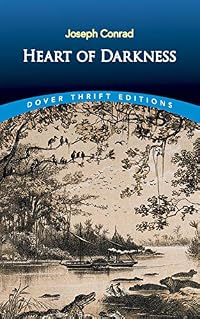
Heart of Darkness
by Joseph Conrad
On This Page
Description
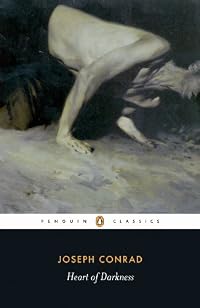
Heart of Darkness is Joseph Conrad's disturbing novella recounted by the itinerant captain Marlow sent to find and bring home the shadowy and inscrutable Captain Kurtz. Marlow and his men follow a river deep into a jungle, the "Heart of Darkness" of Africa looking for Kurtz, an unhinged leader of an isolated trading station. This highly symbolic psychological drama was the founding myth for Francis Ford Coppola's 1979 movie Apocalypse Now.Tags
Recommendations







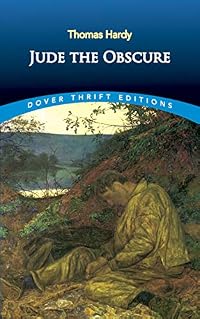


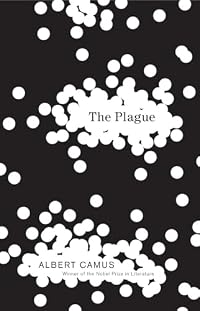
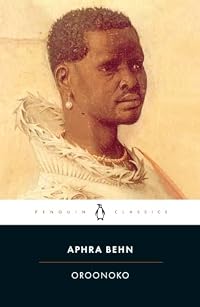
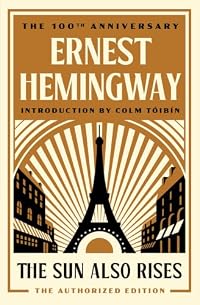


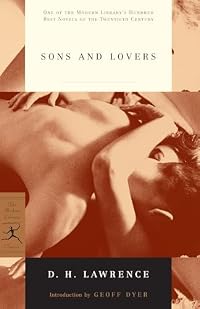
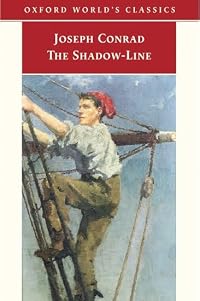

Member Recommendations
90
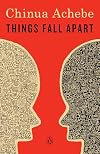
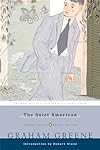
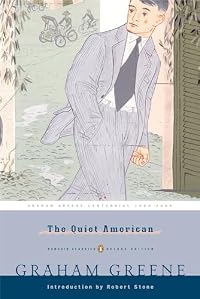
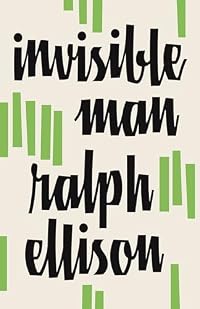
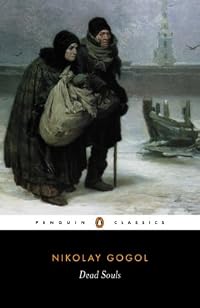
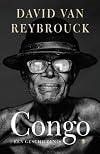
browner56 Powerful, suspenseful fictional accounts of the intended and unintended consequences of colonial rule
71
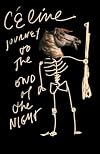
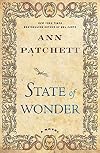

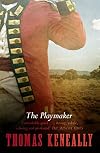
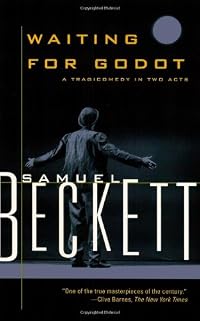
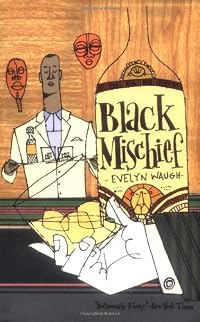
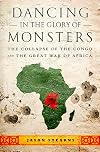
PilgrimJess This book was influenced by Heart of Darkness and looks at the uncomfortable truths about bringing 'civilisation' to another country.
10
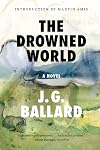


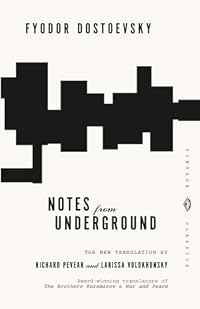
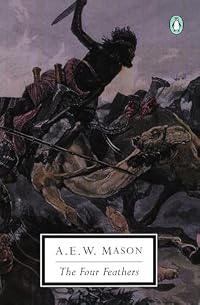
aulsmith Silverberg was inspired by Conrad's story to write Downward to Earth and makes some interesting comments on the themes that Conrad explores.
10

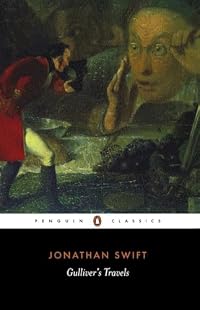
chrisharpe "Headhunter" is a clever and well written fantasy on the theme of Kurtz.

lucyknows Heart of Darkness by Joseph Conrad may be paired with Fly Away Peter by David Malouf as both authors show human nature to be hollow to the core.

Sylak Delving the depths of human savagery and corruption.
22
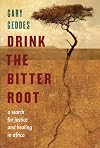
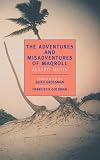
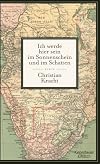
snipermatze A man in hunt for a criminal, recognizes its insanity and reign among his followers
01
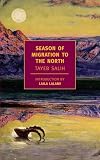
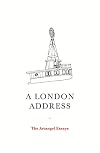
bluepiano Essays by various artists invited over the course of a year to stay in a rooftop boat-like contstruction. named for a ship under Conrad's command, where they were surrounded by references to HoD & given a brief to write a piece connecting the novel to modern London.
02


lucyknows Heart of Darkness may be paired with Oscar Wilde's The Picture of Dorian Gray or the strange Case of Dr Jekyll and Mr Hyde by Robert Louis Stevenson. In all three novels the authors depict the struggle of people against the forces of evil.
27
by anonymous user
Member Reviews
Thank God Conrad indulged in some purplish over-drama in the final scene with Kurtz's fiancee or I'd be stuck giving five stars to a book Chinua Achebe first called racist in 1975, and by now everyone agrees with him.
Yes. So much of what is written here is just so uncomfortably crude and offensive to modern ears, when it comes to the African characters.
Even so I think the entire thrust of the novella is to vilify European colonialism, and to show how fragile European values are once the economic and social structures aren't there to support them. Boats don't get repaired without someone to manufacture, ship, and transport a certain kind rivet upstream. Bricks aren't made without someone supplying the right kind of straw. Ivory is of show more no value to you when you happen to die along the way to procuring it. Humans of every color fall ill when subjected to unrelenting labor that offers them no meaning or return.
It's worth pointing out that the Africans who are not a part of "the horror" along the river--who are living independently of the degrading relationships there--are portrayed as healthy and capable. Marlow says: "Now and then a boat from the shore gave one a momentary contact with reality. It was paddled by black fellows...They shouted, sang; their bodies streamed with perspiration...they had bone, muscle, a wild vitality, an intense energy of movement, that was as natural and true as the surf along their coast. They wanted no excuse for being there. They were a great comfort to look at. For a time I would feel I belonged still to a world of straightforward facts; but the feeling would not last long. Something would turn up to scare it away. "
The story is still worth reading, too, for this reason alone: so much of it is written in frankly and unabashedly beautiful prose that left me, well, breathless, as much as looking at a beautiful view or a beautiful painting would leave me breathless. What to do about the fact that these encounters with prose perfection were scattered in between descriptions of Africans with "eyeballs glistening" and "faces like grotesque masks?" Well. I don't know what to do about that. Maybe someone should re-edit Conrad the way they have edited Mary Poppins and Dr. Doolittle, to take out the parts that offend us now.
As I read I thought of the analogous scenes from Apocalypse Now now and then, of course, but even more I was reminded of Werner Herzog's Aguirre--another river journey where the company starts with all the trappings of "civilization," but these trappings are each abandoned as useless objects, one by one, as the journey continues upstream and away from the culture that created them. show less
Yes. So much of what is written here is just so uncomfortably crude and offensive to modern ears, when it comes to the African characters.
Even so I think the entire thrust of the novella is to vilify European colonialism, and to show how fragile European values are once the economic and social structures aren't there to support them. Boats don't get repaired without someone to manufacture, ship, and transport a certain kind rivet upstream. Bricks aren't made without someone supplying the right kind of straw. Ivory is of show more no value to you when you happen to die along the way to procuring it. Humans of every color fall ill when subjected to unrelenting labor that offers them no meaning or return.
It's worth pointing out that the Africans who are not a part of "the horror" along the river--who are living independently of the degrading relationships there--are portrayed as healthy and capable. Marlow says: "Now and then a boat from the shore gave one a momentary contact with reality. It was paddled by black fellows...They shouted, sang; their bodies streamed with perspiration...they had bone, muscle, a wild vitality, an intense energy of movement, that was as natural and true as the surf along their coast. They wanted no excuse for being there. They were a great comfort to look at. For a time I would feel I belonged still to a world of straightforward facts; but the feeling would not last long. Something would turn up to scare it away. "
The story is still worth reading, too, for this reason alone: so much of it is written in frankly and unabashedly beautiful prose that left me, well, breathless, as much as looking at a beautiful view or a beautiful painting would leave me breathless. What to do about the fact that these encounters with prose perfection were scattered in between descriptions of Africans with "eyeballs glistening" and "faces like grotesque masks?" Well. I don't know what to do about that. Maybe someone should re-edit Conrad the way they have edited Mary Poppins and Dr. Doolittle, to take out the parts that offend us now.
As I read I thought of the analogous scenes from Apocalypse Now now and then, of course, but even more I was reminded of Werner Herzog's Aguirre--another river journey where the company starts with all the trappings of "civilization," but these trappings are each abandoned as useless objects, one by one, as the journey continues upstream and away from the culture that created them. show less
The heart of darkness that is profusely referred to in this novella could come to mean so many things. And what it really means, what is really meant, why it means so, who means and for whom, to my mind, reflects the appreciations and apparent criticisms of the book.
Man's own capacity; a capacity to corrupt and get corrupted, man's ultimate inability to comprehend and rend the thick shards of ambiguity life catches us in, sort of feeds that impenetrable heart of darkness. Do we not all own it, have it, exhibit it? And then, if that is so, Heart of Darkness is a parable of human nature.
Despite hearing about the reservations on the racist tones and the not so anti-imperialist stance, I feel that there is more to this work than just show more that. Nowhere am I determinedly able to maintain that the text gives way to an authorial voice depicting a for or against sign, let alone some agenda to obey. If anything, it is a rich and complex novella with a promise to yield thoughtful discussion.
Degradation of human beings, material and spiritual, is what is at heart of the tale. And the language that captures the prose captivates aspect and attention with poetical sensitivity.
Still, I can hear reserved echoes of criticisms leveled against the 'dark' heart (particularly in its treatment of the natives of Congo, attributed as well to the racist tradition existent in Western literature). But if the dark treatment of Africa is to be considered as representative, what about the 'light' that is coming from the other side. Is it, in Conrad's view, all the more redeeming or 'civilised'? And can we say then which does the voice means when it sighs profoundly the word, 'Horror'? I don't know yet. In that I find the book more open-ended than we presume probably.
Somehow, style is central to narration and is thus worthy of re-readings. The narrative voice is aptly unreliable. Never do we really get to know what Marlow thinks in his own heart; he is a voice telling but somehow devoid of an intimacy towards readers. Perhaps, through what he sees on the outside, he sees the all too dark heart of his own and is unable to reveal it to us as Kurtz does. Marlow envies Kurtz for "He had something to say. He said it." show less
Man's own capacity; a capacity to corrupt and get corrupted, man's ultimate inability to comprehend and rend the thick shards of ambiguity life catches us in, sort of feeds that impenetrable heart of darkness. Do we not all own it, have it, exhibit it? And then, if that is so, Heart of Darkness is a parable of human nature.
Despite hearing about the reservations on the racist tones and the not so anti-imperialist stance, I feel that there is more to this work than just show more that. Nowhere am I determinedly able to maintain that the text gives way to an authorial voice depicting a for or against sign, let alone some agenda to obey. If anything, it is a rich and complex novella with a promise to yield thoughtful discussion.
Degradation of human beings, material and spiritual, is what is at heart of the tale. And the language that captures the prose captivates aspect and attention with poetical sensitivity.
Still, I can hear reserved echoes of criticisms leveled against the 'dark' heart (particularly in its treatment of the natives of Congo, attributed as well to the racist tradition existent in Western literature). But if the dark treatment of Africa is to be considered as representative, what about the 'light' that is coming from the other side. Is it, in Conrad's view, all the more redeeming or 'civilised'? And can we say then which does the voice means when it sighs profoundly the word, 'Horror'? I don't know yet. In that I find the book more open-ended than we presume probably.
Somehow, style is central to narration and is thus worthy of re-readings. The narrative voice is aptly unreliable. Never do we really get to know what Marlow thinks in his own heart; he is a voice telling but somehow devoid of an intimacy towards readers. Perhaps, through what he sees on the outside, he sees the all too dark heart of his own and is unable to reveal it to us as Kurtz does. Marlow envies Kurtz for "He had something to say. He said it." show less
Here's one of those works traditionally considered a classic that I'd managed to not read until fairly late in life. I was surprised, by the way, at how short it is: only 72 pages in the Dover Thrift edition I have.
I can see where the supposed classic status comes from. Conrad's writing is incredibly evocative. As for what it's evocative of... Well, it's certainly an interesting thing to read this here in the 21st century, on the other side of the colonial era. It is, as they say, very much Of Its Time, but in a complicated way that I find worth pondering. Conrad is writing about the absurdity, the inhumanity, and, yes, the horror of Europeans' exploitation of Africa. He's also writing that criticism very much from inside the cultural show more framework that produced those horrors, which means that there's an incredibly limited effort and an even more limited ability to imagine what things look like from other perspectives. It also means a preoccupation with ideas of "civilization" and "savagery" that seem, now, to be quite simplistic and wrongheaded, but which are explored here in a complex way that gives a genuinely interesting window onto the thoughts and fears surrounding these ideas at the time. And, yeah, let's not mince words: it's super racist. I mean, by the standards of the time, even the repeated insistence that the Africans in the story are completely human may have been unusual, but, y'know, one kinda wants to set the bar higher than that. In my mind, though, the value of reading this doesn't lie in the way it lets us pat ourselves on the back for being more enlightened, but in getting this rather dark and tortured glimpse into that past and into what it looked like to someone who, despite all that comparative lack of enlightenment, was still horrified by it.
I'm not sure if I've expressed any of that very well. I also feel like I ought to have a lot more intelligent things to say about the story and the writing, and especially about the character of Mr. Kurtz. Honestly, I'm not entirely sure what to make of the character of Mr. Kurtz. He's not exactly what I was expecting from what I'd osmosed about this piece of writing, either. If nothing else, I was expecting there to be... more of him.
Rating: I'm going to call this 4/5, for the writing, and for how worthwhile it is from a cultural and historical perspective, but, y'know, take that with all the appropriate caveats. show less
I can see where the supposed classic status comes from. Conrad's writing is incredibly evocative. As for what it's evocative of... Well, it's certainly an interesting thing to read this here in the 21st century, on the other side of the colonial era. It is, as they say, very much Of Its Time, but in a complicated way that I find worth pondering. Conrad is writing about the absurdity, the inhumanity, and, yes, the horror of Europeans' exploitation of Africa. He's also writing that criticism very much from inside the cultural show more framework that produced those horrors, which means that there's an incredibly limited effort and an even more limited ability to imagine what things look like from other perspectives. It also means a preoccupation with ideas of "civilization" and "savagery" that seem, now, to be quite simplistic and wrongheaded, but which are explored here in a complex way that gives a genuinely interesting window onto the thoughts and fears surrounding these ideas at the time. And, yeah, let's not mince words: it's super racist. I mean, by the standards of the time, even the repeated insistence that the Africans in the story are completely human may have been unusual, but, y'know, one kinda wants to set the bar higher than that. In my mind, though, the value of reading this doesn't lie in the way it lets us pat ourselves on the back for being more enlightened, but in getting this rather dark and tortured glimpse into that past and into what it looked like to someone who, despite all that comparative lack of enlightenment, was still horrified by it.
I'm not sure if I've expressed any of that very well. I also feel like I ought to have a lot more intelligent things to say about the story and the writing, and especially about the character of Mr. Kurtz. Honestly, I'm not entirely sure what to make of the character of Mr. Kurtz. He's not exactly what I was expecting from what I'd osmosed about this piece of writing, either. If nothing else, I was expecting there to be... more of him.
Rating: I'm going to call this 4/5, for the writing, and for how worthwhile it is from a cultural and historical perspective, but, y'know, take that with all the appropriate caveats. show less
A viagem de uma embarcação ao longo do rio Congo traça um terrível retrato dos efeitos do colonialismo europeu no continente africano. Charles Marlow, capitão do velho navio a vapor, é encarregado do resgate de Kurtz, um comerciante de marfim quase mítico isolado centenas de quilômetros rio acima. Lenta e cheia de dificuldades, a jornada vai adentrando a selva sombria, e os recantos mais escuros do ser humano.
Narrado por Marlow, com raros diálogos e longas reflexões, "Coração das Trevas" é um romance curto e impressionante. A narrativa publicada em 1899 foi transposta 80 anos no futuro, e adaptada do cenário da selva no Congo para a guerra do Vietnã pelo cineasta Francis Ford Coppola no filme "Apocalypse Now".
Li show more "Coração das Trevas" na edição da Ubu Editora, com tradução de Paulo Schiller e quase metade das 226 páginas com belíssimas intervenções artísticas de Rosângela Rennó. A edição tem ainda posfácio de Bernardo Carvalho e textos de Paulo Mendes Campos, Virginia Woolf e Walnice Nogueira Galvão. show less
Narrado por Marlow, com raros diálogos e longas reflexões, "Coração das Trevas" é um romance curto e impressionante. A narrativa publicada em 1899 foi transposta 80 anos no futuro, e adaptada do cenário da selva no Congo para a guerra do Vietnã pelo cineasta Francis Ford Coppola no filme "Apocalypse Now".
Li show more "Coração das Trevas" na edição da Ubu Editora, com tradução de Paulo Schiller e quase metade das 226 páginas com belíssimas intervenções artísticas de Rosângela Rennó. A edição tem ainda posfácio de Bernardo Carvalho e textos de Paulo Mendes Campos, Virginia Woolf e Walnice Nogueira Galvão. show less
Perhaps we always have a "choice of nightmares". Conrad writes "It is strange how I accepted this unforeseen partnership, this choice of nightmares forced upon me in the tenebrous land invaded by these mean and greedy phantoms."
I avoided reading this reality fiction for years, out of fear. In my bruised old age, I had awakened my Empathy. So I shuddered to immerse myself in great writing about great tragedy. A Review of Conrad's work by Maya Jasanoff forced me to get "over" my trepidation. She had the same fears but overcame them, and gave us an understanding of what Conrad was showing us. Her work is entitled "The Dawn Watch: Joseph Conrad in a Global World," Maya Jasanoff, New York, NY: HarperCollins, (2017).
The prescience of Conrad show more is breath-taking. He saw in 1899 the pernicious shadow cast by Leopold of Belgium over the next and last 100 years. Adam Hochschild describes this evil come to us in his 1998 account of Colonial Africa, "Leopold's Ghost". We see this spectre leaping out of his Big Lie (Grosse Luege), through the Nazis and Bolsheviks, to Putin and Donald Trump. For those of us who struggle to understand what possible "appeal" evil holds for any human being, we have Conrad holding up a mirror to the Colonialism he observed.
Through private corporations, who account to no one, and who take over "government" functions, a poison was injected into our Civilization. Conrad describes privatized Colonialism as it was weaponized by King Leopold. Now even more global, the poisoning is a metastasized cancer killing of all civil society. Private corporations account to no one, lie about what they are doing, and permit themselves to be evil and utterly indifferent to consequences.
Conrad exposes the big lies King Leopold told the world. The Big Lie kills "facts". Joseph Conrad was himself from a Polish family born in what is now Ukrainia in a Jewish village which was erased while Conrad lived. He somehow put to sea and travelled the world. He exposed the cruelty of the slave trade, and the pillaging of raw resources. Facts were erased, by method, anonymously, by "these mean and greedy phantoms" whose corporatized pursuits resulted in reducing a great continent to a slave camp. King Leopold himself never cut off the hands of people who failed to bring him his quota of gold, ivory, rubber, and slaves. He was in Europe. But his private corporations did the hiring and incentivizing of the greedy and cruel masters so clearly limned by Conrad.
What? you may ask, is the "heart of darkness"? As he leaves the tributary of the Congo and floats back to the mouth, the Pilot tells us, "“The brown current ran swiftly out of the heart of darkness, bearing us down towards the sea with twice the speed of our upward progress; and Kurtz’s life was running swiftly, too, ebbing, ebbing out of his heart into the sea of inexorable time." And it is an evil in the greedy heart "which hides in
magnificent folds of eloquence" of a barren darkness.
The book is a discourse, a choking narrative, a long gasp of horror by an eyewitness. He says "Kurtz discoursed! A voice! a voice! It rang deep to the very last. It survived his strength to hide in magnificent folds of eloquence the barren darkness of his heart." Conrad even includes a nod toward the extreme difficulty, the kampf, of being evil. "Oh he struggled! he struggled! The wastes of his his weary brain were haunted by shadowy images now—images of wealth and fame revolving obsequiously round his unextinguishable gift of noble and lofty expression. My Intended, my station, my career, my ideas—these were the subjects for the occasional utterances of elevated sentiments. The shade of the original Kurtz frequented the bedside of the hollow sham, whose fate it was to be buried presently in the mould of primeval earth. But both the diabolic love and the unearthly hate of the mysteries it had penetrated fought for the possession of that soul satiated with primitive emotions, avid of lying fame, of sham distinction, of all the appearances of success and power."
The narrator carefully adds that "sometimes he was contemptibly childish." Examples of childishness, "He desired to have kings meet him at railway-stations on his return from some ghastly Nowhere, where he intended to accomplish great things. ‘You show them you have in you something that is really profitable, and then there will be no limits to the recognition of your ability,’ he would say." This bizarre association with "profits"--never accounted for, never profiting anyone--and the business of accomplishing "great things" which never happen. Does this not evoke the scarification of our memories of Hitler, of Trump, and of Putin? And the narrator of this story remains bent to the telling by some duty to "dream the nightmare out to the end".
We today continue to live his nightmare and share in his struggle with his and our own Destiny. "My destiny! Droll thing life is—that mysterious arrangement of merciless logic for a futile purpose. The most you can hope from it is some knowledge of yourself—that comes too late—a crop of unextinguishable regrets."
Even today, we are left to join the narrator still holding the dying Kurtz with awe. "This is the reason why I affirm that Kurtz was a remarkable man. He had something to say. He said it. Since I had peeped over the edge myself, I understand better the meaning of his stare, that could not see the flame of the candle, but was wide enough to embrace the whole universe, piercing enough to penetrate all the hearts that beat in the darkness. He had summed up—he had judged. ‘The horror!’ He was a remarkable man. After all, this was the expression of some sort of belief; it had candour, it had conviction, it had a vibrating note of revolt in its whisper, it had the appalling face of a glimpsed truth—the strange commingling of desire and hate." Even staring at his own death--"I found with humiliation that probably I would have nothing to say." He finds he must defer to the evil, the thing with vision, even when the vision is a horror. Because, as we find in a subsequent effort launched by one of Kurtz' relatives, "Kurtz really couldn’t write a bit—‘but heavens! how that man could talk. He electrified large meetings. He had faith—don’t you see?—he had the faith. He could get himself to believe anything—anything. He would have been a splendid leader of an extreme party.’ " Again this is a description of Adolph, of Trump, of Putin. Now let them forever be first to "surrender to that oblivion which is the last word of our common fate." Leopold is dead, but his emulators renew the ugly legacy bleeding us today.
In the final scene, the narrating person is returned to the homeland and is meeting with a heart-broken woman only named as The Intended. Their conversation is about Kurtz -- his "greatness", his great vision of his role in the world, his universal but utterly undocumented talents and sacrifices. She was deeply mourning. "Ah, but I believed in him more than any one on earth—more than his own mother, more than—himself. He needed me! Me! I would have treasured every sigh, every word, every sign, every glance.’
“I felt like a chill grip on my chest. ‘Don’t,’ I said, in a muffled voice.
Of course this is the last remaining function we who survive must perform. To somehow comfort survivors and perhaps by shaping their memories. We often end these conversations with circumcision, as did this Pilot in his visit with the Intended. And the ship must depart before the end of the ebb. I know of few conclusions more moving than this one, in its expansive and granular context: "I raised my head. The offing was barred by a black bank of clouds, and the tranquil waterway leading to the uttermost ends of the earth flowed sombre under an overcast sky—seemed to lead into the heart of an immense darkness."
Conrad offers this work of connection to steel us for a world ruled by men who have purged themselves of empathy. And yes, they are Males. We must kill the private corporations these malevolent Males hide behind. show less
I avoided reading this reality fiction for years, out of fear. In my bruised old age, I had awakened my Empathy. So I shuddered to immerse myself in great writing about great tragedy. A Review of Conrad's work by Maya Jasanoff forced me to get "over" my trepidation. She had the same fears but overcame them, and gave us an understanding of what Conrad was showing us. Her work is entitled "The Dawn Watch: Joseph Conrad in a Global World," Maya Jasanoff, New York, NY: HarperCollins, (2017).
The prescience of Conrad show more is breath-taking. He saw in 1899 the pernicious shadow cast by Leopold of Belgium over the next and last 100 years. Adam Hochschild describes this evil come to us in his 1998 account of Colonial Africa, "Leopold's Ghost". We see this spectre leaping out of his Big Lie (Grosse Luege), through the Nazis and Bolsheviks, to Putin and Donald Trump. For those of us who struggle to understand what possible "appeal" evil holds for any human being, we have Conrad holding up a mirror to the Colonialism he observed.
Through private corporations, who account to no one, and who take over "government" functions, a poison was injected into our Civilization. Conrad describes privatized Colonialism as it was weaponized by King Leopold. Now even more global, the poisoning is a metastasized cancer killing of all civil society. Private corporations account to no one, lie about what they are doing, and permit themselves to be evil and utterly indifferent to consequences.
Conrad exposes the big lies King Leopold told the world. The Big Lie kills "facts". Joseph Conrad was himself from a Polish family born in what is now Ukrainia in a Jewish village which was erased while Conrad lived. He somehow put to sea and travelled the world. He exposed the cruelty of the slave trade, and the pillaging of raw resources. Facts were erased, by method, anonymously, by "these mean and greedy phantoms" whose corporatized pursuits resulted in reducing a great continent to a slave camp. King Leopold himself never cut off the hands of people who failed to bring him his quota of gold, ivory, rubber, and slaves. He was in Europe. But his private corporations did the hiring and incentivizing of the greedy and cruel masters so clearly limned by Conrad.
What? you may ask, is the "heart of darkness"? As he leaves the tributary of the Congo and floats back to the mouth, the Pilot tells us, "“The brown current ran swiftly out of the heart of darkness, bearing us down towards the sea with twice the speed of our upward progress; and Kurtz’s life was running swiftly, too, ebbing, ebbing out of his heart into the sea of inexorable time." And it is an evil in the greedy heart "which hides in
magnificent folds of eloquence" of a barren darkness.
The book is a discourse, a choking narrative, a long gasp of horror by an eyewitness. He says "Kurtz discoursed! A voice! a voice! It rang deep to the very last. It survived his strength to hide in magnificent folds of eloquence the barren darkness of his heart." Conrad even includes a nod toward the extreme difficulty, the kampf, of being evil. "Oh he struggled! he struggled! The wastes of his his weary brain were haunted by shadowy images now—images of wealth and fame revolving obsequiously round his unextinguishable gift of noble and lofty expression. My Intended, my station, my career, my ideas—these were the subjects for the occasional utterances of elevated sentiments. The shade of the original Kurtz frequented the bedside of the hollow sham, whose fate it was to be buried presently in the mould of primeval earth. But both the diabolic love and the unearthly hate of the mysteries it had penetrated fought for the possession of that soul satiated with primitive emotions, avid of lying fame, of sham distinction, of all the appearances of success and power."
The narrator carefully adds that "sometimes he was contemptibly childish." Examples of childishness, "He desired to have kings meet him at railway-stations on his return from some ghastly Nowhere, where he intended to accomplish great things. ‘You show them you have in you something that is really profitable, and then there will be no limits to the recognition of your ability,’ he would say." This bizarre association with "profits"--never accounted for, never profiting anyone--and the business of accomplishing "great things" which never happen. Does this not evoke the scarification of our memories of Hitler, of Trump, and of Putin? And the narrator of this story remains bent to the telling by some duty to "dream the nightmare out to the end".
We today continue to live his nightmare and share in his struggle with his and our own Destiny. "My destiny! Droll thing life is—that mysterious arrangement of merciless logic for a futile purpose. The most you can hope from it is some knowledge of yourself—that comes too late—a crop of unextinguishable regrets."
Even today, we are left to join the narrator still holding the dying Kurtz with awe. "This is the reason why I affirm that Kurtz was a remarkable man. He had something to say. He said it. Since I had peeped over the edge myself, I understand better the meaning of his stare, that could not see the flame of the candle, but was wide enough to embrace the whole universe, piercing enough to penetrate all the hearts that beat in the darkness. He had summed up—he had judged. ‘The horror!’ He was a remarkable man. After all, this was the expression of some sort of belief; it had candour, it had conviction, it had a vibrating note of revolt in its whisper, it had the appalling face of a glimpsed truth—the strange commingling of desire and hate." Even staring at his own death--"I found with humiliation that probably I would have nothing to say." He finds he must defer to the evil, the thing with vision, even when the vision is a horror. Because, as we find in a subsequent effort launched by one of Kurtz' relatives, "Kurtz really couldn’t write a bit—‘but heavens! how that man could talk. He electrified large meetings. He had faith—don’t you see?—he had the faith. He could get himself to believe anything—anything. He would have been a splendid leader of an extreme party.’ " Again this is a description of Adolph, of Trump, of Putin. Now let them forever be first to "surrender to that oblivion which is the last word of our common fate." Leopold is dead, but his emulators renew the ugly legacy bleeding us today.
In the final scene, the narrating person is returned to the homeland and is meeting with a heart-broken woman only named as The Intended. Their conversation is about Kurtz -- his "greatness", his great vision of his role in the world, his universal but utterly undocumented talents and sacrifices. She was deeply mourning. "Ah, but I believed in him more than any one on earth—more than his own mother, more than—himself. He needed me! Me! I would have treasured every sigh, every word, every sign, every glance.’
“I felt like a chill grip on my chest. ‘Don’t,’ I said, in a muffled voice.
Of course this is the last remaining function we who survive must perform. To somehow comfort survivors and perhaps by shaping their memories. We often end these conversations with circumcision, as did this Pilot in his visit with the Intended. And the ship must depart before the end of the ebb. I know of few conclusions more moving than this one, in its expansive and granular context: "I raised my head. The offing was barred by a black bank of clouds, and the tranquil waterway leading to the uttermost ends of the earth flowed sombre under an overcast sky—seemed to lead into the heart of an immense darkness."
Conrad offers this work of connection to steel us for a world ruled by men who have purged themselves of empathy. And yes, they are Males. We must kill the private corporations these malevolent Males hide behind. show less
I see the allure in this book. And I see the criticism in this book. However, the allure far outweighs the criticism.
This book is ambiguous, in the best way possible. The setting is clear most of the time, but the characters that come and go, their interactions, and even whether they are alive or dead, is hard to discern. This would be a negative, however, in the novella format, being less than one hundred pages, I do not mind it at all. I like having to really think about things sometimes, and this made me think.
Yes, this book is rife with racism, however, anyone who thinks that it should be pulled from publication ignores the theme that the racism introduces. The main character is a white trader who embarks on a river journey hundreds show more of miles into Africa, and what he finds is that the darkness present in the jungle is no different than the darkness he can see in London.
The ending, by the way, could be the best ending to a book I've ever read. show less
This book is ambiguous, in the best way possible. The setting is clear most of the time, but the characters that come and go, their interactions, and even whether they are alive or dead, is hard to discern. This would be a negative, however, in the novella format, being less than one hundred pages, I do not mind it at all. I like having to really think about things sometimes, and this made me think.
Yes, this book is rife with racism, however, anyone who thinks that it should be pulled from publication ignores the theme that the racism introduces. The main character is a white trader who embarks on a river journey hundreds show more of miles into Africa, and what he finds is that the darkness present in the jungle is no different than the darkness he can see in London.
The ending, by the way, could be the best ending to a book I've ever read. show less
I had a hard time with this classic, even though I found the prose riveting. I'm glad I knew a little about it beforehand, or I might have been thoroughly confused and not made it through. The narrative is by a seaman telling a story to his fellow sailors about a former trip via steamboat upriver into the depths of the Congo. He was hired by a trading company to travel to a remote post to collect a man named Kurtz who has a load of ivory extracted from the interior. Kurtz is strangely held in awe by many, and when the narrator finally reaches the destination, it's obvious he's been out in the jungle wilderness far too long- he has the native population (depicted in very racist, stereotypical fashion from a nineteenth-century imperialist show more perspective) under his thrall, raves in lunatic fashion and appears to be suffering from some awful disease.
Most of the novella is about the frustrating travel upriver through the dense jungle, suffering frequent breakdowns, lack of materials, poor management, horrific exploitation and suffering on the part of the natives. It's very rambling and dense, a lot of it internal monologue on the depravity of human nature and moves without description or explanation between scenes- so I often had difficulty understanding what was actually going on. In a way it is Kafkaesque, in another way the deeply visceral prose reminded me of William Golding's The Inheritors. Many of the passages also brought to mind Lord of the Flies, and I rather wonder if Golding wasn't heavily influenced by Joseph Conrad. It's a book I found hard to put down even though it was difficult to get through, and one that definitely merits a re-read (or several!) in order to understand.
from the Dogear Diary show less
Most of the novella is about the frustrating travel upriver through the dense jungle, suffering frequent breakdowns, lack of materials, poor management, horrific exploitation and suffering on the part of the natives. It's very rambling and dense, a lot of it internal monologue on the depravity of human nature and moves without description or explanation between scenes- so I often had difficulty understanding what was actually going on. In a way it is Kafkaesque, in another way the deeply visceral prose reminded me of William Golding's The Inheritors. Many of the passages also brought to mind Lord of the Flies, and I rather wonder if Golding wasn't heavily influenced by Joseph Conrad. It's a book I found hard to put down even though it was difficult to get through, and one that definitely merits a re-read (or several!) in order to understand.
from the Dogear Diary show less
Members
- Recently Added By
Lists

The Guardian's 1000 Novels Everyone Must Read
1,005 works; 546 members

1001 Books You Must Read Before You Die
1,448 works; 1,131 members

Classics you know you should have read but probably haven't
421 works; 407 members

Radcliffe's 100 Best Novel of the 20th Century
100 works; 32 members
501 Must-Read Books
508 works; 71 members
BBC Big Read
191 works; 45 members

Newsweek's Top 100 Books: The Meta-List
100 works; 18 members

The Top Ten: Writers Pick Their Favorite Books
240 works; 31 members

Philosophical Fiction
97 works; 27 members
20th Century Literature
1,161 works; 54 members

Read the book and saw the movie
1,170 works; 192 members

Recommend the 20 best books you've read in the last five years
2,167 works; 600 members
Favourite Books
1,817 works; 308 members

Best Books About Journeys and Quests
117 works; 30 members
Larry McCaffery's 20th Century Greatest Hits: 100 English-Language Books
103 works; 12 members

Favourite 19th century fiction
257 works; 60 members
PBS The Great American Read
100 works; 21 members

50 Tough Books for Extreme Readers
71 works; 38 members

Best Psychological Fiction
81 works; 16 members

Books recommended by Barack Obama
295 works; 28 members

19th Century
190 works; 16 members

Top Five Books of 2013
1,564 works; 716 members
Folio Society
831 works; 53 members
LibraryThingers' 1001 Books You Must Read Before You Die
442 works; 30 members

Best African Books
126 works; 44 members
Books I've Read More Than Once
602 works; 49 members
Canon de la narrativa universal del siglo XX
254 works; 6 members
Unreliable Narrators
170 works; 43 members

Best Horror Books
281 works; 85 members

100 Most Recommended Works
100 works; 11 members
Fiction For Men
142 works; 11 members

Western World's Greatest Books - Project Gutenberg
295 works; 15 members
Twentieth Century Greatest Hits
27 works; 11 members

Dark Books for Winter Reading
71 works; 11 members
Books That Changed Me
156 works; 47 members
Short and Sweet
243 works; 23 members

Books You Read During High School (For School)
301 works; 52 members
BBC Big Read
100 works; 10 members

A Novel Cure
742 works; 23 members
1,001 BYMRBYD Concensus
723 works; 27 members
The Well-Educated Mind Reading Challenge
75 works; 7 members
Daria Morgendorffer's Bookshelf
70 works; 5 members

Books Featured on Gilmore Girls
307 works; 21 members

Top Five Books of 2018
802 works; 265 members
Most difficult novels
68 works; 27 members

100 World Classics
99 works; 15 members

Modernism
140 works; 8 members
The Greatest Books
99 works; 5 members

Africa
109 works; 8 members

Top Five Books of 2015
811 works; 241 members

Jones and Newman's Horror: The 100 Best Books
100 works; 4 members
Books tagged favorites
390 works; 30 members
Fake Top 100 Fiction
81 works; 4 members
The College Board: 101 Great Books Recommended for College-Bound Readers
111 works; 7 members

Amanda's Guaranteed Books
110 works; 5 members

Carole's List
445 works; 13 members
College Reads (Lit Edition)
75 works; 5 members

Authors from England
147 works; 4 members

1890s
49 works; 6 members
Elegant Prose
80 works; 4 members

Most Depressing Books
69 works; 16 members

Well-Educated Mind
150 works; 3 members

Best Antiheroes and Antiheroines
119 works; 6 members

Fish Out of Water: The Perils of Abroad
25 works; 5 members
Authors from Poland
3 works; 1 member
The Modern Library's 100 Best Novels: The Board's List
85 works; 5 members
United Kingdom
82 works; 4 members
Racism and Race Relations in Literature
48 works; 9 members

University literature
145 works; 5 members
CCE 1000 Good Books List
1,033 works; 12 members
The Guardian's 100 Best Novels Written in English
105 works; 13 members

Books Read in 2023
5,547 works; 145 members
Overdue Podcast
803 works; 9 members
Books I've Read
40 works; 2 members

Best Horror Mega-List
342 works; 6 members

Summer Books
82 works; 9 members

Uni
9 works; 1 member

Generation Joshua
115 works; 3 members

Books Read in 2020
4,379 works; 124 members

Books I've read
87 works; 2 members

Books Read in 2015
3,298 works; 129 members

100
56 works; 1 member
Most Popular Books Tagged Africa
35 works; 3 members
DELETE
48 works; 2 members

Books with racist aspects you wished you had been warned about
29 works; 10 members
5 Best 5 Years
71 works; 4 members

Books Set In Africa
81 works; 4 members

Plan to Read Books
75 works; 1 member

Books Read in 2022
5,164 works; 111 members
http://thegreatestbooks.org's Greatest Fiction Books
59 works; 1 member

Huxley's reading log 2017
45 works; 1 member

Eton's list - the books every bright 16 year-old should read
40 works; 6 members

Books Read in 2008
335 works; 8 members

Short Stories, Tales and Novellas
31 works; 1 member
Books to Reread Someday
53 works; 7 members
'Books You Can't Live Without: The Top 100', The Guardian, 2007
156 works; 7 members
The Well-Educated Mind, Susan Wise Bauer, 2016
179 works; 3 members

Recommended Reading : 600 Classics Reviewed, Editors of Salem Press, 2015
634 works; 6 members

Books We Love to Reread
688 works; 296 members
Books in Riverdale
123 works; 3 members

The 150 Greatest Novels of All Time
150 works; 6 members
Stephen King's 'On Writing' reading list
95 works; 4 members

Javier Marías: 10 libros que me han cambiado la vida
12 works; 1 member

The Luca Guadagnino Universe
62 works; 1 member

Novels that you shouldn't waste your time on
94 works; 52 members

Books That Changed Our Perspective
423 works; 166 members
Rereads list from my library
23 works; 1 member
Books I Read Before The Invention Of The Internet.
144 works; 1 member

DigitalDreamDoor top 300
300 works; 4 members

Books recommended by Calgary Public Library staff
1,588 works; 4 members
The Complete Rory Gilmore Reading List
506 works; 5 members

.
194 works; 2 members
School Made Us Read It
380 works; 196 members
.
396 works; 1 member
Modern Library's 100 Best Novels
100 works; 2 members

Best First Contact Stories
33 works; 16 members

Take Four Books
131 works; 1 member
bound
100 works; 1 member

Books We Resisted Reading
175 works; 103 members
BitLife
212 works; 4 members

Mustich's 1000 Books to Read Before You Die: A Life Changing List
1,001 works; 18 members

Book Titles Mentioned In Newberry Medal And Honor Books
884 works; 3 members
Short Books to Read
14 works; 2 members
Protagonists - Men
32 works; 2 members
Books available on Open Library
171 works; 4 members
Novels Set on Rivers
14 works; 2 members

Books With Body Parts in the Title
153 works; 9 members
Sub-Saharan Africa
4 works; 2 members

Classics Set in Foreign Countries
3 works; 2 members

Literary Works Read in College
316 works; 15 members

Books Read in 2021
5,361 works; 114 members

Books Read in 2011
684 works; 20 members
Novels of Great Adventures
34 works; 5 members

Sonlight Books
1,487 works; 25 members
Novels/Poems/Short Stories/Anything Storytelling Related
112 works; 2 members

Books You Read For University
184 works; 3 members
Books Read in 2016
110 works; 1 member

The Art of Manliness' 100+ Books Every Man Should Read
108 works; 2 members

Translingualism
191 works; 4 members

Best books I read in 2013
152 works; 3 members

Books Read in 2013
1,629 works; 51 members
Best Adventure Stories
66 works; 13 members

Greatest Books, allegedly
484 works; 9 members
AP Lit
363 works; 6 members
Books Read in 2018
4,360 works; 110 members

Conrad ranked
16 works; 2 members

100 knjiga
100 works; 1 member

Unread books
1,063 works; 84 members
Talk Discussions
Past Discussions
Heart of Darkness in Someone explain it to me... (August 2021)
Heart of Darkness: Final Thoughts in Group Reads - Literature (March 2011)
Author Information

720+ Works 90,678 Members
Joseph Conrad is recognized as one of the 20th century's greatest English language novelists. He was born Jozef Konrad Nalecz Korzeniowski on December 3, 1857, in the Polish Ukraine. His father, a writer and translator, was from Polish nobility, but political activity against Russian oppression led to his exile. Conrad was orphaned at a young age show more and subsequently raised by his uncle. At 17 he went to sea, an experience that shaped the bleak view of human nature which he expressed in his fiction. In such works as Lord Jim (1900), Youth (1902), and Nostromo (1904), Conrad depicts individuals thrust by circumstances beyond their control into moral and emotional dilemmas. His novel Heart of Darkness (1902), perhaps his best known and most influential work, narrates a literal journey to the center of the African jungle. This novel inspired the acclaimed motion picture Apocalypse Now. After the publication of his first novel, Almayer's Folly (1895), Conrad gave up the sea. He produced thirteen novels, two volumes of memoirs, and twenty-eight short stories. He died on August 3, 1924, in England. (Bowker Author Biography) show less
Some Editions
Awards and Honors
Awards
Notable Lists
BBC's Big Read (158)
Series
Belongs to Publisher Series
Butxaca 62 (12)
WEB reeks (45)
Colecção História da Literatura (Livro 17)
Reclam Fremdsprachentexte (9161)
Biblioteca de Verão (17)
Perpetua reeks (22)
Newton Compton Live (34)
Penguin English Library, 2012 series (2012-09)
Centopaginemillelire (78)
Colecção Mil Folhas (99)
Penguin Modern Classics (3566)
dtv (13338)
Reclams Universal-Bibliothek (9161)
Work Relationships
Is contained in
Is retold in
Has the adaptation
Is replied to in
Inspired
Has as a reference guide/companion
Has as a study
Has as a commentary on the text
Has as a student's study guide
Common Knowledge
- Canonical title
- Heart of Darkness
- Original title
- The Heart of Darkness
- Alternate titles
- Heart of Darkness
- Original publication date
- 1899
- People/Characters
- Charles Marlow; Kurtz; The Accountant; The Manager; The Brickmaker; The Fireman (show all 8); The Helmsman; The Harlequin (Russian)
- Important places
- Belgian Congo; Democratic Republic of the Congo; Africa; River Thames, England, UK; United Kingdom; Congo (show all 8); Colonial Africa; Congo River, Africa
- Related movies
- Heart of Darkness (1993 | TV | IMDb); Apocalypse Now (1979 | IMDb)
- First words
- The Nellie, a cruising yawl, swung to her anchor without a flutter of the sails, and was at rest. The flood had made, the wind was nearly calm, and being bound down the river, the only thing for it was to come to and w... (show all)ait for the turn of the tide.
- Quotations
- "The horror! The horror!"
"And this also," said Marlow suddenly, "has been one of the dark places of the earth."
"What you say is rather profound, and probably erroneous," he said, with a laugh.
I've seen the devil of violence, and the devil of greed, and the devil of hot desire...these were strong, lusty, red-eyed devils, that swayed men - men, I tell you. But as I stood on this hillside, I foresaw that in the blind... (show all)ing sunshine of that land I would become acquainted with a flabby, pretending, weak-eyed devil of a rapacious and pitiless folly.
And outside, the silent wilderness surrounding this cleared speck on the earth struck me as something great and invincible, like evil or truth, waiting patiently for the passing away of this fantastic invasion.
When you have to attend to things of that sort, to the mere incidents of the surface, the reality - the reality, I tell you - fades. The inner truth is hidden - luckily, luckily.
I saw the inconceivable mystery of a soul that knew no restraint, no faith, and no fear, yet struggling blindly with itself.
You can't judge Mr. Kurtz as you would an ordinary man.
I don't like work--no man does--but I like what is in the work--the chance to find yourself. Your own reality--for yourself not for others--what no other man can ever know. They can only see the mere show, and never can tell ... (show all)what it really means.
We live as we dream--alone... - Last words
- (Click to show. Warning: May contain spoilers.)The offing was barred by a black bank of clouds, and the tranquil waterway leading to the uttermost ends of the earth flowed sombre under an overcast sky—seemed to lead into the heart of an immense darkness.
- Original language
- English
- Canonical DDC/MDS
- 823.8
Classifications
Statistics
- Members
- 26,251
- Popularity
- 166
- Reviews
- 432
- Rating
- (3.56)
- Languages
- 30 — Arabic, Bengali, Catalan, Chinese, Czech, Danish, Dutch, English, Estonian, Finnish, French, German, Galician, Greek, Hungarian, Icelandic, Italian, Japanese, Korean, Latin, Latvian, Norwegian (Bokmål), Polish, Romanian, Croatian, Slovenian, Spanish, Swedish, Turkish, Portuguese (Portugal)
- Media
- Paper, Audiobook, Ebook
- ISBNs
- 1,019
- UPCs
- 10
- ASINs
- 230