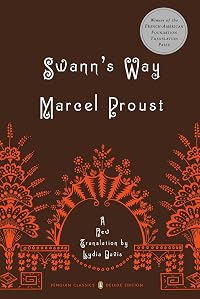
On This Page
Description
Both a psychological self-portrait and a profound meditation upon the artistic process, Proust's seven-part masterpiece "In Search of Lost Time" changed the course of 20th-century literature. "Swann's Way, " the first volume, introduces the novel's major themes and the narrator, a sensitive man drawn in his youth to fashionable society. Its focus then shifts to Charles Swann, a wealthy connoisseur who moves in high-society circles in nineteenth-century Paris and a victim of an agonizing show more romance. This masterly evocation of French society and its rendering of a search for a transcendental reality independent of time, ranks as a landmark of world literature. Unabridged reprint of the classic 1922 edition. show lessTags
Recommendations








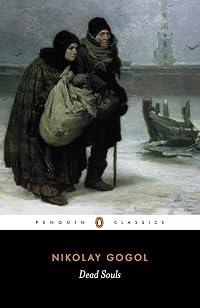

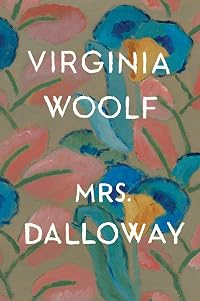

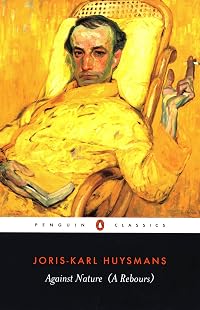
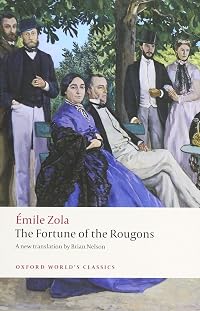




Member Recommendations



Member Reviews
I loved the first & last sections (Combray & Place-Names) but felt peeved & vexed for much of the Swann in Love section.
Thoughts as I finished Combray:
Proust seems to so well hold comedy/humor in one hand & melancholy/sadness/anxiety in the other. For example, visiting his uncle & the uncle's female visitor in Combray -- there's the wonder & innocence of the child in that moment (but awareness that there's more there), the sparkle of the forbidden, the inability to keep a secret, & then the fallout which leads to family arguments & the uncle never speaking to them again.
I think that Proust is one of those authors whose eyes are wide open & who can so exactly share "the human condition"
Thoughts as I finished Swann in Love:
This section was a bit draggy for me. I don't really enjoy Proust's 3rd person storytelling. (While he's a writer of lovely phrases, I feel like 3rd person storytelling is not his forte.) I much more enjoyed his writing when it's in a 1st person perspective like in the Combray section. Normally, I don't necessarily "note" the perspective or whether or not it switches, but this is glaring for me in that it's too long, too repetitive, too everything, especially after the beauty & flow of the Combray section. Imo.
I saw the Verdurin salon as a predecessor to a high school clique of the modern era. But with older people. You have a queen bee & the ones she orders around/approves in her orbit & then the followers, who may be "in" or "out" based on whims & behaviors. I guess cliques have always been around in various forms. But it just all seems so shallow. And Swann is acting like a morose, jealous boyfriend too. And worse. Would he have a restraining order in the modern day?
I'm thinking Swann's hired help (especially his coach driver) must find him utterly ridiculous, lol.
Ultimately, I wish this section had been highly edited, maybe by half?
Thoughts as I finished Place-Names:
After slogging through the 200 pages of Swann in Love, Proust went & completely charmed me again! I adored Place-Names, the beauty of his writing, the parallels to Swann in Love, the parallels of an aging, sickly Marcel to his Aunt Leonie. And the humor is back! (I don't remember finding much humor in the Swann in Love section.)
I also enjoyed how charming "love" seems in Place-Names because it is charming how he presents young Marcel (at age 8 or 10 or 12?) vs. love not seeming very charming at all (imo) in the Swann in Love section. It really highlights that a grown man behaving like a child is not appealing.
Final Overall Thoughts for Volume 1:
A mostly delightful read that would have been perfect if the middle section had been reduced by half. Proust excels observation & probing the nature of memory, all while maintaining a fine balance of the humor & pathos that define the human condition.
I’ve always been intimidated by Proust and was thrilled to tackle this one with a few other readers. Sharing thoughts with them throughout the process added so much to the reading experience. Proust has a meandering way of writing and exploring the world around him. He’s not rushed and his sentences are long and indulgent. That can feel exhausting at times, but then you come across a line so beautiful and achingly relatable that it stops you in your tracks. I’m not ready to tackle the rest of the series, but maybe one book a year would be the right speed.
A few other thoughts:
I loved the classic madeleine scene. I was surprised by how beautiful it was to read his reflections on smell and taste having a power that other memories show more can’t quite conjure.
I really love his descriptions of the roller coaster of emotions when his mother decides to stay in his room one night. He knows it won’t continue to happen, but even in the midst of his joy at her being there, he’s rocked with the sorrow of knowing it might not happen again. I kept thinking about how sometimes we struggle to appreciate getting the thing we longed for because we know it won’t last forever. Even attaining our goal becomes bittersweet. He also has such a gift for capturing the vulnerability of childhood. So much is out of your control when you're a child and choosing to write these portions from that POV gives it a specific depth.
He is writing from an extreme place of privilege. Much of the book is about dinner parties, reflections on lovely food, and spending time with fellow aristocrats. It's not a representation of everyone's childhood.
There's a section on Swann falling in love with Odette that I found fascinating. He's talking about how Swann can't find her one night and that's when his love for her really took root. We want what we can't have, and in that moment, she was all he wanted. By the end, he realizes he’s not even really attracted to her, he was just infatuated by the idea that he couldn’t have her completely without marrying her.
Translation Difference:
I read the Davis version while also listening to a version translated by C.K. Scott Moncrieff.
In the Davis version there's a line on page 126 about an old saying. In the Davis version it is "Love a dog's arse, and to thy nose 'Twill smell like a rose."
In the other translation it's completely different: "Snaps and snails and puppy dogs' tails and dirty sluts in plenty, smell sweeter than roses in young men's noses, when the heart is one and twenty."
I couldn't believe how different such a simple line was and it made me think of how important it is to have an excellent translation. I saw this again and again as I read and I truly appreciated Davis' style and skill for capturing the story without elaborating on Proust's words.
“Even from the simplest, the most realistic point of view, the countries which we long for occupy, at any given moment, a far larger place in our actual life than the country in which we happen to be.”
“One cannot change, that is to say become a different person, while continuing to acquiesce to the feelings of the person one has ceased to be.”
“People don't know when they are happy. They're never so unhappy as they think they are.” show less
A few other thoughts:
I loved the classic madeleine scene. I was surprised by how beautiful it was to read his reflections on smell and taste having a power that other memories show more can’t quite conjure.
I really love his descriptions of the roller coaster of emotions when his mother decides to stay in his room one night. He knows it won’t continue to happen, but even in the midst of his joy at her being there, he’s rocked with the sorrow of knowing it might not happen again. I kept thinking about how sometimes we struggle to appreciate getting the thing we longed for because we know it won’t last forever. Even attaining our goal becomes bittersweet. He also has such a gift for capturing the vulnerability of childhood. So much is out of your control when you're a child and choosing to write these portions from that POV gives it a specific depth.
He is writing from an extreme place of privilege. Much of the book is about dinner parties, reflections on lovely food, and spending time with fellow aristocrats. It's not a representation of everyone's childhood.
There's a section on Swann falling in love with Odette that I found fascinating. He's talking about how Swann can't find her one night and that's when his love for her really took root. We want what we can't have, and in that moment, she was all he wanted. By the end, he realizes he’s not even really attracted to her, he was just infatuated by the idea that he couldn’t have her completely without marrying her.
Translation Difference:
I read the Davis version while also listening to a version translated by C.K. Scott Moncrieff.
In the Davis version there's a line on page 126 about an old saying. In the Davis version it is "Love a dog's arse, and to thy nose 'Twill smell like a rose."
In the other translation it's completely different: "Snaps and snails and puppy dogs' tails and dirty sluts in plenty, smell sweeter than roses in young men's noses, when the heart is one and twenty."
I couldn't believe how different such a simple line was and it made me think of how important it is to have an excellent translation. I saw this again and again as I read and I truly appreciated Davis' style and skill for capturing the story without elaborating on Proust's words.
“Even from the simplest, the most realistic point of view, the countries which we long for occupy, at any given moment, a far larger place in our actual life than the country in which we happen to be.”
“One cannot change, that is to say become a different person, while continuing to acquiesce to the feelings of the person one has ceased to be.”
“People don't know when they are happy. They're never so unhappy as they think they are.” show less
A Proustian Tale: A (Perhaps) Pointless Ramble
To date, this stands as the only non-star-rated book in my Goodreads list, although it may start a disturbing trend. To my chagrin, I've learned that I love order, and that I love little boxes that become the repository for paraphernalia: jewellery and precious pebbles found on beaches, and coins from countries I've visited.
In the same vein, I also "collect" gold stars. They remind me of my childhood when la maîtresse would affix them to the pages of our cahiers if we'd excelled at something. (I was great in spelling, but not so much in grammar, letting my participles dangle, and my prepositions be less than prepossessing.) Obdurate, my teachers would remark. But they were nuns -- and to show more les bonnes sœurs any minor thing that transgressed their small universe was a stubborn statement against creation itself, to be eradicated by the full force of a ruler or, much worse, the withholding of precious gold stars.
Nonetheless, I still managed to collect a good number of those coveted stars, despite my wilful obduracy.To this day, I continue to ascribe excellence, even if only mentally, by these little stars which contribute, perhaps even complete, my sense of (boxed) order.
I say this with chagrin because I'd always pictured myself as a free spirit, a veritable Jack Kerouac of the open road of literature, wandering hither and yon among the genres, and finding solace or exuberance among the best writers of the world, without harsh judgement. Not so, it seems. It disturbs me to no end that I cannot pin something down with a star rating; to this end, I've decided I don't like M. Proust -- I don't like him at all -- because he defies my ability to pin him down.
For one, I think the world makes too much of a simple cookie. If Proust had been munching on the more prosaic BLT, instead of a romantic-sounding madeleine, would we even be having this conversation? What if he'd tripped down memory lane while gnoshing on a pulled pork sandwich or a Cornish pasty? You see what I mean? It's all in the cookie. Philosophies have risen and fallen on the back of that madeleine. That cookie spoke volumes -- seven, to be exact. A half-baked premise, at best.
It's all in the cookie:
Albert Anker, Still Life: Tasteful Tea, 1897
My first impression of Proust was that he was in dire need of a good editor. He of course couldn't find one, because he was also in dire need of a good psychiatrist, leaving most people afraid to even approach him, let alone engage him in any meaningful way. (Where was Freud when you really needed him?) Alone in his hypochondriacal fugue state, he was free to indulge in the most banal of pursuits, gazing for hours (days, weeks, months) on end at his navel, fissures in the ceiling, and cracks in the windows of his mind and soul.
He gives us long, long, long, and I mean interminably long, passages of rambling prose that purportedly have a purpose, but resemble nothing more than those episodes when your GPS sends you around the same neighbourhood eleven times, making right turns, only to release you at your final destination, 0.5 kilometres from when you first asked for direction. (All you needed was one left, and one right turn, but instead it chose a "more direct route" for you.) In both instances, you have a lot of time to contemplate the meaning of life, while allowing you ample opportunity to balance your bank statements for the first time ever, finish the doctoral thesis that you started in 1999, and re-shingle the south side of the barn.
I'm not saying that all of those side streets were uninteresting, because certainly there were a few instances where you actually stopped in the middle of the road and said, "My God this is beautiful." ... only to look up an hour later and say, "Where the hell am I!!?????" Again, do you see what I'm saying ? -- that a good editor could really have nipped that tendency-to-obfuscate in the tender bud?
I first read Proust decades ago when I was in a body cast, trussed and imprisoned in a hospital bed, for 59 days. With time on my hands, it seemed a good time to go searching for it, Proustian-style. He served me well. When the night nurse would come around to offer me "a sleeping aid", I would ask for my book instead. Within a quarter of an hour, I was nodding off; within another quarter, I was sleeping the sleep of the dead. I did manage to get through the entire œuvre, however, because there were still endless days to get through, so it became my endgame: if you finish Proust, you shall be released.
Once done, I didn't look back.
At least, not until this year, when I became caught up in the Goodreads vibe of All Things Proust. I re-read volume one to test my remembrance of things past, as it were, but this time in French. Perhaps the romantic fluidity of the language would change things for me. It almost worked, because, truth be told, it was soothing and beautiful to hear him droning in my head; I wasn't as apt to nod off; I could often manage even a good three quarters of an hour before slipping into a coma. But ultimately, the truth will out: he's as boring and nonsensical in French as he is in English, and Job is not my middle name.
On a very elemental level, Proust stupefies me. (No sarcasm needed. I'll do it for you.) He has the same effect on me as drinking too much absinthe: if you've ever fallen victim to la fée verte, you'll know what I'm talking about. The rest of you can just imagine drowning in a warm, green sea.
In Proust, I have encountered the most profound, the most splendid, the most beautiful passages ever written; in him, I have also encountered the most banal, the most prosaic, the most dreadful lines ever penned by man, woman or beast. Atrociously painful to read. Yes, I would prefer to suffer all the circles of Dante's hells, than re-read parts of Proust. In Proust, I have encountered the most complex, well-argued philosophies, bringing consolation to Boethius himself; in him, I have also encountered the most abstruse, labyrinthine constructions, enough to entangle (and gore) a Mycenean Bull.
For me, Proust is a trickster. He provides the perfect reflecting pool for all that ails us: we may recognize philosophies, ideologies and neuroses in his works; we may even get bits of enlightenment, but we recognize all these things because he is as vacant as a mirror: there is nothing there except what we choose to see. Perhaps some people would consider that, in itself, as the work of genius. Perhaps.
On the other hand, Madame Marie at the circus can render the same service, for a bit of silver: like all good con artists, she knows exactly the right questions to ask, to elicit shock and awe, to prevent us from looking too closely at the fake wig and cheesy make-up.
It isn't so much that I think he's a charlatan, or a con artist, for clearly he's not. There is much to admire here -- but not enough to anoint with the laurel leaves of literature's highest honours. To quote a better philosopher than Proust, "It is a tale told by an idiot, all sound and fury, signifying nothing". Proust (seemingly) missed the other Shakespeare play as well, or should have taken better notes: "... since brevity is the soul of wit / and tediousness the outward flourishes / I will be brief ... "
There's the final rub. With his 1,267,o69 words, Proust could not accomplish what Shakespeare did with a few dozen.
Gold stars withheld for sheer impenetrability.
And on that note, I think I can finally put M. Proust to rest.
Bonsoir, M. Proust. Bonne nuit.
Julie, listening to Proust:
https://www.youtube.com/watch?v=ss2hULhXf04 show less
To date, this stands as the only non-star-rated book in my Goodreads list, although it may start a disturbing trend. To my chagrin, I've learned that I love order, and that I love little boxes that become the repository for paraphernalia: jewellery and precious pebbles found on beaches, and coins from countries I've visited.
In the same vein, I also "collect" gold stars. They remind me of my childhood when la maîtresse would affix them to the pages of our cahiers if we'd excelled at something. (I was great in spelling, but not so much in grammar, letting my participles dangle, and my prepositions be less than prepossessing.) Obdurate, my teachers would remark. But they were nuns -- and to show more les bonnes sœurs any minor thing that transgressed their small universe was a stubborn statement against creation itself, to be eradicated by the full force of a ruler or, much worse, the withholding of precious gold stars.
Nonetheless, I still managed to collect a good number of those coveted stars, despite my wilful obduracy.To this day, I continue to ascribe excellence, even if only mentally, by these little stars which contribute, perhaps even complete, my sense of (boxed) order.
I say this with chagrin because I'd always pictured myself as a free spirit, a veritable Jack Kerouac of the open road of literature, wandering hither and yon among the genres, and finding solace or exuberance among the best writers of the world, without harsh judgement. Not so, it seems. It disturbs me to no end that I cannot pin something down with a star rating; to this end, I've decided I don't like M. Proust -- I don't like him at all -- because he defies my ability to pin him down.
For one, I think the world makes too much of a simple cookie. If Proust had been munching on the more prosaic BLT, instead of a romantic-sounding madeleine, would we even be having this conversation? What if he'd tripped down memory lane while gnoshing on a pulled pork sandwich or a Cornish pasty? You see what I mean? It's all in the cookie. Philosophies have risen and fallen on the back of that madeleine. That cookie spoke volumes -- seven, to be exact. A half-baked premise, at best.
It's all in the cookie:
Albert Anker, Still Life: Tasteful Tea, 1897
My first impression of Proust was that he was in dire need of a good editor. He of course couldn't find one, because he was also in dire need of a good psychiatrist, leaving most people afraid to even approach him, let alone engage him in any meaningful way. (Where was Freud when you really needed him?) Alone in his hypochondriacal fugue state, he was free to indulge in the most banal of pursuits, gazing for hours (days, weeks, months) on end at his navel, fissures in the ceiling, and cracks in the windows of his mind and soul.
He gives us long, long, long, and I mean interminably long, passages of rambling prose that purportedly have a purpose, but resemble nothing more than those episodes when your GPS sends you around the same neighbourhood eleven times, making right turns, only to release you at your final destination, 0.5 kilometres from when you first asked for direction. (All you needed was one left, and one right turn, but instead it chose a "more direct route" for you.) In both instances, you have a lot of time to contemplate the meaning of life, while allowing you ample opportunity to balance your bank statements for the first time ever, finish the doctoral thesis that you started in 1999, and re-shingle the south side of the barn.
I'm not saying that all of those side streets were uninteresting, because certainly there were a few instances where you actually stopped in the middle of the road and said, "My God this is beautiful." ... only to look up an hour later and say, "Where the hell am I!!?????" Again, do you see what I'm saying ? -- that a good editor could really have nipped that tendency-to-obfuscate in the tender bud?
I first read Proust decades ago when I was in a body cast, trussed and imprisoned in a hospital bed, for 59 days. With time on my hands, it seemed a good time to go searching for it, Proustian-style. He served me well. When the night nurse would come around to offer me "a sleeping aid", I would ask for my book instead. Within a quarter of an hour, I was nodding off; within another quarter, I was sleeping the sleep of the dead. I did manage to get through the entire œuvre, however, because there were still endless days to get through, so it became my endgame: if you finish Proust, you shall be released.
Once done, I didn't look back.
At least, not until this year, when I became caught up in the Goodreads vibe of All Things Proust. I re-read volume one to test my remembrance of things past, as it were, but this time in French. Perhaps the romantic fluidity of the language would change things for me. It almost worked, because, truth be told, it was soothing and beautiful to hear him droning in my head; I wasn't as apt to nod off; I could often manage even a good three quarters of an hour before slipping into a coma. But ultimately, the truth will out: he's as boring and nonsensical in French as he is in English, and Job is not my middle name.
On a very elemental level, Proust stupefies me. (No sarcasm needed. I'll do it for you.) He has the same effect on me as drinking too much absinthe: if you've ever fallen victim to la fée verte, you'll know what I'm talking about. The rest of you can just imagine drowning in a warm, green sea.
In Proust, I have encountered the most profound, the most splendid, the most beautiful passages ever written; in him, I have also encountered the most banal, the most prosaic, the most dreadful lines ever penned by man, woman or beast. Atrociously painful to read. Yes, I would prefer to suffer all the circles of Dante's hells, than re-read parts of Proust. In Proust, I have encountered the most complex, well-argued philosophies, bringing consolation to Boethius himself; in him, I have also encountered the most abstruse, labyrinthine constructions, enough to entangle (and gore) a Mycenean Bull.
For me, Proust is a trickster. He provides the perfect reflecting pool for all that ails us: we may recognize philosophies, ideologies and neuroses in his works; we may even get bits of enlightenment, but we recognize all these things because he is as vacant as a mirror: there is nothing there except what we choose to see. Perhaps some people would consider that, in itself, as the work of genius. Perhaps.
On the other hand, Madame Marie at the circus can render the same service, for a bit of silver: like all good con artists, she knows exactly the right questions to ask, to elicit shock and awe, to prevent us from looking too closely at the fake wig and cheesy make-up.
It isn't so much that I think he's a charlatan, or a con artist, for clearly he's not. There is much to admire here -- but not enough to anoint with the laurel leaves of literature's highest honours. To quote a better philosopher than Proust, "It is a tale told by an idiot, all sound and fury, signifying nothing". Proust (seemingly) missed the other Shakespeare play as well, or should have taken better notes: "... since brevity is the soul of wit / and tediousness the outward flourishes / I will be brief ... "
There's the final rub. With his 1,267,o69 words, Proust could not accomplish what Shakespeare did with a few dozen.
Gold stars withheld for sheer impenetrability.
And on that note, I think I can finally put M. Proust to rest.
Bonsoir, M. Proust. Bonne nuit.
Julie, listening to Proust:
https://www.youtube.com/watch?v=ss2hULhXf04 show less
If I were to write a memoir, I can imagine I too might try to focus on a single memory and then find the tangents from that and a depth of reflection upon it that so weighs down what was meant to be this one quick recollection, twenty pages later I would need to drop the topic for the sake of moving on. For Proust it is not accidental. His narrator's memories are also thought experiments, like his observations on how an object chanced upon can stir something to mind from long ago, or how reflecting on one memory leads to a completely unrelated thought about something else that may be far removed in time and place from the first but is still ultimately part of the same story. "Don't dwell on the past" is a common saying, and when Proust show more becomes lost in the semblance of digression then it feels like he is illustrating the dangers, but he is also finding and sharing the rewards. He speaks of the power of essence invested in places we were once attached to, such that when contrasted with even the most spectacular scenery the sight of a single run-down building carries more emotional weight.
I'm less impressed by the second portion that steps out of the narrator's life into that of Mr. Swann and his romance with Odette de Crecy. Neither of them is much of a prize. Odette is happy to be a "kept woman" without forming much attachment to her keeper. Swann's investing her with far more qualities than she actually possesses - a common error in love - isn't complemented by much respect. Apparently it is fine for him to amuse himself with other women, but Odette must remain exclusive to him. Proust has a lot to say in his close analysis of romance - its triggers, its blindness, its follies, its wonders. There's some nice observations, but its subjects cost the exercise much of its charm. There's a concluding observation that when a new fact is discovered which puts a different spin on what was fondly recalled, the angry response is triggered at least in part by the damage that the pleasant memory has suffered.
This first volume closes with a look at place names, what they suggest to us and how we attach preconceptions, creating hyperreal images that reality can't measure up to but forever remain as tags on those names in our minds. His final observation is one of the most poignant, about the way that everything changes and that a memory becomes about more than just an event. It is also the setting, the fashion of the time, the surrounding people, a combination of all of these things that is forever impossible now to reproduce. Yes, Proust says it better. show less
I'm less impressed by the second portion that steps out of the narrator's life into that of Mr. Swann and his romance with Odette de Crecy. Neither of them is much of a prize. Odette is happy to be a "kept woman" without forming much attachment to her keeper. Swann's investing her with far more qualities than she actually possesses - a common error in love - isn't complemented by much respect. Apparently it is fine for him to amuse himself with other women, but Odette must remain exclusive to him. Proust has a lot to say in his close analysis of romance - its triggers, its blindness, its follies, its wonders. There's some nice observations, but its subjects cost the exercise much of its charm. There's a concluding observation that when a new fact is discovered which puts a different spin on what was fondly recalled, the angry response is triggered at least in part by the damage that the pleasant memory has suffered.
This first volume closes with a look at place names, what they suggest to us and how we attach preconceptions, creating hyperreal images that reality can't measure up to but forever remain as tags on those names in our minds. His final observation is one of the most poignant, about the way that everything changes and that a memory becomes about more than just an event. It is also the setting, the fashion of the time, the surrounding people, a combination of all of these things that is forever impossible now to reproduce. Yes, Proust says it better. show less
“How paradoxical it is to seek in reality for the pictures that are stored in one’s memory.”
Published in 1913, Swann’s Way is the first installment of Marcel Proust’s seven-volume In Search of Lost Time. It is a book that is oriented toward memory and finding oneself in many different ways. It begins in Combray, at the childhood home of the unnamed narrator. We learn about his immediate family members, his Aunt Léonie, the family servant (Françoise), and a family friend, Charles Swann.
One of the primary set pieces of the novel is the description of Swann’s romantic obsession with Odette de Crécy. The narrator obviously admires Swann and relates the story Swann’s misdirected love for Odette. The narrator has been told show more of these events, since they occurred before he was born. The content, while rather tame through modern eyes, is certainly colorful (and fairly controversial) for the time period.
The writing is ornate. Everything is described in minute detail. It is filled with poetic language. It comments on art and literary expression. I very much enjoyed the author’s use of the sense of smell to transport himself to the past, which he uses as a launching pad for self-reflection. The writing style has a philosophical flavor.
“I put down the cup and examine my own mind. It alone can discover the truth. But how? What an abyss of uncertainty, whenever the mind feels overtaken by itself; when it, the seeker, is at the same time the dark region through which it must go seeking and where all its equipment will avail it nothing. Seek? More than that: create. It is face to face with something which does not yet exist, which it alone can make actual, which it alone can bring into the light of day.”
This is a book to be read slowly. I have to confess that the writing style, while beautiful and of great literary merit, gets wearying after a while. The story wanders down rabbit trails, only loosely connected to what I thought was the storyline. So, it is a book that requires patience and the willingness to go with the flow. Passages melt together in a stream of consciousness, conveying a dreamlike quality. I enjoyed it and am glad I read this literary classic, but I will not be picking up the rest of the volumes any time soon. show less
Published in 1913, Swann’s Way is the first installment of Marcel Proust’s seven-volume In Search of Lost Time. It is a book that is oriented toward memory and finding oneself in many different ways. It begins in Combray, at the childhood home of the unnamed narrator. We learn about his immediate family members, his Aunt Léonie, the family servant (Françoise), and a family friend, Charles Swann.
One of the primary set pieces of the novel is the description of Swann’s romantic obsession with Odette de Crécy. The narrator obviously admires Swann and relates the story Swann’s misdirected love for Odette. The narrator has been told show more of these events, since they occurred before he was born. The content, while rather tame through modern eyes, is certainly colorful (and fairly controversial) for the time period.
The writing is ornate. Everything is described in minute detail. It is filled with poetic language. It comments on art and literary expression. I very much enjoyed the author’s use of the sense of smell to transport himself to the past, which he uses as a launching pad for self-reflection. The writing style has a philosophical flavor.
“I put down the cup and examine my own mind. It alone can discover the truth. But how? What an abyss of uncertainty, whenever the mind feels overtaken by itself; when it, the seeker, is at the same time the dark region through which it must go seeking and where all its equipment will avail it nothing. Seek? More than that: create. It is face to face with something which does not yet exist, which it alone can make actual, which it alone can bring into the light of day.”
This is a book to be read slowly. I have to confess that the writing style, while beautiful and of great literary merit, gets wearying after a while. The story wanders down rabbit trails, only loosely connected to what I thought was the storyline. So, it is a book that requires patience and the willingness to go with the flow. Passages melt together in a stream of consciousness, conveying a dreamlike quality. I enjoyed it and am glad I read this literary classic, but I will not be picking up the rest of the volumes any time soon. show less
It's probably a rather banal thing to say, but what I really noticed when I picked up the first volume of À la recherche du temps perdu again after a long Proust-free period was that I'd completely forgotten how good he is at getting his complicated ideas about art, society, nature and mind across. The story might be frustratingly slow in getting anywhere, but on just about every page there was a phrase that seemed exactly to capture something I could relate to my own experience and give it an extra dimension. One part of you wants to tell the narrator not to fret and reassure him that his mother is going to come up to say good night to him after all in about 500 pages from now, but at the same time you're surfing the ideas as they show more roll towards you with a reassuringly predictable rhythm that's modulated just enough to keep you alert and focussed as they come at you.
The first-person sections are more immediately and obviously appealing than "Un amour de Swann", of course - I even caught myself checking "that most erotic of books, the railway timetable", to see whether I might be able to fit in a trip to Normandy next year to have a look at "Combray" and "Balbec" in real life. It's much easier to identify with the narrator-as-a-small-boy than with Swann the Parisian sophisticate falling for the courtesan Odette, but even so there is a remarkable amount in the development of his affection, need, jealousy and mistrust that strikes a chord. And the Duchess is magnificent!
I don't think I could read all seven volumes straight through without a break - I need a bit of laughter and flippancy from time to time, and that's something Proust would dismiss as the unworthy province of the small-minded Verdurins. But now that I've started the re-read, I am in the mood again, and the other volumes are going to have to follow sooner or later. As a pastime, re-reading Proust certainly beats "strangling animals, golf and masturbating"... show less
The first-person sections are more immediately and obviously appealing than "Un amour de Swann", of course - I even caught myself checking "that most erotic of books, the railway timetable", to see whether I might be able to fit in a trip to Normandy next year to have a look at "Combray" and "Balbec" in real life. It's much easier to identify with the narrator-as-a-small-boy than with Swann the Parisian sophisticate falling for the courtesan Odette, but even so there is a remarkable amount in the development of his affection, need, jealousy and mistrust that strikes a chord. And the Duchess is magnificent!
I don't think I could read all seven volumes straight through without a break - I need a bit of laughter and flippancy from time to time, and that's something Proust would dismiss as the unworthy province of the small-minded Verdurins. But now that I've started the re-read, I am in the mood again, and the other volumes are going to have to follow sooner or later. As a pastime, re-reading Proust certainly beats "strangling animals, golf and masturbating"... show less
For a long time I would go to bed early.
With those words, one of the greatest achievements of Western literature begins. Despite being a lit major, classicist and language-lover, I have somehow lived 28 years without ever committing myself to read Proust. In retrospect, I'm not sad about that, as I feel my heart, soul, and mind are more open to understanding the Frenchman's great 20th century tome with every passing year of my life.
In the opening volume, Du côté de chez Swann (Swann's Way, perhaps better translated as The Way By Swann's), the Scott Moncrieff-twice-updated-by-Kilmartin-and-Enright translation depicts the narrator's youth at Combray, his first crushes, and his elderly reminiscences of a world now gone by. Meanwhile, show more piecing together a tale that occurred before his youth, the narrator tells us of Charles Swann and his love for Odette de Crecy, in the fractured world of Paris society. It's a portrait filled with endearing and frustrating characters, precise observations about all kinds of humanity, always painful or poignant, hilarious or sly, erudite and insightful. I am eager to read the second volume, and excited for the journey I will take with Proust for the rest of my life.
Oh, marvellous independence of the human gaze, tied to the human face by a cord so loose, so long, so elastic that it can stray alone as far as it may choose!
Of course, it's no surprise that most people of my generation would never dream of reading these books, and many who start won't finish. Proust (or, perhaps, his narrator) is absorbed by description and detail. Pick any 20 pages and it's unlikely that much will happen - although I believe that's partly because this is the opening book in the series, and there is still much setup. Yet, for me, I've rarely been so delighted by a novel in all my life. Even when little plot moves (for instance, the sequence in which Swann grows increasingly jealous of Odette takes a good 100 pages), there is so much dense character development, growth of the novel's world, and immense understanding of human nature. After all, unlike what today's soap operas would tell us - or, indeed, what the 19th century romances before Proust would either - the story of love and human connection is not told in big revelations. It is told in those tiny moments, those repetitions, those instances. And they are so ably captured here. I've been reading an intelligent (if tragically brief) blog as I go, "182 Days of Proust", and have thus learned that many of the characters and places here will go on to develop later in the seven-volume sequence. This was something that, of course, Proust's contemporaries could not have known, which explains why some found the novel meandering. Everything has a place in this great study of memory; it's just a case of waiting for when.
"I love Odette with all my heart, but to construct aesthetic theories for her benefit, you'd really have to be quite an imbecile."
The country idylls at Combray present comedies of manners, in which the narrator gradually develops his psyche while a part of larger situations, some of which he cannot comprehend, even though he is often frustratingly aware that there is something he cannot comprehend. This contrasts with the middle-class character portraits of the Verdurin couple and their house parties, and the somewhat off-putting, satirised lives of the aristocracy. At this point, as a reader, I'm not yet sure how Proust felt about the class system, or where this great story is heading, but I'm quite excited for the experience. Admittedly, many of the references and social mores are now challenging for someone of my age to understand. As with any book focused on relations between people, there are parts that will always ring true, and parts that fade quickly as eras change. Yet, a little background reading and open-mindedness will cure you of that problem. Proust's lengthy sentences - and I mean lengthy, these babies can go on for a page when he feels like it - are also fascinating to us, and not always in a good way. For me, I adore the untangling of his wit. They are as luxurious as any older person's memories can be. The actor Neville Jason, who recently recorded 153 hours of the unabridged complete "In Search of Lost Time" for Naxos, said that these sentences are like music: one must find the way to phrase them, the way to link up each scattered segment. When one does, joy awaits.
I asked nothing more from life in such moments than that it should consist always of a series of joyous afternoons.
All of which is to say, starting "In Search of Lost Time" is a big commitment. Like any great work of art from a previous generation, it requires some willingness on the part of the reader to be patient, to absorb themselves in the world. Yet it will reward in spades, and is often not as hard as one might think. So many of the social jests still ring true, and certainly all of the giddiness and confusion of the young narrator - and the complexities of Odette and Swann's relationship - haunt me so. Perhaps I will find the later novels harder, as I have not yet lived through some of the experiences, but when it comes to young love and development of artistic and social temperament, it's delightful (or, occasionally, sorrowful) to feel one's own past experiences so represented in print. Particularly when the book's entire discussion is on what we have lost, and whether or not we can ever regain it.
What we suppose to be our love our our jealousy is never a single, continuous and indivisible passion. It is composed of an infinity of successive loves, of different jealousies, each of which is ephemeral...
(A note on translations - the new Viking editions, each by a different translator, are apparently quite good in bringing a more modern taste to the works. For me, I'm very happy thus far with the current Modern Library/Vintage edition. The original English translation, by Charles Scott Moncrieff, has been regarded as a classic for more than 90 years. However, it had notable Victorian traces that obscured some of the greatness of Proust, and has now been updated twice, first by Terence Kilmartin in the 1980s, and more recently by DJ Enright. One day, I will certainly read the Vikings, however I am currently enjoying the connection to the past. Scott Moncrieff lived in Proust's era; to have his works complete with expert emendations seems fitting, particularly for someone like myself interested just as much in the academic conversation around the books which, for many years in the Western world, used Scott Moncrieff as the foundation stone.)
A.E. Housman said, "This is the land of lost content". Over the course of this first volume, the narrator - and, as I'm sure will be confirmed once I read my first Proust biography - the author himself desperately attempts to return to this land, taking us all with him, reminding us all of how much we have lost with each passing year. The question becomes whether we let ourselves drift back, desperately, to that land, or whether we attempt to fashion a life out of what remains. I trust Marcel Proust to take me further on this journey, aided by the skilful English translators, and I have no doubt that the "Search" will prove to be the masterpiece of the Western canon that as so many great minds before me have discovered.
The memory of a particular image is but regret for a particular moment; and houses, roads, avenues are as fugitive, alas, as the years. show less
With those words, one of the greatest achievements of Western literature begins. Despite being a lit major, classicist and language-lover, I have somehow lived 28 years without ever committing myself to read Proust. In retrospect, I'm not sad about that, as I feel my heart, soul, and mind are more open to understanding the Frenchman's great 20th century tome with every passing year of my life.
In the opening volume, Du côté de chez Swann (Swann's Way, perhaps better translated as The Way By Swann's), the Scott Moncrieff-twice-updated-by-Kilmartin-and-Enright translation depicts the narrator's youth at Combray, his first crushes, and his elderly reminiscences of a world now gone by. Meanwhile, show more piecing together a tale that occurred before his youth, the narrator tells us of Charles Swann and his love for Odette de Crecy, in the fractured world of Paris society. It's a portrait filled with endearing and frustrating characters, precise observations about all kinds of humanity, always painful or poignant, hilarious or sly, erudite and insightful. I am eager to read the second volume, and excited for the journey I will take with Proust for the rest of my life.
Oh, marvellous independence of the human gaze, tied to the human face by a cord so loose, so long, so elastic that it can stray alone as far as it may choose!
Of course, it's no surprise that most people of my generation would never dream of reading these books, and many who start won't finish. Proust (or, perhaps, his narrator) is absorbed by description and detail. Pick any 20 pages and it's unlikely that much will happen - although I believe that's partly because this is the opening book in the series, and there is still much setup. Yet, for me, I've rarely been so delighted by a novel in all my life. Even when little plot moves (for instance, the sequence in which Swann grows increasingly jealous of Odette takes a good 100 pages), there is so much dense character development, growth of the novel's world, and immense understanding of human nature. After all, unlike what today's soap operas would tell us - or, indeed, what the 19th century romances before Proust would either - the story of love and human connection is not told in big revelations. It is told in those tiny moments, those repetitions, those instances. And they are so ably captured here. I've been reading an intelligent (if tragically brief) blog as I go, "182 Days of Proust", and have thus learned that many of the characters and places here will go on to develop later in the seven-volume sequence. This was something that, of course, Proust's contemporaries could not have known, which explains why some found the novel meandering. Everything has a place in this great study of memory; it's just a case of waiting for when.
"I love Odette with all my heart, but to construct aesthetic theories for her benefit, you'd really have to be quite an imbecile."
The country idylls at Combray present comedies of manners, in which the narrator gradually develops his psyche while a part of larger situations, some of which he cannot comprehend, even though he is often frustratingly aware that there is something he cannot comprehend. This contrasts with the middle-class character portraits of the Verdurin couple and their house parties, and the somewhat off-putting, satirised lives of the aristocracy. At this point, as a reader, I'm not yet sure how Proust felt about the class system, or where this great story is heading, but I'm quite excited for the experience. Admittedly, many of the references and social mores are now challenging for someone of my age to understand. As with any book focused on relations between people, there are parts that will always ring true, and parts that fade quickly as eras change. Yet, a little background reading and open-mindedness will cure you of that problem. Proust's lengthy sentences - and I mean lengthy, these babies can go on for a page when he feels like it - are also fascinating to us, and not always in a good way. For me, I adore the untangling of his wit. They are as luxurious as any older person's memories can be. The actor Neville Jason, who recently recorded 153 hours of the unabridged complete "In Search of Lost Time" for Naxos, said that these sentences are like music: one must find the way to phrase them, the way to link up each scattered segment. When one does, joy awaits.
I asked nothing more from life in such moments than that it should consist always of a series of joyous afternoons.
All of which is to say, starting "In Search of Lost Time" is a big commitment. Like any great work of art from a previous generation, it requires some willingness on the part of the reader to be patient, to absorb themselves in the world. Yet it will reward in spades, and is often not as hard as one might think. So many of the social jests still ring true, and certainly all of the giddiness and confusion of the young narrator - and the complexities of Odette and Swann's relationship - haunt me so. Perhaps I will find the later novels harder, as I have not yet lived through some of the experiences, but when it comes to young love and development of artistic and social temperament, it's delightful (or, occasionally, sorrowful) to feel one's own past experiences so represented in print. Particularly when the book's entire discussion is on what we have lost, and whether or not we can ever regain it.
What we suppose to be our love our our jealousy is never a single, continuous and indivisible passion. It is composed of an infinity of successive loves, of different jealousies, each of which is ephemeral...
(A note on translations - the new Viking editions, each by a different translator, are apparently quite good in bringing a more modern taste to the works. For me, I'm very happy thus far with the current Modern Library/Vintage edition. The original English translation, by Charles Scott Moncrieff, has been regarded as a classic for more than 90 years. However, it had notable Victorian traces that obscured some of the greatness of Proust, and has now been updated twice, first by Terence Kilmartin in the 1980s, and more recently by DJ Enright. One day, I will certainly read the Vikings, however I am currently enjoying the connection to the past. Scott Moncrieff lived in Proust's era; to have his works complete with expert emendations seems fitting, particularly for someone like myself interested just as much in the academic conversation around the books which, for many years in the Western world, used Scott Moncrieff as the foundation stone.)
A.E. Housman said, "This is the land of lost content". Over the course of this first volume, the narrator - and, as I'm sure will be confirmed once I read my first Proust biography - the author himself desperately attempts to return to this land, taking us all with him, reminding us all of how much we have lost with each passing year. The question becomes whether we let ourselves drift back, desperately, to that land, or whether we attempt to fashion a life out of what remains. I trust Marcel Proust to take me further on this journey, aided by the skilful English translators, and I have no doubt that the "Search" will prove to be the masterpiece of the Western canon that as so many great minds before me have discovered.
The memory of a particular image is but regret for a particular moment; and houses, roads, avenues are as fugitive, alas, as the years. show less
Members
- Recently Added By
Published Reviews
ThingScore 96
Als we nu vanuit het microniveau van deze ene zin extrapoleren naar het geheel van dit eerste deel van de Recherche, kan volgens mij de conclusie niet anders luiden dan dat deze vertaling van Martin de Haan en Rokus Hofstede – maar dat gold ook voor die van Thérèse Cornips – bijzonder overtuigend is. Het accent ligt bij hen op vernederlandsing, maar de getrouwheid, zeker ook aan Prousts show more subtiele humor en ‘dubbelzinnige glimlach’, blijft steeds optimaal. Daarbij bereiken ze in de dialogen, iets wat hier totaal onderbelicht is gebleven, een grote levendigheid die Proust volkomen recht doet. show less
added by Jozefus
Maarten 't Hart bespreekt de nieuwe vertaling van Swanns kant van Marcel Proust. De NRC meldde dat het een slordige vertaling zou zijn. Maarten 't Hart is het daar niet mee eens. Zij is soepeler dan de vroegere vertaling en daardoor prettiger leesbaar.
added by Jozefus
Toch is Swanns kant op een aanwinst, want de lezer heeft nu meer te kiezen: het idioom van De Haan en Hofstede is eigentijdser dan dat van hun voorgangers. Ze schrijven ‘kletspraatjes’ waar Thérèse Cornips, met haar voorkeur voor het schilderachtige, ‘palavers’ schrijft. Proust lezen is al zo’n onalledaagse ervaring (door die lange zinnen, maar ook doordat het verhaal zich in hoge show more Parijse kringen rond 1900 afspeelt) dat zijn taalgebruik, althans op plaatsen waar het niet gemarkeerd is door een eigenzinnige woordkeus, beter niet te barok vertaald kan worden. show less
added by Jozefus
Lists

1001 Books You Must Read Before You Die
1,448 works; 1,133 members

Classics you know you should have read but probably haven't
421 works; 408 members

1910s
90 works; 16 members

French Books
102 works; 15 members

20th Century Literature
1,161 works; 54 members

Top Five Books of 2017
757 works; 231 members

One Book, Many Authors
441 works; 40 members

Folio Society
831 works; 53 members

Top Five Books of 2015
811 works; 240 members

Blue Pyramid 1,276 Best Books of All Time
1,248 works; 32 members

Best First Lines
133 works; 8 members

F. Scott Fitzgerald's 22 Essential Books (1936)
22 works; 3 members
Top-Rated Books on LibraryThing
272 works; 116 members

Rory Gilmore Book Club
193 works; 5 members

All Things France
100 works; 8 members

I Can't Finish This Book
189 works; 22 members

Books Read in 2017
4,249 works; 129 members
The College Board: 101 Great Books Recommended for College-Bound Readers
111 works; 7 members

Livres français
9 works; 1 member

Books Read in 2020
4,379 works; 124 members

Blackwell's Five Foot Bookshelf
72 works; 4 members

100 knjiga
100 works; 1 member

Books Read in 2024
4,623 works; 126 members

Take Four Books
130 works; 1 member

Le Monde - Les 100 livres du siècle
121 works; 25 members
The Complete Rory Gilmore Reading List
506 works; 5 members

Retrospective of 20th- and 21st-century literature
154 works; 1 member

Books in The Club Dumas
72 works; 1 member

Mustich's 1000 Books to Read Before You Die: A Life Changing List
1,001 works; 19 members
Books With Our Favorite First Lines
168 works; 104 members

For Further Reading: A List of 160 Novels from 15 Literatures
160 works; 4 members

Recommended Literary Books
111 works; 1 member

Tablet Magazine's List of 101 Great Jewish Books
103 works; 9 members

Biggest Disappointments
606 works; 163 members
Favourite Books
1,819 works; 316 members

Unread books
1,063 works; 82 members
Talk Discussions
Past Discussions
Group Read: In Search of Lost Time - Volume I: Swann's Way in 1001 Books to read before you die (April 2014)
***Group Read: Swann's Way in 75 Books Challenge for 2010 (August 2010)
Author Information

872+ Works 47,917 Members
Proust is one of the seminal figures in modern literature, matched only in stature by Joyce, Woolf, Mann and Kafka. By the last decade of the 19th century, the charming and ambitious Proust, born into a wealthy bourgeois family, was already a famous Paris socialite who attended the most fashionable salons of the day. The death of his parents in show more the early years of the 20th century, coupled with his own increasingly ill health, made of Proust a recluse who confined himself to his cork-lined bedroom on the Boulevard Haussmann. There he concentrated on the composition of his great masterpiece, Remembrance of Things Past (1913-27). In recent years, it was discovered that he had already prepared a first draft of the work in the 1890s in Jean Santeuil, which was only published posthumously in 1952. Remembrance of Things Past resists summary. Seeming at turns to be fiction, autobiography, and essay, Remembrance is a vast meditation on the relationship between time, memory, and art. In it the narrator, who bears the same first name as the author, attempts to reconstruct his life from early childhood to middle age. In the process, he surveys French society at the turn of the century and describes the eventual decline of the aristocracy in the face of the rising middle class. The process of reconstruction of Marcel's past life is made possible by the psychological device of involuntary memory; according to this theory, all of our past lies hidden within us only to be rediscovered and brought to the surface by some unexpected sense perception. In the final volume of the work, the narrator, who has succeeded in recapturing his past, resolves to preserve it through the Work of Art, his novel. He died of pneumonia and a pulmonary abscess in 1922. He was buried in the Père Lachaise Cemetery in Paris. (Bowker Author Biography) show less
Some Editions
Awards and Honors
Awards
Distinctions
Notable Lists
Series

Belongs to Publisher Series
Gallimard, Folio Classique (1921)
Biblioteca Folha (25)
Limited Editions Club (S:22.12)
Perpetua reeks (68)
suhrkamp taschenbuch (0644)
Everyman's Library New Series (250.1)
Modern Library (59)
Penguin Books (1244)
A tot vent (714)
Gallimard, Folio (85-1924)
Work Relationships
Is contained in
Contains
Has the adaptation
Is abridged in
Has as a commentary on the text
Common Knowledge
- Canonical title
- Swann's Way
- Original title
- À la recherche du temps perdu; Du côté de chez Swann; Du côté de chez Swann
- Alternate titles
- The Way by Swann's
- Original publication date
- 1913
- People/Characters
- Marcel, The Narrator; Marcel's Mother; Marcel's Father; Marcel's Grandfather; Marcel's Grandmother (Bathilde); Aunt Léonie (show all 23); Françoise; Charles Swann; Odette Swann (de Crécy); Gilberte Swann; M. Verdurin (Gustave); Mme. Verdurin; M. Vinteuil; Mlle. Vinteuil; M. Biche; Mme. Berma; Albert Bloch; M. de Norpois; Dr. Cottard; Mme. Cottard; Mme. de Guermantes (Princesse de Laumes); Baron de Charlus; Marquise de Villeparisis
- Important places
- Combray, Normandy, France; Paris, France; France
- Related movies
- Un amour de Swann (1984 | Volker Schlöndorff | IMDb)
- First words
- Longtemps je me suis couché de bonne heure (Du côté de chez Swann)
Ma mère, quand il fut question d’avoir pour la première fois M. de Norpois à dîner, ayant exprimé le regret que le Professeur Cottard fût en voyage et qu’elle-même eût entièrement cessé de fréquenter Swann, car... (show all) l’un et l’autre eussent sans doute intéressé l’ancien Ambassadeur, mon père répondit qu’un convive éminent, un savant illustre, comme Cottard, ne pouvait jamais mal faire dans un dîner, mais que Swann, avec son ostentation, avec sa manière de crier sur les toits ses moindres relations, était un vulgaire esbrouffeur que le Marquis de Norpois eût sans doute trouvé selon son expression, «puant». (A l'ombre des jeunes filles en fleur)
Le pépiement matinal des oiseaux semblait insipide à Françoise. (Le côté de Guermantes)
On sait que bien avant d’aller ce jour-là (le jour où avait lieu la soirée de la princesse de Guermantes) rendre au duc et à la duchesse la visite que je viens de raconter, j’avais épié leur retour et fait, pendant ... (show all)la durée de mon guet, une découverte, concernant particulièrement M. de Charlus, mais si importante en elle-même que j’ai jusqu’ici, jusqu’au moment de pouvoir lui donner la place et l’étendue voulues, différé de la rapporter. (Sodome et Gomorrhe)
Dès le matin, la tête encore tournée contre le mur, et avant d’avoir vu, au-dessus des grands rideaux de la fenêtre, de quelle nuance était la raie du jour, je savais déjà le temps qu’il faisait. (La prisonnière)
Mademoiselle Albertine est partie ! (Albertine disparue [La fugitive]
Toute la journée, dans cette demeure de Tansonville un peu trop campagne qui n'avait l'air que d'un lieu de sieste entre deux promenades ou pendant l'averse, une de ces demeures où chaque salon a l'air d'un cabinet de verdu... (show all)re, et où sur la tenture des chambres, les roses du jardin dans l'une, les oiseaux des arbres dans l'autre, vous ont rejoints et vous tiennent compagnie - isolés du moins - car c'étaient de vieilles tentures où chaque rose était assez séparée pour qu'on eût pu si elle avait été vivante, la cueillir, chaque oiseau le mettre en cage et l'apprivoiser, sans rien de ces grandes décorations des chambres d'aujourd'hui où sur un fond d'argent, tous les pommiers de Normandie sont venus se profiler en style japonais, pour halluciner les heures que vous passez au lit, toute la journée je la passais dans ma chambre qui donnait sur les belles verdures du parc et les lilas de l'entrée, sur les feuilles vertes des grands arbres au bord de l'eau, étincelants de soleil et la forêt de Méséglise. (Le temps retrouvé)
For a long time I used to go to bed early. - Quotations
- "I do feel that it's really absurd that a man of his intelligence should let himself be made to suffer by a creature of that kind, who isn't even interesting, for they tell me she's an absolute idiot!" she concluded with the ... (show all)wisdom invariably shewn by people who, not being in love themselves, feel that a clever man ought to be unhappy only about such persons as are worth his while; which is rather like being astonished that anyone should condescend to die of cholera at the bidding of so insignificant a creature as the common bacillus.
- Last words
- (Click to show. Warning: May contain spoilers.)Ils n’étaient qu’une mince tranche au milieu d’impressions contiguës qui formaient notre vie d’alors; le souvenir d’une certaine image n’est que le regret d’un certain instant; et les maisons, les routes, les avenues, sont fugitives, hélas, comme les années. (Du côté de chez Swann)
(Click to show. Warning: May contain spoilers.)Et tandis que Françoise ôtait les épingles des impostes, détachait les étoffes, tirait les rideaux, le jour d’été qu’elle découvrait semblait aussi mort, aussi immémorial qu’une somptueuse et millénaire momie que votre vieille servante n’eût fait que précautionneusement désemmailloter de tous ses linges, avant de la faire apparaître, embaumée dans sa robe d’or. (A l'ombre des jeunes filles en fleur)
(Click to show. Warning: May contain spoilers.)—Et puis vous, ne vous laissez pas frapper par ces bêtises des médecins, que diable! Ce sont des ânes. Vous vous portez comme le Pont–Neuf. Vous nous enterrerez tous! (Le côté de Guermantes)
(Click to show. Warning: May contain spoilers.)"Il faut absolument, et décidons-le tout de suite, parce que je me rends bien compte maintenant, parce que je ne changerai plus, et que je ne pourrais pas vivre sans cela, il faut absolument que j’épouse Albertine." (Sodome et Gomorrhe)
(Click to show. Warning: May contain spoilers.)« Ah ! très bien, vous avez bien fait naturellement de ne pas m’éveiller, laissez-moi un instant, je vais vous sonner tout à l’heure. » (La prisonnière)
(Click to show. Warning: May contain spoilers.)« Tout cela est bien loin, me dit-elle, je n’ai jamais plus songé qu’à Robert depuis le jour où je lui ai été fiancée. Et, voyez-vous, ce n’est même pas ce caprice d’enfant que je me reproche le plus. » (Albertine disparue [La fugitive])
(Click to show. Warning: May contain spoilers.)] Si du moins il m'était laissé assez de temps pour accomplir mon œuvre, je ne manquerais pas de la marquer au sceau de ce Temps dont l'idée s'imposait à moi avec tant de force aujourd'hui, et j'y décrirais les hommes, cela dût-il les faire ressembler à des êtres monstrueux, comme occupant dans le Temps une place autrement considérable que celle si restreinte qui leur est réservée dans l'espace, une place, au contraire, prolongée sans mesure, puisqu'ils touchent simultanément, comme des géants, plongés dans les années, à des époques vécues par eux, si distantes, - entre lesquelles tant de jours sont venus se placer - dans le Temps. (Le temps retrouvé) - Blurbers*
- Hesse, Hermann
- Original language
- French
- Disambiguation notice
- Swann's Way is the first volume of Proust's monumental Remembrance of Things Past. However, at least one publisher issued Swann's Way itself (and other volumes of Remembrance of Things Past) as mul... (show all)tivolume works. Thus, you can have Swann's Way, Part One which is part 1 of part 1 of Remembrance of Things Past. Thus if you use "Part 1" as part of your book title make sure you distinguish between Part 1 of Remembrance of Things Past and Part 1 of Swann's Way.
*Some information comes from Common Knowledge in other languages. Click "Edit" for more information.
Classifications
Statistics
- Members
- 12,948
- Popularity
- 616
- Reviews
- 207
- Rating
- (4.24)
- Languages
- 25 — Catalan, Czech, Danish, Dutch, English, Finnish, French, German, Greek, Hebrew, Hungarian, Italian, Lithuanian, Norwegian (Bokmål), Polish, Romanian, Russian, Serbian, Croatian, Slovak, Slovenian, Spanish, Swedish, Turkish, Portuguese (Brazil)
- Media
- Paper, Audiobook, Ebook
- ISBNs
- 439
- UPCs
- 3
- ASINs
- 225