
Nevil Shute (1899–1960)
Author of On the Beach
About the Author
Nevil Shute Norway was born in Ealing, London, England, on January, 17 1899. At the age of 11, Norway played truant from his first preparatory school in Hammersmith. After he was discovered, he was sent to the Dragon School, Oxford, and from there to Shrewsbury. He was on holiday in Dublin at the show more time of the Easter rising of 1916 and acted as an ambulance driver, winning a commendation for gallant conduct. He then entered the Royal Military Academy, intending to be commissioned into the Royal Flying Corps, but a bad stammer led to his being failed at his final medical examination and returned to civil life. The last few months of the war were spent on home service as a private in the Suffolk Regiment. In 1919, Norway went to Balliol College, Oxford, where he took a third class honors course in engineering science in 1922. During the vacations he worked, unpaid, as an aeronautical engineer, for the Aircraft Manufacturing Company at Hendon, and then for Geoffrey de Havilland's own firm, which he joined as an employee upon finishing at Oxford. He learned to fly and gained experience as a test observer. During the evenings he diligently wrote novels and short stories unperturbed by rejection slips from publishers. In 1924 Norway took the post of Chief Calculator to the Airship Guarantee Company, to work on the construction of the R100. In 1929 he became Deputy Chief Engineer under Barnes Wallis, and in the following year he flew to and from Canada in the R100. After the end of the airship project, jobs were hard to come by due to the depression so Shute started an aircraft manufacturing company, Airspeed Limited. This company was ultimately successful and built a large number of aircraft during the war. Shute remained joint managing director until 1938. When the business became too routine, he decided to get out of the rut and live by writing. The de Havillands, the first aviation job Shute had ever had, wound up buying Airspeed Ltd. He had by then enjoyed some success as a novelist and had sold the film rights of Lonely Road and Ruined City. At the outbreak of war in 1939, Norway joined the Royal Naval Volunteer Reserve as a Sub-Lieutenant in the Miscellaneous Weapons Department. Rising to Lieutenant Commander, he found experimenting with secret weapons a job after his own heart. But he found that his growing celebrity as a writer caused him to be in the Normandy landings on 6th June 1944, for the Ministry of Information, and to be sent to Burma as a correspondent in 1945. He entered Rangoon with the 15th Corps from Arakan. Soon after demobilisation in 1945 he emigrated to Australia and made his home in Langwarrin, Victoria. His output of novels, which began with Marazan (1926) continued to the end. Shute was one of the leading aeronautical engineers in Britain during the 30's and a fellow of the Royal Aeronautical Society. When he began writing in the 20's, he feared that a reputation as a writer of fiction might harm his engineering career. For this reason he published under his two Christian names, Nevil Shute and engineered under his "real" name, Nevil S. Norway. Nevil Shute Norway died in Melbourne on January, 12 1960. (Bowker Author Biography) show less
Image credit: Courtesy of the NYPL Digital Gallery (image use requires permission from the New York Public Library)
Works by Nevil Shute
Complete Works Set of 12 Volumes: Pied Piper; on the Beach; Most Secret; the Chequer Board; Pastoral; a Town Like Alice; (2020) 10 copies
The Big Country (includes A Town Like Alice & Alice to Nowhere) - Volume 2 Rough Living (2008) — Contributor — 2 copies
Pied Piper, etc 1 copy
Den som intet vger 1 copy
Pastoral, etc 1 copy
No Highway, etc 1 copy
Beyond the Blackstump 1 copy
Крысолов. На берегу 1 copy
Associated Works
Reader's Digest Condensed Books 1976 v01: The Great Train Robbery / I Take Thee, Serenity / Bill W. / A Town Like Alice (1976) 32 copies
Reader's Digest Condensed Books 1960 v03: The Lovely Ambition / Trustee from the Toolroom / The Leopard / Village of Stars / To Kill a Mockingbird (1960) — Author — 26 copies
On the Beach [2000 film] — Original book — 11 copies
Reader's Digest Condensed Books: Jaws • A Palm for Mrs. Pollifax • The Fearful Void • Pied Piper • End Play (1974) 7 copies
Het Beste Boek 75: Kruistocht der liefde / Leeuwen in de nacht / De dochter van John Ames / Magelhães' laatste reis (1976) — Author — 3 copies, 1 review
Good Children Don't Kill, A Place In The Woods, A Town Like Alice, Snatch, The New Year (1969) 2 copies
The Day After Doomsday; Earth Abides; I Am Legend; On The Beach; Alas, Babylon; Lucifer's Hammer (Leather Bound)(5 Vol Set) (2012) 2 copies
Um túmulo na areia - Etapas da cirurgia - Trilhas sangrentas - A bruxa de Mount Mellyn - Volta ao paraíso — Contributor — 2 copies
De grote Ceasar; De tijgerkat; De goden van Hawaii; Diamanten voor Janice — Contributor — 2 copies, 1 review
Reader's Digest Condensed Books: Fiona / Heartsblood / A Very Quite Place / A Town Like Alice — Author — 2 copies
Het Beste Boek 39: Majoor Thompson in Frankrijk / Spel met de dood / En toen gebeurde het / De wandelstok (1968) — Author — 2 copies, 1 review
Reader's Digest Condensed Books: Trustee from the Toolroom • The Leopard • The Triumph of Surgery • Hawaii (1961) — Author — 2 copies
Pied Piper [1942 film] — Original book — 1 copy
Processo a un medico - Il lungo viaggio di Mister Howard - Gli occhi dell'amore - Un'estate per crescere (1976) 1 copy
Tagged
Common Knowledge
- Legal name
- Norway, Nevil Shute
- Birthdate
- 1899-01-17
- Date of death
- 1960-01-12
- Gender
- male
- Education
- The Dragon School, Oxford
Shrewsbury School
Balliol College, University of Oxford (BS|1922)
Royal Military Academy, Woolwich - Occupations
- engineer (Aeronautical)
writer
novelist - Organizations
- Suffolk Regiment (WWI)
Royal Naval Volunteer Reserve (WWII) - Awards and honors
- Fellow, Royal Aeronautical Society
- Agent
- AP Watt
- Relationships
- Norway, Arthur H. (father)
Hamilton Norway, Mrs. (mother)
Norway, G. (grandmother)
Twort, Flora (friend) - Cause of death
- stroke
- Nationality
- England (birth)
Australia (emigrated 1950) - Birthplace
- Somerset Road, Ealing, Middlesex [now London], England, UK
- Places of residence
- Langwarrin, Victoria, Australia
- Place of death
- Melbourne, Victoria, Australia
- Burial location
- cremated
- Map Location
- England, UK
Members
Discussions
June 2026: Nevil Shute in Monthly Author Reads (June 21)
British Author Challenge February 2026: Elizabeth Chadwick & Nevil Shute in 75 Books Challenge for 2026 (April 26)
January 2022: Nevil Shute in Monthly Author Reads (June 2022)
Found: Trial of ex-soldier who kills in self - defence. By Nevil Shute? in Name that Book (May 2021)
Reviews
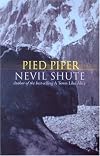
This book is my third read by Nevil Shute, and it’s likely to be my favorite. I had a great time reading it.
First, I want to address the undeniable "different place, different time" feel that is present in the Shute books I've read. He's a talented writer and through his passages the reader can't help but pick up the gentility and gentlemanly qualities prevalent of his place and time. There are some misogynistic aspects of the place and time from which he writes, and this book in show more particular carries a rather breathtakingly casual, albeit brief, antisemitic assumption assigned to a character.
Also - the quality of the paperwork copy that I picked up from an online used-bookstore is poor. Avoid this edition if you can help it - the number of typos and dropped punctuation was becoming a distraction!
That's the worst of it. The best is the well-crafted story itself, of an Englishman named John Howard, which takes place at the very start of the invasion of France by Germany in WWII. Howard has fled England to the southeastern Jura for a fishing trip to escape a painful personal loss. All the elements come together in a completely natural and believable way that lead to Howard eventually escorting several small children across a suddenly war-torn, occupied France, in an effort to get back to England.
I was so engaged with the course of their journey that, more than once, I reached for my phone to bring up a map of France to track the movements of this little band. There are some harrowing scenes - Shute knows this territory well, as an aeronautical engineer who served in both World Wars.
Shute has written a novel that, despite the always-present fear from German invaders and the different ways people react in profoundly unsettling events, manages to assure the reader that hope, perseverance and justice will always win out if you are courageous enough.
Highly recommended. I will want to revisit this story, and by then I'll treat myself to a much better edition of it for my library shelf. show less
First, I want to address the undeniable "different place, different time" feel that is present in the Shute books I've read. He's a talented writer and through his passages the reader can't help but pick up the gentility and gentlemanly qualities prevalent of his place and time. There are some misogynistic aspects of the place and time from which he writes, and this book in show more particular carries a rather breathtakingly casual, albeit brief, antisemitic assumption assigned to a character.
Also - the quality of the paperwork copy that I picked up from an online used-bookstore is poor. Avoid this edition if you can help it - the number of typos and dropped punctuation was becoming a distraction!
That's the worst of it. The best is the well-crafted story itself, of an Englishman named John Howard, which takes place at the very start of the invasion of France by Germany in WWII. Howard has fled England to the southeastern Jura for a fishing trip to escape a painful personal loss. All the elements come together in a completely natural and believable way that lead to Howard eventually escorting several small children across a suddenly war-torn, occupied France, in an effort to get back to England.
I was so engaged with the course of their journey that, more than once, I reached for my phone to bring up a map of France to track the movements of this little band. There are some harrowing scenes - Shute knows this territory well, as an aeronautical engineer who served in both World Wars.
Shute has written a novel that, despite the always-present fear from German invaders and the different ways people react in profoundly unsettling events, manages to assure the reader that hope, perseverance and justice will always win out if you are courageous enough.
Highly recommended. I will want to revisit this story, and by then I'll treat myself to a much better edition of it for my library shelf. show less
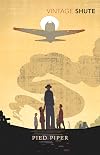
Howard, (actually only approaching 70, but old by the standards of the day) sits in his London club recounting his story to another club member while an air raid thunders around then. Struggling to come to terms with the death of his son, Howard had recently decided to take a fishing trip to France, to the Jura. But it's the spring of 1940 and Britain and France are at war with Germany. (With the benefit of hindsight, a holiday abroad seems a ludicrous idea, but in the spring of 1940, to a show more man whose experience of war was based on WWI, perhaps less so.) But as the weeks pass the military situation looks more and more ominous and Howard decides that he should return to England. On the eve of his departure, a fellow guest, Mrs Cavanagh, asks a favour of him: will he take her two young children back to England to stay with her sister? The Cavanagh's home is Geneva, where the husband works for the League of Nations, but there have been rumours of a German invasion there so Mrs Cavanagh has brought the children to the safety of France. But now it seems that France is not safe either, so as Mrs Cavanagh does not want to leave her husband, will Mr Howard not take them? And perhaps everything would have been well, but the youngest child, Sheila, falls ill upon the journey, and the ensuing delay means that Howard and his charges are overtaken by the German blitzkrieg. And like the eponymous pied piper, soon it isn't just the two children that Howard is shepherding across a collapsing France....
This is a quiet story of a decent man doing the best he can in extraordinary circumstances, which doesn't shy away from some of the horrors of war:
Published in 1942, it's difficult to imagine this sort of book being written now. I can't help thinking that an equivalent would have an overly saccharine ending. I think I first read this when I was about 13 or so - I didn't think that I would remember it but certain episodes came back very clearly, so it obviously made an impression. Recommended. show less
This is a quiet story of a decent man doing the best he can in extraordinary circumstances, which doesn't shy away from some of the horrors of war:
Their rest finished, he led them out upon the road again. To encourage them upon the way he broke one of the chocolate bars accurately into four pieces and gave it to them. Three of the children took their portion avidly. The fourth shook his head dumbly and refused. ‘Merci, monsieur,’ he whispered. The old man said gently in French: ‘Don’t you like chocolate, Pierre? It’s so good.’ The child shook his head. ‘Try a little bit.’ The other children looked on curiously. The little boy whispered: ‘Merci, monsieur. Maman dit que non. Seulement après déjeuner.’ For a moment the old man’s mind went back to the torn bodies left behind them by the roadside covered roughly with a rug; he forced his mind away from that. ‘All right,’ he said in French, ‘we’ll keep it, and you shall have it after déjeuner.’ He put the morsel carefully in a corner of the pram seat, the little boy in grey watched with grave interest. ‘It will be quite safe there.’
Published in 1942, it's difficult to imagine this sort of book being written now. I can't help thinking that an equivalent would have an overly saccharine ending. I think I first read this when I was about 13 or so - I didn't think that I would remember it but certain episodes came back very clearly, so it obviously made an impression. Recommended. show less
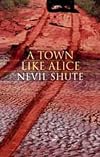
"They spent that day in a curious mixture of love-making and economic discussion." (pg. 259)
Just over a year ago, after devouring the excellent war adventure Pied Piper, I was excited about adding some more books by Nevil Shute to my reading list. This excitement was tempered by On the Beach, which passed but not with the flying colours I expected, and it has been significantly shaken by A Town Like Alice.
I struggled to get through it: usually, I pick up a book and finish it before picking show more up another one, but with A Town Like Alice I have finished three books which I have been reading alongside of it, one after the other, and have started a fourth, before finally closing Alice. I should stress how extremely rare this is for me, but I did not have the endurance for a book which, to my great disappointment, turned out to be a real chore. Whenever I did pick it up again, it never came with any pleasure.
The book is, on the face of it, a sweeping, romantic epic: a hardy Englishwoman and a resourceful Australian PoW meet and fall in love whilst imprisoned by the Japanese in Malaya in 1942. He steals some food from the Japanese for her, and she is told he has been executed. But, after the war (and by a rather laboured coincidence), she discovers he is alive. Having inherited a lot of money, she travels to Australia to find him and together they build a thriving new town – 'a town like Alice [Springs]', she says – in the outback.
It is, however, excruciatingly dull. The most interesting stuff – the treatment of Allied PoWs and civilians by the Japanese – is dealt with quickly in the first third of the book and without much drama. This first third also contains a long set-up which examples what sadly become the dominant traits of the novel: an extended sequence where a solicitor – our narrator – and an old man set up a legal will (the money that Jean, our hardy Englishwoman, eventually comes into). There are two problems with this. Firstly, it is extremely dull, like the minutes of a business meeting, as Shute spares us nothing of the minutiae of the thing. Second, it is unnecessary for the plot, at least in such length. Why not a short chapter in which the solicitor recounts his encounters with this old man, rather than a drawn-out extrapolation of their every banal utterance? You wouldn't want to sit in on such a meeting – it would be like watching paint dry – so why should the reader of a piece of fiction do so?
The second third of the book comes after the war, and sees Jean inheriting the money. She returns to Malaya and builds a well as a thank-you for a village that was kind to her during her Japanese imprisonment. This is actually a good segment, and well-written, but then Shute spends a lot of unnecessary ink in gearing the story towards Jean finding out Joe (the Australian PoW) is alive and then flitting full of sound and fury (signifying nothing) between Malaya, England and Australia. Shute is inexplicably keen on detailing all of her boring travel plans ("I'm going to take the such-and-such to such-and-such, then take the connecting whatsit to such-and-such" – "Oh no, you'd be much better going to whatsitsname and then on to such-and-such through the…" Later: "She took the such-and-such from…") and any narrative momentum or goodwill that might have remained from the first third of the book has well and truly dissipated. And when Jean does make it to Joe's Australian town, she finds out that he's gone out to England looking for her, and now we follow all his travel plans. (Just as she has found an inheritance, he has won the lottery – another laboured coincidence). By this point, I didn't know if I was going to make it out of the book alive.
The final third finally settles down on one place (for the most part) – Willstown, the 'town like Alice', as Jean sets to work improving it and making it prosper economically. Sadly, the habits from the previous section carry over: we dwell on the mundane ins-and-outs of the town and of the various activities (when making a pair of shoes, Jean uses small tubes of Durofix for fixative, don't you know (pg. 216); when she wants to make an investment in a local business, our narrating solicitor has a meeting with a shoe-selling businessman who thinks 'Jean's estimates of capital were on the low side, but not excessively so' (pg. 231)). I can tell you're on tenterhooks already. If you find epic, romantic adventure in overdrafts, business capital, local livestock economics and by-laws, this is the book for you.
Even leaving aside these already-fatal flaws, A Town Like Alice does itself few favours. The main characters are not all that likeable: Jean is hyper-competent and infallible, whilst Joe (and all the Australian characters, really) just says 'oh my word' all the time in a moony, bumpkin-ish voice and speaks in gimpy slang. The narrating device is clunky – particularly later on in the book when the solicitor is no longer a main character – and the prose is stodgy and stolid, never seeming to know where the high points of the drama are.
At first, I thought I might have been turned off by the rather cold and antiseptic design of my House of Stratus edition (2000), but I have read similarly-designed books and, when they've been good, I've forgotten about the design as I've been immersed in the story. With A Town Like Alice, I laboured throughout. Too much time is spent on slowly pivoting around the various plot points than on the plot points themselves, allowing Shute an excuse for his meticulous and seemingly pathological descriptions of legal, business and travel arrangements. And yet, despite these slow and methodical pivots, it is remarkable just how much of the plot only comes together because of some fortuitous coincidences. (Forgivable if that was the only flaw, but not with everything else.)
I have not yet given up on Shute, as I still remember fondly how much I enjoyed Pied Piper, and as the next of his books on my shelf is the wartime adventure Most Secret, there may be hope for me yet. Because this one was almost completely bloodless. I don't mind detail or context in a book, or spending time in the town like Alice; it's only that Shute doesn't seem to realize how boring it is to watch the paint dry on the bloody place. show less
Just over a year ago, after devouring the excellent war adventure Pied Piper, I was excited about adding some more books by Nevil Shute to my reading list. This excitement was tempered by On the Beach, which passed but not with the flying colours I expected, and it has been significantly shaken by A Town Like Alice.
I struggled to get through it: usually, I pick up a book and finish it before picking show more up another one, but with A Town Like Alice I have finished three books which I have been reading alongside of it, one after the other, and have started a fourth, before finally closing Alice. I should stress how extremely rare this is for me, but I did not have the endurance for a book which, to my great disappointment, turned out to be a real chore. Whenever I did pick it up again, it never came with any pleasure.
The book is, on the face of it, a sweeping, romantic epic: a hardy Englishwoman and a resourceful Australian PoW meet and fall in love whilst imprisoned by the Japanese in Malaya in 1942. He steals some food from the Japanese for her, and she is told he has been executed. But, after the war (and by a rather laboured coincidence), she discovers he is alive. Having inherited a lot of money, she travels to Australia to find him and together they build a thriving new town – 'a town like Alice [Springs]', she says – in the outback.
It is, however, excruciatingly dull. The most interesting stuff – the treatment of Allied PoWs and civilians by the Japanese – is dealt with quickly in the first third of the book and without much drama. This first third also contains a long set-up which examples what sadly become the dominant traits of the novel: an extended sequence where a solicitor – our narrator – and an old man set up a legal will (the money that Jean, our hardy Englishwoman, eventually comes into). There are two problems with this. Firstly, it is extremely dull, like the minutes of a business meeting, as Shute spares us nothing of the minutiae of the thing. Second, it is unnecessary for the plot, at least in such length. Why not a short chapter in which the solicitor recounts his encounters with this old man, rather than a drawn-out extrapolation of their every banal utterance? You wouldn't want to sit in on such a meeting – it would be like watching paint dry – so why should the reader of a piece of fiction do so?
The second third of the book comes after the war, and sees Jean inheriting the money. She returns to Malaya and builds a well as a thank-you for a village that was kind to her during her Japanese imprisonment. This is actually a good segment, and well-written, but then Shute spends a lot of unnecessary ink in gearing the story towards Jean finding out Joe (the Australian PoW) is alive and then flitting full of sound and fury (signifying nothing) between Malaya, England and Australia. Shute is inexplicably keen on detailing all of her boring travel plans ("I'm going to take the such-and-such to such-and-such, then take the connecting whatsit to such-and-such" – "Oh no, you'd be much better going to whatsitsname and then on to such-and-such through the…" Later: "She took the such-and-such from…") and any narrative momentum or goodwill that might have remained from the first third of the book has well and truly dissipated. And when Jean does make it to Joe's Australian town, she finds out that he's gone out to England looking for her, and now we follow all his travel plans. (Just as she has found an inheritance, he has won the lottery – another laboured coincidence). By this point, I didn't know if I was going to make it out of the book alive.
The final third finally settles down on one place (for the most part) – Willstown, the 'town like Alice', as Jean sets to work improving it and making it prosper economically. Sadly, the habits from the previous section carry over: we dwell on the mundane ins-and-outs of the town and of the various activities (when making a pair of shoes, Jean uses small tubes of Durofix for fixative, don't you know (pg. 216); when she wants to make an investment in a local business, our narrating solicitor has a meeting with a shoe-selling businessman who thinks 'Jean's estimates of capital were on the low side, but not excessively so' (pg. 231)). I can tell you're on tenterhooks already. If you find epic, romantic adventure in overdrafts, business capital, local livestock economics and by-laws, this is the book for you.
Even leaving aside these already-fatal flaws, A Town Like Alice does itself few favours. The main characters are not all that likeable: Jean is hyper-competent and infallible, whilst Joe (and all the Australian characters, really) just says 'oh my word' all the time in a moony, bumpkin-ish voice and speaks in gimpy slang. The narrating device is clunky – particularly later on in the book when the solicitor is no longer a main character – and the prose is stodgy and stolid, never seeming to know where the high points of the drama are.
At first, I thought I might have been turned off by the rather cold and antiseptic design of my House of Stratus edition (2000), but I have read similarly-designed books and, when they've been good, I've forgotten about the design as I've been immersed in the story. With A Town Like Alice, I laboured throughout. Too much time is spent on slowly pivoting around the various plot points than on the plot points themselves, allowing Shute an excuse for his meticulous and seemingly pathological descriptions of legal, business and travel arrangements. And yet, despite these slow and methodical pivots, it is remarkable just how much of the plot only comes together because of some fortuitous coincidences. (Forgivable if that was the only flaw, but not with everything else.)
I have not yet given up on Shute, as I still remember fondly how much I enjoyed Pied Piper, and as the next of his books on my shelf is the wartime adventure Most Secret, there may be hope for me yet. Because this one was almost completely bloodless. I don't mind detail or context in a book, or spending time in the town like Alice; it's only that Shute doesn't seem to realize how boring it is to watch the paint dry on the bloody place. show less
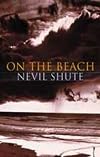
This post-apocalyptic novel was published in 1957 and set in the future – 1963 (though current readers might consider it “historical”). It takes place primarily in and around Melbourne Australia. World War has decimated the northern hemisphere a year or two previously, and the nuclear debris is slowly spreading on the winds to the southern hemisphere. The population knows that the end is coming; in about nine months they will all get radiation sickness and die. But for now … the sun show more shines, people go to work (albeit on horseback or via bicycle since they have no petrol), babies are born, children attend school, sports matches are played, beach and picnic outings are had … in short, life goes on.
I cannot remember the last time I was so affected by a book. Part of my reaction, I’m sure, harkens back to my own days as a child during the Cuban Missile Crisis and the Cold War. I lived in a military town, and we felt we would be a prime target if bombs were launched against us. I remember the “duck and cover” drills, the discussions I had with my parents about what to do if “something happened” while I was at school. On a basic level, this book touched and awakened all those fears and insecurities.
I’ve had dreams about the situation these characters find themselves in. What would I do if I knew I was going to die? Would I plant daffodil bulbs I’d never see flower? Would I start a new course of study I’d always wanted to pursue, knowing I’d never finish it and never be able to get a job in that career field? Would I abandon my duties and obligations to indulge in hobbies? Would I give up and seek the numbing effects of alcohol? Would I embrace the chance at a new love? Would I kill my baby or my elderly parents to ensure they didn’t suffer? Would I end it quickly or die a slow agonizing death, knowing my loved ones, friends, neighbors, countrymen were all dying similarly?
It’s not a “teary” book, but I was in tears at the end. I’m really glad I finally read this book that has been on my tbr list for (literally) decades. show less
I cannot remember the last time I was so affected by a book. Part of my reaction, I’m sure, harkens back to my own days as a child during the Cuban Missile Crisis and the Cold War. I lived in a military town, and we felt we would be a prime target if bombs were launched against us. I remember the “duck and cover” drills, the discussions I had with my parents about what to do if “something happened” while I was at school. On a basic level, this book touched and awakened all those fears and insecurities.
I’ve had dreams about the situation these characters find themselves in. What would I do if I knew I was going to die? Would I plant daffodil bulbs I’d never see flower? Would I start a new course of study I’d always wanted to pursue, knowing I’d never finish it and never be able to get a job in that career field? Would I abandon my duties and obligations to indulge in hobbies? Would I give up and seek the numbing effects of alcohol? Would I embrace the chance at a new love? Would I kill my baby or my elderly parents to ensure they didn’t suffer? Would I end it quickly or die a slow agonizing death, knowing my loved ones, friends, neighbors, countrymen were all dying similarly?
It’s not a “teary” book, but I was in tears at the end. I’m really glad I finally read this book that has been on my tbr list for (literally) decades. show less
Lists
Sense of place (1)
Best War Stories (1)
Arctic novels (1)
Best Sea Stories (1)
Read in 2007 (1)
Best Beach Reads (1)
BBC Big Read (1)
A Novel Cure (1)
Read in 2006 (1)
THE WAR ROOM (5)
1960s (1)
Nifty Fifties (1)
1950s (2)
BBC Top Books (1)
Five star books (2)
Favourite Books (2)
Allie's Wishlist (2)
Women in War (5)
Best Dystopias (1)
BBC Big Read (1)
My TBR list (1)
Comfort Reads (1)
Awards


You May Also Like


Associated Authors
Statistics
- Works
- 56
- Also by
- 31
- Members
- 20,294
- Popularity
- #1,068
- Rating
- 3.9
- Reviews
- 696
- ISBNs
- 788
- Languages
- 20
- Favorited
- 76
