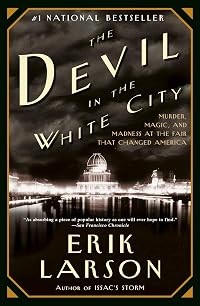
The Devil in the White City: Murder, Magic, and Madness at the Fair That Changed America
by Erik Larson
On This Page
Description
An account of the Chicago World's Fair of 1893 relates the stories of two men who shaped the history of the event--architect Daniel H. Burnham, who coordinated its construction, and serial killer Herman Mudgett.Tags
Recommendations
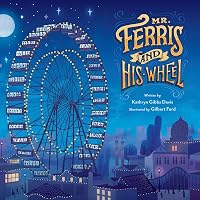

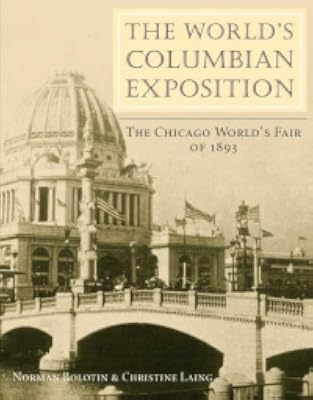
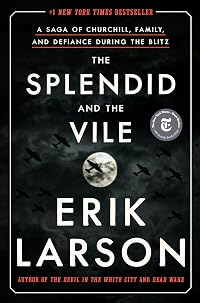
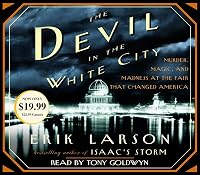

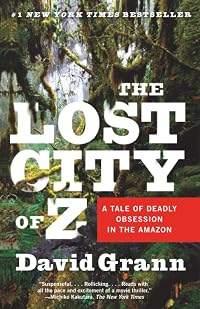
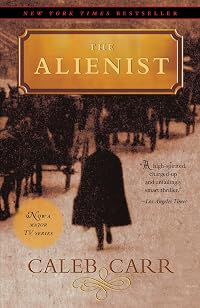
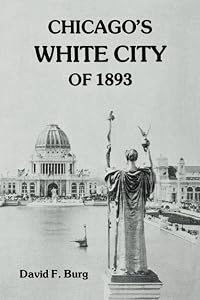
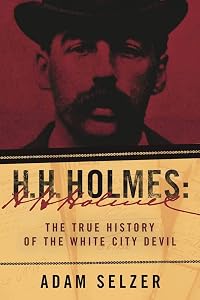



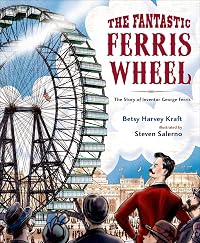

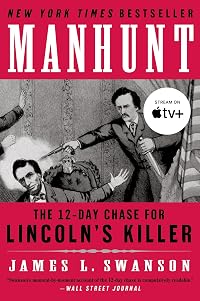
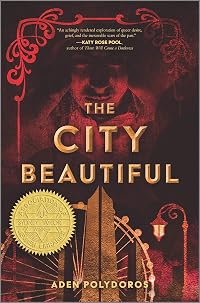
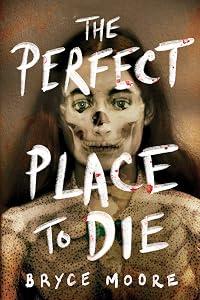
Member Recommendations
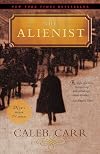
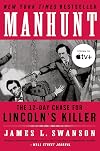
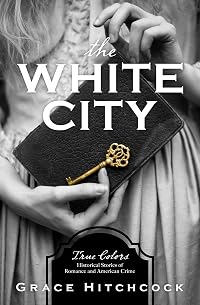
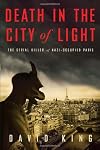
thatwordnerd Both books tell a true story, with a multitude of sources, but are written in a way that makes the reader feel as if it is almost fiction. The reader (see more) is not hit over the head with facts and is able to get sucked into the story and the era.
81
Depraved: The Definitive True Story of H.H. Holmes, Whose Grotesque Crimes Shattered Turn-of-the-Century Chicago by Harold Schechter
jseger9000 Another account of H.H. Holmes
60

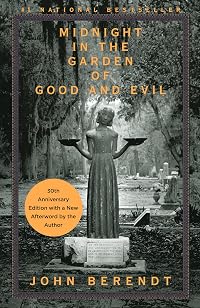
BookshelfMonstrosity Offering rich details of Savannah in the 1980s (Midnight in the Garden) and Chicago in the 1890s (Devil in the White City), these well-researched and dramatic recreations of terrible crimes are equally compelling, despite differences in time period and location.
61
The Girls of Murder City: Fame, Lust, and the Beautiful Killers who Inspired Chicago by Douglas Perry
browner56 Two fascinating looks at murder and mayhem in the Windy City at the turn of the last century.
51

CarlT Though AMERICAN GOTHIC is fiction and THE DEVIL IN THE WHITE CITY is non-fiction, both books are based on the Chicago World's Fair of 1893 (nicknamed "The White City") and the horrific murders committed by serial killer Henry H. Holmes.
40


The Suspicions of Mr. Whicher: A Shocking Murder and the Undoing of a Great Victorian Detective by Kate Summerscale
BookshelfMonstrosity The Devil In the White City and The Suspicions of Mr. Whicher are compelling and richly detailed books about historical true crime. These stories present not only details about the crime but also about the social mores of the time.
The Professor and the Madman: A Tale of Murder, Insanity, and the Making of the Oxford English Dictionary by Simon Winchester
Stbalbach Both concern late-19th C American killers in the backdrop of a bigger social story of advancement (Chicago Fair and Oxford English Dictionary).
32
iubookgirl If you enjoy books that weave real historical figures and events into a work of fiction, you'll love this book.
16

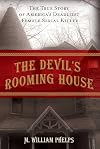
The Devil's Rooming House: The True Story of America's Deadliest Female Serial Killer by M. William Phelps
bnbookgirl mixing true crime with historical event
Member Reviews
Larson juxtaposes the stories of Burnham, the architect in charge of the 1893 Chicago World's Fair, and Holmes, a man who made a career of murder in the same city, using the attraction of the fair to his advantage. Larson also pulls in, almost parenthetically, a less-developed account of Prendergast, the delusional citizen who killed Chicago's mayor at the time.
Two elements of these histories were the most striking to me. The first was the sheer magnitude of the undertaking of building the fair. The time was short, the politics amounted to oceans of red tape, the personnel were often difficult to persuade or manage, and the plan was outrageously ostentatious (and increasingly expensive); but they pulled it off and built what was show more essentially an entire small city to last only six months. The second shocking element in the book was how long Holmes was able to do what he did without raising enough suspicion to warrant any kind of investigation. No one knows how many people he ultimately killed, though some estimates are as high as 200.
This finely researched factual account is rendered like a work of fiction. Larson's style of writing and of weaving together the lives of his subjects is magnetic, and there were moments (especially in the account of Holmes, because who can resist the grisly details of the life of a sociopath) when I couldn't put the book down. show less
Two elements of these histories were the most striking to me. The first was the sheer magnitude of the undertaking of building the fair. The time was short, the politics amounted to oceans of red tape, the personnel were often difficult to persuade or manage, and the plan was outrageously ostentatious (and increasingly expensive); but they pulled it off and built what was show more essentially an entire small city to last only six months. The second shocking element in the book was how long Holmes was able to do what he did without raising enough suspicion to warrant any kind of investigation. No one knows how many people he ultimately killed, though some estimates are as high as 200.
This finely researched factual account is rendered like a work of fiction. Larson's style of writing and of weaving together the lives of his subjects is magnetic, and there were moments (especially in the account of Holmes, because who can resist the grisly details of the life of a sociopath) when I couldn't put the book down. show less
Extremely well written and researched, unsettling, entertaining, educational and fascinating are all words that come to mind on finishing Eric Larson's book [b:The Devil in the White City: Murder, Magic, and Madness at the Fair That Changed America|21996|The Devil in the White City Murder, Magic, and Madness at the Fair That Changed America|Erik Larson|https://images.gr-assets.com/books/1312066724s/21996.jpg|3486041]
The Chicago World's Fair of 1893 was a remarkable achievement for the city of Chicago and it's architect Daniel H. Burnham and while the city was celebrating and enjoying this new wonder of the world, another man by the name of H.H. Holmes, a handsome and charming doctor was luring victims to their deaths and becoming show more America's first Serial Killer. This is the incredible true account of two very different men and the different paths their lives would lead them.
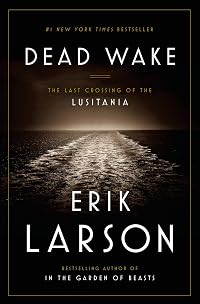
This is my second Book by Eric Larson having read and loved [b:Dead Wake: The Last Crossing of the Lusitania|22551730|Dead Wake The Last Crossing of the Lusitania|Erik Larson|https://images.gr-assets.com/books/1408923747s/22551730.jpg|42009388] previously I was looking forward to another book by this author. His books are extremely well researched and very detailed and he leaves no stone unturned when telling a story.
I loved learning about the Fair and the magnificent buildings, The World's first Ferris Wheel, Buffalo Bill’s Wild West show, electric boats, all the different elements that went into planning and organising such an amazing event. I loved how this book crossed over with numerous other books I had read about this time, (especially the quote from the notorious Chicago May who was born in Ireland only a few miles from my home and ended up becoming one of Chicago's most notorious Crooks of that time) I enjoyed the descriptions of families travelling long distances to the fair from small farms and towns and their amazement at witnessing these spectacular attractions and miracle of electricity for the first time. Eric Larson's descriptions are vivid and captivating and you actually imagine you are there at the centre of the city's excitement. Of course then you are brought back to reality with the murder and mayhem created by H.H Holmes and wonder how a man like this could have murdered so many innocent people and nobody noticed or suspected him.
A word of warning The Devil is in the detail and Eric Larson book's are high on detail and facts which I loved but some may find a tad tedious as the story does drag slightly in places but the historical information and descriptions are excellent and I loved every minute spent with this book.
I listened to this one on audio and the narration was excellent. show less
The Chicago World's Fair of 1893 was a remarkable achievement for the city of Chicago and it's architect Daniel H. Burnham and while the city was celebrating and enjoying this new wonder of the world, another man by the name of H.H. Holmes, a handsome and charming doctor was luring victims to their deaths and becoming show more America's first Serial Killer. This is the incredible true account of two very different men and the different paths their lives would lead them.
This is my second Book by Eric Larson having read and loved [b:Dead Wake: The Last Crossing of the Lusitania|22551730|Dead Wake The Last Crossing of the Lusitania|Erik Larson|https://images.gr-assets.com/books/1408923747s/22551730.jpg|42009388] previously I was looking forward to another book by this author. His books are extremely well researched and very detailed and he leaves no stone unturned when telling a story.
I loved learning about the Fair and the magnificent buildings, The World's first Ferris Wheel, Buffalo Bill’s Wild West show, electric boats, all the different elements that went into planning and organising such an amazing event. I loved how this book crossed over with numerous other books I had read about this time, (especially the quote from the notorious Chicago May who was born in Ireland only a few miles from my home and ended up becoming one of Chicago's most notorious Crooks of that time) I enjoyed the descriptions of families travelling long distances to the fair from small farms and towns and their amazement at witnessing these spectacular attractions and miracle of electricity for the first time. Eric Larson's descriptions are vivid and captivating and you actually imagine you are there at the centre of the city's excitement. Of course then you are brought back to reality with the murder and mayhem created by H.H Holmes and wonder how a man like this could have murdered so many innocent people and nobody noticed or suspected him.
A word of warning The Devil is in the detail and Eric Larson book's are high on detail and facts which I loved but some may find a tad tedious as the story does drag slightly in places but the historical information and descriptions are excellent and I loved every minute spent with this book.
I listened to this one on audio and the narration was excellent. show less
Most of what captivated me about this book revolved around the World’s Fair - it’s really interesting that so much time, energy, and money went into what was mostly temporary. It would’ve been a fascinating time to be in Chicago.
On the other side of this story, you’re really just reminded that the way the police, elected officials, and the wealthy have reacted to crime (especially crime committed by white men), hasn’t changed. Similar to other white male serial killers, many people had suspicions of what was happening but most turned a blind eye.
On the other side of this story, you’re really just reminded that the way the police, elected officials, and the wealthy have reacted to crime (especially crime committed by white men), hasn’t changed. Similar to other white male serial killers, many people had suspicions of what was happening but most turned a blind eye.
It's once again testing season in American schools, and today was one of those days when the principal told me that I couldn't have library check-out due to the need for absolute silence. (There's a hint of irony in there somewhere.) Undaunted, I turned to the seemingly never-ending piles of books that need to be repaired and got out my supplies. This is a dull task however, so I turned to an ebook to read while mending torn pages and dismembered (book) spines. This particular book has been on my list to read for a while, and it seemed as good as time as any to start reading it...
...And ultimately finishing it in one day also. I'm a pretty big history buff, and I've heard of H.H. Holmes before, along with the Great Fair of 1893, and I show more know way more about the labor disputes happening in Chicago than I care to (all thanks to one particularly union-minded professor in college.) I wasn't sure how Larson was going to tie all of these things (and much more!) together, but somehow he managed to make a compelling, oft-horrifying narrative story out of it. I won't say it was done seamlessly, because there were times when the information dragged and I wanted him to get to the point quicker, but the fascination and curiosity to see what connections he would make next encouraged me onward.
Larson seems to have done his research meticulously and it isn't often that I can get through a nonfiction text so quickly. I commend him for taking so many tangled threads and weaving it into a tale that rapidly turns from awe to terror to infuriation to sadness.
He certainly helped me get my piles of books that needed to be fixed down to only a few small stacks - I can't remember the last time that happened all in one day! I look forward to reading more books by him. show less
...And ultimately finishing it in one day also. I'm a pretty big history buff, and I've heard of H.H. Holmes before, along with the Great Fair of 1893, and I show more know way more about the labor disputes happening in Chicago than I care to (all thanks to one particularly union-minded professor in college.) I wasn't sure how Larson was going to tie all of these things (and much more!) together, but somehow he managed to make a compelling, oft-horrifying narrative story out of it. I won't say it was done seamlessly, because there were times when the information dragged and I wanted him to get to the point quicker, but the fascination and curiosity to see what connections he would make next encouraged me onward.
Larson seems to have done his research meticulously and it isn't often that I can get through a nonfiction text so quickly. I commend him for taking so many tangled threads and weaving it into a tale that rapidly turns from awe to terror to infuriation to sadness.
He certainly helped me get my piles of books that needed to be fixed down to only a few small stacks - I can't remember the last time that happened all in one day! I look forward to reading more books by him. show less
The Devil in White City is an account of the life and murders of HH Holmes, a serial killer living in Chicago, during the period of time that the 1893 Chicago World's Fair was being planned and developed. Alternating between the massive exercise of architecture, design, and urban planning that went into preparing the World's Fair, and Holmes' gory murderous exploits, the book presents an account of Chicago in the late 1800s with all its glory, innovation as well as the racism, sexism, and criminal conduct that characterized the place and period. Larson has attempted to present these two narratives in an imaginative, fictionalized way - he sticks close to the facts, but also tries to tell us the moods and feelings of the characters show more involved, which he could not possibly know. It's always a tricky line to draw in writing historical fiction, and he doesn't always succeed. I find it especially disingenuous because he sometimes presents his fantasies as facts and only clarifies that they are not true in the notes (not everyone reads the notes, I know, but I do, and I am annoyed to find that he uses them to disclaim lies instead of providing context and sources).
His narrative is hampered greatly by prose that is frequently clumsy and staccato, and riddled with poor choices. For instance, in describing Holmes' impregnation of an unmarried woman and the potential for social shame, he writes, "He owned her as thoroughly as a plantation slave." Given that Larson is writing about a period where slavery was only just nominally abolished, in the context of the world's fair which made gruesome spectacles out of imprisoned and enslaved people, and the very fact that social condemnation in no way compares to actual slavery, this seems like an unnecessary and particularly odious thing to say. Anyone who has blue eyes in this book will have those eyes compared to blue waters each time they come up in the narrative - presumably not any waters of Chicago, as you are also treated to loving descriptions of the depressing state of sewage and plumbing in the era. When he does include notable characters from the period, he does so again in a way that feels demeaning for no reason: he makes a meal out of suggesting that Harriet Monroe, who started the Poetry Foundation, ended up become a literary personality because of her inability to find a husband, which gives short shrift to the woman who wrote, edited, and played a crucial role in kickstarting the careers of many writers and poets in America, in addition to recording details of the World's Fair that Larson ungratefully uses in his narrative. Even his account of the murders of Holmes seems very focused on titillating presentations of the victims' bodies and looks, no bosom's size going unmentioned.
In the course of this book, Larson, with absolutely no self-awareness, critiques the writing of landscape architect Frederick Olmsted , noting that Olmsted's sentences "wandered through [a] report like morning glory through the pickets of a fence." I am unsurprised that this sensationalised, tedious, poorly-written pile of nonsense earned a glowing review from the NYT, which has done nothing but lead the discerning reader wrong for decades now. show less
His narrative is hampered greatly by prose that is frequently clumsy and staccato, and riddled with poor choices. For instance, in describing Holmes' impregnation of an unmarried woman and the potential for social shame, he writes, "He owned her as thoroughly as a plantation slave." Given that Larson is writing about a period where slavery was only just nominally abolished, in the context of the world's fair which made gruesome spectacles out of imprisoned and enslaved people, and the very fact that social condemnation in no way compares to actual slavery, this seems like an unnecessary and particularly odious thing to say. Anyone who has blue eyes in this book will have those eyes compared to blue waters each time they come up in the narrative - presumably not any waters of Chicago, as you are also treated to loving descriptions of the depressing state of sewage and plumbing in the era. When he does include notable characters from the period, he does so again in a way that feels demeaning for no reason: he makes a meal out of suggesting that Harriet Monroe, who started the Poetry Foundation, ended up become a literary personality because of her inability to find a husband, which gives short shrift to the woman who wrote, edited, and played a crucial role in kickstarting the careers of many writers and poets in America, in addition to recording details of the World's Fair that Larson ungratefully uses in his narrative. Even his account of the murders of Holmes seems very focused on titillating presentations of the victims' bodies and looks, no bosom's size going unmentioned.
In the course of this book, Larson, with absolutely no self-awareness, critiques the writing of landscape architect Frederick Olmsted , noting that Olmsted's sentences "wandered through [a] report like morning glory through the pickets of a fence." I am unsurprised that this sensationalised, tedious, poorly-written pile of nonsense earned a glowing review from the NYT, which has done nothing but lead the discerning reader wrong for decades now. show less
WHERE DO I BEGIN? This book has it all! Politics! Intrigue! Murder! Weirdness! Absurdity! It’s the story of the Chicago World’s Fair and the eccentric personalities that birthed it, despite incredible odds and a succession of disasters, each of which could have easily shut down the whole thing. It’s also a fascinating glimpse into the psychology of the American public at that particular moment, teetering on the bring of financial collapse, convinced of our own greatness, and desperate to prove ourselves on an international stage.
When I say that this book is unbelievable, I mean that I had to set it down several times and marvel over the fact that every damn thing in it is 100% true. What’s more, I have reached the ripe age of show more fifty without ever having heard any of this.
I don’t want to tell you anything about it. I want you to pick it up and read it and enjoy the series of mind-boggled gasps that will involuntarily erupt from your throat as you grapple with the enormity of this epic tale. Even if you don’t enjoy books about history, or nonfiction in general, you will enjoy this book because Larson writes it like a fiction writer. Lots of rich detail and a keen understanding of the motivations of each of these real-life characters.
It’s extremely well-researched (the back contains references galore). I think the only thing I’ve read that compares is probably In Cold Blood (Capote)… and while I’m not sure I want to commit to this opinion – I think it may even be better.
If you don't read this book you're a damned fool. show less
When I say that this book is unbelievable, I mean that I had to set it down several times and marvel over the fact that every damn thing in it is 100% true. What’s more, I have reached the ripe age of show more fifty without ever having heard any of this.
I don’t want to tell you anything about it. I want you to pick it up and read it and enjoy the series of mind-boggled gasps that will involuntarily erupt from your throat as you grapple with the enormity of this epic tale. Even if you don’t enjoy books about history, or nonfiction in general, you will enjoy this book because Larson writes it like a fiction writer. Lots of rich detail and a keen understanding of the motivations of each of these real-life characters.
It’s extremely well-researched (the back contains references galore). I think the only thing I’ve read that compares is probably In Cold Blood (Capote)… and while I’m not sure I want to commit to this opinion – I think it may even be better.
If you don't read this book you're a damned fool. show less
Extraordinary book about an extraordinary time and extraordinary men doing extraordinary things. And yes, it's mostly men doing the big things, such was the nature of the times. Women are mostly minor characters, walk-on cameos and victims, though one of the most admirable acts is performed by an unnamed woman.
The Chicago World's Fair, a monumental undertaking by a monumental group of Chicago architects. The time is too short, the task is too big, there are delays and disasters waiting along the way but that doesn't stop them rolling up their sleeves and transforming a piece of lakeside wasteland into the fabled White City which becomes a marvel to enchant the whole world.
It's a story of sheer capitalist American achievement, awesome show more in scope and grandeur, and the sacrifice, vision and dedication of mighty men of business and industry in the name of civic pride is staggering to behold. It's also a vision of American darkness, however, with economic chaos, labour unrest, crime and insanity a kind of dark twin to the shining ideals of the fair. Most of all, though, deepest in the shadow of the White City, is Dr HH Holmes, charming and handsome, with his World's Fair Hotel and it's rooms full of vulnerable young women and it's secret vaults and gas lines and air-tight rooms and specially designed furnace. A monster of appalling proportions, the full scope of his awful crimes can never be known.
Larson runs the story of the fair and the story of the killer in parallel, writing with immense dramatic energy, the urgency of a novel and the riveting knowledge that this is fact, not fiction. show less
The Chicago World's Fair, a monumental undertaking by a monumental group of Chicago architects. The time is too short, the task is too big, there are delays and disasters waiting along the way but that doesn't stop them rolling up their sleeves and transforming a piece of lakeside wasteland into the fabled White City which becomes a marvel to enchant the whole world.
It's a story of sheer capitalist American achievement, awesome show more in scope and grandeur, and the sacrifice, vision and dedication of mighty men of business and industry in the name of civic pride is staggering to behold. It's also a vision of American darkness, however, with economic chaos, labour unrest, crime and insanity a kind of dark twin to the shining ideals of the fair. Most of all, though, deepest in the shadow of the White City, is Dr HH Holmes, charming and handsome, with his World's Fair Hotel and it's rooms full of vulnerable young women and it's secret vaults and gas lines and air-tight rooms and specially designed furnace. A monster of appalling proportions, the full scope of his awful crimes can never be known.
Larson runs the story of the fair and the story of the killer in parallel, writing with immense dramatic energy, the urgency of a novel and the riveting knowledge that this is fact, not fiction. show less
Members
- Recently Added By
Published Reviews
ThingScore 75
Mr. Larson has written a dynamic, enveloping book filled with haunting, closely annotated information. And it doesn't hurt that this truth really is stranger than fiction.
added by jlelliott
Lists

Really Good Narrative Non-Fiction
65 works; 24 members

Non-Fiction Worth Reading
1,015 works; 255 members

Top Five Books of 2018
802 works; 264 members

100 books to read in a lifetime
102 works; 37 members

Top Five Books of 2013
1,562 works; 715 members

Unread books
1,063 works; 87 members

True Crime
216 works; 16 members
Books Set in Chicago
19 works; 7 members

Recommend the 20 best books you've read in the last five years
2,168 works; 606 members

Top Five Books of 2022
736 works; 272 members

Phi Beta Kappa reading list
260 works; 8 members

Books Set in Illinois
19 works; 7 members

My TBR list
38 works; 1 member

Chicago Books
87 works; 4 members

Weirdo Nonfiction
138 works; 3 members

PS: 43 Books to Read Before They're Movies
18 works; 5 members

Books Read in 2018
4,360 works; 110 members
Governerds Insider
32 works; 1 member

.
184 works; 1 member

Books About Murder
313 works; 7 members

Books Read in 2019
4,052 works; 109 members
My Favourite Books
86 works; 5 members

mstrust's scary list
34 works; 1 member

NYT Readers best of 21st C
100 works; 8 members

Jones & Newman: Best Horror Books Further Recommended Reading
577 works; 4 members

Books Read in 2022
5,166 works; 114 members

The Complete Rory Gilmore Reading List
506 works; 5 members

Books Read in 2015
3,299 works; 126 members
Books recommended by Calgary Public Library staff
1,588 works; 4 members

Best Audiobooks
240 works; 114 members

Best Mysteries With a Historical Setting
292 works; 160 members

My List
302 works; 1 member

Books on my Kindle
162 works; 3 members

Penguin Random House
458 works; 4 members

BB: Books That Will Keep Your Attention Until The Very Last Page
20 works; 3 members

Books Read in 2012
816 works; 32 members

Books Featured on Gilmore Girls
307 works; 21 members
Independent Reading Suggestions
69 works; 3 members

Best books read in 2011
200 works; 51 members

Crime and Mysteries to Read
746 works; 31 members

Blue Pyramid 1,276 Best Books of All Time
1,248 works; 32 members

Allie's Wishlist
217 works; 2 members

My E-Book Collection - Opinions Welcome
92 works; 10 members

75 Books Challenge Halloween Read "Official" Selections
71 works; 7 members

Books Read in 2014
2,343 works; 89 members
Books Read in 2016
4,666 works; 197 members

Biggest Disappointments
606 works; 168 members

A Rainbow of Books: Colors in the Title
570 works; 24 members
Death and Mystery (with some Adventure)
69 works; 1 member

Boy Protagonists
65 works; 1 member
Page Turners
185 works; 11 members
Adult Books for YA Readers
194 works; 6 members

Books with Colourful Titles
171 works; 8 members

Authors from the United States
245 works; 3 members

Edgar Award
418 works; 15 members
Unhinged History
14 works; 1 member

Best Architecture Books
87 works; 14 members
Talk Discussions
Past Discussions
History; Nonfiction; True Crime; Erik Larson; Daniel Stashower in If You Like Then You Will Love (July 2013)
Author Information

15+ Works 57,038 Members
Erik Larson was born in Brooklyn on January 3, 1954. He graduated Summa Cum Laude from the University of Pennsylvania and went to graduate school at Columbia University. Larson worked for the Wall Street Journal and then began writing non-fiction books. He is the bestselling author of the National Book Award finalist and Edgar Award-winning, The show more Devil in the White City, which has been optioned for a feature film by Leonardo DiCaprio. He also wrote In the Garden of the Beasts, Issac's Storm, Thunderstruck and The Naked Consumer. Larson has taught non-fiction writing at San Francisco State University, the Johns Hopkins Writing Seminars, and the University of Oregon. (Bowker Author Biography) show less
Some Editions
Awards and Honors
Awards
Distinctions
Work Relationships
Is contained in
Is abridged in
Has as a student's study guide
Common Knowledge
- Canonical title
- The Devil in the White City: Murder, Magic, and Madness at the Fair That Changed America
- Original title
- The Devil in the White City: Murder, Magic, and Madness at the Fair That Changed America
- Original publication date
- 2003-02-11
- People/Characters
- Myrta Belknap; Daniel Hudson Burnham; Charles Chappell; Emeline Cigrand; Buffalo Bill Cody; Henry S. Codman (show all 74); Julia Conner; Ned Conner; Clarence Darrow; Chauncey M. Depew (as Chauncey Depew); Thomas Edison; Mickey Finn; James A. Garfield; Frank Geyer; Samuel Gompers; Carter Henry Harrison; Richard Morris Hunt; Farida Mazhar; Charles McKim; Frank D. Millet (Francis Davis Millet); Herman Webster Mudgett; Annie Oakley; Frederick Law Olmsted; Benjamin Pitezel; George Post; Patrick Eugene Joseph Prendergast; John Wellborn Root; Louis Sullivan; Minnie Williams; George Washington Gale Ferris; Mrs. Holton; Theodore Dreiser; Clara Lovering; Sol Bloom; Rudolf Ulrich; Dion Geraldine; Sophia Hayden; Charles B. Atwood; Dankmar Adler; Robert Swain Peabody; Henry Van Brunt; Julia Smythe; Jane Addams; Philip Danforth Armour; Charles Dudley Arnold; Peter Cigrand; Grover Cleveland; Pearl Conner; George Royal Davis; James William Ellsworth; Margaret Burnham; Margaret Ferris; Lyman J. Gage; George Scott Graham; William F. Gronau; Harlow N. Higinbotham; Friedrich Alfred Krupp; Harriet Monroe; James Fullarton Muirhead; John Charles Olmsted; Bertha Palmer; Potter Palmer; Alice Pitezel; Carrie Canning Pitezel; Howard Pitezel; Nellie Pitezel; George Mortimer Pullman; Patrick Quinlan; Luther V. Rice; Mason A. Schufeldt; William Thomas Stead; Georgiana Yoke; Frank Lloyd Wright; Alfred S. Trude
- Important places
- Chicago, Illinois, USA; Jackson Park, Chicago, Illinois, USA; Philadelphia, Pennsylvania, USA; Toronto, Ontario, Canada; Irvington, Indiana, USA; The World's Fair Hotel
- Important events
- Chicago World's Fair (1893); World's Columbian Exposition (1893 | Chicago, Illinois, USA); 1893 Chicago World's Fair
- Related movies
- The Devil in the White City (2013 | IMDb)
- Epigraph
- Make no little plans; they have no magic to stir men's blood.
Daniel H. Burnham
Director of Works
World's Columbian Exposition, 1893
I was born with the devil in me. I could not help the fact that I was a murderer, no more than a poet can help the inspiration to sing.
Dr. H. H. Holmes
Confession
1896 - Dedication
- To Chris, Kristen, Lauren, and Erin,
for making it all worthwhile
—and to Molly, whose lust for socks
kept us all on our toes - First words
- The date was April 14, 1912, a sinister day in maritime history, but of course the man in suite 63–65, shelter deck C, did not yet know it.
- Quotations
- "Suddenly New York and St. Louis wanted the fair. Washington laid claim to the honor on the grounds it was the center of government, New York because it was the center of everything. No one cared what St. Louis thought, altho... (show all)ugh the city got a wink for pluck."
"Make no little plans; they have no magic to stir men's blood"
"They are blue. Great murderers, like great men in other walks of activity, have blue eyes."
"In all the workforce in the park numbered four thousand. The ranks included a carpenter and furniture-maker named Elias Disney, who in coming years would tell many stories about the construction of this magical realm beside ... (show all)the lake. His son Walt would take note." - Last words
- (Click to show. Warning: May contain spoilers.)On a crystalline fall day you can almost hear the tinkle of fine crystal, the rustle of silk and wool, almost smell the expensive cigars.
- Publisher's editor
- Prashker, Betty
- Original language
- English
- Canonical DDC/MDS
- 364.15230977311; 364.1523092
- Canonical LCC
- HV6248.M8
Classifications
- Genres
- General Nonfiction, History, Nonfiction
- DDC/MDS
- 364.15230977311 — Society, government, & culture Social problems and social services Crime Criminal offenses Offenses against the person Homicide Murder History, geographic treatment, biography North America Midwestern U.S.
- LCC
- HV6248 .M8 — Social sciences Social pathology. Social and public welfare. Criminology Social pathology. Social and public welfare. Criminology Criminal classes
- BISAC
Statistics
- Members
- 25,341
- Popularity
- 183
- Reviews
- 757
- Rating
- (4.00)
- Languages
- 18 — Czech, Danish, Dutch, English, French, German, Hebrew, Hungarian, Italian, Japanese, Polish, Portuguese, Serbian, Spanish, Swedish, Turkish, Ukrainian, Chinese, traditional
- Media
- Paper, Audiobook, Ebook
- ISBNs
- 64
- UPCs
- 2
- ASINs
- 59