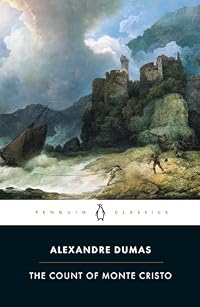
The Count of Monte Cristo
by Alexandre Dumas
There is 1 current discussion about this work.
On This Page
Description
Edmond Dantes, a man on the threshold of a bright career and a happy marriage, is imprisoned in the Chateau d'If, a guarded island bastion in France, on a false political indictment. After staging a sensational prison break, he discovers the legendary treasure of Monte Cristo. Newly wealthy, Dantes sets out on a course of revenge and redemption.Tags
Recommendations


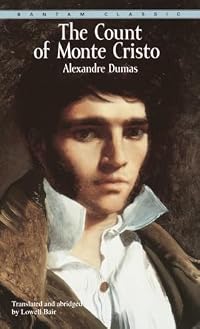
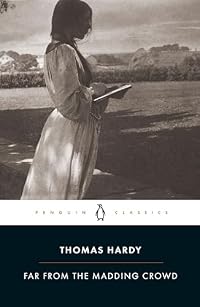
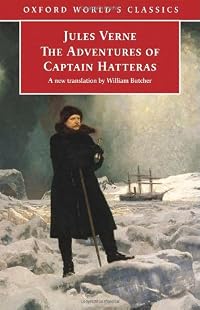
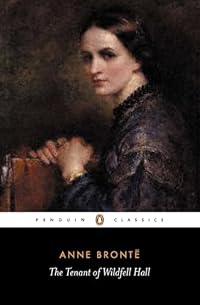

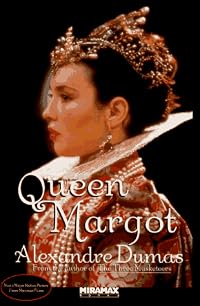






Member Recommendations


rareflorida An old SciFi classic based upon The Count of Monte Cristo. Be patient because the begining of the story may be frustrating but you will eventually see the intelligence.
121

2below These stories share some key themes and plot elements. It's not nearly as epic as The Count of Monte Cristo but makes for an interesting comparison.
82

citygirl Another detailed, intricately plotted revenge tale.
31
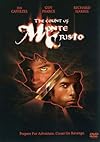
anonymous user Fascinating interpretation. Very free and very different. Really an independent work of art. If not superior to the novel, certainly not inferior to it either. Great script, superb cast, beautiful music, gorgeous production design.
bokai While Maupassant's power is in his slice of life short stories told in an objective narrative voice and Dumas is the master of the thousand page epic told (see more) in highly sympathetic narration, both authors evoke images of the same France and are unequaled in their skill at bringing character and conflict to life. A short by Maupassant is a great way to break up the lengthy prose of Dumas, and Dumas, in turn, expands and elaborates the world that Maupassant provides only glimpses of.
11


elizabeth.a.coates Both are adventure stories that take place over a number of years and deal with riches, revenge, and romance
11
TomWaitsTables The story of a man consumed by his obsession, but instead of revenge, Gatsby is chasing the American dream.
66
lilisin "Queen of the South" is a modern retake on "The Count". Not my favorite read but you can definitely see the parallels.
12



anonymous user The Count of Monte Cristo was the inspiration for Ben-Hur; the main character Edmond Dantes is falsely accused, escapes his imprisonment and seeks vengeance on those responsible for his imprisonment. [Wikipedia article, "Judah Ben Hur", citing The Book Lover's Devotional. Barbour Publishing. 2011]

Morryman84 Protagonist in both is seeking revenge
Member Reviews
Edmond Dantes has it all: a good job, chance of promotion, and a lovely girl he plans to marry. But when two jealous men conspire to have his arrested as a supporter of Napoleon Bonaparte, he loses everything and is imprisoned for years. Making a daring escape and coming into some money, he returns to get his revenge on the people who wronged him.
My Modern Library edition of [The Count of Monte Cristo] is a true doorstopper by all definitions, clocking in at 1462 pages, and it took me six weeks to read. That being said, this is a really excellent tale of human nature and revenge, and with all the different side stories of the various characters, I remained riveted throughout. It starts as almost a wish fulfillment - yes, Edmond, get show more back at the people who harmed you, they'll get what's coming to them! But it's much more nuanced than that. Edmond Dantes is changed by prison and while he may be more cunning, I would not say he's a better person. He sees himself as God's avenging angel and above the law, but some of his revenge tactics have unintended consequences and should leave him - and the reader - unsettled by what he's done. Deservedly a classic. show less
My Modern Library edition of [The Count of Monte Cristo] is a true doorstopper by all definitions, clocking in at 1462 pages, and it took me six weeks to read. That being said, this is a really excellent tale of human nature and revenge, and with all the different side stories of the various characters, I remained riveted throughout. It starts as almost a wish fulfillment - yes, Edmond, get show more back at the people who harmed you, they'll get what's coming to them! But it's much more nuanced than that. Edmond Dantes is changed by prison and while he may be more cunning, I would not say he's a better person. He sees himself as God's avenging angel and above the law, but some of his revenge tactics have unintended consequences and should leave him - and the reader - unsettled by what he's done. Deservedly a classic. show less
This sprawling blog of a novel deserves the credit it gets for being a masterpiece of popular fiction: the orientalism, the drugs, the suicide, the lesbian cross-dressing, the meditations on the nature of revenge and forgiveness. I chose to read this because I loved the recent French movie adaptation so much. This vigorous and accessible translation by Robin Buss kept me going. The novel helped me understand Edward Said's complaints about 'orientalism' better -- apparently for the French the 'orient' starts at Arles and much of it is south of Paris, not east of it. It also cemented in my head all the restorations and monarchies between the revolution and the third republic. It made me more familiar with some of the deep structures of show more French character and their Catholic roots. Ultimately, this thing is just too large. It was published daily -- an unimaginable feat! I couldn't tell if Dumas's constant patching of the narrative was the result of desperate retconning or insouciance or both. Either way, I came away from the book with an unusual sense that it is perfectly appropriate to cut, remix, condense, or otherwise play with its content in movie and TV versions. Telling a different version of this story is not only necessary and inevitable, it's in the spirit of Dumas's daily installments themselves. show less
What does it say about me as a critic when the best book I’ve read all year was first serialized in the 1840s? From start to finish thoroughly enjoyable, Alexandre Dumas’ 1200 page revenge epic The Count of Monte Cristo wastes little time in not thrusting the plot along, quite violently so at times, and includes within a brief, sketchy history of the return of Napoleon and his subsequent second defeat, a primer on hashish, and a proto-seed for the detective tale that would later blossom under Poe and Doyle.The story is less well known than that in The Three Musketeers, though the outline is familiar to anyone who’s spent time reading and watching noir fiction and movies. A young sailor, Edmond Dantès, engaged to be married to the show more beautiful Mercédès, is accused of a crime he has not committed by a man in love with his fiancée. The accuser, Fernand, is assisted in his perfidy by one of Dantès’ shipmates, Danglars, and an envious neighbor, Caderousse, as well as the political calculations of the young royal prosecutor Villefort. Cast into prison for fourteen years, Dantès befriends an Abbé written off by prison officials as crazy who bequeaths to him on his deathbed a hidden fortune. Escaping from prison, Dantès finds the treasure, buys himself the title of Count, and returns to France to put into effect his long-nurtured schemes of revenge.All of that takes place within the novel’s first 250 pages. The remaining one thousand allows the plot of slow-planned revenge time to stretch its legs, look about, and move forward with the inexorable pacing of Fate. Dantès, now in his persona of the Count (as well as in other various disguises such as the Englishman Lord Wilmore and the Italian Abbé Busoni), plots a revenge that capitalizes on each character’s weakness and vanity.Sensing the malevolence in Villefort’s young wife, he introduces her to a sleeping draught/poison of his own devising, with which she begins to poison members of the prosecutor’s family in an attempt to secure a sizable inheritance for her son by a previous marriage. Through one scheme after another he reduces the proud banker that Danglars has become to a penniless wreck. A similar betrayal in Fernand’s past is resuscitated in part by the Count and rises up to disgrace him permanently. Caderrouse destroys himself through his own base greed and cunning.All of this unfolds with delicious grace, and you relish each move the Count makes in his ongoing revenge, but underneath it all, a creeping note begins to sneak into the story. When Dantès himself was sent to prison, it was an action aimed solely at him by the three conspirators, and yet the ripples of this violence stretched outwards, consuming his fiancée Mercédès; crippling the business of his former employer Morrel, who never found a young captain equal to Dantès; and crushing the life out of Dantès’ father, who eventually died of starvation. The Count comes to see, through his friendships with the next generation of all the major players, how his actions cause grief and suffering that extend beyond the targets of his own revenge.This realization makes up the novel’s closing chapters wherein the Count mulls over the right of vengeance and the notion of redemption and comes to peace with his idea of a godly revenge. Partly this is inspired by an earlier episode when he is required to save the life of Villefort’s daughter as she is in love with (and is loved by) Morrel’s son Maximilian. But also a great deal of this has to do with Dantès’ love for Mercédès, as well as his newfound love for Haydée, a young Greek, daughter of the Ali Pasha, and his (Dantès’) slave.In fact, these are the twin threads around which the entirety of the story revolves, love and revenge. It is Fernand’s love for Mercédès that leads to his conspiracy against Dantès. It is Dantès love for Mercédès that keeps him alive in prison. It is Maximilian Morrel’s love of Valentine Villefort that saves her life, as much as it is Dantès’ love of Maximilian’s father. Likewise, Madame de Villefort’s love of her son directs her toward her poisoning scheme.And while it is Dantès’ revenge that brings every character to a reckoning, there is in each of the characters’ pasts delinquent accounts that eventually must be paid, a revenge against them by Fate of which Dantès is only the tool. Caderousse’s backstabbing and betrayals will eventually get the better of him; Villefort’s illegitimate child will also return to play havoc with his name and reputation; Danglars’ cupidity will trap him in a bandit’s layer; and Fernand’s own treachery will lead to his public humiliation.In this, it is as if Dumas is saying that all wicked men carry within them the seeds of their own destruction, carry it close to their hearts as part and parcel of who they are. Those who live to a ripe old age without a calling to the judge, jury, and executioner of Fate are only blessed in that they never double-crossed a Dantès.In part based on a true story, Dumas’ novel runs through its 1200 pages with a leonine hunger and rapidity. While he may have been paid by the line, the man was such an elegant craftsman that it is hard in thinking back through the novel to come up with any one part that could be successfully pared away without hurting much of the novel’s concerns and central conceits. To lose many of the complicated subplots would make a hash of not only Dantès’ schemes and plans, but would also fatally weaken Dumas’ central message of justified vengeance versus pure malevolence.If there is any part of the Count’s character that at times must give the reader pause, it isn’t his heartlessness toward his enemies or his financial profligacy en route to his revenge (he literally tosses around millions of francs), it’s that he lives so strongly for a certain structured effect. The scene of the Morrel family salvation, when Dantès, in his first act since coming to his wealth, rescues his former employer from ruin and suicide, plays itself out up to the very last second. This is no doubt Dumas playing suspense thriller with his readership, but it leaves somewhat of a bad taste. We are given a Count who prefers design to humanity, and while this is all very good for one’s enemies, a bit more heart toward one’s friends would be appreciated.It’s a minor enough quibble in well over a thousand pages that, let me repeat unequivocally, barely lets up or gives you time to turn your attention elsewhere. But it remains, long after other larger scenes have left my memory, as a kind of capricious cruelty. Perhaps we need to be somewhat frightened of the Count ourselves; perhaps it is a warning, slyly inserted well to the beginning of the revenge scenario. See, before you plot yourselves, the author seems to imply, see what inhumanity revenge can make you capable of. It is a haunting suggestion. show less
I didn't realize my edition of this book was abridged until I was nearly finished it, and by then it was too late; now I have a justified animosity towards abridgements of any sort. I had a feeling there was something missing; it was just short of a masterpiece and I wondered how could Dumas have been such a first-rate writer yet so short-sighted in its delivery. But if any character in literature can give the outwardly unparagoned Jean Valjean a run for his money, it's Edmond Dantès, undeniably self-sacrificing and virtuous, and who is just as versatile and resilient in the face of cataclysmic peril. Unrighteously persecuted by those resentful of his purity and success, Dantès is destroyed and incarcerated, but he is not defeated. He show more bides his time for his reprisal and when it is time, he rebounds with impenetrable authority, reclaiming everything that was his, and more. But he is then led to wonder, was it worth it after all? He tried to play God and set everything right, but the past cannot be changed. Did he just become the villain, exactly what he hated in those who victimized him? show less
As everyone unfortunately knows, falling in and out of love is a rollercoaster, so when I describe The Count of Monte Cristo as a rollercoaster read, you should know I don't mean that entirely as praise. Always effortless to read, even in its plot noodlings of the middle section, Alexandre Dumas' opus is never as good as it is in its opening act.
I fell in love with the book right from the start; the design of my Vintage edition is about as good as a trade paperback can be, and a casual flick through its pages made the door-stopper novel seem less daunting. It seemed mostly dialogue, and easy to tackle; in this, I was proved right and the predominance of dialogue in Dumas' writing means the book has a pace that belies its length.
This show more love was solidified by the opening act of the book, which, it seems, is where The Count of Monte Cristo's reputation is made. Here we have romance, adventure, honour, betrayal, imprisonment… a sympathetic hero, a lost love, a villainous rival, a prison break, a treasure hunt… the list goes on. And it's all well-rendered, in that pacey, dialogue-heavy prose and some surprisingly graceful writing (the creek where Edmond Dantès finds the entrance to the treasure cave is "hidden like the bath of some ancient nymph" (pg. 270), whilst the booming cannons of the island prison that sound the alarm for Dantès' escape are "like the goings in and comings out of kings, [for whom] they accord salutes of cannons" (pg. 251). Every moment of this opening act is a delight; crisp, romantic adventure of the very best sort. You quickly fall in love.
Unfortunately, this does not last and The Count of Monte Cristo proves to have the opposite problem to The Three Musketeers, written by Dumas immediately preceding Monte Cristo. Musketeers started slowly – painfully slowly – but eventually found a gear for its final acts. Maybe Dumas was on a roll from writing the finale of Musketeers, because Monte Cristo comes racing out of the gates, but, after the newly-wealthy Edmond Dantès puts out to sea on his revenge quest (Chapter 30, or page 362 in my edition), it becomes very slow. The pace of dialogue is still there to create an artificial pace, and the book is rarely turgid, but it never comes close to meeting the promise of that opening act.
Billed as an elaborate revenge quest from Chapter 31 onwards, The Count of Monte Cristo takes so long to reach its goals that all the energy is dissipated. The book skips ahead by fifteen years or so, never revealing to us how Dantès became the enigmatic, supremely cultured, almost omniscient Count of Monte Cristo. In a short book, such a time skip would be forgivable – even necessary, in an adventure – but in a book which grants itself another 1,000 pages from this point alone, you'd think there would be some more deeply-seeded character development.
This new Count bears only minor resemblance to the Dantès who we have seen so unfairly abused, and had become invested in. The reader's burning desire for Dantès' revenge, which Dumas had done so well to ignite, begins to ebb away. The fact that the rest of the book, barring a few scenes, devotes itself largely to sub-plots, side characters and upper-class hob-nobbing, with the Count's plans only making (some) sense towards the very end, only deepens the apathy. There are some touches in the side-characters, such as Franz and Albert, to provide some interest, but they are only touches. The book never again grasps you firmly by the shoulders like it did in its opening act. The love is gone.
It is telling that the only scenes – and they are few – which really made the air crackle after that opening act were the ones that returned Dantès to us, rather than the Count. The few scenes with Mercédès are like gold-dust. There is a great chapter (Chapter 72) where the Count, whose identity is unknown, repeatedly refuses food from Mercédès, his host, as it would constitute 'bread and salt' and compel him to befriend her husband, who he is plotting revenge against. The subtext of this scene – the Count's desire to be both honourable and vengeful, and Mercédès' increasingly desperate, and increasingly wretched, attempts to take shortcuts in rewriting past mistakes – plays extremely well alongside the outright drama of the reunion. A similar, more overt, confrontation in Chapter 90 sees Dantès pulled up painfully by the same roots we are, as readers, glad he returned to.
And yet, as I say, such scenes are few. The bulk of the novel is digression, over-elaboration and episodic melodrama, leading to nothing very much. The revenge is seemingly forgotten, to all intents and purposes. Fernand, Mercédès' husband, who should form the bulk of the Count's vengeance, is dealt with almost perfunctorily, with Dumas seemingly unaware of the lusty demands of the reader.
Indeed, this lack of the appropriate admixture is a problem throughout. For all the laborious digressions and the whopping length of the book, most of the character progressions are unearned, or at least not entirely earned. As with the Count's unevidenced development during the time skip after Chapter 30, the improbable rise of both Fernand and Danglars into high society are underdeveloped. Mercédès, despite providing the two stellar moments of the book after the time skip, is short-changed; I did not expect a happily-ever-after, but the treatment of her seems cheap, even before the hasty and superficial replacement of Haydée as the Count's romantic prize. "There are two Mercédès in the world," the Count suggests on page 1213, but, in truth, there are not.
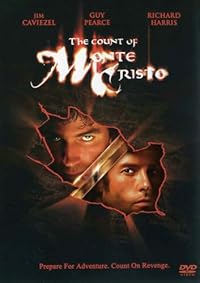
At the risk of being burned as a heretic, or at least of being denounced by my peers and thrown into the Château d'If, I found the film version a great improvement on the book. Dumas, like the much superior Shakespeare before him (and the inferior Stephen King after him), benefits from the exertions of those who adapt his work. The 2002 version of The Count of Monte Cristo, with Jim Caviezel as Dantès, is excellent, providing all the necessary nip-and-tuck that a stage company might provide to their interpretation of Hamlet. The film streamlines the plot, gives Mercédès some grace, and puts the rivalry with Fernand front and centre. (Adding a swordfight also helps.)
I mentioned Stephen King not only to make the point about those who adapt others' work – King owes a lot to Stanley Kubrick for making The Shining iconic – but also because The Shawshank Redemption, based on a King novella, has a memorable scene about The Count of Monte Cristo, written by Alexandre "Dumb-ass" (a scene not present in King's book – another note of praise for the unsung adapters of novels). The scene mentions how the book is about a prison break, and you can begin to see just how influential Dumas' book has been on our storytelling culture. For all its flaws – and it is certainly not the only established classic to possess them – this is remarkable.
But the truth is that, once the 1,400-page rollercoaster has finished, the book proves to be a summer romance, not a lasting love. The opening act is diminished, though not forgotten, by 1,000 subsequent pages of ebb and artifice, and the book's status as a classic is established more by its influence and its success as a romance-adventure, rather than any literary greatness. This is subjective, of course, but I found Dumas' dissection of revenge tame compared to some of the more astute of the genre. (I couldn't help but think of the similarly aged Michael Kohlhaas, written in 1810 by Heinrich von Kleist, which posits much more profound observations on vengeance and its cost on the people who pursue it. It also, like Monte Cristo, benefits from an excellent film adaptation in 1999's The Jack Bull.)
Monte Cristo's 'wait and hope' message, delivered in the final chapter, has inspired many readers, but personally I think it is a limited one, even in the context of the book. "Some have suffered so much, and yet live, and have raised a new fortune on the ruin" appears to be the message (pg. 1207), but Dantès was gifted his extraordinary wealth by happenstance, it is the innocent and cheated Mercédès who seems to bear the most unhealed bruises (ah! the lot of women in these old adventure stories…), and it is the cheap villains who ruined Dantès who live the prime of their lives gorging on unearned success.
This, perhaps, is Caderousse's Revenge. Unsuspected by many readers, and perhaps also by Dumas, it is this man, relegated to a secondary role by the more overt schemes of Fernand, Danglars and Villefort, who posits the most fearsome questions to Dantès' worldview. It is Caderousse who first suggests 'assassinating' Dantès with a pen rather than a 'sword or pistol' (pg. 39); it is he who points out that "all their malpractices have turned to luck, while honest men have been reduced to misery" (pg. 314); it is he who undermines the raison d'être of Dumas' 'wait and hope' opus when he points out that "it is the wicked man who prospers, and the honest, deserving man who suffers", and that you can't make people believe otherwise when the reality "passes before them every day" (pg. 295).
There is some self-pity in Caderousse's words, no doubt, but it is a challenge that is never defeated within the bounds of Dumas' book. Dumas can't make us believe otherwise than the reality that passes before us every day. Dantès' opulence and slave-girl prize don't challenge it; Mercédès' ruin certainly doesn't. The villains lived the lives they wanted for the great portion of it, at others' expense. Though Caderousse may be a cuckoo spoiling Dantès' 'wait and hope' nest, this wouldn't necessarily be a problem if Dumas tackled its implications. Unfortunately, for all the book's influence and weight of words, it never can, relying on easy outs, melodramatic happy endings and sub-plot noodlings to break away from the uncomfortable implications of creatures of petty malice successfully targeting the young and noble Dantès, and his Mercédès. Readers can sift through the excess as they wish, to make The Count of Monte Cristo the novel they want it to be, but only the first few hundred pages have the boldness, immediacy, depth and conciseness to make a play for the status of a great novel. show less
I fell in love with the book right from the start; the design of my Vintage edition is about as good as a trade paperback can be, and a casual flick through its pages made the door-stopper novel seem less daunting. It seemed mostly dialogue, and easy to tackle; in this, I was proved right and the predominance of dialogue in Dumas' writing means the book has a pace that belies its length.
This show more love was solidified by the opening act of the book, which, it seems, is where The Count of Monte Cristo's reputation is made. Here we have romance, adventure, honour, betrayal, imprisonment… a sympathetic hero, a lost love, a villainous rival, a prison break, a treasure hunt… the list goes on. And it's all well-rendered, in that pacey, dialogue-heavy prose and some surprisingly graceful writing (the creek where Edmond Dantès finds the entrance to the treasure cave is "hidden like the bath of some ancient nymph" (pg. 270), whilst the booming cannons of the island prison that sound the alarm for Dantès' escape are "like the goings in and comings out of kings, [for whom] they accord salutes of cannons" (pg. 251). Every moment of this opening act is a delight; crisp, romantic adventure of the very best sort. You quickly fall in love.
Unfortunately, this does not last and The Count of Monte Cristo proves to have the opposite problem to The Three Musketeers, written by Dumas immediately preceding Monte Cristo. Musketeers started slowly – painfully slowly – but eventually found a gear for its final acts. Maybe Dumas was on a roll from writing the finale of Musketeers, because Monte Cristo comes racing out of the gates, but, after the newly-wealthy Edmond Dantès puts out to sea on his revenge quest (Chapter 30, or page 362 in my edition), it becomes very slow. The pace of dialogue is still there to create an artificial pace, and the book is rarely turgid, but it never comes close to meeting the promise of that opening act.
Billed as an elaborate revenge quest from Chapter 31 onwards, The Count of Monte Cristo takes so long to reach its goals that all the energy is dissipated. The book skips ahead by fifteen years or so, never revealing to us how Dantès became the enigmatic, supremely cultured, almost omniscient Count of Monte Cristo. In a short book, such a time skip would be forgivable – even necessary, in an adventure – but in a book which grants itself another 1,000 pages from this point alone, you'd think there would be some more deeply-seeded character development.
This new Count bears only minor resemblance to the Dantès who we have seen so unfairly abused, and had become invested in. The reader's burning desire for Dantès' revenge, which Dumas had done so well to ignite, begins to ebb away. The fact that the rest of the book, barring a few scenes, devotes itself largely to sub-plots, side characters and upper-class hob-nobbing, with the Count's plans only making (some) sense towards the very end, only deepens the apathy. There are some touches in the side-characters, such as Franz and Albert, to provide some interest, but they are only touches. The book never again grasps you firmly by the shoulders like it did in its opening act. The love is gone.
It is telling that the only scenes – and they are few – which really made the air crackle after that opening act were the ones that returned Dantès to us, rather than the Count. The few scenes with Mercédès are like gold-dust. There is a great chapter (Chapter 72) where the Count, whose identity is unknown, repeatedly refuses food from Mercédès, his host, as it would constitute 'bread and salt' and compel him to befriend her husband, who he is plotting revenge against. The subtext of this scene – the Count's desire to be both honourable and vengeful, and Mercédès' increasingly desperate, and increasingly wretched, attempts to take shortcuts in rewriting past mistakes – plays extremely well alongside the outright drama of the reunion. A similar, more overt, confrontation in Chapter 90 sees Dantès pulled up painfully by the same roots we are, as readers, glad he returned to.
And yet, as I say, such scenes are few. The bulk of the novel is digression, over-elaboration and episodic melodrama, leading to nothing very much. The revenge is seemingly forgotten, to all intents and purposes. Fernand, Mercédès' husband, who should form the bulk of the Count's vengeance, is dealt with almost perfunctorily, with Dumas seemingly unaware of the lusty demands of the reader.
Indeed, this lack of the appropriate admixture is a problem throughout. For all the laborious digressions and the whopping length of the book, most of the character progressions are unearned, or at least not entirely earned. As with the Count's unevidenced development during the time skip after Chapter 30, the improbable rise of both Fernand and Danglars into high society are underdeveloped. Mercédès, despite providing the two stellar moments of the book after the time skip, is short-changed; I did not expect a happily-ever-after, but the treatment of her seems cheap, even before the hasty and superficial replacement of Haydée as the Count's romantic prize. "There are two Mercédès in the world," the Count suggests on page 1213, but, in truth, there are not.
At the risk of being burned as a heretic, or at least of being denounced by my peers and thrown into the Château d'If, I found the film version a great improvement on the book. Dumas, like the much superior Shakespeare before him (and the inferior Stephen King after him), benefits from the exertions of those who adapt his work. The 2002 version of The Count of Monte Cristo, with Jim Caviezel as Dantès, is excellent, providing all the necessary nip-and-tuck that a stage company might provide to their interpretation of Hamlet. The film streamlines the plot, gives Mercédès some grace, and puts the rivalry with Fernand front and centre. (Adding a swordfight also helps.)
I mentioned Stephen King not only to make the point about those who adapt others' work – King owes a lot to Stanley Kubrick for making The Shining iconic – but also because The Shawshank Redemption, based on a King novella, has a memorable scene about The Count of Monte Cristo, written by Alexandre "Dumb-ass" (a scene not present in King's book – another note of praise for the unsung adapters of novels). The scene mentions how the book is about a prison break, and you can begin to see just how influential Dumas' book has been on our storytelling culture. For all its flaws – and it is certainly not the only established classic to possess them – this is remarkable.
But the truth is that, once the 1,400-page rollercoaster has finished, the book proves to be a summer romance, not a lasting love. The opening act is diminished, though not forgotten, by 1,000 subsequent pages of ebb and artifice, and the book's status as a classic is established more by its influence and its success as a romance-adventure, rather than any literary greatness. This is subjective, of course, but I found Dumas' dissection of revenge tame compared to some of the more astute of the genre. (I couldn't help but think of the similarly aged Michael Kohlhaas, written in 1810 by Heinrich von Kleist, which posits much more profound observations on vengeance and its cost on the people who pursue it. It also, like Monte Cristo, benefits from an excellent film adaptation in 1999's The Jack Bull.)
Monte Cristo's 'wait and hope' message, delivered in the final chapter, has inspired many readers, but personally I think it is a limited one, even in the context of the book. "Some have suffered so much, and yet live, and have raised a new fortune on the ruin" appears to be the message (pg. 1207), but Dantès was gifted his extraordinary wealth by happenstance, it is the innocent and cheated Mercédès who seems to bear the most unhealed bruises (ah! the lot of women in these old adventure stories…), and it is the cheap villains who ruined Dantès who live the prime of their lives gorging on unearned success.
This, perhaps, is Caderousse's Revenge. Unsuspected by many readers, and perhaps also by Dumas, it is this man, relegated to a secondary role by the more overt schemes of Fernand, Danglars and Villefort, who posits the most fearsome questions to Dantès' worldview. It is Caderousse who first suggests 'assassinating' Dantès with a pen rather than a 'sword or pistol' (pg. 39); it is he who points out that "all their malpractices have turned to luck, while honest men have been reduced to misery" (pg. 314); it is he who undermines the raison d'être of Dumas' 'wait and hope' opus when he points out that "it is the wicked man who prospers, and the honest, deserving man who suffers", and that you can't make people believe otherwise when the reality "passes before them every day" (pg. 295).
There is some self-pity in Caderousse's words, no doubt, but it is a challenge that is never defeated within the bounds of Dumas' book. Dumas can't make us believe otherwise than the reality that passes before us every day. Dantès' opulence and slave-girl prize don't challenge it; Mercédès' ruin certainly doesn't. The villains lived the lives they wanted for the great portion of it, at others' expense. Though Caderousse may be a cuckoo spoiling Dantès' 'wait and hope' nest, this wouldn't necessarily be a problem if Dumas tackled its implications. Unfortunately, for all the book's influence and weight of words, it never can, relying on easy outs, melodramatic happy endings and sub-plot noodlings to break away from the uncomfortable implications of creatures of petty malice successfully targeting the young and noble Dantès, and his Mercédès. Readers can sift through the excess as they wish, to make The Count of Monte Cristo the novel they want it to be, but only the first few hundred pages have the boldness, immediacy, depth and conciseness to make a play for the status of a great novel. show less
I can see why this has survived the test of time and still remains a favorite today. I was familiar with the premise of the story, having grown up watching the movie version starring Richard Chamberlain with my Dad. I had no idea how much cleverness I had missed out on - our protagonist goes to so much trouble in the service of exacting his revenge. The minutiae! The machinations! It was like observing an elaborate set-up of dominoes and then waiting and watching to see each one play its part in the destruction of the whole. Sometimes I thought I knew where the story was going, and then it would surprise me. That expression the devil is in the details is literally true here - the unending intricacies of the plot were time consuming and show more involved and almost painfully convoluted, BUT, and this is huge - never boring, and this is where Dumas shines. How do you make such a large volume soar? It's not just the height that he achieved but the way that it reads so quickly. The size of the novel feels like an illusion. I do have a few minor quibbles with parts of the story which were baffling to me in how they played out, but these were not my characters, they belong to Dumas and so he may do as he likes. My five star rating is for the audiobook which was full of fabulous. Bill Homeward delivers every single character with perfection, and it is a VERY large cast. His performance elevated the story for me, which is what all the best audiobooks do, and is why I return to them again and again. show less
The Count of Monte Cristo isn’t merely a novel ... it’s a masterclass in the long game. Dumas didn’t write plots; he built labyrinths and mazes. Every corridor and turn leads somewhere unexpected, every revelation detonates with surgical precision, and at the heart of it all stands Edmond Dantès, the ultimate architect of patience and payback.
What floored me, rereading Dumas' incredible tale for the first time since high school (which was a long time ago) is the scope. Dumas threads together politics, philosophy, morality, and romance without ever losing sight of the human pulse driving it all. His characters don’t just act ... they scheme, suffer, evolve. The Count himself is both hero and ghost, savior and executioner, and by show more the end you’re not sure if he’s found justice or just another kind of imprisonment.
The sheer foresight in this story ... the decades-long chess match, the slow-unfolding vengeance with its intricate moral cost ... feels almost supernatural. Dumas wrote as though he’d seen the future of storytelling and decided to show everyone how it’s done.
If you’ve never read it, clear your calendar. This isn’t a book you skim; it’s one you inhabit, that you move into as if you're a couch-surfing fly on the wall. By the time you emerge, blinking, you realize Dumas hasn’t just told a story ... he’s taught you patience, power, and the pitfalls of getting exactly what you wish for. show less
What floored me, rereading Dumas' incredible tale for the first time since high school (which was a long time ago) is the scope. Dumas threads together politics, philosophy, morality, and romance without ever losing sight of the human pulse driving it all. His characters don’t just act ... they scheme, suffer, evolve. The Count himself is both hero and ghost, savior and executioner, and by show more the end you’re not sure if he’s found justice or just another kind of imprisonment.
The sheer foresight in this story ... the decades-long chess match, the slow-unfolding vengeance with its intricate moral cost ... feels almost supernatural. Dumas wrote as though he’d seen the future of storytelling and decided to show everyone how it’s done.
If you’ve never read it, clear your calendar. This isn’t a book you skim; it’s one you inhabit, that you move into as if you're a couch-surfing fly on the wall. By the time you emerge, blinking, you realize Dumas hasn’t just told a story ... he’s taught you patience, power, and the pitfalls of getting exactly what you wish for. show less
Members
- Recently Added By
Lists

1001 Books You Must Read Before You Die
1,448 works; 1,132 members

The Guardian's 1000 Novels Everyone Must Read
1,005 works; 549 members

Classics you know you should have read but probably haven't
421 works; 407 members

Best Historical Fiction
620 works; 261 members

Top-Rated Books on LibraryThing
272 works; 116 members
Favourite Books
1,817 works; 311 members

Recommend the 20 best books you've read in the last five years
2,167 works; 605 members

Unread books
1,063 works; 85 members
BBC Big Read
191 works; 46 members
Historical Fiction
889 works; 91 members

Favorite Long Books
330 works; 42 members

Favourite 19th century fiction
257 works; 62 members

Top Five Books of 2013
1,564 works; 722 members

Best of French Literature
138 works; 27 members
Favorite Literary Love Stories
182 works; 101 members

Pleasant Surprises: Books That Exceeded Our Expectations
418 works; 143 members

PBS The Great American Read
100 works; 21 members

Best Books About Journeys and Quests
117 works; 30 members
Books I've Read More Than Once
602 works; 49 members

The Guardian's 100 greatest novels of all time
100 works; 16 members

Best Revenge Stories
69 works; 9 members

Fiction Set Primarily in a Prison
52 works; 22 members

French Books
102 works; 15 members
Folio Society
831 works; 49 members

Top Five Books of 2017
757 works; 231 members

Black Authors
381 works; 32 members
Epic Fiction
42 works; 12 members
Top Five Books of 2018
802 works; 265 members
BBC Big Read
100 works; 10 members
1,001 BYMRBYD Concensus
723 works; 27 members

Books Read in 2016
4,666 works; 199 members

Western World's Greatest Books - Project Gutenberg
295 works; 15 members

A Novel Cure
742 works; 23 members

Books You Read During High School (For School)
301 works; 52 members

Great Books Favorites
71 works; 6 members

Top 100 to Read before you Die
109 works; 7 members

NPRs your picks: top 100 Killer Thrillers
100 works; 17 members

Books Featured on Gilmore Girls
307 works; 21 members

The Greatest Books
99 works; 5 members

Best Antiheroes and Antiheroines
119 works; 6 members
Five star books
1,755 works; 107 members
Readable Classics
110 works; 15 members

Best African and African diaspora books
111 works; 4 members

Blue Pyramid 1,276 Best Books of All Time
1,248 works; 32 members

Movie Adaptations
111 works; 4 members

Fake Top 100 Fiction
81 works; 4 members

Books Set on Islands
190 works; 24 members

CCE 1000 Good Books List
1,033 works; 12 members

Books Read in 2023
5,547 works; 144 members

Books Read in 2020
4,379 works; 124 members
Overdue Podcast
800 works; 9 members

Evan's Reading List 2019
15 works; 1 member

Europe
205 works; 6 members

Plan to Read Books
75 works; 1 member
Children's Book List author unknown
12 works; 1 member
Books with Noble Titles
179 works; 11 members

recalling favorites...
105 works; 2 members

Books Read in 2022
5,164 works; 113 members
Paris, City of Lights
103 works; 17 members

Lion's Mane Hardcover Wishlist
19 works; 1 member

Books I’m curious to Read
4 works; 1 member
Books in Riverdale
123 works; 3 members

Books Read in 2024
4,623 works; 126 members

The 150 Greatest Novels of All Time
150 works; 6 members

Favorite Books in Translation
320 works; 133 members

Physical TBR List
68 works; 1 member
Books in The Club Dumas
72 works; 1 member
The Complete Rory Gilmore Reading List
506 works; 5 members
Our Favorite Comfort Reads
334 works; 200 members

DigitalDreamDoor top 300
300 works; 4 members
Book Worlds We'd Like To Visit
322 works; 158 members

Books referenced in the Astral Library
60 works; 1 member
'Books You Can't Live Without: The Top 100', The Guardian, 2007
156 works; 7 members
Books We Couldn't Put Down
443 works; 197 members
Wishlist
99 works; 1 member

Books We Loved As Children
603 works; 252 members
School Made Us Read It
380 works; 196 members
Very Long Novels
15 works; 1 member

Top Five Books of 2025
950 works; 302 members

2026 Reading Challenge
12 works; 1 member

el
1,139 works; 1 member
.
396 works; 1 member

Recommended Reading : 600 Classics Reviewed, Editors of Salem Press, 2015
634 works; 6 members
Books tagged unread
41 works; 1 member

Book Titles Mentioned In Newberry Medal And Honor Books
884 works; 3 members
BitLife
212 works; 4 members

Trinity College Booklist (1951): Class Nine, Foreign Literatures
161 works; 3 members

F. B. Perkins' List of 100 Best Fiction
100 works; 5 members

French Fiction of the 18th and 19th Centuries in English Translation
169 works; 3 members
Novels of Great Adventures
34 works; 5 members

Books translated from Romance Languages into English
102 works; 7 members

Favorite Childhood Books
1,602 works; 516 members
Mensa for Kids Excellence in Reading Award Program (Grades 7-8)
62 works; 3 members
Treasure Lost and Found
8 works; 5 members

Mensa for Kids Excellence in Reading Award Program (Grades 7-8)
62 works; 1 member

The Five Books That Represent Us
389 works; 146 members
Childhood Favorites
427 works; 24 members
150 Best Novels Selected by Brander Matthews (1883)
150 works; 7 members

Literary and artistic references in HBO's Lovecraft Country
32 works; 1 member

Books Read in 2021
5,361 works; 114 members

A Reading List
100 works; 3 members
The Art of Manliness' 100+ Books Every Man Should Read
108 works; 2 members

Recommended Literary Books
111 works; 1 member
Mustich's 1000 Books to Read Before You Die: A Life Changing List
1,001 works; 18 members
Books We'd Want on a Desert Island
203 works; 131 members

Five Star Novels
20 works; 2 members

NPRs audience picks: 100 best beach reads
105 works; 12 members
Best of World Literature
431 works; 51 members
Talk Discussions
Current Discussions
Count of Monte Cristo - Censorship in Easton Press Collectors (April 22)
Past Discussions
The Count of Monte Cristo in George Macy devotees (July 2023)
Count of Monte Cristo DLE in Easton Press Collectors (October 2022)
GROUP READ: The Count of Monte Cristo in 2013 Category Challenge (May 2013)
2012 Winter read - The Count of Monte Cristo in The Highly-Rated Book Group (January 2012)
***The Count of Monte Cristo (discussion) in 75 Books Challenge for 2010 (July 2011)
***Group Read: The Count of Monte Cristo (spoiler-free) in 75 Books Challenge for 2010 (September 2010)
Group Read 3 - The Count of Monte Cristo Part 1 in 1001 Books to read before you die (October 2009)
Count of Monte Cristo in 1001 Books to read before you die (November 2008)
Author Information

Some Editions
Awards and Honors
Series
Belongs to Publisher Series
Work Relationships
Is contained in
Adventure Classics--Ivanhoe, Gullivers Travels, Treasure Island, The Call of the Wild, The Count of Monte Cristo (boxed set) by Walter Scott
The Count of Monte Cristo and Other Works by Alexandre Dumas (Unexpurgated Edition) (Halcyon Classics) by Alexandre Dumas
Premium Collection - 27 Novels in One Volume: The Three Musketeers Series, The Marie Antoinette Novels, The Count of Monte Cristo, The ... Hero of the People, The Queen's Necklace... by Alexandre Dumas
Works of Alexandre Dumas. Incl: The Three Musketeers, Louise de la Valliere The Vicomte de Bragelonne, Man in the Iron Mask, The Count of Monte Cristo, ... Black Tulip, Chicot the Jester & more (mobi) by Alexandre Dumas
The Count of Monte Cristo, The Red Badge of Courage, The Scarlet Letter, The Phantom of the Opera, The Man in the Iron Mask (Classic Collections) by Alexandre Dumas
Alexandre Dumas Complete Works- the Three Musketeers Ten Twenty Years After Vicomte De Bragelonne Louise De La Valliere Man in the Iron Mask Marguerite De Valois Chicot the Jester Forty-Five Guardsmen Queen's Necklace Corsican Brothers Count of Monte Cristo Black Tulip Companions of Jehu Conspirators Regent's Daughter, Man in the Iron Mask (Essay) by Alexandre Dumas, Alexandre Dumas, Père
Greatest Works of Alexandre Dumas: The Count of Monte Cristo, The Three Musketeers, Twenty Years After, Ten Years Later & The Man in the Iron Mask by Alexandre Dumas
The Count of Monte Cristo; The Canterbury Tales(3); Vanity Fair (The 100 Greatest Books Ever Written) by Alexandre Dumas
The Count of Monte Cristo, The Man in the Iron Mask & The Three Musketeers (3 Books in One Edition) by Alexandre Dumas
The Count of Monte Cristo, The Three Musketeers,The Red Badge of Courage,The Last of the Mohicans,The man in the Iron Mask (Classic Collections) by Alexandre Dumas père
International Collector's Library Classics 19 volumes: Crime & Punishment; Twenty Thousand Leagues Under the Sea; Mysterious Island; Magic Mountain; Around the World in 80 Days; Count of Monte Cristo; Camille; Quo Vadis; Hunchback of Notre Dame; Nana; Scaramouche; Pinocchio; Fernande; War and Peace; The Egyptian; From the Earth to the Moon; Candide; Treasure of Sierra Madre; Siddhartha/Steppenwolf by Jules Verne
Contains
Is retold in
Has the (non-series) sequel
Has the adaptation
Classics Illustrated #8: The Count of Monte Cristo (Classics Illustrated Graphic Novels) by Alexandre Dumas
The Count of Monte Cristo, for children (adapted ∙ Coleccion Clasicos Para Ninos) by Alexandre Dumas
Oxford Reading Tree Treetops Greatest Stories: Oxford Level 20: The Count of Monte Cristo by Eleanor Updale
Is abridged in
One hundred best novels condensed: 3 of 4 see note: Adam Bede; Tess of the D'Urbervilles; Don Quixote; East Lynne; Count of Monte Cristo; Paul and Virginia; Tom Brown's School Days; Waverley; Dombey and Son; Romola; Legend of Sleepy Hollow; Last of the Mohicans; Wreck of the "Grosvenor"; Right of Way; Coniston; Far from the Madding Crowd; Woman in White; Deemster; Waterloo; Hypatia; Kidnapped; Oliver Twist; Gil Blas; Peg Woffington; Virginians by Edwin Atkins Grozier
Inspired
Has as a reference guide/companion
Has as a study
Has as a student's study guide
Common Knowledge
- Canonical title
- The Count of Monte Cristo
- Original title
- Le Comte de Monte-Cristo
- Original publication date
- 1844 - 1846
- People/Characters
- Edmond Dantès; Mercédès Mondego; Baron Danglars; Fernand Mondego; Monsieur Noirtier de Villefort; Gaspard Caderousse (show all 27); Abbé Faria; Albert de Morcerf; Franz D'Epinay; Haydée; Valentine de Villefort; Héloïse de Villefort; Bertuccio; Gérard de Villefort; Eugénie Danglars; Pierre Morrel; Maximelien Morrel; Louis Dantés; Hermine Danglars; Benedetto aka Prince Andrea Cavalcanti; Louise d'Armilly; Lucien Debray; Napoleon Bonaparte; Luigi Vampa; "Major" Cavalcanti; Docteur d'Avrigny; Marquise de Saint-Méran
- Important places
- Marseille, Bouches-du-Rhône, Provence-Alpes-Côte d'Azur, France; Paris, Île-de-France, France; Château d'If, Marseille, Bouches-du-Rhône, Provence-Alpes-Côte d'Azur, France; Elba, Tuscany, Italy; France
- Important events
- Napoleonic Wars (1793 | 1815); Hundred Days (1815-03-20 | 1815-07-08); 19th century
- Related movies
- The Count of Monte Cristo (1934 | IMDb); The Count of Monte Cristo (1975 | David Greene | IMDb); Le comte de Monte Cristo (1998 | José | e Dayan | IMDb); The Count of Monte Cristo (2002 | Kevin Reynolds | IMDb); Gankutsuou (2004 | Mahiro Maeda | IMDb); The Count of Monte-Cristo (2024 | IMDb)
- First words
- On February 24, 1815, the lookout of Notre-Dame de la Garde signalled the three-master, the Pharaon, coming from Smyrna, Trieste, and Naples.
On February 24, 1815, the lookout at Notre-Dame de la Garde signalled the arrival of the three-master Pharaon, coming from Smyrna, Trieste and Naples. (Robin Buss) - Last words
- (Click to show. Warning: May contain spoilers.)'Darling,' replied Valentine, 'has not the count just told us that all human wisdom was contained in these two words, - "Wait and hope"?
(Click to show. Warning: May contain spoilers.)'My dearest,' said Valentine, 'has the count not just told us that all human wisdom was contained in these two words -- "wait" and "hope"?' (Robin Buss) - Publisher's editor
- Wren, Keith (Wordsworth Classics); Buss, Robin (Penguin Classics)
- Blurbers
- Thackeray, William
- Original language
- French
- Disambiguation notice
- These should be the unabridged editions of The Count of Monte Cristo
Classifications
- Genres
- Fiction and Literature, General Fiction, Historical Fiction
- DDC/MDS
- 843.7 — Literature & rhetoric French & related literatures French fiction Constitutional monarchy 1815–48
- LCC
- PQ2226 .A327 — Language and Literature French, Italian, Spanish and Portuguese literatures French literature Modern literature 19th century
- BISAC
Statistics
- Members
- 30,643
- Popularity
- 110
- Reviews
- 494
- Rating
- (4.33)
- Languages
- 31 — Arabic, Bengali, Catalan, Chinese, Czech, Danish, Dutch, English, Estonian, Finnish, French, German, Greek, Hebrew, Hungarian, Italian, Japanese, Korean, Latvian, Lithuanian, Malay, Norwegian (Bokmål), Norwegian, Polish, Romanian, Russian, Serbian, Spanish, Swedish, Turkish, Portuguese (Portugal)
- Media
- Paper, Audiobook, Ebook
- ISBNs
- 862
- UPCs
- 7
- ASINs
- 431