On This Page
Description
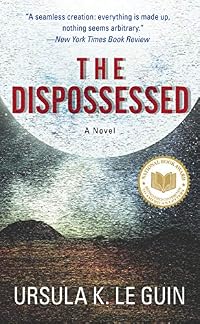
A bleak moon settled by utopian anarchists, Anarres has long been isolated from other worlds, including its mother planet, Urras--a civilization of warring nations, great poverty, and immense wealth. Now Shevek, a brilliant physicist, is determined to reunite the two planets, which have been divided by centuries of distrust. He will seek answers, question the unquestionable, and attempt to tear down the walls of hatred that have kept them apart. To visit Urras--to learn, to teach, to show more share--will require great sacrifice and risks, which Shevek willingly accepts. But the ambitious scientist's gift is soon seen as a threat, and in the profound conflict that ensues, he must reexamine his beliefs even as he ignites the fires of change. show lessTags
Recommendations








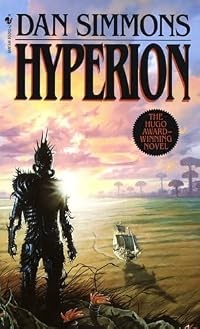
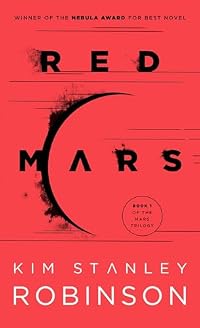


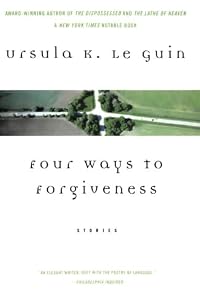






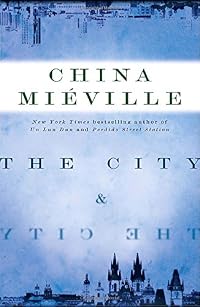
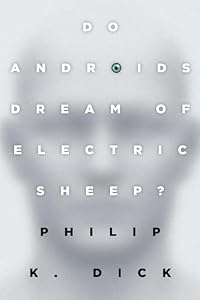
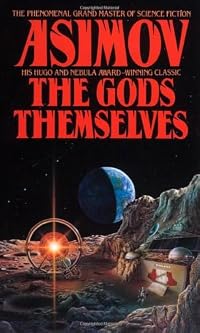
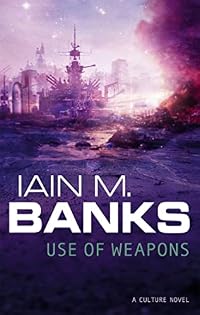


Member Recommendations
TMrozewski Both deal with the social and cultural roots of science.
41


jpers36 Life story of a genius physicist destined to revolutionize a stagnant culture with his radical scientific insights.
20
themulhern Two utopian books. The advantage of LeGuin's is that it doesn't have anything worth exploiting and it is a rocket flight away.
20
aulsmith A different moon, a different anti-authoritarian community, but the same experience of thinking about other ways to run human societies
76
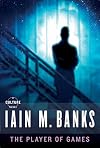
themulhern Two opposing cultures collide in both works. Urras = The Empire but their opposites (Annares and The Culture) have very little in common. Annares is determined by scarcity, the Culture by its lack.
10
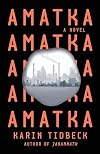
by andomck

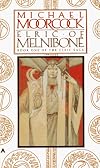
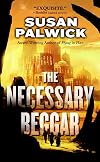
themulhern Two anarchist societies are imagined and then examined. In Floating Worlds, the anarchist society, Earth, is embroiled in inter-planetary politics, and thus far more vulnerable than Annares.

Member Reviews
This is one of the most satisfying books about ideologies and intentionally-worn blinders I've ever read. Use of an SF world with two opposed cultures and their economies, social psychologies, and deeply-entrenched biases really allowed Le Guin to write clearly about realpolitik, more so even than most non-fiction writers with their own internal mechanisms.
And Shevek is simply a mensch for all seasons, you gotta love him.
And Shevek is simply a mensch for all seasons, you gotta love him.
Ursula K Le Guin's The Dispossessed is a very hard book to write about. It's clearly great literature, but exactly why is hard to pin down.
The Dispossessed centers on the story of Shevek, a physicist and idealist, but the true characters of this book are the twinned planets of Urras and Anarres. Urras is a world much like own our, of nations and government and money, a garden planet riven by dominance and war. Anarres is a dry and dusty moon, home to an exile civilization of revolutionary anarchists. The story takes place in alternating chapters, an Urras track beginning with Shevek's escape from Anarres to Urras, and an Anarres track following his life and growing dissatisfaction with his homeworld.
This is a book about revolutionary show more anarchism, about the radical potential for humans to be truly free. But what separates it from most utopian literature is Le Guin's reflexive critique of Anarres. Most utopian literature is about a plan; "if you designed a society like, this is how it'd be perfect." Le Guin shows us a society that is freer and more egalitarian than any that exists on Earth, backed up by a rational language that makes even thoughts of ownership and dominance difficult to express, but she is also wise enough to show how the revolution has become conservative and fearful, how social norms replace law, how the dominance games of politicians and academics still play out in the absence of formal power, and how true freedom must begin and end in the spirit.
The Urras plot concerns Shevek's final work on a Theory of Simultaneity and Sequency (the caps are deserved), a unified theory of physics which would make faster-than-light travel possible, along with the ansible communicator from the rest of Le Guin's Hainish cycle. Fictional physics on this level aren't really my cup of tea, but the book takes a solid run at how cosmology, and how we perceive time, matters as a fundamental basis for society and ideas like property and profit. Shevek's idealism won't let him give his invention to either the grubbing 'invisible parliament' of his own world, which opposes new ideas, or the profiteering and warmongering Urrasian academics who host his stay. There's a war and a great strike, but somehow the action on Urras seems unreal and irrelevant, compared to the dust and hard work of Anarres.
Stepping back to look at the big picture, The Dispossessed covers a lot of the same territory as Left Hand of Darkness, with a lone ambassador coming to another world, but I think The Dispossessed does a better job by giving us some context for Shevek, and his principled opposition to walls and barriers of all kind, especially walls that exist in the head and heart. Le Guin's talk of Simultaneity and Sequency is also about the question "can two people really meet?" and "how do we know when become ourselves?"
This was also a solid year for the Hugos as a whole. The Mote in God's Eye could've easily won in any of the past five years or so. Flow My Tears The Policeman Said is one of my favorite Philip K Dick stories. I haven't heard of Fire Time or Inverted World, but both sound fascinating. show less
The Dispossessed centers on the story of Shevek, a physicist and idealist, but the true characters of this book are the twinned planets of Urras and Anarres. Urras is a world much like own our, of nations and government and money, a garden planet riven by dominance and war. Anarres is a dry and dusty moon, home to an exile civilization of revolutionary anarchists. The story takes place in alternating chapters, an Urras track beginning with Shevek's escape from Anarres to Urras, and an Anarres track following his life and growing dissatisfaction with his homeworld.
This is a book about revolutionary show more anarchism, about the radical potential for humans to be truly free. But what separates it from most utopian literature is Le Guin's reflexive critique of Anarres. Most utopian literature is about a plan; "if you designed a society like, this is how it'd be perfect." Le Guin shows us a society that is freer and more egalitarian than any that exists on Earth, backed up by a rational language that makes even thoughts of ownership and dominance difficult to express, but she is also wise enough to show how the revolution has become conservative and fearful, how social norms replace law, how the dominance games of politicians and academics still play out in the absence of formal power, and how true freedom must begin and end in the spirit.
The Urras plot concerns Shevek's final work on a Theory of Simultaneity and Sequency (the caps are deserved), a unified theory of physics which would make faster-than-light travel possible, along with the ansible communicator from the rest of Le Guin's Hainish cycle. Fictional physics on this level aren't really my cup of tea, but the book takes a solid run at how cosmology, and how we perceive time, matters as a fundamental basis for society and ideas like property and profit. Shevek's idealism won't let him give his invention to either the grubbing 'invisible parliament' of his own world, which opposes new ideas, or the profiteering and warmongering Urrasian academics who host his stay. There's a war and a great strike, but somehow the action on Urras seems unreal and irrelevant, compared to the dust and hard work of Anarres.
Stepping back to look at the big picture, The Dispossessed covers a lot of the same territory as Left Hand of Darkness, with a lone ambassador coming to another world, but I think The Dispossessed does a better job by giving us some context for Shevek, and his principled opposition to walls and barriers of all kind, especially walls that exist in the head and heart. Le Guin's talk of Simultaneity and Sequency is also about the question "can two people really meet?" and "how do we know when become ourselves?"
This was also a solid year for the Hugos as a whole. The Mote in God's Eye could've easily won in any of the past five years or so. Flow My Tears The Policeman Said is one of my favorite Philip K Dick stories. I haven't heard of Fire Time or Inverted World, but both sound fascinating. show less
As of writing this review, this is my #1 favorite book. I've read it twice in the span of two years, and I very very rarely reread any books. Its the story of two planets, one capitalist (Urras), and the other (Anarres) a anarcho-syndicalist commune. On the anarchist planet there are no laws, and no possessions. Everyone there shares everything.
The plot follows a physicist named Shevek. Each chapter alternates between his life growing up on Anarres and his time spent on Urras.
But the plot isn't the important part of this book, its the examination of it's setting. Chapters on Anarres detail life in an anarchist commune, the good and the bad. Chapters on Urras demonstrate how someone born into a society totally unlike our own reacts to show more our ways.
The first time I read The Dispossessed I was totally enthralled by the idea of living somewhere like Anarres. I desperately wished that we could reshape our society to be more like it. My second read through the downsides and struggles associated with that style of living stuck out to me more.
What I love about this book is how it got me to question the underlying assumptions of our society, and how things could be different. While I've always loved sci-fi, The Dispossessed showed me how the genre can be more than futuristic fantasies, it can tells us a lot about our lives. show less
The plot follows a physicist named Shevek. Each chapter alternates between his life growing up on Anarres and his time spent on Urras.
But the plot isn't the important part of this book, its the examination of it's setting. Chapters on Anarres detail life in an anarchist commune, the good and the bad. Chapters on Urras demonstrate how someone born into a society totally unlike our own reacts to show more our ways.
The first time I read The Dispossessed I was totally enthralled by the idea of living somewhere like Anarres. I desperately wished that we could reshape our society to be more like it. My second read through the downsides and struggles associated with that style of living stuck out to me more.
What I love about this book is how it got me to question the underlying assumptions of our society, and how things could be different. While I've always loved sci-fi, The Dispossessed showed me how the genre can be more than futuristic fantasies, it can tells us a lot about our lives. show less
Magisterial, beautifully written, challenging and dense, yet also somehow approachable, welcoming, and warm. I have to imagine that this is Le Guin at the height of her powers, because it really can't get any better than this, right?
The Dispossessed follows Shevek, a politically active physicist who grew up on the planet Anarres. Anarres, a desolately dry planet akin in many ways to Mars, was settled several hundred years prior to Shevek's birth by anarchist refugees fleeing persecution and injustice on the neighboring planet Urras, whose multiple nation states are politically diverse but lean towards versions of capitalism. The comparison between life on Anarres and Urras is where Le Guin fixates her attention the most. Where as life show more on Anarres is lean and sometimes desperate, requiring an emphasis on mutual aid in order to survive, Urras is a planet of plenty, with massive oceans, forests, and other resources to exploit. As Shevek struggles to develop a new theory of physics and time, he discovers a wall of hidden bureaucracy and socially enforced rules that he didn't believe existed in his planned utopic society. Fighting against these stigmas, he more-or-less forces his way to Urras in the hopes of diversifying his intellectual knowledge base and finally finishing his theory on faster than light travel, while simultaneously breaking a moratorium on interplanetary travel. Shevek sacrifices comfort, safety, and stability in order to be a wall-breaker, and finds out firsthand just how difficult it is to be a revolutionary.
Science fiction often gets laden with the stereotype as a "genre of ideas", de-prioritizing characters and narrative in favor of scientific musings. The Dispossessed does fit that generalization, but in perhaps the best way possible. Le Guin is able to balance a metric fuck load of philosophy and political ideas with characters that I cared deeply about and a plot that, while sometimes dry, managed to keep me near the edge of my seat. Shevek's tender and nuanced relationship with Takver and his childhood friends are memorable and serve to humanize a work that could otherwise get bogged down with the weight of it's philosophical ambitions.
The Dispossessed could've also easily come out as a top-to-bottom polemic, but Le Guin's nuanced perspective allows the reader to develop their own conclusions. Even on the idealized Anarres, there are plenty of internal problems that threaten the personal freedom of it's citizens. We are left to ask which parts of both systems serve to benefit the individual, the stability and equity of society, the planet itself, and the progression of our sphere of knowledge. How can we find the strength and resolve for the revolution to be unending?
There is a distinct humanity to Le Guin's work that elevates it to a level often above her peers. Her prose is often sublime, even when she takes pauses for longer passages of exposition. This is the type of work that could easily be discussed for hours on end. Suffice it to say that it more than lived up to it's singular reputation. Even if you find yourself at odds with its occasionally dry intellectualism and narrative, I still think there's enough here to sink your teeth into. show less
The Dispossessed follows Shevek, a politically active physicist who grew up on the planet Anarres. Anarres, a desolately dry planet akin in many ways to Mars, was settled several hundred years prior to Shevek's birth by anarchist refugees fleeing persecution and injustice on the neighboring planet Urras, whose multiple nation states are politically diverse but lean towards versions of capitalism. The comparison between life on Anarres and Urras is where Le Guin fixates her attention the most. Where as life show more on Anarres is lean and sometimes desperate, requiring an emphasis on mutual aid in order to survive, Urras is a planet of plenty, with massive oceans, forests, and other resources to exploit. As Shevek struggles to develop a new theory of physics and time, he discovers a wall of hidden bureaucracy and socially enforced rules that he didn't believe existed in his planned utopic society. Fighting against these stigmas, he more-or-less forces his way to Urras in the hopes of diversifying his intellectual knowledge base and finally finishing his theory on faster than light travel, while simultaneously breaking a moratorium on interplanetary travel. Shevek sacrifices comfort, safety, and stability in order to be a wall-breaker, and finds out firsthand just how difficult it is to be a revolutionary.
Science fiction often gets laden with the stereotype as a "genre of ideas", de-prioritizing characters and narrative in favor of scientific musings. The Dispossessed does fit that generalization, but in perhaps the best way possible. Le Guin is able to balance a metric fuck load of philosophy and political ideas with characters that I cared deeply about and a plot that, while sometimes dry, managed to keep me near the edge of my seat. Shevek's tender and nuanced relationship with Takver and his childhood friends are memorable and serve to humanize a work that could otherwise get bogged down with the weight of it's philosophical ambitions.
The Dispossessed could've also easily come out as a top-to-bottom polemic, but Le Guin's nuanced perspective allows the reader to develop their own conclusions. Even on the idealized Anarres, there are plenty of internal problems that threaten the personal freedom of it's citizens. We are left to ask which parts of both systems serve to benefit the individual, the stability and equity of society, the planet itself, and the progression of our sphere of knowledge. How can we find the strength and resolve for the revolution to be unending?
There is a distinct humanity to Le Guin's work that elevates it to a level often above her peers. Her prose is often sublime, even when she takes pauses for longer passages of exposition. This is the type of work that could easily be discussed for hours on end. Suffice it to say that it more than lived up to it's singular reputation. Even if you find yourself at odds with its occasionally dry intellectualism and narrative, I still think there's enough here to sink your teeth into. show less
Obra prima, onde as tensões sociais-organizacionais de uma lua-enclave anarquista são contrastadas com as de um planeta plutocrata capitalista, na alternância de duas fases da vida do brilhante físico Shevek, uma em cada locação. Mais que ideias (mas há algumas delas, como a do nome único, e diversas considerações linguísticas - a vida reflete formas de vida, afinal), o livro é impressionante pela linguagem e atenção aos detalhes da psicologia e formação social humana e as relações que compõe cada personagem e situação. Assim, é claro que há pressões, moralismos e repressão mesmo em um enclave anarquista (não há "não-organização", a espontaneidade é construída), há aposta e anseios complexos entre os show more "proprietiers", além de amor além possessividade ou não-possessividade.
Parte do ciclo Hainish. show less
Parte do ciclo Hainish. show less
Ursula Le Guin's The Dispossessed won pretty much all the awards for best science fiction novel in 1975. The title refers to the inhabitants of Annares, the moon of the planet Urras, populated many generations earlier by the emigration/expulsion of a revolutionary anti-authoritarian movement. The Annaresti view the larger Urrasti homeworld as their moon, so the system could be taken as a dual planet--they are in any case two worlds.
The novel begins with the departure of an Annaresti physicist Shevek for an unprecedented journey to Urras. After that, chapters alternate between those on Annares, giving Shevek's biography from childhood to that point of going to Urras, and those on Urras, detailing what transpired when he went there. Urras show more is a highly civilized world that resembles a stabilized 20th-century Earth in many ways, while Annares is a harsh frontier utopia fulfilling the program of revolutionary sage Laia Asieo Odo. Le Guin invented Odonianism by synthesizing ideas from Kropotkin and Goodman, along with a dollop of philosophical Taoism.
Odonian culture rejects hierarchy, the "state," egotism, and property. The Annaresti speak Pravic, a language constructed for their society and expressing its values. They have created a world in which no one is materially wealthy, but where everyone is entitled to shelter and food, and the most sought after prize is fulfilling work. They suffer with a small amount of egalitarian bureaucracy. Their sexual mores are libertarian, with the sole customary constraint of privacy, rooted in their communitarian ethos: It is rude to exhibit the enjoyment of sexual intimacy in front of those who lack it.
Much of the book concerns intellectual culture and the vagaries of academic prestige. In these respects, in its biographical structure, and in its imaginative remove from our own society in order to examine our difficulties, it reminded me of Hesse's final novel The Glass Bead Game.
The science-fictional setting is well in our future, and the "Cetian" humanity of Urras and Annares is not derived from our Earth. There are however a few contacts with Terran ideas and eventually even a few Terrans themselves, thanks to the Hainish starfarers who have connected some of the worlds in our part of the galaxy.
The Dispossessed is full of real conflicts and some momentous events, but the overall pace of the book is rather sedate. It offers a lot of food for thought, and despite a fairly plain prose style, its literary artistry is substantial. It would be an excellent choice for a reading group. I imagine it has featured frequently in academic courses on science fiction, and it wouldn't be out of place in creative curricula for political theory or social science. show less
The novel begins with the departure of an Annaresti physicist Shevek for an unprecedented journey to Urras. After that, chapters alternate between those on Annares, giving Shevek's biography from childhood to that point of going to Urras, and those on Urras, detailing what transpired when he went there. Urras show more is a highly civilized world that resembles a stabilized 20th-century Earth in many ways, while Annares is a harsh frontier utopia fulfilling the program of revolutionary sage Laia Asieo Odo. Le Guin invented Odonianism by synthesizing ideas from Kropotkin and Goodman, along with a dollop of philosophical Taoism.
Odonian culture rejects hierarchy, the "state," egotism, and property. The Annaresti speak Pravic, a language constructed for their society and expressing its values. They have created a world in which no one is materially wealthy, but where everyone is entitled to shelter and food, and the most sought after prize is fulfilling work. They suffer with a small amount of egalitarian bureaucracy. Their sexual mores are libertarian, with the sole customary constraint of privacy, rooted in their communitarian ethos: It is rude to exhibit the enjoyment of sexual intimacy in front of those who lack it.
Much of the book concerns intellectual culture and the vagaries of academic prestige. In these respects, in its biographical structure, and in its imaginative remove from our own society in order to examine our difficulties, it reminded me of Hesse's final novel The Glass Bead Game.
The science-fictional setting is well in our future, and the "Cetian" humanity of Urras and Annares is not derived from our Earth. There are however a few contacts with Terran ideas and eventually even a few Terrans themselves, thanks to the Hainish starfarers who have connected some of the worlds in our part of the galaxy.
The Dispossessed is full of real conflicts and some momentous events, but the overall pace of the book is rather sedate. It offers a lot of food for thought, and despite a fairly plain prose style, its literary artistry is substantial. It would be an excellent choice for a reading group. I imagine it has featured frequently in academic courses on science fiction, and it wouldn't be out of place in creative curricula for political theory or social science. show less
After a second reading I can now see The Dispossessed isn’t as much a science fiction story as it is a thought experiment. Concepts and ideas that are fleshed out into characters, themes, and settings. The first time I read it I saw it as an overview of two worlds with widely different political systems and cultures, a comparison of the positives and negatives of each. But there's more to it than that - how does personal freedom fit into the picture? morals? property? family? - and I suspect the ‘more’ I see may not be the same ‘more’ as for everyone else. This has the quality that makes art art, the nebulous something that calls for interpretation and provides different meanings to different readers and also for each time show more it's read. show less
Members
- Recently Added By
Published Reviews
Doch wollte Le Guin mit den Habenichtsen und ihrem Planeten weder ideale Menschen schildern, noch eine ideale Gesellschaft. Zu deutlich zeichnet sie die Schwächen und Mängel beider. Nicht nur die Urrasti, auch viele der Menschen auf Anarres sind hab- und machtgierig, intrigant und Karrieristen, obwohl es dort offiziell weder eine Hierarchie noch Eigentum gibt. Doch dafür werden die show more Anarresti gelegentlich "gezwungen, auf eigenen Wunsch für einige Zeit wegzugehen", weil die Gesellschaft sie andernorts braucht - oder auch, weil sie einem Mächtigeren im Weg sind. "Ein Paar, das eine Partnerschaft einging, tat dies in voller Kenntnis der Tatsache, dass es jederzeit durch die Erfordernisse der Arbeitsteilung getrennt werden konnte." Es gibt Zwangsarbeit, und Dissidenten werden schon mal zur "Therapie" auf einsame Inseln verbracht, und schon im ersten Teil des Romans stellt Shevek resignierend fest, "dass man für niemanden etwas tun kann. Wir können uns nicht gegenseitig retten. Nicht mal uns selber." show less
added by Indy133
Lists

Best Science Fiction Novels
816 works; 430 members

1001 Books You Must Read Before You Die
1,448 works; 1,132 members

Favorite Science Fiction by Women Authors
737 works; 202 members
Survey of Classic Science Fiction
171 works; 48 members
Best Dystopias
280 works; 271 members

NPRs your picks: top 100 Sci-Fi/Fantasy books
297 works; 78 members

Hugo Award Winning Novels
63 works; 23 members

Classics you know you should have read but probably haven't
421 works; 407 members

books tagged anarchosyndicalism
1 work; 2 members
A Syllabus and Book List for Novice Students of Science Fiction Literature
25 works; 9 members

Hugo Awards - Best Novel
69 works; 10 members

Bibliography for Among Others
159 works; 15 members
Dystopian and Apocalyptic Literature
350 works; 74 members

S.F. Masterworks (Complete)
229 works; 15 members

Stories About Other Worlds
145 works; 13 members

Novels from The Guardian's Great American Novelist Tournament
148 works; 24 members
Books That Changed Me
156 works; 47 members
Survey of Science Fiction and Fantasy
101 works; 13 members
Amazon's 100 Science Fiction & Fantasy Books to Read in a Lifetime
87 works; 23 members

20th Century Literature
1,161 works; 55 members

Recommend the 20 best books you've read in the last five years
2,167 works; 601 members

SF Masterworks
193 works; 8 members

Bookriot's 100 Must-Read Sci-Fi Fantasy Novels By Female Authors
100 works; 9 members
Locus Award for Best Novel/SF Novel
53 works; 6 members
Utopian Anarchist Novels
10 works; 6 members
David Pringle's Science Fiction: The 100 Best Novels
101 works; 9 members
Recommended Speculative Fiction by Women and People of Color
298 works; 45 members

Space Colonization
100 works; 26 members

Most thought-provoking novels
30 works; 26 members
Nebula Award
111 works; 14 members
One Book, Many Authors
441 works; 40 members
Science Fiction
42 works; 7 members

Exploration of alternative economical systems
40 works; 3 members
Unbound Worlds 100 Best SF Books
100 works; 8 members

Female Author
1,235 works; 67 members
Political Science Fiction
43 works; 3 members

Books I've Read More Than Once
602 works; 49 members
Readable Classics
110 works; 15 members

New wave science fiction
23 works; 2 members

Walls
24 works; 2 members

LibraryThingers' 1001 Books You Must Read Before You Die
442 works; 30 members

Speculative Fiction to Read
706 works; 31 members
Science Fiction: Top 10
10 works; 1 member
Shannon's Read-Alikes List
71 works; 8 members

Top Five Books of 2016
795 works; 229 members
Best Books of the 20th Century
193 works; 5 members
Best First Lines
133 works; 8 members

Favorite Books from the 1970s
28 works; 3 members
Want to Read — open list
55 works; 2 members

Blue Pyramid 1,276 Best Books of All Time
1,248 works; 32 members
Books With Our Favorite First Lines
168 works; 104 members

Books Read in 2010
631 works; 11 members
American Lit for Eng 11 Research Project
368 works; 6 members

1970s
657 works; 23 members

Swinging Seventies
255 works; 16 members

Recommended Literary Books
111 works; 1 member

AP Lit
363 works; 6 members
Science Fiction and Fantasy
63 works; 4 members
Books We Love to Reread
688 works; 296 members

The Atlantic's The Great American Novel
136 works; 12 members

Unread books
1,063 works; 83 members

Books Read in 2024
4,623 works; 126 members

Top Five Books of 2024
795 works; 264 members

Books That Changed Our Perspective
423 works; 166 members
Our Favorite Comfort Reads
334 works; 200 members
Book Worlds We'd Like To Visit
322 works; 158 members
Books We Couldn't Put Down
443 works; 197 members

Patriarchy and white supremacy de-programming
69 works; 1 member

2025
42 works; 1 member
Top Five Books of 2025
950 works; 302 members

The Five Books That Represent Us
390 works; 147 members

Blackwell's Five Foot Bookshelf
72 works; 4 members
Favorite Science Fiction
452 works; 215 members

Books Read in 2016
4,666 works; 199 members
Overdue Podcast
803 works; 9 members

What are your favourite books?
121 works; 11 members

recalling favorites...
105 works; 2 members

Undiscovered Classics to Read
70 works; 15 members
Favourite Books
1,817 works; 316 members

Books That Changed Me
3 works; 2 members

Best Love Stories
107 works; 14 members

Future Politics Political Science 300
18 works; 1 member

Fiction Set During a Revolution
55 works; 23 members

BingoDOG - Scientists in Fiction
111 works; 17 members
Fiction for Readers Who Love Science and Math
57 works; 15 members

Top Five Books of 2017
757 works; 231 members
Books Read in 2018
4,360 works; 110 members
Five star books
1,755 works; 108 members
Books Read in 2007
323 works; 8 members

SomethingAwful TBB BOTM
66 works; 2 members
Read This Next
120 works; 3 members

Review 3
41 works; 1 member
XB-1: Osobnosti zanru doporucuji
67 works; 1 member

Books Read in 2019
4,052 works; 110 members
Books Set on Extraterrestrial Planets
27 works; 5 members

Philosophical Fiction
97 works; 27 members
SF - To Read
17 works; 2 members

Utopia
7 works; 2 members
Libertarian Books
102 works; 19 members

Best Feminist Science Fiction
188 works; 35 members
Talk Discussions
Past Discussions
Group Discussion - The Dispossessed - Ursula K. Le Guin in The Green Dragon (September 2023)
Group Read, October 2022: The Dispossessed in 1001 Books to read before you die (September 2022)
The Dispossessed - by Ursula K. LeGuin in Feminist SF (July 2010)
Author Information

487+ Works 166,519 Members
Ursula K. Le Guin was born Ursula Kroeber in Berkeley, California on October 21, 1929. She received a bachelor's degree from Radcliffe College in 1951 and a master's degree in romance literature of the Middle Ages and Renaissance from Columbia University in 1952. She won a Fulbright fellowship in 1953 to study in Paris, where she met and married show more Charles Le Guin. Her first science-fiction novel, Rocannon's World, was published in 1966. Her other books included the Earthsea series, The Left Hand of Darkness, The Dispossessed: An Ambiguous Utopia, The Lathe of Heaven, Four Ways to Forgiveness, and The Telling. A Wizard of Earthsea received an American Library Association Notable Book citation, a Horn Book Honor List citation, and the Lewis Carroll Shelf Award in 1979. She received the Medal for Distinguished Contribution to American Letters in 2014. She also received the Nebula Award and the Hugo Award. She also wrote books of poetry, short stories collections, collections of essays, children's books, a guide for writers, and volumes of translation including the Tao Te Ching of Lao Tzu and selected poems by Gabriela Mistral. She died on January 22, 2018 at the age of 88. (Bowker Author Biography) show less
Some Editions
Awards and Honors
Series


Belongs to Publisher Series
Ariadne Social Fantasies (2043)
SF Masterworks (16)
Harper Perennial Olive Editions (2015 Olive)
Orpheuse Raamatukogu (35)
ハヤカワ文庫 SF (674)
Science Fiction Book Club (6233)
Work Relationships
Is contained in
Ursula Leguin Collection: Left Hand of Darkness, the Earthsea Quartet & the Dispossessed by Ursula Leguin
Hainish Novels and Stories, Volume One: Rocannon's World / Planet of Exile / City of Illusions / The Left Hand of Darkness / The Dispossessed / Stories by Ursula K. Le Guin
Common Knowledge
- Canonical title
- The Dispossessed
- Original title
- The Dispossessed: An Ambiguous Utopia
- Alternate titles*
- Freie Geister; Die Enteigneten
- Original publication date
- 1974-05
- People/Characters
- Shevek; Takver
- Important places
- Anarres (moon); Urras (planet); A-Io, Urras; Thu; Tau Ceti; Benbili
- Dedication
- For the partner
- First words
- There was a wall.
- Quotations
- You shall not go down twice to the same river, nor can you go home again. That he knew; indeed it was the basis of his view of the world. Yet from that acceptance of transience he evolved his vast theory, wherein what is most... (show all) changeable is shown to be fullest of eternity, and your relationship to the river, and the river's relationship to you and to itself, turns out to be at once more complex and more reassuring than a mere lack of identity. You can go home again, the General Temporal Theory asserts, so long as you understand that home is a place where you have never been.
Like all power seekers, Pae was amazingly shortsighted. There was a trivial, abortive quality to his mind; it lacked depth, affect, imagination. It was, in fact, a primitive instrument.
Nobody's born an Oxonian any more than he's born civilized! But we've forgotten that. We don't educate for freedom. Education, the most important activity of the social organism, has become rigid, moralistic, authoritarian. K... (show all)ids parrot Odo's words as if they were laws--the ultimate blasphemy! (p.168
We have no government, no laws, all right. But as far as I can see, ideas never were controlled by laws and governments, even on Urras. If they had been, how would Odo have worked out hers? How would Odonianism have become a ... (show all)world movement? The archest tried to stamp it out by force, and failed. You can't crush ideas by suppressing them. You can only crush them by ignoring them. But refusing to think, refusing to change. And that precisely what our society is doing! Sabul uses you where he can, and where he can't, he prevents you from publishing, from teaching, even from working. Right? In other words, he has power over you. Where does he get it from? Not from vested authority, there isn't any. Not from intellectual excellence, he hasn't any. He gets it from the innate cowardice of the average human mind. Public Opinion! That's the power structure he's part of, and knows how to use. The unadmitted, inadmissible government that rules Ordonian society by stifling the individual mind. (p. 165)
What's the good of an anarchist society that's afraid of anarchists? (p. 379)
It is our suffering that brings us together. It is not love. Love does not obey the mind, and turns to hate when forced. The bond that binds us is beyond choice. We are brothers. We are brothers in what we share. In pain, whi... (show all)ch each of us must suffer alone, in hunger, in poverty, in hope, we know our brotherhood. We know it because we have had to learn it. We know that there is no help for us but from one another, that no hand will save us if we do not reach out our hand. And the hand that you reach out is empty, as mine is. You have nothing. You possess nothing. You own nothing. You are free. All you have is what you are, and what you give. - Last words
- (Click to show. Warning: May contain spoilers.)His hands were empty, as they had always been.
- Blurbers
- Hartwell, D.G.
- Original language
- English
- Canonical DDC/MDS
- 813.54
- Canonical LCC
- PS3562.E42
*Some information comes from Common Knowledge in other languages. Click "Edit" for more information.
Classifications
Statistics
- Members
- 12,837
- Popularity
- 623
- Reviews
- 310
- Rating
- (4.16)
- Languages
- 22 — Catalan, Czech, Danish, Dutch, English, Estonian, Finnish, French, German, Greek, Hungarian, Italian, Japanese, Korean, Polish, Portuguese, Romanian, Russian, Serbian, Spanish, Swedish, Turkish
- Media
- Paper, Audiobook, Ebook
- ISBNs
- 100
- UPCs
- 1
- ASINs
- 65