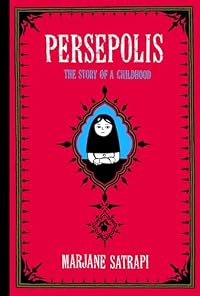
Persepolis: The Story of a Childhood
by Marjane Satrapi
Persepolis (Collections and Selections — Omnibus 1-2)
On This Page
Description
An intelligent and outspoken only child, Satrapi--the daughter of radical Marxists and the great-granddaughter of Iran's last emperor--bears witness to a childhood uniquely entwined with the history of her country. Originally published to wide critical acclaim in France, where it elicited comparisons to Art Spiegelman's Maus, Persepolis is Marjane Satrapi's wise, funny, and heartbreaking memoir of growing up in Iran during the Islamic Revolution. In powerful black-and-white comic strip show more images, Satrapi tells the story of her life in Tehran from ages six to fourteen, years that saw the overthrow of the Shah's regime, the triumph of the Islamic Revolution, and the devastating effects of war with Iraq. The intelligent and outspoken only child of committed Marxists and the great-granddaughter of one of Iran's last emperors, Marjane bears witness to a childhood uniquely entwined with the history of her country. Persepolis paints an unforgettable portrait of daily life in Iran: of the bewildering contradictions between home life and public life and of the enormous toll repressive regimes exact on the individual spirit. Marjane's child's-eye-view of dethroned emperors, state-sanctioned whippings, and heroes of the revolution allows us to learn as she does the history of this fascinating country and of her own extraordinary family. Intensely personal, profoundly political, and wholly original, Persepolis is at once a story of growing up and a stunning reminder of the human cost of war and political repression. It shows how we carry on, through laughter and tears, in the face of absurdity. And, finally, it introduces us to an irresistible little girl with whom we cannot help but fall in love. show lessTags
Recommendations









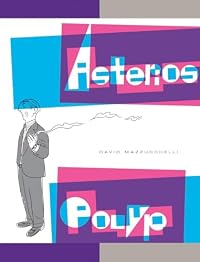


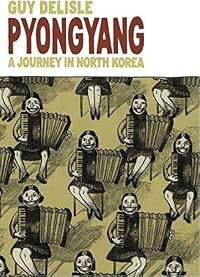
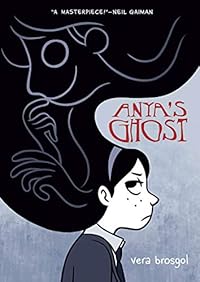
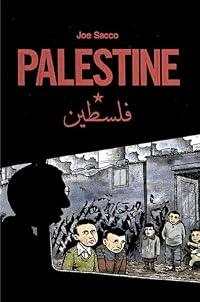



Member Recommendations
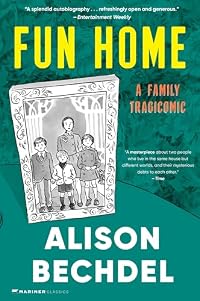
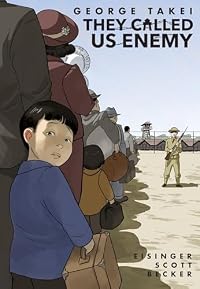
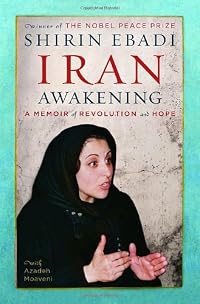
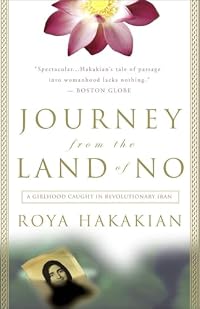
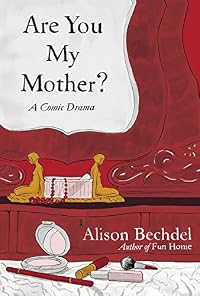
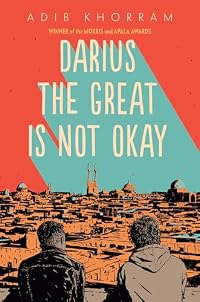
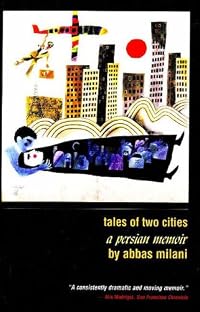
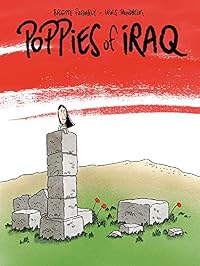
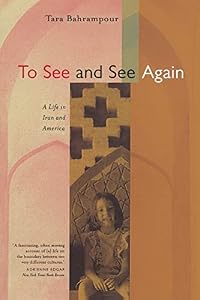
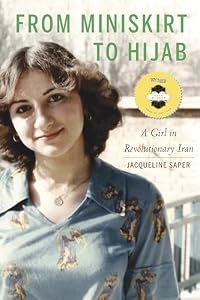
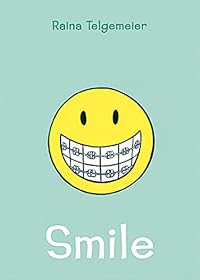
cransell A complementary (non-graphic) look at growing up in Iran during the Revolution.
30
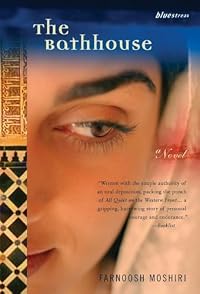
souloftherose Both books show the effects of the Iranian Revolution of 1979 on Iranian families. The House of the Mosque shows its effect on a Muslim family whereas Persepolis shows its effect on a more secular family. Both authors are writing from their own experience
20
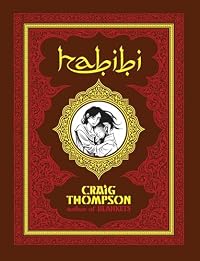
jlparent Another wonderfully done graphic novel memoir about a difficult childhood.
20

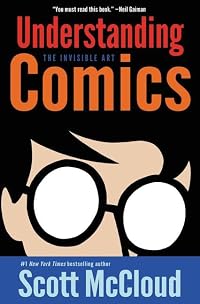
vnovak In the introduction to Psychiatric Tales, Darryl Cunningham said that he was inspired to write it after reading Persepolis. They share a spare, black and white style and a empathetic view of difficult topics.
20


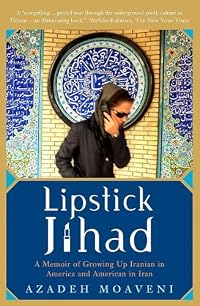
ijustgetbored Another coming-of-age memoir in Iran.


EerierIdyllMeme Life at a personal level under various political regimes, told in an unconventional way.
k00kaburra Another autobiographical graphic novel :-p that's a mouthful!

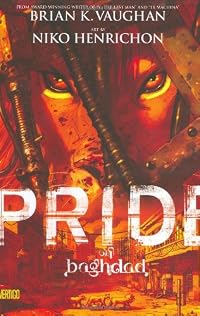
susanbooks Great for answering the historical/political questions Persepolis might raise
Member Reviews
Summary: In the first volume of Persepolis, Marjane Satrapi recounts her childhood in Iran. She was in elementary school when the Shah was overthrown and the Islamic Revolution began. She had very modern Marxist parents, but as the country sank deeper into fundamentalism, the means of expressing personal freedoms grew smaller and smaller. Satrapi grew up surrounded by war, oppression, terror, and the death and disappearance of family and friends, but through it all remained the same intelligent girl who couldn't help but speak her mind.
Review: Recent geopolitical history has never been a topic of much interest for me, but Satrapi has done the near-impossible: not only did I find her story insanely compelling, but I actually learned some show more history (and some history that I suspect I'll retain, too!) Persepolis is a wonderful blend of history and memoir, and Satrapi's style of telling renders large-scale political events intimate and personal, and therefore much more vivid that they would otherwise be. There are moments of immediately recognizeable growing-up humor, interleaved with moments of unimaginable horror, but Satrapi's tone strikes the balance perfectly, and the blocky black-and-white artwork is eye-catching, easy to follow, and often visually arresting. 4 out of 5 stars.
Recommendation: This is one of those books that people say everyone should read... and I think they're right. Pretty much everyone who lives in the world today has been directly or indirectly affected by the events described in this book, and Satrapi's book is an accessible way for us to face that part of history. show less
Review: Recent geopolitical history has never been a topic of much interest for me, but Satrapi has done the near-impossible: not only did I find her story insanely compelling, but I actually learned some show more history (and some history that I suspect I'll retain, too!) Persepolis is a wonderful blend of history and memoir, and Satrapi's style of telling renders large-scale political events intimate and personal, and therefore much more vivid that they would otherwise be. There are moments of immediately recognizeable growing-up humor, interleaved with moments of unimaginable horror, but Satrapi's tone strikes the balance perfectly, and the blocky black-and-white artwork is eye-catching, easy to follow, and often visually arresting. 4 out of 5 stars.
Recommendation: This is one of those books that people say everyone should read... and I think they're right. Pretty much everyone who lives in the world today has been directly or indirectly affected by the events described in this book, and Satrapi's book is an accessible way for us to face that part of history. show less
I really enjoy Satrapi's style in Persepolis. All she needs is the space of a couple of panels, and she does a great job of conveying frightening situations from both the naive perspective of a growing and learning child, as well as from the seasoned and grim experiences of the adults around her.
Persepolis is rebellious and heartfelt, manages to break down an aspect of culture and war that I think many people think they know about, when not many honestly do.
Persepolis is rebellious and heartfelt, manages to break down an aspect of culture and war that I think many people think they know about, when not many honestly do.
Marjane Satrapi grew up in Iran during the Islamic Revolution. She has given us a memoir, in the tradition of Maus, in a black and white graphic novel that is full of wit, a child’s wisdom and heart-searing pain. Marjane was the child of two dedicated Marxists and, ironically, the great grandchild of one of Iran’s last emperors. She shares with us her fear and confusion as violence and repression fill her everyday life – she is forced to wear a veil, her parents demonstrate and their friends disappear into prisons. But there are celebrations as well, such as the liberation of thousands of political prisoners after the Shah’s dethronement. Throughout, Marjane searches for ways to understand the changing world around her, turning show more to god, to books, and, always, to her parents. It is remarkable that she succeeds in threading so much gentle humor into a childhood lived in the midst of war and revolution.
Persopolis is an excellent addition to high school programs, particularly those using literature to help students gain more personal insight into history and politics. show less
Persopolis is an excellent addition to high school programs, particularly those using literature to help students gain more personal insight into history and politics. show less
Pretty underwhelming, to be honest. The illustrations are beautiful, the black and white style very striking. But as for the actual content... I felt like it was too focussed on minor events and didn't even mention the more major ones. For example, towards the end, Marjane's parents are telling her that it won't be too hard for her in Vienna, and remember when she went to France for summer camp by herself? Marjane's reply: "It's true, that was great... Real independence." My reply: WHY WASN'T THAT TRIP MENTIONED BEFORE?! It seems like a pretty major thing, Marjane's first trip out of Iran by herself. But no, instead we get random tidbits about how big her friend's house was and how much she liked punk rock.
I'm even more baffled by how show more little political content there was. I wasn't expecting a book about the events of Iran in the 1980s, but considering how strongly the background plays into this story, I needed more than a two page introduction to understand something as politically, culturally, and socially complex as Iranian government and war. It's as though Satrapi managed to write a book about her life in Iran during the 1980s-1990s without really mentioning what was going on in Iran in the 1980s-1990s. Needless to say, I wasn't captivated enough to want to read Persepolis: The Story of a Return.
I might be feeling this way in part because I read the masterpiece that was Maus and its sequel immediately before starting Persepolis, and that might've given me expectations that were too high. Still, I am a big fan of the graphic memoir format, and if you haven't read one yet I would strongly encourage you to pick up Maus by Art Spiegelman rather than Persepolis (but that's just my own opinion). show less
I'm even more baffled by how show more little political content there was. I wasn't expecting a book about the events of Iran in the 1980s, but considering how strongly the background plays into this story, I needed more than a two page introduction to understand something as politically, culturally, and socially complex as Iranian government and war. It's as though Satrapi managed to write a book about her life in Iran during the 1980s-1990s without really mentioning what was going on in Iran in the 1980s-1990s. Needless to say, I wasn't captivated enough to want to read Persepolis: The Story of a Return.
I might be feeling this way in part because I read the masterpiece that was Maus and its sequel immediately before starting Persepolis, and that might've given me expectations that were too high. Still, I am a big fan of the graphic memoir format, and if you haven't read one yet I would strongly encourage you to pick up Maus by Art Spiegelman rather than Persepolis (but that's just my own opinion). show less
A compelling memoir of growing up in Iran during the Islamic Revolution, Marjane Satrapi's Persepolis is both a moving portrait of one young girl's life, and a keenly-observed record of the political and religious events unfolding in her country. The author chronicles her family's initial jubilation at the fall of the brutal and corrupt regime of the Shah, their dismay at the growing repressiveness of the new theocracy, and their suffering (along with their countrymen) during the Iran-Iraq War.
Usually indifferent to the charm of comics and graphic-novels, I was all-the-more impressed by Persepolis, which I found both intellectually and visually engaging. Satrapi's seemingly effortless marriage of image and word is a joy to experience, show more and her observations of the world around her sometimes struck a powerful chord in me.
Her belief, as a child, that she would grow up to be one of God's prophets, made me chuckle in self-recognition. Who has not felt the self-evident rightness of their own position, particularly before maturity teaches us that it is possible for more than one belief to be "right?" Her parents' observation at one point, that it was the religious authorities who were the true perverts, reminded me strongly of similar conversations about authority figures on the part of my own parents. It is a mark of her genius that Satrapi's narrative can be so utterly foreign and familiar at the same time. show less
Usually indifferent to the charm of comics and graphic-novels, I was all-the-more impressed by Persepolis, which I found both intellectually and visually engaging. Satrapi's seemingly effortless marriage of image and word is a joy to experience, show more and her observations of the world around her sometimes struck a powerful chord in me.
Her belief, as a child, that she would grow up to be one of God's prophets, made me chuckle in self-recognition. Who has not felt the self-evident rightness of their own position, particularly before maturity teaches us that it is possible for more than one belief to be "right?" Her parents' observation at one point, that it was the religious authorities who were the true perverts, reminded me strongly of similar conversations about authority figures on the part of my own parents. It is a mark of her genius that Satrapi's narrative can be so utterly foreign and familiar at the same time. show less
Eye-opening account of author/illustrator growing up in Iran and Austria during wars and societal tumult. We get to see the complexity of the politics and people of Iran through the eyes of a child/teen/young woman. Her personality is also multifaceted and ever-changing. The graphic novel format clarifies without over-simplifying.
She and her loved ones live through terrible things: torture, imprisonment, execution, death by bombing, drug dealing and abuse, suicide attempts, and a repressive regime. The tone is matter-of-fact and brisk, but I mention those issues for friends to have a heads up. I've had good conversations with my daughter about this book. I give very few 5 star reviews, but this one deserves it.
She and her loved ones live through terrible things: torture, imprisonment, execution, death by bombing, drug dealing and abuse, suicide attempts, and a repressive regime. The tone is matter-of-fact and brisk, but I mention those issues for friends to have a heads up. I've had good conversations with my daughter about this book. I give very few 5 star reviews, but this one deserves it.
Marjane Satrapi's Persepolis is a powerful and moving graphic novel that tells the story of the author growing up in Iran. I was pleasantly surprised the graphic novel form succeeded at telling complex and nuanced stories in a highly accessible way.
For readers like myself with limited prior knowledge of Iran, the book provides a valuable and accessible window into the complexities of life during this historical period in a country that I for one only associate with the "Axis of Evil" and the brutal oppression of any kind of opposition to the regime.
One of the strengths of Persepolis is the way that it makes the experience of living through the revolution and the war tangible. It presented me with a sense of the everyday challenges and show more fears that people faced, as well as the more profound philosophical questions about identity and beliefs. The book feels so real, so true to life, that an important part of history becomes approachable and more understandable.
The story of Persepolis is told through the eyes of Marjane herself, and it follows her journey from childhood to her initial departure from Iran at the age of 14. She experiences the upheaval of the “Islamic Revolution” and the Iran-Iraq War. Throughout the book, Marjane grapples with the complexities of life in post-revolutionary Iran, including the restrictions placed on women, the political repression and violence that she witnesses, and the challenges of navigating her own identity and beliefs.
However, it is also important to note that Persepolis is written from the point of view of a privileged girl. Satrapi comes from a well-educated and politically active family, and her experiences growing up during the revolution are heavily influenced by her family's status. While this does not diminish the power of the story she tells, it is worth considering the ways in which her perspective may be different from that of others who lived through revolution and war.
On the other hand, it is doubtful a less privileged voice would have had both the opportunity and means to tell this story in such a powerful way. It seems much more likely for this story to never have been told had it been experienced by someone else.
Satrapi's art style is simple, yet effective, and the black-and-white images complement the story perfectly. The use of the graphic novel format allows her to convey information and emotions in a way that would be difficult to achieve through text alone. For example, the scenes of political repression and violence are particularly powerful, and the images of Marjane's family members being arrested and executed are both haunting and moving.
Despite the serious subject matter, Persepolis is also filled with moments of humour and satire, which help to lighten the mood and provide a respite from the often-heavy subject matter.
A very interesting graphic novel that garners four stars out of five. The second instalment is already waiting to be read.
Blog | Facebook | Twitter | Mastodon | Instagram | Pinterest | Medium | Matrix | Tumblr
Ceterum censeo Putin esse delendam show less
For readers like myself with limited prior knowledge of Iran, the book provides a valuable and accessible window into the complexities of life during this historical period in a country that I for one only associate with the "Axis of Evil" and the brutal oppression of any kind of opposition to the regime.
One of the strengths of Persepolis is the way that it makes the experience of living through the revolution and the war tangible. It presented me with a sense of the everyday challenges and show more fears that people faced, as well as the more profound philosophical questions about identity and beliefs. The book feels so real, so true to life, that an important part of history becomes approachable and more understandable.
The story of Persepolis is told through the eyes of Marjane herself, and it follows her journey from childhood to her initial departure from Iran at the age of 14. She experiences the upheaval of the “Islamic Revolution” and the Iran-Iraq War. Throughout the book, Marjane grapples with the complexities of life in post-revolutionary Iran, including the restrictions placed on women, the political repression and violence that she witnesses, and the challenges of navigating her own identity and beliefs.
However, it is also important to note that Persepolis is written from the point of view of a privileged girl. Satrapi comes from a well-educated and politically active family, and her experiences growing up during the revolution are heavily influenced by her family's status. While this does not diminish the power of the story she tells, it is worth considering the ways in which her perspective may be different from that of others who lived through revolution and war.
On the other hand, it is doubtful a less privileged voice would have had both the opportunity and means to tell this story in such a powerful way. It seems much more likely for this story to never have been told had it been experienced by someone else.
Satrapi's art style is simple, yet effective, and the black-and-white images complement the story perfectly. The use of the graphic novel format allows her to convey information and emotions in a way that would be difficult to achieve through text alone. For example, the scenes of political repression and violence are particularly powerful, and the images of Marjane's family members being arrested and executed are both haunting and moving.
Despite the serious subject matter, Persepolis is also filled with moments of humour and satire, which help to lighten the mood and provide a respite from the often-heavy subject matter.
A very interesting graphic novel that garners four stars out of five. The second instalment is already waiting to be read.
Blog | Facebook | Twitter | Mastodon | Instagram | Pinterest | Medium | Matrix | Tumblr
Ceterum censeo Putin esse delendam show less
Members
- Recently Added By
Published Reviews
ThingScore 88
Satrapi’s style is almost primitive, consisting of flat figures with simple shapes and features. It’s more sophisticated than a child’s creations, but it superficially resembles them, an approach that supports the presentation of memories from that period of life.
added by lampbane
Marjane Satrapi's ''Persepolis'' is the latest and one of the most delectable examples of a booming postmodern genre: autobiography by comic book.
added by jlelliott
Lists

Recommended Comics / Graphic Novels
595 works; 122 members

Middle East and Maghreb Graphic Novels
46 works; 3 members

Banned and Challenged Books List
14 works; 3 members

Feminists' memoirs/autobiographies
38 works; 11 members

Books Read in 2004
196 works; 7 members

Banging Book Club
36 works; 1 member

Books Read in 2019
4,052 works; 110 members

The Guardian's 100 best books of the 21st century
100 works; 21 members

Banned or Challenged Books
400 works; 37 members

Best Biographies of Notable Women
277 works; 101 members
Best Graphic Novel Nonfiction
199 works; 101 members

Read the book and saw the movie
1,170 works; 192 members

Books recommended by Calgary Public Library staff
1,588 works; 4 members

BitLife
212 works; 4 members

Books Read in 2024
4,623 works; 126 members
Books recommended in the history category on FiveBooks.com
329 works; 4 members

Books We Discovered On LibraryThing
530 works; 130 members

Swinging Seventies
255 works; 16 members

Top Five Books of 2016
795 works; 229 members

100 New Classics
101 works; 13 members

Adult Books for YA Readers
194 works; 6 members

Books featuring grandmothers
56 works; 12 members

Recommendations for Ezra
12 works; 1 member

Favourite or Unique Biographies/Autobiographies/Memoirs
8 works; 2 members

Best Autobiographies and Memoirs
370 works; 66 members

Recommend the 20 best books you've read in the last five years
2,167 works; 606 members

Best of World Literature
431 works; 51 members
Independent Reading Suggestions
69 works; 3 members

Female Protagonist
1,056 works; 56 members

Women in Islam
120 works; 8 members

Books for HS summer reading
21 works; 2 members
Female Author
1,235 works; 67 members

2000s decade
85 works; 7 members
A Child's Book Tour of Persia
22 works; 3 members

Top Five Books of 2025
950 works; 302 members
Author Information

20+ Works 29,508 Members
Some Editions
Awards and Honors
Awards
Distinctions
Notable Lists
Series

Belongs to Publisher Series
Work Relationships
Is contained in
Common Knowledge
- Canonical title
- Persepolis: The Story of a Childhood
- Original title
- Persepolis [Film 2007]
- Original publication date
- 2003 (English translation) (English translation)
- People/Characters
- Marjane Satrapi (called 'Marji'); The Shah; Mehri; Hossein; Ramin; Siamak Jari (show all 19); Mohsen Shakiba; Laly; Taji Satrapi; Uncle Anoosh; Kaveh; Pardisse; Mali; Mrs. Nasrine; Shahab; Uncle Taher; Khosro; Niloufar; Neda Baba-Levy
- Important places
- Tehran, Iran; Iran; Vienna, Austria
- Important events
- Iranian Revolution (1979); Iran-Iraq War (1980 | 1988)
- Related movies
- Persepolis (2007 | IMDb)
- Dedication
- To my parents
- First words
- This is me when I was 10 years old. This was in 1980.
- Quotations
- EXCEPT FOR MY GRANDMOTHER I WAS OBVIOUSLY THE ONLY ONE WHO BELIEVED IN MYSELF.
IT WAS FUNNY TO SEE HOW MUCH MARX AND GOD LOOKED LIKE EACH OTHER. THOUGH MARX'S HAIR WAS A BIT CURLIER.
TO EACH HIS OWN WAY OF CALMING DOWN. - Last words
- (Click to show. Warning: May contain spoilers.)It would have been better just to go.
(Click to show. Warning: May contain spoilers.)C'était le début de la guerre . . . - Blurbers
- Pullman, Philip; al-Shaykh, Hanan; Steinem, Gloria; Cisneros, Sandra; Joe Sacco
- Original language
- French
- Disambiguation notice
- Persepolis was originally published in 4 volumes. Some later editions, especially in the U.S., combined volumes 1-2 into one work Persepolis: The Story of a Childhood; volumes 3-4 were combined into Persepoli... (show all)s: The Story of a Return. Keep this in mind when combining/separating.
Please determine if your item is a videorecording of the film adaptation Persepolis, a copy of the first of four Persepolis graphic novels published in France, a copy of the English edition Persepolis: The Story of a Childhoo... (show all)d, or a copy of the Complete Persepolis. Then please separate it and combine it with the appropriate item.
Classifications
- Genres
- Graphic Novels & Comics, Teen
- DDC/MDS
- 741.5944 — Arts & recreation Drawing & decorative arts Drawing and drawings Comic books, graphic novels, fotonovelas, cartoons, caricatures, comic strips History, geographic treatment, biography European France & Monaco
- LCC
- PN6747 .S245 .P4713 — Language and Literature Literature (General) Literature (General) Collections of general literature Comic books, strips, etc.
- BISAC
Statistics
- Members
- 11,411
- Popularity
- 783
- Reviews
- 379
- Rating
- (4.21)
- Languages
- 21 — Chinese, Czech, Danish, Dutch, English, Finnish, French, German, Greek, Hebrew, Hungarian, Italian, Lithuanian, Norwegian, Polish, Romanian, Russian, Serbian, Spanish, Thai, Turkish
- Media
- Paper, Ebook
- ISBNs
- 46
- ASINs
- 6