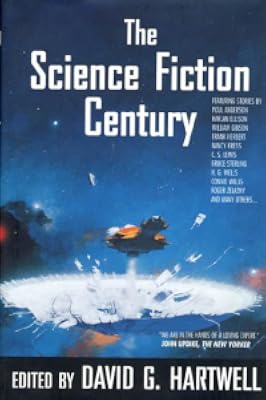
The Science Fiction Century
by David G. Hartwell (Editor)
The Science Fiction Century (Collections and Selections — 1-2)
On This Page
Description
An anthology of forty-six science-fiction stories drawn from throughout one hundred years of the genre, from its birth in the 1890s through the 1990s.Tags
Recommendations


















Member Reviews
A proper doorstop-sized anthology, based on the contention that science fiction is the characteristic literary form of the Twentieth Century, this book collects together some 45 stories. The earliest is Another World by J.H. Rosny ainé (1895) and the latest is The Angel of Violence by Stanislaw Wisniewski (1996). (It is a notable feature of the collection that it includes stories from outside the Anglosphere, though it pre-dates the era of Afro-Futurism.)
Some notable highlights (and low-lights) for me were:
James Tiptree Jnr. - Beam us Home: surprised to see this was written in 1969! Of course, it now inhabits an alternate universe where there was no continuation of the Trek universe.
C.S. Lewis - Ministering Angels: "uproariously show more politically incorrect" says Hartwell in his intro. I found little to justify any sort of enthusiasm for this.
Edgar Pangborn - The Music Master of Babylon: elegiac.
H.G. Wells - A Story of the Days to Come: 1897 future history. Has a description of a smart speaker-like device that would have meant little when the anthology was first published in 1997. Otherwise projects Victorian values forward into the 22nd century.
Hal Clement - Hot Planet: this 1963 story is a series of info-dumps about Mercury, now known to be incorrect. Mixed-sex spaceship crew but otherwise pedestrian and unremarkable.
James Blish - A Work of Art: the composer Richard Strauss is brought back to life, seemingly. Not an AI story, but this 1956 story has certain resonances with such a theme, and writes about the business of creatives in fairly resonant terms.
E.M. Forster - The Machine Stops: prescient, perhaps more so now than when it was written in 1908, when Forster merely meant it as a counterblast to Wells' A Modern Utopia. Should be required reading for everyone.
Charles Harness - The Rose: some years since I read this. Comes over now as unduly complex, with dubious psychological themes. The pov character moonlights as a composer and choreographer, which is unlikely. Yet the whole is greater than the sum of its parts, an undoubtedly powerful piece of writing.
Philip José Farmer - Mother: more psychodrama, this time overtly Freudian.
Rudyard Kipling - As easy as ABC: Libertarianism vs. corporatism in Kipling's future history where the Aerial Board of Control governs world transit.
Michael Swanwick - Ginungagap: more political scheming, this time with arachnoid aliens.
William Tenn - Time in advance: Precrime without precognition.
Wolfgang Jeschke - The King and the Dollmaker: a slightly Brothers Grimm-flavoured story, but with time travel. Hartwell's introduction to this story holds Jeschke up as the epitome of German sf whilst managing to avoid mention of Perry Rhodan.
Connie Willis - Fire Watch: again, a while since I've read this. Now struck by how similar it is to Blackout/All Clear (apart from being set in the same universe), in terms of how much Willis gets wrong about London in WW2, and how little history her history students seem to know. Hartwell incorrectly cites her later novel Doomsday Book as a sequel to this story, whereas it seems very much to be a prequel, explaining why the character Kivrin seems so reticent about her experience on her research trip.
Poul Anderson - Goat Song: Baroque far-future adventure with one man against a planet-wide controlling computer. Reads surprisingly well to say it was written in 1972.
Jack London - The Scarlet Plague: How the modern civilised world of 2012 ended, told by a survivor in the 2070s. Except the world of 2012 was 1912 with added airships and telephones.
Cordwainer Smith - Drunkboat: It's a while since I've read any Cordwainer Smith, and I'd forgotten just how strange and exotic his writing could be, which was his strength.
J.H. Rosny aîné - Another World: Odd narrative about what later writers would call a mutant, except his mutations give him a violet skin colour and the ability to see a co-existent world and its inhabitants that occupies the same space as ours but doesn't interact with it. And that's about it; the story actually goes nowhere further.
Gordon Eklund and Gregory Benford - If the Stars are Gods: Compared with the novel this became, the writing credits are oddly reversed here. Excellent story, even if the story takes place in a future that never quite happened that way.
George Turner - I still call Australia home: Also excellent. He also used the theme of a returning relativistic starship returning to a changed Earth in his novel Beloved Son.
Alexander Kuprin - Liquid Sunshine: A Russian tale of an eccentric English inventor reversing Dean Swift's trick from Gulliver's Travels of extracting sunbeams from cucumbers. Too much nuts and bolts detail of imaginary technology and casual racism. And a massive explosion resets the world to its default position - i.e. without the weird science - at the end. Why anyone thought this was worth reprinting is beyond me.
John Crowley - Great Work of Time: alternate reality shenanigans and well written too.
Frank Herbert - Greenslaves: bio-engineering in a Brazilian setting.
Jack Vance - Rumfuddle: reminded me of Julian May's The Many-Colored Land, in that people are able to locate themselves in any time or place, though the 'cognate' worlds suggest quantum divergence. I found myself getting quite irritated with a couple of the characters in this, but the story resolved itself to my satisfaction, partly because of the identity of one of the players.
John Wyndham - Consider her Ways: interesting take on an all-female society, but severely marred by 1952 attitudes, and not just in the feminism. Because eugenics.
Roger Zelazny - He Who Shapes: the science in this science fiction is psychiatry. Except that it dates from 1967, and I have the feeling that psychiatry has moved on a long way since then. Plus the protagonist is a therapist who uses mind-melding technology to create scenarios in the patient's mind that he can manipulate, and lives a trendy 1960s psychiatrist lifestyle to boot. I lost patience with this and bailed out at about 25%, which is unusual for me.
Bruce Sterling - Swarm: Tale from Sterling's 'Shaper/Mechanist' universe with very alien aliens, and almost as alien humans.
Nancy Kress - Beggars in Spain: This story, about genetically-engineered children who have no need for sleep, I found very engaging. I got the feeling that this might be the sort of story Elon Musk would find very relevant, but one he didn't finish and so never saw the flaws in the plan.
William Gibson - Johnny Mnemonic: I'd forgotten just how persuasive and immediate Gibson's early cyberpunk work was.
Harlan Ellison - “Repent, Harlequin!" said the Ticktockman: And I was amazed to see this story dated from 1965. It still comes up as fresh.
Chad Oliver - Blood's a rover: this time, the science is anthropology. A good story for 1952 (despite the main character smoking a pipe, as so many protagonists in 1950s SF stories do), marred only by a huge expository lump about two thirds of the way through, when I thought the story was winding down; and then we have a long coda with the main character returning to the story.
Richard A. Lupoff - Sail the tide of mourning: a remarkable tale of Australian indigenes and their role in sailing vast starships. Apparently forms part of the novel Space War Blues, which I haven't read in a very long time.
On the whole, a valuable collection with some really good stories and a few not so good. Fortunately, the former outweigh the latter. I'd say that this is worth acquiring if you see a copy. show less
Some notable highlights (and low-lights) for me were:
James Tiptree Jnr. - Beam us Home: surprised to see this was written in 1969! Of course, it now inhabits an alternate universe where there was no continuation of the Trek universe.
C.S. Lewis - Ministering Angels: "uproariously show more politically incorrect" says Hartwell in his intro. I found little to justify any sort of enthusiasm for this.
Edgar Pangborn - The Music Master of Babylon: elegiac.
H.G. Wells - A Story of the Days to Come: 1897 future history. Has a description of a smart speaker-like device that would have meant little when the anthology was first published in 1997. Otherwise projects Victorian values forward into the 22nd century.
Hal Clement - Hot Planet: this 1963 story is a series of info-dumps about Mercury, now known to be incorrect. Mixed-sex spaceship crew but otherwise pedestrian and unremarkable.
James Blish - A Work of Art: the composer Richard Strauss is brought back to life, seemingly. Not an AI story, but this 1956 story has certain resonances with such a theme, and writes about the business of creatives in fairly resonant terms.
E.M. Forster - The Machine Stops: prescient, perhaps more so now than when it was written in 1908, when Forster merely meant it as a counterblast to Wells' A Modern Utopia. Should be required reading for everyone.
Charles Harness - The Rose: some years since I read this. Comes over now as unduly complex, with dubious psychological themes. The pov character moonlights as a composer and choreographer, which is unlikely. Yet the whole is greater than the sum of its parts, an undoubtedly powerful piece of writing.
Philip José Farmer - Mother: more psychodrama, this time overtly Freudian.
Rudyard Kipling - As easy as ABC: Libertarianism vs. corporatism in Kipling's future history where the Aerial Board of Control governs world transit.
Michael Swanwick - Ginungagap: more political scheming, this time with arachnoid aliens.
William Tenn - Time in advance: Precrime without precognition.
Wolfgang Jeschke - The King and the Dollmaker: a slightly Brothers Grimm-flavoured story, but with time travel. Hartwell's introduction to this story holds Jeschke up as the epitome of German sf whilst managing to avoid mention of Perry Rhodan.
Connie Willis - Fire Watch: again, a while since I've read this. Now struck by how similar it is to Blackout/All Clear (apart from being set in the same universe), in terms of how much Willis gets wrong about London in WW2, and how little history her history students seem to know. Hartwell incorrectly cites her later novel Doomsday Book as a sequel to this story, whereas it seems very much to be a prequel, explaining why the character Kivrin seems so reticent about her experience on her research trip.
Poul Anderson - Goat Song: Baroque far-future adventure with one man against a planet-wide controlling computer. Reads surprisingly well to say it was written in 1972.
Jack London - The Scarlet Plague: How the modern civilised world of 2012 ended, told by a survivor in the 2070s. Except the world of 2012 was 1912 with added airships and telephones.
Cordwainer Smith - Drunkboat: It's a while since I've read any Cordwainer Smith, and I'd forgotten just how strange and exotic his writing could be, which was his strength.
J.H. Rosny aîné - Another World: Odd narrative about what later writers would call a mutant, except his mutations give him a violet skin colour and the ability to see a co-existent world and its inhabitants that occupies the same space as ours but doesn't interact with it. And that's about it; the story actually goes nowhere further.
Gordon Eklund and Gregory Benford - If the Stars are Gods: Compared with the novel this became, the writing credits are oddly reversed here. Excellent story, even if the story takes place in a future that never quite happened that way.
George Turner - I still call Australia home: Also excellent. He also used the theme of a returning relativistic starship returning to a changed Earth in his novel Beloved Son.
Alexander Kuprin - Liquid Sunshine: A Russian tale of an eccentric English inventor reversing Dean Swift's trick from Gulliver's Travels of extracting sunbeams from cucumbers. Too much nuts and bolts detail of imaginary technology and casual racism. And a massive explosion resets the world to its default position - i.e. without the weird science - at the end. Why anyone thought this was worth reprinting is beyond me.
John Crowley - Great Work of Time: alternate reality shenanigans and well written too.
Frank Herbert - Greenslaves: bio-engineering in a Brazilian setting.
Jack Vance - Rumfuddle: reminded me of Julian May's The Many-Colored Land, in that people are able to locate themselves in any time or place, though the 'cognate' worlds suggest quantum divergence. I found myself getting quite irritated with a couple of the characters in this, but the story resolved itself to my satisfaction, partly because of the identity of one of the players.
John Wyndham - Consider her Ways: interesting take on an all-female society, but severely marred by 1952 attitudes, and not just in the feminism. Because eugenics.
Roger Zelazny - He Who Shapes: the science in this science fiction is psychiatry. Except that it dates from 1967, and I have the feeling that psychiatry has moved on a long way since then. Plus the protagonist is a therapist who uses mind-melding technology to create scenarios in the patient's mind that he can manipulate, and lives a trendy 1960s psychiatrist lifestyle to boot. I lost patience with this and bailed out at about 25%, which is unusual for me.
Bruce Sterling - Swarm: Tale from Sterling's 'Shaper/Mechanist' universe with very alien aliens, and almost as alien humans.
Nancy Kress - Beggars in Spain: This story, about genetically-engineered children who have no need for sleep, I found very engaging. I got the feeling that this might be the sort of story Elon Musk would find very relevant, but one he didn't finish and so never saw the flaws in the plan.
William Gibson - Johnny Mnemonic: I'd forgotten just how persuasive and immediate Gibson's early cyberpunk work was.
Harlan Ellison - “Repent, Harlequin!" said the Ticktockman: And I was amazed to see this story dated from 1965. It still comes up as fresh.
Chad Oliver - Blood's a rover: this time, the science is anthropology. A good story for 1952 (despite the main character smoking a pipe, as so many protagonists in 1950s SF stories do), marred only by a huge expository lump about two thirds of the way through, when I thought the story was winding down; and then we have a long coda with the main character returning to the story.
Richard A. Lupoff - Sail the tide of mourning: a remarkable tale of Australian indigenes and their role in sailing vast starships. Apparently forms part of the novel Space War Blues, which I haven't read in a very long time.
On the whole, a valuable collection with some really good stories and a few not so good. Fortunately, the former outweigh the latter. I'd say that this is worth acquiring if you see a copy. show less
A truly massive tome that attempts to cover sf from ca. 1890 to 1995; containing 35 short stories and ten novella-length pieces. Attempting to be repesentative for a century of sf, this of course features a lot of household names, but often not with their most commonly reprinted stories, so it did contain a lot of "new to me" classics.
The collection contains a couple of great stories, and a lot of good ones. While some of the older novellas took a little perseverance, and there were a couple of stories of which I still can't understand what their merits are, on the whole this collection is an interesting read, and it offers a good cross-section of what the genre has produced.
The short author profiles that precede each story were show more informative and to the point.
Individual story reviews, ratings and/or notes:
- Introduction by David G. Hartwell (-)
- “Beam Us Home” by James Tiptree, Jr. (Galaxy Magazine, April 1969) (**)
- “Ministering Angels” by C. S. Lewis (Saturday Review of Literature, May 28, 1955) (* - I read this on January 1st and I sincerely hope this is the worst thing I'll read all year)
- “The Music Master of Babylon” by Edgar Pangborn (Galaxy Science Fiction, November 1954) (*** - an old man who survived the fall of civilization reflects and plays music)
- “A Story of the Days to Come” by H. G. Wells (Pall Mall Magazine, 1899) (* - not engaging, a chore to get through this novella)
- “Hot Planet” by Hal Clement (Galaxy Magazine, August 1963) (** - OK hard sf story but dated in its science and its characters' interactions)
- “A Work of Art” by James Blish (Science Fiction Stories, July 1956) (***** - a timeless story about a composer returned to life some 2 centuries after his death)
- “The Machine Stops” by E. M. Forster (Oxford and Cambridge Review, November 1909) (***** - This story depicting a technological dystopia is still powerful and relatable in 2025, a true classic)
- “Brightness Falls from the Air” by Margaret St. Clair (The Magazine of Fantasy and Science Fiction, April 1951) (*** - a neat little story "about beauty, death and colonialism", as the author bio succinctly describes it)
- “2066: Election Day” by Michael Shaara (Astounding Science Fiction, December 1956) (**** - lovely little story about AI and presidential elections)
- “The Rose” by Charles L. Harness (Authentic Science Fiction Monthly #31, March 1953) (*** - A lot is going on in this novella that revolves around 3 characters: a psychiatrist/opera composer, an eccentric artist/her patient, and his scientist wife. There are debates on the merits of arts vs science as humanity's compelling force,cold war era paranoia, the complexities of a triangle relationship, unexplained bodily transformations, and psionic powers, all resolving around the central surreal drama on the completion of an opera. A bit much, but still compelling!)
- “The Hounds of Tindalos” by Frank Belknap Long (Weird Tales, March 1929) (**** - weird fiction classic)
- “The Angel of Violence” by Adam Wiśniewski-Snerg (1978; translated from the Polish) (*** - this "proto cyberpunk" story reads away nicely, though it's too short for anything interesting to happen)
- “Nobody Bothers Gus” by Algis Budrys (Astounding Science Fiction, November 1955) (*** - solid timeless story, not showing its 75 years og age at all)
- “The Time Machine” by Dino Buzzati (1954) (** - forgettable)
- “Mother” by Philip José Farmer (Thrilling Wonder Stories, April 1953) (*** - a seemingly old school first contact adventure that develops quite the Oedipus compex)
- “As Easy as A.B.C.” by Rudyard Kipling (The London Magazine, March 1912) (** - This classic dystopia may be of historical interest, but both its plot and perspective fell flat for me)
- “Ginungagap” by Michael Swanwick (TriQuarterly 49, 1980) (*** - A pleasant first contact story)
- “Minister Without Portfolio” by Mildred Clingerman (The Magazine of Fantasy and Science Fiction, February 1952) (**** cute little story)
- “Time in Advance” by William Tenn (Galaxy Science Fiction, August 1956) (**** - I enjoyed this one about time served before committing the crime, and the moral dilemmas that creates)
- “Good Night, Sophie” by Lino Aldani (1963, translated from the Italian in 1973) (***** - VR porn rules the world; straightforward, reflective, powerful)
- “Veritas” by James Morrow (Synergy: New Science Fiction, Number 1, 1987) (**** - interesting dystopia where only truth is spoken)
- “Enchanted Village” by A. E. van Vogt (Other Worlds Science Stories, July 1950) (*** - Good old-fashioned story about survival in an alien world)
- “The King and the Dollmaker” by Wolfgang Jeschke (1961, translated 1970) (*** - Interesting novella with a complex but well-constructed time travel plot)
- “Fire Watch” by Connie Willis (Isaac Asimov’s Science Fiction Magazine, February 1982) (***** - This story makes you smell and feel the smoke and rubble, the way time travel does for its historian protagonist)
- “Goat Song” by Poul Anderson (The Magazine of Fantasy and Science Fiction, February 1972) (**** - Myth vs. robot. The style may be dated, the conflict is timeless.)
- “The Scarlet Plague” by Jack London (London Magazine, June 1912) (** - 40 pages for what is now such a common trope that it wouldn't need more than a paragraph to convey, and even then had been done before - I can forgive the classism and sexism given its age but it does make reading it more of a chore)
- “Drunkboat” by Cordwainer Smith (Amazing Stories, October 1963) (*** - Decent, old-fashioned story about intrigue related to instantaneous travel)
- “Another World” by J. H. Rosny aîné (1895, translated 1962) (**** - Impressive, very early sf story about an outsider's unusual talent to perceive the world; while the story itself isn't complex, there's a lot to appreciate)
- “If the Stars Are Gods” by Gordon Eklund and Gregory Benford (Universe 4, March 1974) (*** - Decent if unremarkable first contact story)
- “I Still Call Australia Home” by George Turner (Aurealis #1, April 1990) (*** - pleasant but predictable story of a colony ship returning to a changed Earth)
- “Liquid Sunshine” by Alexander Kuprin (1913, translated from Russian in 1982) (*** - intriguing tale of adventure and scientific optimism consisting of a long methodical build-up and a rushed and unsatisfactory conclusion)
- “Great Work of Time” by John Crowley (Novelty, May 1989) (** - A secret society overseeing the stability of the world and the British Empie through time travel. A short novella, not to my liking.)
- “Sundance” by Robert Silverberg (The Magazine of Fantasy and Science Fiction, June 1969) (**** - Easy-reading short story about the hard-hitting topic of genocide. In outer space.)
- “Greenslaves” by Frank Herbert (Amazing Stories, March 1965) (*** - Good straightforward action-filled eco sf.)
- “Rumfuddle” by Jack Vance (Three Trips in Time and Space: Original Novellas of Science Fiction, 1973) (** - A novella set in a neatly set up multiverse, but the core story and characters weren't very compelling.)
- “The Dimple in Draco” by R. S. Richardson (Orbit 2, June 1967) (** - A story about an astronomer making a mind-blowing discovery while also having a very mundane day that is both timeless and dated.)
- “Consider Her Ways” by John Wyndham (Sometime, Never, 1956) (*** - A short novella about a world without men. It reads well, though the narrative device feels dated. Somewhat disturbing actually, not in its dystopia but in what it reflects about the author or 1950s UK societal norms.)
- “Something Ending” by Eddy C. Bertin (1971, translated 1982) (* - A drunk out to prove the world is a simulation.)
- “He Who Shapes” by Roger Zelazny (Amazing Stories, January 1965) (*** - This Nebula-winning novella deals with the encounter between a psychiatrist who is able to shape dreams and illusions, and a blind patient who wants to learn his trade. Lots of noir elements, and lots of references and symbolism that I didn't fully grasp. An ending open for interpretation.)
- “Swarm” by Bruce Sterling (The Magazine of Fantasy & Science Fiction, April 1982) (**** - This Shaper/Mechanist alien contact story is perfectly paced.)
- “Beggars in Spain” by Nancy Kress (Isaac Asimov’s Science Fiction Magazine, April 1991) (***** - Well-written novella about the emerging tensions between enhanced and normal humans in a transhuman society. Makes me want to look for the novel that this was expanded to.)
- “Johnny Mnemonic” by William Gibson (Omni, May 1981) (***** - The classic cyberpunk story about a data courrier is a favourite of mine;)
- “Repent, Harlequin!” Said the Ticktockman” by Harlan Ellison (Galaxy Magazine, December 1965) (**** - Slightly dated, but still a classic.)
- “Blood’s a Rover” by Chad Oliver (Astounding Science Fiction, May 1952) (*** - An anthropologist lifting up/manipulating civilizations on faraway planets for the betterment of mankind. Reading this in 2026 it was decent if not very interesting, but my respect for this story grows when considering this was written in 1952.)
- “Sail the Tide of Mourning” by Richard A. Lupoff (New Dimensions 5, April 1975) (*** - A quick melancholy story (though with a rather implausible backstory) is a fitting goodbye to this mammoth collection. show less
The collection contains a couple of great stories, and a lot of good ones. While some of the older novellas took a little perseverance, and there were a couple of stories of which I still can't understand what their merits are, on the whole this collection is an interesting read, and it offers a good cross-section of what the genre has produced.
The short author profiles that precede each story were show more informative and to the point.
Individual story reviews, ratings and/or notes:
- Introduction by David G. Hartwell (-)
- “Beam Us Home” by James Tiptree, Jr. (Galaxy Magazine, April 1969) (**)
- “Ministering Angels” by C. S. Lewis (Saturday Review of Literature, May 28, 1955) (* - I read this on January 1st and I sincerely hope this is the worst thing I'll read all year)
- “The Music Master of Babylon” by Edgar Pangborn (Galaxy Science Fiction, November 1954) (*** - an old man who survived the fall of civilization reflects and plays music)
- “A Story of the Days to Come” by H. G. Wells (Pall Mall Magazine, 1899) (* - not engaging, a chore to get through this novella)
- “Hot Planet” by Hal Clement (Galaxy Magazine, August 1963) (** - OK hard sf story but dated in its science and its characters' interactions)
- “A Work of Art” by James Blish (Science Fiction Stories, July 1956) (***** - a timeless story about a composer returned to life some 2 centuries after his death)
- “The Machine Stops” by E. M. Forster (Oxford and Cambridge Review, November 1909) (***** - This story depicting a technological dystopia is still powerful and relatable in 2025, a true classic)
- “Brightness Falls from the Air” by Margaret St. Clair (The Magazine of Fantasy and Science Fiction, April 1951) (*** - a neat little story "about beauty, death and colonialism", as the author bio succinctly describes it)
- “2066: Election Day” by Michael Shaara (Astounding Science Fiction, December 1956) (**** - lovely little story about AI and presidential elections)
- “The Rose” by Charles L. Harness (Authentic Science Fiction Monthly #31, March 1953) (*** - A lot is going on in this novella that revolves around 3 characters: a psychiatrist/opera composer, an eccentric artist/her patient, and his scientist wife. There are debates on the merits of arts vs science as humanity's compelling force,cold war era paranoia, the complexities of a triangle relationship, unexplained bodily transformations, and psionic powers, all resolving around the central surreal drama on the completion of an opera. A bit much, but still compelling!)
- “The Hounds of Tindalos” by Frank Belknap Long (Weird Tales, March 1929) (**** - weird fiction classic)
- “The Angel of Violence” by Adam Wiśniewski-Snerg (1978; translated from the Polish) (*** - this "proto cyberpunk" story reads away nicely, though it's too short for anything interesting to happen)
- “Nobody Bothers Gus” by Algis Budrys (Astounding Science Fiction, November 1955) (*** - solid timeless story, not showing its 75 years og age at all)
- “The Time Machine” by Dino Buzzati (1954) (** - forgettable)
- “Mother” by Philip José Farmer (Thrilling Wonder Stories, April 1953) (*** - a seemingly old school first contact adventure that develops quite the Oedipus compex)
- “As Easy as A.B.C.” by Rudyard Kipling (The London Magazine, March 1912) (** - This classic dystopia may be of historical interest, but both its plot and perspective fell flat for me)
- “Ginungagap” by Michael Swanwick (TriQuarterly 49, 1980) (*** - A pleasant first contact story)
- “Minister Without Portfolio” by Mildred Clingerman (The Magazine of Fantasy and Science Fiction, February 1952) (**** cute little story)
- “Time in Advance” by William Tenn (Galaxy Science Fiction, August 1956) (**** - I enjoyed this one about time served before committing the crime, and the moral dilemmas that creates)
- “Good Night, Sophie” by Lino Aldani (1963, translated from the Italian in 1973) (***** - VR porn rules the world; straightforward, reflective, powerful)
- “Veritas” by James Morrow (Synergy: New Science Fiction, Number 1, 1987) (**** - interesting dystopia where only truth is spoken)
- “Enchanted Village” by A. E. van Vogt (Other Worlds Science Stories, July 1950) (*** - Good old-fashioned story about survival in an alien world)
- “The King and the Dollmaker” by Wolfgang Jeschke (1961, translated 1970) (*** - Interesting novella with a complex but well-constructed time travel plot)
- “Fire Watch” by Connie Willis (Isaac Asimov’s Science Fiction Magazine, February 1982) (***** - This story makes you smell and feel the smoke and rubble, the way time travel does for its historian protagonist)
- “Goat Song” by Poul Anderson (The Magazine of Fantasy and Science Fiction, February 1972) (**** - Myth vs. robot. The style may be dated, the conflict is timeless.)
- “The Scarlet Plague” by Jack London (London Magazine, June 1912) (** - 40 pages for what is now such a common trope that it wouldn't need more than a paragraph to convey, and even then had been done before - I can forgive the classism and sexism given its age but it does make reading it more of a chore)
- “Drunkboat” by Cordwainer Smith (Amazing Stories, October 1963) (*** - Decent, old-fashioned story about intrigue related to instantaneous travel)
- “Another World” by J. H. Rosny aîné (1895, translated 1962) (**** - Impressive, very early sf story about an outsider's unusual talent to perceive the world; while the story itself isn't complex, there's a lot to appreciate)
- “If the Stars Are Gods” by Gordon Eklund and Gregory Benford (Universe 4, March 1974) (*** - Decent if unremarkable first contact story)
- “I Still Call Australia Home” by George Turner (Aurealis #1, April 1990) (*** - pleasant but predictable story of a colony ship returning to a changed Earth)
- “Liquid Sunshine” by Alexander Kuprin (1913, translated from Russian in 1982) (*** - intriguing tale of adventure and scientific optimism consisting of a long methodical build-up and a rushed and unsatisfactory conclusion)
- “Great Work of Time” by John Crowley (Novelty, May 1989) (** - A secret society overseeing the stability of the world and the British Empie through time travel. A short novella, not to my liking.)
- “Sundance” by Robert Silverberg (The Magazine of Fantasy and Science Fiction, June 1969) (**** - Easy-reading short story about the hard-hitting topic of genocide. In outer space.)
- “Greenslaves” by Frank Herbert (Amazing Stories, March 1965) (*** - Good straightforward action-filled eco sf.)
- “Rumfuddle” by Jack Vance (Three Trips in Time and Space: Original Novellas of Science Fiction, 1973) (** - A novella set in a neatly set up multiverse, but the core story and characters weren't very compelling.)
- “The Dimple in Draco” by R. S. Richardson (Orbit 2, June 1967) (** - A story about an astronomer making a mind-blowing discovery while also having a very mundane day that is both timeless and dated.)
- “Consider Her Ways” by John Wyndham (Sometime, Never, 1956) (*** - A short novella about a world without men. It reads well, though the narrative device feels dated. Somewhat disturbing actually, not in its dystopia but in what it reflects about the author or 1950s UK societal norms.)
- “Something Ending” by Eddy C. Bertin (1971, translated 1982) (* - A drunk out to prove the world is a simulation.)
- “He Who Shapes” by Roger Zelazny (Amazing Stories, January 1965) (*** - This Nebula-winning novella deals with the encounter between a psychiatrist who is able to shape dreams and illusions, and a blind patient who wants to learn his trade. Lots of noir elements, and lots of references and symbolism that I didn't fully grasp. An ending open for interpretation.)
- “Swarm” by Bruce Sterling (The Magazine of Fantasy & Science Fiction, April 1982) (**** - This Shaper/Mechanist alien contact story is perfectly paced.)
- “Beggars in Spain” by Nancy Kress (Isaac Asimov’s Science Fiction Magazine, April 1991) (***** - Well-written novella about the emerging tensions between enhanced and normal humans in a transhuman society. Makes me want to look for the novel that this was expanded to.)
- “Johnny Mnemonic” by William Gibson (Omni, May 1981) (***** - The classic cyberpunk story about a data courrier is a favourite of mine;)
- “Repent, Harlequin!” Said the Ticktockman” by Harlan Ellison (Galaxy Magazine, December 1965) (**** - Slightly dated, but still a classic.)
- “Blood’s a Rover” by Chad Oliver (Astounding Science Fiction, May 1952) (*** - An anthropologist lifting up/manipulating civilizations on faraway planets for the betterment of mankind. Reading this in 2026 it was decent if not very interesting, but my respect for this story grows when considering this was written in 1952.)
- “Sail the Tide of Mourning” by Richard A. Lupoff (New Dimensions 5, April 1975) (*** - A quick melancholy story (though with a rather implausible backstory) is a fitting goodbye to this mammoth collection. show less
I read this over the summer of 1998. It is a very comprehensive science fiction anthology. I think it makes a very good work if you want to get a historical overview of where the genre comes from and where it is going. The stories do vary in quality, so odds are good you may find some you like more than others. Overall, a book you can read cover to cover, or just to browse. It has been a while since I read it, so I may have to revisit this book sometime.
I like to dip at leisure into my home library's short-story collections, rather than reading straight through. And so, by its nature, a book like this occupies the "unfinished" shelf. Like its title suggests, this book's authors encompass the 20th century. They represent a wide range of genres and focuses within the field of "science fiction." This book is sure to occupy my interest for some time to come.
Little did I know the treasure I was finding when I picked up The Science Fiction Century, a massive anthology of 45 science fiction short stories edited by David Hartwell. Almost all of the selections included were outstanding, but I especially enjoyed the stories noted with an asterisk below. Each selection opens with a brief biography of the writer and their work, which I really appreciated.
Highly Recommended; http://shetreadssoftly.blogspot.com/
Table of Contents
Introduction
* Beam Us Home - James Tiptree Jr.
Ministering Angels - C. S. Lewis
* The Music Master of Babylon - Edgar Pangborn
A Story of the Days to Come - H. G. Wells
Hot Planet - Hal Clement
* A Work of Art - James Blish
* The Machine Stops - E. M. Forster
Brightness Falls from show more the Air - Margaret St. Clair
2066 Election Day - Michael Shaara
The Rose - Charles Harness
* The Hounds of Tindalos - Frank Belknap Long
* The Angel of Violence - Adam Wisniewski-Snerg
Nobody Bothers Gus - Algis Budrys
The Time Machine - Dino Buzzati
Mother - Philip Jose Farmer
As Easy as A.B.C. - Rudyard Kipling
* Ginungagap - Michael Swanwick
* Minister Without Portfolio - Mildred Clingerman
Time in Advance - William Tenn
Good Night Sophie - Lino Aldani
* Veritas - James Morrow
Enchanted Village - A. E. van Vogt
The King and the Dollmaker - Wolfgang Jeschke
Fire Watch - Connie Willis
Goat Song - Poul Anderson
* The Scarlet Plague - Jack London
Drunkboat - Cordwainer Smith
Another World - J. H. Rosny-Aîné
If the Stars Are Gods - Gregory Benford and Gordon Eklund
* I Still Call Australia Home - George Turner
Liquid Sunshine - Alexander Kuprin; trans. by Leland Fetzer
Great Work of Time - John Crowley
* Sundance - Robert Silverberg
Greenslaves - Frank Herbert
* Rumfuddle - Jack Vance
The Dimple in Draco - Philip Latham
* Consider Her Ways - John Wyndham
Something Ending - Eddy C. Bertin
He Who Shapes - Roger Zelazny
Swarm - Bruce Sterling
* Beggars in Spain - Nancy Kress
Johnny Mnemonic - William Gibson
Repent Harlequin! Said the Ticktockman - Harlan Ellison
Blood's a Rover - Chad Oliver
Sail the Tide of Mourning - Richard A. Lupoff show less
Ratings
Members
- Recently Added By
Author Information

All Editions
Some Editions
Series

Work Relationships
Contains
Common Knowledge
- Original publication date
- 1997
- Blurbers
- Updike, John
Classifications
- Genres
- Fiction and Literature, Science Fiction
- DDC/MDS
- 808.838762 — Literature & rhetoric Literature, rhetoric & criticism Composition Literature Collections Collections of fiction Genre fiction Adventure fiction Science and Fantasy Fiction Science Fiction
- LCC
- PN6120.95 .S33 .S355 — Language and Literature Literature (General) Literature (General) Collections of general literature Fiction
- BISAC
Statistics
- Members
- 586
- Popularity
- 49,995
- Reviews
- 5
- Rating
- (3.95)
- Languages
- English
- Media
- Paper
- ISBNs
- 3