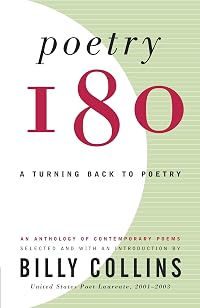
Poetry 180: A Turning Back to Poetry
by Billy Collins (Editor)
On This Page
Description
A dazzling new anthology of 180 contemporary poems, selected and introduced by America's Poet Laureate, Billy Collins. Inspired by Billy Collins's poem-a-day program with the Library of Congress, Poetry 180 is the perfect anthology for readers who appreciate engaging, thoughtful poems that are an immediate pleasure. A 180-degree turn implies a turning back-in this case, to poetry. A collection of 180 poems by the most exciting poets at work today, Poetry 180 represents the richness and show more diversity of the form, and is designed to beckon readers with a selection of poems that are impossible not to love at first glance. Open the anthology to any page and discover a new poem to cherish, or savor all the poems, one at a time, to feel the full measure of contemporary poetry's vibrance and abundance. With poems by Catherine Bowman, Lucille Clifton, Billy Collins, Dana Gioia, Edward Hirsch, Galway Kinnell, Kenneth Koch, Philip Levine, Thomas Lux, William Matthews, Frances Mayes, Paul Muldoon, Naomi Shihab Nye, Sharon Olds, Katha Pollitt, Mary Jo Salter, Charles Simic, David Wojahn, Paul Zimmer, and many more. show lessTags
Recommendations




Member Reviews
Poets laureate of the United States usually serve a year or two as consultant in poetry to the Library of Congress. In fact, that was originally the title bestowed upon them, a title seen more as a recognition of their lifetime work than a commission to produce or perform poetry for official occasions, or to represent poets nationally, publicly.
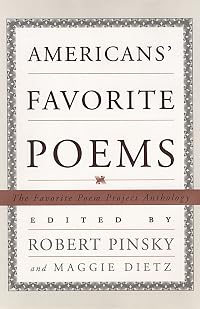
But in recent years several poets laureate have redefined the position, attempting in imaginative ways to connect the contemporary reader with good contemporary poets. For example, Robert Hass (1995-97) and Ted Kooser (2004-2006) wrote columns, to be published in newspapers each week introducing a poet and a poem to USAmerican readers. Hass’s columns have been published as Poet’s Choice: show more Poems for Everyday Life (Ecco Press, 1998). Following him, Robert Pinsky (1997-99) initiated the Favorite Poem Project, in which he invited volunteers to read a poem aloud and comment on it for a national video and audio archive. Over 17,000 people responded. The first of several books evolving out of his project is Americans’ Favorite Poems (Norton, 2000).
To promote contemporary poetry during his tenure as Poet Laureate (2001-2003), Billy Collins went into the schools, specifically high schools, “that crucible where character is formed and where, as one student pointed out [to Collins], they even make you read The Crucible.” He provided poems to be read on the intercom. You remember the intercom, don’t you? That PA system in high schools on which announcements are made, deadlines declared, meetings called, new rules introduced, pep rallies promoted, student leaders and award winners recognized, and bad behavior warned against.
What Collins and his helpers did was to provide poems to be read aloud on the intercom—not assigned, not analyzed, not commented upon, not tested—simply read. Students who might be apt to develop an ear for poetry would be given a chance to do precisely that: develop an ear for poetry. The program was called “Poetry 180: A Poem a Day for American High Schools.” Collins’ anthology, Poetry 180: A Turning Back to Poetry (Random House trade paperback, 2003) is a collection of poems used in the program.
The poems are short, not to take up much time in reading. Some of the poems are light and clever; some have an ironic twist; many deal seriously with subjects serious to teenagers; for example, cars, cartoons, basketball, football, the high-school band, smoking, teaching and learning, mothers and sons, fathers and daughters, young love . . . . you get the idea.
The poems are contemporary. Collins had found, in a representative school textbook, that even modern poetry usually went back as much as seventy-five years to T. S. Eliot and William Carlos Williams. The ratio of dead authors to living was roughly nine to one.
Even more important, these poems are not obscure. In his preface, Collins makes a particular point arguing on behalf of poetry that is accessible to contemporary readers, for adolescent readers but for the general public as well. Difficulty, unfortunately, has become a criterion for judging the seriousness of poetry. “Clarity,” he says, “is the real risk in poetry. To be clear means opening yourself up to judgment. The willfully obscure poem is a hiding place where the poet can elude the reader and thus make appraisal impossible, irrelevant—a bourgeois intrusion upon the poem.” Furthermore, obscurity fosters students’ dependence upon their teachers for understanding poetry. But this need for close textual analysis, in fact, has alienated many readers from poetry altogether; they develop a contempt for poems because they require one to “read between the lines.”
Does Poetry 180 have another “Ode on a Grecian Urn”? a “Stopping by Woods on a Snowy Evening” for the 21st century? Probably not. Though Jane Kenyon’s “Otherwise” just might speak for our generation in the future.
But each poem in the collection rescues a meaningful moment, catches a glimpse of our world that we would not want to be blind to. Don Paterson, in his short lyric entitled simply “Poetry” says it better:
it’s not love’s later heat that poetry holds,
but the atom of the love that drew it forth
from the silence . . . .
the pure verse, when it finally comes, will sound
like a mountain spring, anonymous and serene show less
But in recent years several poets laureate have redefined the position, attempting in imaginative ways to connect the contemporary reader with good contemporary poets. For example, Robert Hass (1995-97) and Ted Kooser (2004-2006) wrote columns, to be published in newspapers each week introducing a poet and a poem to USAmerican readers. Hass’s columns have been published as Poet’s Choice: show more Poems for Everyday Life (Ecco Press, 1998). Following him, Robert Pinsky (1997-99) initiated the Favorite Poem Project, in which he invited volunteers to read a poem aloud and comment on it for a national video and audio archive. Over 17,000 people responded. The first of several books evolving out of his project is Americans’ Favorite Poems (Norton, 2000).
To promote contemporary poetry during his tenure as Poet Laureate (2001-2003), Billy Collins went into the schools, specifically high schools, “that crucible where character is formed and where, as one student pointed out [to Collins], they even make you read The Crucible.” He provided poems to be read on the intercom. You remember the intercom, don’t you? That PA system in high schools on which announcements are made, deadlines declared, meetings called, new rules introduced, pep rallies promoted, student leaders and award winners recognized, and bad behavior warned against.
What Collins and his helpers did was to provide poems to be read aloud on the intercom—not assigned, not analyzed, not commented upon, not tested—simply read. Students who might be apt to develop an ear for poetry would be given a chance to do precisely that: develop an ear for poetry. The program was called “Poetry 180: A Poem a Day for American High Schools.” Collins’ anthology, Poetry 180: A Turning Back to Poetry (Random House trade paperback, 2003) is a collection of poems used in the program.
The poems are short, not to take up much time in reading. Some of the poems are light and clever; some have an ironic twist; many deal seriously with subjects serious to teenagers; for example, cars, cartoons, basketball, football, the high-school band, smoking, teaching and learning, mothers and sons, fathers and daughters, young love . . . . you get the idea.
The poems are contemporary. Collins had found, in a representative school textbook, that even modern poetry usually went back as much as seventy-five years to T. S. Eliot and William Carlos Williams. The ratio of dead authors to living was roughly nine to one.
Even more important, these poems are not obscure. In his preface, Collins makes a particular point arguing on behalf of poetry that is accessible to contemporary readers, for adolescent readers but for the general public as well. Difficulty, unfortunately, has become a criterion for judging the seriousness of poetry. “Clarity,” he says, “is the real risk in poetry. To be clear means opening yourself up to judgment. The willfully obscure poem is a hiding place where the poet can elude the reader and thus make appraisal impossible, irrelevant—a bourgeois intrusion upon the poem.” Furthermore, obscurity fosters students’ dependence upon their teachers for understanding poetry. But this need for close textual analysis, in fact, has alienated many readers from poetry altogether; they develop a contempt for poems because they require one to “read between the lines.”
Does Poetry 180 have another “Ode on a Grecian Urn”? a “Stopping by Woods on a Snowy Evening” for the 21st century? Probably not. Though Jane Kenyon’s “Otherwise” just might speak for our generation in the future.
But each poem in the collection rescues a meaningful moment, catches a glimpse of our world that we would not want to be blind to. Don Paterson, in his short lyric entitled simply “Poetry” says it better:
it’s not love’s later heat that poetry holds,
but the atom of the love that drew it forth
from the silence . . . .
the pure verse, when it finally comes, will sound
like a mountain spring, anonymous and serene show less
Normally, I read the first volume in a set, then go onto the second. Many times, the second is a disappointment after the first.
However, this collection of poems (the first of two), is not as good as the second -- by that I mean not as many poems made me smile as the second volume (180 More) did. Collins did open the collection with one of my favorite of his poems: "An Introduction to Poetry," and another, "Did I Miss Anything?" by Tom Wayman, has been on my office door for a couple of years. After that it was pretty thin sailing. Collins also wrote the introduction to this one, and he has a little more of a stern tone to it, than the gentle prodding to "give poetry another chance" of the second introduction. I shared the second intro show more with my creative writing class, I doubt I will do the same with this one.
--Jim, 10/16/2007 show less
However, this collection of poems (the first of two), is not as good as the second -- by that I mean not as many poems made me smile as the second volume (180 More) did. Collins did open the collection with one of my favorite of his poems: "An Introduction to Poetry," and another, "Did I Miss Anything?" by Tom Wayman, has been on my office door for a couple of years. After that it was pretty thin sailing. Collins also wrote the introduction to this one, and he has a little more of a stern tone to it, than the gentle prodding to "give poetry another chance" of the second introduction. I shared the second intro show more with my creative writing class, I doubt I will do the same with this one.
--Jim, 10/16/2007 show less
Billy Collins started a program called “Poetry 180: A Poem a Day for American High SchoolsâÂ? when he was United States Poet Laureate in 2001. A website was created, and relatively short, accessible poems by recent (mostly living) poets were posted. High schools were urged to read a poem a day over their public address systems to promote poetry reading as an every day event.
In his introduction to the companion book Poetry 180: A Turning Back to Poetry, he says that he chose to work with high schools because that was âÂÂthe place where poetry goes to die.âÂ? He saw right away the pain students suffered trying to read Ezra Pound and T. S. Eliot, whose poems were still being presented by many textbooks as show more âÂÂmodernâÂ? poetry more than fifty years after publication. The problem with poetry of the 1930s and 1940s, Collins says, is that difficulty and obscurity were considered virtues by the intellectuals who dominated the publishing of the time. Readers turned to novels for their pleasure and poetry lost much of its following.
Collins chose to start the collection with one of his own poems to address the need for poetry education reform. âÂÂIntroduction to PoetryâÂ? ends with the following lines:
But all they wanted to do
is tie the poem to a chair with a rope
and torture a confession out of it.
They begin beating it with a hose
to find out what it really means.
Sound familiar?
I am currently reading Poetry 180 for a second time, preparing for a book club discussion later in the month. I suspect we will have a lot of fun pointing out our favorite works from the collection. I particularly like the poems that tell humorous stories, such as âÂÂMrs. MidasâÂ? by Carol Ann Duffy, in which the wife of the king tries to cope with her husbandâÂÂs turning everything to gold. Not all of the poems are funny. âÂÂThe CordâÂ? by Leanne OâÂÂSullivan, âÂÂIâÂÂm a Fool to Love YouâÂ? by Cornelius Eady, and âÂÂWheelsâÂ? by Jim Daniels tell stories of teenage uncertainty, dysfunctional parents, and the death of siblings. I think there will be much to discuss.
While this book seems to be stocked by all the major book chains, many public libraries seem to be missing the boat. I see it is in only eleven of the approximately eighty libraries in the SWAN database of the Metropolitan Library System. It is an inexpensive volume collecting many of todayâÂÂs best poets. Every library should have it. show less
In his introduction to the companion book Poetry 180: A Turning Back to Poetry, he says that he chose to work with high schools because that was âÂÂthe place where poetry goes to die.âÂ? He saw right away the pain students suffered trying to read Ezra Pound and T. S. Eliot, whose poems were still being presented by many textbooks as show more âÂÂmodernâÂ? poetry more than fifty years after publication. The problem with poetry of the 1930s and 1940s, Collins says, is that difficulty and obscurity were considered virtues by the intellectuals who dominated the publishing of the time. Readers turned to novels for their pleasure and poetry lost much of its following.
Collins chose to start the collection with one of his own poems to address the need for poetry education reform. âÂÂIntroduction to PoetryâÂ? ends with the following lines:
But all they wanted to do
is tie the poem to a chair with a rope
and torture a confession out of it.
They begin beating it with a hose
to find out what it really means.
Sound familiar?
I am currently reading Poetry 180 for a second time, preparing for a book club discussion later in the month. I suspect we will have a lot of fun pointing out our favorite works from the collection. I particularly like the poems that tell humorous stories, such as âÂÂMrs. MidasâÂ? by Carol Ann Duffy, in which the wife of the king tries to cope with her husbandâÂÂs turning everything to gold. Not all of the poems are funny. âÂÂThe CordâÂ? by Leanne OâÂÂSullivan, âÂÂIâÂÂm a Fool to Love YouâÂ? by Cornelius Eady, and âÂÂWheelsâÂ? by Jim Daniels tell stories of teenage uncertainty, dysfunctional parents, and the death of siblings. I think there will be much to discuss.
While this book seems to be stocked by all the major book chains, many public libraries seem to be missing the boat. I see it is in only eleven of the approximately eighty libraries in the SWAN database of the Metropolitan Library System. It is an inexpensive volume collecting many of todayâÂÂs best poets. Every library should have it. show less
Well, I had my brother read 3 of the poems and as a songwriter, guy, nonreader, he liked them. There were quite a few I very much enjoyed, some that I somewhat enjoyed, and just a few I couldn't connect to. Overall, though, a great introductory collection, and I wish it were possible to use this program in the local schools.
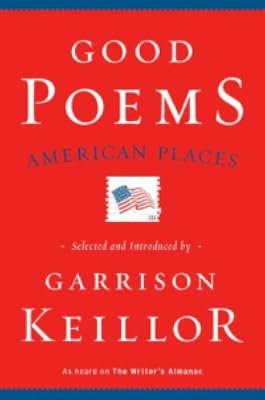
Recent American Poet Laureates have been very focused on bringing poetry to the people. Billy Collins, appointed Poet Laureate of the United States in 2001, created a list of 180 poems that were immediately accessible, reader friendly, designed to be read, one for each day of the school year, at high schools across the country. This book is a compilation of those poems. Like Garrison Keillor's book, Good Poems, this book is excellent for people who think poetry is too removed from every day life. Recommended.
A wonderful collection of poetry compiled by the great Poet Laureate Billy Collins.. Billy knows how to write poetry but he also knows how to pick a great collection as well. This is similar to Garrison Keilor's collection which are also outstanding. As with all poetry collections certian poems appeal to certian people but most of these are excellant.
From 2003, a solid compilation of a broad sample of poets by Billy Collins.
Members
- Recently Added By
Lists

Books Read in 2018
4,360 works; 110 members

Favorite Recent Poetry: 1980-2022
178 works; 70 members
Author Information

Billy Collins has published six collections of poetry, including Questions About Angels and The Art of Drowning, Picnic, Lightning, his latest, sold more than 25,000 copies in its first year. He teaches at Lehman College of the City University of New York and at Sarah Lawrence College. He was named U.S. Poet Laureate in June 2000. (Bowker Author show more Biography) Billy Collins was born in New York City in 1941. He earned a BA from the College of the Holy Cross, and both an MA and PhD from the University of California-Riverside. Collins conducted summer poetry workshops at University College Galway and is the Poet in Residence at Burren College of Art in Ireland. He is also a professor of English at Lehman College (CUNY). In 1992, Collins was chosen to be the Literary Lion of the New York Public Library. He was named U.S. Poet Laureate in 2001 and held the title until 2003. Collins then served as Poet Laureate for the State of New York from 2004 until 2006. His poetry has appeared in anthologies, textbooks and periodicals including Poetry, The American Poetry Review, The American scholar, Harper's, The Paris Review and The New Yorker. He is the author of six books of poetry including "The Art of Drowning." His poems have also been selected to appear in The Best American Poetry of 1992, 1993 and 1997. His works have won various awards including the Bess Hokin Prize, the Frederick Bock Prize, the Oscar Blumenthal Prize and the Levinson Prize, all awarded by Poetry. He has received fellowships from the New York Foundation for the Arts, the National Endowment for the Arts and the Guggenheim Foundation. His collection of poems entitled Aimless Love made numerous best-seller lists in 2013. (Bowker Author Biography) show less
All Editions
Common Knowledge
- Original publication date
- 2003
Classifications
Statistics
- Members
- 855
- Popularity
- 32,094
- Reviews
- 10
- Rating
- (3.93)
- Languages
- English
- Media
- Paper
- ISBNs
- 2