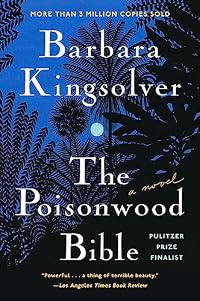
The Poisonwood Bible
by Barbara Kingsolver
On This Page
Description
The drama of a U.S. missionary family in Africa during a war of decolonization. At its center is Nathan Price, a self-righteous Baptist minister who establishes a mission in a village in 1959 Belgian Congo. The resulting clash of cultures is seen through the eyes of his wife and his four daughters. By the author of Pigs in Heaven.Tags
Recommendations


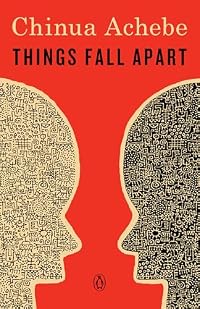
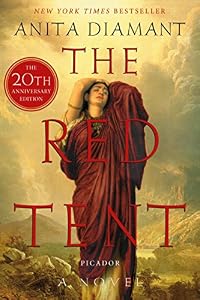
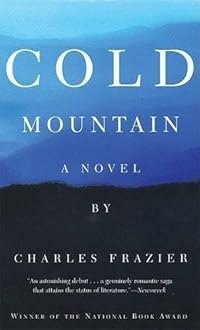
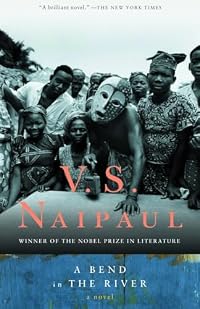
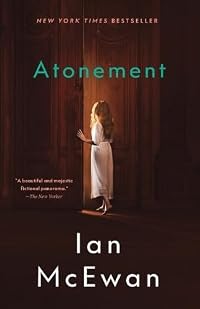
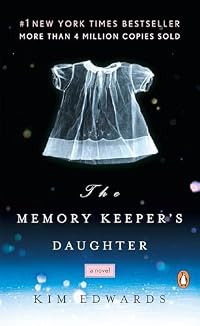
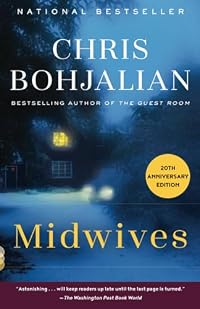
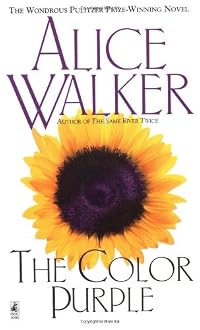
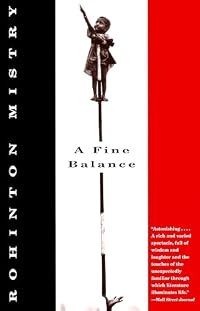
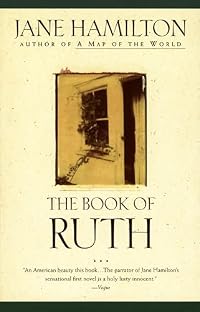
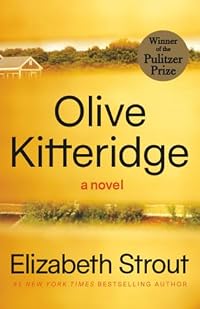
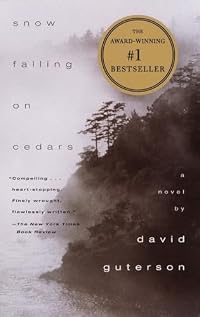
Member Recommendations
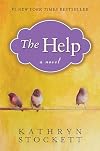
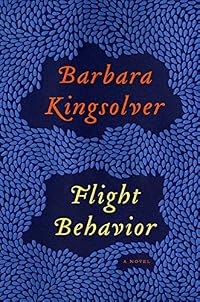
paulkid Race relations on different continents, told from multiple female perspectives.
235
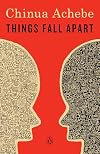
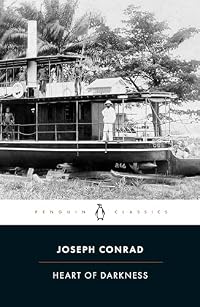
jlelliott Each tells the story of Christian missionaries in Africa, one from the perspective of the missionaries, one from the perspective of the local people targeted for "salvation".
140
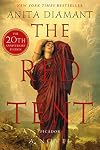
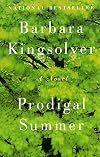

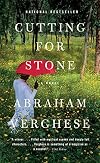
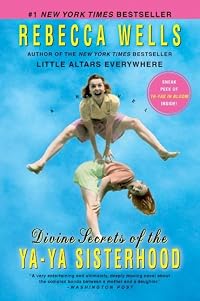
momofthreewi Both are rich in character development and centered around unique families.
121
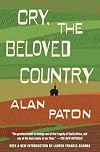
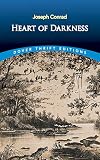
WSB7 Both about "colonialisms" abuses in the Congo, among other themes.
90
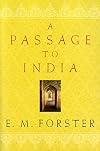
lucyknows You could use the theme of colonialism to pair The Poisonwood Bible by Barbara Kingsolver with Passage to India by E. M. Forster.
80

Bcteagirl The book has a similar familial tone and is also told from the point of view of young girls growing up in a difficult situation. I had been looking for a book with a similar writing style and was happy to find this one. If you liked The Book of Negroes I recommend The Poisonwood Bible and vice versa.
40
CatherineRM I love both these books and they nicely juxtapose each other with their Congo total immersion albeit one fictional and one factual. Tim Butcher traces the Congo River from its source through the dense equatorial land that the protagonist of the Kingsolver book occupied with his suffering family. Both books made a lasting impression on me and I have great time for Africa as I lived in Tanzania - close to Congo geographically for most of the time - and it has a big place in my heart. Read both books and be enriched!
40
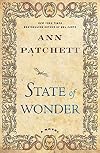
sweetbug Similar themes of conflict between two cultures, Westerners living and working in an exotic and dangerous land, and parents / surrogate parents protecting (or not) their children from harm.
20
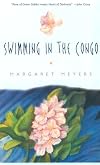
FranklyMyDarling Another book about a young girl, the daughter of missionaries, growing up in the Congo. (Published prior to Poisonwood.)
20

ShortStoryLover Although it's much shorter than Poisonwood, The Civilized World also has multiple points of view from female perspectives and the chapters are almost all set in various parts of present-day Africa.
10
hoddybook Different eras, different continents, different family structures. I enjoyed them both and thought of the other while experiencing the second.
BonnieJune54 Both involve the children of missionaries who are trying to survive after being taken to the back of beyond.
11
sweetbug Another book about Christian missionaries and the people they try to convert, although this is a non-fiction account of the culture clash between native Hawaiians and first missionaries to travel to the islands in the 19th century. A hundred years did not change missionary work very much if these books are any indiciation.
02
Member Reviews
What a truly amazing book. As a preacher's kid growing up in the 1970's South, I was struck by the difference between my family situation and the Nathan Price sort of missionaries. We had lots of missionary kids living where we lived, usually for a year or two or for a summer, and none, not one, of their fathers were like this crazy white preacher. Maybe it was the difference in the time frame, or the higher level of ecclesiastical education, or even the simple difference in Protestant denominations that caused these differences, but now I understand what people think when I say I am a preacher's kid."
The story of the family, a woman and her four daughters (and thank goodness they were daughters - the trauma on them could easily have show more multiplied had there been a son or two), who are taken from their Betty Crocker world into the unforgiving Congo wilderness is heart-wrenching. And all too reflective of the worldview of colonial nations. One only has to read the accounts of English living in India to see the parallels between 1959 US and the Congo.
The humility that Nathan refuses to show at the beginning of the novel, whether it be how to plant seeds to why not to baptize at the edge of the river, is hard won. The elders of the villages who wonder why a vote must be done democratically when such a vote does not take into account the ideas and concerns of the dissenters is as real in that time as in any. And the observation of the daughter who looks at grocery shelves and wonders at the huge selection of hair shampoo and cleaning products instead of simple food is still a relevant thought that pops through the surface.
I highly recommend this book for its observations, its writing style, and it story of women's lives. As one reviewer said, there are women who do not leave their Nathan Price's, and this novel does help explain why." show less
The story of the family, a woman and her four daughters (and thank goodness they were daughters - the trauma on them could easily have show more multiplied had there been a son or two), who are taken from their Betty Crocker world into the unforgiving Congo wilderness is heart-wrenching. And all too reflective of the worldview of colonial nations. One only has to read the accounts of English living in India to see the parallels between 1959 US and the Congo.
The humility that Nathan refuses to show at the beginning of the novel, whether it be how to plant seeds to why not to baptize at the edge of the river, is hard won. The elders of the villages who wonder why a vote must be done democratically when such a vote does not take into account the ideas and concerns of the dissenters is as real in that time as in any. And the observation of the daughter who looks at grocery shelves and wonders at the huge selection of hair shampoo and cleaning products instead of simple food is still a relevant thought that pops through the surface.
I highly recommend this book for its observations, its writing style, and it story of women's lives. As one reviewer said, there are women who do not leave their Nathan Price's, and this novel does help explain why." show less
It took me a while to get into it. The book is incredibly dense and filled with internal monologues and I didn't quite "get" it. After about 100 pages or so, I was completely hooked. Kingsolver's writing is magical, there's a 50 page section about 3/4s of the way through the book that is so beautifully written, I'm still in awe.
The last 20% of the book or so felt a bit bloated as an extended denouement, but I was still intrigued. I think the reason this is a 4 for me instead of a 4.5 or a 5 is that the core subject isn't as appealing to me. I love historical fiction and learned a lot during the book, but I am terrified of the jungle, the heat, bugs, starving and apex predators like Crocodiles. So naturally, the book itself made me not show more want to go anywhere near this part of the world and that revulsion hurts the rating a bit. That's not a knock against the book itself, just my own personal preference.
Overall, a very effective novel. I struggled with it early, but the development of the main characters and the depth of knowledge of the Congo/Zaire is staggering. The variety of the narration was extremely effective. And I'll never forget "that" part of the book. In that section, I felt like Kingsolver was like Spielberg in some of his visual shots - so skillful, they just have to show off (in a positive way). show less
The last 20% of the book or so felt a bit bloated as an extended denouement, but I was still intrigued. I think the reason this is a 4 for me instead of a 4.5 or a 5 is that the core subject isn't as appealing to me. I love historical fiction and learned a lot during the book, but I am terrified of the jungle, the heat, bugs, starving and apex predators like Crocodiles. So naturally, the book itself made me not show more want to go anywhere near this part of the world and that revulsion hurts the rating a bit. That's not a knock against the book itself, just my own personal preference.
Overall, a very effective novel. I struggled with it early, but the development of the main characters and the depth of knowledge of the Congo/Zaire is staggering. The variety of the narration was extremely effective. And I'll never forget "that" part of the book. In that section, I felt like Kingsolver was like Spielberg in some of his visual shots - so skillful, they just have to show off (in a positive way). show less
I was merely half-way through The Posionwood Bible when I realized two things: I would need to buy my own copy and this book would break me. And it did. Really good writing brings together many elements, and like good art, they aren’t always the same elements, nor are they used the same way. I find most modern writing lacks the art of word use, the type where sentences take your breath away and make you stop to breathe. The way a description pierces your soul.
The Posionwood Bible was that kind of book for me, transformative, shocking, saddening, hopeful, all the churned emotions tied together by fragile beauty and elegant writing. Kingsolver is a master storyteller. Even now, more than a month after reading her work, I can see the show more characters before me. I can feel what it must be like to walk the burning red dirt with bare feet, stand in the oppressive heat watching a muddy river with no salvation. The people of the story show up every now and then before darting away and leaving me with a desire to pick up the book once again. Pain is an odd thing, but one we all experience. So, although this book is about pain and healing, redemption and damnation, it still brings you through the fire with hope. show less
The Posionwood Bible was that kind of book for me, transformative, shocking, saddening, hopeful, all the churned emotions tied together by fragile beauty and elegant writing. Kingsolver is a master storyteller. Even now, more than a month after reading her work, I can see the show more characters before me. I can feel what it must be like to walk the burning red dirt with bare feet, stand in the oppressive heat watching a muddy river with no salvation. The people of the story show up every now and then before darting away and leaving me with a desire to pick up the book once again. Pain is an odd thing, but one we all experience. So, although this book is about pain and healing, redemption and damnation, it still brings you through the fire with hope. show less
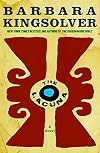
I really enjoyed this novel and found myself reading it compulsively, however I still prefer [b:The Lacuna|6433752|The Lacuna|Barbara Kingsolver|https://images.gr-assets.com/books/1480104396s/6433752.jpg|6812077]. ‘The Poisonwood Bible’ fits quite neatly with my recent reading of [b:Heart of Darkness|117837|Heart of Darkness|Joseph Conrad|https://images.gr-assets.com/books/1317686353s/117837.jpg|2877220] and [b:King Leopold's Ghost: A Story of Greed, Terror and Heroism in Colonial Africa|347610|King Leopold's Ghost|Adam Hochschild|https://images.gr-assets.com/books/1348621563s/347610.jpg|937922]. It tells the story of four sisters and their parents who go to the Congo as missionaries. I thought the voices were very well show more differentiated. I enjoyed Leah’s distinctive energy, Rachel’s word confusion, Adah’s mysterious archness, and Ruth May’s innocence, although the chapters narrated by their mother had a slightly strange mysticism. Nathan, the family patriarch, remained a hateful enigma and a powerful personification of colonial attitudes. The portrait of Congo was vivid and heart-breaking, as the optimism of independence gave way to violence and exploitation. Overall this is a powerful novel, rightly recommended and especially notable for its excellent character voices and depiction of sisterly relationships. As an account of the tragedy of the Congo, though, it is inadequate as it gives only a white perspective. show less
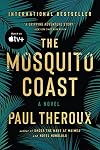
White People Suffering/Going Mad in Jungle is one of my favourite genres, so Kingsolver would have had to fuck up quite substantially to turn me against this story. Telling it via multiple first-person (children, at that) narratives is a high-risk choice, but the voices of all four sisters are solidly established early on, and they all stand up to repeated exposure, although the tics that help establish Adah (wordplay) and Rachel (malapropisms), although deployed cleverly, do begin to grate after a while. The other thing that would have spoiled it for me is lopsided perspective — too much indulgence or mockery of the hapless Americans, or an insufficiently grounded portrayal of the long-suffering Congolese — but I think the balance show more is pretty spot on. What I like about this kind of book is the sticky, icky, sweaty, savage hostility of the jungle, and it's described copiously and thrillingly here. In their first year in the Congo, The Prices are faced with swarms of ants, noxious plants, horrible food, no food, hungry crocs, killer snakes, deluge, drought, and a who's who of tropical maladies. It's great. And just like in The Mosquito Coast, it's all because of a mad dad — in this case a God-botherer, but the real issue is his incurable egomania.
The last 150 pages are a very attenuated epilogue, and I got the feeling that the various "what happened next" stories were Kingsolver's way of restating her critique of colonialism/American imperialism in case you didn't get the point earlier or, like me, were primarily here for overheated malarial Heart of Darkness hellishness. They might also have been written to get her past the 500-page mark required for reviewers and publicists to use the word "epic". Still, I ripped through this book like a plague of ants through an unattended chicken. show less
The last 150 pages are a very attenuated epilogue, and I got the feeling that the various "what happened next" stories were Kingsolver's way of restating her critique of colonialism/American imperialism in case you didn't get the point earlier or, like me, were primarily here for overheated malarial Heart of Darkness hellishness. They might also have been written to get her past the 500-page mark required for reviewers and publicists to use the word "epic". Still, I ripped through this book like a plague of ants through an unattended chicken. show less
I'm always wary about Oprah Book Club books. Sometimes I love them (for instance, Beloved) and sometimes I hate them (for instance, She's Come Undone). But never do I have moderate feelings about them. I had avoided this book for many years for fear it would end up on the hate side, but almost as soon as I picked it up, this book was definitely on the love side. It was incredibly engaging; for most of the book I couldn't wait to find out what would happen next. One caveat on that respect though: Toward the end it did seem to drag a little and perhaps some of the ending was not entirely necessary. I enjoyed the author's pictures of Africa. She neither idealizes nor demonizes the continent. Instead she paints a very complex portrait, very show more much like Joseph Conrad's Heart of Darkness. I love especially how she never directly tells the reader what she thinks about Africa, but rather uses the various characters' opinions about the so-called dark continent to give a full picture of both Africa's beauties and problems. The four sisters who populate the novel are wonderful in how different they are and how each gives their perspective on various events that occur throughout the novel. I particularly identified with Leah in the beginning of the novel as she finds many of her ideals clashing with what she experiences. Overall, I would say that personal experiences are a large part of the novel and its unfolding. Essentially, the story is less about what happens to the characters than it is about what the characters choose to do with their lives after certain events happen. Consider Rachel's thoughts as she grows older and looks back at past events: "Well, that's their decision. What happened to us in the Congo was simply the bad luck of two opposite worlds crashing into each other, causing tragedy. After something like that, you can only go your own way according to what's in your heart. And in my family, all our hearts seem to have whole different things inside." Or Adah's thoughts when looking at her aging mother: "My mother's sanest position is to wear only the necessary parts of the outfit and leave off the rest. Shoes would interfere with her conversation, for she constantly addresses the ground under her feet. Asking forgiveness. Owning, disowning, recanting, recharting a hateful course of events to make sense of her complicity. We all are, I suppose. Trying to invent our version of the story. All human odes are essentially one. 'My life: what I stole from history, and how I live with it.'" The author's prose style is admirable, to say the least. She is quite talented at moving from voice to voice within the same novel, giving each a character a distinct way of telling their story. The only caveat I have with this is that she sometimes became quite didactic when talking about the historical context. It seems as though there might have been a better way to incorporate the context into the plot so that it would read less like a history textbook. However, as she was most likely aware of, most readers would have little to no background knowledge on Congo/Zaire so spelling the history out plain and clear was a wise choice in that respect. Altogether, caveats and all, this was one of the most enjoyable books I have read recently. show less
there are so many layers to peel back in this, so many avenues to explore. she does so much in 550 pages, i'm sure i didn't get it all. it is lush in language and so full of lessons and meaning.
she is brilliant. this might not be her easiest read - when does politics make for a fun or breezy book - but it is so worth it. through the backdrop of colonialism and american intervention in foreign governments (perhaps a favorite recurring theme of hers?) in the congo in 1959-61, she weaves a tale of grief and loss - and how we carry it or lay it down, and how that changes us. a story about what we lose and what we gain, and how they are sometimes correlated. a parable with the lesson of humility and being willing to hear, understand, and show more learn from other perspectives. that's just on the surface. this book is about so much.
when i first read it i remember being less interested in the political aspects of the story, and focused more on the religious commentary. this time, i think the political statements she's making are the main crux of it, and it's all just supported by the religious aspects of the story. the price family and their casual arrival in the african village they feel they have a right to come to and that they believe should bend and change for them, no matter what the villagers believe or desire, mirrors the political story of how america feels the congolese government should do as they want, regardless of what's best for their own people, or what those people want. america brings democracy! ok, but wait, we don't like the person the congolese people voted for, so we will kill him and replace him with someone who we can influence, to the utter destruction of the congo and her people. no matter, this wasn't about them anyway. how much of nathan price's preaching of jesus and forced baptisms was about gaining true believers versus having a ledger of "souls" to bring back to the mission leaders? it's all farcical. except for the people who the missionaries and the governments are interfering with.
as to religion, i always love stories where the missionary is the one who is the least good example of goodness in the story, and this is no exception. it's not christianity she has a problem with. i think that brother fowles is a great character and shows positivities of religion, and maybe even of missionary work. or at least a way to do it that respects the native population. (but then, that's why he was removed by the mission.) but the idea of coming in to a place that makes no sense to you, and bringing a religion that makes no sense to the people, it's shown to be ludicrous. it's useless - it's like a goat with wheels in a mud storm, as someone in the book might say. but the native religion, that grows from the life and the people in the area, the ideas and songs and rituals that make sense to them, she's not saying that they are all bad. they might need some reworking, and could stand to undergo debate, but they're not necessarily bad. (i'm more of the religion is bad philosophy, but she makes me think here, and i appreciate that.) there's something, too, to how leah used religion as a shield when she was hiding out with the nuns, waiting for anatole to be released from prison.
i love what she does with adah and her disability - with the language and how it really emphasizes nathan's mistakes with language to have her so in tune with words and their sounds and meanings. and then also how she allows adah to grow out of it. i'm not sure what that was about, maybe that too often we let others define us or tell us how we are or should be, so much so that it can feel impossible to be who we really are. that the weight of others expectations can be so great as to keep us from being ourselves or even knowing who we'd be if we could.
there is *so* much here. how each remaining sister moves forward from what happened to them in africa, so differently from each other. how understandable they all are, but how truly awful rachel seems by the end. how leah names a child after nathan in the end, indicating forgiveness and continued love, in spite of it all. (perhaps showing the most christian charity of anyone.) how religion ends up not featuring in their lives, except when it does. how exploitative white people are to the people and the country of the congo.
she has her political point about colonialism and white manifest destiny and racism. her other, personal point (and my main takeaway), is what we set ourselves up to lose when we are unable to let anything go, and how much we ultimately can gain, if only we're willing to not hold on to everything so tightly.
this book is not always fun or easy but it is incredible. she has written an absolute masterpiece.
about halfway through i stopped tagging lines and ideas because there were so many and because so many of them needed context. i feel like if i marked books, that a significant portion of this one would be underlined.
from the author's note at the beginning: "I was the fortunate child of medical and public-health workers, whose compassion and curiosity led them to the Congo. They brought me to a place of wonders, taught me to pay attention, and set me early on a path of exploring the great, shifting terrain between righteousness and what's right."
"Some of us know how we came by our fortune, and some of us don't, but we wear it all the same. There's only one question worth asking now: How do we aim to live with it?"
"Yet we sang in church 'Tata Nzolo' ! Which means Father in Heaven or Father of Fish Bait depending on just how you sing it, and that pretty well summed up my quandary. I could never work out whether we were to view religion as a life-insurance policy or a life-sentence."
"It struck me what a wide world of difference there was between our sort of games - 'Mother May I?,' 'Hide and Seek' -- and his: 'Find Food,' 'Recognize Poisonwood,' 'Build a House.' And here he was a boy no older than eight or nine. He had a younger sister who carried the family's baby everywhere she went and hacked weeds with her mother in the manioc field. I could see that the whole idea and business of Childhood was nothing guaranteed. It seemed to me, in fact, like something more or less invented by white people and stuck onto the front end of grown-up life like a frill on a dress. For the first time ever I felt a stirring of anger against my father for making me a white preacher's chid from Georgia. This wasn't my fault. I bit my lip and labored on my own small house under the guava tree, but beside the perfect talents of Pascal, my own hands lumbered like pale flippers on a walrus out of its element. My embarrassment ran scarlet and deep, hidden under my clothes."
"For time and eternity there have been fathers like Nathan who simply can see no way to have a daughter but to own her like a plot of land."
"Oh, mercy. If it catches you in the wrong frame of mind, the King James Bible can make you want to drink poison in no uncertain terms."
"I envied them with an intensity near to love, and near to rage."
"But who, if not me, and for how many generations must we be forgiven by our children?"
"Illusions mistaken for truth are the pavement under our feet."
(4.5 stars - because parts are tough, but i bet next time it'll be 5)
from dec 2008:
i only wish she published more often...a beautiful book. she's brave enough to tackle religion (and their missionaries) and the american gov't's policies around the world (specifically the eisenhower administration's policy in the congo, as far as the story is concerned, but we know what she means.)
a surprisingly good book to read for someone who is struggling with religion.
"I could never work out whether we were to view religion as a life-insurance policy or a life sentence."
"...the game always went to those who knew the rules without understanding the lesson."
"...I've seen how you can't learn anything when you're trying to look like the smartest person in the room." (4 stars) show less
she is brilliant. this might not be her easiest read - when does politics make for a fun or breezy book - but it is so worth it. through the backdrop of colonialism and american intervention in foreign governments (perhaps a favorite recurring theme of hers?) in the congo in 1959-61, she weaves a tale of grief and loss - and how we carry it or lay it down, and how that changes us. a story about what we lose and what we gain, and how they are sometimes correlated. a parable with the lesson of humility and being willing to hear, understand, and show more learn from other perspectives. that's just on the surface. this book is about so much.
when i first read it i remember being less interested in the political aspects of the story, and focused more on the religious commentary. this time, i think the political statements she's making are the main crux of it, and it's all just supported by the religious aspects of the story. the price family and their casual arrival in the african village they feel they have a right to come to and that they believe should bend and change for them, no matter what the villagers believe or desire, mirrors the political story of how america feels the congolese government should do as they want, regardless of what's best for their own people, or what those people want. america brings democracy! ok, but wait, we don't like the person the congolese people voted for, so we will kill him and replace him with someone who we can influence, to the utter destruction of the congo and her people. no matter, this wasn't about them anyway. how much of nathan price's preaching of jesus and forced baptisms was about gaining true believers versus having a ledger of "souls" to bring back to the mission leaders? it's all farcical. except for the people who the missionaries and the governments are interfering with.
as to religion, i always love stories where the missionary is the one who is the least good example of goodness in the story, and this is no exception. it's not christianity she has a problem with. i think that brother fowles is a great character and shows positivities of religion, and maybe even of missionary work. or at least a way to do it that respects the native population. (but then, that's why he was removed by the mission.) but the idea of coming in to a place that makes no sense to you, and bringing a religion that makes no sense to the people, it's shown to be ludicrous. it's useless - it's like a goat with wheels in a mud storm, as someone in the book might say. but the native religion, that grows from the life and the people in the area, the ideas and songs and rituals that make sense to them, she's not saying that they are all bad. they might need some reworking, and could stand to undergo debate, but they're not necessarily bad. (i'm more of the religion is bad philosophy, but she makes me think here, and i appreciate that.) there's something, too, to how leah used religion as a shield when she was hiding out with the nuns, waiting for anatole to be released from prison.
i love what she does with adah and her disability - with the language and how it really emphasizes nathan's mistakes with language to have her so in tune with words and their sounds and meanings. and then also how she allows adah to grow out of it. i'm not sure what that was about, maybe that too often we let others define us or tell us how we are or should be, so much so that it can feel impossible to be who we really are. that the weight of others expectations can be so great as to keep us from being ourselves or even knowing who we'd be if we could.
there is *so* much here. how each remaining sister moves forward from what happened to them in africa, so differently from each other. how understandable they all are, but how truly awful rachel seems by the end. how leah names a child after nathan in the end, indicating forgiveness and continued love, in spite of it all. (perhaps showing the most christian charity of anyone.) how religion ends up not featuring in their lives, except when it does. how exploitative white people are to the people and the country of the congo.
she has her political point about colonialism and white manifest destiny and racism. her other, personal point (and my main takeaway), is what we set ourselves up to lose when we are unable to let anything go, and how much we ultimately can gain, if only we're willing to not hold on to everything so tightly.
this book is not always fun or easy but it is incredible. she has written an absolute masterpiece.
about halfway through i stopped tagging lines and ideas because there were so many and because so many of them needed context. i feel like if i marked books, that a significant portion of this one would be underlined.
from the author's note at the beginning: "I was the fortunate child of medical and public-health workers, whose compassion and curiosity led them to the Congo. They brought me to a place of wonders, taught me to pay attention, and set me early on a path of exploring the great, shifting terrain between righteousness and what's right."
"Some of us know how we came by our fortune, and some of us don't, but we wear it all the same. There's only one question worth asking now: How do we aim to live with it?"
"Yet we sang in church 'Tata Nzolo' ! Which means Father in Heaven or Father of Fish Bait depending on just how you sing it, and that pretty well summed up my quandary. I could never work out whether we were to view religion as a life-insurance policy or a life-sentence."
"It struck me what a wide world of difference there was between our sort of games - 'Mother May I?,' 'Hide and Seek' -- and his: 'Find Food,' 'Recognize Poisonwood,' 'Build a House.' And here he was a boy no older than eight or nine. He had a younger sister who carried the family's baby everywhere she went and hacked weeds with her mother in the manioc field. I could see that the whole idea and business of Childhood was nothing guaranteed. It seemed to me, in fact, like something more or less invented by white people and stuck onto the front end of grown-up life like a frill on a dress. For the first time ever I felt a stirring of anger against my father for making me a white preacher's chid from Georgia. This wasn't my fault. I bit my lip and labored on my own small house under the guava tree, but beside the perfect talents of Pascal, my own hands lumbered like pale flippers on a walrus out of its element. My embarrassment ran scarlet and deep, hidden under my clothes."
"For time and eternity there have been fathers like Nathan who simply can see no way to have a daughter but to own her like a plot of land."
"Oh, mercy. If it catches you in the wrong frame of mind, the King James Bible can make you want to drink poison in no uncertain terms."
"I envied them with an intensity near to love, and near to rage."
"But who, if not me, and for how many generations must we be forgiven by our children?"
"Illusions mistaken for truth are the pavement under our feet."
(4.5 stars - because parts are tough, but i bet next time it'll be 5)
from dec 2008:
i only wish she published more often...a beautiful book. she's brave enough to tackle religion (and their missionaries) and the american gov't's policies around the world (specifically the eisenhower administration's policy in the congo, as far as the story is concerned, but we know what she means.)
a surprisingly good book to read for someone who is struggling with religion.
"I could never work out whether we were to view religion as a life-insurance policy or a life sentence."
"...the game always went to those who knew the rules without understanding the lesson."
"...I've seen how you can't learn anything when you're trying to look like the smartest person in the room." (4 stars) show less
Members
- Recently Added By
Published Reviews
ThingScore 88
Kingsolver once wrote that ""The point [of portraying other cultures] is not to emulate other lives, or usurp their wardrobes. The point is to find sense.'' Her effort to make sense of the Congo's tragic struggle for independence is fully realized, richly embroidered, triumphant.
added by Shortride
A writer who casts a preacher as a fool and a villain had best not be preachy. Kingsolver manages not to be, in part because she is a gifted magician of words--her sleight-of-phrase easily distracting a reader who might be on the point of rebellion. Her novel is both powerful and quite simple. It is also angrier and more direct than her earlier books.
added by Shortride
The Congo permeates ''The Poisonwood Bible,'' and yet this is a novel that is just as much about America, a portrait, in absentia, of the nation that sent the Prices to save the souls of a people for whom it felt only contempt, people who already, in the words of a more experienced missionary, ''have a world of God's grace in their lives, along with a dose of hardship that can kill a person show more entirely.'' show less
added by Shortride
Lists

Vote: Your March OLOB Preference List
3 works; 177 members

1001 Books You Must Read Before You Die
1,448 works; 1,132 members

Best Historical Fiction
620 works; 261 members

Recommend the 20 best books you've read in the last five years
2,168 works; 601 members

Favourite Women's Prize for Fiction, Orange & Bailey's Prize contenders
132 works; 52 members

Best Contemporary Literary Fiction (Around the Last 30 Years)
388 works; 122 members
BBC Big Read
191 works; 46 members

Classics you know you should have read but probably haven't
421 works; 407 members

Top Five Books of 2013
1,562 works; 715 members
Oprah's Book Club (original and 2.0)
91 works; 21 members

Favorite Long Books
330 works; 42 members

Best Books With Sisters
130 works; 30 members

Historical Fiction
889 works; 89 members

100 books to read in a lifetime
102 works; 37 members

Female Author
1,235 works; 66 members

Best African Books
126 works; 46 members

Sense of place
156 works; 13 members
Best Family Stories
241 works; 22 members
Favourite Books
1,817 works; 316 members
Pulitzer Prize for Fiction - Finalists
88 works; 9 members
Female Protagonist
1,056 works; 56 members

Pleasant Surprises: Books That Exceeded Our Expectations
418 works; 143 members

Nineties
43 works; 10 members
Five star books
1,755 works; 107 members

Top Five Books of 2020
982 works; 350 members

Family Drama
55 works; 14 members

1990s
309 works; 17 members

Best family sagas
244 works; 34 members

100 New Classics
101 works; 13 members

20th Century Literature
1,161 works; 54 members

Pen/Faulkner Winners and Finalists
178 works; 9 members

1,001 BYMRBYD Concensus
723 works; 27 members

Religious Fiction
58 works; 13 members
Literature About Women and Girls
394 works; 39 members

NPRs audience picks: 100 best beach reads
105 works; 12 members

BBC Radio 4 Bookclub
340 works; 13 members

Blue Pyramid 1,276 Best Books of All Time
1,248 works; 32 members

Books with Twins
175 works; 12 members

Contemporary Fiction
109 works; 7 members

Phi Beta Kappa reading list
260 works; 8 members

Africa
109 works; 8 members

Adult Books for YA Readers
194 works; 6 members

Carole's List
445 works; 13 members
Books Read in 2005
174 works; 7 members

Books You Read During High School (For School)
301 works; 52 members
Historical Fiction Lovers
88 works; 4 members

Lit Lattes Ep 003
22 works; 1 member

hopes
34 works; 1 member
Books Read in 2007
325 works; 8 members

Books Read in 2017
4,249 works; 130 members

Books Set In Africa
81 works; 4 members
American Lit for Eng 11 Research Project
368 works; 6 members
Stephen King's 'On Writing' reading list
95 works; 4 members

Wishlist
99 works; 1 member

el
1,139 works; 1 member

Top Five Books of 2025
954 works; 303 members

Books Read in 1999
15 works; 1 member

AP Lit
363 works; 6 members

Mustich's 1000 Books to Read Before You Die: A Life Changing List
1,001 works; 18 members
School Made Us Read It
380 works; 196 members

Queen Camilla's Reading Room
65 works; 6 members

Book Club suggestions
20 works; 1 member
Books We Couldn't Put Down
443 works; 197 members

Books Read in 2013
65 works; 1 member

BBC World Book Club
265 works; 5 members

Books That Changed Our Perspective
423 works; 168 members

2024 Reading List
49 works; 1 member

Retrospective of 20th- and 21st-century literature
154 works; 1 member

Gen X Library
245 works; 4 members

Books Read in 2025
4,090 works; 97 members

Biggest Disappointments
606 works; 163 members

Books Read in 2021
5,361 works; 113 members
Fiction about missionaries
34 works; 5 members

Best books I read in 2013
152 works; 3 members

Best Young Adult
399 works; 101 members
Tagged 20th Century
33 works; 4 members

Makes Me Want to Eat (or Drink)
39 works; 12 members
Books I Wrote Essays on
34 works; 1 member

KayStJ's to-read list
1,616 works; 11 members

History is a Weapon Recommended Reading List
43 works; 3 members

Women Writers
16 works; 2 members

Authors from the United States
245 works; 3 members
Books Read in 2000
115 works; 4 members
Books With Trees and Plants in the Title
27 works; 2 members

Dead narrators
50 works; 4 members
Books I read in high school
52 works; 1 member

Llibres que he llegit el 2026
35 works; 1 member
Books tagged favorites
390 works; 30 members
Most Popular Books Tagged Africa
35 works; 3 members

Unread books
1,063 works; 82 members
Great American Novels
158 works; 40 members
Author Information

46+ Works 98,806 Members
Barbara Kingsolver was born on April 8, 1955 in Annapolis, Maryland and grew up in Eastern Kentucky. As a child, Kingsolver used to beg her mother to tell her bedtime stories. She soon started to write stories and essays of her own, and at the age of nine, she began to keep a journal. After graduating with a degree in biology form De Pauw show more University in Indiana in 1977, Kingsolver pursued graduate studies in biology and ecology at the University of Arizona in Tucson. She earned her Master of Science degree in the early 1980s. A position as a science writer for the University of Arizona soon led Kingsolver into feature writing for journals and newspapers. Her articles have appeared in a number of publications, including The Nation, The New York Times, and Smithsonian magazines. In 1985, she married a chemist, becoming pregnant the following year. During her pregnancy, Kingsolver suffered from insomnia. To ease her boredom when she couldn't sleep, she began writing fiction Barbara Kingsolver's first fiction novel, The Bean Trees, published in 1988, is about a young woman who leaves rural Kentucky and finds herself living in urban Tucson. Since then, Kingsolver has written other novels, including Holding the Line, Homeland, and Pigs in Heaven. In 1995, after the publication of her essay collection High Tide in Tucson: Essays from Now or Never, Kingsolver was awarded an Honorary Doctorate of Letters from her alma mater, De Pauw University. Her latest works include The Lacuna and Flight Behavior. Barbara's nonfiction book, Animal, Vegetable, Miracle was written with her family. This is the true story of the family's adventures as they move to a farm in rural Virginia and vow to eat locally for one year. They grow their own vegetables, raise their own poultry and buy the rest of their food directly from farmers markets and other local sources. (Bowker Author Biography) show less
Some Editions
Awards and Honors
Awards
Distinctions
Notable Lists
BBC's Big Read (125)
Greatest Books algorithm (320)
Whitcoulls Top 100 Books (23 – 2008)
Whitcoulls Top 100 Books (44 – 2010)
Torchlight List (#177b)
Work Relationships
Is contained in
Has as a reference guide/companion
Has as a study
Has as a student's study guide
Common Knowledge
- Canonical title
- The Poisonwood Bible
- Original title
- The Poisonwood Bible
- Original publication date
- 1998 (1e édition originale américaine, Harper Collins, New York) (1e é | dition originale amé | ricaine, Harper Collins, New York); 1999-08-20 (1e traduction et édition française, Littérature étrangère, Payot et Rivages) (1e traduction et é | dition franç | aise, Litté | rature é | trangè | re, Payot et Rivages); 2001-03-01 (Réédition française, Poche, Littérature étrangère, Rivages) (Ré | é | dition franç | aise, Poche, Litté | rature é | trangè | re, Rivages)
- People/Characters
- Nathan Price; Adah Price; Rachel Price; Orleanna Price; Leah Price; Ruth May Price (show all 34); Anatole Ngemba; Eeben Axelroot; Tata Ndu; Patrice Lumumba; "Nelson" Lekuyu; Nancy Drew; Frank Underdown; Janna Underdown; Orleanna Wharton; Moise Tshombe; Nikita Khrushchev; Fyntan Fowles; Celine Fowles; Wesley Green; Jane Green; Joseph Mobutu; Dwight D. Eisenhower; Allen Dulles; Lawrence Devlin; Daniel DuPree; Agostinho Neto; Pascal Ngemba; Patrice Ngemba; Martin-Lothaire Ngemba; Nathaniel "Taniel" Ngemba; Muhammad Ali; George Foreman; Remy Fairley
- Important places
- Abomey, Benin; Africa; Angola; Atlanta, Georgia, USA (Emory Hospital | Emory University); Bandundu, Congo (Banningville); Bangassou, Central African Republic (show all 34); Benin; Bethlehem, Georgia, USA; Brazzaville, Republic of Congo (as Brazzaville, French Congo); Bulungu, Congo; Central African Republic; Congo; Georgia, USA; Johannesburg, South Africa; Katanga Province, Congo; Kilanga, Congo; Kimvula District, Congo; Kinshasa, Congo (Leopoldville); Kisangani, Congo (Stanleyville); Lubumbashi, Katanga, Congo (É | lizabethville); Lusambo, Congo; Mbandaka, Congo (Coquilhatville); Mississippi, USA; Pearl, Mississippi, USA; Sanderling Island, Georgia, USA; Sanza Pombo, Angola; Central Africa; Democratic Republic of the Congo; Jackson, Mississippi, USA; Kinshasa, Zaire; Emory University, Atlanta, Georgia, USA; Corregidor, Manila Harbor, Luzon, Philippines; Bataan, the Philippines; Senegal
- Important events
- Cold War; World War II; Bataan Death March; Rumble in the Jungle
- Epigraph*
- Dit boek raakt je op een onvergetelijke manier - Oprah Winfrey
Boek Een
GENESIS
En God zeide tot hen:
Weest vruchtbaar en vermenigvuldigt, en vervult de aarde
en onderwerpt haar, en hebt heerschappij
over de visschen der zee en over het gevogelte des hemels,
GENESIS 1:28
Boek Twee
DE OPENBARING
En ik stond op het zand der zee
En ik zag uit de zee een beest opkomen(...)
Indien iemand ooren heeft, die hoore.
OPENBARING 12:18, 13:1,9
Boek Drie
RICHTEREN
...gij zult geen verbond maken met de
inwoners dezes lands;
hunne altaren zult gij afbreken
...maar zij zullen u als doorns aan de zijden zijn,
en hunne goden zullen u tot... (show all) strik zijn.
RICHTEREN 2:2-3
Boek Vier
BEL EN DE SLANG
Denkt u dan niet dat Bel een levende god is?
Of ziet gij niet hoe veel hij dagelijks eet?
DANIËL 14:5
Boek Vijf
EXODUS
...voert dan mijn beenderen met ulieden
op van hier.
Alzoo reist zij(...) en zij legerden zich(...)
aan het einde van de woestijn.
... Hij nam de wolkkolom des daags
en de vuu... (show all)rkolom des nachts niet weg (...)
EXODUS 13:19-22
Boek Zes
LIED VAN DE DRIE KINDEREN
En al wat gij over ons gebracht hebt,
en al wat gij met ons hebt gedaan,
dat hebt gij in een waarachtig gericht gedaan(...)
En verlos ons naar uw wonderdaden.<... (show all)br>
LIED VAN DE DRIE KINDEREN 7, 19
APOCRIEFE BOEKEN - Dedication
- For Frances
- First words
- Imagine a ruin so strange it must never have happened.
- Quotations
- I could never work out whether we were to view religion as a life-insurance policy or a life sentence. I can understand a wrathful God who'd just as soon dangle us all from a hook. And I can understand a tender, unprejudiced ... (show all)Jesus. But I could never quite figure the two of them living in the same house.
It is true that I do not speak as well as I can think. But that is true of most people, as nearly as I can tell.
While my husband's intentions crystallized as rock salt, and while I preoccupied myself with private survival, the Congo breathed behind the curtain of forest, preparing to roll over us like a river.
Overpopulation has deforested 3/4 of Africa, yielding drought, famine, and the probable extinction of all animals most beloved by children and zoos.... Africa has a thousand ways of cleaning itself. Driver ants, Ebola virus, ... (show all)AIDS, all these are brooms devised by nature to sweep a small clearing very well.
Back home we have the most glorious garden each and every summer, so it's only natural that my father thought to bring over seeds in his pockets: Kentucky Wonder beans, crookneck and patty-pan squash, Big Boy tomatoes. He pla... (show all)nned to make a demonstration garden, from which we'd gather a harvest for our table and also supply food and seeds to the villagers. It was to be our first African miracle: an infinite chain of benevolence rising from these small, crackling seed packets, stretching out from our garden into a circle of other gardens, flowing outward across the Congo like ripples from a rock dropped in a pond.... Father started clearing a pot of ground out of the jungle's edge near our house, and packing off rows.... He beat down a square of tall grass and wild pink flowers ... Then he bent over and began to rip out long handfuls of grass with quick, energetic jerks as though tearing out the hair of the world.... "Leah," he enquired, "why do you think the Lord gave us seeds to grow, instead of having our dinner just spring up out there on the ground like a bunch of field rocks? Because the Lord helps those that help themselves."
The torrent had swamped the flat bed and the seeds rushed out like runaway boats. We found them everywhere in caches in the tall grass at the edge of the patch. Most had already sprouted in the previous weeks, but their littl... (show all)e roots had not held them to the flat beds against the torrent.
To the Congolese it seems odd that if one man gets 50 votes and the other gets 49, the first one wins altogether and the second one loses. That means almost half the people will be unhappy ... There is sure to be trouble some... (show all)where down the line. - Last words
- (Click to show. Warning: May contain spoilers.)Walk forward into the light.
- Blurbers
- Smiley, Jane; Kakutani, Michiko
- Original language
- English
- Canonical DDC/MDS
- 813.54; 813.6
- Canonical LCC
- PS3561.I496
- Disambiguation notice*
- Problem CK
Date de première publication
- 1998 (1e édition originale américaine, Harper Collins, New York)
- 1999-08-20 (1e traduction et édition française, Littérature étrangère, Payot et Riva... (show all)ges)
- 2001-03-01 (Réédition française, Poche, Littérature étrangère, Rivages)
- 2014-09-24 (Réédition française, Poche, Littérature étrangère, Rivages)
*Some information comes from Common Knowledge in other languages. Click "Edit" for more information.
Classifications
Statistics
- Members
- 28,630
- Popularity
- 132
- Reviews
- 538
- Rating
- (4.19)
- Languages
- 13 — Catalan, Danish, Dutch, English, Finnish, French, German, Italian, Norwegian (Bokmål), Portuguese, Serbian, Spanish, Swedish
- Media
- Paper, Audiobook, Ebook
- ISBNs
- 102
- UPCs
- 3
- ASINs
- 52