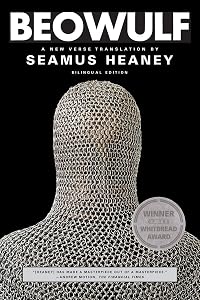
Beowulf
by Beowulf Poet, Burton Raffel
On This Page
Description
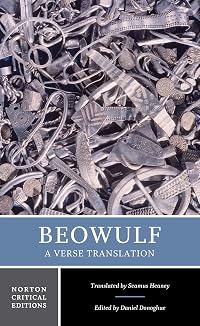
Composed toward the end of the first millennium of our era, Beowulf is the elegiac narrative of the adventures of Beowulf, a Scandinavian hero who saves the Danes from the seemingly invincible monster Grendel and, later, from Grendel's mother. He then returns to his own country and dies in old age in a vivid fight against a dragon. The poem is about encountering the monstrous, defeating it, and then having to live on in the exhausted aftermath. In the contours of this story, at once remote show more and uncannily familiar at the end of the twentieth century, Seamus Heaney finds a resonance that summons power to the poetry from deep beneath its surface. Drawn to what he has called the "four-squareness of the utterance" in Beowulf and its immense emotional credibility, Heaney gives these epic qualities new and convincing reality for the contemporary reader. show lessTags
Recommendations







Member Recommendations
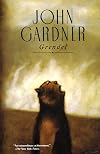
lyzadanger Stunning prose from the point of view of the monster.
sturlington Grendel is a retelling of Beowulf from the monster's pov.
Also recommended by sweetandsyko
264
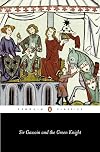
OwenGriffiths If you like Old/Middle English texts translated by great poets...
Also recommended by chrisharpe
152

PaulRackleff Michael Crichton had written "Eaters of the Dead" as a means to show Beowulf's story value. The character names and plot line are very similar. Though Crichton changed some elements to make it more interesting than just a copy of Beowulf.
132
Weasel524 Embodies and champions the same spirit/ideals commonly shared by norse mythology, scandanavian sagas, and northern germanic folklore. Significantly longer and different in structure, should that be of concern
111

moonstormer the short story in Fragile Things - Monarch of the Glen - is very related to Beowulf and could be seen as an interesting commentary.
64

by gwernin
Member Reviews
How good is this?!?!? This is me completely inhaling the book and then having to go back and reread and then going back and screenshotting to send passages to friends because the wording and the phrases and the rhythm are just so damn magical.
Headley captures the tone of an epic, bragging, rambling tangential bro-culture poem so well, but not only that: I understood it. No really. I knew what was going on the whole time. This is a miracle after years of reading "classics" and slogging my way through to only partially understand what was happening in barest details. But this? You get it. The text is understandable and therefore, enjoyable!
A taste:
"Meanwhile, Beowulf gave
zero shits.
He dressed himself in
glittering gear,
his mail-shirt show more finely forged,
links locked
and loaded. He'd meet this
murdering mother
under mere, and amend her
existence."
The modern language and lingo (#blessed and sidebar, etc.) do not in anyway detract but rather cobbled together with archaic language just heighten the strangeness and raucous nature of the tale. This is totally a story told by a drunk dude who is WAY too loud and was totally there or close there when all the things went down.
Headley's takes on characters I didn't even remember from reading other versions does what it's supposed to do: you remember them. They become part of the narrative instead of just another person who's name begins with "H".
Up next is listening to the audio version because this just BEGS to be read aloud! show less
Headley captures the tone of an epic, bragging, rambling tangential bro-culture poem so well, but not only that: I understood it. No really. I knew what was going on the whole time. This is a miracle after years of reading "classics" and slogging my way through to only partially understand what was happening in barest details. But this? You get it. The text is understandable and therefore, enjoyable!
A taste:
"Meanwhile, Beowulf gave
zero shits.
He dressed himself in
glittering gear,
his mail-shirt show more finely forged,
links locked
and loaded. He'd meet this
murdering mother
under mere, and amend her
existence."
The modern language and lingo (#blessed and sidebar, etc.) do not in anyway detract but rather cobbled together with archaic language just heighten the strangeness and raucous nature of the tale. This is totally a story told by a drunk dude who is WAY too loud and was totally there or close there when all the things went down.
Headley's takes on characters I didn't even remember from reading other versions does what it's supposed to do: you remember them. They become part of the narrative instead of just another person who's name begins with "H".
Up next is listening to the audio version because this just BEGS to be read aloud! show less
This is the unabridged version of Beowulf, and I love it. (I just slobbered a little bit on my chin, for pure excitement, while writing this.)
The original Old English text appears alongside the Seamus Heaney translation. And this arrangement -- Old English on the left, Today's English on the right -- sets a truly old-world, Ultima Thule vibe for the reading. I could smell the woodsmoke. I could taste the mead. My inner-brain reading voice was Seamus Heaney's: gravelly, tinged with an Irish lilt. (Because I listened first to the Audio CD Seamus Heaney reading.)
I won't bother ever seeing the Beowulf movie because nothing simply audio and visual could compete with what I just experienced. Besides, the fact that Grendel's mom is some show more supposedly bawdy outcast wench whom King Hrothgar sleazily got serviced by one cold and lonely night in the past, when he was out late tramping about the peat bogs looking for a little hot bawdy wench action -- that Hollywoodish twist totally ruins the idea of Grendel and his mom as members of Cain's evil clan, Cain cast out from God, "marked because he murdered". For a true understanding of that outcast dynamic, you'll need to read John Gardner's "Grendel". That amazing little companion to Beowulf helps clarify, better than anything else I've read, why Grendel has a pouch made from dragon skins.
Beowulf is about the really big ideas: good and evil, light and darkness. The poem's vibe (as Seamus Heaney has brung it) is very pagan. It's a tale told by flickering flame light. You get the sense of this earth life as something strange and weird and best expressed only by parable. Imagine a sparrow flying into a meadhall from a cold winter night -- bright and warm and cozy, beautiful even -- and then the sparrow flies out of the hall and back into the cold winter night. That, to paraphrase a story from the venerable Bede, is our experience of life: we are the sparrow, and we come from a cold nothing into a bright warmth and then we go back to the cold nothing. That's a human life, as the Beowulf text tells it.
The Beowulf meta-story, however, is the fact that we today, one millennium later, have the story in our hands. (That, actually, is pretty amazing considering that only one solitary manuscript survived antiquity to bring Beowulf to us.) The meaning of the meta-story contradicts the textual meaning of Beowulf; i.e., there appears to be something more to life in the communal sense life (as opposed to the individual or solitary life) that is a kind of profound and tantalizing mystery. Who is the collective we? Where are we going? What is the sum of all our stories, our infinite imagination, our love, our hate?
These are important questions with dark answers.
All that, from one little pagan poem. show less
The original Old English text appears alongside the Seamus Heaney translation. And this arrangement -- Old English on the left, Today's English on the right -- sets a truly old-world, Ultima Thule vibe for the reading. I could smell the woodsmoke. I could taste the mead. My inner-brain reading voice was Seamus Heaney's: gravelly, tinged with an Irish lilt. (Because I listened first to the Audio CD Seamus Heaney reading.)
I won't bother ever seeing the Beowulf movie because nothing simply audio and visual could compete with what I just experienced. Besides, the fact that Grendel's mom is some show more supposedly bawdy outcast wench whom King Hrothgar sleazily got serviced by one cold and lonely night in the past, when he was out late tramping about the peat bogs looking for a little hot bawdy wench action -- that Hollywoodish twist totally ruins the idea of Grendel and his mom as members of Cain's evil clan, Cain cast out from God, "marked because he murdered". For a true understanding of that outcast dynamic, you'll need to read John Gardner's "Grendel". That amazing little companion to Beowulf helps clarify, better than anything else I've read, why Grendel has a pouch made from dragon skins.
Beowulf is about the really big ideas: good and evil, light and darkness. The poem's vibe (as Seamus Heaney has brung it) is very pagan. It's a tale told by flickering flame light. You get the sense of this earth life as something strange and weird and best expressed only by parable. Imagine a sparrow flying into a meadhall from a cold winter night -- bright and warm and cozy, beautiful even -- and then the sparrow flies out of the hall and back into the cold winter night. That, to paraphrase a story from the venerable Bede, is our experience of life: we are the sparrow, and we come from a cold nothing into a bright warmth and then we go back to the cold nothing. That's a human life, as the Beowulf text tells it.
The Beowulf meta-story, however, is the fact that we today, one millennium later, have the story in our hands. (That, actually, is pretty amazing considering that only one solitary manuscript survived antiquity to bring Beowulf to us.) The meaning of the meta-story contradicts the textual meaning of Beowulf; i.e., there appears to be something more to life in the communal sense life (as opposed to the individual or solitary life) that is a kind of profound and tantalizing mystery. Who is the collective we? Where are we going? What is the sum of all our stories, our infinite imagination, our love, our hate?
These are important questions with dark answers.
All that, from one little pagan poem. show less
Wow. This is one delightful bit of writing! The language is playful and welcoming. Cleaver and compassionate, the emphasis is on human qualities, good and bad, in all the actors. Grendel and his mother are in some ways less monstrous than Beowulf, whose outrageous strength proves a match and more to theirs, but he is kept from monstrosity because he makes support of his lord and land his limits, his strongest desire being the lasting fame of a good name.
I always enjoy the translator's notes in these, what makes you go and be the umpteenth person to translate a classic, what makes you think you can bring something new to the party? I think this works and the translator does bring something different to this work.
I didn't get Beowulf forced on me at school - I didn't go to that sort of school. I came to Beowulf as an adult, by choice and through the Seamus Heaney translation. I loved it from the first word, as I, too, have a habit of starting a conversation with "So". More at work than at home, but I recognised something in it. It opened up the world of alliterative poetry, which I have thoroughly enjoyed exploring with the likes of Simon Armitage. In this, the translator starts with show more "Bro". I get what she is trying to do, this is a bar room and the story teller is trying to quieten the room, to take the floor, to grab the attention. I reckon someone, somewhere could write an essay on the choice of translation for "Hwaet".
This feels to be a more robust translation than the Heaney (which I am going to have to read again very soon). It uses modern language, there's a couple of gimme and gonna in here as well as shit and fuck used more than I would, but I'm not the subject of this. This is all about a male environment and the men in it. And they almost certainly would use that language. That's not to say that it is dumbed down, or simplified, there are plenty of allusions and illusions at work in here. The whale road being the Old English equivalent of the wine dark sea. It feels immediate and earthy, it doesn't feel distant and ethereal in the way that the tranbslation of an ancient classic could do. There is relevance in here and the language used is of its time. That may mean it will date, but that doesn;t make it any less good in the here and now.
I liked the way that the voice changed as the different people take up the tale, there is a change in language and word usage here that is sophisticated without feeling to be artificial.
The story hasn't changed, it remains the same 3 act play with 50 years vanishing in the middle. And yet it isn't tired and predictable, I still felt the tears pricking as Wiglaf berates his fellow warriors for not coming to Beowulf's aid. If there's any lesson in here that the modern world need to hear it is that doing the right thing is always worth it, no matter how hard or painful. He's the hero for the modern age.
This is well worth adding to your reading list, regardless of if you're familiar with the work or not. show less
I didn't get Beowulf forced on me at school - I didn't go to that sort of school. I came to Beowulf as an adult, by choice and through the Seamus Heaney translation. I loved it from the first word, as I, too, have a habit of starting a conversation with "So". More at work than at home, but I recognised something in it. It opened up the world of alliterative poetry, which I have thoroughly enjoyed exploring with the likes of Simon Armitage. In this, the translator starts with show more "Bro". I get what she is trying to do, this is a bar room and the story teller is trying to quieten the room, to take the floor, to grab the attention. I reckon someone, somewhere could write an essay on the choice of translation for "Hwaet".
This feels to be a more robust translation than the Heaney (which I am going to have to read again very soon). It uses modern language, there's a couple of gimme and gonna in here as well as shit and fuck used more than I would, but I'm not the subject of this. This is all about a male environment and the men in it. And they almost certainly would use that language. That's not to say that it is dumbed down, or simplified, there are plenty of allusions and illusions at work in here. The whale road being the Old English equivalent of the wine dark sea. It feels immediate and earthy, it doesn't feel distant and ethereal in the way that the tranbslation of an ancient classic could do. There is relevance in here and the language used is of its time. That may mean it will date, but that doesn;t make it any less good in the here and now.
I liked the way that the voice changed as the different people take up the tale, there is a change in language and word usage here that is sophisticated without feeling to be artificial.
The story hasn't changed, it remains the same 3 act play with 50 years vanishing in the middle. And yet it isn't tired and predictable, I still felt the tears pricking as Wiglaf berates his fellow warriors for not coming to Beowulf's aid. If there's any lesson in here that the modern world need to hear it is that doing the right thing is always worth it, no matter how hard or painful. He's the hero for the modern age.
This is well worth adding to your reading list, regardless of if you're familiar with the work or not. show less
This was soooooooo much better than The Iliad and The Odyssey.
First of all, this edition of the book is lovely. It included many photos and illustrations of artifacts and the general places involved in this story. That was a nice edition.
Second, I did not read it in the Old English. I would have liked to, but without reading this as part of a class - reading this just for my own edification - there was no percentage in it at this point.
That being said, reading this was a pleasure. This translation portrayed the action, the atmosphere, and the characters. Perhaps it was the accompanying photos of artifacts, but I had so much more sense of place and feel for this story than The Iliad & The Odyssey.
Two interesting things come to the fore show more for me:
1. There is a real sense of responsibility of the leaders for their followers/thanes. Writing this on the eve of a mid-term election, I wonder how we've gotten so far away from that. We give power to those who do nothing to earn it, and in turn they do not hold that power in sacred trust. Perhaps these ancient leaders did not live up to this, but the poet who tells the tale makes a point of emphasizing that heroes did.
2. The poet is telling a pagan tale. Yet he infuses this tale with Christian values and sentiments. It's a bit of a loss to not hear how exactly Hrothgar, Beowulf, the Danes, and the Geats related their actions to their gods and their understanding of the afterlife.
All in all, a worthwhile read of the Western Canon. I'm glad I picked it up. show less
First of all, this edition of the book is lovely. It included many photos and illustrations of artifacts and the general places involved in this story. That was a nice edition.
Second, I did not read it in the Old English. I would have liked to, but without reading this as part of a class - reading this just for my own edification - there was no percentage in it at this point.
That being said, reading this was a pleasure. This translation portrayed the action, the atmosphere, and the characters. Perhaps it was the accompanying photos of artifacts, but I had so much more sense of place and feel for this story than The Iliad & The Odyssey.
Two interesting things come to the fore show more for me:
1. There is a real sense of responsibility of the leaders for their followers/thanes. Writing this on the eve of a mid-term election, I wonder how we've gotten so far away from that. We give power to those who do nothing to earn it, and in turn they do not hold that power in sacred trust. Perhaps these ancient leaders did not live up to this, but the poet who tells the tale makes a point of emphasizing that heroes did.
2. The poet is telling a pagan tale. Yet he infuses this tale with Christian values and sentiments. It's a bit of a loss to not hear how exactly Hrothgar, Beowulf, the Danes, and the Geats related their actions to their gods and their understanding of the afterlife.
All in all, a worthwhile read of the Western Canon. I'm glad I picked it up. show less
I've read Beowulf twice before: once in high school (no idea what translation) and once in grad school (Seamus Heaney). Maria Dahvana Headley's new translation (in?)famously updates the language, using constructions like "Hashtag: blessed" (l. 622) and "Previously prone to calling bullshit" (l. 980) and rendering the opening hwæt as "Bro!" (l. 1) It's that latter choice that I think is the most interesting; Headley plays up the boasting. This is a story of men telling stories about the prowess of men, both their own and that of others. I read a review by a medievalist that said Headley "insists on its emptiness and bullying element" but though that might be true in the paratext, I don't think it comes across in the actual text. Beowulf show more is a braggart, but Beowulf can do what he says he can do-- and more!
Here's a sample passage of bragging (I basically opened the book at random and hit one), from when Beowulf is introducing himself to King Hrothgar:
"Every elder knew I was the man for you, and blessed
my quest, King Hrothgar, because where I'm from?
I'm the strongest and the boldest, and the bravest and the best
Yes: I mean—I may have bathed in the blood of beasts,
netted five foul ogres at once, smashed my way into a troll den
and come out swinging, gone skinny-dipping in a sleeping sea
and made sashimi of some sea monsters.
Anyone who fucks with the Geats? Bro, they have to fuck with me.
They're asking for it, and I deal them death." (ll. 414-22)
These were the passages that sung the most for me, and are incredibly fun to read aloud. I'm no poet or even an analyst of poetry, so I can't tell you much about why it works for me, but I think Headley captures the way men talk about their accomplishments. There's some excellent alliteration, and also I like the way the register changes. Lines 417-20 may use some modern language, but they have a poetic, slightly archaic feeling (it's the long sentence, I think), and then you're suddenly thrown into the very unpoetic boast of line 421, which could come straight out of, I dunno, hip-hop lyrics.
Another review I read talks about how the last third of the poem (where Beowulf fights the dragon) has much less modernized language. I don't know if that's right per se, but it does have a lot less boasting. But I think that's on purpose: Beowulf is an old man now, and an old king. All his friends and enemies are dead; his renown was such that there hasn't even been a war for him to fight because everyone is afraid to attack the Geats while he rules. So who does he have left to boast to or boast of? He goes out killing a dragon, but it's almost tragic, in the sense that one feels like Beowulf deserved better! He comes across as a tired old man grateful for a fight that will kill him, so he doesn't have to die in his sleep, but it's not a fight that would have rated had it happened when he was in the prime of life. As he embarks to kill the dragon, the narrator portrays him as missing old friends and enemies:
The old king fell to his knees on the cliff point
[...].
Stricken, suddenly unsteady, he foresaw his fate
in the fog, shrouded but certain. For a moment,
he felt for his old foes, fen-bound, embarking alone.
Soon, soon, his own lease would expire,
evicting him from hall, hearth, and home. (ll. 2418, 2421-25)
That said, I agree, it's much less fun to read that part of the poem, even if there's good reason for the shift in tone.
There's a lot you can talk about here; (as the review I quoted above says) Headley's lasting influence will probably be her insistence that most of the language that is usually translated as indicating Grendel's mother is a monster is, when used to describe men, not translated in such a way; the phrase others have translated as "inhuman troll-wife" or "monstrous hell-bride," she renders as "formidable noblewoman"! (pp. xxiii-xxv) I really enjoyed reading it, and it makes me want to dig into Beowulf again, and makes me miss hanging out with medievalists as I did in grad school.
Speaking of which, I read this because it is a finalist for the 2021 Hugo Award for Best Related Work, and this is surely the first Hugo finalist to thank someone I went to grad school with in the Acknowledgements! show less
Here's a sample passage of bragging (I basically opened the book at random and hit one), from when Beowulf is introducing himself to King Hrothgar:
"Every elder knew I was the man for you, and blessed
my quest, King Hrothgar, because where I'm from?
I'm the strongest and the boldest, and the bravest and the best
Yes: I mean—I may have bathed in the blood of beasts,
netted five foul ogres at once, smashed my way into a troll den
and come out swinging, gone skinny-dipping in a sleeping sea
and made sashimi of some sea monsters.
Anyone who fucks with the Geats? Bro, they have to fuck with me.
They're asking for it, and I deal them death." (ll. 414-22)
These were the passages that sung the most for me, and are incredibly fun to read aloud. I'm no poet or even an analyst of poetry, so I can't tell you much about why it works for me, but I think Headley captures the way men talk about their accomplishments. There's some excellent alliteration, and also I like the way the register changes. Lines 417-20 may use some modern language, but they have a poetic, slightly archaic feeling (it's the long sentence, I think), and then you're suddenly thrown into the very unpoetic boast of line 421, which could come straight out of, I dunno, hip-hop lyrics.
Another review I read talks about how the last third of the poem (where Beowulf fights the dragon) has much less modernized language. I don't know if that's right per se, but it does have a lot less boasting. But I think that's on purpose: Beowulf is an old man now, and an old king. All his friends and enemies are dead; his renown was such that there hasn't even been a war for him to fight because everyone is afraid to attack the Geats while he rules. So who does he have left to boast to or boast of? He goes out killing a dragon, but it's almost tragic, in the sense that one feels like Beowulf deserved better! He comes across as a tired old man grateful for a fight that will kill him, so he doesn't have to die in his sleep, but it's not a fight that would have rated had it happened when he was in the prime of life. As he embarks to kill the dragon, the narrator portrays him as missing old friends and enemies:
The old king fell to his knees on the cliff point
[...].
Stricken, suddenly unsteady, he foresaw his fate
in the fog, shrouded but certain. For a moment,
he felt for his old foes, fen-bound, embarking alone.
Soon, soon, his own lease would expire,
evicting him from hall, hearth, and home. (ll. 2418, 2421-25)
That said, I agree, it's much less fun to read that part of the poem, even if there's good reason for the shift in tone.
There's a lot you can talk about here; (as the review I quoted above says) Headley's lasting influence will probably be her insistence that most of the language that is usually translated as indicating Grendel's mother is a monster is, when used to describe men, not translated in such a way; the phrase others have translated as "inhuman troll-wife" or "monstrous hell-bride," she renders as "formidable noblewoman"! (pp. xxiii-xxv) I really enjoyed reading it, and it makes me want to dig into Beowulf again, and makes me miss hanging out with medievalists as I did in grad school.
Speaking of which, I read this because it is a finalist for the 2021 Hugo Award for Best Related Work, and this is surely the first Hugo finalist to thank someone I went to grad school with in the Acknowledgements! show less
In her acknowledgments at the end of the book the author states: “The notion of Beowulf as a bro-story had been rattling around in my head for a decade.” And what a story Headley’s free verse translation is!
It's interesting to me that some of the audio publisher’s advertisement call it a “feminist” translation. This is as soaked in testosterone as one of Robert B. Parker’s westerns. Bro, it’s so butch that it makes other translations, as fine as they, are seem nelly in comparison. “Bro” is the first word in the translation and appears many times thereafter. The source, according to the author speaking of her word choice is this:
"I come equipped with my own memories of sitting at the bar’s end listening to men show more navigate darts, trivia, and women, and so, in this book I translate it [the old English, i.e., Anglo-Saxon, word hwæt] as “Bro.” The entire poem especially the monologues of the men in it, feel to me like the sort of competitive conversations I’ve heard between men, one insisting on his right to the floor while simultaneously insisting that he’s friendly."
Using contemporary and often rude English slang coupled with the time honored techniques of medieval Skaldic poetry alliteration and imagery that often borders on riddling, for example using whale road instead of sea or ocean. Headley has composed a work that a skald would be proud of. show less
It's interesting to me that some of the audio publisher’s advertisement call it a “feminist” translation. This is as soaked in testosterone as one of Robert B. Parker’s westerns. Bro, it’s so butch that it makes other translations, as fine as they, are seem nelly in comparison. “Bro” is the first word in the translation and appears many times thereafter. The source, according to the author speaking of her word choice is this:
"I come equipped with my own memories of sitting at the bar’s end listening to men show more navigate darts, trivia, and women, and so, in this book I translate it [the old English, i.e., Anglo-Saxon, word hwæt] as “Bro.” The entire poem especially the monologues of the men in it, feel to me like the sort of competitive conversations I’ve heard between men, one insisting on his right to the floor while simultaneously insisting that he’s friendly."
Using contemporary and often rude English slang coupled with the time honored techniques of medieval Skaldic poetry alliteration and imagery that often borders on riddling, for example using whale road instead of sea or ocean. Headley has composed a work that a skald would be proud of. show less
Members
- Recently Added By
Published Reviews
ThingScore 100
At the beginning of the new millennium, one of the surprise successes of the publishing season is a 1,000-year-old masterpiece. The book is ''Beowulf,'' Seamus Heaney's modern English translation of the Anglo-Saxon epic, which was created sometime between the 7th and the 10th centuries.
added by danielx
Translation is not mainly the work of preserving the hearth -- a necessary task performed by scholarship -- but of letting a fire burn in it.
added by danielx
Lists

Read the book and saw the movie
1,170 works; 192 members

100 Books to Read in a Lifetime (That Are Older Than 200 Years)
415 works; 175 members

Best Fantasy Novels
821 works; 357 members

Mythical Monsters of the World
199 works; 79 members

Classics you know you should have read but probably haven't
421 works; 408 members

Favourite Medieval Books
49 works; 17 members

Best of British Literature
226 works; 40 members

Books I've Read More Than Once
602 works; 48 members
Narrative verse for pleasure
75 works; 8 members

Best Fantasy Originally Published in a Language Other Than English
84 works; 24 members

Here There Be Dragons
143 works; 23 members

75 Books Challenge Halloween Read "Official" Selections
71 works; 7 members

Harold Bloom - The Western Canon: A. The Theocratic Age
97 works; 13 members

Books Featured on Gilmore Girls
307 works; 21 members

Top Five Books of 2020
982 works; 348 members
Truly old classics
63 works; 6 members
Fate vs. Free Will
63 works; 8 members

Myth (Reuse and Retelling)
188 works; 24 members

CCE 100 Great Books List
145 works; 8 members

Greatest Books, allegedly
484 works; 9 members

Mustich's 1000 Books to Read Before You Die: A Life Changing List
1,001 works; 19 members

Before Austen Comes Aesop
318 works; 9 members

Books Read in 2022
5,166 works; 112 members

College Reads (Lit Edition)
75 works; 5 members

Western Canon
206 works; 2 members
r/History Recommended Reading List
603 works; 12 members

Out of Copyright
244 works; 14 members
A Reading List
100 works; 3 members

Rory Gilmore Book Club
193 works; 5 members

Well-Educated Mind
150 works; 3 members

Beautiful Feet Books
304 works; 7 members

Favorite Recent Poetry: 1980-2022
178 works; 70 members

Favorite Books in Translation
320 works; 133 members

el
1,139 works; 1 member
Books talked about in Pamela Dean's Tam Lin
74 works; 1 member
Books in the Bibliography of Humans: A Monstrous History by Surekha Davies
346 works; 1 member

School Made Us Read It
380 works; 196 members
The Complete Rory Gilmore Reading List
506 works; 5 members

Read in 2020
33 works; 1 member

Gen X Library
245 works; 4 members
Classical Conversations Challenge II Exposition
18 works; 1 member

Ambleside Year 7
69 works; 1 member

Recommended Reading : 600 Classics Reviewed, Editors of Salem Press, 2015
634 works; 6 members

The Well-Educated Mind, Susan Wise Bauer, 2016
179 works; 3 members
BitLife
212 works; 4 members
Books I read in high school
52 works; 1 member
Western Canon
24 works; 1 member

Books Read in 2006
421 works; 8 members
Mensa for Kids Excellence in Reading Award Program (Grades 9-12)
116 works; 5 members

Books Read in 2021
5,361 works; 113 members

Books Read in 2015
3,299 works; 126 members

Books You Read During High School (For School)
301 works; 53 members
Literature Before the 17th Century
20 works; 5 members

Set in the Middle Ages
42 works; 9 members

Allie's Favourite 150 Books
145 works; 3 members

Lovecraft's 'Supernatural Horror in Literature' Reading List
216 works; 8 members
Great Books Favorites
71 works; 6 members

Sonlight Books
1,487 works; 25 members

Ambleside Books
459 works; 18 members

University literature
145 works; 5 members

GreatBooks Worldview Academy Lists
133 works; 4 members

Literary Works Read in College
316 works; 15 members

Used books to buy next
565 works; 1 member

Poetry Corner
187 works; 15 members
100 World Classics
99 works; 15 members

Western World's Greatest Books - Project Gutenberg
295 works; 15 members

2021 Hugo Eligible Related Works
28 works; 5 members

Literature in Translation
113 works; 5 members
Overdue Podcast
806 works; 9 members

100 Most Recommended Works
100 works; 11 members
The College Board: 101 Great Books Recommended for College-Bound Readers
111 works; 7 members

Art of Reading
188 works; 5 members

Read in 2016
107 works; 7 members

United Kingdom
82 works; 5 members
The Joe Rogan Experience Library
254 works; 3 members

Unread books
1,063 works; 87 members
Mensa for Kids Excellence in Reading Award Program (Grades 9-12)
116 works; 3 members
Five star books
1,755 works; 108 members
Readable Classics
110 works; 15 members
1964 College Preparatory Reading List
202 works; 8 members

Books Read in 2020
4,379 works; 124 members

bound
100 works; 1 member
Talk Discussions
Past Discussions
Beowulf LE coming 27 June 2023 in Folio Society Devotees (June 2025)
New Beowulf edition in the works in Folio Society Devotees (June 2022)
123. Beowulf in Backlisted Book Club (March 2022)
Headley's "Beowulf": combine or keep separate? in Combiners! (October 2020)
Group Read: Beowulf - Seamus Heaney (spoilers) in 75 Books Challenge for 2011 (February 2011)
Author Information
16+ Works 32,683 Members

34+ Works 30,124 Members
Some Editions
Awards and Honors
Awards
Distinctions
Notable Lists
Series
Belongs to Publisher Series
Work Relationships
Is contained in
Is retold in
Has the adaptation
Is abridged in
Inspired
Has as a reference guide/companion
Has as a study
Has as a commentary on the text
Has as a concordance
Common Knowledge
- Canonical title
- Beowulf
- Original title
- Beowulf
- Original publication date
- 975; 1966 (English: E. Talbot Donaldson) (English: E. Talbot Donaldson); 1991 (English: Frederick Rebsamen) (English: Frederick Rebsamen); 1999 (English: Seamus Heaney) (English: Seamus Heaney); 2020 (English: Maria Dahvana Headley) (English: Maria Dahvana Headley)
- People/Characters
- Beowulf; Grendel; Hrothgar; Beowulf's Dragon; Grendel's mother; Hygelac (show all 12); Ecgtheow; Leofric; Wiglaf; Wealtheow; Wealhtheow; Unferth
- Important places
- Heorot, Denmark; Geatland; Scandinavia; Denmark
- Important events
- Middle Ages
- Related movies
- Beowulf (2007 | IMDb); Beowulf (1999 | IMDb)
- Epigraph
- 'In a place far from libraries I have often read Beowulf for pleasure'.
(K. Sisam)
(Michael Alexander ed., 1973).
And now this is 'an inheritance' -
Upright, rudimentary, unshiftably planked
In the long ago, yet willable forward
Again and again and again.
(Seamus Heaney ed., 1999). - Dedication
- For Brian and Blake
Burton Raffel (1963).
In memory of Joseph and Winifred Alexander
Michael Alexander (1973).
In memory of Ted Hughes
Seamus Heaney (1999).
For Grimoire William Gwenllian Headley,
who gestated alongside this book,
changing the way I thought about love, bloodfeuds,
woman-warriors, and wyrd.
Maria Dahvana Headley (2020).
To Kate, Julie, and Ben
For Joan & Peter Crossley - Holland AND Irene Mitchell
Kevin Crossley Holland (1973). - First words
- Hwæt we gardena in geardagum þeodcyninga þrym gefrunon, hu ða æþelingas ellen fremedon.
Hwæt! Wē Gār-Dena in geār-dagum....
This book is meant to make Beowulf available as poetry who have not studied Old English (Anglo-Saxon) before and to those who have only a rudimentary knowledge of it.
Preface.
The Old English Beowulf has several claims on the attention of modern readers: it is a poem of barbaric splendour and artistry; an eloquent celebration of a heroic life and death; an 'action' of epic sweep and scope. <... (show all)br>
Introduction (Michael Alexander ed., 1973).
Beowulf is written in the unrhymed four-beat alliteratie meter of Old English poetry.
Introduction.
Lo! we have heard the glory of the kings of the Spear-Danes in days gone by, how the chieftains wrought mighty deeds.
(translated by R. K. Gordon, 1926).
How that glory remains in remembrance,
Of the Danes and their kings in days gone,
The acts and valour of princes of their blood!
(translated by Edwin Morgan, 1952).
Hear me! We've heard of Danish heroes,
Ancient kings and the glory they cut
For themselves, swinging mighty swords!
(translated by Burton Raffel, 1963).
Yes, we have heard of the glory of the Spear-Danes' Kings in the old days -- how the princes of that people did brave deeds.
(translated by E. Talbot Donaldson, 1966).
Attend!
We have heard of the thriving of the throne of Denmark,
how the folk-kings flourished in former days,
how those royal athelings earned that glory.
(translated by Michael Alexander, 1973).
Yes! We have heard of years long vanished
how Spear-Danes struck sang victory-songs
raised from a wasteland walls of glory.
(translated by Frederick Rebsamen, 1991).
So. The Spear-Danes in days gone by
and the kings who ruled them had courage and greatness.
We have heard of those princes' heroic campaigns.
(translated by Seamus Heaney, 1999).
Of the strength of the Spear-Danes in days gone by we have heard, and of their hero-kings: the prodigious deeds those princes perfomed!
(translated by Stephen Mitchell, 2017).
Bro! Tell me we still know how to speak of kings! In the old days,
everyone knew what men were: brave, bold, glory-bound.
(translated by Maria Dahvana Headley, 2020).
Listen! We have heard of the glory of the Spear-Danes
Listen! The fame of Danish kings
in days gone by, the daring feats
worked by those heroes are well known to us.
(translated by Kevin Crossley Holland, 1973). - Last words
- (Click to show. Warning: May contain spoilers.)... And so Beowulf's followers
Rode, mourning their beloved leader,
Crying that no better king had ever
Lived, no prince so mild, no man
So open to his people, so deserving of praise.
(trans. Burton Raffel, 1963)
(Click to show. Warning: May contain spoilers.)This was the manner of the mourning of the men of the Geats,
sharers in the feast, at the fall of their lord:
they said that he was of all the world's kings
the gentlest of men, and the most gracious,
the kindest to his people, the keenest for fame.
(trans. Michael Alexander, 1973)
(Click to show. Warning: May contain spoilers.)So the Geat-people, his hearth-companions,
sorrowed for the lord who had been laid low.
They said that of all the kings upon the earth
he was the man most gracious and fair-minded,
kindest to his people and keenest to win fame.
(trans. Seamus Heaney, 1999)
(Click to show. Warning: May contain spoilers.)Thus the Geats all grieved and lamented the noble lord whom they so loved. They cried out that he was, of all the world's kings, the kindest and most courteous man, the most gracious to all, and the keenest for glory.
(trans. Stephen Mitchell, 2017)
(Click to show. Warning: May contain spoilers.)They did all this grieving the way men do,
but, bro, no man knows, not me, not you,
how to get to goodbye. His guys tried.
They remembered the right words. Our king!
Lonely ring-wielder! Inheritor of everything!
He was our man, but every man dies.
Here he is now! Here our best boy lies!
He rode hard! He stayed thirsty! He was the man!
He was the man.
(trans. Maria Dahvana Headley, 2020) - Publisher's editor
- Radice, Betty (Penguin)
- Blurbers
- Motion, Andrew (Heaney translation) (Heaney translation); O'Donoghue, Bernard (Heaney translation) (Heaney translation); Barnes, Julian (Heaney translation) (Heaney translation); Harman, Claire (Heaney translation) (Heaney translation); O'Brien, Sean (Heaney translation) (Heaney translation); Magnusson, Magnus (Alexander translation) (Alexander translation)
- Original language
- Old English
- Canonical DDC/MDS
- 829.3
- Canonical LCC
- PR1583
- Disambiguation notice
- This work is any complete, unabridged translation of Beowulf. The Seamus Heaney translation is not a separate work from the other complete, unabridged translations. To quote the FAQ on combining - "A work brings together all ... (show all)different copies of a book, regardless of edition, title variation, or language."
Based on currently accepted LibraryThing convention, the Norton Critical Edition is treated as a separate work, ostensibly due to the extensive additional, original material included.
The Finnsburg fragment is NOT part of the actual Beowulf - it's a separate text that has, unfortunately, not survived if full
Please see the LT Combiners' discussion at http://www.librarything.com/topic/508... before combining the Howell Chickering translation of ... (show all)Beowulf with other editions of the original work on LT. Thank you.
This is NOT an abridged edition. DO NOT combine with the abridged edition by Crossley-Holland or any other abridged edition.
Reserve this for dual-language texts (Anglo-Saxon and modern English) regardless of translator.
This is an unabridged translation of Beowulf, and should NOT be combined with abridged editions, regardless of translator.
Classifications
Statistics
- Members
- 29,295
- Popularity
- 127
- Reviews
- 362
- Rating
- (3.80)
- Languages
- 18 — Old English, Chinese, Czech, Dutch, English, Estonian, Finnish, French, German, Italian, Korean, Multiple languages, Polish, Portuguese, Russian, Spanish, Swedish, Turkish
- Media
- Paper, Audiobook, Ebook
- ISBNs
- 376
- UPCs
- 9
- ASINs
- 227
