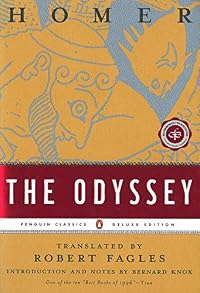
The Odyssey
by Homer
There is 1 current discussion about this work.
On This Page
Description
A Greek epic tells of the adventures of the hero Odysseus during his perilous and protracted journey home from the Trojan War.Tags
Recommendations



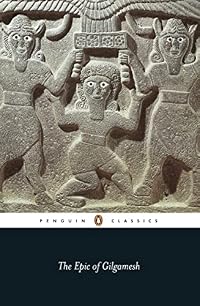

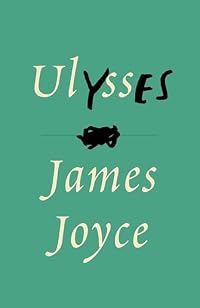
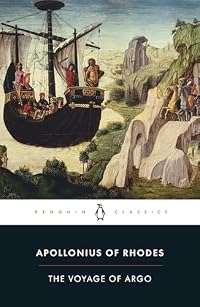
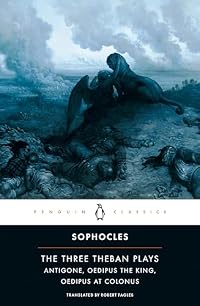












Member Recommendations
MarcusBrutus Robert Graves took the story of "The Odyssey's" authorship and expounds on the theory that it was written by a woman. This is a novel based on that idea.
62

lilithcat Only Greece's greatest modern writer would have the nerve and ability to send Odysseus back on his journeying.
52

BookWallah Odysseus & Shackleton both had travails getting home from their epic voyages. Differences in their stories: The former’s took 17 years, lost all his men, & was told as epic poetry. The latter’s took 16 months, saved all his men, & is told as gripping biography.
77



Jitsusama An ancient classic revolving around Greek Myth. A great help to better understand the mythology of the Percy Jackson and the Olympians series.
37

Member Reviews
No matter how many times I read the Odyssey, I'm always surprised at how little space is given to Odysseus's meanderings between Troy and his captivity with Calypso. The lotus-eaters get about a dozen lines, the sirens even fewer; the Laestrygonians accomplish their cannibalistic, fleet-wrecking revenge in less than a page. Meanwhile we get four whole books of Odysseus living it up with the Phaeacians (not that I ever get tired of hearing about the succulent roast meat, bread and wine) and seven books of caginess, dissembling, loyalty tests, and general crafty plotting from when he finally lands back in Ithaca to when he announces himself with that badass arrow-shot through the axe-heads.
My favourite moment will always be at the end of show more Book V, where Odysseus at his lowest ebb, exhausted and bedraggled having gone twelve rounds with Poseidon and only still alive thanks to the attentions of a passing naiad, crawls ashore on Scherie and beds down under the twin olive trees, covering himself in dry leaves. Just profoundly peaceful. Respite from the ever-terrifying ungovernable winedark sea. And of course the old "my name is Nobody" pranking of Polyphemus, ho ho. show less
My favourite moment will always be at the end of show more Book V, where Odysseus at his lowest ebb, exhausted and bedraggled having gone twelve rounds with Poseidon and only still alive thanks to the attentions of a passing naiad, crawls ashore on Scherie and beds down under the twin olive trees, covering himself in dry leaves. Just profoundly peaceful. Respite from the ever-terrifying ungovernable winedark sea. And of course the old "my name is Nobody" pranking of Polyphemus, ho ho. show less
I love Emily Wilson's translation. It feels direct, letting the poet speak in my language. Where the story feels archaic, it is because of the story, not a layer of translation.
The introduction is really useful for understanding the story. Long, but worth it.
The last paragraph of the introduction is this invitation to the reader. Read this for her writing style but also for her approach to the book. The Odyssey is a book of hospitality and stories. Listen carefully.
The introduction is really useful for understanding the story. Long, but worth it.
The last paragraph of the introduction is this invitation to the reader. Read this for her writing style but also for her approach to the book. The Odyssey is a book of hospitality and stories. Listen carefully.
show more
There is a stranger outside your house. He is old ragged, and dirty. He is tired. He has been wandering, homeless, for a long time, perhaps many years. Invite him inside. You do not know his name. He may be a thief. He may be a murderer. He may be a god. He may remind your
of your husband, your father, or yourself. Do not ask questions. Wait. Let him him sit on a comfortable chair and warm himself beside your fire. Bring him some food, the best you have, and some wine. Let him eat and drink until he is satisfied. Be patient. When he is finished, he will tell you his story. Listen carefully. It may not be as you expect.show less
The second book in my Greek literature "Odyssey", I definitely got through this one quicker than the Iliad. There's less grand warfare and tragedy and pathos, and more fantastic adventure and happy endings. Everything works out in the end, the heroes get their reward and the villains their comeuppance.
It's interesting to observe that one of the oldest works of literature in the western canon is structured non-linearly - it feels like a pretty sophisticated literary device. But Homer is full of quirks of story-telling which would be at home in any modern novel or TV show: the dog who recognises his master after twenty years, the clever verbal trick Penelope uses to test her returning husband, the parallel storylines of Odysseus and his show more son.
On the other hand, there are moments which reveal the vast moral divide between modern society and the heroes of ancient Greece. Slaves play a prominent role in the story, and "good, loyal slaves" versus "bitter, disloyal slaves" is a major theme. The good slaves who remain loyal to Odysseus in his absence are fittingly rewarded (not with freedom of course, but with wives and houses of their own) while the disloyal slaves are punished...gruesomely. I can go along with our hero ruthlessly massacring the bullying, thieving suitors, but watching him mutilate and torture a slave is a bit much. Even his loyal slaves aren't fully safe. When the old nurse Eurtcleia recognises the returned Odysseus, he grabs her by the throat to prevent her from announcing his presence. The act shocked me...she may be a slave but she's also practically his grandma. And it's not the only time he treats her unkindly. I've seen that somebody has written this story from Penelope's perspective, but I'd be interested in this story from Eurycleia's point of view.
I imagine Homer had no interest in challenging the social structures of his time through his work. Thus, the slave's position in society is reinforced, good slaves lauded, bad slaves punished, and their owners rightfully have full power over their lives.
Another such moment is Telemachus's interactions with Penelope. His transition to manhood is another theme of the story, and to demonstrate this, the narrative has him begin to order his good mother around, on occasion even sending her to her room. While I presume this was originally intended to demonstrate his maturity by showing him taking his rightful position of authority in the household as an adult man, it's jarring to a modern reader who is likely - even as an adult - to treat their own mother with a certain degree of respect, especially when residing in her household.
In some ways dated, in others surprisingly modern, this read is an interesting adventure into the stories that have shaped our culture for over two thousand years. show less
It's interesting to observe that one of the oldest works of literature in the western canon is structured non-linearly - it feels like a pretty sophisticated literary device. But Homer is full of quirks of story-telling which would be at home in any modern novel or TV show: the dog who recognises his master after twenty years, the clever verbal trick Penelope uses to test her returning husband, the parallel storylines of Odysseus and his show more son.
On the other hand, there are moments which reveal the vast moral divide between modern society and the heroes of ancient Greece. Slaves play a prominent role in the story, and "good, loyal slaves" versus "bitter, disloyal slaves" is a major theme. The good slaves who remain loyal to Odysseus in his absence are fittingly rewarded (not with freedom of course, but with wives and houses of their own) while the disloyal slaves are punished...gruesomely. I can go along with our hero ruthlessly massacring the bullying, thieving suitors, but watching him mutilate and torture a slave is a bit much. Even his loyal slaves aren't fully safe. When the old nurse Eurtcleia recognises the returned Odysseus, he grabs her by the throat to prevent her from announcing his presence. The act shocked me...she may be a slave but she's also practically his grandma. And it's not the only time he treats her unkindly. I've seen that somebody has written this story from Penelope's perspective, but I'd be interested in this story from Eurycleia's point of view.
I imagine Homer had no interest in challenging the social structures of his time through his work. Thus, the slave's position in society is reinforced, good slaves lauded, bad slaves punished, and their owners rightfully have full power over their lives.
Another such moment is Telemachus's interactions with Penelope. His transition to manhood is another theme of the story, and to demonstrate this, the narrative has him begin to order his good mother around, on occasion even sending her to her room. While I presume this was originally intended to demonstrate his maturity by showing him taking his rightful position of authority in the household as an adult man, it's jarring to a modern reader who is likely - even as an adult - to treat their own mother with a certain degree of respect, especially when residing in her household.
In some ways dated, in others surprisingly modern, this read is an interesting adventure into the stories that have shaped our culture for over two thousand years. show less
Emily Wilson's translation of The Odyssey is my third; I read Robert Fagles' and Stanley Lombardo's before this. You can't go wrong with any of them - Fagles' is lyrical but modern, Lombardo's is admirably plain-speaking and fast-paced, and Wilson's is swift, smart and exciting. But Wilson's is my favorite now, and the one I'd recommend to someone dipping in for the first time.
Caroline convinced me to read Wilson's introduction, and I'm glad I did. It's a corker. She explains The Odyssey this way:
"We encounter a surprising range of different characters and types of incident: giants and beggars, arrogant young men and vulnerable old slaves, a princess who does laundry and a dead warrior who misses the sunshine, gods, goddesses, and show more ghosts, brave deeds, love affairs, spells, dreams, songs, and stories. Odysseus himself seems to contain multitudes: he is a migrant, a pirate, a carpenter, a king, an athlete, a beggar, a husband, a lover, a father, a son, a fighter, a liar, a leader, and a thief. He is a man who cries, takes naps, and feels homesick, but he is also a man who has a special relationship with the goddess who transforms his appearance at will and ensures that his schemes succeed."
As she says, this isn't the usual hero who saves the world or "at least changes it in some momentous way"; instead, "for this hero, mere survival is the most amazing feat of all". The story raises
"important questions about the moral qualities of this liar, pirate, colonizer, deceiver, and thief, who is so often in disguise, absent or napping, while other people - those he owns, those he leads- suffer and die, and who directly kills so many people."
This complexity is what continues to fascinate me, and has led me through three translations and re-reads.
What is so outstanding about this translation?
"The Odyssey is a poem, and it needs to have a predictable and distinctive rhythm that can be easily heard when the text is read out loud. The original is in six-footed lines (dactylic hexameters), the conventional meter for archaic Greek narrative verse. I used iambic pentameter, because it is the conventional meter for regular English narrative verse - the rhythm of Chaucer, Shakespeare, Milton, Byron, Keats, and plenty of more recent anglophone poets . . . my translation sings to its own regular and distinctive beat.
My version is the same length as the original, with exactly the same number of lines. I chose to write within this difficult constraint because any translation without such limitations will tend to be longer than the original, and I wanted a narrative pace that could match its stride and Homer's nimble gallop."
I can't speak to the original, but hers certainly has stride and nimble gallop. She also leans toward simplicity of language, "in a style that echoes the rhythms and phrasing of contemporary anglophone speech." She notes that "stylistic pomposity is entirely un-Homeric". Occasionally (rarely, really) this results in what to me is an odd word choice, e.g. carrying weapons in a "hamper" - really? But overall it succeeds beautifully.
Some examples:
At a light touch of whip, the horses flew,
Swiftly they drew toward their journeys' end,
on through fields of wheat, until the sun
began to set and shadows filled the streets.
Helen, on the events in Troy:
The Trojan women keened in grief, but I
was glad - by then I wanted to go home.
I wished that Aphrodite had not made me
go crazy, when she took me from my country,
and made me leave my daughter and the bed
I shared with my fine, handsome, clever husband.
Circe confronting Odysseus:
"Who are you?
Where is your city? And who are your parents?
I am amazed that you could drink my potion
and yet not be bewitched. No other man
has drunk it and withstood the magic charm.
But you are different. Your mind is not
enchanted. You must be Odysseus,
the man who can adapt to anything."
Odysseus and Athena are natural partners. As she says,
"To outwit you
in all your tricks, a person or a god
would need to be an expert at deceit.
You clever rascal! So duplicitous,
so talented at lying! You love fiction
and tricks so deeply, you refuse to stop
even in your own land. Yes, both of us
are smart. No man can plan and talk like you,
and I am known among the gods for insight
and craftiness."
He is such a liar! And it's so deeply engrained that he lies even when he doesn't need to. But his lies always carry a greater message: "His lies were like the truth/ and as she listened, she began to weep."
If you haven't read The Odyssey before, you probably know the basics of the story by osmosis. But that's nothing like experiencing this ancient yet so modern story. Emily Wilson has brought an intelligence, rhythm and excitement to it that to me is the best yet. Have some fun reading an old classic; it's a treat. show less
Caroline convinced me to read Wilson's introduction, and I'm glad I did. It's a corker. She explains The Odyssey this way:
"We encounter a surprising range of different characters and types of incident: giants and beggars, arrogant young men and vulnerable old slaves, a princess who does laundry and a dead warrior who misses the sunshine, gods, goddesses, and show more ghosts, brave deeds, love affairs, spells, dreams, songs, and stories. Odysseus himself seems to contain multitudes: he is a migrant, a pirate, a carpenter, a king, an athlete, a beggar, a husband, a lover, a father, a son, a fighter, a liar, a leader, and a thief. He is a man who cries, takes naps, and feels homesick, but he is also a man who has a special relationship with the goddess who transforms his appearance at will and ensures that his schemes succeed."
As she says, this isn't the usual hero who saves the world or "at least changes it in some momentous way"; instead, "for this hero, mere survival is the most amazing feat of all". The story raises
"important questions about the moral qualities of this liar, pirate, colonizer, deceiver, and thief, who is so often in disguise, absent or napping, while other people - those he owns, those he leads- suffer and die, and who directly kills so many people."
This complexity is what continues to fascinate me, and has led me through three translations and re-reads.
What is so outstanding about this translation?
"The Odyssey is a poem, and it needs to have a predictable and distinctive rhythm that can be easily heard when the text is read out loud. The original is in six-footed lines (dactylic hexameters), the conventional meter for archaic Greek narrative verse. I used iambic pentameter, because it is the conventional meter for regular English narrative verse - the rhythm of Chaucer, Shakespeare, Milton, Byron, Keats, and plenty of more recent anglophone poets . . . my translation sings to its own regular and distinctive beat.
My version is the same length as the original, with exactly the same number of lines. I chose to write within this difficult constraint because any translation without such limitations will tend to be longer than the original, and I wanted a narrative pace that could match its stride and Homer's nimble gallop."
I can't speak to the original, but hers certainly has stride and nimble gallop. She also leans toward simplicity of language, "in a style that echoes the rhythms and phrasing of contemporary anglophone speech." She notes that "stylistic pomposity is entirely un-Homeric". Occasionally (rarely, really) this results in what to me is an odd word choice, e.g. carrying weapons in a "hamper" - really? But overall it succeeds beautifully.
Some examples:
At a light touch of whip, the horses flew,
Swiftly they drew toward their journeys' end,
on through fields of wheat, until the sun
began to set and shadows filled the streets.
Helen, on the events in Troy:
The Trojan women keened in grief, but I
was glad - by then I wanted to go home.
I wished that Aphrodite had not made me
go crazy, when she took me from my country,
and made me leave my daughter and the bed
I shared with my fine, handsome, clever husband.
Circe confronting Odysseus:
"Who are you?
Where is your city? And who are your parents?
I am amazed that you could drink my potion
and yet not be bewitched. No other man
has drunk it and withstood the magic charm.
But you are different. Your mind is not
enchanted. You must be Odysseus,
the man who can adapt to anything."
Odysseus and Athena are natural partners. As she says,
"To outwit you
in all your tricks, a person or a god
would need to be an expert at deceit.
You clever rascal! So duplicitous,
so talented at lying! You love fiction
and tricks so deeply, you refuse to stop
even in your own land. Yes, both of us
are smart. No man can plan and talk like you,
and I am known among the gods for insight
and craftiness."
He is such a liar! And it's so deeply engrained that he lies even when he doesn't need to. But his lies always carry a greater message: "His lies were like the truth/ and as she listened, she began to weep."
If you haven't read The Odyssey before, you probably know the basics of the story by osmosis. But that's nothing like experiencing this ancient yet so modern story. Emily Wilson has brought an intelligence, rhythm and excitement to it that to me is the best yet. Have some fun reading an old classic; it's a treat. show less
The Robert Fitzgerald translation of The Odyssey was my first introduction to Homer, way back in my freshman high school days, and although my study of ancient Greek in college led me to the opinion that his work is not the best Homeric translation available - see my review of The Iliad for more details about my devotion to Richmond Lattimore - it retains a special place in my heart. I can still recall how magical I found the story of Odysseus' homeward journey, after the Trojan War, the excitement of his many adventures, the terror of the many monsters he encountered. I still recall the thrill I felt, reading of Penelope's stratagems, and Odysseus' disguised return...
Homer's two epics, The Iliad and The Odyssey, are definitely works show more that I think every reader with an interest in the development of European literature should read, at some point. I feel fortunate indeed to have read one of them (The Iliad) in the original, but for those many who do not have that chance, the issue of translation is an important one. As mentioned, the Fitzgerald has a special place in my literary memory, and I find it a beautiful work, judged upon its own merit as poetry. English-language readers could do far, far worse than to pick it up. Fagles, I understand, is also widely (and justly) praised, although I have only read his translation of The Iiad. My own vote, for best translator, goes to Lattimore, and I think those readers wanting to get a translation as close to the original as possible, in both sense and structure, should give him a try. Still, this one by Fitzgerald will always pull at my heartstrings... show less
Homer's two epics, The Iliad and The Odyssey, are definitely works show more that I think every reader with an interest in the development of European literature should read, at some point. I feel fortunate indeed to have read one of them (The Iliad) in the original, but for those many who do not have that chance, the issue of translation is an important one. As mentioned, the Fitzgerald has a special place in my literary memory, and I find it a beautiful work, judged upon its own merit as poetry. English-language readers could do far, far worse than to pick it up. Fagles, I understand, is also widely (and justly) praised, although I have only read his translation of The Iiad. My own vote, for best translator, goes to Lattimore, and I think those readers wanting to get a translation as close to the original as possible, in both sense and structure, should give him a try. Still, this one by Fitzgerald will always pull at my heartstrings... show less
Rereading this I can't believe I once found Homer boring. In my defense, I was a callow teen, and having a book assigned in school often tends to perversely make you hate it. But then I had a "Keats conversion experience." Keats famously wrote a poem in tribute to a translation of Homer by Chapman who, Keats wrote, opened to him "realms of gold." My Chapman was Fitzgerald, although in this reread I tried the Fagles translation and really enjoyed it. Obviously, the translation is key if you're not reading in the original Greek, and I recommend looking at several side by side to see which one best suits.
A friend of mine who is a classicist says she prefers the Illiad--that she thinks it the more mature book. I love the Illiad, but I'd show more give Odyssey a slight edge. Even just reading general Greek mythology, Odysseus was always a favorite, because unlike figures such as Achilles or Heracles he succeeded on his wits, not muscle. It's true, on this reread, especially in contrast to say the Illiad's Hector, I do see Odysseus' dark side. The man is a pirate and at times rash, hot-tempered, even vicious. But I do feel for his pining for home and The Odyssey is filled with such a wealth of incident--the Cyclops, Circe, Scylla and Charybdis, the Sirens--and especially Hades, the forerunner of Dante's Hell. And though my friend is right that the misogynist ancient Greek culture isn't where you go for strong heroines, I love Penelope; described as the "matchless queen of cunning," she's a worthy match for the crafty Odysseus. The series of recognition scenes on Ithaca are especially moving and memorable--I think my favorite and the most poignant being that of Odysseus' dog Argos. An epic poem about 2,700 years old, in the right translation it can nevertheless speak to me more eloquently than many a contemporary novel. show less
A friend of mine who is a classicist says she prefers the Illiad--that she thinks it the more mature book. I love the Illiad, but I'd show more give Odyssey a slight edge. Even just reading general Greek mythology, Odysseus was always a favorite, because unlike figures such as Achilles or Heracles he succeeded on his wits, not muscle. It's true, on this reread, especially in contrast to say the Illiad's Hector, I do see Odysseus' dark side. The man is a pirate and at times rash, hot-tempered, even vicious. But I do feel for his pining for home and The Odyssey is filled with such a wealth of incident--the Cyclops, Circe, Scylla and Charybdis, the Sirens--and especially Hades, the forerunner of Dante's Hell. And though my friend is right that the misogynist ancient Greek culture isn't where you go for strong heroines, I love Penelope; described as the "matchless queen of cunning," she's a worthy match for the crafty Odysseus. The series of recognition scenes on Ithaca are especially moving and memorable--I think my favorite and the most poignant being that of Odysseus' dog Argos. An epic poem about 2,700 years old, in the right translation it can nevertheless speak to me more eloquently than many a contemporary novel. show less
I realise full well that arguing that I dislike the Odyssey and think it's bad is "not a good look" but I've been struggling with this. I kept dropping it and coming back and every time I come back I just think it's both 1) boring 2) infuriating. I don't think this is a translation issue.
I guess partly it's mismatched expectations and my own failings. I sort of had in my head that reading this would be fascinating as an insight into ancient Greek culture and just as a general historical interest. But I can't bridge the gap between them and me enough even to enjoy reading this and I'm just begging to give me back modern understandings of plot and characters. I also came in expecting elaboration on all the famous mythological stuff like show more the Sirens. The sirens get 10 lines, plus maybe 20 more saying "oh yeah they're dangerous, put some wax in". There's no conflict, we don't know anything about them, there's nothing interesting, it's a fantastical creature reduced to all the depth of a basic element on an obstacle course.
The biggest issue that turns it from merely "uninteresting to me" to "I can't stand this" is how much I realised I HATE Odysseus. We're constantly told he's so smart and the only thing he actually does is the whole "no name" trick with Polyphemus. Which is balanced out by 1) him leading his crew into the cave in the first place 2) after doing this, calling out his name so he and his crew can get cursed by Poseidon. He's not a nice character and he's not an interesting one. He's responsible for a big part of his crew getting killed. The times he has good things happen to him, it's the gods' doing. And to be fair, most of the time he has bad things happen to him it's the gods' doing too. Athena and Zeus are both 100% responsible for his predicament and also help him... and also continue to be unhelpful? They appear to only protect Odysseus but are very happy for all his crew and anyone who ever helps him to be killed for some baffling reason. An example story:Odysseus gets told an island has a god's cows on it, and if anyone of his crew eats one then all his crew will die. They get becalmed on the island - and this is clearly stated to be Zeus's doing - making it impossible to leave. They spend weeks going through their stores till they're about to starve. Odysseus goes off to pray and the gods put him to sleep instead. Then the men decide to kill a cow because they're either going to starve to death or be smited. Then after they do this Zeus suddenly lets them off the island... only to smite them with a storm that kills everyone except Odysseus I think in this specific case there was no motivating reason given. I appreciate that this is my failing. The gods are capricious. That's just how it is. But god, it's painful to read. show less
I guess partly it's mismatched expectations and my own failings. I sort of had in my head that reading this would be fascinating as an insight into ancient Greek culture and just as a general historical interest. But I can't bridge the gap between them and me enough even to enjoy reading this and I'm just begging to give me back modern understandings of plot and characters. I also came in expecting elaboration on all the famous mythological stuff like show more the Sirens. The sirens get 10 lines, plus maybe 20 more saying "oh yeah they're dangerous, put some wax in". There's no conflict, we don't know anything about them, there's nothing interesting, it's a fantastical creature reduced to all the depth of a basic element on an obstacle course.
The biggest issue that turns it from merely "uninteresting to me" to "I can't stand this" is how much I realised I HATE Odysseus. We're constantly told he's so smart and the only thing he actually does is the whole "no name" trick with Polyphemus. Which is balanced out by 1) him leading his crew into the cave in the first place 2) after doing this, calling out his name so he and his crew can get cursed by Poseidon. He's not a nice character and he's not an interesting one. He's responsible for a big part of his crew getting killed. The times he has good things happen to him, it's the gods' doing. And to be fair, most of the time he has bad things happen to him it's the gods' doing too. Athena and Zeus are both 100% responsible for his predicament and also help him... and also continue to be unhelpful? They appear to only protect Odysseus but are very happy for all his crew and anyone who ever helps him to be killed for some baffling reason. An example story:
Members
- Recently Added By
Published Reviews
ThingScore 100
In this interview, we discuss how her [Wilson's] identity as a woman—and a cis-gendered feminist—informs her translation work, how her Odyssey translation honors both ancient traditions and contemporary reading practices, and what Homer meant when he called Dawn, repeatedly, “rosy-fingered.”
added by elenchus
Exploring the timeless journey of Odysseus in Homer's epic, 'The Odyssey,' is like embarking on a voyage through the depths of human experience. As readers everywhere know, the story’s themes of homecoming and hospitality, hubris and humility, suffering and survival continue to resonate across the centuries. I recently been given the literature review of Odysseus as a weighted assignment. show more But due to my work schedule, i wasn't able to complete it on time. So i asked professional writers at Literature review writing service to do it for me. They did an awesome job and i scored an A. show less
added by henry.wayne3113
Lists

Classics you know you should have read but probably haven't
421 works; 406 members

Books With Our Favorite First Lines
168 works; 104 members

sotiris' favourites circa january 2023
43 works; 2 members

Books About Non-Abrahamic Religions
98 works; 2 members

BitLife
212 works; 4 members

living room bookshelf
150 works; 1 member

hypatian_kat to-read
429 works; 3 members

World Literature (pre-contemporary; no living authors)
6 works; 1 member

Western Canon
24 works; 1 member

Books Read in 2023
5,547 works; 145 members

New Lifetime Reading Plan by Fadiman and Major
225 works; 5 members

Books Read in 2015
3,298 works; 129 members

My List
302 works; 1 member

Stuff from Bard
70 works; 1 member
Classical Conversations Challenge IV Exposition
8 works; 1 member

current
52 works; 1 member

Mustich's 1000 Books to Read Before You Die: A Life Changing List
1,001 works; 18 members

Greatest Books, allegedly
484 works; 9 members

Western Canon
206 works; 2 members

Well-Educated Mind
150 works; 3 members

Mythical Monsters of the World
199 works; 79 members

Will Durant's 100 Books: An Update
46 works; 4 members

Books Read in 2022
5,164 works; 113 members
How to Read a Book's Recommended Reading List
309 works; 10 members

r/History Recommended Reading List
603 works; 12 members
The Art of Manliness' 100+ Books Every Man Should Read
108 works; 2 members

Shaykh Hamza's Book Recommendations
439 works; 3 members

Fate vs. Free Will
63 works; 8 members
A Reading List
100 works; 3 members
epic novels & ‘classics’
3 works; 1 member
important
24 works; 1 member

Blackwell's Five Foot Bookshelf
72 works; 4 members

Reading LIst
648 works; 1 member

Lectuurlijst
63 works; 1 member

bound
100 works; 1 member

In Our Time books
4,934 works; 2 members

Nonhuman Protagonists
235 works; 34 members
Books in the Bibliography of The History of Hell by Alice K. Turner
155 works; 1 member

Books for Dustin
19 works; 1 member

el
1,139 works; 1 member
.
396 works; 1 member

Top Five Books of 2025
950 works; 302 members

Ten Books That Have Stayed With Me
160 works; 30 members

Books We'd Want on a Desert Island
203 works; 131 members
Books talked about in Pamela Dean's Tam Lin
74 works; 1 member
Books in the Bibliography of Humans: A Monstrous History by Surekha Davies
346 works; 1 member
School Made Us Read It
380 works; 196 members
Banned Books I have read
16 works; 2 members

2024-25 reading
36 works; 1 member
The Complete Rory Gilmore Reading List
506 works; 5 members
Books We Love to Reread
688 works; 296 members
Favorite Books in Translation
320 works; 133 members

Oh no, my house burnt down ...
20 works; 13 members

The Luca Guadagnino Universe
62 works; 1 member
Books in The Club Dumas
72 works; 1 member

Recommended Reading : 600 Classics Reviewed, Editors of Salem Press, 2015
634 works; 6 members

The Well-Educated Mind, Susan Wise Bauer, 2016
179 works; 3 members

Ryan Holiday's Books To Base Your Life On
97 works; 2 members
TBR
77 works; 1 member
GraceCollection TBR/To Buy List
106 works; 1 member

Llibres que he llegit el 2024
77 works; 1 member

50 Tough Books for Extreme Readers
71 works; 39 members
Books mentioned in Fire and Hemlock by Diana Wynne Jones
33 works; 1 member

Unread books
1,063 works; 87 members

The Top Ten: Writers Pick Their Favorite Books
240 works; 31 members
Favourite Greek Books
97 works; 1 member
100 Books to Read in a Lifetime (That Are Older Than 200 Years)
415 works; 173 members
Historical Fiction
889 works; 89 members

100 World Classics
99 works; 15 members

Books Read in 2014
2,341 works; 86 members

Summer Reads 2014
207 works; 70 members

CCE 100 Great Books List
145 works; 8 members
The Greatest Books
99 works; 5 members

Epic Fantasy
12 works; 7 members

A Novel Cure
742 works; 23 members

Top Five Books of 2013
1,564 works; 716 members

Best Revenge Stories
69 works; 9 members
Philip Ward's Lifetime Reading Plan
592 works; 22 members
Western World's Greatest Books - Project Gutenberg
295 works; 15 members
Favorite Long Books
330 works; 41 members
The Telegraph's 110 Best Books: The Perfect Library
101 works; 17 members

Books Set on Islands
190 works; 24 members
The 100 Best Books of All Time by Norwegian Book Club (World Library)
104 works; 23 members
Epic Fiction
42 works; 12 members
Best Books About Journeys and Quests
117 works; 30 members
Best Fantasy Novels
821 works; 361 members

Books Read in 2012
815 works; 31 members
Favourite Books
1,817 works; 316 members
Narrative verse for pleasure
75 works; 8 members

Best Fantasy Originally Published in a Language Other Than English
84 works; 24 members
Folio Society
831 works; 48 members
Best Adventure Stories
66 works; 13 members

Poetry Corner
187 works; 15 members
501 Must-Read Books
508 works; 71 members
The wanderings of Odysseus
61 works; 6 members

Story Within a Story
65 works; 16 members

Books Read in 2021
5,361 works; 113 members
Tall tales
25 works; 1 member
1964 College Preparatory Reading List
202 works; 8 members

The Road to Freedom (Will Durant's 100 Best Books for an Education)
100 works; 8 members
Mensa for Kids Excellence in Reading Award Program (Grades 9-12)
116 works; 3 members

Top Five Books of 2019
387 works; 107 members
Books whose titles coined words
4 works; 1 member
1001 Books You Must Read Before You Die
1,448 works; 1,132 members
Books available on Open Library
171 works; 4 members

Books Read in 2019
4,052 works; 110 members

Books Read in 2018
4,360 works; 110 members
Mensa for Kids Excellence in Reading Award Program (Grades 9-12)
116 works; 5 members
Overdue Podcast
803 works; 9 members
Classic Fiction I Want to Read Before I Die
6 works; 1 member
Truly old classics
63 works; 6 members
Kilobook
19 works; 1 member

Recommend the 20 best books you've read in the last five years
2,167 works; 601 members

Top Five Books of 2016
795 works; 229 members
Literary Classics To Read (pre 1900)
19 works; 2 members

Antigua Grecia
43 works; 2 members
Read the book and saw the movie
1,170 works; 195 members

Ambleside Books
459 works; 18 members

Trinity College Booklist (1951): Class Eight, Classic Civilization
39 works; 3 members
Literature which inspired Pop songs
85 works; 9 members
The College Board: 101 Great Books Recommended for College-Bound Readers
111 works; 7 members
Favourite Poems
34 works; 1 member

100 Most Recommended Works
100 works; 11 members
Five star books
1,755 works; 108 members
What Twitter Talks About
13 works; 1 member
Talk Discussions
Current Discussions
Recommend a fine press edition of The Odyssey? in Fine Press Forum (April 27)
Past Discussions
Bruce Rogers' design of T. E. Shaw's Odyssey in Fine Press Forum (April 2025)
"Best" translation of Iliad & Odyssey? in Folio Society Devotees (June 2023)
The Odyssey in Fine Press Forum (March 2023)
Homer in Ancient History (November 2012)
Can Anyone Recommend A Good Translation Of The Odyssey? in Book talk (December 2011)
Odyssey v Iliad in Homer, the Trojan war, and pre-classical Greece (June 2010)
Odyssey questions in Homer, the Trojan war, and pre-classical Greece (June 2010)
Author Information

Homer is the author of The Iliad and The Odyssey, the two greatest Greek epic poems. Nothing is known about Homer personally; it is not even known for certain whether there is only one true author of these two works. Homer is thought to have been an Ionian from the 9th or 8th century B.C. While historians argue over the man, his impact on show more literature, history, and philosophy is so significant as to be almost immeasurable. The Iliad relates the tale of the Trojan War, about the war between Greece and Troy, brought about by the kidnapping of the beautiful Greek princess, Helen, by Paris. It tells of the exploits of such legendary figures as Achilles, Ajax, and Odysseus. The Odyssey recounts the subsequent return of the Greek hero Odysseus after the defeat of the Trojans. On his return trip, Odysseus braves such terrors as the Cyclops, a one-eyed monster; the Sirens, beautiful temptresses; and Scylla and Charybdis, a deadly rock and whirlpool. Waiting for him at home is his wife who has remained faithful during his years in the war. Both the Iliad and the Odyssey have had numerous adaptations, including several film versions of each. (Bowker Author Biography) show less
Some Editions
Awards and Honors
Series
Belongs to Publisher Series
L'esparver llegir (43)
Rec Univer Biblio (280)
Penguin Clothbound Classics (2009)
Limited Editions Club (S:2.03)
Harvill (16)
Classics and Contemporaries (1986)
Harvard Classics (22)
The Folio Society ((11) 1948)
The World's Classics (36)
Colección austral (70)
Airmont Classics (57)
Reader's Enrichment Series (RE 327)
Perpetua reeks (71)
GF Flammarion (1584)
detebe (20779)
Anchor Books (A333)
Everyman's Library (454)
A tot vent (562)
Penguin Classics (L001)
Work Relationships
Is contained in
Contains
Is retold in
Has the (non-series) sequel
Has the adaptation
Is abridged in
Is parodied in
Inspired
O. by Sabine Scholl
Has as a reference guide/companion
Has as a study
Has as a supplement
Has as a commentary on the text
Has as a student's study guide
Has as a teacher's guide
Common Knowledge
- Canonical title
- The Odyssey
- Original title
- Ὀδύσσεια
- Alternate titles*
- Odysseia
- Original publication date
- 700 BCE
- People/Characters
- Odysseus; Aeolus (son of Hippotes); Agamemnon; Agelaus; Ajax the Great; Alcinous (show all 117); Amphialus; Amphimedon; Amphinomus; Anchialus; Anticlea; Antinous of Ithaca; Antiphates; Antiphus; Apheidas; Aphrodite; Apollo; Ares; Arete; Arethusa; Aretus; Argos (dog); Arnaeus; Athena; Boreas; Cattle of Helios; Charybdis; Clytius; Clytoneus; Ctesippus; Ctesius; Ctimene; Echephron; Echetus; Eileithyia; Elatus; Elpenor; Eos; Erinyes; Eteoneus; Eumaeus; Eupeithes; Eurus; Euryalus; Eurycleia (nurse of Odysseus); Eurydamas; Eurydice (daughter of Clymenus); Eurylochus; Eurymachus; Eurymachus (Odyssey); Eurymedousa; Eurynome; Eurynomus; Eurytion (king of Phthia); Evenor; Hades; Halitherses; Halius; Helen of Troy; Hephaestus; Hera; Ilus; Iphimedeia; Iphthime; Ithacus; Itylus; Laertes (father of Odysseus); Laodamas; Leiocritus; Leodes; Leucothea; Lotus-eaters; Mantius; Medon; Melanthius; Melantho; Memnon; Menelaus; Mentes (King of the Taphians); Mentor (son of Heracles and Asopis); Mesaulius; Mentor (son of Alcimus); Nausicaa; Neaera (consort of Helios); Nestor; Notus; Oceanus; Orsilochus; Peisander; Peisenor; Peisistratus (son of Nestor); Penelope; Perimedes; Perse; Persephone; Phemius; Philoetius; Polites (friend of Odysseus); Polites of Troy; Polybus; Polyctor; Polydamna; Polymele; Polyphemus; Procris; Scylla; Sirens; Stratichus; Suitors of Penelope; Telemachus; Telemus; Theoclymenus; Thoön; Thrasymedes (son of Nestor); Zephyrus; Circe; Calypso
- Important places
- Ancient Greece; Troy; Pylos; Sparta, Greece; Ogygia; Ithaca, Greece (show all 18); Scheria (Island of the Phaeians); The Island of Helios; The Island of the Sirens; Underworld; Aeaea (Circe's Island); Telepylos (Land of the Laestrygonians); Aeolia (The Island of Aeolus); The Island of the Cyclopes; The Island of the Lotus Eaters; Ismaros (Land of the Cicones); Scylla and Charybdis; Greece
- Important events
- Classical Antiquity; Trojan War
- Related movies
- Ulysses (1954 | IMDb); The Odyssey (1997 | IMDb); The Return (2024 | IMDb); The Odyssey (2026 | IMDb)
- First words
- ἄνδρα μοι ἔννεπε, μοῦσα, πολύτροπον, ὃς μάλα πολλὰ
πλάγχθη, ἐπεὶ Τροίης ἱερὸν πτολίεθρον ἔπερσεν
πολλῶν δ᾽ ἀνθρώπ... (show all)ων ἴδεν ἄστεα καὶ νόον ἔγνω,
πολλὰ δ᾽ ὅ γ᾽ ἐν πόντῳ πάθεν ἄλγεα ὃν κατὰ θυμόν,
ἀρνύμενος ἥν τε ψυχὴν καὶ νόστον ἑταίρων.
ἀλλ᾽ οὐδ᾽ ὣς ἑτάρους ἐρρύσατο, ἱέμενός περ:
αὐτῶν γὰρ σφετέρῃσιν ἀτασθαλίῃσιν ὄλοντο,
νήπιοι, οἳ κατὰ βοῦς Ὑπερίονος Ἠελίοιο
ἤσθιον: αὐτὰρ ὁ τοῖσιν ἀφείλετο νόστιμον ἦμαρ.
τῶν ἁμόθεν γε, θεά, θύγατερ Διός, εἰπὲ καὶ ἡμῖν.
The man, O Muse, inform, that many a way
Wound with his wisdom to his wished stay;
That wandered wondrous far, when he the town
Of sacred Troy had sack'd and shivered down;
The cities of a world of nations,
Wit... (show all)h all their manners, minds, and fashions,
He saw and knew; at sea felt many woes,
Much care sustained, to save from overthrows
Himself and friends in their retreat for home;
But so their fates he could not overcome,
Though much he thirsted it. [George Chapman]
The man for wisdom's various arts renown'd,
Long exercised in woes, O Muse! resound;
Who, when his arms had wrought the destined fall
Of sacred Troy, and razed her heaven-built wall,
Wandering from clime to clime,... (show all) observant stray'd,
Their manners noted, and their states survey'd,
On stormy seas unnumber'd toils he bore,
Safe with his friends to gain his natal shore:
Vain toils! their impious folly dared to prey
On herds devoted to the god of day;
The god vindictive doom'd them never more
(Ah, men unbless'd!) to touch that natal shore. [Alexander Pope]
Tell me, O muse, of that ingenious hero who
travelled far and wide after he had sacked the
famous town of Troy. Many cities did he visit,
and many were the nations with whose
manners and customs he was acquainted;... (show all)
moreover he suffered much by sea while
trying to save his own life and bring his
men safely home; but do what he might
he could not save his men, for they
perished through their own sheer folly
in eating the cattle of the Sun-god
Hyperion; so the god prevented them
from ever reaching home. [Samuel Butler]
Sing in me, Muse, and through me tell the story
of that man skilled in all ways of contending,
the wanderer, harried for years on end,
after he plundered the stronghold
on the proud height of Troy. [Robert Fitzger... (show all)ald]
Tell me, Muse, of the man of many ways,
who was driven far journeys, after he had
sacked Troy's sacred citadel. Many were
they whose cities he saw, whose minds he
learned of, many the pains he suffered in
his s... (show all)pirit on the wide sea, struggling for
his own life and the homecoming of his
companions. [Richmond Lattimore]
Sing to me of the man, Muse, the man of twists and turns
driven time and again off course, once he had plundered
the hallowed heights of Troy.
Many cities of men he saw and learned their minds,
many pains he suffe... (show all)red, heartsick on the open sea,
fighting to save his life and bring his comrades home. [Robert Fagles]
Speak, Memory—
Of the cunning hero
The wanderer, blown off course time and again
After he plundered Troy's sacred heights.
Speak
Of all the cities he saw, the minds he grasped,
The suffering deep in his ... (show all)heart at sea
As he struggled to survive and bring his men home
But could not save them, hard as he tried—
The fools—destroyed by their own recklessness
When they ate the oxen of Hyperion the Sun,
And that god snuffed out their day of return. [Stanley Lombardo]
Sing to me of the resourceful man, O Muse, who wandered
far after he had sacked the sacred city of Troy. He saw
the cities of many men and learned their minds.
He suffered many pains on the sea in his spirit, seeking... (show all)
to save his life and the homecoming of his companions.[Barry Powell]
Sing to me, Muse, of that endlessly cunning man
who was blown off course to the ends of the earth, in the years
after he plundered Troy. He passed through the cities
of many people and learned how they thought, and h... (show all)e suffered
many bitter hardships upon the high seas
as he tried to save his own life and bring his companions
back to their home. [Stephen Mitchell]
Tell me about a complicated man.
Muse, tell me how he wandered and was lost
when he had wrecked the holy town of Troy,
and where he went, and who he met, the pain
he suffered in the storms at sea, and how
he wo... (show all)rked to save his life and bring his men
back home. [Emily Wilson] - Quotations*
- ....Αυτοί δεν ξέρουν και δεν έχουν αγορές, να παίρνουν αποφάσεις και να βγάζουν νόμους, ζούνε σ' απότομες κορφές επάνω σε ψηλά... (show all) βουνά, μέσα σε θολωτές σπηλιές, ορίζοντας καθένας μόνος του παιδιά, γυναίκες - καμιά δεν έχουν φροντίδα για τους άλλους.
- Last words
- (Click to show. Warning: May contain spoilers.)Odysseus obeyed her, and his heart rejoiced. Then Pallas Athene, Daughter of aegis-bearing Zeus, still using Mentor's form and voice her her disguise, established peace between the two sides.
- Blurbers
- New York Herald Tribune; The Nation; Poetry Magazine; New York Times Book Review; James Dickey; Richard Howard (show all 9); Josephine Balmer; William Fiennes; Jenkyns, Richard
- Original language
- Greek
- Canonical LCC
- PA4025.A5 E6
*Some information comes from Common Knowledge in other languages. Click "Edit" for more information.
Classifications
- Genres
- Poetry, Fiction and Literature
- DDC/MDS
- 883.01 — Literature & rhetoric Classical & modern Greek literatures Classical Greek epic poetry and fiction Pseudo-Callisthenes
- LCC
- PA4025 .A5 .E6 — Language and Literature Greek language and literature. Latin language and literature Greek literature Individual authors Homer
- BISAC
Statistics
- Members
- 62,185
- Popularity
- 22
- Reviews
- 521
- Rating
- (4.02)
- Languages
- 36 — Bable, Catalan, Chinese, Czech, Danish, Dutch, English, Estonian, Finnish, French, German, Scottish Gaelic, Galician, Greek (Ancient), Greek, Swiss German, Hebrew, Hungarian, Italian, Korean, Latin, Lithuanian, Multiple languages, Norwegian (Bokmål), Norwegian, Occitan (post-1500), Polish, Romanian, Russian, Serbian, Slovenian, Spanish, Swedish, Turkish, Ukrainian, Portuguese (Portugal)
- Media
- Paper, Audiobook, Ebook
- ISBNs
- 1,333
- UPCs
- 12
- ASINs
- 790
