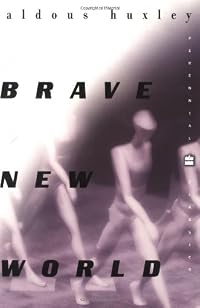
Brave New World
by Aldous Huxley 
On This Page
Description
"Hundreds of years in the future, the World Controllers have created an ideal civilization. Its members, shaped by genetic engineering and behavioral conditioning, are productive and content in roles they have been assigned at conception. Government-sanctioned drugs and recreational sex ensure that everyone is a happy, unquestioning consumer; messy emotions have been anesthetized and private attachments are considered obscene. Only Bernard Marx is discontented, developing an unnatural desire show more for solitude and a distaste for compulsory promiscuity. When he brings back a young man from one of the few remaining Savage Reservations, where the old unenlightened ways still continue, he unleashes a dramatic clash of cultures that will force him to consider whether freedom, dignity, and individuality are worth suffering for." - Dust jacket. show lessTags
Recommendations
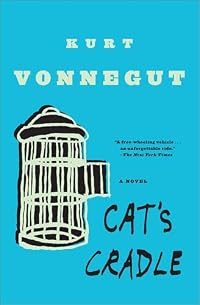
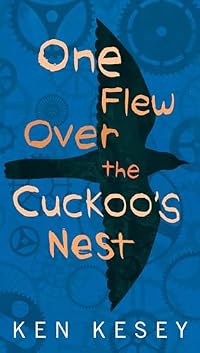
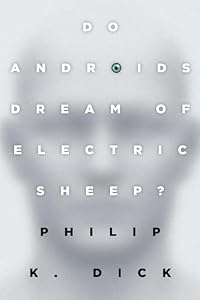
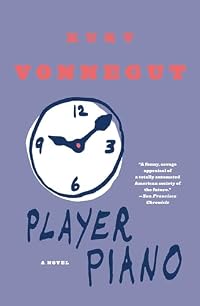



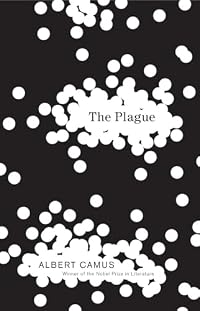
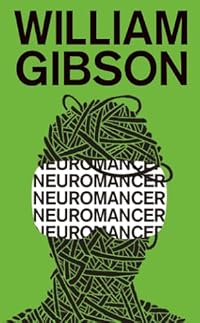
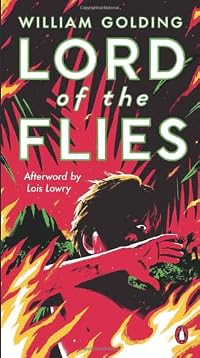
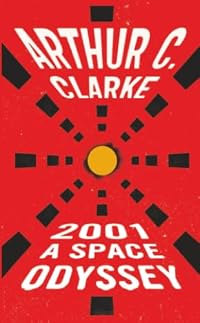

Member Recommendations
zasmine For Orwell was inspired by it. And Orwell's 1984 is as much of a prize as it.
li33ieg 1984, Brave New World and Fahrenheit 451: 3 essential titles that remind us of the need to keep our individual souls pure.
Ludi_Ling Really, the one cannot be mentioned without the other. Actually, apart from the dystopian subject matter, they are very different stories, but serve as a great counterpoint to one another.
anonymous user It's essential to read Huxley's and Orwell's books together. Both present the ultimate version of the totalitarian state, but there the similarities end. While Orwell argues in favour of hate and fear, Huxley suggests that pleasure and drugs would be far more effective as controlling forces. Who was the more prescient prophet? That's what every reader should decide for him- or herself.
834
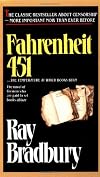
Babou_wk Contre-utopie, société future où l'unique but de la vie est le bonheur. Toute pratique requérant de la réflexion est bannie.
551
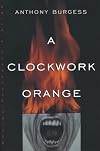
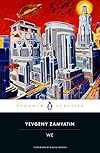
hippietrail The original dystopian novel from which both Huxley and Orwell drew inspiration.
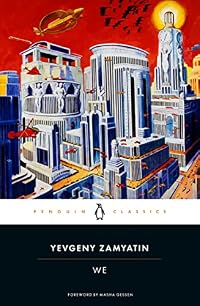
tehran Brave New World was largely inspired by Zamyatin's We.
193
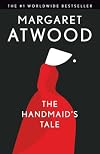
Sylak Caliban in The Tempest has many parallels with John the Savage in Brave New World.
80
artturnerjr If you read only one other dystopian SF story, make it this one (well, you should read 1984, too, but you knew that already, didn't you?).
Also recommended by KayCliff
50
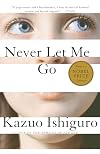
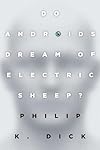

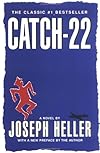
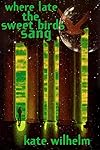
rat_in_a_cage Hinweis auf Rückentext bei »Hier sangen früher Vögel«.
30

leigonj Haldane's ideas of eugenics and ectogenesis, which are laid out alongside others including world government and psychoactive drugs, strongly influenced Huxley's novel.
30
TomWaitsTables The dystopic comedy by by Jasper Fforde, not the adult novel read by housewives.
ngoomie Very different societies, and yet I can see similar threads between the two that indicate to me that Jasper Fforde was likely to some degree inspired by Brave New World, from things like the specific application of the caste system (they are based largely off of immutable traits that affect how one interacts with the world), to near-worship of a mythologized figure referred to as "Our {name}" ("Our Munsell" in Shades of Grey, "Our Ford" in Brave New World) who serves a historically and current societally important role.
42
by Mouseear

fannyprice Both books play with the implications of eugenics and social classes.

Sylak Basically a parody of Wells' own book published seven years earlier.
21

fountainoverflows Shusterman focuses on several teenagers in a world where unwanted youth can be unwound for body parts.
Also recommended by meggyweg
12

sanddancer Some of the weird real life experiments in Elephants on Acid are similar to the science in Brave New World.
23

BookshelfMonstrosity If you appreciated the "what if" quality of The Leftovers and its examination of a changed society in which people are struggling to accept the new normal, you may want to read the dystopian classic Brave New World.
23

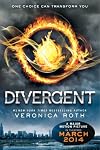
PghDragonMan A rigidly enforced class structure, with everyone happy on their class, makes for a utopian dream . . . Doesn't it?
116
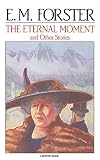
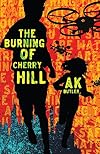


andomck What Fordism could have been and what it actually became.
11
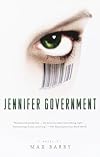
fulner Brave New world is a dystopian novel based on a world with too much enjoyment. Jennifer Government is a dystopian novel based on too much freedom.
22
Member Reviews
One of the few books I’ve returned to repeatedly over the years is Brave New World, Aldous Huxley’s audacious dystopian classic. When I was young I read it for pleasure. In college, I read it as part of an independent study project on utopia and dystopia in fiction. A few weeks ago, spurred by a sale at Audible, I decided to read . . . er, listen . . . to it again. Fortuitously, I finished it up just as Banned Book Week began. Given that Brave New World is still one of the most controversial books of all time (in the top 10 books challenged in the United States last year), it seemed like a perfect choice for this week’s Friday Review.
For the unfamiliar, Huxley’s dystopia is developed in a completely different way from the show more nightmarish authoritarian worlds of, say, 1984 or Anthem. Orwell famously wrote that “[i]f you want a picture of the future, imagine a boot stamping on a human face — forever.” The world of 1984 is grey, depressing, brutal, and no place than any sane person would want to live. Huxley’s world, on the other hand, is at least superficially enticing. Everybody’s happy. Family strife and trauma have been eliminated, since families themselves are obsolete. There’s loads of things to buy and do to keep people occupied outside of work where, by the way, everybody does what they’re designed to do, so nobody gets fed up with their job. Sex as recreation is encouraged, if not mandated. And, if nothing else, there’s soma, a wonder drug that squelches any lingering worries.
Of course, it doesn’t really work out as well as advertised. If it did there’s be no conflict right? Thus no drama, thus no book. We meet characters who are outsiders, even in a world where everyone is so carefully crafted to be one of the horde. Things go completely haywire when a “savage,” that is a man raised outside the carefully crafted world in which most people live, shows up and begins to ask uncomfortable questions. Usually, at this point, I’d say “wackiness ensues,” but any book that ends with a major character killing himself really isn’t all that wacky.
That said, here are a few observations I picked up reading through Brave New World this time.
First, a writerly observation. Huxley starts the book off in a way that just about every “how to” book on writing says you shouldn’t. He doesn’t introduce any of the main characters. He doesn’t kick off the plot to get you hooked. Instead, he spends several chapters data dumping about how the people who live in this world are created and conditioned. It transitions nicely into the introduction of most of the major characters, but I can’t think a modern editor would be pleased with it. Which just goes to show that you follow the rules, unless you’re good enough to break them and get away with it.
A big part of Brave New World is about conditioning. As I said, Huxley spends several chapters at the outset explaining how children are bred, “decanted,” and conditioned via various means into the caste-bound happy adults they will become. What I never really picked up on before was how that conditioning bumps up against a more traditional form of conditioning, in the character of John “the Savage.” Raised on a reservation by a woman from the wider world left behind during vacation, he grows up as hard wired as the two main bottle-raised characters, Lenina and Bernard. That’s particularly evidence in his reaction to Lenina’s sexual advances, his revulsion driven by what he learned about sexuality in the reservation (namely that his mother, who shared Lenina’s conditioning, was outcast and beaten for having sex with several men in the area). Similarly, his drive to seek refuge in Shakespeare seems to come about in the same unthinking way. It all speaks to me as a commentary on how we are all conditioned by our environments, whether intentionally or not.
Which leads to an altogether less comfortable observation. The philosophical climax of the book is a long discussion between John and Mustapha Mond, the Resident World Controller of Western Europe, who basically runs that part of the world, in which they go back and forth about issues of free will, liberty, and the like. Particularly, John asks about the lower caste workers, who do the truly shit jobs. “Don’t they want better out of life?” he asks (I’m paraphrasing). It’s a question that would come to most us, raised as we are on the importance of “life, liberty, and the pursuit of happiness.” Mond’s answer, of course, is “no,” for the simple reason that they are doing the jobs they are conditioned to do, not just physically by psychologically. They don’t know what they’re missing, in other words.
That conversation resonated to me in that it reminds me of the problem of cultural imperialism and human rights. Like I said, most “Western” nations place a high priority on individual liberty, even at the expense of social order or tranquility. But other cultures – I’m thinking of some Asian ones – don’t place the same emphasis on individuals, instead focusing on group dynamics and social functionality. Does Mond’s explanation of why the lower castes aren’t unhappy with their lot apply equally to people who grow up in other cultures who don’t know they’re being denied the individual liberty others take for granted? Of course, the difference between us and them in the real world is much much less than the difference between the Alphas and Deltas of Brave New World. But I’m not sure that doesn’t just dodge the question.
I always viewed John as “our” representative in the book. After all, he’s the character whose upbringing most closely resembles our own. This time through, I came to the conclusion that I don’t want John representing me. He’s a closed minded fundamentalist asshole, only he quotes Shakespeare instead of the Bible. Not that he doesn’t make some potentially valid criticisms of the world he confronts. He’s just written in such a way that he’s not all that sympathetic. Of course, neither are the representatives of the modern world, either. In that sense, Huxley pushes everyone to the extremes of their positions, for whatever reason. It makes the conflicts ring a bit hollow, in the end, and presents an either/or choice, where something more subtle is possible.
John does have one thing going for him, although it ultimately hastens his demise – empathy. When John and his mother return to society with Lenina and Bernard, she quickly slips into a soma-induced coma and dies. In fact, her convalescence causes quite a spectacle, as people aren’t familiar with aging and are conditioned not to be afraid of death. John behaves in quite recognizable ways when his mother dies – he’s grief stricken, angry at those around him who aren’t, and generally miserable.
By contrast, at the end of the book John leaves the city and tries to live a hermit’s existence in the English countryside. That all goes to hell when a small group of workers catch sight of him flogging himself outside (more problems with sex, of course). Word quickly leaks out about the ritual, which a first brings the press to the area and then a collection of gawkers and curiosity seekers. Looking on from helicopters, they don’t see in John what most of us would – a troubled soul in pain trying to deal with something difficult. They see entertainment, because they’ve been conditioned to treat everything outside of work as entertainment, even other people. As a result, there’s no empathy there and they cheer on John’s flogging for the sake of spectacle. It’s quite nauseating, really. Normally we think of dehumanization as something we do to others, but Huxley turns it around.
Ultimately, what I think struck me most on this go round with Brave New World was my willingness to look critically at whether Huxley’s world is really a dystopia. Yes, the idea of a happy, if shallow, existence free from fear and doubt strikes me as inherently wrong in the gut. In fact, my gut reaction to it is similar to my feelings about transhumanism I wrote about a while back. But as in that piece, I have a hard time making a cogent rational argument as to why a world without pain would be a bad thing. Yes, if we were all eternally healthy we’d take it for granted, but is it necessary to be occasionally ill or injured (perhaps seriously) just to appreciate it? Is my reaction to Huxley’s world mere a result of my own conditioning?
Don’t get me wrong – I’m not going to run for president under a “soma for all!” platform anytime soon. In the real world, transitioning to the type of world Huxley proposed would involve so much coercion and violence that, even if the end product would be desirable, the horrors of getting there would be too much. For a fictional world in which to brainstorm ideas, however, I’m much more skeptical of the dystopian label than I’ve been before.
Which just goes to show you why Brave New World endures, both as a work of literature in its own right and as a target for censors. It makes people think, which can lead to all sorts of wackiness.
www.jdbyrne.net show less
For the unfamiliar, Huxley’s dystopia is developed in a completely different way from the show more nightmarish authoritarian worlds of, say, 1984 or Anthem. Orwell famously wrote that “[i]f you want a picture of the future, imagine a boot stamping on a human face — forever.” The world of 1984 is grey, depressing, brutal, and no place than any sane person would want to live. Huxley’s world, on the other hand, is at least superficially enticing. Everybody’s happy. Family strife and trauma have been eliminated, since families themselves are obsolete. There’s loads of things to buy and do to keep people occupied outside of work where, by the way, everybody does what they’re designed to do, so nobody gets fed up with their job. Sex as recreation is encouraged, if not mandated. And, if nothing else, there’s soma, a wonder drug that squelches any lingering worries.
Of course, it doesn’t really work out as well as advertised. If it did there’s be no conflict right? Thus no drama, thus no book. We meet characters who are outsiders, even in a world where everyone is so carefully crafted to be one of the horde. Things go completely haywire when a “savage,” that is a man raised outside the carefully crafted world in which most people live, shows up and begins to ask uncomfortable questions. Usually, at this point, I’d say “wackiness ensues,” but any book that ends with a major character killing himself really isn’t all that wacky.
That said, here are a few observations I picked up reading through Brave New World this time.
First, a writerly observation. Huxley starts the book off in a way that just about every “how to” book on writing says you shouldn’t. He doesn’t introduce any of the main characters. He doesn’t kick off the plot to get you hooked. Instead, he spends several chapters data dumping about how the people who live in this world are created and conditioned. It transitions nicely into the introduction of most of the major characters, but I can’t think a modern editor would be pleased with it. Which just goes to show that you follow the rules, unless you’re good enough to break them and get away with it.
A big part of Brave New World is about conditioning. As I said, Huxley spends several chapters at the outset explaining how children are bred, “decanted,” and conditioned via various means into the caste-bound happy adults they will become. What I never really picked up on before was how that conditioning bumps up against a more traditional form of conditioning, in the character of John “the Savage.” Raised on a reservation by a woman from the wider world left behind during vacation, he grows up as hard wired as the two main bottle-raised characters, Lenina and Bernard. That’s particularly evidence in his reaction to Lenina’s sexual advances, his revulsion driven by what he learned about sexuality in the reservation (namely that his mother, who shared Lenina’s conditioning, was outcast and beaten for having sex with several men in the area). Similarly, his drive to seek refuge in Shakespeare seems to come about in the same unthinking way. It all speaks to me as a commentary on how we are all conditioned by our environments, whether intentionally or not.
Which leads to an altogether less comfortable observation. The philosophical climax of the book is a long discussion between John and Mustapha Mond, the Resident World Controller of Western Europe, who basically runs that part of the world, in which they go back and forth about issues of free will, liberty, and the like. Particularly, John asks about the lower caste workers, who do the truly shit jobs. “Don’t they want better out of life?” he asks (I’m paraphrasing). It’s a question that would come to most us, raised as we are on the importance of “life, liberty, and the pursuit of happiness.” Mond’s answer, of course, is “no,” for the simple reason that they are doing the jobs they are conditioned to do, not just physically by psychologically. They don’t know what they’re missing, in other words.
That conversation resonated to me in that it reminds me of the problem of cultural imperialism and human rights. Like I said, most “Western” nations place a high priority on individual liberty, even at the expense of social order or tranquility. But other cultures – I’m thinking of some Asian ones – don’t place the same emphasis on individuals, instead focusing on group dynamics and social functionality. Does Mond’s explanation of why the lower castes aren’t unhappy with their lot apply equally to people who grow up in other cultures who don’t know they’re being denied the individual liberty others take for granted? Of course, the difference between us and them in the real world is much much less than the difference between the Alphas and Deltas of Brave New World. But I’m not sure that doesn’t just dodge the question.
I always viewed John as “our” representative in the book. After all, he’s the character whose upbringing most closely resembles our own. This time through, I came to the conclusion that I don’t want John representing me. He’s a closed minded fundamentalist asshole, only he quotes Shakespeare instead of the Bible. Not that he doesn’t make some potentially valid criticisms of the world he confronts. He’s just written in such a way that he’s not all that sympathetic. Of course, neither are the representatives of the modern world, either. In that sense, Huxley pushes everyone to the extremes of their positions, for whatever reason. It makes the conflicts ring a bit hollow, in the end, and presents an either/or choice, where something more subtle is possible.
John does have one thing going for him, although it ultimately hastens his demise – empathy. When John and his mother return to society with Lenina and Bernard, she quickly slips into a soma-induced coma and dies. In fact, her convalescence causes quite a spectacle, as people aren’t familiar with aging and are conditioned not to be afraid of death. John behaves in quite recognizable ways when his mother dies – he’s grief stricken, angry at those around him who aren’t, and generally miserable.
By contrast, at the end of the book John leaves the city and tries to live a hermit’s existence in the English countryside. That all goes to hell when a small group of workers catch sight of him flogging himself outside (more problems with sex, of course). Word quickly leaks out about the ritual, which a first brings the press to the area and then a collection of gawkers and curiosity seekers. Looking on from helicopters, they don’t see in John what most of us would – a troubled soul in pain trying to deal with something difficult. They see entertainment, because they’ve been conditioned to treat everything outside of work as entertainment, even other people. As a result, there’s no empathy there and they cheer on John’s flogging for the sake of spectacle. It’s quite nauseating, really. Normally we think of dehumanization as something we do to others, but Huxley turns it around.
Ultimately, what I think struck me most on this go round with Brave New World was my willingness to look critically at whether Huxley’s world is really a dystopia. Yes, the idea of a happy, if shallow, existence free from fear and doubt strikes me as inherently wrong in the gut. In fact, my gut reaction to it is similar to my feelings about transhumanism I wrote about a while back. But as in that piece, I have a hard time making a cogent rational argument as to why a world without pain would be a bad thing. Yes, if we were all eternally healthy we’d take it for granted, but is it necessary to be occasionally ill or injured (perhaps seriously) just to appreciate it? Is my reaction to Huxley’s world mere a result of my own conditioning?
Don’t get me wrong – I’m not going to run for president under a “soma for all!” platform anytime soon. In the real world, transitioning to the type of world Huxley proposed would involve so much coercion and violence that, even if the end product would be desirable, the horrors of getting there would be too much. For a fictional world in which to brainstorm ideas, however, I’m much more skeptical of the dystopian label than I’ve been before.
Which just goes to show you why Brave New World endures, both as a work of literature in its own right and as a target for censors. It makes people think, which can lead to all sorts of wackiness.
www.jdbyrne.net show less
Huxley wrote "Brave New World" at a time when totalitarianism was not just on the rise but in vogue among the wealthy classes, many of whom managed to maintain their positions even as the rest of the world experienced the Great Depression. If you were to ponder how the upper classes would prefer to deal with the riff-raff's troubles, you too might come up with similar answers to what Huxley presents -- make them go away via drugs and mass denial (things a culture awash in advertising accomplishes nicely). In some respects, this is how some in power generally might prefer to deal with social issues and the deeper questions about the meaning of life. Orwell's "1984" -- the novel often compared with Brave New World -- was written at the show more end of WWII where different circumstances prevailed, being a war caused by dictators whose upper classes ignored the problems of the poor and disenfranchised -- like what Huxley was warning about. In any case, well-crafted distopian novels like "Brave New World" force us to take a close look at the values of our own societies and look into ourselves to see how much we've internalized. show less
Why Brave New World?
Isaac Asimov once said, “Any book worth banning is a book worth reading.” First published in 1932, Brave New World has a long history of being banned. Brave New World depicts a totalitarian and somber future where the world has been taken over by a few and transgressions and disobedience has no space. However, the fundamental question the book raises is who decides the virtue and qualities of this new utopian world.
Prophetic, prescient and apocalyptic, Brave New World is all the more relevant in the present times where humanity is lulled and subdued into false sense of security and passive obedience by means of consumerism, utilitarianism, indulgence and pleasure.
To begin with, Brave New World is a portrait of show more dystopian world set in London in A.F. 632, that is, 632 years after Henry Ford first produced the Model T. In contrast to the 19th century which was full of hope and stability, the 20th century especially the latter half saw great upheavals in form of the First World War, the Second World War along with the advancement in modern technology, means of communication, nuclear technology and thus, a feeling of stability gave way to uncertainty, confusion, doubt, anxiety and above all, instability. A world as known is changing, traditional morality is questioned and debunked and this turmoil is also reflected in literature of the period. Whereas, the 18th and 19th century produced the variations of utopia in Swift’s society of Houyhnhnms, H.G. Wells’ The Time Machine, The War of the World; the 20th century saw some great works of dystopia or anti-utopia such as Orwell’s 1984, Huxley’s Brave New World and the like.
Huxley’s Futuristic Vision
Huxley’s vision of future is bleak, dark and grim as opposed to the exuberance and idealism reflected in Wells’ works. Often cited as a satire of Wells’ vision, Brave New World depicts a totalitarian world whose motto is “COMMUNITY, IDENTITY, STABILITY”. A society where homogeneity and stability is achieved and maintained through genetic engineering, endless conditioning, mindless consumption, defined social roles, mind altering drugs et cetera. A society which is engineered around a strict division of castes, Alphas, the most intelligent beings, Betas, Gammas, Deltas and Epsilons; where everybody has a predestined social role; where babies are hatched in a bottle instead of being born and citizens are conditioned into servility and compliance, material consumption, promiscuity, debauchery and sexual orgies through hypnopaedia or sleep-teaching and drug like ‘soma’ is dispersed by the government to maintain the illusion of happiness and stability.
In the very opening scene, the readers’ are plunged into the world which puts emphasis on control and happiness engineered by control and conditioning. The world where progress is achieved through Bokanovsky’s Process, “One egg, one embryo, one adult – normality. But a bokanovskified egg will bud, will proliferate, will divide. From eight to ninety-six buds, and every bud will grow into a perfectly formed embryo, and every embryo into a full-sized adult. Making ninety-six human beings grow where only one grew before. Progress”. Social stability, the motto underlying every action is achieved through Bokanovsky’s Process, “Standard men and women; in uniform batches. The whole of a small factory staffed with the products of a single bokanovskified egg. Ninety-six identical twins working ninety-six identical machines.” The society which places reliance upon homogeneity, identity and similitude and where difference or heterogeneity is perceived as a threat to stability and hence, every caste is predestined and preconditioned in the Hatchery itself, “We also predestine and condition. We decant our babies as socialized human beings, as Alphas or Epsilons, as future sewage works or future…” As happiness is the ultimate virtue, emotions are contemplated as a menace to stability, relationships among the members of the family group is labelled as obscene and thus, words like mother, father are expunged from the memory of the community as a whole, “The world was full of fathers – was therefore full of misery; full of mothers – therefore of every kind of perversion from sadism to chastity; full of brothers, sisters, uncles, aunts – full of madness and suicide”, “…nobody had ever heard of a father.” As “everyone belongs to everyone else”, children are encouraged to involve in hedonism and erotic play and monogamy is seen as an evil.
Is civilization better than savagery?
Although no effort is spared to program the individuals into servility, everything is not well. Bernard Marx and Helmholtz Watson, Alpha Plus males’ starts nurturing transgressive tendencies. Bernard, small and ugly pines for something more than a cell in the social body, for freedom, “…I want to know what passion is… I want to feel something strongly.” On the periphery of this so called utopian and civilized world still exists the old world where babies are not hatched but born, where illnesses and diseases have not been eliminated, where human body does not retain the youth forever, where emotions run deep, where marriages still take place, “nobody’s supposed to belong to more than one person” and death of the dear one is mourned. Bernard brings back John, the savage from this world into civilization; who unable to grasp the futility of such existence adorns the role of the savior. Probing the virtues of such existence, he bellows,
“’But I don’t want comfort. I want God, I want poetry, I want real danger, I want freedom, I want goodness. I want sin.’
…’I’m claiming the right to be unhappy.
‘Not to mention the right to grow old and ugly and impotent; the right to have syphilis and cancer; the right to have too little to eat; the right to be lousy; the right to live in constant of what may happen tomorrow; the right to catch typhoid; the right to be tortured by unspeakable pains of every kind.’
…’I claim them all…’”
Self-exiling himself to a deserted island, John is yet again discovered by the society and his acts of atonement ultimately becomes an act of entertainment for others. In a new Foreword to Brave New World written in 1946, Huxley stated that “If I were now to rewrite the book, I would offer the Savage a third alternative. Between the utopian and the primitive horns of his dilemma would lie the possibility of sanity…” As prophesied by Huxley, this brave new world is already upon us. With this masterpiece set in future, Huxley shocks the readers out of their false sense of security, reveals the nightmares that the near future holds for us.
Brave New World has been classified as a classic for a reason and despite some structural weaknesses and flaws which perturbs the reader for a little while, the book is a must, must read. show less
Isaac Asimov once said, “Any book worth banning is a book worth reading.” First published in 1932, Brave New World has a long history of being banned. Brave New World depicts a totalitarian and somber future where the world has been taken over by a few and transgressions and disobedience has no space. However, the fundamental question the book raises is who decides the virtue and qualities of this new utopian world.
Prophetic, prescient and apocalyptic, Brave New World is all the more relevant in the present times where humanity is lulled and subdued into false sense of security and passive obedience by means of consumerism, utilitarianism, indulgence and pleasure.
To begin with, Brave New World is a portrait of show more dystopian world set in London in A.F. 632, that is, 632 years after Henry Ford first produced the Model T. In contrast to the 19th century which was full of hope and stability, the 20th century especially the latter half saw great upheavals in form of the First World War, the Second World War along with the advancement in modern technology, means of communication, nuclear technology and thus, a feeling of stability gave way to uncertainty, confusion, doubt, anxiety and above all, instability. A world as known is changing, traditional morality is questioned and debunked and this turmoil is also reflected in literature of the period. Whereas, the 18th and 19th century produced the variations of utopia in Swift’s society of Houyhnhnms, H.G. Wells’ The Time Machine, The War of the World; the 20th century saw some great works of dystopia or anti-utopia such as Orwell’s 1984, Huxley’s Brave New World and the like.
Huxley’s Futuristic Vision
Huxley’s vision of future is bleak, dark and grim as opposed to the exuberance and idealism reflected in Wells’ works. Often cited as a satire of Wells’ vision, Brave New World depicts a totalitarian world whose motto is “COMMUNITY, IDENTITY, STABILITY”. A society where homogeneity and stability is achieved and maintained through genetic engineering, endless conditioning, mindless consumption, defined social roles, mind altering drugs et cetera. A society which is engineered around a strict division of castes, Alphas, the most intelligent beings, Betas, Gammas, Deltas and Epsilons; where everybody has a predestined social role; where babies are hatched in a bottle instead of being born and citizens are conditioned into servility and compliance, material consumption, promiscuity, debauchery and sexual orgies through hypnopaedia or sleep-teaching and drug like ‘soma’ is dispersed by the government to maintain the illusion of happiness and stability.
In the very opening scene, the readers’ are plunged into the world which puts emphasis on control and happiness engineered by control and conditioning. The world where progress is achieved through Bokanovsky’s Process, “One egg, one embryo, one adult – normality. But a bokanovskified egg will bud, will proliferate, will divide. From eight to ninety-six buds, and every bud will grow into a perfectly formed embryo, and every embryo into a full-sized adult. Making ninety-six human beings grow where only one grew before. Progress”. Social stability, the motto underlying every action is achieved through Bokanovsky’s Process, “Standard men and women; in uniform batches. The whole of a small factory staffed with the products of a single bokanovskified egg. Ninety-six identical twins working ninety-six identical machines.” The society which places reliance upon homogeneity, identity and similitude and where difference or heterogeneity is perceived as a threat to stability and hence, every caste is predestined and preconditioned in the Hatchery itself, “We also predestine and condition. We decant our babies as socialized human beings, as Alphas or Epsilons, as future sewage works or future…” As happiness is the ultimate virtue, emotions are contemplated as a menace to stability, relationships among the members of the family group is labelled as obscene and thus, words like mother, father are expunged from the memory of the community as a whole, “The world was full of fathers – was therefore full of misery; full of mothers – therefore of every kind of perversion from sadism to chastity; full of brothers, sisters, uncles, aunts – full of madness and suicide”, “…nobody had ever heard of a father.” As “everyone belongs to everyone else”, children are encouraged to involve in hedonism and erotic play and monogamy is seen as an evil.
Is civilization better than savagery?
Although no effort is spared to program the individuals into servility, everything is not well. Bernard Marx and Helmholtz Watson, Alpha Plus males’ starts nurturing transgressive tendencies. Bernard, small and ugly pines for something more than a cell in the social body, for freedom, “…I want to know what passion is… I want to feel something strongly.” On the periphery of this so called utopian and civilized world still exists the old world where babies are not hatched but born, where illnesses and diseases have not been eliminated, where human body does not retain the youth forever, where emotions run deep, where marriages still take place, “nobody’s supposed to belong to more than one person” and death of the dear one is mourned. Bernard brings back John, the savage from this world into civilization; who unable to grasp the futility of such existence adorns the role of the savior. Probing the virtues of such existence, he bellows,
“’But I don’t want comfort. I want God, I want poetry, I want real danger, I want freedom, I want goodness. I want sin.’
…’I’m claiming the right to be unhappy.
‘Not to mention the right to grow old and ugly and impotent; the right to have syphilis and cancer; the right to have too little to eat; the right to be lousy; the right to live in constant of what may happen tomorrow; the right to catch typhoid; the right to be tortured by unspeakable pains of every kind.’
…’I claim them all…’”
Self-exiling himself to a deserted island, John is yet again discovered by the society and his acts of atonement ultimately becomes an act of entertainment for others. In a new Foreword to Brave New World written in 1946, Huxley stated that “If I were now to rewrite the book, I would offer the Savage a third alternative. Between the utopian and the primitive horns of his dilemma would lie the possibility of sanity…” As prophesied by Huxley, this brave new world is already upon us. With this masterpiece set in future, Huxley shocks the readers out of their false sense of security, reveals the nightmares that the near future holds for us.
Brave New World has been classified as a classic for a reason and despite some structural weaknesses and flaws which perturbs the reader for a little while, the book is a must, must read. show less
I've had this book on my TBR for about 4 or 5 years now and I'm so glad I was finally able to pick it up. It was absolutely everything I thought it was going to be. I was so engrossed and literally couldn't put it down. Mindblowingly fantastic (in my opinion anyways).
Brave New World is about a society that is completely controlled from before birth and all the way through their lives with conditioning and scientific influence. All babies are born from test tubes and are "conditioned" (raised) in centres that assure that they will be perfect adults that fit into society absolutely. This is achieved through pre-determining their rank and how they will be conditioned such as are they going to be scientists or factory workers. They are then show more subjected to conditioning that moulds everyone to believe that they are living the perfect life. In my opinion this entire concept is what makes the book mind blowing because it is totalitarian to the point of dsytopian.
The portrayal of sex in the novel is another key point throughout this novel and I thought it was executed brilliantly. Sex is viewed differently from our perceptions; practically everyone just has sex and it is a form of entertainment. They start from an early age and no one marries or falls in love. They just have sex with someone a couple times then move onto the next one. This was so interesting to watch to play through.
Also the use of Soma (a drug that induces euphoria and in heavier doses, deep sleep periods called soma holidays) was incredibly well done. The citizens of this controlled world rely on the drug to get on with day to day life. It's controlled addiction.
The characters themselves didn't seem to be used as main plot points, except for John, the Savage, who is the contrast in the book, who attempts to prove that liberty and the happiness/pain that goes with it is superior to this controlled and conditioned civilisation. John serves as the reader's opinion on the aspects of the controlled environment because it is in our nature to view this sort of culture as disturbing and horrifying.
This book really brings about some important philosophical and ethical questions about whether it is right or wrong to condition (passively control) everyone to adapt to a set of ideals that brings about general happiness for everyone. It takes away our born right of freedom and liberality and forces us to be happy. What is the difference between forcing someone to be happy or sad when in the end you're still forcing someone to do something or think a certain way, when they have no actual choice? This book definitely induces these types of philosophical ponders.
Absolutely amazing premise and execution. Would recommend to pretty much everyone who doesn't mind a small amount of mind-fuckery.
[RE-READ 13th September 2015] Feel pretty much the same about this book. It's awesome. show less
Brave New World is about a society that is completely controlled from before birth and all the way through their lives with conditioning and scientific influence. All babies are born from test tubes and are "conditioned" (raised) in centres that assure that they will be perfect adults that fit into society absolutely. This is achieved through pre-determining their rank and how they will be conditioned such as are they going to be scientists or factory workers. They are then show more subjected to conditioning that moulds everyone to believe that they are living the perfect life. In my opinion this entire concept is what makes the book mind blowing because it is totalitarian to the point of dsytopian.
The portrayal of sex in the novel is another key point throughout this novel and I thought it was executed brilliantly. Sex is viewed differently from our perceptions; practically everyone just has sex and it is a form of entertainment. They start from an early age and no one marries or falls in love. They just have sex with someone a couple times then move onto the next one. This was so interesting to watch to play through.
Also the use of Soma (a drug that induces euphoria and in heavier doses, deep sleep periods called soma holidays) was incredibly well done. The citizens of this controlled world rely on the drug to get on with day to day life. It's controlled addiction.
The characters themselves didn't seem to be used as main plot points, except for John, the Savage, who is the contrast in the book, who attempts to prove that liberty and the happiness/pain that goes with it is superior to this controlled and conditioned civilisation. John serves as the reader's opinion on the aspects of the controlled environment because it is in our nature to view this sort of culture as disturbing and horrifying.
This book really brings about some important philosophical and ethical questions about whether it is right or wrong to condition (passively control) everyone to adapt to a set of ideals that brings about general happiness for everyone. It takes away our born right of freedom and liberality and forces us to be happy. What is the difference between forcing someone to be happy or sad when in the end you're still forcing someone to do something or think a certain way, when they have no actual choice? This book definitely induces these types of philosophical ponders.
Absolutely amazing premise and execution. Would recommend to pretty much everyone who doesn't mind a small amount of mind-fuckery.
[RE-READ 13th September 2015] Feel pretty much the same about this book. It's awesome. show less
"O brave new world, that hath such people in it!"
Brave New World is a classic dystopian novel set in a futuristic world where science and pleasure has replaced individualism and feudalism. It portrays a totalitarianism society achieved through test tube babies, and state ordered hypnotism, a caste system where a person's position in life has been pre-ordained even before they were even 'born'. In this world it's inhabitants are controlled not by military force but by drug-induced happiness, using a substance known as soma.
At the core of this book is an horrific use of eugenics and explores the negatives of a society which on the face of it is successful but where freedom and personal responsibility has been sacrificed for peace and show more stability.
In this novel I believe that Huxley wants the reader to look as the dangers of using technology to control society and to convey the idea that it cannot solve all the problems of the world alone. First published in 1932 this book seems even more relevant today where computers and gadgets are ever more prevalent in our lives, a society based around consumerism, where it is easier and often cheaper to buy new rather than to make and mend.
When this novel was first published it was a against a backdrop of a growth in fascism, in particular in Germany, where minorities were gradually being persecuted and the state was promoting its own form of eugenics. Thus Huxley asks us to consider the dangers of an all-powerful state. Despite everyone appearing to being equal, there is deep inequality and unfairness bubbling away under the surface? As a society we must not allow the state to take more and more of our civil liberties by stealth but instead we as individuals must therefore also take some personal responsibility for our own actions and reactions.
However, I have to say that it also lacked a little something; a nasty side. Unlike in Orwell's '1984' or even in a later novel like Attwood's 'A Handmaid's Tale' the state appears rather benign. When Bernard and his friend Helmholtz seems to challenge the state the police arrest them using soma vapour rather than batons, then their punishment is banishment to a distant island with other like minded individuals rather than anything more sinister. This lack of an undercurrent of malice somehow seemed a little detrimental to the whole. Overall, Brave New World is a pretty scary depiction of what could be humanity's future. It is at times a rather complex read but I thoroughly enjoyed reading it as I found it thought provoking. show less
Brave New World is a classic dystopian novel set in a futuristic world where science and pleasure has replaced individualism and feudalism. It portrays a totalitarianism society achieved through test tube babies, and state ordered hypnotism, a caste system where a person's position in life has been pre-ordained even before they were even 'born'. In this world it's inhabitants are controlled not by military force but by drug-induced happiness, using a substance known as soma.
At the core of this book is an horrific use of eugenics and explores the negatives of a society which on the face of it is successful but where freedom and personal responsibility has been sacrificed for peace and show more stability.
In this novel I believe that Huxley wants the reader to look as the dangers of using technology to control society and to convey the idea that it cannot solve all the problems of the world alone. First published in 1932 this book seems even more relevant today where computers and gadgets are ever more prevalent in our lives, a society based around consumerism, where it is easier and often cheaper to buy new rather than to make and mend.
When this novel was first published it was a against a backdrop of a growth in fascism, in particular in Germany, where minorities were gradually being persecuted and the state was promoting its own form of eugenics. Thus Huxley asks us to consider the dangers of an all-powerful state. Despite everyone appearing to being equal, there is deep inequality and unfairness bubbling away under the surface? As a society we must not allow the state to take more and more of our civil liberties by stealth but instead we as individuals must therefore also take some personal responsibility for our own actions and reactions.
However, I have to say that it also lacked a little something; a nasty side. Unlike in Orwell's '1984' or even in a later novel like Attwood's 'A Handmaid's Tale' the state appears rather benign. When Bernard and his friend Helmholtz seems to challenge the state the police arrest them using soma vapour rather than batons, then their punishment is banishment to a distant island with other like minded individuals rather than anything more sinister. This lack of an undercurrent of malice somehow seemed a little detrimental to the whole. Overall, Brave New World is a pretty scary depiction of what could be humanity's future. It is at times a rather complex read but I thoroughly enjoyed reading it as I found it thought provoking. show less
A reread for my book club 😉
I first read this book as a tween/teen, with the reverence appropriate when reading an Important Classic. Thankfully, I don’t do this any more. I also have to confess that the vicious satire flew right over my teen head (not surprising, really).
The satire aspect was what I enjoyed the most this time. (What does this say about being an adult?😆) Henry Ford worship? Hilarious. Both polyamory and chaste monogamy get crucified, and so do religion and atheism. This world’s Solidarity Services with their Solidarity Hymns read like a pimped up version of a corporate team building exercise. (“Orgy-porgy!”) Naturally, we will go to a darker place with this by the end.
Otherwise, this book is a thought show more experiment that is trying to be a novel. Sometimes it succeeds (I liked the description of John’s childhood, for example). The dystopian society, with its castes, genetic predestination and conditioning, is quite horrifying. Everyone is happy, though (oh, the irony), they love their place as this or that cog in a society’s machine. They also get soma, the happy drug (I thought of our social media fixes).
I do have questions:
🤔 Giving your entire population access to a happy drug that apparently can kill you if you overdose enough is a bad, bad idea. Sure, the government controls the access, but has the author ever met a drug addict? How is this dystopia still functioning?
🤔 People are conditioned not to have close relationships with anyone, no intense emotions. Considering what we know about humans as social animals and emotional support that children need growing up, this should be a society of psychopaths. Ouch. I do like my dystopias to be more realistic, you know.
The “brave new world” has taken sexual freedom to extreme. Monogamy is a very very weird thing, nobody does this, “everyone belongs to everyone else.” Fair enough. But guess what, women are sex objects, they are ready to jump at any and every man, and they enjoy it, too, because conditioning. (Also, only the men seem to fly those helicopters the characters are always swishing about in. Women don’t have the skills, I suppose.) This dystopia is every macho’s wet dream, my friends! Please don’t ever use the word “pneumatic” in conversation with me. Those who have read the book will know what I mean.
As is usual in thought experiment books, the characters are not very interesting. They are vehicles that take the author’s ideas forward.
Since A Brave New World was written in the 1930’s, some things have aged badly. Apparently “Negro ovaries” produce way more clones than the Caucasian ones. Gaah. Someone is described as an “octoroon”. What is that? I consulted a dictionary – “a person who is one-eighth black by descent.” Ouch.
So, it was a thought-provoking reread, but there is no love lost between the book and me. I did get some cool quotes out of this:
“And being contented has none of the glamour of a good fight against misfortune, none of the picturesqueness of a struggle with temptation, or a fatal overthrow by passion or doubt. Happiness is never grand.”
“But I don’t want comfort. I want God, I want poetry, I want real danger, I want freedom, I want goodness. I want sin.”
“In fact,” said Mustapha Mond, “you are claiming the right to be unhappy.” show less
I first read this book as a tween/teen, with the reverence appropriate when reading an Important Classic. Thankfully, I don’t do this any more. I also have to confess that the vicious satire flew right over my teen head (not surprising, really).
The satire aspect was what I enjoyed the most this time. (What does this say about being an adult?😆) Henry Ford worship? Hilarious. Both polyamory and chaste monogamy get crucified, and so do religion and atheism. This world’s Solidarity Services with their Solidarity Hymns read like a pimped up version of a corporate team building exercise. (“Orgy-porgy!”) Naturally, we will go to a darker place with this by the end.
Otherwise, this book is a thought show more experiment that is trying to be a novel. Sometimes it succeeds (I liked the description of John’s childhood, for example). The dystopian society, with its castes, genetic predestination and conditioning, is quite horrifying. Everyone is happy, though (oh, the irony), they love their place as this or that cog in a society’s machine. They also get soma, the happy drug (I thought of our social media fixes).
I do have questions:
🤔 Giving your entire population access to a happy drug that apparently can kill you if you overdose enough is a bad, bad idea. Sure, the government controls the access, but has the author ever met a drug addict? How is this dystopia still functioning?
🤔 People are conditioned not to have close relationships with anyone, no intense emotions. Considering what we know about humans as social animals and emotional support that children need growing up, this should be a society of psychopaths. Ouch. I do like my dystopias to be more realistic, you know.
The “brave new world” has taken sexual freedom to extreme. Monogamy is a very very weird thing, nobody does this, “everyone belongs to everyone else.” Fair enough. But guess what, women are sex objects, they are ready to jump at any and every man, and they enjoy it, too, because conditioning. (Also, only the men seem to fly those helicopters the characters are always swishing about in. Women don’t have the skills, I suppose.) This dystopia is every macho’s wet dream, my friends! Please don’t ever use the word “pneumatic” in conversation with me. Those who have read the book will know what I mean.
As is usual in thought experiment books, the characters are not very interesting. They are vehicles that take the author’s ideas forward.
Since A Brave New World was written in the 1930’s, some things have aged badly. Apparently “Negro ovaries” produce way more clones than the Caucasian ones. Gaah. Someone is described as an “octoroon”. What is that? I consulted a dictionary – “a person who is one-eighth black by descent.” Ouch.
So, it was a thought-provoking reread, but there is no love lost between the book and me. I did get some cool quotes out of this:
“And being contented has none of the glamour of a good fight against misfortune, none of the picturesqueness of a struggle with temptation, or a fatal overthrow by passion or doubt. Happiness is never grand.”
“But I don’t want comfort. I want God, I want poetry, I want real danger, I want freedom, I want goodness. I want sin.”
“In fact,” said Mustapha Mond, “you are claiming the right to be unhappy.” show less
I read this as a damning indictment of technological progress. Huxley's dystopia is the inevitable endpoint of our techno-utopian dogmatic rationalist worldview. It is a prophetic critique of modern consumer culture and the pharmacuetical industry.
"But industrial civilization is only possible when there's no self-denial. Self-indulgence up to the very limits imposed by hygiene and economics. Otherwise the wheels stop turning." (237)
"But industrial civilization is only possible when there's no self-denial. Self-indulgence up to the very limits imposed by hygiene and economics. Otherwise the wheels stop turning." (237)
Members
- Recently Added By
Lists

The Guardian's 1000 Novels Everyone Must Read
1,005 works; 546 members

1001 Books You Must Read Before You Die
1,448 works; 1,132 members
Best Dystopias
280 works; 276 members

Best Science Fiction Novels
816 works; 430 members
501 Must-Read Books
508 works; 71 members
BBC Big Read
191 works; 46 members

Classics you know you should have read but probably haven't
421 works; 407 members
Survey of Classic Science Fiction
171 works; 48 members

Radcliffe's 100 Best Novel of the 20th Century
100 works; 32 members

Recommend the 20 best books you've read in the last five years
2,167 works; 606 members

Newsweek's Top 100 Books: The Meta-List
100 works; 18 members
Best of British Literature
226 works; 40 members
20th Century Literature
1,161 works; 54 members
Le Monde - Les 100 livres du siècle
121 works; 25 members

Read the book and saw the movie
1,170 works; 195 members
NPRs your picks: top 100 Sci-Fi/Fantasy books
297 works; 78 members
New York Public Library's Books of the Century
120 works; 20 members
Favourite Books
1,817 works; 316 members

The Telegraph's 110 Best Books: The Perfect Library
101 works; 18 members
BBC's 100 Novels That Shaped Our World
100 works; 22 members
Best Political Fiction
92 works; 12 members
Banned Books Week 2014
268 works; 63 members
Folio Society
831 works; 53 members

New York Public Library's Books of the Century - All
170 works; 14 members
Larry McCaffery's 20th Century Greatest Hits: 100 English-Language Books
103 works; 12 members
Books That Changed Me
156 works; 47 members

Best Psychological Fiction
81 works; 16 members

Best Books Set in London
157 works; 40 members

The Guardian's 100 greatest novels of all time
100 works; 16 members

In or About the 1930s
198 works; 26 members
Harold Bloom - The Western Canon: D. The Chaotic Age
833 works; 24 members

Books I've Read More Than Once
602 works; 49 members
LibraryThingers' 1001 Books You Must Read Before You Die
442 works; 30 members
Dystopian and Apocalyptic Literature
350 works; 74 members

Survey of Science Fiction and Fantasy
101 works; 13 members

Books Set in Great Britain
191 works; 13 members

Books Featured on Gilmore Girls
307 works; 21 members
Futurism Works
25 works; 6 members
Banned or Challenged Books
400 works; 41 members
Canon de la narrativa universal del siglo XX
254 works; 6 members
Bibliography for Among Others
159 works; 15 members

Survey of Classic Dystopias
29 works; 4 members
A Syllabus and Book List for Novice Students of Science Fiction Literature
25 works; 10 members

Weird and Weirder Fiction
266 works; 34 members

Blue Pyramid 1,276 Best Books of All Time
1,248 works; 32 members

Slipstream or Interstitial Fiction
160 works; 19 members

Books You Read During High School (For School)
301 works; 53 members

Best high-school English books reread later in life
30 works; 19 members

1964 College Preparatory Reading List
202 works; 8 members
100 Most Recommended Works
100 works; 11 members
Great Books Favorites
71 works; 6 members
BBC Big Read
100 works; 10 members
1,001 BYMRBYD Concensus
723 works; 27 members
Science Fiction
42 works; 7 members

A Novel Cure
742 works; 23 members

Short and Sweet
243 works; 23 members
Readable Classics
110 works; 15 members

Works with inappropriate subject headings on LibraryThing
35 works; 5 members

Fiction For Men
142 works; 11 members
100 World Classics
99 works; 15 members
Mensa for Kids Excellence in Reading Award Program (Grades 9-12)
116 works; 5 members
Jordan B. Peterson's Recommended Books
104 works; 5 members
Page Turners
185 works; 11 members
Alternate Englands
34 works; 7 members

The Guardian's 100 Best Novels Written in English
105 works; 13 members
Books tagged favorites
390 works; 30 members
Top 100 Science-Fiction, Fantasy Books
18 works; 4 members
Mind Expanding Books by hackerkid
581 works; 8 members

Most Disturbing Books
124 works; 27 members
Unbound Worlds 100 Best SF Books
100 works; 8 members

Allie's Favourite 150 Books
145 works; 3 members
Mensa for Kids Excellence in Reading Award Program (Grades 9-12)
116 works; 3 members
The Greatest Books
99 works; 5 members

Amanda's Guaranteed Books
110 works; 5 members

Modernism
140 works; 8 members
1930s
262 works; 5 members

S.F. Masterworks (Complete)
229 works; 15 members

An End of the World Reading List
63 works; 4 members
The College Board: 101 Great Books Recommended for College-Bound Readers
111 works; 7 members

Rory Gilmore Book Club
193 works; 5 members

BBC Top Books
78 works; 3 members

Shaykh Hamza's Book Recommendations
439 works; 3 members
Books Featured on Readers' Review of the Diane Rehm Show
161 works; 8 members

David Brin: Dire Warnings And Self-Preventing Prophecies
17 works; 3 members

Top 50 Favourite Books
50 works; 2 members

Speculative Fiction to Read
706 works; 32 members

Huxley's reading log 2016
84 works; 3 members

Dystopian Novels you should read
25 works; 2 members
The Modern Library's 100 Best Novels: The Board's List
85 works; 6 members

CCE 1000 Good Books List
1,033 works; 12 members
Best Books of the 20th Century
193 works; 5 members

Books Read in 2023
5,547 works; 144 members
Overdue Podcast
803 works; 9 members
Must read
30 works; 2 members

Books Read in 2020
4,379 works; 124 members

Worst books read in 2011
36 works; 20 members

recalling favorites...
105 works; 2 members

What are your favourite books?
121 works; 11 members

Books Read in 2017
4,249 works; 130 members
Books on my Kindle
162 works; 3 members

99 Bücher, die man gelesen haben muss
37 works; 1 member

To Read
4 works; 1 member
Literature which inspired Pop songs
85 works; 9 members

100
56 works; 1 member

Lit Lattes Ep 005
12 works; 1 member

Books Read in 2004
196 works; 7 members
Trinity College Booklist (1951): Class Ten, English Literature
358 works; 5 members

Books Set in London
49 works; 3 members

Speculative Fiction: The Classics
36 works; 5 members
DELETE
48 works; 2 members

Midwest
16 works; 2 members

aborted books in 2023
11 works; 1 member

Isaac Arthur’s Book Recommendations
98 works; 3 members
http://thegreatestbooks.org's Greatest Fiction Books
59 works; 1 member

Fiction: Classics, Literary, Short Stories
85 works; 1 member

My favourite books
96 works; 3 members

Tammen Keltainen kirjasto
81 works; 1 member

Favourite Books
50 works; 1 member
American Lit for Eng 11 Research Project
368 works; 6 members
Les 100 principaux titres de la science-fiction (1981)
126 works; 3 members

Book Club suggestions
20 works; 1 member

Books That Changed Our Perspective
423 works; 166 members

recommended
8 works; 1 member
to read list
2 works; 1 member
In Our Time books
4,934 works; 2 members

Retrospective of 20th- and 21st-century literature
154 works; 1 member
Our Favorite Banned Books
138 works; 122 members
Classic Sci-Fi
27 works; 1 member
'Books You Can't Live Without: The Top 100', The Guardian, 2007
156 works; 7 members
Books in Riverdale
123 works; 3 members

Recommended Reading : 600 Classics Reviewed, Editors of Salem Press, 2015
634 works; 6 members

el
1,139 works; 1 member

Books Read in 2024
4,623 works; 126 members
The 150 Greatest Novels of All Time
150 works; 6 members
Canon de la narrativa universal del s. XX (cicutadry)
499 works; 3 members
Books We Couldn't Put Down
443 works; 197 members
BitLife
212 works; 4 members

Books Cited in Blueprint by Nicholas Christakis
261 works; 1 member
Modern Library's 100 Best Novels
100 works; 2 members

AbeBooks: 50 essential science fiction books
50 works; 6 members
School Made Us Read It
380 works; 196 members
NPR Books You Love: Books That Shaped You in High School
26 works; 1 member
Totalitarianism and Democratic Erosion: Essential Readings
45 works; 1 member
Books We Want To Read Again For The First Time
384 works; 160 members

Check Library
169 works; 1 member
bound
100 works; 1 member

Books Read in 2025
4,090 works; 97 members
Favorite Science Fiction
452 works; 215 members
.
194 works; 2 members

2026 Reading Challenge
12 works; 1 member
Widely acclaimed, one book per year
105 works; 3 members
.
396 works; 1 member
Recommendations by Peter Kreeft
45 works; 4 members
The Complete Rory Gilmore Reading List
506 works; 5 members

Read in 2007
55 works; 1 member

The Five Books That Represent Us
390 works; 147 members
DigitalDreamDoor top 300
300 works; 4 members
science fiction
17 works; 1 member

Política - Clásicos
164 works; 2 members
Books Read in 2007
323 works; 8 members
Read
28 works; 1 member
Ambleside Books
459 works; 18 members
Novels that you shouldn't waste your time on
94 works; 50 members
Speculative Fiction
40 works; 2 members

The Joe Rogan Experience Library
254 works; 3 members
HarperCollins Publishers
144 works; 3 members

The Works of Aldous Huxley
49 works; 1 member
Very Very Bad
22 works; 7 members

Books Read in 2013
1,629 works; 51 members

thinking of reading in 2016
99 works; 1 member
KayStJ's to-read list
1,616 works; 11 members
Future Politics Political Science 300
18 works; 1 member

Sonlight Books
1,487 works; 25 members
Best books I read in 2013
152 works; 3 members
Shakespeare Quote Titles
112 works; 12 members

Biggest Disappointments
606 works; 163 members

living room bookshelf
150 works; 1 member
SF - To Read
17 works; 2 members
Books I read in high school
52 works; 1 member

Mustich's 1000 Books to Read Before You Die: A Life Changing List
1,001 works; 18 members
Banned Books
40 works; 2 members

Blindpill
20 works; 2 members

2023 Reads
26 works; 1 member
Florida
366 works; 3 members
New Lifetime Reading Plan by Fadiman and Major
225 works; 5 members
Science Fiction and Fantasy
63 works; 4 members
Books I Wrote Essays on
34 works; 1 member
An evolving science fiction novel canon
50 works; 2 members
um actually
76 works; 3 members

AP Lit
363 works; 6 members

Books Referenced by Izetbegovic's Islam Between East and West
233 works; 2 members

Greatest Books, allegedly
484 works; 9 members
Dystopia Must-Reads
18 works; 2 members

Florida's Book Bans and Challenges
311 works; 4 members

The Art of Manliness' 100+ Books Every Man Should Read
108 works; 2 members
Novels/Poems/Short Stories/Anything Storytelling Related
112 works; 2 members

Books Read in 2012
815 works; 34 members

Libertarian Books
102 works; 19 members

I Can't Finish This Book
189 works; 22 members
Five star books
1,755 works; 108 members
Talk Discussions
Past Discussions
Folio Archives 381: Brave New World by Aldous Huxley 2013 in Folio Society Devotees (June 2024)
Author Information

280+ Works 104,555 Members
Aldous Huxley was born on July 26, 1894, in Surrey, England, into a distinguished scientific and literary family; his grandfather was the noted scientist and writer, T.H. Huxley. Following an eye illness at age 16 that resulted in near-blindness, Huxley abandoned hope of a career in medicine and turned instead to literature, attending Oxford show more University and graduating with honors. While at Oxford, he published two volumes of poetry. Crome Yellow, his first novel, was published in 1927 followed by Antic Hay, Those Barren Leaves, and Point Counter Point. His most famous novel, Brave New World, published in 1932, is a science fiction classic about a futuristic society controlled by technology. In all, Huxley produced 47 works during his long career, In 1947, Huxley moved with his family to southern California. During the 1950s, he experimented with mescaline and LSD. Doors of Perception and Heaven and Hell, both works of nonfiction, were based on his experiences while taking mescaline under supervision. In 1959, Aldous Huxley received the Award of Merit for the Novel from the American Academy of Arts and Letters. He died on November 22, 1963. (Bowker Author Biography) show less
Aldous Huxley has a Legacy Library. Legacy libraries are the personal libraries of famous readers, entered by LibraryThing members from the Legacy Libraries group.
Some Editions
Awards and Honors
Distinctions
Notable Lists
BBC's Big Read (87)
Series
Belongs to Publisher Series
Ave fénix (185)
Fischer Taschenbuch (26)
Rainbow essentials (22)
Perennial Classics (P3095)
Fischer Bücherei (26)
Harper Perennial Olive Editions (2010 Olive)
Ultimoreeks (I, 3)
Zephyr Books (15)
Βίπερ (49)
Blackbirds (1996.3)
Keltainen kirjasto (40)
Colecção Mil Folhas (47)
Perennial Library (P466)
The Phoenix Library (92)
Limited Editions Club (S:41.07)
Le livre de poche (0346)
Penguin Modern Classics (1052)
Work Relationships
Is contained in
Has the adaptation
Is abridged in
Is replied to in
Has as a study
Has as a supplement
Has as a student's study guide
Has as a teacher's guide
Common Knowledge
- Canonical title*
- Heerlijke nieuwe wereld
- Original title
- Brave New World
- Alternate titles*
- Het Soma-paradijs
- Original publication date
- 1932
- People/Characters
- Bernard Marx; Lenina Crowne; John the Savage; Mustapha Mond; Helmholtz Watson; Henry Foster (show all 11); Fanny Crowne; Benito Hoover; Linda (potter, mother of John Savage); Mitsima; Darwin Ponaparte
- Important places
- London, England, UK; Santa Fe, New Mexico, USA; Malpais, New Mexico, USA; World State; England, UK; USA (show all 7); Taos, New Mexico, USA
- Important events
- 26th century
- Related movies
- Brave New World (1980 | IMDb); Brave New World (1998 | IMDb); Brave New World (2020 | IMDb)
- Epigraph
- Les utopies apparaissent bien plus réalisables qu'on ne le croyait autrefois. Et nous nous trouvons actuellement devant une question bien autrement angoissante : comment éviter leur réalisation définitive ?… Les utopies... (show all) sont réalisables. La vie marche vers les utopies. Et peut-être un siècle nouveau commence-t-il, un siècle où les intellectuels et la classe cultivée rêveront aux moyens d'éviter les utopies et de retourner à une société non utopique moins 'parfaite' et plus libre.
(—Nicholas Berdiaeff) - First words
- A squat grey building of only thirty-four stories.
- Quotations
- Unorthodoxy threatens more than the life of a mere individual; it strikes at Society itself.
..."What fun it would be," he thought, "if one didn't have to think about happiness!"
"I don't want comfort. I want God, I want poetry, I want real danger, I want freedom, I want goodness. I want sin ... I'm claiming the right to be unhappy". "Not to mention the right to grow old and ugly and impotent; the rig... (show all)ht to have syphilis and cancer; the right to have too little to eat; the right to be lousy; the right to live in constant apprehension of what may happen tomorrow; the right to catch typhoid; the right to be tortured by unspeakable pains of every kind." ... "I claim them all".
"All conditioning aims at that: making people like their unescapable social destiny."
"No civilisation without social stability. No social stability without individual stability."
Feeling lurks in that interval of time between desire and its consummation. Shorten that interval, break down all those unnecessary old barriers.
The social body persists although the component cells may change.
It was the sort of idea that might make the higher castes believe that the purpose of life was not the maintenance of well-being, but some intensification and refining of consciousness, some enlargement of knowledge.
The world’s stable now. People are happy; they get what they want, and they never want what they can’t get.
Science is dangerous. It must be chained and muffled.
People believe in God because they have been conditioned to believe.
But everyone belongs to everyone else.
Some men are almost rhinoceroses; they ron’t respond properly to conditioning. (Henry)
I’d rather be unhappy than have the false, lying happiness you were having here.
Every discovery in pure science is potentially subversive; even science must sometimes be treated as a possible enemy. Yes, even science.
But truth’s a menace, science is a public danger.
He would have liked to speak, but there were no words.
But I don’t want comfort. I want God, I want poetry, I want real danger, I want freedom, I want goodness, I want sin...
I’m claiming the right to be unhappy.
Not to mention the right to grow old and ugly and impotent; the right to have syphilis and cancer; the right to have too little to eat; the right to be lousy; the right to
live in... (show all) constant apprehension of what may happen to-morrow; the right to catch typhoid; the right to be tortured by unspeakable pains of every kind. - Last words
- (Click to show. Warning: May contain spoilers.)South-south-west, south, south-east, east. . . .
- Blurbers
- Green, Martin
- Original language
- English
- Canonical DDC/MDS
- 823.087624
- Canonical LCC
- PR6015.U9
- Disambiguation notice
- Brave New World is by Aldous Huxley. If you have H.G. Wells as the author of Brave New World, please correct your data. Thank you.
*Some information comes from Common Knowledge in other languages. Click "Edit" for more information.
Classifications
- Genres
- Science Fiction, Fiction and Literature, General Fiction
- DDC/MDS
- 823.087624 — Literature & rhetoric English & Old English literatures English fiction By type Genre fiction Adventure fiction Speculative fiction Science fiction Dystopian
- LCC
- PR6015 .U9 — Language and Literature English English Literature 1900-1960
- BISAC
Statistics
- Members
- 61,288
- Popularity
- 23
- Reviews
- 865
- Rating
- (3.94)
- Languages
- 37 — Basque, Bulgarian, Catalan, Czech, Danish, Dutch, English, Estonian, Finnish, French, German, Galician, Greek, Hebrew, Hindi, Hungarian, Icelandic, Italian, Japanese, Korean, Lithuanian, Malayalam, Norwegian (Bokmål), Norwegian, Panjabi, Polish, Portuguese, Russian, Serbian, Croatian, Slovak, Slovenian, Spanish, Swedish, Thai, Turkish, Chinese, traditional
- Media
- Paper, Audiobook, Ebook
- ISBNs
- 459
- UPCs
- 5
- ASINs
- 358