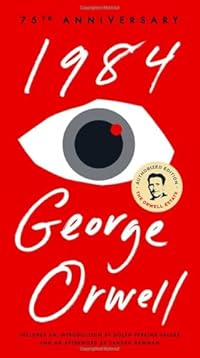
Nineteen Eighty-Four
by George Orwell 
On This Page
Description
Portrays life in a future time when a totalitarian government watches over all citizens and directs all activities.Tags
Recommendations
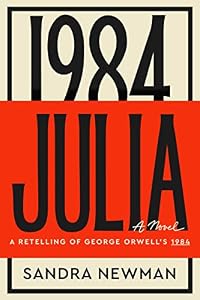



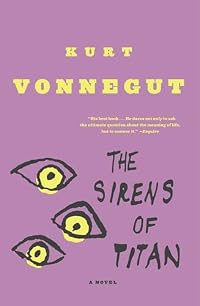
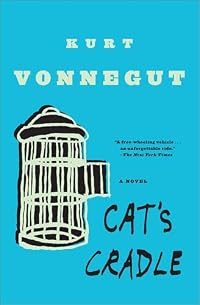
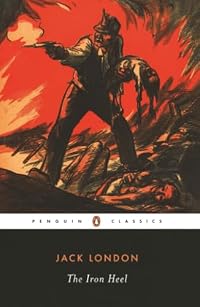
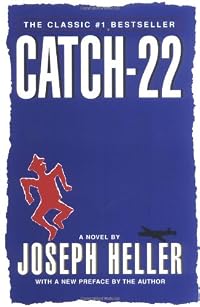



Member Recommendations
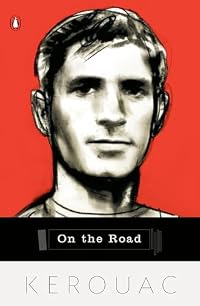
li33ieg 1984, Brave New World and Fahrenheit 451: 3 essential titles that remind us of the need to keep our individual souls pure.
Ludi_Ling Really, the one cannot be mentioned without the other. Actually, apart from the dystopian subject matter, they are very different stories, but serve as a great counterpoint to one another.
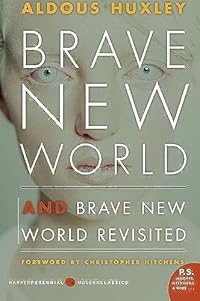
anonymous user It's essential to read Huxley's and Orwell's books together. Both present the ultimate version of the totalitarian state, but there the similarities end. While Orwell argues in favour of hate and fear, Huxley suggests that pleasure and drugs would be far more effective as controlling forces. Who was the more prescient prophet? That's what every reader should decide for him- or herself.
912
readafew Both books are about keeping the people in control and ignorant.
hipdeep 1984 is scary like a horror movie. Fahrenheit 451 is scary like the news. So - do you want to see something really scary?
BookshelfMonstrosity A man's romance-inspired defiance of menacing, repressive governments in bleak futures are the themes of these compelling novels. Control of language and monitors that both broadcast to and spy on people are key motifs. Both are dramatic, haunting, and thought-provoking.
796
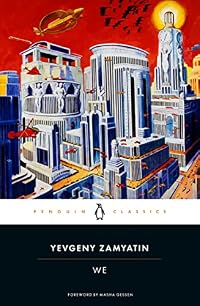
hippietrail The original dystopian novel from which both Huxley and Orwell drew inspiration.
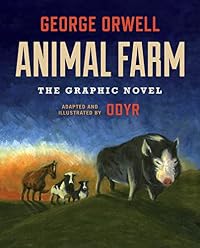
timoroso Zamyatin's "We" was not just a precursor of "Nineteen Eighty-Four" but the work Orwell took as a model for his own book.
Sylak A great influence in the writing of his own book.
292
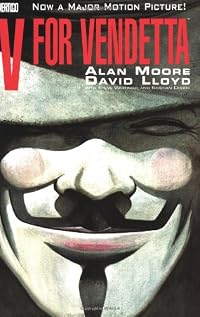
aethercowboy The world of V for Vendetta is very reminiscent of the world of 1984.
172
JFDR 1984's Big Brother is Little Brother's namesake.
Also recommended by infiniteletters, suzanney
92
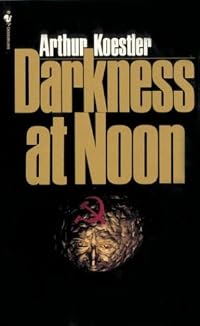
ivan.frade Both books talk about revolution and the people, individual rights vs. common wellness. "darkness at noon" is pretty similar to 1984, without the especulation/science-fiction ingredient.
Also recommended by BGP
80
andejons The totalitarian state works very similar in both books, but the control in Kallocain seems more plausible, which makes it more frightening.
Also recommended by anonymous user
91
anonymous user Huxley and Zamyatin are practically the canon recommendations for this work, so much so that they hardly need to be mentioned, let alone mentioned again.. Therefore, let me instead recommend a lesser-known work that likewise influenced Orwell's work: Burdekin's dystopian future-history, Swastika Night
40
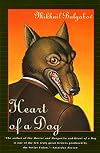
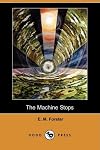
artturnerjr If you read only one other dystopian SF story, make it this one.
30
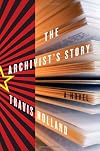
Eat_Read_Knit Two very powerful stories of what happens when a very small cog in the machine of a dictatorship decides not to turn anymore.
30
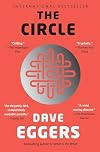
TomWaitsTables Orwell wrote 1984 as a reaction to Burnham, who argued that the communism of the USSR was no different than the capitalism of the USA; both were faceless technocratic organizations running society on a scale that beggars the human experience.
42

MMSequeira Another interesting attempt at a plausible history of the future. Definitely worth reading.
31

mrkatzer If 1984 were written today, and written for an audience of teenagers and people who care about teenagers, the result would be Feed.
42

AlanPoulter 'Green England' borrows a lot from '1984' but adds sex, consumerism and the most vicious satire on Green politics possible...it is a shame it is so hard to find.
21


aulsmith Both nicely balanced books about the personal and the political.
22
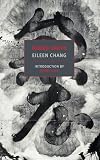
mambo_taxi From the newspeak to the paranoia to the denunciations, 1950s Communist China of Chang's Naked Earth is the dystopian dream of Orwell's 1984 made flesh.



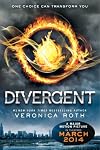
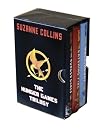
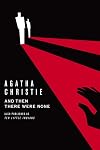
SomeGuyInVirginia No thematic relation, but these two books both profoundly disturbed me.
638
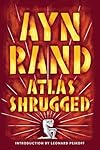
MMSequeira Both 1984 and Anthem we're inspired by Zamyatin's We. Both are worth reading, as cautionary tales.
Also recommended by Leigh22, avid_reader25
1241
Member Reviews
This is the most frightening book I have ever read. I probably feel this way because I am living through the first four weeks of the Donald Trump presidency in the United States. I see so many parallels in this book with the direction our new government is going that this book almost seems like nonfiction rather than the dystopic fiction it was meant to be. I am terrified that my country is becoming a dictatorship. This book gives an outline of just how such a situation can happen.
The story takes one man, Winston Smith, who longs for freedom of thought and shows how he is slowly deprived of his ability to think for himself because his life is under control of Big Brother.
"How does one man assert power over another, Winston?"
Winston show more thought. "By making him suffer," he said. show less
The story takes one man, Winston Smith, who longs for freedom of thought and shows how he is slowly deprived of his ability to think for himself because his life is under control of Big Brother.
"How does one man assert power over another, Winston?"
Winston show more thought. "By making him suffer," he said. show less
First things first. This is not a happy book, nor is it a quick jaunt through the meadow of careless reading. "1984" is the sum of two things: George Orwell's immense grasp of worldbuilding, and George Orwell's appreciation for his own intellectual farts.
If you are hoping to read this classic middle-century critique of fictional totalitarianism for a hopeful twinge at the end, you will be sorely disappointed. This is a tale of a hero who is not a hero, a government that is not a government, and a fundamentally unnecessary essay-style recap of the "events as they stand" bridging the gap between two major plot points.
1984 is a story about Winston Smith, an unassuming man nearing the age of forty in a world utterly dominated by a show more governmental system known only as the Party. You are immediately treated to a wealth of worldbuilding around Newspeak—a form of verbal information control masquerading as a language—and Ingsoc—English Socialism, Orwell's invention as inspired by socialist movements in Russia / Germany / China. There's a lot of onboarding, a lot of words thrown at you to be defined at some nebulous later date.
Despite being one of the chief "calling cards" of 1984, there is a profound LACK of Newspeak. We are treated to handful of words, or more accurately, UNwords which reduce the scope of English down to the bare essentials. Terms like BLACKWHITE, DOUBLETHINK, and CRIMESTOP. We are given definitions for these terms, and occasionally direct translations of full Newspeak sentences used in day-to-day life, but the actual prevalence OF Newspeak is cavernous in its absence. Like, if I can be honest, having DOUBLETHINK explained five separate times is immersion-breaking, man.
This is not because the concept of DOUBLETHINK, to believe in a pair of conflicting things at once, is boring. This is because the main character, Winston, reiterates his deductions on the meaning and role of Newspeak words such as DOUBLETHINK within the safety of his own mind three times too many. As a protagonist, Winston is hard to connect with. While I certainly did my best to meet at his level, Orwell makes it profoundly hard to connect with Winston Smith each time he uses the poor man as an authorial mouthpiece for political theory. Much of the meandering socio-economic conversations 1984 has with itself exist outside the characters' collective thought-space, pushing against their natural conclusions as story-telling devices.
What this means is that Winston will launch into an internal diatribe directed at nobody but himself, but he is supposed to be the reader, and the reader is also supposed to be lurking over his shoulder watching things happen, and the reader is also a nonentity whose impact is merely observational. Even the introduction of a firebrand such as Julia, a young woman brought up within the boundaries of the Party and no comprehension of the things outside it, fails to knock Winston out of a perpetual injured-wing death spiral. From the beginning of the book, things are simply happening to Winston and every matter is considered a rote expectation from him.
This is furthered by the ending, in which he is—to summarize down to the barest bones—is brainwashed into a state of passive obedience through tactics of mind control, reality control, stimulus control, and fear implantation. It is implied that Winston has not had a single thought which is his own, yet he is treated like a sort of pariah for behaving exactly as "irrationally" as the Party expected him to. THOUGHTCRIME, the idea that wrongdoing begins in the mind and the physical crime is merely secondary, is touted as the reasoning for Winston's ultimate fate. Yet conversely, the protagonist swears to die hating the figurehead overlord BIG BROTHER, master of the Party, even if only for a moment. Then he suffers for a chapter or so of implied timeskipping, and dies loving BIG BROTHER.
There's a message here, sure, but it is hidden by the heavy-handed theological ninja death shits that Orwell is unleashing in this public bathroom, one stall over from mine. I'm not even going to touch the fact that roughly one-half of a loooong chapter is just a recap of the political theory as established by the preceding 180ish pages, written by an invented heretic against the Party, which spans completely unbroken for paragraph after paragraph after paragraph. Winston doesn't even engage with this stuff. Like me, he admits that it just regurgitates all the things he already thought while being wordier—snootier—about the delivery. A disproportionate amount of this could have been a 3 sentence email!
Orwell subjects the reader to more of this meandering Socialism & Faults In Hierarchical Society 101 by pretending that his protagonist is reading this to his lover, with the intent of explaining it to her younger and less-theologcally-inclined mind. Winston does not, in fact, read this to his lover. We read it, as Emmanuel Goldstein drags on and on and on about the concept of reality control—something WELL established by this point in the story. Joy! I checked to see when this diatribe ended, or when the story actually picked up again, just to give myself the strength to forge on. Five more pages... Four more pages...
Ultimately, I did actually enjoy this book. I liked Syme, Parsons, O'Brien, Julia, and even Winston well enough. The pacing was alright until the last 1.5 chapters, and the worldbuilding was fundamentally insane with all the details that my brain likes to meander on. There were a lot of chillingly cruel scenes, a surprisingly forward-thinking approach to partners with previous sexual experience, and some era-typical nonsense about the effectiveness of torture. I think that THE BOOK should have just been a stand-alone addendum partnered with 1984 as additional reading, and that Orwell should have released at least some semblance of the 11th Newspeak Dictionary. That would have been awesome to build a TTRPG with, and a bit more fun than the seemingly-rushed final send-off of the last chapter.
As a book that treads into commentary on the modern day, it is definitely worth a read. Many elements of CRIMESTOP, the idea of becoming deliberately stupid as to avoid being reasoned with, are used in our political landscape alongside other terms cleverly initiated by Newspeak. No matter the party that you are addressing, the matter of purposeful unknowing and the concept of unmaking words which mean things is a constant threat. It is important to know that the opposite of good is not ungood, but evil, and that UNGOOD merely means the lack of good. 1984 does not make me feel disheartened, however, despite the harrowing finality of its own tale. Rather, it is defined specifically by the role that Winston plays in his torture scenes. Mankind, refusing to be destroyed by the unreality of a broken society. Winston Smith is a character who fails, but we know in our hearts that for a split second before the bullet struck him dead, he thought: DOWN WITH BIG BROTHER. So, march on.
Favorite character? That fat old prole doing her laundry outside the Charrington shop. I hope she's doing well. If anyone has her number, let me know. show less
If you are hoping to read this classic middle-century critique of fictional totalitarianism for a hopeful twinge at the end, you will be sorely disappointed. This is a tale of a hero who is not a hero, a government that is not a government, and a fundamentally unnecessary essay-style recap of the "events as they stand" bridging the gap between two major plot points.
1984 is a story about Winston Smith, an unassuming man nearing the age of forty in a world utterly dominated by a show more governmental system known only as the Party. You are immediately treated to a wealth of worldbuilding around Newspeak—a form of verbal information control masquerading as a language—and Ingsoc—English Socialism, Orwell's invention as inspired by socialist movements in Russia / Germany / China. There's a lot of onboarding, a lot of words thrown at you to be defined at some nebulous later date.
Despite being one of the chief "calling cards" of 1984, there is a profound LACK of Newspeak. We are treated to handful of words, or more accurately, UNwords which reduce the scope of English down to the bare essentials. Terms like BLACKWHITE, DOUBLETHINK, and CRIMESTOP. We are given definitions for these terms, and occasionally direct translations of full Newspeak sentences used in day-to-day life, but the actual prevalence OF Newspeak is cavernous in its absence. Like, if I can be honest, having DOUBLETHINK explained five separate times is immersion-breaking, man.
This is not because the concept of DOUBLETHINK, to believe in a pair of conflicting things at once, is boring. This is because the main character, Winston, reiterates his deductions on the meaning and role of Newspeak words such as DOUBLETHINK within the safety of his own mind three times too many. As a protagonist, Winston is hard to connect with. While I certainly did my best to meet at his level, Orwell makes it profoundly hard to connect with Winston Smith each time he uses the poor man as an authorial mouthpiece for political theory. Much of the meandering socio-economic conversations 1984 has with itself exist outside the characters' collective thought-space, pushing against their natural conclusions as story-telling devices.
What this means is that Winston will launch into an internal diatribe directed at nobody but himself, but he is supposed to be the reader, and the reader is also supposed to be lurking over his shoulder watching things happen, and the reader is also a nonentity whose impact is merely observational. Even the introduction of a firebrand such as Julia, a young woman brought up within the boundaries of the Party and no comprehension of the things outside it, fails to knock Winston out of a perpetual injured-wing death spiral. From the beginning of the book, things are simply happening to Winston and every matter is considered a rote expectation from him.
This is furthered by the ending, in which he is—to summarize down to the barest bones—is brainwashed into a state of passive obedience through tactics of mind control, reality control, stimulus control, and fear implantation. It is implied that Winston has not had a single thought which is his own, yet he is treated like a sort of pariah for behaving exactly as "irrationally" as the Party expected him to. THOUGHTCRIME, the idea that wrongdoing begins in the mind and the physical crime is merely secondary, is touted as the reasoning for Winston's ultimate fate. Yet conversely, the protagonist swears to die hating the figurehead overlord BIG BROTHER, master of the Party, even if only for a moment. Then he suffers for a chapter or so of implied timeskipping, and dies loving BIG BROTHER.
There's a message here, sure, but it is hidden by the heavy-handed theological ninja death shits that Orwell is unleashing in this public bathroom, one stall over from mine. I'm not even going to touch the fact that roughly one-half of a loooong chapter is just a recap of the political theory as established by the preceding 180ish pages, written by an invented heretic against the Party, which spans completely unbroken for paragraph after paragraph after paragraph. Winston doesn't even engage with this stuff. Like me, he admits that it just regurgitates all the things he already thought while being wordier—snootier—about the delivery. A disproportionate amount of this could have been a 3 sentence email!
Orwell subjects the reader to more of this meandering Socialism & Faults In Hierarchical Society 101 by pretending that his protagonist is reading this to his lover, with the intent of explaining it to her younger and less-theologcally-inclined mind. Winston does not, in fact, read this to his lover. We read it, as Emmanuel Goldstein drags on and on and on about the concept of reality control—something WELL established by this point in the story. Joy! I checked to see when this diatribe ended, or when the story actually picked up again, just to give myself the strength to forge on. Five more pages... Four more pages...
Ultimately, I did actually enjoy this book. I liked Syme, Parsons, O'Brien, Julia, and even Winston well enough. The pacing was alright until the last 1.5 chapters, and the worldbuilding was fundamentally insane with all the details that my brain likes to meander on. There were a lot of chillingly cruel scenes, a surprisingly forward-thinking approach to partners with previous sexual experience, and some era-typical nonsense about the effectiveness of torture. I think that THE BOOK should have just been a stand-alone addendum partnered with 1984 as additional reading, and that Orwell should have released at least some semblance of the 11th Newspeak Dictionary. That would have been awesome to build a TTRPG with, and a bit more fun than the seemingly-rushed final send-off of the last chapter.
As a book that treads into commentary on the modern day, it is definitely worth a read. Many elements of CRIMESTOP, the idea of becoming deliberately stupid as to avoid being reasoned with, are used in our political landscape alongside other terms cleverly initiated by Newspeak. No matter the party that you are addressing, the matter of purposeful unknowing and the concept of unmaking words which mean things is a constant threat. It is important to know that the opposite of good is not ungood, but evil, and that UNGOOD merely means the lack of good. 1984 does not make me feel disheartened, however, despite the harrowing finality of its own tale. Rather, it is defined specifically by the role that Winston plays in his torture scenes. Mankind, refusing to be destroyed by the unreality of a broken society. Winston Smith is a character who fails, but we know in our hearts that for a split second before the bullet struck him dead, he thought: DOWN WITH BIG BROTHER. So, march on.
Favorite character? That fat old prole doing her laundry outside the Charrington shop. I hope she's doing well. If anyone has her number, let me know. show less
It is quite amazing that a novel which is so depressing and so negative has not only been read widely but is still consumed by many people today. Why? Nothing positive happens and even more, it paints a very bleak picture of a possible future. The same thing that happened to me must have happened to many people: I couldn't put it down and I can't tell you why. Perhaps George Orwell's mastery of storytelling is even more amazing than his talents for prognostication.
The year is 1984, ironically now in our past, and the entire world is split up into a very few totalitarian states. Never do we learn if in fact these states are ruled by a single dictator and to me that was part of the intrigue because you never quite know how everything show more works. An rather anonymous office worker by the name of Winston, in charge of forging the past, decides to keep a diary to note down all those facts and thoughts he wants to keep. We get the distinct feeling that Winston isn't sure himself if his memories are truly real and truly his own. Every external piece of evidence to a threatening past is constantly erased or changed. We follow him as he searches for true history and true facts and we learn how someone survives in a state where nothing you do is ever private and where paranoia is simply common sense.
The novel 1984 gives us a protagonist who has no hope, and more sadly: no apparent interest in a better future. He is not even sure if he can remember if there was such a thing as a better past. His main talent, and that thing which appears to drive us mostly in going along with his telling, is his desire to write down everything he experiences in the hopes of coming up with some explanation as to how the world ended up in such a mess. He is curious about what is happening to him and his world but he doesn't seem to have any inclination in changing it. We are told he does indeed want revolution but the true inspiration or insight isn't there. Instead he appears to be eternally searching for answers which he hopes will tell him: was I making the past up or was it really different?
I keep coming back to the central question: why do people read this novel with such great interest? It is not escapist literature in any sense and the book lacks every feel-good trope we've come to expect from works of fiction. Yet, with all the gloom and darkness we're fascinated as to what will happen next and we can't stop wondering how the somber world of Big Brother keeps on ticking. show less
The year is 1984, ironically now in our past, and the entire world is split up into a very few totalitarian states. Never do we learn if in fact these states are ruled by a single dictator and to me that was part of the intrigue because you never quite know how everything show more works. An rather anonymous office worker by the name of Winston, in charge of forging the past, decides to keep a diary to note down all those facts and thoughts he wants to keep. We get the distinct feeling that Winston isn't sure himself if his memories are truly real and truly his own. Every external piece of evidence to a threatening past is constantly erased or changed. We follow him as he searches for true history and true facts and we learn how someone survives in a state where nothing you do is ever private and where paranoia is simply common sense.
The novel 1984 gives us a protagonist who has no hope, and more sadly: no apparent interest in a better future. He is not even sure if he can remember if there was such a thing as a better past. His main talent, and that thing which appears to drive us mostly in going along with his telling, is his desire to write down everything he experiences in the hopes of coming up with some explanation as to how the world ended up in such a mess. He is curious about what is happening to him and his world but he doesn't seem to have any inclination in changing it. We are told he does indeed want revolution but the true inspiration or insight isn't there. Instead he appears to be eternally searching for answers which he hopes will tell him: was I making the past up or was it really different?
I keep coming back to the central question: why do people read this novel with such great interest? It is not escapist literature in any sense and the book lacks every feel-good trope we've come to expect from works of fiction. Yet, with all the gloom and darkness we're fascinated as to what will happen next and we can't stop wondering how the somber world of Big Brother keeps on ticking. show less
This is a very sobering read. A lot of modern dystopian books I've read are YA, and tend to be very hopeful, often coming across as cutesy. Everything usually ends happily because the angsty teenage hero or heroine has saved the day simply by standing up for what they believe in. While those books are fun, they are obviously not a very realistic conception of what actual dystopian tyranny coming to power would look like. Don't get me wrong, I still enjoy it from time to time, but it gets cliche all too soon.
This, however, is not hopeful. It isn't cutesy. It is a nightmare and a warning, and a very necessary one at that. What is really scary is the descriptions of "doublethink" and how easily it brainwashes the vast majority of people in show more the book. They've been so molded by the government's propaganda as to be eager to believe anything it tells them. Language is changed as well, in order to limit thought to what is declared orthodox by the party.
It definitely isn't for the faint of heart, but once ready, everyone needs to read and consider this book. show less
This, however, is not hopeful. It isn't cutesy. It is a nightmare and a warning, and a very necessary one at that. What is really scary is the descriptions of "doublethink" and how easily it brainwashes the vast majority of people in show more the book. They've been so molded by the government's propaganda as to be eager to believe anything it tells them. Language is changed as well, in order to limit thought to what is declared orthodox by the party.
It definitely isn't for the faint of heart, but once ready, everyone needs to read and consider this book. show less
Because I graduated from high school in 1984, I’ve always had a connection with both the dystopian novel Nineteen Eighty-four by George Orwell and the rock album 1984 by Van Halen. Over the years, the former has grown in my estimation and the latter has declined. The album by Van Halen is something you outgrow. The novel by Orwell is something that grows with you.
I put Nineteen Eighty-four on my Classics Club list because I knew my daughter would be reading it in her senior high school literature class, and I wanted the chance to talk to her about it. Besides, it’s been at least twenty years since I read it, and I wanted to experience it again with more life behind me. I’m glad I did.
For those unfamiliar with the novel, it was show more published in 1949, and depicts a bleak world set thirty-five years in the future, hence the title, Nineteen Eighty-four. The protagonist Winston Smith lives in the totalitarian state of Oceania, in the province called Airstrip One (formerly known as Great Britain). Big Brother, the Party leader, watches everyone through two-way TV screens; independent thinking and individualism are snuffed out by Thought Police; and the past is constantly being rewritten to support the Party’s agenda. Winston gets curious about the world before Big Brother, and as he begins to assert his independence he has to watch his every step to evade the Thought Police and avoid being sent to the dreaded Room 101.
The last time I read Nineteen Eighty-four I was teaching Bradbury’s Fahrenheit 451 to seventh graders, and I was trying to educate myself in classic dystopian literature. At the time I also read Huxley’s Brave New World, and I watched Terry Gilliam’s film Brazil. Honestly, in the years that have passed since, they had all blended together like some kind of dystopian goulash. It was good to read Nineteen Eighty-four on its own.
Of course, there were some things that I remembered clearly from Nineteen Eighty-four: Big Brother, doublethink, the Thought Police. But I had no clear memory of how the novel ended, and I must say that Part III was as harrowing and disturbing as anything literature has to offer.
If you’ve never read it before, Nineteen Eighty-four is one of those books you shouldn’t miss. And if you haven’t read it since high school or college, pick it up and see how much it has to say to you now. show less
I put Nineteen Eighty-four on my Classics Club list because I knew my daughter would be reading it in her senior high school literature class, and I wanted the chance to talk to her about it. Besides, it’s been at least twenty years since I read it, and I wanted to experience it again with more life behind me. I’m glad I did.
For those unfamiliar with the novel, it was show more published in 1949, and depicts a bleak world set thirty-five years in the future, hence the title, Nineteen Eighty-four. The protagonist Winston Smith lives in the totalitarian state of Oceania, in the province called Airstrip One (formerly known as Great Britain). Big Brother, the Party leader, watches everyone through two-way TV screens; independent thinking and individualism are snuffed out by Thought Police; and the past is constantly being rewritten to support the Party’s agenda. Winston gets curious about the world before Big Brother, and as he begins to assert his independence he has to watch his every step to evade the Thought Police and avoid being sent to the dreaded Room 101.
The last time I read Nineteen Eighty-four I was teaching Bradbury’s Fahrenheit 451 to seventh graders, and I was trying to educate myself in classic dystopian literature. At the time I also read Huxley’s Brave New World, and I watched Terry Gilliam’s film Brazil. Honestly, in the years that have passed since, they had all blended together like some kind of dystopian goulash. It was good to read Nineteen Eighty-four on its own.
Of course, there were some things that I remembered clearly from Nineteen Eighty-four: Big Brother, doublethink, the Thought Police. But I had no clear memory of how the novel ended, and I must say that Part III was as harrowing and disturbing as anything literature has to offer.
If you’ve never read it before, Nineteen Eighty-four is one of those books you shouldn’t miss. And if you haven’t read it since high school or college, pick it up and see how much it has to say to you now. show less
1984 is a brilliant and chilling masterpiece that offers a scarily plausible vision of a future ruled by totalitarian control. George Orwell’s portrayal of a society under constant surveillance, where truth is manipulated and individuality is crushed, feels eerily relevant in today’s world. The depth of the novel’s themes—power, freedom, and the dangers of unchecked authority—leaves a lasting impact on readers.
Winston Smith, the protagonist, is a relatable figure whose struggle for truth and autonomy in a repressive society is both heartbreaking and thought-provoking. Orwell’s writing is sharp, and his political commentary is powerful, making 1984 a must-read for anyone interested in the dark side of power. It’s a book show more that stays with you long after you finish reading it. show less
Winston Smith, the protagonist, is a relatable figure whose struggle for truth and autonomy in a repressive society is both heartbreaking and thought-provoking. Orwell’s writing is sharp, and his political commentary is powerful, making 1984 a must-read for anyone interested in the dark side of power. It’s a book show more that stays with you long after you finish reading it. show less
For a while there, if anybody asked me what my favourite book was, I’d say Nineteen Eighty-Four by George Orwell. And with good reason – the first time I read this book, I finished it on a moving bus, and spent the rest of the journey silently crying because I was so affected by it. I really do love this book. I don’t love it as much as I used to because I’ve come to realize that having a favourite book is not a part of my personality (because I have too many favourites), but I do love it very much still.
Every single time I read this book, I discover something new about it. The first time, the use of language struck me. The second time, the parts about sex and betrayal stuck to me even more. I’ve read this book three times in show more total, and – maybe it’s because of the political climate the world finds itself in right now, because it’s because I’m older and can appreciate this book better – I think the third time really is the charm, because this book has finally sunk in in its entirety. And I have to say that even if I read it again before I shuffle off this mortal coil, I’m sure I’ll love it just as much again.
I don’t think this book really needs an explanation or an introduction – we’ve all heard of it and the cultural impact this book has had is downright incredible. Everybody knows about Big Brother, even if it’s because of an insipid reality TV show that took its name from the book. I don’t need to go into what this book is about, but I do want to talk about what I love about this book.
First of all, I love the use of language in it. Orwell did wonderful things with the language by moulding it to a society that had evolved in an alternate reality where there were three continents that were constantly at war with each other. London, or rather Airstrip One as it’s called in this timeline, is the headquarters of the new government, and the language that it promotes is one of a nature that is, in itself, contradictory, but expects the members of the Party to be able to accept the reality it dishes out without question. If Big Brother says that two plus two is five, then you better accept that two plus two is five now, because that’s the truth and anything you heard before is a downright figment of your imagination and a lie.
Which brings me to the next thing that I love about the book, which is the way that the truth is bent to fit what the political agenda requires at the time. People are expected to believe whatever is told of them, expected to conform and simply let their minds be welded to what the current truth is. And the truth can be difficult to accept, because at one minute you’re told that the enemy is one country, and the next it’s the other country, and we were never at war with our allies, they’re the good ones! We’ve always been at war with those scoundrels and were never allies with them, and if you say so you’re going to be punished! The members of the Party, especially the main character Winston, literally go through historical sources like newspapers and books and video reels and edit them to make sure that anything that the Party says is the truth now appears to have been the truth for years, even when it wasn’t.
Thirdly, I love Winston. Winston is such a great character because he is just a man trying to survive and knowing that this isn’t the world that he should be living in. Unfortunately, he’s also gullible, and lands himself into a world of trouble. But Winston is a character who I have nothing but love for because his characterization, his interest in making the world right, and his need to do something about his situation, is all so well written. Even if he doesn’t end up having the happiest of endings, Winston is a placeholder for every freedom fighter, ever rebel, who died for their cause or were broken into submission. It happens more often than we can think, and these people aren’t cowardly – they just dealt with too much and it eventually got to them.
I think my biggest criticism of this book is that one particular chapter, which is the chapter about the Brotherhood and how it’s organized, is just too damn long. This chapter literally puts me to sleep every time. But other than that, this book is a masterpiece for a reason, and will remain a classic for along time.
All in all, this book deserves a 4/5. show less
Every single time I read this book, I discover something new about it. The first time, the use of language struck me. The second time, the parts about sex and betrayal stuck to me even more. I’ve read this book three times in show more total, and – maybe it’s because of the political climate the world finds itself in right now, because it’s because I’m older and can appreciate this book better – I think the third time really is the charm, because this book has finally sunk in in its entirety. And I have to say that even if I read it again before I shuffle off this mortal coil, I’m sure I’ll love it just as much again.
I don’t think this book really needs an explanation or an introduction – we’ve all heard of it and the cultural impact this book has had is downright incredible. Everybody knows about Big Brother, even if it’s because of an insipid reality TV show that took its name from the book. I don’t need to go into what this book is about, but I do want to talk about what I love about this book.
First of all, I love the use of language in it. Orwell did wonderful things with the language by moulding it to a society that had evolved in an alternate reality where there were three continents that were constantly at war with each other. London, or rather Airstrip One as it’s called in this timeline, is the headquarters of the new government, and the language that it promotes is one of a nature that is, in itself, contradictory, but expects the members of the Party to be able to accept the reality it dishes out without question. If Big Brother says that two plus two is five, then you better accept that two plus two is five now, because that’s the truth and anything you heard before is a downright figment of your imagination and a lie.
Which brings me to the next thing that I love about the book, which is the way that the truth is bent to fit what the political agenda requires at the time. People are expected to believe whatever is told of them, expected to conform and simply let their minds be welded to what the current truth is. And the truth can be difficult to accept, because at one minute you’re told that the enemy is one country, and the next it’s the other country, and we were never at war with our allies, they’re the good ones! We’ve always been at war with those scoundrels and were never allies with them, and if you say so you’re going to be punished! The members of the Party, especially the main character Winston, literally go through historical sources like newspapers and books and video reels and edit them to make sure that anything that the Party says is the truth now appears to have been the truth for years, even when it wasn’t.
Thirdly, I love Winston. Winston is such a great character because he is just a man trying to survive and knowing that this isn’t the world that he should be living in. Unfortunately, he’s also gullible, and lands himself into a world of trouble. But Winston is a character who I have nothing but love for because his characterization, his interest in making the world right, and his need to do something about his situation, is all so well written. Even if he doesn’t end up having the happiest of endings, Winston is a placeholder for every freedom fighter, ever rebel, who died for their cause or were broken into submission. It happens more often than we can think, and these people aren’t cowardly – they just dealt with too much and it eventually got to them.
I think my biggest criticism of this book is that one particular chapter, which is the chapter about the Brotherhood and how it’s organized, is just too damn long. This chapter literally puts me to sleep every time. But other than that, this book is a masterpiece for a reason, and will remain a classic for along time.
All in all, this book deserves a 4/5. show less
Members
- Recently Added By
Lists

The Guardian's 1000 Novels Everyone Must Read
1,005 works; 546 members

1001 Books You Must Read Before You Die
1,448 works; 1,132 members
Best Dystopias
280 works; 272 members

Best Science Fiction Novels
816 works; 430 members

Classics you know you should have read but probably haven't
421 works; 407 members
501 Must-Read Books
508 works; 71 members
BBC Big Read
191 works; 46 members

Top-Rated Books on LibraryThing
272 works; 117 members

Read the book and saw the movie
1,170 works; 195 members

Radcliffe's 100 Best Novel of the 20th Century
100 works; 32 members
Survey of Classic Science Fiction
171 works; 48 members
Favourite Books
1,817 works; 311 members
Best of British Literature
226 works; 41 members
Newsweek's Top 100 Books: The Meta-List
100 works; 18 members
20th Century Literature
1,161 works; 55 members
David Bowie's Top 100
97 works; 23 members
Le Monde - Les 100 livres du siècle
121 works; 25 members
NPRs your picks: top 100 Sci-Fi/Fantasy books
297 works; 78 members

The 100 Best Books of All Time by Norwegian Book Club (World Library)
104 works; 23 members

Recommend the 20 best books you've read in the last five years
2,167 works; 605 members
New York Public Library's Books of the Century
120 works; 20 members
The Top Ten: Writers Pick Their Favorite Books
240 works; 31 members
Banned Books Week 2014
268 works; 62 members
PBS The Great American Read
100 works; 21 members

The Telegraph's 110 Best Books: The Perfect Library
101 works; 17 members
Books That Changed Me
156 works; 47 members
1940s
221 works; 25 members
BBC's 100 Novels That Shaped Our World
100 works; 22 members
Best Political Fiction
92 works; 11 members

Best Horror Books
281 works; 85 members

New York Public Library's Books of the Century - All
170 works; 14 members

100 books to read in a lifetime
102 works; 37 members

Best Books Set in London
157 works; 42 members
Larry McCaffery's 20th Century Greatest Hits: 100 English-Language Books
103 works; 12 members

Best high-school English books reread later in life
30 works; 21 members
A Syllabus and Book List for Novice Students of Science Fiction Literature
25 works; 10 members

The Guardian's 100 greatest novels of all time
100 works; 16 members
Amazon's 100 Science Fiction & Fantasy Books to Read in a Lifetime
87 works; 23 members
Time Magazine's "All-Time 100"
113 works; 15 members
LibraryThingers' 1001 Books You Must Read Before You Die
442 works; 29 members

Books Set in Great Britain
191 works; 13 members
Harold Bloom - The Western Canon: D. The Chaotic Age
833 works; 24 members

Books I've Read More Than Once
602 works; 49 members
Dystopian and Apocalyptic Literature
350 works; 74 members
Folio Society
831 works; 49 members

Canon de la narrativa universal del siglo XX
254 works; 6 members

Survey of Science Fiction and Fantasy
101 works; 13 members
Banned or Challenged Books
400 works; 41 members

Books Featured on Gilmore Girls
307 works; 21 members
Blue Pyramid 1,276 Best Books of All Time
1,248 works; 32 members
BBC Big Read
100 works; 10 members

Books You Read During High School (For School)
301 works; 52 members

Survey of Classic Dystopias
29 works; 4 members
Time's All-Time 100 Novels
100 works; 27 members
Science Fiction
42 works; 7 members

Books With a Twist
69 works; 46 members
Twentieth Century Greatest Hits
27 works; 10 members
Futurism Works
25 works; 6 members

Dark Books for Winter Reading
71 works; 11 members
Readable Classics
110 works; 15 members

Western World's Greatest Books - Project Gutenberg
295 works; 15 members

The Well-Educated Mind Reading Challenge
75 works; 7 members
Best First Lines
133 works; 8 members
Books tagged favorites
390 works; 30 members
1,001 BYMRBYD Concensus
723 works; 27 members

Anthony Burgess 99 Post War Novels
99 works; 7 members
David Pringle's Science Fiction: The 100 Best Novels
101 works; 9 members

Most Disturbing Books
124 works; 27 members

A Novel Cure
742 works; 23 members

Books Read in 2014
2,341 works; 86 members

SF Masterworks
193 works; 8 members

1964 College Preparatory Reading List
202 works; 8 members
Year 9 Reading List
29 works; 3 members
Jordan B. Peterson's Recommended Books
104 works; 5 members
The Guardian's 100 Best Novels Written in English
105 works; 13 members
One Book, Many Authors
441 works; 40 members

S.F. Masterworks (Complete)
229 works; 15 members
Jones and Newman's Horror: Another 100 Best Books
100 works; 7 members

Books Read in 2023
5,547 works; 144 members
Mensa for Kids Excellence in Reading Award Program (Grades 9-12)
116 works; 5 members
Daria Morgendorffer's Bookshelf
70 works; 5 members
Alternate Englands
34 works; 7 members
Mind Expanding Books by hackerkid
581 works; 8 members
Page Turners
185 works; 11 members
100 World Classics
99 works; 15 members
Top 100 to Read before you Die
109 works; 7 members
The Greatest Books
99 works; 5 members

CCE 100 Great Books List
145 works; 8 members
Fake Top 100 Fiction
81 works; 4 members
The Modern Library's 100 Best Novels: The Board's List
85 works; 6 members
My list of 100 books to read next
100 works; 4 members

Easton Press Masterpieces of Science Fiction
30 works; 2 members
Unbound Worlds 100 Best SF Books
100 works; 8 members
Mensa for Kids Excellence in Reading Award Program (Grades 9-12)
116 works; 3 members

Rory Gilmore Book Club
193 works; 5 members

Books With Numbers in the Title
308 works; 13 members

BBC Top Books
78 works; 3 members

Books Read in 2015
3,298 works; 126 members
Top 100 Science-Fiction, Fantasy Books
18 works; 4 members

An End of the World Reading List
63 works; 4 members
Books I've Read
40 works; 2 members

It's the end of the world as we know it!
90 works; 23 members

David Brin: Dire Warnings And Self-Preventing Prophecies
17 works; 3 members
David Bowie's List of Top 100 Books
94 works; 6 members
Great American Read
1 work; 1 member

What if... a speculative history list
25 works; 2 members
Books Featured on Readers' Review of the Diane Rehm Show
161 works; 8 members

Dystopian Novels you should read
25 works; 2 members

Top 50 Favourite Books
50 works; 2 members

Books Read in 2020
4,379 works; 123 members
WISHLIST
3 works; 1 member
Ten Books That Have Stayed With Me
160 works; 29 members
Classics To read
2 works; 1 member

Speculative Fiction to Read
706 works; 32 members

Stories Inspired by Other Fiction
127 works; 24 members

Most Depressing Books
69 works; 16 members

Best Antiheroes and Antiheroines
119 works; 6 members
My 100 Favorite Books of All Time
57 works; 2 members

Political Science Fiction
43 works; 3 members

University literature
145 works; 5 members

100 books that changed the world
31 works; 2 members
Overdue Podcast
800 works; 9 members

CCE 1000 Good Books List
1,033 works; 12 members
Books on my Kindle
162 works; 3 members

Well-Educated Mind
150 works; 3 members
My Favourite Books
86 works; 5 members

Best Horror Mega-List
342 works; 6 members
Best Books of the 20th Century
193 works; 5 members

Books I've read
87 works; 2 members

Books Read in 2017
4,248 works; 130 members

99 Bücher, die man gelesen haben muss
37 works; 1 member

Libertarian Books
102 works; 19 members
Literature which inspired Pop songs
85 works; 9 members

100
56 works; 1 member

Pageturners
40 works; 6 members
Trinity College Booklist (1951): Class Ten, English Literature
358 works; 5 members

Books Set in London
49 works; 3 members

Blackwell's Five Foot Bookshelf
72 works; 4 members

Most Frequently Tagged "Read in 2015"
70 works; 1 member
Books Read in 2016
4,666 works; 199 members

Isaac Arthur’s Book Recommendations
98 works; 3 members
Books to Reread Someday
53 works; 7 members
http://thegreatestbooks.org's Greatest Fiction Books
59 works; 1 member

Speculative Fiction: The Classics
36 works; 5 members

Books Read in 2004
196 works; 7 members

Books that changed the world
67 works; 63 members
American Lit for Eng 11 Research Project
368 works; 6 members
Retrospective of Horror and Thrillers
21 works; 2 members
NPR Books You Love: Books That Shaped You in High School
26 works; 1 member

100 knjiga
100 works; 1 member
Books I Read Before The Invention Of The Internet.
144 works; 1 member
Classic Sci-Fi
27 works; 1 member

Books We Resisted Reading
173 works; 102 members

Read
27 works; 1 member

Books That Changed Our Perspective
423 works; 166 members

Books Read in 2025
4,090 works; 97 members

2024 Reads
31 works; 1 member

Books in the Bibliography of The Cold War by John Lewis Gaddis
192 works; 1 member
Rereads list from my library
23 works; 1 member
Les 100 principaux titres de la science-fiction (1981)
126 works; 3 members
Canon de la narrativa universal del s. XX (cicutadry)
499 works; 3 members

Titles to Avoid
6 works; 1 member
The 150 Greatest Novels of All Time
150 works; 6 members

Recommended Reading : 600 Classics Reviewed, Editors of Salem Press, 2015
634 works; 6 members
The Well-Educated Mind, Susan Wise Bauer, 2016
179 works; 3 members
'Books You Can't Live Without: The Top 100', The Guardian, 2007
156 works; 7 members
Our Favorite Banned Books
138 works; 122 members

top 100
39 works; 1 member

Banned Books I have read
16 works; 2 members
thought provoking
15 works; 1 member

current
52 works; 1 member
What A Year: Books titled with a particular year
147 works; 2 members
BitLife
212 works; 4 members
DigitalDreamDoor top 300
300 works; 4 members
The Complete Rory Gilmore Reading List
506 works; 5 members
.
396 works; 1 member
Books Read in 2018
4,360 works; 110 members
Reading LIst
648 works; 1 member

EGBERTINA'S List of childhood books worthy of merit or unspeakable delight
155 works; 6 members
el
1,139 works; 1 member
Totalitarianism and Democratic Erosion: Essential Readings
45 works; 1 member
Modern Library's 100 Best Novels
100 works; 2 members
Book Recommendations Masterlist
28 works; 1 member

Wishlist
71 works; 1 member

AbeBooks: 50 essential science fiction books
50 works; 6 members
School Made Us Read It
380 works; 196 members
Books We Want To Read Again For The First Time
384 works; 160 members

𓐩hought Daughter ♱♰✟✞✝︎☨†˚₊‧꒰ა ♱ ໒꒱ ‧
38 works; 1 member
Books We Couldn't Put Down
443 works; 197 members

The Book You Would Give To Everyone You Meet If You Could
7 works; 1 member
Vlogbrothers Book Recommendations
307 works; 4 members
David Bowie’s Top 100 Favourite Reads
100 works; 3 members
Goalhanger Book Club
6 works; 1 member
Favorite Science Fiction
448 works; 214 members
.
194 works; 2 members

Books cited in Progress by Samuel McDonald
160 works; 1 member

Take Four Books
131 works; 1 member
In Our Time books
4,934 works; 2 members

Books Cited in Blueprint by Nicholas Christakis
261 works; 1 member
Talk Discussions
Past Discussions
New LE: 1984 in Folio Society Devotees (November 2024)
St. James Park Press - forthcoming 1984 edition. in Fine Press Forum (May 2024)
Artist wants copies of 1984 in Book talk (January 2024)
Bokcirkel om Orwells 1984 i mars in Swedish Thing (April 2022)
New Suntup 1984 in Fine Press Forum (April 2021)
Author Information

377+ Works 220,112 Members
George Orwell was born Eric Arthur Blair on June 25, 1903 in Motihari in Bengal, India and later studied at Eton College for four years. He was an assistant superintendent with the Indian Imperial Police in Burma. He left that position after five years and moved to Paris, where he wrote his first two books: Burmese Days and Down and Out in Paris show more and London. He then moved to Spain to write but decided to join the United Workers Marxist Party Militia. After being decidedly opposed to communism, he served in the British Home Guard and with the Indian Service of the BBC during World War II. After the war, he wrote for the Observer and was literary editor for the Tribune. His best known works are Animal Farm and 1984. His other works include A Clergyman's Daughter, Keep the Aspidistra Flying, The Road to Wigan Pier, Homage to Catalonia, and Coming Up for Air. He died on January 21, 1950 at the age of 46. (Bowker Author Biography) show less
George Orwell has a Legacy Library. Legacy libraries are the personal libraries of famous readers, entered by LibraryThing members from the Legacy Libraries group.
Some Editions
Awards and Honors
Awards
Distinctions
Notable Lists
BBC's Big Read (8)
Torchlight List (#162)
Daniel S. Burt's Novel 100 (086 – 86)
Bulgarian Big Read (22)
Series
Belongs to Publisher Series
Diogenes-Taschenbuch (21087)
Colecção Mil Folhas (25)
Oscar Narrativa (45)
Il bosco [Mondadori] (42)
Perpetua reeks (8)
Clube de Literatura Clássica (CLC) (40 [August 2023])
Destinolibro (54)
Gallimard, Folio Classique (6891)
Penguin Clothbound Classics (2021)
Penguin English Library, 2012 series (2018-06)
Ullstein Buch (23410)
SF Masterworks (New design)
detebe (21087)
Gallimard, Folio SF (685)
Gallimard, Folio (177-822)
Work Relationships
Is contained in
Is retold in
Has the adaptation
Is replied to in
Was inspired by
Inspired
Has as a study
Has as a commentary on the text
Has as a student's study guide
Has as a teacher's guide
Common Knowledge
- Canonical title
- Nineteen Eighty-Four
- Original title
- Nineteen Eighty-Four
- Alternate titles
- 1984
- Original publication date
- 1949-06-08
- People/Characters
- Winston Smith; Julia; O'Brien; Big Brother; Emmanuel Goldstein; Aaronson (show all 14); Jones; Rutherford; Ampleforth; Mr Charrington; Katharine Smith (wife of Winston Smith); Martin; Tom Parsons; Syme
- Important places
- Airstrip One, Oceania (Britain); London, England, UK; Colchester, Essex, England, UK; Oceania; Eurasia; East Asia (show all 8); England, UK; London, Airstrip One, Oceania
- Important events
- World War II (1939 | 1945); World War III
- Related movies
- Nineteen Eighty-Four (1984 | IMDb); 1984 (1956 | IMDb); 1984 (2009 | IMDb); 1984: A Personal View of Orwell's 'Nineteen Eighty Four' (1983 | IMDb); Me and the Big Guy (1999 | IMDb)
- First words
- It was a bright cold day in April, and the clocks were striking thirteen.
Winston Smith, his chin nuzzled into his breast in an effort to escape the vile wind, slipped quickly through the glass doors of Victory Mansions, ... (show all)though not quickly enough to prevent a swirl of gritty dust from entering along with him. - Quotations
- "BIG BROTHER IS WATCHING YOU."
"WAR IS PEACE. SLAVERY IS FREEDOM. IGNORANCE IS STRENGTH."
Freedom is the freedom to know that two plus two make four.
Who controls the past controls the future: who controls the present controls the past.
In philosophy, or religion, or ethics, or politics, two plus two might make five, but when one was designing a fun or an airplane they had to make four.
Thoughtcrime does not entail death: thoughtcrime is death.
The best books... are those that tell you what you know already.
We shall meet in the place where there is no darkness.
If you want to keep a secret, you must also hide it from yourself.
Power is in inflicting pain and humiliations. Power is in tearing human minds to pieces and putting them together again in new shapes of your own choosing.... We are creating a world of fear and treachery and torment ... a wo... (show all)rld which will grow not less but MORE merciless.... In our world there will be no emotions except fear, rage, triumph, and self-abasement.... There will be no curiosity, no enjoyment of the process of life. All competing pleasures will be destroyed. But always—do not forget this, Winston—always there will be the intoxication of power, constantly increasing and constantly growing subtler. Always, at every moment, there will be the thrill of victory, the sensation of trampling on an enemy who is helpless. If you want a picture of the future, imagine a boot stamping on a human face—forever.
She had become a physical necessity, something that he not only wanted but felt that he had a right to.
The whole aim of Newspeak is to narrow the range of thought ... every year fewer words, and the range of consciousness always a little smaller. ... What was required was short clipped words of unmistakable meaning which ... r... (show all)oused the minimum of echoes in the speaker's mind. ... The smaller the area of choice, the smaller the temptation to take thought.
Winston fitted a nib into the penholder and sucked it to get the grease off.
The pen was an archaic instrument, seldom used even for signatures, and he had procured one, furtively and with some difficulty, simply because o... (show all)f a feeling that the beautiful creamy paper deserved to be written on with a real nib instead of being scratched with an ink-pencil. Actually he was not used to writing by hand. Apart from very short notes, it was usual to dictate everything into the speak-write, which was of course impossible for his present purpose.
Such things he saw could not happen today. Today there were fear, hatred, and pain, but no dignity of emotion or deep and complex sorrows.
And if all the others accepted the lie which the Party imposed—if all records contained the same tale—then the lie passed into history and became truth.
Until they become conscious, they will never rebel, and until after they have rebelled they cannot become conscious
The Party told you to reject the evidence of your eyes and ears. It was their final, most essential command.
Winston, in addition to his regular work, spent long periods every day in going through back files of the Times and altering and embellishing news items which were to be quoted in speeches.
At present nothing is possible except to extend the area of sanity little by little.
In so far as he had time to remember it, he was not troubled by the fact that every word he murmured into the speakwrite, every stroke of his ink pencil, was a deliberate lie.
War prisoners apart, the average citizen of Oceania never sets eyes on a citizen of either Eurasia or Eastasia, and he is forbidden the knowledge of foreign languages. If he were allowed contact with foreigners he would disco... (show all)ver that they are creatures similar to himself and that most of what he has been told about them are lies.
Applied to an opponent, it means the habit of impudently claiming that black is white, in contradiction of the plain facts. Applied to a Party member, it means a loyal willingness to say that black is white when Party discipl... (show all)ine demands this. But it means also the ability to believe that black is white, and more, to know that black is white, and to forget that one has ever believed the contrary.
"How does one man assert power over another, Winston?"
Winston thought. "By making him suffer," he said.
Countless other words such as honor, justice, morality, internationalism, democracy, science, and religion had simply ceased to exist.
...a Party member called upon to make a political or ethical judgment should be able to spray forth the correct opinions as automatically as a machine gun spraying forth bullets.
From the table drawer he took out a thick, quarto-sized blank book with a red back and a marbled cover.... It was a peculiarly beautiful book. Its smooth creamy paper, a little yellowed by age, was of a kind that had not been... (show all) manufactured for at least forty years past.... He had procured a pen ... simply because of a feeling that the beautiful creamy paper deserved to be written on with a real nib instead of being scratched with an ink-pencil.
"You're the gentleman that bought the young lady's keepsake album. That was a beautiful bit of paper, that was. Cream-laid, it used to be called. There's been no paper like that made for - oh, I dare say fifty years." - Last words
- (Click to show. Warning: May contain spoilers.)He loved Big Brother.
- Blurbers
- Pritchett, V. S.; Kazin, Alfred; Russell, Bertrand
- Original language
- English
- Canonical DDC/MDS
- 823
- Disambiguation notice
- Per WorldCat, ISBN 0451524934 is for the book, not the video.
Classifications
Statistics
- Members
- 93,864
- Popularity
- 9
- Reviews
- 1,445
- Rating
- (4.22)
- Languages
- 42 — Arabic, Basque, Bulgarian, Catalan, Chinese, Czech, Danish, Dutch, English, Estonian, Finnish, French, German, Galician, Greek, Hebrew, Hindi, Hungarian, Indonesian, Italian, Japanese, Korean, Latin, Latvian, Lithuanian, Malayalam, Marathi, Norwegian (Bokmål), Norwegian, Farsi/Persian, Polish, Romanian, Russian, Serbian, Slovak, Spanish, Swedish, Tamil, Thai, Turkish, Ukrainian, Portuguese (Portugal)
- Media
- Paper, Audiobook, Ebook
- ISBNs
- 1,029
- UPCs
- 2
- ASINs
- 468