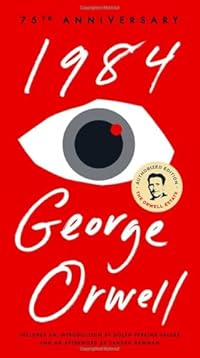
Nineteen Eighty-Four
by George Orwell 
On This Page
Description
Portrays life in a future time when a totalitarian government watches over all citizens and directs all activities.Tags
Recommendations
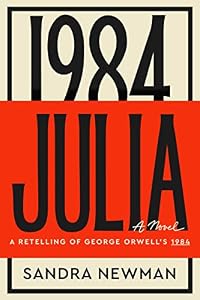
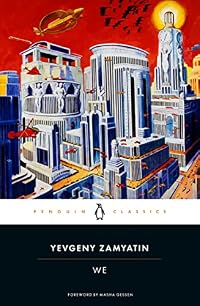



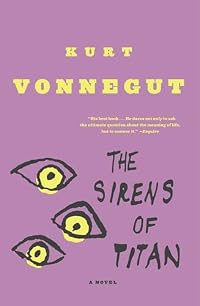
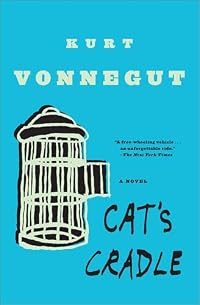
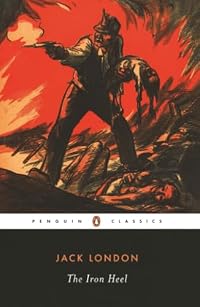
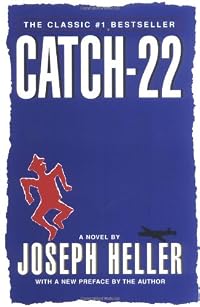


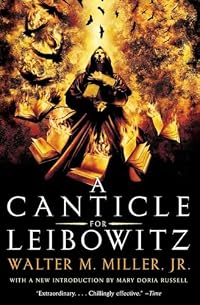
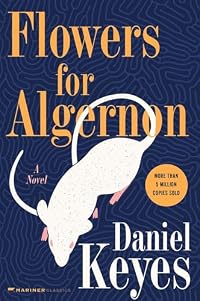
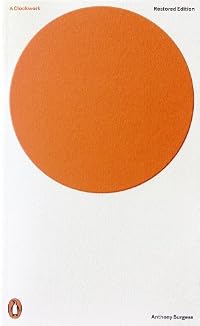
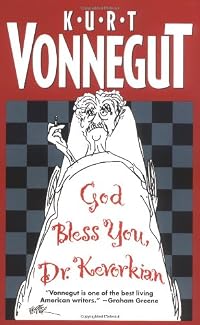
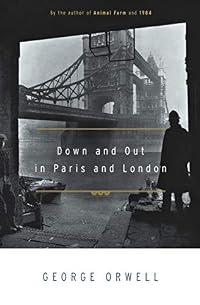

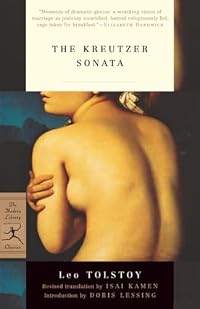
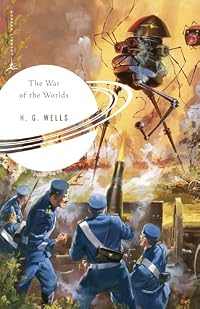
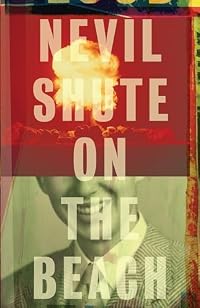
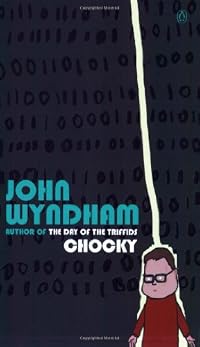
Member Recommendations
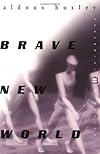
li33ieg 1984, Brave New World and Fahrenheit 451: 3 essential titles that remind us of the need to keep our individual souls pure.
Ludi_Ling Really, the one cannot be mentioned without the other. Actually, apart from the dystopian subject matter, they are very different stories, but serve as a great counterpoint to one another.
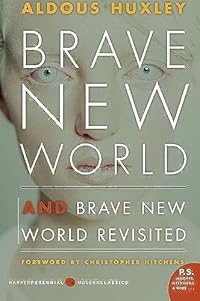
anonymous user It's essential to read Huxley's and Orwell's books together. Both present the ultimate version of the totalitarian state, but there the similarities end. While Orwell argues in favour of hate and fear, Huxley suggests that pleasure and drugs would be far more effective as controlling forces. Who was the more prescient prophet? That's what every reader should decide for him- or herself.
912
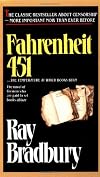
readafew Both books are about keeping the people in control and ignorant.
hipdeep 1984 is scary like a horror movie. Fahrenheit 451 is scary like the news. So - do you want to see something really scary?
BookshelfMonstrosity A man's romance-inspired defiance of menacing, repressive governments in bleak futures are the themes of these compelling novels. Control of language and monitors that both broadcast to and spy on people are key motifs. Both are dramatic, haunting, and thought-provoking.
796
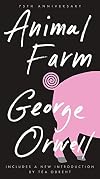
hippietrail The original dystopian novel from which both Huxley and Orwell drew inspiration.
timoroso Zamyatin's "We" was not just a precursor of "Nineteen Eighty-Four" but the work Orwell took as a model for his own book.
Sylak A great influence in the writing of his own book.
292
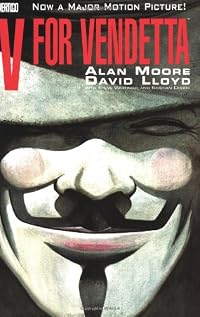
aethercowboy The world of V for Vendetta is very reminiscent of the world of 1984.
172
JFDR 1984's Big Brother is Little Brother's namesake.
Also recommended by infiniteletters, suzanney
92
ivan.frade Both books talk about revolution and the people, individual rights vs. common wellness. "darkness at noon" is pretty similar to 1984, without the especulation/science-fiction ingredient.
Also recommended by BGP
80
andejons The totalitarian state works very similar in both books, but the control in Kallocain seems more plausible, which makes it more frightening.
Also recommended by anonymous user
91
anonymous user Huxley and Zamyatin are practically the canon recommendations for this work, so much so that they hardly need to be mentioned, let alone mentioned again.. Therefore, let me instead recommend a lesser-known work that likewise influenced Orwell's work: Burdekin's dystopian future-history, Swastika Night
40
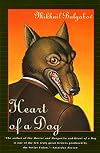
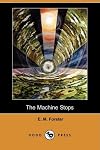
artturnerjr If you read only one other dystopian SF story, make it this one.
30
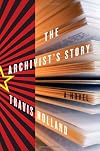
Eat_Read_Knit Two very powerful stories of what happens when a very small cog in the machine of a dictatorship decides not to turn anymore.
30
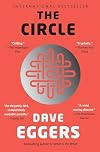
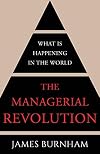
TomWaitsTables Orwell wrote 1984 as a reaction to Burnham, who argued that the communism of the USSR was no different than the capitalism of the USA; both were faceless technocratic organizations running society on a scale that beggars the human experience.
42

MMSequeira Another interesting attempt at a plausible history of the future. Definitely worth reading.
31


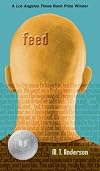
mrkatzer If 1984 were written today, and written for an audience of teenagers and people who care about teenagers, the result would be Feed.
42

AlanPoulter 'Green England' borrows a lot from '1984' but adds sex, consumerism and the most vicious satire on Green politics possible...it is a shame it is so hard to find.
21

aulsmith Both nicely balanced books about the personal and the political.
22
mambo_taxi From the newspeak to the paranoia to the denunciations, 1950s Communist China of Chang's Naked Earth is the dystopian dream of Orwell's 1984 made flesh.


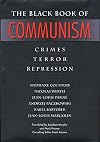
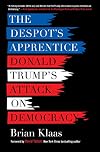

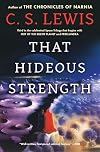
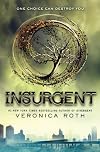
SomeGuyInVirginia No thematic relation, but these two books both profoundly disturbed me.
638
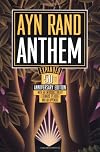
MMSequeira Both 1984 and Anthem we're inspired by Zamyatin's We. Both are worth reading, as cautionary tales.
Also recommended by Leigh22, avid_reader25
1241
Member Reviews
I honestly don’t even know what to say about this. This book is a Masterpiece—a work of intellectual genius. And it may also be one of the (if not THE) most horrific book I’ve read to date.
Winston is not a heroic character. If anything, he is really quite pathetic. And I think that is what makes him so great: that he is heroic simply because he resists, in his own quiet way, the evil that surrounds him.
For most of the book, anyway.
Then, what began as a captivating dystopian about totalitarian control, ends with a discussion of free agency, asking the question, “What would it take for you to denounce everything you stand for—to denounce your very own being?”
And then it answered that question simply with, “Pain.”
((I’m show more a fairly sensitive person when it comes to violence and torture. I mean, it REALLY upsets me. So let’s just say I was NOT vibing during Part Three. Still, I can’t help but acknowledge that this book is a Masterpiece. At the very least, George certainly got his point across.))
I’m so very thankful for Objective Reality, and that my own existence (and the existence of those I love) is part of it. And also that I’m not being tortured by my worst fear until I denounce everyone I’ve ever loved. That’s good news, too.
Frick, man.
All-in-all, my experience with this book can be summed up in this: that I came here for a good time no and I’m honestly feeling so attacked rn. show less
Winston is not a heroic character. If anything, he is really quite pathetic. And I think that is what makes him so great: that he is heroic simply because he resists, in his own quiet way, the evil that surrounds him.
For most of the book, anyway.
Then, what began as a captivating dystopian about totalitarian control, ends with a discussion of free agency, asking the question, “What would it take for you to denounce everything you stand for—to denounce your very own being?”
And then it answered that question simply with, “Pain.”
((I’m show more a fairly sensitive person when it comes to violence and torture. I mean, it REALLY upsets me. So let’s just say I was NOT vibing during Part Three. Still, I can’t help but acknowledge that this book is a Masterpiece. At the very least, George certainly got his point across.))
I’m so very thankful for Objective Reality, and that my own existence (and the existence of those I love) is part of it. And also that I’m not being tortured by my worst fear until I denounce everyone I’ve ever loved. That’s good news, too.
Frick, man.
All-in-all, my experience with this book can be summed up in this: that I came here for a good time no and I’m honestly feeling so attacked rn. show less
After re-reading the book during this turbulent year I am even more afraid where is our society heading to.
I was always told that Orwell's and Huxley's views on the society are opposites. Personally I think this is not true. Huxley's view of Brave New World where opiates and drugs are used to control the society is just the continuation of the Orwell's world-view. In order to control the people through drugs people first need to be broken and brought into submission. And this can be done only through the means as portrayed by Orwell.
It is truly remarkable how author from early decades of 20th century managed to capture nature of humankind. Effect television and later explosion of communications have on society, constant strategy of show more tension (was cold war, then terrorism, now it is (gasp!omg!) disease panic) destroys the people from within, dulls them, creates Stockholm like syndrome between themselves and authority abusing them, perverse relationship in which people are grateful when only one percent of their rights and freedoms are returned. If anything Orwell shows how easy dictators come to power when society allows them (Animal Farm is the other book from the same author and on the same subject that I wholeheartedly recommend).
Who cannot make the parallels between Thought Police and propaganda machine so ready to destroy people with this year's (better said this decade's) cancel culture and de-facto control of both spoken and published word (new-speak anyone? so many new words to be used and not to be used otherwise person is declared as hater and his actions as hate-speech). So many idiotic events that draw attention from actual social problems and cause so much confusion it is incredible. That constant need to be right, right no matter what, is not unlike Thought Police's perverse approach to re-education - after breaking the person up and finally forcing him or her to accept the rule of the Party then they kill them. It rings so true in these days of almost cult-like worshiping of ideas and people - it is us or them, no middle ground, no compromise. You have to obey and by that not just bow, but truly obey and believe the ideas and actions imposed on you. Otherwise physical punishment or loss of means to live is just around the corner.
If anything this year showed that Orwell's view of the humanity rings true almost 70 years later. Humanity allows itself to be treated as dough by immoral and ruthless people (be it dictators using raw power or those using science to achieve control) who take the chance to mold it into something that is less than itself.
I hope people come to their sense at some point in time.
Excellent book, full of warnings that have unfortunately fallen on deaf ears of so many for so many years. Worst lie ever is to say to oneself "it cannot happen to me".
Recommended.
(Original Review)
Terrifying book. Orwell truly had a knack for predicting the way human society evolves.
Read it, it will change your perception of the world (I know I am looking differently at the newspapers now :)) show less
I was always told that Orwell's and Huxley's views on the society are opposites. Personally I think this is not true. Huxley's view of Brave New World where opiates and drugs are used to control the society is just the continuation of the Orwell's world-view. In order to control the people through drugs people first need to be broken and brought into submission. And this can be done only through the means as portrayed by Orwell.
It is truly remarkable how author from early decades of 20th century managed to capture nature of humankind. Effect television and later explosion of communications have on society, constant strategy of show more tension (was cold war, then terrorism, now it is (gasp!omg!) disease panic) destroys the people from within, dulls them, creates Stockholm like syndrome between themselves and authority abusing them, perverse relationship in which people are grateful when only one percent of their rights and freedoms are returned. If anything Orwell shows how easy dictators come to power when society allows them (Animal Farm is the other book from the same author and on the same subject that I wholeheartedly recommend).
Who cannot make the parallels between Thought Police and propaganda machine so ready to destroy people with this year's (better said this decade's) cancel culture and de-facto control of both spoken and published word (new-speak anyone? so many new words to be used and not to be used otherwise person is declared as hater and his actions as hate-speech). So many idiotic events that draw attention from actual social problems and cause so much confusion it is incredible. That constant need to be right, right no matter what, is not unlike Thought Police's perverse approach to re-education - after breaking the person up and finally forcing him or her to accept the rule of the Party then they kill them. It rings so true in these days of almost cult-like worshiping of ideas and people - it is us or them, no middle ground, no compromise. You have to obey and by that not just bow, but truly obey and believe the ideas and actions imposed on you. Otherwise physical punishment or loss of means to live is just around the corner.
If anything this year showed that Orwell's view of the humanity rings true almost 70 years later. Humanity allows itself to be treated as dough by immoral and ruthless people (be it dictators using raw power or those using science to achieve control) who take the chance to mold it into something that is less than itself.
I hope people come to their sense at some point in time.
Excellent book, full of warnings that have unfortunately fallen on deaf ears of so many for so many years. Worst lie ever is to say to oneself "it cannot happen to me".
Recommended.
(Original Review)
Terrifying book. Orwell truly had a knack for predicting the way human society evolves.
Read it, it will change your perception of the world (I know I am looking differently at the newspapers now :)) show less
1984 is a compelling tale of an individual's physical and intellectual battle against a totalitarian political system. Orwell renders this world convincingly, and this together with the parrallels to certain present day regimes is what makes this book so absorbing and terrifying. There are a lot of profound ideas here, relating to liberty and personal freedom, the nature of language and thought, political ideology, the structure of society, and population and individual psychology. The richness of ideas, the horror of the alternative reality, and the page turning story all contribute to setting this apart from other novels. There are very few books that everyone ought to read, but this is perhaps one, if only so that such a future could show more be avoided, and our present circumstances appreciated (though perhaps there is also the danger of this book being used as a manual for oppression). show less
At first I thought this book was satirical, I couldn't take seriously the ministry of plenty, the ministry of truth, etc. How could a society be fooled by a government who so obviously touts the lies by which it functions? Ah shoot, it got me. Doublethink, the process by which people speak around the actual truth, using language to present what the government wants them to believe, is what explained it to me. And the author adds that in order for doublethink to work properly, the thinker has to be conscious of the very lie they are believing. This book messed with my head in a way that will never be undone. I hate it. Thank you Mr. Orwell.
I suppose I should start by saying that this book is the complete antithesis of who I am as a person. I am all about creativity, combined with happy bubbly things. Yeah, Orwell and I aren't really a match made in heaven as this book is anything but that.
Most folks I've talked to have read this book in high school or college. Not me, and I'm actually glad I never did. I can't honestly imagine a pimply hormonal teen getting as much out of this as an adult who lives a life of bosses, paychecks, taxes, insurance payments, and society in general. Unfortunately, when I break it down as such, perhaps Orwell is just hitting a little too close to home, especially these days. When you think of the number of ways that we're tracked now - via show more location services on cell phones, iPads, computers...when every government agency tracks you and then this information (correct or not) seems to find its way to a Google search? Yeah, maybe Orwell knew something we didn't?
As for the story itself, I understand that it's listed as a classic, but seriously...this is sort of horrifically scary, right????? I mean, we've got some torture going on, major mind control, and who the heck knows which people are on which side and who you can trust? I actually found myself liking Winston at the beginning because, let's face it, he's narrating, and he seems rational. However, toward the end? I was almost convinced he WAS delusional and psychotic. Thanks again, George, for making me wonder about reality. You'd think I would have bonded with Julia, but she was basically all about the sex. I just didn't see much other use for her other than to provide an opportunity for a change of scenery.
Mind you, with all the twistedness of the story, the most horrific part was the scene in Room 101. Winston and I would have had the EXACT SAME experience here, and I was almost screaming in my car as I listened to the audiobook of this. Wanted to die.
Orwell summed up his psychotic thriller/classic/horror novel with one of the best quotes around. He's a genius. A twisted, demented, scary one, but genius. show less
Most folks I've talked to have read this book in high school or college. Not me, and I'm actually glad I never did. I can't honestly imagine a pimply hormonal teen getting as much out of this as an adult who lives a life of bosses, paychecks, taxes, insurance payments, and society in general. Unfortunately, when I break it down as such, perhaps Orwell is just hitting a little too close to home, especially these days. When you think of the number of ways that we're tracked now - via show more location services on cell phones, iPads, computers...when every government agency tracks you and then this information (correct or not) seems to find its way to a Google search? Yeah, maybe Orwell knew something we didn't?
As for the story itself, I understand that it's listed as a classic, but seriously...this is sort of horrifically scary, right????? I mean, we've got some torture going on, major mind control, and who the heck knows which people are on which side and who you can trust? I actually found myself liking Winston at the beginning because, let's face it, he's narrating, and he seems rational. However, toward the end? I was almost convinced he WAS delusional and psychotic. Thanks again, George, for making me wonder about reality. You'd think I would have bonded with Julia, but she was basically all about the sex. I just didn't see much other use for her other than to provide an opportunity for a change of scenery.
Mind you, with all the twistedness of the story, the most horrific part was the scene in Room 101. Winston and I would have had the EXACT SAME experience here, and I was almost screaming in my car as I listened to the audiobook of this. Wanted to die.
Orwell summed up his psychotic thriller/classic/horror novel with one of the best quotes around. He's a genius. A twisted, demented, scary one, but genius. show less
This is a re-read of one of the great literary classics of the 20th century which I first read at school. In fact I think it is arguably the seminal novel of the 20th century in its depiction of a totalitarian society and totalitarian mental attitudes and practices. People sometimes claim that aspects of contemporary western societies are becoming like this, particularly in terms of surveillance, but I think this is a very superficial comparison; I think such claims fail to understand the all pervasive nature of totalitarianism, as distinct from illiberalism or authoritarianism, as practiced in Oceania, the closest equivalents to which have been Stalin's USSR at the time the novel was written, and North Korea now. It is a seminal and show more gripping novel about freedom and how human beings react and behave and think, and how that can be moulded and distorted. I felt the drama and horror of it anew even though I am very familiar with the plot and narrative and can recall many chunks of the texts off by heart from previous readings. Everyone should read this. show less
What can I say? I both love and hate this book, which may be a form of doublethink. Even having read it before, I was still rooting for Winston Smith to retain his humanity ... but alas. What struck me in particular this read-through was how blatantly the things that will happen to Winston are stated throughout the book. It's more than mere foreshadowing: From the beginning, we get actual description of the sorts of things that Winston ends up having to endure (see some of the earlier quotes listed below). The mantra that the result is concurrent with the act is thematically reinforced, which makes the story even more chilling with a second reading, at least for me. O'Brien's obviating statement upon first entering Winston's cell ("You show more knew this, Winston.... Don't deceive yourself. You did know it — you have always known it.") seems directed more at the reader than at the character: We knew what was going to happen, we read what was going to happen, we were told nothing else ever happens, yet we still hoped and deceived ourselves that it would not happen.
Without getting to much into modern politics, there's some interesting comparisons that can be made today. For example, privacy concerns about products like Google Glass, which are basically telescreens for your face — especially in light of Google's fight with the FBI over "National Security" letters, which are basically non-court-reviewed subpoenas that nobody's allowed to talk about and, thus, don't really exist.... Or the relatively new legal "mosaic theory" of surveillance where at some vaguely magical point a certain amount of public scrutiny by police violates 4th Amendment rights, but in a stunning display of Sorites Paradoxism, nobody (including SCOTUS) can really determine where that point is, and thus, it effectively doesn't exist.
On a personal note, I read it on my telesc— err, iPad. This is the first ebook where I've actually spent a bit of effort highlighting quotes and passages in that medium. Then, stupidly I removed the ebook from my iPad. Fortunately, when I synced it back, all my highlights were still in existence. Given that providential event and the effort I went through, I now present:
A List of Things I Highlighted in 1984
The horrible thing about the Two Minutes Hate was not that one was obliged to act a part, but that it was impossible to avoid joining in. (I'm thinking of Season 1, Episode 6 of Buffy, titled "The Pack," here...)
At those moments his secret loathing of Big Brother changed into adoration, and Big Brother seemed to tower up, an invincible, fearless protector, standing like a rock against the hordes of Asia, and Goldstein, in spite of his isolation, his helplessness and the doubt that hung about his very existence, seemed like some sinister enchanter, capable by the mere power of his voice of wrecking the structure of civilisation.
He hated her because she was young and pretty and sexless, because he wanted to go to bed with her and would never do so, because round her sweet supple waist, which seemed to ask you to encircle it with your arm, there was only the odious scarlet sash, aggressive symbol of chastity.
Winston woke up with the word 'Shakespeare' on his lips.
All history was a palimpsest, scraped clean and re-inscribed exactly as often as was necessary.
It struck him as curious that you could create dead men but not living ones...
Orthodoxy means not thinking — not needing to think. Orthodoxy is unconsciousness.
Rebellion meant a look in the eyes, an inflection of the voice; at the most, an occasional whispered word.
...in moments of crisis one is never fighting against an external enemy, but always against one's own body.
But before death (nobody spoke of such things, yet everybody knew of them) there was the routine confession that had to be gone through: the grovelling on the floor and screaming for mercy, the crack of broken bones, the smashed teeth and bloody clots of hair. Why did you have to endure it, since it was always the same?
Some kinds of failure are better than other kinds, that's all.
[People incapable of understanding orthodoxy] could be made to accept the most flagrant violations of reality, because they never fully grasped the enormity of what was demanded of them, and were not sufficiently interested in public events to notice what was happening. By lack of understanding they remained sane.
Confession is not betrayal. What you say or do doesn't matter: only feelings matter.
They can make you say anything — anything — but they can't make you believe it.
They could lay bare in the utmost detail everything that you had done or said or thought; but the inner heart, whose workings were mysterious, even to yourself, remained impregnable.
At present nothing is possible except to extend the area of sanity little by little.
Nevertheless the dangers inherent in the machine are still there.
The best books, he perceived, are those that tell you what you know already.
But no advance in wealth, no softening of manners, no reform or revolution has ever brought human equality a millimeter nearer. From the point of view of the Low, no historic change has ever meant much more than a change in the name of their masters.
Inequality was the price of civilisation.
The essence of oligarchical rule is not father-to-son inheritance, but the persistence of a certain world-view and a certain way of life, imposed by the dead upon the living. A ruling group is a ruling group so long as it can nominate its successors.
For the secret of rulership is to combine a belief in one's own infallibility with the power to learn from past mistakes.
Being in a minority, even a minority of one, did not make you mad.
"You don't think the Party would arrest an innocent man, do you?" (Parsons)
In the face of pain, there are no heroes...
It is not easy to become sane.
Perhaps one did not want to be loved so much as to be understood.
You must stop imagining that posterity will vindicate you, Winston. Posterity will never hear of you.
We do not destroy the heretic because he resists us: so long as he resists us we never destroy him.
What happens to you here is forever.
We know that no one ever seizes power with the intention of relinquishing it.
One does not establish a dictatorship in order to safeguard a revolution; one makes the revolution in order to establish the dictatorship. The object of persecution is persecution. The object of torture is torture. The object of power is power.
Reality is inside the skull.
Progress in our world will be progress towards more pain.
It was all contained in that first act. Nothing has happened that you did not foresee.
For the first time he perceived that if you want to keep a secret you must also hide it from yourself.
To die hating them, that was freedom.
And Finally...
I'll note with hints of both humor and chagrin, that I once controlled the domain prolefeed.org.
An extended version of this review is available at my website, www.curtisweyant.com. show less
Without getting to much into modern politics, there's some interesting comparisons that can be made today. For example, privacy concerns about products like Google Glass, which are basically telescreens for your face — especially in light of Google's fight with the FBI over "National Security" letters, which are basically non-court-reviewed subpoenas that nobody's allowed to talk about and, thus, don't really exist.... Or the relatively new legal "mosaic theory" of surveillance where at some vaguely magical point a certain amount of public scrutiny by police violates 4th Amendment rights, but in a stunning display of Sorites Paradoxism, nobody (including SCOTUS) can really determine where that point is, and thus, it effectively doesn't exist.
On a personal note, I read it on my telesc— err, iPad. This is the first ebook where I've actually spent a bit of effort highlighting quotes and passages in that medium. Then, stupidly I removed the ebook from my iPad. Fortunately, when I synced it back, all my highlights were still in existence. Given that providential event and the effort I went through, I now present:
A List of Things I Highlighted in 1984
The horrible thing about the Two Minutes Hate was not that one was obliged to act a part, but that it was impossible to avoid joining in. (I'm thinking of Season 1, Episode 6 of Buffy, titled "The Pack," here...)
At those moments his secret loathing of Big Brother changed into adoration, and Big Brother seemed to tower up, an invincible, fearless protector, standing like a rock against the hordes of Asia, and Goldstein, in spite of his isolation, his helplessness and the doubt that hung about his very existence, seemed like some sinister enchanter, capable by the mere power of his voice of wrecking the structure of civilisation.
He hated her because she was young and pretty and sexless, because he wanted to go to bed with her and would never do so, because round her sweet supple waist, which seemed to ask you to encircle it with your arm, there was only the odious scarlet sash, aggressive symbol of chastity.
Winston woke up with the word 'Shakespeare' on his lips.
All history was a palimpsest, scraped clean and re-inscribed exactly as often as was necessary.
It struck him as curious that you could create dead men but not living ones...
Orthodoxy means not thinking — not needing to think. Orthodoxy is unconsciousness.
Rebellion meant a look in the eyes, an inflection of the voice; at the most, an occasional whispered word.
...in moments of crisis one is never fighting against an external enemy, but always against one's own body.
But before death (nobody spoke of such things, yet everybody knew of them) there was the routine confession that had to be gone through: the grovelling on the floor and screaming for mercy, the crack of broken bones, the smashed teeth and bloody clots of hair. Why did you have to endure it, since it was always the same?
Some kinds of failure are better than other kinds, that's all.
[People incapable of understanding orthodoxy] could be made to accept the most flagrant violations of reality, because they never fully grasped the enormity of what was demanded of them, and were not sufficiently interested in public events to notice what was happening. By lack of understanding they remained sane.
Confession is not betrayal. What you say or do doesn't matter: only feelings matter.
They can make you say anything — anything — but they can't make you believe it.
They could lay bare in the utmost detail everything that you had done or said or thought; but the inner heart, whose workings were mysterious, even to yourself, remained impregnable.
At present nothing is possible except to extend the area of sanity little by little.
Nevertheless the dangers inherent in the machine are still there.
The best books, he perceived, are those that tell you what you know already.
But no advance in wealth, no softening of manners, no reform or revolution has ever brought human equality a millimeter nearer. From the point of view of the Low, no historic change has ever meant much more than a change in the name of their masters.
Inequality was the price of civilisation.
The essence of oligarchical rule is not father-to-son inheritance, but the persistence of a certain world-view and a certain way of life, imposed by the dead upon the living. A ruling group is a ruling group so long as it can nominate its successors.
For the secret of rulership is to combine a belief in one's own infallibility with the power to learn from past mistakes.
Being in a minority, even a minority of one, did not make you mad.
"You don't think the Party would arrest an innocent man, do you?" (Parsons)
In the face of pain, there are no heroes...
It is not easy to become sane.
Perhaps one did not want to be loved so much as to be understood.
You must stop imagining that posterity will vindicate you, Winston. Posterity will never hear of you.
We do not destroy the heretic because he resists us: so long as he resists us we never destroy him.
What happens to you here is forever.
We know that no one ever seizes power with the intention of relinquishing it.
One does not establish a dictatorship in order to safeguard a revolution; one makes the revolution in order to establish the dictatorship. The object of persecution is persecution. The object of torture is torture. The object of power is power.
Reality is inside the skull.
Progress in our world will be progress towards more pain.
It was all contained in that first act. Nothing has happened that you did not foresee.
For the first time he perceived that if you want to keep a secret you must also hide it from yourself.
To die hating them, that was freedom.
And Finally...
I'll note with hints of both humor and chagrin, that I once controlled the domain prolefeed.org.
An extended version of this review is available at my website, www.curtisweyant.com. show less
Members
- Recently Added By
Lists

The Guardian's 1000 Novels Everyone Must Read
1,005 works; 549 members

1001 Books You Must Read Before You Die
1,445 works; 1,131 members
Best Dystopias
280 works; 273 members

Best Science Fiction Novels
815 works; 429 members

Classics you know you should have read but probably haven't
420 works; 407 members
501 Must-Read Books
508 works; 71 members
BBC Big Read
191 works; 46 members

Top-Rated Books on LibraryThing
272 works; 117 members

Read the book and saw the movie
1,170 works; 192 members

Radcliffe's 100 Best Novel of the 20th Century
100 works; 32 members
Survey of Classic Science Fiction
171 works; 48 members
Favourite Books
1,817 works; 316 members
Best of British Literature
226 works; 41 members
Newsweek's Top 100 Books: The Meta-List
100 works; 18 members
20th Century Literature
1,161 works; 54 members
David Bowie's Top 100
97 works; 23 members
Le Monde - Les 100 livres du siècle
121 works; 23 members
NPRs your picks: top 100 Sci-Fi/Fantasy books
297 works; 78 members

The 100 Best Books of All Time by Norwegian Book Club (World Library)
104 works; 23 members

Recommend the 20 best books you've read in the last five years
2,136 works; 597 members
New York Public Library's Books of the Century
120 works; 19 members
The Top Ten: Writers Pick Their Favorite Books
240 works; 31 members
Banned Books Week 2014
268 works; 63 members
PBS The Great American Read
100 works; 21 members

The Telegraph's 110 Best Books: The Perfect Library
101 works; 18 members
Books That Changed Me
156 works; 47 members
1940s
221 works; 25 members
BBC's 100 Novels That Shaped Our World
100 works; 22 members
Best Political Fiction
92 works; 11 members

Best Horror Books
281 works; 85 members

New York Public Library's Books of the Century - All
170 works; 13 members

100 books to read in a lifetime
102 works; 37 members

Best Books Set in London
157 works; 40 members
Larry McCaffery's 20th Century Greatest Hits: 100 English-Language Books
103 works; 12 members

Best high-school English books reread later in life
30 works; 21 members
A Syllabus and Book List for Novice Students of Science Fiction Literature
25 works; 11 members

The Guardian's 100 greatest novels of all time
100 works; 16 members
Amazon's 100 Science Fiction & Fantasy Books to Read in a Lifetime
87 works; 23 members
Time Magazine's "All-Time 100"
113 works; 15 members
LibraryThingers' 1001 Books You Must Read Before You Die
442 works; 29 members

Books Set in Great Britain
191 works; 13 members
Harold Bloom - The Western Canon: D. The Chaotic Age
833 works; 24 members

Books I've Read More Than Once
602 works; 49 members
Dystopian and Apocalyptic Literature
350 works; 74 members
Folio Society
831 works; 53 members

Canon de la narrativa universal del siglo XX
254 works; 6 members

Survey of Science Fiction and Fantasy
101 works; 13 members
Banned or Challenged Books
400 works; 38 members

Books Featured on Gilmore Girls
307 works; 21 members
Blue Pyramid 1,276 Best Books of All Time
1,248 works; 32 members
BBC Big Read
100 works; 10 members

Books You Read During High School (For School)
301 works; 53 members

Survey of Classic Dystopias
29 works; 4 members
Time's All-Time 100 Novels
100 works; 27 members
Science Fiction
42 works; 7 members

Books With a Twist
69 works; 46 members
Twentieth Century Greatest Hits
27 works; 10 members
Futurism Works
25 works; 6 members

Dark Books for Winter Reading
71 works; 11 members
Readable Classics
110 works; 15 members

Western World's Greatest Books - Project Gutenberg
295 works; 15 members

The Well-Educated Mind Reading Challenge
75 works; 7 members
Best First Lines
133 works; 8 members
Books tagged favorites
390 works; 30 members
1,001 BYMRBYD Concensus
723 works; 27 members

Anthony Burgess 99 Post War Novels
99 works; 7 members
David Pringle's Science Fiction: The 100 Best Novels
101 works; 9 members

Most Disturbing Books
124 works; 27 members

A Novel Cure
742 works; 23 members

Books Read in 2014
2,341 works; 86 members

SF Masterworks
193 works; 8 members

1964 College Preparatory Reading List
202 works; 8 members
Year 9 Reading List
29 works; 3 members
Jordan B. Peterson's Recommended Books
104 works; 5 members
The Guardian's 100 Best Novels Written in English
105 works; 13 members
One Book, Many Authors
441 works; 40 members

Books Read in 2023
5,547 works; 144 members
Jones and Newman's Horror: Another 100 Best Books
100 works; 7 members

S.F. Masterworks (Complete)
229 works; 15 members
Daria Morgendorffer's Bookshelf
70 works; 5 members
Alternate Englands
34 works; 7 members
Mind Expanding Books by hackerkid
581 works; 8 members
Page Turners
185 works; 11 members
100 World Classics
99 works; 15 members
Top 100 to Read before you Die
109 works; 7 members
The Greatest Books
99 works; 5 members

CCE 100 Great Books List
145 works; 8 members
Fake Top 100 Fiction
81 works; 4 members
The Modern Library's 100 Best Novels: The Board's List
85 works; 6 members
My list of 100 books to read next
100 works; 4 members

Easton Press Masterpieces of Science Fiction
30 works; 2 members
Unbound Worlds 100 Best SF Books
100 works; 8 members
Mensa for Kids Excellence in Reading Award Program (Grades 9-12)
116 works; 3 members

Rory Gilmore Book Club
193 works; 5 members

Books With Numbers in the Title
308 works; 13 members

BBC Top Books
78 works; 3 members
Mensa for Kids Excellence in Reading Award Program (Grades 9-12)
116 works; 4 members

Books Read in 2015
3,298 works; 129 members
Top 100 Science-Fiction, Fantasy Books
18 works; 4 members

An End of the World Reading List
63 works; 4 members
Books I've Read
40 works; 2 members

It's the end of the world as we know it!
90 works; 21 members

David Brin: Dire Warnings And Self-Preventing Prophecies
17 works; 3 members
David Bowie's List of Top 100 Books
94 works; 6 members
Great American Read
1 work; 1 member

What if... a speculative history list
25 works; 2 members
Books Featured on Readers' Review of the Diane Rehm Show
161 works; 8 members

Dystopian Novels you should read
25 works; 2 members

Top 50 Favourite Books
50 works; 2 members

Books Read in 2020
4,379 works; 123 members
WISHLIST
3 works; 1 member
Ten Books That Have Stayed With Me
160 works; 29 members
Classics To read
2 works; 1 member

Speculative Fiction to Read
706 works; 31 members

Stories Inspired by Other Fiction
127 works; 24 members

Most Depressing Books
69 works; 16 members

Best Antiheroes and Antiheroines
119 works; 6 members
My 100 Favorite Books of All Time
57 works; 2 members

Political Science Fiction
43 works; 3 members

University literature
145 works; 5 members

100 books that changed the world
31 works; 2 members
Overdue Podcast
800 works; 9 members

CCE 1000 Good Books List
1,033 works; 12 members
Books on my Kindle
162 works; 3 members

Well-Educated Mind
150 works; 3 members
My Favourite Books
86 works; 5 members

Best Horror Mega-List
342 works; 6 members
Best Books of the 20th Century
193 works; 5 members

Books I've read
87 works; 2 members

Books Read in 2017
4,248 works; 129 members

99 Bücher, die man gelesen haben muss
37 works; 1 member

Libertarian Books
102 works; 19 members
Literature which inspired Pop songs
85 works; 9 members

100
56 works; 1 member

Pageturners
40 works; 6 members
Trinity College Booklist (1951): Class Ten, English Literature
358 works; 5 members

Books Set in London
49 works; 3 members

Blackwell's Five Foot Bookshelf
72 works; 4 members

Most Frequently Tagged "Read in 2015"
70 works; 1 member
Books Read in 2016
4,666 works; 199 members

Isaac Arthur’s Book Recommendations
98 works; 3 members
Books to Reread Someday
53 works; 7 members
http://thegreatestbooks.org's Greatest Fiction Books
59 works; 1 member

Speculative Fiction: The Classics
36 works; 5 members

Books Read in 2004
196 works; 7 members

Books that changed the world
67 works; 64 members
American Lit for Eng 11 Research Project
368 works; 6 members
Retrospective of Horror and Thrillers
21 works; 2 members

current
52 works; 1 member
The 150 Greatest Novels of All Time
150 works; 6 members
What A Year: Books titled with a particular year
147 works; 2 members
The Well-Educated Mind, Susan Wise Bauer, 2016
179 works; 3 members

Titles to Avoid
6 works; 1 member
Rereads list from my library
23 works; 1 member
BitLife
212 works; 3 members

Books Read in 2025
4,033 works; 97 members

top 100
39 works; 1 member
thought provoking
15 works; 1 member
DigitalDreamDoor top 300
300 works; 4 members
Books I Read Before The Invention Of The Internet.
144 works; 1 member

Banned Books I have read
16 works; 2 members
Classic Sci-Fi
27 works; 1 member
Les 100 principaux titres de la science-fiction (1981)
126 works; 3 members

Read
27 works; 1 member

Recommended Reading : 600 Classics Reviewed, Editors of Salem Press, 2015
634 works; 6 members
Our Favorite Banned Books
138 works; 122 members

Books That Changed Our Perspective
423 works; 166 members

2024 Reads
31 works; 1 member
'Books You Can't Live Without: The Top 100', The Guardian, 2007
156 works; 7 members
Canon de la narrativa universal del s. XX (cicutadry)
499 works; 3 members
The Complete Rory Gilmore Reading List
506 works; 5 members
el
1,139 works; 1 member

100 knjiga
100 works; 1 member

Books in the Bibliography of The Cold War by John Lewis Gaddis
192 works; 1 member

Books We Resisted Reading
163 works; 98 members

Books Cited in Blueprint by Nicholas Christakis
261 works; 1 member

In Our Time books
4,934 works; 1 member

Take Four Books
131 works; 1 member

Books cited in Progress by Samuel McDonald
160 works; 1 member
Favorite Science Fiction
442 works; 213 members
Goalhanger Book Club
6 works; 1 member

The Book You Would Give To Everyone You Meet If You Could
7 works; 1 member
Book Recommendations Masterlist
28 works; 1 member
Modern Library's 100 Best Novels
100 works; 2 members
Totalitarianism and Democratic Erosion: Essential Readings
45 works; 1 member
.
396 works; 1 member
Books We Couldn't Put Down
443 works; 197 members
NPR Books You Love: Books That Shaped You in High School
26 works; 1 member
Reading LIst
648 works; 1 member

EGBERTINA'S List of childhood books worthy of merit or unspeakable delight
155 works; 6 members

Wishlist
71 works; 1 member

AbeBooks: 50 essential science fiction books
50 works; 6 members
Books Read in 2018
4,360 works; 110 members
School Made Us Read It
380 works; 196 members
Books We Want To Read Again For The First Time
384 works; 160 members

𓐩hought Daughter ♱♰✟✞✝︎☨†˚₊‧꒰ა ♱ ໒꒱ ‧
38 works; 1 member
Vlogbrothers Book Recommendations
307 works; 4 members
David Bowie’s Top 100 Favourite Reads
100 works; 3 members
.
194 works; 2 members
Talk Discussions
Past Discussions
New LE: 1984 in Folio Society Devotees (November 2024)
St. James Park Press - forthcoming 1984 edition. in Fine Press Forum (May 2024)
Artist wants copies of 1984 in Book talk (January 2024)
Bokcirkel om Orwells 1984 i mars in Swedish Thing (April 2022)
New Suntup 1984 in Fine Press Forum (April 2021)
Author Information

376+ Works 219,856 Members
George Orwell was born Eric Arthur Blair on June 25, 1903 in Motihari in Bengal, India and later studied at Eton College for four years. He was an assistant superintendent with the Indian Imperial Police in Burma. He left that position after five years and moved to Paris, where he wrote his first two books: Burmese Days and Down and Out in Paris show more and London. He then moved to Spain to write but decided to join the United Workers Marxist Party Militia. After being decidedly opposed to communism, he served in the British Home Guard and with the Indian Service of the BBC during World War II. After the war, he wrote for the Observer and was literary editor for the Tribune. His best known works are Animal Farm and 1984. His other works include A Clergyman's Daughter, Keep the Aspidistra Flying, The Road to Wigan Pier, Homage to Catalonia, and Coming Up for Air. He died on January 21, 1950 at the age of 46. (Bowker Author Biography) show less
George Orwell has a Legacy Library. Legacy libraries are the personal libraries of famous readers, entered by LibraryThing members from the Legacy Libraries group.
Some Editions
Awards and Honors
Awards
Distinctions
Notable Lists
BBC's Big Read (8)
Torchlight List (#162)
Daniel S. Burt's Novel 100 (086 – 86)
Bulgarian Big Read (22)
Series
Belongs to Publisher Series
Diogenes-Taschenbuch (21087)
Colecção Mil Folhas (25)
Oscar Narrativa (45)
Il bosco [Mondadori] (42)
Perpetua reeks (8)
Clube de Literatura Clássica (CLC) (40 [August 2023])
Destinolibro (54)
Gallimard, Folio Classique (6891)
Penguin Clothbound Classics (2021)
Penguin English Library, 2012 series (2018-06)
Ullstein Buch (23410)
SF Masterworks (New design)
detebe (21087)
Gallimard, Folio SF (685)
Gallimard, Folio (177-822)
Work Relationships
Is contained in
Is retold in
Has the adaptation
Is replied to in
Was inspired by
Inspired
Has as a study
Has as a commentary on the text
Has as a student's study guide
Has as a teacher's guide
Common Knowledge
- Canonical title
- Nineteen Eighty-Four
- Original title
- Nineteen Eighty-Four
- Alternate titles
- 1984
- Original publication date
- 1949-06-08
- People/Characters
- Winston Smith; Julia; O'Brien; Big Brother; Emmanuel Goldstein; Aaronson (show all 14); Jones; Rutherford; Ampleforth; Mr Charrington; Katharine Smith (wife of Winston Smith); Martin; Tom Parsons; Syme
- Important places
- Airstrip One, Oceania (Britain); London, England, UK; Colchester, Essex, England, UK; Oceania; Eurasia; East Asia (show all 8); England, UK; London, Airstrip One, Oceania
- Important events
- World War II (1939 | 1945); World War III
- Related movies
- Nineteen Eighty-Four (1984 | IMDb); 1984 (1956 | IMDb); 1984 (2009 | IMDb); 1984: A Personal View of Orwell's 'Nineteen Eighty Four' (1983 | IMDb); Me and the Big Guy (1999 | IMDb)
- First words
- It was a bright cold day in April, and the clocks were striking thirteen.
Winston Smith, his chin nuzzled into his breast in an effort to escape the vile wind, slipped quickly through the glass doors of Victory Mansions, ... (show all)though not quickly enough to prevent a swirl of gritty dust from entering along with him. - Quotations
- "BIG BROTHER IS WATCHING YOU."
"WAR IS PEACE. SLAVERY IS FREEDOM. IGNORANCE IS STRENGTH."
Freedom is the freedom to know that two plus two make four.
Who controls the past controls the future: who controls the present controls the past.
In philosophy, or religion, or ethics, or politics, two plus two might make five, but when one was designing a fun or an airplane they had to make four.
Thoughtcrime does not entail death: thoughtcrime is death.
The best books... are those that tell you what you know already.
We shall meet in the place where there is no darkness.
If you want to keep a secret, you must also hide it from yourself.
Power is in inflicting pain and humiliations. Power is in tearing human minds to pieces and putting them together again in new shapes of your own choosing.... We are creating a world of fear and treachery and torment ... a wo... (show all)rld which will grow not less but MORE merciless.... In our world there will be no emotions except fear, rage, triumph, and self-abasement.... There will be no curiosity, no enjoyment of the process of life. All competing pleasures will be destroyed. But always—do not forget this, Winston—always there will be the intoxication of power, constantly increasing and constantly growing subtler. Always, at every moment, there will be the thrill of victory, the sensation of trampling on an enemy who is helpless. If you want a picture of the future, imagine a boot stamping on a human face—forever.
She had become a physical necessity, something that he not only wanted but felt that he had a right to.
The whole aim of Newspeak is to narrow the range of thought ... every year fewer words, and the range of consciousness always a little smaller. ... What was required was short clipped words of unmistakable meaning which ... r... (show all)oused the minimum of echoes in the speaker's mind. ... The smaller the area of choice, the smaller the temptation to take thought.
Winston fitted a nib into the penholder and sucked it to get the grease off.
The pen was an archaic instrument, seldom used even for signatures, and he had procured one, furtively and with some difficulty, simply because o... (show all)f a feeling that the beautiful creamy paper deserved to be written on with a real nib instead of being scratched with an ink-pencil. Actually he was not used to writing by hand. Apart from very short notes, it was usual to dictate everything into the speak-write, which was of course impossible for his present purpose.
Such things he saw could not happen today. Today there were fear, hatred, and pain, but no dignity of emotion or deep and complex sorrows.
And if all the others accepted the lie which the Party imposed—if all records contained the same tale—then the lie passed into history and became truth.
Until they become conscious, they will never rebel, and until after they have rebelled they cannot become conscious
The Party told you to reject the evidence of your eyes and ears. It was their final, most essential command.
Winston, in addition to his regular work, spent long periods every day in going through back files of the Times and altering and embellishing news items which were to be quoted in speeches.
At present nothing is possible except to extend the area of sanity little by little.
In so far as he had time to remember it, he was not troubled by the fact that every word he murmured into the speakwrite, every stroke of his ink pencil, was a deliberate lie.
War prisoners apart, the average citizen of Oceania never sets eyes on a citizen of either Eurasia or Eastasia, and he is forbidden the knowledge of foreign languages. If he were allowed contact with foreigners he would disco... (show all)ver that they are creatures similar to himself and that most of what he has been told about them are lies.
Applied to an opponent, it means the habit of impudently claiming that black is white, in contradiction of the plain facts. Applied to a Party member, it means a loyal willingness to say that black is white when Party discipl... (show all)ine demands this. But it means also the ability to believe that black is white, and more, to know that black is white, and to forget that one has ever believed the contrary.
"How does one man assert power over another, Winston?"
Winston thought. "By making him suffer," he said.
Countless other words such as honor, justice, morality, internationalism, democracy, science, and religion had simply ceased to exist.
...a Party member called upon to make a political or ethical judgment should be able to spray forth the correct opinions as automatically as a machine gun spraying forth bullets.
From the table drawer he took out a thick, quarto-sized blank book with a red back and a marbled cover.... It was a peculiarly beautiful book. Its smooth creamy paper, a little yellowed by age, was of a kind that had not been... (show all) manufactured for at least forty years past.... He had procured a pen ... simply because of a feeling that the beautiful creamy paper deserved to be written on with a real nib instead of being scratched with an ink-pencil.
"You're the gentleman that bought the young lady's keepsake album. That was a beautiful bit of paper, that was. Cream-laid, it used to be called. There's been no paper like that made for - oh, I dare say fifty years." - Last words
- (Click to show. Warning: May contain spoilers.)He loved Big Brother.
- Blurbers
- Pritchett, V. S.; Kazin, Alfred; Russell, Bertrand
- Original language
- English
- Canonical DDC/MDS
- 823
- Disambiguation notice
- Per WorldCat, ISBN 0451524934 is for the book, not the video.
Classifications
Statistics
- Members
- 93,745
- Popularity
- 10
- Reviews
- 1,447
- Rating
- (4.22)
- Languages
- 42 — Arabic, Basque, Bulgarian, Catalan, Chinese, Czech, Danish, Dutch, English, Estonian, Finnish, French, German, Galician, Greek, Hebrew, Hindi, Hungarian, Indonesian, Italian, Japanese, Korean, Latin, Latvian, Lithuanian, Malayalam, Marathi, Norwegian (Bokmål), Norwegian, Farsi/Persian, Polish, Romanian, Russian, Serbian, Slovak, Spanish, Swedish, Tamil, Thai, Turkish, Ukrainian, Portuguese (Portugal)
- Media
- Paper, Audiobook, Ebook
- ISBNs
- 1,029
- UPCs
- 2
- ASINs
- 468